EP4402228B1 - Schwefelwasserstoff- und mercaptanfänger - Google Patents
Schwefelwasserstoff- und mercaptanfänger Download PDFInfo
- Publication number
- EP4402228B1 EP4402228B1 EP22785952.7A EP22785952A EP4402228B1 EP 4402228 B1 EP4402228 B1 EP 4402228B1 EP 22785952 A EP22785952 A EP 22785952A EP 4402228 B1 EP4402228 B1 EP 4402228B1
- Authority
- EP
- European Patent Office
- Prior art keywords
- carbon atoms
- radical
- linear
- alkyl
- branched
- Prior art date
- Legal status (The legal status is an assumption and is not a legal conclusion. Google has not performed a legal analysis and makes no representation as to the accuracy of the status listed.)
- Active
Links
Images

Classifications
-
- C—CHEMISTRY; METALLURGY
- C10—PETROLEUM, GAS OR COKE INDUSTRIES; TECHNICAL GASES CONTAINING CARBON MONOXIDE; FUELS; LUBRICANTS; PEAT
- C10L—FUELS NOT OTHERWISE PROVIDED FOR; NATURAL GAS; SYNTHETIC NATURAL GAS OBTAINED BY PROCESSES NOT COVERED BY SUBCLASSES C10G OR C10K; LIQUIFIED PETROLEUM GAS; USE OF ADDITIVES TO FUELS OR FIRES; FIRE-LIGHTERS
- C10L3/00—Gaseous fuels; Natural gas; Synthetic natural gas obtained by processes not covered by subclass C10G, C10K; Liquefied petroleum gas
- C10L3/06—Natural gas; Synthetic natural gas obtained by processes not covered by C10G, C10K3/02 or C10K3/04
- C10L3/10—Working-up natural gas or synthetic natural gas
- C10L3/101—Removal of contaminants
- C10L3/102—Removal of contaminants of acid contaminants
- C10L3/103—Sulfur containing contaminants
-
- C—CHEMISTRY; METALLURGY
- C10—PETROLEUM, GAS OR COKE INDUSTRIES; TECHNICAL GASES CONTAINING CARBON MONOXIDE; FUELS; LUBRICANTS; PEAT
- C10G—CRACKING HYDROCARBON OILS; PRODUCTION OF LIQUID HYDROCARBON MIXTURES, e.g. BY DESTRUCTIVE HYDROGENATION, OLIGOMERISATION, POLYMERISATION; RECOVERY OF HYDROCARBON OILS FROM OIL-SHALE, OIL-SAND, OR GASES; REFINING MIXTURES MAINLY CONSISTING OF HYDROCARBONS; REFORMING OF NAPHTHA; MINERAL WAXES
- C10G29/00—Refining of hydrocarbon oils, in the absence of hydrogen, with other chemicals
- C10G29/20—Organic compounds not containing metal atoms
-
- C—CHEMISTRY; METALLURGY
- C07—ORGANIC CHEMISTRY
- C07D—HETEROCYCLIC COMPOUNDS
- C07D251/00—Heterocyclic compounds containing 1,3,5-triazine rings
- C07D251/02—Heterocyclic compounds containing 1,3,5-triazine rings not condensed with other rings
- C07D251/04—Heterocyclic compounds containing 1,3,5-triazine rings not condensed with other rings having no double bonds between ring members or between ring members and non-ring members
-
- C—CHEMISTRY; METALLURGY
- C10—PETROLEUM, GAS OR COKE INDUSTRIES; TECHNICAL GASES CONTAINING CARBON MONOXIDE; FUELS; LUBRICANTS; PEAT
- C10G—CRACKING HYDROCARBON OILS; PRODUCTION OF LIQUID HYDROCARBON MIXTURES, e.g. BY DESTRUCTIVE HYDROGENATION, OLIGOMERISATION, POLYMERISATION; RECOVERY OF HYDROCARBON OILS FROM OIL-SHALE, OIL-SAND, OR GASES; REFINING MIXTURES MAINLY CONSISTING OF HYDROCARBONS; REFORMING OF NAPHTHA; MINERAL WAXES
- C10G2300/00—Aspects relating to hydrocarbon processing covered by groups C10G1/00 - C10G99/00
- C10G2300/10—Feedstock materials
- C10G2300/1025—Natural gas
-
- C—CHEMISTRY; METALLURGY
- C10—PETROLEUM, GAS OR COKE INDUSTRIES; TECHNICAL GASES CONTAINING CARBON MONOXIDE; FUELS; LUBRICANTS; PEAT
- C10G—CRACKING HYDROCARBON OILS; PRODUCTION OF LIQUID HYDROCARBON MIXTURES, e.g. BY DESTRUCTIVE HYDROGENATION, OLIGOMERISATION, POLYMERISATION; RECOVERY OF HYDROCARBON OILS FROM OIL-SHALE, OIL-SAND, OR GASES; REFINING MIXTURES MAINLY CONSISTING OF HYDROCARBONS; REFORMING OF NAPHTHA; MINERAL WAXES
- C10G2300/00—Aspects relating to hydrocarbon processing covered by groups C10G1/00 - C10G99/00
- C10G2300/10—Feedstock materials
- C10G2300/1037—Hydrocarbon fractions
- C10G2300/1062—Lubricating oils
-
- C—CHEMISTRY; METALLURGY
- C10—PETROLEUM, GAS OR COKE INDUSTRIES; TECHNICAL GASES CONTAINING CARBON MONOXIDE; FUELS; LUBRICANTS; PEAT
- C10L—FUELS NOT OTHERWISE PROVIDED FOR; NATURAL GAS; SYNTHETIC NATURAL GAS OBTAINED BY PROCESSES NOT COVERED BY SUBCLASSES C10G OR C10K; LIQUIFIED PETROLEUM GAS; USE OF ADDITIVES TO FUELS OR FIRES; FIRE-LIGHTERS
- C10L2290/00—Fuel preparation or upgrading, processes or apparatus therefore, comprising specific process steps or apparatus units
- C10L2290/54—Specific separation steps for separating fractions, components or impurities during preparation or upgrading of a fuel
- C10L2290/545—Washing, scrubbing, stripping, scavenging for separating fractions, components or impurities during preparation or upgrading of a fuel
Definitions
- the present invention pertains to novel hydrogen sulphide and mercaptans scavengers and to compositions containing the scavengers.
- the present invention also pertains to the use of the scavengers for scavenging hydrogen sulphide and mercaptans in hydrocarbon containing compositions and in water-containing compositions.
- the present invention also relates to a method for scavenging hydrogen sulphide and/or mercaptans comprising contacting a media such as crude oils, fuels or natural gas or drilling fluids with the scavenging composition of the invention.
- Hydrogen sulphide is a colourless and fairly toxic, flammable and corrosive gas which also has a characteristic odour at a very low concentration. Hydrogen sulphide dissolves in hydrocarbon and water streams and is also found in the vapour phase above these streams and in natural gas. In drilling subterranean wells, notably those for oil or gas, hydrogen suphide can be present in substantial amounts. The drilling fluid may drive the hydrogen sulphide to the surface.
- the hydrogen sulphide emissions can therefore be a nuisance to workers operating in the production, transport, processing and storage of oil products such as crude oil, asphalt, Liquid Petroleum Gas, Heavy Fuel Oil, gasoline, kerosene, and diesel fuel. Hydrogen sulphide may also react with hydrocarbon components present in fuel. It would therefore be desirable for the workers' comfort and safety to reduce or even eliminate the hydrogen sulphide emissions during the manipulation of said products.
- the present invention is directed to a compound of formula (I): wherein R is a radical selected from a linear, branched or cyclic hydrocarbyl group optionally comprising one or more heteroatoms, such as oxygen, sulfur, halogen, silicon, nitrogen atoms.
- R is selected from: R 1 -OH, R 1 -[O-R 2 ] p -OH, optionally substituted benzyl, R 1 -NR 3 R 4 , R 5 , R 1 -[N(H)-R 2 ] n -NR 3 R 4 , R 1 -[O-R 2 ] p -NR 3 R 4 , R 1 -Q, R 1 -[N(H)-R 2 ] n -Q, R 1 -[O-R 2 ] p -Q, R 1 -N(R 3 -Q)(R 4 -Q) wherein:
- R is selected from: R 1 -OH, R 1 -O-R 2 -OH, benzyl, R 1 -NR 3 R 4 , R 5 , R 1 -N(H)-R 2 -NR 3 R 4 , R 1 -O-R 2 -O-R 2 -NR 3 R 4 , R 1 -Q, R 1 -N(H)-R 2 -Q, R 1 -O-R 2 -O-R 2 -Q, R 1 -N(R 3 -Q) 2 wherein:
- R is selected from: R 1 -OH, R 1 -O-R 2 -OH, benzyl, R 1 -NR 3 R 4 , R 5 , R 1 -N(H)-R 2 -NR 3 R 4 , R 1 -O-R 2 -O-R 2 -NR 3 R 4 , R 1 -Q, R 1 -N(H)-R 2 -Q, R 1 -O-R 2 -O-R 2 -Q, R 1 -N(R 3 -Q) 2 wherein:
- the compound of the invention replies to one of the following formula:
- the present invention is also directed to a process for manufacturing the compound according to the invention, comprising a step of contacting at least one bis(5-methyloxazolidin-3-yl)methane (BMOM) with at least one primary amine.
- BMOM bis(5-methyloxazolidin-3-yl)methane
- the contacting step is performed with a molar ratio BMOM:primary amines ranging from 1:5 to 5:1, preferably from 1:1 to 3:1.
- the compound is added in an amount of at least 1%wt, based on the total weight of hydrogen sulphide and mercaptans in the stream.
- the compounds of the invention are beneficial due to their lower freezing points below -40°C or even below -45°C. This allows the compounds of the invention to be used for H 2 S scavenging at low application temperatures without adding any expensive and flammable solvents and antifreezes.
- R is a radical selected from a linear, branched or cyclic hydrocarbyl group optionally comprising one or more heteroatoms, such as oxygen, sulfur, halogen, silicon, nitrogen atoms.
- R is typically different from CH(CH 2 OH).
- a “hydrocarbyl group” is a linear, branched or cyclic group that can be aliphatic or aromatic and when it is a cyclic group, the cycle(s) can be substituted by linear or branched groups.
- the hydrocarbyl group comprises carbon atoms and hydrogen atoms and optionally heteroatoms selected from oxygen, sulfur, halogen, silicon, nitrogen, preferably selected from oxygen, sulfur, halogen, silicon.
- R is selected from: R 1 -OH, R 1 -[O-R 2 ] p -OH, optionally substituted benzyl, R 1 -NR 3 R 4 , R 5 , R 1 -[N(H)-R 2 ] n -NR 3 R 4 , R 1 -[O-R 2 ] p -NR 3 R 4 , R 1 -Q, R 1 -[N(H)-R 2 ] n -Q, R 1 -[O-R 2 ] p -Q, R 1 -N(R 3 -Q)(R 4 -Q) wherein:
- R is selected from: R 1 -OH, R 1 -O-R 2 -OH, benzyl, R 1 -NR 3 R 4 , R 5 , R 1 -N(H)-R 2 -NR 3 R 4 , R 1 -O-R 2 -O-R 2 -NR 3 R 4 , R 1 -Q, R 1 -N(H)-R 2 -Q, R 1 -O-R 2 -O-R 2 -Q, R 1 -N(R 3 -Q) 2 wherein:
- an alkenyl group is an unsaturated group consisting in carbon atoms and hydrogen atoms, that can be linear, branched or cyclic.
- the alkenyl group can be mono-unsaturated or poly-unsaturated.
- R 3 is identical to R 4 .
- the compound is selected from the following compounds of table 1:
- Another object of the present invention is a process for manufacturing the compound of the invention.
- the compound of the invention can be obtained by contacting bis(5-methyloxazolidin-3-yl)methane (BMOM) with primary amines, wherein: BMOM has the formula
- BMOM is also named 3,3'-methylenebis(5-methyloxazolidine) known as the MBO.
- Primary amines have the formula (III): NH 2 -CH 2 -R, wherein R is as defined above in formula (I).
- the molar ratio BMOM:primary amines can range from 1:5 to 5:1, preferably from 1:1 to 3:1.
- compounds I-A to I-J can be obtained with a molar ratio BMOM:primary amines of 1:1; compounds I-K to I-N can be obtained with a molar ratio BMOM:primary amines of 2:1 and compound I-O can be obtained with a molar ratio BMOM:primary amines of 3:1.
- primary amines may be selected from monoethanolamine (MEA), aminoethylethanolamine (AEEA), benzylamine (BA), N,N-dimethylethylenediamine (DEDA), n-butylamine (NBA), N,N-dimethylpropane-1,3-diamine (DMAPA), 1,2-ethylenediamine (EDA), 1,3-propyleneamine (PDA), diethylenetriamine (DETA), Jeffamine ® EDR-148 (EDR-148), 4-(2-Aminoethyl)morpholine (AEM), 2-ethyl-1-hexylamine (2EHA), 1-Dodecylamine (DDA), diethylenetriamine (DETA), p-xylylenediamine (XLDA), tris(2-aminoethyl)amine (TAEA), and mixtures thereof, preferably from monoethanolamine (MEA), benzylamine (BA), n-butylamine (NBA), N,N-d
- the compound can be added into hydrocarbons directly as 100% active matter or via a composition, named a scavenging composition, comprising said compound.
- a composition named a scavenging composition, comprising said compound.
- the composition according to the invention comprises at least 5%wt, preferably at least 20%wt, more preferably at least 40%wt, of the compound as defined in the present invention, based on the total weight of the composition.
- composition according to the invention comprising the compound defined above, further comprises one or more solvents.
- the solvent is selected from water, methanol, poly alkyl ethers, aliphatic or aromatic solvents, such as N-methylpyrrolidone, butyl carbitol, xylene, toluene, and benzene.
- the solvent does not allow to scavenge or neutralize hydrogen sulphide or mercaptans in hydrocarbon streams.
- a solvent having a dual solubility i.e. a water solubility and a solubility in hydrocarbons, can be preferred.
- Butyl carbitol is a suitable solvent since it has this dual solubility.
- a product is said “soluble” in water or water-soluble if it can form a solution in water.
- a product is said “not-soluble” in water if it can form a dispersion in water.
- the scavenging composition comprises:
- the compound comprises one or more of the features defined above in relation to the composition of the invention.
- the weight ratio H 2 S:scavenging composition ranges from 1:2 to 1:0.05, preferably from 1:1.5 to 1:0.1, more preferably from 1:1 to 1:0.3, even more preferably from 1:0.8 to 1:0.4 and advantageously from 1:0.8 to 1:0.4.
- H 2 S represents the amount of hydrogen sulphide in the hydrocarbons, before contacting with the scavenging composition of the invention.
- Hydrocarbons can be selected from natural gas, liquefied petroleum gas (LPG), finished fuels such as diesel, kerosene or gasoline, crude and heavy residual oils, and asphalt.
- LPG liquefied petroleum gas
- finished fuels such as diesel, kerosene or gasoline
- crude and heavy residual oils such as asphalt.
- Hydrocarbons contain H 2 S and/or mercaptans, in an amount for example ranging from 1 to 10 000 ppm.
- Mercaptans that can be removed from hydrocarbon streams within the framework of the present invention may be C 1 -C 6 mercaptans, such as C 1 -C 4 mercaptans.
- the scavenging composition of the invention may represent from 0.0005 to 5 % by weight of the total weight of the hydrocarbon-containing composition.
- the scavenging compositions according to the invention can be used in LPG when contaminated with H 2 S, e.g. after a unit upset. Presence of H 2 S in LPG may cause metal corrosion and a potential health hazard to consumers. Water-soluble scavengers are generally recommended for LPG because they will separate completely from the hydrocarbon and prevent contamination of the LPG with materials of lower volatility. The presence of lower-volatility components in LPG is undesirable because these materials do not burn as well and could cause injector plugging and fouling on burner tips.
- the scavenging compositions according to the invention can be used in finished fuels such as gasoline, kerosene and diesel which are required to be noncorrosive.
- Oil-soluble, nonreversible H 2 S scavengers are typically the product of choice because they will not adversely affect critical fuel properties and will not add water (and possibly a haze) to a finished fuel.
- the scavenging compositions according to the invention can be used in crude and heavy residual oils contain significant concentrations of H 2 S as a natural component and/or as a result of thermal cracking processes that break apart high molecular weight sulfur-containing compounds to generate H 2 S.
- the scavenging compositions according to the invention can be used in asphalt, which contains extremely high levels of H 2 S, often exceeding 1% (10,000 ppm).
- Asphalt is the heaviest of the products coming out of the refinery and typically the product in which sulfur compounds concentrate. Because of the high viscosity of asphalt, it must be stored at high temperatures (300 to 400°F). These temperatures promote cracking of sulfur-containing compounds and formation of H 2 S.
- asphalt has a high vapor:liquid partition coefficient (400:1), meaning that H 2 S tends to collect in the vapor phase. The combination of high temperatures, high H 2 S concentrations, and high viscosity makes asphalt challenging to treat.
- the scavenging compositions according to the invention may also be used in drilling fluids, in oil-based drilling fluids or in water-based drilling fluids, for drilling applications.
- the present invention is also directed to a drilling fluid comprising the scavenging composition of the invention, preferably in an amount of at least 10 ppm by weight, based on the total weight of the scavenging composition.
- the invention is also directed to a water-containing composition
- a water-containing composition comprising:
- the compound comprises one or more of the features defined above in relation to the composition of the invention.
- the water-containing composition can be prepared by adding the scavenging composition of the invention comprising the compound of the invention alone or in the presence of solvent(s) into a water-containing media.
- the water-containing media is preferably a water-based mud.
- the water-containing composition of the invention is a water-based mud comprising the scavenging composition of the invention.
- the weight ratio H 2 S:scavenging composition ranges from 1:2 to 1:0.05, preferably from 1:1.5 to 1:0.1, more preferably from 1:1 to 1:0.3, even more preferably from 1:0.8 to 1:0.4 and advantageously from 1:0.8 to 1:0.4.
- H 2 S represents the amount of hydrogen sulphide in the hydrocarbons, before contacting with the scavenging composition of the invention.
- Compound I-S (1,1',1",1′′′,1 ⁇ ,1′′′ ⁇ -((nitrilotris(ethane-2,1-diyl))tris(1,3,5-triazinane-5,1,3-triyl))hexakis(propan-2-ol) has been prepared according to the following process: A three neck round bottom flask equipped with reflux condenser, dropping funnel and a thermometer, was charged with 558.78 gms (3 moles) of bis-(5-methyloxazolidine-3-yl)methane, it was heated to 40°C.
- Scavenging compositions have been prepared by mixing 50%wt of one scavenger compound and 50%wt of butyl carbitol.
- Scavenger compounds used in the present example are:
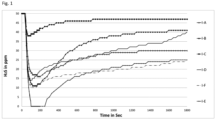
- H 2 S gas with 50 ppm of concentration being passed through the hydrocarbon media, with 0.3L/min flow rate and 1.5 psi pressure (at 25°C with a stirring speed of 1000 rpm).
- the H 2 S scavenger being dosed into gas purging bottle of 250 mL, gas purging bottle of 250 mL, was charged with 100 mL hydrocarbon media.
- H2S gas with 50 ppm concentration was passed through this and concentration of H2S at the outlet of this gas purging bottle was monitored with H2S.
- H2S scavenger typically 0.4 ml of scavenger dissolved in 1.6 mL of butyl Carbitol was charged using syringe.
- the outlet of this gas purging bottle is passed through the gas scrubber.
- the gas scrubber typically scrubs all the gases and vapor apart from H 2 S and allows to pass only H 2 S gas to the detector (e.g. an electrochemical sensor).
- the detector shows the actual concentration of H 2 S in real time throughout the experiment.
- the outlet from the H 2 S detector is passed through aq. NaOH solution in order to neutralize the H 2 S gas.
- the H 2 S amount in ppm in function of the time had been measured and is shown in Fig. 1 , Fig. 2 and Fig. 3 .
Landscapes
- Chemical & Material Sciences (AREA)
- Organic Chemistry (AREA)
- Oil, Petroleum & Natural Gas (AREA)
- Engineering & Computer Science (AREA)
- Chemical Kinetics & Catalysis (AREA)
- General Chemical & Material Sciences (AREA)
- Production Of Liquid Hydrocarbon Mixture For Refining Petroleum (AREA)
- Organic Low-Molecular-Weight Compounds And Preparation Thereof (AREA)
Claims (13)
- Verbindung von Formel (I):

R ein Radikal ist, ausgewählt aus einer linearen, verzweigten oder cyclischen Kohlenwasserstoffgruppe, optional umfassend ein oder mehrere Heteroatome, wie beispielsweise Sauerstoff-, Schwefel-, Halogen-, Silizium- oder Stickstoffatome. - Verbindung nach Anspruch 1, wobei R ausgewählt ist aus: R1-OH, R1-[O-R2]p-OH, optional substituiertem Benzyl, R1-NR3R4, R5, R1-[N(H)-R2]n-NR3R4, R1-[O-R2]p-NR3R4, R1-Q, R1-[N(H)-R2]n-Q, R1-[O-R2]p-Q, R1-N(R3-Q)(R4-Q), wobei:- R1 ausgewählt ist aus einem linearen, verzweigten oder cyclischen Alkyl- oder Alkenylradikal, das 1 bis 24 Kohlenstoffatome, vorzugsweise 1 bis 16 Kohlenstoffatome, bevorzugter 1 bis 12 Kohlenstoffatome, noch bevorzugter 1 bis 8 Kohlenstoffatome aufweist, oder aus einem aromatischen Radikal, optional substituiert durch einen oder mehrere Substituenten, ausgewählt ausC1-C6-Alkyl, Hydroxyl, C1-C6-Alkoxy oder C1-C6-Alkylamin, vorzugsweise einem Phenylradikal, substituiert durch C1-C6-Alkyl;- R2 ein lineares, verzweigtes oder cyclisches Alkyl- oder Alkenylradikal ist, das 1 bis 24 Kohlenstoffatome, vorzugsweise 1 bis 16 Kohlenstoffatome, bevorzugter 1 bis 12 Kohlenstoffatome, noch bevorzugter 1 bis 8 Kohlenstoffatome aufweist;- R3 and R4 unabhängig voneinander ein Wasserstoffatom oder ein lineares, verzweigtes oder cyclisches Alkyl- oder Alkenylradikal ist, das 1 bis 16 Kohlenstoffatome, vorzugsweise 1 bis 12 Kohlenstoffatome, bevorzugter 1 bis 8 Kohlenstoffatome, noch bevorzugter 1 bis 4 Kohlenstoffatome aufweist;- R5 ein lineares, verzweigtes oder cyclisches Alkyl- oder Alkenylradikal ist, das 1 bis 30 Kohlenstoffatome, vorzugsweise 1 bis 24 Kohlenstoffatome, bevorzugter 1 bis 16 Kohlenstoffatome, noch bevorzugter 1 bis 12 Kohlenstoffatome aufweist;- Q ein Radikal ist, ausgewählt aus Morpholin, Piperidin, Piperazin oder dem einwertigen Radikal folgender Formel:
 - das optional substituierte Benzyl ein Benzyl sein kann, substituiert durch einen oder mehrere Substituenten, ausgewählt aus C1-C6-Alkyl, Hydroxyl, C1-C6-Alkoxy, C1-C6-Alkylamin;- n eine ganze Zahl in einem Bereich von 1 bis 10, vorzugsweise von 1 bis 6, bevorzugter von 1 bis 4, noch bevorzugter von 1 bis 2 ist;- p eine ganze Zahl in einem Bereich von 1 bis 10, vorzugsweise von 1 bis 6, bevorzugter von 1 bis 4 und noch bevorzugter von 1 bis 2 ist.
 - Verbindung nach Anspruch 1 oder 2, wobei R ausgewählt ist aus: R1-OH, R1-O-R2-OH, Benzyl, R1-NR3R4, R5, R1-N(H)-R2-NR3R4, R1-O-R2-O-R2-NR3R4, R1-Q, R1-N(H)-R2-Q, R1-O-R2-O-R2-Q, R1-N(R3-Q)2
wobei:- R1 ausgewählt ist aus einem linearen oder verzweigten Alkylradikal, das 1 bis 16 Kohlenstoffatome, vorzugsweise 1 bis 12 Kohlenstoffatome, bevorzugter 1 bis 8 Kohlenstoffatome, noch bevorzugter 1 bis 4 Kohlenstoffatome aufweist, oder aus einem Phenylradikal, substituiert durch C1-C6-Alkyl;- R2 ein lineares oder verzweigtes Alkylradikal ist, das 1 bis 16 Kohlenstoffatome, vorzugsweise 1 bis 12 Kohlenstoffatome, bevorzugter 1 bis 8 Kohlenstoffatome, noch bevorzugter 1 bis 4 Kohlenstoffatome aufweist;- R3 and R4 unabhängig voneinander ein Wasserstoffatom oder ein lineares oder verzweigtes Alkylradikal ist, das 1 bis 16 Kohlenstoffatome, vorzugsweise 1 bis 12 Kohlenstoffatome, bevorzugter 1 bis 8 Kohlenstoffatome, noch bevorzugter 1 bis 4 Kohlenstoffatome aufweist;- R5 ein lineares oder verzweigtes Alkylradikal ist, das 1 bis 24 Kohlenstoffatome, vorzugsweise 1 bis 16 Kohlenstoffatome, bevorzugter 1 bis 12 Kohlenstoffatome, noch bevorzugter 1 bis 8 Kohlenstoffatome aufweist;- Q ein Morpholinradikal oder das einwertige Radikal folgender Formel ist:
- Verbindung nach einem der Ansprüche 1 bis 3, wobei R ausgewählt ist aus: R1-OH, R1-O-R2-OH, Benzyl, R1-NR3R4, R5, R1-N(H)-R2-NR3R4, R1-O-R2-O-R2-NR3R4, R1-Q, R1-N(H)-R2-Q, R1-O-R2-O-R2-Q, R1-N(R3-Q)2, wobei:- R1 ein lineares Alkylradikal ist, das 1 bis 4 Kohlenstoffatome aufweist;- R2 ein lineares Alkylradikal ist, das 1 bis 4 Kohlenstoffatome aufweist;- R3 und R4 unabhängig voneinander ein Wasserstoffatom oder ein lineares Alkylradikal, das 1 bis 4 Kohlenstoffatome aufweist, sind;- R5 ein lineares Alkylradikal ist, das 1 bis 8 Kohlenstoffatome aufweist;- Q ein Morpholinradikal oder das einwertige Radikal ist:

- Verbindung nach einem der Ansprüche 1 bis 4, die einer der folgenden Formeln entspricht:


- Verfahren zum Herstellen der Verbindung nach einem der Ansprüche 1 bis 5, umfassend einen Schritt eines Inkontaktbringens mindestens eines bis(5-Methyloxazolidin-3-yl)methans (BMOM) mit mindestens einem Primäramin.
- Verfahren nach Anspruch 6, wobei der Schritt eines Inkontaktbringens mit einem molaren Verhältnis BMOM:Primäramine in einem Bereich von 1:5 bis 5:1, vorzugsweise von 1:1 bis 3:1, ausgeführt wird.
- Zusammensetzung, umfassend:- 20 bis 98 Gewichts-% mindestens einer Verbindung nach einem der Ansprüche 1 bis 5, und- 2 bis 80 Gewichts-% von Lösungsmittel(n),bezogen auf das Gesamtgewicht der Zusammensetzung.
- Verwendung der Verbindung nach einem der Ansprüche 1 bis 5 oder der Zusammensetzung nach Anspruch 8, um Schwefelwasserstoff und Mercaptane in Strömen, ausgewählt aus Kohlenwasserstoffströmen und wasserhaltigen Strömen, einzufangen.
- Verwendung nach Anspruch 9, wobei die Verbindung in einer Menge von mindestens 1 Gewichts-%, bezogen auf das Gesamtgewicht von Schwefelwasserstoff und Mercaptanen in dem Strom, hinzugefügt wird.
- Verwendung nach Anspruch 9 oder 10, wobei die Ströme ausgewählt sind aus kohlenwasserstoffhaltigen Strömen, wie beispielsweise Flüssiggas (LPG), fertigen Kraftstoffen, Roh- und schweren Rückstandsölen, Erdgasasphalt, Bohrflüssigkeiten auf Ölbasis und wasserhaltigen Strömen, wie beispielsweise Bohrflüssigkeiten auf Wasserbasis.
- Kohlenwasserstoffhaltige Zusammensetzung, umfassend Kohlenwasserstoffe und die Verbindung nach einem der Ansprüche 1 bis 5 oder die Zusammensetzung nach Anspruch 8.
- Wasserhaltiger Strom, umfassend Wasser und die Verbindung nach einem der Ansprüche 1 bis 5 oder die Zusammensetzung nach Anspruch 8.
Applications Claiming Priority (2)
| Application Number | Priority Date | Filing Date | Title |
|---|---|---|---|
| EP21306252.4A EP4148110A1 (de) | 2021-09-13 | 2021-09-13 | Schwefelwasserstoff- und mercaptanfänger |
| PCT/EP2022/075226 WO2023036969A1 (en) | 2021-09-13 | 2022-09-12 | Hydrogen sulphide and mercaptans scavengers |
Publications (2)
| Publication Number | Publication Date |
|---|---|
| EP4402228A1 EP4402228A1 (de) | 2024-07-24 |
| EP4402228B1 true EP4402228B1 (de) | 2025-04-16 |
Family
ID=77998923
Family Applications (2)
| Application Number | Title | Priority Date | Filing Date |
|---|---|---|---|
| EP21306252.4A Withdrawn EP4148110A1 (de) | 2021-09-13 | 2021-09-13 | Schwefelwasserstoff- und mercaptanfänger |
| EP22785952.7A Active EP4402228B1 (de) | 2021-09-13 | 2022-09-12 | Schwefelwasserstoff- und mercaptanfänger |
Family Applications Before (1)
| Application Number | Title | Priority Date | Filing Date |
|---|---|---|---|
| EP21306252.4A Withdrawn EP4148110A1 (de) | 2021-09-13 | 2021-09-13 | Schwefelwasserstoff- und mercaptanfänger |
Country Status (6)
| Country | Link |
|---|---|
| US (1) | US20240392199A1 (de) |
| EP (2) | EP4148110A1 (de) |
| CN (1) | CN117980451A (de) |
| CA (1) | CA3231685A1 (de) |
| DK (1) | DK4402228T3 (de) |
| WO (1) | WO2023036969A1 (de) |
Families Citing this family (2)
| Publication number | Priority date | Publication date | Assignee | Title |
|---|---|---|---|---|
| EP4656707A1 (de) * | 2024-05-30 | 2025-12-03 | TotalEnergies OneTech | Schwefelwasserstoff- und mercaptanfängerzusammensetzung mit einer bestimmten triazinverbindung und einem (poly)ethylenglykol |
| EP4656706A1 (de) * | 2024-05-30 | 2025-12-03 | TotalEnergies OneTech | Schwefelwasserstoff- und mercaptanfängerzusammensetzung mit einer bestimmten triazinverbindung und einem amin |
Family Cites Families (2)
| Publication number | Priority date | Publication date | Assignee | Title |
|---|---|---|---|---|
| GB201813645D0 (en) * | 2018-08-22 | 2018-10-03 | Innospec Ltd | Methods, products & uses relating thereto |
| GB2586594B (en) * | 2019-08-21 | 2021-11-24 | Innospec Ltd | Methods of scavenging acidic sulfide species |
-
2021
- 2021-09-13 EP EP21306252.4A patent/EP4148110A1/de not_active Withdrawn
-
2022
- 2022-09-12 CA CA3231685A patent/CA3231685A1/en active Pending
- 2022-09-12 US US18/690,935 patent/US20240392199A1/en active Pending
- 2022-09-12 DK DK22785952.7T patent/DK4402228T3/da active
- 2022-09-12 EP EP22785952.7A patent/EP4402228B1/de active Active
- 2022-09-12 CN CN202280061148.9A patent/CN117980451A/zh active Pending
- 2022-09-12 WO PCT/EP2022/075226 patent/WO2023036969A1/en not_active Ceased
Also Published As
| Publication number | Publication date |
|---|---|
| DK4402228T3 (da) | 2025-07-14 |
| EP4402228A1 (de) | 2024-07-24 |
| EP4148110A1 (de) | 2023-03-15 |
| CN117980451A (zh) | 2024-05-03 |
| CA3231685A1 (en) | 2023-03-16 |
| WO2023036969A1 (en) | 2023-03-16 |
| US20240392199A1 (en) | 2024-11-28 |
Similar Documents
| Publication | Publication Date | Title |
|---|---|---|
| US5462721A (en) | Hydrogen sulfide scavenging process | |
| JP5890409B2 (ja) | 炭化水素から硫化水素を除去するためのアルファ−アミノエーテルの使用 | |
| US7264786B2 (en) | Method of scavenging hydrogen sulfide and/or mercaptans from fluid and gas streams | |
| US6339153B1 (en) | Method of making reduced water content bisoxazolidine hydrogen sulfide scavengers | |
| TW201323412A (zh) | 六氫三□、其合成及用途 | |
| US20240392199A1 (en) | Hydrogen sulphide and mercaptans scavengers | |
| US8357306B2 (en) | Non-nitrogen sulfide sweeteners | |
| EP3840858A1 (de) | Verfahren zum einfangen von säuresulfidspezies | |
| EP3891259B1 (de) | Schwefelwasserstoff- und mercaptanenabsorbierende zusammensetzungen | |
| US11945999B2 (en) | Hydrogen sulphide and mercaptans scavenging compositions | |
| US2914557A (en) | Polyamine naphthenates | |
| US10617994B2 (en) | Amine based hydrogen sulfide scavenging additive compositions of copper salts, and medium comprising the same | |
| US12187964B2 (en) | Amelioration of solids formation in spent hydrogen sulfide scavengers | |
| US20230365873A1 (en) | Nitrogen-free hydrogen sulphide and mercaptans scavengers | |
| EP4259757B1 (de) | Schwefelwasserstoff- und mercaptanenabsorbierende zusammensetzungen | |
| US20210323953A1 (en) | 1,3, 5-Dioxazine Derivatives, Method of Preparation and Application Thereof as Sulfide Scavenger | |
| WO2019234404A1 (en) | Method and composition for h2s scavenging comprising an imine |
Legal Events
| Date | Code | Title | Description |
|---|---|---|---|
| STAA | Information on the status of an ep patent application or granted ep patent |
Free format text: STATUS: UNKNOWN |
|
| STAA | Information on the status of an ep patent application or granted ep patent |
Free format text: STATUS: THE INTERNATIONAL PUBLICATION HAS BEEN MADE |
|
| PUAI | Public reference made under article 153(3) epc to a published international application that has entered the european phase |
Free format text: ORIGINAL CODE: 0009012 |
|
| STAA | Information on the status of an ep patent application or granted ep patent |
Free format text: STATUS: REQUEST FOR EXAMINATION WAS MADE |
|
| 17P | Request for examination filed |
Effective date: 20240318 |
|
| AK | Designated contracting states |
Kind code of ref document: A1 Designated state(s): AL AT BE BG CH CY CZ DE DK EE ES FI FR GB GR HR HU IE IS IT LI LT LU LV MC MK MT NL NO PL PT RO RS SE SI SK SM TR |
|
| GRAP | Despatch of communication of intention to grant a patent |
Free format text: ORIGINAL CODE: EPIDOSNIGR1 |
|
| STAA | Information on the status of an ep patent application or granted ep patent |
Free format text: STATUS: GRANT OF PATENT IS INTENDED |
|
| DAV | Request for validation of the european patent (deleted) | ||
| DAX | Request for extension of the european patent (deleted) | ||
| INTG | Intention to grant announced |
Effective date: 20241217 |
|
| GRAS | Grant fee paid |
Free format text: ORIGINAL CODE: EPIDOSNIGR3 |
|
| GRAA | (expected) grant |
Free format text: ORIGINAL CODE: 0009210 |
|
| STAA | Information on the status of an ep patent application or granted ep patent |
Free format text: STATUS: THE PATENT HAS BEEN GRANTED |
|
| AK | Designated contracting states |
Kind code of ref document: B1 Designated state(s): AL AT BE BG CH CY CZ DE DK EE ES FI FR GB GR HR HU IE IS IT LI LT LU LV MC MK MT NL NO PL PT RO RS SE SI SK SM TR |
|
| REG | Reference to a national code |
Ref country code: GB Ref legal event code: FG4D |
|
| REG | Reference to a national code |
Ref country code: CH Ref legal event code: EP |
|
| REG | Reference to a national code |
Ref country code: IE Ref legal event code: FG4D |
|
| REG | Reference to a national code |
Ref country code: DE Ref legal event code: R096 Ref document number: 602022013326 Country of ref document: DE |
|
| REG | Reference to a national code |
Ref country code: NL Ref legal event code: FP |
|
| REG | Reference to a national code |
Ref country code: DK Ref legal event code: T3 Effective date: 20250703 |
|
| REG | Reference to a national code |
Ref country code: AT Ref legal event code: MK05 Ref document number: 1785681 Country of ref document: AT Kind code of ref document: T Effective date: 20250416 |
|
| PG25 | Lapsed in a contracting state [announced via postgrant information from national office to epo] |
Ref country code: ES Free format text: LAPSE BECAUSE OF FAILURE TO SUBMIT A TRANSLATION OF THE DESCRIPTION OR TO PAY THE FEE WITHIN THE PRESCRIBED TIME-LIMIT Effective date: 20250416 Ref country code: FI Free format text: LAPSE BECAUSE OF FAILURE TO SUBMIT A TRANSLATION OF THE DESCRIPTION OR TO PAY THE FEE WITHIN THE PRESCRIBED TIME-LIMIT Effective date: 20250416 Ref country code: PT Free format text: LAPSE BECAUSE OF FAILURE TO SUBMIT A TRANSLATION OF THE DESCRIPTION OR TO PAY THE FEE WITHIN THE PRESCRIBED TIME-LIMIT Effective date: 20250818 |
|
| PGFP | Annual fee paid to national office [announced via postgrant information from national office to epo] |
Ref country code: DE Payment date: 20250919 Year of fee payment: 4 Ref country code: DK Payment date: 20250923 Year of fee payment: 4 |
|
| REG | Reference to a national code |
Ref country code: LT Ref legal event code: MG9D |
|
| PG25 | Lapsed in a contracting state [announced via postgrant information from national office to epo] |
Ref country code: GR Free format text: LAPSE BECAUSE OF FAILURE TO SUBMIT A TRANSLATION OF THE DESCRIPTION OR TO PAY THE FEE WITHIN THE PRESCRIBED TIME-LIMIT Effective date: 20250717 |
|
| PGFP | Annual fee paid to national office [announced via postgrant information from national office to epo] |
Ref country code: NO Payment date: 20250923 Year of fee payment: 4 |
|
| PG25 | Lapsed in a contracting state [announced via postgrant information from national office to epo] |
Ref country code: PL Free format text: LAPSE BECAUSE OF FAILURE TO SUBMIT A TRANSLATION OF THE DESCRIPTION OR TO PAY THE FEE WITHIN THE PRESCRIBED TIME-LIMIT Effective date: 20250416 |
|
| PGFP | Annual fee paid to national office [announced via postgrant information from national office to epo] |
Ref country code: NL Payment date: 20250918 Year of fee payment: 4 |
|
| PG25 | Lapsed in a contracting state [announced via postgrant information from national office to epo] |
Ref country code: BG Free format text: LAPSE BECAUSE OF FAILURE TO SUBMIT A TRANSLATION OF THE DESCRIPTION OR TO PAY THE FEE WITHIN THE PRESCRIBED TIME-LIMIT Effective date: 20250416 |
|
| PG25 | Lapsed in a contracting state [announced via postgrant information from national office to epo] |
Ref country code: HR Free format text: LAPSE BECAUSE OF FAILURE TO SUBMIT A TRANSLATION OF THE DESCRIPTION OR TO PAY THE FEE WITHIN THE PRESCRIBED TIME-LIMIT Effective date: 20250416 |
|
| PG25 | Lapsed in a contracting state [announced via postgrant information from national office to epo] |
Ref country code: AT Free format text: LAPSE BECAUSE OF FAILURE TO SUBMIT A TRANSLATION OF THE DESCRIPTION OR TO PAY THE FEE WITHIN THE PRESCRIBED TIME-LIMIT Effective date: 20250416 |
|
| PGFP | Annual fee paid to national office [announced via postgrant information from national office to epo] |
Ref country code: FR Payment date: 20250922 Year of fee payment: 4 |
|
| PG25 | Lapsed in a contracting state [announced via postgrant information from national office to epo] |
Ref country code: RS Free format text: LAPSE BECAUSE OF FAILURE TO SUBMIT A TRANSLATION OF THE DESCRIPTION OR TO PAY THE FEE WITHIN THE PRESCRIBED TIME-LIMIT Effective date: 20250716 |
|
| PG25 | Lapsed in a contracting state [announced via postgrant information from national office to epo] |
Ref country code: IS Free format text: LAPSE BECAUSE OF FAILURE TO SUBMIT A TRANSLATION OF THE DESCRIPTION OR TO PAY THE FEE WITHIN THE PRESCRIBED TIME-LIMIT Effective date: 20250816 |
|
| PG25 | Lapsed in a contracting state [announced via postgrant information from national office to epo] |
Ref country code: LV Free format text: LAPSE BECAUSE OF FAILURE TO SUBMIT A TRANSLATION OF THE DESCRIPTION OR TO PAY THE FEE WITHIN THE PRESCRIBED TIME-LIMIT Effective date: 20250416 |
|
| PG25 | Lapsed in a contracting state [announced via postgrant information from national office to epo] |
Ref country code: SM Free format text: LAPSE BECAUSE OF FAILURE TO SUBMIT A TRANSLATION OF THE DESCRIPTION OR TO PAY THE FEE WITHIN THE PRESCRIBED TIME-LIMIT Effective date: 20250416 |
|
| PGFP | Annual fee paid to national office [announced via postgrant information from national office to epo] |
Ref country code: IT Payment date: 20250930 Year of fee payment: 4 |
|
| REG | Reference to a national code |
Ref country code: DE Ref legal event code: R097 Ref document number: 602022013326 Country of ref document: DE |
|
| PG25 | Lapsed in a contracting state [announced via postgrant information from national office to epo] |
Ref country code: CZ Free format text: LAPSE BECAUSE OF FAILURE TO SUBMIT A TRANSLATION OF THE DESCRIPTION OR TO PAY THE FEE WITHIN THE PRESCRIBED TIME-LIMIT Effective date: 20250416 |
|
| PG25 | Lapsed in a contracting state [announced via postgrant information from national office to epo] |
Ref country code: EE Free format text: LAPSE BECAUSE OF FAILURE TO SUBMIT A TRANSLATION OF THE DESCRIPTION OR TO PAY THE FEE WITHIN THE PRESCRIBED TIME-LIMIT Effective date: 20250416 |
|
| PG25 | Lapsed in a contracting state [announced via postgrant information from national office to epo] |
Ref country code: SK Free format text: LAPSE BECAUSE OF FAILURE TO SUBMIT A TRANSLATION OF THE DESCRIPTION OR TO PAY THE FEE WITHIN THE PRESCRIBED TIME-LIMIT Effective date: 20250416 |
|
| PLBE | No opposition filed within time limit |
Free format text: ORIGINAL CODE: 0009261 |
|
| STAA | Information on the status of an ep patent application or granted ep patent |
Free format text: STATUS: NO OPPOSITION FILED WITHIN TIME LIMIT |
|
| REG | Reference to a national code |
Ref country code: CH Ref legal event code: L10 Free format text: ST27 STATUS EVENT CODE: U-0-0-L10-L00 (AS PROVIDED BY THE NATIONAL OFFICE) Effective date: 20260225 |
|
| PG25 | Lapsed in a contracting state [announced via postgrant information from national office to epo] |
Ref country code: RO Free format text: LAPSE BECAUSE OF FAILURE TO SUBMIT A TRANSLATION OF THE DESCRIPTION OR TO PAY THE FEE WITHIN THE PRESCRIBED TIME-LIMIT Effective date: 20250416 |
|
| 26N | No opposition filed |
Effective date: 20260119 |
|
| REG | Reference to a national code |
Ref country code: CH Ref legal event code: H13 Free format text: ST27 STATUS EVENT CODE: U-0-0-H10-H13 (AS PROVIDED BY THE NATIONAL OFFICE) Effective date: 20260504 |