EP4401475A2 - Signalübertragungsverfahren, netzwerkvorrichtung und endgerätevorrichtung - Google Patents
Signalübertragungsverfahren, netzwerkvorrichtung und endgerätevorrichtung Download PDFInfo
- Publication number
- EP4401475A2 EP4401475A2 EP24161068.2A EP24161068A EP4401475A2 EP 4401475 A2 EP4401475 A2 EP 4401475A2 EP 24161068 A EP24161068 A EP 24161068A EP 4401475 A2 EP4401475 A2 EP 4401475A2
- Authority
- EP
- European Patent Office
- Prior art keywords
- paging
- signal
- terminal device
- resource
- period
- Prior art date
- Legal status (The legal status is an assumption and is not a legal conclusion. Google has not performed a legal analysis and makes no representation as to the accuracy of the status listed.)
- Pending
Links
- 238000000034 method Methods 0.000 title claims abstract description 65
- 230000008054 signal transmission Effects 0.000 title claims abstract description 19
- 238000004891 communication Methods 0.000 claims description 21
- 238000004590 computer program Methods 0.000 claims description 6
- 230000005540 biological transmission Effects 0.000 description 49
- 230000006870 function Effects 0.000 description 39
- 230000011664 signaling Effects 0.000 description 28
- 238000004364 calculation method Methods 0.000 description 12
- 238000010586 diagram Methods 0.000 description 12
- 230000008569 process Effects 0.000 description 10
- 230000008859 change Effects 0.000 description 6
- 230000000737 periodic effect Effects 0.000 description 4
- 239000002699 waste material Substances 0.000 description 4
- 230000008878 coupling Effects 0.000 description 3
- 238000010168 coupling process Methods 0.000 description 3
- 238000005859 coupling reaction Methods 0.000 description 3
- 238000012545 processing Methods 0.000 description 3
- 230000002618 waking effect Effects 0.000 description 3
- 230000000977 initiatory effect Effects 0.000 description 2
- 230000007774 longterm Effects 0.000 description 2
- 238000010295 mobile communication Methods 0.000 description 2
- 238000004422 calculation algorithm Methods 0.000 description 1
- 230000001413 cellular effect Effects 0.000 description 1
- 125000004122 cyclic group Chemical group 0.000 description 1
- 238000013461 design Methods 0.000 description 1
- 238000001514 detection method Methods 0.000 description 1
- 238000005516 engineering process Methods 0.000 description 1
- PCHJSUWPFVWCPO-UHFFFAOYSA-N gold Chemical group [Au] PCHJSUWPFVWCPO-UHFFFAOYSA-N 0.000 description 1
- 238000012544 monitoring process Methods 0.000 description 1
- 230000009466 transformation Effects 0.000 description 1
- 230000001131 transforming effect Effects 0.000 description 1
Images

Classifications
-
- H—ELECTRICITY
- H04—ELECTRIC COMMUNICATION TECHNIQUE
- H04W—WIRELESS COMMUNICATION NETWORKS
- H04W52/00—Power management, e.g. Transmission Power Control [TPC] or power classes
- H04W52/02—Power saving arrangements
- H04W52/0209—Power saving arrangements in terminal devices
- H04W52/0225—Power saving arrangements in terminal devices using monitoring of external events, e.g. the presence of a signal
- H04W52/0229—Power saving arrangements in terminal devices using monitoring of external events, e.g. the presence of a signal where the received signal is a wanted signal
-
- H—ELECTRICITY
- H04—ELECTRIC COMMUNICATION TECHNIQUE
- H04W—WIRELESS COMMUNICATION NETWORKS
- H04W4/00—Services specially adapted for wireless communication networks; Facilities therefor
- H04W4/02—Services making use of location information
- H04W4/025—Services making use of location information using location based information parameters
-
- H—ELECTRICITY
- H04—ELECTRIC COMMUNICATION TECHNIQUE
- H04W—WIRELESS COMMUNICATION NETWORKS
- H04W52/00—Power management, e.g. Transmission Power Control [TPC] or power classes
- H04W52/02—Power saving arrangements
- H04W52/0209—Power saving arrangements in terminal devices
- H04W52/0212—Power saving arrangements in terminal devices managed by the network, e.g. network or access point is leader and terminal is follower
- H04W52/0216—Power saving arrangements in terminal devices managed by the network, e.g. network or access point is leader and terminal is follower using a pre-established activity schedule, e.g. traffic indication frame
-
- H—ELECTRICITY
- H04—ELECTRIC COMMUNICATION TECHNIQUE
- H04W—WIRELESS COMMUNICATION NETWORKS
- H04W68/00—User notification, e.g. alerting and paging, for incoming communication, change of service or the like
- H04W68/005—Transmission of information for alerting of incoming communication
-
- H—ELECTRICITY
- H04—ELECTRIC COMMUNICATION TECHNIQUE
- H04W—WIRELESS COMMUNICATION NETWORKS
- H04W68/00—User notification, e.g. alerting and paging, for incoming communication, change of service or the like
- H04W68/02—Arrangements for increasing efficiency of notification or paging channel
-
- H—ELECTRICITY
- H04—ELECTRIC COMMUNICATION TECHNIQUE
- H04W—WIRELESS COMMUNICATION NETWORKS
- H04W72/00—Local resource management
- H04W72/20—Control channels or signalling for resource management
- H04W72/23—Control channels or signalling for resource management in the downlink direction of a wireless link, i.e. towards a terminal
-
- H—ELECTRICITY
- H04—ELECTRIC COMMUNICATION TECHNIQUE
- H04W—WIRELESS COMMUNICATION NETWORKS
- H04W76/00—Connection management
- H04W76/10—Connection setup
- H04W76/11—Allocation or use of connection identifiers
-
- Y—GENERAL TAGGING OF NEW TECHNOLOGICAL DEVELOPMENTS; GENERAL TAGGING OF CROSS-SECTIONAL TECHNOLOGIES SPANNING OVER SEVERAL SECTIONS OF THE IPC; TECHNICAL SUBJECTS COVERED BY FORMER USPC CROSS-REFERENCE ART COLLECTIONS [XRACs] AND DIGESTS
- Y02—TECHNOLOGIES OR APPLICATIONS FOR MITIGATION OR ADAPTATION AGAINST CLIMATE CHANGE
- Y02D—CLIMATE CHANGE MITIGATION TECHNOLOGIES IN INFORMATION AND COMMUNICATION TECHNOLOGIES [ICT], I.E. INFORMATION AND COMMUNICATION TECHNOLOGIES AIMING AT THE REDUCTION OF THEIR OWN ENERGY USE
- Y02D30/00—Reducing energy consumption in communication networks
- Y02D30/70—Reducing energy consumption in communication networks in wireless communication networks
Definitions
- This application relates to the communications field, and more specifically, to a signal transmission method, a network device, and a terminal device.
- a terminal device In a wireless communications system, a terminal device usually has two modes: a connected mode and an idle mode (or a sleep mode). When the terminal device is in the idle mode, the terminal device cannot directly communicate with a network device. To ensure that the network device can effectively find the terminal device in the idle mode, the network device usually sends paging scheduling information to the terminal device in a paging manner, that is, periodically, to indicate whether the terminal device needs to be switched from the idle mode to the connected mode to communicate with the network device. After receiving the paging scheduling information, the terminal device may wake up to enter the connected state, to send or receive service data.
- paging scheduling information After receiving the paging scheduling information, the terminal device may wake up to enter the connected state, to send or receive service data.
- the terminal device in the idle mode periodically wakes up to listen to the paging scheduling information.
- a period of periodic wakeup is referred to as a discontinuous reception (Discontinuous Reception, DRX) period.
- a time point at which the terminal device wakes up is referred to as a paging occasion (Paging Occasion, PO), and one DRX period includes at least one PO.
- the terminal device in the idle mode remains in the idle mode at most time in a DRX period, and wakes up only at a corresponding PO to listen to the paging scheduling information. In a DRX period, the terminal device needs to wake up only on one PO to listen to the paging scheduling information.
- IoT internet of things
- services of many terminal devices are characterized by proactive reporting, that is, uplink-oriented, and there is a relatively low probability that the terminal device is paged.
- a system message (a useful system message except a conventional system frame number or the like) is not frequently changed. Therefore, most POs may be empty.
- the network device does not send corresponding paging scheduling information on POs in most DRX periods. However, the terminal device still needs to wake up on a PO in each DRX period to listen to the paging scheduling information. This actually causes a power consumption waste.
- a terminal device generally has a requirement for low power consumption, and therefore power consumption of the terminal device needs to be reduced as much as possible, to prolong a battery lifespan of the terminal device.
- the power consumption of the terminal device is directly proportional to a working (signal sending or receiving) time of the terminal device.
- a plurality of terminal devices share one PO, in other words, the plurality of terminals listen to paging scheduling information at a same PO.
- the paging scheduling information may be specific to only a few terminal devices or even one terminal device of all the terminal devices that share the PO.
- another terminal device still needs to receive the paging scheduling information, and can determine, only after the another terminal device parses a paging message (the paging message is scheduled by using the paging scheduling information), that the another terminal device is not paged. Consequently, power consumption of the terminal device is increased, and a battery lifespan of the terminal device is shortened. Therefore, a new method urgently needs to be provided to avoid a power consumption waste.
- Embodiments of this application provide a signal transmission method, a network device, and a terminal device, to reduce power consumption of a terminal device.
- a signal transmission method including:
- the network device sends the first signal to the terminal device, where the first signal is used to indicate, to the terminal device, that there is or there is no paging scheduling information on the first paging occasion, so that the terminal device determines, based on the first signal, whether to listen on a downlink control channel, reducing power consumption of the terminal device.
- the paging configuration parameter includes at least one of a paging frame number, a paging period, a paging density, a paging frame quantity, or a quantity of paging occasions in a paging frame.
- the first parameter set includes at least one of a period indication parameter of a first signal cluster, a start transmission location indication parameter of the first signal cluster, a quantity indication parameter, or a frequency domain resource location indication parameter of the first signal cluster, and the first signal cluster includes at least one signal.
- the period indication parameter of the first signal cluster is used to indicate a period of the first signal cluster
- the period indication parameter includes an explicit period indication parameter and/or an implicit period indication parameter, the explicit period indication parameter indicates an index number of a period value of the first signal cluster, and the implicit period indication parameter indicates at least one of a quantity of first signal clusters in one paging period or a ratio of a quantity of first signal clusters in one paging period to a quantity of paging occasions.
- the start transmission location indication parameter of the first signal cluster is used to indicate a start transmission location of the first signal cluster in time domain.
- the start transmission location indication parameter indicates a relative location of the start transmission location of the first signal cluster to a second paging occasion, and the second paging occasion is the 1 st paging occasion of at least one paging occasion corresponding to the first signal cluster.
- the quantity indication parameter is used to indicate at least one of a quantity of first signals in a paging period, a quantity of first signal clusters in a paging period, or a quantity of first signals in a first signal cluster
- the quantity parameter indicates at least one of: an index number of the quantity of first signals in the paging period, an index number of the quantity of first signal clusters in the paging period, an index number of the quantity of first signals in the first signal cluster, a ratio of a quantity of paging occasions in the paging period to the quantity of first signals, a ratio of a quantity of paging occasions in the paging period to the quantity of first signal clusters, or a ratio of a quantity of paging occasions in a period of the first signal cluster to the quantity of first signals.
- the frequency domain resource location indication parameter of the first signal is used to indicate a frequency domain resource location of the first signal.
- the frequency domain resource location indication parameter includes an explicit frequency domain resource location indication parameter and/or an implicit frequency domain resource location indication parameter, the explicit frequency domain resource location indication parameter indicates an index number of the frequency domain resource location, and the implicit frequency domain resource location indication parameter indicates a relative location of the frequency domain resource location of the first signal to a frequency domain resource location of the first paging occasion.
- each first signal in the first signal cluster may include a corresponding number or index.
- the first resource may correspond to a number of the first signal in the first signal cluster After obtaining the number or the index of the first signal, the network device or the terminal device may learn of a corresponding resource location.
- a quantity of first signals may be the same as or different from a quantity of POs.
- the network device may determine a PO by using the paging configuration parameter, and determine, by using the period indication parameter of the first signal cluster and the start transmission location indication parameter of the first signal cluster, a location of the 1 st first signal cluster that is before the PO.
- the network device or the terminal device may determine, by using a first calculation rule, a corresponding number of a first signal in the 1 st first signal cluster that is before the PO, to determine the first resource.
- the corresponding number of the first signal may be determined by using a function of at least one of the paging configuration parameter or the quantity indication parameter.
- the paging configuration parameter includes PF SFN , T, nB, N, and Ns
- the quantity indication parameter includes N wus , n, or the like.
- the network device may determine PF SFN by using T, N, and nB in the paging configuration parameter, and further determine the corresponding number of the first signal by using a function of at least one of PF SFN , T, nB, N wus , or n.
- PF SFN represents a system frame number corresponding to the PO, and is also referred to as a paging frame number
- T represents a paging period of the terminal device
- nB represents a paging density
- N wus represents a quantity of first signals in the first signal cluster
- n represents that a quantity of POs in a period of the first signal cluster is n times of the quantity of first signals in the first signal cluster.
- the network device can determine the corresponding number of the first signal by calculating the function of PF SFN , T, nB, N wus , and n, to obtain the first resource corresponding to the corresponding number
- a quantity of first signals may be less than a quantity of POs; in this case, one first signal corresponds to a plurality of POs.
- W index represents the number of the first signal in the first signal cluster
- ⁇ ⁇ represents a round-down operation
- PF SFN represents a system frame number, to be specific, a system frame number corresponding to the first paging occasion
- T represents a paging period of the terminal device
- nB represents a paging density
- N wus represents the quantity of first signals in the first signal cluster
- n represents that a quantity of POs in a period of the first signal cluster is n times of the quantity of signals in the first signal cluster
- PF SFN mod T T / nB mod n ⁇ N wus represents a number of a PO in at least one PO corresponding to the first signal cluster.
- the network device can determine the number of the first signal based on the forgoing formula, to obtain the first resource.
- the network device can determine the number of the first signal based on the forgoing formula, to obtain the first resource.
- the first resource is determined based on the paging configuration parameter, the first parameter set, and the terminal device identifier.
- the network device may determine, based on the paging configuration parameter, the first parameter set, and the terminal device identifier UEID, the first resource for sending the first signal.
- the network device may determine the PO by using the paging configuration parameter, and determine, by using the period indication parameter of the first signal cluster and the start transmission location indication parameter of the first signal cluster, a location of the 1 st first signal cluster that is before the PO.
- the network device may determine, by using a second calculation rule, a corresponding number of a first signal in the 1 st first signal cluster that is before the PO, to determine the first resource.
- the corresponding number of the first signal may be determined by using a function of at least one of the paging configuration parameter, the quantity indication parameter, or the terminal device identifier.
- the paging configuration parameter includes PF SFN , T, nB, N, and Ns
- the quantity indication parameter includes N wus , n, and the like
- PF SFN may be determined based on T, N, and nB in the paging configuration parameter
- the corresponding number is further determined by using a function of at least one of PF SFN , T, nB, N wus , n, or UEID.
- PF SFN represents a system frame number corresponding to the PO, and is also referred to as a paging frame number
- T represents a paging period of the terminal device
- nB represents a paging density
- N wus represents a quantity of first signals in the first signal cluster
- n represents that a quantity of POs in a period of the first signal cluster is n times of the quantity of first signals in the first signal cluster
- UEID represents the terminal device identifier.
- the network device can determine the corresponding number of the first signal by calculating the function of PF SFN , T, nB, N wus , n, and UEID, to obtain the first resource corresponding to the corresponding number.
- W index represents the number of the first signal in the first signal cluster
- PF SFN represents a system frame number corresponding to the first paging occasion
- T represents a paging period of the terminal device
- nB represents a paging density
- N wus represents the quantity of first signals in the first signal cluster
- n represents that a quantity of POs in a period of the first signal cluster is n times of the quantity of first signals in the first signal cluster
- w index 0 represents a number of the first paging occasion in at least one paging occasion
- w index 1 represents a number, in n first signals corresponding to one first paging occasion, of a first signal corresponding to a UEID
- UEID represents the terminal device identifier
- a value of N is min(T, nB).
- the first resource is determined based on the paging configuration parameter, the first parameter set, and the terminal device identification code.
- the network device may determine, based on the paging configuration parameter, the first parameter set, and the terminal identification code IMSI, the first resource for sending the first signal.
- the network device may determine a PO by using the paging configuration parameter, and determine, by using the period indication parameter of the first signal cluster and the start transmission location indication parameter of the first signal cluster, a location of the 1 st first signal cluster that is before the PO.
- the network device may determine, by using a third calculation rule, a corresponding number of a first signal in the 1 st first signal cluster that is before the PO, to determine the first resource.
- the corresponding number of the first signal may be determined by using a function of at least one of the paging configuration parameter, the quantity indication parameter, or the terminal device identification code.
- a quantity of first signals may be greater than a quantity of POs
- one PO corresponds to a plurality of first signals.
- one terminal device identifier UEID corresponds to a plurality of terminal device identification codes IMSI.
- the network device may determine, based on the terminal device identification code IMSI, the first resource for sending the first signal.
- the paging configuration parameter includes PF SFN , T, nB, N, and Ns
- the quantity indication parameter includes N wus , n, and the like
- PF SFN may be determined based on T, N, and nB in the paging configuration parameter, and the corresponding number of the first signal is further determined by using a function of at least one of PF SFN , T, nB, N wus , n, or IMSI.
- PF SFN represents a system frame number corresponding to the PO, and is also referred to as a paging frame number
- T represents a paging period of the terminal device
- nB represents a paging density
- N wus represents a quantity of first signals in the first signal cluster
- n represents that a quantity of POs in a period of the first signal cluster is n times of the quantity of first signals in the first signal cluster
- IMSI represents the terminal device identification code.
- the network device can determine the corresponding number of the first signal by calculating the function of PF SFN , T, nB, N wus , n, and IMSI, to obtain the first resource corresponding to the corresponding number
- a value of M is a positive integer, and a value range of M may be large enough. When the value of M is large enough, IMSI mod M is approximately equal to IMSI.
- a value of C is a positive integer, is preferably an integer multiple of 2, and may be 1024, 4096, or another possible value. This is not limited.
- At least one signal in the first signal cluster is transmitted in a continuous time division manner or in a distributed time division manner.
- a time domain start location of the first resource is before a time domain start location of the first paging occasion; or a time domain start location of the first resource is the same as a time domain start location of the first paging occasion.
- the network device when the time domain start location of the first resource is consistent with the time domain start location corresponding to the first paging occasion, if there is valid paging scheduling information and/or a system message change, the network device sends the paging scheduling information on the first paging occasion. If there is no valid paging scheduling information and/or no system message change, the network device sends the first signal on the first paging occasion.
- the first signal indicates, to the terminal device, that there is or there is no paging scheduling information on the first paging occasion.
- the terminal device may first attempt to detect a first signal.
- the terminal device may continue to sleep and enter the idle mode. Alternatively, if the first signal indicates that there is paging scheduling information on the first paging occasion, the terminal device may continue to listen on search space to receive the paging scheduling information.
- a frequency domain resource of the first resource is the same as a frequency domain resource corresponding to the first paging occasion; or there is a spacing between a frequency domain resource of the first resource and a frequency domain resource corresponding to the first paging occasion.
- the method further includes: sending, by the network device, at least one element of the paging configuration parameter and/or at least one element of the first parameter set to the terminal device by using higher layer signaling.
- the higher layer signaling may be a system message or other higher layer signaling.
- the higher layer signaling may be radio resource control (Radio Resource Control, RRC) signaling.
- the system message may be a system information block (System Information Block, SIB) or a master information block (Master Information Block, MIB).
- a signal transmission method including:
- the terminal device determines the first resource based on the at least one of the paging configuration parameter, the first parameter set, the terminal device identifier, or the terminal device identification code; receives, on the first resource, the first signal sent by the network device, where the first signal is used to indicate, to the terminal device, that there is or there is no paging scheduling information on the first paging occasion; and determines, based on the first signal, whether to listen on the downlink control channel, reducing power consumption of the terminal device.
- the paging configuration parameter includes at least one of a paging frame number, a paging period, a paging density, a paging frame quantity, or a quantity of paging occasions in a paging frame.
- the first parameter set includes at least one of a period indication parameter of a first signal cluster, a start transmission location indication parameter of the first signal cluster, a quantity indication parameter, or a frequency domain resource location indication parameter of the first signal cluster, and the first signal cluster includes at least one signal.
- the period indication parameter of the first signal cluster is used to indicate a period of the first signal cluster
- the period indication parameter includes an explicit period indication parameter and/or an implicit period indication parameter, the explicit period indication parameter indicates an index number of a period value of the first signal cluster, and the implicit period indication parameter indicates at least one of a quantity of first signal clusters in one paging period or a ratio of a quantity of first signal clusters in one paging period to a quantity of paging occasions.
- the start transmission location indication parameter of the first signal cluster is used to indicate a start transmission location of the first signal cluster in time domain.
- the start transmission location indication parameter indicates a relative location of the start transmission location of the first signal cluster to a second paging occasion, and the second paging occasion is the 1 st paging occasion of at least one paging occasion corresponding to the first signal cluster.
- the quantity indication parameter is used to indicate at least one of a quantity of first signals in a paging period, a quantity of first signal clusters in a paging period, or a quantity of first signals in a first signal cluster
- the quantity parameter indicates at least one of: an index number of the quantity of first signals in the paging period, an index number of the quantity of first signal clusters in the paging period, an index number of the quantity of first signals in the first signal cluster, a ratio of a quantity of paging occasions in the paging period to the quantity of first signals, a ratio of a quantity of paging occasions in the paging period to the quantity of first signal clusters, or a ratio of a quantity of paging occasions in a period of the first signal cluster to the quantity of first signals.
- the frequency domain resource location indication parameter of the first signal is used to indicate a frequency domain resource location of the first signal.
- the frequency domain resource location indication parameter includes an explicit frequency domain resource location indication parameter and/or an implicit frequency domain resource location indication parameter, the explicit frequency domain resource location indication parameter indicates an index number of the frequency domain resource location, and the implicit frequency domain resource location indication parameter indicates a relative location of the frequency domain resource location of the first signal to a frequency domain resource location of the first paging occasion.
- each first signal in the first signal cluster may include a corresponding number or index.
- the first resource may correspond to a number of the first signal in the first signal cluster After obtaining the number or the index of the first signal, the network device may learn of a corresponding resource location.
- a quantity of first signals may be the same as or different from a quantity of POs.
- the terminal device may determine a PO by using the paging configuration parameter, and determine, by using the period indication parameter of the first signal cluster and the start transmission location indication parameter of the first signal cluster, a location of the 1 st first signal cluster that is before the PO.
- the terminal device may determine, by using a first calculation rule, a corresponding number of a first signal in the 1 st first signal cluster that is before the PO, to determine the first resource.
- the corresponding number of the first signal may be determined by using a function of at least one of the paging configuration parameter or the quantity indication parameter.
- the paging configuration parameter includes PF SFN , T, nB, N, and Ns
- the quantity indication parameter includes N wus , n, or the like.
- the terminal device may determine PF SFN by using T, N, and nB in the paging configuration parameter, and further determine the corresponding number of the first signal by using a function of at least one of PF SFN , T, nB, N wus , or n.
- PF SFN represents a system frame number corresponding to the PO, and is also referred to as a paging frame number
- T represents a paging period of the terminal device
- nB represents a paging density
- N wus represents a quantity of first signals in the first signal cluster
- n represents that a quantity of POs in a period of the first signal cluster is n times of the quantity of first signals in the first signal cluster.
- the terminal device can determine the corresponding number of the first signal by calculating the function of PF SFN , T, nB, N wus , and n, to obtain the first resource corresponding to the corresponding number
- a quantity of first signals may be less than a quantity of POs; in this case, one first signal corresponds to a plurality of POs.
- W index represents the number of the first signal in the first signal cluster
- ⁇ ⁇ represents a round-down operation
- PF SFN represents a system frame number, to be specific, a system frame number corresponding to the first paging occasion
- T represents a paging period of the terminal device
- nB represents a paging density
- N wus represents the quantity of first signals in the first signal cluster
- n represents that a quantity of POs in a period of the first signal cluster is n times of the quantity of signals in the first signal cluster
- PF SFN mod T T / nB mod n ⁇ N wus represents a number of a PO in at least one PO corresponding to the first signal cluster.
- the terminal device can determine the number of the first signal based on the forgoing formula, to obtain the first resource.
- the terminal device can determine the number of the first signal based on the forgoing formula, to obtain the first resource.
- the first resource is determined based on the paging configuration parameter, the first parameter set, and the terminal device identifier.
- the terminal device may determine, based on the paging configuration parameter, the first parameter set, and the terminal device identifier UEID, the first resource for sending the first signal.
- the terminal device may determine the PO by using the paging configuration parameter, and determine, by using the period indication parameter of the first signal cluster and the start transmission location indication parameter of the first signal cluster, a location of the 1 st first signal cluster that is before the PO.
- the terminal device may determine, by using a second calculation rule, a corresponding number of a first signal in the 1 st first signal cluster that is before the PO, to determine the first resource.
- the corresponding number of the first signal may be determined by using a function of at least one of the paging configuration parameter, the quantity indication parameter, or the terminal device identifier.
- the paging configuration parameter includes PF SFN , T, nB, N, and Ns
- the quantity indication parameter includes N wus , n, and the like
- PF SFN may be determined based on T, N, and nB in the paging configuration parameter
- the corresponding number is further determined by using a function of at least one of PF SFN , T, nB, N wus , n, or UEID.
- PF SFN represents a system frame number corresponding to the PO, and is also referred to as a paging frame number
- T represents a paging period of the terminal device
- nB represents a paging density
- N wus represents a quantity of first signals in the first signal cluster
- n represents that a quantity of POs in a period of the first signal cluster is n times of the quantity of first signals in the first signal cluster
- UEID represents the terminal device identifier.
- the terminal device can determine the corresponding number of the first signal by calculating the function of PF SFN , T, nB, N wus , n, and UEID, to obtain the first resource corresponding to the corresponding number.
- W index represents the number of the first signal in the first signal cluster
- PF SFN represents a system frame number corresponding to the first paging occasion
- T represents a paging period of the terminal device
- nB represents a paging density
- N wus represents the quantity of first signals in the first signal cluster
- n represents that a quantity of POs in a period of the first signal cluster is n times of the quantity of first signals in the first signal cluster
- w index 0 represents a number of the first paging occasion in at least one paging occasion
- w index 1 represents a number, in n first signals corresponding to one first paging occasion, of a first signal corresponding to a UEID
- UEID represents the terminal device identifier
- a value of N is min(T, nB).
- the first resource is determined based on the paging configuration parameter, the first parameter set, and the terminal device identification code.
- the terminal device may determine, based on the paging configuration parameter, the first parameter set, and the terminal device identification code IMSI, the first resource for sending the first signal.
- the terminal device may determine a PO by using the paging configuration parameter, and determine, by using the period indication parameter of the first signal cluster and the start transmission location indication parameter of the first signal cluster, a location of the 1 st first signal cluster that is before the PO.
- the terminal device may determine, by using a third calculation rule, a corresponding number of a first signal in the 1 st first signal cluster that is before the PO, to determine the first resource.
- the corresponding number of the first signal may be determined by using a function of at least one of the paging configuration parameter, the quantity indication parameter, or the terminal device identification code.
- a quantity of first signals may be greater than a quantity of POs
- one PO corresponds to a plurality of first signals.
- one terminal device identifier UEID corresponds to a plurality of terminal device identification codes IMSI.
- the terminal device may determine, based on the terminal device identification code IMSI, the first resource for sending the first signal.
- the paging configuration parameter includes PF SFN , T, nB, N, and Ns
- the quantity indication parameter includes N wus , n, and the like
- PF SFN may be determined based on T, N, and nB in the paging configuration parameter, and the corresponding number of the first signal is further determined by using a function of at least one of PF SFN , T, nB, N wus , n, or IMSI.
- PF SFN represents a system frame number corresponding to the PO, and is also referred to as a paging frame number
- T represents a paging period of the terminal device
- nB represents a paging density
- N wus represents a quantity of first signals in the first signal cluster
- n represents that a quantity of POs in a period of the first signal cluster is n times of the quantity of first signals in the first signal cluster
- IMSI represents the terminal device identification code.
- the terminal device can determine the corresponding number of the first signal by calculating the function of PF SFN , T, nB, N wus , n, and IMSI, to obtain the first resource corresponding to the corresponding number
- a value of M is a positive integer, and a value range of M may be large enough. When the value of M is large enough, IMSI mod M is approximately equal to IMSI.
- a value of C is a positive integer, is preferably an integer multiple of 2, and may be 1024, 4096, or another possible value. This is not limited.
- At least one signal in the first signal cluster is transmitted in a continuous time division manner or in a distributed time division manner.
- a time domain start location of the first resource is before a time domain start location of the first paging occasion; or a time domain start location of the first resource is the same as a time domain start location of the first paging occasion.
- the network device when the time domain start location of the first resource is consistent with the time domain start location corresponding to the first paging occasion, if there is valid paging scheduling information and/or a system message change, the network device sends the paging scheduling information on the first paging occasion. If there is no valid paging scheduling information and/or no system message change, the network device sends the first signal on the first paging occasion.
- the first signal indicates, to the terminal device, that there is or there is no paging scheduling information on the first paging occasion.
- the terminal device may first attempt to detect a first signal.
- the terminal device may continue to sleep and enter the idle mode. Alternatively, if the first signal indicates that there is paging scheduling information on the first paging occasion, the terminal device may continue to listen on search space to receive the paging scheduling information.
- a frequency domain resource of the first resource is the same as a frequency domain resource corresponding to the first paging occasion; or there is a spacing between a frequency domain resource of the first resource and a frequency domain resource corresponding to the first paging occasion.
- the method further includes: receiving, by the terminal device, the paging configuration parameter and/or the first parameter set sent by the network device by using higher layer signaling.
- the higher layer signaling may be a system message or other higher layer signaling.
- the higher layer signaling may be radio resource control RRC signaling.
- the system message may be a system information block SIB or a master information block MIB.
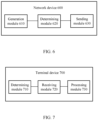
- a network device is provided, and is configured to perform the method in any one of the first aspect or the possible implementations of the first aspect.
- the network device includes modules configured to perform the method in any one of the first aspect or the possible implementations of the first aspect.
- a terminal device is provided, and is configured to perform the method in any one of the second aspect or the possible implementations of the second aspect.
- the terminal device includes modules configured to perform the method in any one of the second aspect or the possible implementations of the second aspect.
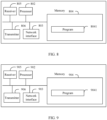
- a network device includes a processor, a memory, and a communications interface.
- the processor is connected to the memory and the communications interface.
- the memory is configured to store an instruction
- the processor is configured to execute the instruction
- the communications interface is configured to communicate with another network element under control of the processor.
- a terminal device includes a processor, a memory, and a communications interface.
- the processor is connected to the memory and the communications interface.
- the memory is configured to store an instruction
- the processor is configured to execute the instruction
- the communications interface is configured to communicate with another network element under control of the processor.
- a computer-readable storage medium stores a program.
- the program enables a network device to perform the signal transmission method in any one of the first aspect or the implementations of the first aspect.
- a computer-readable storage medium stores a program.
- the program enables a terminal device to perform the signal transmission method in any one of the second aspect or the implementations of the second aspect.
- IoT Internet of Things
- GSM Global System for Mobile communications
- CDMA code division multiple access
- WCDMA wideband code division multiple access
- GPRS General Packet Radio Service
- LTE Long Term Evolution
- FDD Frequency Division Duplex
- TDD Time Division Duplex
- Universal Mobile Telecommunications System Universal Mobile Telecommunications System
- NB-IoT narrowband internet of things
- a network device may be referred to as a network device side, a base station, or the like.
- the base station may be a base transceiver station (Base Transceiver Station, BTS) in GSM or CDMA, may be a NodeB (NodeB) in WCDMA, or may be an evolved NodeB (Evolved Node B, eNB, or eNodeB) in LTE, or a base station device gNB in a future 5G network. This is not limited in this application.
- a terminal device may communicate with one or more core networks (Core Network) by using a radio access network (Radio Access Network, RAN), and the terminal device may be referred to as an access terminal device, user equipment (User Equipment, UE), a subscriber unit, a subscriber station, a mobile station, a mobile console, a remote station, a remote terminal, a mobile device, a user terminal, a terminal, a wireless communications device, a user agent, or a user apparatus.
- Core Network Radio Access Network
- the terminal device may be a cellular phone, a cordless phone, a session initiation protocol (Session Initiation Protocol, SIP) phone, a wireless local loop (Wireless Local Loop, WLL) station, a personal digital assistant (Personal Digital Assistant, PDA), a handheld device with a wireless communication function, a device providing voice and/or data connectivity for a user, a handheld device with a wireless connection function, a computing device or another processing device connected to a wireless modem, a vehicle-mounted device, a wearable device, a terminal device in a future 5G network, or the like.
- SIP Session Initiation Protocol
- WLL Wireless Local Loop
- PDA Personal Digital Assistant
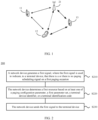
- FIG. 1 is a schematic diagram of a scenario. It should be understood that, for ease of understanding, the scenario in FIG. 1 is introduced herein as an example for description, but does not constitute a limitation on this application.
- FIG. 1 shows a terminal device 11, a terminal device 12, a terminal device 13, and a base station 21.
- the terminal device 11 may communicate with the base station 21, the terminal device 12 may communicate with the base station 21, and the terminal device 13 communicates with the base station 21.
- the terminal device 12 may communicate with the terminal device 11.
- the terminal device 13 communicates with the terminal device 12.
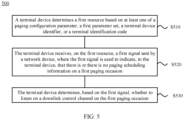
- FIG. 2 is a schematic flowchart of a signal transmission method 200 according to an embodiment of this application.
- the method 200 may be performed by a network device.
- the network device may be the base station 21 in FIG. 1 .
- a terminal device that communicates with the network device may be the terminal device 11, the terminal device 12, or the terminal device 13 in FIG. 1 .
- the method 200 includes the following steps.
- the network device generates a first signal, where the first signal is used to indicate, to the terminal device, that there is or there is no paging scheduling information on a first paging occasion.
- the first signal may be a preset sequence, and the sequence may be a common pseudo-random sequence, a Gold sequence, a Hadamard sequence, a Zadoff-Chu sequence, or the like.
- the first signal may be a sequence obtained by transforming the foregoing sequence.
- the first signal is a product sequence of a plurality of sequences, or the first signal may be a sequence obtained after cyclic shift extension or puncturing, or the first signal is a sequence obtained after at least two of the foregoing operations or another transformation operation. This is not limited herein.
- the first signal may include an energy detection signal.
- the first signal may include a data packet.
- the first signal is a transport block obtained by performing operations such as encoding and modulation on an original information bit.
- a type indication of the first signal may be represented by using the original information bit.
- the original information bit may be "0", “1", “00”, “01”, “10”, or "11".
- the first signal may be used to indicate a paging status of one or more terminal devices on the first paging occasion.
- the first signal may be used to indicate a paging status of a terminal device on one or more paging occasions. This is not limited.
- transmission duration of the first signal may be agreed on in advance in a protocol, in other words, both the network device and the terminal device can learn of the transmission duration of the first signal.
- transmission duration of the first signal may be indicated by the network device.
- the network device may indicate the transmission duration of the first signal to the terminal device by using a system message or other higher layer signaling.
- transmission duration of the first signal may be determined according to both a rule agreed on in a protocol and an indication of the network device.
- the network device may generate a first signal cluster.
- the first signal cluster includes at least one first signal.
- At least one signal in the first signal cluster is transmitted in a continuous time division manner or in a distributed time division manner, in other words, there is a time sequence relationship between the at least one signal in the first signal cluster, and the at least one signal may be based on continuous time division or distributed time division.
- the "continuous time division” means that there are a plurality of first signals that are continuous in a time sequence. In this case, the plurality of first signals occupy a plurality of continuous first resources.
- the "distributed time division” means that there is at least one first signal distributed in a time sequence. In this case, the at least one first signal occupies a plurality of distributed first resources.
- the first signal cluster may be divided into a first portion and a second portion, and the first portion or the second portion may include at least one first signal.
- the first portion and the second portion of the first signal cluster are discontinuous.
- a resource occupied by the first signal in the first signal cluster may be based on time division, and different first signals occupy different time domain resources, in other words, the different first signals are sent at different time domain locations.
- a resource occupied by the first signal may be based on frequency division, and different first signals occupy different frequency domain resources, in other words, the different first signals are sent in different frequency domains.
- a resource occupied by the first signal may be based on code division, and different first signals are distinguished between each other in different coding schemes.
- a resource occupied by the first signal may be based on space division, and different first signals are distinguished between each other by sending the different first signals on different antenna ports.
- the first paging occasion may be understood as a paging occasion (Paging Occasion, PO), or a future concept or term whose granularity is finer than that of a PO.
- Paging Occasion Paging Occasion
- a terminal device in an idle mode usually wakes up on a corresponding PO to listen on a downlink control channel, for example, a physical downlink control channel (Physical Downlink Control Channel, PDCCH) or another future channel term.
- PDCCH Physical Downlink Control Channel
- the network device determines a first resource based on at least one of a paging configuration parameter, a first parameter set, a terminal device identifier, or a terminal device identification code.
- sequence numbers of the foregoing processes do not indicate an execution sequence.
- the execution sequence of the processes should be determined based on functions and internal logic of the processes, and should not constitute any limitation on implementation processes of the embodiments of this application.
- an operation sequence of S210 and S220 is not limited.
- the network device may first determine the first resource based on the at least one of the paging configuration parameter, the first parameter set, the terminal device identifier, or the terminal device identification code, and then generate the first signal.
- the network device may first generate the first signal, and then determine the first resource based on the at least one of the paging configuration parameter, the first parameter set, the terminal device identifier, or the terminal device identification code.
- the network device sends the first signal to the terminal device on the first resource.
- the network device may generate the first signal.
- the first signal is used to indicate, to the terminal device, that there is or there is no paging scheduling information on the first paging occasion, and determines the first resource based on the at least one of the paging configuration parameter, the first parameter set, the terminal device identifier, or the terminal device identification code.
- the network device sends the first signal to the terminal device on the first resource.
- the terminal device determines, based on the first signal, whether the terminal device needs to listen on a downlink control channel.
- the terminal device For example, if the first signal indicates, to the terminal device, that there is or there is no paging scheduling information on the first paging occasion, the terminal device remains in the idle mode, in other words, the terminal device does not listen on a downlink control channel on the first paging occasion. For example, if the first signal indicates, to the terminal device, that there is paging scheduling information on the first paging occasion, the terminal device listens on a downlink control channel on the first paging occasion.
- the terminal device always blindly detects PDCCH search space on a corresponding PO in each discontinuous reception (Discontinuous Reception, DRX) period, to receive the paging scheduling information, and a power consumption waste is caused. If the method in this embodiment of this application is used, the terminal device can avoid unnecessary listening on the downlink control channel, reducing power consumption of the terminal device.
- DRX discontinuous Reception
- a quantity of terminal devices that share a same PO is relatively large. For example, if there is at least one PO in the DRX period, and there are 4096 terminal device identifiers (User Equipment Identity, UEID) in the DRX period, terminal devices corresponding to a plurality of UEIDs share one PO.
- the paging scheduling information may be specific only to some terminal devices corresponding to the PO, and other terminal devices actually do not need to listen on the downlink control channel. In this case, compared with a prior-art manner in which "all terminal devices that share a same PO need to listen on a downlink control channel", in this embodiment of this application, the technical solution functions prominently, so that power consumption of the terminal device can be reduced greatly.
- the network device determines the first resource based on the at least one of the paging configuration parameter, the first parameter set, the terminal device identifier, or the terminal device identification code.
- the network device may configure a paging configuration parameter by using an existing system message and/or other higher layer signaling, and determine a first paging occasion by using the paging configuration parameter.
- the network device may directly use a system message and/or other higher layer signaling in the prior art that are/is used to configure a paging configuration parameter, to save a signaling resource such as a system message and/or other higher layer signaling.
- the network device in this embodiment of this application may determine the first paging occasion based on the paging configuration parameter in the prior art, and then determines the first resource based on at least one of the paging occasion PO, the terminal device identifier, or the terminal device identification code, reducing external overheads.
- the network device sends the first signal to the terminal device on the first resource.
- the first signal is used to indicate, to the terminal device, that there is or there is no paging scheduling information on the first paging occasion, so that the terminal device determines, based on the first signal, whether to listen on the downlink control channel, reducing power consumption of the terminal device.
- the paging configuration parameter may include another possible parameter such as a paging frame number, a paging period, a paging density, a paging frame quantity, or a quantity of paging occasions in a paging frame.
- the network device or the terminal device may calculate a paging system frame (Paging Frame, PF) and a PO location based on the paging configuration parameter.
- the PF represents a system frame in which the paging scheduling information is located
- a PO represents a subframe in which the paging scheduling information is located.
- One PF may include at least one PO.
- a system frame number (System Frame Number, SFN) that meets Formula (1) may be used as a PF frame.
- T represents a paging period, the paging period is a DRX period of paging, a value of T is a positive integer, and a value range of T may be a system frame such as 132, 64, 128, 256 ⁇ ; mod represents an modulo operation;
- nB represents a paging density, to be specific, a quantity of paging occasions in one paging period, a value of nB is a positive integer, and a value range of nB may be ⁇ 4T, 2T, T, T/2, T/4, T/8, T/16, T/32 ⁇ ;
- N represents a paging frame quantity and has a value of min(T, nB), that is, a smaller value of T and nB, a value of N is a positive integer, and a value range of N is ⁇ T, T/2, T/4, T/8, T/16
- One terminal device identifier UEID may correspond to a plurality of terminal identification codes (International Mobile Subscriber Identity, IMSI), that is, the UEID is a group including a plurality of IMSIs.
- i_s represents a PO index
- a subframe in which a PO is located may be obtained by looking up a table
- floor represents a round-down operation
- Ns max(1, nB/T) represents a quantity of paging occasions in a paging frame, that is, a quantity of POs in each PF, and a value of Ns is a positive integer.
- One PO may correspond to a plurality of terminal device identifiers UEIDs, in other words, POs determined by the plurality of UEIDs may be a same PO.
- the network device or the terminal device may calculate the PF and the PO location by using Formula (1) and Formula (2).
- the network device may generate one or more first signals, for example, a first signal cluster.
- the first signal cluster includes at least one first signal.
- the first signal cluster is periodic.
- the network device may send the first signal cluster in each period.
- there is at least one PO in each period in other words, one first signal cluster corresponds to at least one PO.
- the first parameter set includes at least one of a period indication parameter of a first signal cluster, a start transmission location indication parameter of the first signal cluster, a quantity indication parameter, or a frequency domain resource location indication parameter of the first signal cluster, the first signal cluster includes at least one signal, and the first signal is a signal in the first signal cluster.
- the period indication parameter of the first signal cluster is used to indicate a period of the first signal cluster
- the period indication parameter includes an explicit period indication parameter and/or an implicit period indication parameter.
- the explicit period indication parameter indicates an index number of a period value of the first signal cluster.
- the period indication parameter of the first signal cluster may explicitly indicate a period value. In this way, the network device or the terminal device can determine the period value of the first signal cluster based on the index number of the period value of the first signal cluster, to determine a specific interval of radio frames at which one first signal cluster is sent, and to determine a quantity of first signal clusters in one paging period.
- the implicit period indication parameter indicates a quantity of first signal clusters in one paging period.
- the network device or the terminal device can obtain a quantity of radio frames between every two first signal clusters based on the paging period and the quantity of first signal clusters and by dividing the paging period by the quantity of first signal clusters, to obtain the period of the first signal cluster.
- the implicit period indication parameter indicates a ratio of a quantity of first signal clusters in one paging period to a quantity of paging occasions, and a quantity of paging occasions in each paging period may be calculated by using a prior-art method.
- the network device or the terminal device can obtain a quantity of first signal clusters based on a ratio of the quantity of first signal clusters to the quantity of paging occasions, and further obtain a quantity of radio frames between every two first signal clusters by dividing the paging period by the quantity of first signal clusters, to determine the period of the first signal cluster.
- the start transmission location indication parameter of the first signal cluster is used to indicate a start transmission location of the first signal cluster in time domain, and the start transmission location indication parameter indicates a location of the start transmission location of the first signal cluster to a second paging occasion, and the second paging occasion is the 1 st paging occasion (or "the 1 st paging occasion") in at least one paging occasion corresponding to the first signal cluster.
- the second paging occasion may be the same as or different from the first paging occasion.
- the network device or the terminal device may determine a specific radio frame in which the first signal cluster is to be sent, and may determine at least one paging occasion corresponding to the first signal cluster.
- the 1 st paging occasion of the at least one paging occasion corresponding to the first signal cluster may be determined, in other words, the first paging occasion that appears starting from the specific radio frame may be determined.
- the network device or the terminal device may deduce, based on the relative location of the start transmission location of the first signal cluster to the second paging occasion, a relative location from the 1 st paging occasion corresponding to the first signal cluster, and use the obtained location as the start transmission location of the first signal cluster.
- the start transmission location of the first signal cluster is a fixed location.
- the network device or the terminal device may determine a specific radio frame in which the first signal cluster is to be sent.
- a fixed subframe location is agreed on according to a protocol, and is used as the start transmission location for sending the first signal cluster.
- the quantity indication parameter is used to indicate at least one of a quantity of first signals in a paging period, a quantity of first signal clusters in a paging period, or a quantity of first signals in a first signal cluster.
- the quantity parameter indicates at least one of: an index number of the quantity of first signals in the paging period, an index number of the quantity of first signal clusters in the paging period, an index number of the quantity of first signals in the first signal cluster, a ratio of a quantity of paging occasions in the paging period to the quantity of first signals, a ratio of a quantity of paging occasions in the paging period to the quantity of first signal clusters, or a ratio of a quantity of paging occasions in a period of the first signal cluster to the quantity of first signals.
- the frequency domain resource location indication parameter of the first signal is used to indicate a frequency domain resource location of the first signal cluster
- the frequency domain resource location indication parameter includes an explicit frequency domain resource location indication parameter and/or an implicit frequency domain resource location indication parameter.
- the explicit frequency domain resource location indication parameter indicates an index number of the frequency domain resource location.
- the explicit frequency domain resource location indication parameter may be agreed on in advance in a protocol, in other words, both the network device and the terminal device may learn of the explicit frequency domain resource location indication parameter. In this way, the network device or the terminal device can determine the frequency domain resource location of the first signal cluster based on the index number indicated by the explicit frequency domain resource location indication parameter of the first signal cluster.
- the implicit frequency domain resource location indication parameter indicates a relative location of the frequency domain resource location of the first signal to the frequency domain resource location of the first paging occasion, and the network device or the terminal device may deduce the relative location from the frequency domain resource location of the 1 st paging occasion based on the location of the frequency domain resource location of the first signal relative to the frequency domain resource location of the first paging occasion, and use the obtained location as the frequency domain resource location of the first signal.
- the implicit frequency domain resource location indication parameter may alternatively be determined according to both a rule agreed on in a protocol and an indication of the network device.
- the network device may send at least one element of the paging configuration parameter and/or at least one element of the first parameter set to the terminal device. Further, the network device may send the at least one element of the paging configuration parameter and/or at least one element of the first parameter set to the terminal device by using higher layer signaling.
- the higher layer signaling may be a system message or other higher layer signaling.
- the higher layer signaling may be radio resource control (Radio Resource Control, RRC) signaling.
- RRC Radio Resource Control
- the system message may be a system information block (System Information Block, SIB) or a master information block (Master Information Block, MIB).
- the first resource for sending the first signal may be determined based on the at least one of the paging configuration parameter, the first parameter set, the terminal device identifier, or the terminal device identification code.
- the first resource is determined based on the paging configuration parameter and the first parameter set, in other words, the network device or the terminal device may determine the first resource based on the paging configuration parameter and the first parameter set.
- a quantity of first signals may be the same as or different from a quantity of POs.
- a quantity of first signals may be less than a quantity of POs.
- one first signal corresponds to a plurality of POs.
- the network device or the terminal device may determine, based on the paging configuration parameter and the first parameter set, the first resource for sending the first signal.
- the network device or the terminal device may determine a PO by using the paging configuration parameter, and determine a location of the 1 st first signal cluster before the PO by using the period indication parameter of the first signal cluster and the start transmission location indication parameter of the first signal cluster.
- the network device or the terminal device may determine, by using a first calculation rule, a corresponding number of a first signal in the 1 st first signal cluster that is before the PO, to determine the first resource.
- the first signal cluster includes at least one first signal, and each first signal corresponds to one first resource.
- the first resource is the 1 st first resource of all first resources corresponding to the first signal cluster
- the corresponding number of the first signal may be determined by using a function of at least one of the paging configuration parameter or the quantity indication parameter.
- the paging configuration parameter includes PF SFN , T, nB, N, and Ns
- the quantity indication parameter includes N wus , n, or the like.
- the network device or the terminal device may determine PF SFN by using T, N, and nB in the paging configuration parameter, and further determine the corresponding number of the first signal by using a function of at least one of PF SFN , T, nB, N wus , or n.
- PF SFN represents a system frame number corresponding to the PO, and is also referred to as a paging frame number
- T represents a paging period of the terminal device
- nB represents a paging density
- N wus represents a quantity of first signals in the first signal cluster
- n represents that a quantity of POs in a period of the first signal cluster is n times of the quantity of first signals in the first signal cluster.
- the network device or the terminal device can determine the corresponding number of the first signal by calculating the function of PF SFN , T, nB, N wus , and n, to obtain the first resource corresponding to the corresponding number.
- FIG. 3 The following provides specific description with reference to FIG. 3 . It should be understood that the example in FIG. 3 is introduced merely for helping a person skilled in the art understand the technical solutions of the embodiments of this application, and constitutes no limitation on the embodiments of this application.
- FIG. 3 is a schematic diagram of an example according to an embodiment of this application.
- a paging period may include a plurality of first signal clusters.
- the first signal cluster is periodic.
- each of a plurality of first signal clusters includes one first signal, and two POs correspond to one first signal, so that the two POs correspond to one first resource.
- the network device or the terminal device may directly or indirectly obtain, based on the period indication parameter and the start transmission location indication parameter of the first signal cluster, a specific subframe in which the first resource is located in a radio frame.
- a period of one first signal cluster may include four POs.
- each of a plurality of first signal clusters includes two first signals, and two POs may correspond to one first signal.
- each first signal in the first signal cluster may include a corresponding number or index.
- the first resource may correspond to a number of the first signal in the first signal cluster.
- the network device or the terminal device may learn of a corresponding resource location.
- first two POs of the four POs may correspond to the 1 st first resource (to be specific, a resource used to send the 1 st signal of the two first signals) of two resources
- last two POs may correspond to the 2 nd first resource (to be specific, a resource used to send the 2 nd signal of the two first signals) in two resource locations.
- W index represents the number of the first signal in the first signal cluster
- ⁇ ⁇ represents a round-down operation
- PF SFN represents a system frame number, to be specific, a system frame number corresponding to the first paging occasion
- T represents a paging period of the terminal device
- nB represents a paging density
- N wus represents the quantity of first signals in the first signal cluster
- n represents that a quantity of POs in a period of the first signal cluster is n times of the quantity of signals in the first signal cluster
- PF SFN mod T T / nB mod n ⁇ N wus represents a number of a PO in at least one PO corresponding to the first signal cluster.
- the network device or the terminal device can determine the number of the first signal based on the forgoing formula, to obtain the first resource.
- the 1 st PO and the 3 rd PO of the four POs may correspond to the 1 st first resource (to be specific, a resource used to send the 1 st signal of the two first signals) in the two resource locations
- the 2 nd PO and the 4 th PO may correspond to the 2 nd first resource (to be specific, a resource used to send the 2 nd signal of the two first signals) in the two resource locations.
- a specific example is used for Formula (4).
- N wus 2
- one first signal cluster corresponds to four POs.
- the network device or the terminal device may calculate a corresponding number or index of the first signal in the first signal cluster based on the PO in combination with Formula (3) or Formula (4), to determine the first resource corresponding to the first signal.
- the first resource is determined based on the paging configuration parameter, the first parameter set, and the terminal device identifier.
- the network device or the terminal device may determine, based on the terminal device identifier UEID, the first resource for sending the first signal.
- a quantity of first signals may be greater than a quantity of POs; in this case, one PO corresponds to a plurality of first signals
- the network device or the terminal device may determine, based on the paging configuration parameter, the first parameter set, and the terminal device identifier UEID, the first resource for sending the first signal.
- the network device or the terminal device may determine the PO by using the paging configuration parameter, and determine, by using the period indication parameter of the first signal cluster and the start transmission location indication parameter of the first signal cluster, a location of the 1 st first signal cluster that is before the PO.
- the network device or the terminal device may determine, by using a second calculation rule, a corresponding number of a first signal in the 1 st first signal cluster that is before the PO, to determine the first resource.
- the first signal cluster includes at least one first signal, and each first signal corresponds to one first resource.
- the first resource is the 1 st first resource of all first resources corresponding to the first signal cluster
- the corresponding number of the first signal may be determined by using a function of at least one of the paging configuration parameter, the quantity indication parameter, or the terminal device identifier.
- the paging configuration parameter includes PF SFN , T, nB, N, and Ns
- the quantity indication parameter includes N wus , n, and the like
- PF SFN may be determined based on T, N, and nB in the paging configuration parameter
- the corresponding number is further determined by using a function of at least one of PF SFN , T, nB, N wus , n, or UEID.
- PF SFN represents a system frame number corresponding to the PO, and is also referred to as a paging frame number
- T represents a paging period of the terminal device
- nB represents a paging density
- N wus represents a quantity of first signals in the first signal cluster
- n represents that a quantity of POs in a period of the first signal cluster is n times of the quantity of first signals in the first signal cluster
- UEID represents the terminal device identifier.
- the network device or the terminal device can determine the corresponding number of the first signal by calculating the function of PF SFN , T, nB, N wus , n, and UEID, to obtain the first resource corresponding to the corresponding number.
- FIG. 4 provides specific description with reference to FIG. 4 . It should be understood that the example in FIG. 4 is introduced merely for helping a person skilled in the art understand the technical solutions of the embodiments of this application, and constitutes no limitation on the embodiments of this application.
- FIG. 4 is a schematic diagram of an example according to an embodiment of this application.
- a paging period may include a plurality of first signal clusters.
- the first signal cluster is periodic.
- a period of one first signal cluster may include one PO, one PO corresponds to a plurality of UEIDs, and each UEID corresponds to one first resource.
- each of a plurality of first signal clusters includes two first signals, and one PO corresponds to two first signals, so that one PO corresponds to two first resources.
- the network device or the terminal device may determine the first resource based on the UEID.
- a period of one first signal cluster may include two POs.
- one PO may correspond to a plurality of first resources
- one PO corresponds to a plurality of UEIDs
- each UEID corresponds to one first resource.
- each of a plurality of first signal clusters includes four first signals, and one of the two POs corresponds to a plurality of first signals.
- W index represents the number of the first signal in the first signal cluster
- PF SFN represents a system frame number corresponding to the first paging occasion
- T represents a paging period of the terminal device
- nB represents a paging density
- N wus represents the quantity of first signals in the first signal cluster
- n represents that a quantity of POs in a period of the first signal cluster is n times of the quantity of first signals in the first signal cluster
- w index 0 represents a number of the first paging occasion in at least one first paging occasion
- w index 1 represents a number, in n first signals corresponding to one first paging occasion, of a first signal corresponding to a UEID
- UEID represents the terminal device identifier
- a value of N is min(T, nB).
- the network device or the terminal device may calculate a number or an index of the first signal in the first signal cluster based on UEID in combination with Formula (5), to determine the first resource corresponding to the first signal.
- the first resource is determined based on the paging configuration parameter, the first parameter set, and the terminal device identification code.
- the network device or the terminal device may determine the first resource based on the paging configuration parameter, the first parameter set, and the terminal device identification code IMSI.
- a quantity of first signals may be greater than a quantity of POs; in this case, one PO corresponds to a plurality of first signals.
- the network device or the terminal device may determine, based on the paging configuration parameter, the first parameter set, and the terminal device identification code IMSI, the first resource for sending the first signal.
- the network device or the terminal device may determine the PO by using the paging configuration parameter, and determine, by using the period indication parameter of the first signal cluster and the start transmission location indication parameter of the first signal cluster, a location of the 1 st first signal cluster that is before the PO.
- the network device or the terminal device may determine, by using a third calculation rule, a corresponding number of a first signal in the 1 st first signal cluster that is before the PO, to determine the first resource.
- the first signal cluster includes at least one first signal, and each first signal corresponds to one first resource.
- the first resource is the 1 st first resource of all first resources corresponding to the first signal cluster
- the corresponding number of the first signal may be determined by using a function of at least one of the paging configuration parameter, the quantity indication parameter, or the terminal device identification code.
- the paging configuration parameter includes PF SFN , T, nB, N, and Ns
- the quantity indication parameter includes N wus , n, and the like
- PF SFN may be determined based on T, N, and nB in the paging configuration parameter
- the corresponding number of the first signal is further determined by using a function of at least one of PF SFN , T, nB, N wus , n, or IMSI.
- PF SFN represents a system frame number corresponding to the PO, and is also referred to as a paging frame number
- T represents a paging period of the terminal device
- nB represents a paging density
- N wus represents a quantity of first signals in the first signal cluster
- n represents that a quantity of POs in a period of the first signal cluster is n times of the quantity of first signals in the first signal cluster
- IMSI represents the terminal device identification code.
- the network device or the terminal device can determine the corresponding number of the first signal by calculating the function of PF SFN , T, nB, N wus , n, and IMSI, to obtain the first resource corresponding to the corresponding number.
- a value of M is a positive integer, and a value range of M may be large enough. When the value of M is large enough, IMSI mod M is approximately equal to IMSI.
- a value of C is a positive integer, is preferably an integer multiple of 2, and may be 1024, 4096, or another possible value. This is not limited.
- the network device or the terminal device may calculate a number or an index of the first signal in the first signal cluster based on IMSI in combination with Formula (6), to determine the first resource corresponding to the first signal.
- a time domain start location of the first resource is before a time domain location of the first paging occasion; or a time domain start location of the first resource is the same as a time domain location of the first paging occasion.
- the network device sends the paging scheduling information on the first paging occasion. If there is no valid paging scheduling information and/or no system message change, the network device sends the first signal on the first paging occasion. For example, the first signal indicates, to the terminal device, that there is or there is no paging scheduling information on the first paging occasion.
- the terminal device may first attempt to detect a first signal. If a first signal is successfully detected, and the first signal indicates, to the terminal device, that there is no paging scheduling information on the first paging occasion, the terminal device may continue to sleep and enter the idle mode. Alternatively, if the first signal indicates that there is paging scheduling information on the first paging occasion, the terminal device may continue to listen on search space to receive the paging scheduling information.
- a frequency domain resource of the first resource is the same as a frequency domain resource corresponding to the first paging occasion; or there is a spacing between a frequency domain resource corresponding to the first resource and a frequency domain resource corresponding to the first paging occasion.
- the time domain resource location occupied by the first resource for sending the first signal may be before the time domain resource location of the first paging occasion, or may be the same as the time domain resource location of the first paging occasion. This is not limited in this embodiment of this application.
- the method 200 further includes the following step:
- the network device sends at least one element of the paging configuration parameter and/or at least one element of the first parameter set to the terminal device by using higher layer signaling.
- the higher layer signaling may be a system message or other higher layer signaling.
- the higher layer signaling may be radio resource control RRC signaling.
- the system message may be a system information block SIB or a master information block MIB.
- the network device sends the first signal to the terminal device, where the first signal is used to indicate, to the terminal device, that there is or there is no paging scheduling information on the first paging occasion; and determines the first resource based on the at least one of the paging configuration parameter, the first parameter set, the terminal device identifier, or the terminal device identification code, so that the network device sends the first signal on the first resource, and the terminal device receives the first signal and determines, based on the first signal, whether to listen on the downlink control channel, reducing power consumption of the terminal device.
- FIG. 5 is a schematic flowchart of a signal transmission method 500 according to an embodiment of this application.
- the method 500 may be performed by a terminal device.
- the terminal device may be the terminal device 11, the terminal device 12, or the terminal device 13 in FIG. 1 .
- a network device communicating with the terminal device may be the base station 21 in FIG. 1 .
- the method 500 includes the following steps.
- the terminal device determines a first resource based on at least one of a paging configuration parameter, a first parameter set, a terminal device identifier, or a terminal device identification code.
- S520 The terminal device receives, on the first resource, a first signal sent by the network device, where the first signal is used to indicate, to the terminal device, that there is or there is no paging scheduling information on a first paging occasion.
- the terminal device determines, based on the first signal, whether to listen on a downlink control channel on the first paging occasion.
- the terminal device determines the first resource based on the at least one of the paging configuration parameter, the first parameter set, the terminal device identifier, or the terminal device identification code, then receives, by using the first resource, the first signal sent by the network device, and finally determines, based on the first signal, whether to listen on the downlink control channel. For example, if the first signal indicates, to the terminal device, that there is or there is no paging scheduling information on the first paging occasion, the terminal device remains in an idle mode, in other words, the terminal device does not listen on a downlink control channel on the first paging occasion. For example, if the first signal indicates, to the terminal device, that there is paging scheduling information on the first paging occasion, the terminal device listens on a downlink control channel on the first paging occasion.
- the terminal device receives the first signal sent by the network device, where the first signal is used to indicate, to the terminal device, that there is or there is no paging scheduling information on the first paging occasion; and determines, based on the first signal, whether to listen on the downlink control channel, reducing power consumption of the terminal device.
- the paging configuration parameter includes at least one of a paging frame number, a paging period, a paging density, a paging frame quantity, or a quantity of paging occasions in a paging frame.
- the first parameter set includes at least one of a period indication parameter of a first signal cluster, a start transmission location indication parameter of a first signal cluster, a quantity indication parameter, or a frequency domain resource location indication parameter of a first signal, and the first signal cluster includes at least one signal.
- the period indication parameter of the first signal cluster is used to indicate a period of the first signal cluster
- the period indication parameter includes an explicit period indication parameter and/or an implicit period indication parameter, the explicit period indication parameter indicates an index number of a period value of the first signal cluster, and the implicit period indication parameter indicates at least one of a quantity of first signal clusters in one paging period or a ratio of a quantity of first signal clusters in one paging period to a quantity of paging occasions.
- the start transmission location indication parameter of the first signal cluster is used to indicate a start transmission location of the first signal cluster in time domain.
- the start transmission location indication parameter indicates a corresponding location of the start transmission location of the first signal cluster to a second paging occasion, and the second paging occasion is the 1 st paging occasion of at least one paging occasion corresponding to the first signal cluster
- the quantity indication parameter is used to indicate at least one of a quantity of first signals in a paging period, a quantity of first signal clusters in a paging period, or a quantity of first signals in a first signal cluster
- the quantity parameter indicates at least one of: an index number of the quantity of first signals in the paging period, an index number of the quantity of first signal clusters in the paging period, an index number of the quantity of first signals in the first signal cluster, a ratio of a quantity of paging occasions in the paging period to the quantity of first signals, a ratio of a quantity of paging occasions in the paging period to the quantity of first signal clusters, or a ratio of a quantity of paging occasions in a period of the first signal cluster to the quantity of first signals.
- the frequency domain resource location indication parameter of the first signal is used to indicate a frequency domain resource location of the first signal.
- the frequency domain resource location indication parameter includes an explicit frequency domain resource location indication parameter and/or an implicit frequency domain resource location indication parameter, the explicit frequency domain resource location indication parameter indicates an index number of the frequency domain resource location, and the implicit frequency domain resource location indication parameter indicates a relative location of the frequency domain resource location of the first signal to a frequency domain resource location of the first paging occasion.
- the first resource is determined based on the paging configuration parameter and the first parameter set.
- the first resource is determined based on the paging configuration parameter, the first parameter set, and the terminal device identifier.
- the first resource is determined based on the paging configuration parameter, the first parameter set, and the terminal device identification code.
- At least one signal in the first signal cluster is transmitted in a continuous time division manner or in a distributed time division manner.
- a time domain start location of the first resource is before a time domain start location of the first paging occasion; or a time domain start location of the first resource is the same as a time domain start location of the first paging occasion.
- a frequency domain resource of the first resource is the same as a frequency domain resource corresponding to the first paging occasion; or there is a spacing between a frequency domain resource of the first resource and a frequency domain resource corresponding to the first paging occasion.
- the method 500 further includes the following step:
- the terminal device receives at least one element of the paging configuration parameter and/or at least one element of the first parameter set sent by the network device by using higher layer signaling.
- the terminal device receives the first signal sent by the network device, where the first signal is used to indicate, to the terminal device, that there is or there is no paging scheduling information on the first paging occasion; and determines, based on the first signal, whether to listen on the downlink control channel, reducing power consumption of the terminal device.
- FIG. 6 is a schematic block diagram of a network device 600 according to an embodiment of this application. As shown in FIG. 6 , the network device 600 includes:
- the network device 600 sends the first signal to the terminal device.
- the first signal is used to indicate, to the terminal device, that there is or there is no paging scheduling information on the first paging occasion, so that the terminal device determines, based on the first signal, whether to listen on a downlink control channel, reducing power consumption of the terminal device.
- the paging configuration parameter includes at least one of a paging frame number, a paging period, a paging density, a paging frame quantity, or a quantity of paging occasions in a paging frame.
- the first parameter set includes at least one of a period indication parameter of a first signal cluster, a start transmission location indication parameter of the first signal cluster, a quantity indication parameter, or a frequency domain resource location indication parameter of the first signal cluster, and the first signal cluster includes at least one signal.
- the period indication parameter of the first signal cluster is used to indicate a period of the first signal cluster
- the period indication parameter includes an explicit period indication parameter and/or an implicit period indication parameter, the explicit period indication parameter indicates an index number of a period value of the first signal cluster, and the implicit period indication parameter indicates at least one of a quantity of first signal clusters in one paging period or a ratio of a quantity of first signal clusters in one paging period to a quantity of paging occasions.
- the start transmission location indication parameter of the first signal cluster is used to indicate a start transmission location of the first signal cluster in time domain.
- the start transmission location indication parameter indicates a relative location of the start transmission location of the first signal cluster to a second paging occasion, and the second paging occasion is the 1 st paging occasion of at least one paging occasion corresponding to the first signal cluster.
- the quantity indication parameter is used to indicate at least one of a quantity of first signals in a paging period, a quantity of first signal clusters in a paging period, or a quantity of first signals in a first signal cluster
- the quantity parameter indicates at least one of: an index number of the quantity of first signals in the paging period, an index number of the quantity of first signal clusters in the paging period, an index number of the quantity of first signals in the first signal cluster, a ratio of a quantity of paging occasions in the paging period to the quantity of first signals, a ratio of a quantity of paging occasions in the paging period to the quantity of first signal clusters, or a ratio of a quantity of paging occasions in a period of the first signal cluster to the quantity of first signals.
- the frequency domain resource location indication parameter of the first signal is used to indicate a frequency domain resource location of the first signal.
- the frequency domain resource location indication parameter includes an explicit frequency domain resource location indication parameter and/or an implicit frequency domain resource location indication parameter, the explicit frequency domain resource location indication parameter indicates an index number of the frequency domain resource location, and the implicit frequency domain resource location indication parameter indicates a relative location of the frequency domain resource location of the first signal to a frequency domain resource location of the first paging occasion.
- At least one signal in the first signal cluster is transmitted in a continuous time division manner or in a distributed time division manner.
- a time domain start location of the first resource is before a time domain start location of the first paging occasion; or a time domain start location of the first resource is the same as a time domain start location of the first paging occasion; and/or a frequency domain resource of the first resource is the same as a frequency domain resource corresponding to the first paging occasion; or there is a spacing between a frequency domain resource of the first resource and a frequency domain resource corresponding to the first paging occasion.
- the sending module 630 is further configured to: send at least one element of the paging configuration parameter and/or at least one element of the first parameter set to the terminal device by using higher layer signaling.
- the network device 600 may perform the method on the network device side in the signal transmission method in the embodiments of this application.
- the foregoing and other operations and/or functions of the modules of the network device 600 are respectively used to implement corresponding procedures of the methods. For brevity, details are not described again.
- the network device 600 sends the first signal to the terminal device, where the first signal is used to indicate, to the terminal device, that there is or there is no paging scheduling information on the first paging occasion, so that the terminal device determines, based on the first signal, whether to listen on a downlink control channel, reducing power consumption of the terminal device.
- FIG. 7 is a schematic block diagram of a terminal device 700 according to an embodiment of this application. As shown in FIG. 7 , the terminal device 700 includes:
- the terminal device 700 determines the first resource based on the at least one of the paging configuration parameter, the first parameter set, the terminal device identifier, or the terminal device identification code; receives, on the first resource, the first signal sent by the network device, where the first signal is used to indicate, to the terminal device, that there is or there is no paging scheduling information on the first paging occasion; and determines, based on the first signal, whether to listen on the downlink control channel, reducing power consumption of the terminal device.
- the paging configuration parameter includes at least one of a paging frame number, a paging period, a paging density, a paging frame quantity, or a quantity of paging occasions in a paging frame.
- the first parameter set includes at least one of a period indication parameter of a first signal cluster, a start transmission location indication parameter of the first signal cluster, a quantity indication parameter, or a frequency domain resource location indication parameter of the first signal cluster, and the first signal cluster includes at least one signal.
- the period indication parameter of the first signal cluster is used to indicate a period of the first signal cluster
- the period indication parameter includes an explicit period indication parameter and/or an implicit period indication parameter, the explicit period indication parameter indicates an index number of a period value of the first signal cluster, and the implicit period indication parameter indicates at least one of a quantity of first signal clusters in one paging period or a ratio of a quantity of first signal clusters in one paging period to a quantity of paging occasions.
- the start transmission location indication parameter of the first signal cluster is used to indicate a start transmission location of the first signal cluster in time domain.
- the start transmission location indication parameter indicates a relative location of the start transmission location of the first signal cluster to a second paging occasion, and the second paging occasion is the 1 st paging occasion of at least one paging occasion corresponding to the first signal cluster.
- the quantity indication parameter is used to indicate at least one of a quantity of first signals in a paging period, a quantity of first signal clusters in a paging period, or a quantity of first signals in a first signal cluster
- the quantity parameter indicates at least one of: an index number of the quantity of first signals in the paging period, an index number of the quantity of first signal clusters in the paging period, an index number of the quantity of first signals in the first signal cluster, a ratio of a quantity of paging occasions in the paging period to the quantity of first signals, a ratio of a quantity of paging occasions in the paging period to the quantity of first signal clusters, or a ratio of a quantity of paging occasions in a period of the first signal cluster to the quantity of first signals.
- the frequency domain resource location indication parameter of the first signal is used to indicate a frequency domain resource location of the first signal.
- the frequency domain resource location indication parameter includes an explicit frequency domain resource location indication parameter and/or an implicit frequency domain resource location indication parameter, the explicit frequency domain resource location indication parameter indicates an index number of the frequency domain resource location, and the implicit frequency domain resource location indication parameter indicates a relative location of the frequency domain resource location of the first signal to a frequency domain resource location of the first paging occasion.
- At least one signal in the first signal cluster is transmitted in a continuous time division manner or in a distributed time division manner.
- a time domain start location of the first resource is before a time domain start location of the first paging occasion; or a time domain start location of the first resource is the same as a time domain start location of the first paging occasion; and/or a frequency domain resource of the first resource is the same as a frequency domain resource corresponding to the first paging occasion; or there is a spacing between a frequency domain resource of the first resource and a frequency domain resource corresponding to the first paging occasion.
- the receiving module is further configured to: receive at least one element of the paging configuration parameter and/or at least one element of the first parameter set sent by the network device by using higher layer signaling.
- the terminal device 700 may perform the method on the terminal device side in the signal transmission method according to the foregoing embodiment of this application.
- the foregoing and other operations and/or functions of the modules of the terminal device 700 are respectively used to implement corresponding procedures of the methods. For brevity, details are not described again.
- the terminal device 700 receives the first signal sent by the network device, where the first signal is used to indicate, to the terminal device, that there is or there is no paging scheduling information on the first paging occasion; and determines, based on the first signal, whether to listen on the downlink control channel, reducing power consumption of the terminal device.
- FIG. 8 shows a structure of a network device according to an embodiment of this application.
- the network device includes at least one processor 802 (for example, a CPU), at least one network interface 803 or another communications interface, and a memory 804.
- the network device may further include a receiver 805 and a transmitter 806.
- the processor 802 is configured to execute an executable module, for example, a computer program, stored in the memory 804.
- the memory 804 may include a high-speed random access memory RAM, and may also include a non-volatile memory (non-volatile memory), for example, at least one magnetic disk storage.
- the at least one network interface 803 (which may be wired or wireless) is used to implement a communication connection to at least one another network element.
- the receiver 805 and the transmitter 806 are configured to transmit various signals or information.
- the memory 804 stores a program 8041.
- the program 8041 may be executed by the processor 802, and is used to perform the method on the network device side in the foregoing embodiment of this application.
- FIG. 9 shows a structure of a terminal device according to an embodiment of this application.
- the terminal device includes at least one processor 902 (for example, a CPU), at least one network interface 903 or another communications interface, and a memory 904.
- the terminal device may further include a receiver 905 and a transmitter 906.
- the processor 902 is configured to execute an executable module, for example, a computer program, stored in the memory 904.
- the memory 904 may include a high-speed random access memory RAM, and may also include a non-volatile memory (non-volatile memory), for example, at least one magnetic disk storage.
- the at least one network interface 903 (which may be wired or wireless) is used to implement a communication connection to at least one another network element.
- the receiver 905 and the transmitter 906 are configured to transmit various signals or information.
- the memory 904 stores a program 9041.
- the program 9041 may be executed by the processor 902, and is used to perform the foregoing method on the terminal device side in the another embodiment of this application.
- sequence numbers of the foregoing processes do not mean execution sequences.
- the execution sequences of the processes should be determined based on functions and internal logic of the processes, and should not constitute any limitation on implementation processes of the embodiments of this application.
- the disclosed system, apparatus, and method may be implemented in other manners.
- the described apparatus embodiments are merely examples.
- the unit division is merely logical function division, or may be other division in an actual implementation.
- a plurality of units or components may be combined or integrated into another system, or some features may be ignored or may not be performed.
- displayed or discussed mutual couplings or direct couplings or communication connections may be indirect couplings or communication connections using some interfaces, apparatuses, or units, and may be in an electrical form, a mechanical form, or another form.
- the units described as separate components may or may not be physically separate; and components displayed as units may or may not be physical units, in other words, the components may be located in one place, or may be distributed on a plurality of network units. Some or all of the units may be selected based on actual requirements to achieve the objective of the solutions in the embodiments.
- the functions When the functions are implemented in a form of a software functional unit and sold or used as an independent product, the functions may be stored in a computer-readable storage medium. Based on such an understanding, the technical solutions of this application essentially, the part contributing to the prior art, or some of the technical solutions may be embodied in the form of a software product.
- the computer software product is stored in a storage medium, and includes several instructions for instructing a computer device (which may be a personal computer, a server, a network device, or the like) to perform all or some of the steps of the methods described in the embodiments of this application.
- the foregoing storage medium includes any medium that can store program code, such as a USB flash drive, a removable hard disk, a read-only memory (Read-Only Memory, ROM), a random access memory (Random Access Memory, RAM), a magnetic disk, or a compact disc.
- program code such as a USB flash drive, a removable hard disk, a read-only memory (Read-Only Memory, ROM), a random access memory (Random Access Memory, RAM), a magnetic disk, or a compact disc.
Landscapes
- Engineering & Computer Science (AREA)
- Computer Networks & Wireless Communication (AREA)
- Signal Processing (AREA)
- Mobile Radio Communication Systems (AREA)
Priority Applications (1)
| Application Number | Priority Date | Filing Date | Title |
|---|---|---|---|
| EP24161068.2A EP4401475A3 (de) | 2017-06-02 | 2017-06-02 | Signalübertragungsverfahren, netzwerkvorrichtung und endgerätevorrichtung |
Applications Claiming Priority (3)
| Application Number | Priority Date | Filing Date | Title |
|---|---|---|---|
| EP24161068.2A EP4401475A3 (de) | 2017-06-02 | 2017-06-02 | Signalübertragungsverfahren, netzwerkvorrichtung und endgerätevorrichtung |
| PCT/CN2017/087082 WO2018218687A1 (zh) | 2017-06-02 | 2017-06-02 | 传输信号的方法、网络设备和终端设备 |
| EP17911823.7A EP3634050B1 (de) | 2017-06-02 | 2017-06-02 | Signalübertragungsverfahren, netzwerkvorrichtung und endgerätevorrichtung |
Related Parent Applications (1)
| Application Number | Title | Priority Date | Filing Date |
|---|---|---|---|
| EP17911823.7A Division EP3634050B1 (de) | 2017-06-02 | 2017-06-02 | Signalübertragungsverfahren, netzwerkvorrichtung und endgerätevorrichtung |
Publications (2)
| Publication Number | Publication Date |
|---|---|
| EP4401475A2 true EP4401475A2 (de) | 2024-07-17 |
| EP4401475A3 EP4401475A3 (de) | 2024-10-09 |
Family
ID=64454352
Family Applications (2)
| Application Number | Title | Priority Date | Filing Date |
|---|---|---|---|
| EP17911823.7A Active EP3634050B1 (de) | 2017-06-02 | 2017-06-02 | Signalübertragungsverfahren, netzwerkvorrichtung und endgerätevorrichtung |
| EP24161068.2A Pending EP4401475A3 (de) | 2017-06-02 | 2017-06-02 | Signalübertragungsverfahren, netzwerkvorrichtung und endgerätevorrichtung |
Family Applications Before (1)
| Application Number | Title | Priority Date | Filing Date |
|---|---|---|---|
| EP17911823.7A Active EP3634050B1 (de) | 2017-06-02 | 2017-06-02 | Signalübertragungsverfahren, netzwerkvorrichtung und endgerätevorrichtung |
Country Status (8)
| Country | Link |
|---|---|
| US (1) | US11445472B2 (de) |
| EP (2) | EP3634050B1 (de) |
| JP (1) | JP6910475B2 (de) |
| KR (1) | KR102256448B1 (de) |
| CN (1) | CN110710285B (de) |
| BR (1) | BR112019025413A2 (de) |
| CA (1) | CA3065623C (de) |
| WO (1) | WO2018218687A1 (de) |
Families Citing this family (21)
| Publication number | Priority date | Publication date | Assignee | Title |
|---|---|---|---|---|
| KR102491548B1 (ko) | 2017-07-31 | 2023-01-26 | 삼성전자주식회사 | 지시 정보 검출 방법과 장치, 및 전송 중계 방법 및 기기 |
| CN109802808A (zh) * | 2017-11-17 | 2019-05-24 | 电信科学技术研究院 | 一种同步块与寻呼调度信令关联方法、指示方法及装置 |
| SG11202005581UA (en) * | 2017-12-12 | 2020-07-29 | Guangdong Oppo Mobile Telecommunications Corp Ltd | Paging time determination method and device, and computer storage medium |
| CN110636617B (zh) * | 2018-06-22 | 2022-04-05 | 华为技术有限公司 | 一种参数配置方法及装置 |
| CN114900892A (zh) | 2019-11-07 | 2022-08-12 | Oppo广东移动通信有限公司 | 信号传输方法、装置、移动终端以及存储介质 |
| CN113497690A (zh) * | 2020-04-03 | 2021-10-12 | 展讯通信(上海)有限公司 | 参考信号确定方法、装置、电子设备及存储介质 |
| WO2021213657A1 (en) * | 2020-04-23 | 2021-10-28 | Nokia Technologies Oy | Clustering paging occasions for multiple user equipments in time domain |
| CN113950073B (zh) * | 2020-07-16 | 2024-09-24 | 华为技术有限公司 | 一种通信方法及装置 |
| CA3186273A1 (en) * | 2020-08-03 | 2022-02-10 | Hyejung Jung | Dci format that indicates to monitor for paging dci |
| JP7573737B2 (ja) | 2020-09-28 | 2024-10-25 | 中興通訊股▲ふん▼有限公司 | ページングキャリア選択のための方法および装置 |
| CN114286428B (zh) * | 2020-09-28 | 2023-10-13 | 维沃移动通信有限公司 | 信道检测方法、装置及用户设备 |
| CN114501630A (zh) * | 2020-10-23 | 2022-05-13 | 大唐移动通信设备有限公司 | 信号处理方法及装置 |
| WO2022141009A1 (zh) * | 2020-12-29 | 2022-07-07 | 华为技术有限公司 | 寻呼消息发送的方法和装置 |
| WO2022188005A1 (zh) * | 2021-03-08 | 2022-09-15 | 北京小米移动软件有限公司 | 一种寻呼控制信息的监听、指示方法及装置 |
| CN115278720A (zh) * | 2021-04-30 | 2022-11-01 | 华为技术有限公司 | 一种通信方法及装置 |
| CN115623592B (zh) * | 2021-07-13 | 2025-08-29 | 华为技术有限公司 | 通信的方法和装置 |
| CN115884442A (zh) * | 2021-09-28 | 2023-03-31 | 夏普株式会社 | 由用户设备执行的确定pei机会的方法以及用户设备 |
| CN115884073A (zh) * | 2021-09-29 | 2023-03-31 | 夏普株式会社 | 由用户设备执行的方法以及用户设备 |
| CN117880937A (zh) * | 2022-09-30 | 2024-04-12 | 大唐移动通信设备有限公司 | 资源位置的确定方法、设备、装置及存储介质 |
| WO2024077479A1 (zh) * | 2022-10-11 | 2024-04-18 | Oppo广东移动通信有限公司 | 一种零功耗通信方法及装置、终端设备、网络设备 |
| CN120343749B (zh) * | 2025-06-17 | 2025-11-14 | 荣耀终端股份有限公司 | 用于随机接入的方法和通信装置 |
Family Cites Families (16)
| Publication number | Priority date | Publication date | Assignee | Title |
|---|---|---|---|---|
| CN1725870B (zh) * | 2004-07-23 | 2010-08-18 | 华为技术有限公司 | 一种实现快速寻呼的方法 |
| WO2008155739A2 (en) * | 2007-06-19 | 2008-12-24 | Nokia Corporation | Apparatus, method and computer program product providing idle mode discontinuous reception |
| CN101540628B (zh) | 2008-03-21 | 2013-12-18 | 电信科学技术研究院 | 一种确定功率偏移参数的方法、系统和装置 |
| US8897818B2 (en) * | 2010-11-11 | 2014-11-25 | Blackberry Limited | System and method for reducing energy consumption of mobile devices using early paging indicator |
| CN102651908B (zh) * | 2011-02-28 | 2015-01-21 | 华为技术有限公司 | 一种传输数据的方法及设备 |
| CN103378939B (zh) | 2012-04-28 | 2016-09-28 | 电信科学技术研究院 | 一种下行数据传输方法及装置 |
| TW201408101A (zh) * | 2012-05-10 | 2014-02-16 | Interdigital Patent Holdings | 虛擬化網路中傳呼及系統資訊廣播處理 |
| CN102970750B (zh) * | 2012-12-06 | 2015-06-24 | 北京北方烽火科技有限公司 | 一种应用于lte系统中的消息寻呼方法、装置和基站 |
| KR102023010B1 (ko) * | 2013-02-18 | 2019-09-19 | 엘지전자 주식회사 | 페이징 송수신 방법 |
| WO2015051547A1 (zh) * | 2013-10-12 | 2015-04-16 | 华为技术有限公司 | 寻呼方法和装置 |
| CN103532684B (zh) * | 2013-10-24 | 2017-01-25 | 重庆邮电大学 | 一种3gpp mtc自适应混合drx机制终端节能方法 |
| KR20150105602A (ko) * | 2014-03-06 | 2015-09-17 | 주식회사 케이티 | 페이징 메시지를 전송하는 방법 및 그 장치 |
| US10212699B2 (en) * | 2014-04-21 | 2019-02-19 | Lg Electronics Inc. | Method for transmitting and receiving downlink control information in wireless communication system supporting device-to-device communication and device therefor |
| US9883480B2 (en) * | 2014-07-11 | 2018-01-30 | Apple Inc. | Enhanced paging schemes and connected-state DRX |
| CN109495974B (zh) | 2014-11-07 | 2019-11-05 | 华为技术有限公司 | 信息传输方法和装置 |
| CN105992342B (zh) * | 2015-02-05 | 2019-07-12 | 上海诺基亚贝尔股份有限公司 | 在基于机器型通信的通信系统中用于接收寻呼消息的方法 |
-
2017
- 2017-06-02 WO PCT/CN2017/087082 patent/WO2018218687A1/zh not_active Ceased
- 2017-06-02 EP EP17911823.7A patent/EP3634050B1/de active Active
- 2017-06-02 KR KR1020197037788A patent/KR102256448B1/ko active Active
- 2017-06-02 JP JP2019566189A patent/JP6910475B2/ja active Active
- 2017-06-02 CA CA3065623A patent/CA3065623C/en active Active
- 2017-06-02 BR BR112019025413-7A patent/BR112019025413A2/pt unknown
- 2017-06-02 CN CN201780091180.0A patent/CN110710285B/zh active Active
- 2017-06-02 EP EP24161068.2A patent/EP4401475A3/de active Pending
-
2019
- 2019-12-02 US US16/700,530 patent/US11445472B2/en active Active
Also Published As
| Publication number | Publication date |
|---|---|
| JP2020522929A (ja) | 2020-07-30 |
| KR102256448B1 (ko) | 2021-05-25 |
| KR20200008619A (ko) | 2020-01-28 |
| CA3065623C (en) | 2023-09-05 |
| US11445472B2 (en) | 2022-09-13 |
| WO2018218687A1 (zh) | 2018-12-06 |
| JP6910475B2 (ja) | 2021-07-28 |
| US20200107294A1 (en) | 2020-04-02 |
| BR112019025413A2 (pt) | 2020-06-23 |
| CN110710285A (zh) | 2020-01-17 |
| EP3634050B1 (de) | 2024-03-27 |
| EP3634050A1 (de) | 2020-04-08 |
| CA3065623A1 (en) | 2018-12-06 |
| CN110710285B (zh) | 2022-09-23 |
| EP3634050A4 (de) | 2020-05-06 |
| EP4401475A3 (de) | 2024-10-09 |
Similar Documents
| Publication | Publication Date | Title |
|---|---|---|
| US11445472B2 (en) | Signal transmission method, network device, and terminal device | |
| US9629142B2 (en) | Method for indicating resource assignment, method and device for assigning resource | |
| CN115515164B (zh) | 监听物理下行控制信道的方法和通信装置 | |
| EP3820221B1 (de) | Kommunikationsverfahren und -vorrichtung | |
| US11363668B2 (en) | Discontinuous reception method, network device and terminal device | |
| US20190082453A1 (en) | Downlink Control Information Transmission Method and Apparatus | |
| CA3072973C (en) | Discontinuous reception method, terminal device and network device | |
| US10917873B2 (en) | Signal sending method, signal receiving method, and corresponding device | |
| CN113366890B (zh) | 一种唤醒信号发送方法及装置 | |
| US20190349884A1 (en) | Signal Transmission Method, Device, and System | |
| US11743860B2 (en) | Methods and apparatus for paging reception in wireless communication | |
| KR20200049808A (ko) | 불연속 수신 방법, 단말기 디바이스 및 네트워크 디바이스 | |
| CN114025417A (zh) | 进入睡眠的方法及装置、存储介质、用户设备 | |
| TW201944750A (zh) | 節能信號的傳輸方法和設備 | |
| WO2022141009A1 (zh) | 寻呼消息发送的方法和装置 | |
| US20180317171A1 (en) | System information sending method, system information update method, and device | |
| EP3965339B1 (de) | Verfahren zur übertragung von stromsparinformationen, endgerätevorrichtung und netzwerkvorrichtung | |
| WO2025232265A1 (zh) | 基于低功耗信号的处理方法、装置及存储介质 |
Legal Events
| Date | Code | Title | Description |
|---|---|---|---|
| PUAI | Public reference made under article 153(3) epc to a published international application that has entered the european phase |
Free format text: ORIGINAL CODE: 0009012 |
|
| STAA | Information on the status of an ep patent application or granted ep patent |
Free format text: STATUS: REQUEST FOR EXAMINATION WAS MADE |
|
| 17P | Request for examination filed |
Effective date: 20240304 |
|
| AC | Divisional application: reference to earlier application |
Ref document number: 3634050 Country of ref document: EP Kind code of ref document: P |
|
| AK | Designated contracting states |
Kind code of ref document: A2 Designated state(s): AL AT BE BG CH CY CZ DE DK EE ES FI FR GB GR HR HU IE IS IT LI LT LU LV MC MK MT NL NO PL PT RO RS SE SI SK SM TR |
|
| REG | Reference to a national code |
Ref country code: DE Ref legal event code: R079 Free format text: PREVIOUS MAIN CLASS: H04W0052020000 Ipc: H04W0068020000 |
|
| PUAL | Search report despatched |
Free format text: ORIGINAL CODE: 0009013 |
|
| AK | Designated contracting states |
Kind code of ref document: A3 Designated state(s): AL AT BE BG CH CY CZ DE DK EE ES FI FR GB GR HR HU IE IS IT LI LT LU LV MC MK MT NL NO PL PT RO RS SE SI SK SM TR |
|
| RIC1 | Information provided on ipc code assigned before grant |
Ipc: H04W 52/02 20090101ALI20240830BHEP Ipc: H04W 68/02 20090101AFI20240830BHEP |