EP4400648A1 - Cigarette paper and a method of manufacture thereof - Google Patents
Cigarette paper and a method of manufacture thereof Download PDFInfo
- Publication number
- EP4400648A1 EP4400648A1 EP23151829.1A EP23151829A EP4400648A1 EP 4400648 A1 EP4400648 A1 EP 4400648A1 EP 23151829 A EP23151829 A EP 23151829A EP 4400648 A1 EP4400648 A1 EP 4400648A1
- Authority
- EP
- European Patent Office
- Prior art keywords
- fibres
- cigarette paper
- paper
- treatment solution
- ground
- Prior art date
- Legal status (The legal status is an assumption and is not a legal conclusion. Google has not performed a legal analysis and makes no representation as to the accuracy of the status listed.)
- Pending
Links
Images




Classifications
-
- D—TEXTILES; PAPER
- D21—PAPER-MAKING; PRODUCTION OF CELLULOSE
- D21H—PULP COMPOSITIONS; PREPARATION THEREOF NOT COVERED BY SUBCLASSES D21C OR D21D; IMPREGNATING OR COATING OF PAPER; TREATMENT OF FINISHED PAPER NOT COVERED BY CLASS B31 OR SUBCLASS D21G; PAPER NOT OTHERWISE PROVIDED FOR
- D21H27/00—Special paper not otherwise provided for, e.g. made by multi-step processes
-
- D—TEXTILES; PAPER
- D21—PAPER-MAKING; PRODUCTION OF CELLULOSE
- D21H—PULP COMPOSITIONS; PREPARATION THEREOF NOT COVERED BY SUBCLASSES D21C OR D21D; IMPREGNATING OR COATING OF PAPER; TREATMENT OF FINISHED PAPER NOT COVERED BY CLASS B31 OR SUBCLASS D21G; PAPER NOT OTHERWISE PROVIDED FOR
- D21H15/00—Pulp or paper, comprising fibres or web-forming material characterised by features other than their chemical constitution
- D21H15/02—Pulp or paper, comprising fibres or web-forming material characterised by features other than their chemical constitution characterised by configuration
-
- D—TEXTILES; PAPER
- D21—PAPER-MAKING; PRODUCTION OF CELLULOSE
- D21H—PULP COMPOSITIONS; PREPARATION THEREOF NOT COVERED BY SUBCLASSES D21C OR D21D; IMPREGNATING OR COATING OF PAPER; TREATMENT OF FINISHED PAPER NOT COVERED BY CLASS B31 OR SUBCLASS D21G; PAPER NOT OTHERWISE PROVIDED FOR
- D21H17/00—Non-fibrous material added to the pulp, characterised by its constitution; Paper-impregnating material characterised by its constitution
- D21H17/03—Non-macromolecular organic compounds
- D21H17/05—Non-macromolecular organic compounds containing elements other than carbon and hydrogen only
- D21H17/07—Nitrogen-containing compounds
-
- D—TEXTILES; PAPER
- D21—PAPER-MAKING; PRODUCTION OF CELLULOSE
- D21H—PULP COMPOSITIONS; PREPARATION THEREOF NOT COVERED BY SUBCLASSES D21C OR D21D; IMPREGNATING OR COATING OF PAPER; TREATMENT OF FINISHED PAPER NOT COVERED BY CLASS B31 OR SUBCLASS D21G; PAPER NOT OTHERWISE PROVIDED FOR
- D21H17/00—Non-fibrous material added to the pulp, characterised by its constitution; Paper-impregnating material characterised by its constitution
- D21H17/03—Non-macromolecular organic compounds
- D21H17/05—Non-macromolecular organic compounds containing elements other than carbon and hydrogen only
- D21H17/10—Phosphorus-containing compounds
-
- D—TEXTILES; PAPER
- D21—PAPER-MAKING; PRODUCTION OF CELLULOSE
- D21H—PULP COMPOSITIONS; PREPARATION THEREOF NOT COVERED BY SUBCLASSES D21C OR D21D; IMPREGNATING OR COATING OF PAPER; TREATMENT OF FINISHED PAPER NOT COVERED BY CLASS B31 OR SUBCLASS D21G; PAPER NOT OTHERWISE PROVIDED FOR
- D21H17/00—Non-fibrous material added to the pulp, characterised by its constitution; Paper-impregnating material characterised by its constitution
- D21H17/71—Mixtures of material ; Pulp or paper comprising several different materials not incorporated by special processes
- D21H17/72—Mixtures of material ; Pulp or paper comprising several different materials not incorporated by special processes of organic material
-
- D—TEXTILES; PAPER
- D21—PAPER-MAKING; PRODUCTION OF CELLULOSE
- D21H—PULP COMPOSITIONS; PREPARATION THEREOF NOT COVERED BY SUBCLASSES D21C OR D21D; IMPREGNATING OR COATING OF PAPER; TREATMENT OF FINISHED PAPER NOT COVERED BY CLASS B31 OR SUBCLASS D21G; PAPER NOT OTHERWISE PROVIDED FOR
- D21H21/00—Non-fibrous material added to the pulp, characterised by its function, form or properties; Paper-impregnating or coating material, characterised by its function, form or properties
- D21H21/14—Non-fibrous material added to the pulp, characterised by its function, form or properties; Paper-impregnating or coating material, characterised by its function, form or properties characterised by function or properties in or on the paper
- D21H21/16—Sizing or water-repelling agents
-
- A—HUMAN NECESSITIES
- A24—TOBACCO; CIGARS; CIGARETTES; SIMULATED SMOKING DEVICES; SMOKERS' REQUISITES
- A24D—CIGARS; CIGARETTES; TOBACCO SMOKE FILTERS; MOUTHPIECES OF CIGARS OR CIGARETTES; MANUFACTURE OF TOBACCO SMOKE FILTERS OR MOUTHPIECES
- A24D1/00—Cigars; Cigarettes
- A24D1/02—Cigars; Cigarettes with special covers
- A24D1/025—Cigars; Cigarettes with special covers the covers having material applied to defined areas, e.g. bands for reducing the ignition propensity
Definitions
- the present invention relates to wrapping papers for cigarettes, and specifically the manufacture of cigarette papers for fire repellent properties.
- Aerosol generating articles usually heat a consumable in order to generate an aerosol or vapour for user inhalation.
- tobacco products such as conventional cigarettes have been burnt or combusted in order to create a tobacco smoke.
- heat-not-burn (HnB) products have been developed which do not require combustion of the tobacco consumable.
- HnB tobacco product Known regulations require an entire HnB tobacco product to not be combustible. For example, a heated tobacco stick cannot be lit as a conventional cigarette.
- Known HnB products thus use metallised wrappers or cigarette paper that has been treated with additives in order to be non-combustible and fire-retardant.
- Such technologies are often non-biodegradable and can be toxic to humans or animals.
- An object of the invention is to provide an effective fire repellent cigarette paper for heat-not-burn uses.
- a method of fabricating fire repellent cigarette paper for a heat-not-burn aerosol generating article comprising: grinding plant material to produce ground fibres; applying a treatment solution to the ground fibres, the treatment solution comprising a donor of a phosphorous group, to provide treated fibres comprising a phosphorous group; creating a paper pulp comprising the treated fibres and water; and inputting the paper pulp into a paper machine to form a fire repellent cigarette paper comprising 0.1% to 10% of phosphorous groups by weight of the total weight of the fire repellent cigarette paper.
- a non-combustible heat-not-burn (HnB) aerosol generating article is provided with fire repellent properties and that is non-toxic and biodegradable.
- the improved HnB aerosol generating articles are environmentally friendly and cause significantly less pollution and environmental impact than previous methods of manufacturing heated tobacco sticks.
- metallised paper or paper that has been treated with fire-retardant additives.
- fire-retardant additives typically produce polluting articles, where the metallised paper is non-biodegradable and where the treated paper is toxic to both humans and animals.
- the cigarette paper and the overall aerosol generating article is not combustible, complying with HnB requirements (and for example, EU or other national regulations).
- Providing the fire-repellent paper of the present invention thus removes the need for the undesirable metallised paper or additive-treated papers in the art.
- the ground plant fibres may comprise thin and lightweight "rag fibres", e.g. non-wood plant fibres, such as flax, hemp, sisal, rice straw, and/or esparto.
- the fire repellent cigarette paper of the claimed invention chars instead of combusting when heated.
- the cigarette paper does not ignite and chars instead of burns.
- the cigarette paper acts as a fire retardant and carbon monoxide or other harmful gasses are not produced during a heating session.
- the ground fibres have an average diameter of less than 500 ⁇ m (microns).
- an optimal average diameter of the ground fibres ensures that a suitable amount of the phosphorous groups is bonded to the fibres to ensure an effective fire repellent cigarette paper.
- grinding the plant material to an average diameter of less than 500 ⁇ m also ensures a more homogenised fibres which improve the paper pulp and cigarette paper formed from it.
- the grinding may be performed by a mechanical dispersion mill and a homogenizer.
- Microfibres may typically have a diameter between 60 to 400 ⁇ m, preferably between 60 to 200 ⁇ m.
- the donor of the phosphorous group comprises an inositol phosphate moiety.
- phytic acid is a compound which has an inositol phosphate moiety.
- Other examples include: D-myo-Inositol 1, 4, 5-triphosphate tripotassium salt, and D-myo-Inositol 1, 3, 4, 5-tetrakis(phosphate) ammonium salt.
- other phosphorus-based compounds may also be used as a donor of a phosphorous group.
- inositol phosphorus based derivatives/moieties allow multiple phosphorous groups from a same inositol phosphorus based derivative to be grafted to multiple fibres.
- one inositol phosphorus based derivative allows multiple covalent bonds to be bonded to a fibre.
- the amount of phosphorous groups / treatment solution required to get ensure effective fire repellent properties can be decreased, which improves the ease and cost of manufacture of the fire repellent cigarette paper.
- the fire repellent cigarette paper comprises 0.5% to 3% of phosphorous groups by weight of the total weight of the fire repellent cigarette paper.
- the cigarette paper provides effective fire repellent properties.
- the treatment solution comprises 0.1 to 20% of an inositol phosphate derivative by weight of the total weight of the treatment solution, preferably 3 to 10 %, and preferably wherein the inositol phosphate derivative comprises phytic acid.
- the phosphorous group grafted to the cigarette paper is able to catalyse the carbonisation of the plant material fibres to form a dense and protective char layer on the fibre surface. This protective layer hinders heat transfer between adjacent and surrounding fibres, which in turn provides the fire repellent properties of the cigarette paper.
- the treatment solution comprises 1 to 40 % urea, preferably between 10 to 20 %.
- the treatment application step urea acts as an enabler which improves the accessibility of the phosphorous groups in the phytic acid to the individual fibres and ensure effective covalent bonding.
- the urea also protects the fibre material from degradation after the solution-treatment when it is heated at a later stage (e.g. to dry the pulp before it is heated or made into paper).
- the application of the ground fibres with the treatment solution may be performed by soaking the fibres in the treatment solution or spraying the treatment solution onto the ground fibres.
- the method comprises heating the moist fibres to form dried treated fibres and creating the pulp using the dried treated fibres.
- the ground fibres are soaked in the treatment solution, drying of the fibres is required to decrease the humidity / moisture content of the ground fibre-treatment solution mixture to approximately 5 to 20 % weight percentage (weight percentage of the total weight of the mixture). This may be done under atmospheric conditions over a time period of between five minutes to eight hours (preferably between 15 to 30 minutes) at a temperature of between 15 to 60 degrees Celsius (preferably between 40 to 60 °C (degrees Celsius)). The time periods and temperatures can be adjusted according to manufacturing requirements, as will be appreciated by the skilled person.
- This drying step may not be necessary if the treatment solution is sprayed onto the ground fibres, since the moisture content of the treated fibres can be more easily controlled.
- the spraying step can also be used to provide a moisture content / humidity above the desired range, and a short drying step can be implemented.
- the heating comprises heating the moist fibres at 140 to 200 °C. Heating the ground fibre-treatment solution mixture ensures that the donors of the phosphorous groups in the treatment solution can effectively bond to the fibres.
- the ground fibres have an average diameter of less than 1 ⁇ m.
- the surface area of the fibres is further increased such that an improved covalent bonding can take place with the treatment solution and thus provide an improved fireproof cigarette paper.
- the method further comprises, prior to applying the treatment solution, using steam explosion of the plant fibres to obtain nanofibres having an average diameter of less than 500 nm (nanometres).
- the plant material, or lignocellulosic material is pre-treated such that the smaller or nanofibers can be more easily obtained.
- Such nanofibres improve the mechanical properties of the cigarette paper (such as the resistance, filling capacity, or porosity of the paper), as well as further ensuring the grafting process (of the phosphorous groups to the fibres) is effectively performed.
- Fibres obtained through steam, or vapour, explosion may have a diameter between 50 to 500 nm, preferably between 50 to 100 nm.
- the method further comprises a step of refining the ground fibres.
- the ground fibres can be "grated" to produce fibrils.
- the refining step may be performed by passing the fibres through a disc refiner, such that the fibrils are formed as the fibres pass between the blades of the disc refiner.
- the fibrils enhance the bonding / grafting process (i.e. treatment with the phosphorous group treatment solution).
- the fibrils also provide an improved "clinging" of the fibres to each other (e.g. by electrostatic forces), which in turn improves the homogeneity of the distribution of the fibres when forming the paper sheet.
- a fire repellent cigarette paper comprising 0.1% to 10% phosphorous groups by weight of the total weight of the fire repellent cigarette paper, preferably 0.5% to 3%.
- the phosphorous group comprise an inositol phosphate moiety.
- examples include phytic acid (inositol hexaphosphate) or phytate as a salt, D-myo-Inositol 1, 4, 5-triphosphate tripotassium salt, and /pr D-myo-Inositol 1, 3, 4, 5-tetrakis(phosphate) ammonium salt.
- the fire repellent cigarette paper comprises ground plant fibres having an average diameter of less than 500 ⁇ m, where the phosphorous groups are covalently grafted to the ground plant fibres.
- an aerosol generating article for use with a heat-not-burn aerosol generating device, the aerosol generating article comprising: a tobacco component wrapped in a fire repellent cigarette paper, the fire repellent cigarette paper comprising 0.1 % to 10% of phosphorous groups by weight of the total weight of the fire repellent cigarette paper, preferably 0.5% to 3%.
- the aerosol generating article may further comprise one or more downstream elements, including: a filter plug, a centre hole, a support tube (which may comprise paper), an aerosol cooling section, and/or a mouthpiece.
- the downstream elements may be arranged downstream of, and preferably adjacent to, the tobacco component (i.e. the aerosol generating substrate) of the aerosol generating article, such that in use aerosol generated from the tobacco component (e.g. from the application of heat) flows through the one or more downstream elements to be inhaled by a user.
- the aerosol generating article comprises a tobacco component wrapped in a fire repellent cigarette paper, the fire repellent cigarette paper comprising 0.1% to 10% of phosphorous groups by weight of the total weight of the fire repellent cigarette paper, preferably 0.5% to 3% and a downstream element including an aerosol cooling section adjacent to the downstream end of the tobacco component and a mouthpiece adjacent to the downstream end of the aerosol cooling section.
- the aerosol cooling section may be a paper tube or a section comprising a crimped polylactic acid sheet.
- the mouthpiece comprises a filter plug.
- the aerosol generating article comprises a tobacco component wrapped in a fire repellent cigarette paper, the fire repellent cigarette paper comprising 0.1% to 10% of phosphorous groups by weight of the total weight of the fire repellent cigarette paper, preferably 0.5% to 3% and a downstream element including an aerosol cooling section adjacent to the downstream end of the tobacco component, a centre hole adjacent to the downstream end of the aerosol cooling section and a mouthpiece adjacent to the downstream end of the centre hole.
- the aerosol cooling section may be a paper tube or a section comprising a crimped polylactic acid sheet.
- the mouthpiece comprises a filter plug.
- the aerosol generating article comprises a tobacco component wrapped in a fire repellent cigarette paper, the fire repellent cigarette paper comprising 0.1% to 10% of phosphorous groups by weight of the total weight of the fire repellent cigarette paper, preferably 0.5% to 3% and a downstream element including a first centre hole having a first inner diameter adjacent to the downstream end of the tobacco component, a second centre hole having a second inner diameter adjacent to the downstream end of the first centre hole and a mouthpiece adjacent to the downstream end of the second centre hole.
- the first inner diameter is smaller than the second inner diameter.
- the first inner diameter may be ranging from 1,5 mm (millimetre) and 4,5 mm.
- the second diameter may be ranging from 3,5 mm to 6,0 mm.
- the mouthpiece comprises a filter plug.
- the aerosol generating article comprises a tobacco component wrapped in a fire repellent cigarette paper, the fire repellent cigarette paper comprising 0.1% to 10% of phosphorous groups by weight of the total weight of the fire repellent cigarette paper, preferably 0.5% to 3% and a downstream element including a centre hole having an inner diameter adjacent to the downstream end of the tobacco component, an aerosol cooling section adjacent to the downstream end of the centre hole and a mouthpiece adjacent to the downstream end of the aerosol cooling section.
- the inner diameter of the centre hole may be ranging from 1,5 mm (millimetre) and 4,5 mm.
- the aerosol cooling section may be a paper tube or a section comprising a crimped polylactic acid sheet.
- the mouthpiece comprises a filter plug.
- the aerosol generating article according any of the previous described aerosol generating article may further comprise an upstream element.
- an upstream element may be arranged upstream of, and preferably adjacent to, the tobacco component (i.e. the aerosol generating substrate) of the aerosol generating article.
- the upstream element may be a filter plug made of cellulose acetate with or without a centre hole, a paper filter with or without a centre hole, or a combination thereof.
- the upstream element is wrapped in the fire repellent cigarette paper together with the tobacco component.
- the fire repellent cigarette paper only wraps the upstream element.
- the tobacco component is wrapped by commonly used cigarette paper that does not have fireproofing property.
- burn retardant component or fire retardant component or fire repellent component or fireproof' component or “fireproofing” component are used equally and refers to a component that reduce or even avoid the flammability of a material by either blocking the initiation of fire physically or by initiating a chemical reaction that stops or avoids the fire deployment.
- burn retardant or fire retardant or fire repellent reduce or even prohibit the combustion of tobacco material.
- a donor of a phosphorous group refers to a chemical component that comprises at least one phosphorous atom available for covalent bonding to a substrate material, said substrate material being also called the receiver.
- the terms “inositol” or “myo-inositol” refer to a carbocyclic sugar and is the biologically important form of cyclohexane-1,2,3,4,5,6-hexol.
- covalent bond refers to a chemical bond that involves the sharing of electrons to form electron pairs between atoms. These electron pairs are known as shared pairs or bonding pairs. The stable balance of attractive and repulsive forces between atoms, when they share electrons, is known as covalent bonding. For many molecules, the sharing of electrons allows a stable electronic configuration.
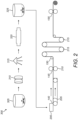
- Figure 1 shows a schematic representation of the method 100 to fabricate fire repellent cigarette paper according to the present disclosure.
- Raw plant material such as flax, hemp, sisal, rice straw, and/or esparto, is first prepared by screening and removing any contaminants or other unwanted components. These non-wood plant materials are often described as rag fibres, but it should be understood that wood-based plant material may also be used.
- the raw plant material is ground into micro and/or nano fibres of plant material by use of a mechanical dispersion mill and a homogenizer.
- the plant material may be ground in water to improve the dispersion of material and ensure optimal homogeneity of ground fibres.
- the plant material is ground into microfibres having an average diameter of between 60 to 400 ⁇ m (microns), preferably between 60 to 200 ⁇ m, and/or nanofibres having an average diameter of between 50 to 500 nm (nanometres), preferably between 50 to 100 nm.
- the plant material can also be pre-treated using steam explosion to obtain nanofibres.
- the plant material may be bleached, before or after the grinding step 105, to remove lignin from the plant material.
- the ground fibres are passed through a disc refiner.
- Disc refiners can be used to affect the structural and binding characteristics of plant or cellulose fibres.
- the ground fibres are abraded or grated to form fibrils on its surface which will improve the binding properties of the paper pulp mixture as well as allow the fireproofing treatment of the next step to be more effectively performed.
- the fibres are soaked in an aqueous treatment solution of a donor of phosphorous groups, in this specific example phytic acid (although other phosphorous groups may be used), and urea at step 115.
- the composition of the aqueous treatment solution includes:
- the ratio of the ground fibres to the aqueous treatment solution is between 1:1 to 1:10 part material to part solution.
- the ratio is 1 gram of ground fibres to 5 ml of aqueous treatment solution.
- the ground fibres are soaked in the treatment solution for a time period of between 5 to 60 minutes.
- the ground fibre-treatment solution mixture is filtered to remove any excess treatment solution and/or any unwanted particles from the mixture.
- the soaked mixture is then dried at step 125 to dry the mixture to a desired humidity level / moisture content.
- the drying is performed under atmospheric conditions for a period of between 5 minutes to 8 hours at a temperature of between 40 to 60 °C.
- the desired humidity level, or moisture content is between 5 to 20 % as a weight percentage of the total weight of the mixture.
- the partially dried mixture is then heated at a temperature of 140 to 200 °C for a duration of 2 hours for the phosphorous groups in the aqueous treatment solution to graft onto the plant fibres.
- a further optional washing and drying step may take place after heating step 130 to further remove any excess non-grafted treatment solution.
- water is added to the dried and heated (i.e. treated) fibres to create a pulp mixture.
- the pulp should have a humidity level / moisture content of approximately 95 %.
- calcium carbonate can be added at this step to improve the whiteness of the paper.
- the pulp of treated fibres and water is then worked through a paper machine.
- the paper machine includes two distinct sections: the wet section and the dry section.
- the wet section involves spraying and pressing, and the dry section involves drying the pressed mixture.
- the pulp mixture is continuously sprayed from a headbox 200 onto a forming wire, or forming fabric 205.
- the forming fabric 205 is a fine-mesh fabric from which water will be progressively sucked / removed from the overlying pulp mixture.
- the pulp mixture is in the form of a sheet typically containing less than 80% water.
- the sheet of pulp mixture is then transferred to the pressing or press section 210 at step 145 by a support belt, where the press section 210 is configured to extract as much water as possible from the sheet before it enters the dry section of the machine.
- the sheet typically still contains about 50% of water.
- the press section 210 further includes a second press for marking or embossing the paper with fine woven lines or other markings.
- the pressed sheet is transferred to the dry section, which typically involves passing the sheet through a series of heated cylinders 215 as shown in Figure 1 .
- the cylinders 215 are typically heated with steam and the sheet is dried by conduction.
- different drying techniques may also be used to replace or in addition to the conduction technique of the heated cylinders 215.
- the sheet may be dried by convection, where hot air is blown onto the sheet, and/or by radiation such as infrared to increase the temperature of the sheet.
- the sheet is continuously dried, moving across the cylinders 215 until the moisture content of the paper is around 6%, where it is then further transferred to be rolled at step 155.
- the paper sheet may undergo one or more finishing treatments before it is rolled, as may be required by the paper design.
- FIG. 2 shows a schematic representation of another method 300 to fabricate fire repellent cigarette paper according to another specific example of the present disclosure.
- This second method 300 is mostly the same as the first method 100, except for the treatment of the ground fibres with the phosphorous-group treatment solution.
- the grinding step 305 and the refining step 310 are the same as the grinding and refining steps 105, 100 described in reference to the first method 100 to provide ground micro and/or nano-fibres of plant material.
- the ground fibres are sprayed with the aqueous treatment solution of phytic acid (although other phosphorous groups may be used), and urea to a humidity level / moisture content of 5 to 20 %. Spraying the ground fibres allows a greater control of the moisture content of the mixture, which means that the drying step 125 in the first method 100 is not necessary in the present method 300.
- the fibres are heated at step 320 in the same way as heating step 130 in the first method at a temperature of 140 to 200 °C for a duration of 2 hours.
- a further optional washing and drying step may take place after heating step 320 to further remove any excess treatment solution of donor of phosphorous groups that has not grafted to the fibres.
- the treated fibres are then made into a pulp mixture at step 325 by added water to a moisture content of 95%, where the pulp mixture is made into paper in the same way as that described above in reference to Figure 1 .
- Step 10 grinding the plant material into ground fibres 11 refining the ground fibres 20 applying a treatment solution to the ground fibres 20a applying the treatment solution by soaking 20b applying the treatment solution by spraying 21 filtering the treated fibres 22 drying the treated fibres 23 heating the treated fibres 25 washing and filtering the treated fibres 30 creating a paper pulp 40 providing a fire repellent cigarette paper 41 spraying the paper pulp 42 pressing the paper pulp 43 drying the paper pulp 44 processing the pressed and dried paper pulp to provide the fire repellent cigarette paper
- Method 400 includes a grinding step 10 to grind the raw plant material into ground fibres. Grinding may include solid grinding, which involves a mechanical dispersion mill and a homogenizer to produce particles and ground fibres in the micrometre and/or nanometre scale. Step 10 may also include screening and filtering to separate out the ground fibres of the desired size (or to remove the unwanted particles / fibre sizes). Grinding step 10 may also include a pre-treatment process using steam explosion, or vapour explosion of the plant material (i.e. a lignocellulosic material) to obtain cellulose nanofibres. The pre-treatment process may also include bleaching for the removal of lignin from the plant material.
- the pre-treatment process may also include bleaching for the removal of lignin from the plant material.
- the treatment solution comprising phosphorous group donors is applied to the ground fibres.
- the application of the treatment solution may be performed by soaking or spraying.
- the treatment of the fibres only includes the application of the treatment solution comprising a donor of a phosphorous group. Further steps in the treatment of the ground fibres may be included to enhance the bonding of donors to the ground fibres.
- the composition of the treatment solution includes:
- the ratio of the ground fibres to the aqueous treatment solution is between 1:1 to 1:10 part material to part solution.
- a paper pulp is created at step 30, in which the treated fibres are mixed with water.
- the paper pulp mixture is then made into a cigarette paper having fire repellent properties due to the treated fibres.
- the making of the paper pulp and cigarette paper may involve known process steps, as well as the steps described in the present disclosure.
- FIG 4 shows another series of steps according to another method 500, similar to the general method 400 described above in reference to Figure 3 .
- the treating of the ground fibres to provide treated fibres comprising a phosphorous group includes applying the treatment solution at step 20, followed by a heating step 23, where the ground fibre-treatment solution mixture (also described as humid or moist treated fibres) is heated to a temperature of 140 to 200 °C, preferably for a duration of about two hours. Heating the mixture further allows the phosphorous groups in the treatment solution to effectively bond to the ground fibres.
- the treated fibres are mixed with water to create a paper pulp at step 30, and the paper pulp is then made into a cigarette paper having fire repellent properties at step 40.
- the composition of the treatment solution used at step 20 is similar to the one described for figure 3 .
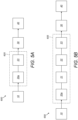
- FIG. 5A shows a series of steps according to a method 600, which is a specific example of method 500 in which the treatment of the ground fibres includes both applying a treatment solution and heating the ground fibre-treatment solution mixture to a temperature of 140 to 200 °C, as indicated by box 605.
- the application of the treatment solution is performed by soaking the ground fibres in the treatment solution.
- the soaking time of the ground fibres is between 5 to 60 minutes, preferably between 10 to 60 minutes.
- the treated fibres are then mixed with water to create a paper pulp at step 30, and the paper pulp is made into a cigarette paper having fire repellent properties at step 40.
- FIG. 5B shows another series of steps according to another method 650, which is another specific example of method 500 in which further steps are included in the treatment of the ground fibres, as indicated by box 655.
- the ground fibre-treatment solution mixture is filtered at step 21 to remove any excess solution and molecules from the mixture, and dried at step 22.
- the mixture is dried to achieve a humidity/moisture level of 5 to 20 % (weight percentage of the total weight of the mixture) under atmospheric conditions for a duration of 5 minutes to 8 hours (ideally between 15 to 30 minutes) at a temperature between 15 to 60 °C, preferably between 40 to 60 °C.
- the dried mixture is then heated at a temperature of 140 to 200 °C at step 23.
- the treated fibres are then mixed with water to create a paper pulp at step 30, and the paper pulp is made into a fire repellent cigarette paper at step 40.
- FIG. 6 shows another method 700 which is another specific example of method 500 in which the treatment of the ground fibres includes both applying a treatment solution and heating the ground fibre-treatment solution mixture to a temperature of 140 to 200 °C, as indicated by box 705.
- the application of the treatment solution is performed by spraying the ground fibres with the treatment solution.
- the ground fibres are sprayed with the treatment solution until the moist/humid treated fibres have a moisture/humidity content of 5 to 20 % (weight percentage of the total weight of the mixture).
- the treated fibres are then mixed with water to create a paper pulp at step 30, and the paper pulp is made into a fire repellent cigarette paper at step 40.
- Figure 7 shows a method 800 similar to the general method 400 and further including a washing and filtration step after applying the treatment solution to the ground fibres.
- the ground fibres are treated as indicated by box 805, which includes the applying of the treatment solution at step 20 and washing and filtering the treated fibres at step 25 before the treated fibres are mixed with water to form a paper pulp at step 30. Washing and filtering the treated fibres remove any excess solution and molecules.
- Chemically pure urea is a colourless and odourless solid that does not interfere with the colour or the mechanical properties of the final paper.
- the paper pulp is made into a fire repellent cigarette paper at step 40.
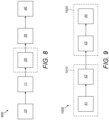
- Figure 8 shows a method 900 in which an additional step is performed before the ground fibres are treated with the treatment solution of a donor of phosphorous groups.
- the raw plant material is ground into ground fibres.
- the ground fibres are refined, where the ground fibres are grated such that fibrils are formed on the surfaces of the ground fibres. This may be performed by passing the ground fibres between the blades of a disc refiner.
- the refined ground fibres are then soaked or sprayed with the treatment solution at step 20, mixed with water to create a paper pulp at step 30, and then the paper pulp is made into a fire repellent cigarette paper at step 40.
- the composition of the treatment solution used at step 20 is similar to the one described for figure 3 .
- FIG 9 shows a series of steps for the paper making process 1000 of step 40 previously mentioned for figures 3 to 8 .
- the paper making process is split into a wet section 1010 and a dry section 1020.
- a paper pulp made of the treated fibres and water is continuously sprayed onto a forming wire via a headbox at step 41.
- the forming wire is a fine-mesh fabric and water is progressively extracted from the sprayed paper pulp on the forming wire / forming fabric.
- the sprayed paper pulp "sheet" contains less than 80 % water, and the sheet enters the pressing or press section of the wet section 1010.
- the sheet is pressed to further extract water from the sheet of sprayed paper pulp before it enters the dry section 1020.
- the sheet of paper typically contains about 50% water.
- there can be two presses where the first one extracts water (i.e. step 42) and a second press marks the paper with fine woven lines which can control the combustion of regular / conventional cigarettes. The woven lines may control the heat distribution in heat-not-burn cigarettes.
- the pressed sheet then enters the dry section 1020.
- the pressed sheet is dried at step 43.
- the continuous sheet of paper is moved from cylinder to cylinder in the drying section 1020.
- There are different methods of drying the pressed sheet including:
- the paper sheet When the paper sheet reaches a moisture content of around 6 % water it undergoes one or more finishing treatments at step 44 to provide the fire repellent cigarette paper.
- the paper sheet may be cut into individual pieces of cigarette paper 1100 as shown in Figure 10 having predetermined dimensions (width, W and length, L), thickness and basis weight according to design and manufacturing requirements.
- the basis weight is ranging from 20-110 gsm (g/m 2 ), preferably ranging from 20-80 gsm, more preferably ranging from 20-65 gsm, even more preferably ranging from 25-55 gsm.
- the thickness is ranging from 20-160 ⁇ m, preferably ranging from 20-120 ⁇ m, more preferably ranging from 20-80 ⁇ m, even more preferably ranging from 25-55 ⁇ m.
- the paper making process 1000 described above can be combined with any of the methods described in Figures 1 to 8 .
- FIG 11 shows an exemplary heated tobacco stick (HTS) 1200 comprising an aerosol generating substrate 1210 comprising tobacco material wrapped by a fire repellent cigarette paper according to the present disclosure.
- the HTS 1200 further comprises a downstream element 1220, also called the mouth end section.
- the mouth end 1220 may comprise multiple segments, including one or more of a filter plug, a centre hole, a support tube, an aerosol cooling section, and/or a mouthpiece.
- the mouth end 1220 is located downstream of, and preferably adjacent to, the tobacco component (i.e. the aerosol generating substrate 1210) of the aerosol generating article 1200, such that in use aerosol generated from the tobacco component (e.g. from the application of heat) flows through the mouth end 1220 to be inhaled by a user.
- the mouth end 1220 can comprise a cooling section, such a cooling section may be a paper tube or a section comprising a crimped polylactic acid sheet.
- the mouth end 1220 can comprise a first centre hole having a first inner diameter adjacent to the downstream end of the tobacco material, a second centre hole having a second inner diameter adjacent to the downstream end of the first centre hole and a mouthpiece adjacent to the downstream end of the second centre hole.
- the first inner diameter is smaller than the second inner diameter.
- the first inner diameter may be ranging from 1,5 mm (millimetre) and 4,5 mm.
- the second diameter may be ranging from 3,5 mm to 6,0 mm.
- the mouth end 1220 can comprise a centre hole having an inner diameter adjacent to the downstream end of the tobacco component, an aerosol cooling section adjacent to the downstream end of the centre hole and a mouthpiece adjacent to the downstream end of the aerosol cooling section.
- the inner diameter of the centre hole may be ranging from 1,5 mm (millimetre) and 4,5 mm.
- the aerosol cooling section may be a paper tube or a section comprising a crimped polylactic acid sheet. The above examples should not be limiting the present invention. It will be apparent from the overall disclosure that the mouth end 1220 can combine multiple segments in a different way for providing the HTS 1200 and can also comprise an upstream element located upstream of, and preferably adjacent to, the tobacco component (i.e.
- the upstream element may be a filter plug made of cellulose acetate with or without a centre hole, a paper filter with or without a centre hole, or a combination thereof.
- the upstream element is wrapped in the fire repellent cigarette paper together with the tobacco component.
- the fire repellent cigarette paper only wraps the upstream element.
- the tobacco component is wrapped by commonly used cigarette paper that does not have fireproofing property.
Landscapes
- Paper (AREA)
Abstract
Description
- The present invention relates to wrapping papers for cigarettes, and specifically the manufacture of cigarette papers for fire repellent properties.
- Aerosol generating articles usually heat a consumable in order to generate an aerosol or vapour for user inhalation. In the past tobacco products such as conventional cigarettes have been burnt or combusted in order to create a tobacco smoke. More recently, heat-not-burn (HnB) products have been developed which do not require combustion of the tobacco consumable.
- Known regulations require an entire HnB tobacco product to not be combustible. For example, a heated tobacco stick cannot be lit as a conventional cigarette. Known HnB products thus use metallised wrappers or cigarette paper that has been treated with additives in order to be non-combustible and fire-retardant. Such technologies are often non-biodegradable and can be toxic to humans or animals.
- An object of the invention is to provide an effective fire repellent cigarette paper for heat-not-burn uses.
- According to an aspect of the invention, there is provided a method of fabricating fire repellent cigarette paper for a heat-not-burn aerosol generating article, the method comprising: grinding plant material to produce ground fibres; applying a treatment solution to the ground fibres, the treatment solution comprising a donor of a phosphorous group, to provide treated fibres comprising a phosphorous group; creating a paper pulp comprising the treated fibres and water; and inputting the paper pulp into a paper machine to form a fire repellent cigarette paper comprising 0.1% to 10% of phosphorous groups by weight of the total weight of the fire repellent cigarette paper.
- In this way, a non-combustible heat-not-burn (HnB) aerosol generating article is provided with fire repellent properties and that is non-toxic and biodegradable. The improved HnB aerosol generating articles are environmentally friendly and cause significantly less pollution and environmental impact than previous methods of manufacturing heated tobacco sticks.
- Known methods in the art use metallised paper or paper that has been treated with fire-retardant additives. However, such technologies typically produce polluting articles, where the metallised paper is non-biodegradable and where the treated paper is toxic to both humans and animals.
- By forming cigarette paper using a paper pulp created from ground fibres treated with a treatment solution comprising a donor of a phosphorous group, the cigarette paper and the overall aerosol generating article is not combustible, complying with HnB requirements (and for example, EU or other national regulations). Providing the fire-repellent paper of the present invention thus removes the need for the undesirable metallised paper or additive-treated papers in the art.
- It has been advantageously found that grinding the plant material before application of the treatment solution significantly improves the covalent bonding of the phosphorous groups to the ground fibres. When the phosphorous compound is in the treatment solution, a donor of the phosphorous group is yet to bond or graft to the tobacco fibres. After treatment (i.e. after the chemical reaction in which the donors of the phosphorous groups bond to the tobacco fibres), the phosphorous group(s) is bonded/grafted to the tobacco fibres (thus providing treated tobacco fibres). The ground plant fibres may comprise thin and lightweight "rag fibres", e.g. non-wood plant fibres, such as flax, hemp, sisal, rice straw, and/or esparto.
- The fire repellent cigarette paper of the claimed invention chars instead of combusting when heated. In other words, the cigarette paper does not ignite and chars instead of burns. As such the cigarette paper acts as a fire retardant and carbon monoxide or other harmful gasses are not produced during a heating session.
- Preferably, the ground fibres have an average diameter of less than 500 µm (microns). In this way, an optimal average diameter of the ground fibres ensures that a suitable amount of the phosphorous groups is bonded to the fibres to ensure an effective fire repellent cigarette paper. It has also been found that grinding the plant material to an average diameter of less than 500 µm also ensures a more homogenised fibres which improve the paper pulp and cigarette paper formed from it. The grinding may be performed by a mechanical dispersion mill and a homogenizer.
- However, as will be appreciated by the skilled person, other grinding techniques can also be used. Microfibres may typically have a diameter between 60 to 400 µm, preferably between 60 to 200 µm.
- Preferably the donor of the phosphorous group comprises an inositol phosphate moiety. For example, phytic acid is a compound which has an inositol phosphate moiety. Other examples include: D-myo-Inositol 1, 4, 5-triphosphate tripotassium salt, and D-myo-Inositol 1, 3, 4, 5-tetrakis(phosphate) ammonium salt. As will be appreciated by the skilled person, other phosphorus-based compounds may also be used as a donor of a phosphorous group.
- It has been advantageously found that inositol phosphorus based derivatives/moieties allow multiple phosphorous groups from a same inositol phosphorus based derivative to be grafted to multiple fibres. In other words, one inositol phosphorus based derivative allows multiple covalent bonds to be bonded to a fibre. In this way, the amount of phosphorous groups / treatment solution required to get ensure effective fire repellent properties can be decreased, which improves the ease and cost of manufacture of the fire repellent cigarette paper.
- It has also been found that the use of inositol phosphate derivatives in combination with rag fibres offer a highly sustainable manufacturing process for fire repellent cigarette papers.
- Preferably, the fire repellent cigarette paper comprises 0.5% to 3% of phosphorous groups by weight of the total weight of the fire repellent cigarette paper. In this way, the cigarette paper provides effective fire repellent properties.
- Preferably, the treatment solution comprises 0.1 to 20% of an inositol phosphate derivative by weight of the total weight of the treatment solution, preferably 3 to 10 %, and preferably wherein the inositol phosphate derivative comprises phytic acid.. In this way, the phosphorous group grafted to the cigarette paper is able to catalyse the carbonisation of the plant material fibres to form a dense and protective char layer on the fibre surface. This protective layer hinders heat transfer between adjacent and surrounding fibres, which in turn provides the fire repellent properties of the cigarette paper.
- Preferably, the treatment solution comprises 1 to 40 % urea, preferably between 10 to 20 %. In this way, the treatment application step urea acts as an enabler which improves the accessibility of the phosphorous groups in the phytic acid to the individual fibres and ensure effective covalent bonding. The urea also protects the fibre material from degradation after the solution-treatment when it is heated at a later stage (e.g. to dry the pulp before it is heated or made into paper).
- The application of the ground fibres with the treatment solution may be performed by soaking the fibres in the treatment solution or spraying the treatment solution onto the ground fibres.
- Preferably, after applying the treatment solution to form moist treated fibres, the method comprises heating the moist fibres to form dried treated fibres and creating the pulp using the dried treated fibres.
- If the ground fibres are soaked in the treatment solution, drying of the fibres is required to decrease the humidity / moisture content of the ground fibre-treatment solution mixture to approximately 5 to 20 % weight percentage (weight percentage of the total weight of the mixture). This may be done under atmospheric conditions over a time period of between five minutes to eight hours (preferably between 15 to 30 minutes) at a temperature of between 15 to 60 degrees Celsius (preferably between 40 to 60 °C (degrees Celsius)). The time periods and temperatures can be adjusted according to manufacturing requirements, as will be appreciated by the skilled person.
- This drying step may not be necessary if the treatment solution is sprayed onto the ground fibres, since the moisture content of the treated fibres can be more easily controlled. However, as will be understood, the spraying step can also be used to provide a moisture content / humidity above the desired range, and a short drying step can be implemented.
- Preferably, the heating comprises heating the moist fibres at 140 to 200 °C. Heating the ground fibre-treatment solution mixture ensures that the donors of the phosphorous groups in the treatment solution can effectively bond to the fibres.
- Preferably, the ground fibres have an average diameter of less than 1 µm. In this way, the surface area of the fibres is further increased such that an improved covalent bonding can take place with the treatment solution and thus provide an improved fireproof cigarette paper.
- Preferably, the method further comprises, prior to applying the treatment solution, using steam explosion of the plant fibres to obtain nanofibres having an average diameter of less than 500 nm (nanometres). In this way, the plant material, or lignocellulosic material, is pre-treated such that the smaller or nanofibers can be more easily obtained. Such nanofibres improve the mechanical properties of the cigarette paper (such as the resistance, filling capacity, or porosity of the paper), as well as further ensuring the grafting process (of the phosphorous groups to the fibres) is effectively performed. Fibres obtained through steam, or vapour, explosion may have a diameter between 50 to 500 nm, preferably between 50 to 100 nm.
- Preferably, the method further comprises a step of refining the ground fibres. In this way, the ground fibres can be "grated" to produce fibrils. The refining step may be performed by passing the fibres through a disc refiner, such that the fibrils are formed as the fibres pass between the blades of the disc refiner.
- It has been found that the fibrils enhance the bonding / grafting process (i.e. treatment with the phosphorous group treatment solution). The fibrils also provide an improved "clinging" of the fibres to each other (e.g. by electrostatic forces), which in turn improves the homogeneity of the distribution of the fibres when forming the paper sheet.
- According to another aspect of the invention, there is provided a fire repellent cigarette paper, the fire repellent cigarette paper comprising 0.1% to 10% phosphorous groups by weight of the total weight of the fire repellent cigarette paper, preferably 0.5% to 3%.
- Preferably, the phosphorous group comprise an inositol phosphate moiety. Examples include phytic acid (inositol hexaphosphate) or phytate as a salt, D-myo-Inositol 1, 4, 5-triphosphate tripotassium salt, and /pr D-myo-Inositol 1, 3, 4, 5-tetrakis(phosphate) ammonium salt.
- Preferably, the fire repellent cigarette paper comprises ground plant fibres having an average diameter of less than 500 µm, where the phosphorous groups are covalently grafted to the ground plant fibres.
- According to another aspect of the invention, there is provided an aerosol generating article for use with a heat-not-burn aerosol generating device, the aerosol generating article comprising: a tobacco component wrapped in a fire repellent cigarette paper, the fire repellent cigarette paper comprising 0.1 % to 10% of phosphorous groups by weight of the total weight of the fire repellent cigarette paper, preferably 0.5% to 3%.
- The aerosol generating article may further comprise one or more downstream elements, including: a filter plug, a centre hole, a support tube (which may comprise paper), an aerosol cooling section, and/or a mouthpiece. The downstream elements may be arranged downstream of, and preferably adjacent to, the tobacco component (i.e. the aerosol generating substrate) of the aerosol generating article, such that in use aerosol generated from the tobacco component (e.g. from the application of heat) flows through the one or more downstream elements to be inhaled by a user.
- Preferably, the aerosol generating article comprises a tobacco component wrapped in a fire repellent cigarette paper, the fire repellent cigarette paper comprising 0.1% to 10% of phosphorous groups by weight of the total weight of the fire repellent cigarette paper, preferably 0.5% to 3% and a downstream element including an aerosol cooling section adjacent to the downstream end of the tobacco component and a mouthpiece adjacent to the downstream end of the aerosol cooling section. Most preferably, the aerosol cooling section may be a paper tube or a section comprising a crimped polylactic acid sheet. Most preferably, the mouthpiece comprises a filter plug.
- Preferably, the aerosol generating article comprises a tobacco component wrapped in a fire repellent cigarette paper, the fire repellent cigarette paper comprising 0.1% to 10% of phosphorous groups by weight of the total weight of the fire repellent cigarette paper, preferably 0.5% to 3% and a downstream element including an aerosol cooling section adjacent to the downstream end of the tobacco component, a centre hole adjacent to the downstream end of the aerosol cooling section and a mouthpiece adjacent to the downstream end of the centre hole. Most preferably, the aerosol cooling section may be a paper tube or a section comprising a crimped polylactic acid sheet. Most preferably, the mouthpiece comprises a filter plug.
- Preferably, the aerosol generating article comprises a tobacco component wrapped in a fire repellent cigarette paper, the fire repellent cigarette paper comprising 0.1% to 10% of phosphorous groups by weight of the total weight of the fire repellent cigarette paper, preferably 0.5% to 3% and a downstream element including a first centre hole having a first inner diameter adjacent to the downstream end of the tobacco component, a second centre hole having a second inner diameter adjacent to the downstream end of the first centre hole and a mouthpiece adjacent to the downstream end of the second centre hole. Most preferably, the first inner diameter is smaller than the second inner diameter. The first inner diameter may be ranging from 1,5 mm (millimetre) and 4,5 mm. The second diameter may be ranging from 3,5 mm to 6,0 mm. Most preferably, the mouthpiece comprises a filter plug.
- Preferably, the aerosol generating article comprises a tobacco component wrapped in a fire repellent cigarette paper, the fire repellent cigarette paper comprising 0.1% to 10% of phosphorous groups by weight of the total weight of the fire repellent cigarette paper, preferably 0.5% to 3% and a downstream element including a centre hole having an inner diameter adjacent to the downstream end of the tobacco component, an aerosol cooling section adjacent to the downstream end of the centre hole and a mouthpiece adjacent to the downstream end of the aerosol cooling section. The inner diameter of the centre hole may be ranging from 1,5 mm (millimetre) and 4,5 mm. The aerosol cooling section may be a paper tube or a section comprising a crimped polylactic acid sheet. Most preferably, the mouthpiece comprises a filter plug.
- In another embodiment, the aerosol generating article according any of the previous described aerosol generating article may further comprise an upstream element. Such an upstream element may be arranged upstream of, and preferably adjacent to, the tobacco component (i.e. the aerosol generating substrate) of the aerosol generating article. The upstream element may be a filter plug made of cellulose acetate with or without a centre hole, a paper filter with or without a centre hole, or a combination thereof. Preferably, the upstream element is wrapped in the fire repellent cigarette paper together with the tobacco component.
- In some other examples, it is possible that the fire repellent cigarette paper only wraps the upstream element. In such a case, the tobacco component is wrapped by commonly used cigarette paper that does not have fireproofing property.
- Embodiments of the present invention will now be described, by way of example only, with reference to the accompanying drawings in which:
-
Figure 1 shows a flowchart illustrating a method for creating a cigarette paper according to the present invention; -
Figure 2 shows a flowchart illustrating another method for creating a cigarette paper according to an embodiment of the present invention; -
Figures 3 to 8 show flowcharts illustrating different methods for creating a cigarette paper according to further embodiments of the present invention; -
Figure 9 shows a flowchart illustrating a paper making process of the present invention; -
Figure 10 shows a schematic of a fire repellent cigarette paper according to the present invention; and -
Figure 11 shows a schematic of a heated tobacco stick with a fire repellent paper according to the present invention. - As used herein, the terms "burn retardant" component or "fire retardant" component or "fire repellent" component or "fireproof' component or "fireproofing" component are used equally and refers to a component that reduce or even avoid the flammability of a material by either blocking the initiation of fire physically or by initiating a chemical reaction that stops or avoids the fire deployment. In the sense of the present invention, "burn retardant" or "fire retardant" or "fire repellent" or "fireproof' or "fireproofing" reduce or even prohibit the combustion of tobacco material.
- As used herein, the term "a donor of a phosphorous group" refers to a chemical component that comprises at least one phosphorous atom available for covalent bonding to a substrate material, said substrate material being also called the receiver.
- As used herein, the terms "inositol" or "myo-inositol" refer to a carbocyclic sugar and is the biologically important form of cyclohexane-1,2,3,4,5,6-hexol. In the context of the present invention, we specifically refer to "inositol phosphate derivative/moiety" to define an inositol component wherein at least one of the hydroxyl moieties of the inositol component is substituted with a phosphorous acid moiety. In a preferred embodiment, more than one hydroxyl moieties of the inositol component are substituted with a phosphorous acid moiety. In a most preferred embodiment, all the six hydroxyl moieties of the inositol component are substituted with a phosphorous acid moiety.
- As used herein, the term "covalent bond" refers to a chemical bond that involves the sharing of electrons to form electron pairs between atoms. These electron pairs are known as shared pairs or bonding pairs. The stable balance of attractive and repulsive forces between atoms, when they share electrons, is known as covalent bonding. For many molecules, the sharing of electrons allows a stable electronic configuration.
-
Figure 1 shows a schematic representation of themethod 100 to fabricate fire repellent cigarette paper according to the present disclosure. - Raw plant material, such as flax, hemp, sisal, rice straw, and/or esparto, is first prepared by screening and removing any contaminants or other unwanted components. These non-wood plant materials are often described as rag fibres, but it should be understood that wood-based plant material may also be used.
- At
step 105, the raw plant material is ground into micro and/or nano fibres of plant material by use of a mechanical dispersion mill and a homogenizer. The plant material may be ground in water to improve the dispersion of material and ensure optimal homogeneity of ground fibres. The plant material is ground into microfibres having an average diameter of between 60 to 400 µm (microns), preferably between 60 to 200 µm, and/or nanofibres having an average diameter of between 50 to 500 nm (nanometres), preferably between 50 to 100 nm. Optionally, the plant material can also be pre-treated using steam explosion to obtain nanofibres. - The plant material may be bleached, before or after the grinding
step 105, to remove lignin from the plant material. - At
step 110, the ground fibres are passed through a disc refiner. Disc refiners can be used to affect the structural and binding characteristics of plant or cellulose fibres. In this case, the ground fibres are abraded or grated to form fibrils on its surface which will improve the binding properties of the paper pulp mixture as well as allow the fireproofing treatment of the next step to be more effectively performed. - To fireproof the ground fibres in this specific example, the fibres are soaked in an aqueous treatment solution of a donor of phosphorous groups, in this specific example phytic acid (although other phosphorous groups may be used), and urea at
step 115. The composition of the aqueous treatment solution includes: - 0.1 to 20 % phytic acid, preferably between 3 to 10 %, and
- 1 to 40 % urea, preferably between 10 to 20 %.
- The ratio of the ground fibres to the aqueous treatment solution is between 1:1 to 1:10 part material to part solution. For example, 1 gram of ground fibres to 1 ml of solution, or 1 gram of ground fibres to 10 ml of solution. Preferably, the ratio is 1 gram of ground fibres to 5 ml of aqueous treatment solution. The ground fibres are soaked in the treatment solution for a time period of between 5 to 60 minutes.
- At
optional step 120, the ground fibre-treatment solution mixture is filtered to remove any excess treatment solution and/or any unwanted particles from the mixture. The soaked mixture is then dried atstep 125 to dry the mixture to a desired humidity level / moisture content. The drying is performed under atmospheric conditions for a period of between 5 minutes to 8 hours at a temperature of between 40 to 60 °C. The desired humidity level, or moisture content, is between 5 to 20 % as a weight percentage of the total weight of the mixture. Atstep 130, the partially dried mixture is then heated at a temperature of 140 to 200 °C for a duration of 2 hours for the phosphorous groups in the aqueous treatment solution to graft onto the plant fibres. A further optional washing and drying step may take place after heatingstep 130 to further remove any excess non-grafted treatment solution. - At
step 135 water is added to the dried and heated (i.e. treated) fibres to create a pulp mixture. The pulp should have a humidity level / moisture content of approximately 95 %. Optionally, calcium carbonate can be added at this step to improve the whiteness of the paper. - The pulp of treated fibres and water is then worked through a paper machine. The paper machine includes two distinct sections: the wet section and the dry section. The wet section involves spraying and pressing, and the dry section involves drying the pressed mixture.
- At
step 140, the pulp mixture is continuously sprayed from aheadbox 200 onto a forming wire, or formingfabric 205. The formingfabric 205 is a fine-mesh fabric from which water will be progressively sucked / removed from the overlying pulp mixture. At the end of the formingfabric 205, the pulp mixture is in the form of a sheet typically containing less than 80% water. - The sheet of pulp mixture is then transferred to the pressing or
press section 210 atstep 145 by a support belt, where thepress section 210 is configured to extract as much water as possible from the sheet before it enters the dry section of the machine. At the end of thepress section 210, the sheet typically still contains about 50% of water. Optionally thepress section 210 further includes a second press for marking or embossing the paper with fine woven lines or other markings. - At
step 150 the pressed sheet is transferred to the dry section, which typically involves passing the sheet through a series ofheated cylinders 215 as shown inFigure 1 . Thecylinders 215 are typically heated with steam and the sheet is dried by conduction. As will be understood by the skilled person, different drying techniques may also be used to replace or in addition to the conduction technique of theheated cylinders 215. For example, the sheet may be dried by convection, where hot air is blown onto the sheet, and/or by radiation such as infrared to increase the temperature of the sheet. - The sheet is continuously dried, moving across the
cylinders 215 until the moisture content of the paper is around 6%, where it is then further transferred to be rolled atstep 155. As will be appreciated by the skilled person, the paper sheet may undergo one or more finishing treatments before it is rolled, as may be required by the paper design. -
Figure 2 shows a schematic representation of anothermethod 300 to fabricate fire repellent cigarette paper according to another specific example of the present disclosure. Thissecond method 300 is mostly the same as thefirst method 100, except for the treatment of the ground fibres with the phosphorous-group treatment solution. - The grinding
step 305 and therefining step 310 are the same as the grinding andrefining steps first method 100 to provide ground micro and/or nano-fibres of plant material. - At
step 315, the ground fibres are sprayed with the aqueous treatment solution of phytic acid (although other phosphorous groups may be used), and urea to a humidity level / moisture content of 5 to 20 %. Spraying the ground fibres allows a greater control of the moisture content of the mixture, which means that the dryingstep 125 in thefirst method 100 is not necessary in thepresent method 300. - After spraying, the fibres are heated at
step 320 in the same way asheating step 130 in the first method at a temperature of 140 to 200 °C for a duration of 2 hours. A further optional washing and drying step may take place after heatingstep 320 to further remove any excess treatment solution of donor of phosphorous groups that has not grafted to the fibres. The treated fibres are then made into a pulp mixture atstep 325 by added water to a moisture content of 95%, where the pulp mixture is made into paper in the same way as that described above in reference toFigure 1 . - A number of the steps in the methods described above in reference to
Figures 1 and2 may be added, removed or modified as explained in the following examples. For simplicity, the different steps are set out below which may be selectively included into the different exemplary methods:Step 10 grinding the plant material into ground fibres 11 refining the ground fibres 20 applying a treatment solution to the ground fibres 20a applying the treatment solution by soaking 20b applying the treatment solution by spraying 21 filtering the treated fibres 22 drying the treated fibres 23 heating the treated fibres 25 washing and filtering the treated fibres 30 creating a paper pulp 40 providing a fire repellent cigarette paper 41 spraying the paper pulp 42 pressing the paper pulp 43 drying the paper pulp 44 processing the pressed and dried paper pulp to provide the fire repellent cigarette paper -
Figure 3 shows a series of steps according to ageneral method 400 to manufacture fire repellent paper.Method 400 includes a grindingstep 10 to grind the raw plant material into ground fibres. Grinding may include solid grinding, which involves a mechanical dispersion mill and a homogenizer to produce particles and ground fibres in the micrometre and/or nanometre scale.Step 10 may also include screening and filtering to separate out the ground fibres of the desired size (or to remove the unwanted particles / fibre sizes). Grindingstep 10 may also include a pre-treatment process using steam explosion, or vapour explosion of the plant material (i.e. a lignocellulosic material) to obtain cellulose nanofibres. The pre-treatment process may also include bleaching for the removal of lignin from the plant material. - At
step 20, the treatment solution comprising phosphorous group donors is applied to the ground fibres. The application of the treatment solution may be performed by soaking or spraying. As indicated bybox 405, the treatment of the fibres only includes the application of the treatment solution comprising a donor of a phosphorous group. Further steps in the treatment of the ground fibres may be included to enhance the bonding of donors to the ground fibres. The composition of the treatment solution includes: - 0.1 to 20 % phytic acid, preferably between 3 to 10 %, and
- 1 to 40 % urea, preferably between 10 to 20 %.
- The ratio of the ground fibres to the aqueous treatment solution is between 1:1 to 1:10 part material to part solution.
- A paper pulp is created at
step 30, in which the treated fibres are mixed with water. Atstep 40, the paper pulp mixture is then made into a cigarette paper having fire repellent properties due to the treated fibres. The making of the paper pulp and cigarette paper may involve known process steps, as well as the steps described in the present disclosure. -
Figure 4 shows another series of steps according to anothermethod 500, similar to thegeneral method 400 described above in reference toFigure 3 . As indicated bybox 505, the treating of the ground fibres to provide treated fibres comprising a phosphorous group includes applying the treatment solution atstep 20, followed by aheating step 23, where the ground fibre-treatment solution mixture (also described as humid or moist treated fibres) is heated to a temperature of 140 to 200 °C, preferably for a duration of about two hours. Heating the mixture further allows the phosphorous groups in the treatment solution to effectively bond to the ground fibres. The treated fibres are mixed with water to create a paper pulp atstep 30, and the paper pulp is then made into a cigarette paper having fire repellent properties atstep 40. The composition of the treatment solution used atstep 20 is similar to the one described forfigure 3 . -
Figure 5A shows a series of steps according to amethod 600, which is a specific example ofmethod 500 in which the treatment of the ground fibres includes both applying a treatment solution and heating the ground fibre-treatment solution mixture to a temperature of 140 to 200 °C, as indicated bybox 605. In thisspecific method 600, the application of the treatment solution is performed by soaking the ground fibres in the treatment solution. The soaking time of the ground fibres is between 5 to 60 minutes, preferably between 10 to 60 minutes. The treated fibres are then mixed with water to create a paper pulp atstep 30, and the paper pulp is made into a cigarette paper having fire repellent properties atstep 40. -
Figure 5B shows another series of steps according to anothermethod 650, which is another specific example ofmethod 500 in which further steps are included in the treatment of the ground fibres, as indicated bybox 655. After soaking the ground fibres in the treatment solution atstep 20a (to apply the treatment solution to the ground fibres), the ground fibre-treatment solution mixture is filtered atstep 21 to remove any excess solution and molecules from the mixture, and dried atstep 22. Preferably, the mixture is dried to achieve a humidity/moisture level of 5 to 20 % (weight percentage of the total weight of the mixture) under atmospheric conditions for a duration of 5 minutes to 8 hours (ideally between 15 to 30 minutes) at a temperature between 15 to 60 °C, preferably between 40 to 60 °C. The dried mixture is then heated at a temperature of 140 to 200 °C atstep 23. The treated fibres are then mixed with water to create a paper pulp atstep 30, and the paper pulp is made into a fire repellent cigarette paper atstep 40. -
Figure 6 shows anothermethod 700 which is another specific example ofmethod 500 in which the treatment of the ground fibres includes both applying a treatment solution and heating the ground fibre-treatment solution mixture to a temperature of 140 to 200 °C, as indicated bybox 705. In thisspecific method 700, the application of the treatment solution is performed by spraying the ground fibres with the treatment solution. Preferably, the ground fibres are sprayed with the treatment solution until the moist/humid treated fibres have a moisture/humidity content of 5 to 20 % (weight percentage of the total weight of the mixture). The treated fibres are then mixed with water to create a paper pulp atstep 30, and the paper pulp is made into a fire repellent cigarette paper atstep 40. -
Figure 7 shows amethod 800 similar to thegeneral method 400 and further including a washing and filtration step after applying the treatment solution to the ground fibres. After grinding the raw plant material atstep 10, the ground fibres are treated as indicated bybox 805, which includes the applying of the treatment solution atstep 20 and washing and filtering the treated fibres atstep 25 before the treated fibres are mixed with water to form a paper pulp atstep 30. Washing and filtering the treated fibres remove any excess solution and molecules. Chemically pure urea is a colourless and odourless solid that does not interfere with the colour or the mechanical properties of the final paper. The paper pulp is made into a fire repellent cigarette paper atstep 40. -
Figure 8 shows amethod 900 in which an additional step is performed before the ground fibres are treated with the treatment solution of a donor of phosphorous groups. Atstep 10, the raw plant material is ground into ground fibres. Atstep 11, the ground fibres are refined, where the ground fibres are grated such that fibrils are formed on the surfaces of the ground fibres. This may be performed by passing the ground fibres between the blades of a disc refiner. The refined ground fibres are then soaked or sprayed with the treatment solution atstep 20, mixed with water to create a paper pulp atstep 30, and then the paper pulp is made into a fire repellent cigarette paper atstep 40. The composition of the treatment solution used atstep 20 is similar to the one described forfigure 3 . -
Figure 9 shows a series of steps for thepaper making process 1000 ofstep 40 previously mentioned forfigures 3 to 8 . The paper making process is split into awet section 1010 and adry section 1020. In thewet section 1010, a paper pulp made of the treated fibres and water is continuously sprayed onto a forming wire via a headbox atstep 41. The forming wire is a fine-mesh fabric and water is progressively extracted from the sprayed paper pulp on the forming wire / forming fabric. As the sprayed paper pulp leaves the forming wire, the sprayed paper pulp "sheet" contains less than 80 % water, and the sheet enters the pressing or press section of thewet section 1010. - At
step 42, the sheet is pressed to further extract water from the sheet of sprayed paper pulp before it enters thedry section 1020. At the end of thepressing step 42, the sheet of paper typically contains about 50% water. In some paper making processes, there can be two presses where the first one extracts water (i.e. step 42) and a second press marks the paper with fine woven lines which can control the combustion of regular / conventional cigarettes. The woven lines may control the heat distribution in heat-not-burn cigarettes. The pressed sheet then enters thedry section 1020. - In the
dry section 1020, the pressed sheet is dried atstep 43. The continuous sheet of paper is moved from cylinder to cylinder in thedrying section 1020. There are different methods of drying the pressed sheet, including: - Conduction, where the paper sheet is in contact with one or more heated metal cylinders. The cylinders may be heated with steam,
- Convection, where hot air is blown onto the paper sheet,
- Radiation, where infrared radiation is used to increase the temperature of the ramps in the
drying section 1020. - When the paper sheet reaches a moisture content of around 6 % water it undergoes one or more finishing treatments at
step 44 to provide the fire repellent cigarette paper. For example, the paper sheet may be cut into individual pieces ofcigarette paper 1100 as shown inFigure 10 having predetermined dimensions (width, W and length, L), thickness and basis weight according to design and manufacturing requirements. For example, the basis weight is ranging from 20-110 gsm (g/m2), preferably ranging from 20-80 gsm, more preferably ranging from 20-65 gsm, even more preferably ranging from 25-55 gsm. For example, the thickness is ranging from 20-160 µm, preferably ranging from 20-120 µm, more preferably ranging from 20-80 µm, even more preferably ranging from 25-55 µm. As will be understood, thepaper making process 1000 described above can be combined with any of the methods described inFigures 1 to 8 . -
Figure 11 shows an exemplary heated tobacco stick (HTS) 1200 comprising anaerosol generating substrate 1210 comprising tobacco material wrapped by a fire repellent cigarette paper according to the present disclosure. TheHTS 1200 further comprises adownstream element 1220, also called the mouth end section. Themouth end 1220 may comprise multiple segments, including one or more of a filter plug, a centre hole, a support tube, an aerosol cooling section, and/or a mouthpiece. Themouth end 1220 is located downstream of, and preferably adjacent to, the tobacco component (i.e. the aerosol generating substrate 1210) of theaerosol generating article 1200, such that in use aerosol generated from the tobacco component (e.g. from the application of heat) flows through themouth end 1220 to be inhaled by a user. In some examples, themouth end 1220 can comprise a cooling section, such a cooling section may be a paper tube or a section comprising a crimped polylactic acid sheet. In some other example, themouth end 1220 can comprise a first centre hole having a first inner diameter adjacent to the downstream end of the tobacco material, a second centre hole having a second inner diameter adjacent to the downstream end of the first centre hole and a mouthpiece adjacent to the downstream end of the second centre hole. In such a case, the first inner diameter is smaller than the second inner diameter. The first inner diameter may be ranging from 1,5 mm (millimetre) and 4,5 mm. The second diameter may be ranging from 3,5 mm to 6,0 mm. In another example, themouth end 1220 can comprise a centre hole having an inner diameter adjacent to the downstream end of the tobacco component, an aerosol cooling section adjacent to the downstream end of the centre hole and a mouthpiece adjacent to the downstream end of the aerosol cooling section. The inner diameter of the centre hole may be ranging from 1,5 mm (millimetre) and 4,5 mm. The aerosol cooling section may be a paper tube or a section comprising a crimped polylactic acid sheet. The above examples should not be limiting the present invention. It will be apparent from the overall disclosure that themouth end 1220 can combine multiple segments in a different way for providing theHTS 1200 and can also comprise an upstream element located upstream of, and preferably adjacent to, the tobacco component (i.e. the aerosol generating substrate 1210) of the aerosol generating article 1200 (not shown inFigure 11 ). The upstream element may be a filter plug made of cellulose acetate with or without a centre hole, a paper filter with or without a centre hole, or a combination thereof. Preferably, the upstream element is wrapped in the fire repellent cigarette paper together with the tobacco component. In some other examples, it is possible that the fire repellent cigarette paper only wraps the upstream element. In such a case, the tobacco component is wrapped by commonly used cigarette paper that does not have fireproofing property.
Claims (15)
- A method of fabricating fire repellent cigarette paper for a heat-not-burn aerosol generating article, the method comprising the steps of:grinding plant material to produce ground fibres;applying a treatment solution to the ground fibres, the treatment solution comprising a donor of a phosphorous group, to provide treated fibres comprising a phosphorous group;creating a paper pulp comprising the treated fibres and water; andinputting the paper pulp into a paper machine to form a fire repellent cigarette paper comprising 0.1% to 10% of phosphorous groups by weight of the total weight of the fire repellent cigarette paper.
- The method of claim 1, wherein the ground fibres have an average diameter of less than 500 µm.
- The method of claims 1 or 2 wherein the fire repellent cigarette paper comprises 0.5% to 3% of the phosphorous groups by weight of the total weight of the fire repellent cigarette paper.
- The method of claims 1, 2 or 3 wherein the donor of the phosphorous group comprises an inositol phosphate moiety.
- The method of any preceding claim wherein the treatment solution comprises 0.1 to 20% of an inositol phosphate derivative by weight of the total weight of the treatment solution, preferably 3 to 10 %, and preferably wherein the inositol phosphate derivative comprises phytic acid..
- The method of claim 5 wherein the treatment solution comprises 1 to 40% urea, preferably between 10 to 20%.
- The method of any preceding claim wherein after applying the treatment solution to form moist treated fibres, the method comprises heating the moist fibres to form dried treated fibres and creating the pulp using the dried treated fibres.
- The method of claim 7 wherein heating comprises heating the moist fibres at 140 to 200 °C.
- The method of any preceding claim where the ground fibres have an average diameter of less than 1 µm.
- The method of any preceding claim further comprising:
prior to applying the treatment solution, using steam explosion of the plant fibres to obtain nanofibres having an average diameter of less than 500 nm. - The method of any preceding claim, the method further comprising a step of refining the ground fibres.
- Afire repellent cigarette paper, the fire repellent cigarette paper comprising 0.1% to 10% phosphorous groups by weight of the total weight of the fire repellent cigarette paper, preferably 0.5% to 3%.
- The fire repellent cigarette paper of claim 12, wherein the phosphorous groups comprise an inositol phosphate moiety.
- The fire repellent cigarette paper of claims 12 or 13 comprising:
ground plant fibres having an average diameter of less than 500 µm, where the phosphorous groups are covalently grafted to the ground plant fibres. - An aerosol generating article for use with a heat-not-burn aerosol generating device, the aerosol generating article comprising:
a tobacco component wrapped in a fire repellent cigarette paper, the fire repellent cigarette paper comprising 0.1% to 10% of phosphorous groups by weight of the total weight of the fire repellent cigarette paper, preferably 0.5% to 3%.
Priority Applications (1)
| Application Number | Priority Date | Filing Date | Title |
|---|---|---|---|
| EP23151829.1A EP4400648A1 (en) | 2023-01-16 | 2023-01-16 | Cigarette paper and a method of manufacture thereof |
Applications Claiming Priority (1)
| Application Number | Priority Date | Filing Date | Title |
|---|---|---|---|
| EP23151829.1A EP4400648A1 (en) | 2023-01-16 | 2023-01-16 | Cigarette paper and a method of manufacture thereof |
Publications (1)
| Publication Number | Publication Date |
|---|---|
| EP4400648A1 true EP4400648A1 (en) | 2024-07-17 |
Family
ID=84981106
Family Applications (1)
| Application Number | Title | Priority Date | Filing Date |
|---|---|---|---|
| EP23151829.1A Pending EP4400648A1 (en) | 2023-01-16 | 2023-01-16 | Cigarette paper and a method of manufacture thereof |
Country Status (1)
| Country | Link |
|---|---|
| EP (1) | EP4400648A1 (en) |
Citations (3)
| Publication number | Priority date | Publication date | Assignee | Title |
|---|---|---|---|---|
| CN104532663A (en) * | 2014-12-02 | 2015-04-22 | 王庆艳 | Composite-fiber flame-retardant paper and preparation method thereof |
| CN106368069A (en) * | 2016-10-19 | 2017-02-01 | 中烟摩迪(江门)纸业有限公司 | Heating non-combustible cigarette paper and preparation method thereof |
| DE102020131672A1 (en) * | 2020-07-01 | 2022-01-05 | Delfortgroup Ag | HEAT RESISTANT WRAPPING PAPER FOR AEROSOL GENERATING ARTICLES |
-
2023
- 2023-01-16 EP EP23151829.1A patent/EP4400648A1/en active Pending
Patent Citations (3)
| Publication number | Priority date | Publication date | Assignee | Title |
|---|---|---|---|---|
| CN104532663A (en) * | 2014-12-02 | 2015-04-22 | 王庆艳 | Composite-fiber flame-retardant paper and preparation method thereof |
| CN106368069A (en) * | 2016-10-19 | 2017-02-01 | 中烟摩迪(江门)纸业有限公司 | Heating non-combustible cigarette paper and preparation method thereof |
| DE102020131672A1 (en) * | 2020-07-01 | 2022-01-05 | Delfortgroup Ag | HEAT RESISTANT WRAPPING PAPER FOR AEROSOL GENERATING ARTICLES |
Similar Documents
| Publication | Publication Date | Title |
|---|---|---|
| KR101236034B1 (en) | Manufacturing method for flavor cigarette paper and cigarette and for reduced side stream smoke by using the flavor cigarette paper | |
| KR20200113204A (en) | Biodegradable filter with improved taste | |
| KR102431771B1 (en) | Wrapper for non-combustible cigarette and method for manufacturing same | |
| EA023003B1 (en) | Paper for an article to be smoked having incendiary potential-reducing properties | |
| KR101230582B1 (en) | Cigarette paper using tobacco fibers and cigarette including the same | |
| CN113439867A (en) | Method for preparing reconstituted tobacco for heating non-combustible cigarettes by combining dry method and rolling method | |
| CN115943234B (en) | Heat-resistant packaging paper for aerosol-generating products | |
| EP2846651B1 (en) | Tobacco product that produces lower carbon monoxide to tar ratio | |
| CN118748914A (en) | Filter for smoking or electronic smoking articles comprising two layers of material | |
| EP4651740A1 (en) | Tobacco product and a method of manufacture thereof | |
| CN112779819A (en) | Cigarette paper containing tobacco elements and preparation method of cigarette paper containing tobacco elements | |
| US20220279835A1 (en) | High Strength Wrapping Material Containing Extracted Tobacco | |
| CN113100470B (en) | Preparation method of composite tobacco base material | |
| EP4176122B1 (en) | Wrapping paper with improved fire retardancy | |
| CN113957740B (en) | Method for preparing activated carbon fiber composite paper, obtained paper and application thereof | |
| RU2801480C2 (en) | Aerosol generating product with biodegradable filter material | |
| KR20240167336A (en) | Composition for manufacturing papermade reconstituted tobacco sheet, the papermade reconstituted tobacco sheet and a smoking article comprising the same | |
| CN113951554A (en) | Activated carbon fiber composite paper, preparation method and application thereof |
Legal Events
| Date | Code | Title | Description |
|---|---|---|---|
| PUAI | Public reference made under article 153(3) epc to a published international application that has entered the european phase |
Free format text: ORIGINAL CODE: 0009012 |
|
| STAA | Information on the status of an ep patent application or granted ep patent |
Free format text: STATUS: THE APPLICATION HAS BEEN PUBLISHED |
|
| AK | Designated contracting states |
Kind code of ref document: A1 Designated state(s): AL AT BE BG CH CY CZ DE DK EE ES FI FR GB GR HR HU IE IS IT LI LT LU LV MC ME MK MT NL NO PL PT RO RS SE SI SK SM TR |
|
| STAA | Information on the status of an ep patent application or granted ep patent |
Free format text: STATUS: REQUEST FOR EXAMINATION WAS MADE |
|
| 17P | Request for examination filed |
Effective date: 20250113 |
|
| STAA | Information on the status of an ep patent application or granted ep patent |
Free format text: STATUS: EXAMINATION IS IN PROGRESS |
|
| 17Q | First examination report despatched |
Effective date: 20250220 |