EP4398138A2 - Virtualisierungsbasierte plattformschutztechnologie - Google Patents
Virtualisierungsbasierte plattformschutztechnologie Download PDFInfo
- Publication number
- EP4398138A2 EP4398138A2 EP24170679.5A EP24170679A EP4398138A2 EP 4398138 A2 EP4398138 A2 EP 4398138A2 EP 24170679 A EP24170679 A EP 24170679A EP 4398138 A2 EP4398138 A2 EP 4398138A2
- Authority
- EP
- European Patent Office
- Prior art keywords
- execution environment
- trusted
- untrusted
- memory
- vmm
- Prior art date
- Legal status (The legal status is an assumption and is not a legal conclusion. Google has not performed a legal analysis and makes no representation as to the accuracy of the status listed.)
- Pending
Links
Images








Classifications
-
- G—PHYSICS
- G06—COMPUTING OR CALCULATING; COUNTING
- G06F—ELECTRIC DIGITAL DATA PROCESSING
- G06F12/00—Accessing, addressing or allocating within memory systems or architectures
- G06F12/02—Addressing or allocation; Relocation
- G06F12/08—Addressing or allocation; Relocation in hierarchically structured memory systems, e.g. virtual memory systems
- G06F12/10—Address translation
- G06F12/1009—Address translation using page tables, e.g. page table structures
-
- G—PHYSICS
- G06—COMPUTING OR CALCULATING; COUNTING
- G06F—ELECTRIC DIGITAL DATA PROCESSING
- G06F12/00—Accessing, addressing or allocating within memory systems or architectures
- G06F12/02—Addressing or allocation; Relocation
- G06F12/08—Addressing or allocation; Relocation in hierarchically structured memory systems, e.g. virtual memory systems
- G06F12/10—Address translation
- G06F12/109—Address translation for multiple virtual address spaces, e.g. segmentation
-
- G—PHYSICS
- G06—COMPUTING OR CALCULATING; COUNTING
- G06F—ELECTRIC DIGITAL DATA PROCESSING
- G06F12/00—Accessing, addressing or allocating within memory systems or architectures
- G06F12/14—Protection against unauthorised use of memory or access to memory
- G06F12/1416—Protection against unauthorised use of memory or access to memory by checking the object accessibility, e.g. type of access defined by the memory independently of subject rights
- G06F12/145—Protection against unauthorised use of memory or access to memory by checking the object accessibility, e.g. type of access defined by the memory independently of subject rights the protection being virtual, e.g. for virtual blocks or segments before a translation mechanism
-
- G—PHYSICS
- G06—COMPUTING OR CALCULATING; COUNTING
- G06F—ELECTRIC DIGITAL DATA PROCESSING
- G06F12/00—Accessing, addressing or allocating within memory systems or architectures
- G06F12/14—Protection against unauthorised use of memory or access to memory
- G06F12/1458—Protection against unauthorised use of memory or access to memory by checking the subject access rights
- G06F12/1491—Protection against unauthorised use of memory or access to memory by checking the subject access rights in a hierarchical protection system, e.g. privilege levels, memory rings
-
- G—PHYSICS
- G06—COMPUTING OR CALCULATING; COUNTING
- G06F—ELECTRIC DIGITAL DATA PROCESSING
- G06F21/00—Security arrangements for protecting computers, components thereof, programs or data against unauthorised activity
- G06F21/50—Monitoring users, programs or devices to maintain the integrity of platforms, e.g. of processors, firmware or operating systems
- G06F21/51—Monitoring users, programs or devices to maintain the integrity of platforms, e.g. of processors, firmware or operating systems at application loading time, e.g. accepting, rejecting, starting or inhibiting executable software based on integrity or source reliability
-
- G—PHYSICS
- G06—COMPUTING OR CALCULATING; COUNTING
- G06F—ELECTRIC DIGITAL DATA PROCESSING
- G06F21/00—Security arrangements for protecting computers, components thereof, programs or data against unauthorised activity
- G06F21/50—Monitoring users, programs or devices to maintain the integrity of platforms, e.g. of processors, firmware or operating systems
- G06F21/52—Monitoring users, programs or devices to maintain the integrity of platforms, e.g. of processors, firmware or operating systems during program execution, e.g. stack integrity ; Preventing unwanted data erasure; Buffer overflow
- G06F21/53—Monitoring users, programs or devices to maintain the integrity of platforms, e.g. of processors, firmware or operating systems during program execution, e.g. stack integrity ; Preventing unwanted data erasure; Buffer overflow by executing in a restricted environment, e.g. sandbox or secure virtual machine
-
- G—PHYSICS
- G06—COMPUTING OR CALCULATING; COUNTING
- G06F—ELECTRIC DIGITAL DATA PROCESSING
- G06F21/00—Security arrangements for protecting computers, components thereof, programs or data against unauthorised activity
- G06F21/50—Monitoring users, programs or devices to maintain the integrity of platforms, e.g. of processors, firmware or operating systems
- G06F21/57—Certifying or maintaining trusted computer platforms, e.g. secure boots or power-downs, version controls, system software checks, secure updates or assessing vulnerabilities
-
- G—PHYSICS
- G06—COMPUTING OR CALCULATING; COUNTING
- G06F—ELECTRIC DIGITAL DATA PROCESSING
- G06F21/00—Security arrangements for protecting computers, components thereof, programs or data against unauthorised activity
- G06F21/60—Protecting data
-
- G—PHYSICS
- G06—COMPUTING OR CALCULATING; COUNTING
- G06F—ELECTRIC DIGITAL DATA PROCESSING
- G06F9/00—Arrangements for program control, e.g. control units
- G06F9/06—Arrangements for program control, e.g. control units using stored programs, i.e. using an internal store of processing equipment to receive or retain programs
- G06F9/44—Arrangements for executing specific programs
- G06F9/455—Emulation; Interpretation; Software simulation, e.g. virtualisation or emulation of application or operating system execution engines
- G06F9/45533—Hypervisors; Virtual machine monitors
- G06F9/45545—Guest-host, i.e. hypervisor is an application program itself, e.g. VirtualBox
-
- G—PHYSICS
- G06—COMPUTING OR CALCULATING; COUNTING
- G06F—ELECTRIC DIGITAL DATA PROCESSING
- G06F9/00—Arrangements for program control, e.g. control units
- G06F9/06—Arrangements for program control, e.g. control units using stored programs, i.e. using an internal store of processing equipment to receive or retain programs
- G06F9/44—Arrangements for executing specific programs
- G06F9/455—Emulation; Interpretation; Software simulation, e.g. virtualisation or emulation of application or operating system execution engines
- G06F9/45533—Hypervisors; Virtual machine monitors
- G06F9/45558—Hypervisor-specific management and integration aspects
-
- G—PHYSICS
- G06—COMPUTING OR CALCULATING; COUNTING
- G06F—ELECTRIC DIGITAL DATA PROCESSING
- G06F9/00—Arrangements for program control, e.g. control units
- G06F9/06—Arrangements for program control, e.g. control units using stored programs, i.e. using an internal store of processing equipment to receive or retain programs
- G06F9/46—Multiprogramming arrangements
- G06F9/48—Program initiating; Program switching, e.g. by interrupt
- G06F9/4806—Task transfer initiation or dispatching
- G06F9/4843—Task transfer initiation or dispatching by program, e.g. task dispatcher, supervisor, operating system
- G06F9/485—Task life-cycle, e.g. stopping, restarting, resuming execution
-
- G—PHYSICS
- G06—COMPUTING OR CALCULATING; COUNTING
- G06F—ELECTRIC DIGITAL DATA PROCESSING
- G06F12/00—Accessing, addressing or allocating within memory systems or architectures
- G06F12/02—Addressing or allocation; Relocation
- G06F12/0223—User address space allocation, e.g. contiguous or non contiguous base addressing
- G06F12/023—Free address space management
-
- G—PHYSICS
- G06—COMPUTING OR CALCULATING; COUNTING
- G06F—ELECTRIC DIGITAL DATA PROCESSING
- G06F9/00—Arrangements for program control, e.g. control units
- G06F9/06—Arrangements for program control, e.g. control units using stored programs, i.e. using an internal store of processing equipment to receive or retain programs
- G06F9/44—Arrangements for executing specific programs
- G06F9/455—Emulation; Interpretation; Software simulation, e.g. virtualisation or emulation of application or operating system execution engines
- G06F9/45533—Hypervisors; Virtual machine monitors
- G06F9/45558—Hypervisor-specific management and integration aspects
- G06F2009/45583—Memory management, e.g. access or allocation
-
- G—PHYSICS
- G06—COMPUTING OR CALCULATING; COUNTING
- G06F—ELECTRIC DIGITAL DATA PROCESSING
- G06F9/00—Arrangements for program control, e.g. control units
- G06F9/06—Arrangements for program control, e.g. control units using stored programs, i.e. using an internal store of processing equipment to receive or retain programs
- G06F9/44—Arrangements for executing specific programs
- G06F9/455—Emulation; Interpretation; Software simulation, e.g. virtualisation or emulation of application or operating system execution engines
- G06F9/45533—Hypervisors; Virtual machine monitors
- G06F9/45558—Hypervisor-specific management and integration aspects
- G06F2009/45587—Isolation or security of virtual machine instances
-
- G—PHYSICS
- G06—COMPUTING OR CALCULATING; COUNTING
- G06F—ELECTRIC DIGITAL DATA PROCESSING
- G06F2212/00—Indexing scheme relating to accessing, addressing or allocation within memory systems or architectures
- G06F2212/10—Providing a specific technical effect
- G06F2212/1052—Security improvement
-
- G—PHYSICS
- G06—COMPUTING OR CALCULATING; COUNTING
- G06F—ELECTRIC DIGITAL DATA PROCESSING
- G06F2212/00—Indexing scheme relating to accessing, addressing or allocation within memory systems or architectures
- G06F2212/15—Use in a specific computing environment
- G06F2212/151—Emulated environment, e.g. virtual machine
-
- G—PHYSICS
- G06—COMPUTING OR CALCULATING; COUNTING
- G06F—ELECTRIC DIGITAL DATA PROCESSING
- G06F2212/00—Indexing scheme relating to accessing, addressing or allocation within memory systems or architectures
- G06F2212/65—Details of virtual memory and virtual address translation
- G06F2212/651—Multi-level translation tables
-
- G—PHYSICS
- G06—COMPUTING OR CALCULATING; COUNTING
- G06F—ELECTRIC DIGITAL DATA PROCESSING
- G06F2221/00—Indexing scheme relating to security arrangements for protecting computers, components thereof, programs or data against unauthorised activity
- G06F2221/21—Indexing scheme relating to G06F21/00 and subgroups addressing additional information or applications relating to security arrangements for protecting computers, components thereof, programs or data against unauthorised activity
- G06F2221/2149—Restricted operating environment
Definitions
- Embodiments described herein relate generally to data processing and in particular to platform security.
- an OS may be infected with malware. And if the OS has access to all of the data stored in memory, the OS may wreak all kinds of havoc with the system. For instance, in a rooted kernel, the attacker can compromise the security of the system by modifying the entries in the page table, for instance changing a PTE to point to some malicious code. This kind of change can lead to code injection, and the malware can thereby gain access to critical data.
- the present disclosure describes one or more example embodiments. However, the present teachings are not limited to those particular embodiments.
- a host OS uses a so-called "shadow page table” (SPT) to prevent the guest from changing the PTEs used for address translation.
- SPT shadow page table
- the guest maintains one copy of the guest page table (GPT), and the host maintains a second copy of the GPT in a memory region that is hidden from the guest.
- the second copy is referred to as a shadow page table (SPT).
- the host uses the MMU to maintain a page table for translating from GPAs to HPAs.
- the page table that is managed by the VMM through use of the MMU hardware may also be referred to as hardware page table.
- the host maintains the SPT by trapping each page fault when the guest tries to access memory.
- the host In response to the page fault, the host updates the SPT entry for that page. Subsequently, during address translation, the host uses this SPT instead of the GPT. And since the SPT is maintained in an isolated memory region, it cannot be modified even in an attack from a rooted kernel. Thus, the host may use the SPT to prevent the guest OS from accessing certain physical pages, for example.
- this approach increases the cost of memory access since two address translations need to be performed for each memory access: one by the guest OS, using the shadow page table, and then another by the VMM, using the hardware page table. Also, the cost of trapping each page fault by the VMM to update the SPT may adversely affect system performance.
- TEE solutions may be resource constrained in one or more of the following ways: (1) They may require a trusted application (TA) in a TEE to be hosted in a separate OS or a real time OS (RTOS). (2) They may require special hardware support or micro-code extensions in order to facilitate the trusted execution.
- TRUSTZONE has the former requirement, and it requires a special hardware mode.
- Technology like that described by Intel Corporation under the name or trademark INTEL ® SOFTWARE GUARD EXTENSIONS (SGX) may utilize micro-code extensions to support a TEE.
- PPT Platform Protection Technology
- PPT Platform Protection Technology
- one of the benefits of PPT is the ability to protect some or all of the code and data belonging to certain software modules from user-level (e.g., ring-3) malware and from kernel-level (e.g., ring-0) malware.
- PPT may provide isolation between various trusted entities, along with the ability to allocate, free, and reuse the memory dynamically at runtime.
- the PPT memory sharing model may allow memory sharing between TAs and the untrusted OS, in addition to between TAs.
- PPT may be managed by the hypervisor, and the guest OS may not have access to shared memory unless explicitly permitted by the hypervisor. Also, PPT may provide for shared memory without copying the data being shared. In addition, a TA can send a request to a PPT hypervisor to determine whether that TA has exclusive or shared rights on a particular memory buffer. PPT may also provide for memory cleanup after the crash or exit of a TA and/or after the crash or exit of the process that created the TA.
- PPT may utilize second level address translation (SLAT).
- SLAT second level address translation
- a data processing system uses extended page table (EPT) technology to implement SLAT.
- EPT extended page table
- SPTs More details on EPT technology and other options for platform security are provided below.
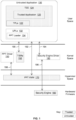
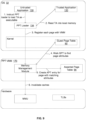
- FIG 1 is a block diagram illustrating some components and communication flows for an example embodiment of the PPT architecture. As indicated in the key, trusted components are illustrated in Figure 1 with dotted fill.
- the bottom of Figure 1 shows a trusted security engine 180 at the level of hardware and firmware.
- Security engine 180 may be used to assist in secure boot using cryptographic and hash operations, for instance.
- Security engine 180 may be used to ensure that the system boots to a trusted computing base (TCB), for example.
- TDB trusted computing base
- the logical level above the hardware and firmware may be referred to as the hypervisor space.
- a trusted PPT VMM 170 may operate in the hypervisor space.
- PPT VMM 170 may also be referred to as PPT hypervisor 170.
- An untrusted PPT driver 150 may operate in the kernel space.
- Various interrupt handlers or interrupt service routines (ISRs) may also operate in the kernel space.
- PPT driver 150 may install a set of trusted ISRs (TISRs) 152 to operate in the kernel space.
- TISRs 152 may serve as trampolines to allow execution to be transferred from an untrusted environment to a trusted environment and vice-versa.
- An untrusted security engine driver 160 may also operate in the kernel space.
- a software application running on a host OS or a guest OS may use security engine driver 160 to communicate with security engine 180.
- PPT provides a TEE by keeping only the components that are authenticated by trusted entities, such as hardware manufacturers, original equipment manufacturers (OEMs), or known third party vendors, in the trust control boundary of the data processing system. PPT deliberately keeps the operating system and other system libraries out of the TCB, because rooting the platform may result in installation of a malicious OS or malicious system libraries.
- trusted entities such as hardware manufacturers, original equipment manufacturers (OEMs), or known third party vendors
- Untrusted application 130 may run in the user space.
- Untrusted application 130 may use one or more sets untrusted libraries in the user space. Those untrusted library sets may include a set of untrusted PPT libraries (UPLs) 132. UPLs 132 may include an untrusted PPT loader 134.
- UPLs 132 may include an untrusted PPT loader 134.
- a set of trusted PPT libraries (TPLs) 122 may also be used in the user space.
- Untrusted application 130 may use PPT loader 134 and TPLs 122 to launch a trusted application (TA) 120. For instance, a developer may write TA 120 and statically link it against TPL 122. Launching or starting that combined static application may cause the system to create a TEE 124, with TA 120 executing within TEE 124.
- TA trusted application
- a TA communicates with security engine 180
- the TA encrypts the data and then sends it over the insecure channel of security engine driver 160.
- a TA that serves as a platform service TA may use security engine driver 160 to write a blob to secure storage managed by security engine 180 or to derive a symmetric encryption key for a given TA.
- Security engine 180 has the key to decrypt or encrypt the data being shared with the TA.
- untrusted application 130 is a banking application and TA 120 is a trusted authentication function that is launched and used by that banking application.
- TA 120 is a trusted authentication function that is launched and used by that banking application.
- PPT PPT
- Figure 1 illustrates runtime relationships amongst various components.
- Figure 1 shows that TA 120 runs within the context of untrusted application 130.
- the double-headed arrows on Figure 1 pertain to communications between components at the different levels.
- arrow 190 shows the transfer of execution from untrusted to trusted environment and vice-versa going via TISRs 152 acting as trampolines.
- Arrow 192 shows the hypercall-based communication mechanism used by the untrusted or trusted applications to get service from VMM 170.
- Arrow 194 shows encrypted data flowing between untrusted frameworks via the untrusted security engine driver.
- Arrow 196 shows that security engine driver 160 is passing encrypted data to security engine 180.
- Arrow 198 shows the services provided by VMM 170 to PPT driver 150.
- this kind of communication may occur when PPT driver 150 uses VMM 170 to create a virtual interrupt descriptor table (IDT).
- the processor indexes into the virtual IDT (VIDT) to obtain a pointer to the appropriate ISR among TISRs 152. That TISR may then determine whether (a) the interrupt/exception should be passed to an untrusted ISR (UISR) or (b) it should be handled by the TISR itself.
- Arrow 198 also represents the kind of communications which occur when PPT driver 150 registers the trusted ISRs 152 with VMM 170, so VMM 170 can install these ISRs in trusted memory.
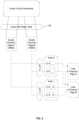
- FIG. 2 is a block diagram illustrating an example embodiment of a data processing system 20 that uses PPT to execute and protect one or more TAs 120.
- Data processing system 20 may be implemented as a portable or handheld computing device, such as a smartphone or a tablet, for instance, or as any other suitable type of computing device.
- data processing system 20 uses a processor 22 like those distributed by Intel Corporation under the name or trademark INTEL ® ATOM, and data processing system 20 uses PPT architecture to run hypervisor 170 and to create TEE 124.
- Data processing system 20 may use VMM 170 to create isolated memory regions to host code and data belonging to security sensitive portions of an application running in a rich execution environment.
- VMM 170 may support features such as CPU virtualization (including descriptor table exiting) and memory virtualization, including support for EPTs and for virtualization functions or instructions.
- Those virtualization functions or instructions may include an instruction which enables VMs to use processor functions without exiting into the VMM.
- Those processor instructions may include an instruction for efficiently switching between the untrusted environment (or world) and the trusted world.
- such an instruction may be referred to as a VMFUNC instruction, and that instruction may use the processor functionality of switching the EPTs (and thus transitioning between untrusted and trusted worlds) without causing a VMEXIT (i.e., without switching from the guest to the VMM world). Avoiding VMEXITS helps reduce or eliminate the cost of switching across untrusted and trusted worlds.
- data processing system 20 includes at least one processor 22 in communication with various hardware components, such as RAM 28, mass storage 26, and security hardware 182.
- various hardware components such as RAM 28, mass storage 26, and security hardware 182.
- all of those components may be implemented as a system-on-a-chip (SOC).
- mass storage 26 may be implemented using any suitable storage technology or combination of storage technologies, including without limitation a hard disk drive (HDD), a solid state drive (SSD), read-only memory (ROM), and/or other types of non-volatile or volatile storage technologies.
- processor 22 represents one processing core, and security hardware 182 is part of a different processing core, with security firmware 184 residing on storage that is either embedded on that same core or linked to that core.
- Security engine 180 (from Figure 1 ) may be implemented with hardware and related firmware, such as security hardware 182 and security firmware 184.
- Processor 22 may include various control registers (CRs) 24, such as CR3.
- CRs control registers
- Mass storage 24 includes various sets of instructions that may be loaded into RAM 28 and executed by processor 22. Those sets of instructions may include software such as PPT VMM 170, a guest OS 32, untrusted application 130 with associated UPLs 132, and TA 120 with associated TPLs 122. And unlike Figure 1 , which focuses more on the runtime relationships between certain components, Figure 2 depicts the logical separation of software components, data structures, and such. For instance, Figure 2 shows that components such as TA 120 and untrusted application 130 are logically distinct from guest OS 32.
- guest OS 32 may include an OS page table 80, which may also be referred to as guest page table (GPT) 80.
- guest OS 32 may be an image of an OS distributed by Google Inc. under the name or trademark ANDROID. Other embodiments may use different OSs.
- OS 32 may also include an IDT 82 and associated ISRs 154, as well as other components, such as PPT driver 150 and security engine driver 160.
- VMM 170 may allow guest OS 32 to update that IDT and those ISRs.
- IDT 82 may be referred to as an untrusted IDT (UIDT 82)
- ISRs 154 may be referred to as untrusted ISRs (UISRs) 154.
- VMM 170 may create a trusted kernel context (TKC) 34 within the context of guest OS 32.
- VMM 170 may also install a VIDT 84 and associated TISRs 152 into guest OS 32.
- VIDT 84 VMM 170 may also update a register in CRs 24 to point to VIDT 84 instead of UIDT 82.
- TISRs 152 VMM 170 may load them into TKC 34.
- VMM 170 may subsequently prevent guest OS 32 from modifying that register and from modifying the contents of TKC 34.
- VMM 170 may load an asserted page table (APT) 94 into TKC 34. More details about APTs are provided below with regard to Figure 7 .
- APT asserted page table
- PPT may include unique memory management techniques in the TEE for dynamic memory allocation, shared memory, and garbage collection. PPT may provide these benefits without requiring the TA to be hosted in a separate OS or in an RTOS, and without requiring special hardware support or micro-code extensions.
- PPT may provide a TEE that isolates portions (or all) of the code and data belonging to a third party application from the main execution environment, thereby enabling that third party application to operate as a TA.
- VMM 170 may use an EPT to provide a trusted view of code and data for that TA, while preventing untrusted applications from accessing that code and data.
- VMM 170 may use a different EPT for the untrusted applications, with that EPT providing an untrusted view of memory that does not include the memory in the trusted view.
- the memory in the trusted view may therefore be referred to as an isolated memory region.
- an EPT has been created for a TA, that EPT may be referred to as a trusted EPT; and the view it provides may be referred to as a trusted view.
- an EPT has been created for the untrusted environment (which includes the guest OS and any untrusted applications running on that OS) that EPT may be referred to as an untrusted EPT, and the view it provides may be referred to as an untrusted view.
- an untrusted view may also be referred to as view 0, and a trusted view may be referred to as view 1.
- VMM 170 uses a unique EPT for each different view, so the software that runs in a given view is prevented from accessing the memory outside of that view.
- the example scenario also involves one GPT 80, for untrusted application 130.
- TA 120 does not use a GPT; instead, it uses one APT 94.
- interrupts which serve the purposes discussed above with regard to interrupts 29-31 may be referred to as a TA-enter interrupt, a TA-resume interrupt, , and a TA-exit interrupt, respectively.
- those interrupts may be referred to in general as PPT interrupts.
- the corresponding TISRs may be referred to as a TA-enter ISR, a TA-resume ISR, and a TA-exit ISR, respectively, and more generally as PPT ISRs.
- other interrupt numbers may be used as PPT interrupts.
- VMM 170 runs at a higher privilege than guest OS 32, VMM 170 provides the required isolation of the code and data in a trusted view from rest of the views, including view 0 (i.e., the untrusted view). VMM 170 implements the multi-view model and manages the EPT pointers 92 for each view.
- VMM 170 executes at a higher privilege as it runs in the root mode as supported by the virtualization technology distributed by Intel Corporation under the name of trademark INTEL ® VT or INTEL ® VT-X. That virtualization technology may use virtual machine extensions (VMX) to provide for entry into the root mode. Accordingly, the root mode may be referred to as VMX root mode. In other embodiments, other technologies may be used to provide for similar functionality.
- VMX root mode may be referred to as VMX root mode.
- other technologies may be used to provide for similar functionality.
- the control to execution from trusted to untrusted view goes through the TISRs 152.
- an EPT defines a view by specifying access rights and a mapping from guest physicals pages to host physical pages.
- which application can access the view is controlled by a combination of TISRs 152 and VMM 170.
- a TISR in one embodiment may allow only the application that created the view to use that view. In another embodiment, that restriction can be relaxed by using a different TISR.
- TA 120 may then use a trusted memory allocation instruction or function (e.g., malloc).
- TA 120 may call the trusted allocate function from a trusted side C library (e.g., tlibc) among the TPLs 122, for instance.
- the trusted allocate function may use an out-call (oCall) function, and the oCall function may temporarily exit from the trusted view to an untrusted view for the actual system call for memory allocation aligned on page size.
- the oCall function may use an untrusted allocate function (e.g., PPT-malloc) from UPLs 132 to perform the memory allocation operation, always on page boundaries.
- the allocate function from UPLs 132 may then make a hypercall to VMM 170, to instruct VMM 170 to give exclusive access to the newly allocated memory to the trusted view originally used by TA 120.
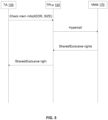
- FIG. 5 is a flow diagram that illustrates an example process for checking access rights.
- TA 120 can use TPLs 122 to pass a memory address and size to VMM 170 with a rights inquiry.
- VMM 170 may indicate whether TA 120 has exclusive rights or shared rights over the specified memory range.
- the memory range can be of any type (e.g., malloc'ed memory, stack memory, or shared memory.
- TLPs 122 may then initialize the allocated memory before giving the pointer back to TA 120. Alternatively, TLPs 122 may skip the initialization step, for instance if VMM 170 has copied data from untrusted guest memory to memory allocated by VMM 170. Also, in other embodiments or scenarios, the hypercall to give exclusive TA access to memory may be called from contexts other than the malloc context.
- PPT also provides for shared memory for scenarios including the following: (i) untrusted application 130 shares a buffer with TA 120, or vice versa; and (ii) TA 120 shares a buffer with another TA.
- the two entities between which sharing happens may or may not be in the same process.
- VMM 170 passes the shared memory handle to the process in which TA2 resides. TA2 then creates a second buffer with a starting address. Using the starting address for the second buffer and the shared memory handle, TA2 requests VMM 170 to map to the shared buffer. In response, VMM 170 updates the EPT for TA 120 and the EPT for TA2 so that those EPTs map the same physical pages to the virtual pages of buffers created by TA 120 and TA2. Hence, TA2 can access the shared data of TA1 by accessing the buffer created by TA2.
- TA 120 or TA2 can be replaced by an untrusted application in the above flow.
- FIG. 6 is a flow diagram that illustrates an example overall flow for cleaning up memory.
- a caller process e.g., untrusted application 130
- creates the trusted application in a TEE e.g., TA 120 in TEE 124.
- untrusted application 130 may use PPT loader 134 to create TA 120.
- the caller process (untrusted application 130) checks whether TA 120 crashed during its execution. If untrusted application 130 determines that TA 120 exited or crashed, untrusted application 130 may perform memory cleanup straight away, as shown at arrow 4. Otherwise, untrusted application 130 may continue to run. Once untrusted application 130 exits, the pipe between untrusted application (UA) 130 and monitor 172 breaks. This is a trigger to the monitor process to initiate garbage collection, as shown at arrow 5.
- VMM 170 keeps track of the memory assigned to each TA and relies on the monitor process and the untrusted side process to initiate the cleaning process. If the TA crashes, the untrusted side process (e.g., untrusted application 130) should initiate the cleaning of the TA memory. If the untrusted side process itself crashes, then the monitor process will initiate the garbage collection.
- the untrusted side process e.g., untrusted application 130
- An APT uses a different approach to provide protection similar to that provided by an SPT.
- One difference between an APT and an SPT is that the APT is not maintained based on page faults. Instead, the PPT VMM creates an entry in the APT for each code page and each data page associated with the TA when the TA is being loaded into the memory. For instance, as indicated below, PPT loader 134 may automatically instruct VMM 170 to create the entries for APT 94 on a page-by-page basis, as PPT loader 134 loads each page for TA 120 into memory.
- the memory to hold the APT is not allocated from the guest OS memory, but from an isolated memory region to which the guest OS has no access.
- Memory virtualization is used to explicitly give access to the APT only to the TA which owns it. The OS cannot read or write to these pages. Instead, the APT is managed completely by the PPT VMM. Since the guest OS cannot modify entries in the APT, the aforementioned attacks are mitigated.
- a benefit of using an APT is that it can be used in systems that don't employ a real-time OS (RTOS) and it can be used without specialized processor instructions.
- RTOS real-time OS
- other systems may require an RTOS running on a different processor to provide a secure page table for a TA.
- an APTs is created by a VMM which is in the TCB of its system.
- VMM 170 creates APT 94 when TA 120 is being loaded into RAM 28.
- the memory for APT 94 is protected from the view of OS 32. Hence, OS 32 cannot read or write to it.
- APT 94 is completely managed in the VMX root mode by VMM 170.
- PPT loader 134 when PPT loader 134 loads TA 120, PPT loader 134 registers each of the code and data pages for TA 120 with VMM 170. In response, VMM 170 walks the OS page tables and gets the GVA to GPA mapping for that page and the page attributes, and VMM 170 then creates a similar entry in APT 94. This continues until the whole TA is loaded. While registering TA pages with the hypervisor, PPT loader 134 also sends page type (Code/Data/Guard Page) as a parameter to VMM 170, and VMM 170 sets appropriate permissions (RX/RW/RO) for those pages in APT 94.
- page type Code/Data/Guard Page
- PPT loader 134 signals VMM 170 to lock down APT 94. From that point onwards, no more entries for additional code pages can be added to APT 94.
- the memory is taken from an isolated memory region to which OS 32 has no access. That isolated memory region may be managed by VMM 170.
- the hypervisor gives the owner TA exclusive rights to the APT memory using an approach like that described above with regard to Figure 4 .
- one of the TISRs 152 updates the control register (CR) that is supposed to point to the page table base for TA 120 (e.g., CR3) to make that CR point to the APT root for TA 120.
- CR control register
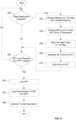
- Figure 7 presents a flowchart depicting operations associated with creating an APT, according to an example embodiment.
- Figure 7 depicts those operations primarily from the perspective of PPT loader 134.
- the illustrated process starts at block 210 with untrusted application 130 invoking PPT loader 134 to launch TA 120.
- PPT loader 134 reads all of TA 120 into memory. For instance, PPT loader may read TA 120 into PPT loader's memory space.
- PPT loader 134 may then allocate dynamic memory equivalent to the size required to host TA 120. After PPT loader has finished loading TA 120 into that memory as described below, that memory will include code, static data, stack memory and some other special pages.
- this dynamic allocation will cause OS 32 to create entries in GPT 80 for the allocated pages.
- PPT loader then parses the TA image that was read, and copies the contents from the first page into the allocated memory. Additionally, PPT loader registers that page with VMM 170, as shown at block 220. As described in greater detail below with regard to Figure 8 , VMM 170 may then add that page to the trusted view for TA 120.
- PPT loader 134 may then determine whether all of the pages for TA 120 have been loaded and registered. If they have not, the process may return to block 218, with PPT loader 134 loading and registering each page, one by one, as indicated above.
- PPT loader 134 may instruct VVM 170 to lock APT 94, as shown at block 224.
- Figure 8 presents another flowchart depicting operations associated with creating an APT, according to an example embodiment.
- Figure 8 depicts those operations primarily from the perspective of VMM 170.
- Those operations may start at block 230 with VMM 170 determining whether it has received a request from PPT loader for registration of a page for TA 120. If PPT loader is registering a page with VMM 170, as shown at block 232, VMM 170 may allocate memory for that TA page from the isolated memory region.
- VMM 170 may allocate a page for APT 94 from isolated memory. As shown at block 236, VMM 170 may then walk GPT 80 for that virtual page address to get the corresponding GPA. VMM 170 may then add that same mapping from GVA to GPA to APT 94 by creating a new entry, as shown at block 238. As shown at block 240, VMM 170 may then allocate a new entry in the EPT for TA 120 by mapping the GPA to the HPA from block 232.
- VVM 170 may then determine whether PPT loader 134 has instructed VMM 170 to lock APT 94. For instance, PPT loader 134 may identify the code pages for TA 120, and PPT loader may instruct VMM 170 to lock the APT entries for those pages. In response, as shown at block 252, VMM 170 may consider APT 94 to be locked with regard to code pages, and VMM 170 may therefore prevent any further code pages from being added to APT 94. However, other dynamic heap pages may be added to the view for TA 120, and thus to APT 94, later on. For example, in shared memory situation, an untrusted view may want to share some memory with the trusted view; and in that case, VMM 170 may add entries to APT 94 corresponding to the shared memory.
- a TA-enter ISR from TISRs 152 may load the root address for APT 94 into CR3. That TA-enter ISR is called at the time of enter flow.
- untrusted code flow may want to enter into TA 120 for initialization or using services exposed by TA 120.
- the trampoline flow loads the root address for APT 94 into CR3, to switch to the trusted view page table. As described in greater detail below, that trampoline flow may be executed by one of TISRs 152.
- TA creation may end at block 252, and TA entry may start at block 254, with the view switching from untrusted to trusted.
- VMM 170 causes TA 120 to start executing with a trusted view, and the process of Figure 8 may end.
- a TA-exit ISR may switch from the trusted view to an untrusted view by modifying CR3 to point to GPT 80.
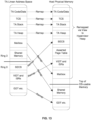
- Figure 9 is a block diagram illustrating some of the operations associated with creating APT 94.
- VMM 170 invalidates internal caches such as TLBs that contain GVA to HPA mappings and mappings between GPAs and HPAs, to ensure that the guest software is able to address the correct physical page when referenced through the GVA.
- Figure 9 illustrates the memory management module creating an APT entry for a page.
- the memory management module may configure that entry with page attributes that match the page attributes in GPT 80 and with page permissions based on the page type.
- Jumping to the middle of a function by compromising the caller stack is a common security concern.
- the impact of this exploitation is heightened if a jump could be done from untrusted to trusted application space, as such a jump would break the TEE itself.
- a common approach is to develop an architecture where the jump from untrusted to trusted space is made to a predetermined location in the TEE, and the TEE then jumps to a particular trusted method after setting up the trusted environment.
- a jump to a TA may also happen after an interrupt has taken execution out to the OS handler, and then the runtime resumes the TA execution from the point it was interrupted.
- a malware/rootkit may attack the untrusted runtime and jump to an arbitrary location in the TA which can compromise the security.
- a system with TEEs based on a hypervisor may use the technology described by ARM Ltd. under the name or trademark TRUSTZONE to switch into and out of the secure world.
- TRUSTZONE trademark to switch into and out of the secure world.
- that technology requires specialized hardware instructions and a special hardware mode, and it requires running the TEE in the context of a secure OS host which runs in secure world mode. Consequently, that technology requires the VMM to do either paravirtualization or full virtualization.
- This part describes PPT features that obviate the need for special hardware support and the need for the VMM to provide full or complete virtualization, to enable the data processing system to run both a secure OS and an unsecure OS.
- a data processing system with PPT may use a VIDT to facilitate safe entry in the TA.
- the data processing system may run the TEE in the context of an unsecure OS itself. Consequently, switches to secure world and insecure world are as simple as changing the EPT pointers, and that change may be performed by a single CPU instruction.
- entry into a TA 120 happens primarily for two reasons: (1) untrusted application 130 calling TA 120 to make use of functionalities exposed by TA 120, and (2) resuming from an asynchronous exit that happened due to various interrupts and/or exceptions while running TA 120 code.
- data processing system 20 may use the TA-enter ISR as a trampoline to jump to a pre-determined location in TA 120.
- data processing system 20 may use the TA-resume ISR to safely resume the TA 120 code from the next instruction pending when the interrupt happened.
- FIG. 10 is a block diagram illustrating various secure data structures accessed by TISRs 152, according to an example embodiment.
- Such data structures may be referred to in general as PPT data structures (PDSs).
- PPSs PPT data structures
- SECS 310 may be implemented as a shared page between VMM 170 and TISRs 152.
- VMM 170 may create one SECS for each TA.
- SECS 310 contains data for managing TA 120, such as the base address for TA 120. For instance, after PPT loader 134 has loaded TA 120 into memory, PPT loader 134 may allocate memory and copy the TA code, data, and thread context related pages in this memory. The start address of this allocated memory becomes the TA base address. PPT loader 134 may then pass that base address for TA 120 to VMM 170 as part of a create_view() hypercall. VMM 170 may then store that base address in the SECS page for the newly created view.
- the trusted view 312 for TA 120 may include code and data pages from TA 120 and TPLs 122. Trusted view 312 may also include one or more thread context data structures (TCDS) 314, to store context data for each thread within the TA 120 process. As illustrated, TCDS 314 may contain a thread control structure (TCS), thread local storage (TLS) for thread data (TD), a state save area (SSA), guard pages, a stack page, a parameter page, etc. TCDS 314 and each structure within TCDS 314 may also constitute a secure data structure that is accessed by TISRs 152.
- TCS thread control structure
- TLS thread local storage
- SSA state save area
- guard pages a stack page
- a parameter page etc.
- TCDS 314 and each structure within TCDS 314 may also constitute a secure data structure that is accessed by TISRs 152.
- Each PDS may be accessible to and used by different components.
- the TD may be accessible to and used by TA 120
- the TCS may be accessible to and used by TISRs 152
- SECS 310 may be shared between VMM 170 and TISRs 152
- the SSA may be used only by TISRs 152, etc.
- data processing system 20 may create a distinct set of PDSs for each view, and those PDSs may be allocated from VMM heap memory.
- PPT loader 134 prepares the TLS as part of the process for initializing some thread specific-structures for the TA 120.
- One or more programs from TPLs 122 on the trusted side then take the initialized content of the TLS and do some relocations on the structure members and create a TD.
- SECS 310 may reside in RAM 28 outside of VM 30, as a trusted page shared between VMM 170 and TISRs 152.
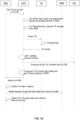
- Figure 11 is a flow diagram that illustrates entry to and exit from TA 120 using TISRs, according to an example embodiment.
- Figure 11 illustrates an example flow involving a typical call from untrusted application 130 to TA 120.
- Untrusted application 130 may then use PPT loader 134 to load TA 120 into memory.
- untrusted application 130 may then make a call to TA 120.
- untrusted application 130 may parse the ELF header for TA 120 to extract various symbols, such as the entry point offset, and untrusted application 130 may then call a function or execute a statement for entering the trusted view, using that that offset as a parameter.
- entry calls may be implemented as ecall or Se_ecall functions in a UPL such as UPLs 132.
- an ecall function may use a TA-enter interrupt to invoke a TA-enter ISR, and the TA-enter ISR may use the VMFUNC instruction to switch from an untrusted view to a trusted view.
- the URTS when the ecall function is called, the URTS responds by loading the parameters from the call into registers and then invoking the reserved TA-enter interrupt (e.g., Int-29).
- the URTS may invoke the software interrupt using an "int" instruction, for instance.
- Data processing system 20 may then automatically launch the corresponding TA-enter ISR from TISRs 152, based on VIDT 84.
- VIDT 84 uses teachings like those described in U.S. patent no. 8,578,080 to handle such interrupts.
- VIDT 84 may include an exit stub for exiting from the view of the interrupted program to the view of the TISR registered in VIDT 84, and a re-entry stub for each TA for switching the view of the interrupt handler back to the view of the interrupted program.
- VIDT 84 may reside in a host memory page that has a permission view of read-only to all other programs to disallow tampering of the VIDT 84.
- the TA-enter ISR may read and validate SECS 310. If SECS 310 is valid, the TA-enter ISR then uses the VMFUNC instruction to switch to the trusted view of TA 120. In addition, the TA-enter ISR switches to the trusted page table (i.e., APT 94) to mitigate against page remapping attacks.
- the TA-enter ISR also copies all of the general purpose register (GPR) state, including the return instruction pointer (RIP) that was automatically saved by the hardware on "int", along with the hardware saved register state, to the trusted ring-0 stack to further enhance the security. In addition, the TA-enter ISR reads the entry point offset from TCS 314.
- GPR general purpose register
- RIP return instruction pointer
- data processing system 20 uses EPT protections to protect the TCS and the other PDSs, so that the EPT for the untrusted view does not have permission to access these private data structures. Consequently, the TA-enter ISR may rely on the offset being correct. The TA-enter ISR then retrieves the base address of TA 120 from SECS 310, and adds the offset to the base address. This addition gives the actual entry point address of TA 120.
- the TISR also replaces the RIP on the current stack with the asynchronous exit pointer (AEP) of the untrusted runtime in the interrupt stack.
- the TISR also replaces the trusted runtime stack pointer (RSP) with the untrusted RSP on the interrupt stack. This is done so that an "iret" can jump to a known exit point in the URTS.
- AEP asynchronous exit pointer
- RSP trusted runtime stack pointer
- FIG 14 presents a flowchart depicting operations associated with creating and saving an SCV according to an example embodiment.
- the illustrated process starts at block 410 with PPT loader 134 calling PPT driver 150, for instance in response to untrusted application 130 calling TA 120.
- PPT driver 150 may have already been initialized.
- Control is then passed to the TA, and then the TA then executes.
- the TA may then experience an exception, an interrupt, or some other fault (e.g., of the code has a bug).
- the PEH identifies the source of the fault. For instance, the PEH may differentiate whether the fault was generated by the TA or outside the TEE, based on the current state of the execution context. If the source is not the TA, PEH forwards the fault to the UIDT to be processed by the OS.
- the PEH then shares the dump buffer with the REE by simply exiting the TA view.
- the REE can then read the TA crash status from the GPR, and the REE may choose to clean the TA view. For instance, the REE may invoke a destroy-view hypercall to instruct the VM to clean up the view.
- Example data processing systems include, without limitation, distributed computing systems, supercomputers, high-performance computing systems, computing clusters, mainframe computers, mini-computers, client-server systems, personal computers (PCs), workstations, servers, portable computers, laptop computers, tablet computers, personal digital assistants (PDAs), telephones, handheld devices, entertainment devices such as audio devices, video devices, audio/video devices (e.g., televisions and set top boxes), vehicular processing systems, and other devices for processing or transmitting information.
- PCs personal computers
- PDAs personal digital assistants
- audio devices such as audio devices, video devices, audio/video devices (e.g., televisions and set top boxes), vehicular processing systems, and other devices for processing or transmitting information.
- references to any particular type of data processing system should be understood as encompassing other types of data processing systems, as well.
- components that are described as being coupled to each other, in communication with each other, responsive to each other, or the like need not be in continuous communication with each other and need not be directly coupled to each other.
- one component is described as receiving data from or sending data to another component, that data may be sent or received through one or more intermediate components, unless expressly specified otherwise.
- some components of the data processing system may be implemented as adapter cards with interfaces (e.g., a connector) for communicating with a bus.
- instructions for one component may be stored in one medium, and instructions another component may be stored in another medium.
- instructions another component may be stored in another medium.
- a portion of the instructions for one component may be stored in one medium, and the rest of the instructions for that component (as well instructions for other components), may be stored in one or more other media.
- Instructions may also be used in a distributed environment, and may be stored locally and/or remotely for access by single or multi-processor machines.
- Example A3 is a computer-readable medium according to Example A1, wherein the OS uses a guest page table to translate guest virtual addresses (GVAs) into GPAs for the untrusted application and for the trusted application.
- Example A3 may also include the features of Example A2.
- Example A4 is a computer-readable medium according to Example A1, wherein the instructions, when executed, also implement an interrupt service routine (ISR) that enables the untrusted application to transfer control to the trusted application.
- ISR interrupt service routine
- Example A4 may also include the features of any one or more of Examples A2 and A3.
- Example A7 is a computer-readable medium according to Example A6, wherein the VMM comprises an EPT pointer that points to the EPT for the view that is currently active.
- Example A7 may also include the features of any one or more of Examples A2 through A5.
- Example B1 is a computer-readable medium according to Example A1, wherein the instructions, when executed, implement platform protection technology (PPT) to (a) load the trusted application to execute on top of the OS, wherein the OS uses a guest page table (GPT) to translate guest virtual addresses (GVAs) into a guest physical addresses (GPAs); (b) create an asserted page table (APT) for the trusted application, the APT to translate GVAs into GPAs for the trusted application; (c) prevent the OS from modifying the APT; (d) configure the processor of the device to use the APT instead of the GPT; and (e) after configuring the processor to use the APT instead of the GPT, execute the trusted application.
- Example A8 may also include the features of any one or more of Examples A2 through A7.
- Example C1 is a computer-readable medium according to Example B1, wherein the OS comprises an untrusted interrupt descriptor table (IDT) with gates that associate interrupt vectors with untrusted interrupt service routines (ISRs).
- Example A9 further comprises the PPT to (a) create a virtual IDT (VIDT) with gates that associate interrupt vectors with trusted ISRs, wherein the trusted ISRs comprise a TA-enter ISR that causes the device to switch from an untrusted memory view associated with the untrusted application to a trusted memory view associated with the trusted application; (b) configure the processor of the device to use the VIDT instead of the untrusted IDT (UIDT); and (c) after configuring the processor to use the VIDT instead of the UIDT, respond to a TA-enter interrupt by invoking the TA-enter ISR.
- Example A9 may also include the features of any one or more of Examples A2 through A7.
- Example D1 is a computer-readable medium according to Example C1, further comprising the untrusted application to run on top of the OS in a virtual machine (VM) in a rich execution environment (REE), and the trusted application to run on top of the OS in the VM in a trusted execution environment (TEE) that prevents the untrusted application from accessing memory used by the trusted application.
- VM virtual machine
- REE rich execution environment
- TEE trusted execution environment
- Example A10 further comprises the PPT to (a) generate a secret cookie value (SCV) for the trusted application; (b) save the SCV to a PPT data structure associated with the trusted application; (c) patch the SCV into trampoline code that provides for transferring control from the untrusted application to the trusted application; (d) in response to the untrusted application calling the trusted application, before allowing the trusted application to execute, determine whether the trampoline code and the PPT data structure contain matching SCVs; (e) allow the trusted application to execute only if the trampoline code and the PPT structure contain matching SCVs; (f) before allowing the trusted application to execute in the TEE, create a dump buffer in the TEE; (g) in response to a fault during execution of the trusted application, saving fault data from the TEE to the dump buffer; and (h) sharing the dump buffer with the REE.
- Example A10 may also include the features of any one or more of Examples A2 through A7.
- Example E1 is one or more tangible computer-readable media storing non-transitory computer-executable instructions that, when executed by a processor of a device, implement platform protection technology (PPT) to (a) load a trusted application to execute on top of an operating system (OS) that uses a guest page table (GPT) to translate guest virtual addresses (GVAs) into a guest physical addresses (GPAs); (b) create an asserted page table (APT) for the trusted application, the APT to translate GVAs into GPAs for the trusted application; (c) prevent the OS from modifying the APT; (d) configure the processor of the device to use the APT instead of the GPT; and (e) after configuring the processor to use the APT instead of the GPT, execute the trusted application.
- PPT platform protection technology
- Example E2 is a computer-readable medium according to Example E1, wherein the GPT is not write protected.
- Example E3 is a computer-readable medium according to Example E1, wherein the PPT comprises a virtual machine monitor (VMM) to create the APT, and an interrupt service routine (ISR) to configure the processor to use the APT instead of the GPT.
- VMM virtual machine monitor
- ISR interrupt service routine
- Example E3 may also include the features of Example E2.
- Example E4 is a computer-readable medium according to Example E1, wherein the PPT comprises a PPT loader to load the trusted application into memory and to register each page of the trusted application with the VMM, and wherein the VMM creates the APT in response to the PPT loader.
- Example E4 may also include the features of any one or more of Examples E2 through E3.
- Example E5 is a computer-readable medium according to Example E4, further comprising the VMM to walk an OS page table for each TA page in response to the PPT loader registering said page with the VMM, and the VMM to replicate an OS page table entry for said page to the APT.
- Example E5 may also include the features of any one or more of Examples E2 through E3.
- Example F4 is a computer-readable medium according to Example F1, wherein the trusted ISRs further comprise a TA-resume ISR that, in response to a TA-resume interrupt, causes the device to (a) switch from the untrusted memory view associated with the untrusted application to the trusted memory view associated with the untrusted application; and (b) restore context for the trusted application.
- Example F4 may also include the features of any one or more of Examples F2 through F3.
- Example G1 is one or more tangible computer-readable media storing non-transitory computer-executable instructions that, when executed by a processor of a device, implement platform protection technology (PPT) to (a) generate a secret cookie value (SCV) for a trusted application to run on top of an operating system (OS) in a virtual machine (VM); (b) save the SCV to a PPT data structure associated with the trusted application; (c) patch the SCV into trampoline code that provides for transferring control from an untrusted application to the trusted application; (d) in response to the untrusted application calling the trusted application, before allowing the trusted application to execute, determine whether the trampoline code and the PPT data structure contain matching SCVs; and (e) allow the trusted application to execute only if the trampoline code and the PPT structure contain matching SCVs.
- PPT platform protection technology
- Example G2 is a computer-readable medium according to Example G1, wherein the PPT comprises trusted interrupt service routines (ISRs); the trusted ISRs comprises a TA-enter ISR that causes the device to switch from an untrusted memory view associated with the untrusted application to a trusted memory view associated with the trusted application; and the TA-enter ISR is to perform the operation of determining whether the trampoline code and the PPT data structure contain matching SCVs.
- ISRs trusted interrupt service routines
- the trusted ISRs comprises a TA-enter ISR that causes the device to switch from an untrusted memory view associated with the untrusted application to a trusted memory view associated with the trusted application
- the TA-enter ISR is to perform the operation of determining whether the trampoline code and the PPT data structure contain matching SCVs.
- Example H2 is a computer-readable medium according to Example H1, wherein sharing the dump buffer with the REE comprises copying the dump buffer to untrusted memory.
Landscapes
- Engineering & Computer Science (AREA)
- Theoretical Computer Science (AREA)
- Software Systems (AREA)
- General Engineering & Computer Science (AREA)
- Physics & Mathematics (AREA)
- General Physics & Mathematics (AREA)
- Computer Security & Cryptography (AREA)
- Computer Hardware Design (AREA)
- Health & Medical Sciences (AREA)
- Bioethics (AREA)
- General Health & Medical Sciences (AREA)
- Storage Device Security (AREA)
Applications Claiming Priority (5)
| Application Number | Priority Date | Filing Date | Title |
|---|---|---|---|
| US14/739,560 US9842065B2 (en) | 2015-06-15 | 2015-06-15 | Virtualization-based platform protection technology |
| PCT/US2016/032282 WO2016204892A1 (en) | 2015-06-15 | 2016-05-13 | Virtualization-based platform protection technology |
| EP20217437.1A EP3825851B1 (de) | 2015-06-15 | 2016-05-13 | Auf virtualisierung basierende technologie für plattformschutz |
| EP24150417.4A EP4339818B1 (de) | 2015-06-15 | 2016-05-13 | Virtualisierungsbasierte plattformschutztechnologie |
| EP16812103.6A EP3308317B1 (de) | 2015-06-15 | 2016-05-13 | Auf virtualisierung basierende technologie für plattformschutz |
Related Parent Applications (4)
| Application Number | Title | Priority Date | Filing Date |
|---|---|---|---|
| EP16812103.6A Division EP3308317B1 (de) | 2015-06-15 | 2016-05-13 | Auf virtualisierung basierende technologie für plattformschutz |
| EP24150417.4A Division-Into EP4339818B1 (de) | 2015-06-15 | 2016-05-13 | Virtualisierungsbasierte plattformschutztechnologie |
| EP24150417.4A Division EP4339818B1 (de) | 2015-06-15 | 2016-05-13 | Virtualisierungsbasierte plattformschutztechnologie |
| EP20217437.1A Division EP3825851B1 (de) | 2015-06-15 | 2016-05-13 | Auf virtualisierung basierende technologie für plattformschutz |
Publications (2)
| Publication Number | Publication Date |
|---|---|
| EP4398138A2 true EP4398138A2 (de) | 2024-07-10 |
| EP4398138A3 EP4398138A3 (de) | 2024-09-11 |
Family
ID=57515948
Family Applications (4)
| Application Number | Title | Priority Date | Filing Date |
|---|---|---|---|
| EP16812103.6A Active EP3308317B1 (de) | 2015-06-15 | 2016-05-13 | Auf virtualisierung basierende technologie für plattformschutz |
| EP24150417.4A Active EP4339818B1 (de) | 2015-06-15 | 2016-05-13 | Virtualisierungsbasierte plattformschutztechnologie |
| EP24170679.5A Pending EP4398138A3 (de) | 2015-06-15 | 2016-05-13 | Virtualisierungsbasierte plattformschutztechnologie |
| EP20217437.1A Active EP3825851B1 (de) | 2015-06-15 | 2016-05-13 | Auf virtualisierung basierende technologie für plattformschutz |
Family Applications Before (2)
| Application Number | Title | Priority Date | Filing Date |
|---|---|---|---|
| EP16812103.6A Active EP3308317B1 (de) | 2015-06-15 | 2016-05-13 | Auf virtualisierung basierende technologie für plattformschutz |
| EP24150417.4A Active EP4339818B1 (de) | 2015-06-15 | 2016-05-13 | Virtualisierungsbasierte plattformschutztechnologie |
Family Applications After (1)
| Application Number | Title | Priority Date | Filing Date |
|---|---|---|---|
| EP20217437.1A Active EP3825851B1 (de) | 2015-06-15 | 2016-05-13 | Auf virtualisierung basierende technologie für plattformschutz |
Country Status (4)
| Country | Link |
|---|---|
| US (5) | US9842065B2 (de) |
| EP (4) | EP3308317B1 (de) |
| CN (2) | CN114185648A (de) |
| WO (1) | WO2016204892A1 (de) |
Families Citing this family (92)
| Publication number | Priority date | Publication date | Assignee | Title |
|---|---|---|---|---|
| US9158909B2 (en) * | 2014-03-04 | 2015-10-13 | Amazon Technologies, Inc. | Authentication of virtual machine images using digital certificates |
| US10754967B1 (en) * | 2014-12-15 | 2020-08-25 | Marvell Asia Pte, Ltd. | Secure interrupt handling between security zones |
| US9842065B2 (en) | 2015-06-15 | 2017-12-12 | Intel Corporation | Virtualization-based platform protection technology |
| US10691476B2 (en) * | 2015-06-27 | 2020-06-23 | Mcafee, Llc | Protection of sensitive data |
| US10230529B2 (en) * | 2015-07-31 | 2019-03-12 | Microsft Technology Licensing, LLC | Techniques to secure computation data in a computing environment |
| CN110059500A (zh) * | 2015-11-30 | 2019-07-26 | 华为技术有限公司 | 用户界面切换方法和终端 |
| CN107038128B (zh) * | 2016-02-03 | 2020-07-28 | 华为技术有限公司 | 一种执行环境的虚拟化、虚拟执行环境的访问方法及装置 |
| US11429412B2 (en) * | 2016-02-25 | 2022-08-30 | Red Hat Israel, Ltd. | Guest protection from application code execution in kernel mode |
| US12339979B2 (en) * | 2016-03-07 | 2025-06-24 | Crowdstrike, Inc. | Hypervisor-based interception of memory and register accesses |
| US12248560B2 (en) | 2016-03-07 | 2025-03-11 | Crowdstrike, Inc. | Hypervisor-based redirection of system calls and interrupt-based task offloading |
| US9971675B2 (en) * | 2016-04-04 | 2018-05-15 | International Business Machines Corporation | Triggering debug processing within a scalable cloud environment |
| WO2017184168A1 (en) * | 2016-04-22 | 2017-10-26 | Hewlett Packard Enterprise Development Lp | Configuration of a memory controller for copy-on-write with a resource controller |
| US10884952B2 (en) * | 2016-09-30 | 2021-01-05 | Intel Corporation | Enforcing memory operand types using protection keys |
| US10452572B2 (en) * | 2016-10-06 | 2019-10-22 | Vmware, Inc. | Automatic system service resource management for virtualizing low-latency workloads that are input/output intensive |
| US10528746B2 (en) * | 2016-12-27 | 2020-01-07 | Intel Corporation | System, apparatus and method for trusted channel creation using execute-only code |
| WO2018126024A1 (en) * | 2016-12-28 | 2018-07-05 | Narf Industries, LLC | Method and system for co-privileged security domains |
| US10867029B2 (en) * | 2017-01-24 | 2020-12-15 | Microsoft Technology Licensing, Llc | Enclave client abstraction model |
| CN108459899B (zh) * | 2017-02-21 | 2021-06-01 | 华为技术有限公司 | 信息保护方法及装置 |
| US10204229B2 (en) * | 2017-03-21 | 2019-02-12 | Nxp B.V. | Method and system for operating a cache in a trusted execution environment |
| US10614211B2 (en) * | 2017-03-22 | 2020-04-07 | Ca, Inc. | Bringing a non-isolated application into an isolation layer with an isolated application |
| US10331578B2 (en) * | 2017-06-09 | 2019-06-25 | Intel Corporation | Fine-grained access host controller for managed flash memory |
| US11372787B2 (en) * | 2017-12-09 | 2022-06-28 | Intel Corporation | Unified address space for multiple links |
| US10970390B2 (en) | 2018-02-15 | 2021-04-06 | Intel Corporation | Mechanism to prevent software side channels |
| CN108628663B (zh) * | 2018-05-11 | 2021-08-10 | 浙江大学 | 一种支持新型大页框架的kvm系统 |
| CN110532766B (zh) | 2018-05-25 | 2023-09-08 | 华为技术有限公司 | 一种基于多容器的可信应用程序的处理方法及相关设备 |
| US11258861B2 (en) * | 2018-06-29 | 2022-02-22 | Intel Corporation | Secure reporting of platform state information to a remote server |
| US10705976B2 (en) * | 2018-06-29 | 2020-07-07 | Intel Corporation | Scalable processor-assisted guest physical address translation |
| US10860709B2 (en) | 2018-06-29 | 2020-12-08 | Intel Corporation | Encoded inline capabilities |
| WO2020010556A1 (zh) | 2018-07-11 | 2020-01-16 | 华为技术有限公司 | 增强用户空间与内核空间的隔离性的方法和装置 |
| US10754796B2 (en) | 2018-08-29 | 2020-08-25 | Red Hat, Inc. | Efficient user space driver isolation by CPU page table switching |
| US10983926B2 (en) | 2018-08-29 | 2021-04-20 | Red Hat, Inc. | Efficient userspace driver isolation for virtual machines |
| US11741196B2 (en) | 2018-11-15 | 2023-08-29 | The Research Foundation For The State University Of New York | Detecting and preventing exploits of software vulnerability using instruction tags |
| CN109597677B (zh) * | 2018-12-07 | 2020-05-22 | 北京百度网讯科技有限公司 | 用于处理信息的方法和装置 |
| US10534730B1 (en) * | 2018-12-20 | 2020-01-14 | Ati Technologies Ulc | Storing microcode for a virtual function in a trusted memory region |
| WO2020140261A1 (en) * | 2019-01-04 | 2020-07-09 | Baidu.Com Times Technology (Beijing) Co., Ltd. | Method and system for protecting data processed by data processing accelerators |
| US11693970B2 (en) * | 2019-01-04 | 2023-07-04 | Baidu Usa Llc | Method and system for managing memory of data processing accelerators |
| CN109947666B (zh) * | 2019-02-27 | 2023-04-25 | 余炀 | 可信执行环境缓存隔离方法及装置、电子设备和存储介质 |
| CN109933441B (zh) * | 2019-02-28 | 2020-11-17 | 上海交通大学 | 微内核进程间通讯方法和系统 |
| US11206128B2 (en) | 2019-03-08 | 2021-12-21 | International Business Machines Corporation | Secure paging with page change detection |
| US11403409B2 (en) | 2019-03-08 | 2022-08-02 | International Business Machines Corporation | Program interruptions for page importing/exporting |
| US11347869B2 (en) | 2019-03-08 | 2022-05-31 | International Business Machines Corporation | Secure interface control high-level page management |
| CN110058921B (zh) * | 2019-03-13 | 2021-06-22 | 上海交通大学 | 客户虚拟机内存动态隔离和监控方法及系统 |
| FR3114671B1 (fr) * | 2020-09-25 | 2024-08-30 | St Microelectronics Srl | Elément sécurisé embarqué |
| US12045336B2 (en) * | 2019-03-26 | 2024-07-23 | Stmicroelectronics S.R.L. | Embedded secure element |
| US11669335B2 (en) * | 2019-03-28 | 2023-06-06 | Intel Corporation | Secure arbitration mode to build and operate within trust domain extensions |
| US10878134B2 (en) * | 2019-03-29 | 2020-12-29 | Intel Corporation | Technologies for controlling memory access transactions received from one or more I/O devices |
| CN110119302B (zh) * | 2019-04-23 | 2023-07-21 | 上海隔镜信息科技有限公司 | 虚拟机监视器以及虚拟可信执行环境构建方法 |
| AU2019207312B2 (en) * | 2019-04-26 | 2020-06-25 | Advanced New Technologies Co., Ltd. | Distributed key management for trusted execution environments |
| CN110245001B (zh) * | 2019-05-05 | 2023-04-18 | 创新先进技术有限公司 | 数据隔离方法及装置、电子设备 |
| US11099878B2 (en) * | 2019-06-28 | 2021-08-24 | Intel Corporation | Scalable virtual machine operation inside trust domains within the trust domain architecture |
| US11016767B2 (en) * | 2019-07-08 | 2021-05-25 | Vmware, Inc. | Target injection safe method for inlining instance-dependent calls |
| US11500550B2 (en) | 2019-08-27 | 2022-11-15 | Red Hat, Inc. | Inhibiting memory accesses to executable modules |
| CN112528288B (zh) * | 2019-08-30 | 2025-06-06 | 华为技术有限公司 | 可信应用的运行方法、信息处理和内存分配方法及装置 |
| US11150887B2 (en) | 2019-10-01 | 2021-10-19 | Red Hat, Inc. | Secure code patching |
| US11030113B1 (en) | 2019-12-27 | 2021-06-08 | Intel Corporation | Apparatus and method for efficient process-based compartmentalization |
| US11392492B2 (en) * | 2019-12-27 | 2022-07-19 | Intel Corporation | Memory management apparatus and method for compartmentalization using linear address metadata |
| CN111148070B (zh) * | 2019-12-31 | 2021-06-15 | 华为技术有限公司 | V2x通信方法、装置及车辆 |
| US11449601B2 (en) * | 2020-01-08 | 2022-09-20 | Red Hat, Inc. | Proof of code compliance and protected integrity using a trusted execution environment |
| CN113138878B (zh) | 2020-01-19 | 2022-11-18 | 华为技术有限公司 | 可信执行环境操作系统崩溃处理方法及电子设备 |
| US11748484B2 (en) * | 2020-01-21 | 2023-09-05 | Wind River Systems, Inc. | Tri-level secure separation kernel |
| CN114902225A (zh) | 2020-02-13 | 2022-08-12 | 英特尔公司 | 多租户环境中的密码计算 |
| US11216366B2 (en) | 2020-02-13 | 2022-01-04 | Intel Corporation | Security check systems and methods for memory allocations |
| US11570153B2 (en) * | 2020-03-12 | 2023-01-31 | International Business Machines Corporation | Virtual machine perfect forward secrecy |
| DE102020002055A1 (de) | 2020-03-30 | 2021-09-30 | Paul Hamm | Datenverarbeitungsvorrichtung zur Provisionierung eines Hardware-Prozessorsystems |
| US11741219B2 (en) | 2020-09-08 | 2023-08-29 | Truepic Inc. | Protocol and system for tee-based authenticating and editing of mobile-device captured visual and audio media |
| WO2022063721A1 (en) | 2020-09-25 | 2022-03-31 | Stmicroelectronics S.R.L. | Memory reservation for frequently-used applications in an embedded secure element |
| KR102865733B1 (ko) | 2020-10-29 | 2025-09-29 | 삼성전자 주식회사 | 전자 장치 및 이를 이용한 메모리 보호 방법 |
| CN114490450B (zh) * | 2020-11-12 | 2024-10-11 | 华为技术有限公司 | 一种地址转换关系的配置方法及计算机系统 |
| CN114490448B (zh) * | 2020-11-13 | 2025-01-28 | 华为技术有限公司 | 一种切换执行环境的方法及其相关设备 |
| US20210110070A1 (en) * | 2020-12-22 | 2021-04-15 | Anjo Lucas Vahldiek-Oberwagner | Reducing latency of hardware trusted execution environments |
| US12153665B2 (en) * | 2020-12-23 | 2024-11-26 | Intel Corporation | Device, system and method to efficiently update a secure arbitration mode module |
| US20210109870A1 (en) * | 2020-12-23 | 2021-04-15 | Ravi L. Sahita | Isolating memory within trusted execution environments |
| WO2022139850A1 (en) | 2020-12-26 | 2022-06-30 | Intel Corporation | Cryptographic computing including enhanced cryptographic addresses |
| US11734072B2 (en) * | 2020-12-31 | 2023-08-22 | Nuvolo Technologies Corporation | Stream-based job processing |
| US11972126B2 (en) | 2021-03-26 | 2024-04-30 | Intel Corporation | Data relocation for inline metadata |
| CN112989326A (zh) * | 2021-04-08 | 2021-06-18 | 北京字节跳动网络技术有限公司 | 一种指令发送方法及装置 |
| US11954045B2 (en) | 2021-09-24 | 2024-04-09 | Intel Corporation | Object and cacheline granularity cryptographic memory integrity |
| US11816203B2 (en) * | 2021-11-23 | 2023-11-14 | Malwarebytes Inc. | Stack execution detection in a sandbox environment |
| CN114117412B (zh) * | 2021-11-30 | 2025-07-04 | 中国互联网络信息中心 | 一种基于可信技术的虚拟加密机平台及其创建方法 |
| CN114201269B (zh) * | 2022-02-18 | 2022-08-26 | 阿里云计算有限公司 | 内存换页方法、系统及存储介质 |
| US12353903B2 (en) * | 2022-06-10 | 2025-07-08 | Microsoft Technology Licensing, Llc | Software isolation of virtual machine resources |
| US12321467B2 (en) | 2022-06-30 | 2025-06-03 | Intel Corporation | Cryptographic computing isolation for multi-tenancy and secure software components |
| US12306998B2 (en) | 2022-06-30 | 2025-05-20 | Intel Corporation | Stateless and low-overhead domain isolation using cryptographic computing |
| CN115208941B (zh) * | 2022-07-13 | 2024-04-23 | 北京天融信网络安全技术有限公司 | 一种基于会话连接的数据处理方法及系统 |
| CN115102780B (zh) * | 2022-07-15 | 2022-12-06 | 飞腾信息技术有限公司 | 数据传输方法、相关装置、系统及计算机可读存储介质 |
| EP4343593A1 (de) * | 2022-09-20 | 2024-03-27 | Samsung Electronics Co., Ltd. | Verfahren, vorrichtung und elektronische vorrichtung zur sicheren datenweiterleitung |
| US12373356B2 (en) | 2022-12-28 | 2025-07-29 | Intel Corporation | Fast key ID switching via extended paging for cryptographic intra-process isolation |
| US20240220297A1 (en) * | 2022-12-29 | 2024-07-04 | Advanced Micro Devices, Inc. | Interrupt control using a guest owned backing page |
| CN116680096A (zh) * | 2023-06-01 | 2023-09-01 | 支付宝(杭州)信息技术有限公司 | 共享内存的管理方法、虚拟机监控器和计算设备 |
| EP4481604A1 (de) * | 2023-06-21 | 2024-12-25 | Nio Technology (Anhui) Co., Ltd | Vertrauenswürdige ausführungsumgebung |
| WO2025230456A1 (en) * | 2024-05-02 | 2025-11-06 | Crunchfish Ab | Client-server model with trusted client application |
| CN121116502B (zh) * | 2025-11-13 | 2026-01-23 | 北京麟卓信息科技有限公司 | 一种基于影子结构映射的操作系统容器化内核兼容方法 |
Citations (1)
| Publication number | Priority date | Publication date | Assignee | Title |
|---|---|---|---|---|
| US8578080B2 (en) | 2011-07-01 | 2013-11-05 | Intel Corporation | Secure handling of interrupted events utilizing a virtual interrupt definition table |
Family Cites Families (18)
| Publication number | Priority date | Publication date | Assignee | Title |
|---|---|---|---|---|
| IL126148A (en) * | 1997-09-09 | 2004-02-19 | Sanctum Ltd | Method and system for maintaining restricted operating environments for application programs or operating systems |
| US7530103B2 (en) * | 2003-08-07 | 2009-05-05 | Microsoft Corporation | Projection of trustworthiness from a trusted environment to an untrusted environment |
| US8274518B2 (en) * | 2004-12-30 | 2012-09-25 | Microsoft Corporation | Systems and methods for virtualizing graphics subsystems |
| US8090919B2 (en) | 2007-12-31 | 2012-01-03 | Intel Corporation | System and method for high performance secure access to a trusted platform module on a hardware virtualization platform |
| US20080244155A1 (en) | 2007-03-30 | 2008-10-02 | Kyungwoo Lee | Methods and apparatus to protect dynamic memory regions allocated to programming agents |
| US8799620B2 (en) | 2007-06-01 | 2014-08-05 | Intel Corporation | Linear to physical address translation with support for page attributes |
| US7917724B2 (en) * | 2007-12-28 | 2011-03-29 | Intel Corporation | Protection of user-level applications based on page table information |
| US8149804B2 (en) | 2008-04-04 | 2012-04-03 | Intel Corporation | Multi-transceiver wireless communication device and methods for operating during device discovery and connection establishment |
| US8316211B2 (en) | 2008-06-30 | 2012-11-20 | Intel Corporation | Generating multiple address space identifiers per virtual machine to switch between protected micro-contexts |
| US8776245B2 (en) | 2009-12-23 | 2014-07-08 | Intel Corporation | Executing trusted applications with reduced trusted computing base |
| US9804870B2 (en) | 2011-10-28 | 2017-10-31 | Intel Corporation | Instruction-set support for invocation of VMM-configured services without VMM intervention |
| US9047476B2 (en) * | 2011-11-07 | 2015-06-02 | At&T Intellectual Property I, L.P. | Browser-based secure desktop applications for open computing platforms |
| US8726404B2 (en) | 2011-11-14 | 2014-05-13 | Intel Corporation | Regulating access to and protecting portions of applications of virtual machines |
| US9338522B2 (en) * | 2012-10-18 | 2016-05-10 | Broadcom Corporation | Integration of untrusted framework components with a secure operating system environment |
| US9058494B2 (en) * | 2013-03-15 | 2015-06-16 | Intel Corporation | Method, apparatus, system, and computer readable medium to provide secure operation |
| JP6099458B2 (ja) | 2013-03-29 | 2017-03-22 | インターナショナル・ビジネス・マシーンズ・コーポレーションInternational Business Machines Corporation | 特定の仮想マシンに関連するトレース・データを得るためのコンピュータ実装方法、プログラム、トレーサ・ノード |
| CN103996004B (zh) * | 2014-06-12 | 2018-09-04 | 浪潮电子信息产业股份有限公司 | 一种基于虚拟化的高可用系统设计方法 |
| US9842065B2 (en) | 2015-06-15 | 2017-12-12 | Intel Corporation | Virtualization-based platform protection technology |
-
2015
- 2015-06-15 US US14/739,560 patent/US9842065B2/en active Active
-
2016
- 2016-05-13 CN CN202111528699.5A patent/CN114185648A/zh active Pending
- 2016-05-13 EP EP16812103.6A patent/EP3308317B1/de active Active
- 2016-05-13 CN CN201680028447.7A patent/CN107667350B/zh active Active
- 2016-05-13 EP EP24150417.4A patent/EP4339818B1/de active Active
- 2016-05-13 WO PCT/US2016/032282 patent/WO2016204892A1/en not_active Ceased
- 2016-05-13 EP EP24170679.5A patent/EP4398138A3/de active Pending
- 2016-05-13 EP EP20217437.1A patent/EP3825851B1/de active Active
-
2017
- 2017-12-12 US US15/839,331 patent/US10754794B2/en active Active
-
2020
- 2020-08-05 US US16/985,898 patent/US11467982B2/en active Active
-
2022
- 2022-09-30 US US17/937,010 patent/US20230030961A1/en not_active Abandoned
-
2024
- 2024-04-22 US US18/642,634 patent/US20250390443A1/en active Pending
Patent Citations (1)
| Publication number | Priority date | Publication date | Assignee | Title |
|---|---|---|---|---|
| US8578080B2 (en) | 2011-07-01 | 2013-11-05 | Intel Corporation | Secure handling of interrupted events utilizing a virtual interrupt definition table |
Also Published As
| Publication number | Publication date |
|---|---|
| US20200364158A1 (en) | 2020-11-19 |
| US20180113817A1 (en) | 2018-04-26 |
| CN114185648A (zh) | 2022-03-15 |
| EP3308317B1 (de) | 2021-01-13 |
| EP4339818A3 (de) | 2024-06-19 |
| WO2016204892A1 (en) | 2016-12-22 |
| EP3825851A1 (de) | 2021-05-26 |
| EP4398138A3 (de) | 2024-09-11 |
| US20160364341A1 (en) | 2016-12-15 |
| EP4339818A2 (de) | 2024-03-20 |
| EP3308317A1 (de) | 2018-04-18 |
| EP3308317A4 (de) | 2019-02-20 |
| US10754794B2 (en) | 2020-08-25 |
| EP4339818B1 (de) | 2025-07-09 |
| US9842065B2 (en) | 2017-12-12 |
| EP3825851B1 (de) | 2024-02-14 |
| US20250390443A1 (en) | 2025-12-25 |
| US11467982B2 (en) | 2022-10-11 |
| CN107667350B (zh) | 2022-01-11 |
| CN107667350A (zh) | 2018-02-06 |
| US20230030961A1 (en) | 2023-02-02 |
Similar Documents
| Publication | Publication Date | Title |
|---|---|---|
| US20250390443A1 (en) | Virtualization-based platform protection technology | |
| US12052368B2 (en) | System and method for high performance secure access to a trusted platform module on a hardware virtualization platform | |
| Champagne et al. | Scalable architectural support for trusted software | |
| US8578483B2 (en) | Systems and methods for preventing unauthorized modification of an operating system | |
| KR101922798B1 (ko) | 범용성 및 트러스트존 기능 연동을 보장하는 모바일 기기상의 안전한 실행 환경 생성 방법 및 장치 | |
| US11269992B2 (en) | Systems and methods for hypervisor-based protection of code | |
| US12153944B2 (en) | Systems, methods, and media for trusted hypervisors | |
| CN112236752A (zh) | 用于改进软件容器性能和隔离的方法和系统 | |
| US20160210069A1 (en) | Systems and Methods For Overriding Memory Access Permissions In A Virtual Machine | |
| KR20160033689A (ko) | 스왑 아웃된 메모리 페이지의 가상 머신 가상화된 메모리로의 맵핑을 위한 가상 머신에서의 페이지 오류 삽입 | |
| US20240078307A1 (en) | Apparatus for reinforcing security of mobile trusted execution environment | |
| Wu et al. | Building gpu tees using cpu secure enclaves with gevisor | |
| Lin et al. | HyperPS: a virtual-machine memory protection approach through hypervisor's privilege separation | |
| Jang et al. | Securing a communication channel for the trusted execution environment | |
| Lee et al. | GENESIS: A Generalizable, Efficient, and Secure Intra-kernel Privilege Separation | |
| US12265650B2 (en) | Systems, methods, and media for protecting applications from untrusted operating systems | |
| Kollenda | General overview of amd sev-snp and intel tdx | |
| KR102833142B1 (ko) | 모바일 기기의 동적커널모듈 보호 방법 및 이를 이용한 시스템 | |
| Choi et al. | S-OpenSGX: A system-level platform for exploring SGX enclave-based computing | |
| Yu | An I/O Separation Model and its Applications to On-Demand I/O on Commodity Platforms | |
| Brookes | Mitigating Privilege Escalation | |
| Wang et al. | LASM: A Lightweight and General TEE | |
| Zhou et al. | HClave: An isolated execution environment design for hypervisor runtime security | |
| ZHAO | Secure enforcement of isolation policy on multicore platforms with virtualization techniques | |
| Elwell | Securing systems with non-inclusive memory permissions |
Legal Events
| Date | Code | Title | Description |
|---|---|---|---|
| PUAI | Public reference made under article 153(3) epc to a published international application that has entered the european phase |
Free format text: ORIGINAL CODE: 0009012 |
|
| STAA | Information on the status of an ep patent application or granted ep patent |
Free format text: STATUS: THE APPLICATION HAS BEEN PUBLISHED |
|
| AC | Divisional application: reference to earlier application |
Ref document number: 3308317 Country of ref document: EP Kind code of ref document: P Ref document number: 3825851 Country of ref document: EP Kind code of ref document: P Ref document number: 4339818 Country of ref document: EP Kind code of ref document: P |
|
| AK | Designated contracting states |
Kind code of ref document: A2 Designated state(s): AL AT BE BG CH CY CZ DE DK EE ES FI FR GB GR HR HU IE IS IT LI LT LU LV MC MK MT NL NO PL PT RO RS SE SI SK SM TR |
|
| REG | Reference to a national code |
Ref country code: DE Ref legal event code: R079 Free format text: PREVIOUS MAIN CLASS: G06F0021570000 Ipc: G06F0009455000 |
|
| PUAL | Search report despatched |
Free format text: ORIGINAL CODE: 0009013 |
|
| AK | Designated contracting states |
Kind code of ref document: A3 Designated state(s): AL AT BE BG CH CY CZ DE DK EE ES FI FR GB GR HR HU IE IS IT LI LT LU LV MC MK MT NL NO PL PT RO RS SE SI SK SM TR |
|
| RIC1 | Information provided on ipc code assigned before grant |
Ipc: G06F 21/57 20130101ALI20240805BHEP Ipc: G06F 21/53 20130101ALI20240805BHEP Ipc: G06F 12/14 20060101ALI20240805BHEP Ipc: G06F 12/109 20160101ALI20240805BHEP Ipc: G06F 12/02 20060101ALI20240805BHEP Ipc: G06F 9/455 20180101AFI20240805BHEP |
|
| STAA | Information on the status of an ep patent application or granted ep patent |
Free format text: STATUS: REQUEST FOR EXAMINATION WAS MADE |
|
| 17P | Request for examination filed |
Effective date: 20250311 |
|
| STAA | Information on the status of an ep patent application or granted ep patent |
Free format text: STATUS: EXAMINATION IS IN PROGRESS |
|
| 17Q | First examination report despatched |
Effective date: 20250416 |
|
| GRAP | Despatch of communication of intention to grant a patent |
Free format text: ORIGINAL CODE: EPIDOSNIGR1 |
|
| STAA | Information on the status of an ep patent application or granted ep patent |
Free format text: STATUS: GRANT OF PATENT IS INTENDED |
|
| INTG | Intention to grant announced |
Effective date: 20251121 |