EP4339818B1 - Virtualisierungsbasierte plattformschutztechnologie - Google Patents
Virtualisierungsbasierte plattformschutztechnologie Download PDFInfo
- Publication number
- EP4339818B1 EP4339818B1 EP24150417.4A EP24150417A EP4339818B1 EP 4339818 B1 EP4339818 B1 EP 4339818B1 EP 24150417 A EP24150417 A EP 24150417A EP 4339818 B1 EP4339818 B1 EP 4339818B1
- Authority
- EP
- European Patent Office
- Prior art keywords
- untrusted
- vmm
- trusted
- memory
- application
- Prior art date
- Legal status (The legal status is an assumption and is not a legal conclusion. Google has not performed a legal analysis and makes no representation as to the accuracy of the status listed.)
- Active
Links
Images





Classifications
-
- G—PHYSICS
- G06—COMPUTING OR CALCULATING; COUNTING
- G06F—ELECTRIC DIGITAL DATA PROCESSING
- G06F12/00—Accessing, addressing or allocating within memory systems or architectures
- G06F12/02—Addressing or allocation; Relocation
- G06F12/08—Addressing or allocation; Relocation in hierarchically structured memory systems, e.g. virtual memory systems
- G06F12/10—Address translation
- G06F12/1009—Address translation using page tables, e.g. page table structures
-
- G—PHYSICS
- G06—COMPUTING OR CALCULATING; COUNTING
- G06F—ELECTRIC DIGITAL DATA PROCESSING
- G06F12/00—Accessing, addressing or allocating within memory systems or architectures
- G06F12/02—Addressing or allocation; Relocation
- G06F12/08—Addressing or allocation; Relocation in hierarchically structured memory systems, e.g. virtual memory systems
- G06F12/10—Address translation
- G06F12/109—Address translation for multiple virtual address spaces, e.g. segmentation
-
- G—PHYSICS
- G06—COMPUTING OR CALCULATING; COUNTING
- G06F—ELECTRIC DIGITAL DATA PROCESSING
- G06F12/00—Accessing, addressing or allocating within memory systems or architectures
- G06F12/14—Protection against unauthorised use of memory or access to memory
- G06F12/1416—Protection against unauthorised use of memory or access to memory by checking the object accessibility, e.g. type of access defined by the memory independently of subject rights
- G06F12/145—Protection against unauthorised use of memory or access to memory by checking the object accessibility, e.g. type of access defined by the memory independently of subject rights the protection being virtual, e.g. for virtual blocks or segments before a translation mechanism
-
- G—PHYSICS
- G06—COMPUTING OR CALCULATING; COUNTING
- G06F—ELECTRIC DIGITAL DATA PROCESSING
- G06F12/00—Accessing, addressing or allocating within memory systems or architectures
- G06F12/14—Protection against unauthorised use of memory or access to memory
- G06F12/1458—Protection against unauthorised use of memory or access to memory by checking the subject access rights
- G06F12/1491—Protection against unauthorised use of memory or access to memory by checking the subject access rights in a hierarchical protection system, e.g. privilege levels, memory rings
-
- G—PHYSICS
- G06—COMPUTING OR CALCULATING; COUNTING
- G06F—ELECTRIC DIGITAL DATA PROCESSING
- G06F21/00—Security arrangements for protecting computers, components thereof, programs or data against unauthorised activity
- G06F21/50—Monitoring users, programs or devices to maintain the integrity of platforms, e.g. of processors, firmware or operating systems
- G06F21/51—Monitoring users, programs or devices to maintain the integrity of platforms, e.g. of processors, firmware or operating systems at application loading time, e.g. accepting, rejecting, starting or inhibiting executable software based on integrity or source reliability
-
- G—PHYSICS
- G06—COMPUTING OR CALCULATING; COUNTING
- G06F—ELECTRIC DIGITAL DATA PROCESSING
- G06F21/00—Security arrangements for protecting computers, components thereof, programs or data against unauthorised activity
- G06F21/50—Monitoring users, programs or devices to maintain the integrity of platforms, e.g. of processors, firmware or operating systems
- G06F21/52—Monitoring users, programs or devices to maintain the integrity of platforms, e.g. of processors, firmware or operating systems during program execution, e.g. stack integrity ; Preventing unwanted data erasure; Buffer overflow
- G06F21/53—Monitoring users, programs or devices to maintain the integrity of platforms, e.g. of processors, firmware or operating systems during program execution, e.g. stack integrity ; Preventing unwanted data erasure; Buffer overflow by executing in a restricted environment, e.g. sandbox or secure virtual machine
-
- G—PHYSICS
- G06—COMPUTING OR CALCULATING; COUNTING
- G06F—ELECTRIC DIGITAL DATA PROCESSING
- G06F21/00—Security arrangements for protecting computers, components thereof, programs or data against unauthorised activity
- G06F21/50—Monitoring users, programs or devices to maintain the integrity of platforms, e.g. of processors, firmware or operating systems
- G06F21/57—Certifying or maintaining trusted computer platforms, e.g. secure boots or power-downs, version controls, system software checks, secure updates or assessing vulnerabilities
-
- G—PHYSICS
- G06—COMPUTING OR CALCULATING; COUNTING
- G06F—ELECTRIC DIGITAL DATA PROCESSING
- G06F21/00—Security arrangements for protecting computers, components thereof, programs or data against unauthorised activity
- G06F21/60—Protecting data
-
- G—PHYSICS
- G06—COMPUTING OR CALCULATING; COUNTING
- G06F—ELECTRIC DIGITAL DATA PROCESSING
- G06F9/00—Arrangements for program control, e.g. control units
- G06F9/06—Arrangements for program control, e.g. control units using stored programs, i.e. using an internal store of processing equipment to receive or retain programs
- G06F9/44—Arrangements for executing specific programs
- G06F9/455—Emulation; Interpretation; Software simulation, e.g. virtualisation or emulation of application or operating system execution engines
- G06F9/45533—Hypervisors; Virtual machine monitors
- G06F9/45545—Guest-host, i.e. hypervisor is an application program itself, e.g. VirtualBox
-
- G—PHYSICS
- G06—COMPUTING OR CALCULATING; COUNTING
- G06F—ELECTRIC DIGITAL DATA PROCESSING
- G06F9/00—Arrangements for program control, e.g. control units
- G06F9/06—Arrangements for program control, e.g. control units using stored programs, i.e. using an internal store of processing equipment to receive or retain programs
- G06F9/44—Arrangements for executing specific programs
- G06F9/455—Emulation; Interpretation; Software simulation, e.g. virtualisation or emulation of application or operating system execution engines
- G06F9/45533—Hypervisors; Virtual machine monitors
- G06F9/45558—Hypervisor-specific management and integration aspects
-
- G—PHYSICS
- G06—COMPUTING OR CALCULATING; COUNTING
- G06F—ELECTRIC DIGITAL DATA PROCESSING
- G06F9/00—Arrangements for program control, e.g. control units
- G06F9/06—Arrangements for program control, e.g. control units using stored programs, i.e. using an internal store of processing equipment to receive or retain programs
- G06F9/46—Multiprogramming arrangements
- G06F9/48—Program initiating; Program switching, e.g. by interrupt
- G06F9/4806—Task transfer initiation or dispatching
- G06F9/4843—Task transfer initiation or dispatching by program, e.g. task dispatcher, supervisor, operating system
- G06F9/485—Task life-cycle, e.g. stopping, restarting, resuming execution
-
- G—PHYSICS
- G06—COMPUTING OR CALCULATING; COUNTING
- G06F—ELECTRIC DIGITAL DATA PROCESSING
- G06F12/00—Accessing, addressing or allocating within memory systems or architectures
- G06F12/02—Addressing or allocation; Relocation
- G06F12/0223—User address space allocation, e.g. contiguous or non contiguous base addressing
- G06F12/023—Free address space management
-
- G—PHYSICS
- G06—COMPUTING OR CALCULATING; COUNTING
- G06F—ELECTRIC DIGITAL DATA PROCESSING
- G06F9/00—Arrangements for program control, e.g. control units
- G06F9/06—Arrangements for program control, e.g. control units using stored programs, i.e. using an internal store of processing equipment to receive or retain programs
- G06F9/44—Arrangements for executing specific programs
- G06F9/455—Emulation; Interpretation; Software simulation, e.g. virtualisation or emulation of application or operating system execution engines
- G06F9/45533—Hypervisors; Virtual machine monitors
- G06F9/45558—Hypervisor-specific management and integration aspects
- G06F2009/45583—Memory management, e.g. access or allocation
-
- G—PHYSICS
- G06—COMPUTING OR CALCULATING; COUNTING
- G06F—ELECTRIC DIGITAL DATA PROCESSING
- G06F9/00—Arrangements for program control, e.g. control units
- G06F9/06—Arrangements for program control, e.g. control units using stored programs, i.e. using an internal store of processing equipment to receive or retain programs
- G06F9/44—Arrangements for executing specific programs
- G06F9/455—Emulation; Interpretation; Software simulation, e.g. virtualisation or emulation of application or operating system execution engines
- G06F9/45533—Hypervisors; Virtual machine monitors
- G06F9/45558—Hypervisor-specific management and integration aspects
- G06F2009/45587—Isolation or security of virtual machine instances
-
- G—PHYSICS
- G06—COMPUTING OR CALCULATING; COUNTING
- G06F—ELECTRIC DIGITAL DATA PROCESSING
- G06F2212/00—Indexing scheme relating to accessing, addressing or allocation within memory systems or architectures
- G06F2212/10—Providing a specific technical effect
- G06F2212/1052—Security improvement
-
- G—PHYSICS
- G06—COMPUTING OR CALCULATING; COUNTING
- G06F—ELECTRIC DIGITAL DATA PROCESSING
- G06F2212/00—Indexing scheme relating to accessing, addressing or allocation within memory systems or architectures
- G06F2212/15—Use in a specific computing environment
- G06F2212/151—Emulated environment, e.g. virtual machine
-
- G—PHYSICS
- G06—COMPUTING OR CALCULATING; COUNTING
- G06F—ELECTRIC DIGITAL DATA PROCESSING
- G06F2212/00—Indexing scheme relating to accessing, addressing or allocation within memory systems or architectures
- G06F2212/65—Details of virtual memory and virtual address translation
- G06F2212/651—Multi-level translation tables
-
- G—PHYSICS
- G06—COMPUTING OR CALCULATING; COUNTING
- G06F—ELECTRIC DIGITAL DATA PROCESSING
- G06F2221/00—Indexing scheme relating to security arrangements for protecting computers, components thereof, programs or data against unauthorised activity
- G06F2221/21—Indexing scheme relating to G06F21/00 and subgroups addressing additional information or applications relating to security arrangements for protecting computers, components thereof, programs or data against unauthorised activity
- G06F2221/2149—Restricted operating environment
Definitions
- an OS may be infected with malware. And if the OS has access to all of the data stored in memory, the OS may wreak all kinds of havoc with the system. For instance, in a rooted kernel, the attacker can compromise the security of the system by modifying the entries in the page table, for instance changing a PTE to point to some malicious code. This kind of change can lead to code injection, and the malware can thereby gain access to critical data.
- PPT Platform Protection Technology
- PPT Platform Protection Technology
- one of the benefits of PPT is the ability to protect some or all of the code and data belonging to certain software modules from user-level (e.g., ring-3) malware and from kernel-level (e.g., ring-0) malware.
- PPT may provide isolation between various trusted entities, along with the ability to allocate, free, and reuse the memory dynamically at runtime.
- the PPT memory sharing model may allow memory sharing between TAs and the untrusted OS, in addition to between TAs.
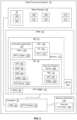
- guest OS 32 may include an OS page table 80, which may also be referred to as guest page table (GPT) 80.
- guest OS 32 may be an image of an OS distributed by Google Inc. under the name or trademark ANDROID. Other embodiments may use different OSs.
- OS 32 may also include an IDT 82 and associated ISRs 154, as well as other components, such as PPT driver 150 and security engine driver 160.
- VMM 170 may allow guest OS 32 to update that IDT and those ISRs.
- IDT 82 may be referred to as an untrusted IDT (UIDT 82)
- ISRs 154 may be referred to as untrusted ISRs (UISRs) 154.
- VMM 170 may create a trusted kernel context (TKC) 34 within the context of guest OS 32.
- VMM 170 may also install a VIDT 84 and associated TISRs 152 into guest OS 32.
- VIDT 84 VMM 170 may also update a register in CRs 24 to point to VIDT 84 instead of UIDT 82.
- TISRs 152 VMM 170 may load them into TKC 34.
- VMM 170 may subsequently prevent guest OS 32 from modifying that register and from modifying the contents of TKC 34.
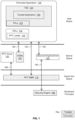
- guest OS 32 operates within a virtual machine (VM) 30 that is created and managed by VMM 170.
- VM virtual machine
- untrusted application 130 and TA 120 both run on top of guest OS 32, within that same VM 30.
- PPT enforces memory isolation between the trusted components and the untrusted components.
- VMM 170 may load an asserted page table (APT) 94 into TKC 34. More details about APTs are provided below with regard to Figure 7 .
- APT asserted page table
- PPT may include unique memory management techniques in the TEE for dynamic memory allocation, shared memory, and garbage collection. PPT may provide these benefits without requiring the TA to be hosted in a separate OS or in an RTOS, and without requiring special hardware support or micro-code extensions.
- PPT may provide a TEE that isolates portions (or all) of the code and data belonging to a third party application from the main execution environment, thereby enabling that third party application to operate as a TA.
- VMM 170 may use an EPT to provide a trusted view of code and data for that TA, while preventing untrusted applications from accessing that code and data.
- VMM 170 may use a different EPT for the untrusted applications, with that EPT providing an untrusted view of memory that does not include the memory in the trusted view.
- the memory in the trusted view may therefore be referred to as an isolated memory region.
- PPT uses hardware-assisted virtualization technology (VT), such as the technology distributed by Intel Corporation under the name or trademark INTEL ® VT, to establish a trust boundary.
- PPT configures VMM 170 in a protected memory region. In particular, that protected memory region is inaccessible to OS 32 and to the other devices in the system.
- PPT VMM 170 hosts the memory for the code and data of TAs.
- VMM 170 uses EPTs 90 to protect the TAs, where the memory for each TA is mapped only in one EPT. Any unauthorized attempt to access a TA's memory results in an EPT violation, thereby assuring that only secure and authorized access to a TA's code and data is permitted.
- VMM 170 thus uses EPTs 90 to provide a trusted view of memory for each TA.
- PPT may also offer OS-agnostic memory management - including dynamic (heap based) memory allocation and cleanup after the execution of a TA under all circumstances, including unexpected TA crashes and the hosting service termination.
- VMM 170 uses a unique EPT for each different view, so the software that runs in a given view is prevented from accessing the memory outside of that view.
- the example scenario also involves one GPT 80, for untrusted application 130.
- TA 120 does not use a GPT; instead, it uses one APT 94.
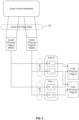
- Figure 3 is a flow diagram that illustrates how GVAs are translated into host physical pages, according to an example embodiment.
- Figure 3 illustrates that guest OS 32 uses GVAs and GPT 80 to determine guest physical pages, such as a guest physical page A and a guest physical page B.
- Figure 3 illustrates that VMM 170 uses EPTs to translate guest physical pages A and B into host physical pages A and B, respectively.
- Figure 3 illustrates that different views may provide for different types of access for the same GVA.
- Figure 3 illustrates how memory view 0 provides for read-only (R _ _) access to the host physical pages, while memory view 1 provides for read-and-execute access (R _ X) to the host physical pages.
- PPT driver 150 manages multiple tasks, including setting up and managing VIDT 84 and hosting the ISRs for certain interrupts, such as interrupts 29, 30, and 31, for instance.
- the ISR for interrupt 29 (Int-29) causes the currently executing process to transition from the untrusted code execution to a trusted view.
- the ISR for interrupt 31 (Int-31) causes execution control to transfer from the trusted view to the untrusted.
- the ISR for interrupt 30 (Int-30) causes the current process to resume a trusted view after having been interrupted by an asynchronous interrupt.
- VMM 170 runs at a higher privilege than guest OS 32, VMM 170 provides the required isolation of the code and data in a trusted view from rest of the views, including view 0 (i.e., the untrusted view). VMM 170 implements the multi-view model and manages the EPT pointers 92 for each view.
- hypervisor 170 User applications and other OS-based software communicate with hypervisor 170 through hypercalls, which may be implemented either through cpuid or vmcalls.
- VMM 170 executes at a higher privilege as it runs in the root mode as supported by the virtualization technology distributed by Intel Corporation under the name of trademark INTEL ® VT or INTEL ® VT-X. That virtualization technology may use virtual machine extensions (VMX) to provide for entry into the root mode. Accordingly, the root mode may be referred to as VMX root mode. In other embodiments, other technologies may be used to provide for similar functionality.
- VMX root mode may be referred to as VMX root mode.
- other technologies may be used to provide for similar functionality.
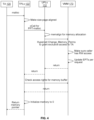
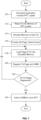
- Figure 4 is a flow diagram that illustrates an example overall flow for dynamic memory allocation by TA 120, after untrusted application 130 has launched TA 120.
- the flow of Figure 4 starts with TA 120 executing with a trusted view of memory.
- VMM 170 is using a trusted EPT among EPTs 90 to provide a trusted view of memory for TA 120.
- TA 120 shares memory with another TA, which may be referred to as TA2. Also, those two TAs reside in different processes.
- the sharing process involves two main steps: sharing and mapping.
- TA 120 creates a first buffer.
- TA 120 requests VMM 170 to share the first buffer with a list of entities -- TA2 in this case.
- VMM 170 creates local data structures for managing shared memory and returns a buffer handle to TA 120.
- This buffer handle may be referred to as a shared memory handle.
- VMM 170 passes the shared memory handle to the process in which TA2 resides. TA2 then creates a second buffer with a starting address. Using the starting address for the second buffer and the shared memory handle, TA2 requests VMM 170 to map to the shared buffer. In response, VMM 170 updates the EPT for TA 120 and the EPT for TA2 so that those EPTs map the same physical pages to the virtual pages of buffers created by TA 120 and TA2. Hence, TA2 can access the shared data of TA1 by accessing the buffer created by TA2.
- TA2 doesn't need to create a new buffer. It may just call the map request with same buffer address created by TA1.
- TA 120 or TA2 can be replaced by an untrusted application in the above flow.
- VMM 170 manages the shared memory. The memory can only be accessed by the TAs that have been granted explicit access by VMM 170. Hence, the shared memory is secure.
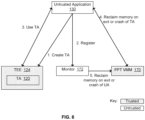
- monitor 172 is an untrusted process that operates more or less in parallel to untrusted application 130 and TEE 124, and monitor 172 keeps track of all the processes that create a TA. For instance, as shown at arrow 2, once untrusted application 130 creates TA 120, untrusted application 130 may connect itself with monitor 172. In particular, one of UPLs 132 executing in the context of untrusted application 130 may connect with monitor 172, using named pipes or any other suitable mechanism, including portable OS interface (POSIX) inter-process communication (IPC) mechanisms like signals, sockets, etc. As shown at arrow 3, untrusted application 130 may then use TA 120.
- POSIX portable OS interface
- IPC inter-process communication
- Jumping to the middle of a function by compromising the caller stack is a common security concern.
- the impact of this exploitation is heightened if a jump could be done from untrusted to trusted application space, as such a jump would break the TEE itself.
- a common approach is to develop an architecture where the jump from untrusted to trusted space is made to a predetermined location in the TEE, and the TEE then jumps to a particular trusted method after setting up the trusted environment.
- data processing system 20 uses EPT protections to protect the TCS and the other PDSs, so that the EPT for the untrusted view does not have permission to access these private data structures. Consequently, the TA-enter ISR may rely on the offset being correct. The TA-enter ISR then retrieves the base address of TA 120 from SECS 310, and adds the offset to the base address. This addition gives the actual entry point address of TA 120.
- the TRTS (e.g., one or more programs in TPLs 122) initializes the TD for TA 120 by adding the TCS address to various fields in the TLS that were populated by PPT loader 134. And even though the TLS may have been considered untrusted when it was initialized by PPT loader 134, it may be considered to be a confidentially and integrity protected data structure because subsequently, as a part of a trusted page, all the initialized content of the TLS will have been copied to the protected memory by VMM 170. And the initialization may be considered reliable because the TLS was also a part of the TA blob that was hashed and signed and later verified by VMM 170.
- TD contains a pointer to the trusted stack.
- the TRTS then uses that trusted stack pointer to switch to the trusted stack, since the TA execution must use the known private stack for saving local variables and return addresses of the TA functions.
- the TRTS may then pass control to TA 120, and TA 120 may then execute.
- the TA-exit ISR would then switch to the untrusted view and load the regular OS page tables by pointing CR3 to the OS page table base at GPT 80. Also, the TRTS passes the return IP in one of the registers, and the TA-exit ISR loads that IP to the interrupt stack return frame. The TA-exit ISR than executes an Iret, which causes control to jump to the next instruction to the enter instruction (i.e., the next instruction after the TA-enter interrupt). In response, the URTS then properly returns control back to the caller of ecall (i.e., untrusted application 130).
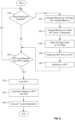
- Figure 12 is a flow diagram that illustrates asynchronous exit from and resume to TA 120, according to an example embodiment. Such a resume from an asynchronous exit may happen when an interrupt comes while executing the TA code.
- VIDT 84 is set up to ensure that a trusted ISR executes for each such asynchronous exit. For instance, in response to the interrupt, VIDT 84 may cause a general purpose (GP) or "non-reserved" ISR from TISRs 152 to determine whether the currently executing code is using a TA. For example, that TISR may use a view-id function to determine whether the current view is a trusted view. If the current view is not a trusted view, then the TISR hands over the interrupt to the guest OS's interrupt handler.
- GP general purpose
- non-reserved non-reserved
- the TISR saves the current GPR state, including the RIP, in the SSA, which is a data region in TA 120 that is not visible outside the trusted view.
- the TISR also replaces the RIP on the current stack with the asynchronous exit pointer (AEP) of the untrusted runtime in the interrupt stack.
- the TISR also replaces the trusted runtime stack pointer (RSP) with the untrusted RSP on the interrupt stack. This is done so that an "iret" can jump to a known exit point in the URTS.
- AEP asynchronous exit pointer
- RSP trusted runtime stack pointer
- the TISR then switches from trusted to untrusted page tables (e.g., by switching CR3 from pointing to APT 94 to GPT 80).
- the TISR then switches from trusted view to untrusted view using VMFUNC.
- the TISR then switches from trusted ring-0 stack to untrusted ring-0 stack.
- the TISR then copies all of the synthetic GPR state to the untrusted stack.
- the TISR then jumps to the OS ISR by executing a return instruction.
- the OS ISR then handles the interrupt.
- the OS ISR then executes an "iret," at which point the control gets transferred to the AEP in the URTS.
- the URTS then pushes the target view id in another GPR. In other words, the URTS saves the identifier for the view-to-enter in a register.
- the URTS then triggers the reserved TA-exit interrupt (e.g., Int-30) using the "int" instruction.
- the rest of the flow for re-entering TA 120 after an asynchronous exit may be similar to the synchronous entry, except that the entry point is taken from the RIP entry in the SSA. Also, the GPR state of trusted at the time of the asynchronous interrupt is taken from the SSA and put in the trusted ring-0 stack, so that on "iret," the architectural state is preserved on re-entry to TA 120.
- a TEE requires at least one data structure that contains state information for correct and secure execution.
- PPT involves an SECS for each TA, a TCS for each TA, etc., as indicated above.
- Such data structures need to be secured against read, write, and execute access from the untrusted world.
- Some techniques to provide protection through encryption or restricted permissions utilize OS-managed page tables or VMM-managed EPTs. However, those techniques may be too complicated or insufficient, considering the variety of attacks that are possible.
- This disclosure introduces a secure cookie value (SCV) that is obtained from a secure hardware agent and that is used by a trusted software block (such as VMM 170) to patch software that is protected with regard to integrity and confidentially (such as TA 120). After patching, this SCV becomes a part of the protected software. The SCV is then compared with a corresponding value in an EPT-protected data structure. In one embodiment, that EPT-protected data structure is SECS 310. In case of a mismatch, execution of the protected software is aborted before that software can leak out any security sensitive information from the TEE. This solution may also be immune to attacks based on page remapping. For instance, this solution provides protection even if a compromised OS kernel performs memory remapping of the private data pages of the TEE.
- the trampoline code that allows transitions in and out of TA 120 perform SCV checks.
- that trampoline code is implemented as TISRs 152.
- the SCV itself is randomly generated by hardware and cached by VMM 170.
- VMM 170 then writes or patches the SCV into the TISR flow. For instance, VMM 170 may patch the SCV to various instruction offsets in TISRs 152.
- VMM 170 writes the SCV into the SECS for TA 120 (i.e., SECS 310).
- one or more of the programs in TISRs 152 checks the SCV in SECS 310 against the SCV that was patched into TISRs 152 to make sure they match.
- the TISR aborts execution of TA 120 if the check fails.
- the checks compare a randomly generated (by hardware) SCV stored in an EPT protected data structure (SECS 310) with the value patched by a trusted software entity (VMM 170) in the trampoline code (TISRs 152), and the trampoline execution is aborted if the check fails. Consequently, TEE 124 is not activated.
- SECS 310 The physical contents of SECS 310 in the trusted world are hidden using EPT-based memory virtualization techniques. But the trampoline execution requires that the correct data structure is referenced in the trampoline code even if the page tables of the OS are manipulated by an attacker to map the data structure's virtual address to a different physical page. The random secure cookie checks protect against this type of attack.
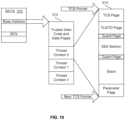
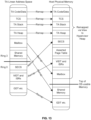
- Figure 13 is a block diagram that illustrates memory mapping for TA 120 between a virtual address space and a physical address space.
- a virtual address may also be referred to as a linear address.
- Figure 13 depicts the guest virtual address space for TA 120 as a "TA Linear Address Space,” and Figure 13 depicts a corresponding "Host Physical Memory.”
- the illustrated data structures may be accessed through the same virtual address for both TEEs and untrusted REEs. However, the physical copies of the data structures are kept different, based on EPT mappings.
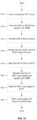
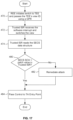
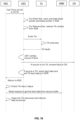
- FIG 17 is a flowchart depicting operations associated with switching from a rich execution environment to a trusted execution environment, according to an example embodiment.
- the illustrated process starts at block 470 with a program in the REE initiating a switch to the TEE and using a GPR to pass the identifier for the view for that TEE.
- untrusted application 130 may use an ecall to call TA 120, and in response the REE may trigger a TA-enter interrupt.
- one of TISRs 152 e.g., the TA-enter ISR
- switch from the untrusted view to the trusted view for TA 120 may intercept the TA-enter interrupt and, in response, switch from the untrusted view to the trusted view for TA 120.
- the VMM maintains a pointer to the currently-active EPT on that CPU.
- That pointer may be a VMX data structure called the EPT-pointer or EPTP.
- the VMM may also maintain another data structure that contains pointers for each view's EPT. That data structure may be called the EPTP list page.
- the VMFUNC instruction may read the EPT list page using a specified view-id as an index to obtain the EPTP pointer for that view. The VMM may then internally update EPTP with that EPTP pointer.
- the ISR may then read the SCV from the SECS for the current view (e.g., SECS 310). As shown at block 480, the ISR may then read the SCV from TA to be executed (e.g., TA 120), and the ISR may determine whether the patched SCV n the ISR and the SCV for TA 120 in SECS 310 match. If the SCVs do no match, the ISR may conclude that an attack is being attempted, and the ISR may take remedial action, as shown at block 482. For instance, the ISR may conclude that it has detected an invalid attempt to switch view into a trusted application view, and in response the ISR may permanently block view switching for that view handle. The ISR may also take other remedial measures. For instance, the ISR may cause a system shutdown by making a VMM assert hypercall.
- the ISR may then pass control to the TA, as shown at block 484.
- the process of Figure 17 may then end.
- a TA is an application that runs in an execution environment that is isolated from the REE, and the applications running in the REE cannot access the TA address space.
- GDB GNU Debugger
- This disclosure introduces a debugging technique that can provide information concerning TA execution state at the time of fault without crashing the process that hosts the TA.
- this technique may provide information from registers, including the instruction pointer (IP), from the stack, from exceptions, etc. Furthermore, this information can be shared with the corresponding REE in a secure manner, and it can be used to debug the TA and resolve the problem.
- this technique uses VIDT 84 and an associated PPT exception handler (PEH).
- VIDT 84 and the PEH bypass the OS exception handler if the exception (e.g., a page fault) is generated within a TA.
- the PEH accomplishes this by handling the exception and serving as trampoline code that switches the execution from TEE to REE.
- the REE collects the information from the PEH and passes the information to the program that called the TA service, such as untrusted application 130. Untrusted application 130 may then choose to initiate the destruction of the TA. But, since TEE OS exception handler is not invoked, the hosting process is not killed.
- VIDT 84 and the PEH thus virtualize the interrupts and exceptions and provide a secure mechanism to switch between the TA and the REE.
- VMM 170 may install VIDT 84 into guest OS 32, and VMM 170 may update a register in CRs 24 to point to VIDT 84 instead of UIDT 82.
- VIDT 84 may include gates for trapping interrupts or exceptions and for automatically invoking certain specified ISRs in response to those interrupts.
- the VIDT gate descriptors are configured to transfer control to a software handler (e.g., the PEH) that distinguishes the architectural exceptions from the other interrupt sources based on the vector number generated by the hardware on interrupt/exception.
- Architectural exceptions may identify faults in process execution, such as a general protection fault, a page fault, a divide-by-zero fault, etc.
- interrupt sources may include device interrupts, timer interrupts, performance monitoring interrupts, etc.
- the same IDT may be used to vector all interrupts.
- the PEH may process only the architectural exceptions, based on the vector that caused the jump in the asynchronous exit TISR.
- the PEH collects the faulting data like IP, exception type (e.g., page fault, GP fault, divide by zero, etc.), stack trace, and faulting address accessed during the fault.
- exception type e.g., page fault, GP fault, divide by zero, etc.
- stack trace e.g., stack trace
- faulting address accessed during the fault.
- REE exception handler is not invoked. Instead, control is directly transferred back to the process that called the TA by exiting the TA.
- a "TA-crashed" status is returned in a pre-defined GPR to the process that called the TA entry point.
- the PEH also sets an "invalid-state" flag in the SECS for that TA, so that further entry in the TA may be avoided.
- a TA is created within the address space of the calling process, and the VMM remaps the calling process to EPTs during the creation of the view for the TA.
- the calling process cannot directly access the mapped EPT memory for the TA because that memory is isolated from the calling process.
- the calling process can enter the TA's view by using technology such as the VMFUNC instruction described above.
- PPT uses custom ISRs for reserved interrupts such as TA-enter, TA-resume, and TA-exit, to manage the transitions between untrusted application and TA.
- ISR creates an isolated stack for the TA, fills in the required parameters for TA, and then jumps to the TA entry point.
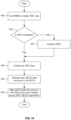
- Figure 18 is a flow diagram illustrating a process to support debugging, in according with an example embodiment.
- software in the REE e.g., untrusted application 130
- calls a TA e.g., TA 120
- TA-enter interrupt e.g., Int-29
- the TA may have been interrupted by an asynchronous event, and the flow of Figure 18 may start with control returning to the TA via a TA-resume interrupt (e.g., Int-30).
- the TA-enter ISR saves the untrusted stack pointer and untrusted base pointer in the SSA, which is part of the TCDS.
- the TA-resume ISR restores TA context (e.g., the state of the GPRs, the IP, the trusted stack pointer) from the SSA.
- TA context e.g., the state of the GPRs, the IP, the trusted stack pointer
- this TA context will have been saved by the asynchronous exit TISR, which will have been invoked earlier, for instance when a guest interrupt hit while the TA was executing.
- Control is then passed to the TA, and then the TA then executes.
- the TA may then experience an exception, an interrupt, or some other fault (e.g., of the code has a bug).
- the PEH identifies the source of the fault. For instance, the PEH may differentiate whether the fault was generated by the TA or outside the TEE, based on the current state of the execution context. If the source is not the TA, PEH forwards the fault to the UIDT to be processed by the OS.
- the PEH handles the exception or fault and collects data pertaining to the fault, such as IP, stack trace, and memory address accessed during the fault. In addition, the PEH records the fault status in the SECS for the TA. As indicated above, the processing element also sets a "TA-crashed" status in a pre-defined GPR. enter the TA after fault. Data processing system 20 may subsequently prevent further entry into the TA, based on the fault status in the SECS and/or the TA-crashed flag.
- the PEH creates a secure buffer to share the data dump for the fault with the REE.
- the VMM creates this dump buffer during the creation of the TA view, and the VMM assigns this dump buffer in the SECS of the TA. For instance, the VMM may save a reference or pointer to the dump buffer in the SECS.
- This dump buffer can be accessed by the PEH in ring 0 when the PEH is executing under the TA context. Also, if the fault happened within the TA, the PEH traces through the TA stack and dumps the stack trace along with the IP address that caused the fault, the type of the exception, etc. into the dump buffer.
- the PEH then shares the dump buffer with the REE by simply exiting the TA view.
- the REE can then read the TA crash status from the GPR, and the REE may choose to clean the TA view. For instance, the REE may invoke a destroy-view hypercall to instruct the VM to clean up the view.
- the REE can read the dump buffer from VMM 170. Based on the dump buffer, the REE can then identify the TA stack, the IP, etc., to debug and resolve the issue.
- the VMM simply copies the data over to an untrusted buffer. In another embodiment, the VMM encrypts the data from the dump buffer before sharing it with the REE, and the REE then decrypt the data.
- the data processing system may execute a secure boot process that provides for a TEE debug policy based on hardware and/or firmware debug tokens.
- An administrator may configure certain features through these tokens to provision them on the device.
- the security engine firmware 184 may read these token values from static RAM (SRAM) or some other secure tamper-proof memory and enable or disable the TEE debug policy based on the tokens.
- SRAM static RAM
- the ability to install a TEE debug token may be limited to the manufacturer of the data processing system, such as an original equipment manufacturer (OEM), and/or the manufacturer of the CPU. And only if the TEE debug token is installed would the VMM enable the TEE debug features.
- OEM original equipment manufacturer
- PPT thus enables powerful debugging in an isolated TEE, without requiring any specialized software tools or hardware to debug the TAs.
- a data processing system may use PPT to protect some or all of the code and data belonging to certain software modules from user-level (e.g., ring-3) malware and from kernel-level (e.g., ring-0) malware.
- PPT may provide isolation between various trusted entities, along with the ability to allocate, free, and reuse the memory dynamically at runtime.
- the PPT memory sharing model may allow memory sharing between TAs and the untrusted OS, in addition to between TAs.
- the binary translators may use the same Tag-U value (e.g., 0x03) for all internal transfer destinations within the unmanaged code and for all transfers within the unmanaged code to those destinations.
- the binary translators may use the same Tag-U value at the entry point for all defined functions, and for the calls to those functions, while using one or more different Tag-U values for other types of destinations.
- Example data processing systems include, without limitation, distributed computing systems, supercomputers, high-performance computing systems, computing clusters, mainframe computers, mini-computers, client-server systems, personal computers (PCs), workstations, servers, portable computers, laptop computers, tablet computers, personal digital assistants (PDAs), telephones, handheld devices, entertainment devices such as audio devices, video devices, audio/video devices (e.g., televisions and set top boxes), vehicular processing systems, and other devices for processing or transmitting information.
- PCs personal computers
- PDAs personal digital assistants
- audio devices such as audio devices, video devices, audio/video devices (e.g., televisions and set top boxes), vehicular processing systems, and other devices for processing or transmitting information.
- references to any particular type of data processing system should be understood as encompassing other types of data processing systems, as well.
- components that are described as being coupled to each other, in communication with each other, responsive to each other, or the like need not be in continuous communication with each other and need not be directly coupled to each other.
- one component is described as receiving data from or sending data to another component, that data may be sent or received through one or more intermediate components, unless expressly specified otherwise.
- some components of the data processing system may be implemented as adapter cards with interfaces (e.g., a connector) for communicating with a bus.
- machine accessible media encoding instructions or control logic for performing the operations of the invention.
- Such embodiments may also be referred to as program products.
- Such machine accessible media may include, without limitation, tangible storage media such as magnetic disks, optical disks, RAM, ROM, etc., as well as processors, controllers, and other components that include RAM, ROM, and/or other storage facilities.
Landscapes
- Engineering & Computer Science (AREA)
- Theoretical Computer Science (AREA)
- Software Systems (AREA)
- General Engineering & Computer Science (AREA)
- Physics & Mathematics (AREA)
- General Physics & Mathematics (AREA)
- Computer Security & Cryptography (AREA)
- Computer Hardware Design (AREA)
- Health & Medical Sciences (AREA)
- Bioethics (AREA)
- General Health & Medical Sciences (AREA)
- Storage Device Security (AREA)
Claims (10)
- Verfahren, das Folgendes umfasst:Ermöglichen, durch einen Virtual-Machine-Monitor (VMM) (170), dass eine nicht vertrauenswürdige Anwendung (130) und eine vertrauenswürdige Anwendung (TA) (120) auf einem einzigen Betriebssystem (OS) (32) laufen, das auf einem Prozessor (22) einer Vorrichtung (20) läuft, während die nicht vertrauenswürdige Anwendung (130) daran gehindert wird, auf den von der vertrauenswürdigen Anwendung (120) verwendeten Speicher (28) zuzugreifen, wobei das OS (32) eine nicht vertrauenswürdige Interrupt-Deskriptor-Tabelle (IDT) (82) mit Gattern umfasst, die Interrupt-Vektoren mit nicht vertrauenswürdigen Interrupt-Service-Routinen (ISRs) (154) verknüpfen;Erzeugen, durch den VMM (170), einer virtuellen IDT (VIDT) (84) mit Gattern, die Interrupt-Vektoren mit vertrauenswürdigen ISRs (152) assoziieren, wobei die vertrauenswürdigen ISRs (152) eine TA-Eingabe-ISR umfassen, die die Vorrichtung (20) veranlasst, von einer nicht vertrauenswürdigen Speicheransicht, die mit der nicht vertrauenswürdigen Anwendung (130) assoziiert ist, zu einer vertrauenswürdigen Speicheransicht, die mit der vertrauenswürdigen Anwendung (120) assoziiert ist, zu wechseln und zu einem vorbestimmten vertrauenswürdigen Ort (120) zu springen;Konfigurieren, durch den VMM (170), des Prozessors (22) der Vorrichtung (20), um die VIDT (84) anstelle der nicht vertrauenswürdigen IDT (UIDT) (154) zu verwenden; undnach dem Konfigurieren des Prozessors (22), die VIDT (84) anstelle der UIDT (154) zu verwenden, Antworten auf einen TA-Eingabe-Interrupt, der von der nicht vertrauenswürdigen Anwendung (130) verwendet wird, durch Aufrufen der TA-Eingabe-ISR.
- Verfahren nach Anspruch 1, ferner umfassend das Ermöglichen, durch den VMM (170), des OS (32), der nicht vertrauenswürdigen Anwendung (130) und der vertrauenswürdigen Anwendung (120), in einer einzigen virtuellen Maschine (VM) (30) auszuführen.
- Verfahren nach Anspruch 1, das ferner Verwenden, durch das OS (32), einer Gastseitentabelle (80) zum Übersetzen virtueller Gastadressen (GVAs) in physische Gastadressen (GPAs) für die nicht vertrauenswürdige Anwendung (130) und für die vertrauenswürdige Anwendung (120) umfasst.
- Verfahren nach Anspruch 1, das ferner Implementieren einer Interrupt-Service-Routine (ISR) umfasst, die es der nicht vertrauenswürdigen Anwendung (130) ermöglicht, die Steuerung an die vertrauenswürdige Anwendung (120) zu übertragen.
- Verfahren nach Anspruch 4, das ferner Implementieren eines Plattformschutztechnologie-(PPT)-Treibers (150) zum Installieren der ISR umfasst.
- Verfahren nach Anspruch 1, wobei der VMM (170) eine Datenstruktur (310) umfasst, die unterschiedliche Ansichtsidentifikatoren mit unterschiedlichen erweiterten Seitentabellen (EPTs) (90) assoziiert.
- Verfahren nach Anspruch 6, wobei der VMM (170) einen EPT-Zeiger umfasst, der für die Ansicht, die aktuell aktiv ist, auf den EPT (90) zeigt.
- Verfahren nach Anspruch 1, das Folgendes umfasst:Laden der vertrauenswürdigen Anwendung (120), um auf dem OS (32) auszuführen, wobei das OS (32) eine Gastseitentabelle (GPT) (80) verwendet, um virtuelle Gastadressen (GVAs) in physische Gastadressen (GPAs) zu übersetzen;Erzeugen einer bestätigten Seitentabelle (APT) (94) für die vertrauenswürdige Anwendung (120), wobei die APT (94) GVAs in GPAs für die vertrauenswürdige Anwendung (120) übersetzen soll;Verhindern, dass das OS (32) die APT (94) ändert;Konfigurieren des Prozessors (22) der Vorrichtung (20), um die APT (94) anstelle der GPT (80) zu verwenden; undnach dem Konfigurieren des Prozessors (22), um die APT (94) anstelle der GPT (80) zu verwenden, Ausführen der vertrauenswürdigen Anwendung (120).
- Verfahren nach Anspruch 8,wobei die nicht vertrauenswürdige Anwendung (130) auf dem OS (32) in einer virtuellen Maschine (VM) (30) in einer reichen Ausführungsumgebung (REE) läuft; unddie vertrauenswürdige Anwendung (120) auf dem OS (32) in der VM (30) in einer vertrauenswürdigen Ausführungsumgebung (TEE) (124) läuft, die verhindert, dass die nicht vertrauenswürdige Anwendung (130) auf einen Speicher zugreift, der von der vertrauenswürdigen Anwendung (120) verwendet wird; undwobei das Verfahren Folgendes umfasst:Erzeugen eines geheimen Cookie-Werts (SCV) für die vertrauenswürdige Anwendung (120);Speichern des SCV in einer Plattformschutztechnologie-(PPT)-Datenstruktur (310), die mit der vertrauenswürdigen Anwendung assoziiert ist (120);Einfügen des SCV in Trampolincode, der eine Übertragung der Steuerung von der nicht vertrauenswürdigen Anwendung (130) zu der vertrauenswürdigen Anwendung (120) vorsieht;als Reaktion darauf, dass die nicht vertrauenswürdige Anwendung (130) die vertrauenswürdige Anwendung (120) aufruft, vor dem Zulassen, dass die vertrauenswürdige Anwendung (120) ausgeführt wird, Bestimmen, ob der Trampolincode und die PPT-Datenstruktur (310) übereinstimmende SCVs enthalten;Zulassen, dass die vertrauenswürdige Anwendung (120) nur ausgeführt wird, wenn der Trampolincode und die PPT-Datenstruktur (310) übereinstimmende SCVs enthalten;bevor der vertrauenswürdigen Anwendung (120) ermöglicht wird, in der TEE (124) auszuführen, Erzeugen eines Dump-Puffers in der TEE (124);in Reaktion auf einen Fehler während der Ausführung der vertrauenswürdigen Anwendung (120), Sichern von Fehlerdaten von der TEE (124) im Dump-Puffer; undgemeinsame Nutzung des Dump-Puffers mit der REE.
- Datenverarbeitungsvorrichtung (20), die Mittel zum Ausführen des Verfahrens nach Anspruch 1 umfasst.
Priority Applications (1)
| Application Number | Priority Date | Filing Date | Title |
|---|---|---|---|
| EP24170679.5A EP4398138B1 (de) | 2015-06-15 | 2016-05-13 | Virtualisierungsbasierte plattformschutztechnologie |
Applications Claiming Priority (4)
| Application Number | Priority Date | Filing Date | Title |
|---|---|---|---|
| US14/739,560 US9842065B2 (en) | 2015-06-15 | 2015-06-15 | Virtualization-based platform protection technology |
| EP20217437.1A EP3825851B1 (de) | 2015-06-15 | 2016-05-13 | Auf virtualisierung basierende technologie für plattformschutz |
| PCT/US2016/032282 WO2016204892A1 (en) | 2015-06-15 | 2016-05-13 | Virtualization-based platform protection technology |
| EP16812103.6A EP3308317B1 (de) | 2015-06-15 | 2016-05-13 | Auf virtualisierung basierende technologie für plattformschutz |
Related Parent Applications (3)
| Application Number | Title | Priority Date | Filing Date |
|---|---|---|---|
| EP16812103.6A Division EP3308317B1 (de) | 2015-06-15 | 2016-05-13 | Auf virtualisierung basierende technologie für plattformschutz |
| EP20217437.1A Division EP3825851B1 (de) | 2015-06-15 | 2016-05-13 | Auf virtualisierung basierende technologie für plattformschutz |
| EP20217437.1A Division-Into EP3825851B1 (de) | 2015-06-15 | 2016-05-13 | Auf virtualisierung basierende technologie für plattformschutz |
Related Child Applications (2)
| Application Number | Title | Priority Date | Filing Date |
|---|---|---|---|
| EP24170679.5A Division-Into EP4398138B1 (de) | 2015-06-15 | 2016-05-13 | Virtualisierungsbasierte plattformschutztechnologie |
| EP24170679.5A Division EP4398138B1 (de) | 2015-06-15 | 2016-05-13 | Virtualisierungsbasierte plattformschutztechnologie |
Publications (3)
| Publication Number | Publication Date |
|---|---|
| EP4339818A2 EP4339818A2 (de) | 2024-03-20 |
| EP4339818A3 EP4339818A3 (de) | 2024-06-19 |
| EP4339818B1 true EP4339818B1 (de) | 2025-07-09 |
Family
ID=57515948
Family Applications (4)
| Application Number | Title | Priority Date | Filing Date |
|---|---|---|---|
| EP24170679.5A Active EP4398138B1 (de) | 2015-06-15 | 2016-05-13 | Virtualisierungsbasierte plattformschutztechnologie |
| EP20217437.1A Active EP3825851B1 (de) | 2015-06-15 | 2016-05-13 | Auf virtualisierung basierende technologie für plattformschutz |
| EP16812103.6A Active EP3308317B1 (de) | 2015-06-15 | 2016-05-13 | Auf virtualisierung basierende technologie für plattformschutz |
| EP24150417.4A Active EP4339818B1 (de) | 2015-06-15 | 2016-05-13 | Virtualisierungsbasierte plattformschutztechnologie |
Family Applications Before (3)
| Application Number | Title | Priority Date | Filing Date |
|---|---|---|---|
| EP24170679.5A Active EP4398138B1 (de) | 2015-06-15 | 2016-05-13 | Virtualisierungsbasierte plattformschutztechnologie |
| EP20217437.1A Active EP3825851B1 (de) | 2015-06-15 | 2016-05-13 | Auf virtualisierung basierende technologie für plattformschutz |
| EP16812103.6A Active EP3308317B1 (de) | 2015-06-15 | 2016-05-13 | Auf virtualisierung basierende technologie für plattformschutz |
Country Status (4)
| Country | Link |
|---|---|
| US (5) | US9842065B2 (de) |
| EP (4) | EP4398138B1 (de) |
| CN (2) | CN107667350B (de) |
| WO (1) | WO2016204892A1 (de) |
Families Citing this family (94)
| Publication number | Priority date | Publication date | Assignee | Title |
|---|---|---|---|---|
| US9158909B2 (en) * | 2014-03-04 | 2015-10-13 | Amazon Technologies, Inc. | Authentication of virtual machine images using digital certificates |
| US10754967B1 (en) * | 2014-12-15 | 2020-08-25 | Marvell Asia Pte, Ltd. | Secure interrupt handling between security zones |
| US9842065B2 (en) | 2015-06-15 | 2017-12-12 | Intel Corporation | Virtualization-based platform protection technology |
| US10691476B2 (en) * | 2015-06-27 | 2020-06-23 | Mcafee, Llc | Protection of sensitive data |
| US10230529B2 (en) * | 2015-07-31 | 2019-03-12 | Microsft Technology Licensing, LLC | Techniques to secure computation data in a computing environment |
| CN110059500A (zh) * | 2015-11-30 | 2019-07-26 | 华为技术有限公司 | 用户界面切换方法和终端 |
| CN107038128B (zh) * | 2016-02-03 | 2020-07-28 | 华为技术有限公司 | 一种执行环境的虚拟化、虚拟执行环境的访问方法及装置 |
| US11429412B2 (en) * | 2016-02-25 | 2022-08-30 | Red Hat Israel, Ltd. | Guest protection from application code execution in kernel mode |
| US12339979B2 (en) * | 2016-03-07 | 2025-06-24 | Crowdstrike, Inc. | Hypervisor-based interception of memory and register accesses |
| US12248560B2 (en) | 2016-03-07 | 2025-03-11 | Crowdstrike, Inc. | Hypervisor-based redirection of system calls and interrupt-based task offloading |
| US9971675B2 (en) * | 2016-04-04 | 2018-05-15 | International Business Machines Corporation | Triggering debug processing within a scalable cloud environment |
| EP3274896B1 (de) * | 2016-04-22 | 2019-08-21 | Hewlett-Packard Enterprise Development LP | Konfiguration eines speichersteuergeräts für copy-on-write mit einem ressourcensteuergerät |
| US10884952B2 (en) * | 2016-09-30 | 2021-01-05 | Intel Corporation | Enforcing memory operand types using protection keys |
| US10452572B2 (en) * | 2016-10-06 | 2019-10-22 | Vmware, Inc. | Automatic system service resource management for virtualizing low-latency workloads that are input/output intensive |
| US10528746B2 (en) * | 2016-12-27 | 2020-01-07 | Intel Corporation | System, apparatus and method for trusted channel creation using execute-only code |
| WO2018126024A1 (en) * | 2016-12-28 | 2018-07-05 | Narf Industries, LLC | Method and system for co-privileged security domains |
| US10867029B2 (en) * | 2017-01-24 | 2020-12-15 | Microsoft Technology Licensing, Llc | Enclave client abstraction model |
| CN108459899B (zh) * | 2017-02-21 | 2021-06-01 | 华为技术有限公司 | 信息保护方法及装置 |
| US10204229B2 (en) * | 2017-03-21 | 2019-02-12 | Nxp B.V. | Method and system for operating a cache in a trusted execution environment |
| US10614211B2 (en) * | 2017-03-22 | 2020-04-07 | Ca, Inc. | Bringing a non-isolated application into an isolation layer with an isolated application |
| US10331578B2 (en) * | 2017-06-09 | 2019-06-25 | Intel Corporation | Fine-grained access host controller for managed flash memory |
| US11372787B2 (en) * | 2017-12-09 | 2022-06-28 | Intel Corporation | Unified address space for multiple links |
| US10970390B2 (en) | 2018-02-15 | 2021-04-06 | Intel Corporation | Mechanism to prevent software side channels |
| CN108628663B (zh) * | 2018-05-11 | 2021-08-10 | 浙江大学 | 一种支持新型大页框架的kvm系统 |
| CN110532766B (zh) | 2018-05-25 | 2023-09-08 | 华为技术有限公司 | 一种基于多容器的可信应用程序的处理方法及相关设备 |
| US11258861B2 (en) * | 2018-06-29 | 2022-02-22 | Intel Corporation | Secure reporting of platform state information to a remote server |
| US10705976B2 (en) * | 2018-06-29 | 2020-07-07 | Intel Corporation | Scalable processor-assisted guest physical address translation |
| US10860709B2 (en) * | 2018-06-29 | 2020-12-08 | Intel Corporation | Encoded inline capabilities |
| WO2020010556A1 (zh) * | 2018-07-11 | 2020-01-16 | 华为技术有限公司 | 增强用户空间与内核空间的隔离性的方法和装置 |
| US10754796B2 (en) | 2018-08-29 | 2020-08-25 | Red Hat, Inc. | Efficient user space driver isolation by CPU page table switching |
| US10983926B2 (en) | 2018-08-29 | 2021-04-20 | Red Hat, Inc. | Efficient userspace driver isolation for virtual machines |
| US11741196B2 (en) | 2018-11-15 | 2023-08-29 | The Research Foundation For The State University Of New York | Detecting and preventing exploits of software vulnerability using instruction tags |
| CN109597677B (zh) | 2018-12-07 | 2020-05-22 | 北京百度网讯科技有限公司 | 用于处理信息的方法和装置 |
| US10534730B1 (en) * | 2018-12-20 | 2020-01-14 | Ati Technologies Ulc | Storing microcode for a virtual function in a trusted memory region |
| WO2020140261A1 (en) * | 2019-01-04 | 2020-07-09 | Baidu.Com Times Technology (Beijing) Co., Ltd. | Method and system for protecting data processed by data processing accelerators |
| US11693970B2 (en) * | 2019-01-04 | 2023-07-04 | Baidu Usa Llc | Method and system for managing memory of data processing accelerators |
| CN109947666B (zh) * | 2019-02-27 | 2023-04-25 | 余炀 | 可信执行环境缓存隔离方法及装置、电子设备和存储介质 |
| CN109933441B (zh) * | 2019-02-28 | 2020-11-17 | 上海交通大学 | 微内核进程间通讯方法和系统 |
| US11347869B2 (en) | 2019-03-08 | 2022-05-31 | International Business Machines Corporation | Secure interface control high-level page management |
| US11206128B2 (en) | 2019-03-08 | 2021-12-21 | International Business Machines Corporation | Secure paging with page change detection |
| US11403409B2 (en) | 2019-03-08 | 2022-08-02 | International Business Machines Corporation | Program interruptions for page importing/exporting |
| CN110058921B (zh) * | 2019-03-13 | 2021-06-22 | 上海交通大学 | 客户虚拟机内存动态隔离和监控方法及系统 |
| US20220004509A1 (en) * | 2019-03-26 | 2022-01-06 | Stmicroelectronics S.R.L. | Embedded secure element |
| FR3114671B1 (fr) * | 2020-09-25 | 2024-08-30 | St Microelectronics Srl | Elément sécurisé embarqué |
| US11669335B2 (en) * | 2019-03-28 | 2023-06-06 | Intel Corporation | Secure arbitration mode to build and operate within trust domain extensions |
| US10878134B2 (en) | 2019-03-29 | 2020-12-29 | Intel Corporation | Technologies for controlling memory access transactions received from one or more I/O devices |
| CN110119302B (zh) * | 2019-04-23 | 2023-07-21 | 上海隔镜信息科技有限公司 | 虚拟机监视器以及虚拟可信执行环境构建方法 |
| PL3643041T3 (pl) * | 2019-04-26 | 2021-09-06 | Advanced New Technologies Co., Ltd. | Rozproszone zarządzanie kluczami dla zaufanych środowisk wykonawczych |
| CN110245001B (zh) * | 2019-05-05 | 2023-04-18 | 创新先进技术有限公司 | 数据隔离方法及装置、电子设备 |
| US11099878B2 (en) * | 2019-06-28 | 2021-08-24 | Intel Corporation | Scalable virtual machine operation inside trust domains within the trust domain architecture |
| US10908912B1 (en) * | 2019-07-08 | 2021-02-02 | Vmware, Inc. | Target injection safe method for dynamically inlining branch predictions |
| US11500550B2 (en) | 2019-08-27 | 2022-11-15 | Red Hat, Inc. | Inhibiting memory accesses to executable modules |
| CN112528288B (zh) * | 2019-08-30 | 2025-06-06 | 华为技术有限公司 | 可信应用的运行方法、信息处理和内存分配方法及装置 |
| US11150887B2 (en) | 2019-10-01 | 2021-10-19 | Red Hat, Inc. | Secure code patching |
| US11392492B2 (en) * | 2019-12-27 | 2022-07-19 | Intel Corporation | Memory management apparatus and method for compartmentalization using linear address metadata |
| US11030113B1 (en) | 2019-12-27 | 2021-06-08 | Intel Corporation | Apparatus and method for efficient process-based compartmentalization |
| CN111148070B (zh) * | 2019-12-31 | 2021-06-15 | 华为技术有限公司 | V2x通信方法、装置及车辆 |
| US11449601B2 (en) * | 2020-01-08 | 2022-09-20 | Red Hat, Inc. | Proof of code compliance and protected integrity using a trusted execution environment |
| CN113138878B (zh) | 2020-01-19 | 2022-11-18 | 华为技术有限公司 | 可信执行环境操作系统崩溃处理方法及电子设备 |
| US11748484B2 (en) * | 2020-01-21 | 2023-09-05 | Wind River Systems, Inc. | Tri-level secure separation kernel |
| CN114902225A (zh) | 2020-02-13 | 2022-08-12 | 英特尔公司 | 多租户环境中的密码计算 |
| US11216366B2 (en) | 2020-02-13 | 2022-01-04 | Intel Corporation | Security check systems and methods for memory allocations |
| US11570153B2 (en) * | 2020-03-12 | 2023-01-31 | International Business Machines Corporation | Virtual machine perfect forward secrecy |
| DE102020002055A1 (de) | 2020-03-30 | 2021-09-30 | Paul Hamm | Datenverarbeitungsvorrichtung zur Provisionierung eines Hardware-Prozessorsystems |
| WO2022055917A1 (en) * | 2020-09-08 | 2022-03-17 | Truepic Inc. | Protocol and system for tee-based authenticating and editing of mobile-device captured visual and audio media |
| WO2022063720A1 (en) | 2020-09-25 | 2022-03-31 | Stmicroelectronics S.R.L. | Memory management for applications of a multiple operating systems embedded secure element |
| KR102865733B1 (ko) * | 2020-10-29 | 2025-09-29 | 삼성전자 주식회사 | 전자 장치 및 이를 이용한 메모리 보호 방법 |
| CN114490450B (zh) * | 2020-11-12 | 2024-10-11 | 华为技术有限公司 | 一种地址转换关系的配置方法及计算机系统 |
| CN114490448B (zh) * | 2020-11-13 | 2025-01-28 | 华为技术有限公司 | 一种切换执行环境的方法及其相关设备 |
| US20210110070A1 (en) * | 2020-12-22 | 2021-04-15 | Anjo Lucas Vahldiek-Oberwagner | Reducing latency of hardware trusted execution environments |
| US20210109870A1 (en) * | 2020-12-23 | 2021-04-15 | Ravi L. Sahita | Isolating memory within trusted execution environments |
| US12153665B2 (en) * | 2020-12-23 | 2024-11-26 | Intel Corporation | Device, system and method to efficiently update a secure arbitration mode module |
| WO2022139850A1 (en) | 2020-12-26 | 2022-06-30 | Intel Corporation | Cryptographic computing including enhanced cryptographic addresses |
| US11734072B2 (en) * | 2020-12-31 | 2023-08-22 | Nuvolo Technologies Corporation | Stream-based job processing |
| US11972126B2 (en) | 2021-03-26 | 2024-04-30 | Intel Corporation | Data relocation for inline metadata |
| CN112989326A (zh) * | 2021-04-08 | 2021-06-18 | 北京字节跳动网络技术有限公司 | 一种指令发送方法及装置 |
| US11954045B2 (en) | 2021-09-24 | 2024-04-09 | Intel Corporation | Object and cacheline granularity cryptographic memory integrity |
| US11816203B2 (en) * | 2021-11-23 | 2023-11-14 | Malwarebytes Inc. | Stack execution detection in a sandbox environment |
| CN114117412B (zh) * | 2021-11-30 | 2025-07-04 | 中国互联网络信息中心 | 一种基于可信技术的虚拟加密机平台及其创建方法 |
| CN114201269B (zh) * | 2022-02-18 | 2022-08-26 | 阿里云计算有限公司 | 内存换页方法、系统及存储介质 |
| US12353903B2 (en) * | 2022-06-10 | 2025-07-08 | Microsoft Technology Licensing, Llc | Software isolation of virtual machine resources |
| CN115098279B (zh) * | 2022-06-28 | 2026-04-17 | 蚂蚁区块链科技(上海)有限公司 | 内存地址的共享访问方法及装置 |
| US12306998B2 (en) | 2022-06-30 | 2025-05-20 | Intel Corporation | Stateless and low-overhead domain isolation using cryptographic computing |
| US12321467B2 (en) | 2022-06-30 | 2025-06-03 | Intel Corporation | Cryptographic computing isolation for multi-tenancy and secure software components |
| US20240004990A1 (en) * | 2022-06-30 | 2024-01-04 | Intel Corporation | Techniques to enable co-existence and inter-operation of legacy devices and tee-io capable devices from confidential virtual machines |
| CN115208941B (zh) * | 2022-07-13 | 2024-04-23 | 北京天融信网络安全技术有限公司 | 一种基于会话连接的数据处理方法及系统 |
| CN115102780B (zh) * | 2022-07-15 | 2022-12-06 | 飞腾信息技术有限公司 | 数据传输方法、相关装置、系统及计算机可读存储介质 |
| EP4343593B1 (de) * | 2022-09-20 | 2026-04-15 | Samsung Electronics Co., Ltd. | Verfahren, vorrichtung und elektronische vorrichtung zur sicheren datenweiterleitung |
| US12373356B2 (en) | 2022-12-28 | 2025-07-29 | Intel Corporation | Fast key ID switching via extended paging for cryptographic intra-process isolation |
| US20240220297A1 (en) * | 2022-12-29 | 2024-07-04 | Advanced Micro Devices, Inc. | Interrupt control using a guest owned backing page |
| CN116680096A (zh) * | 2023-06-01 | 2023-09-01 | 支付宝(杭州)信息技术有限公司 | 共享内存的管理方法、虚拟机监控器和计算设备 |
| EP4481604B1 (de) * | 2023-06-21 | 2026-04-22 | NIO Technology (Anhui) Co., Ltd | Vertrauenswürdige ausführungsumgebung |
| WO2025230456A1 (en) * | 2024-05-02 | 2025-11-06 | Crunchfish Ab | Client-server model with trusted client application |
| CN121116502B (zh) * | 2025-11-13 | 2026-01-23 | 北京麟卓信息科技有限公司 | 一种基于影子结构映射的操作系统容器化内核兼容方法 |
Family Cites Families (19)
| Publication number | Priority date | Publication date | Assignee | Title |
|---|---|---|---|---|
| US6321337B1 (en) * | 1997-09-09 | 2001-11-20 | Sanctum Ltd. | Method and system for protecting operations of trusted internal networks |
| US7530103B2 (en) * | 2003-08-07 | 2009-05-05 | Microsoft Corporation | Projection of trustworthiness from a trusted environment to an untrusted environment |
| US8274518B2 (en) | 2004-12-30 | 2012-09-25 | Microsoft Corporation | Systems and methods for virtualizing graphics subsystems |
| US8090919B2 (en) | 2007-12-31 | 2012-01-03 | Intel Corporation | System and method for high performance secure access to a trusted platform module on a hardware virtualization platform |
| US20080244155A1 (en) | 2007-03-30 | 2008-10-02 | Kyungwoo Lee | Methods and apparatus to protect dynamic memory regions allocated to programming agents |
| US8799620B2 (en) | 2007-06-01 | 2014-08-05 | Intel Corporation | Linear to physical address translation with support for page attributes |
| US7917724B2 (en) * | 2007-12-28 | 2011-03-29 | Intel Corporation | Protection of user-level applications based on page table information |
| US8149804B2 (en) | 2008-04-04 | 2012-04-03 | Intel Corporation | Multi-transceiver wireless communication device and methods for operating during device discovery and connection establishment |
| US8316211B2 (en) | 2008-06-30 | 2012-11-20 | Intel Corporation | Generating multiple address space identifiers per virtual machine to switch between protected micro-contexts |
| US8776245B2 (en) | 2009-12-23 | 2014-07-08 | Intel Corporation | Executing trusted applications with reduced trusted computing base |
| US8578080B2 (en) | 2011-07-01 | 2013-11-05 | Intel Corporation | Secure handling of interrupted events utilizing a virtual interrupt definition table |
| US9804870B2 (en) | 2011-10-28 | 2017-10-31 | Intel Corporation | Instruction-set support for invocation of VMM-configured services without VMM intervention |
| US9047476B2 (en) * | 2011-11-07 | 2015-06-02 | At&T Intellectual Property I, L.P. | Browser-based secure desktop applications for open computing platforms |
| US8726404B2 (en) | 2011-11-14 | 2014-05-13 | Intel Corporation | Regulating access to and protecting portions of applications of virtual machines |
| US9338522B2 (en) | 2012-10-18 | 2016-05-10 | Broadcom Corporation | Integration of untrusted framework components with a secure operating system environment |
| US9058494B2 (en) * | 2013-03-15 | 2015-06-16 | Intel Corporation | Method, apparatus, system, and computer readable medium to provide secure operation |
| JP6099458B2 (ja) | 2013-03-29 | 2017-03-22 | インターナショナル・ビジネス・マシーンズ・コーポレーションInternational Business Machines Corporation | 特定の仮想マシンに関連するトレース・データを得るためのコンピュータ実装方法、プログラム、トレーサ・ノード |
| CN103996004B (zh) * | 2014-06-12 | 2018-09-04 | 浪潮电子信息产业股份有限公司 | 一种基于虚拟化的高可用系统设计方法 |
| US9842065B2 (en) | 2015-06-15 | 2017-12-12 | Intel Corporation | Virtualization-based platform protection technology |
-
2015
- 2015-06-15 US US14/739,560 patent/US9842065B2/en active Active
-
2016
- 2016-05-13 EP EP24170679.5A patent/EP4398138B1/de active Active
- 2016-05-13 WO PCT/US2016/032282 patent/WO2016204892A1/en not_active Ceased
- 2016-05-13 EP EP20217437.1A patent/EP3825851B1/de active Active
- 2016-05-13 EP EP16812103.6A patent/EP3308317B1/de active Active
- 2016-05-13 CN CN201680028447.7A patent/CN107667350B/zh active Active
- 2016-05-13 CN CN202111528699.5A patent/CN114185648A/zh active Pending
- 2016-05-13 EP EP24150417.4A patent/EP4339818B1/de active Active
-
2017
- 2017-12-12 US US15/839,331 patent/US10754794B2/en active Active
-
2020
- 2020-08-05 US US16/985,898 patent/US11467982B2/en active Active
-
2022
- 2022-09-30 US US17/937,010 patent/US20230030961A1/en not_active Abandoned
-
2024
- 2024-04-22 US US18/642,634 patent/US12554657B2/en active Active
Also Published As
| Publication number | Publication date |
|---|---|
| US20250390443A1 (en) | 2025-12-25 |
| US9842065B2 (en) | 2017-12-12 |
| US20230030961A1 (en) | 2023-02-02 |
| EP3825851A1 (de) | 2021-05-26 |
| CN114185648A (zh) | 2022-03-15 |
| EP4339818A3 (de) | 2024-06-19 |
| EP3308317A1 (de) | 2018-04-18 |
| EP3308317B1 (de) | 2021-01-13 |
| EP3308317A4 (de) | 2019-02-20 |
| WO2016204892A1 (en) | 2016-12-22 |
| US12554657B2 (en) | 2026-02-17 |
| US20180113817A1 (en) | 2018-04-26 |
| EP4398138A3 (de) | 2024-09-11 |
| EP4339818A2 (de) | 2024-03-20 |
| CN107667350B (zh) | 2022-01-11 |
| US10754794B2 (en) | 2020-08-25 |
| US20200364158A1 (en) | 2020-11-19 |
| US20160364341A1 (en) | 2016-12-15 |
| EP4398138B1 (de) | 2026-04-15 |
| EP4398138A2 (de) | 2024-07-10 |
| EP3825851B1 (de) | 2024-02-14 |
| US11467982B2 (en) | 2022-10-11 |
| CN107667350A (zh) | 2018-02-06 |
Similar Documents
| Publication | Publication Date | Title |
|---|---|---|
| US12554657B2 (en) | Virtualization-based platform protection technology | |
| US12052368B2 (en) | System and method for high performance secure access to a trusted platform module on a hardware virtualization platform | |
| Champagne et al. | Scalable architectural support for trusted software | |
| Van't Hof et al. | {BlackBox}: a container security monitor for protecting containers on untrusted operating systems | |
| US8578483B2 (en) | Systems and methods for preventing unauthorized modification of an operating system | |
| Xia et al. | Architecture support for guest-transparent vm protection from untrusted hypervisor and physical attacks | |
| US11269992B2 (en) | Systems and methods for hypervisor-based protection of code | |
| US8839455B1 (en) | Security domain in virtual environment | |
| KR101922798B1 (ko) | 범용성 및 트러스트존 기능 연동을 보장하는 모바일 기기상의 안전한 실행 환경 생성 방법 및 장치 | |
| CN107771335A (zh) | 受保护区域 | |
| Wu et al. | Building gpu tees using cpu secure enclaves with gevisor | |
| Zhu et al. | HA-VMSI: A lightweight virtual machine isolation approach with commodity hardware for ARM | |
| Lin et al. | HyperPS: a virtual-machine memory protection approach through hypervisor's privilege separation | |
| Zhang et al. | Erebor: A Drop-In Sandbox Solution for Private Data Processing in Untrusted Confidential Virtual Machines | |
| Jang et al. | Securing a communication channel for the trusted execution environment | |
| Qin et al. | Protecting encrypted virtual machines from nested page fault controlled channel | |
| Kollenda | General overview of amd sev-snp and intel tdx | |
| US12265650B2 (en) | Systems, methods, and media for protecting applications from untrusted operating systems | |
| KR102833142B1 (ko) | 모바일 기기의 동적커널모듈 보호 방법 및 이를 이용한 시스템 | |
| Choi et al. | S-OpenSGX: A system-level platform for exploring SGX enclave-based computing | |
| Waser et al. | CAGE-V: Confidential Computing Architecture supporting Guest Enclaves for RISC-V | |
| Wang et al. | LASM: A Lightweight and General TEE | |
| Brookes | Mitigating Privilege Escalation | |
| ZHAO | Secure enforcement of isolation policy on multicore platforms with virtualization techniques |
Legal Events
| Date | Code | Title | Description |
|---|---|---|---|
| PUAI | Public reference made under article 153(3) epc to a published international application that has entered the european phase |
Free format text: ORIGINAL CODE: 0009012 |
|
| STAA | Information on the status of an ep patent application or granted ep patent |
Free format text: STATUS: THE APPLICATION HAS BEEN PUBLISHED |
|
| AC | Divisional application: reference to earlier application |
Ref document number: 3308317 Country of ref document: EP Kind code of ref document: P Ref document number: 3825851 Country of ref document: EP Kind code of ref document: P |
|
| AK | Designated contracting states |
Kind code of ref document: A2 Designated state(s): AL AT BE BG CH CY CZ DE DK EE ES FI FR GB GR HR HU IE IS IT LI LT LU LV MC MK MT NL NO PL PT RO RS SE SI SK SM TR |
|
| REG | Reference to a national code |
Ref country code: DE Ref legal event code: R079 Free format text: PREVIOUS MAIN CLASS: G06F0021570000 Ipc: G06F0009455000 Ref document number: 602016092891 Country of ref document: DE |
|
| PUAL | Search report despatched |
Free format text: ORIGINAL CODE: 0009013 |
|
| AK | Designated contracting states |
Kind code of ref document: A3 Designated state(s): AL AT BE BG CH CY CZ DE DK EE ES FI FR GB GR HR HU IE IS IT LI LT LU LV MC MK MT NL NO PL PT RO RS SE SI SK SM TR |
|
| RIC1 | Information provided on ipc code assigned before grant |
Ipc: G06F 21/57 20130101ALI20240514BHEP Ipc: G06F 21/53 20130101ALI20240514BHEP Ipc: G06F 12/14 20060101ALI20240514BHEP Ipc: G06F 12/109 20160101ALI20240514BHEP Ipc: G06F 12/02 20060101ALI20240514BHEP Ipc: G06F 9/455 20180101AFI20240514BHEP |
|
| STAA | Information on the status of an ep patent application or granted ep patent |
Free format text: STATUS: REQUEST FOR EXAMINATION WAS MADE |
|
| 17P | Request for examination filed |
Effective date: 20241210 |
|
| GRAP | Despatch of communication of intention to grant a patent |
Free format text: ORIGINAL CODE: EPIDOSNIGR1 |
|
| STAA | Information on the status of an ep patent application or granted ep patent |
Free format text: STATUS: GRANT OF PATENT IS INTENDED |
|
| INTG | Intention to grant announced |
Effective date: 20250221 |
|
| GRAS | Grant fee paid |
Free format text: ORIGINAL CODE: EPIDOSNIGR3 |
|
| GRAA | (expected) grant |
Free format text: ORIGINAL CODE: 0009210 |
|
| STAA | Information on the status of an ep patent application or granted ep patent |
Free format text: STATUS: THE PATENT HAS BEEN GRANTED |
|
| AC | Divisional application: reference to earlier application |
Ref document number: 3308317 Country of ref document: EP Kind code of ref document: P Ref document number: 3825851 Country of ref document: EP Kind code of ref document: P |
|
| AK | Designated contracting states |
Kind code of ref document: B1 Designated state(s): AL AT BE BG CH CY CZ DE DK EE ES FI FR GB GR HR HU IE IS IT LI LT LU LV MC MK MT NL NO PL PT RO RS SE SI SK SM TR |
|
| REG | Reference to a national code |
Ref country code: GB Ref legal event code: FG4D |
|
| REG | Reference to a national code |
Ref country code: CH Ref legal event code: EP |
|
| REG | Reference to a national code |
Ref country code: IE Ref legal event code: FG4D |
|
| REG | Reference to a national code |
Ref country code: DE Ref legal event code: R096 Ref document number: 602016092891 Country of ref document: DE |
|
| P01 | Opt-out of the competence of the unified patent court (upc) registered |
Free format text: CASE NUMBER: UPC_APP_0921_4339818/2025 Effective date: 20250723 |
|
| REG | Reference to a national code |
Ref country code: NL Ref legal event code: FP |
|
| PG25 | Lapsed in a contracting state [announced via postgrant information from national office to epo] |
Ref country code: PT Free format text: LAPSE BECAUSE OF FAILURE TO SUBMIT A TRANSLATION OF THE DESCRIPTION OR TO PAY THE FEE WITHIN THE PRESCRIBED TIME-LIMIT Effective date: 20251110 |
|
| REG | Reference to a national code |
Ref country code: AT Ref legal event code: MK05 Ref document number: 1812469 Country of ref document: AT Kind code of ref document: T Effective date: 20250709 |
|
| PG25 | Lapsed in a contracting state [announced via postgrant information from national office to epo] |
Ref country code: IS Free format text: LAPSE BECAUSE OF FAILURE TO SUBMIT A TRANSLATION OF THE DESCRIPTION OR TO PAY THE FEE WITHIN THE PRESCRIBED TIME-LIMIT Effective date: 20251109 |
|
| PG25 | Lapsed in a contracting state [announced via postgrant information from national office to epo] |
Ref country code: NO Free format text: LAPSE BECAUSE OF FAILURE TO SUBMIT A TRANSLATION OF THE DESCRIPTION OR TO PAY THE FEE WITHIN THE PRESCRIBED TIME-LIMIT Effective date: 20251009 |
|
| REG | Reference to a national code |
Ref country code: LT Ref legal event code: MG9D |
|
| PG25 | Lapsed in a contracting state [announced via postgrant information from national office to epo] |
Ref country code: AT Free format text: LAPSE BECAUSE OF FAILURE TO SUBMIT A TRANSLATION OF THE DESCRIPTION OR TO PAY THE FEE WITHIN THE PRESCRIBED TIME-LIMIT Effective date: 20250709 |
|
| PG25 | Lapsed in a contracting state [announced via postgrant information from national office to epo] |
Ref country code: FI Free format text: LAPSE BECAUSE OF FAILURE TO SUBMIT A TRANSLATION OF THE DESCRIPTION OR TO PAY THE FEE WITHIN THE PRESCRIBED TIME-LIMIT Effective date: 20250709 |
|
| PG25 | Lapsed in a contracting state [announced via postgrant information from national office to epo] |
Ref country code: HR Free format text: LAPSE BECAUSE OF FAILURE TO SUBMIT A TRANSLATION OF THE DESCRIPTION OR TO PAY THE FEE WITHIN THE PRESCRIBED TIME-LIMIT Effective date: 20250709 |
|
| PG25 | Lapsed in a contracting state [announced via postgrant information from national office to epo] |
Ref country code: GR Free format text: LAPSE BECAUSE OF FAILURE TO SUBMIT A TRANSLATION OF THE DESCRIPTION OR TO PAY THE FEE WITHIN THE PRESCRIBED TIME-LIMIT Effective date: 20251010 |
|
| PG25 | Lapsed in a contracting state [announced via postgrant information from national office to epo] |
Ref country code: SE Free format text: LAPSE BECAUSE OF FAILURE TO SUBMIT A TRANSLATION OF THE DESCRIPTION OR TO PAY THE FEE WITHIN THE PRESCRIBED TIME-LIMIT Effective date: 20250709 |
|
| PG25 | Lapsed in a contracting state [announced via postgrant information from national office to epo] |
Ref country code: LV Free format text: LAPSE BECAUSE OF FAILURE TO SUBMIT A TRANSLATION OF THE DESCRIPTION OR TO PAY THE FEE WITHIN THE PRESCRIBED TIME-LIMIT Effective date: 20250709 |
|
| PG25 | Lapsed in a contracting state [announced via postgrant information from national office to epo] |
Ref country code: BG Free format text: LAPSE BECAUSE OF FAILURE TO SUBMIT A TRANSLATION OF THE DESCRIPTION OR TO PAY THE FEE WITHIN THE PRESCRIBED TIME-LIMIT Effective date: 20250709 Ref country code: PL Free format text: LAPSE BECAUSE OF FAILURE TO SUBMIT A TRANSLATION OF THE DESCRIPTION OR TO PAY THE FEE WITHIN THE PRESCRIBED TIME-LIMIT Effective date: 20250709 |
|
| PG25 | Lapsed in a contracting state [announced via postgrant information from national office to epo] |
Ref country code: RS Free format text: LAPSE BECAUSE OF FAILURE TO SUBMIT A TRANSLATION OF THE DESCRIPTION OR TO PAY THE FEE WITHIN THE PRESCRIBED TIME-LIMIT Effective date: 20251009 |
|
| PG25 | Lapsed in a contracting state [announced via postgrant information from national office to epo] |
Ref country code: ES Free format text: LAPSE BECAUSE OF FAILURE TO SUBMIT A TRANSLATION OF THE DESCRIPTION OR TO PAY THE FEE WITHIN THE PRESCRIBED TIME-LIMIT Effective date: 20250709 |
|
| PG25 | Lapsed in a contracting state [announced via postgrant information from national office to epo] |
Ref country code: SM Free format text: LAPSE BECAUSE OF FAILURE TO SUBMIT A TRANSLATION OF THE DESCRIPTION OR TO PAY THE FEE WITHIN THE PRESCRIBED TIME-LIMIT Effective date: 20250709 |
|
| PGFP | Annual fee paid to national office [announced via postgrant information from national office to epo] |
Ref country code: GB Payment date: 20260323 Year of fee payment: 11 |
|
| PG25 | Lapsed in a contracting state [announced via postgrant information from national office to epo] |
Ref country code: DK Free format text: LAPSE BECAUSE OF FAILURE TO SUBMIT A TRANSLATION OF THE DESCRIPTION OR TO PAY THE FEE WITHIN THE PRESCRIBED TIME-LIMIT Effective date: 20250709 |
|
| PG25 | Lapsed in a contracting state [announced via postgrant information from national office to epo] |
Ref country code: IT Free format text: LAPSE BECAUSE OF FAILURE TO SUBMIT A TRANSLATION OF THE DESCRIPTION OR TO PAY THE FEE WITHIN THE PRESCRIBED TIME-LIMIT Effective date: 20250709 |
|
| PGFP | Annual fee paid to national office [announced via postgrant information from national office to epo] |
Ref country code: NL Payment date: 20260327 Year of fee payment: 11 |
|
| PG25 | Lapsed in a contracting state [announced via postgrant information from national office to epo] |
Ref country code: CZ Free format text: LAPSE BECAUSE OF FAILURE TO SUBMIT A TRANSLATION OF THE DESCRIPTION OR TO PAY THE FEE WITHIN THE PRESCRIBED TIME-LIMIT Effective date: 20250709 |
|
| PG25 | Lapsed in a contracting state [announced via postgrant information from national office to epo] |
Ref country code: EE Free format text: LAPSE BECAUSE OF FAILURE TO SUBMIT A TRANSLATION OF THE DESCRIPTION OR TO PAY THE FEE WITHIN THE PRESCRIBED TIME-LIMIT Effective date: 20250709 Ref country code: SK Free format text: LAPSE BECAUSE OF FAILURE TO SUBMIT A TRANSLATION OF THE DESCRIPTION OR TO PAY THE FEE WITHIN THE PRESCRIBED TIME-LIMIT Effective date: 20250709 |
|
| PLBE | No opposition filed within time limit |
Free format text: ORIGINAL CODE: 0009261 |
|
| STAA | Information on the status of an ep patent application or granted ep patent |
Free format text: STATUS: NO OPPOSITION FILED WITHIN TIME LIMIT |