EP4394591A1 - Videoverarbeitungsverfahren, videoverarbeitungsvorrichtung und computerlesbares speichermedium - Google Patents
Videoverarbeitungsverfahren, videoverarbeitungsvorrichtung und computerlesbares speichermedium Download PDFInfo
- Publication number
- EP4394591A1 EP4394591A1 EP22871997.7A EP22871997A EP4394591A1 EP 4394591 A1 EP4394591 A1 EP 4394591A1 EP 22871997 A EP22871997 A EP 22871997A EP 4394591 A1 EP4394591 A1 EP 4394591A1
- Authority
- EP
- European Patent Office
- Prior art keywords
- video
- people
- user
- tagged
- tagging
- Prior art date
- Legal status (The legal status is an assumption and is not a legal conclusion. Google has not performed a legal analysis and makes no representation as to the accuracy of the status listed.)
- Pending
Links
Images





Classifications
-
- G—PHYSICS
- G06—COMPUTING OR CALCULATING; COUNTING
- G06F—ELECTRIC DIGITAL DATA PROCESSING
- G06F16/00—Information retrieval; Database structures therefor; File system structures therefor
- G06F16/70—Information retrieval; Database structures therefor; File system structures therefor of video data
- G06F16/78—Retrieval characterised by using metadata, e.g. metadata not derived from the content or metadata generated manually
- G06F16/783—Retrieval characterised by using metadata, e.g. metadata not derived from the content or metadata generated manually using metadata automatically derived from the content
- G06F16/7837—Retrieval characterised by using metadata, e.g. metadata not derived from the content or metadata generated manually using metadata automatically derived from the content using objects detected or recognised in the video content
- G06F16/784—Retrieval characterised by using metadata, e.g. metadata not derived from the content or metadata generated manually using metadata automatically derived from the content using objects detected or recognised in the video content the detected or recognised objects being people
-
- G—PHYSICS
- G06—COMPUTING OR CALCULATING; COUNTING
- G06V—IMAGE OR VIDEO RECOGNITION OR UNDERSTANDING
- G06V10/00—Arrangements for image or video recognition or understanding
- G06V10/70—Arrangements for image or video recognition or understanding using pattern recognition or machine learning
- G06V10/77—Processing image or video features in feature spaces; using data integration or data reduction, e.g. principal component analysis [PCA] or independent component analysis [ICA] or self-organising maps [SOM]; Blind source separation
- G06V10/778—Active pattern-learning, e.g. online learning of image or video features
- G06V10/7784—Active pattern-learning, e.g. online learning of image or video features based on feedback from supervisors
- G06V10/7788—Active pattern-learning, e.g. online learning of image or video features based on feedback from supervisors the supervisor being a human, e.g. interactive learning with a human teacher
-
- G—PHYSICS
- G06—COMPUTING OR CALCULATING; COUNTING
- G06F—ELECTRIC DIGITAL DATA PROCESSING
- G06F9/00—Arrangements for program control, e.g. control units
- G06F9/06—Arrangements for program control, e.g. control units using stored programs, i.e. using an internal store of processing equipment to receive or retain programs
- G06F9/44—Arrangements for executing specific programs
- G06F9/451—Execution arrangements for user interfaces
-
- G—PHYSICS
- G06—COMPUTING OR CALCULATING; COUNTING
- G06F—ELECTRIC DIGITAL DATA PROCESSING
- G06F16/00—Information retrieval; Database structures therefor; File system structures therefor
- G06F16/70—Information retrieval; Database structures therefor; File system structures therefor of video data
- G06F16/73—Querying
- G06F16/732—Query formulation
- G06F16/7335—Graphical querying, e.g. query-by-region, query-by-sketch, query-by-trajectory, GUIs for designating a person/face/object as a query predicate
-
- G—PHYSICS
- G06—COMPUTING OR CALCULATING; COUNTING
- G06F—ELECTRIC DIGITAL DATA PROCESSING
- G06F16/00—Information retrieval; Database structures therefor; File system structures therefor
- G06F16/70—Information retrieval; Database structures therefor; File system structures therefor of video data
- G06F16/73—Querying
- G06F16/735—Filtering based on additional data, e.g. user or group profiles
-
- G—PHYSICS
- G06—COMPUTING OR CALCULATING; COUNTING
- G06F—ELECTRIC DIGITAL DATA PROCESSING
- G06F16/00—Information retrieval; Database structures therefor; File system structures therefor
- G06F16/70—Information retrieval; Database structures therefor; File system structures therefor of video data
- G06F16/74—Browsing; Visualisation therefor
-
- G—PHYSICS
- G06—COMPUTING OR CALCULATING; COUNTING
- G06F—ELECTRIC DIGITAL DATA PROCESSING
- G06F16/00—Information retrieval; Database structures therefor; File system structures therefor
- G06F16/70—Information retrieval; Database structures therefor; File system structures therefor of video data
- G06F16/78—Retrieval characterised by using metadata, e.g. metadata not derived from the content or metadata generated manually
- G06F16/783—Retrieval characterised by using metadata, e.g. metadata not derived from the content or metadata generated manually using metadata automatically derived from the content
-
- G—PHYSICS
- G06—COMPUTING OR CALCULATING; COUNTING
- G06F—ELECTRIC DIGITAL DATA PROCESSING
- G06F16/00—Information retrieval; Database structures therefor; File system structures therefor
- G06F16/70—Information retrieval; Database structures therefor; File system structures therefor of video data
- G06F16/78—Retrieval characterised by using metadata, e.g. metadata not derived from the content or metadata generated manually
- G06F16/7867—Retrieval characterised by using metadata, e.g. metadata not derived from the content or metadata generated manually using information manually generated, e.g. tags, keywords, comments, title and artist information, manually generated time, location and usage information, user ratings
-
- G—PHYSICS
- G06—COMPUTING OR CALCULATING; COUNTING
- G06F—ELECTRIC DIGITAL DATA PROCESSING
- G06F16/00—Information retrieval; Database structures therefor; File system structures therefor
- G06F16/90—Details of database functions independent of the retrieved data types
- G06F16/95—Retrieval from the web
- G06F16/953—Querying, e.g. by the use of web search engines
- G06F16/9536—Search customisation based on social or collaborative filtering
-
- G—PHYSICS
- G06—COMPUTING OR CALCULATING; COUNTING
- G06Q—INFORMATION AND COMMUNICATION TECHNOLOGY [ICT] SPECIALLY ADAPTED FOR ADMINISTRATIVE, COMMERCIAL, FINANCIAL, MANAGERIAL OR SUPERVISORY PURPOSES; SYSTEMS OR METHODS SPECIALLY ADAPTED FOR ADMINISTRATIVE, COMMERCIAL, FINANCIAL, MANAGERIAL OR SUPERVISORY PURPOSES, NOT OTHERWISE PROVIDED FOR
- G06Q10/00—Administration; Management
- G06Q10/40—Business processes related to social networking or social networking services
-
- G—PHYSICS
- G06—COMPUTING OR CALCULATING; COUNTING
- G06V—IMAGE OR VIDEO RECOGNITION OR UNDERSTANDING
- G06V20/00—Scenes; Scene-specific elements
- G06V20/30—Scenes; Scene-specific elements in albums, collections or shared content, e.g. social network photos or video
-
- G—PHYSICS
- G06—COMPUTING OR CALCULATING; COUNTING
- G06V—IMAGE OR VIDEO RECOGNITION OR UNDERSTANDING
- G06V20/00—Scenes; Scene-specific elements
- G06V20/40—Scenes; Scene-specific elements in video content
- G06V20/41—Higher-level, semantic clustering, classification or understanding of video scenes, e.g. detection, labelling or Markovian modelling of sport events or news items
-
- G—PHYSICS
- G06—COMPUTING OR CALCULATING; COUNTING
- G06V—IMAGE OR VIDEO RECOGNITION OR UNDERSTANDING
- G06V20/00—Scenes; Scene-specific elements
- G06V20/40—Scenes; Scene-specific elements in video content
- G06V20/46—Extracting features or characteristics from the video content, e.g. video fingerprints, representative shots or key frames
-
- H—ELECTRICITY
- H04—ELECTRIC COMMUNICATION TECHNIQUE
- H04N—PICTORIAL COMMUNICATION, e.g. TELEVISION
- H04N21/00—Selective content distribution, e.g. interactive television or video on demand [VOD]
- H04N21/40—Client devices specifically adapted for the reception of or interaction with content, e.g. set-top-box [STB]; Operations thereof
- H04N21/47—End-user applications
- H04N21/478—Supplemental services, e.g. displaying phone caller identification, shopping application
- H04N21/4788—Supplemental services, e.g. displaying phone caller identification, shopping application communicating with other users, e.g. chatting
Definitions
- the first user is, for example, a video creator.
- the interactive interface is, for example, a video posting page.
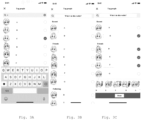
- the first user can also select a corresponding people from a recommended tag list for tagging.
- Fig. 3C illustrates a schematic diagram of a "tag people” page on which a "tagged people " list is displayed according to some embodiments of the present disclosure.
- the "tagged people " list is in a lower area of the recommended tag list, which is presented only when there is a tagged people and can have thereon presented all tagged people in order of update time from morning till night.
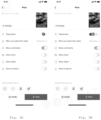
- FIG. 3D and 3E illustrate the case where a single people is tagged and the case where multiple people are tagged, respectively.
- an avatar of the tagged people is displayed beside the "tag people” button.
- the number of the tagged people is M
- M 4 avatars of 2 tagged people and "+2" are displayed beside the "tag people” button.
- a video preview page of a cover can also be presented, as shown in Fig. 3F .
- the cover there are people in the video about to be posted, for example, after people have been tagged in the video, for example, 3 tagged people have been tagged, the tagging result is displayed on the video preview page, which provides an experience consistent with that of actually browsing a page of the video.
- an avatar of at least one tagged people in the video is displayed; and in the case where the expected interest value of the browser for the video is less than the threshold, a username of the at least one tagged people in the video is displayed.
- a label of the video displayed to the browser can be determined according to the browser's relationships with the first user and the tagged people in the video.
- the first label is, for example, "you are tagged in the video".
- the second label is, for example, "friend/your following ".
- the third label is, for example, "friend/following is tagged ".
- the fourth label is, for example, "no association ", or "low interest value", or "none". The association includes friend or follow. In the case where the fourth label is "none", there is no special label when the video is displayed.
- the avatar of the at least one tagged people in the video can be displayed.
- the username of the at least one tagged people in the video can be displayed.
- the video is displayed to the browser with the first label, the second label, or the third label because the expected browser has a high interest value for the video; and the video is displayed to the browser with the fourth label because the expected browser is uninterested in the video, i.e., having a low interest value, that is, the browser has no relationship with the video creator, and anyone in the video, such as friend/follow/matching friend, etc.
- the label item will be displayed as a low interest value in a new row.
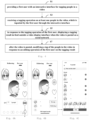
- Fig. 4A illustrates the case where only 1 people is tagged. As shown in Fig. 4A , only 1 people is tagged, and an avatar and username of the tagged people are displayed. If the username of the tagged people is too long, tagged items and creation time (if any) can be displayed in a new row. In this case, if the username of the tagged user is still too long, the display of the avatar is retained and the username is processed by using a symbol " ⁇ ".
- Fig. 4C and Fig.4D respectively illustrate schematic diagrams of low-interest-value display pages according to some embodiments of the present disclosure.
- Fig. 4C illustrates the case where only 1 people is tagged. As shown in Fig. 4C , only 1 people is tagged, and a username of the tagged people is displayed. In Fig. 4C , there is no label corresponding to a relationship, i.e., the fourth label is none.
- Fig. 4D illustrates the case where multiple people are tagged. As shown in Fig. 4D , since multiple people are tagged and display of all usernames will occupy the display page excessively, the display is only that multiple people are tagged, for example, "2 people" are tagged. In Fig. 4D , there is also no label corresponding to a relationship, i.e., the fourth label is also none.
- the expected interest value of the browser for the video is not fixed, but may vary with browser's behaviors or other features, other than depending on the browser's relationships with the first user and the tagged people in the video.
- the expected interest value of the browser for the video can be adjusted according to duration of browsing the video by the browser. For example, when it is monitored that stay time of viewing the video by the browser having the expected low interest value exceeds a threshold, for example, the user views the video for 5 seconds, the expected low interest value can be adjusted to a high interest value, thereby adjusting the display page.
- the expected interest value of the browser for the video can also be adjusted according to other features associated with the browsing of the video, thereby changing the display page from the low-interest-value display to the high-interest-value display.
- a hot area such as an avatar or people icon to see people in the video.
- the hot area can be the same for the high-interest-value and low-interest-value displays.
- a tag list of the people in the video is displayed. For example, when the browser clicks on an avatar of a tagged people , a floating layer with a list of the tagged people is displayed.
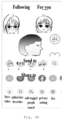
- Fig. 4E and Fig. 4F illustrate the case where a single people is tagged and the case where multiple people are tagged, respectively.
- the display page has thereon displayed an avatar, nickname, and username of the tagged people in the video, for example, B, and has thereon displayed his relationship with the browser, for example, "friend".
- a button for an operation by the browser such as a "message” button shown in Fig. 4E , is also provided on a right side of these items of the tagged people .
- the display page has thereon displayed avatars, nicknames, and usernames of multiple tagged people in the video, and has thereon displayed their relationships with the browser, such as “friend”, “be a friend with the tagged people ", “people you may know”, “from your contacts”.
- Buttons for operations by the browser for example, buttons shown in Fig. 4F such as “message”, “following”, “follow” and the like, are also provided on a right side of these items of the tagged people.
- the browser can swipe down to close the floating layer or can click on a close button to return to the news feed display.
- a notification and push can also be sent to a user account of the tagged people .
- a tagged user receives a message "AA tagged you in the video”.
- Fig. 5A also shows that tagging time is "1 hour ago”.
- a page shown in Fig. 5B is entered.
- Fig. 5B shows details of the notification and push.
- an interactive page for editing the tagging result can also be provided to the first user or a second user.
- Fig. 6 illustrates a flow diagram of a video processing method according to other embodiments of the present disclosure.
- Fig. 6A illustrates a display page when the video creator browses a posted video according to some embodiments of the present disclosure.
- Fig. 6B illustrates a display page provided with an entry to "edit a tagged people " and having thereon displayed a tagged people in the video according to some embodiments of the present disclosure.
- Fig. 6C illustrates an "edit a tagged people " page according to some embodiments of the present disclosure.
- Fig. 6D illustrates a sharing page according to some embodiments of the present disclosure.
- Fig. 6 differs from Fig. 1 in that step S7 is further included. Only a difference between Fig. 6 and Fig. 1 will be described below, and the same parts will not be repeated.
- the video creator can also click on a sharing button provided in Fig. 6A , i.e. an entry to "sharing floating layer”, to enter the sharing page as shown in Fig. 6D .
- a sharing button provided in Fig. 6A , i.e. an entry to "sharing floating layer”, to enter the sharing page as shown in Fig. 6D .
- the entry to "edit a tagged people " is provided in the "sharing floating layer” and located before “privacy setting", and after it is clicked, the page of "edit a tagged people " as shown in Fig. 6C can also be entered to perform the editing operation.
- the sharing button will become the “tag people” button, and after it is clicked, the sharing floating layer is opened, and the entry to "tag people” is arranged in front, for example, at the head.
- Fig. 7 illustrates a flow diagram of a video processing method according to still other embodiments of the present disclosure.
- Fig. 7A illustrates a display page when the second user browses a posted video according to some embodiments of the present disclosure.
- Fig. 7B illustrates a "delete a tag” page according to some embodiments of the present disclosure.
- Fig. 7C illustrates an "add back a tag” page according to some embodiments of the present disclosure.
- Fig. 7D illustrates a sharing page according to other embodiments of the present disclosure.
- modifying a tag of the people in the video by the second user comprises at least one of: adding a tag to an untagged people in the video; or deleting a tag for the second user.
- Fig. 7A shows a label of "you have been tagged” and shows the number of the tagged people and partial avatars.
- the second user can click on a non-icon position as shown in Fig. 7A and then the "delete a tag" page as shown in Fig. 7B can be entered.
- the second user can see a "delete a tag” or “not tag” button provided on a right side of his own username in the list of the tagged people in the video shown in Fig. 7B , and after the button is clicked, the tag of the second user can be deleted.
- the display page will prompt "you have deleted your own tag from the video”. The second user revisits the list of the tagged people and he has not been included therein.
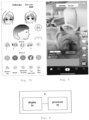
- the display 91 is further configured to display the tagging result in-feed outside the video display interface when the video is posted on a social network in response to the tagging operation of the first user.
- the apparatus can also comprise a memory that can have thereon stored various information generated in an operation by units included in the video processing apparatus, programs and data for the operation, and the like.
- the memory can be a volatile memory and/or non-volatile memory.
- the memory can include, but is not limited to, a random access memory (RAM), dynamic random access memory (DRAM), static random access memory (SRAM), read-only memory (ROM), flash memory.
- RAM random access memory
- DRAM dynamic random access memory
- SRAM static random access memory
- ROM read-only memory
- flash memory can also be located outside the video processing apparatus.
- a video processing apparatus 10 can be various types of devices, for example, they can include, but are not limited to, mobile terminals such as a mobile phone, a notebook computer, a digital broadcast receiver, a PDA (people al digital assistant), a PAD (tablet computer), a PMP (portable multimedia player), a vehicle-mounted terminal (for example, a vehicle-mounted navigation terminal), and fixed terminals such as a digital TV, a desktop computer.
- mobile terminals such as a mobile phone, a notebook computer, a digital broadcast receiver, a PDA (people al digital assistant), a PAD (tablet computer), a PMP (portable multimedia player), a vehicle-mounted terminal (for example, a vehicle-mounted navigation terminal), and fixed terminals such as a digital TV, a desktop computer.
- the processor 102 can be embodied as various suitable processors, processing devices, and the like, such as a central processing unit (CPU), graphics processing unit (GPU), network processor (NP), and the like; and can also be a digital signal processor (DSP), application specific integrated circuit (ASIC), field programmable gate array (FPGA) or other programmable logic device, discrete gate or transistor logic, discrete hardware component.
- the central processing unit (CPU) can be an X86 or ARM architecture, etc.
- the memory 101 can include any combination of various forms of computer-readable storage media, for example, a volatile memory and/or non-volatile memory.
- the memory 101 can include, for example, a system memory having thereon stored, for example, an operating system, application, boot loader, database, another program, and the like.
- Various applications, various data and the like can also be stored in the storage medium.
- a process described above with reference to a flow diagram can be implemented as a computer software program.
- a computer program product is comprised, which comprises a computer program carried on a computer-readable medium, the computer program comprising program code for performing the method illustrated by the flow diagram.
- the computer program can be downloaded and installed from a network through the communication portion 1109, or installed from the storage portion 1108, or installed from the ROM 1102.
- the computer program when executed by the CPU 1101, performs the above functions defined in the method of the embodiment of the present disclosure.
- the above computer-readable medium can be embodied in the electronic device; or can be separate and not assembled into the electronic device.
- a computer program comprising: instructions which, when executed by a processor, cause the processor to perform the method according to any of the above embodiments.
- the instructions can be embodied as computer program code.
- the remote computer can be connected to the user's computer through any type of network, including a local area network (LAN) or a wide area network (WAN), or can be connected to an external computer (for example, through Internet by using an Internet service provider).
- LAN local area network
- WAN wide area network
- Internet service provider an Internet service provider
Landscapes
- Engineering & Computer Science (AREA)
- Theoretical Computer Science (AREA)
- Multimedia (AREA)
- Physics & Mathematics (AREA)
- General Physics & Mathematics (AREA)
- Databases & Information Systems (AREA)
- General Engineering & Computer Science (AREA)
- Data Mining & Analysis (AREA)
- Library & Information Science (AREA)
- Computational Linguistics (AREA)
- Software Systems (AREA)
- Human Computer Interaction (AREA)
- Mathematical Physics (AREA)
- Business, Economics & Management (AREA)
- Signal Processing (AREA)
- Economics (AREA)
- Tourism & Hospitality (AREA)
- Strategic Management (AREA)
- Quality & Reliability (AREA)
- Operations Research (AREA)
- Marketing (AREA)
- Human Resources & Organizations (AREA)
- Entrepreneurship & Innovation (AREA)
- General Business, Economics & Management (AREA)
- Health & Medical Sciences (AREA)
- Artificial Intelligence (AREA)
- Computer Vision & Pattern Recognition (AREA)
- Computing Systems (AREA)
- Evolutionary Computation (AREA)
- General Health & Medical Sciences (AREA)
- Medical Informatics (AREA)
- User Interface Of Digital Computer (AREA)
- Information Transfer Between Computers (AREA)
- Two-Way Televisions, Distribution Of Moving Picture Or The Like (AREA)
Applications Claiming Priority (3)
| Application Number | Priority Date | Filing Date | Title |
|---|---|---|---|
| CN202111139005 | 2021-09-27 | ||
| CN202210142810.5A CN114253653A (zh) | 2021-09-27 | 2022-02-16 | 视频处理方法、视频处理装置和计算机可读存储介质 |
| PCT/CN2022/120111 WO2023045951A1 (zh) | 2021-09-27 | 2022-09-21 | 视频处理方法、视频处理装置和计算机可读存储介质 |
Publications (2)
| Publication Number | Publication Date |
|---|---|
| EP4394591A1 true EP4394591A1 (de) | 2024-07-03 |
| EP4394591A4 EP4394591A4 (de) | 2024-12-25 |
Family
ID=80796962
Family Applications (1)
| Application Number | Title | Priority Date | Filing Date |
|---|---|---|---|
| EP22871997.7A Pending EP4394591A4 (de) | 2021-09-27 | 2022-09-21 | Videoverarbeitungsverfahren, videoverarbeitungsvorrichtung und computerlesbares speichermedium |
Country Status (5)
| Country | Link |
|---|---|
| US (3) | US11899717B2 (de) |
| EP (1) | EP4394591A4 (de) |
| JP (1) | JP7677723B2 (de) |
| CN (1) | CN114253653A (de) |
| WO (1) | WO2023045951A1 (de) |
Families Citing this family (4)
| Publication number | Priority date | Publication date | Assignee | Title |
|---|---|---|---|---|
| CN114253653A (zh) | 2021-09-27 | 2022-03-29 | 北京字节跳动网络技术有限公司 | 视频处理方法、视频处理装置和计算机可读存储介质 |
| CN115510481B (zh) * | 2022-09-26 | 2024-11-08 | 北京有竹居网络技术有限公司 | 用于视频的权限管理方法、装置、电子设备和介质 |
| CN115494987B (zh) * | 2022-10-12 | 2025-04-11 | 腾讯科技(深圳)有限公司 | 基于视频的交互方法、装置、计算机设备和存储介质 |
| US12504866B2 (en) * | 2022-11-29 | 2025-12-23 | Snap Inc | Automated tagging of content items |
Family Cites Families (15)
| Publication number | Priority date | Publication date | Assignee | Title |
|---|---|---|---|---|
| US7813557B1 (en) * | 2006-01-26 | 2010-10-12 | Adobe Systems Incorporated | Tagging detected objects |
| US9143573B2 (en) | 2008-03-20 | 2015-09-22 | Facebook, Inc. | Tag suggestions for images on online social networks |
| US8856641B2 (en) * | 2008-09-24 | 2014-10-07 | Yahoo! Inc. | Time-tagged metainformation and content display method and system |
| KR101598632B1 (ko) * | 2009-10-01 | 2016-02-29 | 마이크로소프트 테크놀로지 라이센싱, 엘엘씨 | 이동 단말기 및 그의 태그 편집 방법 |
| US8467660B2 (en) * | 2011-08-23 | 2013-06-18 | Ash K. Gilpin | Video tagging system |
| US20170310629A1 (en) * | 2012-10-30 | 2017-10-26 | Google Inc. | Providing Reverse Preference Designations In a Network |
| KR101769071B1 (ko) | 2016-05-10 | 2017-08-18 | 네이버 주식회사 | 비디오 태그 제작 및 활용을 위한 방법 및 시스템 |
| CN106851407A (zh) | 2017-01-24 | 2017-06-13 | 维沃移动通信有限公司 | 一种视频播放进度的控制方法及终端 |
| US20180300046A1 (en) * | 2017-04-12 | 2018-10-18 | International Business Machines Corporation | Image section navigation from multiple images |
| US10798446B2 (en) * | 2018-01-04 | 2020-10-06 | International Business Machines Corporation | Content narrowing of a live feed based on cognitive profiling |
| CN110868639B (zh) * | 2019-11-28 | 2021-03-12 | 北京达佳互联信息技术有限公司 | 视频合成方法及装置 |
| JP7485893B2 (ja) | 2019-12-23 | 2024-05-17 | 株式会社Mixi | 情報処理装置、制御プログラム、及び制御方法 |
| CN111629252B (zh) | 2020-06-10 | 2022-03-25 | 北京字节跳动网络技术有限公司 | 视频处理方法、装置、电子设备及计算机可读存储介质 |
| CN112040330B (zh) | 2020-09-09 | 2021-12-07 | 北京字跳网络技术有限公司 | 视频文件的处理方法、装置、电子设备及计算机存储介质 |
| CN114253653A (zh) | 2021-09-27 | 2022-03-29 | 北京字节跳动网络技术有限公司 | 视频处理方法、视频处理装置和计算机可读存储介质 |
-
2022
- 2022-02-16 CN CN202210142810.5A patent/CN114253653A/zh active Pending
- 2022-04-19 US US17/724,034 patent/US11899717B2/en active Active
- 2022-09-21 WO PCT/CN2022/120111 patent/WO2023045951A1/zh not_active Ceased
- 2022-09-21 EP EP22871997.7A patent/EP4394591A4/de active Pending
- 2022-09-21 JP JP2024519130A patent/JP7677723B2/ja active Active
-
2024
- 2024-01-12 US US18/411,921 patent/US12386893B2/en active Active
-
2025
- 2025-07-15 US US19/269,686 patent/US20250342206A1/en active Pending
Also Published As
| Publication number | Publication date |
|---|---|
| JP2024539567A (ja) | 2024-10-29 |
| US11899717B2 (en) | 2024-02-13 |
| US20240273142A1 (en) | 2024-08-15 |
| WO2023045951A1 (zh) | 2023-03-30 |
| US12386893B2 (en) | 2025-08-12 |
| US20230099444A1 (en) | 2023-03-30 |
| JP7677723B2 (ja) | 2025-05-15 |
| CN114253653A (zh) | 2022-03-29 |
| EP4394591A4 (de) | 2024-12-25 |
| US20250342206A1 (en) | 2025-11-06 |
Similar Documents
| Publication | Publication Date | Title |
|---|---|---|
| US12386893B2 (en) | Video processing method, video processing apparatus, and computer-readable storage medium | |
| US12374012B2 (en) | Video sharing method and apparatus, device, and medium | |
| US12375746B2 (en) | Video posting method and apparatus, electronic device, and storage medium | |
| US20250355544A1 (en) | Association information display method and apparatus, device, storage medium and program product | |
| CN110392312B (zh) | 群聊构建方法、系统、介质和电子设备 | |
| US12401844B2 (en) | Video processing method, video processing apparatus, and non-transitory computer-readable storage medium | |
| US12271708B2 (en) | Video processing method, video processing apparatus, and computer-readable storage medium | |
| EP4429254A1 (de) | Videoverarbeitungsverfahren, videoverarbeitungsvorrichtung und computerlesbares speichermedium | |
| CN121456232A (zh) | 媒体信息的处理方法、装置、电子设备及存储介质 | |
| CN114816599A (zh) | 图像显示方法、装置、设备及介质 | |
| CN110619099A (zh) | 一种评论内容显示方法、装置、设备及存储介质 | |
| CN118535812A (zh) | 推荐信息的展示方法、装置、设备及存储介质 | |
| CN118037373A (zh) | 一种推荐方法以及相关设备 | |
| CN113157370B (zh) | 页面展示方法、装置、电子设备及存储介质 | |
| CN118660206B (zh) | 交互方法、电子设备、存储介质和程序产品 | |
| CN119557032A (zh) | 界面展示方法、装置、电子设备、存储介质和程序产品 | |
| CN111159584A (zh) | 展示天气信息的方法、设备以及计算机可读介质 | |
| WO2023134558A1 (zh) | 交互方法、装置、电子设备、存储介质和程序产品 | |
| CN113590975A (zh) | 社交关系建立方法、装置及电子设备 | |
| CN110703971A (zh) | 用于发布信息的方法和设备 | |
| CN118820494A (zh) | 资源推荐方法、装置、设备及存储介质 | |
| CN114968463A (zh) | 实体展示方法、装置、设备及介质 | |
| CN111526408A (zh) | 信息内容的生成和展示方法、装置及计算机可读存储介质 |
Legal Events
| Date | Code | Title | Description |
|---|---|---|---|
| STAA | Information on the status of an ep patent application or granted ep patent |
Free format text: STATUS: THE INTERNATIONAL PUBLICATION HAS BEEN MADE |
|
| PUAI | Public reference made under article 153(3) epc to a published international application that has entered the european phase |
Free format text: ORIGINAL CODE: 0009012 |
|
| STAA | Information on the status of an ep patent application or granted ep patent |
Free format text: STATUS: REQUEST FOR EXAMINATION WAS MADE |
|
| 17P | Request for examination filed |
Effective date: 20240328 |
|
| AK | Designated contracting states |
Kind code of ref document: A1 Designated state(s): AL AT BE BG CH CY CZ DE DK EE ES FI FR GB GR HR HU IE IS IT LI LT LU LV MC MK MT NL NO PL PT RO RS SE SI SK SM TR |
|
| A4 | Supplementary search report drawn up and despatched |
Effective date: 20241122 |
|
| RIC1 | Information provided on ipc code assigned before grant |
Ipc: H04N 21/4788 20110101ALI20241118BHEP Ipc: G06F 9/451 20180101AFI20241118BHEP |
|
| DAV | Request for validation of the european patent (deleted) | ||
| DAX | Request for extension of the european patent (deleted) | ||
| STAA | Information on the status of an ep patent application or granted ep patent |
Free format text: STATUS: EXAMINATION IS IN PROGRESS |
|
| 17Q | First examination report despatched |
Effective date: 20250805 |