EP4391554A1 - Video processing collaboration method, apparatus, device, and storage medium - Google Patents
Video processing collaboration method, apparatus, device, and storage medium Download PDFInfo
- Publication number
- EP4391554A1 EP4391554A1 EP22923503.1A EP22923503A EP4391554A1 EP 4391554 A1 EP4391554 A1 EP 4391554A1 EP 22923503 A EP22923503 A EP 22923503A EP 4391554 A1 EP4391554 A1 EP 4391554A1
- Authority
- EP
- European Patent Office
- Prior art keywords
- terminal device
- video
- task
- analysis
- image analysis
- Prior art date
- Legal status (The legal status is an assumption and is not a legal conclusion. Google has not performed a legal analysis and makes no representation as to the accuracy of the status listed.)
- Pending
Links
Images


Classifications
-
- A—HUMAN NECESSITIES
- A63—SPORTS; GAMES; AMUSEMENTS
- A63F—CARD, BOARD, OR ROULETTE GAMES; INDOOR GAMES USING SMALL MOVING PLAYING BODIES; VIDEO GAMES; GAMES NOT OTHERWISE PROVIDED FOR
- A63F13/00—Video games, i.e. games using an electronically generated display having two or more dimensions
- A63F13/30—Interconnection arrangements between game servers and game devices; Interconnection arrangements between game devices; Interconnection arrangements between game servers
- A63F13/35—Details of game servers
- A63F13/355—Performing operations on behalf of clients with restricted processing capabilities, e.g. servers transform changing game scene into an encoded video stream for transmitting to a mobile phone or a thin client
-
- G—PHYSICS
- G06—COMPUTING OR CALCULATING; COUNTING
- G06V—IMAGE OR VIDEO RECOGNITION OR UNDERSTANDING
- G06V10/00—Arrangements for image or video recognition or understanding
- G06V10/70—Arrangements for image or video recognition or understanding using pattern recognition or machine learning
- G06V10/77—Processing image or video features in feature spaces; using data integration or data reduction, e.g. principal component analysis [PCA] or independent component analysis [ICA] or self-organising maps [SOM]; Blind source separation
- G06V10/776—Validation; Performance evaluation
-
- G—PHYSICS
- G06—COMPUTING OR CALCULATING; COUNTING
- G06V—IMAGE OR VIDEO RECOGNITION OR UNDERSTANDING
- G06V10/00—Arrangements for image or video recognition or understanding
- G06V10/94—Hardware or software architectures specially adapted for image or video understanding
- G06V10/95—Hardware or software architectures specially adapted for image or video understanding structured as a network, e.g. client-server architectures
-
- G—PHYSICS
- G06—COMPUTING OR CALCULATING; COUNTING
- G06V—IMAGE OR VIDEO RECOGNITION OR UNDERSTANDING
- G06V20/00—Scenes; Scene-specific elements
- G06V20/40—Scenes; Scene-specific elements in video content
-
- H—ELECTRICITY
- H04—ELECTRIC COMMUNICATION TECHNIQUE
- H04L—TRANSMISSION OF DIGITAL INFORMATION, e.g. TELEGRAPHIC COMMUNICATION
- H04L67/00—Network arrangements or protocols for supporting network services or applications
- H04L67/01—Protocols
-
- H—ELECTRICITY
- H04—ELECTRIC COMMUNICATION TECHNIQUE
- H04L—TRANSMISSION OF DIGITAL INFORMATION, e.g. TELEGRAPHIC COMMUNICATION
- H04L67/00—Network arrangements or protocols for supporting network services or applications
- H04L67/01—Protocols
- H04L67/10—Protocols in which an application is distributed across nodes in the network
-
- H—ELECTRICITY
- H04—ELECTRIC COMMUNICATION TECHNIQUE
- H04L—TRANSMISSION OF DIGITAL INFORMATION, e.g. TELEGRAPHIC COMMUNICATION
- H04L67/00—Network arrangements or protocols for supporting network services or applications
- H04L67/01—Protocols
- H04L67/12—Protocols specially adapted for proprietary or special-purpose networking environments, e.g. medical networks, sensor networks, networks in vehicles or remote metering networks
-
- H—ELECTRICITY
- H04—ELECTRIC COMMUNICATION TECHNIQUE
- H04L—TRANSMISSION OF DIGITAL INFORMATION, e.g. TELEGRAPHIC COMMUNICATION
- H04L67/00—Network arrangements or protocols for supporting network services or applications
- H04L67/01—Protocols
- H04L67/131—Protocols for games, networked simulations or virtual reality
-
- H—ELECTRICITY
- H04—ELECTRIC COMMUNICATION TECHNIQUE
- H04N—PICTORIAL COMMUNICATION, e.g. TELEVISION
- H04N21/00—Selective content distribution, e.g. interactive television or video on demand [VOD]
- H04N21/20—Servers specifically adapted for the distribution of content, e.g. VOD servers; Operations thereof
- H04N21/23—Processing of content or additional data; Elementary server operations; Server middleware
- H04N21/234—Processing of video elementary streams, e.g. splicing of video streams or manipulating encoded video stream scene graphs
- H04N21/23418—Processing of video elementary streams, e.g. splicing of video streams or manipulating encoded video stream scene graphs involving operations for analysing video streams, e.g. detecting features or characteristics
-
- H—ELECTRICITY
- H04—ELECTRIC COMMUNICATION TECHNIQUE
- H04N—PICTORIAL COMMUNICATION, e.g. TELEVISION
- H04N21/00—Selective content distribution, e.g. interactive television or video on demand [VOD]
- H04N21/40—Client devices specifically adapted for the reception of or interaction with content, e.g. set-top-box [STB]; Operations thereof
- H04N21/41—Structure of client; Structure of client peripherals
- H04N21/426—Internal components of the client ; Characteristics thereof
-
- H—ELECTRICITY
- H04—ELECTRIC COMMUNICATION TECHNIQUE
- H04N—PICTORIAL COMMUNICATION, e.g. TELEVISION
- H04N21/00—Selective content distribution, e.g. interactive television or video on demand [VOD]
- H04N21/40—Client devices specifically adapted for the reception of or interaction with content, e.g. set-top-box [STB]; Operations thereof
- H04N21/43—Processing of content or additional data, e.g. demultiplexing additional data from a digital video stream; Elementary client operations, e.g. monitoring of home network or synchronising decoder's clock; Client middleware
- H04N21/431—Generation of visual interfaces for content selection or interaction; Content or additional data rendering
- H04N21/4318—Generation of visual interfaces for content selection or interaction; Content or additional data rendering by altering the content in the rendering process, e.g. blanking, blurring or masking an image region
-
- A—HUMAN NECESSITIES
- A63—SPORTS; GAMES; AMUSEMENTS
- A63F—CARD, BOARD, OR ROULETTE GAMES; INDOOR GAMES USING SMALL MOVING PLAYING BODIES; VIDEO GAMES; GAMES NOT OTHERWISE PROVIDED FOR
- A63F2300/00—Features of games using an electronically generated display having two or more dimensions, e.g. on a television screen, showing representations related to the game
- A63F2300/50—Features of games using an electronically generated display having two or more dimensions, e.g. on a television screen, showing representations related to the game characterized by details of game servers
- A63F2300/55—Details of game data or player data management
- A63F2300/552—Details of game data or player data management for downloading to client devices, e.g. using OS version, hardware or software profile of the client device
Definitions
- Embodiments of this application relate to the field of image processing technologies, and in particular, to a video processing collaboration method and apparatus, a device, and a storage medium.
- a manner of the cloud game is as follows: A cloud server performs logic such as running and processing of the game, codes and compresses a game picture by using a video coding technology, and a coded and compressed video stream is transmitted to a terminal device by using a network, and then the terminal device decodes and plays the video stream.
- the cloud server In this game mode, logic such as game running and game processing that need to be completed by the terminal device is migrated to the cloud server.
- the cloud server further performs content analysis and video pre-processing on the game picture before video coding, which undoubtedly further increases computing resource overheads of the cloud server. Therefore, with limited cloud server computing resources, better picture quality of the cloud game cannot be provided.
- Embodiments of this application provide a video processing collaboration method and apparatus, a device, and a storage medium.
- a video processing collaboration method including: transmitting a video processing capability detection request and a video analysis capability detection request to a terminal device; receiving video processing capability information fed back by the terminal device in response to the video processing capability detection request, and receiving video analysis capability information fed back by the terminal device in response to the video analysis capability detection request; and determining a target video processing collaboration configuration according to the video processing capability information of the terminal device, and determining a target video analysis collaboration configuration according to the video analysis capability information of the terminal device; the target video processing collaboration configuration being a video processing collaboration configuration that allocates at least one image processing task to the terminal device or the cloud server, or a video processing collaboration configuration that allocates the at least one image processing task to the terminal device and the cloud server; and the target video analysis collaboration configuration being a video analysis collaboration configuration that allocates at least one image analysis task to the terminal device or the cloud server, or a video analysis collaboration configuration that allocates the at least one image analysis task to the terminal device and the cloud server.
- a video processing collaboration method including: obtaining video processing capability information and video analysis capability information of a terminal device from an operating system of the terminal device; transmitting the video processing capability information and the video analysis capability information of the terminal device to a cloud server, so that the cloud server determines a target video processing collaboration configuration according to the video processing capability information of the terminal device, and determines a target video analysis collaboration configuration according to the video analysis capability information of the terminal device;
- the target video processing collaboration configuration being a video processing collaboration configuration that allocates at least one image processing task to the terminal device or the cloud server, or a video processing collaboration configuration that allocates the at least one image processing task to the terminal device and the cloud server;
- the target video analysis collaboration configuration being a video analysis collaboration configuration that allocates at least one image analysis task to the terminal device or the cloud server, or a video analysis collaboration configuration that allocates the at least one image analysis task to the terminal device and the cloud server; and receiving the target video processing collaboration configuration and the target video analysis collaboration configuration, and transmitting the target video processing collaboration
- a video processing collaboration method including: transmitting video processing capability information and video analysis capability information of the terminal device to a client, so that a cloud server corresponding to the client determines a target video processing collaboration configuration according to the video processing capability information of the terminal device, and determines a target video analysis collaboration configuration according to the video analysis capability information of the terminal device;
- the target video processing collaboration configuration being a video processing collaboration configuration that allocates at least one image processing task to the terminal device or the cloud server, or a video processing collaboration configuration that allocates the at least one image processing task to the terminal device and the cloud server;
- the target video analysis collaboration configuration being a video analysis collaboration configuration that allocates at least one image analysis task to the terminal device or the cloud server, or a video analysis collaboration configuration that allocates the at least one image analysis task to the terminal device and the cloud server; and obtaining the target video processing collaboration configuration and the target video analysis collaboration configuration from the client, performing image analysis on a target video according to the target video analysis collaboration configuration, and performing image processing on the target video according
- a video processing collaboration apparatus including a transmitting module, a receiving module, and a determining module, where the transmitting module is configured to transmit a video processing capability detection request and a video analysis capability detection request to a terminal device; the receiving module is configured to receive video processing capability information fed back by the terminal device in response to the video processing capability detection request, and receive video analysis capability information fed back by the terminal device in response to the video analysis capability detection request; and the determining module is configured to: determine a target video processing collaboration configuration according to the video processing capability information of the terminal device, and determine a target video analysis collaboration configuration according to the video analysis capability information of the terminal device; the target video processing collaboration configuration being a video processing collaboration configuration that allocates at least one image processing task to the terminal device or the cloud server, or a video processing collaboration configuration that allocates the at least one image processing task to the terminal device and the cloud server; and the target video analysis collaboration configuration being a video analysis collaboration configuration that allocates at least one image analysis task to the terminal device or the cloud server,
- a video processing collaboration apparatus including a communication module, configured to: obtain video processing capability information and video analysis capability information of a terminal device from an operating system of the terminal device; transmit the video processing capability information and the video analysis capability information of the terminal device to a cloud server, so that the cloud server determines a target video processing collaboration configuration according to the video processing capability information of the terminal device, and determines a target video analysis collaboration configuration according to the video analysis capability information of the terminal device;
- the target video processing collaboration configuration being a video processing collaboration configuration that allocates at least one image processing task to the terminal device or the cloud server, or a video processing collaboration configuration that allocates the at least one image processing task to the terminal device and the cloud server;
- the target video analysis collaboration configuration being a video analysis collaboration configuration that allocates at least one image analysis task to the terminal device or the cloud server, or a video analysis collaboration configuration that allocates the at least one image analysis task to the terminal device and the cloud server; and receive the target video processing collaboration configuration and the target video analysis collaboration configuration, and transmit the
- a video processing collaboration apparatus including a communication module and a processing module, where the communication module is configured to: transmit video processing capability information and video analysis capability information of the terminal device to a client, so that a cloud server corresponding to the client determines a target video processing collaboration configuration according to the video processing capability information of the terminal device, and determines a target video analysis collaboration configuration according to the video analysis capability information of the terminal device;
- the target video processing collaboration configuration being a video processing collaboration configuration that allocates at least one image processing task to the terminal device or the cloud server, or a video processing collaboration configuration that allocates the at least one image processing task to the terminal device and the cloud server;
- the target video analysis collaboration configuration being a video analysis collaboration configuration that allocates at least one image analysis task to the terminal device or the cloud server, or a video analysis collaboration configuration that allocates the at least one image analysis task to the terminal device and the cloud server;
- the processing module is configured to: obtain the target video processing collaboration configuration and the target video analysis collaboration configuration from the client, perform image analysis on
- an electronic device including a processor and a memory, where the memory is configured to store a computer program, and the processor is configured to invoke and run the computer program stored in the memory to perform the foregoing video processing collaboration method.
- a client is provided and configured to perform the foregoing video processing collaboration method.
- a computer readable storage medium configured to store a computer program, and the computer program enables a computer to perform any foregoing video processing collaboration method.
- a computer program product including computer program instructions, and the computer program instructions enable a computer to perform any foregoing video processing collaboration method.
- a computer program is provided, and the computer program enables a computer to perform any foregoing video processing collaboration method.
- An image analysis task is: performing spatial analysis, performing temporal analysis, or performing analysis on a video image with reference to a spatial domain and a time domain to determine whether video scene switching occurs, or determine a region location of a specific object.
- Performing spatial analysis on a video image refers to performing intra-frame image analysis on the video image
- performing temporal analysis on a video image refers to performing inter-frame image analysis on the video image.
- An image processing task is a task of modifying a pixel value of a frame of video image, where the frame of video image is, for example, a full picture of a video image or a specific region in a video image.
- the image processing task is, for example, one or more of an image sharpening processing task, an image noise reduction processing task, or an image blur processing task.
- the image processing task may implement a specific image enhancement effect, or may implement an image blur effect, for example, the image sharpening processing task and the image noise reduction processing task may implement a specific image enhancement effect, and the image blur processing task may implement an image blur effect.
- the image processing task may be specifically an image rendering task.
- the image processing task is performed based on a result of an image analysis task. For example, after analyzing a video image of a video source, a cloud server determines that video scene switching occurs, and the cloud server may perform blur processing on a background of the switched video image. For another example, after analyzing a video image of a video source, the cloud server determines a region location of a specific object in the video image, and the cloud server may perform noise reduction processing and sharpening processing on the region location.
- an objective of the image analysis task is to perform subsequent image coding.
- an objective of the image analysis task may be to perform an image processing task and image coding.
- a cloud server generates a video, collects a video image, analyzes a captured video image, processes a video image according to an analysis result, and codes a processed video image to obtain a code stream of the video image. Further, the cloud server may transmit the code stream to a terminal device. The terminal device decodes the code stream, and finally displays the video image according to a decoding result.
- the cloud server generates a video, collects a video image, and codes the collected video image to obtain a code stream of the video image. Further, the cloud server may transmit the code stream to the terminal device. The terminal device decodes the code stream, performs image analysis on the decoded video image, performs image processing on the video image according to an analysis result, such as sharpening processing, blur processing, and noise reduction processing, and finally displays the processed video image.
- an analysis result such as sharpening processing, blur processing, and noise reduction processing
- the cloud server may determine a target video processing collaboration configuration according to a video processing capability of the terminal device. For example, the cloud server may allocate at least one image processing task to the cloud server or the terminal device, or collaboratively allocate at least one image processing task to the cloud server and the terminal device.
- the cloud server may determine a target video analysis collaboration configuration according to video analysis capability information of the terminal device. For example, the cloud server may allocate at least one image analysis task to the cloud server or the terminal device, or collaboratively allocate at least one image analysis task to the cloud server and the terminal device.
- an idle computing resource of the terminal device can be fully used, so that better cloud game quality experience can be provided for the user.
- a capability of the terminal device referred to in this application refers to a software and hardware condition for executing a corresponding task by the terminal device.
- the video processing capability of the terminal device refers to a software and hardware condition for processing an image processing task of the video by the terminal device.
- the software and hardware condition limits parameters such as a video resolution, a video frame rate, an available processing algorithm, or duration required for video processing.
- the video analysis capability refers to a software and hardware condition for processing an image analysis task of the video by the terminal device, and the software and hardware condition limits parameters such as a quantity of image frames during each time of analysis, a video size that can be supported, a video image mode, an available video analysis algorithm, or duration required for video analysis.
- RTC real-time communications
- Typical RTC technologies are video conferencing, a video call, telecommuting, telemedicine, interactive livestreaming, and cloud games.
- FIG. 3 is a schematic diagram of a cloud game scene according to an embodiment of this application.
- a cloud server 310 may communicate with a player game terminal 320.
- the cloud server 310 may run a game, collect a video image, code a captured video image, and obtain a code stream of the video image. Further, the cloud server may transmit the code stream to a terminal device, and the terminal device decodes the code stream, and finally displays the video image according to a decoding result.
- communication between the cloud server 310 and the player game terminal 320 may be implemented by using Long Term Evolution (LTE), a New Radio (NR) technology, a Wireless Fidelity (Wi-Fi) technology, or the like, but is not limited thereto.
- LTE Long Term Evolution
- NR New Radio
- Wi-Fi Wireless Fidelity
- the cloud server is a server that runs a game on the cloud, and has functions such as video enhancement (coding pre-processing) and video coding, but is not limited thereto.
- the terminal device is a device that has rich human-computer interaction manners, has an Internet access capability, usually carries various operating systems, and has a relatively strong processing capability.
- the terminal device may be a smartphone, a living room television, a tablet computer, an in-vehicle terminal, a player game terminal, such as a palm game console, but is not limited thereto.
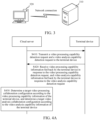
- FIG. 4A is a flowchart of a video processing collaboration method according to an embodiment of this application.
- the method may be performed by a cloud server and a terminal device.
- the cloud server may be the cloud server 310 in FIG. 3
- the terminal device may be the player game terminal 320 in FIG. 3 .
- This application sets no limitation on an execution body of the video processing collaboration determining method. As shown in FIG. 4A , the method includes the following steps:
- the target video processing collaboration configuration is used for determining to allocate at least one image processing task to at least one of the terminal device or the cloud server; and the target video analysis collaboration configuration is used for determining to allocate at least one image analysis task to the terminal device or the cloud server.
- the target video processing collaboration configuration is a video processing collaboration configuration that allocates the at least one image processing task to the terminal device or the cloud server, or a video processing collaboration configuration that allocates the at least one image processing task to the terminal device and the cloud server.
- the target video analysis collaboration configuration is a video analysis collaboration configuration that allocates the at least one image analysis task to the terminal device or the cloud server, or a video analysis collaboration configuration that allocates the at least one image analysis task to the terminal device and the cloud server.
- the cloud server may transmit the video processing capability detection request and the video analysis capability detection request simultaneously, or may separately transmit the video processing capability detection request and the video analysis capability detection request.
- the terminal device may transmit both the video processing capability information and the video analysis capability information, or may separately transmit the video processing capability information and the video analysis capability information.
- the cloud server may determine a target video processing collaboration configuration according to a video processing capability of the terminal device. For example, the cloud server may allocate at least one image processing task to the cloud server or the terminal device, or collaboratively allocate at least one image processing task to the cloud server and the terminal device.
- the target video analysis collaboration configuration may be determined according to the video analysis capability of the terminal device. For example, the cloud server may allocate the at least one image analysis task to the cloud server or the terminal device, or allocate the at least one image analysis task to the cloud server and the terminal device.
- the cloud server when processing the target video, can allocate tasks in combination with a processing capability and an analysis capability of the terminal device, so that an idle computing resource of the terminal device can be fully used with limited computing resources of the cloud server, so that processing and analysis can be performed on the target video as high as possible, thereby providing better cloud game picture quality.
- the cloud server may transmit a video processing capability detection request and a video analysis capability detection request to the terminal device by using a client installed on the terminal device, and the terminal device may also return video processing capability information and video analysis capability information to the cloud server by using the client.
- the client may be a cloud game client.
- the client may obtain the video processing capability information of the terminal device and the video analysis capability information of the terminal device from an operating system of the terminal device; transmit the video processing capability information and the video analysis capability information of the terminal device to the cloud server, so that the cloud server determines the target video processing collaboration configuration according to the video processing capability information of the terminal device, and determines the target video analysis collaboration configuration according to the video analysis capability information of the terminal device; and the client may receive the target video processing collaboration configuration and the target video analysis collaboration configuration, and transmit the target video analysis collaboration configuration to the terminal device.
- the terminal device may perform image analysis on the target video according to the target video analysis collaboration configuration, perform image processing on the target video according to the target video processing collaboration configuration, or perform analysis on the target video according to the target video analysis collaboration configuration and perform image processing on the target video according to the target video processing collaboration configuration.
- the client obtains the video processing capability information and the video analysis capability information from the operating system of the terminal device, and transmits the obtained video processing capability information and video analysis capability information to the cloud server, so that the cloud server determines the target video processing collaboration configuration and the target video analysis collaboration configuration according to the video processing capability information and the video analysis capability information.
- the cloud server may allocate the at least one image processing task to the cloud server or the terminal device, or collaboratively allocate the at least one image processing task to the cloud server and the terminal device.
- the cloud server may allocate the at least one image analysis task to the cloud server or the terminal device, or collaboratively allocate the at least one image analysis task to the cloud server and the terminal device.
- the cloud server when processing the target video, can allocate tasks in combination with a processing capability and an analysis capability of the terminal device, so that an idle computing resource of the terminal device can be fully used with limited computing resources of the cloud server, so that processing and analysis can be performed on the target video as high as possible, thereby providing better cloud game picture quality.
- the video processing capability detection request is used for requesting to obtain the video processing capability information of the terminal device.
- the video processing capability detection request includes at least one of the following, but is not limited thereto: a protocol version number, a video resolution, a video frame rate, a queried processing algorithm type, or the like.
- the protocol version number refers to an earliest protocol version supported by the cloud server, and the protocol may be a rendering protocol.
- the video resolution may be a resolution of a to-be-image-processed video source, such as 1080p, 720p, or 360p.
- the video frame rate may be a frame rate of a to-be-image-processed video source, such as 120 fps, 60 fps, or 30 fps.
- the queried image processing algorithm type may be at least one of the following, but is not limited thereto: a sharpening processing algorithm, a noise reduction processing algorithm, a blur processing algorithm, or a video high dynamic range imaging (HDR) enhanced capability algorithm.
- a sharpening processing algorithm e.g., a sharpening processing algorithm, a noise reduction processing algorithm, a blur processing algorithm, or a video high dynamic range imaging (HDR) enhanced capability algorithm.
- HDR video high dynamic range imaging
- different video resolutions may be defined in an enumeration manner, as shown in Table 1: Table 1 Video resolution Enumeration definition 360p 0x1 576p 0x2 720p 0x4 1080p 0x8 2k 0x10 4k 0x20
- different video frame rates may be defined in an enumeration manner, as shown in Table 2: Table 2 Video frame rate Enumeration definition 30 fps 0x1 40 fps 0x2 50 fps 0x4 60 fps 0x8 90 fps 0x10 120 fps 0x20
- different image processing algorithms may be defined in an enumeration manner, as shown in Table 3: Table 3 Image processing algorithm type Enumeration definition Not defined 0 Sharpening processing algorithm 1 HDR enhanced capability algorithm 2
- the video processing capability detection request may be a video processing capability detection request transmitted by the cloud server for at least one image processing task of the target image frame.
- code implementation for transmitting the video processing capability detection request by the cloud server may be as follows:
- the first sentence is used for indicating a capability type requested to detect, such as "render_ability” (video processing capability), “analysis_ability” (video analysis capability), and the like.
- “version” program version number
- “resolution” video size
- “resolution”: “8” represents a video size (video resolution) of 1080p.
- the video analysis capability detection request is used for requesting to obtain the video analysis capability information of the terminal device.
- the video analysis capability detection request includes at least one of the following, but is not limited thereto: a protocol version number, a video resolution, a video frame rate, or a queried image analysis task type.
- the protocol version number refers to an earliest protocol version supported by the cloud server, and the protocol may be a video analysis protocol.
- the video resolution may be a resolution of a to-be-image-analyzed video source, such as 1080p.
- the video frame rate may be a frame rate of a to-be-image-analyzed video source, such as 60 fps.
- the queried image analysis task type may be at least one of the following, but is not limited thereto: video complexity analysis, video foreground and background analysis, or the like.
- different image analysis tasks may be defined in an enumeration manner, as shown in Table 4: Table 4 Image analysis task type Enumeration definition Not defined 0 Video complexity analysis 1001 Video foreground and background analysis 1002
- the video analysis capability detection request may be a video analysis capability detection request transmitted by the cloud server for at least one image analysis task of the target video.
- the target video is a video to be image processed or analyzed.
- image analysis consumes a specific graphics computing resource.
- a result obtained by the cloud server by means of analysis is used for subsequently performing image processing. Therefore, a specific delay may be allowed, and analysis does not necessarily need to be performed on each frame.
- the cloud server may perform image analysis on each four frames of images. Therefore, the image analysis task is intended for the target video.
- the cloud server performs image analysis on each N frames of images, and N is an integer greater than 1.
- the image analysis may be image analysis performed on the N frames of images comprehensively, or may be image analysis performed on some image frames in the N frames of images.
- the image analysis task may be determining whether video scene switching occurs, or determining a region location of a specific object by means of analysis.
- the image analysis task may further be an analysis task of picture complexity, an analysis task of a game role motion track, or an analysis task of a foreground and a background.
- code implementation for transmitting the video analysis capability detection request by the cloud server may be as follows:
- the target video when the technical solution of this application is applied to an RTC scene, the target video may be a video collected or generated in real time.
- Table 5 Section Type Section description [render_ability] - Image processing capability [analysis_ability] - Image analysis capability [render_task] - Image processing task [analysis_task] - Image analysis task [renderN] - Image processing algorithm, where N is a value 1,2,3, ... [analysisN] - Image analysis algorithm, where N is a value 1, 2, 3, ... [renderN_args] - Image processing algorithm parameter, where N is a value 1, 2, 3, ... [analysisN_args] - Image analysis algorithm parameter, where N is a value 1, 2, 3, ...
- N When the quantity of image analysis algorithms is N, N sections are subsequently immediately followed: respectively [analysis1], [analysis2], ..., [analysisN], which identify specific N image analysis algorithms.
- N keys are subsequently immediately followed: respectively performance!, performance2, ..., performanceN, which identify specific content of N performance indicators.
- performanceN String (Triplet) N is a value 1, 2, 3, ..., and represents a performance data triplet supported by an intelligent terminal.
- the first element is a video size
- the second element is a video frame rate
- the third element is a single-frame image processing delay, in a unit of milliseconds.
- scale Integer type Indicates a scaling scale of rectangular region coordinates. If there is no such field, it is identified as a full picture region.
- regions Integer type Integer type Quantity of rectangular regions. When a quantity of rectangular regions in an image is N, N keys are subsequently immediately followed: respectively region1, region2, ..., regionN, which identify specific N rectangular regions. If there is no such field, it is identified as a full picture region.
- regionN Integer type N is a value 1, 2, 3, ..., and indicate rectangular regions, which are the left, upper, right and lower coordinates of rectangular coordinates.
- the values are scaled according to a scale value.
- the video processing capability information of the terminal device refers to a protocol version number, a video resolution, a video frame rate, an image processing algorithm type, or the like supported by the terminal device when executing an image processing task.
- a protocol version number supported when the terminal device executes an image analysis task refers to an earliest protocol version supported by the terminal device, and the protocol may be an image processing protocol.
- the video image processing capability of the terminal device includes at least one of the following, but is not limited thereto: an image processing algorithm type supported by the terminal device and performance of the image processing algorithm.
- the performance of the image processing algorithm includes at least one of the following, but is not limited thereto: a video size, a frame rate, and a delay that can be processed by the image algorithm.
- the terminal device may further feed back, to the cloud server, an identifier indicating whether an image processing algorithm type to be queried by the cloud server is successfully queried.
- the identifier indicating whether the processing algorithm type to be queried by the cloud server is successfully queried may be represented by 0.
- the identifier indicating whether the processing algorithm type to be queried by the cloud server is successfully queried may be represented by an error code, such as 001.
- code implementation in which the terminal device feeds back the video processing capability information may be as follows:
- code implementation in which the terminal device feeds back the video processing capability information may be as follows:
- code implementation in which the terminal device feeds back the video processing capability information may be as follows:
- code implementation in which the terminal device feeds back the video processing capability information may be as follows:
- each image processing task is corresponding to at least one image processing algorithm.
- one image processing task can only be processed by using one image processing algorithm, and therefore, the image processing task has a correspondence with the image processing algorithm.
- one image processing task may be processed by using multiple image processing algorithms, and therefore, the image processing task has a correspondence with each of the multiple image processing algorithms.
- the at least one image processing algorithm includes at least one of the following, but is not limited thereto: a sharpening processing algorithm, a noise reduction processing algorithm, or a blur processing algorithm.
- the image frame corresponds to three image processing tasks: a blur processing task, a noise reduction processing task, and a sharpening processing task.
- Image processing algorithms respectively corresponding to the three tasks are a blur processing algorithm, a noise reduction processing algorithm, and a sharpening processing algorithm.
- the video analysis capability information of the terminal device refers to a protocol version number, a video resolution, a video frame rate, an image analysis algorithm type, or the like supported by the terminal device when executing an image analysis task.
- a protocol version number supported when the terminal device executes an image analysis task refers to an earliest protocol version supported by the terminal device, and the protocol may be a video analysis protocol.
- the video analysis capability of the terminal device includes at least one of the following, but is not limited thereto: A video analysis algorithm type supported by the terminal device and performance of the video analysis algorithm.
- the performance of the video analysis algorithm includes at least one of the following, but is not limited to: a video size, a frame rate, and a delay that can be processed by the algorithm.
- the terminal device may further feed back, to the cloud server, an identifier indicating whether an analysis task type to be queried by the cloud server is successfully queried.
- the identifier indicating whether the analysis task type to be queried by the cloud server is successfully queried may be represented by 0.
- the identifier indicating whether the analysis task type to be queried by the cloud server is successfully queried may be represented by an error code, such as 001.
- code implementation in which the terminal device feeds back the video analysis capability information to the cloud server may be as follows:
- each image analysis task is corresponding to at least one image analysis algorithm.
- one image analysis task can only be processed by using one image analysis algorithm, and therefore, the image analysis task has a correspondence with the image analysis algorithm.
- one image analysis task may be processed by using multiple image analysis algorithms, and therefore, the image analysis task has a correspondence with each of the multiple image analysis algorithms.
- the image analysis task is used for assisting at least one of the following processing: image coding of the cloud server, image processing of the cloud server, and image processing of the terminal device.
- the cloud server generates a video, collects a video image, performs video image analysis on the collected video image, performs image processing such as sharpening processing, blur processing, and noise reduction processing on the video image according to an analysis result, and codes the image-processed video image according to the analysis result to obtain a code stream of the video image.
- the cloud server may transmit the code stream to the terminal device, the terminal device decodes the code stream, and performs image processing such as sharpening processing, blur processing, and noise reduction processing on the decoded video image according to an analysis result of the cloud server, and then the terminal device displays the image-processed video image.
- the cloud server generates a video, collects a video image, performs image processing on the video image according to an analysis result of a decoded video image by the terminal device, such as sharpening processing, blur processing, and noise reduction processing, and then codes, according to the analysis result of the decoded video image by the terminal device, the processed video image to obtain a code stream of the video image.
- the cloud server may transmit the code stream to the terminal device, the terminal device decodes the code stream, analyzes the decoded video image, and processes the video image according to the analysis result, such as sharpening processing, blur processing, and noise reduction processing.
- the terminal device displays a processed video image.
- the cloud server generates a video, collects a video image, performs image analysis on the collected video image, corresponds to an image analysis task a, performs image processing on the collected video image according to an analysis result corresponding to an image analysis task b on the side of the terminal device, codes the image-processed video image according to the analysis result corresponding to the image analysis task a and the analysis result corresponding to the image analysis task b on the side of the terminal device, to obtain a code stream of the video image. Further, the cloud server may transmit the code stream to the terminal device.
- the terminal device decodes the code stream, analyzes the decoded video image, corresponds to the image analysis task b, performs image processing on the video image according to the analysis result of the image analysis task a on the side of the cloud server, and finally displays the image-processed video image.
- the video analysis capability of the terminal device may be divided into the following three cases:
- Video analysis capability Enumeration definition Not defined 0 Not have a video analysis capability 1 Have a local video analysis capability 2 Have a full video analysis capability 3
- the determining a target video analysis collaboration configuration according to the video analysis capability information of the terminal device includes: determining, in a case that the terminal device has a full video analysis capability for the at least one image analysis task, that the target video analysis collaboration configuration is the video analysis collaboration configuration that allocates the at least one image analysis task to the terminal device. That is, the cloud server receives the video analysis capability information fed back by the terminal device, and determines the video analysis capability of the terminal device according to the video analysis capability information of the terminal device.
- the cloud server determines to allocate the at least one image analysis task to the terminal device, that is, the cloud server determines that the target video analysis collaboration configuration is the video analysis collaboration configuration that allocates the at least one image analysis task to the terminal device.
- the determining a target video analysis collaboration configuration according to the video analysis capability information of the terminal device includes: determining, in a case that the terminal device has a full video analysis capability for the at least one image analysis task, that the target video analysis collaboration configuration is the video analysis collaboration configuration that allocates the at least one image analysis task to the terminal device; and determining, in a case that the terminal device has a full video analysis capability for the at least one image analysis task, that the target video analysis collaboration configuration is the video analysis collaboration configuration that allocates the at least one image analysis task to the cloud server.
- the cloud server receives the video analysis capability information fed back by the terminal device, and determines the video analysis capability of the terminal device according to the video analysis capability information of the terminal device.
- the cloud server determines to allocate the at least one image analysis task to the cloud server, that is, the cloud server determines that the target video analysis collaboration configuration is the video analysis collaboration configuration that allocates the at least one image analysis task to the cloud server.
- the determining a target video analysis collaboration configuration according to the video analysis capability information of the terminal device includes: determining, in a case that the terminal device has a local video analysis capability for the at least one image analysis task, that the target video analysis collaboration configuration is the video analysis collaboration configuration that allocates the at least one image analysis task to the terminal device and the cloud server. That is, the cloud server receives the video analysis capability information fed back by the terminal device, and determines the video analysis capability of the terminal device according to the video analysis capability information of the terminal device. When determining that the terminal device has the local video analysis capability for the at least one image analysis task, the cloud server determines to collaboratively allocate the at least one image analysis task to the terminal device and the cloud server.
- the cloud server determines that the target video analysis collaboration configuration is the video analysis collaboration configuration that collaboratively allocates the at least one image analysis task to the terminal device and the cloud server. For example, the cloud server allocates a part of image analysis tasks to the terminal device, and allocates another part of the image analysis tasks to the cloud server.
- the determining a target video analysis collaboration configuration according to the video analysis capability information of the terminal device includes: determining, in a case that the terminal device does not have a video analysis capability, that the target video analysis collaboration configuration is the video analysis collaboration configuration that allocates the at least one image analysis task to the cloud server. That is, the cloud server receives the video analysis capability information fed back by the terminal device, and determines the video analysis capability of the terminal device according to the video analysis capability information of the terminal device. When determining that the terminal device does not have the video analysis capability, the cloud server determines to allocate the at least one image analysis task to the cloud server. In other words, the cloud server determines that the target video analysis collaboration configuration is the video analysis collaboration configuration that allocates the at least one image analysis task to the cloud server.
- Whether the terminal device has the video analysis capability may be whether the video analysis capability of the terminal device meets a requirement of the image analysis task.
- an allocation of image analysis tasks can be further subdivided, and all image analysis tasks may be executed by the terminal device, or the image analysis tasks may be split into two parts, one part is executed by the terminal device, and the other part is executed by the cloud server, or all the image analysis tasks may be executed by the cloud server itself. Therefore, processing resources of the cloud server and the terminal device can be fully used, and the cloud server and the terminal device can cooperate with each other in processing tasks, thereby improving processing efficiency of the target video.
- whether the video analysis capability of the terminal device meets a requirement of any image analysis task is as follows:
- the terminal device has a basic capability of processing the image analysis task, and the video analysis capability of the terminal device meets the requirement of the image analysis task.
- that the terminal device has a basic capability of processing the image analysis task includes: a software and hardware capability of the terminal device to execute the image analysis task, where the software and hardware capability includes a software capability and a hardware capability.
- the terminal device may determine the specific physical region location of the target video by using software and hardware.
- the cloud server determines whether the terminal device meets a software and hardware capability condition for executing the image analysis task. When the terminal device does not meet the software and hardware capability condition for executing the image analysis task, the cloud server determines that the video analysis capability of the terminal device does not meet the requirement of the image analysis task.
- the cloud server when the terminal device meets the software and hardware capability condition for executing the image analysis task, continues to determine whether an image analysis algorithm used in a case that the terminal device executes the image analysis task meets a performance requirement of a target video corresponding to the at least one image analysis task.
- the cloud server determines that the video analysis capability of the terminal device does not meet the requirement of the image analysis task.
- the cloud server determines that the video analysis capability of the terminal device meets the requirement of the image analysis task.
- that the cloud server determines whether an image analysis algorithm used in a case that the terminal device executes the image analysis task meets a performance requirement of a target video corresponding to the at least one image analysis task includes: determining, in a case that an image region to be processed by the image analysis algorithm is a preset region and an image analysis frequency is a preset analysis frequency and that performance of the image analysis algorithm meets a resolution requirement and a frame rate requirement of the target video, that the image analysis algorithm meets the performance requirement of the target video; and determining, in a case that an image region to be processed by the image analysis algorithm is a preset region and an image analysis frequency is a preset analysis frequency and that performance of the image analysis algorithm does not meet a resolution requirement or a frame rate requirement of the target video, that the image analysis algorithm does not meet the performance requirement of the target video.
- the cloud server presets an image region to be processed by the image analysis algorithm, that is, the preset region, and presets an image analysis frequency, that is, the preset analysis frequency.
- the cloud server determines, according to the video analysis capability information fed back by the terminal device, the image analysis algorithm used in a case that the terminal device executes the image analysis task, and further determines whether performance of the image analysis algorithm used in a case that the terminal device executes the image analysis task meets the resolution requirement and the frame rate requirement of the target video.
- the cloud server determines that the image analysis algorithm supported by the terminal device meets the performance requirement of the target video.
- the performance of the image analysis algorithm used in a case that the terminal device executes the image analysis task does not meet any one of the resolution requirement or the frame rate requirement of the target video, it is determined that the image analysis algorithm does not meet the performance requirement of the target video.
- the image analysis frequency refers to performing image analysis for every N frames of images, where N is an integer greater than 1.
- an allocation status of the at least one image analysis task may be as follows:
- the cloud server allocates all the image analysis tasks to the terminal device.
- the cloud server allocates the some tasks to the terminal device, and allocates other tasks than the some tasks to the cloud server.
- the cloud server allocates all image analysis tasks to the cloud server.
- the method includes: determining whether video scene switching occurs and determining a region location of a specific object; that is, there are two image analysis tasks for the target video, which are respectively: a task of determining whether video scene switching occurs and a task of determining the region location of the specific object.
- the cloud server may allocate the two tasks to the terminal device, so that the terminal device performs the two tasks, thereby reducing loads of the cloud server.
- the cloud server may allocate the task met by the terminal device to the terminal device, and the remaining task is allocated to the cloud server, so that the terminal device and the cloud server cooperate to execute the two tasks.
- the cloud server may allocate the two tasks to the terminal device, so that the terminal device performs the two tasks, thereby reducing loads of the terminal device.
- the video analysis capability of the terminal device may also be divided into the following two cases:
- the at least one image analysis task is considered as a whole.
- the allocation status of the at least one image analysis task may be as follows: If the video analysis capability of the terminal device meets the requirement of the at least one image analysis task, the at least one image analysis task is allocated to the terminal device. If the video analysis capability of the terminal device does not meet the requirement of the at least one image analysis task, the at least one image analysis task is allocated to the cloud server.
- the method includes: determining whether video scene switching occurs and determining a region location of a specific object; that is, there are two image analysis tasks for the target video, which are respectively: a task of determining whether video scene switching occurs and a task of determining the region location of the specific object.
- the cloud server may allocate the two tasks to the terminal device, so that the terminal device performs the two tasks, thereby reducing loads of the cloud server.
- both the two tasks may be allocated to the cloud server, so that the cloud server performs the two tasks, thereby reducing loads of the terminal device.
- an identifier of a first image analysis task and first indication information are transmitted to the terminal device in a case that it is determined that the target video analysis collaboration configuration is the video analysis collaboration configuration that allocates the at least one image analysis task to the terminal device, the first image analysis task being an image analysis task allocated to the terminal device, and the first indication information being used for indicating the terminal device to perform image analysis on the allocated at least one image analysis task.
- the terminal device may learn of the to-be-processed image analysis task according to the identifier, and perform image analysis on the to-be-processed image analysis task according to the first indication information. Therefore, the terminal device can help the cloud server execute the image analysis task, reduce resource pressure of the cloud server, and make full use of resources of the terminal device.
- an identifier of a second image analysis task and second indication information are transmitted to the terminal device in a case that it is determined that the target video analysis collaboration configuration is the video analysis collaboration configuration that collaboratively allocates the at least one image analysis task to the terminal device and the cloud server, the second image analysis task being an image analysis task that needs to be allocated to the terminal device in the at least one image analysis task, and the second indication information being used for indicating the terminal device to perform image analysis on the second image analysis task.
- the terminal device may learn of the to-be-processed image analysis task according to the identifier, and perform image analysis on the to-be-processed image analysis task according to the second indication information. Therefore, the terminal device can help the cloud server execute the image analysis task, reduce resource pressure of the cloud server, and make full use of resources of the terminal device.
- the identifier of the image analysis task is used for distinguishing different image analysis tasks.
- each image analysis task is set with a number, and the number is used as the identifier of the image analysis task, so as to notify the terminal device of a specific image analysis task allocated.
- information about the image processing task may also be delivered to the terminal device.
- the information about the image processing task includes at least one of the following, but is not limited thereto: a type of the image processing algorithm, a name, a size, a quantity of regions, a region range, a threshold, or the like.
- code implementation in which the cloud server delivers the image processing task may be as follows.
- the algorithm corresponding to the image processing task is an image sharpening algorithm for an image region:
- code implementation in which the cloud server delivers the image processing task may be as follows.
- the algorithm corresponding to the image processing task is an image sharpening algorithm for an image region and a full picture HDR:
- information about the image analysis task may also be delivered to the terminal device.
- the information about the image analysis task includes at least one of the following, but is not limited thereto: a type of the image analysis algorithm, a name, a size, a quantity of regions, a region range, a threshold, or the like.
- the cloud server may deliver both an image processing task and an image analysis task.
- code implementation in which the cloud server delivers both the image processing task and the image analysis task may be as follows.
- the image analysis task is, for example, a video complexity analysis task
- the image processing task is, for example, a full picture HDR task:
- FIG. 8 is a flowchart of still another video processing collaboration method according to an embodiment of this application. As shown in FIG. 8 , the method includes the following steps:
- the cloud server has a very strong image processing capability relative to the terminal device.
- the image analysis task may be generally performed only by the cloud server. Therefore, this application provides the following optional manners to allocate the image analysis task, but is not limited thereto:
- the cloud server determines, according to the code attribute of the at least one image analysis task, whether an image analysis task that needs to be allocated to the cloud server exists in the at least one image analysis task; if an image analysis task that needs to be allocated to the cloud server exists in the at least one image analysis task, allocates the image analysis task that needs to be allocated to the cloud server to the cloud server, and determines whether a remaining image analysis task exists in the at least one image analysis task except the image analysis task that needs to be allocated to the cloud server; if an image analysis task that needs to be allocated to the cloud server does not exist in the at least one image analysis task, determines the target video analysis collaboration configuration according to the video analysis capability of the terminal device; and if a remaining image analysis task exists in the at least one image analysis task, determines a target video analysis collaboration configuration for the remaining image analysis task according to the video analysis capability of the terminal device.
- the target video analysis collaboration configuration is determined according to the code attribute of the image analysis task and with reference to the code attribute and the video analysis capability, so as to determine whether the image analysis task is allocated to the terminal device or the cloud server, and which image analysis task is to be allocated to the terminal device. Therefore, fine allocation of the image analysis task is implemented, which can fully allocate an idle resource of the terminal device, avoid impact of excessive tasks on performance of the terminal device, and consider processing efficiency and processing effect of the target video.
- the foregoing method further includes: determining an image analysis task in the at least one image analysis task and whose code attribute meets a preset condition as an image analysis task that needs to be allocated to the cloud server.
- the preset condition refers to one or more of a coding complexity condition, a coding quality condition, or a coding delay condition. Therefore, the image analysis task to be allocated to the cloud server is determined by determining whether the code attribute meets a preset condition, and an image analysis task with relatively high coding complexity, a relatively high coding quality requirement, or a relatively high coding delay requirement can be allocated to the cloud server, thereby avoiding impact on performance of the terminal device, and avoiding impact on processing efficiency of the target video when performance of the terminal device is insufficient.
- the code attribute of the image analysis task is any one of the following, but is not limited thereto: coding complexity, coding quality, and a coding delay.
- the preset condition corresponding to the coding complexity of the image analysis task is to determine whether the coding complexity of the image analysis task reaches preset coding complexity.
- the cloud server determines that the code attribute of the image analysis task meets the preset condition corresponding to the coding complexity.
- a preset condition corresponding to the coding quality of the image analysis task is to determine whether the coding quality of the image analysis task reaches preset coding quality.
- the cloud server determines that the code attribute of the image analysis task meets the preset condition corresponding to the coding quality.
- a preset condition corresponding to the coding delay of the image analysis task is to determine whether the coding delay of the image analysis task reaches a preset coding delay.
- the cloud server determines that the code attribute of the image analysis task meets the preset condition corresponding to the coding delay.
- any one of the foregoing preset condition, preset coding complexity, preset coding quality, or preset coding delay of the image analysis task may be negotiated by the cloud server and the terminal device, or may be predefined, or may be specified by the cloud server, or may be specified by the terminal device, or may be specified by an application layer of the terminal device. This is not limited in this application.
- the target video analysis collaboration configuration is determined according to the code attribute of the image analysis task and with reference to the code attribute and the video analysis capability, so as to determine whether the image analysis task is allocated to the terminal device or the cloud server, and which image analysis task is to be allocated to the terminal device. Therefore, fine allocation of the image analysis task is implemented, which can fully allocate an idle resource of the terminal device, avoid impact of excessive tasks on performance of the terminal device, and consider processing efficiency and processing effect of the target video.
- the target video needs to be analyzed, so as to determine whether there is video scene switching, determine a region location of a game role A, and determine a region location of a game role B, that is, three image analysis tasks exist. It is assumed that coding complexity of an image analysis task for determining whether there is video scene switching is greater than the preset coding complexity, and that coding complexity of an image analysis task for determining the region location of the game role A and coding complexity of an image analysis task for determining the region location of the game role B are less than preset coding complexity. Based on this, the cloud server may allocate the image analysis task to the cloud server.
- the image analysis task for determining the region location of the game role A image analysis currently needs to be performed on each four frames of the target video to determine whether there is scene switching, and only an image center 1/9 region needs to be analyzed.
- the image analysis task is allocated to the terminal device.
- image analysis needs to be performed on each four frames of images of the target video to determine whether scene switching exists, and only the image center 1/9 region needs to be analyzed.
- the image analysis task is allocated to the cloud server.
- the cloud server may determine a target video processing collaboration configuration according to a video processing capability of the terminal device. For example, the cloud server may allocate at least one image processing task to the cloud server or the terminal device, or collaboratively allocate at least one image processing task to the cloud server and the terminal device.
- the target video analysis collaboration configuration may be determined according to the video analysis capability of the terminal device.
- the cloud server may allocate the at least one image analysis task to the cloud server or the terminal device, or allocate the at least one image analysis task to the cloud server and the terminal device.
- these image analysis tasks may be allocated to the cloud server.
- a remaining image analysis task may be allocated according to the video analysis capability of the terminal device.
- an idle computing resource of the terminal device can be fully used with limited cloud server computing resources, so that a user can be provided with better cloud game image quality experience, but also the image analysis task that needs to be processed by the cloud server can be ensured to be executed by the cloud server. Because performance of the cloud server is more powerful, an image quality effect is further ensured.
- this application proposes that the image analysis task may be allocated to at least one of the cloud server and the terminal device, or the image processing task may be allocated to at least one of the cloud server and the terminal device, that is, the image processing task and the image analysis task may be segmented. Based on this, the image analysis task and the image processing task may be allocated to one terminal device, or may be allocated to different terminal devices. Therefore, in this application, how the image analysis task is allocated to at least one of the cloud server and the terminal device is mainly described. For how the image processing task is allocated to at least one of the cloud server and the terminal device, references may be made to descriptions of related embodiments of the image analysis task.
- the determining a target video processing collaboration configuration according to the video processing capability information of the terminal device includes: determining, in a case that the terminal device has a full video processing capability for the at least one image processing task, that the target video processing collaboration configuration is the video processing collaboration configuration that allocates the at least one image processing task to the terminal device; determining, in a case that the terminal device has a local video processing capability for the at least one image processing task, that the target video processing collaboration configuration is the video processing collaboration configuration that allocates the at least one image processing task to the terminal device and the cloud server; and determining, in a case that the terminal device does not have a video processing capability, that the target video processing collaboration configuration is the video processing collaboration configuration that allocates the at least one image processing task to the cloud server.
- the determining a target video processing collaboration configuration according to the video processing capability of the terminal device includes: determining, in a case that the terminal device has a full video processing capability for the at least one image processing task, that the target video processing collaboration configuration is the video processing collaboration configuration that allocates the at least one image processing task to the cloud server.
- the method further includes: determining whether the terminal device meets a software and hardware capability condition for executing an image processing task; determining, in a case that the terminal device does not meet the software and hardware capability condition for executing the image processing task, that the video processing capability of the terminal device does not meet a requirement of the image processing task; or determining, in a case that the terminal device meets the software and hardware capability condition for executing the image processing task, whether an image processing algorithm used in a case that the terminal device executes the image processing task meets a performance requirement of the target video; determining, in a case that the image processing algorithm does not meet the performance requirement of the target video, that the video processing capability of the terminal device does not meet the requirement of the image processing task; and determining, in a case that the image processing algorithm meets the performance requirement of the target video, that the video processing capability of the terminal device meets the requirement of the image processing task.
- the determining whether the image processing algorithm used in a case that the terminal device executes a first image processing task meets the performance requirement of the target video corresponding to the at least one image processing task includes: determining, in a case that an image region to be processed by the image processing algorithm is a preset region and an image processing frequency is a preset processing frequency and that performance of the image processing algorithm meets a resolution requirement and a frame rate requirement of the target video, that the image processing algorithm meets the performance requirement of the target video; and determining, in a case that an image region to be processed by the image processing algorithm is a preset region and an image processing frequency is a preset processing frequency and that performance of the image processing algorithm does not meet a resolution requirement or a frame rate requirement of the target video, that the image processing algorithm does not meet the performance requirement of the target video.
- an identifier of a first image processing task and first indication information are transmitted to the terminal device in a case that it is determined that the target video processing collaboration configuration is the video processing collaboration configuration that allocates the at least one image processing task to the terminal device, the first image processing task being an image processing task allocated to the terminal device, and the first indication information being used for indicating the terminal device to process the allocated at least one image processing task.
- the foregoing method further includes: transmitting an identifier of a second image processing task and second indication information to the terminal device in a case that it is determined that the target video processing collaboration configuration is the video processing collaboration configuration that collaboratively allocates the at least one image processing task to the terminal device and the cloud server, the second image processing task being an image processing task that needs to be allocated to the terminal device in the at least one image processing task, and the second indication information being used for indicating the terminal device to process the second image processing task.
- the foregoing method before the determining a target video processing collaboration configuration according to the video processing capability of the terminal device, the foregoing method further includes: obtaining a code attribute of the at least one image processing task; and the determining a target video processing collaboration configuration according to the video processing capability of the terminal device includes: determining the target video processing collaboration configuration according to the code attribute of the at least one image processing task and the video processing capability of the terminal device.
- the determining the target video processing collaboration configuration according to the code attribute of the at least one image processing task and the video processing capability of the terminal device includes: allocating, in a case that it is determined, according to the code attribute of the at least one image processing task, that an image processing task that needs to be allocated to the cloud server exists in the at least one image processing task, the image processing task that needs to be allocated to the cloud server to the cloud server, and determining whether a remaining image processing task exists in the at least one image processing task except the image processing task that needs to be allocated to the cloud server; determining, in a case that a remaining image processing task exists in the at least one image processing task, a target video processing collaboration configuration for the remaining image processing task according to the video processing capability information of the terminal device; and determining the target video processing collaboration configuration according to the video processing capability of the terminal device in a case that it is determined, according to the code attribute of the at least one image processing task, that the image processing task that needs to be allocated to the cloud server does not exist in the at least one image processing
- the foregoing method further includes: determining an image processing task in the at least one image processing task and whose code attribute meets a preset condition as an image processing task that needs to be allocated to the cloud server.
- the preset condition refers to one or more of a coding complexity condition, a coding quality condition, or a coding delay condition.
- the code attribute of the image processing task includes any one or more of the following: coding complexity, coding quality, or a coding delay.
- the foregoing method further includes: determining whether coding complexity of the image processing task reaches preset coding complexity, and in a case that the preset coding complexity is reached, determining that the code attribute of the image processing task meets a preset condition corresponding to the coding complexity.
- the foregoing method further includes: determining whether the coding quality of the image processing task reaches preset coding quality, and in a case that the preset coding quality is reached, determining that the code attribute of the image processing task meets a preset condition corresponding to the coding quality.
- the foregoing method further includes: determining whether the coding delay of the image processing task reaches a preset coding delay, and in a case that the preset coding delay is reached, determining that the code attribute of the image processing task meets a preset condition corresponding to the coding delay.
- any one of the foregoing preset condition, preset coding complexity, preset coding quality, or preset coding delay of the image processing task may be negotiated by the cloud server and the terminal device, or may be predefined, or may be specified by the cloud server, or may be specified by the terminal device, or may be specified by an application layer of the terminal device. This is not limited in this application.
- FIG. 9A to FIG. 9C are schematic diagrams of a video processing collaboration apparatus according to an embodiment of this application.
- the apparatus 900 includes a transmitting module 910, a receiving module 920, and a determining module 930, where the transmitting module 910 is configured to transmit a video processing capability detection request and a video analysis capability detection request to a terminal device; the receiving module 920 is configured to receive video processing capability information fed back by the terminal device in response to the video processing capability detection request, and receive video analysis capability information fed back by the terminal device in response to the video analysis capability detection request; and the determining module 930 is configured to: determine a target video processing collaboration configuration according to the video processing capability information of the terminal device, and determine a target video analysis collaboration configuration according to the video analysis capability information of the terminal device; the target video processing collaboration configuration being a video processing collaboration configuration that allocates at least one image processing task to the terminal device or the cloud server, or a video processing collaboration configuration that allocates the at least one image processing task to the terminal device and the
- the determining module 930 is further configured to: determine, in a case that the terminal device has a full video analysis capability for the at least one image analysis task, that the target video analysis collaboration configuration is the video analysis collaboration configuration that allocates the at least one image analysis task to the terminal device; determine, in a case that the terminal device has a local video analysis capability for the at least one image analysis task, that the target video analysis collaboration configuration is the video analysis collaboration configuration that allocates the at least one image analysis task to the terminal device and the cloud server; and determine, in a case that the terminal device does not have a video analysis capability, that the target video analysis collaboration configuration is the video analysis collaboration configuration that allocates the at least one image analysis task to the cloud server.
- the determining module 930 is further configured to: determine, in a case that the terminal device has a full video analysis capability for the at least one image analysis task, that the target video analysis collaboration configuration is the video analysis collaboration configuration that allocates the at least one image analysis task to the terminal device; and determine, in a case that the terminal device has a full video analysis capability for the at least one image analysis task, that the target video analysis collaboration configuration is the video analysis collaboration configuration that allocates the at least one image analysis task to the cloud server.
- the apparatus 900 further includes a judging module 940, configured to: determine whether the terminal device meets a software and hardware capability condition for executing an image analysis task; determine, in a case that the terminal device does not meet the software and hardware capability condition for executing the image analysis task, that the video analysis capability of the terminal device does not meet a requirement of the image analysis task; or determine, in a case that the terminal device meets the software and hardware capability condition for executing the image analysis task, whether an image analysis algorithm used in a case that the terminal device executes the image analysis task meets a performance requirement of a target video corresponding to the at least one image analysis task; determine, in a case that the image analysis algorithm does not meet the performance requirement of the target video, that the video analysis capability of the terminal device does not meet the requirement of the image analysis task; and determine, in a case that the image analysis algorithm meets the performance requirement of the target video, that the video analysis capability of the terminal device meets the requirement of the image analysis task.
- a judging module 940 configured to: determine whether the terminal device meets a
- the judging module 940 is further configured to: determine, in a case that an image region to be processed by the image analysis algorithm is a preset region and an image analysis frequency is a preset analysis frequency and that performance of the image analysis algorithm meets a resolution requirement and a frame rate requirement of the target video, that the image analysis algorithm meets the performance requirement of the target video; and determine, in a case that an image region to be processed by the image analysis algorithm is a preset region and an image analysis frequency is a preset analysis frequency and that performance of the image analysis algorithm does not meet a resolution requirement or a frame rate requirement of the target video, that the image analysis algorithm does not meet the performance requirement of the target video.
- the transmitting module 910 is further configured to: transmit an identifier of a first image analysis task and first indication information to the terminal device, the first image analysis task being an image analysis task allocated to the terminal device, and the first indication information being used for indicating the terminal device to perform image analysis on the at least one image analysis task.
- the transmitting module 910 is further configured to: transmit an identifier of a second image analysis task and second indication information to the terminal device, the second image analysis task being an image analysis task that needs to be allocated to the terminal device in the at least one image analysis task, and the second indication information being used for indicating the terminal device to perform image analysis on the second image analysis task.
- the apparatus 900 further includes an obtaining module 950, configured to obtain a code attribute of the at least one image analysis task.
- the determining module 930 is further configured to: determine the target video analysis collaboration configuration according to the code attribute of the at least one image analysis task and the video analysis capability of the terminal device.
- the determining module 930 is further configured to: allocate, in a case that it is determined, according to the code attribute of the at least one image analysis task, that an image analysis task that needs to be allocated to the cloud server exists in the at least one image analysis task, the image analysis task that needs to be allocated to the cloud server to the cloud server, and determine whether a remaining image analysis task exists in the at least one image analysis task except the image analysis task that needs to be allocated to the cloud server; determine, in a case that a remaining image analysis task exists in the at least one image analysis task, a target video analysis collaboration configuration for the remaining image analysis task according to the video analysis capability information of the terminal device; and determine the target video analysis collaboration configuration according to the video analysis capability information of the terminal device in a case that it is determined, according to the code attribute of the at least one image analysis task, that the image analysis task that needs to be allocated to the cloud server does not exist in the at least one image analysis task.
- the determining module 930 is further configured to determine an image analysis task that is in the at least one image analysis task and whose code attribute meets a preset condition as an image analysis task that needs to be allocated to the cloud server.
- the code attribute is any one of the following: coding complexity, coding quality, or a coding delay.
- the code attribute includes the coding complexity; and the determining module 930 is further configured to: determine whether coding complexity of the image analysis task reaches preset coding complexity, and in a case that the preset coding complexity is reached, determine that the code attribute of the image analysis task meets a preset condition corresponding to the coding complexity.
- the code attribute includes the coding quality; and the determining module 930 is further configured to: determine whether the coding quality of the image analysis task reaches preset coding quality, and in a case that the preset coding quality is reached, determine that the code attribute of the image analysis task meets a preset condition corresponding to the coding quality.
- the code attribute includes the coding delay; and the determining module 930 is further configured to: determine whether the coding delay of the image analysis task reaches a preset coding delay, and in a case that the preset coding delay is reached, determine that the code attribute of the image analysis task meets a preset condition corresponding to the coding delay.
- each image analysis task is used for assisting at least one of the following: image coding of the cloud server, image processing of the cloud server, and image processing of the terminal device.
- the apparatus embodiment and the method embodiment may be corresponding to each other.
- references may be made to the method embodiment.
- the apparatuses shown in FIG. 9A to FIG. 9C may execute the foregoing method embodiments, and the foregoing and other operations and/or functions of the modules in the apparatuses are respectively configured to implement corresponding procedures in the foregoing methods.
- the function module may be implemented in a hardware form, may be implemented in an instruction in a software form, or may be implemented in a combination of hardware and software modules.
- the steps of the method embodiments in this application may be completed by using an integrated logic circuit of hardware in a processor and/or an instruction in a form of software.
- the steps of the method disclosed with reference to the embodiments of this application may be directly performed by a hardware decoding processor, or may be performed by using a combination of hardware and software modules in a decoding processor.
- the software module may be located in a storage medium that is mature in the art, such as a random access memory, a flash memory, a read-only memory, a programmable read-only memory, an electrically erasable programmable memory, or a register.
- the storage medium is located in the memory.
- the processor reads information in the memory and completes the steps of the method embodiments in combination with hardware thereof.
- FIG. 10 is a schematic block diagram of an electronic device according to an embodiment of this application.
- the electronic device may include: a memory 1010 and one or more processors 1020, where the memory 1010 is configured to store a computer program, and transmit the computer program to the one or more processors 1020.
- the one or more processors 1020 may invoke and run the computer program from the memory 1010, so as to implement the method in the embodiment of this application.
- the one or more processors 1020 may be configured to execute the foregoing method embodiments according to instructions in the computer program.
- the processor 1020 may include but is not limited to: a general purpose processor, a digital signal processor (DSP), an application-specific integrated circuit (ASIC), a field programmable gate array (FPGA) or another programmable logic device, a discrete gate or a transistor logic device, a discrete hardware component, or the like.
- DSP digital signal processor
- ASIC application-specific integrated circuit
- FPGA field programmable gate array
- the memory 1010 includes but is not limited to: a volatile memory and/or a non-volatile memory.
- the non-volatile memory may be a read-only memory (ROM), a programmable ROM (PROM), an erasable PROM (EPROM), an electrically EPROM (EEPROM), or a flash memory.
- the volatile memory may be a random access memory (RAM) serving as an external cache.
- RAMs in many forms, for example, a static RAM (SRAM), a dynamic RAM (DRAM), a synchronous DRAM (SDRAM), a double data rate SDRAM (DDR SDRAM), an enhanced SDRAM (ESDRAM), a synch link DRAM (SLDRAM), and a direct rambus RAM (DRRAM), are available.
- SRAM static RAM
- DRAM dynamic RAM
- SDRAM synchronous DRAM
- DDR SDRAM double data rate SDRAM
- ESDRAM enhanced SDRAM
- SLDRAM synch link DRAM
- DRRAM direct rambus RAM
- the computer program may be divided into one or more modules, and the one or more modules are stored in the memory 1010 and executed by the processor 1020, so as to complete the method provided in this application.
- the one or more modules may be a series of computer program instruction segments that can perform specific functions, and the instruction segment is used for describing an execution process of the computer program in the electronic device.
- the electronic device may further include: a transceiver 1030, where the transceiver 1030 may be connected to the processor 1020 or the memory 1010.
- the processor 1020 may control the transceiver 1030 to communicate with another device. Specifically, the processor 1020 may transmit information or data to the another device, or receive information or data transmitted by the another device.
- the transceiver 1030 may include a transmitter and a receiver.
- the transceiver 1030 may further include an antenna, and a quantity of antennas may be one or more.
- the bus system further includes a power bus, a control bus, and a status signal bus.
- An embodiment of this application further provides a computer readable storage medium, on which computer readable instructions are stored.
- the processor can implement the method in the foregoing method embodiment.
- An embodiment of this application further provides a computer program product that includes computer readable instructions, and the computer readable instructions are executed by a processor to implement the method in the foregoing method embodiment.
- implementation may be entirely or partially performed in the form of a computer program product.
- the computer program product includes one or more computer instructions.
- the computer may be a general-purpose computer, a special-purpose computer, a computer network, or another programmable apparatus.
- the computer instruction may be stored in a computer readable storage medium or transmitted from one computer readable storage medium to another computer readable storage medium.
- the computer instruction may be transmitted from one website, computer, cloud server or data center to another website, computer, cloud server or data center in a wired (for example, a coaxial cable, an optical fiber or a digital subscriber line (DSL)) or wireless (for example, infrared, wireless or microwave) manner.
- the computer readable storage medium may be any available medium capable of being accessed by a computer or include one or more data storage devices integrated by an available medium, such as a cloud server and a data center.
- the available medium may be a magnetic medium (such as a floppy disk, a hard disk, or a magnetic tape), an optical medium (such as a digital video disc (DVD)), a semiconductor medium (such as a solid state disk (SSD)) or the like.
- the disclosed system, apparatus, and method may be implemented in other manners.
- the foregoing described apparatus embodiments are merely exemplary.
- the module division is merely logical function division and may be other division in actual implementation.
- a plurality of modules or components may be combined or integrated into another system, or some features may be ignored or not performed.
- the displayed or discussed mutual couplings or direct couplings or communication connections may be implemented through some interfaces.
- the indirect couplings or communication connections between the apparatuses or modules may be implemented in electronic, mechanical, or other forms.
- modules described as separate parts may or may not be physically separate, and the parts displayed as modules may or may not be physical modules, may be located in one position, or may be distributed on a plurality of network units. Some or all of the modules may be selected according to actual needs to achieve the objectives of the solutions of the embodiments. For example, functional modules in the embodiments of this application may be integrated into one processing module, or each of the modules may exist alone physically, or two or more modules are integrated into one module.
Landscapes
- Engineering & Computer Science (AREA)
- Signal Processing (AREA)
- Multimedia (AREA)
- Computer Networks & Wireless Communication (AREA)
- Theoretical Computer Science (AREA)
- Physics & Mathematics (AREA)
- General Physics & Mathematics (AREA)
- Software Systems (AREA)
- Health & Medical Sciences (AREA)
- Computing Systems (AREA)
- General Health & Medical Sciences (AREA)
- Medical Informatics (AREA)
- Artificial Intelligence (AREA)
- Computer Vision & Pattern Recognition (AREA)
- Databases & Information Systems (AREA)
- Evolutionary Computation (AREA)
- Two-Way Televisions, Distribution Of Moving Picture Or The Like (AREA)
- Information Transfer Between Computers (AREA)
Abstract
Description
- This application claims priority to
Chinese Patent Application No. 202210103031.4, filed with the China National Intellectual Property Administration on January 27, 2022 - Embodiments of this application relate to the field of image processing technologies, and in particular, to a video processing collaboration method and apparatus, a device, and a storage medium.
- With the development of cloud processing technologies, cloud games are becoming more and more popular. A manner of the cloud game is as follows: A cloud server performs logic such as running and processing of the game, codes and compresses a game picture by using a video coding technology, and a coded and compressed video stream is transmitted to a terminal device by using a network, and then the terminal device decodes and plays the video stream.
- In this game mode, logic such as game running and game processing that need to be completed by the terminal device is migrated to the cloud server. In addition, to reduce impact of video coding distortion on picture quality of the game picture, the cloud server further performs content analysis and video pre-processing on the game picture before video coding, which undoubtedly further increases computing resource overheads of the cloud server. Therefore, with limited cloud server computing resources, better picture quality of the cloud game cannot be provided.
- Embodiments of this application provide a video processing collaboration method and apparatus, a device, and a storage medium.
- According to various embodiments of this application, a video processing collaboration method is provided, including: transmitting a video processing capability detection request and a video analysis capability detection request to a terminal device; receiving video processing capability information fed back by the terminal device in response to the video processing capability detection request, and receiving video analysis capability information fed back by the terminal device in response to the video analysis capability detection request; and determining a target video processing collaboration configuration according to the video processing capability information of the terminal device, and determining a target video analysis collaboration configuration according to the video analysis capability information of the terminal device; the target video processing collaboration configuration being a video processing collaboration configuration that allocates at least one image processing task to the terminal device or the cloud server, or a video processing collaboration configuration that allocates the at least one image processing task to the terminal device and the cloud server; and the target video analysis collaboration configuration being a video analysis collaboration configuration that allocates at least one image analysis task to the terminal device or the cloud server, or a video analysis collaboration configuration that allocates the at least one image analysis task to the terminal device and the cloud server.
- According to various embodiments of this application, a video processing collaboration method is provided, including: obtaining video processing capability information and video analysis capability information of a terminal device from an operating system of the terminal device; transmitting the video processing capability information and the video analysis capability information of the terminal device to a cloud server, so that the cloud server determines a target video processing collaboration configuration according to the video processing capability information of the terminal device, and determines a target video analysis collaboration configuration according to the video analysis capability information of the terminal device; the target video processing collaboration configuration being a video processing collaboration configuration that allocates at least one image processing task to the terminal device or the cloud server, or a video processing collaboration configuration that allocates the at least one image processing task to the terminal device and the cloud server; and the target video analysis collaboration configuration being a video analysis collaboration configuration that allocates at least one image analysis task to the terminal device or the cloud server, or a video analysis collaboration configuration that allocates the at least one image analysis task to the terminal device and the cloud server; and receiving the target video processing collaboration configuration and the target video analysis collaboration configuration, and transmitting the target video processing collaboration configuration and the target video analysis collaboration configuration to the terminal device.
- According to various embodiments of this application, a video processing collaboration method is provided, including: transmitting video processing capability information and video analysis capability information of the terminal device to a client, so that a cloud server corresponding to the client determines a target video processing collaboration configuration according to the video processing capability information of the terminal device, and determines a target video analysis collaboration configuration according to the video analysis capability information of the terminal device; the target video processing collaboration configuration being a video processing collaboration configuration that allocates at least one image processing task to the terminal device or the cloud server, or a video processing collaboration configuration that allocates the at least one image processing task to the terminal device and the cloud server; and the target video analysis collaboration configuration being a video analysis collaboration configuration that allocates at least one image analysis task to the terminal device or the cloud server, or a video analysis collaboration configuration that allocates the at least one image analysis task to the terminal device and the cloud server; and obtaining the target video processing collaboration configuration and the target video analysis collaboration configuration from the client, performing image analysis on a target video according to the target video analysis collaboration configuration, and performing image processing on the target video according to the target video processing collaboration configuration.
- According to various embodiments of this application, a video processing collaboration apparatus is provided, including a transmitting module, a receiving module, and a determining module, where the transmitting module is configured to transmit a video processing capability detection request and a video analysis capability detection request to a terminal device; the receiving module is configured to receive video processing capability information fed back by the terminal device in response to the video processing capability detection request, and receive video analysis capability information fed back by the terminal device in response to the video analysis capability detection request; and the determining module is configured to: determine a target video processing collaboration configuration according to the video processing capability information of the terminal device, and determine a target video analysis collaboration configuration according to the video analysis capability information of the terminal device; the target video processing collaboration configuration being a video processing collaboration configuration that allocates at least one image processing task to the terminal device or the cloud server, or a video processing collaboration configuration that allocates the at least one image processing task to the terminal device and the cloud server; and the target video analysis collaboration configuration being a video analysis collaboration configuration that allocates at least one image analysis task to the terminal device or the cloud server, or a video analysis collaboration configuration that allocates the at least one image analysis task to the terminal device and the cloud server.
- According to various embodiments of this application, a video processing collaboration apparatus is provided, including a communication module, configured to: obtain video processing capability information and video analysis capability information of a terminal device from an operating system of the terminal device; transmit the video processing capability information and the video analysis capability information of the terminal device to a cloud server, so that the cloud server determines a target video processing collaboration configuration according to the video processing capability information of the terminal device, and determines a target video analysis collaboration configuration according to the video analysis capability information of the terminal device; the target video processing collaboration configuration being a video processing collaboration configuration that allocates at least one image processing task to the terminal device or the cloud server, or a video processing collaboration configuration that allocates the at least one image processing task to the terminal device and the cloud server; and the target video analysis collaboration configuration being a video analysis collaboration configuration that allocates at least one image analysis task to the terminal device or the cloud server, or a video analysis collaboration configuration that allocates the at least one image analysis task to the terminal device and the cloud server; and receive the target video processing collaboration configuration and the target video analysis collaboration configuration, and transmit the target video processing collaboration configuration and the target video analysis collaboration configuration to the terminal device.
- According to various embodiments of this application, a video processing collaboration apparatus is provided, including a communication module and a processing module, where the communication module is configured to: transmit video processing capability information and video analysis capability information of the terminal device to a client, so that a cloud server corresponding to the client determines a target video processing collaboration configuration according to the video processing capability information of the terminal device, and determines a target video analysis collaboration configuration according to the video analysis capability information of the terminal device; the target video processing collaboration configuration being a video processing collaboration configuration that allocates at least one image processing task to the terminal device or the cloud server, or a video processing collaboration configuration that allocates the at least one image processing task to the terminal device and the cloud server; and the target video analysis collaboration configuration being a video analysis collaboration configuration that allocates at least one image analysis task to the terminal device or the cloud server, or a video analysis collaboration configuration that allocates the at least one image analysis task to the terminal device and the cloud server; and the processing module is configured to: obtain the target video processing collaboration configuration and the target video analysis collaboration configuration from the client, perform image analysis on a target video according to the target video analysis collaboration configuration, and perform image processing on the target video according to the target video processing collaboration configuration.
- According to various embodiments of this application, an electronic device is provided, including a processor and a memory, where the memory is configured to store a computer program, and the processor is configured to invoke and run the computer program stored in the memory to perform the foregoing video processing collaboration method.
- According to various embodiments of this application, a client is provided and configured to perform the foregoing video processing collaboration method.
- According to various embodiments of this application, a computer readable storage medium is provided, configured to store a computer program, and the computer program enables a computer to perform any foregoing video processing collaboration method.
- According to various embodiments of this application, a computer program product is provided, including computer program instructions, and the computer program instructions enable a computer to perform any foregoing video processing collaboration method.
- According to various embodiments of this application, a computer program is provided, and the computer program enables a computer to perform any foregoing video processing collaboration method.
- Details of one or more embodiments of this application are provided in the accompanying drawings and descriptions below. Other features, objectives, and advantages of this application become apparent from the specification, the accompanying drawings, and the claims.
- To describe technical solutions in embodiments of this application more clearly, the following briefly introduces the accompanying drawings required for describing the embodiments. Apparently, the accompanying drawings in the following description show only some embodiments of this application, and a person of ordinary skill in the art may still derive other drawings from these accompanying drawings without creative efforts.
-
FIG. 1 is a flowchart of an image processing process according to some embodiments. -
FIG. 2 is a flowchart of another image processing process according to some embodiments. -
FIG. 3 is a schematic diagram of a cloud game scene according to some embodiments. -
FIG. 4A is a flowchart of a video processing collaboration method according to some embodiments. -
FIG. 4B is a flowchart of another video processing collaboration method according to some embodiments. -
FIG. 5 is a flowchart of still another image processing process according to some embodiments. -
FIG. 6 is a flowchart of yet another image processing process according to some embodiments. -
FIG. 7 is a flowchart of still another image processing process according to some embodiments. -
FIG. 8 is a flowchart of still another video processing collaboration method according to some embodiments. -
FIG. 9A is a schematic diagram of a video processing collaboration apparatus according to some embodiments. -
FIG. 9B is a schematic diagram of a video processing collaboration apparatus according to some other embodiments. -
FIG. 9C is a schematic diagram of a video processing collaboration apparatus according to still some other embodiment. -
FIG. 10 is a schematic block diagram of an electronic device according to some embodiments. - For better explanation and description of the embodiments and/or examples of the invention disclosed herein, references may be made to one or more of the accompanying drawings. Additional details or examples used for describing the accompanying drawings are not to be construed as limiting the scope of any of the disclosed invention, the presently described embodiments and/or examples, and any of best modes of these invention that are presently understood.
- The technical solutions in embodiments of this application are clearly and completely described in the following with reference to the accompanying drawings in the embodiments of this application. Apparently, the described embodiments are merely some rather than all of the embodiments of this application. All other embodiments obtained by a person of ordinary skill in the art based on the embodiments of this application without making creative efforts shall fall within the protection scope of this application.
- In the specification, claims, and accompanying drawings of this application, the terms "first", "second", and the like are intended to distinguish between similar objects rather than describe a specific order or sequence. It is to be understood that the terms used in such a way are interchangeable in a proper circumstance, so that the embodiments of this application described herein can be implemented in orders except the order illustrated or described herein. Moreover, the terms "include", "contain" and any other variants mean to cover the non-exclusive inclusion. For example, a process, method, system, product, or cloud server that includes a list of steps or units is not necessarily limited to those steps or units, but may include other steps or units not expressly listed or inherent to such a process, method, product, or device.
- Before introducing the technical solutions of this application, the following describes related knowledge of this application:
- An image analysis task is: performing spatial analysis, performing temporal analysis, or performing analysis on a video image with reference to a spatial domain and a time domain to determine whether video scene switching occurs, or determine a region location of a specific object. Performing spatial analysis on a video image refers to performing intra-frame image analysis on the video image, and performing temporal analysis on a video image refers to performing inter-frame image analysis on the video image.
- An image processing task: is a task of modifying a pixel value of a frame of video image, where the frame of video image is, for example, a full picture of a video image or a specific region in a video image. The image processing task is, for example, one or more of an image sharpening processing task, an image noise reduction processing task, or an image blur processing task. The image processing task may implement a specific image enhancement effect, or may implement an image blur effect, for example, the image sharpening processing task and the image noise reduction processing task may implement a specific image enhancement effect, and the image blur processing task may implement an image blur effect. In this application, the image processing task may be specifically an image rendering task.
- In some embodiments, the image processing task is performed based on a result of an image analysis task. For example, after analyzing a video image of a video source, a cloud server determines that video scene switching occurs, and the cloud server may perform blur processing on a background of the switched video image. For another example, after analyzing a video image of a video source, the cloud server determines a region location of a specific object in the video image, and the cloud server may perform noise reduction processing and sharpening processing on the region location.
- In some embodiments, an objective of the image analysis task is to perform subsequent image coding. Alternatively, an objective of the image analysis task may be to perform an image processing task and image coding. In conclusion, in this application, there may be an association relationship between the image analysis task and the image processing task, or there may be no association relationship. This is not limited in this application.
- The following describes a technical problem that needs to be resolved in this application and an inventive concept:
- Currently, a relatively complex video or image processing process in some cloud-based scenes may be as follows: As shown in
FIG. 1 , a cloud server generates a video, collects a video image, analyzes a captured video image, processes a video image according to an analysis result, and codes a processed video image to obtain a code stream of the video image. Further, the cloud server may transmit the code stream to a terminal device. The terminal device decodes the code stream, and finally displays the video image according to a decoding result. - Alternatively, as shown in
FIG. 2 , the cloud server generates a video, collects a video image, and codes the collected video image to obtain a code stream of the video image. Further, the cloud server may transmit the code stream to the terminal device. The terminal device decodes the code stream, performs image analysis on the decoded video image, performs image processing on the video image according to an analysis result, such as sharpening processing, blur processing, and noise reduction processing, and finally displays the processed video image. - It may be learned from this that there is a coupling between a video analysis process and a video processing process, that is, at present, both the video analysis process and the video processing process are independently completed by the cloud server or the terminal device.
- However, with limited cloud server computing resources, a current image processing manner cannot provide a user with better cloud game picture quality experience.
- To resolve the foregoing technical problem, in this application, the cloud server may determine a target video processing collaboration configuration according to a video processing capability of the terminal device. For example, the cloud server may allocate at least one image processing task to the cloud server or the terminal device, or collaboratively allocate at least one image processing task to the cloud server and the terminal device. In addition, the cloud server may determine a target video analysis collaboration configuration according to video analysis capability information of the terminal device. For example, the cloud server may allocate at least one image analysis task to the cloud server or the terminal device, or collaboratively allocate at least one image analysis task to the cloud server and the terminal device. With limited cloud server computing resources, an idle computing resource of the terminal device can be fully used, so that better cloud game quality experience can be provided for the user.
- A capability of the terminal device referred to in this application, such as a video processing capability and a video analysis capability, refers to a software and hardware condition for executing a corresponding task by the terminal device. For example, the video processing capability of the terminal device refers to a software and hardware condition for processing an image processing task of the video by the terminal device. The software and hardware condition limits parameters such as a video resolution, a video frame rate, an available processing algorithm, or duration required for video processing. The video analysis capability refers to a software and hardware condition for processing an image analysis task of the video by the terminal device, and the software and hardware condition limits parameters such as a quantity of image frames during each time of analysis, a video size that can be supported, a video image mode, an available video analysis algorithm, or duration required for video analysis.
- It is to be understood that the technical solutions of this application may be applied to a real-time communications (RTC) scene, but are not limited thereto. Typical RTC technologies are video conferencing, a video call, telecommuting, telemedicine, interactive livestreaming, and cloud games.
- For example,
FIG. 3 is a schematic diagram of a cloud game scene according to an embodiment of this application. As shown inFIG. 3 , acloud server 310 may communicate with aplayer game terminal 320. Thecloud server 310 may run a game, collect a video image, code a captured video image, and obtain a code stream of the video image. Further, the cloud server may transmit the code stream to a terminal device, and the terminal device decodes the code stream, and finally displays the video image according to a decoding result. - In some embodiments, communication between the
cloud server 310 and theplayer game terminal 320 may be implemented by using Long Term Evolution (LTE), a New Radio (NR) technology, a Wireless Fidelity (Wi-Fi) technology, or the like, but is not limited thereto. - In a cloud game scene, the cloud server is a server that runs a game on the cloud, and has functions such as video enhancement (coding pre-processing) and video coding, but is not limited thereto.
- The terminal device is a device that has rich human-computer interaction manners, has an Internet access capability, usually carries various operating systems, and has a relatively strong processing capability. The terminal device may be a smartphone, a living room television, a tablet computer, an in-vehicle terminal, a player game terminal, such as a palm game console, but is not limited thereto.
- The following describes the technical solutions of this application in detail:
-
FIG. 4A is a flowchart of a video processing collaboration method according to an embodiment of this application. The method may be performed by a cloud server and a terminal device. For example, in a cloud game scene, the cloud server may be thecloud server 310 inFIG. 3 , and the terminal device may be theplayer game terminal 320 inFIG. 3 . This application sets no limitation on an execution body of the video processing collaboration determining method. As shown inFIG. 4A , the method includes the following steps: - S410: The cloud server transmits a video processing capability detection request and a video analysis capability detection request to the terminal device.
- S420: The cloud server receives video processing capability information fed back by the terminal device in response to the video rendering processing capability detection request, and receives video analysis capability information fed back by the terminal device in response to the video analysis capability detection request.
- S430: The cloud server determines a target video processing collaboration configuration according to the video processing capability information of the terminal device, and determines a target video analysis collaboration configuration according to the video analysis capability information of the terminal device.
- The target video processing collaboration configuration is used for determining to allocate at least one image processing task to at least one of the terminal device or the cloud server; and the target video analysis collaboration configuration is used for determining to allocate at least one image analysis task to the terminal device or the cloud server.
- In some embodiments, the target video processing collaboration configuration is a video processing collaboration configuration that allocates the at least one image processing task to the terminal device or the cloud server, or a video processing collaboration configuration that allocates the at least one image processing task to the terminal device and the cloud server.
- In some embodiments, the target video analysis collaboration configuration is a video analysis collaboration configuration that allocates the at least one image analysis task to the terminal device or the cloud server, or a video analysis collaboration configuration that allocates the at least one image analysis task to the terminal device and the cloud server.
- The cloud server may transmit the video processing capability detection request and the video analysis capability detection request simultaneously, or may separately transmit the video processing capability detection request and the video analysis capability detection request.
- Correspondingly, in response to the detection request transmitted by the cloud server, the terminal device may transmit both the video processing capability information and the video analysis capability information, or may separately transmit the video processing capability information and the video analysis capability information.
- In the foregoing video processing collaboration method, the cloud server may determine a target video processing collaboration configuration according to a video processing capability of the terminal device. For example, the cloud server may allocate at least one image processing task to the cloud server or the terminal device, or collaboratively allocate at least one image processing task to the cloud server and the terminal device. In addition, the target video analysis collaboration configuration may be determined according to the video analysis capability of the terminal device. For example, the cloud server may allocate the at least one image analysis task to the cloud server or the terminal device, or allocate the at least one image analysis task to the cloud server and the terminal device. Therefore, when processing the target video, the cloud server can allocate tasks in combination with a processing capability and an analysis capability of the terminal device, so that an idle computing resource of the terminal device can be fully used with limited computing resources of the cloud server, so that processing and analysis can be performed on the target video as high as possible, thereby providing better cloud game picture quality.
- In some embodiments, as shown in
FIG. 4B , the cloud server may transmit a video processing capability detection request and a video analysis capability detection request to the terminal device by using a client installed on the terminal device, and the terminal device may also return video processing capability information and video analysis capability information to the cloud server by using the client. In a cloud game scene, the client may be a cloud game client. - In some embodiments, the client may obtain the video processing capability information of the terminal device and the video analysis capability information of the terminal device from an operating system of the terminal device; transmit the video processing capability information and the video analysis capability information of the terminal device to the cloud server, so that the cloud server determines the target video processing collaboration configuration according to the video processing capability information of the terminal device, and determines the target video analysis collaboration configuration according to the video analysis capability information of the terminal device; and the client may receive the target video processing collaboration configuration and the target video analysis collaboration configuration, and transmit the target video analysis collaboration configuration to the terminal device. The terminal device may perform image analysis on the target video according to the target video analysis collaboration configuration, perform image processing on the target video according to the target video processing collaboration configuration, or perform analysis on the target video according to the target video analysis collaboration configuration and perform image processing on the target video according to the target video processing collaboration configuration.
- In the foregoing video processing collaboration method, the client obtains the video processing capability information and the video analysis capability information from the operating system of the terminal device, and transmits the obtained video processing capability information and video analysis capability information to the cloud server, so that the cloud server determines the target video processing collaboration configuration and the target video analysis collaboration configuration according to the video processing capability information and the video analysis capability information. For example, the cloud server may allocate the at least one image processing task to the cloud server or the terminal device, or collaboratively allocate the at least one image processing task to the cloud server and the terminal device. For another example, the cloud server may allocate the at least one image analysis task to the cloud server or the terminal device, or collaboratively allocate the at least one image analysis task to the cloud server and the terminal device. Therefore, when processing the target video, the cloud server can allocate tasks in combination with a processing capability and an analysis capability of the terminal device, so that an idle computing resource of the terminal device can be fully used with limited computing resources of the cloud server, so that processing and analysis can be performed on the target video as high as possible, thereby providing better cloud game picture quality.
- In some embodiments, the video processing capability detection request is used for requesting to obtain the video processing capability information of the terminal device. In some embodiments, the video processing capability detection request includes at least one of the following, but is not limited thereto: a protocol version number, a video resolution, a video frame rate, a queried processing algorithm type, or the like.
- In some embodiments, the protocol version number refers to an earliest protocol version supported by the cloud server, and the protocol may be a rendering protocol.
- In some embodiments, the video resolution, that is, a video size, may be a resolution of a to-be-image-processed video source, such as 1080p, 720p, or 360p.
- In some embodiments, the video frame rate may be a frame rate of a to-be-image-processed video source, such as 120 fps, 60 fps, or 30 fps.
- In some embodiments, the queried image processing algorithm type may be at least one of the following, but is not limited thereto: a sharpening processing algorithm, a noise reduction processing algorithm, a blur processing algorithm, or a video high dynamic range imaging (HDR) enhanced capability algorithm.
- In some embodiments, different video resolutions may be defined in an enumeration manner, as shown in Table 1:
Table 1 Video resolution Enumeration definition 360p 0x1 576p 0x2 720p 0x4 1080p 0x8 2k 0x10 4k 0x20 - In some embodiments, different video frame rates may be defined in an enumeration manner, as shown in Table 2:
Table 2 Video frame rate Enumeration definition 30 fps 0x1 40 fps 0x2 50 fps 0x4 60 fps 0x8 90 fps 0x10 120 fps 0x20 - In some embodiments, different image processing algorithms may be defined in an enumeration manner, as shown in Table 3:
Table 3 Image processing algorithm type Enumeration definition Not defined 0 Sharpening processing algorithm 1 HDR enhanced capability algorithm 2 - In some embodiments, the video processing capability detection request may be a video processing capability detection request transmitted by the cloud server for at least one image processing task of the target image frame.
- For example, code implementation for transmitting the video processing capability detection request by the cloud server may be as follows:
             {
             "render_ability": {
             "version": "1.0",
             "resolution": "8",
             "framerate": "8",
             "type": " 1,2"
             }
             }
| Image analysis task type | Enumeration definition |
| Not defined | 0 |
| Video complexity analysis | 1001 |
| Video foreground and background analysis | 1002 |
             {
             "analysis_ability": {
             "version": "1.0",
             "resolutuin": "8",
             "framerate": "8",
             "type": "1001"
             }
             }
| Section | Type | Section description |
| [render_ability] | - | Image processing capability |
| [analysis_ability] | - | Image analysis capability |
| [render_task] | - | Image processing task |
| [analysis_task] | - | Image analysis task |
| [renderN] | - | Image processing algorithm, where N is a value 1,2,3, ... |
| [analysisN] | - | Image analysis algorithm, where N is a value 1, 2, 3, ... |
| [renderN_args] | - | Image processing algorithm parameter, where N is a value 1, 2, 3, ... |
| [analysisN_args] | - | Image analysis algorithm parameter, where N is a value 1, 2, 3, ... |
| Key | Type | Value description |
| resolution | Enumerated | Video size |
| frame rate | Enumerated | Video frame rate |
| name | String | Algorithm name |
| type | Enumerated | Image processing algorithm type/image analysis algorithm type |
| 0: Not defined; | ||
| 1: Image sharpening algorithm; | ||
| 2: HDR algorithm; | ||
| 3: Video image mode; | ||
| 1001: Video image complexity analysis; | ||
| 1002: Foreground and background analysis of a video image; | ||
| renders | Integer type | Quantity of image processing algorithms. When the quantity of cascaded image processing algorithms is N, N sections are subsequently immediately followed: respectively [render1], [render2], ..., [renderN], which identify specific information of the N image processing algorithms. |
| analyses | Integer type | Quantity of image analysis algorithms. When the quantity of image analysis algorithms is N, N sections are subsequently immediately followed: respectively [analysis1], [analysis2], ..., [analysisN], which identify specific N image analysis algorithms. |
| performances | Integer type | Quantity of processing/analysis performance indexes of the terminal device. When a quantity of performance indicators of a decoder is N, N keys are subsequently immediately followed: respectively performance!, performance2, ..., performanceN, which identify specific content of N performance indicators. |
| performanceN | String (Triplet) | N is a value 1, 2, 3, ..., and represents a performance data triplet supported by an intelligent terminal. The first element is a video size, the second element is a video frame rate, and the third element is a single-frame image processing delay, in a unit of milliseconds. If a delay of the terminal device in performing single-frame image processing on videos of 1080p and 60fps is 5 ms, it is represented as performanceN=8, 8, 5. |
| scale | Integer type | Indicates a scaling scale of rectangular region coordinates. If there is no such field, it is identified as a full picture region. |
| regions | Integer type | Integer type. Quantity of rectangular regions. When a quantity of rectangular regions in an image is N, N keys are subsequently immediately followed: respectively region1, region2, ..., regionN, which identify specific N rectangular regions. If there is no such field, it is identified as a full picture region. |
| regionN | Integer type | N is a value 1, 2, 3, ..., and indicate rectangular regions, which are the left, upper, right and lower coordinates of rectangular coordinates. The values are scaled according to a scale value. For example, for a video image size of width*height, rectangular region coordinates of a rectangular region represented by a rectangular region=l, t, r, b are: |
| left=floor(width*l/scale) | ||
| upper=floor(height*t/scale) | ||
| right=ceil(width*r/scale)-1 | ||
| lower=ceil(height*b/scale)-1 | ||
| arg1...argN | Determined by algorithms | Image enhancement algorithm parameters/image analysis algorithm parameters, specified by a specific algorithm. |
             {
             "render_ability": {
             "state": "0",
             "version": "1.0",
             "renders": "2"
             },
             "render1": {
             "type": "1",
             "performances": "1",
             "performance1": "8,8,10"
             },
             "render2": {
             "type": "2",
             "performances": "1",
             "performance!": "8,8,5"
             }
             }
             {
             "render_ability": {
             "state": "0",
             "version": "1.0",
             "renders": "1"
             },
             "render1": {
             "type": "2",
             "performances": "1",
             "performance!": "8,8,5"
             }
             }
             {
             "render_ability": {
             "state": "0",
             "version": "1.0",
             "renders": "0"
             }
             }
             {
             "render_ability": {
             "state": "-1",
             "version": "0.9"
             }
             }
             {
             "analysis_ability": {
             "state": "0",
             "version": "1.0",
             "analyses": "1"
             },
             "analysis1": {
             "type": "1001",
             "performances": "1",
             "performance!": "8,8,10"
             }
             }
- Case 1: The video analysis capability of the terminal device has a full video analysis capability for at least one image analysis task. That the terminal device has a full video analysis capability means that a software and hardware condition of the terminal device in processing an image analysis task can meet a task requirement.
- Case 2: The video analysis capability of the terminal device has a local video analysis capability for at least one image analysis task. That the terminal device has a local video analysis capability means that a software and hardware condition of the terminal device in processing an image analysis task can only meet some task requirements.
- Case 3: The terminal device does not have a video analysis capability.
| Video analysis capability | Enumeration definition |
| Not defined | 0 |
| Not have a video analysis capability | 1 |
| Have a local video analysis capability | 2 |
| Have a full video analysis capability | 3 |
- Case 1: The terminal device has a full video analysis capability for the at least one image analysis task.
- Case 2: The terminal device does not have a full video analysis capability for the at least one image analysis task.
             {
             "render_task": {
             "version": "1.0",
             "renders": "1"
             },
             "render1": {
             "type": "1",
             "name": "unsharp masking",
             "scale": "100",
             "regions": "2",
             "region1": "0,0,33,33",
             "region2": "67,67,100,100"
             },
             "render1_args": {
             "threshold": "0",
             "amount": "50",
             "radius": "5"
             }
             }
             {
             "render_task": {
             "version": "1.0",
             "renders": "2"
             },
             "render1": {
             "type": "1",
             "name": "unsharp masking",
             "scale": "100",
             "regions": "2",
             "region1": "0,0,33,33",
             "region2": "67,67,100,100"
             },
             "render1_args": {
             "threshold": "0",
             "amount": "50",
             "radius": "5"
             },
             "render2": {
             "type": "2",
             "name": "hdr",
             "scale": "100",
             "regions": "1",
             "region1": "0,0,100,100"
             }
             }
             {
             "render_task": {
             "version": "1.0",
             "renders": "1"
             },
             "render1": {
             "type": "2",
             "name": "hdr",
             "scale": "100",
             "regions": "1",
             "region1": "0,0,100,100"
             },
             "analysis_task": {
             "version": "1.0",
             "analyses": "1"
             },
             "analysis1": {
             "type": "1002",
             "name": "xxx",
             "scale": "100",
             "regions": "1",
             "region1": "33,33,67,67"
             }
             }
- S810: A cloud server transmits a video analysis capability detection request to a terminal device.
- S820: The cloud server receives video analysis capability information fed back by the terminal device in response to the video analysis capability detection request.
- S830: The cloud server obtains a code attribute of at least one image analysis task.
- S840: The cloud server determines a target video analysis collaboration configuration according to the code attribute of the at least one image analysis task and a video analysis capability of the terminal device.
a
a general purpose processor, a digital signal processor (DSP), an application-specific integrated circuit (ASIC), a field programmable gate array (FPGA) or another programmable logic device, a discrete gate or a transistor logic device, a discrete hardware component, or the like.
a volatile memory and/or a non-volatile memory. The non-volatile memory may be a read-only memory (ROM), a programmable ROM (PROM), an erasable PROM (EPROM), an electrically EPROM (EEPROM), or a flash memory. The volatile memory may be a random access memory (RAM) serving as an external cache. Through illustrative but not limited description, RAMs in many forms, for example, a static RAM (SRAM), a dynamic RAM (DRAM), a synchronous DRAM (SDRAM), a double data rate SDRAM (DDR SDRAM), an enhanced SDRAM (ESDRAM), a synch link DRAM (SLDRAM), and a direct rambus RAM (DRRAM), are available.
a
Claims (20)
- A video processing collaboration method, performed by a cloud server and comprising:transmitting a video processing capability detection request and a video analysis capability detection request to a terminal device;receiving video processing capability information fed back by the terminal device in response to the video processing capability detection request, and receiving video analysis capability information fed back by the terminal device in response to the video analysis capability detection request; anddetermining a target video processing collaboration configuration according to the video processing capability information of the terminal device, and determining a target video analysis collaboration configuration according to the video analysis capability information of the terminal device;the target video processing collaboration configuration being a video processing collaboration configuration that allocates at least one image processing task to the terminal device or the cloud server, or a video processing collaboration configuration that allocates the at least one image processing task to the terminal device and the cloud server; and the target video analysis collaboration configuration being a video analysis collaboration configuration that allocates at least one image analysis task to the terminal device or the cloud server, or a video analysis collaboration configuration that allocates the at least one image analysis task to the terminal device and the cloud server.
- The method according to claim 1, wherein the determining a target video analysis collaboration configuration according to the video analysis capability information of the terminal device comprises:determining, in a case that the terminal device has a full video analysis capability for the at least one image analysis task, that the target video analysis collaboration configuration is the video analysis collaboration configuration that allocates the at least one image analysis task to the terminal device;determining, in a case that the terminal device has a local video analysis capability for the at least one image analysis task, that the target video analysis collaboration configuration is the video analysis collaboration configuration that allocates the at least one image analysis task to the terminal device and the cloud server; anddetermining, in a case that the terminal device does not have a video analysis capability, that the target video analysis collaboration configuration is the video analysis collaboration configuration that allocates the at least one image analysis task to the cloud server.
- The method according to claim 1, wherein the determining a target video analysis collaboration configuration according to the video analysis capability information of the terminal device comprises:determining, in a case that the terminal device has a full video analysis capability for the at least one image analysis task, that the target video analysis collaboration configuration is the video analysis collaboration configuration that allocates the at least one image analysis task to the terminal device; anddetermining, in a case that the terminal device has a full video analysis capability for the at least one image analysis task, that the target video analysis collaboration configuration is the video analysis collaboration configuration that allocates the at least one image analysis task to the cloud server.
- The method according to claim 2 or 3, wherein the method further comprises:determining whether the terminal device meets a software and hardware capability condition for executing an image analysis task;determining, in a case that the terminal device does not meet the software and hardware capability condition for executing the image analysis task, that the video analysis capability of the terminal device does not meet a requirement of the image analysis task; ordetermining, in a case that the terminal device meets the software and hardware capability condition for executing the image analysis task, whether an image analysis algorithm used in a case that the terminal device executes the image analysis task meets a performance requirement of a target video corresponding to the at least one image analysis task;determining, in a case that the image analysis algorithm does not meet the performance requirement of the target video, that the video analysis capability of the terminal device does not meet the requirement of the image analysis task; anddetermining, in a case that the image analysis algorithm meets the performance requirement of the target video, that the video analysis capability of the terminal device meets the requirement of the image analysis task.
- The method according to claim 4, wherein the determining whether an image analysis algorithm used in a case that the terminal device executes the image analysis task meets a performance requirement of a target video corresponding to the at least one image analysis task comprises:determining, in a case that an image region to be processed by the image analysis algorithm is a preset region and an image analysis frequency is a preset analysis frequency and that performance of the image analysis algorithm meets a resolution requirement and a frame rate requirement of the target video, that the image analysis algorithm meets the performance requirement of the target video; anddetermining, in a case that an image region to be processed by the image analysis algorithm is a preset region and an image analysis frequency is a preset analysis frequency and that performance of the image analysis algorithm does not meet a resolution requirement or a frame rate requirement of the target video, that the image analysis algorithm does not meet the performance requirement of the target video.
- The method according to claim 1, wherein the method further comprises:
transmitting an identifier of a first image analysis task and first indication information to the terminal device in a case that it is determined that the target video analysis collaboration configuration is the video analysis collaboration configuration that allocates the at least one image analysis task to the terminal device, the first image analysis task being an image analysis task allocated to the terminal device, and the first indication information being used for indicating the terminal device to perform image analysis on the allocated at least one image analysis task. - The method according to claim 1, wherein the method further comprises:
transmitting an identifier of a second image analysis task and second indication information to the terminal device in a case that it is determined that the target video analysis collaboration configuration is the video analysis collaboration configuration that collaboratively allocates the at least one image analysis task to the terminal device and the cloud server, the second image analysis task being an image analysis task that needs to be allocated to the terminal device in the at least one image analysis task, and the second indication information being used for indicating the terminal device to perform image analysis on the second image analysis task. - The method according to claim 1, wherein before the determining a target video analysis collaboration configuration according to the video analysis capability information of the terminal device, the method further comprises:obtaining a code attribute of the at least one image analysis task; andthe determining a target video analysis collaboration configuration according to the video analysis capability information of the terminal device comprises: determining the target video analysis collaboration configuration according to the code attribute of the at least one image analysis task and the video analysis capability information of the terminal device.
- The method according to claim 8, wherein the determining the target video analysis collaboration configuration according to the code attribute of the at least one image analysis task and the video analysis capability information of the terminal device comprises:allocating, in a case that it is determined, according to the code attribute of the at least one image analysis task, that an image analysis task that needs to be allocated to the cloud server exists in the at least one image analysis task, the image analysis task that needs to be allocated to the cloud server to the cloud server, and determining whether a remaining image analysis task exists in the at least one image analysis task except the image analysis task that needs to be allocated to the cloud server;determining, in a case that a remaining image analysis task exists in the at least one image analysis task, a target video analysis collaboration configuration for the remaining image analysis task according to the video analysis capability information of the terminal device; anddetermining the target video analysis collaboration configuration according to the video analysis capability information of the terminal device in a case that it is determined, according to the code attribute of the at least one image analysis task, that the image analysis task that needs to be allocated to the cloud server does not exist in the at least one image analysis task.
- The method according to claim 9, wherein the method further comprises:
determining an image analysis task in the at least one image analysis task and whose code attribute meets a preset condition as an image analysis task that needs to be allocated to the cloud server. - The method according to claim 10, wherein the code attribute comprises coding complexity; and the method further comprises:
determining whether coding complexity of the image analysis task reaches preset coding complexity, and in a case that the preset coding complexity is reached, determining that the code attribute of the image analysis task meets a preset condition corresponding to the coding complexity. - The method according to claim 10, wherein the code attribute comprises coding quality; and the method further comprises:
determining whether the coding quality of the image analysis task reaches preset coding quality, and in a case that the preset coding quality is reached, determining that the code attribute of the image analysis task meets a preset condition corresponding to the coding quality. - The method according to claim 10, wherein the code attribute comprises a coding delay; and the method further comprises:
determining whether the coding delay of the image analysis task reaches a preset coding delay, and in a case that the preset coding delay is reached, determining that the code attribute of the image analysis task meets a preset condition corresponding to the coding delay. - The method according to any one of claims 1 to 3, wherein each image analysis task is used for assisting at least one of the following: image coding of the cloud server, image processing of the cloud server, and image processing of the terminal device.
- A video processing collaboration method, performed by a client and comprising:obtaining video processing capability information and video analysis capability information of a terminal device from an operating system of the terminal device;transmitting the video processing capability information and the video analysis capability information of the terminal device to a cloud server, so that the cloud server determines a target video processing collaboration configuration according to the video processing capability information of the terminal device, and determines a target video analysis collaboration configuration according to the video analysis capability information of the terminal device;the target video processing collaboration configuration being a video processing collaboration configuration that allocates at least one image processing task to the terminal device or the cloud server, or a video processing collaboration configuration that allocates the at least one image processing task to the terminal device and the cloud server; and the target video analysis collaboration configuration being a video analysis collaboration configuration that allocates at least one image analysis task to the terminal device or the cloud server, or a video analysis collaboration configuration that allocates the at least one image analysis task to the terminal device and the cloud server; andreceiving the target video processing collaboration configuration and the target video analysis collaboration configuration, and transmitting the target video processing collaboration configuration and the target video analysis collaboration configuration to the terminal device.
- A video processing collaboration method, performed by a terminal device and comprising:transmitting video processing capability information and video analysis capability information of the terminal device to a client, so that a cloud server corresponding to the client determines a target video processing collaboration configuration according to the video processing capability information of the terminal device, and determines a target video analysis collaboration configuration according to the video analysis capability information of the terminal device;the target video processing collaboration configuration being a video processing collaboration configuration that allocates at least one image processing task to the terminal device or the cloud server, or a video processing collaboration configuration that allocates the at least one image processing task to the terminal device and the cloud server; and the target video analysis collaboration configuration being a video analysis collaboration configuration that allocates at least one image analysis task to the terminal device or the cloud server, or a video analysis collaboration configuration that allocates the at least one image analysis task to the terminal device and the cloud server; andobtaining the target video processing collaboration configuration and the target video analysis collaboration configuration from the client, performing image analysis on a target video according to the target video analysis collaboration configuration, and performing image processing on the target video according to the target video processing collaboration configuration.
- A video processing collaboration apparatus, comprising:a transmitting module, configured to transmit a video processing capability detection request and a video analysis capability detection request to a terminal device;a receiving module, configured to receive video processing capability information fed back by the terminal device in response to the video processing capability detection request, and receive video analysis capability information fed back by the terminal device in response to the video analysis capability detection request; anda determining module, configured to: determine a target video processing collaboration configuration according to the video processing capability information of the terminal device, and determine a target video analysis collaboration configuration according to the video analysis capability information of the terminal device;the target video processing collaboration configuration being a video processing collaboration configuration that allocates at least one image processing task to the terminal device or the cloud server, or a video processing collaboration configuration that allocates the at least one image processing task to the terminal device and the cloud server; andthe target video analysis collaboration configuration being a video analysis collaboration configuration that allocates at least one image analysis task to the terminal device or the cloud server, or a video analysis collaboration configuration that allocates the at least one image analysis task to the terminal device and the cloud server.
- An electronic device, comprising a memory and one or more processors, the memory storing computer readable instructions, and when the computer readable instructions are executed by the processor, the one or more processors performing the method according to any one of claims 1 to 16.
- A computer readable storage medium, configured to store computer readable instructions, when the computer readable instructions are executed by a processor, the processor implementing the method according to any one of claims 1 to 16.
- A computer program product, comprising computer readable instructions, the computer readable instructions being executed by a processor to implement the method according to any one of claims 1 to 16.
Applications Claiming Priority (2)
| Application Number | Priority Date | Filing Date | Title |
|---|---|---|---|
| CN202210103031.4A CN116567320A (en) | 2022-01-27 | 2022-01-27 | Video processing coordination method, device, equipment and storage medium |
| PCT/CN2022/137807 WO2023142714A1 (en) | 2022-01-27 | 2022-12-09 | Video processing collaboration method, apparatus, device, and storage medium |
Publications (2)
| Publication Number | Publication Date |
|---|---|
| EP4391554A1 true EP4391554A1 (en) | 2024-06-26 |
| EP4391554A4 EP4391554A4 (en) | 2025-02-26 |
Family
ID=87470350
Family Applications (1)
| Application Number | Title | Priority Date | Filing Date |
|---|---|---|---|
| EP22923503.1A Pending EP4391554A4 (en) | 2022-01-27 | 2022-12-09 | VIDEO PROCESSING COLLABORATION METHOD, APPARATUS, DEVICE AND RECORDING MEDIUM |
Country Status (4)
| Country | Link |
|---|---|
| US (1) | US20240096087A1 (en) |
| EP (1) | EP4391554A4 (en) |
| CN (1) | CN116567320A (en) |
| WO (1) | WO2023142714A1 (en) |
Families Citing this family (3)
| Publication number | Priority date | Publication date | Assignee | Title |
|---|---|---|---|---|
| US20250373905A1 (en) * | 2022-08-22 | 2025-12-04 | Google Llc | System, method, and devices for providing text interpretation to multiple co-watching devices |
| WO2025189430A1 (en) * | 2024-03-14 | 2025-09-18 | 深圳市大拿科技有限公司 | Video computing method and apparatus, device, and storage medium |
| CN120475192A (en) * | 2025-07-11 | 2025-08-12 | 中国电信股份有限公司 | Collaborative rendering method, device, computer equipment and readable storage medium |
Family Cites Families (13)
| Publication number | Priority date | Publication date | Assignee | Title |
|---|---|---|---|---|
| CN102625144A (en) * | 2011-11-28 | 2012-08-01 | 苏州奇可思信息科技有限公司 | Parallel video processing method based on Cloud Network of local area network |
| US9774894B2 (en) * | 2012-03-13 | 2017-09-26 | Cisco Technology, Inc. | Coordinating video delivery with radio frequency conditions |
| CN114968478B (en) * | 2018-03-06 | 2025-03-14 | 华为技术有限公司 | A data processing method, device, server and system |
| CN110393921B (en) * | 2019-08-08 | 2022-08-26 | 腾讯科技(深圳)有限公司 | Cloud game processing method and device, terminal, server and storage medium |
| CN111494936A (en) * | 2020-02-12 | 2020-08-07 | 阿里巴巴集团控股有限公司 | Picture rendering method, device, system and storage medium |
| CN118158206A (en) * | 2020-05-25 | 2024-06-07 | 西安万像电子科技有限公司 | Data processing method, server and terminal equipment |
| CN111698470B (en) * | 2020-06-03 | 2021-09-03 | 中科民盛安防(河南)有限公司 | Security video monitoring system based on cloud edge cooperative computing and implementation method thereof |
| CN111951363B (en) * | 2020-07-16 | 2024-12-03 | 广州玖的数码科技有限公司 | A rendering method, system and storage medium based on cloud computing chain |
| CN112565884B (en) * | 2020-11-27 | 2024-03-05 | 北京达佳互联信息技术有限公司 | Image processing method, device, terminal, server and storage medium |
| CN112580481B (en) * | 2020-12-14 | 2024-05-28 | 康佳集团股份有限公司 | Collaborative video processing method, device and server based on edge node and cloud |
| CN112614202B (en) * | 2020-12-24 | 2023-07-14 | 北京元心科技有限公司 | GUI rendering display method, terminal, server, electronic device and storage medium |
| CN112669428B (en) * | 2021-01-06 | 2024-06-25 | 南京亚派软件技术有限公司 | BIM model rendering method based on cooperation of server and client |
| CN113194281B (en) * | 2021-01-27 | 2024-04-26 | 广东建邦计算机软件股份有限公司 | Video analysis method, device, computer equipment and storage medium |
-
2022
- 2022-01-27 CN CN202210103031.4A patent/CN116567320A/en active Pending
- 2022-12-09 EP EP22923503.1A patent/EP4391554A4/en active Pending
- 2022-12-09 WO PCT/CN2022/137807 patent/WO2023142714A1/en not_active Ceased
-
2023
- 2023-11-30 US US18/525,089 patent/US20240096087A1/en active Pending
Also Published As
| Publication number | Publication date |
|---|---|
| CN116567320A (en) | 2023-08-08 |
| WO2023142714A1 (en) | 2023-08-03 |
| EP4391554A4 (en) | 2025-02-26 |
| US20240096087A1 (en) | 2024-03-21 |
Similar Documents
| Publication | Publication Date | Title |
|---|---|---|
| CN114501062B (en) | Video rendering coordination method, device, equipment and storage medium | |
| EP4391554A1 (en) | Video processing collaboration method, apparatus, device, and storage medium | |
| US12003743B2 (en) | Video stream decoding method and apparatus, terminal device, and storage medium | |
| JP6263830B2 (en) | Techniques for including multiple regions of interest indicators in compressed video data | |
| CN109688465B (en) | Video enhancement control method, device and electronic device | |
| US9426476B2 (en) | Video stream | |
| JP7186877B2 (en) | Video decoding control method, device, electronic device and storage medium | |
| CN107613302B (en) | Decoding method and device, storage medium and processor | |
| US11562772B2 (en) | Video processing method, electronic device, and storage medium | |
| CN114205359A (en) | Video rendering coordination method, device and equipment | |
| CN114339412B (en) | Video quality enhancement method, mobile terminal, storage medium and device | |
| WO2025001606A1 (en) | Method for transmitting screen image, and electronic device and computer-readable medium | |
| US12425667B2 (en) | Video encoding method and apparatus, real-time communication method and apparatus, device, and storage medium | |
| US20160142723A1 (en) | Frame division into subframes | |
| JP2021013145A (en) | Video transmission device, video transmission method | |
| US12088817B2 (en) | Data coding method and apparatus, and computer-readable storage medium | |
| WO2020038071A1 (en) | Video enhancement control method, device, electronic apparatus, and storage medium | |
| CN117528141A (en) | Video encoding methods, devices, electronic equipment, storage media and program products | |
| CN116567229B (en) | Image processing method, device, equipment and storage medium | |
| WO2023142662A1 (en) | Image coding method, real-time communication method, and device, storage medium and program product | |
| HK40071909A (en) | Video rendering cooperation method and apparatus, device and storage medium | |
| CN113691815A (en) | Video data processing method, device and computer readable storage medium | |
| HK40071909B (en) | Video rendering cooperation method and apparatus, device and storage medium | |
| JP2021013148A (en) | Video transmission device, video transmission method | |
| HK40071910A (en) | Method and apparatus for video rendering collaboration and device |
Legal Events
| Date | Code | Title | Description |
|---|---|---|---|
| STAA | Information on the status of an ep patent application or granted ep patent |
Free format text: STATUS: THE INTERNATIONAL PUBLICATION HAS BEEN MADE |
|
| PUAI | Public reference made under article 153(3) epc to a published international application that has entered the european phase |
Free format text: ORIGINAL CODE: 0009012 |
|
| STAA | Information on the status of an ep patent application or granted ep patent |
Free format text: STATUS: REQUEST FOR EXAMINATION WAS MADE |
|
| 17P | Request for examination filed |
Effective date: 20240322 |
|
| AK | Designated contracting states |
Kind code of ref document: A1 Designated state(s): AL AT BE BG CH CY CZ DE DK EE ES FI FR GB GR HR HU IE IS IT LI LT LU LV MC ME MK MT NL NO PL PT RO RS SE SI SK SM TR |
|
| A4 | Supplementary search report drawn up and despatched |
Effective date: 20250124 |
|
| RIC1 | Information provided on ipc code assigned before grant |
Ipc: H04N 21/426 20110101AFI20250120BHEP |
|
| DAV | Request for validation of the european patent (deleted) | ||
| DAX | Request for extension of the european patent (deleted) | ||
| STAA | Information on the status of an ep patent application or granted ep patent |
Free format text: STATUS: EXAMINATION IS IN PROGRESS |
|
| 17Q | First examination report despatched |
Effective date: 20260115 |