EP4391483A2 - System und verfahren zur verkehrsflussklassifizierung - Google Patents
System und verfahren zur verkehrsflussklassifizierung Download PDFInfo
- Publication number
- EP4391483A2 EP4391483A2 EP23218928.2A EP23218928A EP4391483A2 EP 4391483 A2 EP4391483 A2 EP 4391483A2 EP 23218928 A EP23218928 A EP 23218928A EP 4391483 A2 EP4391483 A2 EP 4391483A2
- Authority
- EP
- European Patent Office
- Prior art keywords
- application
- packet parameters
- traffic
- flow
- change
- Prior art date
- Legal status (The legal status is an assumption and is not a legal conclusion. Google has not performed a legal analysis and makes no representation as to the accuracy of the status listed.)
- Pending
Links
Images




Classifications
-
- H—ELECTRICITY
- H04—ELECTRIC COMMUNICATION TECHNIQUE
- H04L—TRANSMISSION OF DIGITAL INFORMATION, e.g. TELEGRAPHIC COMMUNICATION
- H04L47/00—Traffic control in data switching networks
- H04L47/10—Flow control; Congestion control
- H04L47/24—Traffic characterised by specific attributes, e.g. priority or QoS
- H04L47/2408—Traffic characterised by specific attributes, e.g. priority or QoS for supporting different services, e.g. a differentiated services [DiffServ] type of service
-
- H—ELECTRICITY
- H04—ELECTRIC COMMUNICATION TECHNIQUE
- H04L—TRANSMISSION OF DIGITAL INFORMATION, e.g. TELEGRAPHIC COMMUNICATION
- H04L43/00—Arrangements for monitoring or testing data switching networks
- H04L43/02—Capturing of monitoring data
- H04L43/026—Capturing of monitoring data using flow identification
-
- H—ELECTRICITY
- H04—ELECTRIC COMMUNICATION TECHNIQUE
- H04L—TRANSMISSION OF DIGITAL INFORMATION, e.g. TELEGRAPHIC COMMUNICATION
- H04L47/00—Traffic control in data switching networks
- H04L47/10—Flow control; Congestion control
- H04L47/24—Traffic characterised by specific attributes, e.g. priority or QoS
- H04L47/2441—Traffic characterised by specific attributes, e.g. priority or QoS relying on flow classification, e.g. using integrated services [IntServ]
-
- H—ELECTRICITY
- H04—ELECTRIC COMMUNICATION TECHNIQUE
- H04L—TRANSMISSION OF DIGITAL INFORMATION, e.g. TELEGRAPHIC COMMUNICATION
- H04L47/00—Traffic control in data switching networks
- H04L47/10—Flow control; Congestion control
- H04L47/24—Traffic characterised by specific attributes, e.g. priority or QoS
- H04L47/2475—Traffic characterised by specific attributes, e.g. priority or QoS for supporting traffic characterised by the type of applications
-
- H—ELECTRICITY
- H04—ELECTRIC COMMUNICATION TECHNIQUE
- H04L—TRANSMISSION OF DIGITAL INFORMATION, e.g. TELEGRAPHIC COMMUNICATION
- H04L47/00—Traffic control in data switching networks
- H04L47/10—Flow control; Congestion control
- H04L47/24—Traffic characterised by specific attributes, e.g. priority or QoS
- H04L47/2483—Traffic characterised by specific attributes, e.g. priority or QoS involving identification of individual flows
Definitions
- the present disclosure relates generally to computer network traffic. More particularly, the present disclosure relates to a system and method for classification of a traffic flow in a computer network. In some cases, the classification is be based on server profiling, in other cases the system and method is detect a change in the classification.
- ISP Internet Service Providers
- QoE Quality of Experience
- QoS Quality of Service
- a method for classifying a traffic flow including: initializing a database with packet parameters; identifying a new flow; determining packet parameters associated with the new flow; determine whether the packet parameters match any previously stored packet parameters in the database; if the packet parameters match, determining an application classification for the traffic flow.
- the packet parameters include server's Internet Protocol (IP) address and port number.
- IP Internet Protocol
- the method further includes: determining if the previously stored packet parameters require revalidating; reviewing the previously stored packet parameters with current traffic flows; and updating the previously stored packet parameters with parameters from the current traffic flows.
- the previously stored packet parameters are revalidated at a predetermined time interval.
- the previously stored packet parameters are revalidated after a predetermined number of matched traffic flows.
- the previously stored packet parameters are determined in a lab setting and verified against real time traffic flows.
- a system for classifying a traffic flow including: a server profiling module configured to initialize a database with packet parameters; and an application module configured to identify a new flow, determine packet parameters associated with the new flow, determine whether the packet parameters match any previously stored packet parameters in the database and determine an application classification for the traffic flow.
- the server profiling module is configured to determine packet parameters comprising server's Internet Protocol (IP) address and port number.
- IP Internet Protocol
- the server profiling module is configured to: determine if the previously stored packet parameters require revalidating; review the previously stored packet parameters with current traffic flows; and update the previously stored packet parameters with parameters from the current traffic flows.
- a method for detecting a change in the classification of an application and/or content in a traffic flow including: determining an application change in the application behavior; detecting a category change in a content category of the application; and providing an updated traffic action based on the detected change.
- detecting an application change or a content change includes: determining packet flow parameters associated with the traffic flow; and detecting a change in the traffic flow parameters associated with the traffic flow.
- the packet parameters include: volume of traffic, data rate, location, region, timestamps.
- detecting a change comprises detecting an increase or decrease in bit rate, packet rate or connections count.
- a system for classifying application and content in a computer network including: an application module configured to determine changes in the application behavior; a content module configured to determine parameters associated with the content that provides for a change in a content category; and a traffic action module configured to update traffic actions based on the detected change.
- the application module and content module are configured to: determine packet flow parameters associated with the traffic flow; and detect a change in the traffic flow parameters associated with the traffic flow.
- the application module and content module are configured to determine the packet parameters include: volume of traffic, data rate, location, region, timestamps.
- the application module and content module are configured to detect a change including detecting an increase or decrease in bit rate, packet rate or connections count.
- the present disclosure provides a method and system for detecting a change in application and/or content classification of a traffic flow.
- the system is configured to monitor traffic flow behavior of applications to determine if there is a change.
- the system and method are configured to detect a change in traffic flow and/or content of the application based on the traffic flow parameters.
- the system and method can then update the content categories associated with the noted application or provide additional or different traffic policies to the traffic flow.
- the present disclosure provides a method and system of classifying a traffic flow using server profiling.
- the system is initialized with a database having server data associated with applications. It has been found that content providers often use a dedicated server or a set of servers per application. In cases where a plurality of applications are offered by a company, the applications may share servers, but usually the IP+Port or IP+Multiple Ports or IP+Multiple Ports + TransportProtocol used for a particular application are often set to be the same. This data can be used to provide for a less intensive CPU and memory cost for classifying applications as detailed herein.
- the system is configured to determine packet parameters including, for example, server IP, port and protocol. The system is configured to compare this information to previously stored and classified packet parameters to determine if the new traffic flow can be classified, for example, as being of an application type, without the use of more intensive application recognition methods.
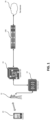
- FIG. 1 illustrates an environment for an embodiment of the system.
- a subscriber using a user device 10, initiates a traffic flow with a base station 12.
- the traffic flow is transmitted to and from a core network 14 from the base station.
- the traffic flow is seen and directed by the operator network 16 and reviewed and classified by a system 100.
- the system 100 is included as a component of a network device which resides between the operator's gateway and the Internet 20.
- the system 100 is intended to reside within the operator's or Internet Service Provider's (ISP's) network 16.
- ISP's Internet Service Provider's
- system 100 can be configured to be transparent to users. It will be understood that figure 1 illustrates a high-level network architecture and that a computer network includes further aspects not illustrated.
- embodiments of the system 100 for classification and detecting a change in classification is intended to reside in the core network.
- the system 100 is intended to be in a location where the system is able to access the data noted herein.
- the system may be a physical network device or may be a virtual network device.
- the system may also be distributed over a number of physical or virtual devices.
- the system may be used on any IP based networking system, for example, Wi-Fi based, mobile data networks like GPRS, CDMA, 4G, 5G, LTE, satellite based, WLAN based networks, fixed line broadband fiber optic networks as well as on virtual private networks.
- Embodiments of the system and method disclosed herein are intended to detect change in application and/or content category due to change in application and/or server. Embodiments of the system and method are also be configured to detect new applications and any addition and/or removal of a content category to an application.
- Apps and content categories carried by an application can change over time. It is important to be able to determine that the content categories carried within an application is changed, or the application itself has changed its behavior. There may be altogether new applications and new content categories that are not matched wotj what was previously done by the application. In order to correctly apply policies based on content type, embodiments of the system and method detailed herein are intended to determine when there is a change in the application or content type.
- a problem with these conventional methods is that there are too many things for which there is a need to watch. There are a lot of applications and checking each application is not practical due to high resource and test requirement. Sometimes applications are distributed across countries and the behavior differs across regions. Because the usage of applications can change over time (grow or reduce), it is important to distinguish this aspect from change in application and/or content category.
- Embodiments of the system and method are intended to detect change in application behavior as far as classification is concerned; detect change in content category for the application; and detect addition or removal of a content category in the application.
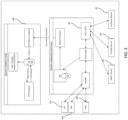
- Figure 2 illustrates an embodiment of a system for detecting a change in application and content for traffic flows.
- the system is intended to include an application module 110, a content category module 120, a traffic action module 130, at least one processor 140 and at least one memory component 150.
- the system is generally intended to be distributed and reside in the data plane.
- a central processing unit or the control processor may be configured to execute the instructions stored in the memory component in order for the modules to execute their functions.
- the application module 110 is configured to determine an application and application category associated with a traffic flow or set of flows.
- the application module 110 is configured to review the traffic patterns and traffic flow parameters to determine the application associated with the traffic flow.
- the traffic flow for that application is intended to be reviewed periodically by the application module 110, for example every 10 seconds, every 10 minutes, every 24 hours, or the like.
- the content category module 120 is configured to determine the content category associated with the application and any changes or additions to possible content categories associated with various applications. Together the application module 110 and content category module 120 is configured to provide for change visualization as detailed herein.
- the traffic action module 130 is configured to provide for traffic actions associated with the content category and application of a traffic flow. In some cases, the traffic action module is configured to provide for policies to be applied based on the content. In some cases, the traffic action module 130 is configured to provide for a change in policy once a change in application or category content has been noted.
- FIG. 3 illustrates a plurality of mobile devices that connect to operators' network in a 4G LTE system. It will be understood that this provides an example and other networks may be used.
- the mobile devices of the subscribers 10a, 10b and 10c use different applications within the same device and there is often different applications associated with each device.
- These mobile devices typically connect to the application specific servers 40 for data transfer, via for example, Serving Gateways, Packet Data Network Gateways, and other network devices 30.
- Serving Gateways Packet Data Network Gateways
- Netflix TM , YouTube TM and Facebook TM servers are shown in this example.
- the data transfer passes through the system where the process of Application and Content category recognition takes place and suitable metrics are also intended to be generated.
- the metrics are intended to be passed to a processor, for example a metric processor, that can provide information locally and can also export the processed metrics to, for example, a Central Intelligence System (CIS) or Analytics center associated with the application module and content module.
- CIS Central Intelligence System
- the data is received by CIS Metrics Collector and is stored by, for example, writing the metrics to a database.
- a CIS Processor is configured to periodically process this data and determine the analysis result. Note that the data may be collected from a plurality of operators so that comparison across regions could also be carried out. This data could be received from various different operators / networks in different regions and network type (like 5G, 4G, fixed line or satellite) to CIS Metric collector.
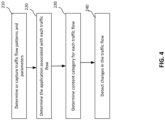
- Figure 4 is a flow chart illustrating the method for detecting a change in application and/or content.
- traffic flow patterns and parameters are captured (sometimes referred to as the relevant data) for a plurality of traffic flows.
- application recognition is performed on each of the plurality of traffic flows, by the application module, to determine the application associated with each of the traffic flows.
- the content module is configured to identify the content category using a content category recognition feature.
- Various associated parameters that are found for the above recognition are intended to be stored in a database. These parameters include, for example, volume of traffic, data rate, location, region, timestamps, application, content category and the like.
- the Content module identifies what kind of content is delivered to the network connected devices, for example if a subscriber is watching Video in Facebook application.
- the system is configured to identify Facebook using the application module and Video is identified using the Content module.
- parameters for unclassified applications are also stored in the database. These parameters include, for example, volume of traffic, data rate, location, region, timestamps and the like.
- the Server profile (for example, the IP, Port, Protocol of the server) is also intended to be recorded for each flow. Further, the Subscriber's device IP may be recorded for each flow.
- the system is configured to detect changes, at 250.
- the changes may be detected by segregating the type of increase and then investigating what that increase corresponds to as a change.
- the measurements are normalized, for example, normalized to per subscriber, per session, per application or the like.
- IP Internet Protocol
- the system is configured to further monitor for a change in volume of content category carried in an application in a given duration, which can vary in range. This type of change could imply that the application has changed, or the content category has changed.
- the system is configured to also monitor for whether the proportion of traffic carried in different content categories of an application changes. This change could indicate that the application may have changed, a new content category has been added, an existing category has been deleted, or the like.
- the change might be region specific change. If it is across regions, it may be a common change.
- Embodiments of the system deployment can be done either in inline mode (traffic passes through the system) or in offline mode also called monitoring mode (a copy of traffic sent to the system, but it is not forwarded).
- the system may be deployed as a probe and may reside in various operators' networks. The probes are configured to see all or a subset of the traffic flowing through the operators' network.
- the system is configured to collect information from both types of sources, deployments within operators' network and a probe deployment.
- the application and/or content category that has changed is detected in CIS.
- the system is configured to capture the traffic for selected applications (usually by sampling for a predetermined number of subscribers) and then analyze the files to see why the proportion has changed.
- the system is also configured to reproduce the changed traffic by running the application on its own and capturing the application's traffic. In some cases, this process could be a manual test of the application or an automated test of the application using that specific changed category.
- This comparison can be used to identify the exact nature of a change and update or create new models to capture the change.
- the models are intended to provide an update so that the changes are correctly classified to detect Application and content categories.
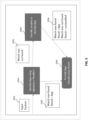
- Figure 5 illustrates a typical Deep Packet Inspection system offering application recognition, where there are multiple stages of processing.
- the first stage uses packet headers and signatures for Application Recognition, then is checked to see if any correlation based classification is possible.
- the final stage uses heuristics and/or machine learning if the earlier stage could not concretely identify the application. If recognition succeeds, the application recognized for the given flow/flows is provided to consumer. It is possible that none of them was able to recognize application for the given flow, in which case the flow is marked unclassified.
- packets are received via an input, at 1022, and the packet inspection system is configured to use packet headers and signatures for Application Recognition, at 1024. If a match is not found, at 1026, the second stage uses machine learning, at 1028. If recognition succeeds at either 1030 or 1032, the application recognized for the given flow/flows is provided to consumer, at 1034. The consumer is likely to be the network operator or the like. It is possible that neither strategy will be able to recognize application for the given flow, in which case the flow is marked unclassified.
- application identification is started at the beginning of the flow until the time application is identified with high confidence. In some cases, application identification may not be completed until mid flow depending on how each application behaves.
- There is a cost of processing associated with Signatures and machine learning with the overall pipeline required for machine learning being expensive in significant CPU usage and memory.
- the cost of machine learning based recognition is much higher than signature based recognition.
- the signature based recognition and machine learning methods may themselves have a plurality of steps, where the output of one step is used to decide what is the next step to execute. There may be a plurality of interactions before the application can be successfully identified and classified.
- Embodiments of the system and method detailed herein are intended to use server profiling to reduce the cost of traffic flow identification and classification.
- a server used for an application or category of applications tends to serve the same content for at least some predetermined period of time.
- embodiments of the system and method detailed herein are intended to provide for classification based on Server IP and port, which is intended to classify a large percent of traffic flows via for example a look up table thus using minimal or reduced CPU and memory cost.
- a significant amount of network traffic is associated with a limited number of content providers.
- Figure 6 illustrates a system for classifying application with server profiling for traffic flows.
- the system is intended to include a server profiling module 1110, an application module 1120, a monitoring module 1130, a traffic action module 1140, at least one processor 1150 and at least one memory component 1160.
- the system is generally intended to be distributed and reside in the data plane.
- a central processing unit or the control processor 1150 is configured to execute the instructions stored in the memory component 1160 in order for the modules to execute their functions.
- the server profiling module 1110 is configured to profile the server via for example the server's Internet Protocol (IP) address and port number for a predetermined number of flows.
- IP Internet Protocol
- the server profiling module 1110 is configured to build a look up table or other data repository to determine the content provider or application associated with a particular server.
- the Application module 1120 is configured to determine packet parameters, for example server IP data for a new data flow.
- the Application module 1120 is configured to do a lookup or query the server profiling module 1110 or data repository created by the server profiling module to associate the data flow with an application.
- the monitoring module 1130 is configured to monitor server information in the lookup table to determine if there are any traffic pattern or data changes to the servers listed in the lookup table. If a change is noted the server profiling module 1110 is configured to re-profile the server to determine if any updates to the lookup table are required.
- the traffic action module 1140 is configured to perform traffic actions as defined in various policies or rules associated with the application, application type and/or operator.
- the system may be initialized with a set of known servers or may be initialized with traffic flows currently being reviewed by the system.
- these results can be useful for future lookups.
- the system is able to use previous classification results from flows to create server profiles that are intended to be able to identify new flows at a lower cost.
- this could be a lookup on the server IP, server IP + port, server IP + IP.protocol (L4) + port, or the like to narrow down the possible results for the classification or to classify the flow.
- the system is configured to profile a plurality of servers in various ways.
- the system is configured to profile servers in a lab and generate a list of these by verifying the applications that are being served.
- the system is configured to also use Application Recognition probes deployed across the network to collect this information. Then this data is stored in a database file and provided to the system.
- the system when a system is initiated, the system is configured to use conventional methods to identify application and records the server profile. If the system determines that the same server profile is being used N times, then the system is configured to store this server profile into the database. The system is configured to validate periodically to check if any server profile is still valid.
- the system may use a combination of the two methods. For example, if Facebook added a new server, then its server would not have an entry in the database provided with an initialized setup method. The system instead evaluates the server profile after the system has been initiated. If found that the new server is serving Facebook, then the server profile information is added to the database.
- Figure 7 illustrates a User Equipment, UE1, accessing Netflix server. It can be seen from the figure that various Netflix and YouTube servers have been identified. As such, the system is able to classify the flow to UE1 based on the server and port information from the flow an as detailed herein.
- Embodiments of the system and method detailed herein are intended to save classification costs. If the classification cost for a flow F is C, and 1/N flows are classified are classified via the system for server profiling, on, for example: IP:Port and/or transport layer endpoint, then the CPU cost savings for the system is C/N.
- C and N are likely to vary depending on network and traffic types. N may also depend on how much memory is used to cache results. It may be preferable to have a short tail of IP:port and/or transport layer volume to fit within the cache, and let the long tail miss the cache. As cache sizes are limited, it is normally preferable to fit frequently accessed data in the cache (for example, server IP: Port lookup) and allow for other parameters associated with this information (for example, statistics, protocol, DNS name) to be in a non-cached storage.
- a cache hit may simply use a reference to the previous classification results.
- Embodiments of the system and method detailed herein are intended to benefit from application service providers usually using dedicated servers for their content. This may be because the servers are within their data center, or they have dedicated servers running in CDN's, or they have a set of IP address used.
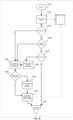
- Figure 8 illustrates a flow chart on an embodiment of a method for classifying traffic flows using server profiling.
- the system receives a new flow, at 1205.
- the system is configured to then determine packet parameters of the flow such as, server IP, domain name, port, protocol, and the like.
- the system is configured to perform a server profile lookup with a lookup table or database.
- the system determines whether there is an entry found, at 1215. If an entry is found, the system determines whether the server requires revalidation, at 1220. If no revalidation, the system determines whether the entry is an exact match at 1225 and if so, determines the classification of the flow based on the match, at 1230.
- the system is configured to proceed to identify the flow via more conventional methods such as signature or heuristic based identification, at 1235. If there is a match that is not an exact match, the system is configured to provide hints to optimize the identification, at 1240. Hints may include, for example, a reduced number of possible applications or content categories that are associated with the server in question. If the conventional methods such as signature or heuristic based identification succeed at 1245, the system is configured to determine whether an update to the lookup table is required, at 1250. If the conventional methods are unable to identify the application at 1245, the system is configured to provide for machine learning identification at 1255. The lookup table is updated with the machine learning results at 1250 and the flow is considered identified if either the conventional methods or machine learning has provided an identification at 1230.
- conventional methods such as signature or heuristic based identification
- Figure 9 is a flow chart illustrating an embodiment of the classification of a traffic flow.
- the system receives at least one flow to evaluate.
- the application module 1120 is configured to perform application recognition on the flows and establish packet parameters, for example, an IP, domain name, or IP/Domain name + Port, IP.Protocol and the like, at 1310. This data is used to classify the flow but may also be used by the monitoring module to detect, revalidate, or update any data currently stored in a look up database.
- the application module is configured to use the packet parameters to determine whether there is a match, and the flow is classified. In some cases, the flow may have a set of matches and not a direct match. If more than one application is noted in the initial lookup, at 1345, a more optimized version of signature pattern recognition or machine learning may be applied to identify the application. This is intended to provide for quicker and less costly classification, at 1350, as the possible applications have already been shortlisted.
- full signature recognition or machine learning models may be used to identify the application at 1335. If a match is found, at 1340, the system is configured to provide the application classification result to other network devices that require this information to correctly apply policies to the traffic flows or may apply policies through a traffic action module associated with the system.
- the process for revalidating the lookup table is intended to be similar to classifying a flow.
- the set of IP or IP+Port or I P+I P. Protocol+Port details from database are intended to be checked.
- the system checks if the IP or IP + Port or IP+IP.Protocol+Port entry already exists in the database. If this information exists and is marked as suitable for identification, then the associated applications are identified directly. If there was no match found, or if IP or IP+Port or I P+I P. Protocol+Port was marked in database as unreliable, then the full classification method is run using signatures and / or Machine Learning.
- the output of running the full classification method will be used for updating the database.
- the list of applications can be set based on tests done to establish if this method is suitable for them or not.
- the data within the database is configured to be re-evaluated on a periodic basis, for example on a time basis, every hour, every day, every week, or the like, or on a flow basis, every 10 flows, every 100 flows or the like.
- the system can be configured to generate the database using a subset or sampling of flows. During this time, the system may be working only for priming. Priming may be used once the system has confirmed that the server profile is consistently delivering an application, which may be statistics counters of at least X flows (X is intended to configurable and may be in the range of 10 flows, 20 flows, 100 flows or the like) are used for identifying the application. Further, there is intended to be a mapping to server IP + port or IP+IP.Protocol+Port which is unique for the application. If the conditions have been met, the entries are marked suitable for lookup. The list of applications for which this feature will be used may be decided upfront so that the initial priming of the database can be done for the applications that have been tested to benefit from this feature. The system is configured to be able to be updated on a periodic basis using a similar process.
- Embodiments of the system and method are configured to revalidate the flows.
- the monitoring module is configured to evaluate once every M flows for an application, or after a timeout. Since this is targeted at a specific application, first the application will be detected using the server IP + Port or IP+IP.Protocol+Port approach and then the same flow will be subjected to full classification method with signatures and machine learning to establish that the Server IP + Port or IP+IP.Protocol+Port is being used for the application. This method can then be done for M subsequent flows of the application, chosen contiguously or randomly. M is intended to configurable and may be in the range of 10 flows, 20 flows, 100 flows or the like.
- the server IP and port is considered not in use and is intended to be marked for revalidation. If a specific IP is found to serve different applications and content, then it is marked so that no effort is made to update database for these specific IPs for example, having for a much higher timeout threshold.
- the lookup database is intended to be hosted in the cloud or a centralized location and deliverable to a plurality of operators.
- the database is updated periodically or continuously using Application recognition probes across the world. Copies of the database, or access to the database may be distributed to customers so that the initial priming time can be optimized. In this case, the priming may only revalidate a much smaller set of samples to check if the database entries are indeed the right ones for the Applications. The entries that could not be validated (for example, no UE connected to Server in the specific operator's network), then this type of entry could be marked for checking when such a flow is seen towards the noted IP and Port.
- IP + Port mapping can still help optimize the classification as there is a smaller subset to run.
- IP+Port1 had 3 types of content and IP + Port2 had 2 other types of content
- the system is able to determine that for IP+Port1, there is likely only 3 options, and the method stores states and content classification for 3 instead of a larger number.
- the system is configured to determine that the lookup may be to re-evaluate the entries for the server IP and start profiling newly. Similarly, every nth packet or after every x time frame, the entire profile may be re-evaluated for accuracy. This is intended to ensure the system always learns and keep learning new information about the server and dynamically profiling its nature. It will be understood that these are not the only situations where reevaluation is intended to occur.
- Embodiments of the disclosure or elements thereof can be represented as a computer program product stored in a machine-readable medium (also referred to as a computer-readable medium, a processor-readable medium, or a computer usable medium having a computer-readable program code embodied therein).
- the machine-readable medium can be any suitable tangible, non-transitory medium, including magnetic, optical, or electrical storage medium including a diskette, compact disk read only memory (CD-ROM), memory device (volatile or non-volatile), or similar storage mechanism.
- the machine-readable medium can contain various sets of instructions, code sequences, configuration information, or other data, which, when executed, cause a processor to perform steps in a method according to an embodiment of the disclosure.
Landscapes
- Engineering & Computer Science (AREA)
- Computer Networks & Wireless Communication (AREA)
- Signal Processing (AREA)
- Data Exchanges In Wide-Area Networks (AREA)
Applications Claiming Priority (2)
| Application Number | Priority Date | Filing Date | Title |
|---|---|---|---|
| IN202211074371 | 2022-12-21 | ||
| IN202211074445 | 2022-12-22 |
Publications (2)
| Publication Number | Publication Date |
|---|---|
| EP4391483A2 true EP4391483A2 (de) | 2024-06-26 |
| EP4391483A3 EP4391483A3 (de) | 2024-09-04 |
Family
ID=89224664
Family Applications (1)
| Application Number | Title | Priority Date | Filing Date |
|---|---|---|---|
| EP23218928.2A Pending EP4391483A3 (de) | 2022-12-21 | 2023-12-20 | System und verfahren zur verkehrsflussklassifizierung |
Country Status (3)
| Country | Link |
|---|---|
| US (1) | US20240214318A1 (de) |
| EP (1) | EP4391483A3 (de) |
| CA (1) | CA3223919A1 (de) |
Family Cites Families (19)
| Publication number | Priority date | Publication date | Assignee | Title |
|---|---|---|---|---|
| US20070115848A1 (en) * | 2005-11-18 | 2007-05-24 | Kevin Chean | Adaptive application sensitive rate control system for packetized networks |
| US8639837B2 (en) * | 2006-07-29 | 2014-01-28 | Blue Coat Systems, Inc. | System and method of traffic inspection and classification for purposes of implementing session ND content control |
| US7644150B1 (en) * | 2007-08-22 | 2010-01-05 | Narus, Inc. | System and method for network traffic management |
| US8432919B2 (en) * | 2009-02-25 | 2013-04-30 | Cisco Technology, Inc. | Data stream classification |
| US8311956B2 (en) * | 2009-08-11 | 2012-11-13 | At&T Intellectual Property I, L.P. | Scalable traffic classifier and classifier training system |
| US10897474B2 (en) * | 2016-06-23 | 2021-01-19 | Cisco Technology, Inc. | Adapting classifier parameters for improved network traffic classification using distinct private training data sets |
| US10341241B2 (en) * | 2016-11-10 | 2019-07-02 | Hughes Network Systems, Llc | History-based classification of traffic into QoS class with self-update |
| US10305809B2 (en) * | 2016-11-17 | 2019-05-28 | Cisco Technology, Inc. | On-box behavior-based traffic classification |
| US10904275B2 (en) * | 2016-11-30 | 2021-01-26 | Cisco Technology, Inc. | Leveraging synthetic traffic data samples for flow classifier training |
| US11424993B1 (en) * | 2017-05-30 | 2022-08-23 | Amazon Technologies, Inc. | Artificial intelligence system for network traffic flow based detection of service usage policy violations |
| US10555040B2 (en) * | 2018-06-22 | 2020-02-04 | Samsung Electronics Co., Ltd. | Machine learning based packet service classification methods for experience-centric cellular scheduling |
| WO2020112658A1 (en) * | 2018-11-27 | 2020-06-04 | Xaxar Inc. | Systems and methods of data flow classification |
| CN110460488B (zh) * | 2019-07-01 | 2022-10-18 | 华为技术有限公司 | 业务流识别方法和装置、模型生成方法和装置 |
| EP3840325A1 (de) * | 2019-12-16 | 2021-06-23 | Sandvine Corporation | System und verfahren zur autorisierung von verkehrsströmen |
| BR112022013039A2 (pt) * | 2019-12-31 | 2022-09-06 | Hughes Network Systems Llc | Método, mídias legíveis por máquina não transitórias e dispositivo de comunicação |
| CN111404833B (zh) * | 2020-02-28 | 2022-04-12 | 华为技术有限公司 | 一种数据流类型识别模型更新方法及相关设备 |
| US12137051B1 (en) * | 2020-04-21 | 2024-11-05 | Reservoir Labs, Inc. | Network analysis and management based on a quantitative theory of bottleneck structures |
| US12021755B2 (en) * | 2022-01-28 | 2024-06-25 | Hewlett Packard Enterprise Development Lp | Classification and forwarding of network traffic flows |
| KR20240096197A (ko) * | 2022-12-19 | 2024-06-26 | 삼성전자주식회사 | 무선 통신 시스템에서 인공지능 모델을 이용하여 트래픽을 처리하기 위한 방법 및 장치 |
-
2023
- 2023-12-20 EP EP23218928.2A patent/EP4391483A3/de active Pending
- 2023-12-20 CA CA3223919A patent/CA3223919A1/en active Pending
- 2023-12-20 US US18/390,988 patent/US20240214318A1/en active Pending
Also Published As
| Publication number | Publication date |
|---|---|
| EP4391483A3 (de) | 2024-09-04 |
| US20240214318A1 (en) | 2024-06-27 |
| CA3223919A1 (en) | 2024-06-21 |
Similar Documents
| Publication | Publication Date | Title |
|---|---|---|
| US10637771B2 (en) | System and method for real-time load balancing of network packets | |
| US10326848B2 (en) | Method for modeling user behavior in IP networks | |
| US8838819B2 (en) | Method for embedding meta-commands in normal network packets | |
| US20200128038A1 (en) | Network security system with enhanced traffic analysis based on feedback loop and low-risk domain identification | |
| US20190075049A1 (en) | Determining Direction of Network Sessions | |
| US20160380867A1 (en) | Method and System for Detecting and Identifying Assets on a Computer Network | |
| WO2017206576A1 (zh) | 一种网关业务的处理方法及装置 | |
| US11743272B2 (en) | Low-latency identification of network-device properties | |
| US12463992B2 (en) | Data collection management | |
| US11411919B2 (en) | Deep packet inspection application classification systems and methods | |
| US9917747B2 (en) | Problem detection in a distributed digital network through distributed packet analysis | |
| US12556556B2 (en) | System and method for detecting fraudulent network traffic | |
| EP4391483A2 (de) | System und verfahren zur verkehrsflussklassifizierung | |
| KR20210043498A (ko) | 데이터 스트림의 프로토콜 식별 | |
| JP5925287B1 (ja) | 情報処理装置、方法およびプログラム | |
| Bicski et al. | Unveiling latency-induced service degradation: A methodological approach with dataset | |
| CN115134251B (zh) | 一种跨境云内部地理边界发现系统及方法 | |
| CN114024765B (zh) | 基于旁路流量与防火墙配置相结合的防火墙策略收敛方法 | |
| US12519753B2 (en) | Method and system for detection of ruleset misconfiguration | |
| US20240396848A1 (en) | System and method for classifying network devices | |
| US20260122089A1 (en) | Data Collection Management | |
| JP2005189996A (ja) | ネットワーク侵入検知システム | |
| CN113839826B (zh) | 一种检测windows终端的方法、装置和计算机可读存储介质 | |
| CN110098975B (zh) | 用户通过虚拟专用网络访问互联网的检测方法及系统 | |
| CN117749778A (zh) | 信息处理方法、装置、电子设备及存储介质 |
Legal Events
| Date | Code | Title | Description |
|---|---|---|---|
| PUAI | Public reference made under article 153(3) epc to a published international application that has entered the european phase |
Free format text: ORIGINAL CODE: 0009012 |
|
| STAA | Information on the status of an ep patent application or granted ep patent |
Free format text: STATUS: THE APPLICATION HAS BEEN PUBLISHED |
|
| AK | Designated contracting states |
Kind code of ref document: A2 Designated state(s): AL AT BE BG CH CY CZ DE DK EE ES FI FR GB GR HR HU IE IS IT LI LT LU LV MC ME MK MT NL NO PL PT RO RS SE SI SK SM TR |
|
| PUAL | Search report despatched |
Free format text: ORIGINAL CODE: 0009013 |
|
| AK | Designated contracting states |
Kind code of ref document: A3 Designated state(s): AL AT BE BG CH CY CZ DE DK EE ES FI FR GB GR HR HU IE IS IT LI LT LU LV MC ME MK MT NL NO PL PT RO RS SE SI SK SM TR |
|
| RIC1 | Information provided on ipc code assigned before grant |
Ipc: H04L 47/2483 20220101ALI20240801BHEP Ipc: H04L 47/2475 20220101ALI20240801BHEP Ipc: H04L 47/2441 20220101ALI20240801BHEP Ipc: H04L 47/2408 20220101AFI20240801BHEP |
|
| STAA | Information on the status of an ep patent application or granted ep patent |
Free format text: STATUS: REQUEST FOR EXAMINATION WAS MADE |
|
| 17P | Request for examination filed |
Effective date: 20250227 |