EP4385871A1 - Control system for straddled electric vehicle and straddled electric vehicle - Google Patents
Control system for straddled electric vehicle and straddled electric vehicle Download PDFInfo
- Publication number
- EP4385871A1 EP4385871A1 EP23188914.8A EP23188914A EP4385871A1 EP 4385871 A1 EP4385871 A1 EP 4385871A1 EP 23188914 A EP23188914 A EP 23188914A EP 4385871 A1 EP4385871 A1 EP 4385871A1
- Authority
- EP
- European Patent Office
- Prior art keywords
- operating member
- operating
- brake lever
- control system
- finger
- Prior art date
- Legal status (The legal status is an assumption and is not a legal conclusion. Google has not performed a legal analysis and makes no representation as to the accuracy of the status listed.)
- Granted
Links
Images






Classifications
-
- B—PERFORMING OPERATIONS; TRANSPORTING
- B62—LAND VEHICLES FOR TRAVELLING OTHERWISE THAN ON RAILS
- B62K—CYCLES; CYCLE FRAMES; CYCLE STEERING DEVICES; RIDER-OPERATED TERMINAL CONTROLS SPECIALLY ADAPTED FOR CYCLES; CYCLE AXLE SUSPENSIONS; CYCLE SIDECARS, FORECARS, OR THE LIKE
- B62K23/00—Rider-operated controls specially adapted for cycles, i.e. means for initiating control operations, e.g. levers, grips
- B62K23/02—Rider-operated controls specially adapted for cycles, i.e. means for initiating control operations, e.g. levers, grips hand actuated
- B62K23/06—Levers
-
- B—PERFORMING OPERATIONS; TRANSPORTING
- B60—VEHICLES IN GENERAL
- B60L—PROPULSION OF ELECTRICALLY-PROPELLED VEHICLES; SUPPLYING ELECTRIC POWER FOR AUXILIARY EQUIPMENT OF ELECTRICALLY-PROPELLED VEHICLES; ELECTRODYNAMIC BRAKE SYSTEMS FOR VEHICLES IN GENERAL; MAGNETIC SUSPENSION OR LEVITATION FOR VEHICLES; MONITORING OPERATING VARIABLES OF ELECTRICALLY-PROPELLED VEHICLES; ELECTRIC SAFETY DEVICES FOR ELECTRICALLY-PROPELLED VEHICLES
- B60L1/00—Supplying electric power to auxiliary equipment of vehicles
-
- B—PERFORMING OPERATIONS; TRANSPORTING
- B60—VEHICLES IN GENERAL
- B60L—PROPULSION OF ELECTRICALLY-PROPELLED VEHICLES; SUPPLYING ELECTRIC POWER FOR AUXILIARY EQUIPMENT OF ELECTRICALLY-PROPELLED VEHICLES; ELECTRODYNAMIC BRAKE SYSTEMS FOR VEHICLES IN GENERAL; MAGNETIC SUSPENSION OR LEVITATION FOR VEHICLES; MONITORING OPERATING VARIABLES OF ELECTRICALLY-PROPELLED VEHICLES; ELECTRIC SAFETY DEVICES FOR ELECTRICALLY-PROPELLED VEHICLES
- B60L15/00—Methods, circuits, or devices for controlling the traction-motor speed of electrically-propelled vehicles
- B60L15/20—Methods, circuits, or devices for controlling the traction-motor speed of electrically-propelled vehicles for control of the vehicle or its driving motor to achieve a desired performance, e.g. speed, torque, programmed variation of speed
- B60L15/2009—Methods, circuits, or devices for controlling the traction-motor speed of electrically-propelled vehicles for control of the vehicle or its driving motor to achieve a desired performance, e.g. speed, torque, programmed variation of speed for braking
-
- B—PERFORMING OPERATIONS; TRANSPORTING
- B60—VEHICLES IN GENERAL
- B60L—PROPULSION OF ELECTRICALLY-PROPELLED VEHICLES; SUPPLYING ELECTRIC POWER FOR AUXILIARY EQUIPMENT OF ELECTRICALLY-PROPELLED VEHICLES; ELECTRODYNAMIC BRAKE SYSTEMS FOR VEHICLES IN GENERAL; MAGNETIC SUSPENSION OR LEVITATION FOR VEHICLES; MONITORING OPERATING VARIABLES OF ELECTRICALLY-PROPELLED VEHICLES; ELECTRIC SAFETY DEVICES FOR ELECTRICALLY-PROPELLED VEHICLES
- B60L7/00—Electrodynamic brake systems for vehicles in general
- B60L7/24—Electrodynamic brake systems for vehicles in general with additional mechanical or electromagnetic braking
- B60L7/26—Controlling the braking effect
-
- B—PERFORMING OPERATIONS; TRANSPORTING
- B62—LAND VEHICLES FOR TRAVELLING OTHERWISE THAN ON RAILS
- B62K—CYCLES; CYCLE FRAMES; CYCLE STEERING DEVICES; RIDER-OPERATED TERMINAL CONTROLS SPECIALLY ADAPTED FOR CYCLES; CYCLE AXLE SUSPENSIONS; CYCLE SIDECARS, FORECARS, OR THE LIKE
- B62K11/00—Motorcycles, engine-assisted cycles or motor scooters with one or two wheels
- B62K11/14—Handlebar constructions, or arrangements of controls thereon, specially adapted thereto
-
- B—PERFORMING OPERATIONS; TRANSPORTING
- B62—LAND VEHICLES FOR TRAVELLING OTHERWISE THAN ON RAILS
- B62L—BRAKES SPECIALLY ADAPTED FOR CYCLES
- B62L3/00—Brake-actuating mechanisms; Arrangements thereof
- B62L3/02—Brake-actuating mechanisms; Arrangements thereof for control by a hand lever
-
- B—PERFORMING OPERATIONS; TRANSPORTING
- B62—LAND VEHICLES FOR TRAVELLING OTHERWISE THAN ON RAILS
- B62M—RIDER PROPULSION OF WHEELED VEHICLES OR SLEDGES; POWERED PROPULSION OF SLEDGES OR SINGLE-TRACK CYCLES; TRANSMISSIONS SPECIALLY ADAPTED FOR SUCH VEHICLES
- B62M7/00—Motorcycles characterised by position of motor or engine
- B62M7/02—Motorcycles characterised by position of motor or engine with engine between front and rear wheels
- B62M7/04—Motorcycles characterised by position of motor or engine with engine between front and rear wheels below the frame
-
- B—PERFORMING OPERATIONS; TRANSPORTING
- B60—VEHICLES IN GENERAL
- B60L—PROPULSION OF ELECTRICALLY-PROPELLED VEHICLES; SUPPLYING ELECTRIC POWER FOR AUXILIARY EQUIPMENT OF ELECTRICALLY-PROPELLED VEHICLES; ELECTRODYNAMIC BRAKE SYSTEMS FOR VEHICLES IN GENERAL; MAGNETIC SUSPENSION OR LEVITATION FOR VEHICLES; MONITORING OPERATING VARIABLES OF ELECTRICALLY-PROPELLED VEHICLES; ELECTRIC SAFETY DEVICES FOR ELECTRICALLY-PROPELLED VEHICLES
- B60L2200/00—Type of vehicles
- B60L2200/12—Bikes
-
- B—PERFORMING OPERATIONS; TRANSPORTING
- B60—VEHICLES IN GENERAL
- B60L—PROPULSION OF ELECTRICALLY-PROPELLED VEHICLES; SUPPLYING ELECTRIC POWER FOR AUXILIARY EQUIPMENT OF ELECTRICALLY-PROPELLED VEHICLES; ELECTRODYNAMIC BRAKE SYSTEMS FOR VEHICLES IN GENERAL; MAGNETIC SUSPENSION OR LEVITATION FOR VEHICLES; MONITORING OPERATING VARIABLES OF ELECTRICALLY-PROPELLED VEHICLES; ELECTRIC SAFETY DEVICES FOR ELECTRICALLY-PROPELLED VEHICLES
- B60L2210/00—Converter types
- B60L2210/30—AC to DC converters
-
- B—PERFORMING OPERATIONS; TRANSPORTING
- B60—VEHICLES IN GENERAL
- B60L—PROPULSION OF ELECTRICALLY-PROPELLED VEHICLES; SUPPLYING ELECTRIC POWER FOR AUXILIARY EQUIPMENT OF ELECTRICALLY-PROPELLED VEHICLES; ELECTRODYNAMIC BRAKE SYSTEMS FOR VEHICLES IN GENERAL; MAGNETIC SUSPENSION OR LEVITATION FOR VEHICLES; MONITORING OPERATING VARIABLES OF ELECTRICALLY-PROPELLED VEHICLES; ELECTRIC SAFETY DEVICES FOR ELECTRICALLY-PROPELLED VEHICLES
- B60L2210/00—Converter types
- B60L2210/40—DC to AC converters
-
- B—PERFORMING OPERATIONS; TRANSPORTING
- B60—VEHICLES IN GENERAL
- B60L—PROPULSION OF ELECTRICALLY-PROPELLED VEHICLES; SUPPLYING ELECTRIC POWER FOR AUXILIARY EQUIPMENT OF ELECTRICALLY-PROPELLED VEHICLES; ELECTRODYNAMIC BRAKE SYSTEMS FOR VEHICLES IN GENERAL; MAGNETIC SUSPENSION OR LEVITATION FOR VEHICLES; MONITORING OPERATING VARIABLES OF ELECTRICALLY-PROPELLED VEHICLES; ELECTRIC SAFETY DEVICES FOR ELECTRICALLY-PROPELLED VEHICLES
- B60L2240/00—Control parameters of input or output; Target parameters
- B60L2240/40—Drive Train control parameters
- B60L2240/42—Drive Train control parameters related to electric machines
- B60L2240/421—Speed
-
- B—PERFORMING OPERATIONS; TRANSPORTING
- B60—VEHICLES IN GENERAL
- B60L—PROPULSION OF ELECTRICALLY-PROPELLED VEHICLES; SUPPLYING ELECTRIC POWER FOR AUXILIARY EQUIPMENT OF ELECTRICALLY-PROPELLED VEHICLES; ELECTRODYNAMIC BRAKE SYSTEMS FOR VEHICLES IN GENERAL; MAGNETIC SUSPENSION OR LEVITATION FOR VEHICLES; MONITORING OPERATING VARIABLES OF ELECTRICALLY-PROPELLED VEHICLES; ELECTRIC SAFETY DEVICES FOR ELECTRICALLY-PROPELLED VEHICLES
- B60L7/00—Electrodynamic brake systems for vehicles in general
- B60L7/10—Dynamic electric regenerative braking
-
- B—PERFORMING OPERATIONS; TRANSPORTING
- B62—LAND VEHICLES FOR TRAVELLING OTHERWISE THAN ON RAILS
- B62J—CYCLE SADDLES OR SEATS; AUXILIARY DEVICES OR ACCESSORIES SPECIALLY ADAPTED TO CYCLES AND NOT OTHERWISE PROVIDED FOR, e.g. ARTICLE CARRIERS OR CYCLE PROTECTORS
- B62J43/00—Arrangements of batteries
- B62J43/10—Arrangements of batteries for propulsion
- B62J43/16—Arrangements of batteries for propulsion on motorcycles or the like
-
- B—PERFORMING OPERATIONS; TRANSPORTING
- B62—LAND VEHICLES FOR TRAVELLING OTHERWISE THAN ON RAILS
- B62K—CYCLES; CYCLE FRAMES; CYCLE STEERING DEVICES; RIDER-OPERATED TERMINAL CONTROLS SPECIALLY ADAPTED FOR CYCLES; CYCLE AXLE SUSPENSIONS; CYCLE SIDECARS, FORECARS, OR THE LIKE
- B62K2204/00—Adaptations for driving cycles by electric motor
-
- B—PERFORMING OPERATIONS; TRANSPORTING
- B62—LAND VEHICLES FOR TRAVELLING OTHERWISE THAN ON RAILS
- B62K—CYCLES; CYCLE FRAMES; CYCLE STEERING DEVICES; RIDER-OPERATED TERMINAL CONTROLS SPECIALLY ADAPTED FOR CYCLES; CYCLE AXLE SUSPENSIONS; CYCLE SIDECARS, FORECARS, OR THE LIKE
- B62K23/00—Rider-operated controls specially adapted for cycles, i.e. means for initiating control operations, e.g. levers, grips
- B62K23/02—Rider-operated controls specially adapted for cycles, i.e. means for initiating control operations, e.g. levers, grips hand actuated
- B62K23/04—Twist grips
Definitions
- the present invention relates to a control system for a straddled electric vehicle and also relates to a straddled electric vehicle.
- a control system for a straddled electric vehicle is a control system for a straddled electric vehicle including an electric motor for driving a vehicle.
- the control system for a straddled electric vehicle includes a steering device, a first operating member, a second operating member, and a control device.
- the steering device includes a first handle grip, a second handle grip disposed on an opposite side of the first handle grip with reference to a center in a vehicle width direction, and a brake lever disposed directly in front of the second handle grip.
- the first operating member is an operating member for controlling a drive force of the electric motor.
- the second operating member is an operating member for reducing either the drive force or a regenerative brake force of the electric motor.
- the second operating member is made in shape of a lever and is disposed directly above the brake lever.
- the control device controls the drive force of the electric motor in accordance with operating the first operating member and reduces either the drive force or the regenerative brake force of the electric motor in accordance with operating the second operating member.
- the second operating member provided for reducing either the drive force or the regenerative brake force of the electric motor, is disposed directly above the brake lever. Accordingly, it is possible to inhibit occurrence of such a condition that, when operating the second operating member during traveling, an operator unintentionally releases the thumb of a hand operating the second operating member away from the second handle grip; besides, the operator is enabled to simultaneously operate the brake lever and the second operating member. As a result, the second operating member can be enhanced in operability.
- the second operating member may be disposed in adjacent to the brake lever in an up-and-down direction. In this case, it is made easier for the operator to simultaneously operate the brake lever and the second operating member.
- the second operating member may have a pivot center different from a pivot center of the brake lever.
- flexibility in positional arrangement of the second operating member is enhanced; hence, flexibility in design is enhanced.
- the pivot center of the second operating member is disposed near the second handle grip, the second operating member can be enhanced in operability; simultaneously, the second operating member can be made compact in dimension in the vehicle width direction.
- the brake lever may include a finger hooked portion on which a first finger of an operator is hooked.
- the second operating member may be disposed further on an inner side than the finger hooked portion of the brake lever in the vehicle width direction. In this case, the operator is enabled to operate the brake lever and the second operating member by different fingers. Besides, when the operator operates the brake lever, physical interference is unlikely to occur between the second operating member and the finger of the hand for braking operation.
- the second operating member may include a finger hooked portion on which a second finger of the operator, which is different from the first finger, is hooked.
- the finger hooked portion of the second operating member may be disposed at least in part further on a front side than the finger hooked portion of the brake lever.
- the operator is enabled to easily hook the index finger on the second operating member, while hooking the middle finger on the finger hooked portion of the brake lever.
- the operator is enabled to easily operate only the brake lever, while hooking the index finger on the second operating member.
- the operator is also enabled to easily operate only the second operating member, while hooking the middle finger on the brake lever.
- the control modes executed by the control device may include a first mode and a second mode.
- the control device may control a rotational speed of the electric motor to be less than or equal to a first upper limit in the first mode.
- the control device may control the rotational speed of the electric motor to be less than or equal to a second upper limit greater than the first upper limit in the second mode.
- the control device may switch the first mode into the second mode in accordance with operating the mode switching member so as to control the rotational speed of the electric motor in the second mode. In this case, quasi-gear shifting can be realized by operating the mode switching member.
- the mode switching member may be an operating member operable to be pressed from a front side of the handlebar to a rear side of the handlebar. In this case, the operator is enabled to easily operate the mode switching member by a finger of the hand operating the second operating member.
- the steering shaft 13 is inserted into the head pipe 11.
- the front fork 14 is connected to the steering shaft 13 and supports the front wheel 5 such that the front wheel 5 is made rotatable.
- the second operating member 22 is lesser in dimension than the second brake lever 19 in the vehicle width direction.
- the second operating member 22 extends approximately in parallel to the second brake lever 19 in the vehicle plan view.
- the second operating member 22 is disposed further on the inner side than the finger hooked portion 19c of the second brake lever 19 in the vehicle width direction.
- the second operating member 22 is disposed further on the inner side than the mode switching member 29 in the vehicle width direction.
- the control device 26 reduces the drive force of the electric motor 7 in accordance with the operating amount of the second operating member 22.
- FIG. 6 is a chart exemplifying a relation between the operating amount of the second operating member 22 and either the drive force or the regenerative brake force of the electric motor 7.
- the control device 26 when the operating amount of the second operating member 22 falls in the free play range, the control device 26 does not reduce either the drive force or the regenerative brake force of the electric motor 7.
- the control device 26 reduces either the drive force or the regenerative brake force of the electric motor 7.
- the control device 26 gradually reduces either the drive force or the regenerative brake force of the electric motor 7 with proximity of the second operating member 22 to the second position in the progressive reduction range.
- control device 26 gradually reduces either the drive force or the regenerative brake force of the electric motor 7 with increase in the operating amount of the second operating member 22 in the progressive reduction range.
- the control device 26 blocks either the drive force or the regenerative brake force of the electric motor 7.
- the load adjusting device 28 makes the operating load acting on the second operating member 22 vary in accordance with an amount of reducing either the drive force or the regenerative brake force of the electric motor 7 based on the operating amount of the second operating member 22. It should be noted that in the following explanation, the operating load acting on the second operating member 22 will be simply referred to as the operating load. In the present preferred embodiment, the operating load corresponds to the sum of the urging force exerted by the torsion spring 30 and a moment of force exerted by the load adjusting device 28 on the second operating member 22.
- the load adjusting device 28 adjusts the operating load in the blockage range to be lesser than the maximum operating load in the progressive reduction range. In other words, the load adjusting device 28 reduces the operating load when the operating amount of the second operating member 22 exceeds the progressive reduction range. In the present preferred embodiment, the load adjusting device 28 gradually reduces the operating load acting on the second operating member 22 with proximity of the second operating member 22 to the second position in the blockage range.
- the load adjusting device 28 includes an accommodation portion 31, a ball 32, a coil spring 33, and a cam 34.
- the accommodation portion 31, the ball 32, and the coil spring 33 are unitarily moved with the second operating member 22.
- the accommodation portion 31 is fixed to the second operating member 22.
- the ball 32 is accommodated in part in the accommodation portion 31.
- the ball 32 contacts with the cam 34.
- the coil spring 33 is accommodated in the accommodation portion 31. The coil spring 33 urges the ball 32 against the cam 34.
- a moment of force M2 is greater in magnitude than a moment of force M1.
- the moment of force M2 is exerted by the load adjusting device 28 to pivot the second operating member 22 clockwise in the progressive reduction range, whereas the moment of force M1 is exerted by the load adjusting device 28 to pivot the second operating member 22 clockwise in the free play range.
- the moment of force M2 gradually increases with proximity of the second operating member 22 to the second position.
- the control device 26 controls the electric motor 7 to output, for a predetermined period of time, a drive force greater in magnitude than a target drive force set in correspondence to the torque command value corresponding to the operating amount of the first operating member 21 and rotational speed of the electric motor 7.
- the control device 26 controls the rotational speed of the electric motor 7 in the control mode selected in accordance with operating the mode switching member 29.
- FIG. 10 is a diagram for explaining characteristics of the control modes executed by the control device 26.
- the control modes executed by the control device 26 are composed of a first mode, a second mode, and a third mode.
- the characteristic of the first mode is depicted with solid line
- that of the second mode is depicted with dashed dotted line
- that of the third mode is depicted with dashed two-dotted line.
- the first operating member 21 may be made in form of a lever, button, accelerator pedal, or so forth.
- the second operating member 22 may be made in form of a button, twistable grip, foot lever operable by either foot of the operator, or so forth.
- the second brake lever 19 may be an operating member for operating braking of the rear wheel 6.
- the load adjusting device 28 may be omitted.
- the load adjusting device 28 may be changed in configuration.
- the cam 34 may be changed in positional arrangement and/or shape.
- the load adjusting device 28 may be configured to make the operating load acting on the second operating member 22 vary with an electric configuration.
Landscapes
- Engineering & Computer Science (AREA)
- Mechanical Engineering (AREA)
- Transportation (AREA)
- Power Engineering (AREA)
- Chemical & Material Sciences (AREA)
- Combustion & Propulsion (AREA)
- Physics & Mathematics (AREA)
- Electromagnetism (AREA)
- Electric Propulsion And Braking For Vehicles (AREA)
- Braking Elements And Transmission Devices (AREA)
- Steering Devices For Bicycles And Motorcycles (AREA)
Abstract
Description
- The present invention relates to a control system for a straddled electric vehicle and also relates to a straddled electric vehicle.
- Publication of
Japan Patent No. 6946549 - An operator of the straddled electric vehicle disclosed in Publication of
Japan Patent No. 6946549 - It is an object of the present invention to provide a control system for a straddled electric vehicle, whereby an operating member for controlling a drive force of an electric motor can be enhanced in operability.
- A control system for a straddled electric vehicle according to an aspect of the present invention is a control system for a straddled electric vehicle including an electric motor for driving a vehicle. The control system for a straddled electric vehicle includes a steering device, a first operating member, a second operating member, and a control device. The steering device includes a first handle grip, a second handle grip disposed on an opposite side of the first handle grip with reference to a center in a vehicle width direction, and a brake lever disposed directly in front of the second handle grip. The first operating member is an operating member for controlling a drive force of the electric motor. The second operating member is an operating member for reducing either the drive force or a regenerative brake force of the electric motor. The second operating member is made in shape of a lever and is disposed directly above the brake lever. The control device controls the drive force of the electric motor in accordance with operating the first operating member and reduces either the drive force or the regenerative brake force of the electric motor in accordance with operating the second operating member.
- In the control system for a straddled electric vehicle according to the present aspect, the second operating member, provided for reducing either the drive force or the regenerative brake force of the electric motor, is disposed directly above the brake lever. Accordingly, it is possible to inhibit occurrence of such a condition that, when operating the second operating member during traveling, an operator unintentionally releases the thumb of a hand operating the second operating member away from the second handle grip; besides, the operator is enabled to simultaneously operate the brake lever and the second operating member. As a result, the second operating member can be enhanced in operability.
- The second operating member may be lesser in dimension than the brake lever in the vehicle width direction. In this case, it is made easier for the operator to simultaneously operate the brake lever and the second operating member by either of the hands.
- The second operating member may be disposed in adjacent to the brake lever in an up-and-down direction. In this case, it is made easier for the operator to simultaneously operate the brake lever and the second operating member.
- The second operating member may have a pivot center different from a pivot center of the brake lever. In this case, flexibility in positional arrangement of the second operating member is enhanced; hence, flexibility in design is enhanced. For example, when the pivot center of the second operating member is disposed near the second handle grip, the second operating member can be enhanced in operability; simultaneously, the second operating member can be made compact in dimension in the vehicle width direction.
- The pivot center of the second operating member may be located in vicinity of the pivot center of the brake lever. In this case, it is made easier for the operator to simultaneously operate the brake lever and the second operating member by either of the hands.
- The second operating member may extend approximately in parallel to the brake lever in a vehicle plan view. In this case, the second operating member is enabled to pivot in a wider range; hence, the second operating member can be enhanced in operability.
- The brake lever may include a finger hooked portion on which a first finger of an operator is hooked. The second operating member may be disposed further on an inner side than the finger hooked portion of the brake lever in the vehicle width direction. In this case, the operator is enabled to operate the brake lever and the second operating member by different fingers. Besides, when the operator operates the brake lever, physical interference is unlikely to occur between the second operating member and the finger of the hand for braking operation.
- The second operating member may include a finger hooked portion on which a second finger of the operator, which is different from the first finger, is hooked. The finger hooked portion of the second operating member may be disposed at least in part further on a front side than the finger hooked portion of the brake lever. In this case, for instance, the operator is enabled to easily hook the index finger on the second operating member, while hooking the middle finger on the finger hooked portion of the brake lever. Besides, the operator is enabled to easily operate only the brake lever, while hooking the index finger on the second operating member. By contrast, the operator is also enabled to easily operate only the second operating member, while hooking the middle finger on the brake lever.
- The brake lever may protrude forward from the finger hooked portion of the second operating member in a vehicle plan view. In this case, the operator is enabled to put the finger, hooked on the finger hooked portion of the second operating member, on the upper surface of the brake lever; hence, the operator can stably maintain the condition that the finger is hooked on the second operating member.
- The control system for a straddled electric vehicle may further include a mode switching member for switching between control modes of the control device. The steering device may further include a handlebar. The mode switching member may be disposed directly behind the brake lever, while being disposed on a front surface of the handlebar. In this case, the operator is enabled to operate the mode switching member by any of the fingers of the hand holding the second handle grip.
- The mode switching member may be disposed between the second handle grip and a pivot shaft of the second operating member. In this case, for instance, the operator is enabled to operate the mode switching member by a finger of the hand operating the second operating member.
- The control modes executed by the control device may include a first mode and a second mode. The control device may control a rotational speed of the electric motor to be less than or equal to a first upper limit in the first mode. The control device may control the rotational speed of the electric motor to be less than or equal to a second upper limit greater than the first upper limit in the second mode. The control device may switch the first mode into the second mode in accordance with operating the mode switching member so as to control the rotational speed of the electric motor in the second mode. In this case, quasi-gear shifting can be realized by operating the mode switching member.
- The mode switching member may be an operating member operable to be pressed from a front side of the handlebar to a rear side of the handlebar. In this case, the operator is enabled to easily operate the mode switching member by a finger of the hand operating the second operating member.
- The first operating member may be disposed on the first handle grip. In this case, it is made easy for the operator to simultaneously operate the first operating member and the second operating member.
- The control system for a straddled electric vehicle may further include a load adjusting device. The load adjusting device may make an operating load acting on the second operating member vary in accordance with an amount of reducing either the drive force or the regenerative brake force of the electric motor based on an operating amount of the second operating member. In this case, the operator is more likely to feel a sense of operating the second operating member than, for instance, when the operating load acting on the second operating member is constant. As a result, the second operating member can be enhanced in operability.
- A straddled electric vehicle according to another aspect of the present invention includes an electric motor for driving a vehicle and the control system described above. Accordingly, it is made possible to provide the straddled electric vehicle including the control system described above.
- Overall, according to the present invention, an operating member for controlling a drive force of an electric motor can be enhanced in operability in a control system for a straddled electric vehicle.
-
-
FIG. 1 is a side view of a straddled electric vehicle. -
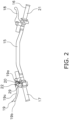
FIG. 2 is a plan view of part of a steering device. -
FIG. 3 is a plan view of a left handle grip and the surroundings thereof. -
FIG. 4 is a block diagram of a control system. -
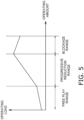
FIG. 5 is a chart exemplifying a relation between an operating amount of a second operating member and an operating load acting on the second operating member. -
FIG. 6 is a chart exemplifying a relation between the operating amount of the second operating member and either a drive force or a regenerative brake force. -
FIG. 7 is a schematic diagram for explaining a load adjusting device. -
FIG. 8 is another schematic diagram for explaining the load adjusting device. -
FIG. 9 is yet another schematic diagram for explaining the load adjusting device. -
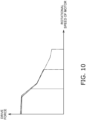
FIG. 10 is a chart for explaining characteristics of control modes executed by a control device. -
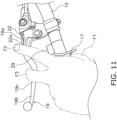
FIG. 11 is a diagram schematically showing a state of a hand in operation of the second operating member. -
FIG. 12 is a diagram schematically showing another state of the hand in operation of the second operating member. - A control system for a straddled electric vehicle according to a preferred embodiment will be hereinafter explained with reference to drawings.
FIG. 1 is a side view of a straddledelectric vehicle 1 including a control system 10 according to the preferred embodiment. The straddledelectric vehicle 1 is a two-wheeled electric vehicle. The straddledelectric vehicle 1 may be another type of electric vehicle, for instance, a four-wheeled electric vehicle, a three-wheeled electric vehicle, electric snowmobile, or so forth. - The straddled
electric vehicle 1 includes a vehicle body frame 2, asteering device 3, aseat 4, a front wheel 5, a rear wheel 6, an electric motor 7, and abattery 8. - The vehicle body frame 2 includes a
head pipe 11 and amain frame 12. Thehead pipe 11 is disposed in the middle of the vehicle in a vehicle width direction. Themain frame 12 is connected to thehead pipe 11. Themain frame 12 extends rearward from thehead pipe 11. - The
steering device 3 is supported by thehead pipe 11 so as to be turnable. Thesteering device 3 supports the front wheel 5 such that the front wheel 5 is made rotatable. As shown inFIGS. 1 and2 , thesteering device 3 includes a steeringshaft 13, afront fork 14, ahandlebar 15, afirst handle grip 16, asecond handle grip 17, afirst brake lever 18, and asecond brake lever 19. Thesecond brake lever 19 is an exemplary brake lever. - The steering
shaft 13 is inserted into thehead pipe 11. Thefront fork 14 is connected to the steeringshaft 13 and supports the front wheel 5 such that the front wheel 5 is made rotatable. - The
handlebar 15 extends in the vehicle width direction. Thehandlebar 15 is fixed to the steeringshaft 13. The first and second handle grips 16 and 17 are holdable portions held by an operator. Thefirst handle grip 16 is disposed on the right of the center in the vehicle width direction. Thefirst handle grip 16 is disposed on the right end of thehandlebar 15. Thesecond handle grip 17 is disposed on the opposite side of thefirst handle grip 16 with reference to the center in the vehicle width direction. In other words, thesecond handle grip 17 is disposed on the left of the center in the vehicle width direction. Thesecond handle grip 17 is disposed on the left end of thehandlebar 15. - The
first brake lever 18 is disposed directly in front of thefirst handle grip 16. Thefirst brake lever 18 is an operating member for controlling braking of the front wheel 5. - As shown in
FIGS. 2 and3 , thesecond brake lever 19 is disposed directly in front of thesecond handle grip 17. Thesecond brake lever 19 is an operating member for controlling braking of the rear wheel 6. Thesecond brake lever 19 is made in shape of a lever. Thesecond brake lever 19 has a pivot axis extending approximately in a vehicle up-and-down direction. - The
second brake lever 19 includes abase end 19a, adistal end 19b, and a finger hookedportion 19c. Thebase end 19a is located on a vehicle width directional inner part of thesecond brake lever 19. Thedistal end 19b is disposed on the opposite side of thebase end 19a and is located on a vehicle width directional outer part of thesecond brake lever 19. - The finger hooked
portion 19c is a portion on which a finger of the operator is hooked. In the present preferred embodiment, the middle finger of the operator is hooked on the finger hookedportion 19c. The ring or little finger of the operator may be hooked on the finger hookedportion 19c. The front surface of thesecond brake lever 19 is provided in part as the finger hookedportion 19c. The finger hookedportion 19c is disposed between thebase end 19a and thedistal end 19b. The finger hookedportion 19c is disposed directly in front of thesecond handle grip 17. The finger hookedportion 19c is shaped to curve rearward. The finger hookedportion 19c is disposed further on the outer side than a mode switching member 29 (to be described) in the vehicle width direction. Thesecond brake lever 19 has a pivot center C1 located in the vicinity of thebase end 19a. - The
seat 4 is disposed directly behind thehead pipe 11. The front wheel 5 is supported by thefront fork 14 so as to be rotatable. The rear wheel 6 is supported by themain frame 12 through a swing arm so as to be rotatable. The rear wheel 6 is rotated by a drive force generated by the electric motor 7. - The electric motor 7 is attached to the vehicle body frame 2. The electric motor 7 is connected to the rear wheel 6 through, for instance, a power transmission path composed of a reducer, a chain, and so forth. The electric motor 7 is driven by electric power supplied thereto from the
battery 8. The electric motor 7 is, for instance, a three-phase alternating current motor. The electric motor 7 functions as a power generator caused to generate electric power by a rotational force of the rear wheel 6 in deceleration of the vehicle. - The
battery 8 is disposed directly above the electric motor 7. Thebattery 8 supplies the electric power to the electric motor 7. -
FIG. 4 is a block diagram of the control system 10. The control system 10 includes thesecond handle grip 17, thesecond brake lever 19, afirst operating member 21, asecond operating member 22, athrottle position sensor 23, alever position sensor 24, avehicle speed sensor 25, acontrol device 26, amotor driving device 27, aload adjusting device 28, and themode switching member 29. It should be noted that inFIG. 4 , thesecond handle grip 17 and thesecond brake lever 19 are omitted in illustration. - The
first operating member 21 is disposed on thefirst handle grip 16. Thefirst operating member 21 is an operating member for controlling the drive force of the electric motor 7 (a torque outputted from the electric motor 7). Thefirst operating member 21 is a throttle grip twistable with respect to thehandlebar 15. Thefirst operating member 21 is unitarily twistable with thefirst handle grip 16. - The
second operating member 22 is an operating member for reducing either the drive force or a regenerative brake force of the electric motor 7. Thesecond operating member 22 is operable in an operating range defined between a first position (depicted with solid line inFIGS. 2 and3 ) and a second position (depicted with broken line inFIGS. 2 and3 ). The first position corresponds to the initial position of thesecond operating member 22, whereas the second position corresponds to a position remote farthest from the first position. Thesecond operating member 22 is operable to pivot between the first and second positions. Thesecond operating member 22 is supported to be pivotable by, for instance, apivot shaft 20 extending approximately in the vehicle up-and-down direction. Thesecond operating member 22 is urged to the first position by, for instance, a torsion spring 30 (seeFIG. 7 ). - The
second operating member 22 is made in shape of a lever. Thesecond operating member 22 is shaped to curve rearward. Thesecond operating member 22 has a pivot center C2 different from the pivot center C1 of thesecond brake lever 19. The pivot center C2 of thesecond operating member 22 is located in the vicinity of the pivot center C1 of thesecond brake lever 19. The pivot center C2 of thesecond operating member 22 is located further on the outer side than the pivot center C1 of thesecond brake lever 19 in the vehicle width direction. The pivot center C2 of thesecond operating member 22 is located further on the vehicle rear side than the pivot center C1 of thesecond brake lever 19. Thesecond operating member 22 has a pivot axis extending approximately in the vehicle up-and-down direction. The pivot axis of thesecond operating member 22 is arranged in parallel to that of thesecond brake lever 19. It should be noted that the pivot center C2 of thesecond operating member 22 may be identical in position to the pivot center C1 of thesecond brake lever 19. - The
second operating member 22 is disposed directly above thesecond brake lever 19. Thesecond operating member 22 is disposed directly above thebase end 19a of thesecond brake lever 19. Thesecond operating member 22 is disposed in adjacent to thesecond brake lever 19 in the vehicle up-and-down direction. Thesecond operating member 22 overlaps with thesecond brake lever 19 in a vehicle plan view. In the present preferred embodiment, thesecond operating member 22 entirely overlaps with thesecond brake lever 19 in the vehicle plan view. - The
second operating member 22 is lesser in dimension than thesecond brake lever 19 in the vehicle width direction. Thesecond operating member 22 extends approximately in parallel to thesecond brake lever 19 in the vehicle plan view. Thesecond operating member 22 is disposed further on the inner side than the finger hookedportion 19c of thesecond brake lever 19 in the vehicle width direction. Thesecond operating member 22 is disposed further on the inner side than themode switching member 29 in the vehicle width direction. - The
second operating member 22 includes a finger hookedportion 22a. The finger hookedportion 22a is a portion on which a finger of the operator is hooked. The finger hooked on the finger hookedportion 22a is different from that hooked on thesecond brake lever 19. In the present preferred embodiment, the index finger of the operator is hooked on the finger hookedportion 22a. The front surface of thesecond operating member 22 is provided in part as the finger hookedportion 22a. The finger hookedportion 22a extends in the vehicle width direction. The finger hookedportion 22a is shaped to curve rearward. The finger hookedportion 22a overlaps with thesecond brake lever 19 in the vehicle plan view. As shown inFIG. 3 , thesecond brake lever 19 protrudes forward from the finger hookedportion 22a in the vehicle plan view. Thebase end 19a of thesecond brake lever 19 more protrudes forward than the finger hookedportion 22a. The finger hookedportion 22a of thesecond operating member 22 is disposed at least in part further on the front side than the finger hookedportion 19c of thesecond brake lever 19. -
FIG. 5 is a chart exemplifying a relation between the operating amount of thesecond operating member 22 and the operating load acting on thesecond operating member 22. As shown inFIG. 5 , in the present preferred embodiment, the operating range of thesecond operating member 22 is divided into three sub-ranges. When described in detail, the operating range of thesecond operating member 22 is composed of a free play range, a progressive reduction range, and a blockage range. - The free play range is a range defined between the first position and a progressive reduction position. The progressive reduction range is a range defined between the free play range and the blockage range. The blockage range is a range defined between the progressive reduction range and the second position. The operating amount of the
second operating member 22 gradually increases with proximity of thesecond operating member 22 to the second position. The operating amount of thesecond operating member 22 corresponding to the progressive reduction range is greater than that corresponding to the free play range. The operating amount of thesecond operating member 22 corresponding to the blockage range is greater than that corresponding to the progressive reduction range. - The
throttle position sensor 23 detects the operating amount (twisted position) of thefirst operating member 21 and outputs a signal to thecontrol device 26 in accordance with the operating amount of thefirst operating member 21. Thethrottle position sensor 23 is, for instance, a potentiometer. - The
lever position sensor 24 detects the operating amount (position) of thesecond operating member 22 and outputs a signal to thecontrol device 26 in accordance with the operating amount of thesecond operating member 22. Thelever position sensor 24 is, for instance, a potentiometer. - The
vehicle speed sensor 25 detects the speed of the vehicle and outputs a signal to thecontrol device 26 in accordance with the vehicle speed. - The
control device 26 controls the drive force of the electric motor 7 in accordance with operating thefirst operating member 21. Thecontrol device 26 performs regenerative control for the electric motor 7 in deceleration of the vehicle. Thecontrol device 26 reduces either the drive force or the regenerative brake force of the electric motor 7 in accordance with operating thesecond operating member 22. Thecontrol device 26 controls the drive force of the electric motor 7 in accordance with the signal outputted from thethrottle position sensor 23. Thecontrol device 26 reduces either the drive force or the regenerative brake force of the electric motor 7 in accordance with the signal outputted from thelever position sensor 24. - When the
second operating member 22 is operated while the drive force of the electric motor 7 is controlled in accordance with operating thefirst operating member 21, thecontrol device 26 reduces the drive force of the electric motor 7 in accordance with the operating amount of thesecond operating member 22. - When the
second operating member 22 is operated while the vehicle decelerates by stopping operating thefirst operating member 21, thecontrol device 26 reduces the regenerative brake force of the electric motor 7 in accordance with the operating amount of thesecond operating member 22. -
FIG. 6 is a chart exemplifying a relation between the operating amount of thesecond operating member 22 and either the drive force or the regenerative brake force of the electric motor 7. As shown inFIG. 6 , when the operating amount of thesecond operating member 22 falls in the free play range, thecontrol device 26 does not reduce either the drive force or the regenerative brake force of the electric motor 7. When the operating amount of thesecond operating member 22 falls in the progressive reduction range, thecontrol device 26 reduces either the drive force or the regenerative brake force of the electric motor 7. Thecontrol device 26 gradually reduces either the drive force or the regenerative brake force of the electric motor 7 with proximity of thesecond operating member 22 to the second position in the progressive reduction range. In other words, thecontrol device 26 gradually reduces either the drive force or the regenerative brake force of the electric motor 7 with increase in the operating amount of thesecond operating member 22 in the progressive reduction range. When the operating amount of thesecond operating member 22 falls in the blockage range, thecontrol device 26 blocks either the drive force or the regenerative brake force of the electric motor 7. - The
motor driving device 27 uses the electric power stored in thebattery 8 so as to supply the electric motor 7 with electric power, the magnitude of which depends on a command value inputted thereto from thecontrol device 26. Themotor driving device 27 includes an inverter (not shown in the drawings). Themotor driving device 27 converts direct current supplied thereto from thebattery 8 into alternating current and supplies the alternating current to the electric motor 7. Themotor driving device 27 causes the electric motor 7 to generate electric power in deceleration of the vehicle so as to supply thebattery 8 and one or more other electric components with electric power, the magnitude of which depends on the command value inputted thereto from thecontrol device 26. Themotor driving device 27 includes a converter. In deceleration of the vehicle, themotor driving device 27 converts direct current obtained from the electric motor 7 into alternating current and supplies the alternating current to thebattery 8 and the one or more other electric components. - The
load adjusting device 28 makes the operating load acting on thesecond operating member 22 vary in accordance with an amount of reducing either the drive force or the regenerative brake force of the electric motor 7 based on the operating amount of thesecond operating member 22. It should be noted that in the following explanation, the operating load acting on thesecond operating member 22 will be simply referred to as the operating load. In the present preferred embodiment, the operating load corresponds to the sum of the urging force exerted by thetorsion spring 30 and a moment of force exerted by theload adjusting device 28 on thesecond operating member 22. - As shown in
FIG. 5 , theload adjusting device 28 gradually increases the operating load with proximity of thesecond operating member 22 to the second position in the free play range. In other words, theload adjusting device 28 gradually increases the operating load with increase in the operating amount of thesecond operating member 22 in the free play range. - The
load adjusting device 28 gradually increases the operating load with proximity of thesecond operating member 22 to the second position in the progressive reduction range. In other words, theload adjusting device 28 gradually increases the operating load with increase in the operating amount of thesecond operating member 22 in the progressive reduction range. As shown inFIG. 5 , theload adjusting device 28 makes the operating load vary such that an increase rate of the operating load becomes greater in the progressive reduction range than in the free play range. When described in detail, theload adjusting device 28 makes the operating load vary such that a ratio of the increment in the operating load to that in the operating amount of thesecond operating member 22 becomes greater in the progressive reduction range than in the free play range. - The
load adjusting device 28 adjusts the operating load in the blockage range to be lesser than the maximum operating load in the progressive reduction range. In other words, theload adjusting device 28 reduces the operating load when the operating amount of thesecond operating member 22 exceeds the progressive reduction range. In the present preferred embodiment, theload adjusting device 28 gradually reduces the operating load acting on thesecond operating member 22 with proximity of thesecond operating member 22 to the second position in the blockage range. -
FIGS. 7 to 9 are schematic diagrams for explaining theload adjusting device 28.FIG. 7 shows a condition that thesecond operating member 22 is located in the free play range,FIG. 8 shows a condition that thesecond operating member 22 is located in the progressive reduction range, andFIG. 9 shows a condition that thesecond operating member 22 is located in a blockage position. - The
load adjusting device 28 includes anaccommodation portion 31, aball 32, acoil spring 33, and acam 34. Theaccommodation portion 31, theball 32, and thecoil spring 33 are unitarily moved with thesecond operating member 22. Theaccommodation portion 31 is fixed to thesecond operating member 22. Theball 32 is accommodated in part in theaccommodation portion 31. Theball 32 contacts with thecam 34. Thecoil spring 33 is accommodated in theaccommodation portion 31. Thecoil spring 33 urges theball 32 against thecam 34. - The
cam 34 is configured such that a force, exerted by thecam 34 on theball 32 to press theball 32, varies in magnitude in accordance with pivoting of thesecond operating member 22. The force, exerted by thecam 34 on theball 32 to press theball 32, acts in a direction that the operating load acting on thesecond operating member 22 increases. When described in detail, the force, exerted by thecam 34 on theball 32 to press theball 32, acts as the moment of force by which thesecond operating member 22 is pivoted clockwise inFIGS. 7 to 9 . - The
cam 34 includes afirst cam surface 34a and asecond cam surface 34b. Thefirst cam surface 34a is configured to gradually increase the operating load with proximity of thesecond operating member 22 from the first position to the blockage range. Thesecond cam surface 34b is disposed in adjacent to thefirst cam surface 34a. Theball 32 contacts with thefirst cam surface 34a when thesecond operating member 22 is located in the free play range and the progressive reduction range. Theball 32 contacts with thesecond cam surface 34b when thesecond operating member 22 is located in the blockage range. - As shown in
FIGS. 7 and 8 , a moment of force M2 is greater in magnitude than a moment of force M1. The moment of force M2 is exerted by theload adjusting device 28 to pivot thesecond operating member 22 clockwise in the progressive reduction range, whereas the moment of force M1 is exerted by theload adjusting device 28 to pivot thesecond operating member 22 clockwise in the free play range. The moment of force M2 gradually increases with proximity of thesecond operating member 22 to the second position. - As shown in
FIG. 9 , a moment of force M3 is lesser in magnitude than the moment of force M2. The moment of force M3 is exerted by theload adjusting device 28 to pivot thesecond operating member 22 clockwise when theball 32 is moved from thefirst cam surface 34a to thesecond cam surface 34b, namely, when thesecond operating member 22 is moved from the progressive reduction position to the blockage position. It should be noted that the magnitude of the operating load in the blockage range is set such that thesecond operating member 22 is enabled to momentarily return to the first position against the operating load when the operator stops operating thesecond operating member 22. Besides, when thesecond operating member 22 is momentarily returned to the first position from the blockage range as a result of releasing the left hand of the operator from thesecond operating member 22, thecontrol device 26 controls the electric motor 7 to output, for a predetermined period of time, a drive force greater in magnitude than a target drive force set in correspondence to the torque command value corresponding to the operating amount of thefirst operating member 21 and rotational speed of the electric motor 7. - The
mode switching member 29 is a member for switching among control modes executed by thecontrol device 26. For example, themode switching member 29 is an operating member operable to be pressed from the front side of thehandlebar 15 to the rear side of thehandlebar 15. - The
mode switching member 29 is disposed directly behind thesecond brake lever 19, while being disposed on the front surface of thehandlebar 15. Themode switching member 29 is disposed directly behind thesecond operating member 22. Themode switching member 29 is disposed further on the inner side than the finger hookedportion 19c of thesecond brake lever 19 in the vehicle width direction. Themode switching member 29 is disposed between thesecond handle grip 17 and the pivot center C2 of thesecond operating member 22. Themode switching member 29 is disposed between thesecond handle grip 17 and thepivot shaft 20 of thesecond operating member 22. - The
control device 26 controls the rotational speed of the electric motor 7 in the control mode selected in accordance with operating themode switching member 29.FIG. 10 is a diagram for explaining characteristics of the control modes executed by thecontrol device 26. The control modes executed by thecontrol device 26 are composed of a first mode, a second mode, and a third mode. InFIG. 10 , the characteristic of the first mode is depicted with solid line, that of the second mode is depicted with dashed dotted line, and that of the third mode is depicted with dashed two-dotted line. - In the first mode, the
control device 26 controls the rotational speed of the electric motor 7 to be less than or equal to a first upper limit. In the second mode, thecontrol device 26 controls the rotational speed of the electric motor 7 to be less than or equal to a second upper limit. In the third mode, thecontrol device 26 controls the rotational speed of the electric motor 7 to be less than or equal to a third upper limit. The rotational speed of the electric motor 7 corresponding to the second upper limit is greater than that corresponding to the first upper limit. The rotational speed of the electric motor 7 corresponding to the third upper limit is greater than that corresponding to the second upper limit. - For example, when the
mode switching member 29 is operated, while thecontrol device 26 controls the rotational speed of the electric motor 7 in the first mode, thecontrol device 26 switches the first mode into the second mode so as to control the rotational speed of the electric motor 7 in the second mode. For example, when themode switching member 29 is operated, while thecontrol device 26 controls the rotational speed of the electric motor 7 in the second mode, thecontrol device 26 switches the second mode into the first or third mode so as to control the rotational speed of the electric motor 7 in the first or third mode. - In the control system 10 according to the present aspect, the
second operating member 22, provided for reducing either the drive force or the regenerative brake force of the electric motor 7, is disposed directly above thesecond brake lever 19. Accordingly, it is possible to inhibit occurrence of such a condition that, when operating thesecond operating member 22 during traveling, the operator unintentionally releases the thumb of the left hand operating thesecond operating member 22 away from the second handle grip 17: besides, the operator is enabled to simultaneously operate thesecond brake lever 19 and thesecond operating member 22. As a result, thesecond operating member 22 can be enhanced in operability. - Specifically, as shown in
FIGS. 11 and12 , the operator is enabled to operate thesecond operating member 22 with the index finger F2 (exemplary second finger), while holding thesecond handle grip 17 with the thumb F1, and simultaneously, hooking the middle finger F3 (exemplary first finger) on thesecond brake lever 19. Besides, as shown inFIG. 12 , the operator is enabled to simultaneously operate thesecond brake lever 19 and thesecond operating member 22 during traveling, while holding thesecond handle grip 17 with the thumb F1 of the left hand operating thesecond operating member 22. - Especially, the
second operating member 22 is disposed further on the inner side than the finger hookedportion 19c of thesecond brake lever 19 in the vehicle width direction; besides, the finger hookedportion 22a of thesecond operating member 22 is disposed at least in part further on the front side than the finger hookedportion 19c of thesecond brake lever 19. Because of this, the operator is enabled to easily operate only thesecond brake lever 19, while hooking the index finger F2 on thesecond operating member 22; by contrast, the operator is also enabled to easily operate only thesecond operating member 22, while hooking the middle finger F3 on thesecond brake lever 19. - The
second brake lever 19 protrudes forward from the finger hookedportion 22a in the vehicle plan view; hence, the operator is enabled to put the finger, hooked on the finger hookedportion 22a of thesecond operating member 22, on the upper surface of thebase end 19a of thesecond brake lever 19. Accordingly, the operator can stably maintain the condition that the finger is hooked on thesecond operating member 22. - The
mode switching member 29 is disposed directly behind thesecond brake lever 19, while being disposed on the front surface of thehandlebar 15; besides, themode switching member 29 is operable to be pressed from the front side of thehandlebar 15 to the rear side of thehandlebar 15. Hence, the operator is enabled to easily operate themode switching member 29 with the finger of the left hand operating thesecond operating member 22. - One preferred embodiment of the present invention has been explained above. However, the present invention is not limited to the preferred embodiment described above, and a variety of changes can be made without departing from the gist of the present invention.
- The
first operating member 21 may be made in form of a lever, button, accelerator pedal, or so forth. Thesecond operating member 22 may be made in form of a button, twistable grip, foot lever operable by either foot of the operator, or so forth. - The
second brake lever 19 may be an operating member for operating braking of the rear wheel 6. - The
load adjusting device 28 may be omitted. Theload adjusting device 28 may be changed in configuration. Thecam 34 may be changed in positional arrangement and/or shape. Theload adjusting device 28 may be configured to make the operating load acting on thesecond operating member 22 vary with an electric configuration. - The
mode switching member 29 may be omitted. Themode switching member 29 may be changed in configuration. Themode switching member 29 may be a touch-operable or slide-operable operating member, or alternatively, may be a rocker switch. -
- 1
- Straddled electric vehicle
- 15
- Handlebar
- 17
- Second handle grip
- 19
- Second brake lever (exemplary brake lever)
- 19c
- Finger hooked portion
- 21
- First operating member
- 22
- Second operating member
- 22a
- Finger hooked portion
- 26
- Control device
- 28
- Load adjusting device
- 29
- Mode switching member
Claims (16)
- A control system (10) for a straddled electric vehicle (1) including an electric motor (7) for driving a vehicle, the control system (10) comprising:a steering device (3) including a first handle grip (16), a second handle grip (17), and a brake lever (19), the second handle grip (17) being disposed on an opposite side of the first handle grip (16) with reference to a center in a vehicle (1) width direction, the brake lever (19) disposed directly in front of the second handle grip (17);a first operating member (21) for controlling a drive force of the electric motor (7);a second operating member (22) for reducing either the drive force or a regenerative brake force of the electric motor (7), the second operating member (22) made in shape of a lever, the second operating member (22) disposed directly above the brake lever (19); anda control device (26) controlling the drive force of the electric motor (7) in accordance with operating the first operating member (21), the control device (26) reducing either the drive force or the regenerative brake force of the electric motor (7) in accordance with operating the second operating member (22).
- The control system for a straddled electric vehicle (1) according to claim 1, wherein the second operating member (22) is lesser in dimension than the brake lever (19) in the vehicle width direction.
- The control system for a straddled electric vehicle (1) according to claim 1 or 2, wherein the second operating member (22) is disposed in adjacent to the brake lever (19) in an up-and-down direction.
- The control system for a straddled electric vehicle (1) according to any one of claims 1 to 3, wherein the second operating member (22) has a pivot center (C2) different from a pivot center (C1) of the brake lever (19).
- The control system for a straddled electric vehicle (1) according to claim 4, wherein the pivot center (C2) of the second operating member (22) is located in vicinity of the pivot center (C1) of the brake lever (19).
- The control system for a straddled electric vehicle (1) according to any one of claims 1 to 5, wherein the second operating member (22) extends approximately in parallel to the brake lever (19) in a vehicle plan view.
- The control system for a straddled electric vehicle (1) according to any one of claims 1 to 6, whereinthe brake lever (19) includes a first finger hooked portion (19c) on which a first finger of an operator is hooked, andthe second operating member (22) is disposed further on an inner side than the second finger hooked portion (22c) of the brake lever (19) in the vehicle width direction.
- The control system for a straddled electric vehicle (1) according to claim 7, whereinthe second operating member (22) includes said second finger hooked portion (22a) on which a second finger of the operator is hooked, the second finger different from the first finger, andthe finger hooked portion (22a) of the second operating member (22) being disposed at least in part further on a front side than the first finger hooked portion (19c) of the brake lever (19).
- The control system for a straddled electric vehicle (1) according to claim 7, whereinthe second operating member (22) includes said secondfinger hooked portion (22a) on which a second finger of the operator is hooked, the second finger different from the first finger, andthe brake lever (19) protrudes forward from the said second finger hooked portion (22a) of the second operating member in a vehicle plan view.
- The control system for a straddled electric vehicle (1) according to any one of claims 1 to 9, further comprising:a mode switching member (29) for switching between control modes of the control device (26), whereinthe steering device (3) further includes a handlebar (15), andthe mode switching member (29) is disposed directly behind the brake lever (19), the mode switching member (29) being disposed on a front surface of the handlebar (15).
- The control system for a straddled electric vehicle (1) according to claim 10, wherein the mode switching member (29) is disposed between the second handle grip (17) and a pivot shaft (20) of the second operating member (22).
- The control system for a straddled electric vehicle (1) according to claim 10 or 11, whereinthe control modes executed by the control device (26) include a first mode and a second mode, the control device (26) controlling a rotational speed of the electric motor (7) to be less than or equal to a first upper limit in the first mode, the control device (26) controlling the rotational speed of the electric motor (7) to be less than or equal to a second upper limit greater than the first upper limit in the second mode, andthe control device (26) switchingthe first mode into the second mode in accordance with operating the mode switching member (29) so as to control the rotational speed of the electric motor (7) in the second mode.
- The control system for a straddled electric vehicle according to any one of claims 10 to 12, wherein the mode switching member (29) is an operating member operable to be pressed from a front side of the handlebar (15) to a rear side of the handlebar (15).
- The control system for a straddled electric vehicle according (1) to any one of claims 1 to 13, wherein the first operating member (21) is disposed on the first handle grip (16).
- The control system for a straddled electric vehicle (1) according to any one of claims 1 to 14, further comprising:
a load adjusting device (28) making an operating load acting on the second operating member (22) vary in accordance with an amount of reducing either the drive force or the regenerative brake force of the electric motor (7) based on an operating amount of the second operating member (22). - A straddled electric vehicle (1) comprising:an electric motor (7) for driving a vehicle (1); andthe control system (10) according to any one of claims 1 to 15.
Applications Claiming Priority (1)
| Application Number | Priority Date | Filing Date | Title |
|---|---|---|---|
| JP2022200031A JP2024085503A (en) | 2022-12-15 | 2022-12-15 | Control system for straddle-type electric vehicle and straddle-type electric vehicle |
Publications (2)
| Publication Number | Publication Date |
|---|---|
| EP4385871A1 true EP4385871A1 (en) | 2024-06-19 |
| EP4385871B1 EP4385871B1 (en) | 2025-10-01 |
Family
ID=87553534
Family Applications (1)
| Application Number | Title | Priority Date | Filing Date |
|---|---|---|---|
| EP23188914.8A Active EP4385871B1 (en) | 2022-12-15 | 2023-08-01 | Control system for straddled electric vehicle and straddled electric vehicle |
Country Status (3)
| Country | Link |
|---|---|
| US (1) | US20240199164A1 (en) |
| EP (1) | EP4385871B1 (en) |
| JP (1) | JP2024085503A (en) |
Citations (5)
| Publication number | Priority date | Publication date | Assignee | Title |
|---|---|---|---|---|
| JPH0646549B2 (en) | 1986-07-21 | 1994-06-15 | ニチコン株式会社 | X-ray generator |
| WO2019187518A1 (en) * | 2018-03-29 | 2019-10-03 | 本田技研工業株式会社 | Driving control device for electrically-propelled vehicle |
| EP2910401B1 (en) * | 2012-10-22 | 2020-01-08 | Kawasaki Jukogyo Kabushiki Kaisha | Regenerative brake control system of electric vehicle |
| EP3730337A1 (en) * | 2019-01-16 | 2020-10-28 | Harley-Davidson Motor Company Group, LLC | Two-wheeled vehicle with virtual braking and virtual clutch |
| EP2660093B1 (en) * | 2010-12-28 | 2021-11-17 | Kawasaki Jukogyo Kabushiki Kaisha | Regeneration control system for electric vehicle |
Family Cites Families (6)
| Publication number | Priority date | Publication date | Assignee | Title |
|---|---|---|---|---|
| US7584826B2 (en) * | 2006-07-11 | 2009-09-08 | Kawasaki Jukogyo Kabushiki Kaisha | Vehicle parking brake device |
| CN103221254B (en) * | 2010-12-28 | 2016-03-16 | 川崎重工业株式会社 | The acceleration-controlled system of elec. vehicle |
| US8505673B2 (en) * | 2011-12-12 | 2013-08-13 | Honda Motor Co., Ltd. | Control system for a vehicle |
| CN104718100B (en) * | 2012-10-22 | 2017-03-08 | 川崎重工业株式会社 | The regenerative brake control system of electric vehicle |
| JP6228092B2 (en) * | 2014-09-26 | 2017-11-08 | 本田技研工業株式会社 | Saddle riding |
| US11587747B2 (en) * | 2020-11-30 | 2023-02-21 | Shimano Inc. | Operating device |
-
2022
- 2022-12-15 JP JP2022200031A patent/JP2024085503A/en active Pending
-
2023
- 2023-08-01 EP EP23188914.8A patent/EP4385871B1/en active Active
- 2023-10-31 US US18/498,747 patent/US20240199164A1/en active Pending
Patent Citations (5)
| Publication number | Priority date | Publication date | Assignee | Title |
|---|---|---|---|---|
| JPH0646549B2 (en) | 1986-07-21 | 1994-06-15 | ニチコン株式会社 | X-ray generator |
| EP2660093B1 (en) * | 2010-12-28 | 2021-11-17 | Kawasaki Jukogyo Kabushiki Kaisha | Regeneration control system for electric vehicle |
| EP2910401B1 (en) * | 2012-10-22 | 2020-01-08 | Kawasaki Jukogyo Kabushiki Kaisha | Regenerative brake control system of electric vehicle |
| WO2019187518A1 (en) * | 2018-03-29 | 2019-10-03 | 本田技研工業株式会社 | Driving control device for electrically-propelled vehicle |
| EP3730337A1 (en) * | 2019-01-16 | 2020-10-28 | Harley-Davidson Motor Company Group, LLC | Two-wheeled vehicle with virtual braking and virtual clutch |
Non-Patent Citations (2)
| Title |
|---|
| CROSS TRAINING ENDURO: "Clake Two review: combined clutch/lefthand rear brake setup!?Cross Training Enduro", 13 January 2015 (2015-01-13), XP093114753, Retrieved from the Internet <URL:https://www.youtube.com/watch?v=86qN3anUTy8> [retrieved on 20231221] * |
| REKLUSE MOTOR SPORTS: "Left Hand Rear Brake Kit Installation.", 10 October 2016 (2016-10-10), XP093114752, Retrieved from the Internet <URL:https://www.youtube.com/watch?v=Tasow3SEqUU> [retrieved on 20231221] * |
Also Published As
| Publication number | Publication date |
|---|---|
| EP4385871B1 (en) | 2025-10-01 |
| JP2024085503A (en) | 2024-06-27 |
| US20240199164A1 (en) | 2024-06-20 |
Similar Documents
| Publication | Publication Date | Title |
|---|---|---|
| EP2163465B1 (en) | Handle switch assembly for a motorcycle | |
| JP7269772B2 (en) | vehicle | |
| US9387764B2 (en) | Regenerative brake control system of electric vehicle | |
| JP6014159B2 (en) | Regenerative brake control system for electric vehicles | |
| JP6273000B2 (en) | Saddle riding | |
| JP2005520472A (en) | Regenerative braking system for electric vehicles | |
| EP2336016B1 (en) | Manual operator for vehicle | |
| WO2019187518A1 (en) | Driving control device for electrically-propelled vehicle | |
| CN115111355A (en) | Integrated control device for vehicle driving | |
| EP3546802B1 (en) | Vehicle equipped with transmission | |
| EP4385871A1 (en) | Control system for straddled electric vehicle and straddled electric vehicle | |
| JP2009184579A (en) | Motorcycle cruise control device | |
| EP4385872B1 (en) | Control system for straddled electric vehicle and straddled electric vehicle | |
| JP4887088B2 (en) | Shift switch handle switch | |
| EP4316965A1 (en) | Vehicle | |
| JP7186150B2 (en) | transport equipment switch | |
| JP4887087B2 (en) | Shift switch handle switch | |
| JP2010173393A (en) | Handle-bar switch for motorcycle | |
| JP4541392B2 (en) | Motorcycle | |
| JP2005145323A (en) | Speed setting device for vehicles | |
| JP2004106690A (en) | Vehicle steering operation device | |
| JP2021145458A (en) | Driving force control system | |
| JP2004106677A (en) | Speed control method for vehicle | |
| JPH10324168A (en) | Operating members of traveling vehicles | |
| JP2016125637A (en) | Shift device for vehicle |
Legal Events
| Date | Code | Title | Description |
|---|---|---|---|
| PUAI | Public reference made under article 153(3) epc to a published international application that has entered the european phase |
Free format text: ORIGINAL CODE: 0009012 |
|
| STAA | Information on the status of an ep patent application or granted ep patent |
Free format text: STATUS: REQUEST FOR EXAMINATION WAS MADE |
|
| 17P | Request for examination filed |
Effective date: 20230801 |
|
| AK | Designated contracting states |
Kind code of ref document: A1 Designated state(s): AL AT BE BG CH CY CZ DE DK EE ES FI FR GB GR HR HU IE IS IT LI LT LU LV MC ME MK MT NL NO PL PT RO RS SE SI SK SM TR |
|
| P01 | Opt-out of the competence of the unified patent court (upc) registered |
Free format text: CASE NUMBER: APP_39922/2024 Effective date: 20240704 |
|
| STAA | Information on the status of an ep patent application or granted ep patent |
Free format text: STATUS: EXAMINATION IS IN PROGRESS |
|
| 17Q | First examination report despatched |
Effective date: 20241114 |
|
| GRAP | Despatch of communication of intention to grant a patent |
Free format text: ORIGINAL CODE: EPIDOSNIGR1 |
|
| STAA | Information on the status of an ep patent application or granted ep patent |
Free format text: STATUS: GRANT OF PATENT IS INTENDED |
|
| RIC1 | Information provided on ipc code assigned before grant |
Ipc: B62K 11/14 20060101ALN20250416BHEP Ipc: B62K 23/04 20060101ALN20250416BHEP Ipc: B60L 15/20 20060101ALI20250416BHEP Ipc: B60L 7/26 20060101ALI20250416BHEP Ipc: B60L 1/00 20060101ALI20250416BHEP Ipc: B62K 23/06 20060101AFI20250416BHEP |
|
| INTG | Intention to grant announced |
Effective date: 20250509 |
|
| GRAS | Grant fee paid |
Free format text: ORIGINAL CODE: EPIDOSNIGR3 |
|
| GRAA | (expected) grant |
Free format text: ORIGINAL CODE: 0009210 |
|
| STAA | Information on the status of an ep patent application or granted ep patent |
Free format text: STATUS: THE PATENT HAS BEEN GRANTED |
|
| AK | Designated contracting states |
Kind code of ref document: B1 Designated state(s): AL AT BE BG CH CY CZ DE DK EE ES FI FR GB GR HR HU IE IS IT LI LT LU LV MC ME MK MT NL NO PL PT RO RS SE SI SK SM TR |
|
| REG | Reference to a national code |
Ref country code: GB Ref legal event code: FG4D Ref country code: CH Ref legal event code: F10 Free format text: ST27 STATUS EVENT CODE: U-0-0-F10-F00 (AS PROVIDED BY THE NATIONAL OFFICE) Effective date: 20251001 |
|
| REG | Reference to a national code |
Ref country code: DE Ref legal event code: R096 Ref document number: 602023007082 Country of ref document: DE |
|
| REG | Reference to a national code |
Ref country code: IE Ref legal event code: FG4D |
|
| REG | Reference to a national code |
Ref country code: NL Ref legal event code: MP Effective date: 20251001 |
|
| REG | Reference to a national code |
Ref country code: AT Ref legal event code: MK05 Ref document number: 1842282 Country of ref document: AT Kind code of ref document: T Effective date: 20251001 |
|
| PG25 | Lapsed in a contracting state [announced via postgrant information from national office to epo] |
Ref country code: NL Free format text: LAPSE BECAUSE OF FAILURE TO SUBMIT A TRANSLATION OF THE DESCRIPTION OR TO PAY THE FEE WITHIN THE PRESCRIBED TIME-LIMIT Effective date: 20251001 |
|
| PG25 | Lapsed in a contracting state [announced via postgrant information from national office to epo] |
Ref country code: ES Free format text: LAPSE BECAUSE OF FAILURE TO SUBMIT A TRANSLATION OF THE DESCRIPTION OR TO PAY THE FEE WITHIN THE PRESCRIBED TIME-LIMIT Effective date: 20251001 |
|
| REG | Reference to a national code |
Ref country code: LT Ref legal event code: MG9D |
|
| PG25 | Lapsed in a contracting state [announced via postgrant information from national office to epo] |
Ref country code: NO Free format text: LAPSE BECAUSE OF FAILURE TO SUBMIT A TRANSLATION OF THE DESCRIPTION OR TO PAY THE FEE WITHIN THE PRESCRIBED TIME-LIMIT Effective date: 20260101 |
|
| PG25 | Lapsed in a contracting state [announced via postgrant information from national office to epo] |
Ref country code: AT Free format text: LAPSE BECAUSE OF FAILURE TO SUBMIT A TRANSLATION OF THE DESCRIPTION OR TO PAY THE FEE WITHIN THE PRESCRIBED TIME-LIMIT Effective date: 20251001 Ref country code: FI Free format text: LAPSE BECAUSE OF FAILURE TO SUBMIT A TRANSLATION OF THE DESCRIPTION OR TO PAY THE FEE WITHIN THE PRESCRIBED TIME-LIMIT Effective date: 20251001 Ref country code: HR Free format text: LAPSE BECAUSE OF FAILURE TO SUBMIT A TRANSLATION OF THE DESCRIPTION OR TO PAY THE FEE WITHIN THE PRESCRIBED TIME-LIMIT Effective date: 20251001 |
|
| PG25 | Lapsed in a contracting state [announced via postgrant information from national office to epo] |
Ref country code: RS Free format text: LAPSE BECAUSE OF FAILURE TO SUBMIT A TRANSLATION OF THE DESCRIPTION OR TO PAY THE FEE WITHIN THE PRESCRIBED TIME-LIMIT Effective date: 20260101 |
|
| PG25 | Lapsed in a contracting state [announced via postgrant information from national office to epo] |
Ref country code: IS Free format text: LAPSE BECAUSE OF FAILURE TO SUBMIT A TRANSLATION OF THE DESCRIPTION OR TO PAY THE FEE WITHIN THE PRESCRIBED TIME-LIMIT Effective date: 20260201 |
|
| PG25 | Lapsed in a contracting state [announced via postgrant information from national office to epo] |
Ref country code: PT Free format text: LAPSE BECAUSE OF FAILURE TO SUBMIT A TRANSLATION OF THE DESCRIPTION OR TO PAY THE FEE WITHIN THE PRESCRIBED TIME-LIMIT Effective date: 20260202 Ref country code: CZ Free format text: LAPSE BECAUSE OF FAILURE TO SUBMIT A TRANSLATION OF THE DESCRIPTION OR TO PAY THE FEE WITHIN THE PRESCRIBED TIME-LIMIT Effective date: 20251001 |
|
| PG25 | Lapsed in a contracting state [announced via postgrant information from national office to epo] |
Ref country code: PL Free format text: LAPSE BECAUSE OF FAILURE TO SUBMIT A TRANSLATION OF THE DESCRIPTION OR TO PAY THE FEE WITHIN THE PRESCRIBED TIME-LIMIT Effective date: 20251001 |
|
| PG25 | Lapsed in a contracting state [announced via postgrant information from national office to epo] |
Ref country code: LV Free format text: LAPSE BECAUSE OF FAILURE TO SUBMIT A TRANSLATION OF THE DESCRIPTION OR TO PAY THE FEE WITHIN THE PRESCRIBED TIME-LIMIT Effective date: 20251001 |