EP4385838A1 - Hydraulic brake with travel adjustment mechanism - Google Patents
Hydraulic brake with travel adjustment mechanism Download PDFInfo
- Publication number
- EP4385838A1 EP4385838A1 EP23215615.8A EP23215615A EP4385838A1 EP 4385838 A1 EP4385838 A1 EP 4385838A1 EP 23215615 A EP23215615 A EP 23215615A EP 4385838 A1 EP4385838 A1 EP 4385838A1
- Authority
- EP
- European Patent Office
- Prior art keywords
- pressure cylinder
- piston rod
- connecting rod
- adjustment element
- brake
- Prior art date
- Legal status (The legal status is an assumption and is not a legal conclusion. Google has not performed a legal analysis and makes no representation as to the accuracy of the status listed.)
- Pending
Links
Images




Classifications
-
- B—PERFORMING OPERATIONS; TRANSPORTING
- B60—VEHICLES IN GENERAL
- B60T—VEHICLE BRAKE CONTROL SYSTEMS OR PARTS THEREOF; BRAKE CONTROL SYSTEMS OR PARTS THEREOF, IN GENERAL; ARRANGEMENT OF BRAKING ELEMENTS ON VEHICLES IN GENERAL; PORTABLE DEVICES FOR PREVENTING UNWANTED MOVEMENT OF VEHICLES; VEHICLE MODIFICATIONS TO FACILITATE COOLING OF BRAKES
- B60T11/00—Transmitting braking action from initiating means to ultimate brake actuator without power assistance or drive or where such assistance or drive is irrelevant
- B60T11/10—Transmitting braking action from initiating means to ultimate brake actuator without power assistance or drive or where such assistance or drive is irrelevant transmitting by fluid means, e.g. hydraulic
- B60T11/16—Master control, e.g. master cylinders
- B60T11/18—Connection thereof to initiating means
-
- F—MECHANICAL ENGINEERING; LIGHTING; HEATING; WEAPONS; BLASTING
- F16—ENGINEERING ELEMENTS AND UNITS; GENERAL MEASURES FOR PRODUCING AND MAINTAINING EFFECTIVE FUNCTIONING OF MACHINES OR INSTALLATIONS; THERMAL INSULATION IN GENERAL
- F16D—COUPLINGS FOR TRANSMITTING ROTATION; CLUTCHES; BRAKES
- F16D65/00—Parts or details
- F16D65/38—Slack adjusters
- F16D65/40—Slack adjusters mechanical
- F16D65/42—Slack adjusters mechanical non-automatic
- F16D65/46—Slack adjusters mechanical non-automatic with screw-thread and nut
-
- B—PERFORMING OPERATIONS; TRANSPORTING
- B60—VEHICLES IN GENERAL
- B60T—VEHICLE BRAKE CONTROL SYSTEMS OR PARTS THEREOF; BRAKE CONTROL SYSTEMS OR PARTS THEREOF, IN GENERAL; ARRANGEMENT OF BRAKING ELEMENTS ON VEHICLES IN GENERAL; PORTABLE DEVICES FOR PREVENTING UNWANTED MOVEMENT OF VEHICLES; VEHICLE MODIFICATIONS TO FACILITATE COOLING OF BRAKES
- B60T7/00—Brake-action initiating means
- B60T7/02—Brake-action initiating means for personal initiation
- B60T7/08—Brake-action initiating means for personal initiation hand actuated
- B60T7/10—Disposition of hand control
- B60T7/102—Disposition of hand control by means of a tilting lever
-
- B—PERFORMING OPERATIONS; TRANSPORTING
- B62—LAND VEHICLES FOR TRAVELLING OTHERWISE THAN ON RAILS
- B62L—BRAKES SPECIALLY ADAPTED FOR CYCLES
- B62L3/00—Brake-actuating mechanisms; Arrangements thereof
- B62L3/02—Brake-actuating mechanisms; Arrangements thereof for control by a hand lever
- B62L3/023—Brake-actuating mechanisms; Arrangements thereof for control by a hand lever acting on fluid pressure systems
-
- F—MECHANICAL ENGINEERING; LIGHTING; HEATING; WEAPONS; BLASTING
- F16—ENGINEERING ELEMENTS AND UNITS; GENERAL MEASURES FOR PRODUCING AND MAINTAINING EFFECTIVE FUNCTIONING OF MACHINES OR INSTALLATIONS; THERMAL INSULATION IN GENERAL
- F16D—COUPLINGS FOR TRANSMITTING ROTATION; CLUTCHES; BRAKES
- F16D65/00—Parts or details
- F16D65/14—Actuating mechanisms for brakes; Means for initiating operation at a predetermined position
- F16D65/16—Actuating mechanisms for brakes; Means for initiating operation at a predetermined position arranged in or on the brake
-
- G—PHYSICS
- G05—CONTROLLING; REGULATING
- G05G—CONTROL DEVICES OR SYSTEMS INSOFAR AS CHARACTERISED BY MECHANICAL FEATURES ONLY
- G05G1/00—Controlling members, e.g. knobs or handles; Assemblies or arrangements thereof; Indicating position of controlling members
- G05G1/04—Controlling members for hand actuation by pivoting movement, e.g. levers
-
- B—PERFORMING OPERATIONS; TRANSPORTING
- B62—LAND VEHICLES FOR TRAVELLING OTHERWISE THAN ON RAILS
- B62K—CYCLES; CYCLE FRAMES; CYCLE STEERING DEVICES; RIDER-OPERATED TERMINAL CONTROLS SPECIALLY ADAPTED FOR CYCLES; CYCLE AXLE SUSPENSIONS; CYCLE SIDECARS, FORECARS, OR THE LIKE
- B62K23/00—Rider-operated controls specially adapted for cycles, i.e. means for initiating control operations, e.g. levers, grips
- B62K23/02—Rider-operated controls specially adapted for cycles, i.e. means for initiating control operations, e.g. levers, grips hand actuated
- B62K23/06—Levers
-
- F—MECHANICAL ENGINEERING; LIGHTING; HEATING; WEAPONS; BLASTING
- F16—ENGINEERING ELEMENTS AND UNITS; GENERAL MEASURES FOR PRODUCING AND MAINTAINING EFFECTIVE FUNCTIONING OF MACHINES OR INSTALLATIONS; THERMAL INSULATION IN GENERAL
- F16D—COUPLINGS FOR TRANSMITTING ROTATION; CLUTCHES; BRAKES
- F16D2121/00—Type of actuator operation force
- F16D2121/02—Fluid pressure
- F16D2121/04—Fluid pressure acting on a piston-type actuator, e.g. for liquid pressure
-
- F—MECHANICAL ENGINEERING; LIGHTING; HEATING; WEAPONS; BLASTING
- F16—ENGINEERING ELEMENTS AND UNITS; GENERAL MEASURES FOR PRODUCING AND MAINTAINING EFFECTIVE FUNCTIONING OF MACHINES OR INSTALLATIONS; THERMAL INSULATION IN GENERAL
- F16D—COUPLINGS FOR TRANSMITTING ROTATION; CLUTCHES; BRAKES
- F16D2125/00—Components of actuators
- F16D2125/18—Mechanical mechanisms
- F16D2125/20—Mechanical mechanisms converting rotation to linear movement or vice versa
- F16D2125/34—Mechanical mechanisms converting rotation to linear movement or vice versa acting in the direction of the axis of rotation
- F16D2125/40—Screw-and-nut
-
- F—MECHANICAL ENGINEERING; LIGHTING; HEATING; WEAPONS; BLASTING
- F16—ENGINEERING ELEMENTS AND UNITS; GENERAL MEASURES FOR PRODUCING AND MAINTAINING EFFECTIVE FUNCTIONING OF MACHINES OR INSTALLATIONS; THERMAL INSULATION IN GENERAL
- F16D—COUPLINGS FOR TRANSMITTING ROTATION; CLUTCHES; BRAKES
- F16D2125/00—Components of actuators
- F16D2125/18—Mechanical mechanisms
- F16D2125/58—Mechanical mechanisms transmitting linear movement
- F16D2125/64—Levers
-
- F—MECHANICAL ENGINEERING; LIGHTING; HEATING; WEAPONS; BLASTING
- F16—ENGINEERING ELEMENTS AND UNITS; GENERAL MEASURES FOR PRODUCING AND MAINTAINING EFFECTIVE FUNCTIONING OF MACHINES OR INSTALLATIONS; THERMAL INSULATION IN GENERAL
- F16D—COUPLINGS FOR TRANSMITTING ROTATION; CLUTCHES; BRAKES
- F16D2127/00—Auxiliary mechanisms
- F16D2127/02—Release mechanisms
Definitions
- the disclosure relates to the field of hydraulic brakes, in particular to a hydraulic brake with travel adjustment mechanism.
- Brake is a device that enables the moving parts (or machinery) to decelerate, stop, or maintain a stopped state. It is a mechanical component that stops or slows down the moving parts in a machine, commonly referred to as a brake or brake system.
- the brake is mainly composed of a brake frame, brake components, and an operating device. Some brakes are also equipped with an automatic adjustment device for brake clearance. To reduce the braking torque and structural size, brakes are usually installed on the high-speed shaft of equipment. However, for larger equipment with high safety requirements, such as mine hoists and elevators, brakes should be installed on the low-speed shaft near the working part of the equipment. In transportation vehicles such as bicycles, the device used to control the brake is called the brake lever (commonly known as the brake handle).
- the brake lever is a handle used during braking and is found on bicycle brake handles, children's bike handles, electric bike brake handles, motorcycle brake handles, and so on.
- traditional brake systems that relied on solid mediums such as steel cables for transmission have gradually been phased out in bicycles and other transportation vehicles available on the market. They have been replaced by hydraulic brake systems that use liquid mediums for transmission.
- the most representative example is the hydraulic brake system.
- the principle of a hydraulic brake is to combine one end of the brake hose with an output end of the internal oil circuit of the brake lever seat, while the other end of the brake hose is connected to a disc brake.
- a hydraulic brake adjustable span handle comprising a handle, a handle connecting seat, and a hydraulic brake master cylinder.
- the handle connecting seat is articulated with the handle, and a handle span adjustment mechanism is provided between the handle connecting seat and the handle.
- the hydraulic brake master cylinder is articulated with the handle connecting seat, and a push rod is provided between the piston of the hydraulic brake master cylinder and the handle connecting seat.
- One end of the push rod is connected to the outer end of the piston, and the other end of the push rod is installed in the push rod hole of the handle connecting seat.
- a brake reach adjustment mechanism is provided between the handle connecting seat and the hydraulic brake master cylinder.
- this disclosure provides a hydraulic brake with travel adjustment mechanism.
- the adjustment process further involves that when the lever is not subjected to external forces, due to the obstruction of the limiting part, the connecting rod is fixed in position relative to the pressure cylinder. At this time, by applying an external force to the adjustment element, it can be moved relative to the adjustment chamber, thereby causing the extending portion of the adjustment element to extend or retract from a first opening, thereby driving the piston rod to undergo relative positional changes relative to the pressure cylinder.
- a connection structure is arranged between the adjustment element and the adjustable chamber, which allows the adjustment element to be movably connected with the adjustable chamber.
- connection structure comprises threads respectively arranged on an outer side of the adjustment element and an inner wall of the adjustable chamber, enabling a threaded connection between the adjustment element and the adjustable chamber.
- the adjustable chamber further comprises a first opening and a second opening arranged on a surface of the connecting rod; wherein, one end of the adjustment element extends through the first opening and forms a driving connection with the piston rod, and an external force can be applied to the adjustment element through the second opening to cause the adjustment element to move relative to the adjustable chamber.
- one side of the piston rod is provided with a recess, and the head of the adjustment element is inserted into and abutted with the recess; wherein a bottom surface of the recess is semicircular, and the corresponding head of the adjustment element is provided with a fitting spherical surface.
- the limiting component comprises a snap spring fixedly connected to an inner wall of the pressure cylinder, and one end of the connecting rod is convexly provided with a ball joint; and the ball joint is positioned within the pressure cylinder and forms a limiting connection with the snap spring.
- a sealing ring is further arranged between the snap spring and the ball joint, and the connecting rod penetrates through the sealing ring and extends into the pressure cylinder.
- the lever is fixedly connected to a fixed shaft, and the fixed shaft has a through-hole; wherein one end of the connecting rod passes through the through-hole, and both an outer surface of the connecting rod and an inner wall of the through-hole are threaded to achieve a threaded connection between the connecting rod and the through-hole.
- the distance between the lever and the bracket of the brake body can be adjusted, and further the adjustment of the grip distance of the lever can be realized.
- the adjustment process of this disclosure is as follows.
- the adjustment element As the adjustment element is connected to the adjustment chamber by threads, when the adjustment element rotates, the length of the end that extends through the first opening into the pressure cylinder will change. This, in turn, causes the piston rod that is in contact with the adjustment member to move forward or backward. Therefore, when pressing the lever to drive the piston rod, the initial position of the piston rod changes, indicating a change in the free stroke of the hydraulic brake.
- connection between the connecting rod and the fixed shaft of the lever is also formed by threads.
- the connecting rod cannot change its position relative to the brake body.
- the lever will undergo a position change relative to the brake body, and consequently, the grip distance of the lever will also change.
- this disclosure provides two ways to adjust the free stroke: adjusting the initial position of the piston rod or adjusting the grip distance of the lever.
- the driver can choose the method according to their own operating habits.
- a hydraulic brake with travel adjustment mechanism comprises a brake body 1, a piston rod 4, a lever 5, a spring 6, a brake hose 7, and a connecting rod 8.
- the brake body 1 comprises a pressure cylinder 2 and an oil storage cylinder 3 which are connected with each other.
- the piston rod 4 is movably positioned within the pressure cylinder 2.
- the Lever 5 is rotatably connected to one end of the brake body 1 and is in transmission connection with the piston rod 4.
- the spring 6 is connected between the piston rod 4 and an inner wall of the pressure cylinder 2, keeping the piston rod 4 in its initial position relative to the pressure cylinder 2 when the lever 5 is not subjected to external force.
- the brake hose 7 is connected to the other end of the brake body 1 and communicates with the pressure cylinder 2.
- the connecting rod 8 is connected to the lever 5, and the other end of the connecting rod 8 passes through the pressure cylinder 2 and is in transmission engagement with the piston rod 4.
- the pressure cylinder 2 is provided with a limiting component 9 fixedly arranged therein, which limits the movement of the connecting rod 8 in relation to the pressure cylinder 2.
- the connecting rod 8 is provided with an adjustment chamber 10, in which an adjustment element 11 is positioned.
- One end of the connecting rod 8 extends into the adjustment chamber 10 and is in transmission engagement with the piston rod 4.
- the adjustment element 11 can move within the adjustment chamber 10 under an external force and drive the piston rod 4 to move forward or backward relative to the pressure cylinder 2, thereby adjusting the initial position of the piston rod 4 relative to the pressure cylinder 2. After the adjustment is completed, the adjustment element 11 can maintain its initial position after the movement.
- a connecting structure 12 is additionally provided between the adjustment element 11 and the adjustment chamber 10.
- the connecting structure 12 includes threads provided on a peripheral side of the adjustment element 11 and an inner wall of the adjustment chamber 10, allowing the adjustment element 11 and the adjustment chamber 10 to be connected by thread engagement.
- the adjustment chamber 10 includes a first opening 13 and a second opening 14 set on a surface of the connecting rod 8.
- One end of the adjustment element 11 passes through the first opening 13 and is in transmission engagement with the piston rod 4, while an external force can be applied to the adjustment element 11 through the second opening 14 to move the adjustment element 11 relative to the adjustment chamber 10.
- the adjustment element 11 comprises a head 15, a shaft 16, and a tail 17.
- the head 15 extends from the first opening 13 and is in engagement with the piston rod 4, while the shaft 16 is movably connected to the adjustment chamber 10 through the connecting structure 12.
- the tail 17 of the adjustment element 11 is a bolt head and is positioned inside the adjustment element 11 near the second opening 14, allowing the bolt head to be operated through the second opening 14.
- a recess 18 is arranged on one side of the piston rod 4, and the head 15 of the adjustment element 11 is inserted into and abutted with the recess 18.
- the bottom surface of the recess 18 is semi-spherical, corresponding to a mating spherical surface 19 on the head 15 of the adjustment element 11.
- the limiting component 9 includes a snap spring 20 fixedly connected to an inner wall of the pressure cylinder 2, and one end of the connecting rod 8 is convexly provided with a ball joint 21.
- the ball joint 21 passes through the pressure cylinder 2 and is in limit engagement with the snap spring 20, and a sealing ring 22 is arranged between the snap spring 20 and the ball joint 21.
- the connecting rod 8 extends through the sealing ring 22 into the pressure cylinder 2.
- the lever 5 is fixedly connected with a fixed shaft 23, and the fixed shaft 23 has a through-hole 24.
- One end of the connecting rod 8 passes through the through-hole 24, and both the peripheral side of the connecting rod 8 and the inner wall of the through-hole 24 have threads.
- the connection between the connecting rod 8 and the through-hole 24 is achieved through thread engagement.
- the adjustment process of the disclosure is as follows.
- the adjustment element 11 located in the adjustment chamber 10 can be operated and rotated. Since the adjustment element 11 is connected to the adjustment chamber 10 by thread engagement, when the adjustment element 11 rotates, the length of one end of the adjustment element 11 that extends into the pressure cylinder 2 through the first opening 13 will change, thereby causing the piston rod 4 in contact with the adjustment element 11 to move forward or backward. This results in a change in the initial position of the piston rod 4 during the process of pressing the lever 5 to drive the piston rod 4. Furthermore, by rotating the connecting rod 8 relative to the lever 5, since the connecting rod 8 cannot move relative to the brake body 1 due to the action of the snap spring 20, the lever 5 will change its position relative to the brake body 1, and thus the grip distance of the lever 5 will change.
- the advantage of the disclosure lies in the ability to adjust the initial position of the piston rod by means of the adjusting member, thereby changing the free stroke of the hydraulic brake without altering the grip distance of the lever.
Landscapes
- Engineering & Computer Science (AREA)
- Mechanical Engineering (AREA)
- General Engineering & Computer Science (AREA)
- Transportation (AREA)
- Physics & Mathematics (AREA)
- General Physics & Mathematics (AREA)
- Automation & Control Theory (AREA)
- Fluid Mechanics (AREA)
- Braking Arrangements (AREA)
Abstract
Description
- The disclosure relates to the field of hydraulic brakes, in particular to a hydraulic brake with travel adjustment mechanism.
- Brakes play a crucial role in ensuring vehicle's safety, as the quality of brakes can significantly impact the lives of riders. This is particularly important for riders engaged in high-speed sports, where the structure and efficiency of the brakes must be comprehensive and well-designed. Even with exceptional riding skills, without a well-functioning brake system, riders are unable to have full control over their bicycles. This is especially critical during high-speed riding, where both momentum and kinetic energy reach their maximum values. Inability to brake smoothly poses a significant risk, endangering the lives of both the rider and others, and can potentially lead to catastrophic accidents.
- Brake is a device that enables the moving parts (or machinery) to decelerate, stop, or maintain a stopped state. It is a mechanical component that stops or slows down the moving parts in a machine, commonly referred to as a brake or brake system. The brake is mainly composed of a brake frame, brake components, and an operating device. Some brakes are also equipped with an automatic adjustment device for brake clearance. To reduce the braking torque and structural size, brakes are usually installed on the high-speed shaft of equipment. However, for larger equipment with high safety requirements, such as mine hoists and elevators, brakes should be installed on the low-speed shaft near the working part of the equipment. In transportation vehicles such as bicycles, the device used to control the brake is called the brake lever (commonly known as the brake handle). The brake lever is a handle used during braking and is found on bicycle brake handles, children's bike handles, electric bike brake handles, motorcycle brake handles, and so on. With the continuous advancement of technology, traditional brake systems that relied on solid mediums such as steel cables for transmission have gradually been phased out in bicycles and other transportation vehicles available on the market. They have been replaced by hydraulic brake systems that use liquid mediums for transmission. The most representative example is the hydraulic brake system. The principle of a hydraulic brake is to combine one end of the brake hose with an output end of the internal oil circuit of the brake lever seat, while the other end of the brake hose is connected to a disc brake. When the brake lever is pressed, it actuates the piston rod inside the oil circuit, applying pressure to the disc brake through the brake hose, thus engaging the disc brake operation. During the process of pressing the hydraulic brake lever to activate the braking, the movement of the piston rod inside the oil circuit, driven by the brake lever, is necessary to apply the brake force to the disc brake. Until this movement is completed, the hydraulic fluid does not exert any force on the disc brake. This stage is referred to as the "free stroke." The length of the free stroke of a hydraulic brake determines its sensitivity in operation. Different users and different usage environments require different levels of sensitivity in hydraulic brakes. Therefore, the free stroke of hydraulic brakes available in the market can be adjusted. However, the current adjustment method for the free stroke of hydraulic brakes is based on changing the distance between the brake lever and the brake body, which alters the grip distance of the lever and ultimately adjusts the free stroke of the brake.
- For example,
Chinese patent application No. 201911317220.6 - However, the above method of adjusting the free stroke length of a hydraulic brake by changing the grip distance of the brake lever poses a problem. Each driver's grip habits and hand size are different, it is bound to affect the normal operation of the driver. In some cases, if the grip distance is too large, it may even prevent drivers with small hands from effectively gripping the lever. Therefore, there is an urgent need to develop a hydraulic brake system that can adjust the free stroke length without changing the grip distance of the brake lever.
- In order to overcome the drawbacks of the existing technique, which relies on adjusting the grip distance to change the free stroke length of a hydraulic brake and affects the driver's operation, this disclosure provides a hydraulic brake with travel adjustment mechanism.
- The technical solution provided by the disclosure is as follows.
- A hydraulic brake with travel adjustment mechanism, comprising:
- a brake body in which a pressure cylinder is arranged;
- a piston rod movably inserted into the pressure cylinder;
- a lever rotatably connected to one end of the brake body and forming a driving connection with the piston rod while being subjected to an external force;
- a spring that exerts force on the piston rod to maintain the piston rod in an initial position relative to the pressure cylinder when the lever is not subjected to an external force;
- a brake hose connected to the other end of the brake body and communicated with the pressure cylinder; and
- a connecting rod, one end of which is connected with the lever, and the other end of which is arranged in the pressure cylinder to form a driving connection with the piston rod;
- wherein, the pressure cylinder is internally provided with a limiting component, which interacts with the connecting rod to limit the connecting rod detachment from the pressure cylinder when the lever is not subjected to an external force;
- an adjustable chamber is arranged in the connecting rod, and an adjustment element passes through the adjustable chamber; wherein, one end of the connecting rod extends into the adjustable chamber and forms a driving connection with the piston rod;
- when in use, the adjustment element can move relative to the adjustable chamber under an external force, thereby driving the piston rod to move forwards or backwards relative to the pressure cylinder, so as to adjust the initial position of the piston rod relative to the pressure cylinder; and after the adjustment is completed, the adjustment element can maintain the initial position after the movement.
- The adjustment process further involves that when the lever is not subjected to external forces, due to the obstruction of the limiting part, the connecting rod is fixed in position relative to the pressure cylinder. At this time, by applying an external force to the adjustment element, it can be moved relative to the adjustment chamber, thereby causing the extending portion of the adjustment element to extend or retract from a first opening, thereby driving the piston rod to undergo relative positional changes relative to the pressure cylinder.
- According to one or more embodiments, a connection structure is arranged between the adjustment element and the adjustable chamber, which allows the adjustment element to be movably connected with the adjustable chamber.
- According to one or more embodiments, the connection structure comprises threads respectively arranged on an outer side of the adjustment element and an inner wall of the adjustable chamber, enabling a threaded connection between the adjustment element and the adjustable chamber.
- According to one or more embodiments, the adjustable chamber further comprises a first opening and a second opening arranged on a surface of the connecting rod; wherein, one end of the adjustment element extends through the first opening and forms a driving connection with the piston rod, and an external force can be applied to the adjustment element through the second opening to cause the adjustment element to move relative to the adjustable chamber.
- According to one or more embodiments, the adjustment element comprises a head, a shaft and a tail; the head extends from the first opening and forms a connection with the piston rod, the shaft is movably connected to the adjustable chamber through the connection structure, and the tail is positioned near the second opening. Preferably, the tail of the adjusting element is in the form of a bolt head, and the bolt head is inserted into the adjusting element at a position close to the second opening, and the bolt head can be operated through the second opening.
- According to one or more embodiments, one side of the piston rod is provided with a recess, and the head of the adjustment element is inserted into and abutted with the recess; wherein a bottom surface of the recess is semicircular, and the corresponding head of the adjustment element is provided with a fitting spherical surface.
- According to one or more embodiments, the limiting component comprises a snap spring fixedly connected to an inner wall of the pressure cylinder, and one end of the connecting rod is convexly provided with a ball joint; and the ball joint is positioned within the pressure cylinder and forms a limiting connection with the snap spring.
- Preferably, a sealing ring is further arranged between the snap spring and the ball joint, and the connecting rod penetrates through the sealing ring and extends into the pressure cylinder.According to one or more embodiments, the lever is fixedly connected to a fixed shaft, and the fixed shaft has a through-hole; wherein one end of the connecting rod passes through the through-hole, and both an outer surface of the connecting rod and an inner wall of the through-hole are threaded to achieve a threaded connection between the connecting rod and the through-hole.
- By adjusting the position relationship between the connecting rod and the threaded hole, the distance between the lever and the bracket of the brake body can be adjusted, and further the adjustment of the grip distance of the lever can be realized. The adjustment process of this disclosure is as follows.
- Using hand or tools to pass through the second opening on the connecting rod to operate and rotate the adjustment element located inside the adjustment chamber.
- As the adjustment element is connected to the adjustment chamber by threads, when the adjustment element rotates, the length of the end that extends through the first opening into the pressure cylinder will change. This, in turn, causes the piston rod that is in contact with the adjustment member to move forward or backward. Therefore, when pressing the lever to drive the piston rod, the initial position of the piston rod changes, indicating a change in the free stroke of the hydraulic brake.
- By rotating the connecting rod relative to the lever, the connection between the connecting rod and the fixed shaft of the lever is also formed by threads. However, due to the action of the snap spring, the connecting rod cannot change its position relative to the brake body. As a result, the lever will undergo a position change relative to the brake body, and consequently, the grip distance of the lever will also change.
- Therefore, in summary, this disclosure provides two ways to adjust the free stroke: adjusting the initial position of the piston rod or adjusting the grip distance of the lever. The driver can choose the method according to their own operating habits.
- The advantageous effects of this disclosure are as follows.
- 1. Adjustment of piston rod position: by creating an adjustment chamber inside the connecting rod and placing an adjustable part inside the chamber, the movement of the adjustment element can drive the piston rod to move forward or backward. This allows for the adjustment of the initial position of the piston rod, thereby achieving the free stroke adjustment of the hydraulic brake. Since the grip distance of the lever is not altered, it does not affect the normal operation of the driver.
- 2. Threaded connection for precise adjustment: the threaded connection between the adjustment element and the adjustment chamber enables convenient and precise movement of the adjustment element. This provides finer control over the movement of the adjustment element, allowing the driver to make subtle reach adjustment of the hydraulic brake according to their preferences.
- 3. Convenient adjustment process: the adjustment chamber is equipped with a first opening and a second opening. By applying an external force through the second opening, the adjustment element can be easily moved. This simplifies the process of free stroke adjustment of the hydraulic brake.
- 4. Stability ensured by snap spring: The presence of the snap spring inside the pressure cylinder ensures a stable position for the connecting rod by forming a limiting connection with the ball joint on the connecting rod. This enhances the reliability and stability of the entire system during the adjustment of the initial position of the piston rod.
- 5. Preserved lever grip distance adjustment: the connection between the connecting rod and the fixed shaft of the lever is also achieved through threaded connection. By rotating the connecting rod relative to the lever, the distance between the lever and the brake body can be adjusted, allowing for the adjustment of the lever's grip distance to be retained.
-
-
FIG. 1 is a schematic diagram of the structure of the disclosure. -
FIG. 2 is an exploded view of the disclosure. -
FIG. 3 is a sectional view of the disclosure. -
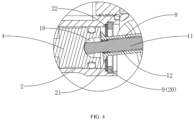
FIG. 4 is an enlarged schematic diagram of the part of A ofFIG. 3 . -
FIG. 5 is a sectional view of the disclosure showing the initial position change of the piston rod. -
FIG. 6 is an enlarged schematic diagram of the part of B ofFIG. 5 . -
FIG. 7 is a schematic diagram showing the mating state between the connecting rod and the adjustment element of the disclosure. -
FIG. 8 is a schematic diagram showing the structure of the adjustment element of the disclosure. -
FIG. 9 is a schematic diagram showing the mating state between the connecting rod and the brake body of the disclosure. -
FIG. 10 is a schematic diagram showing the mating state between the connecting rod and the lever of the disclosure. - The following is a clear and complete description of the technical solution in the embodiments of the disclosure, with reference to the accompanying drawings. It should be noted that the described embodiments are only a part of the embodiments of the present disclosure, and not the complete embodiments. Based on the embodiments of the disclosure, all other embodiments that ordinary skilled persons in the art can obtain without creative effort are within the scope of protection of the disclosure.
- It should be understood that although terms such as upper, middle, lower, top, and one end are used to describe various components in this document, these terms are not limiting. These terms are used only to distinguish the components from each other for ease of understanding, and not to define any direction or order restrictions.
- As shown in
FIG.S 1-10 , a hydraulic brake with travel adjustment mechanism comprises a brake body 1, apiston rod 4, alever 5, aspring 6, abrake hose 7, and a connectingrod 8. The brake body 1 comprises apressure cylinder 2 and anoil storage cylinder 3 which are connected with each other. Thepiston rod 4 is movably positioned within thepressure cylinder 2. TheLever 5 is rotatably connected to one end of the brake body 1 and is in transmission connection with thepiston rod 4. Thespring 6 is connected between thepiston rod 4 and an inner wall of thepressure cylinder 2, keeping thepiston rod 4 in its initial position relative to thepressure cylinder 2 when thelever 5 is not subjected to external force. Thebrake hose 7 is connected to the other end of the brake body 1 and communicates with thepressure cylinder 2. One end of the connectingrod 8 is connected to thelever 5, and the other end of the connectingrod 8 passes through thepressure cylinder 2 and is in transmission engagement with thepiston rod 4. Thepressure cylinder 2 is provided with a limitingcomponent 9 fixedly arranged therein, which limits the movement of the connectingrod 8 in relation to thepressure cylinder 2. The connectingrod 8 is provided with anadjustment chamber 10, in which anadjustment element 11 is positioned. One end of the connectingrod 8 extends into theadjustment chamber 10 and is in transmission engagement with thepiston rod 4. When in use, theadjustment element 11 can move within theadjustment chamber 10 under an external force and drive thepiston rod 4 to move forward or backward relative to thepressure cylinder 2, thereby adjusting the initial position of thepiston rod 4 relative to thepressure cylinder 2. After the adjustment is completed, theadjustment element 11 can maintain its initial position after the movement. - During the stroke adjustment process, when the
lever 5 is not subjected to an external force, the connectingrod 8 remains fixed in position relative to thepressure cylinder 2 due to the obstruction of the limitingcomponent 9. At this time, by applying an external force to theadjustment element 11, the extending portion of theadjustment element 11 from thefirst opening 13 can be lengthened or shortened, thereby causing a relative positional change of thepiston rod 4 relative to thepressure cylinder 2. - According to one or more embodiments, as shown in
FIG.S 3-6 , a connectingstructure 12 is additionally provided between theadjustment element 11 and theadjustment chamber 10. The connectingstructure 12 includes threads provided on a peripheral side of theadjustment element 11 and an inner wall of theadjustment chamber 10, allowing theadjustment element 11 and theadjustment chamber 10 to be connected by thread engagement. - According to one or more embodiments, as shown in
FIG. 8 , theadjustment chamber 10 includes afirst opening 13 and asecond opening 14 set on a surface of the connectingrod 8. One end of theadjustment element 11 passes through thefirst opening 13 and is in transmission engagement with thepiston rod 4, while an external force can be applied to theadjustment element 11 through thesecond opening 14 to move theadjustment element 11 relative to theadjustment chamber 10. - According to one or more embodiments, as shown in
FIG.S 7-8 , theadjustment element 11 comprises ahead 15, ashaft 16, and atail 17. Thehead 15 extends from thefirst opening 13 and is in engagement with thepiston rod 4, while theshaft 16 is movably connected to theadjustment chamber 10 through the connectingstructure 12. Thetail 17 of theadjustment element 11 is a bolt head and is positioned inside theadjustment element 11 near thesecond opening 14, allowing the bolt head to be operated through thesecond opening 14. - According to one or more embodiments, as shown in
FIG.S 3-6 , arecess 18 is arranged on one side of thepiston rod 4, and thehead 15 of theadjustment element 11 is inserted into and abutted with therecess 18. The bottom surface of therecess 18 is semi-spherical, corresponding to a matingspherical surface 19 on thehead 15 of theadjustment element 11. - As shown in
FIG. 9 , the limitingcomponent 9 includes asnap spring 20 fixedly connected to an inner wall of thepressure cylinder 2, and one end of the connectingrod 8 is convexly provided with a ball joint 21. The ball joint 21 passes through thepressure cylinder 2 and is in limit engagement with thesnap spring 20, and a sealingring 22 is arranged between thesnap spring 20 and the ball joint 21. The connectingrod 8 extends through the sealingring 22 into thepressure cylinder 2. - According to one or more embodiments, as shown in
FIG. 10 , thelever 5 is fixedly connected with a fixedshaft 23, and the fixedshaft 23 has a through-hole 24. One end of the connectingrod 8 passes through the through-hole 24, and both the peripheral side of the connectingrod 8 and the inner wall of the through-hole 24 have threads. The connection between the connectingrod 8 and the through-hole 24 is achieved through thread engagement. By adjusting the position relationship between the connectingrod 8 and the threaded hole, the distance between thelever 5 and the bracket of the brake body 1 can be adjusted, thereby adjusting the grip distance of thelever 5. - The adjustment process of the disclosure is as follows.
- By using hands or tools to access the
second opening 14 on the connectingrod 8, theadjustment element 11 located in theadjustment chamber 10 can be operated and rotated. Since theadjustment element 11 is connected to theadjustment chamber 10 by thread engagement, when theadjustment element 11 rotates, the length of one end of theadjustment element 11 that extends into thepressure cylinder 2 through thefirst opening 13 will change, thereby causing thepiston rod 4 in contact with theadjustment element 11 to move forward or backward. This results in a change in the initial position of thepiston rod 4 during the process of pressing thelever 5 to drive thepiston rod 4. Furthermore, by rotating the connectingrod 8 relative to thelever 5, since the connectingrod 8 cannot move relative to the brake body 1 due to the action of thesnap spring 20, thelever 5 will change its position relative to the brake body 1, and thus the grip distance of thelever 5 will change. - Therefore, in summary, in this disclosure, there are two ways to adjust the free stroke: adjusting the initial position of the
piston rod 4 or adjusting the grip distance of thelever 5. Drivers can choose according to their operating habits. - The advantage of the disclosure lies in the ability to adjust the initial position of the piston rod by means of the adjusting member, thereby changing the free stroke of the hydraulic brake without altering the grip distance of the lever.
- The above merely describes specific embodiments of the present disclosure, which is not intended to limit the scope of protection of the present disclosure. Any modifications, equivalent variations or substitutions, and improvements made within the spirit and principle of the present disclosure by those skilled in the art according to the disclosed technical scope should be included in the protection scope of the present disclosure.
Claims (8)
- A hydraulic brake with travel adjustment mechanism, comprising:a brake body (1) in which a pressure cylinder (2) is arranged;a piston rod (4) movably inserted into the pressure cylinder (2);a lever (5) rotatably connected to one end of the brake body (1) and forming a driving connection with the piston rod (4) while being subjected to an external force;a spring (6) that exerts force on the piston rod (4) to maintain the piston rod (4) in an initial position relative to the pressure cylinder (2) when the lever (5) is not subjected to an external force;a brake hose (7) connected to the other end of the brake body (1) and communicated with the pressure cylinder (2); anda connecting rod (8), one end of which is connected with the lever (5), and the other end of which is arranged in the pressure cylinder (2) to form a driving connection with the piston rod (4);wherein, the pressure cylinder (2) is internally provided with a limiting component (9), which interacts with the connecting rod (8) to limit the connecting rod (8) detachment from the pressure cylinder (2) when the lever (5) is not subjected to an external force;characterized in that:an adjustable chamber (10) is arranged in the connecting rod (8), and an adjustment element (11) passes through the adjustable chamber (10); wherein, one end of the connecting rod (8) extends into the adjustable chamber (10) and forms a driving connection with the piston rod (4);when in use, the adjustment element (11) can move relative to the adjustable chamber (10) under an external force, thereby driving the piston rod (4) to move forwards or backwards relative to the pressure cylinder (2), so as to adjust the initial position of the piston rod (4) relative to the pressure cylinder (2); and after the adjustment is completed, the adjustment element (11) can maintain the initial position after the movement.
- The hydraulic brake with travel adjustment mechanism according to claim 1, characterized in that: a connection structure (12) is arranged between the adjustment element (11) and the adjustable chamber (10), which allows the adjustment element (11) to be movably connected with the adjustable chamber (10).
- The hydraulic brake with travel adjustment mechanism according to claim 2, characterized in that: the connection structure (12) comprises threads respectively arranged on an outer side of the adjustment element (11) and an inner wall of the adjustable chamber (10), enabling a threaded connection between the adjustment element (11) and the adjustable chamber (10).
- The hydraulic brake with travel adjustment mechanism according to claim 2, characterized in that: the adjustable chamber (10) further comprises a first opening (13) and a second opening (14) arranged on a surface of the connecting rod (8); wherein, one end of the adjustment element (11) extends through the first opening (13) and forms a driving connection with the piston rod (4), and an external force can be applied to the adjustment element (11) through the second opening (14) to cause the adjustment element (11) to move relative to the adjustable chamber (10).
- The hydraulic brake with travel adjustment mechanism according to claim 4, characterized in that: the adjustment element (11) comprises a head (15), a shaft (16) and a tail (17); the head (15) extends from the first opening (13) and forms a connection with the piston rod (4), the shaft (16) is movably connected to the adjustable chamber (10) through the connection structure (12), and the tail (17) is positioned near the second opening (14).
- The hydraulic brake with travel adjustment mechanism according to claim 5, characterized in that: one side of the piston rod (4) is provided with a recess (18), and the head (15) of the adjustment element (11) is inserted into and abutted with the recess (18); wherein a bottom surface of the recess (18) is semicircular, and the corresponding head (15) of the adjustment element (11) is provided with a fitting spherical surface (19).
- The hydraulic brake with travel adjustment mechanism according to claim 1, characterized in that: the limiting component (9) comprises a snap spring (20) fixedly connected to an inner wall of the pressure cylinder (2), and one end of the connecting rod (8) is convexly provided with a ball joint (21); and the ball joint (21) is positioned within the pressure cylinder (2) and forms a limiting connection with the snap spring (20).
- The hydraulic brake with travel adjustment mechanism according to claim 1, characterized in that: the lever (5) is fixedly connected to a fixed shaft (23), and the fixed shaft (23) has a through-hole (24); wherein one end of the connecting rod (8) passes through the through-hole (24), and both an outer surface of the connecting rod (8) and an inner wall of the through-hole (24) are threaded to achieve a threaded connection between the connecting rod (8) and the through-hole (24).
Applications Claiming Priority (1)
| Application Number | Priority Date | Filing Date | Title |
|---|---|---|---|
| CN202223343415.8U CN218662241U (en) | 2022-12-12 | 2022-12-12 | Oil pressure brake with stroke adjusting structure |
Publications (1)
| Publication Number | Publication Date |
|---|---|
| EP4385838A1 true EP4385838A1 (en) | 2024-06-19 |
Family
ID=85551008
Family Applications (1)
| Application Number | Title | Priority Date | Filing Date |
|---|---|---|---|
| EP23215615.8A Pending EP4385838A1 (en) | 2022-12-12 | 2023-12-11 | Hydraulic brake with travel adjustment mechanism |
Country Status (3)
| Country | Link |
|---|---|
| US (1) | US20240191764A1 (en) |
| EP (1) | EP4385838A1 (en) |
| CN (1) | CN218662241U (en) |
Families Citing this family (1)
| Publication number | Priority date | Publication date | Assignee | Title |
|---|---|---|---|---|
| CN117002666B (en) * | 2023-08-15 | 2026-01-30 | 青岛迈金智能科技股份有限公司 | Bicycle control mechanism and bicycle |
Citations (4)
| Publication number | Priority date | Publication date | Assignee | Title |
|---|---|---|---|---|
| EP1160152A1 (en) * | 2000-06-02 | 2001-12-05 | Freni Brembo S.p.A. | Device for adjusting the position of the operating lever of a hydraulic actuator |
| WO2005087574A1 (en) * | 2004-03-09 | 2005-09-22 | Hayes Bicycle Group, Inc. | Lever assembly and master cylinder |
| US20100051400A1 (en) * | 2008-09-04 | 2010-03-04 | Elf Performance System Co., Ltd. | Hydraulic brake lever device for bicycle |
| WO2012131441A1 (en) * | 2011-04-01 | 2012-10-04 | Freni Brembo S.P.A. | Pump for vehicles controlled by handlebar for brake or clutch |
Family Cites Families (4)
| Publication number | Priority date | Publication date | Assignee | Title |
|---|---|---|---|---|
| US20070107995A1 (en) * | 2005-11-04 | 2007-05-17 | Heng Tong Machinery Co., Ltd. | Brake drawing system |
| US7942250B2 (en) * | 2007-04-03 | 2011-05-17 | Shimano Inc. | Bicycle hydraulic brake device |
| TW201122267A (en) * | 2009-12-30 | 2011-07-01 | Elite Sewing Machine Mfg Co Ltd | Hydraulic brake arrester. |
| DE102021108983A1 (en) * | 2021-04-12 | 2022-10-13 | Schaeffler Technologies AG & Co. KG | Brake lever assembly for a braking device and vehicle with the brake lever assembly |
-
2022
- 2022-12-12 CN CN202223343415.8U patent/CN218662241U/en active Active
-
2023
- 2023-12-11 EP EP23215615.8A patent/EP4385838A1/en active Pending
- 2023-12-11 US US18/536,085 patent/US20240191764A1/en active Pending
Patent Citations (4)
| Publication number | Priority date | Publication date | Assignee | Title |
|---|---|---|---|---|
| EP1160152A1 (en) * | 2000-06-02 | 2001-12-05 | Freni Brembo S.p.A. | Device for adjusting the position of the operating lever of a hydraulic actuator |
| WO2005087574A1 (en) * | 2004-03-09 | 2005-09-22 | Hayes Bicycle Group, Inc. | Lever assembly and master cylinder |
| US20100051400A1 (en) * | 2008-09-04 | 2010-03-04 | Elf Performance System Co., Ltd. | Hydraulic brake lever device for bicycle |
| WO2012131441A1 (en) * | 2011-04-01 | 2012-10-04 | Freni Brembo S.P.A. | Pump for vehicles controlled by handlebar for brake or clutch |
Also Published As
| Publication number | Publication date |
|---|---|
| CN218662241U (en) | 2023-03-21 |
| US20240191764A1 (en) | 2024-06-13 |
Similar Documents
| Publication | Publication Date | Title |
|---|---|---|
| CN103507903B (en) | Brake control device | |
| EP4385838A1 (en) | Hydraulic brake with travel adjustment mechanism | |
| US20070266817A1 (en) | Rotary-to-linear actuator, with particular use in motorcycle control | |
| US9180928B2 (en) | Brake system with linking effect | |
| CN104590227B (en) | Maintenance kit for braking equipment | |
| US5626058A (en) | Rotary actuator for a bicycle brake | |
| US20070137408A1 (en) | Rotary-to-linear actuator, with particular use in motorcycle control | |
| JP3599120B2 (en) | Hydraulic pressure control device | |
| EP4438420A1 (en) | Hydraulic brake with dual piston structure | |
| TWI637871B (en) | Hydraulic braking system and control device thereof | |
| CN115675388B (en) | Brake pedal structure | |
| DE102022100950A1 (en) | Brake lever arrangement with a detection device for detecting a change in position of the brake lever | |
| CN2677278Y (en) | Tricycle steering mechanism | |
| CN222713679U (en) | Linear brake mechanism and brake handle, brake oil pipe and brake caliper thereof | |
| CN218641013U (en) | Brake with pressure regulating function | |
| CN216684757U (en) | Brake equipment and sharing vehicle | |
| CN113428275A (en) | New energy unmanned two-wheel motorcycle | |
| CN220354346U (en) | Adjustable pivoting mechanism and brake upper pump thereof | |
| CN115848551B (en) | A variable-section hydraulic brake | |
| EP2857303B1 (en) | Time difference safety brake | |
| US11814132B1 (en) | Bicycle operating device | |
| CN108340780B (en) | Quick return mechanism for hand throttle of tractor | |
| TWI849629B (en) | Electronic brake master cylinder | |
| CN223253192U (en) | Pump on brake with precompression | |
| CN121828370A (en) | Brake with variable lever ratio |
Legal Events
| Date | Code | Title | Description |
|---|---|---|---|
| PUAI | Public reference made under article 153(3) epc to a published international application that has entered the european phase |
Free format text: ORIGINAL CODE: 0009012 |
|
| STAA | Information on the status of an ep patent application or granted ep patent |
Free format text: STATUS: REQUEST FOR EXAMINATION WAS MADE |
|
| 17P | Request for examination filed |
Effective date: 20231211 |
|
| AK | Designated contracting states |
Kind code of ref document: A1 Designated state(s): AL AT BE BG CH CY CZ DE DK EE ES FI FR GB GR HR HU IE IS IT LI LT LU LV MC ME MK MT NL NO PL PT RO RS SE SI SK SM TR |
|
| STAA | Information on the status of an ep patent application or granted ep patent |
Free format text: STATUS: EXAMINATION IS IN PROGRESS |
|
| 17Q | First examination report despatched |
Effective date: 20250527 |
|
| GRAP | Despatch of communication of intention to grant a patent |
Free format text: ORIGINAL CODE: EPIDOSNIGR1 |
|
| STAA | Information on the status of an ep patent application or granted ep patent |
Free format text: STATUS: GRANT OF PATENT IS INTENDED |
|
| INTG | Intention to grant announced |
Effective date: 20251219 |