EP4385378B1 - Staubsauger - Google Patents
Staubsauger Download PDFInfo
- Publication number
- EP4385378B1 EP4385378B1 EP22213884.4A EP22213884A EP4385378B1 EP 4385378 B1 EP4385378 B1 EP 4385378B1 EP 22213884 A EP22213884 A EP 22213884A EP 4385378 B1 EP4385378 B1 EP 4385378B1
- Authority
- EP
- European Patent Office
- Prior art keywords
- intake means
- suction
- control unit
- vacuum cleaner
- cleaning
- Prior art date
- Legal status (The legal status is an assumption and is not a legal conclusion. Google has not performed a legal analysis and makes no representation as to the accuracy of the status listed.)
- Active
Links
Images

Classifications
-
- B—PERFORMING OPERATIONS; TRANSPORTING
- B08—CLEANING
- B08B—CLEANING IN GENERAL; PREVENTION OF FOULING IN GENERAL
- B08B9/00—Cleaning hollow articles by methods or apparatus specially adapted thereto
- B08B9/02—Cleaning pipes or tubes or systems of pipes or tubes
- B08B9/027—Cleaning the internal surfaces; Removal of blockages
- B08B9/032—Cleaning the internal surfaces; Removal of blockages by the mechanical action of a moving fluid, e.g. by flushing
- B08B9/035—Cleaning the internal surfaces; Removal of blockages by the mechanical action of a moving fluid, e.g. by flushing by suction
-
- A—HUMAN NECESSITIES
- A47—FURNITURE; DOMESTIC ARTICLES OR APPLIANCES; COFFEE MILLS; SPICE MILLS; SUCTION CLEANERS IN GENERAL
- A47L—DOMESTIC WASHING OR CLEANING; SUCTION CLEANERS IN GENERAL
- A47L9/00—Details or accessories of suction cleaners, e.g. mechanical means for controlling the suction or for effecting pulsating action; Storing devices specially adapted to suction cleaners or parts thereof; Carrying-vehicles specially adapted for suction cleaners
- A47L9/0072—Mechanical means for controlling the suction or for effecting pulsating action
-
- A—HUMAN NECESSITIES
- A47—FURNITURE; DOMESTIC ARTICLES OR APPLIANCES; COFFEE MILLS; SPICE MILLS; SUCTION CLEANERS IN GENERAL
- A47L—DOMESTIC WASHING OR CLEANING; SUCTION CLEANERS IN GENERAL
- A47L9/00—Details or accessories of suction cleaners, e.g. mechanical means for controlling the suction or for effecting pulsating action; Storing devices specially adapted to suction cleaners or parts thereof; Carrying-vehicles specially adapted for suction cleaners
- A47L9/02—Nozzles
-
- A—HUMAN NECESSITIES
- A47—FURNITURE; DOMESTIC ARTICLES OR APPLIANCES; COFFEE MILLS; SPICE MILLS; SUCTION CLEANERS IN GENERAL
- A47L—DOMESTIC WASHING OR CLEANING; SUCTION CLEANERS IN GENERAL
- A47L9/00—Details or accessories of suction cleaners, e.g. mechanical means for controlling the suction or for effecting pulsating action; Storing devices specially adapted to suction cleaners or parts thereof; Carrying-vehicles specially adapted for suction cleaners
- A47L9/02—Nozzles
- A47L9/06—Nozzles with fixed, e.g. adjustably fixed brushes or the like
- A47L9/066—Nozzles with fixed, e.g. adjustably fixed brushes or the like with adjustably mounted brushes, combs, lips or pads; Height adjustment of nozzle or dust loosening tools
-
- A—HUMAN NECESSITIES
- A47—FURNITURE; DOMESTIC ARTICLES OR APPLIANCES; COFFEE MILLS; SPICE MILLS; SUCTION CLEANERS IN GENERAL
- A47L—DOMESTIC WASHING OR CLEANING; SUCTION CLEANERS IN GENERAL
- A47L9/00—Details or accessories of suction cleaners, e.g. mechanical means for controlling the suction or for effecting pulsating action; Storing devices specially adapted to suction cleaners or parts thereof; Carrying-vehicles specially adapted for suction cleaners
- A47L9/24—Hoses or pipes; Hose or pipe couplings
- A47L9/248—Parts, details or accessories of hoses or pipes
-
- A—HUMAN NECESSITIES
- A47—FURNITURE; DOMESTIC ARTICLES OR APPLIANCES; COFFEE MILLS; SPICE MILLS; SUCTION CLEANERS IN GENERAL
- A47L—DOMESTIC WASHING OR CLEANING; SUCTION CLEANERS IN GENERAL
- A47L9/00—Details or accessories of suction cleaners, e.g. mechanical means for controlling the suction or for effecting pulsating action; Storing devices specially adapted to suction cleaners or parts thereof; Carrying-vehicles specially adapted for suction cleaners
- A47L9/28—Installation of the electric equipment, e.g. adaptation or attachment to the suction cleaner; Controlling suction cleaners by electric means
- A47L9/2805—Parameters or conditions being sensed
-
- A—HUMAN NECESSITIES
- A47—FURNITURE; DOMESTIC ARTICLES OR APPLIANCES; COFFEE MILLS; SPICE MILLS; SUCTION CLEANERS IN GENERAL
- A47L—DOMESTIC WASHING OR CLEANING; SUCTION CLEANERS IN GENERAL
- A47L9/00—Details or accessories of suction cleaners, e.g. mechanical means for controlling the suction or for effecting pulsating action; Storing devices specially adapted to suction cleaners or parts thereof; Carrying-vehicles specially adapted for suction cleaners
- A47L9/28—Installation of the electric equipment, e.g. adaptation or attachment to the suction cleaner; Controlling suction cleaners by electric means
- A47L9/2836—Installation of the electric equipment, e.g. adaptation or attachment to the suction cleaner; Controlling suction cleaners by electric means characterised by the parts which are controlled
- A47L9/2842—Suction motors or blowers
-
- A—HUMAN NECESSITIES
- A47—FURNITURE; DOMESTIC ARTICLES OR APPLIANCES; COFFEE MILLS; SPICE MILLS; SUCTION CLEANERS IN GENERAL
- A47L—DOMESTIC WASHING OR CLEANING; SUCTION CLEANERS IN GENERAL
- A47L9/00—Details or accessories of suction cleaners, e.g. mechanical means for controlling the suction or for effecting pulsating action; Storing devices specially adapted to suction cleaners or parts thereof; Carrying-vehicles specially adapted for suction cleaners
- A47L9/28—Installation of the electric equipment, e.g. adaptation or attachment to the suction cleaner; Controlling suction cleaners by electric means
- A47L9/2857—User input or output elements for control, e.g. buttons, switches or displays
-
- B—PERFORMING OPERATIONS; TRANSPORTING
- B08—CLEANING
- B08B—CLEANING IN GENERAL; PREVENTION OF FOULING IN GENERAL
- B08B2209/00—Details of machines or methods for cleaning hollow articles
- B08B2209/02—Details of apparatuses or methods for cleaning pipes or tubes
- B08B2209/027—Details of apparatuses or methods for cleaning pipes or tubes for cleaning the internal surfaces
- B08B2209/032—Details of apparatuses or methods for cleaning pipes or tubes for cleaning the internal surfaces by the mechanical action of a moving fluid
Definitions
- the invention relates to an electric motor driven suction cleaning apparatus, more particularly to an electric vacuum cleaner comprising a suction nozzle or brush, a suction channel and means for collecting dust.
- a vacuum cleaner is an electric appliance that filters dust, dirt and foreign matters together with air into a body provided therein, after sucking them by using a vacuum motor mounted in the body.
- vacuum cleaners may be classified at least into a canister type having a suction nozzle or brush communicated with the body via a suction pipe or pipes and a flexible suction hose, wherein the body is equipped with wheels for moving the vacuum cleaner over the floor.
- a stick type vacuum cleaner having a suction nozzle that can be directly connected to the body o via a suction pipe or pipes, wherein the body is held in the user's hand during operation.
- Both types of the vacuum cleaners may include a vacuum cleaner body having a vacuum motor configured to generate a suction force mounted therein, a suction nozzle configured to suck dust and other rubbish scattered on a surface by the suction force generated in the body, and a connection pipe configured to connect the body and the suction nozzle with each other.
- the suction force enables the suction nozzle to suck therein the air containing dust and other rubbish scattered on the surface which will be cleaned.
- the air containing the dust and other rubbish may be drawn into the body via the connection pipe form the nozzle.
- the dust and other rubbish contained in the air sucked into the body may be separated within a dust separation means provided in the body, as a cyclonic separation apparatus or other means.
- the separated dust and other rubbish may be collected in a means for collecting dust that is in communication with the dust separation device and the air having the dust and foreign matters separated there from may be exhausted outside the body.
- cleaning parameters e.g. a suction power are reduce due to smaller airflow on some dense carpet. It causes that the dust and the other rubbish particles aren't sucked directly to means for collecting dust, but they levitate in the suction channel. It provides to bad cleaning effect, because when customer switch off the vacuum cleaner during appearing levitation phenomena then this particles haven't been vacuumed, but fall down again on the cleaned surface.
- Document GB2161902A discloses a non-return flap valve for a vacuum cleaner, comprising a movable sealing flap, a stationary part having means for mounting the non-return flap valve in a nozzle body of the vacuum cleaner, a strip connecting said flap to said stationary part and spacing said flap from said stationary part, and a constriction thickness across said strip, said constriction defining and extending along a flexing axis about which said flap articulates relative to said stationary part to prevent the dust and debris accumulated in a collecting chamber from escaping when the appliance is switched off, but unfortunately it does not prevent from falling out from the suction channel participles that are not accumulated in the said chamber.
- Document EP2113184A2 discloses a vacuum cleaner having a suction port and a suction channel, where a capacitive humidity sensor is arranged in the suction channel.
- the suction channel opens during detection of humidity in a secondary air opening that is spatially attached to the humidity sensor. Monitoring and/or cleaning agents in contact with the humidity sensor proceed during opening movement of the air opening.
- the air opening is obtained by opening a part of a suction channel wall to prevent water from being drawn into the vacuum cleaner.
- a locking position of the air opening is secured by magnets. The mentioned solution does not prevent from falling out participles form the suction channel, when the vacuuming is finished.
- a vacuum cleaner for cleaning a surface comprising: a body, an electrically-driven suction unit, a means for collecting the dust, a suction channel, a nozzle that is fluidly communicated with the body via the suction channel, an intake means fluidly communicated with the suction unit and provided for ensuring additional portion of the air in to the suction channel, and which can be adjusted between an opened state and a closed state, to open and close a by-pass channel, a control unit configured to control the suction unit, with a processor for storing, calculating and interpreting signals or data, and operated by a user a starting and stopping device being electrically communicated with the control unit and arranged to generate a cleaning start signal or a cleaning end signal.
- the intake means is bi-directionally electrically connected to the control unit, so transmission of data or signals between the intake means and the control unit is enabled, and the control unit is arranged to generate a signal for controlling the intake means in the event of detecting the cleaning start signal or the cleaning end signal.
- the vacuum cleaner is equipped with the intake means that is provided for ensuring an additional portion of air into the suction channel, also for reducing air flow resistance by the way of reduction of air suction resistance after the vacuum cleaner is switched off, i.e. when the user decides to finish cleaning the surface what is expressed by changing the state of the on/off switch. Then the additional portion of air can be sucked into the suction channel, and thus dust particles, which resided in the suction channel can be removed from the suction channel to the dust collecting means, thanks to which they do not fall out on the cleaned surface, what significantly improves the comfort and efficiency of cleaning.
- the intake means is arranged to generate data, that provide the control unit with information about the state of the intake means, wherein these data are used to control the suction unit by the control unit.
- the positive effect is that the control unit can adapt the control signals to the current state of the intake means.
- the intake means has an actuator, that is controlled by the control unit, wherein the actuator is configured to change the state of the intake means on the basis of the signal, therefore the state of the intake means can be changed automatically without the user intervention.
- the starting and stopping device is an electrical switch, wherein the switch is communicated with the control unit via a wired transmission.
- the intake means is configured to generate and send to the control unit the cleaning end signal for controlling the suction unit, when the intake means has been manually adjusted from the closed to the opened state by the user, wherein, then the suction unit is being switched off immediately or after calculated and counted predetermined time by the control unit.
- the positive effect is that the user can choose how to start cleaning the suction channel in the way by changing the state of the switch or by changing the state of the intake means, namely by changing it state from closed to opened state.
- the intake means comprises at least one paddle, that is arranged on a bottom of the nozzle, and the actuator which is configured to rotate the paddle between horizontal and vertical position and back in relation to the bottom of the nozzle in order to increase a gap between the bottom of the nozzle and the cleaned surface, when the intake means is in the opened state. Therefore, at least portion of the nozzle is lifted above the cleaned surface and therefore more air can be sucked into the inlet to remove from the suction channel residual dust participles by the increased gap.
- a vacuum cleaner has also a suction pipe that forms at least portion of the suction channel, and in that the intake means comprises a sleeve which slides on the outer surface of the suction pipe, an opening arranged in the suction pipe, wherein the sleeve is configured to air tightly close or open the opening when sliding along the suction pipe.
- the sleeve is provided with a handle which projects transversely from an outer surface of the sleeve to the movement of the sleeve.
- the intake means comprises a solenoid valve configured to be operated by the control unit, wherein the solenoid valve is arranged in the nozzle and is fluidly connected with the suction channel and is configured to allow inlet air to bypass a nozzle inlet.
- a method for operating the vacuum cleaner more particularly method for cleaning the suction channel according to the present invention comprises the following method steps, wherein the method is performed just after the user finishes cleaning the surface.
- the intake means is in the closed state, so the suction channel is provided with air merely via the inlet of the nozzle.
- the method of cleaning the suction channel is started when a state of the starting and stopping device is changed from on to off position and the cleaning end signal is sent to the control unit, then the suction unit is switched off by the control unit, immediately or alternatively is switched off after the calculated and counted time has elapsed.
- the control unit generates the signal and sends it to the intake means. Based on the signal the intake means changes the state from the closed state to the opened state.
- the control unit switches off the suction unit.
- the user is informed about the end of the cleaning process.
- intake means is operated to the closed state manually by the user or automatically by the control unit which generates and sends a signal to the intake means that is configured to be actuated.
- a method for operating the vacuum cleaner in order to clean the suction channel comprises the following method steps.
- the method for cleaning the suction channel is performed just after the user finishes cleaning the surface.
- the intake means is in the closed state.
- the method of cleaning the suction channel is started when the user manually changes the state of the intake means from the closed to the opened state, then the intake means generates and sends the cleaning end signal to the control unit, to start counting time for switching off the suction unit, or alternatively the suction unit is switched off immediately when the intake means changed the state.
- the control unit switches off the suction unit.
- the user is informed about the end of the cleaning process.
- intake means is operated to the closed state manually by the user or automatically by the control unit which generates and sends a signal to the intake means that is configured to be actuated.
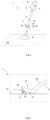
- FIG. 1 is a schematic view of the vacuum cleaner according to the present invention.
- a vacuum cleaner 1 for cleaning a surface 13 has a body 2, an electrically-driven suction unit 3, a means for collecting the dust 4, a suction channel 5, a nozzle 6 that is fluidly communicated with the body 2 via the suction channel 5, an intake means 7 with a by-pass 18 fluidly communicated with the suction unit 3 via suction channel 5, and provided for ensuring additional portion of the air in to the suction channel 5, and which can be adjusted between an opened state and a closed state, to open and close the by-pass channel 18.
- the vacuum cleaner 1 also has a control unit 8 configured to control the suction unit 3, with a processor for storing, calculating and interpreting signals or data, and operated by the user a starting and stopping device 9, being electrically communicated with the control unit 8 and arranged to generate a cleaning start signal or a cleaning end signal SE. Furtherly, the intake means 7 is also adapted to generate the cleaning end signal SE, which initiates the method of cleaning the suction channel 5.
- the intake means 7 is bi-directionally electrically connected to the control unit 8, in order to transmit data or signals between the intake means 7 and the control unit 8.
- the control unit 8 In the first case, in the event of detecting the cleaning end signal SE, the control unit 8 generates a signal S1 to change the state of the intake means 7 from the closed to the opened by using an actuator 10, and starts counting time to switch off from the supply the suction unit 3, or alternatively suction unit 3 is switch off immediately, and dust participles are sucked in to the means for collecting the dust 4.
- the intake means 7 If the user decides to use the intake means to start the cleaning suction channel 5 method, he changes the state of it from closed to opened state, then the intake means 7 generates the cleaning end signal SE for the control unit 8 which starts calculating time to switch off from the supply the suction unit 3, or alternatively suction unit 3 is switch off immediately, and dust participles are sucked in to the means for collecting the dust 4, by the momentum of the suction unit 3.
- the control unit 8 informs the user about the end of the cleaning process of the suction channel 5, and the intake means 7 is operated to the closed state, manually by the user or automatically by the control unit 8 which generates and sends a signal S2 to the intake means 7 to be actuated to the closed state by the actuator 10.
- FIG. 2 shows the preferred embodiment of the vacuum cleaner.
- a vacuum cleaner 1 for cleaning a surface 13 has a body 2 with an electrically-driven suction unit 3 (not shown), a means for collecting the dust 4, and a nozzle 6 for cleaning the surface 13, that is fluidly connected with the body 2 via a suction pipe 16 and forming together the suction channel 5.
- the nozzle 6 has an inlet 17 (not shown) arranged on the bottom side of it and an intake means 7 that is arranged on the upper portion of the nozzle 6.
- the intake means 7 is a valve with an actuator 10 for opening and closing it.
- the valve has a by-pass channel 18 which is fluidly communicated with the suction channel 5 and provided for ensuring additional portion of air into the suction channel in order to bypass the inlet 17.
- the vacuum cleaner 1 also comprises a control unit 8 (not shown) and a starting and stopping device 9, which is in the form of an on/off electrical switch connected to the control unit 8 by wires.
- the control unit 8 has a processor for storing, calculating and interpreting signals or data is configured to control the suction unit 3 and the intake means 7. While cleaning the surface 13, the switch is on and the valve is closed, therefore air is sucked into the suction channel 5 only through the inlet 17.
- the switch state change is transmitted to the control unit 8 which changes the state of the valve to open the by-pass channel 18 and starts calculating time to switch off from the supply the suction unit 3, or alternatively suction unit 3 is switch off immediately, and dust participles are sucked from the suction channel into the means for collecting the dust 4.
- the control unit 8 informs the user about the end of the cleaning process of the suction channel 5, and the control unit 8 generates and sends a signal S2 to the actuator 10 to close the valve.
- FIG. 3 shows the another preferred embodiment of the vacuum cleaner.
- a vacuum cleaner 1 for cleaning a surface 13 has a body 2 with an electrically-driven suction unit 3 (not shown), a means for collecting the dust 4, and a nozzle 6 for cleaning the surface 13, that is fluidly connected with the body 2 via a suction pipe 16 which forming together the suction channel 5.
- the nozzle 6 has an inlet 17 (not shown) arranged on the bottom side of it.
- the vacuum cleaner 1 also comprises an intake means 7 which is arranged on the suction pipe 16.
- the intake means 7 has a sleeve 19 which slides on the outer surface of the suction pipe 16, an opening 14 arranged in the suction pipe 16, wherein the sleeve 19 is configured to air tightly close or open the opening 14, when sliding along the suction pipe 16.
- the sleeve 19 is provided with a handle 15 which projects from an outer surface of the sleeve 19 transversely to the movement of the sleeve 19.
- the vacuum cleaner 1 also comprises a control unit 8 (not shown) and a starting and stopping device 9 which is in the form of an on/off electrical switch connected to the control unit 8 by wires.
- the control unit 8 has a processor for storing, calculating and interpreting signals or data is configured to control the suction unit 3 and the intake means 7.
- the switch While cleaning the surface 13, the switch is on and the opening 14 is covered by the sleeve 19, therefore air is sucked only through the inlet 17, into the suction channel 5.
- the intake means 7 send the signal SE to the control unit 8, which starts calculating time to switch off the suction unit 3 from the supply, or alternatively the suction unit 3 is switch off immediately, and dust participles are sucked from the suction channel into the means for collecting the dust 4 with the help from the additional portion of air sucked via the opening 14.
- the control unit 8 informs the user about the end of the cleaning process of the suction channel 5. Then, the user moves back the sleeve 19 to cover the opening 14.
- FIG. 4 shows the another preferred embodiment of a vacuum cleaner in fragmentary view.
- a vacuum cleaner 1 for cleaning a surface 13 has a body 2 (not shown) with an electrically-driven suction unit 3 (not shown), a means for collecting the dust 4 (not shown), and a nozzle 6 for cleaning the surface 13, that is fluidly connected with the body 2 via a suction pipe 16 and forming together the suction channel 5.
- the nozzle 6 has an inlet 17 arranged on the bottom side of it.
- the vacuum cleaner 1 also comprises an intake means 7 that is arranged at the bottom side of the nozzle 6.
- the intake means 7 comprises at least one paddle 11, that is pivotally arranged on the bottom of the nozzle 6, and the actuator 10 which is configured to rotate the paddle 11 between horizontal and vertical position about a pivot axis lying on the bottom of the nozzle 6, in order to increase a gap 12 between the bottom of the nozzle 6 and the cleaned surface 13, when the intake means 7 is in the opened state.
- the vacuum cleaner 1 has a control unit 8 (not shown) and a starting and stopping device 9 which is in the form of an on/off electrical switch connected to the control unit 8 by wires.
- the control unit 8 has a processor for storing, calculating and interpreting signals or data is configured to control the suction unit 3 and the intake means 7.
- the switch While cleaning the surface 13, the switch is on and the paddle 11 stays horizontally to the surface 13 and is hidden in the bottom of the nozzle 6, therefore air is sucked into the suction channel only through the very small gap 12 into the inlet 17.
- the control unit 8 If the user decides to finish cleaning of the surface 13 process, he changes the state of the switch from on to off, change of the state of the switch is transmitted to the control unit 8, then the control unit 8 send the signal S1 to the intake means 7 to move the paddle 11 from horizontal to vertical position.
- the actuator 10 rotates the paddle 11, therefore the gap 12 is increased, that allows more air to be drawn into the suction channel 5.
- control unit 8 starts calculating time to switch off the suction unit 3 from the supply, or alternatively suction unit 3 is switch off immediately, and dust participles are sucked from the suction channel into the means for collecting the dust 4 by a momentum of the suction unit 3.
- the control unit 8 informs the user about the end of the cleaning process of the suction channel 5, and the control unit 8 generates and sends a signal S2 to the actuator 10 which rotates the paddle 11 back to its initial horizontal position.
Landscapes
- Engineering & Computer Science (AREA)
- Mechanical Engineering (AREA)
- Nozzles For Electric Vacuum Cleaners (AREA)
Claims (11)
- Staubsauger (1) zum Reinigen einer Oberfläche (13), der Folgendes umfasst:einen Hauptteil (2),eine elektrisch betriebene Saugeinheit (3),ein Mittel zum Auffangen des Staubs (4),eine Saugleitung (5),eine Düse (6), die über die Saugleitung (5) mit dem Hauptteil (2) fluidverbunden ist,ein Aufnahmemittel (7), das mit der Saugeinheit (3) fluidverbunden und dafür vorgesehen ist sicherzustellen, dass eine zusätzliche Portion Luft in die Saugleitung (5) strömt, und das zwischen einer offenen und einer geschlossenen Stellung zum Öffnen und Schließen eines Umgehungskanals (18) verstellt werden kann,eine Steuereinheit (8), die so konfiguriert ist, dass sie die Saugeinheit (3) steuert, mit einem Prozessor zum Speichern, Berechnen und Interpretieren von Signalen oder Daten,und eine von einem Benutzer betätigte Ein- und Ausschaltvorrichtung (9), die elektrisch mit der Steuereinheit (8) verbunden und so ausgelegt ist, dass sie ein Reinigungsstartsignal oder ein Reinigungsendesignal (SE) erzeugt,dadurch gekennzeichnet, dassdas Aufnahmemittel (7) in zwei Richtungen elektrisch mit der Steuereinheit (8) verbunden ist, so dass eine Übertragung von Daten oder Signalen zwischen dem Aufnahmemittel (7) und der Steuereinheit (8) möglich ist, und dass die Steuereinheit (8) so ausgelegt ist, dass sie ein Signal (S1) zum Steuern des Aufnahmemittels (7) erzeugt, wenn das Reinigungsstartsignal oder das Reinigungsendesignal (SE) erfasst wird.
- Staubsauger nach Anspruch 1, dadurch gekennzeichnet, dass das Aufnahmemittel (7) so ausgelegt ist, dass es Daten (D1) erzeugt, die die Steuereinheit (8) mit Informationen über die Stellung des Aufnahmemittels (7) versorgen, wobei diese Daten zum Steuern der Saugeinheit (3) durch die Steuereinheit (8) benutzt werden.
- Staubsauger nach Anspruch 1 oder 2, dadurch gekennzeichnet, dass das Aufnahmemittel (7) einen Aktuator (10) aufweist, der von der Steuereinheit (8) gesteuert wird, wobei der Aktuator (10) so konfiguriert ist, dass er die Stellung des Aufnahmemittels (7) auf der Grundlage des Signals (S1) ändert.
- Staubsauger nach Anspruch 3, dadurch gekennzeichnet, dass es sich bei der Ein- und Ausschaltvorrichtung (9) um einen elektrischen Schalter handelt, wobei der Schalter über eine drahtgebundene Übertragung mit der Steuereinheit (8) verbunden ist.
- Staubsauger nach einem der Ansprüche 1-4, dadurch gekennzeichnet, dass das Aufnahmemittel (7) so konfiguriert ist, dass es das Reinigungsendesignal (SE) erzeugt und zum Steuern der Saugeinheit (3) zur Steuereinheit (8) sendet, wenn das Aufnahmemittel (7) vom Benutzer manuell aus der geschlossenen in die offenen Stellung verstellt worden ist, wobei die Saugeinheit (3) dann sofort oder nach einer vorgegebenen Zählzeit von der Steuereinheit (8) abgeschaltet wird.
- Staubsauger nach einem der vorhergehenden Ansprüche, dadurch gekennzeichnet, dass das Aufnahmemittel (7) mindestens eine Klappe (11), die an einer Unterseite der Düse (6) angeordnet ist, und den Aktuator (10) umfasst, der so konfiguriert ist, dass er die Klappe (11) zwischen einer horizontalen und einer vertikalen Position in Bezug auf die Unterseite der Düse (6) dreht und so einen Spalt (12) zwischen der Unterseite der Düse (6) und der Oberfläche (13) vergrößert, wenn sich das Aufnahmemittel (7) in der offenen Stellung befindet.
- Staubsauger nach einem der Ansprüche 1-5, dadurch gekennzeichnet, dass der Staubsauger ein Saugrohr (16) aufweist, das zumindest einen Teil der Saugleitung (5) bildet, und dass das Aufnahmemittel (7) eine Hülse (19) umfasst, die an der Außenfläche des Saugrohrs (16) verschiebbar ist, wobei in dem Saugrohr (16) eine Öffnung (14) angeordnet ist, wobei die Hülse (19) so konfiguriert ist, dass sie die Öffnung (14) luftdicht verschließt oder öffnet, wenn sie an dem Saugrohr (16) entlang verschoben wird.
- Staubsauger nach Anspruch 7, dadurch gekennzeichnet, dass die Hülse (19) mit einem Griff (15) versehen ist, der quer zur Bewegung der Hülse (19) von einer Außenfläche der Hülse (19) vorsteht.
- Staubsauger nach einem der vorhergehenden Ansprüche, dadurch gekennzeichnet, dass das Aufnahmemittel (7) ein Magnetventil umfasst, das so konfiguriert ist, dass es von der Steuereinheit (8) betätigt wird, wobei das Magnetventil in der Düse (6) angeordnet und mit der Saugleitung (5) fluidverbunden und so konfiguriert ist, dass es ermöglicht, dass Ansaugluft einen Düseneintritt (17) umgeht.
- Verfahren zum Betreiben des Staubsaugers (1) nach einem der vorhergehenden Ansprüche zwecks Reinigens der Saugleitung (5) mit folgenden Verfahrensschritten, wobei die Saugeinheit (3) vor dem Beginn des Reinigungsprozesses der Saugleitung (5) arbeitet und sich das Aufnahmemittel (7) in der geschlossenen Stellung befindet:- der Reinigungsprozess der Saugleitung (5) beginnt, wenn eine Stellung der Ein- und Ausschaltvorrichtung (9) aus der Ein- in die Aus-Position geändert und das Reinigungsendesignal (SE) an die Steuereinheit (8) gesendet wird,- die Saugeinheit (3) wird sofort oder alternativ dazu nach Ablauf der Zählzeit abgeschaltet,- die Steuereinheit (8) erzeugt das Signal (S1) und sendet es an das Aufnahmemittel (7),- auf der Grundlage des Signals (S1) ändert das Aufnahmemittel (7) die Stellung aus der geschlossenen in die offene,- nach der vorgegebenen Zeit, die vom Prozessor berechnet wird, schaltet die Steuereinheit (8) die Saugeinheit ab,- Ende des Reinigungsprozesses der Saugleitung (5),- der Benutzer wird über das Ende des Reinigungsprozesses informiert,- das Aufnahmemittel (7) wird vom Benutzer manuell oder über die Steuereinheit (8), die ein Signal (S2) erzeugt und zu dem Aufnahmemittel (7) sendet, das laut Konfiguration betätigt werden soll, automatisch in die geschlossene Stellung gebracht.
- Verfahren zum Betreiben des Staubsaugers (1) nach einem der Ansprüche 5-9 zwecks Reinigens der Saugleitung (5) mit folgenden Verfahrensschritten, wobei die Saugeinheit (3) vor dem Beginn des Reinigungsprozesses der Saugleitung (5) arbeitet und sich das Aufnahmemittel (5) in der geschlossenen Stellung befindet:- der Reinigungsprozess der Saugleitung (5) beginnt, wenn der Benutzer die Stellung des Aufnahmemittels (7) manuell aus der geschlossenen in die offene Stellung ändert,- das Aufnahmemittel (7) das Reinigungsendesignal (SE) erzeugt und an die Steuereinheit (8) sendet, damit mit dem Berechnen von Zeit für das Abschalten der Saugeinheit (3) begonnen oder alternativ dazu die Saugeinheit (3) sofort abgeschaltet wird, wenn das Aufnahmemittel (7) die Stellung geändert hat,- die Steuereinheit (8) nach der Zählzeit, die vom Prozessor berechnet wird, die Saugeinheit (3) abschaltet,- Ende des Reinigungsprozesses der Saugleitung (5),- der Benutzer wird über das Ende des Reinigungsprozesses informiert,- das Aufnahmemittel (7) wird vom Benutzer manuell oder über die Steuereinheit (8), die ein Signal (S2) erzeugt und zu dem Aufnahmemittel (7) sendet, das laut Konfiguration betätigt werden soll, automatisch in die geschlossene Stellung gebracht.
Priority Applications (3)
| Application Number | Priority Date | Filing Date | Title |
|---|---|---|---|
| EP22213884.4A EP4385378B1 (de) | 2022-12-15 | 2022-12-15 | Staubsauger |
| PL22213884.4T PL4385378T3 (pl) | 2022-12-15 | 2022-12-15 | Odkurzacz |
| US18/529,049 US20240198397A1 (en) | 2022-12-15 | 2023-12-05 | Vacuum cleaner and method for operating a vacuum cleaner |
Applications Claiming Priority (1)
| Application Number | Priority Date | Filing Date | Title |
|---|---|---|---|
| EP22213884.4A EP4385378B1 (de) | 2022-12-15 | 2022-12-15 | Staubsauger |
Publications (2)
| Publication Number | Publication Date |
|---|---|
| EP4385378A1 EP4385378A1 (de) | 2024-06-19 |
| EP4385378B1 true EP4385378B1 (de) | 2025-06-04 |
Family
ID=84537267
Family Applications (1)
| Application Number | Title | Priority Date | Filing Date |
|---|---|---|---|
| EP22213884.4A Active EP4385378B1 (de) | 2022-12-15 | 2022-12-15 | Staubsauger |
Country Status (3)
| Country | Link |
|---|---|
| US (1) | US20240198397A1 (de) |
| EP (1) | EP4385378B1 (de) |
| PL (1) | PL4385378T3 (de) |
Families Citing this family (1)
| Publication number | Priority date | Publication date | Assignee | Title |
|---|---|---|---|---|
| USD1082191S1 (en) * | 2024-12-09 | 2025-07-01 | Suzhou Kingbow Electrical Appliances Co., Ltd | Vacuum cleaner |
Family Cites Families (7)
| Publication number | Priority date | Publication date | Assignee | Title |
|---|---|---|---|---|
| FR2567744B1 (fr) | 1984-07-18 | 1987-06-26 | Black & Decker Inc | Clapet anti-retour pour buse d'aspirateur, notamment d'aspirateur miniature a main, et aspirateur comportant un tel clapet |
| US7237299B2 (en) * | 2003-05-08 | 2007-07-03 | The Hoover Company | Cleaning machine having a control system for cleaning a surface |
| DE102008021100A1 (de) | 2008-04-28 | 2009-10-29 | Vorwerk & Co. Interholding Gmbh | Elektromotorisch betriebenes Saugreinigungsgerät |
| US9226633B2 (en) * | 2009-03-13 | 2016-01-05 | Omachron Intellectual Property Inc. | Surface cleaning apparatus |
| DE102010036772A1 (de) * | 2010-07-30 | 2012-02-02 | Vorwerk & Co. Interholding Gmbh | Verfahren zur Überwachung einer Schließstellung |
| DE102011051683A1 (de) * | 2011-07-08 | 2013-01-10 | Miele & Cie. Kg | Verfahren zum Betreiben eines Staubsaugers mit einem Zyklonabscheider und Staubsauger mit einem Zyklonabscheider |
| AU2018101242A4 (en) * | 2017-09-11 | 2018-09-27 | Bissell Inc. | Vacuum cleaner |
-
2022
- 2022-12-15 PL PL22213884.4T patent/PL4385378T3/pl unknown
- 2022-12-15 EP EP22213884.4A patent/EP4385378B1/de active Active
-
2023
- 2023-12-05 US US18/529,049 patent/US20240198397A1/en active Pending
Also Published As
| Publication number | Publication date |
|---|---|
| US20240198397A1 (en) | 2024-06-20 |
| PL4385378T3 (pl) | 2025-09-01 |
| EP4385378A1 (de) | 2024-06-19 |
Similar Documents
| Publication | Publication Date | Title |
|---|---|---|
| EP3941324B1 (de) | Reinigungsroboter, station und reinigungssystem | |
| KR102620360B1 (ko) | 로봇 청소기, 스테이션 및 청소 시스템 | |
| JP6607604B2 (ja) | 真空掃除機用のベースステーション | |
| US7752708B2 (en) | Floor cleaning apparatus with filter cleaning system | |
| CA2445242C (en) | Vacuum cleaner equipped with dirt cup and separate filter drawer | |
| EP1621124A2 (de) | Saugdüse und Staubsauger mit derselben | |
| EP4137028B1 (de) | Staubsauger | |
| CA2504273A1 (en) | Dirt cup with dump door in bottom wall and dump door actuator on top wall | |
| US10076218B2 (en) | Method for operating a vacuum cleaner having a cyclone separator and a vacuum cleaner having a cyclone separator | |
| JP5810215B2 (ja) | フィルタ清浄用圧力容器を有する電動掃除機 | |
| GB2435818A (en) | Floor cleaning apparatus with filter cleaning system | |
| EP4385378B1 (de) | Staubsauger | |
| CA2605309A1 (en) | Floor cleaning apparatus with filter cleaning system | |
| US7272871B1 (en) | Dirt vessel equipped with cleaning plunger | |
| US20240138638A1 (en) | Vacuum cleaning device | |
| KR100707354B1 (ko) | 로봇청소기 시스템 | |
| KR20070095558A (ko) | 로봇청소기와 도킹 스테이션의 도킹 구조를 개선한 청소기시스템 | |
| KR200322350Y1 (ko) | 로봇청소기의 수동겸용 장치 | |
| JP2004024887A (ja) | 電気掃除機 | |
| CN101108108B (zh) | 立式吸尘器集尘装置打开结构 | |
| EP4395618B1 (de) | Einstellung einer position von mindestens einem arbeitselement in einer düsenanordnung | |
| US20240138639A1 (en) | Vacuum cleaning device | |
| KR200147251Y1 (ko) | 진공청소기의 집진실 청소장치 | |
| CA2617707C (en) | Floor cleaning apparatus with filter cleaning system | |
| CN115191864A (zh) | 吸尘器 |
Legal Events
| Date | Code | Title | Description |
|---|---|---|---|
| PUAI | Public reference made under article 153(3) epc to a published international application that has entered the european phase |
Free format text: ORIGINAL CODE: 0009012 |
|
| STAA | Information on the status of an ep patent application or granted ep patent |
Free format text: STATUS: THE APPLICATION HAS BEEN PUBLISHED |
|
| AK | Designated contracting states |
Kind code of ref document: A1 Designated state(s): AL AT BE BG CH CY CZ DE DK EE ES FI FR GB GR HR HU IE IS IT LI LT LU LV MC ME MK MT NL NO PL PT RO RS SE SI SK SM TR |
|
| STAA | Information on the status of an ep patent application or granted ep patent |
Free format text: STATUS: REQUEST FOR EXAMINATION WAS MADE |
|
| GRAP | Despatch of communication of intention to grant a patent |
Free format text: ORIGINAL CODE: EPIDOSNIGR1 |
|
| STAA | Information on the status of an ep patent application or granted ep patent |
Free format text: STATUS: GRANT OF PATENT IS INTENDED |
|
| 17P | Request for examination filed |
Effective date: 20241219 |
|
| INTG | Intention to grant announced |
Effective date: 20250128 |
|
| GRAS | Grant fee paid |
Free format text: ORIGINAL CODE: EPIDOSNIGR3 |
|
| GRAA | (expected) grant |
Free format text: ORIGINAL CODE: 0009210 |
|
| STAA | Information on the status of an ep patent application or granted ep patent |
Free format text: STATUS: THE PATENT HAS BEEN GRANTED |
|
| AK | Designated contracting states |
Kind code of ref document: B1 Designated state(s): AL AT BE BG CH CY CZ DE DK EE ES FI FR GB GR HR HU IE IS IT LI LT LU LV MC ME MK MT NL NO PL PT RO RS SE SI SK SM TR |
|
| REG | Reference to a national code |
Ref country code: GB Ref legal event code: FG4D |
|
| REG | Reference to a national code |
Ref country code: CH Ref legal event code: EP |
|
| REG | Reference to a national code |
Ref country code: DE Ref legal event code: R096 Ref document number: 602022015448 Country of ref document: DE |
|
| REG | Reference to a national code |
Ref country code: IE Ref legal event code: FG4D |
|
| REG | Reference to a national code |
Ref country code: NL Ref legal event code: MP Effective date: 20250604 |
|
| PG25 | Lapsed in a contracting state [announced via postgrant information from national office to epo] |
Ref country code: FI Free format text: LAPSE BECAUSE OF FAILURE TO SUBMIT A TRANSLATION OF THE DESCRIPTION OR TO PAY THE FEE WITHIN THE PRESCRIBED TIME-LIMIT Effective date: 20250604 Ref country code: ES Free format text: LAPSE BECAUSE OF FAILURE TO SUBMIT A TRANSLATION OF THE DESCRIPTION OR TO PAY THE FEE WITHIN THE PRESCRIBED TIME-LIMIT Effective date: 20250604 |
|
| REG | Reference to a national code |
Ref country code: LT Ref legal event code: MG9D |
|
| PG25 | Lapsed in a contracting state [announced via postgrant information from national office to epo] |
Ref country code: GR Free format text: LAPSE BECAUSE OF FAILURE TO SUBMIT A TRANSLATION OF THE DESCRIPTION OR TO PAY THE FEE WITHIN THE PRESCRIBED TIME-LIMIT Effective date: 20250905 Ref country code: NO Free format text: LAPSE BECAUSE OF FAILURE TO SUBMIT A TRANSLATION OF THE DESCRIPTION OR TO PAY THE FEE WITHIN THE PRESCRIBED TIME-LIMIT Effective date: 20250904 |
|
| PG25 | Lapsed in a contracting state [announced via postgrant information from national office to epo] |
Ref country code: BG Free format text: LAPSE BECAUSE OF FAILURE TO SUBMIT A TRANSLATION OF THE DESCRIPTION OR TO PAY THE FEE WITHIN THE PRESCRIBED TIME-LIMIT Effective date: 20250604 |
|
| PG25 | Lapsed in a contracting state [announced via postgrant information from national office to epo] |
Ref country code: HR Free format text: LAPSE BECAUSE OF FAILURE TO SUBMIT A TRANSLATION OF THE DESCRIPTION OR TO PAY THE FEE WITHIN THE PRESCRIBED TIME-LIMIT Effective date: 20250604 |
|
| PG25 | Lapsed in a contracting state [announced via postgrant information from national office to epo] |
Ref country code: RS Free format text: LAPSE BECAUSE OF FAILURE TO SUBMIT A TRANSLATION OF THE DESCRIPTION OR TO PAY THE FEE WITHIN THE PRESCRIBED TIME-LIMIT Effective date: 20250904 |
|
| PG25 | Lapsed in a contracting state [announced via postgrant information from national office to epo] |
Ref country code: LV Free format text: LAPSE BECAUSE OF FAILURE TO SUBMIT A TRANSLATION OF THE DESCRIPTION OR TO PAY THE FEE WITHIN THE PRESCRIBED TIME-LIMIT Effective date: 20250604 |
|
| PG25 | Lapsed in a contracting state [announced via postgrant information from national office to epo] |
Ref country code: NL Free format text: LAPSE BECAUSE OF FAILURE TO SUBMIT A TRANSLATION OF THE DESCRIPTION OR TO PAY THE FEE WITHIN THE PRESCRIBED TIME-LIMIT Effective date: 20250604 |
|
| PG25 | Lapsed in a contracting state [announced via postgrant information from national office to epo] |
Ref country code: PT Free format text: LAPSE BECAUSE OF FAILURE TO SUBMIT A TRANSLATION OF THE DESCRIPTION OR TO PAY THE FEE WITHIN THE PRESCRIBED TIME-LIMIT Effective date: 20251006 |
|
| REG | Reference to a national code |
Ref country code: AT Ref legal event code: MK05 Ref document number: 1799508 Country of ref document: AT Kind code of ref document: T Effective date: 20250604 |
|
| PG25 | Lapsed in a contracting state [announced via postgrant information from national office to epo] |
Ref country code: IS Free format text: LAPSE BECAUSE OF FAILURE TO SUBMIT A TRANSLATION OF THE DESCRIPTION OR TO PAY THE FEE WITHIN THE PRESCRIBED TIME-LIMIT Effective date: 20251004 |
|
| PG25 | Lapsed in a contracting state [announced via postgrant information from national office to epo] |
Ref country code: SM Free format text: LAPSE BECAUSE OF FAILURE TO SUBMIT A TRANSLATION OF THE DESCRIPTION OR TO PAY THE FEE WITHIN THE PRESCRIBED TIME-LIMIT Effective date: 20250604 Ref country code: AT Free format text: LAPSE BECAUSE OF FAILURE TO SUBMIT A TRANSLATION OF THE DESCRIPTION OR TO PAY THE FEE WITHIN THE PRESCRIBED TIME-LIMIT Effective date: 20250604 |
|
| PGFP | Annual fee paid to national office [announced via postgrant information from national office to epo] |
Ref country code: FR Payment date: 20251218 Year of fee payment: 4 |
|
| PGFP | Annual fee paid to national office [announced via postgrant information from national office to epo] |
Ref country code: TR Payment date: 20251209 Year of fee payment: 4 |
|
| PG25 | Lapsed in a contracting state [announced via postgrant information from national office to epo] |
Ref country code: CZ Free format text: LAPSE BECAUSE OF FAILURE TO SUBMIT A TRANSLATION OF THE DESCRIPTION OR TO PAY THE FEE WITHIN THE PRESCRIBED TIME-LIMIT Effective date: 20250604 |
|
| PG25 | Lapsed in a contracting state [announced via postgrant information from national office to epo] |
Ref country code: EE Free format text: LAPSE BECAUSE OF FAILURE TO SUBMIT A TRANSLATION OF THE DESCRIPTION OR TO PAY THE FEE WITHIN THE PRESCRIBED TIME-LIMIT Effective date: 20250604 |
|
| PG25 | Lapsed in a contracting state [announced via postgrant information from national office to epo] |
Ref country code: SK Free format text: LAPSE BECAUSE OF FAILURE TO SUBMIT A TRANSLATION OF THE DESCRIPTION OR TO PAY THE FEE WITHIN THE PRESCRIBED TIME-LIMIT Effective date: 20250604 |
|
| PG25 | Lapsed in a contracting state [announced via postgrant information from national office to epo] |
Ref country code: IT Free format text: LAPSE BECAUSE OF FAILURE TO SUBMIT A TRANSLATION OF THE DESCRIPTION OR TO PAY THE FEE WITHIN THE PRESCRIBED TIME-LIMIT Effective date: 20250604 |
|
| PG25 | Lapsed in a contracting state [announced via postgrant information from national office to epo] |
Ref country code: RO Free format text: LAPSE BECAUSE OF FAILURE TO SUBMIT A TRANSLATION OF THE DESCRIPTION OR TO PAY THE FEE WITHIN THE PRESCRIBED TIME-LIMIT Effective date: 20250604 |