EP4367496B1 - Verfahren und system zur erzeugung einer test-coupon-spezifikation zur vorhersage der ermüdungslebensdauer eines bauteils - Google Patents
Verfahren und system zur erzeugung einer test-coupon-spezifikation zur vorhersage der ermüdungslebensdauer eines bauteils Download PDFInfo
- Publication number
- EP4367496B1 EP4367496B1 EP22734238.3A EP22734238A EP4367496B1 EP 4367496 B1 EP4367496 B1 EP 4367496B1 EP 22734238 A EP22734238 A EP 22734238A EP 4367496 B1 EP4367496 B1 EP 4367496B1
- Authority
- EP
- European Patent Office
- Prior art keywords
- component
- cmp
- condition
- providing
- test coupon
- Prior art date
- Legal status (The legal status is an assumption and is not a legal conclusion. Google has not performed a legal analysis and makes no representation as to the accuracy of the status listed.)
- Active
Links
Images

Classifications
-
- G—PHYSICS
- G01—MEASURING; TESTING
- G01N—INVESTIGATING OR ANALYSING MATERIALS BY DETERMINING THEIR CHEMICAL OR PHYSICAL PROPERTIES
- G01N3/00—Investigating strength properties of solid materials by application of mechanical stress
- G01N3/02—Details
-
- G—PHYSICS
- G06—COMPUTING OR CALCULATING; COUNTING
- G06F—ELECTRIC DIGITAL DATA PROCESSING
- G06F30/00—Computer-aided design [CAD]
- G06F30/20—Design optimisation, verification or simulation
- G06F30/27—Design optimisation, verification or simulation using machine learning, e.g. artificial intelligence, neural networks, support vector machines [SVM] or training a model
-
- G—PHYSICS
- G06—COMPUTING OR CALCULATING; COUNTING
- G06N—COMPUTING ARRANGEMENTS BASED ON SPECIFIC COMPUTATIONAL MODELS
- G06N20/00—Machine learning
-
- G—PHYSICS
- G01—MEASURING; TESTING
- G01N—INVESTIGATING OR ANALYSING MATERIALS BY DETERMINING THEIR CHEMICAL OR PHYSICAL PROPERTIES
- G01N2203/00—Investigating strength properties of solid materials by application of mechanical stress
- G01N2203/0058—Kind of property studied
- G01N2203/0069—Fatigue, creep, strain-stress relations or elastic constants
- G01N2203/0073—Fatigue
-
- G—PHYSICS
- G01—MEASURING; TESTING
- G01N—INVESTIGATING OR ANALYSING MATERIALS BY DETERMINING THEIR CHEMICAL OR PHYSICAL PROPERTIES
- G01N2203/00—Investigating strength properties of solid materials by application of mechanical stress
- G01N2203/02—Details not specific for a particular testing method
- G01N2203/0202—Control of the test
- G01N2203/0212—Theories, calculations
- G01N2203/0214—Calculations a priori without experimental data
-
- G—PHYSICS
- G01—MEASURING; TESTING
- G01N—INVESTIGATING OR ANALYSING MATERIALS BY DETERMINING THEIR CHEMICAL OR PHYSICAL PROPERTIES
- G01N2203/00—Investigating strength properties of solid materials by application of mechanical stress
- G01N2203/02—Details not specific for a particular testing method
- G01N2203/026—Specifications of the specimen
- G01N2203/0298—Manufacturing or preparing specimens
-
- G—PHYSICS
- G06—COMPUTING OR CALCULATING; COUNTING
- G06F—ELECTRIC DIGITAL DATA PROCESSING
- G06F2119/00—Details relating to the type or aim of the analysis or the optimisation
- G06F2119/02—Reliability analysis or reliability optimisation; Failure analysis, e.g. worst case scenario performance, failure mode and effects analysis [FMEA]
Definitions
- the invention relates to a method for predicting fatigue life of a component, comprising:
- the ASTM defines fatigue strength as "the value of stress at which failure occurs after a defined number of load cycles”.
- the ASTM defines fatigue limit as "the limiting value of stress at which failure occurs as the number of cycles becomes very large".
- a fatigue limit is the stress level below which an infinite number of loading cycles can be applied to a material without causing fatigue failure.
- fatigue strength or endurance strength is used and is defined as the maximum value of completely reversed bending stress that a material can withstand for a specified number of cycles without a fatigue failure.
- CN 112 100 765 A a method is known to determine dimensions and loads of a flat test piece for a material test.
- CN 109 614 721 A a method is known to determine the impact of a defect on fatigue life. Both publications consider the material to be a deterministic given property.
- Document WO 2018/217903 A1 discloses a method to improve additive manufacturing using the trained algorithm to classify defects.
- Document EP 3 459 715 A1 shows a method to predict defects in an on-line monitoring fashion.
- the machine learning method proposed in WO2020216458A1 relies on training a machine learning system respectively a covariance function which determines how correlated two individual test samples are.
- a simplified interpretation of such a covariance function is to regard it as a "distance” metric containing all the different influencing parameters (for example the surface roughness or the print orientation in an additive manufacturing component).
- fatigue behavior or fatigue may be characterized as the aspect of how long a component can withstand a certain cyclic load without failure.
- the invention is based on a finite element driven procedure to assist an end-user in determining which are the optimal tests to be performed in order to obtain the most relevant data for fatigue prediction of a specific component.
- Many advanced materials for example composites or additive manufactured parts
- the final performance of such materials and their derived components is highly dependent on the specific material parameters (which may - for example - be surface condition or presence of defects) and the respective manufacturing process (curing cycle for composites, printing parameters for additive manufacturing).
- the complexity of component performance assessment is further increased by the spatial variability of these different parameters (which may - for example - be surface roughness in additive manufacturing is dependent on the orientation of a surface of the component within the build space of an additive manufacturing machine which may be a printer). While characterization of fatigue performance is usually performed through elementary coupon testing, it may be difficult or even impossible to reproduce the exact conditions present in the component on these elementary coupons. This limitation can be both attributed to production limitations (for example certain angles cannot be printed by additive manufacturing without additional supports) as well as due to different material response (for example due to different thermal behavior of smaller coupons vs larger components). As a result, conventionally, an end-user is often faced with the challenge of selecting which coupons to manufacture given that none of them will perfectly match the conditions in the component.
- the invention proposes a method where machine learning models are combined with finite element analysis and a description of manufacturing limitations, to automatically determine which are beneficial or ideal coupons to manufacture and test to achieve improved or even maximum accuracy in fatigue prediction of the component.
- This invention proposes to use a machine learning model, which may also be understood as a trained covariance functions, to calculate how "close” or "far away” a potential new test coupon is from the critical condition in the component.
- this distance metric is independent of the actual sample performance, the selection of optimal test coupons can be performed purely computer implemented, respectively numerically without requiring testing. After classification and identification of the optimal coupons, actual testing may be performed to enrich the material model training data and reduce the uncertainty on the predictions near the critical region of the component.
- Prior art in testing relies on either experience (no guarantee for success) or sample cutting from the actual component (high cost, not always feasible).
- the procedure according to the invention allows for a repeatable and operatorindependent selection of the best test campaign and can account for multiple objective (for example in the example described above, focus is put on the critical region, but an identical methodology could be used to focus on overall accuracy of the material model).
- the key part in this invention is using the machine learning model (and its covariance function) to identify which samples are most correlated to the condition of interest.
- Test coupons usually have a predetermined geometry (so they fit in the test machine and/or according to some standard) and are normally printed in a near-net shape. Those coupons are tested in a universal testing machine which applies an unidirectional load along the length of the coupon.
- a stress related parameter may be any parameter related to the stress conditions determined in the strength analysis.
- the stress related parameter may be an "equivalent stress” value which may include effects such as residual stress (which may essentially shift the "mean stress” value).
- residual stress may not be handled as a separate parameter but may be indirectly included in the stress parameter.
- said stress related parameter may be an equivalent stress being determined from the mean stress or residual stress and the variable stresses. Such calculations are known from conventional durability solvers.
- the temperature history of the component may be a material condition.
- the material model - in such case - may comprise a relation that predicts how the fatigue life changes with different temperature histories.
- a component design may be provided preferably in CAD-file from a computer engineering platform or database.
- a strength analysis of the component may be a finite element analysis performed on a computer with an engineering software.
- steps may be sequenced automatically or with at least one manual input possibility in-between to decide for one or several options to proceed.
- said material model is a machine learning fatigue model, wherein said machine learning model is provided by a method comprising the steps of:
- Another preferred embodiment provides that said component is at least in the critical area additive manufactured.
- Still another preferred embodiment provides that said component is made at least in the critical area of composite material.
- the method according to the invention is most suitable since conventional methods of such kind aren't either sufficiently accurate or involve to many tests, wherein the invention reduces the test number due to the application of the material model.
- the method according to the invention may comprise an additional step before step (d) of providing at least one material condition, the additional step comprising:
- This embodiment enables in the simulation option to first make the test coupon and test if the requirements are met before manufacturing the component. In general, this feature enables to accurately consider manufacturing process parameters and options in the test coupon selection.
- the method may comprise an additional step before step
- the invention may be implemented as a system adapted for carrying out a method according to any of the claims, the system comprising at least one processing unit being adapted to perform computer-implemented steps (a), (c), (g).
- the system comprises at least one processing unit which may be adapted to also perform computer-implemented steps (b) and/or (d) and/or (e) and/or (f).
- Figure 1 shows a simplified schematic illustration of a system SYS for predicting fatigue life of a component CMP by applying the method according to the invention.
- Said at least one material condition MCD may be at least one of:
- An analysis of these parameters provided by the material model MTM may generate a sorted list of coupons wherein the coupon with the highest correlation is the one to be tested.
- the material model MTM generates as an output a test coupon COP specification TCS for being tested in a testing machine TST.
- the test coupon COP specification TCS may comprise the full geometric specification, preferably a complete material specification and preferably a complete manufacturing process plan.
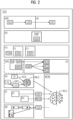
- Figure 2 shows a schematical flow diagram of a method according to the invention.
- the method according to the invention may comprise an additional step before step (a) by determining a load condition LDC for said component CMP, which may be done by:
- the method may comprise an additional step (d0) (illustrated with the dotted line frame) before below step (d) of providing at least one material condition MCD, the additional step (d0) comprising:
- Subsequent step (d) comprises providing at least one material condition MCD of said component CMP at least for said critical area of the component CMP.
- a material model MTM is (e) provided receiving as an input [step (f)]:
- step (g) said material model MTM generates as an output a test coupon COP specification TCS for being tested in a testing machine TST.
- the material model MTM may have been trained to select a test coupon specification TCS from said set of test coupon specifications SCS when receiving as an input:
- An additional subsequent step as illustrated in figure 1 is the generation of the test coupon COP and conduction of the coupon test.
- Said material model MTM may be a machine learning fatigue model MLS.
- the machine learning model may be provided by a method comprising the steps [(e)] of:
- steps (a) - (g) - individually or all of them - may be computer implemented to be performed by at least one processing unit CPU of the system SYS.
- the system SYS may comprise at least one processing unit CPU being adapted to perform computer-implemented steps (a), (c), (g).
Landscapes
- Engineering & Computer Science (AREA)
- Physics & Mathematics (AREA)
- Theoretical Computer Science (AREA)
- General Physics & Mathematics (AREA)
- Software Systems (AREA)
- Evolutionary Computation (AREA)
- Health & Medical Sciences (AREA)
- Immunology (AREA)
- Pathology (AREA)
- General Engineering & Computer Science (AREA)
- Computer Vision & Pattern Recognition (AREA)
- Life Sciences & Earth Sciences (AREA)
- Artificial Intelligence (AREA)
- Medical Informatics (AREA)
- General Health & Medical Sciences (AREA)
- Analytical Chemistry (AREA)
- Chemical & Material Sciences (AREA)
- Biochemistry (AREA)
- Data Mining & Analysis (AREA)
- Mathematical Physics (AREA)
- Computing Systems (AREA)
- Computer Hardware Design (AREA)
- Geometry (AREA)
- Investigating Strength Of Materials By Application Of Mechanical Stress (AREA)
Claims (7)
- Verfahren zum Erzeugen einer Spezifikation (TCS) eines Test-Coupons (COP) zum Vorhersagen der Ermüdungslebensdauer eines Bauteils (CMP), umfassend:(a) Bestimmen eines Belastungszustands (LDC) für das Bauteil (CMP),(b) Bereitstellen einer Ausgestaltung (CDS) des Bauteils (CMP),(c) Durchführen einer Festigkeitsanalyse (FEM) der Ausgestaltung des Bauteils (CMP) unter dem Belastungszustand (LDC), wobei Folgendes bestimmt wird:(i) ein kritischer Bereich (CRA) des Bauteils (CMP),(ii) mindestens ein spannungsbezogener Parameter (SRP) des kritischen Bereichs (CRA),(d) Bereitstellen mindestens eines Materialzustands (MCD) des Bauteils (CMP) zumindest für den kritischen Bereich des Bauteils (CMP),gekennzeichnet durch die folgenden zusätzlichen Schritte:(e) Bereitstellen eines Materialmodells (MTM),(f) Bereitstellen, als eine Eingabe in das Materialmodell (MTM) :(i) den mindestens einen spannungsbezogenen Parameter (SRP) und(ii) den mindestens einen Materialzustand (MCD),(g) das Materialmodell (MTM), das als eine Ausgabe die Spezifikation (TCS) des Test-Coupons (COP) zur Prüfung in einer Prüfmaschine (TST) erzeugt,wobei das Materialmodell (MTM) ein Maschinenlern-Ermüdungsmodell (MLS) ist,wobei das Maschinenlernmodell durch ein Verfahren bereitgestellt wird, das die folgenden Schritte umfasst:(i) Bereitstellen eines Satzes von Test-Coupon-Spezifikationen (SCS) an das Materialmodell (MTM), wobei die Test-Coupon-Spezifikationen (SCS) jeweils unterschiedliche des mindestens einen Materialzustands (MCD) der Coupon-Spezifikationen (SCS) umfassen,(ii) Sammeln von Datenpunkten (DPT) für maximale Spannung vs. Zyklen bis zum Versagen für die Test-Coupon-Spezifikationen (SCS),(iii) Trainieren des Materialmodells (MTM) mit den gesammelten Daten, um eine Test-Coupon-Spezifikation (TCS) aus dem Satz von Test-Coupon-Spezifikationen (SCS) auszuwählen, wenn als eine Eingabe Folgendes empfangen wird:(i) der mindestens eine spannungsbezogene Parameter (SRP) und(ii) der mindestens eine Materialzustand (MCD).
- Verfahren nach Anspruch 1, wobei das Bauteil (CMP) zumindest im kritischen Bereich (CRA) additiv gefertigt wird.
- Verfahren nach Anspruch 1, wobei das Bauteil (CMP) zumindest im kritischen Bereich (CRA) aus Verbundmaterial hergestellt ist.
- Verfahren nach Anspruch 2, wobei der mindestens eine Materialzustand (MCD) mindestens eines des Folgenden ist:- Oberflächenzustand oder Oberflächenrauhigkeit,- Defekte,- Einschlüsse,- Mikrostruktur,- Orientierung von Druckschichten eines additiv gefertigten Teils,- Temperaturverlauf- Eigenspannung,- Druckparameter der additiven Fertigung.
- Verfahren nach Anspruch 3, wobei der mindestens eine Materialzustand (MCD) mindestens eines des Folgenden ist:- Oberflächenzustand oder Oberflächenrauhigkeit,- Defekte,- Textur,- Einschlüsse,- Mikrostruktur,- Temperaturverlauf- Eigenspannung,- Aushärtungszyklus.
- Verfahren nach einem der vorhergehenden Ansprüche, umfassend einen zusätzlichen Schritt vor Schritt (d) des Bereitstellens mindestens eines Materialzustands (MCD), wobei der zusätzliche Schritt umfasst:- Bereitstellen eines Fertigungsprozessplans (AMP) für das Bauteil (CMP),- Überwachen (MON) und/oder Simulieren (SIM) gemäß dem Fertigungsprozessplan (AMP) des Bauteils (CMP) gemäß dem Fertigungsprozessplan (AMP).
- Verfahren nach einem der vorhergehenden Ansprüche, umfassend einen zusätzlichen Schritt vor Schritt(a) Bestimmen eines Belastungszustands (LDC) für das Bauteil (CMP),wobei der zusätzliche Schritt umfasst:- Bereitstellen eines Betriebsbelastungsspektrums (OLS) für das Bauteil (CMP),- Bestimmen eines Belastungszustands (LDC) aus einem Betriebsbelastungsspektrum des Bauteils (CMP).
Applications Claiming Priority (2)
| Application Number | Priority Date | Filing Date | Title |
|---|---|---|---|
| EP21184818.9A EP4116697A1 (de) | 2021-07-09 | 2021-07-09 | Verfahren und system zur erzeugung einer test-coupon-spezifikation zur vorhersage der ermüdungslebensdauer eines bauteils |
| PCT/EP2022/065534 WO2023280498A1 (en) | 2021-07-09 | 2022-06-08 | Method and system for generating a test coupon specification for predicting fatigue life of a component |
Publications (3)
| Publication Number | Publication Date |
|---|---|
| EP4367496A1 EP4367496A1 (de) | 2024-05-15 |
| EP4367496C0 EP4367496C0 (de) | 2025-04-23 |
| EP4367496B1 true EP4367496B1 (de) | 2025-04-23 |
Family
ID=77226564
Family Applications (2)
| Application Number | Title | Priority Date | Filing Date |
|---|---|---|---|
| EP21184818.9A Pending EP4116697A1 (de) | 2021-07-09 | 2021-07-09 | Verfahren und system zur erzeugung einer test-coupon-spezifikation zur vorhersage der ermüdungslebensdauer eines bauteils |
| EP22734238.3A Active EP4367496B1 (de) | 2021-07-09 | 2022-06-08 | Verfahren und system zur erzeugung einer test-coupon-spezifikation zur vorhersage der ermüdungslebensdauer eines bauteils |
Family Applications Before (1)
| Application Number | Title | Priority Date | Filing Date |
|---|---|---|---|
| EP21184818.9A Pending EP4116697A1 (de) | 2021-07-09 | 2021-07-09 | Verfahren und system zur erzeugung einer test-coupon-spezifikation zur vorhersage der ermüdungslebensdauer eines bauteils |
Country Status (4)
| Country | Link |
|---|---|
| US (1) | US12492975B2 (de) |
| EP (2) | EP4116697A1 (de) |
| CN (1) | CN117677831B (de) |
| WO (1) | WO2023280498A1 (de) |
Families Citing this family (5)
| Publication number | Priority date | Publication date | Assignee | Title |
|---|---|---|---|---|
| CN116341058B (zh) * | 2023-03-06 | 2024-06-14 | 中国石油大学(北京) | 水下井口疲劳寿命预测方法、装置及电子设备 |
| CN119574314B (zh) * | 2025-02-06 | 2025-05-06 | 中国标准化研究院 | 隔膜压缩机膜片疲劳寿命的测试方法 |
| CN119720602B (zh) * | 2025-02-26 | 2025-05-13 | 农业农村部南京农业机械化研究所 | 一种联合收获机底盘车架疲劳寿命分析方法 |
| CN120874605B (zh) * | 2025-09-19 | 2025-12-23 | 武汉捷沃汽车零部件有限公司 | 测试机相位差优化方法、系统及橡胶制品疲劳测试机 |
| CN121475931B (zh) * | 2026-01-09 | 2026-04-17 | 重庆市特种设备检测研究院(重庆市特种设备事故应急调查处理中心) | 一种容器高低温疲劳检测方法、电子设备及介质 |
Family Cites Families (14)
| Publication number | Priority date | Publication date | Assignee | Title |
|---|---|---|---|---|
| US6799463B2 (en) * | 2001-11-02 | 2004-10-05 | The Boeing Company | Method and system for automated fatigue and structural analysis of an element |
| RU2640553C2 (ru) * | 2016-04-26 | 2018-01-09 | Общество С Ограниченной Ответственностью "Анизопринт" | Композитная армирующая нить, препрег, лента для 3D печати и установки для их изготовления |
| US10234848B2 (en) | 2017-05-24 | 2019-03-19 | Relativity Space, Inc. | Real-time adaptive control of additive manufacturing processes using machine learning |
| EP3459715A1 (de) | 2017-09-26 | 2019-03-27 | Siemens Aktiengesellschaft | Verfahren und vorrichtung zur vorhersage des auftretens und der art der defekte in einem verfahren zur generativen fertigung |
| DE102018109546A1 (de) * | 2018-04-20 | 2019-10-24 | TÜV Nord Systems GmbH & Co. KG | Verfahren zur Bestimmung der Bauteilfestigkeit von additiv gefertigten Bauteilen |
| CN109614721B (zh) * | 2018-12-14 | 2019-07-12 | 中国航空综合技术研究所 | 疲劳载荷作用下的机械零部件缺陷验收分级方法 |
| CN113766983A (zh) | 2019-04-26 | 2021-12-07 | 西门子工业软件公司 | 用于增材制造部件的疲劳寿命预测的机器学习方法 |
| US11255763B2 (en) * | 2019-11-13 | 2022-02-22 | Hexcel Corporation | System for identifying parts formed in an additive manufacturing build |
| US11571740B2 (en) * | 2020-03-17 | 2023-02-07 | Palo Alto Research Center Incorporated | Fabricated shape estimation for additive manufacturing processes |
| CN111523268B (zh) * | 2020-04-22 | 2021-06-01 | 四川大学 | 一种基于机器学习的材料抗疲劳优化设计方法 |
| CN111914370B (zh) * | 2020-08-07 | 2021-03-02 | 上海理工大学 | 一种电驱动系统高速轴承可靠性试验载荷谱的编制方法 |
| US11915108B2 (en) * | 2020-08-13 | 2024-02-27 | The Boeing Company | Material characterization system and method |
| CN112100765B (zh) * | 2020-08-28 | 2022-08-26 | 北京航空航天大学 | 一种涡轮盘冷挤压强化孔结构的高低周复合疲劳试验件及设计方法 |
| CN112597687B (zh) * | 2021-03-02 | 2021-06-25 | 北京航空航天大学 | 一种基于少样本学习的涡轮盘结构混合可靠性分析方法 |
-
2021
- 2021-07-09 EP EP21184818.9A patent/EP4116697A1/de active Pending
-
2022
- 2022-06-08 EP EP22734238.3A patent/EP4367496B1/de active Active
- 2022-06-08 WO PCT/EP2022/065534 patent/WO2023280498A1/en not_active Ceased
- 2022-06-08 US US18/577,955 patent/US12492975B2/en active Active
- 2022-06-08 CN CN202280048236.5A patent/CN117677831B/zh active Active
Also Published As
| Publication number | Publication date |
|---|---|
| EP4116697A1 (de) | 2023-01-11 |
| WO2023280498A1 (en) | 2023-01-12 |
| CN117677831A (zh) | 2024-03-08 |
| CN117677831B (zh) | 2025-01-10 |
| EP4367496A1 (de) | 2024-05-15 |
| US12492975B2 (en) | 2025-12-09 |
| US20240264052A1 (en) | 2024-08-08 |
| EP4367496C0 (de) | 2025-04-23 |
Similar Documents
| Publication | Publication Date | Title |
|---|---|---|
| US12492975B2 (en) | Method and system for generating a test coupon specification for predicting fatigue life of a component | |
| Torres et al. | Mechanics of the small punch test: a review and qualification of additive manufacturing materials | |
| Guo et al. | Real-time prediction of remaining useful life and preventive maintenance strategy based on digital twin | |
| US5140528A (en) | Method for evaluating relationship between the size of discontinuity indications from non-destructive examination of a turbine rotor, stress applied to the rotor and remaining life of the rotor | |
| Wang et al. | Life prediction for aircraft structure based on Bayesian inference: Towards a digital twin ecosystem | |
| CN119217782A (zh) | 冲压生产工艺自适应控制方法、冲压生产线及程序产品 | |
| Alfred et al. | A data-informed knowledge discovery framework to predict fatigue properties of additively manufactured Ti–6Al–4V, IN718 and AlSi10Mg alloys using fatigue databases | |
| Maev et al. | NDE in the Automotive Sector | |
| CN109490334B (zh) | 一种运用残余应力预测模型的t字型锻件无损测试方法 | |
| CN114091347A (zh) | 一种电子元器件寿命预测方法 | |
| Noeske et al. | Introduction to recent advances in quality assessment for adhesive bonding technology | |
| CN120217675B (zh) | 一种高温结构剩余寿命评估方法 | |
| Okuniewska et al. | Methodology for diagnosing the causes of die-casting defects, based on advanced big data modelling | |
| Evans et al. | The small punch creep test: some results from a numerical model | |
| Hardin et al. | Effect of shrinkage on service performance of steel castings | |
| Jeyaraju et al. | Stochastic Induced Fatigue Life Data Using Naïve Bayes Classifier for Assessing the Reliability Index of AlSi10Mg | |
| Adam et al. | Experimental LCF study of a probabilistically optimized double notch specimen geometry for validation of deterministic and probabilistic design concepts | |
| Scheibel et al. | EARLY EXPERIENCE APPLYING PROCESS COMPENSATED RESONANCE TESTING TO NEW AND REPAIRED TURBINE BLADE QUALITY ASSURANCE | |
| Livings et al. | Process Compensated Resonance Testing for Qualifying the Metallurgical Aspects and Manufacturing Defects of Turbine Blades | |
| Gerards-Wünsche et al. | A framework for assessing the reliability of crack luminescence: an automated fatigue crack detection system | |
| Lin et al. | Isothermal and thermo-mechanical fatigue life modelling of components and structures at elevated temperature | |
| CN119719680A (zh) | 铸件表面质量对粘接性能影响的性能表征及优化方法和装置 | |
| CN121475655A (zh) | 车辆零部件的测试方法、装置、电子设备及存储介质 | |
| Gattino et al. | Computer-Aided Prognostics and Health Management Using Incipient Failure Detection | |
| Gr. Maev et al. | NDE in the Automotive Sector |
Legal Events
| Date | Code | Title | Description |
|---|---|---|---|
| STAA | Information on the status of an ep patent application or granted ep patent |
Free format text: STATUS: UNKNOWN |
|
| STAA | Information on the status of an ep patent application or granted ep patent |
Free format text: STATUS: THE INTERNATIONAL PUBLICATION HAS BEEN MADE |
|
| PUAI | Public reference made under article 153(3) epc to a published international application that has entered the european phase |
Free format text: ORIGINAL CODE: 0009012 |
|
| STAA | Information on the status of an ep patent application or granted ep patent |
Free format text: STATUS: REQUEST FOR EXAMINATION WAS MADE |
|
| 17P | Request for examination filed |
Effective date: 20231205 |
|
| AK | Designated contracting states |
Kind code of ref document: A1 Designated state(s): AL AT BE BG CH CY CZ DE DK EE ES FI FR GB GR HR HU IE IS IT LI LT LU LV MC MK MT NL NO PL PT RO RS SE SI SK SM TR |
|
| DAV | Request for validation of the european patent (deleted) | ||
| DAX | Request for extension of the european patent (deleted) | ||
| GRAP | Despatch of communication of intention to grant a patent |
Free format text: ORIGINAL CODE: EPIDOSNIGR1 |
|
| STAA | Information on the status of an ep patent application or granted ep patent |
Free format text: STATUS: GRANT OF PATENT IS INTENDED |
|
| INTG | Intention to grant announced |
Effective date: 20250124 |
|
| GRAS | Grant fee paid |
Free format text: ORIGINAL CODE: EPIDOSNIGR3 |
|
| GRAA | (expected) grant |
Free format text: ORIGINAL CODE: 0009210 |
|
| STAA | Information on the status of an ep patent application or granted ep patent |
Free format text: STATUS: THE PATENT HAS BEEN GRANTED |
|
| AK | Designated contracting states |
Kind code of ref document: B1 Designated state(s): AL AT BE BG CH CY CZ DE DK EE ES FI FR GB GR HR HU IE IS IT LI LT LU LV MC MK MT NL NO PL PT RO RS SE SI SK SM TR |
|
| REG | Reference to a national code |
Ref country code: GB Ref legal event code: FG4D |
|
| REG | Reference to a national code |
Ref country code: CH Ref legal event code: EP |
|
| REG | Reference to a national code |
Ref country code: DE Ref legal event code: R096 Ref document number: 602022013631 Country of ref document: DE |
|
| REG | Reference to a national code |
Ref country code: IE Ref legal event code: FG4D |
|
| U01 | Request for unitary effect filed |
Effective date: 20250430 |
|
| U07 | Unitary effect registered |
Designated state(s): AT BE BG DE DK EE FI FR IT LT LU LV MT NL PT RO SE SI Effective date: 20250508 |
|
| U20 | Renewal fee for the european patent with unitary effect paid |
Year of fee payment: 4 Effective date: 20250620 |
|
| PG25 | Lapsed in a contracting state [announced via postgrant information from national office to epo] |
Ref country code: ES Free format text: LAPSE BECAUSE OF FAILURE TO SUBMIT A TRANSLATION OF THE DESCRIPTION OR TO PAY THE FEE WITHIN THE PRESCRIBED TIME-LIMIT Effective date: 20250423 |
|
| PG25 | Lapsed in a contracting state [announced via postgrant information from national office to epo] |
Ref country code: NO Free format text: LAPSE BECAUSE OF FAILURE TO SUBMIT A TRANSLATION OF THE DESCRIPTION OR TO PAY THE FEE WITHIN THE PRESCRIBED TIME-LIMIT Effective date: 20250723 Ref country code: GR Free format text: LAPSE BECAUSE OF FAILURE TO SUBMIT A TRANSLATION OF THE DESCRIPTION OR TO PAY THE FEE WITHIN THE PRESCRIBED TIME-LIMIT Effective date: 20250724 |
|
| PG25 | Lapsed in a contracting state [announced via postgrant information from national office to epo] |
Ref country code: PL Free format text: LAPSE BECAUSE OF FAILURE TO SUBMIT A TRANSLATION OF THE DESCRIPTION OR TO PAY THE FEE WITHIN THE PRESCRIBED TIME-LIMIT Effective date: 20250423 |
|
| PG25 | Lapsed in a contracting state [announced via postgrant information from national office to epo] |
Ref country code: HR Free format text: LAPSE BECAUSE OF FAILURE TO SUBMIT A TRANSLATION OF THE DESCRIPTION OR TO PAY THE FEE WITHIN THE PRESCRIBED TIME-LIMIT Effective date: 20250423 |
|
| PG25 | Lapsed in a contracting state [announced via postgrant information from national office to epo] |
Ref country code: RS Free format text: LAPSE BECAUSE OF FAILURE TO SUBMIT A TRANSLATION OF THE DESCRIPTION OR TO PAY THE FEE WITHIN THE PRESCRIBED TIME-LIMIT Effective date: 20250723 |
|
| PG25 | Lapsed in a contracting state [announced via postgrant information from national office to epo] |
Ref country code: IS Free format text: LAPSE BECAUSE OF FAILURE TO SUBMIT A TRANSLATION OF THE DESCRIPTION OR TO PAY THE FEE WITHIN THE PRESCRIBED TIME-LIMIT Effective date: 20250823 |
|
| PG25 | Lapsed in a contracting state [announced via postgrant information from national office to epo] |
Ref country code: SM Free format text: LAPSE BECAUSE OF FAILURE TO SUBMIT A TRANSLATION OF THE DESCRIPTION OR TO PAY THE FEE WITHIN THE PRESCRIBED TIME-LIMIT Effective date: 20250423 |
|
| PG25 | Lapsed in a contracting state [announced via postgrant information from national office to epo] |
Ref country code: CZ Free format text: LAPSE BECAUSE OF FAILURE TO SUBMIT A TRANSLATION OF THE DESCRIPTION OR TO PAY THE FEE WITHIN THE PRESCRIBED TIME-LIMIT Effective date: 20250423 |
|
| PG25 | Lapsed in a contracting state [announced via postgrant information from national office to epo] |
Ref country code: SK Free format text: LAPSE BECAUSE OF FAILURE TO SUBMIT A TRANSLATION OF THE DESCRIPTION OR TO PAY THE FEE WITHIN THE PRESCRIBED TIME-LIMIT Effective date: 20250423 |
|
| REG | Reference to a national code |
Ref country code: CH Ref legal event code: H13 Free format text: ST27 STATUS EVENT CODE: U-0-0-H10-H13 (AS PROVIDED BY THE NATIONAL OFFICE) Effective date: 20260127 |
|
| PG25 | Lapsed in a contracting state [announced via postgrant information from national office to epo] |
Ref country code: MC Free format text: LAPSE BECAUSE OF FAILURE TO SUBMIT A TRANSLATION OF THE DESCRIPTION OR TO PAY THE FEE WITHIN THE PRESCRIBED TIME-LIMIT Effective date: 20250423 |
|
| PLBE | No opposition filed within time limit |
Free format text: ORIGINAL CODE: 0009261 |
|
| STAA | Information on the status of an ep patent application or granted ep patent |
Free format text: STATUS: NO OPPOSITION FILED WITHIN TIME LIMIT |
|
| REG | Reference to a national code |
Ref country code: CH Ref legal event code: L10 Free format text: ST27 STATUS EVENT CODE: U-0-0-L10-L00 (AS PROVIDED BY THE NATIONAL OFFICE) Effective date: 20260304 |
|
| 26N | No opposition filed |
Effective date: 20260126 |
|
| PG25 | Lapsed in a contracting state [announced via postgrant information from national office to epo] |
Ref country code: IE Free format text: LAPSE BECAUSE OF NON-PAYMENT OF DUE FEES Effective date: 20250608 |
|
| PG25 | Lapsed in a contracting state [announced via postgrant information from national office to epo] |
Ref country code: CH Free format text: LAPSE BECAUSE OF NON-PAYMENT OF DUE FEES Effective date: 20250630 |