EP4366402A1 - Verfahren und vorrichtung zur konfiguration einer uplink-zeitvorlaufschleife - Google Patents
Verfahren und vorrichtung zur konfiguration einer uplink-zeitvorlaufschleife Download PDFInfo
- Publication number
- EP4366402A1 EP4366402A1 EP23205407.2A EP23205407A EP4366402A1 EP 4366402 A1 EP4366402 A1 EP 4366402A1 EP 23205407 A EP23205407 A EP 23205407A EP 4366402 A1 EP4366402 A1 EP 4366402A1
- Authority
- EP
- European Patent Office
- Prior art keywords
- uplink
- timing advance
- transmission point
- downlink
- loop
- Prior art date
- Legal status (The legal status is an assumption and is not a legal conclusion. Google has not performed a legal analysis and makes no representation as to the accuracy of the status listed.)
- Pending
Links
- 238000000034 method Methods 0.000 title claims abstract description 94
- 230000005540 biological transmission Effects 0.000 claims abstract description 210
- 230000008859 change Effects 0.000 claims abstract description 102
- 230000004044 response Effects 0.000 claims abstract description 44
- 230000011664 signaling Effects 0.000 claims description 10
- 239000011159 matrix material Substances 0.000 claims description 6
- 238000004590 computer program Methods 0.000 abstract description 34
- 238000012545 processing Methods 0.000 description 64
- 230000015654 memory Effects 0.000 description 30
- 238000003860 storage Methods 0.000 description 25
- 238000004891 communication Methods 0.000 description 21
- 230000006870 function Effects 0.000 description 11
- 238000010586 diagram Methods 0.000 description 5
- 230000008569 process Effects 0.000 description 5
- 230000001934 delay Effects 0.000 description 3
- 238000005259 measurement Methods 0.000 description 3
- 230000004913 activation Effects 0.000 description 2
- 230000003993 interaction Effects 0.000 description 2
- 230000002776 aggregation Effects 0.000 description 1
- 238000004220 aggregation Methods 0.000 description 1
- 230000008901 benefit Effects 0.000 description 1
- 230000001413 cellular effect Effects 0.000 description 1
- 125000004122 cyclic group Chemical group 0.000 description 1
- 230000003111 delayed effect Effects 0.000 description 1
- 238000001514 detection method Methods 0.000 description 1
- 238000004519 manufacturing process Methods 0.000 description 1
- 239000000463 material Substances 0.000 description 1
- 230000007246 mechanism Effects 0.000 description 1
- 238000010295 mobile communication Methods 0.000 description 1
- 230000003287 optical effect Effects 0.000 description 1
- 230000000737 periodic effect Effects 0.000 description 1
- 230000008054 signal transmission Effects 0.000 description 1
- 238000001228 spectrum Methods 0.000 description 1
- 238000013518 transcription Methods 0.000 description 1
- 230000035897 transcription Effects 0.000 description 1
- 238000012546 transfer Methods 0.000 description 1
- 230000007704 transition Effects 0.000 description 1
Images




Classifications
-
- H—ELECTRICITY
- H04—ELECTRIC COMMUNICATION TECHNIQUE
- H04W—WIRELESS COMMUNICATION NETWORKS
- H04W56/00—Synchronisation arrangements
- H04W56/004—Synchronisation arrangements compensating for timing error of reception due to propagation delay
- H04W56/0045—Synchronisation arrangements compensating for timing error of reception due to propagation delay compensating for timing error by altering transmission time
-
- H—ELECTRICITY
- H04—ELECTRIC COMMUNICATION TECHNIQUE
- H04W—WIRELESS COMMUNICATION NETWORKS
- H04W56/00—Synchronisation arrangements
- H04W56/001—Synchronization between nodes
- H04W56/0015—Synchronization between nodes one node acting as a reference for the others
Definitions
- An example embodiment relates generally to techniques for facilitating uplink transmission and, more particularly, to techniques for determining uplink timing information to facilitate changes in the uplink beam.
- FR2 Frequency Range 2
- Transmission in uplink is typically configured such that the signals from the user equipment arrive at an access point, such as a gNB, within a limited reception window.
- user equipment uses a timing advance value to ensure that its uplink transmission is received at the gNB within the reception window.
- the timing advance value generally defines the time required for signals to propagate from the user equipment to the gNB and, as such, serves to indicate the length of time in advance of the reception window that the user equipment should transmit signals to increase the likelihood that the signals will be received by the gNB during the reception window.
- the user equipment tracks the downlink timing of signals transmitted by the source. Based on the change in the downlink timing as the user equipment moves, the user equipment may adjust the timing advance value to ensure that its uplink transmissions are received at the gNB within the reception window.
- the user equipment may change its uplink beam so as to transmit signals to a different gNB.
- Such a change spatial directions for the uplink beam may create several challenges. For example, when making a large uplink adjustment, there can be a correspondingly large delay as the timing advance value for signals transmitted to the new gNB is determined.
- a method, apparatus, and computer program product are disclosed for configuring an uplink timing advance loop in order to facilitate uplink transmission including uplink transmission following a change in the uplink beam.
- an uplink timing advance loop in accordance with an example embodiment, an uplink beam can be changed to a different source, such as a different gNB, more efficiently and with less delay.
- uplink communications can be conducted more seamlessly and efficiently.
- an apparatus comprises at least one processor and at least one memory including computer program code with the at least one memory and the computer program code configured to, with the at least one processor, cause the apparatus at least to determine that a plurality of timing advance loops are supported to a plurality of transmission points.
- the at least one memory and the computer program code are also configured to, with the at least one processor, cause the apparatus to determine whether uplink timing information is available for a respective transmission point.
- the at least one memory and the computer program code are further configured to, with the at least one processor, cause the apparatus to configure an uplink timing advance loop by synchronizing to a downlink beam and/or reference signal from the respective transmission point by setting a timing advance value and then using a gradual timing adjustment procedure to adjust the uplink timing advance loop.
- the at least one memory and the computer program code are further configured to, with the at least one processor, cause the apparatus to maintain a plurality of uplink timing advance loops simultaneously for a plurality of transmission points.
- the at least one memory and the computer program code are further configured to, with the at least one processor, cause the apparatus to determine whether the transmission point remains the same following the uplink beam change or the downlink beam change.
- the at least one memory and the computer program code are further configured to, with the at least one processor, cause the apparatus to configure the uplink timing advance loop also based on an uplink transmit timing advance value previously defined for the transmission point.
- the at least one memory and the computer program code are further configured to, with the at least one processor, cause the apparatus to configure the uplink timing advance loop also based on target beam information.
- the at least one memory and the computer program code are configured to, with the at least one processor, cause the apparatus to determine whether the transmission point remains the same based on a downlink timing difference between a downlink beam prior to the triggering mobility event and a downlink beam following the triggering mobility event.
- the at least one memory and the computer program code are further configured to, with the at least one processor, cause the apparatus to determine whether the transmission point remains the same based on network signaling.
- the at least one memory and the computer program code are further configured to, with the at least one processor, cause the apparatus to cause transmission of a random access preamble using a downlink beam after the triggering mobility event.
- the at least one memory and the computer program code are further configured to, with the at least one processor, cause the apparatus to receive a random access reply message.
- the at least one memory and the computer program code are further configured to, with the at least one processor, cause the apparatus to determine a timing advance absolute value based on the random access reply message.
- the at least one memory and the computer program code are further configured to, with the at least one processor, cause the apparatus to configure the uplink timing advance loop also based on the timing advance absolute value.
- the at least one memory and the computer program code are further configured to, with the at least one processor, cause the apparatus to adjust the uplink transmit timing advance value previously defined from the previous transmission point based on a downlink timing difference between a downlink beam prior to the triggering mobility event and a downlink beam following the triggering mobility event.
- the at least one memory and the computer program code are further configured to, with the at least one processor, cause the apparatus to configure the uplink timing advance loop also based on the adjusted uplink transmit timing advance value.
- the at least one memory and the computer program code are further configured to, with the at least one processor, cause the apparatus to synchronize one of the plurality of uplink timing advance loops to a downlink beam and use a gradual timing adjustment procedure to adjust the uplink timing advance loop.
- the at least one memory and the computer program code are further configured to, with the at least one processor, cause the apparatus to determine whether an uplink beam has changed.
- the at least one memory and the computer program code are further configured to, with the at least one processor, cause the apparatus to configure the uplink timing advance loop by synchronizing to a downlink beam and using a gradual timing adjustment procedure to adjust the uplink timing advance loop.
- the at least one memory and the computer program code are further configured to, with the at least one processor, cause the apparatus to configure the uplink timing advance loop based on whether the transmission point has changed
- a method comprises determining that a plurality of timing advance loops are supported to a plurality of transmission points. In response to a triggering mobility event, the method further comprises determining whether uplink timing information is available for a respective transmission point. In response to a determination that uplink timing information is unavailable for the respective transmission point, the method further comprises configuring an uplink timing advance loop by synchronizing to a downlink beam and/or reference signal from the respective transmission point by setting a timing advance value and then using a gradual timing adjustment procedure to adjust the uplink timing advance loop.
- the method of an example embodiment further comprises maintaining a plurality of uplink timing advance loops simultaneously for a plurality of transmission points.
- the method of an example embodiment in which the triggering mobility event comprises an uplink beam change, a downlink beam change, a change of reference signals, a change of a precoding matrix, a change of the respective transmission point or a change of antenna panel further comprises configuring the uplink timing advance loop by determining whether the transmission point remains the same following the uplink beam change or the downlink beam change. In response to a determination that the transmission point remains the same, the method further comprises configuring the uplink timing advance loop also based on an uplink transmit timing advance value previously defined for the transmission point. In response to a determination that the transmission point does not remain the same, the method further comprises configuring the uplink timing advance loop also based on target beam timing information.
- the method of an example embodiment further comprises determining whether the transmission point remains the same based on a downlink timing difference between a downlink beam prior to the triggering mobility event and a downlink beam following the triggering mobility event.
- the method of an example embodiment further comprises determining whether the transmission point remains the same based on network signaling.
- the method of an example embodiment in which the transmission point does not remain the same further comprises causing transmission of a random access preamble using a downlink beam after the triggering mobility event.
- the method of this example embodiment further comprises receiving a random access reply message.
- the method of this example embodiment further comprises determining a timing advance absolute value based on the random access reply message.
- the method of this example embodiment further comprises configuring the uplink timing advance loop also based on the timing advance absolute value.
- the method of an example embodiment in which the transmission point does not remain the same further comprises adjusting the uplink transmit timing advance value previously defined from the previous transmission point based on a downlink timing difference between a downlink beam prior to the triggering mobility event and a downlink beam following the triggering mobility event.
- the method of this example embodiment further comprises configuring the uplink timing advance loop also based on the adjusted uplink transmit timing advance value.
- the method of an example embodiment further comprises synchronizing one of the plurality of uplink timing advance loops to a downlink beam and using a gradual timing adjustment procedure to adjust the uplink timing advance loop.
- the method of an example embodiment further comprises determining whether an uplink beam has changed. In an instance in which the uplink beam has not changed, the method further comprises configuring the uplink timing advance loop by synchronizing to a downlink beam and using a gradual timing adjustment procedure to adjust the uplink timing advance loop. In an instance in which the uplink beam has changed, the method configures the uplink timing advance loop based on whether the transmission point has changed.
- a non-transitory computer readable storage medium comprising computer instructions that, when executed by an apparatus, cause the apparatus to determine that a plurality of timing advance loops are supported to a plurality of transmission points.
- the non-transitory computer readable storage medium in response to a triggering mobility event, also includes computer instructions configured, upon execution, to determine whether uplink timing information is available for a respective transmission point.
- the non-transitory computer readable storage medium in response to a determination that uplink timing information is unavailable for the respective transmission point, further includes computer instructions configured, upon execution, to configure an uplink timing advance loop by synchronizing to a downlink beam and/or reference signal from the respective transmission point by setting a timing advance value and then using a gradual timing adjustment procedure to adjust the uplink timing advance loop.
- the non-transitory computer readable storage medium of an example embodiment also includes computer instructions configured, upon execution, to maintain a plurality of uplink timing advance loops simultaneously for a plurality of transmission points.
- the non-transitory computer readable storage medium also includes computer instructions configured, upon execution, to determine whether the transmission point remains the same following the uplink beam change or the downlink beam change. In response to a determination that the transmission point remains the same, the non-transitory computer readable storage medium of this example embodiment further includes computer instructions configured, upon execution, to configure the uplink timing advance loop also based on an uplink transmit timing advance value previously defined for the transmission point. In response to a determination that the transmission point does not remain the same, the non-transitory computer readable storage medium of this example embodiment also includes computer instructions configured, upon execution, to configure the uplink timing advance loop also based on target beam timing information.
- the non-transitory computer readable storage medium of an example embodiment also includes computer instructions configured, upon execution, to determine whether the transmission point remains the same based on a downlink timing difference between a downlink beam prior to the triggering mobility event and a downlink beam following the triggering mobility event.
- the non-transitory computer readable storage medium of an example embodiment also includes computer instructions configured, upon execution, to determine whether the transmission point remains the same based on network signaling.
- the non-transitory computer readable storage medium also includes computer instructions configured, upon execution, to cause transmission of a random access preamble using a downlink beam after the triggering mobility event.
- the non-transitory computer readable storage medium of this example embodiment also includes computer instructions configured, upon execution, to receive a random access reply message.
- the non-transitory computer readable storage medium of this example embodiment further includes computer instructions configured, upon execution, to determine a timing advance absolute value based on the random access reply message.
- the non-transitory computer readable storage medium of this example embodiment also includes computer instructions configured, upon execution, to configure the uplink timing advance loop also based on the timing advance absolute value.
- the non-transitory computer readable storage medium of an example embodiment also includes computer instructions configured, upon execution, to adjust the uplink transmit timing advance value previously defined from the previous transmission point based on a downlink timing difference between a downlink beam prior to the triggering mobility event and a downlink beam following the triggering mobility event.
- the non-transitory computer readable storage medium of this example embodiment also includes computer instructions configured, upon execution, to configure the uplink timing advance loop also based on the adjusted uplink transmit timing advance value.
- the non-transitory computer readable storage medium of an example embodiment also includes computer instructions configured, upon execution, to synchronize one of the plurality of uplink timing advance loops to a downlink beam and use a gradual timing adjustment procedure to adjust the uplink timing advance loop.
- non-transitory computer readable storage medium of an example embodiment also includes computer instructions configured, upon execution, to determine whether an uplink beam has changed. In an instance in which the uplink beam has not changed, the non-transitory computer readable storage medium of an example embodiment also includes computer instructions configured, upon execution, to configure the uplink timing advance loop by synchronizing to a downlink beam and using a gradual timing adjustment procedure to adjust the uplink timing advance loop. In an instance in which the uplink beam has changed, the non-transitory computer readable storage medium of an example embodiment also includes computer instructions configured, upon execution, to configure the uplink timing advance loop based on whether the transmission point has changed.
- an apparatus comprises means for determining that a plurality of timing advance loops are supported to a plurality of transmission points.
- the apparatus of this example embodiment further comprises means for determining whether uplink timing information is available for a respective transmission point.
- the apparatus of this example embodiment further comprises means for configuring an uplink timing advance loop by synchronizing to a downlink beam and/or reference signal from the respective transmission point by setting a timing advance value and then using a gradual timing adjustment procedure to adjust the uplink timing advance loop.
- the apparatus of an example embodiment in which the triggering mobility event comprises an uplink beam change, a downlink beam change, a change of reference signals, a change of a precoding matrix, a change of the respective transmission point or a change of antenna panel further comprises means for configuring the uplink timing advance loop by determining whether the transmission point remains the same following the uplink beam change or the downlink beam change. In response to a determination that the transmission point remains the same, the apparatus of this example embodiment further comprises means for configuring the uplink timing advance loop also based on an uplink transmit timing advance value previously defined for the transmission point. In response to a determination that the transmission point does not remain the same, the apparatus of this example embodiment further comprises means for configuring the uplink timing advance loop also based on target beam information.
- the apparatus of an example embodiment further comprises means for determining whether the transmission point remains the same based on a downlink timing difference between a downlink beam prior to the triggering mobility event and a downlink beam following the triggering mobility event.
- the apparatus of an example embodiment further comprises means for determining whether the transmission point remains the same based on network signaling.
- the apparatus of an example embodiment in which the transmission point does not remain the same further comprises means causing transmission of a random access preamble using a downlink beam after the triggering mobility event.
- the apparatus of this example embodiment further comprises means for receiving a random access reply message.
- the apparatus of this example embodiment further comprises means for determining a timing advance absolute value based on the random access reply message.
- the apparatus of this example embodiment further comprises means for configuring the uplink timing advance loop also based on the timing advance absolute value.
- the apparatus of an example embodiment in which the transmission point does not remain the same further comprises means for adjusting the uplink transmit timing advance value previously defined from the previous transmission point based on a downlink timing difference between a downlink beam prior to the triggering mobility event and a downlink beam following the triggering mobility event.
- the apparatus of this example embodiment further comprises means for configuring the uplink timing advance loop also based on the adjusted uplink transmit timing value.
- the apparatus of an example embodiment further comprises means for synchronizing one of the plurality of uplink timing advance loops to a downlink beam and means for using a gradual timing adjustment procedure to adjust the uplink timing advance loop.
- the apparatus of an example embodiment further comprises means for determining whether an uplink beam has changed. In an instance in which the uplink beam has not changed, the apparatus of this example embodiment further comprises means for configuring the uplink timing advance loop by synchronizing to a downlink beam and using a gradual timing adjustment procedure to adjust the uplink timing advance loop. In an instance in which the uplink beam has changed, the apparatus of this example embodiment further comprises means for configuring the uplink timing advance loop based on whether the transmission point has changed.
- circuitry refers to (a) hardware-only circuit implementations (e.g., implementations in analog circuitry and/or digital circuitry); (b) combinations of circuits and computer program product(s) comprising software and/or firmware instructions stored on one or more computer readable memories that work together to cause an apparatus to perform one or more functions described herein; and (c) circuits, such as, for example, a microprocessor(s) or a portion of microprocessor(s), that require software or firmware for operations even if the software or firmware is not physically present.
- This definition of 'circuitry' applies to all uses of this term herein, including in any claims.
- the term 'circuitry' also includes an implementation comprising one or more processors and/or portion(s) thereof and accompanying software and/or firmware.
- the term 'circuitry' as used herein also includes, for example, a baseband integrated circuit or applications processor integrated circuit for a mobile phone or a similar integrated circuit in a server, a cellular network device, other network device (such as a core network apparatus), field programmable gate array, and/or other computing device.
- computer-readable medium refers to non-transitory storage hardware, non-transitory storage device or non-transitory computer system memory that may be accessed by a controller, a microcontroller, a computational system or a module of a computational system to encode thereon computer-executable instructions or software programs.
- a non-transitory "computer-readable medium” may be accessed by a computational system or a module of a computational system to retrieve and/or execute the computer-executable instructions or software programs encoded on the medium.
- non-transitory computer-readable media may include, but are not limited to, one or more types of hardware memory, non-transitory tangible media (for example, one or more magnetic storage disks, one or more optical disks, one or more USB flash drives), computer system memory or random-access memory (such as, DRAM, SRAM, EDO RAM), and the like.
- non-transitory tangible media for example, one or more magnetic storage disks, one or more optical disks, one or more USB flash drives
- computer system memory or random-access memory such as, DRAM, SRAM, EDO RAM
- a system is provided in accordance with an example embodiment in order to facilitate uplink transmission from a user equipment 100, such as by maintaining uplink timing information that may be utilized when the uplink beam changes in order to increase the speed and efficiency with which a change in uplink transmissions is accomplished.
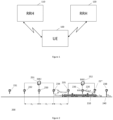
- the system may be configured in various manners, the system of one embodiment is depicted in Figure 1 and includes both user equipment 100 and transmission sources 110 and 120 configured to communicate via uplink and downlink transmission and reception beams. Although two transmission sources are depicted, the system may include and the user equipment 100 may communicate with additional transmission sources in other embodiments.
- the system is configured to synchronize the timing of uplink beams as the user equipment 100 moves relative to transmission sources 110 and 120.
- the data that is transmitted via the uplink and downlink beams between the user equipment 100 and the transmission sources 110 and 120 can be any of a wide variety of data including, but not limited to digital imagery data including video data, audio data as well as data provided by sensors, radars, telescopes and radio receivers.
- the data is encoded prior to communication of the data via the uplink and downlink beams and decoded upon reception.
- the resulting data received may be utilized for a variety of purposes including presentation to a user, storage of the data for subsequent use and/or provision of the data to one or more applications, such as applications that perform statistical inference on the data for various purposes including object recognition, image classification, spectrum sensing, speech transcription and/or prediction or detection of events.
- the user equipment 100 of Figure 1 may receive and transmit FR2 millimeter waves in one spatial direction at a time.
- the user equipment 100 of Figure 1 may be capable of receiving signals concurrently from more than one spatial direction at a time.
- transmission sources 110 and 120 may be collocated.
- transmission sources 110 and 120 may be non-collocated.
- the system of Figure 1 may involve inter-band carrier aggregation in FR2 with the user equipment 100 being able to support independent beam management and to receive on two carrier components from two non-collocated sources.
- the user equipment 100 may be configured to track the timing of downlink beams from the multiple transmission sources 110 and 120 simultaneously.
- the user equipment 100 of Figure 1 (also called UE, user device, user terminal, terminal device, etc.) illustrates one type of an apparatus to which resources on an air interface are allocated and assigned.
- the user equipment typically refers to a portable computing device that includes wireless mobile communication devices operating with or without a subscriber identification module (SIM), including, but not limited to, the following types of devices: a mobile station (mobile phone), smartphone, personal digital assistance (PDA), handset, device using a wireless modem (alarm or measurement device, etc.), laptop and/or touch screen computer, tablet, game console, notebook, and multimedia device.
- SIM subscriber identification module
- User equipment may also be a device having capability to operate in Internet of Things (IoT) network which is a scenario in which objects are provided with the ability to transfer data over a network without requiring human-to-human or human-to-computer interaction.
- IoT Internet of Things
- the user equipment (or in some embodiments a layer 3 relay node) is configured to perform one or more of user equipment functionalities.
- the user equipment may also be called a subscriber unit, mobile station, remote terminal, access terminal, user terminal, or user equipment (UE) just to mention but a few names or apparatuses.
- the transmission sources 110 and 120 of Figure 1 may comprise, for example, base stations, remote radio heads (RRHs), transmission reception points (TRPs), access points, node Bs (e.g., gNB) or other transmission sources.
- the transmission sources 110 and 120 of Figure 1 may be collocated or non-collocated.
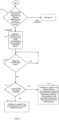
- the system and method of an example embodiment may be utilized in a wide variety of settings including, for example, in the context of a high speed train in which a UE carried by the train moves relative to transmission points in the form of the remote radio heads (RRHs), as shown in Figure 2 .
- the user equipment 210 comprises power class 6 user equipment.
- the user equipment 210 comprises customer premises equipment (CPE).
- CPE customer premises equipment
- the user equipment 210 is equipped with for example two panels in order to support transmission and reception in two different directions. In one or more embodiments, only one of the panels may be used at a time. In other embodiments, both panels may be used simultaneously for downlink reception and one panel at a time may be used for uplink reception.
- signals 220 may be transmitted in a uni-directional fashion from RRHs 231-238 to the user equipment 210. In other example embodiments, signals 220 may be transmitted in a bi-directional fashion to the user equipment 210 from RRHs located on opposite sides of the UE.
- the railway track 240 is a near distance Dmin away from an RRH. For example, Dmin may be equal to 10m. On other example embodiments, the railway track is further away from an RRH. For example, Dmin may be equal to 150m.
- the propagation delays for signals transmitted from the RRHs 231-238 may be different.
- the difference in propagation delays may result from the RRHs 231-238 being non-collocated.
- the difference may be reflected by the cyclic prefix length.
- the D RRH_height of Figure 2 may reflect for example the height of the remote radio head above ground.
- the D UE_height of Figure 2 may reflect for example the height of the user equipment 210 above ground.
- the D min of Figure 2 may reflect for example the distance between a remote radio head and a railway track.
- the UE of Figure 2 may be for example a high speed train.
- the D s of Figure 2 may reflect for example the distance between two RRHs 231-238.
- the angle ⁇ of Figure 2 may for example reflect the angle between the top surface of an RRH 231-238 and the railway track.
- the angle ⁇ of Figure 2 may reflect for example the angle between the angle ⁇ and a downlink or uplink beam 220 between an RRH 236 and the user equipment 210.
- the BBU of Figure 2 may for example be a baseband unit 251-252.
- system of Figure 1 may be relevant to for example multi-RX chain capable UEs, to network deployments where transmission sources are non-collocated, and to scenarios that are similar to high speed train deployments such as highways, predefined drone routes.
- Figures 3A-3C illustrate an example of the switching of uplink and downlink beams on the network side as user equipment 310 moves between different positions, such as while onboard a high speed train of Figure 2 , in a system in which a downlink beam change from an RRH to user equipment 310 may be independent of an uplink beam change from user equipment to an RRH.
- the user equipment 310 of this example embodiment is configured to receive downlink beams from two different directions, such as from two non-collocate RRHs simultaneously.
- Figure 3A represents an initial position of user equipment 310.
- the user equipment 310 is power class 6 user equipment or CPE.
- RRH 1-6 321-326 represent remote radio heads that transmit and receive downlink and uplink beams to/from the user equipment.
- Figure 3B represents an intermediate position of user equipment 310 relative to the remote radio heads.
- Figure 3C represents a third position of the user equipment 310 relative to the remote radio heads.
- the upper illustration represents downlink beams being transmitted from remote radio heads to user equipment 310, while the lower illustration represents uplink beams being transmitted from user equipment 310 to remote radio heads.
- downlink beams are transmitted from RRH2 322 and RRH3 323 to the UE 310.
- An uplink beam from the UE 310 is received by RRH2 322 because it is the closest RRH to the UE 310.
- the UE 310 has moved to the right so that it is closest to RRH3 323. In position 2, RRH2 322 and RRH3 323 continue to transmit downlink signals 341-342 to the UE 310 without change. However, because only one uplink beam can be transmitted a time from the UE 310, the UE 310 now transmits the uplink beam 330 to RRH3 323. The UE 310 changes the spatial direction of its uplink transmission 330 in response to moving closer to RRH3 323 than RR2 without any change in the spatial direction of downlink reception.
- the UE 310 moves so as to approximately underlie RRH3 323 and RRH4 324.
- the signal strength from RRH3 323 and RRH4 324 is low due to beamforming and beam orientation along the railway track 350.
- RRH2 322 continues to transmit downlink beams 341-342 to the UE 310, but RRH3 323 is replaced by RRH5 325 such that RRH5 325 now transmits downlink beams 341-342 to the UE 310.
- the UE 310 of Figure 3C also ceases to transmit uplink beams 330 to RRH3 323 because of the low signal strength, and instead returns to transmitting uplink beams 330 to RRH2 322 because it is a closer alternative than RRH5 325.
- the downlink beam and the uplink beam switch happen independently to two different transmission sources, or RRHs.
- This figure illustrates that in order to select an uplink signal with optimal signal strength, the same downlink reception and uplink transmission beams cannot always be used after a downlink beam change.
- Uplink reception beam 330 and/or RRH change does not always coincide with a downlink beam switch.
- a scenario where there is no downlink beam switch is illustrated in Figure 3 when the user equipment 310 moves from the position of Figure 3A to the position of Figure 3B , and uplink transmission timing adjustment is still needed. It may be inefficient to initiate a PRACH procedure at every user equipment uplink beam change to adjust UL transmit timing when there is no large change in the downlink propagation delay between source and target.
- the source and target may reside in the same, for example, access point, e.g., the same RRH or be a similar distance to the user equipment.
- Figures 3B and 3C illustrate another scenario where current methods may be inefficient.
- the downlink beam 342 for the UE 310 is changed from RRH3 to RRH5, but the downlink reference timing for the uplink transmission is changed from RRH3 back to RRH2.
- prior methods may monitor the downlink reference timing for RRH5, the downlink reference timing for R5 may not be needed since the uplink is with RR2.
- a change in a downlink beam on the network side may not coincide with the change of downlink transmission beam (TCI state switch).
- the change can happen together with the addition of a new downlink transmission (TCI state) if the user equipment is capable to receive multiple downlink beams (e.g. it is multi-reception chain user equipment).
- An apparatus, method and computer program product are provided in order to facilitate switching of an uplink beam in a manner that can operate with an appropriate timing advance in a more expeditious manner.
- the apparatus, method and computer program product of an example embodiment are configured to distinguish between an intra-RRH beam switch and an inter-RRH beam switch.
- the user equipment can accurately evaluate whether the beam change is associated with a large jump in propagation delay, such as in conjunction with an inter-RRH beam switch, or not, such as in conjunction with an intra-RRH beam switch, so as to determine whether a significant uplink transmit timing adjustment is needed or not.
- the apparatus includes, is associated with or is in communication with processing circuity 410, a memory 430 and a communication interface 420.
- the processing circuitry may be in communication with the memory device via a bus for passing information among components of the apparatus.
- the memory device may be non-transitory and may include, for example, one or more volatile and/or non-volatile memories.
- the memory device may be an electronic storage device (e.g., a computer readable storage medium) comprising gates configured to store data (e.g., bits) that may be retrievable by a machine (e.g., a computing device like the processing circuitry).
- the memory device may be configured to store information, data, content, applications, instructions, or the like for enabling the apparatus to carry out various functions in accordance with an example embodiment of the present disclosure.
- the memory device could be configured to buffer input data for processing by the processing circuitry.
- the memory device could be configured to store instructions for execution by the processing circuitry.
- the apparatus 400 may, in some embodiments, be embodied in various computing devices as described above. However, in some embodiments, the apparatus may be embodied as a chip or chip set. In other words, the apparatus may comprise one or more physical packages (e.g., chips) including materials, components and/or wires on a structural assembly (e.g., a baseboard). The structural assembly may provide physical strength, conservation of size, and/or limitation of electrical interaction for component circuitry included thereon. The apparatus may therefore, in some cases, be configured to implement an embodiment of the present invention on a single chip or as a single "system on a chip.” As such, in some cases, a chip or chipset may constitute means for performing one or more operations for providing the functionalities described herein.
- a chip or chipset may constitute means for performing one or more operations for providing the functionalities described herein.
- the processing circuitry 410 may be embodied in a number of different ways.
- the processing circuitry may be embodied as one or more of various hardware processing means such as a coprocessor, a microprocessor, a controller, a digital signal processor (DSP), a processing element with or without an accompanying DSP, or various other circuitry including integrated circuits such as, for example, an ASIC (application specific integrated circuit), an FPGA (field programmable gate array), a microcontroller unit (MCU), a hardware accelerator, a special-purpose computer chip, or the like.
- the processing circuitry may include one or more processing cores configured to perform independently.
- a multi-core processing circuitry may enable multiprocessing within a single physical package.
- the processing circuitry may include one or more processors configured in tandem via the bus to enable independent execution of instructions, pipelining and/or multithreading.
- the processing circuitry 410 may be configured to execute instructions stored in the memory device 430 or otherwise accessible to the processing circuitry. Alternatively or additionally, the processing circuitry may be configured to execute hard coded functionality. As such, whether configured by hardware or software methods, or by a combination thereof, the processing circuitry may represent an entity (e.g., physically embodied in circuitry) capable of performing operations according to an embodiment of the present disclosure while configured accordingly. Thus, for example, when the processing circuitry is embodied as an ASIC, FPGA or the like, the processing circuitry may be specifically configured hardware for conducting the operations described herein.
- the processing circuitry when the processing circuitry is embodied as an executor of instructions, the instructions may specifically configure the processor to perform the algorithms and/or operations described herein when the instructions are executed.
- the processing circuitry may be a processor of a specific device (e.g., an image or video processing system) configured to employ an embodiment of the present invention by further configuration of the processing circuitry by instructions for performing the algorithms and/or operations described herein.
- the processing circuitry may include, among other things, a clock, an arithmetic logic unit (ALU) and logic gates configured to support operation of the processing circuitry.
- ALU arithmetic logic unit
- the communication interface 420 may be any means such as a device or circuitry embodied in either hardware or a combination of hardware and software that is configured to receive and/or transmit data, including media content in the form of video or image files, one or more audio tracks or the like.
- the communication interface may include, for example, an antenna (or multiple antennas) and supporting hardware and/or software for enabling communications with a wireless communication network. Additionally or alternatively, the communication interface may include the circuitry for interacting with the antenna(s) to cause transmission of signals via the antenna(s) or to handle receipt of signals received via the antenna(s).
- the communication interface may alternatively or also support wired communication.
- the communication interface may include a communication modem and/or other hardware/software for supporting communication via cable, digital subscriber line (DSL), universal serial bus (USB) or other mechanisms.
- the apparatus 400 includes means, such as the processing circuitry 410 or the like, for determining whether a plurality of timing advance loops are supported to a plurality of transmission points. In an instance in which a plurality of timing advance loops are supported, the apparatus also includes means, such as the processing circuitry or the like, for maintaining a plurality of uplink timing advance loops simultaneously for a plurality of transmission points. See block 520.
- Each uplink timing advance loop may define the timing advance for a different respective transmission point.
- the UE may have established an uplink beam with one of the transmission points, the UE may not currently have established an uplink beam with the other transmission point(s) for which an uplink timing advance loop is maintained.
- the apparatus 400 of an example embodiment further includes means, such as the processing circuitry 410, the communication interface 420 or the like, for determining whether a triggering mobility event has occurred. See block 540.
- triggering mobility events may be defined including, for example, an uplink beam change, a downlink beam change, the addition of another downlink beam, a TCI state switch or the activation or addition of a TCI state as shown in Figure 6 and described below.
- Other examples of a triggering mobility event include a change of reference signals, a change of a precoding matrix, a change of the respective transmission point or a change of antenna panel.
- the apparatus 400 of an example embodiment also includes means 550, such as the processing circuitry 410 or the like, for determining whether uplink timing information is available for a respective transmission point, such as by reference to the memory 430 that stores the uplink timing information in some embodiments.
- means 550 such as the processing circuitry 410 or the like, for determining whether uplink timing information is available for a respective transmission point, such as by reference to the memory 430 that stores the uplink timing information in some embodiments.
- the apparatus 400 In response to a determination that uplink timing information is available for a respective transmission point, the apparatus 400 further provides means 560, such as the processing circuitry 410 or the like, for configuring an uplink timing advance loop based on the available uplink timing advance information for the respective transmission point.
- means 560 such as the processing circuitry 410 or the like, for configuring an uplink timing advance loop based on the available uplink timing advance information for the respective transmission point.
- the apparatus 400 further comprises means 570, such as the processing circuitry 410, the communication interface 420, or the like, for configuring an uplink timing advance loop by synchronizing to a downlink beam and/or reference signal; from the respective transmission point (such as in an instance in which the same transmission point serves to provide downlink signals) by setting a timing advance value and then using a gradual timing adjustment procedure to adjust the uplink timing advance loop.
- the timing advance may be adjusted based upon changes over time to the signal propagation delay experienced by downlink signals from the same transmission point.
- the timing advance value may be set either based on the downlink (DL) timings of the source and target DL beams or using a PRACH procedure towards the transmission point of the new target beam.
- the apparatus 400 comprises means, such as the processing circuitry 410 or the like, for configuring the uplink timing advance loop also based on target beam timing information.
- the uplink timing advance loop may also be configured in some example embodiments based on timing information for the current/prior source beam and/or on the current value of the timing advance, that is, the value that is controlled by the uplink timing advance loop itself.
- the apparatus comprises means, such as the processing circuitry or the like, for configuring the uplink timing advance loop also based on an uplink transmit timing advance value previously defined for the transmission point.
- the timing advance for a respective transmission point may initially be defined based on the target beam timing information provided, for example, by the network or the uplink transmit timing advance value previously defined for the respective transmission point with subsequent adjustments based on the gradual timing adjustment procedure.
- the apparatus 400 includes means, such as the processing circuitry 410 or the like, for determining that a plurality of timing advance loops are supported to a plurality of transmission points. This determination may be made in various manners including, for example, determining whether network deployment and user equipment are compliant with the process depicted by Figure 6 , such as in an instance in which RRHs need not be collocated, large jumps in propagation delays are accommodated, the deployment is for FR2 signaling and, in particular, FR2 signaling in conjunction with a high speed train, the UE is of a Power Class 6, etc.
- the process may proceed to the operations depicted in Figure 7 . See block 630.
- legacy procedures for beam switching and uplink beam adjustment may be followed. See block 640.
- the apparatus 400 includes means, such as the processing circuitry 410 or the like, for determining whether a triggering mobility event has occurred and, if so, the type of triggering mobility event. See block 650.
- the apparatus provides means, such as the processing circuitry or the like, for determining whether it is necessary to acquire uplink timing for a new target beam. See block 651.
- the apparatus such as the processing circuitry, in some embodiments may be configured to always obtain uplink timing for the new target downlink beam.
- the apparatus such as the processing circuitry, may be configured to determine whether it is necessary to acquire uplink timing based on whether the same transmission point supports both uplink and downlink beams with the user equipment in which case, uplink timing need not be acquired.
- the apparatus provides means, such as the processing circuitry, or the like, for configuring a new uplink timing advance loop, such as by creating a new uplink timing advance loop or replacing an existing uplink timing advance loop, based on target beam information. See block 664.
- the apparatus 400 of the example embodiment of Figure 6 also includes means, such as the processing circuitry 410 or the like, for determining whether there is any change in the uplink beam in an instance in which the triggering mobility event is a downlink beam change or the addition of another downlink beam. See block 653.
- the uplink timing advance is not adjusted and, instead, a gradual timing adjustment procedure is employed to adjust the uplink timing advance based upon changes over time in the signal propagation delay associated with downlink signals from the same transmission point. See block 657.
- the apparatus 400 of an example embodiment further comprises means, such as the processing circuitry 410 or the like, for determining whether uplink timing information is available. See block 655.
- the uplink timing advance is not adjusted and, instead, a gradual timing adjustment procedure is employed as described above with respect to block 657.
- the apparatus provides means, such as the processing circuitry, the communication interface 420, or the like, for synchronizing with a corresponding downlink beam, such as the downlink reference symbols, from a corresponding transmission point. See block 656.
- the apparatus of this example embodiment also includes means, such as the processing circuitry or the like, for configuring a new uplink timing advance loop, such as by creating a new uplink timing advance loop or replacing an existing uplink timing advance loop as described above with respect to block 664.
- the apparatus 400 of an example embodiment further comprises means, such as the processing circuitry 410 or the like, for determining whether uplink timing information is available. See block 655. In an instance in which uplink timing information is available, the uplink timing advance is not adjusted and, instead, a gradual timing adjustment procedure is employed as described above with respect to block 657.
- the apparatus provides means, such as the processing circuitry, the communication interface 420, or the like, for synchronizing with a corresponding downlink beam, such as the downlink reference symbols, from a corresponding transmission point. See block 656.
- the apparatus of tis example embodiment also includes means, such as the processing circuitry or the like, for configuring a new uplink timing advance loop, such as by creating a new uplink timing advance loop or replacing an existing uplink timing advance loop as described above with respect to block 664.
- the apparatus 400 includes means, such as the processing circuitry 410 or the like, for determining whether the transmission point remains the same following the triggering mobility event, such as an uplink beam change or a downlink beam change. As shown in block 658, the apparatus, such as the processing circuitry, of an example embodiment determines whether the transmission point remains the same by determining whether the beam change was inter-RRH, that is, whether the beam change switched to a different RRH.
- the apparatus such as the processing circuitry, may be configured to determine whether the transmission point remains the same based on network signaling and/or based on a downlink timing difference between a downlink beam prior to the triggering mobility event and a downlink beam following the triggering mobility event with a downlink timing difference that equals or exceeds a threshold being indicative that the transmission point switched as a result of the triggering mobility event.
- the uplink timing advance is not adjusted and, instead, a gradual timing adjustment procedure is employed as described above with respect to block 657, thereby conserving the technical resources otherwise consumed to create a new uplink timing advance
- the apparatus 400 such as the processing circuitry 410 is configured to configure the uplink timing advance loop by synchronizing to a downlink beam from the respective transmission point (such as in an instance in which the same transmission point serves to provide downlink signals) and then using a gradual timing adjustment procedure to adjust the uplink timing advance loop. See block 659.
- a new uplink timing advance timing loop may be created in those instances in which uplink timing information is not available. While the new uplink timing advance timing loop may be created in response to an uplink beam change, the new uplink timing advance timing loop may also be created in response to other triggering mobility events, such as a downlink beam change or the addition of another downlink beam, such that uplink timing information may be maintained for transmission points that are not currently serving as an uplink, thereby facilitating more timely and efficient transition of an uplink beam to the other transmission points in the future.
- triggering mobility events such as a downlink beam change or the addition of another downlink beam
- the apparatus 400 includes means, such as the processing circuitry 410 or the like, for determine if a triggering mobility event has occurred and, if so, the type of triggering mobility event. See block 712.
- the apparatus includes means, such as the processing circuitry or the like, for determining whether downlink timing is available for the new uplink beam. See block 720. Downlink timing may be available for various reasons.
- the apparatus such as the processing circuitry, may have been time and/or frequency tracking the beam or the beam may have been identified by the active TCI state switch.
- additional delay may be added to allow for downlink synchronization since additional reference symbols may be required or may be transmitted by the network, e.g., non-periodic timing reference symbols. See block 726.
- the apparatus of this example embodiment also includes means, such as the processing circuitry or the like, for determining whether the transmission point remains the same by determining whether the beam change was inter-RRH, that is, whether the beam change switched to a different RRH. See block 718.
- the apparatus 400 includes means, such as the processing circuitry 410 or the like, for determining whether there are also changes to the uplink beam. See block 714.
- the uplink timing advance is not adjusted and, instead, a gradual timing adjustment procedure is employed to adjust the uplink timing advance based upon changes over time in the signal propagation delay associated with downlink signals from the same transmission point as described above with respect to block 722.
- the apparatus includes means, such as the processing circuitry, for determining whether the uplink beam is changing to same transmission point as the downlink beam. See block 716. If the uplink beam is changed to the same transmission point as the downlink beam, a determination is made by the apparatus, such as the processing circuitry, as to whether the downlink beam has changed to a different transmission point prior to proceeding. As shown in block 724, the apparatus, such as the processing circuitry, of an example embodiment determines whether the transmission point remains the same by determining whether the beam change was inter-RRH, that is, whether the beam change switched to a different RRH.
- the uplink timing advance is not adjusted and, instead, a gradual timing adjustment procedure is employed to adjust the uplink timing advance based upon changes over time in the signal propagation delay associated with downlink signals from the same transmission point. See block 722.
- the apparatus such as the processing circuitry is configured to configure the uplink timing advance loop by synchronizing to a downlink beam from the respective transmission point (such as in an instance in which the same transmission point serves to provide downlink signals) and then adjusting the uplink timing advance using a PRACH-based or an optional large one-step timing adjustment procedure. See block 728.
- the apparatus 400 includes means, such as the processing circuitry 410 or the like, for determining whether the transmission point remains the same following the uplink beam change. As shown in block 718, the apparatus, such as the processing circuitry, of an example embodiment may determine whether the transmission point remains the same by determining whether the beam change was inter-RRH, that is, whether the beam change switched to a different RRH. Following the determination as to whether the uplink beam has changed to a different transmission point, the apparatus, such as the processing circuitry, is configured to proceed as described above in relation to blocks 722 and 728.
- a signalling diagram illustrates a process 800 for configuring a second timing advance loop (an uplink timing advance loop for a transmission point different than the transmission point to which the user equipment is currently directing an uplink beam) and configuring an uplink beam based on the second timing advance loop.
- the user equipment 810 is connected to the gNB, e.g., an RRH1 820.
- User data is transmitted through uplink and downlink beams between UE 810 and RRH1 820.
- RRH1 820 transmits reference symbols to the user equipment 810.
- the user equipment 810 tracks uplink timing to the downlink beam with a first timing advance loop, such as by using a gradual timing adjustment procedure.
- RRH2 830 transmits reference symbols to the user equipment 810 so that the user equipment 810 is receiving downlink symbols from multiple spatial directions.
- the user equipment 810 reports measurements to RRH1 820.
- the user equipment 810 transmits sounding reference symbols (SRS) to RRH1 820 and optionally to RRH2 830.
- SRS sounding reference symbols
- a second downlink beam is transmitted from RRH1 820 to the user equipment 810.
- user equipment 810 now receives downlink beams from both RRH1 820 and RRH2 830 and transmits uplink beams to RRH1 820.
- the user equipment 810 then initializes a second timing advance loop with respect to RRH2 830.
- the user equipment 810 may configure second timing advance loop using various methods. In one embodiment, at operation 9, the user equipment 810 may configure the second timing advance loop by receiving synchronization signal block or timing reference symbol transmissions in a downlink beam from RRH1 820 from which a first downlink time (T1) is determinable. At operation 10, the user equipment 810 may receive synchronization signal block or timing reference symbol transmissions in a second downlink beam from RRH2 830 from which a second downlink time (T2) is determinable.
- the user equipment 810 may then determine the timing advance for the second timing advance loop based on the timing advance from the first timing advance loop defined for RRH1 and twice the difference in downlink timings between T2 and T1. See operation 11.
- the user equipment 810 may, for example, determine the uplink transmit timing advance value for RRH1 from the timing for the first timing advance loop as adjusted using 2x(T2-T1).
- the user equipment of this example embodiment may be configured to adjust the uplink transmit timing advance value previously defined from the previous transmission point based on a downlink timing difference between a downlink beam prior to the triggering mobility event and a downlink beam following the triggering mobility event and then configure the uplink timing advance loop also based on the adjusted uplink transmit timing advance value.
- the uplink timing advance loop may also be configured based on the current value of the timing advance loop.
- the timing advance may be defined for the second timing advance loop for RRH2 by using random access messages.
- the user equipment 810 may, at operation 12, transmit a random access preamble to RRH2 830.
- RRH2 830 may, at operation 13, transmit a random access reply to the user equipment 810.
- the random access reply may communicate an absolute timing value to the user equipment 810. The user equipment 810 may then use the timing advance value in the random access reply configure the second timing advance loop at operation 14.
- RRH1 820 may transmit synchronization signal blocks or timing reference symbols to the user equipment.
- the user equipment 810 will track uplink transmit timing to beam 1 in the first timing advance loop, such as by using a gradual timing adjustment procedure.
- RRH2 830 may transmit synchronization signal blocks or timing reference symbols to the user equipment 810.
- the user equipment 830 may track uplink transmit timing to beam 2 in the second timing advance loop, such as by a gradual timing adjustment procedure.
- the user equipment 810 may then switch the uplink beam from beam 1 with RRH1 to beam 2 with RRH2 at operation 19 in response to a mobility triggering event.
- the user equipment 810 may switch from the first timing advance loop to the second timing advance loop to configure timing for uplink transmissions with RRH2.
- a process 900 is illustrated in which the user equipment 910 has two timing advance loops corresponding to beam 1 and beam 2 with RRH1 920 and RRH2 930, respectively.
- the second timing advance loop continues to track beam 1 such that if the uplink is thereafter switched back from beam 2 to beam 1, the user equipment can transmit via the uplink with beam 1 immediately using the timing advance providing by the second timing advance loop.
- the UE 910 also changes the first timing advance loop to determine the timing advance for beam 3, which the second timing advance loop is still used for beam 1.
- the user equipment 910 is connected to the gNB, e.g., an RRH1 920.
- User data is transmitted through uplink and downlink beams between UE 810 and RRH1 820.
- synchronization signal block and reference symbol transmissions are sent from RRH1 920 to the user equipment 910.
- the user equipment 910 uses a gradual uplink timing adjustment procedure based on these transmissions in a first timing advance loop.
- synchronization signal block and reference symbol transmissions are sent from RRH2 930 to the user equipment 910.
- the user equipment 910 uses a gradual uplink timing adjustment procedure based on these transmissions in a second timing advance loop.
- user equipment 910 may then receive at operation 5 synchronization signal block and reference symbol transmissions from RRH3 940.
- Measurement reports in various embodiments are sent from user equipment to RRH1 920 at operation 6 in various embodiments.
- sounding reference symbol transmissions are sent from user equipment to RRH1 920 at operation 7.
- sounding reference symbol transmissions are optionally further sent from user equipment 910 to RRH2 930 at operation 8.
- sounding reference symbol transmissions are further sent from user equipment to RRH3 940 at operation 9.
- operations 1-9 are repeated a plurality of times.
- the user equipment 910 changes the uplink from beam 1 to beam 2 so that the uplink beam is received at RRH2 930.
- this change results in user data being transferred from RRH1 920 to the user equipment 910 via downlink signals and in user data being transferred back and forth between user equipment 910 and RRH2 930 via uplink and downlink signals.
- user equipment 910 keeps both the first and second timing advance loops based on beam 1 and beam 2, respectively.
- the user equipment 910 changes the uplink signal from beam 2 back to beam 1, which results in user data being transferred back and forth between user equipment 910 and RRH1 920 via uplink and downlink signals, as well as user data being transferred from RRH2 930 to user equipment 910 via downlink signals.
- user equipment 910 keeps both the first and second timing advance loops based on beam 1 and beam 2, respectively.
- the downlink signal is changed from beam 2 to beam 3, resulting in user data being transferred back and forth via uplink and downlink signals between user equipment 910 and RRH1 920 and in user data being transferred from RRH3 940 to user equipment 910 via downlink signals.
- the user equipment 910 of this example embodiment keeps the first timing advance loop associated with beam one and switches the second timing advance loop from beam two to beam three. In other example embodiments, the timing advance loop that is not currently being used for uplink signals switches to a new beam.
- the apparatus, method and computer program product can be employed in an example embodiment in which two or more beams can be received by the user equipment in downlink, and the user equipment possesses two timing advance loops, but only one beam or one of the panels can be used for uplink at a time.
- the apparatus, method and computer program product can be further applied in cases when user equipment is capable of transmission from two or more panels or with two or more beams at a time, but more uplink timing advance loops are supported than uplink beams and/or in which the user equipment is capable of receiving more downlink beams than uplink beams simultaneously.
- a method, apparatus, and computer program product are therefore provided for configuring an uplink timing advance loop that is not associated with an active uplink beam in order to facilitate uplink transmission including uplink transmission following a change in the uplink beam.
- FIGS 5-7 illustrate flowcharts depicting methods according to an example embodiment of the present invention. It will be understood that each block of the flowcharts and combination of blocks in the flowcharts may be implemented by various means, such as hardware, firmware, processor, circuitry, and/or other communication devices associated with execution of software including one or more computer program instructions. For example, one or more of the procedures described above may be embodied by computer program instructions. In this regard, the computer program instructions which embody the procedures described above may be stored by a memory device 430 of an apparatus employing an embodiment of the present invention and executed by processing circuitry 410, e.g., a processor.
- processing circuitry 410 e.g., a processor.
- any such computer program instructions may be loaded onto a computer or other programmable apparatus (for example, hardware) to produce a machine, such that the resulting computer or other programmable apparatus implements the functions specified in the flowchart blocks.
- These computer program instructions may also be stored in a computer-readable memory that may direct a computer or other programmable apparatus to function in a particular manner, such that the instructions stored in the computer-readable memory produce an article of manufacture the execution of which implements the function specified in the flowchart blocks.
- the computer program instructions may also be loaded onto a computer or other programmable apparatus to cause a series of operations to be performed on the computer or other programmable apparatus to produce a computer-implemented process such that the instructions which execute on the computer or other programmable apparatus provide operations for implementing the functions specified in the flowchart blocks.
- blocks of the flowcharts support combinations of means for performing the specified functions and combinations of operations for performing the specified functions for performing the specified functions. It will also be understood that one or more blocks of the flowcharts, and combinations of blocks in the flowcharts, can be implemented by special purpose hardware-based computer systems which perform the specified functions, or combinations of special purpose hardware and computer instructions.
Landscapes
- Engineering & Computer Science (AREA)
- Computer Networks & Wireless Communication (AREA)
- Signal Processing (AREA)
- Mobile Radio Communication Systems (AREA)
Applications Claiming Priority (1)
| Application Number | Priority Date | Filing Date | Title |
|---|---|---|---|
| US202263382570P | 2022-11-07 | 2022-11-07 |
Publications (1)
| Publication Number | Publication Date |
|---|---|
| EP4366402A1 true EP4366402A1 (de) | 2024-05-08 |
Family
ID=88511213
Family Applications (1)
| Application Number | Title | Priority Date | Filing Date |
|---|---|---|---|
| EP23205407.2A Pending EP4366402A1 (de) | 2022-11-07 | 2023-10-24 | Verfahren und vorrichtung zur konfiguration einer uplink-zeitvorlaufschleife |
Country Status (2)
| Country | Link |
|---|---|
| US (1) | US20240155529A1 (de) |
| EP (1) | EP4366402A1 (de) |
Family Cites Families (7)
| Publication number | Priority date | Publication date | Assignee | Title |
|---|---|---|---|---|
| US9648573B2 (en) * | 2012-08-13 | 2017-05-09 | Telefonaktiebolaget Lm Ericsson (Publ) | Enhancing positioning with transmit-timing adjustment information |
| IL262783B (en) * | 2016-05-11 | 2022-08-01 | Idac Holdings Inc | Systems and methods for transmitting a signal to a beam-shaped satellite |
| WO2018174586A1 (ko) * | 2017-03-22 | 2018-09-27 | 엘지전자 주식회사 | 빔 회복 과정 수행 방법과 사용자기기, 및 빔 회복 과정 지원 방법 및 기지국 |
| WO2019051231A1 (en) * | 2017-09-07 | 2019-03-14 | Ofinno Technologies, Llc | UPLINK BEAM MANAGEMENT |
| US11832205B2 (en) * | 2017-11-21 | 2023-11-28 | Qualcomm Incorporated | Open loop uplink timing advance |
| US20240162969A1 (en) * | 2021-03-18 | 2024-05-16 | Toyota Jidosha Kabushiki Kaisha | Apparatus and methods for enhancing multi-beam operation in wireless networks |
| AU2022266481B2 (en) * | 2021-04-28 | 2025-01-02 | Electronics And Telecommunications Research Institute | Method and device for coherent communication |
-
2023
- 2023-10-24 EP EP23205407.2A patent/EP4366402A1/de active Pending
- 2023-11-03 US US18/501,813 patent/US20240155529A1/en active Pending
Non-Patent Citations (2)
| Title |
|---|
| QUALCOMM INCORPORATED: "On NR FR2 HST RRM Requirements", vol. RAN WG4, no. Electronic Meeting; 20220815 - 20220826, 10 August 2022 (2022-08-10), XP052280353, Retrieved from the Internet <URL:https://ftp.3gpp.org/tsg_ran/WG4_Radio/TSGR4_104-e/Docs/R4-2211595.zip R4-2211595_FR2_HST_rrm_104.docx> [retrieved on 20220810] * |
| SAMSUNG: "Remaining Issues on Timing Requirements for FR2 HST", vol. RAN WG4, no. Electronic Meeting; 20220221 - 20220303, 14 February 2022 (2022-02-14), XP052112897, Retrieved from the Internet <URL:https://ftp.3gpp.org/tsg_ran/WG4_Radio/TSGR4_102-e/Docs/R4-2205890.zip R4-2205890_FR2 HST_timing_requirement_final.docx> [retrieved on 20220214] * |
Also Published As
| Publication number | Publication date |
|---|---|
| US20240155529A1 (en) | 2024-05-09 |
Similar Documents
| Publication | Publication Date | Title |
|---|---|---|
| US12113600B2 (en) | Determination of candidate set of beams for beam tracking | |
| CN109792275A (zh) | 无线通信系统中的波束成形 | |
| CN107431893B (zh) | 确定装置在大规模mimo网络上的位置的方法、设备和介质 | |
| US20240405955A1 (en) | Information activation method, terminal, and network side device | |
| EP3155837B1 (de) | Adaptive bakenübertragung | |
| WO2022204885A1 (en) | Signalling enabling timing advance exchange between user equipment and radio access network | |
| CN111225406B (zh) | 一种定时测量方法及相关设备 | |
| CN114598430B (zh) | 随机接入方法、装置、终端及网络侧设备 | |
| EP4366402A1 (de) | Verfahren und vorrichtung zur konfiguration einer uplink-zeitvorlaufschleife | |
| CN112394319A (zh) | 无线测距、测向和定位方法及相关设备 | |
| US20240137781A1 (en) | Spatial relation indication method and device | |
| US12543133B2 (en) | Method, user equipment, and base station | |
| CN117121417A (zh) | 用于定位的发送波束成形 | |
| US11979898B2 (en) | Wireless communication system, wireless communication method, management station device, base station device, and terminal station device | |
| KR20230147858A (ko) | Uwb디바이스 및 이를 이용한 uwb레인징 방법 | |
| CN106105359B (zh) | 干扰协调方法及基站 | |
| CN114650498A (zh) | 传输方法、装置、设备及可读存储介质 | |
| US20250227594A1 (en) | Base station and beam joint prediction and handover assisted by artificial intelligence | |
| US20250081133A1 (en) | Multipurpose positioning protocol for asynchronized radio networks | |
| EP4346297A1 (de) | Zeitvorlaufsschleifen | |
| WO2024208460A1 (en) | Sapc release and maintanence of the executed configuration | |
| CN119946773A (zh) | 一种通信方法及装置 | |
| WO2023138673A1 (zh) | 定时校准的方法、装置及通信设备 | |
| WO2022117022A1 (zh) | 一种随机接入方法、装置及设备 | |
| WO2026016809A1 (zh) | 定位辅助数据请求、发送方法、装置、终端、网络侧设备、介质及计算机程序产品 |
Legal Events
| Date | Code | Title | Description |
|---|---|---|---|
| PUAI | Public reference made under article 153(3) epc to a published international application that has entered the european phase |
Free format text: ORIGINAL CODE: 0009012 |
|
| STAA | Information on the status of an ep patent application or granted ep patent |
Free format text: STATUS: THE APPLICATION HAS BEEN PUBLISHED |
|
| AK | Designated contracting states |
Kind code of ref document: A1 Designated state(s): AL AT BE BG CH CY CZ DE DK EE ES FI FR GB GR HR HU IE IS IT LI LT LU LV MC ME MK MT NL NO PL PT RO RS SE SI SK SM TR |
|
| STAA | Information on the status of an ep patent application or granted ep patent |
Free format text: STATUS: REQUEST FOR EXAMINATION WAS MADE |
|
| 17P | Request for examination filed |
Effective date: 20241104 |
|
| RBV | Designated contracting states (corrected) |
Designated state(s): AL AT BE BG CH CY CZ DE DK EE ES FI FR GB GR HR HU IE IS IT LI LT LU LV MC ME MK MT NL NO PL PT RO RS SE SI SK SM TR |