EP4366228A1 - Erzeugung und validierung von vertrauenswürdigen nicht-fungiblen token - Google Patents
Erzeugung und validierung von vertrauenswürdigen nicht-fungiblen token Download PDFInfo
- Publication number
- EP4366228A1 EP4366228A1 EP22205867.9A EP22205867A EP4366228A1 EP 4366228 A1 EP4366228 A1 EP 4366228A1 EP 22205867 A EP22205867 A EP 22205867A EP 4366228 A1 EP4366228 A1 EP 4366228A1
- Authority
- EP
- European Patent Office
- Prior art keywords
- nft
- digital asset
- blockchain
- computer
- implemented method
- Prior art date
- Legal status (The legal status is an assumption and is not a legal conclusion. Google has not performed a legal analysis and makes no representation as to the accuracy of the status listed.)
- Granted
Links
Images



Classifications
-
- H—ELECTRICITY
- H04—ELECTRIC COMMUNICATION TECHNIQUE
- H04L—TRANSMISSION OF DIGITAL INFORMATION, e.g. TELEGRAPHIC COMMUNICATION
- H04L9/00—Cryptographic mechanisms or cryptographic arrangements for secret or secure communications; Network security protocols
- H04L9/32—Cryptographic mechanisms or cryptographic arrangements for secret or secure communications; Network security protocols including means for verifying the identity or authority of a user of the system or for message authentication, e.g. authorization, entity authentication, data integrity or data verification, non-repudiation, key authentication or verification of credentials
- H04L9/3247—Cryptographic mechanisms or cryptographic arrangements for secret or secure communications; Network security protocols including means for verifying the identity or authority of a user of the system or for message authentication, e.g. authorization, entity authentication, data integrity or data verification, non-repudiation, key authentication or verification of credentials involving digital signatures
-
- H—ELECTRICITY
- H04—ELECTRIC COMMUNICATION TECHNIQUE
- H04L—TRANSMISSION OF DIGITAL INFORMATION, e.g. TELEGRAPHIC COMMUNICATION
- H04L9/00—Cryptographic mechanisms or cryptographic arrangements for secret or secure communications; Network security protocols
- H04L9/08—Key distribution or management, e.g. generation, sharing or updating, of cryptographic keys or passwords
- H04L9/0816—Key establishment, i.e. cryptographic processes or cryptographic protocols whereby a shared secret becomes available to two or more parties, for subsequent use
- H04L9/0819—Key transport or distribution, i.e. key establishment techniques where one party creates or otherwise obtains a secret value, and securely transfers it to the other(s)
- H04L9/0825—Key transport or distribution, i.e. key establishment techniques where one party creates or otherwise obtains a secret value, and securely transfers it to the other(s) using asymmetric-key encryption or public key infrastructure [PKI], e.g. key signature or public key certificates
-
- H—ELECTRICITY
- H04—ELECTRIC COMMUNICATION TECHNIQUE
- H04L—TRANSMISSION OF DIGITAL INFORMATION, e.g. TELEGRAPHIC COMMUNICATION
- H04L9/00—Cryptographic mechanisms or cryptographic arrangements for secret or secure communications; Network security protocols
- H04L9/30—Public key, i.e. encryption algorithm being computationally infeasible to invert or user's encryption keys not requiring secrecy
-
- H—ELECTRICITY
- H04—ELECTRIC COMMUNICATION TECHNIQUE
- H04L—TRANSMISSION OF DIGITAL INFORMATION, e.g. TELEGRAPHIC COMMUNICATION
- H04L9/00—Cryptographic mechanisms or cryptographic arrangements for secret or secure communications; Network security protocols
- H04L9/50—Cryptographic mechanisms or cryptographic arrangements for secret or secure communications; Network security protocols using hash chains, e.g. blockchains or hash trees
-
- G—PHYSICS
- G06—COMPUTING OR CALCULATING; COUNTING
- G06Q—INFORMATION AND COMMUNICATION TECHNOLOGY [ICT] SPECIALLY ADAPTED FOR ADMINISTRATIVE, COMMERCIAL, FINANCIAL, MANAGERIAL OR SUPERVISORY PURPOSES; SYSTEMS OR METHODS SPECIALLY ADAPTED FOR ADMINISTRATIVE, COMMERCIAL, FINANCIAL, MANAGERIAL OR SUPERVISORY PURPOSES, NOT OTHERWISE PROVIDED FOR
- G06Q2220/00—Business processing using cryptography
Definitions
- the present invention relates to computer-implemented methods for minting trusted NFTs on a blockchain.
- Corresponding systems, computer programs, and computer-readable storage media are also provided.
- NFT non-fungible tokens
- An NFT may be defined as a record on a blockchain which is associated with a particular digital or physical asset.
- An NFT transforms a digital file into a digital asset.
- the NFT is created and stored on a blockchain (Ethereum, for example) which establishes its provenance.
- the present application is concerned only with digital assets, rather than physical assets.
- the NFT is not the digital file itself, but rather a token which serves as a representation of the digital file. More specifically, the NFT may include a URI which provides the location of a metadata file (in the form of a JSON file) which is stored at some location. That metadata file then contains information about the digital asset including, crucially, the storage location of that digital asset.
- NFT The ownership of an NFT may be established and stored in the blockchain, enabling the NFTs to be exchanged, bought, and sold. It is often stated that NFTs are able to provide a certificate of authenticity or proof of ownership, due to the immutability of the record on the blockchain. The legal rights arising from NFTs is, however, hotly debated.
- fungibility is the property of an asset or commodity which means that it can be interchanged with other individual goods or assets of the same type.
- Cash is an example, since one €100 note could be exchanged for another €100 note, and it would have the same value. Similarly, that €100 note could be exchanged for 10 ⁇ €10 notes, and again the value would be the same.
- NFTs are uniquely identifiable, which is a necessary property to ensure that they are useful indicators of provenance, and therefore they are non-fungible. This means that it is not possible to exchange one NFT for another NFT; they would not be equivalent.
- a smart contract is deployed on a blockchain.
- an existing smart contract may be retrieved from the blockchain.
- the digital asset in question e.g. an image file, plaintext file, music file, 3D model, virtual property, metaverse, or a video file
- the digital asset in question is stored in some location having an address, preferably in the form of a URL.
- metadata in the form of a JSON file is generated, the metadata containing the URL of the digital asset, along with other information e.g. the file name, and a description of the digital asset. That metadata is then also stored in some location having an address, again preferably in the form of a URL.
- Minting refers to publication of the NFT onto the blockchain.
- the metadata address is provided as an input to the smart contract, and subsequently (or in response to receiving the input) the smart contract is executed and gives rise to minting of the NFT on the blockchain.
- the smart contract When the smart contract is queried, it will return the URL of the metadata address, which itself describes the location of the digital asset itself.
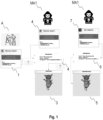
- Fig. 1 illustrates two ways in which malicious actors MA1 and MA2 may fraudulently sell duplicate, or altered NFTs on e.g. an NFT marketplace.
- the "genuine" NFT 1 minted by (or on behalf of) the artist A is shown on the left-hand side of the drawing.
- the genuine NFT is published on the Ethereum blockchain, but it will be appreciated that this is just an example.
- the genuine NFT is minted by a smart contract 1 having the ID shown, and includes an URL of the metadata JSON file 4, which itself contains the URL of the digital asset 3 (in this case, a cartoon of a donkey).
- Fig. 1 illustrates two ways in which they may do so:
- NFTs can be broken or tampered with because the storage they use is neither permanent nor secure. This means that the NFTs may simply stop functioning after some time.
- the present invention has been devised in order to prevent both of these kinds of malicious activity.
- NFTs trusted non-fungible tokens
- a blockchain-specific NFT ID is generated and inserted into the digital asset either before or after the NFT is minted by a smart contract (whether insertion takes place before or after minting depends on the exact nature of the blockchain to which the NFT is minted).
- NFTs trusted non-fungible tokens
- the invention provided a corresponding computer-implemented method for validating an NFT, e.g. before trade or purchase on a marketplace, or the like. We now discuss the various aspects of the invention in more detail.
- a first aspect of the present invention provides a computer-implemented method of minting a trusted NFT on a blockchain, the NFT corresponding to a digital asset.
- the computer-implemented method comprises the steps of: receiving a request to mint the NFT on the blockchain; accessing programming logic on the blockchain, the programming logic configured to mint the NFT to the blockchain; generating an NFT ID which comprises data identifying the NFT; inserting the NFT ID into the digital asset to generate a modified digital asset; storing the modified digital asset in an electronic memory, the storage location of the modified digital asset described by a first electronic storage address; generating metadata comprising the first storage address and storing the generated metadata in an electronic memory, the storage location of the metadata described a second electronic storage address; providing the second electronic storage address as an input to the programming logic; and executing the programming logic, thereby minting the trusted NFT to the blockchain.
- NFT A first term which is important to discuss is the term "NFT" itself.
- an NFT may be defined as a record on a blockchain which is associated with a particular digital or physical asset.
- the "NFT” refers to a record which has been minted, i.e. published to the blockchain, and which contains information indicating the storage location of the metadata which describes and points to the modified digital asset.
- the metadata may be in the form of a metadata file, for example in JavaScript Object Notation (herein, "JSON").
- JSON JavaScript Object Notation
- the NFT, i.e. the metadata file may include, in addition to the first electronic storage address, a file name and/or a description of the digital asset.
- the NFT may also contain data identifying (preferably uniquely) a minting authority which minted or caused the minting of the NFT.
- the term "minting authority” may refer to the user or entity which requested the minting (more specifically, a unique identifier thereof), or the programming logic (e.g. a smart contract, see below) whose execution minted the NFT. Inclusion of this information in the NFT is beneficial for a validation process, described in detail later with reference to the computer-implemented method of the third aspect of the invention.
- blockchain is used in the normal manner, to describe a growing list of records, referred to as “blocks”, which are linked together sequentially using cryptographic techniques such as hashing.
- each block may include a hash of the previous block, a timestamp, and transaction data.
- the blocks form a chain because each includes information which is generated based on the contents of the previous block.
- transactions in the block are irreversible, and immutable because data in a given block cannot be modified without detection, since the hash of the modified data would necessarily give rise to a different hash from the hash stored in the subsequent block.
- Blockchains are generally managed by a peer-to-peer network, rather than a central managing authority. In this way, blockchains are often referred to as a public "distributed ledger". Nodes of the blockchain collectively adhere to a consensus algorithm protocol to add and validate new transactions.
- EVM-compatible blockchains There are many types of blockchain, and many commercially available specific blockchains.
- An important class of blockchains are EVM-compatible blockchains, where "EVM” stands for Ethereum Virtual Machine.
- EVM-compatible blockchains include Binance Smart Chain ( BSC ), Fantom, Polygon, and Avalanche.
- BSC Binance Smart Chain
- Fantom Fantom
- Polygon Polygon
- Avalanche Avalanche
- Many other EVM-compatible blockchains are available I .
- EVM-compatible blockchains are advantageous because they are widely-available, and enable the use of smart contracts.
- the EVM may be described as a distributed state machine.
- the state of an EVM-compatible blockchain is a large data structure which holds not only all accounts and balances, for example, but also a machine state, which can change from I https://chainlist.org/ block to block according to a predetermined set of rules, and which can execute arbitrary computer code.
- EVM-compatible blockchains are blockchains which create or have an EVM-like code environment. Details of the EVM can be found in the Ethereum yellow paper 2 .
- the blockchain is an EVM-compatible blockchain.
- the computer-implemented method may be executed by a module of an NFT marketplace server, on which NFTs hosted on a range of different blockchains may be bought, sold, or otherwise traded.
- the request to mint the NFT on the blockchain may comprise information identifying the blockchain on which the originating user wishes to mint the NFT.
- the term "originating user" refers to the user, user account, or device from which the request originates.
- programming logic is used in the definition of the invention above. This well-known term refers broadly to any computer-implemented logic, or a computer program, which is capable of executing some predetermined function.
- the function of the programming logic is to mint the NFT to the blockchain, e.g. in response to a provided input (more detail later).
- the programming logic is preferably implemented in code in a computer-readable language.
- the code preferably serves as instructions, which when executed by a processor of a computing device, cause the computing device to execute the function in question.
- the computer-implemented method may include a step of deploying programming logic on the blockchain, which is then followed by the step of accessing the deployed programming logic.
- pre-existing programming logic may be used.
- the computer- 2 https://ethereum.github.io/yellowpaper/paper.pdf implemented method may comprise a step of retrieving existing programming logic which is already deployed on the blockchain, followed by the step of accessing the retrieved programming logic.
- the blockchain may have a library of standard programming logic (see below). In these cases, the library of standard programming logic may be accessed.
- the programming logic may be in the form of a smart contract.
- smart contract refers to a program stored on a blockchain which run when predetermined conditions are met. More specifically, the smart contract may comprise code which comprises instructions which are executed when a predetermined condition (e.g. an "IF" or "WHEN" condition) is met. The computer code may also comprise a portion of code which encodes the predetermined condition. In the context of cryptocurrencies, execution of a smart contract, in response to some input, may cause a transfer of funds from one user to another. The use of smart contracts is beneficial because the blockchain is updated when the transaction is completed, meaning that the transaction cannot be altered retroactively. In the context of the present invention, the smart contract may be referred to a "minting contract”.
- the smart contract may be configured to mint the NFT to the blockchain in response to a predetermined condition being met.
- the smart contract may be configured to mint the NFT to the blockchain in response to receiving one or more inputs, the one or more inputs comprising the second electronic storage address.
- the one or more inputs may further comprise a minting input, which actuates the minting process in response to receipt of one or more other inputs.
- the computer-implemented method may comprise, minting the NFT in response to insertion of the second electronic storage address into the smart contract, the minting executed or otherwise caused or effected by the smart contract.
- the smart contract may be in the form of a custom smart contract which a user generates and deploys on the blockchain.
- the computer-implemented method may comprise deploying a (custom) smart contract on the blockchain, or retrieving a (custom) smart contract which has already been deployed on the blockchain.
- the latter may be the case, for example, when a given user or minting authority uses the same smart contract to mint more than one NFT. This is possible for e.g. EVM-compatible blockchains.
- the computer-implemented method may comprise retrieving a standard smart contract which has already been deployed on the blockchain, or accessing a standard smart contract from the library.
- a standard smart contract may be accessible by a plurality of users or minting authorities.
- smart contract when used in this application, it should be understood to encompass either to a custom smart contract created by a minting authority (e.g. on an EVM-compatible blockchain), or a standard smart contract which is retrieved from or accessed in a library of standard smart contracts.
- minting authority e.g. on an EVM-compatible blockchain
- standard smart contract which is retrieved from or accessed in a library of standard smart contracts.
- smart contract is not necessarily restricted to these examples, and it may used to refer to any suitable blockchain-deployable or blockchain-deployed computer program which executes a particular function in response to one or more predetermined inputs.
- the cornerstone of the present invention is the generation and insertion of a NFT ID into the modified digital asset.
- the NFT includes information indicating a storage location of the metadata
- the metadata includes information indicating a storage location of the digital asset
- the digital asset includes information (in the form of the NFT ID) which (preferably uniquely) identifies the NFT.
- the NFT is the NFT which is to be minted.
- the NFT ID may be blockchain-specific, or alternatively put, the NFT ID may be specific to the blockchain on which the NFT is to be minted ("to be minted" is used here, because at this point, the NFT has not been minted by the smart contract).
- the NFT ID may be in the form of a block of data comprising one or more sub-blocks, each sub-block comprising data indicative of a respective attribute or aspect of the NFT to be minted.
- the NFT comprises at least one sub-block related to the minting domain (e.g. the minting authority, the minting contract, the creator account, or the mint address), and at least one sub-block uniquely identifying the token within the minting domain (e.g. a token ID, an asset name, or a file name)
- the NFT ID may comprise a sub-block of data representing an address or ID of the programming logic (e.g. a custom smart contract) on the blockchain which is used to mint the NFT.
- the NFT ID may also comprise a sub-block of data representing an address or ID of the blockchain itself.
- the computer-implemented method may comprise retrieving programming logic such as a custom smart contract which has already been deployed on the blockchain, and that smart contract may be configured to mint a plurality of separate NFTs (at different times).
- a given NFTminting service may be associated with a single minting contract, but uses that contract to mint a plurality of NFTs over a period of time.
- a smart contract may comprise a plurality of token identifiers, each associated with a respective NFT.
- the NFT ID may comprise a sub-block of data representing a token identifier.
- the token identifier may designate, identify, describe or define the NFT corresponding to the digital asset.
- the NFT ID uniquely identifies the NFT to be minted, i.e. the content of the NFT ID does not and cannot describe more than one smart contract.
- the minting step takes place after insertion of the NFT ID into the digital asset. For this reason, it is advantageous to use a blockchain in which it is possible to determine the data making up the sub-blocks in advance of the minting step.
- the NFT ID may comprise sub-blocks of data, wherein the sub-blocks of data are derivable before the NFT is minted.
- the blockchain identifier and the smart contract address are known before the NFT is minted.
- a token identifier in a smart contract on an EVM-compatible blockchain generally increases by one, or follows any other predictable pattern, as the smart contract is used to mint another NFT.
- the token identifier is predictable, i.e. derivable, before the smart contract is used to mint the NFT.
- the NFT ID may comprise a first sub-block comprising a blockchain identifier (or "chain ID"); a second sub-block comprising a smart contract address; and a third sub-block comprising a token identifier.
- the NFT ID may comprise a sub-block comprising a file name associated with the digital asset; a user identifier associated with digital asset; and/or an account identifier associated with the digital asset.
- at least one sub-block comprises information which uniquely identifies the NFT.
- the digital asset may be in the form of an image file, a video file, an audio file, a text file, or the like. This list is by no means exhaustive, and it will be appreciated that NFTs may be generated and minted in respect of any kind of digital asset.
- the data representing the digital asset will include metadata.
- inserting the NFT ID into the digital asset may comprise inserting the NFT ID into the metadata relating to the digital asset.
- the NFT ID may be stored at the first electronic storage address along with the digital asset.
- the NFT ID may be embedded into the data representing the digital asset.
- the NFT ID is embedded into the data representing the digital asset itself, there is no separate e.g. field which comprises the NFT ID after it is stored: the combination of the digital asset and the NFT ID is represented by a unitary set of data.
- Techniques for embedding data into digital assets in this manner are well-known, and include e.g. steganography and watermarking. These techniques are known for all types of digital asset, be they audio files, video files, image files, text files, or any other kinds of file.
- modified digital asset is used to refer to the combination of the NFT ID and the digital asset, either when the two are represented by a unitary set of data, or as a digital asset and metadata, or any other combination.
- a malicious actor may begin generating NFT IDs and inserting them into digital assets, which would enable them to continue fraudulent behaviour. It is therefore desirable to include a further layer of security, which may form the subject of an additional check during a validation process. Specifically, it is desirable to apply a further layer of security which cannot be copied or forged by a malicious actor. This may be done by signing the digital asset the modified digital asset, or the NFT ID using a private key.
- private key is used to refer to one of a key-pair which is known only by trusted parties.
- the key-pair also includes a complementary "public key", which is (as the name suggests) publicly available.
- public key which is (as the name suggests) publicly available.
- the key-pair may be an elliptical key-pair.
- the digital signature may be generated using the Digital Signature Algorithm, described by the standard FIPS 186-4 3 .
- An ECDSA signature may also be applied to the digital asset, modified digital asset or NFT ID.
- the digital signature may also be generated based on RSA publickey cryptography.
- the computer-implemented method may further comprise applying, using a private key of a trusted party, a digital cryptographic signature to the modified digital asset or the digital asset.
- the private key which is used may be a wallet private key of the minting authority (i.e. the user or entity which is generating and minting the NFT), so that validation of the signature can rely on the same mechanisms as the blockchain.
- the signature may be generated based on the data representing the digital asset, or the data representing the modified digital asset.
- the signature may be stored along with the modified digital asset.
- the signature may be inserted into the digital asset in the same way that the NFT ID is.
- metadata relating to the digital asset may comprise the digital signature (as well as e.g. the NFT ID).
- the signature may be embedded in the data representing the digital asset itself (e.g. as a watermark, or using another steganographic technique).
- the signature may be stored as a separate file at the first electronic storage address.
- the digital signature may also be contained in the metadata file at the second electronic storage address.
- the private key is associated with a trusted party.
- the trusted party may refer to e.g. the artist or creator of the digital asset, the trusted marketplace on which the NFT is being sold or traded, a third party trusted NFT minting service, or the like.
- Each trusted party also has a complementary public key.
- the first electronic storage address and the second electronic storage address may correspond to a location in a decentralized, permanent storage system.
- the first storage address and/or the second storage address may correspond to a location in a storage system which utilizes an Arweave 4 protocol.
- the first electronic storage address and/or the second electronic storage address may correspond to a location in an IPFS storage system utilizing a Filecoin 5 protocol.
- These protocols are merely examples, and it will be readily understood what is meant by permanent/durable and decentralized storage.
- decentralized means that data is not stored in one specific location, but that 4 https://www.arweave.org/yellow-paper.pdf 5 https://spec.filecoin.io/ several copies of the data are stored across a plurality of nodes.
- Decentralized storage may rely on, or be based on blockchain technology, in order to ensure that data stored on the system may not be tampered with, or remains immutable.
- “permanent” or “durable” storage refers to storage which is guaranteed for a long time, which may be effectively permanent, i.e. over several years, decades, or centuries. Many storage services offer this for the payment of a fee.
- the first electronic storage address and the second electronic storage address may be in the form of URLs or URIs.
- the preceding disclosure relates to a computer-implemented method of minting a trusted NFT on a blockchain, using a process in which data which uniquely identifies the NFT can be determined before the NFT is minted to the blockchain.
- it is possible to generate and mint a trusted NFT on a blockchain where the uniquely identifying information is available only after the NFT has been minted to the blockchain.
- this is achieved by minting an NFT containing a dummy electronic storage address, and replacing this with a second electronic storage address corresponding to the address of the metadata file after the NFT has been minted.
- a second aspect of the present invention provides a computer-implemented method of minting a trusted and verifiable NFT on a blockchain, the NFT corresponding to a digital asset.
- the computer-implemented method comprises the steps of: receiving a request to mint the NFT on the blockchain; deploying, retrieving, or accessing programming logic on the blockchain, the programming logic configured to mint the NFT to the blockchain; providing a dummy electronic 6 https://github.com/ArweaveTeam/arweave-standards/blob/ans-I03/ans/ANS-I03.md storage address as an input to the programming logic; executing the programming logic, thereby minting a temporary NFT to the blockchain; generating an NFT ID uniquely identifying the NFT; inserting the NFT ID into the digital asset to generate a modified digital asset; storing the modified digital asset in an electronic memory, the storage location of the modified digital asset described by a first electronic storage address; generating metadata comprising the first storage address and storing the generated metadata in an electronic memory
- the computer-implemented method of the second aspect of the invention is executable in respect of blockchains for which the token URL or URI (i.e. the dummy electronic storage address) is a mutable parameter.
- the token URL or URI i.e. the dummy electronic storage address
- one example of a suitable blockchain is the Solana blockchain, but the computer-implemented method of the second aspect of the invention may be applied to e.g. an EVM-compatible blockchain if a custom smart contract is deployed (or retrieved) which supports mutability of the second storage address in the NFT.
- the computer-implemented method of the second aspect of the invention may further include a step of updating the properties of the smart contract to prevent further modification of the NFT, after the dummy electronic storage address has been replaced with the second electronic storage address.
- the trusted NFT generated according to the computer-implemented method of the second aspect of the invention takes the same form as the trusted NFT generated according to the computer-implemented method of the first aspect of the invention.
- the optional features set out above in respect of the computer-implemented method of the first aspect of the invention are equally applicable to the computer-implemented method of the second aspect of the invention, except where clearly technically incompatible or where context dictates otherwise.
- the optional features set out in relation to the nature of the programming logic, the blockchainspecificity and the general form of the NFT ID (including the fact that it uniquely identifies the smart contract), the manner in which the NFT ID may be inserted into the digital asset, the addition of the digital signature, and the nature of the storage system and electronic storage addresses, also apply to the computer-implemented method of the second aspect of the invention.
- a third, complementary aspect of the disclosure relates to a process whereby an NFT may be validated before a sale or trade. At a high-level, this is done by following the chain of data inherent within the NFT, extracting the NFT ID from the modified digital asset, and determining whether it corresponds to the programming logic responsible for minting the NFT. More specifically, a third aspect of the invention provides a computer-implemented method of validating a non-fungible token (NFT) stored on a blockchain, the NFT corresponding to a modified digital asset stored at a first electronic storage address, the NFT including a second electronic storage address at which metadata corresponding to the digital asset is stored.
- NFT non-fungible token
- the computer-implemented method comprises: receiving a request to validate an NFT, the NFT including data identifying a minting authority which minted or caused minting of the NFT to the blockchain; retrieving the metadata from the second electronic storage address; retrieving the modified digital asset from a first electronic storage address specified in the metadata; extracting, from the modified digital asset, a NFT ID comprising data uniquely identifying the NFT; comparing the data extracted from the NFT ID with the data identifying the minting authority which minted or caused minting of the NFT to the blockchain, in order to determine whether the NFT is valid.
- the NFT ID will comprise information which uniquely identifies the NFT (e.g. information about the smart contract and e.g. a token identifier or additional information about the digital asset).
- the NFT may be generated and minted according to the computer-implemented method of the first aspect of the invention or the computer-implemented method of the second aspect of the invention, along with any optional features set out previously in this application.
- the minting authority identified in the NFT which formed the subject of the initial request was not actually responsible for the minting of the NFT in the first place.
- the minting authority identified in the NFT which forms the subject of the request may correspond to programming logic, the execution of which is alleged or said to be responsible for the minting of the NFT in question.
- the NFT ID is consistent with, identical to, or comparable to the data identifying the minting authority which minted or caused the minting of the NFT. If the information extracted from the NFT ID is not consistent with, identical to, or comparable to the data describing the smart contract, it may be determined that the NFT is not valid.
- the computer-implemented method may comprise determining whether the modified digital asset includes a digital signature.
- the computer-implemented method may comprise generating a flag notifying a user that the modified digital asset is not signed. This may serve as a warning to a user that the NFT may have been generated by a malicious actor using one of the methods of MA1 or MA2 of Fig. 1 , and by generating an appropriate NFT ID.
- a digital signature is present, e.g.
- the computer-implemented method may comprise verifying the digital signature using one or more public keys, each associated with a respective trusted party. More specifically, the computer-implemented method may comprise verifying the digital signature with a public key corresponding to a trusted party responsible for generating and minting the NFT.
- the trusted party may refer to e.g. the artist or creator of the digital asset, the trusted marketplace on which the NFT is being sold or traded, a third party trusted NFT minting service, or the like. If the digital signature is verified using the public key of a trusted party, the digital signature may be deemed to be valid. And, conversely, if the digital signature is not verified using the public key of a trusted party, the digital signature may be deemed not to be valid.
- Additional aspects of the invention may relate to systems configured to execute the computer-implemented method of any one of the first, second, and third, aspects of the invention.
- the system may comprise a processor which is configured to execute the respective computer-implemented method.
- other aspects of the invention may provide a computer program comprising instructions which, when the program is executed by a computer, cause the computer to carry out the steps of a computer-implemented method of any one of the first, second, and third aspects of the present invention.
- a further aspect of the invention may provide a computer-readable storage medium, having stored thereon the computer program of the previous aspect of the invention.
- the invention includes the combination of the aspects and preferred features described except where such a combination is clearly impermissible or expressly avoided.
- Fig. 2 is a high-level system which may be employed to execute computer-implemented methods according to some aspects of the present invention.
- the system includes a computing device 100, a storage system 200 and a blockchain node 300.
- the network 400 may be a wired network such as a LAN, or WAN, or a wireless network such as a Wi-Fi network, the Internet, or a cellular network.
- the system 100, storage system 200 and blockchain node 300 are not necessarily all connected to each other by a single network, and may be connected in pairs by three separate networks.
- any two, or three of the system 100, storage system 200 and the blockchain node 300 may be located on the same physical component. Components located on the same physical component may not require a network to communicate between them.
- Fig. 2 shows only one example of the layout of a system comprising the computing system 100, storage system 200 and blockchain node 300. The skilled person is able to envisage other layouts without departing in any way from the scope of the present invention.
- the computing device 100 may be any suitable computing device which may be used for generating and minting NFTs to a blockchain.
- the computing device 100 may be, or comprise, one or more of the following: a desktop computer, a laptop computer, a tablet, a smartphone.
- computing device 100 may include other suitable computing devices.
- the previous list is not intended to be exhaustive.
- the computing system 100 includes a processor 102 and a memory 104.
- the processor 102 and the memory 104 are part of the same computing system 100, but it will be appreciated that they may be located on separate physical components without deviating from the scope of the invention.
- the processor 102 comprises an NFT generation module 1020 and a validation module 1022. Once more, in Fig. 2 , these are shown as both being part of the same processor 102, but it will be appreciated that these may also be located on separate physical components without deviating from the scope of the invention.
- the processor 102 comprises several different modules.
- module is used to refer to a functional module which is configured or adapted to execute a particular function.
- the modules may be implemented in hardware (i.e. they may be separate physical components within a computer), in software (i.e. they may represent separate sections of code, which when executed by processor 102, cause it to perform a particular function), or in a combination of both.
- the NFT generation module 1020 comprises the following modules: a smart contract generation module 10200, a NFT ID generation module 10202, a signature module 10204, a digital asset modification module 10204, and a minting module 10208.
- the function of each of these modules will shortly be described in detail with reference to Figs. 3 and 4 .
- the purpose of the validation module 1022 is to determine whether an NFT which is on offer for sale on an NFT marketplace is genuine, based on e.g. the address of the smart contract.
- the validation module 1022 comprises the following modules: a metadata extraction module 10220, a modified digital asset retrieval module 10222, a NFT ID extraction module 10224, a signature verification module 10226, a comparison module 10228, and an output module 10230. The function of each of these modules will be described shortly with reference to Figs. 5 and 6 .
- the purpose of one aspect of the present invention is the generation and minting of trusted NFTs onto a blockchain, such as, but by no means limited to, the Ethereum, Solana, or Algorand blockchains.
- a digital artist this term being used broadly to refer to the creator of a digital asset
- the marketplace itself may host a service or platform for the generation and minting of trusted NFTs.
- the service or platform might be hosted by an external outfit, offering the service to artists, marketplaces or both.
- the process ensures that only trusted entities (i.e. either the artist themselves or the trusted NFT marketplace) are able to generate and mint the trusted and, crucially, verifiable NFTs.
- the processor 102 of the computing system 100 may receive a request (in most cases, an electronic request) for the generation and minting of a trusted NFT.
- a request in most cases, an electronic request
- This request may be received via a graphical user interface of e.g. a website, but it will be appreciated that there are many ways of receiving such a request.
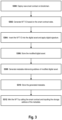
- the process illustrated in either Fig. 3 or Fig. 4 may begin.
- Each of these drawings illustrates a perfectly valid scheme for generating and minting a trusted NFT, and the scheme to be selected depends on the specific operation of the blockchain in question, and more specifically, the manner in which the blockchains assign smart contract addresses and/or token IDs. This will be explained in more detail below.
- step S300 of Fig. 3 in response to receipt of the request for a trusted NFT, the smart contract generation module 10200 deploys a new smart contract on the blockchain, of which blockchain node 300 is a part, and optionally a new token ID is generated within the smart contract.
- the new smart contract is preferably specific to the customer. In some cases, rather than deploying a new smart contract on the blockchain, an existing smart contract which is already deployed on the blockchain is retrieved, and a new token ID is generated within that smart contract.
- a NFT ID is generated by the NFT ID generation module 10202, based on the smart contract address or ID.
- the generated NFT ID is specific to the type of blockchain on which the smart contract has been deployed. In this way, it is possible to avoid the actions of malicious actors such as MA2 in Fig. 1 , in which NFT is hosted on a different blockchain.
- the exact form of the NFT ID varies depending on the blockchain in question, due to the specific form of the smart contract addresses in different blockchains.
- the NFT ID may take the form: NFTID: // EVM ⁇ chainID ⁇ / ⁇ contract address ⁇ / ⁇ token ID ⁇
- the NFT ID may take the form: NFTID: // Solana / ⁇ mint address ⁇ / ⁇ name ⁇
- mint address is the term used for the minting authority, i.e. the address owning the authority to mint new tokens.
- the NFT ID may take the form: NFTID: // Algorand / ⁇ creator account ⁇ / ⁇ asset name ⁇
- the important feature is that the NFT ID can be generated based on information which is available before the NFT has been minted, but which includes everything required to loop back the references to the unique token ID on a given blockchain.
- step S304 the NFT ID is inserted into the digital asset 1040 by the digital asset modification module 10206, and a digital signature is generated and applied to the digital asset by the signature module 10204. These are discussed in turn.
- Insertion of the NFT ID in step S304 may take place in any number of ways.
- the NFT ID may be included in metadata associated with the digital asset (not to be confused with the metadata file which contains the reference to the address of the digital asset after storage).
- metadata associated with the digital asset not to be confused with the metadata file which contains the reference to the address of the digital asset after storage.
- image file for specific types of image file:
- the NFT ID may be inserted into the media itself, i.e. into the digital asset itself, using steganography and/or watermarking techniques for still images, audio, or video. Such steganographic and watermarking techniques are well-known in the art.
- the digital asset modification module 10206 Once the NFT ID is inserted into the digital asset (either the asset itself or the accompanying metadata) by the digital asset modification module 10206, it is referred to herein as the "modified digital asset".
- the signature module 10204 also adds a digital signature 1042 to the digital asset.
- the signature module 10204 adds a digital signature generated using a private key associated with a trusted entity.
- the private key may be associated with the artist themselves, the trusted marketplace, or the trusted external outfit providing the NFT generation/minting service.
- the signature maybe applied to just the modified digital asset, or 7 https://dev.exiv2.org/projects/exiv2/wiki/The_Metadata in PNG files 8 https://docs.oracle.com/javase/8/docs/api/javax/imageio/metadata/doc-files/jpeg_metadata.html 9 ttps://docs.oracle.com/javase/7/docs/api/javax/imageio/metadata/doc-files/gif_metadata.html the modified digital asset and associated metadata.
- the signature may be applied to the NFT ID.
- the signature module 10204 may use one of any well-known digital signature algorithms to generate the signature based on the private key in question.
- a smart contract has been deployed on the blockchain, with a new token ID, a blockchain- and customerspecific NFT ID has been generated and inserted into the digital asset to generate a modified digital asset, and the modified digital asset has been signed using a private key of a trusted entity.
- the modified digital asset (plus signature) is stored in storage system 200.
- the storage system 200 is preferably a storage system that ensures integrity and durability of the modified digital asset, such as Arwaeave or IPFS / Filecoin. These services guarantee both the integrity of the stored content, and also the longevity of the stored content.
- a metadata JSON file is generated.
- the metadata JSON file includes a reference to the storage address of the modified digital asset in the storage system 200, e.g. in the form of a URL.
- the metadata JSON file may further comprise additional information such as the name of the modified digital asset file, and a description of the modified digital asset file. Strictly speaking the file need not be a JSON file, but this is part of the NFT standard, so realistically this is most likely to be the case in all implementations.
- the generated metadata file is stored in storage system 200. In the example described, this is the same storage system 200 as the modified digital asset is stored in, but this need not be the case.
- the storage system 200 where the metadata file is stored is also a storage system that ensures integrity and durability of the modified digital asset, such as Arwaeave or IPFS / Filecoin. These services guarantee both the integrity of the stored content, and also the longevity of the stored content.
- the NFT is minted by execution of one operation of the smart contract, by the minting module 10208.
- the smart contract is configured execute a minting operation.
- the minting module 10208 in this context may refer to the code containing the instructions for this process to occur.
- the smart contract is published to the blockchain of which blockchain node 300 is part, and the NFT is considered to be minted.
- the metadata file 500 stored on IPFS contains a reference to the URL or other storage address of the modified digital asset 502 which is also stored on IPFS.
- the modified digital asset 502 contains an NFT ID 504 which refers uniquely to the address 506 of the smart contract 508 which minted the NFT, and the token ID 510 within the smart contract.
- the modified digital asset 502 contains a digital signature 512 which is linked to a trusted entity responsible for deployment of the smart contract 508.
- the smart contract 508 contains a URL 514 or other storage address of the metadata file 500. Because of this complete chain, it is possible to detect tampering or other fraudulent activity, by detecting any inconsistencies within the chain. This is explained later in more detail, with reference to Fig. 6 .
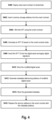
- Fig. 4 shows a similar method to Fig. 3 .
- Fig. 4 is applicable to blockchains for which it is not possible to predict the form that the smart contract address will take (and therefore to generate an NFT ID) before the NFT has been minted.
- the resulting arrangement is the same as is shown in e.g. Fig. 5 , but the process for generating and minting the trusted NFT ID is slightly different.
- This method is particularly applicable for e.g. Solana blockchains, or any blockchains in which it is not possible to predict the form that the smart contract address will take before minting, and for which the token URL (or equivalent storage address) is a mutable parameter, i.e.
- step S400 as for step S300, in response to receipt of a request for a trusted NFT, a new smart contract is deployed on the blockchain of which blockchain node 300 is a part, and optionally a new token ID may be generated.
- a dummy URL (or equivalent storage address) is input into the deployed smart contract, and in step S404, it is minted using the minting module 10208 as a result.
- the term "dummy” is used to refer to an address which is in the correct form, or format, but which does not refer to the actual location of the (at this point, non-existent) metadata file.
- the smart contract address or ID is known.
- the "token address” is generated, and known at this point.
- step S406 an NFT ID is generated based on the now-minted smart contract, by the NFT ID generation module 10202.
- the NFT ID generation module 10202 The reader will recall that in e.g. a Solana blockchain, the "token address" parameter cannot be predicted before minting, hence why the NFT ID can only be generated by the NFT ID generation module 10202 after the minting step S404.
- the NFT ID is inserted into the digital asset by the digital asset modification module 10206, and a digital signature is generated and applied by the signature module 20104 in step S408. This may happen in the same way as step S304 of the computer-implemented method of Fig. 3 .
- steps S410 to S414 respectively, the modified digital asset is stored in storage system 200, metadata is generated referencing the storage address (i.e. the URL) of the modified digital asset in the storage system 200, the metadata is then stored on the storage system 200 (or a separate storage system, it does not matter as long as it has an address which uniquely identifies the storage location). These steps may proceed in the same way as steps S306 to S310 of Fig. 3 .
- the dummy address associated with the NFT is replaced with the storage address of the metadata file.
- the token URL (not the same as the token address, which defines the location of the minted smart contract in the blockchain) is a mutable parameter, and can therefore be updated.
- it may be possible to modify the smart contract so that after the dummy address has been replaced with the metadata file storage address, it is no longer possible to modify that parameter.
- the chain of information is established as shown in Fig. 5 .
- the processes of Fig. 3 and Fig. 4 differ, the overall result is the same.
- Fig. 5 presents a flowchart of an exemplary validation process which may be executed by the validation module 1022 of the processor 102.
- the smart contract blockchain address is received by the validation module 1022.
- an entity who is in the process of purchasing an NFT on an NFT marketplace website may input the smart contract address on the particular blockchain, which is then received by the validation module 1022.
- the smart contract address corresponds to the smart contract which minted the NFT.
- the metadata storage address (usually in the form of a URL) is identified.
- the metadata in the form of e.g. a JSON file, is retrieved from the identified storage address by the metadata retrieval module 10220.
- the metadata file includes a reference to the storage address of the modified digital asset.
- this storage address is retrieved, and in step S608, the modified digital asset is retrieved from this address by the modified digital asset retrieval module 10222.
- the NFT is extracted from the modified digital asset by the NFT ID extraction module 10224. This may comprise extracting it from the metadata associated with the modified digital asset, or extracting it from the modified digital asset file data itself (depending on the manner in which the NFT ID was inserted into the digital asset in the first place).
- the NFT ID is compared with the expected NFT ID in step S612 by the comparison module 10228. As discussed previously in detail in this application, the NFT ID may be generated based on features of the smart contract, the token ID, the creator of the smart contract, and the like. Thus, the "expected" NFT ID is the NFT ID made up of the specific set of properties of the minting contract in question.
- the digital signature may be verified by the signature verification module 10226.
- step S614 the results of the comparison and/or verification steps is/are output by the output module 10230.
- the computer-implemented method may comprise a step of determining whether an NFT ID is present in the modified digital asset. If there is no NFT ID in the modified digital asset, then the method may skip straight to the output step, informing the user that there is no NFT ID present.
Landscapes
- Engineering & Computer Science (AREA)
- Computer Security & Cryptography (AREA)
- Computer Networks & Wireless Communication (AREA)
- Signal Processing (AREA)
- Computing Systems (AREA)
- Theoretical Computer Science (AREA)
- Financial Or Insurance-Related Operations Such As Payment And Settlement (AREA)
Priority Applications (5)
| Application Number | Priority Date | Filing Date | Title |
|---|---|---|---|
| ES22205867T ES3029879T3 (en) | 2022-11-07 | 2022-11-07 | Generation and validation of trusted non-fungible tokens |
| EP22205867.9A EP4366228B1 (de) | 2022-11-07 | 2022-11-07 | Erzeugung und validierung von vertrauenswürdigen nicht-fungiblen token |
| PCT/EP2023/079346 WO2024099741A1 (en) | 2022-11-07 | 2023-10-20 | Generation and validation of trusted non-fungible tokens |
| US19/123,168 US20260180808A1 (en) | 2022-11-07 | 2023-10-20 | Generation and validation of trusted non-fungible tokens |
| EP23793380.9A EP4616567B1 (de) | 2022-11-07 | 2023-10-20 | Erzeugung und validierung von vertrauenswürdigen nicht-fungiblen token |
Applications Claiming Priority (1)
| Application Number | Priority Date | Filing Date | Title |
|---|---|---|---|
| EP22205867.9A EP4366228B1 (de) | 2022-11-07 | 2022-11-07 | Erzeugung und validierung von vertrauenswürdigen nicht-fungiblen token |
Publications (3)
| Publication Number | Publication Date |
|---|---|
| EP4366228A1 true EP4366228A1 (de) | 2024-05-08 |
| EP4366228C0 EP4366228C0 (de) | 2025-04-02 |
| EP4366228B1 EP4366228B1 (de) | 2025-04-02 |
Family
ID=84330321
Family Applications (2)
| Application Number | Title | Priority Date | Filing Date |
|---|---|---|---|
| EP22205867.9A Active EP4366228B1 (de) | 2022-11-07 | 2022-11-07 | Erzeugung und validierung von vertrauenswürdigen nicht-fungiblen token |
| EP23793380.9A Active EP4616567B1 (de) | 2022-11-07 | 2023-10-20 | Erzeugung und validierung von vertrauenswürdigen nicht-fungiblen token |
Family Applications After (1)
| Application Number | Title | Priority Date | Filing Date |
|---|---|---|---|
| EP23793380.9A Active EP4616567B1 (de) | 2022-11-07 | 2023-10-20 | Erzeugung und validierung von vertrauenswürdigen nicht-fungiblen token |
Country Status (4)
| Country | Link |
|---|---|
| US (1) | US20260180808A1 (de) |
| EP (2) | EP4366228B1 (de) |
| ES (1) | ES3029879T3 (de) |
| WO (1) | WO2024099741A1 (de) |
Cited By (3)
| Publication number | Priority date | Publication date | Assignee | Title |
|---|---|---|---|---|
| US20250119291A1 (en) * | 2023-10-10 | 2025-04-10 | The Royal Institution For The Advancement Of Learning / Mcgill University | Systems and methods for data transfer |
| US12321936B2 (en) * | 2023-04-17 | 2025-06-03 | Bank Of America Corporation | Decentralized platform application programming interface protocol for secure resource transmissions |
| CN120235712A (zh) * | 2025-05-30 | 2025-07-01 | 联易融数字科技集团有限公司 | Nft数字资产的链上兑付方法、装置、设备及介质 |
Families Citing this family (2)
| Publication number | Priority date | Publication date | Assignee | Title |
|---|---|---|---|---|
| CN118982423A (zh) * | 2024-07-16 | 2024-11-19 | 中移(杭州)信息技术有限公司 | 数据处理方法、装置、设备、存储介质及产品 |
| WO2026128122A1 (en) * | 2024-12-09 | 2026-06-18 | Crossbar, Inc. | Systems and methods for using non-fungible tokens for wallet backup and secret sharing |
Citations (3)
| Publication number | Priority date | Publication date | Assignee | Title |
|---|---|---|---|---|
| US20220006642A1 (en) * | 2020-07-06 | 2022-01-06 | The Samo Project | System and method for content storage and ownership verification |
| US20220309491A1 (en) * | 2021-03-23 | 2022-09-29 | Glowforge Inc. | Non-Fungible Tokens and Uses Thereof |
| US20220318233A1 (en) * | 2021-04-05 | 2022-10-06 | Ronald George Martinez | System for tracking data associated with a digital token |
-
2022
- 2022-11-07 EP EP22205867.9A patent/EP4366228B1/de active Active
- 2022-11-07 ES ES22205867T patent/ES3029879T3/es active Active
-
2023
- 2023-10-20 WO PCT/EP2023/079346 patent/WO2024099741A1/en not_active Ceased
- 2023-10-20 US US19/123,168 patent/US20260180808A1/en active Pending
- 2023-10-20 EP EP23793380.9A patent/EP4616567B1/de active Active
Patent Citations (3)
| Publication number | Priority date | Publication date | Assignee | Title |
|---|---|---|---|---|
| US20220006642A1 (en) * | 2020-07-06 | 2022-01-06 | The Samo Project | System and method for content storage and ownership verification |
| US20220309491A1 (en) * | 2021-03-23 | 2022-09-29 | Glowforge Inc. | Non-Fungible Tokens and Uses Thereof |
| US20220318233A1 (en) * | 2021-04-05 | 2022-10-06 | Ronald George Martinez | System for tracking data associated with a digital token |
Cited By (3)
| Publication number | Priority date | Publication date | Assignee | Title |
|---|---|---|---|---|
| US12321936B2 (en) * | 2023-04-17 | 2025-06-03 | Bank Of America Corporation | Decentralized platform application programming interface protocol for secure resource transmissions |
| US20250119291A1 (en) * | 2023-10-10 | 2025-04-10 | The Royal Institution For The Advancement Of Learning / Mcgill University | Systems and methods for data transfer |
| CN120235712A (zh) * | 2025-05-30 | 2025-07-01 | 联易融数字科技集团有限公司 | Nft数字资产的链上兑付方法、装置、设备及介质 |
Also Published As
| Publication number | Publication date |
|---|---|
| ES3029879T3 (en) | 2025-06-25 |
| WO2024099741A1 (en) | 2024-05-16 |
| EP4366228C0 (de) | 2025-04-02 |
| EP4366228B1 (de) | 2025-04-02 |
| US20260180808A1 (en) | 2026-06-25 |
| EP4616567A1 (de) | 2025-09-17 |
| EP4616567B1 (de) | 2026-07-08 |
Similar Documents
| Publication | Publication Date | Title |
|---|---|---|
| EP4366228B1 (de) | Erzeugung und validierung von vertrauenswürdigen nicht-fungiblen token | |
| US11798008B2 (en) | Blockchain-based product authentication system | |
| RU2656995C2 (ru) | Система и способ контроля доступа третьей стороны к охраняемому объекту | |
| US20260024078A1 (en) | Systems and Methods for Transaction Management in NFT-Directed Environments | |
| CN111989707B (zh) | 管理基于区块链的海关清关服务的用户权限 | |
| CN107798650B (zh) | 一种基于区块链的数字资产侵权判定方法和装置 | |
| CN108009445B (zh) | 一种半中心化的可信数据管理系统 | |
| US20230368186A1 (en) | Process for Creation storage retrieval of immutable NFT Non-fungible token based electronic book publishing on a decentralized proof ofstake blockchain | |
| US20250038997A1 (en) | Systems and methods to authenticate and verify smart contracts | |
| WO2001043026A1 (en) | Systems, methods and devices for trusted transactions | |
| JP2025014120A (ja) | 代替不可能トークンをブロックチェーンにミントする方法及び装置 | |
| JP2024163024A (ja) | 鑑定証明システム、及び鑑定証明方法 | |
| Eltuhami et al. | Identity verification and document traceability in digital identity systems using non-transferable non-fungible tokens | |
| KR102412511B1 (ko) | 블록체인 did를 이용한 콘텐츠 관리 장치 및 방법 | |
| WO2024142169A1 (ja) | Nft発行装置、nft発行方法、およびnft発行プログラム | |
| Dalla Preda et al. | Exploring NFT validation through digital watermarking | |
| CN111985004A (zh) | 判断信息完整性的方法及其计算机系统 | |
| CN117527244A (zh) | 数据处理方法和验证方法、装置、电子设备和存储介质 | |
| CN114331730A (zh) | 信息处理方法、装置和存储介质 | |
| Ramani et al. | Blockchain for digital rights management | |
| TW202503670A (zh) | 鑑定證明系統 | |
| US12511694B1 (en) | Systems and methods for insurance for NFTS and digital assets | |
| CN117808485A (zh) | 一种基于nft的数字内容实物购买系统 | |
| Gao et al. | Blockchain-based PDF file copyright protection and tracing | |
| US20250111017A1 (en) | Information processing method, information processing device, and recording medium |
Legal Events
| Date | Code | Title | Description |
|---|---|---|---|
| PUAI | Public reference made under article 153(3) epc to a published international application that has entered the european phase |
Free format text: ORIGINAL CODE: 0009012 |
|
| STAA | Information on the status of an ep patent application or granted ep patent |
Free format text: STATUS: THE APPLICATION HAS BEEN PUBLISHED |
|
| AK | Designated contracting states |
Kind code of ref document: A1 Designated state(s): AL AT BE BG CH CY CZ DE DK EE ES FI FR GB GR HR HU IE IS IT LI LT LU LV MC ME MK MT NL NO PL PT RO RS SE SI SK SM TR |
|
| STAA | Information on the status of an ep patent application or granted ep patent |
Free format text: STATUS: REQUEST FOR EXAMINATION WAS MADE |
|
| 17P | Request for examination filed |
Effective date: 20240731 |
|
| RBV | Designated contracting states (corrected) |
Designated state(s): AL AT BE BG CH CY CZ DE DK EE ES FI FR GB GR HR HU IE IS IT LI LT LU LV MC ME MK MT NL NO PL PT RO RS SE SI SK SM TR |
|
| GRAP | Despatch of communication of intention to grant a patent |
Free format text: ORIGINAL CODE: EPIDOSNIGR1 |
|
| STAA | Information on the status of an ep patent application or granted ep patent |
Free format text: STATUS: GRANT OF PATENT IS INTENDED |
|
| INTG | Intention to grant announced |
Effective date: 20241112 |
|
| GRAS | Grant fee paid |
Free format text: ORIGINAL CODE: EPIDOSNIGR3 |
|
| GRAA | (expected) grant |
Free format text: ORIGINAL CODE: 0009210 |
|
| STAA | Information on the status of an ep patent application or granted ep patent |
Free format text: STATUS: THE PATENT HAS BEEN GRANTED |
|
| AK | Designated contracting states |
Kind code of ref document: B1 Designated state(s): AL AT BE BG CH CY CZ DE DK EE ES FI FR GB GR HR HU IE IS IT LI LT LU LV MC ME MK MT NL NO PL PT RO RS SE SI SK SM TR |
|
| REG | Reference to a national code |
Ref country code: GB Ref legal event code: FG4D |
|
| REG | Reference to a national code |
Ref country code: CH Ref legal event code: EP |
|
| REG | Reference to a national code |
Ref country code: IE Ref legal event code: FG4D |
|
| REG | Reference to a national code |
Ref country code: DE Ref legal event code: R096 Ref document number: 602022012528 Country of ref document: DE |
|
| U01 | Request for unitary effect filed |
Effective date: 20250415 |
|
| U07 | Unitary effect registered |
Designated state(s): AT BE BG DE DK EE FI FR IT LT LU LV MT NL PT RO SE SI Effective date: 20250423 |
|
| REG | Reference to a national code |
Ref country code: ES Ref legal event code: FG2A Ref document number: 3029879 Country of ref document: ES Kind code of ref document: T3 Effective date: 20250625 |
|
| U1N | Appointed representative for the unitary patent procedure changed after the registration of the unitary effect |
Representative=s name: PARKER, ANDREW JAMES; DE |
|
| PG25 | Lapsed in a contracting state [announced via postgrant information from national office to epo] |
Ref country code: GR Free format text: LAPSE BECAUSE OF FAILURE TO SUBMIT A TRANSLATION OF THE DESCRIPTION OR TO PAY THE FEE WITHIN THE PRESCRIBED TIME-LIMIT Effective date: 20250703 Ref country code: NO Free format text: LAPSE BECAUSE OF FAILURE TO SUBMIT A TRANSLATION OF THE DESCRIPTION OR TO PAY THE FEE WITHIN THE PRESCRIBED TIME-LIMIT Effective date: 20250702 |
|
| PG25 | Lapsed in a contracting state [announced via postgrant information from national office to epo] |
Ref country code: PL Free format text: LAPSE BECAUSE OF FAILURE TO SUBMIT A TRANSLATION OF THE DESCRIPTION OR TO PAY THE FEE WITHIN THE PRESCRIBED TIME-LIMIT Effective date: 20250402 |
|
| PG25 | Lapsed in a contracting state [announced via postgrant information from national office to epo] |
Ref country code: HR Free format text: LAPSE BECAUSE OF FAILURE TO SUBMIT A TRANSLATION OF THE DESCRIPTION OR TO PAY THE FEE WITHIN THE PRESCRIBED TIME-LIMIT Effective date: 20250402 |
|
| PG25 | Lapsed in a contracting state [announced via postgrant information from national office to epo] |
Ref country code: RS Free format text: LAPSE BECAUSE OF FAILURE TO SUBMIT A TRANSLATION OF THE DESCRIPTION OR TO PAY THE FEE WITHIN THE PRESCRIBED TIME-LIMIT Effective date: 20250702 |
|
| PG25 | Lapsed in a contracting state [announced via postgrant information from national office to epo] |
Ref country code: IS Free format text: LAPSE BECAUSE OF FAILURE TO SUBMIT A TRANSLATION OF THE DESCRIPTION OR TO PAY THE FEE WITHIN THE PRESCRIBED TIME-LIMIT Effective date: 20250802 |
|
| U20 | Renewal fee for the european patent with unitary effect paid |
Year of fee payment: 4 Effective date: 20251022 |
|
| PG25 | Lapsed in a contracting state [announced via postgrant information from national office to epo] |
Ref country code: SM Free format text: LAPSE BECAUSE OF FAILURE TO SUBMIT A TRANSLATION OF THE DESCRIPTION OR TO PAY THE FEE WITHIN THE PRESCRIBED TIME-LIMIT Effective date: 20250402 |
|
| PG25 | Lapsed in a contracting state [announced via postgrant information from national office to epo] |
Ref country code: CZ Free format text: LAPSE BECAUSE OF FAILURE TO SUBMIT A TRANSLATION OF THE DESCRIPTION OR TO PAY THE FEE WITHIN THE PRESCRIBED TIME-LIMIT Effective date: 20250402 |
|
| PG25 | Lapsed in a contracting state [announced via postgrant information from national office to epo] |
Ref country code: SK Free format text: LAPSE BECAUSE OF FAILURE TO SUBMIT A TRANSLATION OF THE DESCRIPTION OR TO PAY THE FEE WITHIN THE PRESCRIBED TIME-LIMIT Effective date: 20250402 |
|
| PGFP | Annual fee paid to national office [announced via postgrant information from national office to epo] |
Ref country code: ES Payment date: 20251201 Year of fee payment: 4 |
|
| PLBE | No opposition filed within time limit |
Free format text: ORIGINAL CODE: 0009261 |
|
| STAA | Information on the status of an ep patent application or granted ep patent |
Free format text: STATUS: NO OPPOSITION FILED WITHIN TIME LIMIT |
|
| REG | Reference to a national code |
Ref country code: CH Ref legal event code: L10 Free format text: ST27 STATUS EVENT CODE: U-0-0-L10-L00 (AS PROVIDED BY THE NATIONAL OFFICE) Effective date: 20260211 |
|
| 26N | No opposition filed |
Effective date: 20260105 |
|
| REG | Reference to a national code |
Ref country code: CH Ref legal event code: H13 Free format text: ST27 STATUS EVENT CODE: U-0-0-H10-H13 (AS PROVIDED BY THE NATIONAL OFFICE) Effective date: 20260623 |
|
| PG25 | Lapsed in a contracting state [announced via postgrant information from national office to epo] |
Ref country code: MC Free format text: LAPSE BECAUSE OF FAILURE TO SUBMIT A TRANSLATION OF THE DESCRIPTION OR TO PAY THE FEE WITHIN THE PRESCRIBED TIME-LIMIT Effective date: 20250402 |
|
| PG25 | Lapsed in a contracting state [announced via postgrant information from national office to epo] |
Ref country code: CH Free format text: LAPSE BECAUSE OF NON-PAYMENT OF DUE FEES Effective date: 20251130 |