EP4362803B1 - Method and system for assisting in determining identity of scanned person in ct scanning, and ct scanner - Google Patents
Method and system for assisting in determining identity of scanned person in ct scanning, and ct scanner Download PDFInfo
- Publication number
- EP4362803B1 EP4362803B1 EP22754284.2A EP22754284A EP4362803B1 EP 4362803 B1 EP4362803 B1 EP 4362803B1 EP 22754284 A EP22754284 A EP 22754284A EP 4362803 B1 EP4362803 B1 EP 4362803B1
- Authority
- EP
- European Patent Office
- Prior art keywords
- scanned person
- information
- voice
- identity
- scanned
- Prior art date
- Legal status (The legal status is an assumption and is not a legal conclusion. Google has not performed a legal analysis and makes no representation as to the accuracy of the status listed.)
- Active
Links
Images


Classifications
-
- A—HUMAN NECESSITIES
- A61—MEDICAL OR VETERINARY SCIENCE; HYGIENE
- A61B—DIAGNOSIS; SURGERY; IDENTIFICATION
- A61B6/00—Apparatus or devices for radiation diagnosis; Apparatus or devices for radiation diagnosis combined with radiation therapy equipment
- A61B6/02—Arrangements for diagnosis sequentially in different planes; Stereoscopic radiation diagnosis
- A61B6/03—Computed tomography [CT]
- A61B6/032—Transmission computed tomography [CT]
-
- G—PHYSICS
- G06—COMPUTING OR CALCULATING; COUNTING
- G06V—IMAGE OR VIDEO RECOGNITION OR UNDERSTANDING
- G06V10/00—Arrangements for image or video recognition or understanding
- G06V10/70—Arrangements for image or video recognition or understanding using pattern recognition or machine learning
- G06V10/82—Arrangements for image or video recognition or understanding using pattern recognition or machine learning using neural networks
-
- G—PHYSICS
- G06—COMPUTING OR CALCULATING; COUNTING
- G06V—IMAGE OR VIDEO RECOGNITION OR UNDERSTANDING
- G06V40/00—Recognition of biometric, human-related or animal-related patterns in image or video data
- G06V40/10—Human or animal bodies, e.g. vehicle occupants or pedestrians; Body parts, e.g. hands
- G06V40/16—Human faces, e.g. facial parts, sketches or expressions
- G06V40/172—Classification, e.g. identification
-
- G—PHYSICS
- G10—MUSICAL INSTRUMENTS; ACOUSTICS
- G10L—SPEECH ANALYSIS TECHNIQUES OR SPEECH SYNTHESIS; SPEECH RECOGNITION; SPEECH OR VOICE PROCESSING TECHNIQUES; SPEECH OR AUDIO CODING OR DECODING
- G10L17/00—Speaker identification or verification techniques
- G10L17/22—Interactive procedures; Man-machine interfaces
Definitions
- the present invention provides a method for determining an identity of a scanned person, and in particular, to a method for assisting in determining an identity of a scanned person in computed tomography (CT) scan.
- CT computed tomography
- the present invention further provides a system utilizing the above method for assisting in determining an identity of a scanned person in CT scanning, and a CT scanner.
- a doctor In CT scanning, a doctor, as a CT device operator, sets a corresponding scanning program according to a patient as a scanned person. Therefore, the doctor needs to determine an identity of the patient before CT scanning.
- the doctor Under long-term high load work cannot accurately determine the identity of the scanned person due to the lack of concentration, resulting in that the scanning program does not correspond to the patient.
- US 2019/366030 A1 relates to systems and methods for monitoring a patient by positioning the patient for a predetermined medical mission and sensing biometric and physical conditions of a patient during the mission, and displaying a multimedia interaction with the patient to keep the patient in a predetermined position to improve efficacy of a medical mission.
- DE 10 2017 220500 A1 discloses a system for supporting a medical measure, comprising a medical device designed to carry out a medical measure, characterized by a human-machine interface which is designed to communicate with a person, in particular to communicate with a patient. Moreover, a sensor system with at least one sensor for detecting at least one personal parameter is disclosed as well as an evaluation unit, in which a computer program is implemented, which is designed to autonomously generate at least one piece of personal information based on artificial intelligence as a function of the at least one personal parameter, which can be output to the person for carrying out the medical measure by means of the medical device via the human-machine interface.
- CN 112 245 177 A discloses a medical cabin.
- the medical cabin comprises a CT scanning chamber, a CT control chamber and a sample treatment chamber, wherein a CT scanning device is arranged in the CT scanning chamber.
- a CT operating host is arranged in the CT control chamber and can control the CT scanning device to scan a scanned object and the sample treatment chamber comprises a nucleic acid collection chamber, a nucleic acid detection chamber or a nucleic acid collection and detection chamber.
- the medical cabin has CT examination and sample treatment functions at the same time, has good maneuvering performance and can conveniently and rapidly complete equipment deployment, and therefore pathogenic bacteria (such as 2019-nCoV) infected people can be found and confirmed intime.
- the objective of the present invention is to provide a method for assisting in determining an identity of a scanned person in CT scanning, which can assist an operator in determining an identity of a scanned person.
- Another objective of the present invention is to provide a system for assisting in determining an identity of a scanned person in CT scanning, which can assist an operator in determining an identity of a scanned person.
- Another objective of the present invention is to provide a CT scanner, which can assist an operator in determining an identity of a scanned person.
- the present invention provides a method for assisting in determining an identity of a scanned person in CT scanning, including:
- a facial image of the scanned person can be analyzed by using a facial recognition algorithm before a scanning program is started, and voice question and answer is performed with the scanned person by using natural language processing technology. It is determined, based on two independent manners, whether the identity of the scanned person is a match. If either of the determining results is mismatching, a reminder of determining the identity of the scanned person is sent to an operator, which ensures the accuracy of the determining results.
- the method for assisting in determining an identity of a scanned person in CT scanning can reduce the work intensity of the operator, increase work efficiency, prevent the occurrence of a false scan, and avoid diagnosis delay.
- the collecting facial image information of the scanned person after the scanned person is positioned, and determining whether the scanned person is a match based on the identity information of the scanned person by using a facial recognition algorithm specifically includes:
- the convolutional neural network model includes three processing units and two fully connected layers that are connected in series, each of the processing units includes a convolutional layer, an activation layer and a pooling layer, and the last one of the fully connected layers can output the facial feature information.
- the performing a voice dialogue with the scanned person based on the identity information of the scanned person by using natural language processing technology after the scanned person is positioned, and determining whether the scanned person is a match specifically includes:
- the voice dialogue module includes a voice synthesis unit, a voice recognition unit, and a natural language processing unit.
- the voice synthesis unit is configured to convert the question information from a text information format into an audio information format.
- the voice recognition unit is configured to receive the answer voice in an audio information format, and convert the answer voice into the answer information a text information format.
- the natural language processing unit is configured to analyze the identity information of the scanned person and transmit the question information to the voice synthesis unit, and the natural language processing unit is further configured to receive the answer information from the voice recognition unit, extract the voice feature information and compare the voice feature information with the identity information of the scanned person after analysis, and determine whether the scanned person is a match according to a comparison result.
- the identity information of the scanned person includes a name, gender, and age.
- the present invention further provides a system for assisting in determining an identity of a scanned person in CT scanning, including a camera, a vision hardware platform, a speaker, a microphone, a voice hardware platform, and a reminder device.
- the camera is configured to collect facial image information of a scanned person after the scanned person is positioned.
- the vision hardware platform is built with a convolutional neural network model, where the vision hardware platform is configured to receive the identity information of the scanned person and the facial image information, and extract facial feature information corresponding to the identity information of the scanned person in the facial image information through the convolutional neural network model; and the vision hardware platform is configured to compare the facial feature information with the identity information of the scanned person, and generate an image mismatch signal in a case of mismatching.
- the speaker is configured to receive a sound signal and play a voice.
- the microphone is configured to receive a voice and convert the voice into a sound signal.
- the voice hardware platform is built with a voice dialogue module, where the voice dialogue module is configured to receive the identity information of the scanned person, and convert question information corresponding to the identity information of the scanned person into a sound signal and transmit the sound signal to the speaker; the voice hardware platform is further configured to receive, through the microphone, a sound signal answered by the scanned person and extract voice feature information corresponding to the identity information of the scanned person; and the voice hardware platform is configured to compare the voice feature information with the identity information of the scanned person, and generate a voice mismatch signal in a case of mismatching.
- the reminder device is configured to remind an operator when the image mismatch signal and the voice mismatch signal are received.
- the convolutional neural network model includes three processing units and two fully connected layers that are connected in series.
- Each of the processing units includes a convolutional layer, an activation layer and a pooling layer, and the last one of the fully connected layers can output the facial feature information.
- the voice dialogue module includes a voice synthesis unit, a voice recognition unit, and a natural language processing unit.
- the voice synthesis unit is configured to convert the question information from a text information format into an audio information format.
- the voice recognition unit is configured to receive the answer voice in an audio information format, and convert the answer voice into the answer information a text information format.
- the natural language processing unit is configured to analyze the identity information of the scanned person and transmit the question information to the voice synthesis unit, and the natural language processing unit is further configured to receive the answer information from the voice recognition unit, extract the voice feature information and compare the voice feature information with the identity information of the scanned person after analysis, and determine whether the scanned person is a match according to a comparison result.
- the system for assisting in determining an identity of a scanned person in CT scanning can reduce the work intensity of the operator, increase work efficiency, prevent the occurrence of a false scan, and avoid diagnosis delay.
- the vision hardware platform and the voice hardware platform each may be a computer, a cloud server or a device with a system on a chip (SOC).
- SOC system on a chip
- the vision hardware platform and the voice hardware platform are a processor unit of a CT scanner.
- the reminder device includes a processor unit and an operation display screen of a CT scanner.
- the present invention further provides a CT scanner, including the foregoing system for assisting in determining an identity of a scanned person in CT scanning.
- the CT scanner can reduce the work intensity of the operator, increase work efficiency, prevent the occurrence of a false scan, and avoid diagnosis delay.
- FIG. 1 is a flowchart of a schematic implementation of a method for assisting in determining an identity of a scanned person in CT scanning.
- the method for assisting in determining an identity of a scanned person in CT scanning includes the following steps:
- FIG. 5 is a structural diagram of a schematic implementation of a voice dialogue module.
- the voice dialogue module 50 includes a voice synthesis unit 52, a voice recognition unit 54, and a natural language processing unit 56.
- the voice synthesis unit 52 is configured to convert question information from a text information format into an audio information format.
- the voice recognition unit 54 is configured to receive an answer voice in an audio information format, and convert the answer voice into answer information in a text information format.
- the natural language processing unit 56 is developed based on natural language processing (NLP) technology, and is configured to analyze the identity information of the scanned person and transmit the question information to the voice synthesis unit 52.
- the natural language processing unit 56 is further configured to receive the answer information from the voice recognition unit 54, extract the voice feature information and compare the voice feature information with the identity information of the scanned person after analysis, and determine whether the scanned person is a match according to a comparison result.
- NLP natural language processing
- the voice dialogue module 50 analyzes the identity information of the scanned person and generates corresponding question information. Specifically, the identity information of the scanned person is analyzed by the natural language processing unit 56 and the question information is transmitted to the voice synthesis unit 52.
- the question information includes, but is not limited to, a question about the name, gender and age of the scanned person.
- the voice dialogue module 50 plays the question information to the scanned person through a speaker 30.
- the voice synthesis unit 52 converts the question information in the text information format into the question information in the audio information format and transmits the question information in the audio information format to the speaker 30 to generate sounds.
- the voice dialogue module 50 collects an answer voice of the scanned person through a microphone 40 and converts the answer voice into answer information. After hearing a question, the scanned person answers the question, and the voice is collected by the microphone 40.
- the voice recognition unit 54 receives the answer voice in the audio information format from the microphone 40 and converts the answer voice in the audio information format into the answer information in the text information format.
- the voice dialogue module 50 extracts voice feature information corresponding to the identity information of the scanned person in the answer information according to preset logic. Since the scanned person gives an answer through a natural language which is not standardized, after receiving the answer information from the voice recognition unit 54, the natural language processing unit 56 needs to analyze the answer information with reference to a local or cloud logic reasoning library to extract the voice feature information that accurately expresses the name, gender and age.
- the voice dialogue module 50 compares the voice feature information with the identity information of the scanned person, and determines whether the scanned person is a match according to a comparison result. Specifically, the voice feature information is compared with the identity information of the scanned person by the natural language processing unit 56, and whether the scanned person is a match is determined according to the comparison result.
- a facial image of the scanned person can be analyzed by using a facial recognition algorithm before a scanning program is started, and voice question and answer is performed with the scanned person by using natural language processing technology. It is determined, based on two independent manners, whether the identity of the scanned person is a match. If either of the determining results is mismatching, a reminder of determining the identity of the scanned person is sent to an operator, which ensures the accuracy of the determining results.
- the method for assisting in determining an identity of a scanned person in CT scanning can reduce the work intensity of the operator, increase work efficiency, prevent the occurrence of a false scan, and avoid diagnosis delay.
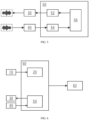
- FIG. 6 is a structural diagram of a schematic implementation of a system for assisting in determining an identity of a scanned person in CT scanning.
- the system for assisting in determining an identity of a scanned person in CT scanning includes a camera 10, a vision hardware platform, a speaker 30, a microphone 40, a voice hardware platform, and a reminder device.
- the camera 10 is configured to collect facial image information of a scanned person after the scanned person is positioned.
- the vision hardware platform may be a computer, a cloud server, or a device with a SOC system.
- the vision hardware platform is built with a convolutional neural network model 20.
- the vision hardware platform is configured to receive the identity information of the scanned person and the facial image information P1, and extract facial feature information P2 corresponding to the identity information of the scanned person in the facial image information P1 through the convolutional neural network model 20; and the vision hardware platform is configured to compare the facial feature information P2 with the identity information of the scanned person, and generate an image mismatch signal in a case of mismatching.
- the convolutional neural network model 20 includes three processing units 21 and two fully connected layers 25 that are connected in series.
- Each of the processing units 21 includes a convolutional layer 22, an activation layer 23, and a pooling layer 24.
- a first convolutional layer 22 is used for inputting the facial image information P1 and extracting some low-level features, such as an edge, a line, and a corner.
- Three convolutional layers 22 iteratively extract more complicated features from the low-level features.
- the activation layer 23 performs nonlinear mapping on the result of the convolutional layer 22 to avoid a lack of expressive power of a linear model.
- the pooling layer 24 compresses an input feature map to make the feature map smaller and simplify the complexity of network computing.
- the fully connected layers 25 connect and classify all features.
- the last one of the fully connected layers 25 can input the facial feature information P2, and the facial feature information P2 includes, but not limited to, gender and age.
- the speaker 30 is configured to receive a sound signal and play a voice.
- the microphone 40 is configured to receive a voice and convert the voice into a sound signal.
- the voice hardware platform may be a computer, a cloud server, or a device with a SOC system.
- the voice hardware platform is built with a voice dialogue module 50.
- the voice dialogue module is configured to receive the identity information of the scanned person, and convert question information corresponding to the identity information of the scanned person into a sound signal and transmit the sound signal to the speaker 30.
- the voice hardware platform is further configured to receive, through the microphone 40, a sound signal answered by the scanned person and extract voice feature information corresponding to the identity information of the scanned person.
- the voice hardware platform is configured to compare the voice feature information with the identity information of the scanned person, and generate a voice mismatch signal in a case of mismatching.
- the voice dialogue module 50 includes a voice synthesis unit 52, a voice recognition unit 54, and a natural language processing unit 56.
- the voice synthesis unit 52 is configured to convert question information from a text information format into an audio information format.
- the voice recognition unit 54 is configured to receive an answer voice in an audio information format, and convert the answer voice into answer information in a text information format.
- the natural language processing unit 56 is developed based on natural language processing (NLP) technology, and is configured to analyze the identity information of the scanned person and transmit the question information to the voice synthesis unit 52.
- the natural language processing unit 56 is further configured to receive the answer information from the voice recognition unit 54, extract the voice feature information and compare the voice feature information with the identity information of the scanned person after analysis, and determine whether the scanned person is a match according to a comparison result.
- NLP natural language processing
- the vision hardware platform and the voice hardware platform are a processor unit 60 of a CT scanner.
- the reminder device includes a processor unit 60 and an operation display screen 62 of a CT scanner.
- the processor unit 60 of the CT scanner can display a pop-up window to remind the operator through the operation display screen 62 when either of the image mismatch signal and the voice mismatch signal is generated.
- the reminder device may also remind the operator in other manners, such as issuing a sound reminder through the speaker or issuing a light reminder through an LED light.
- a facial image of the scanned person can be analyzed by using a facial recognition algorithm before a scanning program is started, and voice question and answer is performed with the scanned person by using natural language processing technology. It is determined, based on two independent manners, whether the identity of the scanned person is a match. If either of the determining results is mismatching, a reminder of determining the identity of the scanned person is sent to an operator, which ensures the accuracy of the determining results.
- the above system for assisting in determining an identity of a scanned person in CT scanning can reduce the work intensity of the operator, increase work efficiency, prevent the occurrence of a false scan, and avoid diagnosis delay.
- the present invention further provides a CT scanner, including the above system for assisting in determining an identity of a scanned person in CT scanning.
- the CT scanner can reduce the work intensity of the operator, increase work efficiency, prevent the occurrence of a false scan, and avoid diagnosis delay.
Landscapes
- Engineering & Computer Science (AREA)
- Health & Medical Sciences (AREA)
- Physics & Mathematics (AREA)
- Theoretical Computer Science (AREA)
- Medical Informatics (AREA)
- Multimedia (AREA)
- General Health & Medical Sciences (AREA)
- Life Sciences & Earth Sciences (AREA)
- General Physics & Mathematics (AREA)
- Human Computer Interaction (AREA)
- Evolutionary Computation (AREA)
- Heart & Thoracic Surgery (AREA)
- Veterinary Medicine (AREA)
- Nuclear Medicine, Radiotherapy & Molecular Imaging (AREA)
- Optics & Photonics (AREA)
- Pathology (AREA)
- Radiology & Medical Imaging (AREA)
- Biomedical Technology (AREA)
- Biophysics (AREA)
- Molecular Biology (AREA)
- Surgery (AREA)
- Animal Behavior & Ethology (AREA)
- Pulmonology (AREA)
- Public Health (AREA)
- High Energy & Nuclear Physics (AREA)
- Acoustics & Sound (AREA)
- Artificial Intelligence (AREA)
- Computer Vision & Pattern Recognition (AREA)
- Computing Systems (AREA)
- Databases & Information Systems (AREA)
- Software Systems (AREA)
- Audiology, Speech & Language Pathology (AREA)
- Oral & Maxillofacial Surgery (AREA)
- Apparatus For Radiation Diagnosis (AREA)
- Image Analysis (AREA)
- Collating Specific Patterns (AREA)
Description
- The present invention provides a method for determining an identity of a scanned person, and in particular, to a method for assisting in determining an identity of a scanned person in computed tomography (CT) scan. The present invention further provides a system utilizing the above method for assisting in determining an identity of a scanned person in CT scanning, and a CT scanner.
- In CT scanning, a doctor, as a CT device operator, sets a corresponding scanning program according to a patient as a scanned person. Therefore, the doctor needs to determine an identity of the patient before CT scanning. Currently, with a large number of received patients, the doctor under long-term high load work cannot accurately determine the identity of the scanned person due to the lack of concentration, resulting in that the scanning program does not correspond to the patient.
-
US 2019/366030 A1 relates to systems and methods for monitoring a patient by positioning the patient for a predetermined medical mission and sensing biometric and physical conditions of a patient during the mission, and displaying a multimedia interaction with the patient to keep the patient in a predetermined position to improve efficacy of a medical mission. -
DE 10 2017 220500 A1 discloses a system for supporting a medical measure, comprising a medical device designed to carry out a medical measure, characterized by a human-machine interface which is designed to communicate with a person, in particular to communicate with a patient. Moreover, a sensor system with at least one sensor for detecting at least one personal parameter is disclosed as well as an evaluation unit, in which a computer program is implemented, which is designed to autonomously generate at least one piece of personal information based on artificial intelligence as a function of the at least one personal parameter, which can be output to the person for carrying out the medical measure by means of the medical device via the human-machine interface. -
CN 112 245 177 A discloses a medical cabin. The medical cabin comprises a CT scanning chamber, a CT control chamber and a sample treatment chamber, wherein a CT scanning device is arranged in the CT scanning chamber. A CT operating host is arranged in the CT control chamber and can control the CT scanning device to scan a scanned object and the sample treatment chamber comprises a nucleic acid collection chamber, a nucleic acid detection chamber or a nucleic acid collection and detection chamber. The medical cabin has CT examination and sample treatment functions at the same time, has good maneuvering performance and can conveniently and rapidly complete equipment deployment, and therefore pathogenic bacteria (such as 2019-nCoV) infected people can be found and confirmed intime. - The invention is defined in the appended set of claims. Exemplary aspects and embodiments are described in the following to illustrate the invention. The objective of the present invention is to provide a method for assisting in determining an identity of a scanned person in CT scanning, which can assist an operator in determining an identity of a scanned person.
- Another objective of the present invention is to provide a system for assisting in determining an identity of a scanned person in CT scanning, which can assist an operator in determining an identity of a scanned person.
- Another objective of the present invention is to provide a CT scanner, which can assist an operator in determining an identity of a scanned person.
- The present invention provides a method for assisting in determining an identity of a scanned person in CT scanning, including:
- obtaining identity information of a scanned person;
- collecting facial image information of the scanned person after the scanned person is positioned, and determining whether the scanned person is a match based on the identity information of the scanned person by using a facial recognition algorithm;
- performing a voice dialogue with the scanned person based on the identity information of the scanned person by using natural language processing technology after the scanned person is positioned, and determining whether the scanned person is a match; and
- if either of determining results of the above determining is mismatching, sending a reminder of determining the identity of the scanned person to an operator, and if both determining results of the above determining are matching, starting a scan.
- In the method for assisting in determining an identity of a scanned person in CT scanning, a facial image of the scanned person can be analyzed by using a facial recognition algorithm before a scanning program is started, and voice question and answer is performed with the scanned person by using natural language processing technology. It is determined, based on two independent manners, whether the identity of the scanned person is a match. If either of the determining results is mismatching, a reminder of determining the identity of the scanned person is sent to an operator, which ensures the accuracy of the determining results. The method for assisting in determining an identity of a scanned person in CT scanning can reduce the work intensity of the operator, increase work efficiency, prevent the occurrence of a false scan, and avoid diagnosis delay.
- In another schematic implementation of the method for assisting in determining an identity of a scanned person in CT scanning, the collecting facial image information of the scanned person after the scanned person is positioned, and determining whether the scanned person is a match based on the identity information of the scanned person by using a facial recognition algorithm specifically includes:
- photographing the scanned person through a camera to collect the facial image information;
- building a convolutional neural network model based on a vision hardware platform and inputting the identity information of the scanned person and the facial image information;
- extracting, by the vision hardware platform, facial feature information corresponding to the identity information of the scanned person by using the convolutional neural network model; and
- comparing the facial feature information with the identity information of the scanned person, and determining whether the scanned person is a match according to a comparison result.
- In another schematic implementation of the method for assisting in determining an identity of a scanned person in CT scanning, the convolutional neural network model includes three processing units and two fully connected layers that are connected in series, each of the processing units includes a convolutional layer, an activation layer and a pooling layer, and the last one of the fully connected layers can output the facial feature information.
- In another schematic implementation of the method for assisting in determining an identity of a scanned person in CT scanning, the performing a voice dialogue with the scanned person based on the identity information of the scanned person by using natural language processing technology after the scanned person is positioned, and determining whether the scanned person is a match specifically includes:
- building a voice dialogue module based on a voice hardware platform and inputting the identity information of the scanned person;
- analyzing, by the voice dialogue module, the identity information of the scanned person and generating corresponding question information;
- playing, by the voice dialogue module, the question information to the scanned person through a speaker;
- collecting, by the voice dialogue module, an answer voice of the scanned person through a microphone and converting the answer voice into answer information;
- extracting, by the voice dialogue module, voice feature information corresponding to the identity information of the scanned person in the answer information according to preset logic; and
- comparing, by the voice dialogue module, the voice feature information with the identity information of the scanned person, and determining whether the scanned person is a match according to a comparison result.
- In another schematic implementation of the method for assisting in determining an identity of a scanned person in CT scanning, the voice dialogue module includes a voice synthesis unit, a voice recognition unit, and a natural language processing unit. The voice synthesis unit is configured to convert the question information from a text information format into an audio information format. The voice recognition unit is configured to receive the answer voice in an audio information format, and convert the answer voice into the answer information a text information format. The natural language processing unit is configured to analyze the identity information of the scanned person and transmit the question information to the voice synthesis unit, and the natural language processing unit is further configured to receive the answer information from the voice recognition unit, extract the voice feature information and compare the voice feature information with the identity information of the scanned person after analysis, and determine whether the scanned person is a match according to a comparison result.
- In another schematic implementation of the method for assisting in determining an identity of a scanned person in CT scanning, the identity information of the scanned person includes a name, gender, and age.
- The present invention further provides a system for assisting in determining an identity of a scanned person in CT scanning, including a camera, a vision hardware platform, a speaker, a microphone, a voice hardware platform, and a reminder device. The camera is configured to collect facial image information of a scanned person after the scanned person is positioned. The vision hardware platform is built with a convolutional neural network model, where the vision hardware platform is configured to receive the identity information of the scanned person and the facial image information, and extract facial feature information corresponding to the identity information of the scanned person in the facial image information through the convolutional neural network model; and the vision hardware platform is configured to compare the facial feature information with the identity information of the scanned person, and generate an image mismatch signal in a case of mismatching. The speaker is configured to receive a sound signal and play a voice. The microphone is configured to receive a voice and convert the voice into a sound signal. The voice hardware platform is built with a voice dialogue module, where the voice dialogue module is configured to receive the identity information of the scanned person, and convert question information corresponding to the identity information of the scanned person into a sound signal and transmit the sound signal to the speaker; the voice hardware platform is further configured to receive, through the microphone, a sound signal answered by the scanned person and extract voice feature information corresponding to the identity information of the scanned person; and the voice hardware platform is configured to compare the voice feature information with the identity information of the scanned person, and generate a voice mismatch signal in a case of mismatching. The reminder device is configured to remind an operator when the image mismatch signal and the voice mismatch signal are received.
- In another schematic implementation of the system for assisting in determining an identity of a scanned person in CT scanning, the convolutional neural network model includes three processing units and two fully connected layers that are connected in series. Each of the processing units includes a convolutional layer, an activation layer and a pooling layer, and the last one of the fully connected layers can output the facial feature information.
- In another schematic implementation of the system for assisting in determining an identity of a scanned person in CT scanning, the voice dialogue module includes a voice synthesis unit, a voice recognition unit, and a natural language processing unit. The voice synthesis unit is configured to convert the question information from a text information format into an audio information format. The voice recognition unit is configured to receive the answer voice in an audio information format, and convert the answer voice into the answer information a text information format. The natural language processing unit is configured to analyze the identity information of the scanned person and transmit the question information to the voice synthesis unit, and the natural language processing unit is further configured to receive the answer information from the voice recognition unit, extract the voice feature information and compare the voice feature information with the identity information of the scanned person after analysis, and determine whether the scanned person is a match according to a comparison result. The system for assisting in determining an identity of a scanned person in CT scanning can reduce the work intensity of the operator, increase work efficiency, prevent the occurrence of a false scan, and avoid diagnosis delay.
- In another schematic implementation of the system for assisting in determining an identity of a scanned person in CT scanning, the vision hardware platform and the voice hardware platform each may be a computer, a cloud server or a device with a system on a chip (SOC).
- In another schematic implementation of the system for assisting in determining an identity of a scanned person in CT scanning, the vision hardware platform and the voice hardware platform are a processor unit of a CT scanner.
- In another schematic implementation of the system for assisting in determining an identity of a scanned person in CT scanning, the reminder device includes a processor unit and an operation display screen of a CT scanner.
- The present invention further provides a CT scanner, including the foregoing system for assisting in determining an identity of a scanned person in CT scanning. The CT scanner can reduce the work intensity of the operator, increase work efficiency, prevent the occurrence of a false scan, and avoid diagnosis delay.
- The following accompany drawings are only used for schematically describing and explaining the present invention, and do not constitute an inappropriate limitation on the present invention.
-
FIG. 1 is a flowchart of a schematic implementation of a method for assisting in determining an identity of a scanned person in CT scanning. -
FIG. 2 is a flowchart of a schematic implementation of using a facial recognition algorithm. -
FIG. 3 is a structural diagram of a schematic implementation of a convolutional neural network model. -
FIG. 4 is a flowchart of a schematic implementation of using natural language processing technology. -
FIG. 5 is a structural diagram of a schematic implementation of a voice dialogue module. -
FIG. 6 is a structural diagram of a schematic implementation of a system for assisting in determining an identity of a scanned person in CT scanning. -
- 10
- Camera
- 20
- Convolutional neural network model
- 21
- Processing unit
- 22
- Convolutional layer
- 23
- Activation layer
- 24
- Pooling layer
- 25
- Fully connected layer
- 30
- Speaker
- 40
- Microphone
- 50
- Voice dialogue module
- 52
- Voice synthesis unit
- 54
- Voice recognition unit
- 56
- Natural language processing unit
- 60
- Processor unit
- 62
- Operation display screen
- P1
- Facial image information
- P2
- Facial feature information
- To understand the technical features, objectives, and effects of the present invention more clearly, a description on specific implementations of the present invention is made now with reference to accompanying drawings. Same signs in each drawing refer to components with same structures or components with similar structures and same functions.
- In this specification, "schematic" indicates "serving as an example, a case, or description", and any illustration or implementation described as "schematic" in this specification should not be interpreted as a more preferred or more advantageous technical solution.
- For brevity of the accompanying drawings, only parts related to the present invention are schematically shown in the accompanying drawings, and do not represent an actual structure as a product.
-
FIG. 1 is a flowchart of a schematic implementation of a method for assisting in determining an identity of a scanned person in CT scanning. Referring toFIG. 1 , the method for assisting in determining an identity of a scanned person in CT scanning includes the following steps: - S10: Obtain identity information of a scanned person. The identity information of the scanned person generally has been inputted in a management system of a hospital before the scanned person enters CT scanning room, and can be extracted from the management system of the hospital directly. The identity information of the scanned person includes, but not limited to, name, gender, and age.
- S20: Collect facial image information P1 of the scanned person after the scanned person is positioned, and determine whether the scanned person is a match based on the identity information of the scanned person by using a facial recognition algorithm.
FIG. 2 is a flowchart of a schematic implementation of using a facial recognition algorithm. Referring toFIG. 2 , step S20 specifically includes the following steps:- S21: Photograph the scanned person through a
camera 10 to collect the facial image information. An existing CT scanner is usually configured with a camera for observing a scanned person during a scan. The facial image information P1 may be captured by using the camera of the CT scanner through AI technology. Certainly, the camera may be arranged separately, and the camera can face to the face of the scanned person and directly collect the facial image information after the scanned person is positioned. - S22: Build a convolutional
neural network model 20 based on a vision hardware platform and input the identity information of the scanned person and the facial image information P1. The vision hardware platform may be a computer, a cloud server, or a device with a SOC system. The convolutionalneural network model 20 is a trained software program running on the vision hardware platform. - S23: The vision hardware platform extracts facial feature information P2 corresponding to the identity information of the scanned person by using the convolutional
neural network model 20.FIG. 3 is a structural diagram of a schematic implementation of a convolutional neural network model. Referring toFIG. 3 , the convolutionalneural network model 20 includes three processingunits 21 and two fullyconnected layers 25 that are connected in series. Each of theprocessing units 21 includes aconvolutional layer 22, anactivation layer 23, and apooling layer 24. A firstconvolutional layer 22 is used for inputting the facial image information P1 and extracting some low-level features, such as an edge, a line, and a corner. Threeconvolutional layers 22 iteratively extract more complex features from the low-level features. Theactivation layer 23 performs nonlinear mapping on the result of theconvolutional layer 22 to avoid a lack of expressive power of a linear model. Thepooling layer 24 compresses an input feature map to make the feature map smaller and simplify the complexity of network computing. The fullyconnected layers 25 connect and classify all features. The last one of the fullyconnected layers 25 can output the facial feature information P2, and the facial feature information P2 includes, but not limited to, gender and age. - S24: Compare the facial feature information P2 with the identity information of the scanned person, and determine whether the scanned person is a match according to a comparison result.
- S30: Perform a voice dialogue with the scanned person based on the identity information of the scanned person by using natural language processing technology after the scanned person is positioned, and determine whether the scanned person is a match.
FIG. 4 is a flowchart of a schematic implementation of using natural language processing technology. Referring toFIG. 4 , step S30 specifically includes the following steps:
S31: Build avoice dialogue module 50 based on a voice hardware platform and input the identity information of the scanned person. The voice hardware platform may be a computer, a cloud server, or a device with a SOC system. Thevoice dialogue module 50 is a software program running on the voice hardware platform.
- S21: Photograph the scanned person through a
-
FIG. 5 is a structural diagram of a schematic implementation of a voice dialogue module. Referring toFIG. 5 , thevoice dialogue module 50 includes avoice synthesis unit 52, avoice recognition unit 54, and a naturallanguage processing unit 56. Thevoice synthesis unit 52 is configured to convert question information from a text information format into an audio information format. Thevoice recognition unit 54 is configured to receive an answer voice in an audio information format, and convert the answer voice into answer information in a text information format. The naturallanguage processing unit 56 is developed based on natural language processing (NLP) technology, and is configured to analyze the identity information of the scanned person and transmit the question information to thevoice synthesis unit 52. The naturallanguage processing unit 56 is further configured to receive the answer information from thevoice recognition unit 54, extract the voice feature information and compare the voice feature information with the identity information of the scanned person after analysis, and determine whether the scanned person is a match according to a comparison result. - S32: The
voice dialogue module 50 analyzes the identity information of the scanned person and generates corresponding question information. Specifically, the identity information of the scanned person is analyzed by the naturallanguage processing unit 56 and the question information is transmitted to thevoice synthesis unit 52. The question information includes, but is not limited to, a question about the name, gender and age of the scanned person. - S33: The
voice dialogue module 50 plays the question information to the scanned person through aspeaker 30. Specifically, thevoice synthesis unit 52 converts the question information in the text information format into the question information in the audio information format and transmits the question information in the audio information format to thespeaker 30 to generate sounds. - S34: The
voice dialogue module 50 collects an answer voice of the scanned person through amicrophone 40 and converts the answer voice into answer information. After hearing a question, the scanned person answers the question, and the voice is collected by themicrophone 40. Thevoice recognition unit 54 receives the answer voice in the audio information format from themicrophone 40 and converts the answer voice in the audio information format into the answer information in the text information format. - S35: The
voice dialogue module 50 extracts voice feature information corresponding to the identity information of the scanned person in the answer information according to preset logic. Since the scanned person gives an answer through a natural language which is not standardized, after receiving the answer information from thevoice recognition unit 54, the naturallanguage processing unit 56 needs to analyze the answer information with reference to a local or cloud logic reasoning library to extract the voice feature information that accurately expresses the name, gender and age. - S36: The
voice dialogue module 50 compares the voice feature information with the identity information of the scanned person, and determines whether the scanned person is a match according to a comparison result. Specifically, the voice feature information is compared with the identity information of the scanned person by the naturallanguage processing unit 56, and whether the scanned person is a match is determined according to the comparison result. - S40: If either of determining results of the above determining is mismatching, send a reminder of determining the identity of the scanned person to an operator. If both determining results of the above determining are matching, the scan is started.
- In the method for assisting in determining an identity of a scanned person in CT scanning provided by the present invention, a facial image of the scanned person can be analyzed by using a facial recognition algorithm before a scanning program is started, and voice question and answer is performed with the scanned person by using natural language processing technology. It is determined, based on two independent manners, whether the identity of the scanned person is a match. If either of the determining results is mismatching, a reminder of determining the identity of the scanned person is sent to an operator, which ensures the accuracy of the determining results. The method for assisting in determining an identity of a scanned person in CT scanning can reduce the work intensity of the operator, increase work efficiency, prevent the occurrence of a false scan, and avoid diagnosis delay.
- The present invention further provides a system for assisting in determining an identity of a scanned person in CT scanning.
FIG. 6 is a structural diagram of a schematic implementation of a system for assisting in determining an identity of a scanned person in CT scanning. Referring toFIG. 6 , the system for assisting in determining an identity of a scanned person in CT scanning includes acamera 10, a vision hardware platform, aspeaker 30, amicrophone 40, a voice hardware platform, and a reminder device. - The
camera 10 is configured to collect facial image information of a scanned person after the scanned person is positioned. The vision hardware platform may be a computer, a cloud server, or a device with a SOC system. The vision hardware platform is built with a convolutionalneural network model 20. The vision hardware platform is configured to receive the identity information of the scanned person and the facial image information P1, and extract facial feature information P2 corresponding to the identity information of the scanned person in the facial image information P1 through the convolutionalneural network model 20; and the vision hardware platform is configured to compare the facial feature information P2 with the identity information of the scanned person, and generate an image mismatch signal in a case of mismatching. - In a schematic implementation, referring to
FIG. 3 andFIG. 6 , the convolutionalneural network model 20 includes three processingunits 21 and two fullyconnected layers 25 that are connected in series. Each of theprocessing units 21 includes aconvolutional layer 22, anactivation layer 23, and apooling layer 24. A firstconvolutional layer 22 is used for inputting the facial image information P1 and extracting some low-level features, such as an edge, a line, and a corner. Threeconvolutional layers 22 iteratively extract more complicated features from the low-level features. Theactivation layer 23 performs nonlinear mapping on the result of theconvolutional layer 22 to avoid a lack of expressive power of a linear model. Thepooling layer 24 compresses an input feature map to make the feature map smaller and simplify the complexity of network computing. The fullyconnected layers 25 connect and classify all features. The last one of the fullyconnected layers 25 can input the facial feature information P2, and the facial feature information P2 includes, but not limited to, gender and age. - The
speaker 30 is configured to receive a sound signal and play a voice. Themicrophone 40 is configured to receive a voice and convert the voice into a sound signal. The voice hardware platform may be a computer, a cloud server, or a device with a SOC system. The voice hardware platform is built with avoice dialogue module 50. The voice dialogue module is configured to receive the identity information of the scanned person, and convert question information corresponding to the identity information of the scanned person into a sound signal and transmit the sound signal to thespeaker 30. The voice hardware platform is further configured to receive, through themicrophone 40, a sound signal answered by the scanned person and extract voice feature information corresponding to the identity information of the scanned person. The voice hardware platform is configured to compare the voice feature information with the identity information of the scanned person, and generate a voice mismatch signal in a case of mismatching. - In a schematic implementation, referring to
FIG. 5 and FIG. 6 , thevoice dialogue module 50 includes avoice synthesis unit 52, avoice recognition unit 54, and a naturallanguage processing unit 56. Thevoice synthesis unit 52 is configured to convert question information from a text information format into an audio information format. Thevoice recognition unit 54 is configured to receive an answer voice in an audio information format, and convert the answer voice into answer information in a text information format. The naturallanguage processing unit 56 is developed based on natural language processing (NLP) technology, and is configured to analyze the identity information of the scanned person and transmit the question information to thevoice synthesis unit 52. The naturallanguage processing unit 56 is further configured to receive the answer information from thevoice recognition unit 54, extract the voice feature information and compare the voice feature information with the identity information of the scanned person after analysis, and determine whether the scanned person is a match according to a comparison result. - In a schematic implementation, the vision hardware platform and the voice hardware platform are a
processor unit 60 of a CT scanner. The reminder device includes aprocessor unit 60 and anoperation display screen 62 of a CT scanner. Theprocessor unit 60 of the CT scanner can display a pop-up window to remind the operator through theoperation display screen 62 when either of the image mismatch signal and the voice mismatch signal is generated. However, this is not limited herein. In other schematic implementations, the reminder device may also remind the operator in other manners, such as issuing a sound reminder through the speaker or issuing a light reminder through an LED light. - In the system for assisting in determining an identity of a scanned person in CT scanning provided by the present invention, a facial image of the scanned person can be analyzed by using a facial recognition algorithm before a scanning program is started, and voice question and answer is performed with the scanned person by using natural language processing technology. It is determined, based on two independent manners, whether the identity of the scanned person is a match. If either of the determining results is mismatching, a reminder of determining the identity of the scanned person is sent to an operator, which ensures the accuracy of the determining results. The above system for assisting in determining an identity of a scanned person in CT scanning can reduce the work intensity of the operator, increase work efficiency, prevent the occurrence of a false scan, and avoid diagnosis delay.
- The present invention further provides a CT scanner, including the above system for assisting in determining an identity of a scanned person in CT scanning. The CT scanner can reduce the work intensity of the operator, increase work efficiency, prevent the occurrence of a false scan, and avoid diagnosis delay.
- It should be understood that, although this specification is described according to each embodiment, each embodiment may not include only one independent technical solution. The description manner of this specification is merely for clarity. This specification should be considered as a whole by a person skilled in the art, and the technical solution in each embodiment may also be properly combined, to form other implementations that can be understood by the person skilled in the art.
- A series of detailed descriptions listed above are only specific descriptions for feasible embodiments of the present invention, and are not used to limit the protection scope of the present invention.
Claims (13)
- A method for assisting in determining an identity of a scanned person in computed tomography (CT) scanning, comprising:obtaining identity information of a scanned person;collecting facial image information of the scanned person after the scanned person is positioned, and determining whether the scanned person is a match based on the identity information of the scanned person by using a facial recognition algorithm; characterized by the method further comprising:performing a voice dialogue with the scanned person based on the identity information of the scanned person by using natural language processing technology after the scanned person is positioned, and determining whether the scanned person is a match; andif either of determining results of the above determining is mismatching, sending a reminder of determining an identity of the scanned person to an operator; and if both determining results of the above determining are matching, starting a scan.
- The method for assisting in determining an identity of a scanned person in CT scanning of claim 1, characterized in that the collecting facial image information of the scanned person after the scanned person is positioned, and determining whether the scanned person is a match based on the identity information of the scanned person by using a facial recognition algorithm specifically comprises:photographing the scanned person through a camera (10) to collect the facial image information (P1);building a convolutional neural network model (20) based on a vision hardware platform and inputting the identity information of the scanned person and the facial image information (P1);extracting, by the vision hardware platform, facial feature information (P2) corresponding to the identity information of the scanned person by using the convolutional neural network model (20); andcomparing the facial feature information (P2) with the identity information of the scanned person, and determining whether the scanned person is a match according to a comparison result.
- The method for assisting in determining an identity of a scanned person in CT scanning of claim 2, characterized in that the convolutional neural network model (20) comprises three processing units (21) and two fully connected layers (25) that are connected in series, each of the processing units (21) comprises a convolutional layer (22), an activation layer (23) and a pooling layer (24), and the last one of the fully connected layers (25) can output the facial feature information (P2).
- The method for assisting in determining an identity of a scanned person in CT scanning of claim 1, characterized in that the performing a voice dialogue with the scanned person based on the identity information of the scanned person by using natural language processing technology after the scanned person is positioned, and determining whether the scanned person is a match specifically comprises:building a voice dialogue module (50) based on a voice hardware platform and inputting the identity information of the scanned person;analyzing, by the voice dialogue module (50), the identity information of the scanned person and generating corresponding question information;playing, by the voice dialogue module (50), the question information to the scanned person through a speaker (30);collecting, by the voice dialogue module (50), an answer voice of the scanned person through a microphone (40) and converting the answer voice into answer information;extracting, by the voice dialogue module (50), voice feature information corresponding to the identity information of the scanned person in the answer information according to preset logic; andcomparing, by the voice dialogue module (50), the voice feature information with the identity information of the scanned person, and determining whether the scanned person is a match according to a comparison result.
- The method for assisting in determining an identity of a scanned person in CT scanning of claim 4, characterized in that the voice dialogue module (50) comprises:a voice synthesis unit (52), configured to convert the question information from a text information format into an audio information format;a voice recognition unit (54), configured to receive the answer voice in an audio information format, and convert the answer voice into the answer information in a text information format; anda natural language processing unit (56), configured to analyze the identity information of the scanned person and transmit the question information to the voice synthesis unit (52), wherein the natural language processing unit (56) is further configured to receive the answer information from the voice recognition unit (54), extract the voice feature information and compare the voice feature information with the identity information of the scanned person after analysis, and determine whether the scanned person is a match according to a comparison result.
- The method for assisting in determining an identity of a scanned person in CT scanning of claim 1, characterized in that the identity information of the scanned person comprises name, gender, and age.
- A system for assisting in determining an identity of a scanned person in computed tomography (CT) scanning, the system comprising:a camera (10), configured to collect facial image information of a scanned person after the scanned person is positioned;a vision hardware platform built with a convolutional neural network model (20), wherein the vision hardware platform is configured to receive identity information of the scanned person and the facial image information (P1), and extract facial feature information (P2) corresponding to the identity information of the scanned person in the facial image information (P1) through the convolutional neural network model (20); and the vision hardware platform is configured to compare the facial feature information (P2) with the identity information of the scanned person, and generate an image mismatch signal in a case of mismatching;a speaker (30), configured to receive a sound signal and play a voice;a microphone (40), configured to receive a voice and convert the voice into a sound signal;a voice hardware platform built with a voice dialogue module (50), wherein the voice dialogue module is configured to receive the identity information of the scanned person, and convert question information corresponding to the identity information of the scanned person into a sound signal and transmit the sound signal to the speaker (30); the voice hardware platform is further configured to receive, through the microphone (40), a sound signal answered by the scanned person and extract voice feature information corresponding to the identity information of the scanned person; and the voice hardware platform is configured to compare the voice feature information with the identity information of the scanned person, and generate a voice mismatch signal in a case of mismatching; anda reminder device, configured to remind an operator when the image mismatch signal or the voice mismatch signal is received.
- The system for assisting in determining an identity of a scanned person in CT scanning of claim 7, characterized in that the convolutional neural network model (20) comprises three processing units (21) and two fully connected layers (25) that are connected in series, each of the processing units (21) comprises a convolutional layer (22), an activation layer (23) and a pooling layer (24), and the last one of the fully connected layers (25) can output the facial feature information (P2).
- The system for assisting in determining an identity of a scanned person in CT scanning of claim 7, characterized in that the voice dialogue module (50) comprises:a voice synthesis unit (52), configured to convert the question information from a text information format into an audio information format;a voice recognition unit (54), configured to receive the answer voice in an audio information format, and convert the answer voice into the answer information in a text information format; anda natural language processing unit (56), configured to analyze the identity information of the scanned person and transmit the question information to the voice synthesis unit (52), wherein the natural language processing unit (56) is further configured to receive the answer information from the voice recognition unit (54), extract the voice feature information and compare the voice feature information with the identity information of the scanned person after analysis, and determine whether the scanned person is a match according to a comparison result.
- The system for assisting in determining an identity of a scanned person in CT scanning of claim 7, characterized in that the vision hardware platform and the voice hardware platform are a computer, a cloud server or a device with a system on a chip (SOC).
- The system for assisting in determining an identity of a scanned person in CT scanning of claim 10, characterized in that the vision hardware platform and the voice hardware platform are a processor unit (60) of a CT scanner.
- The system for assisting in determining an identity of a scanned person in CT scanning of claim 7, characterized in that the reminder device comprises a processor unit (60) and an operation display screen (62) of a CT scanner.
- A computed tomography (CT) scanner, comprising the system for assisting in determining an identity of a scanned person in CT scanning of any one of claims 7 to 12.
Applications Claiming Priority (2)
| Application Number | Priority Date | Filing Date | Title |
|---|---|---|---|
| CN202110892009.8A CN115705927A (en) | 2021-08-04 | 2021-08-04 | Method and system for assisting in confirming the identity of the scanned person in CT scanning, and CT scanning equipment |
| PCT/CN2022/108743 WO2023011323A1 (en) | 2021-08-04 | 2022-07-28 | Method and system for assisting in determining identity of scanned person in ct scanning, and ct scanner |
Publications (4)
| Publication Number | Publication Date |
|---|---|
| EP4362803A1 EP4362803A1 (en) | 2024-05-08 |
| EP4362803C0 EP4362803C0 (en) | 2024-11-27 |
| EP4362803B1 true EP4362803B1 (en) | 2024-11-27 |
| EP4362803B8 EP4362803B8 (en) | 2025-01-01 |
Family
ID=82899078
Family Applications (1)
| Application Number | Title | Priority Date | Filing Date |
|---|---|---|---|
| EP22754284.2A Active EP4362803B8 (en) | 2021-08-04 | 2022-07-28 | Method and system for assisting in determining identity of scanned person in ct scanning, and ct scanner |
Country Status (4)
| Country | Link |
|---|---|
| US (1) | US12608976B2 (en) |
| EP (1) | EP4362803B8 (en) |
| CN (1) | CN115705927A (en) |
| WO (1) | WO2023011323A1 (en) |
Families Citing this family (1)
| Publication number | Priority date | Publication date | Assignee | Title |
|---|---|---|---|---|
| CN116612762B (en) * | 2023-05-05 | 2023-12-26 | 中山大学附属第六医院 | Doctor-patient identity verification method, system, device and storage medium based on voiceprint recognition |
Family Cites Families (9)
| Publication number | Priority date | Publication date | Assignee | Title |
|---|---|---|---|---|
| US10220181B2 (en) * | 2014-03-06 | 2019-03-05 | Virtual Reality Medical Applications, Inc | Virtual reality medical application system |
| WO2018160615A1 (en) | 2017-02-28 | 2018-09-07 | Dong Yonghua | Medical imaging apparatus comprising primary module and supplemental module and process thereof |
| DE102017220500B4 (en) | 2017-11-16 | 2024-07-18 | Siemens Healthineers Ag | System and method for supporting a medical procedure |
| CN108664909A (en) * | 2018-04-28 | 2018-10-16 | 上海爱优威软件开发有限公司 | A kind of auth method and terminal |
| CN109015690B (en) * | 2018-08-31 | 2022-01-28 | 中通天鸿(北京)通信科技股份有限公司 | Active interactive dialogue robot system and method |
| CN109379499A (en) * | 2018-11-20 | 2019-02-22 | 北京千丁互联科技有限公司 | A kind of voice call method and device |
| CN111035404A (en) * | 2019-12-30 | 2020-04-21 | 南京鼓楼医院 | Self-service CT detecting system |
| CN112245177A (en) | 2020-11-11 | 2021-01-22 | 上海联影医疗科技股份有限公司 | Medical treatment cabin |
| CN113069080B (en) * | 2021-03-22 | 2021-12-21 | 上海交通大学医学院附属第九人民医院 | A method and device for evaluating difficult airway based on artificial intelligence |
-
2021
- 2021-08-04 CN CN202110892009.8A patent/CN115705927A/en active Pending
-
2022
- 2022-07-28 WO PCT/CN2022/108743 patent/WO2023011323A1/en not_active Ceased
- 2022-07-28 EP EP22754284.2A patent/EP4362803B8/en active Active
- 2022-07-28 US US18/577,733 patent/US12608976B2/en active Active
Also Published As
| Publication number | Publication date |
|---|---|
| WO2023011323A1 (en) | 2023-02-09 |
| US20240321006A1 (en) | 2024-09-26 |
| EP4362803A1 (en) | 2024-05-08 |
| US12608976B2 (en) | 2026-04-21 |
| EP4362803C0 (en) | 2024-11-27 |
| CN115705927A (en) | 2023-02-17 |
| EP4362803B8 (en) | 2025-01-01 |
Similar Documents
| Publication | Publication Date | Title |
|---|---|---|
| CN111325745B (en) | Fracture region analysis method and device, electronic equipment and readable storage medium | |
| KR102041186B1 (en) | Medical service assisted system and method thereof | |
| CN108597566A (en) | Mobile electron medical records system based on recognition of face and implementation method | |
| CN113842166B (en) | Ultrasonic image acquisition method based on ultrasonic image equipment and related device | |
| CN113496475B (en) | Imaging method and device in endoscope image pickup system and computer equipment | |
| CN118629596B (en) | Psychological state analysis system and method for patients with multiple myeloma heart amyloidosis | |
| CN116530981A (en) | Facial recognition-based qi and blood state analysis system and method | |
| CN120236231A (en) | Video summary generation method, device, equipment and storage medium | |
| CN118280608A (en) | A cardiology nursing information monitoring system based on cloud computing | |
| US12608976B2 (en) | Method and system for assisting in determining identity of scanned person in CT scanning, and CT scanner | |
| Wazarkar et al. | Early disease detection using Android application based on nail’s image | |
| CN120496812A (en) | Virtual doctor diagnosis auxiliary system integrating visual diffusion and voice emotion recognition | |
| KR20200002201A (en) | Smart healthcare system using artificial intelligence | |
| CN118969309A (en) | An artificial intelligence-based cardiovascular monitoring system | |
| Nugent et al. | Managing sensor data in ambient assisted living | |
| KR20240037814A (en) | Severity classification method for respiratory disease based on acoustic data collected by smartphone | |
| Vinh et al. | Implementation of an irregular lung sound diagnostic system | |
| CN117021130A (en) | Psychological consultation chat robot based on artificial intelligence | |
| CN115019924A (en) | Health data acquisition and analysis method applying artificial intelligence health robot | |
| Celesti et al. | Guest Editorial Enabling Technologies for Next Generation Telehealthcare | |
| Hubert et al. | Advances in Early Detection and Monitoring of Retinopathy in Preterm Infants Using CNN and MLP Models | |
| CN117373658B (en) | An auxiliary diagnosis and treatment system and method for depression based on data processing | |
| Yusuf et al. | Individuality and user-specific approach in adaptive emotion recognition model | |
| KR20210101645A (en) | Apparatus for sensing emotion, system including the same and method thereof | |
| Benmalek et al. | Real-time Covid-19 diagnosis on embedded IoT platforms |
Legal Events
| Date | Code | Title | Description |
|---|---|---|---|
| STAA | Information on the status of an ep patent application or granted ep patent |
Free format text: STATUS: UNKNOWN |
|
| STAA | Information on the status of an ep patent application or granted ep patent |
Free format text: STATUS: THE INTERNATIONAL PUBLICATION HAS BEEN MADE |
|
| PUAI | Public reference made under article 153(3) epc to a published international application that has entered the european phase |
Free format text: ORIGINAL CODE: 0009012 |
|
| STAA | Information on the status of an ep patent application or granted ep patent |
Free format text: STATUS: REQUEST FOR EXAMINATION WAS MADE |
|
| 17P | Request for examination filed |
Effective date: 20240131 |
|
| AK | Designated contracting states |
Kind code of ref document: A1 Designated state(s): AL AT BE BG CH CY CZ DE DK EE ES FI FR GB GR HR HU IE IS IT LI LT LU LV MC MK MT NL NO PL PT RO RS SE SI SK SM TR |
|
| GRAP | Despatch of communication of intention to grant a patent |
Free format text: ORIGINAL CODE: EPIDOSNIGR1 |
|
| STAA | Information on the status of an ep patent application or granted ep patent |
Free format text: STATUS: GRANT OF PATENT IS INTENDED |
|
| INTG | Intention to grant announced |
Effective date: 20240719 |
|
| GRAS | Grant fee paid |
Free format text: ORIGINAL CODE: EPIDOSNIGR3 |
|
| GRAA | (expected) grant |
Free format text: ORIGINAL CODE: 0009210 |
|
| STAA | Information on the status of an ep patent application or granted ep patent |
Free format text: STATUS: THE PATENT HAS BEEN GRANTED |
|
| DAV | Request for validation of the european patent (deleted) | ||
| DAX | Request for extension of the european patent (deleted) | ||
| AK | Designated contracting states |
Kind code of ref document: B1 Designated state(s): AL AT BE BG CH CY CZ DE DK EE ES FI FR GB GR HR HU IE IS IT LI LT LU LV MC MK MT NL NO PL PT RO RS SE SI SK SM TR |
|
| REG | Reference to a national code |
Ref country code: GB Ref legal event code: FG4D |
|
| REG | Reference to a national code |
Ref country code: CH Ref legal event code: EP |
|
| REG | Reference to a national code |
Ref country code: DE Ref legal event code: R096 Ref document number: 602022008240 Country of ref document: DE |
|
| REG | Reference to a national code |
Ref country code: CH Ref legal event code: PK Free format text: BERICHTIGUNG B8 |
|
| REG | Reference to a national code |
Ref country code: IE Ref legal event code: FG4D |
|
| RAP4 | Party data changed (patent owner data changed or rights of a patent transferred) |
Owner name: SIEMENS SHANGHAI MEDICAL EQUIPMENT LTD. |
|
| U01 | Request for unitary effect filed |
Effective date: 20241204 |
|
| U07 | Unitary effect registered |
Designated state(s): AT BE BG DE DK EE FI FR IT LT LU LV MT NL PT RO SE SI Effective date: 20241213 |
|
| PG25 | Lapsed in a contracting state [announced via postgrant information from national office to epo] |
Ref country code: IS Free format text: LAPSE BECAUSE OF FAILURE TO SUBMIT A TRANSLATION OF THE DESCRIPTION OR TO PAY THE FEE WITHIN THE PRESCRIBED TIME-LIMIT Effective date: 20250327 Ref country code: HR Free format text: LAPSE BECAUSE OF FAILURE TO SUBMIT A TRANSLATION OF THE DESCRIPTION OR TO PAY THE FEE WITHIN THE PRESCRIBED TIME-LIMIT Effective date: 20241127 |
|
| PG25 | Lapsed in a contracting state [announced via postgrant information from national office to epo] |
Ref country code: ES Free format text: LAPSE BECAUSE OF FAILURE TO SUBMIT A TRANSLATION OF THE DESCRIPTION OR TO PAY THE FEE WITHIN THE PRESCRIBED TIME-LIMIT Effective date: 20241127 |
|
| PG25 | Lapsed in a contracting state [announced via postgrant information from national office to epo] |
Ref country code: NO Free format text: LAPSE BECAUSE OF FAILURE TO SUBMIT A TRANSLATION OF THE DESCRIPTION OR TO PAY THE FEE WITHIN THE PRESCRIBED TIME-LIMIT Effective date: 20250227 |
|
| PG25 | Lapsed in a contracting state [announced via postgrant information from national office to epo] |
Ref country code: GR Free format text: LAPSE BECAUSE OF FAILURE TO SUBMIT A TRANSLATION OF THE DESCRIPTION OR TO PAY THE FEE WITHIN THE PRESCRIBED TIME-LIMIT Effective date: 20250228 |
|
| PG25 | Lapsed in a contracting state [announced via postgrant information from national office to epo] |
Ref country code: PL Free format text: LAPSE BECAUSE OF FAILURE TO SUBMIT A TRANSLATION OF THE DESCRIPTION OR TO PAY THE FEE WITHIN THE PRESCRIBED TIME-LIMIT Effective date: 20241127 |
|
| PG25 | Lapsed in a contracting state [announced via postgrant information from national office to epo] |
Ref country code: RS Free format text: LAPSE BECAUSE OF FAILURE TO SUBMIT A TRANSLATION OF THE DESCRIPTION OR TO PAY THE FEE WITHIN THE PRESCRIBED TIME-LIMIT Effective date: 20250227 |
|
| PG25 | Lapsed in a contracting state [announced via postgrant information from national office to epo] |
Ref country code: SM Free format text: LAPSE BECAUSE OF FAILURE TO SUBMIT A TRANSLATION OF THE DESCRIPTION OR TO PAY THE FEE WITHIN THE PRESCRIBED TIME-LIMIT Effective date: 20241127 |
|
| PG25 | Lapsed in a contracting state [announced via postgrant information from national office to epo] |
Ref country code: SK Free format text: LAPSE BECAUSE OF FAILURE TO SUBMIT A TRANSLATION OF THE DESCRIPTION OR TO PAY THE FEE WITHIN THE PRESCRIBED TIME-LIMIT Effective date: 20241127 |
|
| PG25 | Lapsed in a contracting state [announced via postgrant information from national office to epo] |
Ref country code: CZ Free format text: LAPSE BECAUSE OF FAILURE TO SUBMIT A TRANSLATION OF THE DESCRIPTION OR TO PAY THE FEE WITHIN THE PRESCRIBED TIME-LIMIT Effective date: 20241127 |
|
| U20 | Renewal fee for the european patent with unitary effect paid |
Year of fee payment: 4 Effective date: 20250718 |
|
| PLBE | No opposition filed within time limit |
Free format text: ORIGINAL CODE: 0009261 |
|
| STAA | Information on the status of an ep patent application or granted ep patent |
Free format text: STATUS: NO OPPOSITION FILED WITHIN TIME LIMIT |
|
| REG | Reference to a national code |
Ref country code: CH Ref legal event code: L10 Free format text: ST27 STATUS EVENT CODE: U-0-0-L10-L00 (AS PROVIDED BY THE NATIONAL OFFICE) Effective date: 20251008 |
|
| 26N | No opposition filed |
Effective date: 20250828 |
|
| REG | Reference to a national code |
Ref country code: CH Ref legal event code: H13 Free format text: ST27 STATUS EVENT CODE: U-0-0-H10-H13 (AS PROVIDED BY THE NATIONAL OFFICE) Effective date: 20260224 |
|
| PG25 | Lapsed in a contracting state [announced via postgrant information from national office to epo] |
Ref country code: CH Free format text: LAPSE BECAUSE OF NON-PAYMENT OF DUE FEES Effective date: 20250731 |
|
| PG25 | Lapsed in a contracting state [announced via postgrant information from national office to epo] |
Ref country code: IE Free format text: LAPSE BECAUSE OF NON-PAYMENT OF DUE FEES Effective date: 20250728 |
|
| PG25 | Lapsed in a contracting state [announced via postgrant information from national office to epo] |
Ref country code: MC Free format text: LAPSE BECAUSE OF FAILURE TO SUBMIT A TRANSLATION OF THE DESCRIPTION OR TO PAY THE FEE WITHIN THE PRESCRIBED TIME-LIMIT Effective date: 20241127 |
|
| PG25 | Lapsed in a contracting state [announced via postgrant information from national office to epo] |
Ref country code: CY Free format text: LAPSE BECAUSE OF FAILURE TO SUBMIT A TRANSLATION OF THE DESCRIPTION OR TO PAY THE FEE WITHIN THE PRESCRIBED TIME-LIMIT Effective date: 20241127 |