EP4354776A1 - Hybrides automatisches wiederholungsanfragerückkopplungsverfahren und vorrichtung - Google Patents
Hybrides automatisches wiederholungsanfragerückkopplungsverfahren und vorrichtung Download PDFInfo
- Publication number
- EP4354776A1 EP4354776A1 EP22831576.8A EP22831576A EP4354776A1 EP 4354776 A1 EP4354776 A1 EP 4354776A1 EP 22831576 A EP22831576 A EP 22831576A EP 4354776 A1 EP4354776 A1 EP 4354776A1
- Authority
- EP
- European Patent Office
- Prior art keywords
- data
- retransmissions
- terminal device
- indication information
- harq
- Prior art date
- Legal status (The legal status is an assumption and is not a legal conclusion. Google has not performed a legal analysis and makes no representation as to the accuracy of the status listed.)
- Pending
Links
- 238000000034 method Methods 0.000 title claims abstract description 257
- 230000005540 biological transmission Effects 0.000 claims abstract description 63
- 230000008569 process Effects 0.000 claims description 137
- 238000004891 communication Methods 0.000 claims description 118
- 230000004044 response Effects 0.000 claims description 63
- 238000012545 processing Methods 0.000 claims description 59
- 238000013507 mapping Methods 0.000 claims description 20
- 238000004590 computer program Methods 0.000 claims description 13
- 230000015654 memory Effects 0.000 description 60
- 230000006870 function Effects 0.000 description 16
- 230000003044 adaptive effect Effects 0.000 description 12
- 238000010586 diagram Methods 0.000 description 11
- 238000005516 engineering process Methods 0.000 description 11
- 230000001360 synchronised effect Effects 0.000 description 11
- 230000011664 signaling Effects 0.000 description 10
- 101000741965 Homo sapiens Inactive tyrosine-protein kinase PRAG1 Proteins 0.000 description 9
- 102100038659 Inactive tyrosine-protein kinase PRAG1 Human genes 0.000 description 9
- 230000035945 sensitivity Effects 0.000 description 8
- 238000007726 management method Methods 0.000 description 7
- 238000010295 mobile communication Methods 0.000 description 7
- 230000007246 mechanism Effects 0.000 description 4
- 239000000047 product Substances 0.000 description 4
- 230000009471 action Effects 0.000 description 3
- 230000008878 coupling Effects 0.000 description 3
- 238000010168 coupling process Methods 0.000 description 3
- 238000005859 coupling reaction Methods 0.000 description 3
- 230000003190 augmentative effect Effects 0.000 description 2
- 230000009286 beneficial effect Effects 0.000 description 2
- 230000008901 benefit Effects 0.000 description 2
- 230000008859 change Effects 0.000 description 2
- 238000006243 chemical reaction Methods 0.000 description 2
- 238000012937 correction Methods 0.000 description 2
- 125000004122 cyclic group Chemical group 0.000 description 2
- 230000000977 initiatory effect Effects 0.000 description 2
- 230000007774 longterm Effects 0.000 description 2
- 230000003287 optical effect Effects 0.000 description 2
- 238000013468 resource allocation Methods 0.000 description 2
- 230000003068 static effect Effects 0.000 description 2
- 239000002699 waste material Substances 0.000 description 2
- 230000001413 cellular effect Effects 0.000 description 1
- 239000003795 chemical substances by application Substances 0.000 description 1
- 238000013461 design Methods 0.000 description 1
- 238000001514 detection method Methods 0.000 description 1
- 238000012544 monitoring process Methods 0.000 description 1
- 230000008447 perception Effects 0.000 description 1
- 239000013589 supplement Substances 0.000 description 1
Images




Classifications
-
- H—ELECTRICITY
- H04—ELECTRIC COMMUNICATION TECHNIQUE
- H04L—TRANSMISSION OF DIGITAL INFORMATION, e.g. TELEGRAPHIC COMMUNICATION
- H04L1/00—Arrangements for detecting or preventing errors in the information received
- H04L1/12—Arrangements for detecting or preventing errors in the information received by using return channel
- H04L1/16—Arrangements for detecting or preventing errors in the information received by using return channel in which the return channel carries supervisory signals, e.g. repetition request signals
- H04L1/18—Automatic repetition systems, e.g. Van Duuren systems
- H04L1/1867—Arrangements specially adapted for the transmitter end
- H04L1/189—Transmission or retransmission of more than one copy of a message
-
- H—ELECTRICITY
- H04—ELECTRIC COMMUNICATION TECHNIQUE
- H04L—TRANSMISSION OF DIGITAL INFORMATION, e.g. TELEGRAPHIC COMMUNICATION
- H04L1/00—Arrangements for detecting or preventing errors in the information received
- H04L1/08—Arrangements for detecting or preventing errors in the information received by repeating transmission, e.g. Verdan system
-
- H—ELECTRICITY
- H04—ELECTRIC COMMUNICATION TECHNIQUE
- H04L—TRANSMISSION OF DIGITAL INFORMATION, e.g. TELEGRAPHIC COMMUNICATION
- H04L1/00—Arrangements for detecting or preventing errors in the information received
- H04L1/12—Arrangements for detecting or preventing errors in the information received by using return channel
- H04L1/16—Arrangements for detecting or preventing errors in the information received by using return channel in which the return channel carries supervisory signals, e.g. repetition request signals
- H04L1/18—Automatic repetition systems, e.g. Van Duuren systems
- H04L1/1812—Hybrid protocols; Hybrid automatic repeat request [HARQ]
-
- H—ELECTRICITY
- H04—ELECTRIC COMMUNICATION TECHNIQUE
- H04L—TRANSMISSION OF DIGITAL INFORMATION, e.g. TELEGRAPHIC COMMUNICATION
- H04L1/00—Arrangements for detecting or preventing errors in the information received
- H04L1/12—Arrangements for detecting or preventing errors in the information received by using return channel
- H04L1/16—Arrangements for detecting or preventing errors in the information received by using return channel in which the return channel carries supervisory signals, e.g. repetition request signals
- H04L1/18—Automatic repetition systems, e.g. Van Duuren systems
- H04L1/1822—Automatic repetition systems, e.g. Van Duuren systems involving configuration of automatic repeat request [ARQ] with parallel processes
-
- H—ELECTRICITY
- H04—ELECTRIC COMMUNICATION TECHNIQUE
- H04L—TRANSMISSION OF DIGITAL INFORMATION, e.g. TELEGRAPHIC COMMUNICATION
- H04L1/00—Arrangements for detecting or preventing errors in the information received
- H04L1/12—Arrangements for detecting or preventing errors in the information received by using return channel
- H04L1/16—Arrangements for detecting or preventing errors in the information received by using return channel in which the return channel carries supervisory signals, e.g. repetition request signals
- H04L1/18—Automatic repetition systems, e.g. Van Duuren systems
- H04L1/1825—Adaptation of specific ARQ protocol parameters according to transmission conditions
-
- H—ELECTRICITY
- H04—ELECTRIC COMMUNICATION TECHNIQUE
- H04L—TRANSMISSION OF DIGITAL INFORMATION, e.g. TELEGRAPHIC COMMUNICATION
- H04L1/00—Arrangements for detecting or preventing errors in the information received
- H04L1/12—Arrangements for detecting or preventing errors in the information received by using return channel
- H04L1/16—Arrangements for detecting or preventing errors in the information received by using return channel in which the return channel carries supervisory signals, e.g. repetition request signals
- H04L1/18—Automatic repetition systems, e.g. Van Duuren systems
- H04L1/1867—Arrangements specially adapted for the transmitter end
- H04L1/1896—ARQ related signaling
-
- H—ELECTRICITY
- H04—ELECTRIC COMMUNICATION TECHNIQUE
- H04L—TRANSMISSION OF DIGITAL INFORMATION, e.g. TELEGRAPHIC COMMUNICATION
- H04L5/00—Arrangements affording multiple use of the transmission path
- H04L5/003—Arrangements for allocating sub-channels of the transmission path
- H04L5/0053—Allocation of signalling, i.e. of overhead other than pilot signals
-
- H—ELECTRICITY
- H04—ELECTRIC COMMUNICATION TECHNIQUE
- H04W—WIRELESS COMMUNICATION NETWORKS
- H04W52/00—Power management, e.g. Transmission Power Control [TPC] or power classes
- H04W52/02—Power saving arrangements
- H04W52/0209—Power saving arrangements in terminal devices
-
- H—ELECTRICITY
- H04—ELECTRIC COMMUNICATION TECHNIQUE
- H04L—TRANSMISSION OF DIGITAL INFORMATION, e.g. TELEGRAPHIC COMMUNICATION
- H04L1/00—Arrangements for detecting or preventing errors in the information received
- H04L1/12—Arrangements for detecting or preventing errors in the information received by using return channel
- H04L1/16—Arrangements for detecting or preventing errors in the information received by using return channel in which the return channel carries supervisory signals, e.g. repetition request signals
- H04L1/1607—Details of the supervisory signal
- H04L1/1685—Details of the supervisory signal the supervisory signal being transmitted in response to a specific request, e.g. to a polling signal
-
- Y—GENERAL TAGGING OF NEW TECHNOLOGICAL DEVELOPMENTS; GENERAL TAGGING OF CROSS-SECTIONAL TECHNOLOGIES SPANNING OVER SEVERAL SECTIONS OF THE IPC; TECHNICAL SUBJECTS COVERED BY FORMER USPC CROSS-REFERENCE ART COLLECTIONS [XRACs] AND DIGESTS
- Y02—TECHNOLOGIES OR APPLICATIONS FOR MITIGATION OR ADAPTATION AGAINST CLIMATE CHANGE
- Y02D—CLIMATE CHANGE MITIGATION TECHNOLOGIES IN INFORMATION AND COMMUNICATION TECHNOLOGIES [ICT], I.E. INFORMATION AND COMMUNICATION TECHNOLOGIES AIMING AT THE REDUCTION OF THEIR OWN ENERGY USE
- Y02D30/00—Reducing energy consumption in communication networks
- Y02D30/70—Reducing energy consumption in communication networks in wireless communication networks
Definitions
- This application relates to the communication field, and in particular, to a hybrid automatic repeat request feedback method and an apparatus.
- a current terrestrial mobile communication network has limited coverage capabilities, and cannot meet people's requirements for obtaining information anytime and anywhere. For scenarios of remote areas, deserts, oceans, air, and the like, there are great challenges in terms of economy and feasibility in providing ultra-wide area coverage based on base station coverage modes.
- satellite communication may be an effective supplement to a traditional network.
- a hybrid automatic repeat request (hybrid automatic repeat request, HARQ) process depends on a HARQ response.
- RTT round-trip time
- a quantity of retransmissions cannot be accurately specified, a small quantity of repetitions cannot meet a reliability requirement, and a HARQ may be required to initiate a retransmission, causing a new waiting delay.
- Excessive repetitions occupy network air interface resources, causing an increase in power consumption of user equipment (user equipment, UE) and wasting limited battery energy.
- This application provides a hybrid automatic repeat request feedback method and an apparatus, to reduce a delay caused by a HARQ, save resources, and reduce power consumption.
- a hybrid automatic repeat request HARQ feedback method may include: A terminal device receives first indication information, where the first indication information indicates a first quantity of retransmissions of first data.
- the terminal device obtains a second quantity of retransmissions based on a HARQ feedback result and/or a decoding result of second data, where the second data is data sent or received by the terminal device before the terminal device retransmits the first data.
- the terminal device sends the first data by using a target quantity of retransmissions, where the target quantity of retransmissions is a smaller one of the first quantity of retransmissions and the second quantity of retransmissions.
- the method provides a method for determining the target quantity of retransmissions. This avoids a problem that a quantity of retransmissions cannot be accurately specified when only a blind retransmission technology is used, effectively reduces a resource waste caused when a quantity of blind retransmissions is excessively large, reduces power consumption, and meets a reliability requirement of data transmission.
- the terminal device may determine the second quantity of retransmissions based on a quantity of times that the second data is already repeatedly uploaded when an ACK is fed back.
- the quantity of times that the second data is repeatedly uploaded when the ACK is fed back may meet a data transmission requirement.
- the determined second quantity of retransmissions may be less than the indicated quantity of blind retransmissions.
- the terminal device determines the second quantity of retransmissions based on the quantity of retransmissions when the decoding result of the second data is complete.
- the decoding result is complete may be that the decoding result of the data meets a reliability requirement, or may be that a decoding result of complete data can be identified.
- a decoding feedback ACK may be used as a determining condition for successful decoding.
- the second quantity of retransmissions may be a quantity of retransmissions when the decoding result of the second data is complete, or may be a quantity of blind retransmissions of the second data, or may be calculated based on a proportion of the quantity of retransmissions when the decoding result of the second data is complete to the indicated quantity of retransmissions of the second data.
- the second quantity of retransmissions may be determined separately based on the ACK or the decoding result, or may be determined with reference to the ACK and the decoding result.
- the terminal device sends second indication information, where the second indication information indicates that a HARQ response is disabled for the first data.
- a message indicating that the HARQ response is disabled for the first data is indicated to a network device, so that the network device does not need to perform a HARQ feedback, and the terminal device does not need to wait for a response. This avoids a large delay.
- the terminal device sends the second indication information when transmitting the first data for the first time
- a quantity of bits occupied by the second indication information may be determined based on the second quantity of retransmissions.
- the terminal device may send information about the second quantity of retransmissions.
- the terminal device sends third indication information when a quantity of transmissions of the first data is greater than a preset threshold, where the third indication information indicates to stop a retransmission of the first data.
- preset threshold may be configured, or may be manually defined. This is not limited in this application.
- the terminal device may notify the network device of the target quantity of retransmissions, or may indicate, during the last transmission of the target quantity of retransmissions, to stop a retransmission of the first data, so that the network device does not need to wait for receiving the data, and the terminal device does not need to wait for receiving a HARQ. This reduces a delay and reduces power consumption.
- the terminal device clears a HARQ buffer after completing sending of the data for the last time.
- the terminal device clears the buffer in a timely manner, so that resources and power consumption can be reduced.
- a hybrid automatic repeat request HARQ feedback method may include:
- a network device sends first indication information, where the first indication information indicates a first quantity of retransmissions of first data, and the first indication information indicates the first quantity of retransmissions of the first data.
- the network device receives the first data by using a target quantity of retransmissions, where the target quantity of retransmissions is a smaller one of the first quantity of retransmissions and a second quantity of retransmissions, the second quantity of retransmissions is obtained by a terminal device based on a HARQ feedback result and/or a decoding result of second data, and the second data is data sent or received by the terminal device before the terminal device retransmits the first data.
- the second quantity of retransmissions is determined based on a quantity of times that the second data is already repeatedly uploaded when an ACK is fed back.
- the second quantity of retransmissions is determined by a quantity of actually combined data packets including the second data when the ACK is obtained through decoding of the second data.
- the network device receives second indication information, where the second indication information indicates that a HARQ response is disabled for the first data.
- that the network device receives second indication information includes:
- the network device receives the second indication information for first data transmission for the first time
- the second indication information is located in the first data.
- a quantity of bits occupied by the second indication information is determined based on the second quantity of retransmissions.
- the network device when the target quantity of retransmissions is the second quantity of retransmissions, the network device receives information about the second quantity of retransmissions.
- the network device receives third indication information when a quantity of times of receiving the first data is greater than a preset threshold, where the third indication information indicates to stop a retransmission of the first data.
- a hybrid automatic repeat request HARQ feedback method may include:
- a terminal device receives fourth indication information, where the fourth indication information indicates a service type of third data.
- the terminal device determines, based on a first mapping relationship, a first HARQ process group corresponding to the third data, where the first mapping relationship includes a mapping relationship between the service type of the third data and the HARQ process group.
- the terminal device sends the third data through a first HARQ process, where the first HARQ process is one process in the first HARQ process group.
- a service type, a HARQ process group, and a data processing manner are bound, and a HARQ feedback solution is determined based on the service type, so that a delay and device power consumption can be reduced.
- the first mapping relationship may include:
- a hybrid automatic repeat request HARQ feedback method may include: A network device sends fourth indication information, where the fourth indication information indicates a service type of third data.
- the network device receives the third data through a first HARQ process.
- the network device determines, based on the first HARQ process and a first mapping relationship, whether to send a HARQ response, where the first mapping relationship includes a mapping relationship between the service type of the third data and a HARQ process group.
- the first mapping relationship may include:
- the network device may indicate the service type to a terminal device, and the terminal device may determine the HARQ process based on the service type and the preset mapping relationship.
- the mapping relationship may be agreed by the network device and the terminal device, or may be preconfigured.
- the network device may indicate the service type and the applicable process group of the third data to the terminal device, or may indicate the service type, the process group, a quantity of blind retransmissions, and whether the HARQ response is disabled to the terminal device.
- the network device and the terminal device protocol-preconfigure a mapping relationship, so that the network device indicates the process group to the terminal device, and the terminal device determines a subsequent procedure based on the process group and the mapping relationship.
- a wireless communication apparatus includes the modules or units configured to perform the method according to any one of the first aspect or the possible implementations of the first aspect.
- a wireless communication apparatus includes the modules or units configured to perform the method according to any one of the second aspect or the possible implementations of the second aspect.
- a wireless communication apparatus includes the modules or units configured to perform the method according to any one of the third aspect or the possible implementations of the third aspect.
- a wireless communication apparatus includes the modules or units configured to perform the method according to any one of the fourth aspect or the possible implementations of the fourth aspect.
- a communication device includes a processor.
- the processor is coupled to a memory, and may be configured to perform the method according to the first aspect and the possible implementations of the first aspect, or the third aspect and the possible implementations of the third aspect.
- the communication device further includes the memory.
- the communication device further includes a communication interface, and the processor is coupled to the communication interface.
- the communication device further includes a communication interface, and the processor is coupled to the communication interface.
- the communication device is a satellite.
- the communication interface may be a transceiver or an input/output interface.
- the communication device is a chip or a chip system.
- the communication interface may be an input/output interface, an interface circuit, an output circuit, an input circuit, a pin, a related circuit, or the like on the chip or the chip system.
- the processor may alternatively be embodied as a processing circuit or a logic circuit.
- a communication device includes a processor.
- the processor is coupled to a memory, and may be configured to execute instructions in the memory, to implement the method according to the second aspect and the possible implementations of the second aspect, or the fourth aspect and the possible implementations of the fourth aspect.
- the communication device further includes the memory.
- the communication device further includes a communication interface, and the processor is coupled to the communication interface.
- the transceiver may be a transceiver circuit.
- the input/output interface may be an input/output circuit.
- the communication device is a terminal device.
- the communication interface may be a transceiver or an input/output interface.
- the transceiver may be a transceiver circuit.
- the input/output interface may be an input/output circuit.
- the communication device is a chip or a chip system.
- the communication interface may be an input/output interface, an interface circuit, an output circuit, an input circuit, a pin, a related circuit, or the like on the chip or the chip system.
- the processor may alternatively be embodied as a processing circuit or a logic circuit.
- a communication apparatus includes an input circuit, an output circuit, and a processing circuit.
- the processing circuit is configured to receive a signal through the input circuit, and transmit a signal through the output circuit, so that the method according to any one of the first aspect, the second aspect, the third aspect, or the fourth aspect, and the possible implementations of the foregoing aspects is implemented.
- the communication apparatus may be a chip.
- the input circuit may be an input pin.
- the output circuit may be an output pin.
- the processing circuit may be a transistor, a gate circuit, a trigger, any logic circuit, or the like.
- An input signal received by the input circuit may be received and input by, for example, but not limited to, a receiver.
- a signal output by the output circuit may be output to, for example, but not limited to, a transmitter and transmitted by the transmitter.
- the input circuit and the output circuit may be different circuits, or may be a same circuit. In this case, the circuit is used as the input circuit and the output circuit at different moments. Specific implementations of the processor and the various circuits are not limited in embodiments of this application.
- a processing apparatus includes a processor and a memory.
- the processor is configured to: read instructions stored in the memory, receive a signal through a receiver, and transmit a signal through a transmitter, to perform the method according to any one of the first aspect, the second aspect, the third aspect, or the fourth aspect, and the possible implementations of the foregoing aspects.
- processors there are one or more processors, and there are one or more memories.
- the memory may be integrated with the processor, or the memory and the processor are separately disposed.
- the memory may be a non-transitory (non-transitory) memory, for example, a read-only memory (read-only memory, ROM).
- the memory and the processor may be integrated on a same chip, or may be separately disposed on different chips.
- a type of the memory and a manner in which the memory and the processor are disposed are not limited in this embodiment of this application.
- a related data exchange process such as sending of indication information may be a process of outputting the indication information from the processor, and receiving of capability information may be a process of receiving the input capability information by the processor.
- data output by the processor may be output to the transmitter, and input data received by the processor may be from the receiver.
- the transmitter and the receiver may be collectively referred to as a transceiver.
- the processor in the twelfth aspect may be a chip.
- the processor may be implemented by hardware or software.
- the processor may be a logic circuit, an integrated circuit, or the like.
- the processor may be a general-purpose processor, and is implemented by reading software code stored in the memory.
- the memory may be integrated into the processor, or may be located outside the processor and exist independently.
- a processing apparatus includes a communication interface and a processing circuit.
- the communication interface is configured to obtain to-be-processed data.
- the processing circuit is configured to process the to-be-processed data in the method according to any one of the first aspect or the third aspect, and the possible implementations of the first aspect or the third aspect.
- a processing apparatus includes a communication interface and a processing circuit.
- the communication interface is configured to send indication information in the method according to any one of the second aspect or the fourth aspect, and the possible implementations of the second aspect or the fourth aspect.
- the processing circuit is configured to generate the indication information.
- a computer program product includes a computer program (which may also be referred to as code or instructions).
- a computer program which may also be referred to as code or instructions.
- a computer-readable medium stores a computer program (which may also be referred to as code or instructions).
- the computer program When the computer program is run on a computer, the computer is enabled to perform the method according to any one of the first aspect, the second aspect, the third aspect, or the fourth aspect, and the possible implementation of the foregoing aspects.
- a communication system includes the foregoing satellite and the foregoing terminal device.
- GSM global system for mobile communications
- CDMA code division multiple access
- WCDMA wideband code division multiple access
- general packet radio service general packet radio service, GPRS
- LTE long term evolution
- LTE frequency division duplex frequency division duplex
- time division duplex time division duplex
- UMTS universal mobile telecommunications system
- WiMAX worldwide interoperability for microwave access
- 5G 5th generation
- 5G new radio
- NR new radio
- D2D device-to-device
- FIG. 1 is a schematic diagram of an architecture of a communication system to which an embodiment of this application is applicable.
- the communication system may include at least one network device, for example, a network device shown in FIG. 1 .
- the communication system may further include at least one terminal device, for example, a terminal device shown in FIG. 1 .
- the network device may communicate with the terminal device through a wireless link.
- the network device in embodiments of this application may be a device configured to communicate with the terminal device.
- the network device may be a base transceiver station (base transceiver station, BTS) in a global system for mobile communications (global system for mobile communications, GSM) system or a code division multiple access (code division multiple access, CDMA) system, or may be a NodeB (NodeB, NB) in a wideband code division multiple access (wideband code division multiple Access, WCDMA) system, or may be an evolved NodeB (evolved NodeB, eNB or eNodeB) in an LTE system, or may be a base station controller (base station controller, BSC), a base transceiver station (base transceiver station, BTS), or the like, or may be one or a group (including a plurality of antenna panels) of antenna panels or the like of a base station in a 5G system, or may be a radio controller in a cloud radio access network (cloud radio access network
- the network device may be a relay station, an access point, a vehicle-mounted device, a wearable device, a terminal that bears a base station function in D2D communication or machine-type communication, a network device in a 5G network, a network device in a future evolved PLMN network, or the like. This is not limited in embodiments of this application.
- the terminal device and UE may also be referred to as an access terminal device, a subscriber unit, a subscriber station, a mobile station, a mobile console, a remote station, a remote terminal device, a mobile device, a user terminal device, a terminal device, a wireless communication device, a user agent, or a user apparatus.
- the UE in embodiments of this application may be a mobile phone (mobile phone), a smart watch (smart watch), a tablet computer (pad), a computer having a wireless transceiver function, a virtual reality (virtual reality, VR) terminal device, an augmented reality (augmented reality, AR) terminal device, a wireless terminal device in industrial control (industrial control), a wireless terminal device in self driving (self driving), a wireless terminal device in remote medical (remote medical), a wireless terminal device in a smart grid (smart grid), a wireless terminal device in transportation safety (transportation safety), a wireless terminal device in a smart city (smart city), a wireless terminal device in a smart home (smart home), and the like.
- a virtual reality (virtual reality, VR) terminal device an augmented reality (augmented reality, AR) terminal device
- a wireless terminal device in industrial control industrial control
- a wireless terminal device in self driving self driving
- a wireless terminal device in remote medical remote medical
- the terminal device may be a satellite phone, a cellular phone, a cordless phone, a session initiation protocol (session initiation protocol, SIP) phone, a wireless local loop (wireless local loop, WLL) station, a personal digital assistant (personal digital assistant, PDA), or a handheld device having a wireless communication function.
- SIP session initiation protocol
- WLL wireless local loop
- PDA personal digital assistant
- FIG. 2 shows a network application architecture of the technology.
- a terrestrial mobile terminal UE accesses a network through a 5G new air interface.
- a 5G base station is deployed on a satellite and is connected to a terrestrial core network through a radio link.
- radio links between satellites to implement signaling exchange and user data transmission between base stations.
- Network elements in FIG. 2 and interfaces of the network elements are described as follows:
- Terminal device is a mobile device that supports the 5G new air interface, for example, a mobile phone and a pad typically.
- the terminal device may access a satellite network through an air interface, initiate a call, access the internet, and the like.
- 5G base station mainly provides a wireless access service, schedules a wireless resource for an access terminal, and provides a reliable wireless transmission protocol and a reliable data encryption protocol.
- the 5G core network provides services of user access control, mobility management, session management, user security authentication, accounting, and the like.
- the 5G core network includes a plurality of functional units, and can be divided into a control-plane functional entity and a data-plane functional entity.
- An access and mobility management unit (AMF) is responsible for user access management, security authentication, and mobility management.
- a user plane unit (UPF) is responsible for managing functions of user plane data transmission, traffic statistics, and the like.
- Terrestrial station is responsible for forwarding signaling and service data between a satellite base station and a 5G core network.
- 5G new air interface is a radio link between a terminal and a base station.
- Xn interface is an interface between 5G base stations, and is used for signaling exchange such as handover.
- NG interface is an interface between a 5G base station and a 5G core network, and is mainly used for exchange of NAS signaling and the like of the core network and user service data.
- An adaptive HARQ means that a physical resource block (physical resource block, PRB) resource and an MCS used for a retransmission can be changed.
- a non-adaptive HARQ means that a retransmission needs to use a same PRB resource and a same MCS as those used for a previous transmission (a new transmission or a previous retransmission).
- the HARQ is a technology that combines a forward error correction (forward error correction, FEC) method and an automatic repeat request (automatic repeat request, ARQ) method.
- FEC forward error correction
- ARQ automatic repeat request
- the receive end requests, by using an ARQ mechanism, a transmit end to retransmit data.
- the receive end uses an error detection code, usually a cyclic redundancy check (cyclic redundancy check, CRC) code, to detect whether a received data packet is incorrect. If no error occurs, the receive end sends a positive acknowledgement (acknowledgement, ACK) to the transmit end. After receiving the ACK, the transmit end continues to send a next data packet. If an error occurs, the receive end discards the data packet, and sends a negative acknowledgement (negative acknowledgement, NACK) to the transmit end. After receiving the NACK, the transmit end retransmits same data.
- CRC cyclic redundancy check
- An ARQ mechanism at a MAC layer uses a manner of discarding a data packet and requesting a retransmission. Although these data packets cannot be correctly decoded, useful information is still included in the data packets. If the data packets are discarded, the useful information is lost.
- a HARQ with soft combining (HARQ with soft combining) is used, so that received error data packets are stored in a HARQ buffer (HARQ buffer) and combined with subsequently received retransmitted data packets to obtain a data packet that is more reliable than that of separate decoding (a "soft combining" process). Then, the combined data packet is decoded. If decoding still fails, a process of "requesting a retransmission, and then performing soft combination" is repeated.
- the HARQ with soft combining is classified into two types: chase combining (chase combining) and incremental redundancy (incremental redundancy, IR) based on a case of whether retransmitted bit information is the same as that in an original transmission.
- the bit information retransmitted in the chase combining is the same as that in the original transmission.
- the bit information retransmitted in the incremental redundancy does not need to be the same as that in the original transmission.
- Only an incremental redundancy mechanism is used in LTE and NR.
- LTE the asynchronous HARQ and the adaptive HARQ are used in a downlink, and the synchronous HARQ is used in an uplink.
- the retransmission may be adaptive or non-adaptive.
- the asynchronous HARQ is used in both the uplink and the downlink.
- a downlink asynchronous HARQ operation is performed through an uplink ACK/NACK signaling transmission, a new data indicator, a downlink resource allocation signaling transmission, and a retransmission of downlink data.
- a channel coding redundancy version RV of each retransmission is predefined and does not require additional signaling support. Because a channel coding rate for a downlink HARQ retransmission is determined, MCS selection performed is not complete, but a modulation mode may still be selected. A change of the modulation mode causes adjustment of a quantity of RBs. Therefore, downlink signaling resource allocation signaling needs to be sent to UE.
- a 1-bit new data indicator (NDI) needs to be used to indicate whether this transmission is the first transmission of new data or a retransmission of old data.
- the two communication parties in embodiments of this application may be network devices, for example, inter-satellite communication, may be terminal devices, or may be a network device and a terminal device. This is not limited in this application.
- an NB-IoT HARQ response mechanism if an NPUSCH transmission ends in an NB-IoT downlink subframe n-4, the UE attempts to receive a corresponding ACK/NACK (monitoring an NPDCCH) starting from an NB-IoT downlink subframe n. That is, an interval between a start time of the ACK/NACK for the NPUSCH transmission and an end time of the NPUSCH transmission related to the ACK/NACK is greater than or equal to 3 ms.
- an eNodeB For an uplink HARQ, there is no downlink physical channel similar to a physical HARQ indicator channel (physical HARQ indicator channel, PHICH) for transmitting the ACK/NACK. To be specific, an eNodeB does not transmit actual ACK/NACK information.
- the UE determines whether to release content in the uplink HARQ buffer and whether to perform a retransmission or a new transmission based on a case of whether an NDI field in a DCI format N0 is reversed. In other words, the UE cannot release a HARQ buffer after sending uplink data. The UE can determine whether to clear the content in the HARQ buffer only after a next DCI format N0 arrives.
- a narrowband physical downlink shared channel (narrowband physical downlink shared channel, NPDSCH) transmission received by the UE ends in the NB-IoT downlink subframe n the UE sends the corresponding ACK/NACK in N consecutive NB-IoT uplink slots by using a narrowband physical uplink shared channel (narrowband physical uplink shared channel, NPUSCH) format 2 after the transmission ends in a downlink subframe n+k0-1.
- NPUSCH narrowband physical uplink shared channel
- an NB-IoT device can clear the buffer (buffer) only after waiting for a HARQ response. As a result, the IoT device has insufficient buffer space for storing data for a long time.
- a HARQ time sequence for a specific HARQ process is basically the same as that in LTE. However, there is no explicit HARQ ACK/NAK (no PHICH) for the physical uplink shared channel (physical uplink shared channel, PUSCH) in the uplink.
- the UE determines whether the PUSCH is successfully decoded by detecting whether a gNB sends a backhaul request (indicated by an NDI in DCI 0_1/0_1).
- a downlink HARQ feedback time (indicated by K1) may be configured using DCI and RRC.
- a system whose TDD frame structure is DDDDU (where D represents a downlink slot, and U represents an uplink slot) and whose period is 2.5 ms is used as an example.
- HARQ feedbacks of all PDSCHs may be determined in a same uplink slot.
- a maximum value of K1 in a current version may be 15.
- a procedure for determining NR HARQ feedback timing is as follows: If the UE detects that a physical downlink shared channel (physical downlink shared channel, PDSCH) is received in a slot n or the UE detects that DCI is released by semi-persistent scheduling (semi-persistent scheduling, SPS) in the slot n, the UE sends corresponding HARQ-ACK information in a slot (n+k1).
- k1 is indicated by using a PDSCH-to-HARQ timing indicator in the DCI. If the DCI does not have the timing indicator, k1 is indicated by using a higher-layer parameter DI-DataToUL-ACK. For an NR standard, a corresponding response needs to be waited for in both the uplink and the downlink, and the buffer cannot be cleared before the ACK.
- X blind retransmissions are proposed to be used for improving reliability of information transmission.
- a value of X is small, a waiting time is still wasted in one HARQ RTT, a high NAK probability is caused, unnecessary backhaul is introduced, a throughput is reduced, and a delay is increased; or because a value of X is large, an air interface resource that can be used to transmit other information is occupied, and unnecessary power consumption of the IoT NTN is unnecessary is caused.
- the quantity X indicated by a network side is limited by a speed of perceiving a channel quality change by the network side (limited by reporting of a channel quality indication (channel quality indication, CQI) by a UE side), and an accurate indication for the quantity X of blind retransmissions cannot be provided.
- a channel quality indication channel quality indication, CQI
- a HARQ process depends on a HARQ response.
- NTT NTT
- a problem of a large response waiting delay exists, and a large amount of time is consumed provided that a NAK is transmitted on a path.
- data in a HARQ buffer cannot be cleared, causing a waste of buffer resources.
- a quantity of retransmissions cannot be accurately specified, a small quantity of repetitions cannot meet a reliability requirement, and a HARQ may be required to initiate a retransmission, causing a new waiting delay. Excessive repetitions occupy network air interface resources, causing an increase in power consumption of UE and wasting limited battery energy.
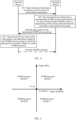
- this application provides a HARQ feedback solution, as shown in FIG. 3 .
- a network device sends first indication information, to indicate a quantity of uplink blind retransmissions to a terminal device.
- the terminal device determines, based on a latest HARQ feedback result of uplink data and/or a latest decoding status of downlink data, a quantity of retransmissions that are actually required for the uplink data this time.
- the terminal device retransmits data.
- the solution may further include the following steps.
- the terminal device sends second indication information, to indicate the network device to disable a HARQ response.
- the network device receives the second indication information, and disables the HARQ response.
- the terminal device clears a HARQ buffer after completing the last time of data sending.
- UE determines, through perception, that a current quantity of retransmissions may meet an information transmission reliability requirement, and notifies a network side that a HARQ response does not need to be performed on a current data packet. After completing the last time of sending, the UE may clear the HARQ buffer. This reduces a delay caused by the terminal device that needs to wait for a response before clearing the HARQ buffer after completing data sending in the conventional technology. In addition, the terminal device notifies the network device of the quantity of retransmissions. This can effectively avoid wasting air interface resources.
- a satellite #A may directly send the indication information #A to a terminal device #A.
- the satellite #A may send the indication information #A to a satellite #B, and the satellite #B sends the indication information #A to the terminal device #A.
- the satellite #A may send the indication information #A to another network device, for example, a terrestrial base station, and the terrestrial base station sends the indication information #A to the terminal device #A.
- another network device for example, a terrestrial base station
- the terrestrial base station sends the indication information #A to the terminal device #A.
- the satellite #A may send the indication information #A to another terminal device, for example, a terminal device #B, and the terminal device #B sends the indication information #Ato the terminal device #A (for example, by using a D2D communication technology and the like).
- a quantity of retransmissions actually required for the uplink data this time may be specifically:
- the latest uplink HARQ feedback result is an ACK and the quantity of retransmissions thereof is Z, and a quantity of retransmissions indicated for a current uplink data transmission is X, where Z ⁇ X.
- the quantity of retransmissions actually required this time may be Z.
- a quantity Y of retransmissions determined by the UE may be less than or equal to the quantity X of blind retransmissions indicated by the network device.
- the second indication information may be sent together with a data packet, or may be separately sent from the data packet. This is not limited in this application.
- the network side specifies that the quantity of uplink blind retransmissions of the UE is X, and the UE may perceive, based on the latest HARQ feedback result of the uplink data, the latest decoding status of the downlink data, or the like, that the quantity of retransmissions actually required for the uplink data is Y (where Y ⁇ X).
- the UE repeatedly sends data for X times. In the first time of data sending, a prefix is added to a data header, and/or a suffix is added to a data tail, to indicate that the HARQ response is disabled.
- the network side specifies that the quantity of uplink blind retransmissions of the UE is X, and the UE may perceive, based on the latest HARQ feedback result of the uplink data, the latest decoding status of the downlink data, or the like, that the quantity of retransmissions actually required for the uplink data is Y (where Y ⁇ X).
- the UE repeatedly sends data for X times.
- a prefix is added to a data header, and/or a suffix is added to a data tail, to indicate that the HARQ response is disabled.
- the network side specifies that the quantity of uplink blind retransmissions of the UE is X, and the UE may perceive, based on the latest HARQ feedback result of the uplink data, the latest decoding status of the downlink data, or the like, that the quantity of retransmissions actually required for the uplink data is Y (where Y ⁇ X).
- the UE repeatedly sends data for X times. In each data transmission, a prefix is added to a data header, or a suffix is added to a data tail, to indicate that the HARQ response is disabled.
- the indication information is added to the data packet, so that the network device can be notified of disabling of the response in the first data transmission, the last data transmission, or each data transmission. This can reduce a delay, and power consumption can be reduced by clearing the HARQ buffer in a timely manner.
- the network side specifies that the quantity of uplink blind retransmissions of the UE is X, and the UE may perceive, based on the latest HARQ feedback result of the uplink data, the latest decoding status of the downlink data, or the like, that the quantity of retransmissions actually required for the uplink data is Y (where Y ⁇ X).
- the UE repeatedly sends data for Y times. In the first data transmission, the UE adds a prefix to a data header, and/or adds a suffix to a data tail, to indicate that an actual quantity of retransmissions is Y.
- the prefix and/or the suffix may further include a HARQ response disabling indication.
- a quantity M of bits of the prefix or the suffix may be determined with reference to the indicated quantity Y of retransmissions, to ensure decoding reliability of the indication information.
- the network side specifies that the quantity of uplink blind retransmissions of the UE is X, and the UE may perceive, based on the latest HARQ feedback result of the uplink data, the latest decoding status of the downlink data, or the like, that the quantity of retransmissions actually required for the uplink data is Y (where Y ⁇ X).
- the UE repeatedly sends data for Y times. In a Y th data transmission, the UE adds a prefix to a data header, and/or adds a suffix to a data tail, to indicate that an actual quantity of retransmissions is Y
- the prefix and/or the suffix may further include a HARQ response disabling indication.
- a quantity M of bits of the prefix or the suffix may be determined with reference to the indicated quantity Y of retransmissions, to ensure decoding reliability of the indication information.
- the network side specifies that the quantity of uplink blind retransmissions of the UE is X, and the UE may perceive, based on the latest HARQ feedback result of the uplink data, the latest decoding status of the downlink data, or the like, that the quantity of retransmissions actually required for the uplink data is Y (where Y ⁇ X).
- the UE repeatedly sends data for Y times. In a Y th data transmission, the UE adds a prefix to a data header, and/or adds a suffix to a data tail, to indicate to stop a retransmission.
- the UE may send retransmission stop indication information after the quantity of data transmissions reaches a specific threshold. It should be understood that the threshold may be preset, or may be manually defined.
- the prefix and/or the suffix may further include a HARQ response disabling indication.
- a quantity M of bits of the prefix or the suffix may be determined with reference to the indicated quantity Y of retransmissions, to ensure decoding reliability of the indication information.
- the network side specifies that the quantity of uplink blind retransmissions of the UE is X, and the UE may perceive, based on the latest HARQ feedback result of the uplink data, the latest decoding status of the downlink data, or the like, that the quantity of retransmissions actually required for the uplink data is Y (where Y ⁇ X).
- the UE repeatedly sends data for Y times. In each data transmission, the UE adds a prefix to a data header, and/or adds a suffix to a data tail, to indicate that an actual quantity of retransmissions is Y
- the prefix and/or the suffix may further include a HARQ response disabling indication.
- a quantity M of bits of the prefix or the suffix may be determined with reference to the indicated quantity Y of retransmissions, to ensure decoding reliability of the indication information.
- a problem in the conventional technology that the network side needs to repeatedly perform sending for X times based on an indication of the network side is resolved, and the network side may be notified that a quantity of repetitions is reduced to Y, the network side may schedule a vacant air interface resource in advance, and the UE may stop sending after completing Y times of sending, to perform sleep power saving.
- the HARQ buffer may be cleared in advance in combination with the HARQ response disabling indication, to further save power.
- Another embodiment of this application may be applied to an NR NTN, as shown in FIG. 4 .
- a network device indicates, to a terminal device, a service type of a current data transmission.
- the terminal device determines a corresponding HARQ process group based on the service type (an information reliability requirement and delay sensitivity) of the current data transmission, and sends a data packet in the group.
- the information reliability requirement may also be referred to as target reliability
- the delay sensitivity may also be referred to as a target delay
- the network device receives the data packet, and determines, based on the HARQ process group in which the data packet is located, whether to wait for receiving retransmitted data and whether to perform a HARQ response.
- the data packet for information with a high reliability requirement (for example, a MAC CE), the data packet is arranged in a process or a process group in which the HARQ response is allowed; for information with a low reliability requirement and insensitive to a delay, the data packet is selected to be placed in a HARQ process or process group in which the HARQ response is not allowed and no blind retransmission is performed; and for information with a high reliability requirement and no delay requirement, the HARQ response is allowed and no blind retransmission is performed.
- a high reliability requirement for example, a MAC CE
- the data packet is selected to be placed in a HARQ process or process group in which no HARQ response is allowed and a blind retransmission is performed; and for information with a requirement for both reliability and a delay, the data packet is selected to be placed in a HARQ process or process group in which the HARQ response is allowed and a blind retransmission is performed.
- HARQ processes may be classified into four groups based on the reliability requirement and the delay sensitivity.
- the reliability requirement may be represented by data transmission reliability (which is a statistical quantity and represents a probability of accurately decoding a data packet), and the delay sensitivity may be represented based on a delay requirement of a service, as shown in FIG. 5 .
- a HARQ process group A corresponds to a service type that is delay-sensitive (a small target delay) and has a high reliability requirement (large target reliability). For example, if the delay requirement is less than 10 ms, and the reliability requirement is greater than 99.9999%, a transmission of the data packet of the service does not need a HARQ response, but needs a blind retransmission.
- a HARQ process group B corresponds to a service type that is delay-sensitive but has a low reliability requirement. For example, if the delay requirement is less than 10 ms, and the reliability requirement is less than 99.9999%, a transmission of the data packet of the service does not need a HARQ response or a blind retransmission.
- a HARQ process group C corresponds to a service type that is delay-insensitive but has a high reliability requirement. For example, if the delay requirement is greater than 10 ms, and the reliability requirement is greater than 99.9999%, a transmission of the data packet of the service needs a HARQ response, and needs a blind retransmission.
- a HARQ process group D corresponds to a service type that is delay-insensitive and has a low reliability requirement. For example, if the delay requirement is greater than 10 ms, and the reliability requirement is less than 99.9999%, a transmission of the data packet of the service may not need a HARQ response or a blind retransmission.
- the correspondence between the service type and the HARQ process group may be presented in a form of Table 1.
- Table 1 is merely used as an example rather than a limitation, and may be implemented partially or as a whole.
- the network side and the terminal side store the correspondence between the service type and the HARQ process group.
- the service type is bound to the quantity of blind retransmissions and a HARQ response requirement, and the correspondence between the service type and the HARQ process group may be presented in a form of Table 2.
- Table 1 is merely used as an example rather than a limitation, and may be implemented partially or as a whole.
- a network side and a terminal side store the correspondence between the service type and the HARQ process group, and the correspondence may be preset or may be configured.
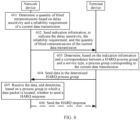
- FIG. 8 Details may be shown in FIG. 8 .
- a network device determines a process group based on a service type and a correspondence.
- the network device indicates the process group to a terminal device.
- the terminal device performs a data transmission through the process group.
- a quantity of blind retransmissions is bound to the service type and the HARQ process group.
- a quantity of retransmissions better meets a service requirement.
- the quantity of retransmissions is specified based on the service type, so that signaling overheads can be reduced.
- some HARQ processes do not need to wait for a HARQ response, and a HARQ buffer can be cleared in a timely manner, and long-time waiting for the response can be avoided, thereby improving a network perceived throughput.
- FIG. 9 is a schematic block diagram of a communication apparatus 900 according to an embodiment of this application.
- the apparatus 900 includes a transceiver unit 910 and a processing unit 920.
- the transceiver unit 910 may communicate with the outside, and the processing unit 920 is configured to process data.
- the transceiver unit 910 may also be referred to as a communication interface or a communication unit.
- the apparatus 900 may further include a storage unit.
- the storage unit may be configured to store instructions and/or data.
- the processing unit 920 may read the instructions and/or the data in the storage unit.
- the apparatus 900 may be configured to perform an action performed by the satellite in the foregoing method embodiments.
- the apparatus 900 may be a satellite or a component that can be configured in the satellite.
- the transceiver unit 910 is configured to perform receiving and sending related operations on a satellite side in the foregoing method embodiments.
- the processing unit 920 is configured to perform a processing related operation on the satellite side in the foregoing method embodiments.
- the apparatus 900 may be configured to perform an action performed by the terminal device in the foregoing method embodiments.
- the apparatus 900 may be a terminal device or a component that can be configured in the terminal device.
- the transceiver unit 910 is configured to perform receiving and sending related operations on a terminal device side in the foregoing method embodiments.
- the processing unit 920 is configured to perform a processing related operation on the terminal device side in the foregoing method embodiments.
- an embodiment of this application further provides a communication apparatus 1000.
- the communication apparatus 1000 includes a processor 1010.
- the processor 1010 is coupled to a memory 1020.
- the memory 1020 is configured to store a computer program or instructions and/or data.
- the processor 1010 is configured to execute the computer program or the instructions and/or the data stored in the memory 1020, so that the method in the foregoing methods embodiment is performed.
- the communication apparatus 1000 includes one or more processors 1010.
- the communication apparatus 1000 may further include a memory 10520.
- the communication apparatus 1000 may include one or more memories 1020.
- the memory 1020 may be integrated with the processor 1010, or may be separately disposed.
- the wireless communication apparatus 1000 may further include a transceiver 10530, and the transceiver 1030 is configured to receive and/or send a signal.
- the processor 1010 is configured to control the transceiver 1030 to receive and/or send the signal.
- the communication apparatus 1000 is configured to implement an operation performed by the satellite in the foregoing method embodiments.
- the processor 1010 is configured to implement a processing related operation performed by the satellite in the foregoing method embodiments.
- the transceiver 1030 is configured to implement receiving and sending related operations performed by the satellite in the foregoing method embodiments.
- the communication apparatus 1000 is configured to implement operations performed by the terminal device in the foregoing method embodiments.
- the processor 1010 is configured to perform a processing related operation performed by the terminal device in the foregoing method embodiments.
- the transceiver 1030 is configured to perform receiving and sending related operations performed by the terminal device in the foregoing method embodiments.
- FIG. 11 is a simplified schematic diagram of a structure of the terminal device.
- the terminal device includes a processor, a memory, a radio frequency circuit, an antenna, and an input/output apparatus.
- the processor is mainly configured to: process a communication protocol and communication data, control the terminal device, execute a software program, process data of the software program, and the like.
- the memory is mainly configured to store the software program and data.
- the radio frequency circuit is mainly configured to: perform conversion between a baseband signal and a radio frequency signal, and process the radio frequency signal.
- the antenna is mainly configured to receive and send a radio frequency signal in a form of an electromagnetic wave.
- the input/output apparatus such as a touchscreen, a display, or a keyboard, is mainly configured to: receive data input by a user and output data to the user. It should be noted that some types of terminal devices may have no input/output apparatus.
- the processor When data needs to be sent, the processor performs baseband processing on the to-be-sent data, and then outputs a baseband signal to the radio frequency circuit. After performing radio frequency processing on the baseband signal, the radio frequency circuit sends a radio frequency signal in a form of an electromagnetic wave to the outside through the antenna.
- the radio frequency circuit receives the radio frequency signal through the antenna, converts the radio frequency signal into a baseband signal, and outputs the baseband signal to the processor.
- the processor converts the baseband signal into data, and processes the data.
- FIG. 11 shows only one memory and one processor. In an actual terminal device product, there may be one or more processors and one or more memories.
- the memory may also be referred to as a storage medium, a storage device, or the like.
- the memory may be disposed independent of the processor, or may be integrated with the processor. This is not limited in this embodiment of this application.
- the antenna and a radio frequency circuit that have a transceiver function may be considered as a transceiver unit of the terminal device, and a processor that has a processing function may be considered as a processing unit of the terminal device.
- the terminal device includes a transceiver unit 1110 and a processing unit 1120.
- the transceiver unit 1110 may also be referred to as a transceiver, a transceiver machine, a transceiver apparatus, or the like.
- the processing unit 1120 may also be referred to as a processor, a processing board, a processing module, a processing apparatus, or the like.
- a component that is in the transceiver unit 1110 and that is configured to implement a receiving function may be considered as a receiving unit
- a component that is in the transceiver unit 1110 and that is configured to implement a sending function may be considered as a sending unit. That is, the transceiver unit 1110 includes the receiving unit and the sending unit.
- the transceiver unit sometimes may also be referred to as a transceiver machine, a transceiver, a transceiver circuit, or the like.
- the receiving unit sometimes may also be referred to as a receiver machine, a receiver, a receive circuit, or the like.
- the sending unit sometimes may also be referred to as a transmitter machine, a transmitter, a transmit circuit, or the like.
- the transceiver unit 1110 is configured to perform a receiving operation performed by the terminal device.
- the processing unit 1020 is configured to perform a processing action performed on a terminal device side.
- FIG. 11 is merely an example but not a limitation.
- the terminal device including the transceiver unit and the processing unit may not depend on the structure shown in FIG. 11 .
- the chip When the communication apparatus 1100 is a chip, the chip includes a transceiver unit and a processing unit.
- the transceiver unit may be an input/output circuit or a communication interface.
- the processing unit may be a processor, a microprocessor, or an integrated circuit that is integrated on the chip.
- the input circuit may be an input pin.
- the output circuit may be an output pin.
- the processing circuit may be a transistor, a gate circuit, a trigger, any logic circuit, or the like.
- An input signal received by the input circuit may be received and input by, for example, but not limited to, a receiver.
- a signal output by the output circuit may be output to, for example, but not limited to, a transmitter and transmitted by the transmitter.
- the input circuit and the output circuit may be different circuits, or may be a same circuit. In this case, the circuit is used as the input circuit and the output circuit at different moments.
- An embodiment of this application further provides a communication apparatus 1200.
- the communication apparatus 1200 may be a satellite or a chip.
- the communication apparatus 1200 may be configured to perform operations performed by the satellite in the foregoing method embodiments.
- FIG. 12 is a simplified schematic diagram of a structure of a base station.
- the base station includes a part 1210 and a part 1220.
- the part 1210 is mainly configured to: receive and send a radio frequency signal, and perform conversion between the radio frequency signal and a baseband signal.
- the part 1220 is mainly configured to: perform baseband processing, control the base station, and the like.
- the part 1210 may be usually referred to as a transceiver unit, a transceiver machine, a transceiver circuit, a transceiver, or the like.
- the part 1220 is usually a control center of the base station, and may usually be referred to as a processing unit, and is configured to control the base station to perform a processing operation on a network device side in the foregoing method embodiments.
- the transceiver unit in the part 1210 may also be referred to as a transceiver machine, a transceiver, or the like.
- the transceiver unit includes an antenna and a radio frequency circuit, where the radio frequency circuit is mainly configured to perform radio frequency processing.
- a component that is in the part 1210 and that is configured to implement a receiving function may be considered as a receiving unit, and a component that is configured to implement a sending function may be considered as a sending unit. That is, the part 1210 includes the receiving unit and the sending unit.
- the receiving unit may also be referred to as a receiver machine, a receiver, a receiver circuit, or the like.
- the sending unit may be referred to as a transmitter machine, a transmitter, a transmitter circuit, or the like.
- the part 1220 may include one or more boards, and each board may include one or more processors and one or more memories.
- the processor is configured to read and execute a program in the memory, to implement a baseband processing function and control the base station. If there are a plurality of boards, the boards may be interconnected with each other, to enhance a processing capability.
- a plurality of boards may share one or more processors, a plurality of boards may share one or more memories, or a plurality of boards may simultaneously share one or more processors.
- the transceiver unit in the part 1210 is configured to perform receiving and sending related steps performed by the satellite in the embodiments.
- the part 1220 is configured to perform a processing related step performed by the satellite.
- FIG. 12 is merely an example but not a limitation.
- the network device including the transceiver unit and the processing unit may not depend on the structure shown in FIG. 12 .
- the chip When the communication apparatus 1200 is the chip, the chip includes a transceiver unit and a processing unit.
- the transceiver unit may be an input/output circuit or a communication interface.
- the processing unit is a processor, a microprocessor, or an integrated circuit integrated on the chip.
- the input circuit may be an input pin.
- the output circuit may be an output pin.
- the processing circuit may be a transistor, a gate circuit, a trigger, any logic circuit, or the like.
- An input signal received by the input circuit may be received and input by, for example, but not limited to, a receiver.
- a signal output by the output circuit may be output to, for example, but not limited to, a transmitter and transmitted by the transmitter.
- the input circuit and the output circuit may be different circuits, or may be a same circuit. In this case, the circuit is used as the input circuit and the output circuit at different moments.
- An embodiment of this application further provides a computer-readable storage medium.
- the computer-readable storage medium stores computer instructions used to implement the method performed by the terminal device or the method performed by the satellite in the foregoing method embodiments.
- the computer when the computer program is executed by a computer, the computer may be enabled to implement the method performed by the terminal device or the method performed by the satellite in the foregoing method embodiments.
- An embodiment of this application further provides a computer program product including instructions.
- the instructions When the instructions are executed by a computer, the computer is enabled to implement the method performed by the terminal device or the method performed by the network device in the foregoing method embodiments.
- An embodiment of this application further provides a communication system.
- the communication system includes the satellite and the terminal device in the foregoing embodiments.
- the communication system includes the satellite and the terminal device in the foregoing embodiments.
- the terminal device or the network device may include a hardware layer, an operating system layer running above the hardware layer, and an application layer running above the operating system layer.
- the hardware layer may include hardware such as a central processing unit (central processing unit, CPU), a memory management unit (memory management unit, MMU), and a memory (also referred to as a primary memory).
- An operating system at the operating system layer may be any one or more computer operating systems that implement service processing through a process (process), for example, a Linux operating system, a Unix operating system, an Android operating system, an iOS operating system, or a Windows operating system.
- the application layer may include applications such as a browser, an address book, word processing software, and instant messaging software.
- a specific structure of an execution body of the method provided in embodiments of this application is not specifically limited in embodiments of this application, provided that a program that records code for the method provided in embodiments of this application can be run to perform communication according to the method provided in embodiments of this application.
- the method provided in embodiments of this application may be performed by a terminal device, a satellite, or a functional module that is in the terminal device or the satellite and that can invoke a program and execute the program.
- aspects or features in embodiments of this application may be implemented as a method, an apparatus, or a product that uses standard programming and/or engineering technologies.
- product used in this specification may cover a computer program that can be accessed from any computer-readable component, carrier, or medium.
- the computer-readable medium may include but is not limited to a magnetic storage component (for example, a hard disk, a floppy disk, or a magnetic tape), an optical disc (for example, a compact disc (compact disc, CD) or a digital versatile disc (digital versatile disc, DVD)), a smart card, and a flash memory component (for example, an erasable programmable read-only memory (erasable programmable read-only memory, EPROM), a card, a stick, or a key drive).
- a magnetic storage component for example, a hard disk, a floppy disk, or a magnetic tape
- an optical disc for example, a compact disc (compact disc, CD) or a digital versatile disc (digital versatile disc, DVD)
- a smart card for example, an erasable programmable read-only memory (erasable programmable read-only memory, EPROM), a card, a stick, or a key drive.
- EPROM erasable programmable read-only memory
- machine-readable media may include but is not limited to a radio channel and various other media that can store, include, and/or carry instructions and/or data.
- the processor in embodiments of this application may be a central processing unit (central processing unit, CPU), another general-purpose processor, a digital signal processor (digital signal processor, DSP), an application-specific integrated circuit (application-specific integrated circuit, ASIC), a field programmable gate array (field programmable gate array, FPGA) or another programmable logic device, a discrete gate or a transistor logic device, a discrete hardware component, or the like.
- the general-purpose processor may be a microprocessor, or the processor may be any conventional processor or the like.
- the memory mentioned in embodiments of this application may be a volatile memory or a nonvolatile memory, or may include a volatile memory and a nonvolatile memory.
- the nonvolatile memory may be a read-only memory (read-only memory, ROM), a programmable read-only memory (programmable ROM, PROM), an erasable programmable read-only memory (erasable PROM, EPROM), an electrically erasable programmable read-only memory (electrically EPROM, EEPROM), or a flash memory.
- the volatile memory may be a random access memory (random access memory, RAM).
- the RAM may be used as an external cache.
- the RAM may include the following plurality of forms: a static random access memory (static RAM, SRAM), a dynamic random access memory (dynamic RAM, DRAM), a synchronous dynamic random access memory (synchronous DRAM, SDRAM), a double data rate synchronous dynamic random access memory (double data rate SDRAM, DDR SDRAM), an enhanced synchronous dynamic random access memory (enhanced SDRAM, ESDRAM), a synchlink dynamic random access memory (synchlink DRAM, SLDRAM), and a direct rambus random access memory (direct rambus RAM, DR RAM).
- the processor is a general-purpose processor, a DSP, an ASIC, an FPGA or another programmable logic device, a discrete gate or a transistor logic device, or a discrete hardware component
- the memory storage module
- the memory described in this specification aims to include but is not limited to these memories and any memory of another proper type.
- the disclosed system, apparatus, and method may be implemented in other manners.
- the described apparatus embodiments are merely examples.
- division into the units is merely logical function division and may be other division during actual implementation.
- a plurality of units or components may be combined or integrated into another system, or some features may be ignored or not performed.
- the displayed or discussed mutual couplings or direct couplings or communication connections may be implemented through some interfaces.
- the indirect couplings or communication connections between the apparatuses or units may be implemented in electrical, mechanical, or other forms.
- the units described as separate parts may or may not be physically separate, and parts displayed as units may or may not be physical units, that is, may be located in one place, or may be distributed on a plurality of network units. Some or all of the units may be selected based on actual requirements to achieve the objectives of the solutions of embodiments.
- the functions When the functions are implemented in a form of a software functional unit and sold or used as an independent product, the functions may be stored in a computer-readable storage medium. Based on such an understanding, the technical solutions of embodiments of this application essentially, or the part contributing to the conventional technology, or a part of the technical solutions may be implemented in a form of a software product.
- the computer software product is stored in a storage medium, and includes several instructions for instructing a computer device (which may be a personal computer, a server, a network device, or the like) to perform all or a part of the steps of the methods described in embodiments of this application.
- the foregoing storage medium includes any medium that can store program code, such as a USB flash drive, a removable hard disk, a read-only memory (Read-Only Memory, ROM), a random access memory (Random Access Memory, RAM), a magnetic disk, or an optical disc.
- program code such as a USB flash drive, a removable hard disk, a read-only memory (Read-Only Memory, ROM), a random access memory (Random Access Memory, RAM), a magnetic disk, or an optical disc.
Landscapes
- Engineering & Computer Science (AREA)
- Signal Processing (AREA)
- Computer Networks & Wireless Communication (AREA)
- Mobile Radio Communication Systems (AREA)
Applications Claiming Priority (2)
| Application Number | Priority Date | Filing Date | Title |
|---|---|---|---|
| CN202110727732.0A CN115549865A (zh) | 2021-06-29 | 2021-06-29 | 一种混合自动重传请求反馈的方法和装置 |
| PCT/CN2022/095896 WO2023273754A1 (zh) | 2021-06-29 | 2022-05-30 | 一种混合自动重传请求反馈的方法和装置 |
Publications (2)
| Publication Number | Publication Date |
|---|---|
| EP4354776A1 true EP4354776A1 (de) | 2024-04-17 |
| EP4354776A4 EP4354776A4 (de) | 2024-10-16 |
Family
ID=84692505
Family Applications (1)
| Application Number | Title | Priority Date | Filing Date |
|---|---|---|---|
| EP22831576.8A Pending EP4354776A4 (de) | 2021-06-29 | 2022-05-30 | Hybrides automatisches wiederholungsanfragerückkopplungsverfahren und vorrichtung |
Country Status (4)
| Country | Link |
|---|---|
| US (1) | US20240129066A1 (de) |
| EP (1) | EP4354776A4 (de) |
| CN (1) | CN115549865A (de) |
| WO (1) | WO2023273754A1 (de) |
Families Citing this family (6)
| Publication number | Priority date | Publication date | Assignee | Title |
|---|---|---|---|---|
| WO2024259549A1 (zh) * | 2023-06-19 | 2024-12-26 | 华为技术有限公司 | 语义通信方法以及相关装置 |
| CN119966585A (zh) * | 2023-11-08 | 2025-05-09 | 华为技术有限公司 | 通信方法及装置 |
| CN118827743A (zh) * | 2024-06-14 | 2024-10-22 | 中国移动通信有限公司研究院 | 传输方法、装置、节点、存储介质及计算机程序产品 |
| CN121150886A (zh) * | 2024-06-14 | 2025-12-16 | 华为技术有限公司 | 通信方法和通信装置 |
| CN121239361A (zh) * | 2024-06-28 | 2025-12-30 | 华为技术有限公司 | 容错通信方法及装置 |
| CN119383655B (zh) * | 2024-12-06 | 2025-07-11 | 荣耀终端股份有限公司 | 数据传输方法及相关装置 |
Family Cites Families (13)
| Publication number | Priority date | Publication date | Assignee | Title |
|---|---|---|---|---|
| CN101286825A (zh) * | 2007-04-11 | 2008-10-15 | 松下电器产业株式会社 | 实现基于可靠性的混合自动重传的方法、发送端和系统 |
| KR101467788B1 (ko) * | 2007-12-11 | 2014-12-03 | 엘지전자 주식회사 | 랜덤 선형 부호화를 이용하는 통신방법 및 장치 |
| US8018890B2 (en) * | 2008-06-25 | 2011-09-13 | Intel Corporation | Techniques using a hop-by-hop approach for automatic repeat request (ARQ) in wireless relay networks |
| GB2506363A (en) * | 2012-09-26 | 2014-04-02 | Broadcom Corp | Method for controlling automatic repeat request (arq) retransmissions of wireless signals |
| US9144066B2 (en) * | 2012-12-28 | 2015-09-22 | Sierra Wireless, Inc. | Method and system for hybrid automatic repeat request combining on an lte downlink control channel |
| WO2015113214A1 (en) * | 2014-01-28 | 2015-08-06 | Mediatek Singapore Pte. Ltd. | Methods for enhanced harq mechanism |
| US20190229856A1 (en) * | 2016-07-15 | 2019-07-25 | Ntt Docomo, Inc. | User equipment and radio communication method |
| CN110830184B (zh) * | 2018-08-09 | 2023-04-07 | 北京三星通信技术研究有限公司 | 块传输方法、下行传输方法、nrs接收方法、ue、基站和介质 |
| US11438104B2 (en) * | 2018-12-28 | 2022-09-06 | Intel Corporation | Extremely high throughput hybrid automatic repeat request |
| EP3955604B1 (de) * | 2019-04-09 | 2025-06-18 | Beijing Xiaomi Mobile Software Co., Ltd. | Verfahren, vorrichtung, gerät und system zur rückkopplungsinformationsübertragung für direkte kommunikation |
| WO2021015577A1 (en) * | 2019-07-23 | 2021-01-28 | Samsung Electronics Co., Ltd. | Method and apparatus for sidelink transmission in a wireless communication system |
| CN111342939B (zh) * | 2020-03-02 | 2022-03-01 | 惠州Tcl移动通信有限公司 | 数据盲重传方法、装置、存储介质及终端设备 |
| CN115428374B (zh) * | 2020-04-18 | 2025-06-24 | 联想(新加坡)私人有限公司 | 组合的盲重传和基于反馈的重传 |
-
2021
- 2021-06-29 CN CN202110727732.0A patent/CN115549865A/zh active Pending
-
2022
- 2022-05-30 EP EP22831576.8A patent/EP4354776A4/de active Pending
- 2022-05-30 WO PCT/CN2022/095896 patent/WO2023273754A1/zh not_active Ceased
-
2023
- 2023-12-28 US US18/398,474 patent/US20240129066A1/en active Pending
Also Published As
| Publication number | Publication date |
|---|---|
| CN115549865A (zh) | 2022-12-30 |
| US20240129066A1 (en) | 2024-04-18 |
| EP4354776A4 (de) | 2024-10-16 |
| WO2023273754A1 (zh) | 2023-01-05 |
Similar Documents
| Publication | Publication Date | Title |
|---|---|---|
| EP4354776A1 (de) | Hybrides automatisches wiederholungsanfragerückkopplungsverfahren und vorrichtung | |
| EP3657713B1 (de) | Kommunikationsverfahren und -vorrichtung | |
| CN102119503B (zh) | 增大混合自动重复请求协议的可靠性 | |
| US11483097B2 (en) | Wireless communication method, network device, terminal device, and readable storage medium | |
| US20220224452A1 (en) | Feedback Information Transmission Method and Apparatus | |
| EP3751914B1 (de) | Kommunikationsverfahren, kommunikationsvorrichtung und lesbares speichermedium | |
| EP3764575A1 (de) | Verfahren, vorrichtung und system zur übertragung von daten | |
| CN110235398A (zh) | 用于部分重传的方法 | |
| US11191075B2 (en) | Data transmission method, device, and communications system | |
| CN104321997B (zh) | 传输数据的方法、基站和用户设备 | |
| US20230199799A1 (en) | Wireless communication method, terminal device and network device | |
| US12580691B2 (en) | NTN-based data transmission method and apparatus and storage medium | |
| US11856582B2 (en) | Data transmission method and communications apparatus | |
| US9819454B2 (en) | Wireless communication apparatus and method for HARQ buffer management | |
| CN101615988A (zh) | 混合自动重传请求的调度方法 | |
| US11153914B2 (en) | Data transmission method and apparatus | |
| EP3595210B1 (de) | Datenübertragungsverfahren, netzwerkvorrichtung und endgerätevorrichtung | |
| US20180248658A1 (en) | Transmitting downlink signals | |
| WO2022237673A1 (zh) | 一种处理数据的方法和装置 | |
| CN110140317B (zh) | 解码部分无线电传送 | |
| WO2019228241A1 (zh) | 信号处理的方法和装置 | |
| US12438644B2 (en) | Communication method and apparatus | |
| WO2018201905A1 (zh) | 一种数据传输方法、终端以及基站 | |
| CN115835150A (zh) | 信息反馈方法、装置、设备及介质 |
Legal Events
| Date | Code | Title | Description |
|---|---|---|---|
| STAA | Information on the status of an ep patent application or granted ep patent |
Free format text: STATUS: THE INTERNATIONAL PUBLICATION HAS BEEN MADE |
|
| PUAI | Public reference made under article 153(3) epc to a published international application that has entered the european phase |
Free format text: ORIGINAL CODE: 0009012 |
|
| STAA | Information on the status of an ep patent application or granted ep patent |
Free format text: STATUS: REQUEST FOR EXAMINATION WAS MADE |
|
| 17P | Request for examination filed |
Effective date: 20240110 |
|
| AK | Designated contracting states |
Kind code of ref document: A1 Designated state(s): AL AT BE BG CH CY CZ DE DK EE ES FI FR GB GR HR HU IE IS IT LI LT LU LV MC MK MT NL NO PL PT RO RS SE SI SK SM TR |
|
| REG | Reference to a national code |
Ref country code: DE Ref legal event code: R079 Free format text: PREVIOUS MAIN CLASS: H04L0001180000 Ipc: H04L0001182500 |
|
| RIC1 | Information provided on ipc code assigned before grant |
Ipc: H04L 1/1867 20230101ALI20240619BHEP Ipc: H04L 1/1825 20230101AFI20240619BHEP |
|
| DAV | Request for validation of the european patent (deleted) | ||
| DAX | Request for extension of the european patent (deleted) | ||
| A4 | Supplementary search report drawn up and despatched |
Effective date: 20240917 |
|
| RIC1 | Information provided on ipc code assigned before grant |
Ipc: H04L 1/1867 20230101ALI20240911BHEP Ipc: H04L 1/1825 20230101AFI20240911BHEP |