EP4354018B1 - Vehicle light lens, vehicle light, and correction system thereof - Google Patents
Vehicle light lens, vehicle light, and correction system thereof Download PDFInfo
- Publication number
- EP4354018B1 EP4354018B1 EP23188887.6A EP23188887A EP4354018B1 EP 4354018 B1 EP4354018 B1 EP 4354018B1 EP 23188887 A EP23188887 A EP 23188887A EP 4354018 B1 EP4354018 B1 EP 4354018B1
- Authority
- EP
- European Patent Office
- Prior art keywords
- light
- vehicle
- light source
- paint layer
- color coordinates
- Prior art date
- Legal status (The legal status is an assumption and is not a legal conclusion. Google has not performed a legal analysis and makes no representation as to the accuracy of the status listed.)
- Active
Links
Images




Classifications
-
- F—MECHANICAL ENGINEERING; LIGHTING; HEATING; WEAPONS; BLASTING
- F21—LIGHTING
- F21S—NON-PORTABLE LIGHTING DEVICES; SYSTEMS THEREOF; VEHICLE LIGHTING DEVICES SPECIALLY ADAPTED FOR VEHICLE EXTERIORS
- F21S41/00—Illuminating devices specially adapted for vehicle exteriors, e.g. headlamps
- F21S41/10—Illuminating devices specially adapted for vehicle exteriors, e.g. headlamps characterised by the light source
- F21S41/12—Illuminating devices specially adapted for vehicle exteriors, e.g. headlamps characterised by the light source characterised by the type of emitted light
- F21S41/125—Coloured light
-
- F—MECHANICAL ENGINEERING; LIGHTING; HEATING; WEAPONS; BLASTING
- F21—LIGHTING
- F21S—NON-PORTABLE LIGHTING DEVICES; SYSTEMS THEREOF; VEHICLE LIGHTING DEVICES SPECIALLY ADAPTED FOR VEHICLE EXTERIORS
- F21S41/00—Illuminating devices specially adapted for vehicle exteriors, e.g. headlamps
- F21S41/20—Illuminating devices specially adapted for vehicle exteriors, e.g. headlamps characterised by refractors, transparent cover plates, light guides or filters
- F21S41/28—Cover glass
-
- F—MECHANICAL ENGINEERING; LIGHTING; HEATING; WEAPONS; BLASTING
- F21—LIGHTING
- F21S—NON-PORTABLE LIGHTING DEVICES; SYSTEMS THEREOF; VEHICLE LIGHTING DEVICES SPECIALLY ADAPTED FOR VEHICLE EXTERIORS
- F21S41/00—Illuminating devices specially adapted for vehicle exteriors, e.g. headlamps
- F21S41/20—Illuminating devices specially adapted for vehicle exteriors, e.g. headlamps characterised by refractors, transparent cover plates, light guides or filters
- F21S41/25—Projection lenses
-
- B—PERFORMING OPERATIONS; TRANSPORTING
- B60—VEHICLES IN GENERAL
- B60Q—ARRANGEMENT OF SIGNALLING OR LIGHTING DEVICES, THE MOUNTING OR SUPPORTING THEREOF OR CIRCUITS THEREFOR, FOR VEHICLES IN GENERAL
- B60Q11/00—Arrangement of monitoring devices for devices provided for in groups B60Q1/00 - B60Q9/00
- B60Q11/005—Arrangement of monitoring devices for devices provided for in groups B60Q1/00 - B60Q9/00 for lighting devices, e.g. indicating if lamps are burning or not
-
- F—MECHANICAL ENGINEERING; LIGHTING; HEATING; WEAPONS; BLASTING
- F21—LIGHTING
- F21S—NON-PORTABLE LIGHTING DEVICES; SYSTEMS THEREOF; VEHICLE LIGHTING DEVICES SPECIALLY ADAPTED FOR VEHICLE EXTERIORS
- F21S41/00—Illuminating devices specially adapted for vehicle exteriors, e.g. headlamps
- F21S41/10—Illuminating devices specially adapted for vehicle exteriors, e.g. headlamps characterised by the light source
- F21S41/14—Illuminating devices specially adapted for vehicle exteriors, e.g. headlamps characterised by the light source characterised by the type of light source
- F21S41/141—Light emitting diodes [LED]
-
- F—MECHANICAL ENGINEERING; LIGHTING; HEATING; WEAPONS; BLASTING
- F21—LIGHTING
- F21S—NON-PORTABLE LIGHTING DEVICES; SYSTEMS THEREOF; VEHICLE LIGHTING DEVICES SPECIALLY ADAPTED FOR VEHICLE EXTERIORS
- F21S41/00—Illuminating devices specially adapted for vehicle exteriors, e.g. headlamps
- F21S41/20—Illuminating devices specially adapted for vehicle exteriors, e.g. headlamps characterised by refractors, transparent cover plates, light guides or filters
- F21S41/25—Projection lenses
- F21S41/275—Lens surfaces, e.g. coatings or surface structures
-
- F—MECHANICAL ENGINEERING; LIGHTING; HEATING; WEAPONS; BLASTING
- F21—LIGHTING
- F21S—NON-PORTABLE LIGHTING DEVICES; SYSTEMS THEREOF; VEHICLE LIGHTING DEVICES SPECIALLY ADAPTED FOR VEHICLE EXTERIORS
- F21S41/00—Illuminating devices specially adapted for vehicle exteriors, e.g. headlamps
- F21S41/20—Illuminating devices specially adapted for vehicle exteriors, e.g. headlamps characterised by refractors, transparent cover plates, light guides or filters
- F21S41/285—Refractors, transparent cover plates, light guides or filters not provided in groups F21S41/24 - F21S41/2805
-
- F—MECHANICAL ENGINEERING; LIGHTING; HEATING; WEAPONS; BLASTING
- F21—LIGHTING
- F21S—NON-PORTABLE LIGHTING DEVICES; SYSTEMS THEREOF; VEHICLE LIGHTING DEVICES SPECIALLY ADAPTED FOR VEHICLE EXTERIORS
- F21S41/00—Illuminating devices specially adapted for vehicle exteriors, e.g. headlamps
- F21S41/30—Illuminating devices specially adapted for vehicle exteriors, e.g. headlamps characterised by reflectors
- F21S41/32—Optical layout thereof
-
- F—MECHANICAL ENGINEERING; LIGHTING; HEATING; WEAPONS; BLASTING
- F21—LIGHTING
- F21S—NON-PORTABLE LIGHTING DEVICES; SYSTEMS THEREOF; VEHICLE LIGHTING DEVICES SPECIALLY ADAPTED FOR VEHICLE EXTERIORS
- F21S41/00—Illuminating devices specially adapted for vehicle exteriors, e.g. headlamps
- F21S41/50—Illuminating devices specially adapted for vehicle exteriors, e.g. headlamps characterised by aesthetic components not otherwise provided for, e.g. decorative trim, partition walls or covers
-
- F—MECHANICAL ENGINEERING; LIGHTING; HEATING; WEAPONS; BLASTING
- F21—LIGHTING
- F21S—NON-PORTABLE LIGHTING DEVICES; SYSTEMS THEREOF; VEHICLE LIGHTING DEVICES SPECIALLY ADAPTED FOR VEHICLE EXTERIORS
- F21S41/00—Illuminating devices specially adapted for vehicle exteriors, e.g. headlamps
- F21S41/50—Illuminating devices specially adapted for vehicle exteriors, e.g. headlamps characterised by aesthetic components not otherwise provided for, e.g. decorative trim, partition walls or covers
- F21S41/55—Attachment thereof
-
- F—MECHANICAL ENGINEERING; LIGHTING; HEATING; WEAPONS; BLASTING
- F21—LIGHTING
- F21S—NON-PORTABLE LIGHTING DEVICES; SYSTEMS THEREOF; VEHICLE LIGHTING DEVICES SPECIALLY ADAPTED FOR VEHICLE EXTERIORS
- F21S43/00—Signalling devices specially adapted for vehicle exteriors, e.g. brake lamps, direction indicator lights or reversing lights
- F21S43/10—Signalling devices specially adapted for vehicle exteriors, e.g. brake lamps, direction indicator lights or reversing lights characterised by the light source
- F21S43/13—Signalling devices specially adapted for vehicle exteriors, e.g. brake lamps, direction indicator lights or reversing lights characterised by the light source characterised by the type of light source
- F21S43/14—Light emitting diodes [LED]
-
- F—MECHANICAL ENGINEERING; LIGHTING; HEATING; WEAPONS; BLASTING
- F21—LIGHTING
- F21S—NON-PORTABLE LIGHTING DEVICES; SYSTEMS THEREOF; VEHICLE LIGHTING DEVICES SPECIALLY ADAPTED FOR VEHICLE EXTERIORS
- F21S43/00—Signalling devices specially adapted for vehicle exteriors, e.g. brake lamps, direction indicator lights or reversing lights
- F21S43/20—Signalling devices specially adapted for vehicle exteriors, e.g. brake lamps, direction indicator lights or reversing lights characterised by refractors, transparent cover plates, light guides or filters
-
- F—MECHANICAL ENGINEERING; LIGHTING; HEATING; WEAPONS; BLASTING
- F21—LIGHTING
- F21S—NON-PORTABLE LIGHTING DEVICES; SYSTEMS THEREOF; VEHICLE LIGHTING DEVICES SPECIALLY ADAPTED FOR VEHICLE EXTERIORS
- F21S43/00—Signalling devices specially adapted for vehicle exteriors, e.g. brake lamps, direction indicator lights or reversing lights
- F21S43/20—Signalling devices specially adapted for vehicle exteriors, e.g. brake lamps, direction indicator lights or reversing lights characterised by refractors, transparent cover plates, light guides or filters
- F21S43/26—Refractors, transparent cover plates, light guides or filters not provided in groups F21S43/235 - F21S43/255
-
- F—MECHANICAL ENGINEERING; LIGHTING; HEATING; WEAPONS; BLASTING
- F21—LIGHTING
- F21S—NON-PORTABLE LIGHTING DEVICES; SYSTEMS THEREOF; VEHICLE LIGHTING DEVICES SPECIALLY ADAPTED FOR VEHICLE EXTERIORS
- F21S43/00—Signalling devices specially adapted for vehicle exteriors, e.g. brake lamps, direction indicator lights or reversing lights
- F21S43/20—Signalling devices specially adapted for vehicle exteriors, e.g. brake lamps, direction indicator lights or reversing lights characterised by refractors, transparent cover plates, light guides or filters
- F21S43/281—Materials thereof; Structures thereof; Properties thereof; Coatings thereof
- F21S43/2817—Coatings, e.g. anti-reflection coatings
-
- F—MECHANICAL ENGINEERING; LIGHTING; HEATING; WEAPONS; BLASTING
- F21—LIGHTING
- F21S—NON-PORTABLE LIGHTING DEVICES; SYSTEMS THEREOF; VEHICLE LIGHTING DEVICES SPECIALLY ADAPTED FOR VEHICLE EXTERIORS
- F21S43/00—Signalling devices specially adapted for vehicle exteriors, e.g. brake lamps, direction indicator lights or reversing lights
- F21S43/30—Signalling devices specially adapted for vehicle exteriors, e.g. brake lamps, direction indicator lights or reversing lights characterised by reflectors
- F21S43/31—Optical layout thereof
-
- F—MECHANICAL ENGINEERING; LIGHTING; HEATING; WEAPONS; BLASTING
- F21—LIGHTING
- F21S—NON-PORTABLE LIGHTING DEVICES; SYSTEMS THEREOF; VEHICLE LIGHTING DEVICES SPECIALLY ADAPTED FOR VEHICLE EXTERIORS
- F21S43/00—Signalling devices specially adapted for vehicle exteriors, e.g. brake lamps, direction indicator lights or reversing lights
- F21S43/30—Signalling devices specially adapted for vehicle exteriors, e.g. brake lamps, direction indicator lights or reversing lights characterised by reflectors
- F21S43/33—Signalling devices specially adapted for vehicle exteriors, e.g. brake lamps, direction indicator lights or reversing lights characterised by reflectors characterised by their material, surface treatment or coatings
-
- F—MECHANICAL ENGINEERING; LIGHTING; HEATING; WEAPONS; BLASTING
- F21—LIGHTING
- F21S—NON-PORTABLE LIGHTING DEVICES; SYSTEMS THEREOF; VEHICLE LIGHTING DEVICES SPECIALLY ADAPTED FOR VEHICLE EXTERIORS
- F21S43/00—Signalling devices specially adapted for vehicle exteriors, e.g. brake lamps, direction indicator lights or reversing lights
- F21S43/50—Signalling devices specially adapted for vehicle exteriors, e.g. brake lamps, direction indicator lights or reversing lights characterised by aesthetic components not otherwise provided for, e.g. decorative trim, partition walls or covers
-
- F—MECHANICAL ENGINEERING; LIGHTING; HEATING; WEAPONS; BLASTING
- F21—LIGHTING
- F21S—NON-PORTABLE LIGHTING DEVICES; SYSTEMS THEREOF; VEHICLE LIGHTING DEVICES SPECIALLY ADAPTED FOR VEHICLE EXTERIORS
- F21S43/00—Signalling devices specially adapted for vehicle exteriors, e.g. brake lamps, direction indicator lights or reversing lights
- F21S43/50—Signalling devices specially adapted for vehicle exteriors, e.g. brake lamps, direction indicator lights or reversing lights characterised by aesthetic components not otherwise provided for, e.g. decorative trim, partition walls or covers
- F21S43/51—Attachment thereof
-
- F—MECHANICAL ENGINEERING; LIGHTING; HEATING; WEAPONS; BLASTING
- F21—LIGHTING
- F21V—FUNCTIONAL FEATURES OR DETAILS OF LIGHTING DEVICES OR SYSTEMS THEREOF; STRUCTURAL COMBINATIONS OF LIGHTING DEVICES WITH OTHER ARTICLES, NOT OTHERWISE PROVIDED FOR
- F21V5/00—Refractors for light sources
- F21V5/04—Refractors for light sources of lens shape
-
- F—MECHANICAL ENGINEERING; LIGHTING; HEATING; WEAPONS; BLASTING
- F21—LIGHTING
- F21V—FUNCTIONAL FEATURES OR DETAILS OF LIGHTING DEVICES OR SYSTEMS THEREOF; STRUCTURAL COMBINATIONS OF LIGHTING DEVICES WITH OTHER ARTICLES, NOT OTHERWISE PROVIDED FOR
- F21V9/00—Elements for modifying spectral properties, polarisation or intensity of the light emitted, e.g. filters
- F21V9/40—Elements for modifying spectral properties, polarisation or intensity of the light emitted, e.g. filters with provision for controlling spectral properties, e.g. colour, or intensity
-
- G—PHYSICS
- G02—OPTICS
- G02B—OPTICAL ELEMENTS, SYSTEMS OR APPARATUS
- G02B3/00—Simple or compound lenses
-
- H—ELECTRICITY
- H05—ELECTRIC TECHNIQUES NOT OTHERWISE PROVIDED FOR
- H05B—ELECTRIC HEATING; ELECTRIC LIGHT SOURCES NOT OTHERWISE PROVIDED FOR; CIRCUIT ARRANGEMENTS FOR ELECTRIC LIGHT SOURCES, IN GENERAL
- H05B45/00—Circuit arrangements for operating light-emitting diodes [LED]
- H05B45/20—Controlling the colour of the light
-
- H—ELECTRICITY
- H05—ELECTRIC TECHNIQUES NOT OTHERWISE PROVIDED FOR
- H05B—ELECTRIC HEATING; ELECTRIC LIGHT SOURCES NOT OTHERWISE PROVIDED FOR; CIRCUIT ARRANGEMENTS FOR ELECTRIC LIGHT SOURCES, IN GENERAL
- H05B45/00—Circuit arrangements for operating light-emitting diodes [LED]
- H05B45/20—Controlling the colour of the light
- H05B45/22—Controlling the colour of the light using optical feedback
-
- H—ELECTRICITY
- H05—ELECTRIC TECHNIQUES NOT OTHERWISE PROVIDED FOR
- H05B—ELECTRIC HEATING; ELECTRIC LIGHT SOURCES NOT OTHERWISE PROVIDED FOR; CIRCUIT ARRANGEMENTS FOR ELECTRIC LIGHT SOURCES, IN GENERAL
- H05B47/00—Circuit arrangements for operating light sources in general, i.e. where the type of light source is not relevant
- H05B47/10—Controlling the light source
- H05B47/105—Controlling the light source in response to determined parameters
-
- F—MECHANICAL ENGINEERING; LIGHTING; HEATING; WEAPONS; BLASTING
- F21—LIGHTING
- F21S—NON-PORTABLE LIGHTING DEVICES; SYSTEMS THEREOF; VEHICLE LIGHTING DEVICES SPECIALLY ADAPTED FOR VEHICLE EXTERIORS
- F21S43/00—Signalling devices specially adapted for vehicle exteriors, e.g. brake lamps, direction indicator lights or reversing lights
- F21S43/20—Signalling devices specially adapted for vehicle exteriors, e.g. brake lamps, direction indicator lights or reversing lights characterised by refractors, transparent cover plates, light guides or filters
- F21S43/255—Filters
-
- F—MECHANICAL ENGINEERING; LIGHTING; HEATING; WEAPONS; BLASTING
- F21—LIGHTING
- F21W—INDEXING SCHEME ASSOCIATED WITH SUBCLASSES F21K, F21L, F21S and F21V, RELATING TO USES OR APPLICATIONS OF LIGHTING DEVICES OR SYSTEMS
- F21W2102/00—Exterior vehicle lighting devices for illuminating purposes
-
- F—MECHANICAL ENGINEERING; LIGHTING; HEATING; WEAPONS; BLASTING
- F21—LIGHTING
- F21W—INDEXING SCHEME ASSOCIATED WITH SUBCLASSES F21K, F21L, F21S and F21V, RELATING TO USES OR APPLICATIONS OF LIGHTING DEVICES OR SYSTEMS
- F21W2102/00—Exterior vehicle lighting devices for illuminating purposes
- F21W2102/30—Fog lights
-
- F—MECHANICAL ENGINEERING; LIGHTING; HEATING; WEAPONS; BLASTING
- F21—LIGHTING
- F21W—INDEXING SCHEME ASSOCIATED WITH SUBCLASSES F21K, F21L, F21S and F21V, RELATING TO USES OR APPLICATIONS OF LIGHTING DEVICES OR SYSTEMS
- F21W2103/00—Exterior vehicle lighting devices for signalling purposes
- F21W2103/20—Direction indicator lights
-
- F—MECHANICAL ENGINEERING; LIGHTING; HEATING; WEAPONS; BLASTING
- F21—LIGHTING
- F21W—INDEXING SCHEME ASSOCIATED WITH SUBCLASSES F21K, F21L, F21S and F21V, RELATING TO USES OR APPLICATIONS OF LIGHTING DEVICES OR SYSTEMS
- F21W2103/00—Exterior vehicle lighting devices for signalling purposes
- F21W2103/35—Brake lights
-
- F—MECHANICAL ENGINEERING; LIGHTING; HEATING; WEAPONS; BLASTING
- F21—LIGHTING
- F21W—INDEXING SCHEME ASSOCIATED WITH SUBCLASSES F21K, F21L, F21S and F21V, RELATING TO USES OR APPLICATIONS OF LIGHTING DEVICES OR SYSTEMS
- F21W2103/00—Exterior vehicle lighting devices for signalling purposes
- F21W2103/45—Reversing lights
-
- F—MECHANICAL ENGINEERING; LIGHTING; HEATING; WEAPONS; BLASTING
- F21—LIGHTING
- F21W—INDEXING SCHEME ASSOCIATED WITH SUBCLASSES F21K, F21L, F21S and F21V, RELATING TO USES OR APPLICATIONS OF LIGHTING DEVICES OR SYSTEMS
- F21W2104/00—Exterior vehicle lighting devices for decorative purposes
-
- F—MECHANICAL ENGINEERING; LIGHTING; HEATING; WEAPONS; BLASTING
- F21—LIGHTING
- F21W—INDEXING SCHEME ASSOCIATED WITH SUBCLASSES F21K, F21L, F21S and F21V, RELATING TO USES OR APPLICATIONS OF LIGHTING DEVICES OR SYSTEMS
- F21W2107/00—Use or application of lighting devices on or in particular types of vehicles
- F21W2107/10—Use or application of lighting devices on or in particular types of vehicles for land vehicles
-
- F—MECHANICAL ENGINEERING; LIGHTING; HEATING; WEAPONS; BLASTING
- F21—LIGHTING
- F21Y—INDEXING SCHEME ASSOCIATED WITH SUBCLASSES F21K, F21L, F21S and F21V, RELATING TO THE FORM OR THE KIND OF THE LIGHT SOURCES OR OF THE COLOUR OF THE LIGHT EMITTED
- F21Y2115/00—Light-generating elements of semiconductor light sources
- F21Y2115/10—Light-emitting diodes [LED]
Definitions
- the present invention relates to a correction system of a vehicle light.
- vehicles have lighting devices for the purpose of illuminating objects in the traveling direction during nighttime driving, and lighting devices for the purpose of making the driving status of the vehicles recognized by other vehicles or road users.
- Headlights also referred to as headlamps
- Such lamps are classified into headlamps, fog lamps, turn signals, brake lamps, and reverse lamps, which emit light in different directions with regard to the road, respectively.
- Such vehicle lamps provide identification of objects by emitting light forwards from lightbulbs, and have recently light guides applied thereto to improve the exterior design such that light is emitted with specific images.
- vehicle lamps are limited to conventional colors, and have design-related restrictions.
- WO 2020/126944 A1 describes a motor-vehicle bodywork element comprising a bodywork part formed from a semi-opaque material, behind which is placed a light source.
- US 2015/0291085 A1 describes a vehicle body panel including a curved translucent panel having an interior surface and an exterior surface, a color layer disposed on at least a portion of the exterior surface, a blocking layer positioned between at least a portion of the color layer and the panel, and a light source attached to the interior surface.
- DE 10 2018 211457 A1 describes an exterior component produced using a method for producing an exterior component, comprising the steps of: a) producing a base body from a transparent or translucent plastic material, the base body having the shape of the exterior component and an outer surface, which forms the visible side of the exterior component, b) forming an opaque coating by applying a first coating material on an inner surface of the base body facing away from the outer surface, c) forming a structured area in the coating that is free of coating material or in which the thickness of the coating material is reduced, d) applying a second coating material to form a translucent closed coating layer over the outer surface of the base body, and e) applying a clear lacquer on the coating layer to form a closed clear lacquer layer.
- US 8 113 695 B2 describes a component of an actuatable apparatus having a substrate, a selectively light-transmissive opaque covering, and an illumination source.
- EP 3 623 227 A1 describes a body element of a motor vehicle comprising a wall formed of a transparent material, behind which a light source is arranged, an external face of the wall being coated with a semi-transparent colored coating, the external face having, when the light source is switched off, first predetermined trichromatic components.
- WO2021236673A1 discloses an automobile rear lighting where the driving apparatus adapts the magnitude of the driving current based on properties of the cover, such as the material or the thickness of the cover, and the pre-defined color coordinates specification for the output light, thus achieving a certain color appearance in rear lighting as a styling target. It provides a method during the manufacturing process for adapting the light emitters to different boundary conditions so as to ease the manufacturing process.
- the present invention has been proposed in order to solve the above-mentioned problems, and it is an aspect of the present invention to provide a correction system of a vehicle light, such that when the vehicle light is not turned on, the same forms the same color with the body of the vehicle and, when turned on, the light can emit light to the outside with target color coordinates set by the designer.
- a vehicle light lens includes: a base panel made of a transparent material and having a panel shape so as to constitute a lens of a vehicle light; an outer paint layer disposed on an outer surface of the base panel with regard to the vehicle light; and an inner paint layer disposed on an inner surface of the base panel with regard to the vehicle light and including a light-transmitting hole formed therein such that light from a light source is transmitted outwards through the base panel.
- the vehicle light lens may further include a clear coating layer disposed on a surface of the outer paint layer.
- the outer paint layer may be a half paint layer having a color so as to transmit the light from the light source at a predetermined ratio.
- Light from the light source may be transmitted out of the vehicle light after a color coordinate change through the outer paint layer.
- the outer paint layer may have an identical color as a vehicle component panel adjacent to the vehicle light.
- the light-transmitting hole may be formed to penetrate the inner paint layer such that light from the light source directly reaches the base panel.
- the inner paint layer may be a black primer layer configured to prevent light from the light source from directly reaching the base panel, except for the light-transmitting hole.
- the base panel may have an identical material and an identical thickness as a base panel of a vehicle component panel adjacent to the vehicle light.
- the outer paint layer may have an identical color and an identical thickness as an outer paint layer of a vehicle component panel adjacent to the vehicle light.
- the outer paint layer may have an outer surface that constitutes a common surface at an identical height with an outer surface of an outer paint layer of a vehicle component panel adjacent to the vehicle light.
- a vehicle light includes: a light lens including a base panel made of a transparent plastic material, an outer paint layer disposed on an outer surface of the base panel, and an inner paint layer disposed on an inner surface of the base panel and including a light-transmitting hole formed therein; and a light source installed to be spaced apart from the light lens, in which light from the light source is transmitted out of the light lens through the light-transmitting hole and the base panel.
- a vehicle light correction system includes: a light source controller configured to control the light source of the vehicle light; a memory configured to store target color coordinates which are color coordinates of light to be implemented through the vehicle light; a measurement unit disposed outside the vehicle light and configured to measure color coordinates of light emitted through the vehicle light; and a correction controller configured to control the vehicle light to generate light having target color coordinates through the light source controller, to measure color coordinates of the vehicle light through the measurement unit, and to cause the light source controller to perform color coordinate correction control of the light source as much as a difference value between the target color coordinates and the measured color coordinates.
- the correction controller may derive the difference value between the target color coordinates and the measured color coordinates, and the light source controller may cause the light source to emit light after changing color coordinates as much as the difference value such that color coordinates of light measured by the measurement unit reach the target color coordinates.
- the system includes a diagnosis unit configured to measure a paint thickness of the outer paint layer, in which the correction controller calculates an amount of additional correction through a difference between the paint thickness measured by the diagnosis unit and a reference thickness, and causes the light source controller to perform color coordinate correction control of the light source so as to reflect the amount of additional correction.
- a vehicle light lens, a vehicle light, and a correction thereof, according to the present invention are advantageous in that, when the vehicle light is not turned on, the outer paint layer of the light lens is formed with the same color as the body of the vehicle, and there is no level difference between the light lens and an outer panel of the vehicle such that the vehicle exterior looks as if the vehicle body and the vehicle light were integrated, thereby improving the exterior appearance of the vehicle and improving the product value of the vehicle.
- the color of the light source is controlled such that color coordinates of light from the light source, which are changed after passing through the outer paint layer, are controlled to reach target color coordinates, thereby observing regulations regarding the vehicle light color.
- the light source is made of an RGB LED such that, by controlling the color of light from the light source, color coordinates of light emitted to the outside can reach target color coordinates by using existing paint and equipment, without a separate additional component.
- a singular expression may include a plural expression unless they are definitely different in the context.
- the expression “include” or “have” are intended to specify the existence of mentioned features, numbers, steps, operations, elements, components, or combinations thereof, and should be construed as not precluding the possible existence or addition of one or more other features, numbers, steps, operations, elements, components, or combinations thereof.
- a controller may include a communication device that communicates with other controllers or sensors in order to control functions in charge, a memory that stores an operating system or logic instructions, input/output information, and the like, and one or more processors that perform determinations, computations, decisions, and the like.
- FIG. 1 is a sectional view of a vehicle light 100.
- FIG. 1 An exemplary embodiment of a vehicle light lens 1 will now be described with reference to FIG. 1 .
- the vehicle light lens 1 may include multiple lenses as illustrated in FIG. 1 , and details of the multiple lenses will be described later.
- a vehicle light lens 1 includes: a base panel 10 made of a transparent material and configured in a panel shape so as to constitute the lens of the vehicle light 100; an outer paint layer 20 provided on the outer surface of the base panel 10 with regard to the vehicle light 100; and an inner paint layer 30 provided on the inner surface of the base panel 10 with regard to the vehicle light 100, a light-transmitting hole 31 being formed in the inner paint layer 30 such that light from a light source 60 is transmitted to the outside through the base panel 10.
- the base panel 10 may be formed to extend from a bumper portion and made of a transparent plastic material having an excellent optical transmittance. Accordingly, the base panel 10 may protect the light source 60 disposed in the vehicle light 100 while transmitting light.
- the outer paint layer 20 may be disposed on the outside of the base panel 10 such that, when the light source 60 disposed in the vehicle light 100 is turned on, light is transmitted to the outside through the base panel and the outer paint layer 20.
- the outer paint layer 20 may be a half-paint layer having a color so as to transmit light from the light source 60 at a predetermined ratio.
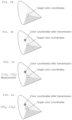
- FIG. 2 illustrates color coordinate conversion of the light source 60.
- the light source 60 when the light source 60 emits light, the light may pass through the transparent base panel 10 and then pass through the outer paint layer 20 which is a half paint layer having a color (e.g., a paint layer with half-transparency or semitransparency), such that the light passing through the base panel 10 and the outer paint layer 20 can have the color of the half paint layer.
- a half paint layer having a color e.g., a paint layer with half-transparency or semitransparency
- the color of the outer paint layer 20 may be identical to the color of an outer paint layer 20 of a vehicle component panel adjacent to the vehicle light 100 of the vehicle, and the thickness may be identical.
- the outer paint layer 20 may have the same color as that of a vehicle component panel adjacent to the vehicle light 100 of the vehicle when the light source 60 is not turned on such that the vehicle light 100 becomes a part of the exterior of the vehicle.
- a vehicle design element may improve the aesthetic appearance of the vehicle and may emit light (main role of light 100) when the light source 60 is turned on.
- the base panel 10 may have the same material and thickness as those of a base panel 10 of a vehicle component panel adjacent to the vehicle light 100.
- the outer surface of the outer paint layer 20 may constitute a common surface at the same height with the outer surface of an outer paint layer 20 of the vehicle component panel adjacent to the vehicle light 100.
- the base panel may be formed to extend with the same material and the same thickness as those of a vehicle component panel adjacent to the vehicle light 100, and the outer paint layer 20 may extend with same material and the same thickness as those of the vehicle component panel adjacent to the vehicle light 100, thereby being integrated with the vehicle component panel adjacent to the vehicle light 100 when the light source 60 is not turned on.
- the light source 60 is turned on, only the vehicle light 100 part may emit light such that the vehicle light 100 is recognized.
- the inner paint layer 30 is provided on the inner surface of the base panel 10 with regard to the vehicle light 100, a light-transmitting hole 31 being formed in the inner paint layer 30 such that light from the light source 60 is transmitted to the outside through the base panel 10. Accordingly, light emitted by the light source 60 may be transmitted only through the portion in which the light-transmitting hole 31 is positioned. In addition, multiple light-transmitting holes 31 may be formed and disposed in positions desired by the designer.
- the inner paint layer 30 may be a black primer layer such that, except for the light-transmitting holes 31, light from the light source 60 does not directly reach the base panel 10.
- the designer may configure the light-transmitting holes 31 in a desired shape such that light emitted by the light source 60 is emitted to the outside after being transmitted in the shape of the light-transmitting holes 31.
- the inner paint layer 30 may be a black primer layer such that light does not pass therethrough. Light from the light source 60 may pass through the light-transmitting holes 31 formed through the inner paint layer 30 and may directly reach the base panel 10. After reaching the base panel 10, the light may successively pass through the base panel 10 and the outer paint layer 20, thereby being emitted to the outside of the vehicle.
- a clear coating layer 40 may be additionally disposed on the surface of the outer paint layer 20.
- the clear coating layer 40 may be a thin layer applied to the outer surface of the outer paint layer 20 to protect the outer surface thereof such that light, the color of which is changed after passing through the outer paint layer 20, can be transmitted to the outside with no change.
- the clear coating layer 40 may be continuously applied to the vehicle light 100 and to a vehicle component adjacent to the vehicle light 100 as illustrated in FIG. 1 so as to improve the integrity between the vehicle light 100 and to the vehicle component adjacent to the vehicle light 100.
- the vehicle light 100 and to the vehicle component adjacent to the vehicle light 100 appear integrated, and when the vehicle light 100 is turned on, only the vehicle light 100 may emit light.
- FIG. 3 illustrates a vehicle light 100.
- FIG. 4 is a side sectional view of FIG. 3 .
- a vehicle light 100 will now be described with reference to FIG. 1 to FIG. 4 .
- a vehicle light 100 includes: a light lens 1 including a base panel 10 made of a transparent material, an outer paint layer 20 provided on the outer surface of the base panel 10, and an inner paint layer 30 provided on the inner surface of the base panel 10, a light-transmitting hole 31 being formed in the inner paint layer 30; and a light source 60 installed to be spaced apart from the light lens 1. Light from the light source 60 may be transmitted to the outside of the light lens 1 through the light-transmitting hole 31 and the base panel 10.
- the vehicle light 100 includes a vehicle light lens 1 and a light source 60 disposed to be spaced apart from the inside of the light lens 1, and may further include a barrier 50 extending from the inside of the lens toward the light source 60 so as to distinguish between the vehicle light 100 and an adjacent vehicle component panel inside the vehicle.
- the barrier 50 may be configured such that light from the light source 60 is emitted only toward the lens inside the vehicle light 100, thereby increasing the efficiency of light.
- Light emitted from the light source 60 may undergo a color coordinate change while passing through the outer paint layer 20 formed as a half paint layer, and may then be transmitted to the outside of the vehicle light 100.
- the light emitted from the existing light source 60 may undergo a color coordinate change and may then be transmitted to the outside.
- the light source 60 may be a color-changeable RGB LED such that various colors of light can be emitted. Light from the light source 60 may be emitted after a color coordinate change such that the same is exposed to the outside with target color coordinates set by the designer.
- the vehicle light 100 lens and the vehicle body panel may maintain the same color, and when turned on, light may be emitted with the target color.
- an additional light 100 for reflecting light from the light source 60 may be inserted.
- a vehicle light correction system for changing color coordinates of light from the light source 60 described above will now be described.
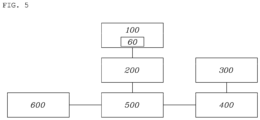
- FIG. 5 illustrates the configuration of a vehicle light correction system according to an embodiment of the present invention.
- FIG. 6 and FIG. 7 are flowcharts illustrating operations of the vehicle light correction system according to an example and an embodiment of the present invention.
- FIG. 8 illustrates additional correction by the vehicle light correction system according to an embodiment of the present invention.
- the vehicle light correction system includes: a light source controller 200 configured to control the light source 60 of the vehicle light 100; a memory 300 configured to store target color coordinates which are color coordinates of light to be implemented through the vehicle light 100; a measurement unit 400 configured to measure, while being outside the vehicle light 100, color coordinates of light emitted through the vehicle light 100; and a correction controller 500 configured to control the vehicle light 100 so as to generate light with target color coordinates through the light source controller 200, measure color coordinates of the vehicle light 100 through the measurement unit 400, and cause the light source controller 200 to perform color coordinate correction control of the light source 60 as much as the difference between the target color coordinates and the measured color coordinates.
- a light source controller 200 configured to control the light source 60 of the vehicle light 100
- a memory 300 configured to store target color coordinates which are color coordinates of light to be implemented through the vehicle light 100
- a measurement unit 400 configured to measure, while being outside the vehicle light 100, color coordinates of light emitted through the vehicle light 100
- a correction controller 500 configured to
- the light source 60 may be a color-changeable RGB LED, and the light source controller 200 may control the color of the RGB LED to change.
- FIG. 6 illustrates the first embodiment of the vehicle light correction system according to an example useful for understanding the invention.
- color coordinates of light from the light source 60 which is emitted after passing through a specimen formed with the same color as the outer paint layer 20, may be identified, and the measurement unit 400 measures the color coordinates of the light (S10).
- Color coordinates of light from the light source 60, measured by the measurement unit 400 after passing through the specimen, is stored in the memory 300.
- the memory 300 stores target color coordinates, which are color coordinates of light to be implemented through the vehicle light 100 (S11).
- the correction controller 500 may be connected to the memory 300 so as to calculate the amount of correction ( ⁇ Cx, ⁇ Cy) between the target color coordinates and the color coordinates of light that has passed through the specimen (S12), and causes the light source controller 200 to perform color coordinate correction control of the light source 60 on the basis of the calculated amount of correction ( ⁇ Cx, ⁇ Cy) (S13).
- such control may turn on the light source 60, which then emits light.
- the light When passing through the light lens 1, the light may be emitted with the target color coordinates.
- the correction controller 500 may control the light source controller 200 in connection with an actual product such that, when the light source 60 emits light, the measurement unit 400 measures the emitted light reaching the target color coordinates, and the correction controller 500 may confirm whether the measured color coordinates satisfy the target color coordinates (S14).
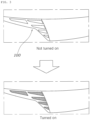
- parts 1 and 4 (right-diagonal shading) of the vehicle light 100 fail to satisfy the target color coordinates.
- An external factor such as the thickness of paint of the outer paint layer 20, causes such a problem in that light that has passed through the light lens 1 fails to satisfy the target color coordinates.
- additional correction of an additional light source 60 may proceed as follow:
- the correction controller 500 may derive the difference value between the target color coordinates and the measured color coordinates.
- the light source controller 200 may then cause the light source 60 to emit light, the color coordinates of which are changed as much as the color coordinates difference value, such that the color coordinates of light measured by the measurement unit 400 reach the target color coordinates.
- the measurement unit 400 additionally measures color coordinates of light emitted by the vehicle light 100, which requires additional correction (S15).
- the correction controller 500 calculates the amount of additional correction ( ⁇ Cx', ⁇ Cy') for correcting the measured color coordinates to the target color coordinates, and controls the light source controller 200 on the basis of the amount of additional correction ( ⁇ Cx', ⁇ Cy') (S16).
- the amount of additional correction ( ⁇ Cx', ⁇ Cy') may be identified as illustrated in FIG. 2D .
- a diagnosis unit 600 for measuring the paint thickness of the outer paint layer 20 is further included.
- the correction controller 500 calculates the amount of additional correction ( ⁇ Cx', ⁇ Cy') on the basis of the difference between the paint thickness detected by the diagnosis unit 600 and a reference thickness, and causes the light source controller 200 to perform color coordinate correction control of the light source 60 so as to reflect the amount of additional correction ( ⁇ Cx', ⁇ Cy').
- the diagnosis unit 600 measures the paint thickness of the outer paint layer 20 disposed on the vehicle light 100, which requires additional correction (S17).
- the correction controller 500 calculates the amount of additional correction ( ⁇ Cx', ⁇ Cy') for correction to the target color coordinates on the basis of the measured paint thickness, and controls the light source controller 200 on the basis of the amount of additional correction ( ⁇ Cx', ⁇ Cy') (S18).
- the correction controller 500 may control the light source controller 200 such that, if the paint thickness is larger than the preset value, further correction is made as much as the inclination of the existing amount of correction ( ⁇ Cx, ⁇ Cy) and, if the paint thickness is smaller than the preset value, less correction is made as much as the inclination of the existing amount of correction ( ⁇ Cx, ⁇ Cy) .
- Such control of the color of the light source 60 is advantageous in that color coordinates of light from the light source, which are changed after passing through the outer paint layer 20, are controlled to reach the target color coordinates, thereby observing regulations regarding the vehicle light color.
- the above system may be executed in an automated manner without operators' intervention.
Landscapes
- Engineering & Computer Science (AREA)
- General Engineering & Computer Science (AREA)
- Physics & Mathematics (AREA)
- Optics & Photonics (AREA)
- Microelectronics & Electronic Packaging (AREA)
- Spectroscopy & Molecular Physics (AREA)
- Mechanical Engineering (AREA)
- General Physics & Mathematics (AREA)
- Non-Portable Lighting Devices Or Systems Thereof (AREA)
- Lighting Device Outwards From Vehicle And Optical Signal (AREA)
Description
- The present invention relates to a correction system of a vehicle light.
- In general, vehicles have lighting devices for the purpose of illuminating objects in the traveling direction during nighttime driving, and lighting devices for the purpose of making the driving status of the vehicles recognized by other vehicles or road users. Headlights (also referred to as headlamps) are lighting devices for illuminating the front path in the vehicle traveling direction.
- Such lamps are classified into headlamps, fog lamps, turn signals, brake lamps, and reverse lamps, which emit light in different directions with regard to the road, respectively.
- Such vehicle lamps provide identification of objects by emitting light forwards from lightbulbs, and have recently light guides applied thereto to improve the exterior design such that light is emitted with specific images.
- However, vehicle lamps are limited to conventional colors, and have design-related restrictions.
-
WO 2020/126944 A1 describes a motor-vehicle bodywork element comprising a bodywork part formed from a semi-opaque material, behind which is placed a light source. -
US 2015/0291085 A1 describes a vehicle body panel including a curved translucent panel having an interior surface and an exterior surface, a color layer disposed on at least a portion of the exterior surface, a blocking layer positioned between at least a portion of the color layer and the panel, and a light source attached to the interior surface. -
DE 10 2018 211457 A1 describes an exterior component produced using a method for producing an exterior component, comprising the steps of: a) producing a base body from a transparent or translucent plastic material, the base body having the shape of the exterior component and an outer surface, which forms the visible side of the exterior component, b) forming an opaque coating by applying a first coating material on an inner surface of the base body facing away from the outer surface, c) forming a structured area in the coating that is free of coating material or in which the thickness of the coating material is reduced, d) applying a second coating material to form a translucent closed coating layer over the outer surface of the base body, and e) applying a clear lacquer on the coating layer to form a closed clear lacquer layer. -
US 8 113 695 B2 describes a component of an actuatable apparatus having a substrate, a selectively light-transmissive opaque covering, and an illumination source. -
EP 3 623 227 A1 describes a body element of a motor vehicle comprising a wall formed of a transparent material, behind which a light source is arranged, an external face of the wall being coated with a semi-transparent colored coating, the external face having, when the light source is switched off, first predetermined trichromatic components.WO2021236673A1 discloses an automobile rear lighting where the driving apparatus adapts the magnitude of the driving current based on properties of the cover, such as the material or the thickness of the cover, and the pre-defined color coordinates specification for the output light, thus achieving a certain color appearance in rear lighting as a styling target. It provides a method during the manufacturing process for adapting the light emitters to different boundary conditions so as to ease the manufacturing process. - The above descriptions regarding background technologies have been made only to help understanding of the background of the present invention.
- The present invention has been proposed in order to solve the above-mentioned problems, and it is an aspect of the present invention to provide a correction system of a vehicle light, such that when the vehicle light is not turned on, the same forms the same color with the body of the vehicle and, when turned on, the light can emit light to the outside with target color coordinates set by the designer.
- The invention is set out in the appended set of claims.
- A vehicle light lens includes: a base panel made of a transparent material and having a panel shape so as to constitute a lens of a vehicle light; an outer paint layer disposed on an outer surface of the base panel with regard to the vehicle light; and an inner paint layer disposed on an inner surface of the base panel with regard to the vehicle light and including a light-transmitting hole formed therein such that light from a light source is transmitted outwards through the base panel.
- The vehicle light lens may further include a clear coating layer disposed on a surface of the outer paint layer.
- The outer paint layer may be a half paint layer having a color so as to transmit the light from the light source at a predetermined ratio.
- Light from the light source may be transmitted out of the vehicle light after a color coordinate change through the outer paint layer.
- The outer paint layer may have an identical color as a vehicle component panel adjacent to the vehicle light.
- The light-transmitting hole may be formed to penetrate the inner paint layer such that light from the light source directly reaches the base panel.
- The inner paint layer may be a black primer layer configured to prevent light from the light source from directly reaching the base panel, except for the light-transmitting hole.
- The base panel may have an identical material and an identical thickness as a base panel of a vehicle component panel adjacent to the vehicle light.
- The outer paint layer may have an identical color and an identical thickness as an outer paint layer of a vehicle component panel adjacent to the vehicle light.
- The outer paint layer may have an outer surface that constitutes a common surface at an identical height with an outer surface of an outer paint layer of a vehicle component panel adjacent to the vehicle light.
- A vehicle light includes: a light lens including a base panel made of a transparent plastic material, an outer paint layer disposed on an outer surface of the base panel, and an inner paint layer disposed on an inner surface of the base panel and including a light-transmitting hole formed therein; and a light source installed to be spaced apart from the light lens, in which light from the light source is transmitted out of the light lens through the light-transmitting hole and the base panel.
- A vehicle light correction system according to the present invention includes: a light source controller configured to control the light source of the vehicle light; a memory configured to store target color coordinates which are color coordinates of light to be implemented through the vehicle light; a measurement unit disposed outside the vehicle light and configured to measure color coordinates of light emitted through the vehicle light; and a correction controller configured to control the vehicle light to generate light having target color coordinates through the light source controller, to measure color coordinates of the vehicle light through the measurement unit, and to cause the light source controller to perform color coordinate correction control of the light source as much as a difference value between the target color coordinates and the measured color coordinates.
- The correction controller may derive the difference value between the target color coordinates and the measured color coordinates, and the light source controller may cause the light source to emit light after changing color coordinates as much as the difference value such that color coordinates of light measured by the measurement unit reach the target color coordinates.
- The system includes a diagnosis unit configured to measure a paint thickness of the outer paint layer, in which the correction controller calculates an amount of additional correction through a difference between the paint thickness measured by the diagnosis unit and a reference thickness, and causes the light source controller to perform color coordinate correction control of the light source so as to reflect the amount of additional correction.
- A vehicle light lens, a vehicle light, and a correction thereof, according to the present invention, are advantageous in that, when the vehicle light is not turned on, the outer paint layer of the light lens is formed with the same color as the body of the vehicle, and there is no level difference between the light lens and an outer panel of the vehicle such that the vehicle exterior looks as if the vehicle body and the vehicle light were integrated, thereby improving the exterior appearance of the vehicle and improving the product value of the vehicle.
- In addition, the color of the light source is controlled such that color coordinates of light from the light source, which are changed after passing through the outer paint layer, are controlled to reach target color coordinates, thereby observing regulations regarding the vehicle light color.
- In addition, the light source is made of an RGB LED such that, by controlling the color of light from the light source, color coordinates of light emitted to the outside can reach target color coordinates by using existing paint and equipment, without a separate additional component.
- The above and other aspects, features, and advantages of the present invention will be more apparent from the following detailed description taken in conjunction with the accompanying drawings, in which:
-
FIG. 1 is a sectional view of a vehicle light; -
FIGS. 2A, 2B, 2C and 2D illustrate color coordinate conversion of a light source; -
FIG. 3 illustrates a vehicle light; -
FIG. 4 is a side sectional view ofFIG. 3 ; -
FIG. 5 illustrates the configuration of a vehicle light correction system according to an embodiment of the present invention; -
FIG. 6 andFIG. 7 are flowcharts illustrating operation of a vehicle light correction system according to an example and an embodiment of the present invention; and -
FIG. 8 illustrates additional correction by a vehicle light correction system according to an embodiment of the present invention. - Hereinafter, embodiments disclosed in the present specification will be described in detail with reference to the accompanying drawings, and the same or similar elements are given the same and similar reference numerals, so duplicate descriptions thereof will be omitted.
- The terms "module" and "unit" used for the elements in the following description are given or interchangeably used in consideration of only the ease of writing the specification, and do not have distinct meanings or roles by themselves.
- In describing the embodiments disclosed in the present specification, when the detailed description of the relevant known technology is determined to unnecessarily obscure the present invention, the detailed description may be omitted. Further, the accompanying drawings are provided only for easy understanding of the embodiments disclosed in the present invention, and it should be understood that all changes or substitutes thereof are included in the scope of the present invention.
- Terms including an ordinal number such as "first", "second", or the like may be used to describe various elements, but the elements are not limited to the terms. The above terms are used only for the purpose of distinguishing one element from another element.
- In the case where an element is referred to as being "connected" or "coupled" to any other element, it should be understood that another element may be provided therebetween, as well as that the element may be directly connected or coupled to the other element. In contrast, in the case where an element is "directly connected" or "directly coupled" to any other element, it should be understood that no other element is present therebetween.
- A singular expression may include a plural expression unless they are definitely different in the context.
- As used herein, the expression "include" or "have" are intended to specify the existence of mentioned features, numbers, steps, operations, elements, components, or combinations thereof, and should be construed as not precluding the possible existence or addition of one or more other features, numbers, steps, operations, elements, components, or combinations thereof.
- A controller may include a communication device that communicates with other controllers or sensors in order to control functions in charge, a memory that stores an operating system or logic instructions, input/output information, and the like, and one or more processors that perform determinations, computations, decisions, and the like.
-
FIG. 1 is a sectional view of avehicle light 100. - An exemplary embodiment of a
vehicle light lens 1 will now be described with reference toFIG. 1 . - The
vehicle light lens 1 may include multiple lenses as illustrated inFIG. 1 , and details of the multiple lenses will be described later. - A
vehicle light lens 1 according to an embodiment of the present invention includes: abase panel 10 made of a transparent material and configured in a panel shape so as to constitute the lens of thevehicle light 100; anouter paint layer 20 provided on the outer surface of thebase panel 10 with regard to thevehicle light 100; and aninner paint layer 30 provided on the inner surface of thebase panel 10 with regard to thevehicle light 100, a light-transmittinghole 31 being formed in theinner paint layer 30 such that light from alight source 60 is transmitted to the outside through thebase panel 10. - The
base panel 10 may be formed to extend from a bumper portion and made of a transparent plastic material having an excellent optical transmittance. Accordingly, thebase panel 10 may protect thelight source 60 disposed in thevehicle light 100 while transmitting light. - The
outer paint layer 20 may be disposed on the outside of thebase panel 10 such that, when thelight source 60 disposed in thevehicle light 100 is turned on, light is transmitted to the outside through the base panel and theouter paint layer 20. - The
outer paint layer 20 may be a half-paint layer having a color so as to transmit light from thelight source 60 at a predetermined ratio. -
FIG. 2 illustrates color coordinate conversion of thelight source 60. - As illustrated in
FIG. 2A , when thelight source 60 emits light, the light may pass through thetransparent base panel 10 and then pass through theouter paint layer 20 which is a half paint layer having a color (e.g., a paint layer with half-transparency or semitransparency), such that the light passing through thebase panel 10 and theouter paint layer 20 can have the color of the half paint layer. - In addition, the color of the
outer paint layer 20 may be identical to the color of anouter paint layer 20 of a vehicle component panel adjacent to thevehicle light 100 of the vehicle, and the thickness may be identical. - As illustrated in
FIG. 1 , theouter paint layer 20 may have the same color as that of a vehicle component panel adjacent to thevehicle light 100 of the vehicle when thelight source 60 is not turned on such that thevehicle light 100 becomes a part of the exterior of the vehicle. Such a vehicle design element may improve the aesthetic appearance of the vehicle and may emit light (main role of light 100) when thelight source 60 is turned on. - The
base panel 10 may have the same material and thickness as those of abase panel 10 of a vehicle component panel adjacent to thevehicle light 100. The outer surface of theouter paint layer 20 may constitute a common surface at the same height with the outer surface of anouter paint layer 20 of the vehicle component panel adjacent to thevehicle light 100. - As illustrated in
FIG. 1 , the base panel may be formed to extend with the same material and the same thickness as those of a vehicle component panel adjacent to thevehicle light 100, and theouter paint layer 20 may extend with same material and the same thickness as those of the vehicle component panel adjacent to thevehicle light 100, thereby being integrated with the vehicle component panel adjacent to thevehicle light 100 when thelight source 60 is not turned on. When thelight source 60 is turned on, only thevehicle light 100 part may emit light such that thevehicle light 100 is recognized. - As illustrated in
FIG. 1 , theinner paint layer 30 is provided on the inner surface of thebase panel 10 with regard to thevehicle light 100, a light-transmittinghole 31 being formed in theinner paint layer 30 such that light from thelight source 60 is transmitted to the outside through thebase panel 10. Accordingly, light emitted by thelight source 60 may be transmitted only through the portion in which the light-transmittinghole 31 is positioned. In addition, multiple light-transmittingholes 31 may be formed and disposed in positions desired by the designer. - The
inner paint layer 30 may be a black primer layer such that, except for the light-transmittingholes 31, light from thelight source 60 does not directly reach thebase panel 10. - As a result, light emitted by the
light source 60 is transmitted only through the light-transmittingholes 31, and parts other than the light-transmittingholes 31 prevent light from thelight source 60 from being emitted to the outside. Therefore, the designer may configure the light-transmittingholes 31 in a desired shape such that light emitted by thelight source 60 is emitted to the outside after being transmitted in the shape of the light-transmittingholes 31. - The
inner paint layer 30 may be a black primer layer such that light does not pass therethrough. Light from thelight source 60 may pass through the light-transmittingholes 31 formed through theinner paint layer 30 and may directly reach thebase panel 10. After reaching thebase panel 10, the light may successively pass through thebase panel 10 and theouter paint layer 20, thereby being emitted to the outside of the vehicle. - A
clear coating layer 40 may be additionally disposed on the surface of theouter paint layer 20. - The
clear coating layer 40 may be a thin layer applied to the outer surface of theouter paint layer 20 to protect the outer surface thereof such that light, the color of which is changed after passing through theouter paint layer 20, can be transmitted to the outside with no change. - The
clear coating layer 40 may be continuously applied to thevehicle light 100 and to a vehicle component adjacent to thevehicle light 100 as illustrated inFIG. 1 so as to improve the integrity between thevehicle light 100 and to the vehicle component adjacent to thevehicle light 100. - Accordingly, when the
vehicle light 100 is not turned on, thevehicle light 100 and to the vehicle component adjacent to thevehicle light 100 appear integrated, and when thevehicle light 100 is turned on, only thevehicle light 100 may emit light. -
FIG. 3 illustrates avehicle light 100.FIG. 4 is a side sectional view ofFIG. 3 . - A
vehicle light 100 will now be described with reference toFIG. 1 to FIG. 4 . - A
vehicle light 100 includes: alight lens 1 including abase panel 10 made of a transparent material, anouter paint layer 20 provided on the outer surface of thebase panel 10, and aninner paint layer 30 provided on the inner surface of thebase panel 10, a light-transmittinghole 31 being formed in theinner paint layer 30; and alight source 60 installed to be spaced apart from thelight lens 1. Light from thelight source 60 may be transmitted to the outside of thelight lens 1 through the light-transmittinghole 31 and thebase panel 10. - As illustrated in
FIG. 1 , thevehicle light 100 includes avehicle light lens 1 and alight source 60 disposed to be spaced apart from the inside of thelight lens 1, and may further include abarrier 50 extending from the inside of the lens toward thelight source 60 so as to distinguish between thevehicle light 100 and an adjacent vehicle component panel inside the vehicle. - The
barrier 50 may be configured such that light from thelight source 60 is emitted only toward the lens inside thevehicle light 100, thereby increasing the efficiency of light. - Light emitted from the
light source 60 may undergo a color coordinate change while passing through theouter paint layer 20 formed as a half paint layer, and may then be transmitted to the outside of thevehicle light 100. - As illustrated in
FIG. 2B , when light is emitted by thelight source 60 and passes through thebase panel 10 and theouter paint layer 20, the light emitted from the existinglight source 60 may undergo a color coordinate change and may then be transmitted to the outside. - The
light source 60 may be a color-changeable RGB LED such that various colors of light can be emitted. Light from thelight source 60 may be emitted after a color coordinate change such that the same is exposed to the outside with target color coordinates set by the designer. - As illustrated in
FIG. 3 , when thelight source 60 is not turned on, thevehicle light 100 lens and the vehicle body panel may maintain the same color, and when turned on, light may be emitted with the target color. - As illustrated in
FIG. 4 , in an embodiment of thevehicle light 100, anadditional light 100 for reflecting light from thelight source 60 may be inserted. - A vehicle light correction system for changing color coordinates of light from the
light source 60 described above will now be described. -
FIG. 5 illustrates the configuration of a vehicle light correction system according to an embodiment of the present invention.FIG. 6 andFIG. 7 are flowcharts illustrating operations of the vehicle light correction system according to an example and an embodiment of the present invention.FIG. 8 illustrates additional correction by the vehicle light correction system according to an embodiment of the present invention. - An exemplary embodiment of the vehicle light correction system according to the present invention will now be described with reference to
FIG. 2 to FIG. 8 . - As illustrated in
FIG. 5 , the vehicle light correction system according to the present invention includes: alight source controller 200 configured to control thelight source 60 of thevehicle light 100; amemory 300 configured to store target color coordinates which are color coordinates of light to be implemented through thevehicle light 100; ameasurement unit 400 configured to measure, while being outside thevehicle light 100, color coordinates of light emitted through thevehicle light 100; and acorrection controller 500 configured to control thevehicle light 100 so as to generate light with target color coordinates through thelight source controller 200, measure color coordinates of thevehicle light 100 through themeasurement unit 400, and cause thelight source controller 200 to perform color coordinate correction control of thelight source 60 as much as the difference between the target color coordinates and the measured color coordinates. - The
light source 60 may be a color-changeable RGB LED, and thelight source controller 200 may control the color of the RGB LED to change. -
FIG. 6 illustrates the first embodiment of the vehicle light correction system according to an example useful for understanding the invention. - As illustrated in
FIG. 2C , color coordinates of light from thelight source 60, which is emitted after passing through a specimen formed with the same color as theouter paint layer 20, may be identified, and themeasurement unit 400 measures the color coordinates of the light (S10). - Color coordinates of light from the
light source 60, measured by themeasurement unit 400 after passing through the specimen, is stored in thememory 300. Thememory 300 stores target color coordinates, which are color coordinates of light to be implemented through the vehicle light 100 (S11). - The
correction controller 500 may be connected to thememory 300 so as to calculate the amount of correction (±ΔCx, ΔCy) between the target color coordinates and the color coordinates of light that has passed through the specimen (S12), and causes thelight source controller 200 to perform color coordinate correction control of thelight source 60 on the basis of the calculated amount of correction (±ΔCx, ΔCy) (S13). - As illustrated in
FIG. 3 , such control may turn on thelight source 60, which then emits light. When passing through thelight lens 1, the light may be emitted with the target color coordinates. - The
correction controller 500 may control thelight source controller 200 in connection with an actual product such that, when thelight source 60 emits light, themeasurement unit 400 measures the emitted light reaching the target color coordinates, and thecorrection controller 500 may confirm whether the measured color coordinates satisfy the target color coordinates (S14). - As illustrated on the left in
FIG. 8 , it may be confirmed thatparts ① and ④ (right-diagonal shading) of thevehicle light 100 fail to satisfy the target color coordinates. - An external factor, such as the thickness of paint of the
outer paint layer 20, causes such a problem in that light that has passed through thelight lens 1 fails to satisfy the target color coordinates. - In order to solve such a problem, additional correction of an additional
light source 60 may proceed as follow:
In the first embodiment of additional correction of thelight source 60, referring toFIG. 6 , thecorrection controller 500 may derive the difference value between the target color coordinates and the measured color coordinates. Thelight source controller 200 may then cause thelight source 60 to emit light, the color coordinates of which are changed as much as the color coordinates difference value, such that the color coordinates of light measured by themeasurement unit 400 reach the target color coordinates. - The
measurement unit 400 additionally measures color coordinates of light emitted by thevehicle light 100, which requires additional correction (S15). Thecorrection controller 500 calculates the amount of additional correction (±ΔCx', ΔCy') for correcting the measured color coordinates to the target color coordinates, and controls thelight source controller 200 on the basis of the amount of additional correction (±ΔCx', ΔCy') (S16). - The amount of additional correction (±ΔCx', ΔCy') may be identified as illustrated in
FIG. 2D . - In the second embodiment of additional correction of the
light source 60, referring toFIG. 7 , adiagnosis unit 600 for measuring the paint thickness of theouter paint layer 20 is further included. Thecorrection controller 500 calculates the amount of additional correction (±ΔCx', ΔCy') on the basis of the difference between the paint thickness detected by thediagnosis unit 600 and a reference thickness, and causes thelight source controller 200 to perform color coordinate correction control of thelight source 60 so as to reflect the amount of additional correction (±ΔCx', ΔCy'). - The
diagnosis unit 600 measures the paint thickness of theouter paint layer 20 disposed on thevehicle light 100, which requires additional correction (S17). Thecorrection controller 500 calculates the amount of additional correction (±ΔCx', ΔCy') for correction to the target color coordinates on the basis of the measured paint thickness, and controls thelight source controller 200 on the basis of the amount of additional correction (±ΔCx', ΔCy') (S18). - The
correction controller 500 may control thelight source controller 200 such that, if the paint thickness is larger than the preset value, further correction is made as much as the inclination of the existing amount of correction (±ΔCx, ΔCy) and, if the paint thickness is smaller than the preset value, less correction is made as much as the inclination of the existing amount of correction (±ΔCx, ΔCy) . - Such control of the color of the
light source 60 is advantageous in that color coordinates of light from the light source, which are changed after passing through theouter paint layer 20, are controlled to reach the target color coordinates, thereby observing regulations regarding the vehicle light color. - The above system may be executed in an automated manner without operators' intervention.
- Although the present invention has been described and illustrated in conjunction with particular embodiments thereof, it will be apparent to those skilled in the art that various improvements and modifications may be made to the present invention without departing from the scope of the present invention defined by the appended claims.
Claims (12)
- A system for correcting a vehicle light (100) comprising a light lens (1) including a base panel (10) made of a transparent plastic material, an outer paint layer (20) disposed on an outer surface of the base panel (10), and an inner paint layer (30) disposed on an inner surface of the base panel (10) and having a light-transmitting hole (31) formed therein; and a light source (60) installed to be spaced apart from the light lens (1), the system comprising:a light source controller (200) configured to control the light source (60) of the vehicle light (100);a memory (300) configured to store target color coordinates which are color coordinates of light to be implemented through the vehicle light (100);a measurement unit (400) disposed outside the vehicle light (100) and configured to measure color coordinates of light emitted through the vehicle light (100);a correction controller (500) configured to control the vehicle light (100) to generate light having the target color coordinates through the light source controller (200), to measure color coordinates of the vehicle light (100) through the measurement unit (400), and to cause the light source controller (200) to perform color coordinate correction control of the light source (60) as much as a difference value between the target color coordinates and the measured color coordinates of the vehicle light (100); anda diagnosis unit (600) configured to measure a paint thickness of the outer paint layer (20),wherein the correction controller (500) is configured to calculate an amount of additional correction through a difference between the paint thickness measured by the diagnosis unit (600) and a reference thickness, and to cause the light source controller (200) to perform the color coordinate correction control of the light source (60) so as to reflect the amount of additional correction.
- The system of claim 1, wherein the correction controller (500) is configured to derive the difference value between the target color coordinates and the measured color coordinates, and
the light source controller (200) is configured to cause the light source (60) to emit light after changing color coordinates as much as the difference value such that color coordinates of light measured by the measurement unit (400) reach the target color coordinates. - The system of claim 1, wherein the light lens (1) further comprises a clear coating layer (40) disposed on a surface of the outer paint layer (20).
- The system of claim 1, wherein the outer paint layer (20) is a half paint layer having a color so as to transmit the light from the light source (60) at a predetermined ratio.
- The system of claim 4, wherein the outer paint layer (20) has an identical color as a vehicle component panel adjacent to the vehicle light (100).
- The system of claim 4, wherein the outer paint layer (20) is formed with an identical color as a vehicle component panel adjacent to the vehicle light (100) such that the vehicle light (100) becomes a part of a vehicle exterior when the light source (60) is not turned on and the vehicle light (100) emits light having target color coordinates when the light source (60) is turned on.
- The system of claim 1, wherein the light-transmitting hole (31) is formed to penetrate the inner paint layer (30) such that the light from the light source (60) directly reaches the base panel (10).
- The system of claim 1, wherein the inner paint layer (30) is a black primer layer configured to prevent the light from the light source (60) from directly reaching the base panel (10), except for the light-transmitting hole (31).
- The system of claim 1, wherein the base panel (10) has an identical material and an identical thickness as a base panel (10) of a vehicle component panel adjacent to the vehicle light (100).
- The system of claim 1, wherein the outer paint layer (20) has an identical color and an identical thickness as an outer paint layer (20) of a vehicle component panel adjacent to the vehicle light (100) .
- The system of claim 1, wherein the outer paint layer (20) has an outer surface that constitutes a common surface at an identical height with an outer surface of an outer paint layer (20) of a vehicle component panel adjacent to the vehicle light (100).
- The system of claim 1, wherein the light from the light source (60) is transmitted out of the vehicle light (100) after a color coordinate change through the outer paint layer (20).
Applications Claiming Priority (1)
| Application Number | Priority Date | Filing Date | Title |
|---|---|---|---|
| KR1020220132526A KR20240052457A (en) | 2022-10-14 | 2022-10-14 | Light lens of vehicle, light of vehicle, and its correction system |
Publications (2)
| Publication Number | Publication Date |
|---|---|
| EP4354018A1 EP4354018A1 (en) | 2024-04-17 |
| EP4354018B1 true EP4354018B1 (en) | 2025-06-04 |
Family
ID=87553556
Family Applications (1)
| Application Number | Title | Priority Date | Filing Date |
|---|---|---|---|
| EP23188887.6A Active EP4354018B1 (en) | 2022-10-14 | 2023-08-01 | Vehicle light lens, vehicle light, and correction system thereof |
Country Status (6)
| Country | Link |
|---|---|
| US (1) | US12241604B2 (en) |
| EP (1) | EP4354018B1 (en) |
| JP (1) | JP2024058574A (en) |
| KR (1) | KR20240052457A (en) |
| CN (1) | CN117889392A (en) |
| ES (1) | ES3037834T3 (en) |
Families Citing this family (1)
| Publication number | Priority date | Publication date | Assignee | Title |
|---|---|---|---|---|
| WO2025211171A1 (en) | 2024-04-01 | 2025-10-09 | 住友ベークライト株式会社 | Tablet-shaped epoxy resin molding material, columnar tablet, and method for producing columnar tablet |
Citations (1)
| Publication number | Priority date | Publication date | Assignee | Title |
|---|---|---|---|---|
| WO2021236673A1 (en) * | 2020-05-18 | 2021-11-25 | Lumileds Llc | Adapting drive current for emitters based on characteristics of a cover |
Family Cites Families (16)
| Publication number | Priority date | Publication date | Assignee | Title |
|---|---|---|---|---|
| US8113695B2 (en) | 2005-02-04 | 2012-02-14 | Adac Plastics, Inc. | Trim component with concealed indicium |
| FR2886375A1 (en) | 2005-05-27 | 2006-12-01 | Valeo Vision Sa | Motor vehicle indicator lamp has variable colour provided by two transparent coloured filters that interact to give a predetermined light colour |
| PL3051586T3 (en) * | 2007-10-09 | 2018-08-31 | Philips Lighting North America Corporation | Integrated led-based luminaire for general lighting |
| JP5594604B2 (en) | 2011-03-31 | 2014-09-24 | 株式会社オーテックジャパン | Exterior parts structure |
| US20150291085A1 (en) * | 2014-04-10 | 2015-10-15 | Kerry Manning | Illuminated translucent body panels and methods therefor |
| GB2552996A (en) * | 2016-08-19 | 2018-02-21 | Gsm Automotive Ltd | Illuminated panel assembly |
| DE102018211457A1 (en) | 2018-07-11 | 2020-01-16 | Bayerische Motoren Werke Aktiengesellschaft | Process for manufacturing an exterior component and exterior component |
| FR3085904B1 (en) | 2018-09-14 | 2021-05-14 | Plastic Omnium Cie | HIGH CONTRAST BACKLIT BODY ELEMENT |
| FR3089904B1 (en) | 2018-12-17 | 2020-12-18 | Plastic Omnium Cie | Backlit body part |
| JP2021005496A (en) | 2019-06-26 | 2021-01-14 | 株式会社小糸製作所 | Vehicular lighting fixture |
| FR3102692B1 (en) | 2019-11-04 | 2021-11-12 | Cie Plastic Omnium Se | Manufacturing process of a transparent vehicle part |
| FR3105354B1 (en) | 2019-12-23 | 2022-01-07 | Flex N Gate France | Light device for vehicle |
| KR20210124722A (en) | 2020-04-07 | 2021-10-15 | 에스엘 주식회사 | Lamp for vehicle and lamp assembly including the same |
| KR102399480B1 (en) | 2020-05-08 | 2022-05-17 | 현대자동차주식회사 | Hidden light apparatus |
| DE102022000054A1 (en) | 2021-01-08 | 2022-07-14 | Hyundai Mobis Co., Ltd. | Lighting device for a vehicle and method for its manufacture |
| KR102882487B1 (en) | 2021-03-12 | 2025-11-07 | 현대자동차주식회사 | Garnishless Type Hidden Lamp for Vehicle |
-
2022
- 2022-10-14 KR KR1020220132526A patent/KR20240052457A/en active Pending
-
2023
- 2023-07-25 US US18/225,869 patent/US12241604B2/en active Active
- 2023-07-28 JP JP2023123188A patent/JP2024058574A/en active Pending
- 2023-08-01 EP EP23188887.6A patent/EP4354018B1/en active Active
- 2023-08-01 ES ES23188887T patent/ES3037834T3/en active Active
- 2023-09-14 CN CN202311192743.9A patent/CN117889392A/en active Pending
Patent Citations (1)
| Publication number | Priority date | Publication date | Assignee | Title |
|---|---|---|---|---|
| WO2021236673A1 (en) * | 2020-05-18 | 2021-11-25 | Lumileds Llc | Adapting drive current for emitters based on characteristics of a cover |
Also Published As
| Publication number | Publication date |
|---|---|
| US20240125442A1 (en) | 2024-04-18 |
| JP2024058574A (en) | 2024-04-25 |
| EP4354018A1 (en) | 2024-04-17 |
| US12241604B2 (en) | 2025-03-04 |
| ES3037834T3 (en) | 2025-10-07 |
| CN117889392A (en) | 2024-04-16 |
| KR20240052457A (en) | 2024-04-23 |
Similar Documents
| Publication | Publication Date | Title |
|---|---|---|
| US11512830B2 (en) | Light emitting system, a design element, a rear view device, a covering device, and a body component of a vehicle | |
| EP3722661B1 (en) | Vehicular components having chromium-based reflective coating at least partially permeable to light | |
| US7753541B2 (en) | Motor vehicle | |
| US8783881B2 (en) | Display in the mirror glass and process for production | |
| US11060688B1 (en) | Hidden light apparatus for vehicle having a grille with grid and perforated grid panel | |
| US20150239390A1 (en) | Illuminated Emblem | |
| US11059416B1 (en) | Electrochromic adaptive driving beam system and method | |
| US10495282B2 (en) | Tail lamp assembly with optic illumination | |
| EP4354018B1 (en) | Vehicle light lens, vehicle light, and correction system thereof | |
| US10563838B2 (en) | Vehicular components having chromium-based reflective coating at least partially permeable to light | |
| US12539808B2 (en) | Vehicle exterior component and exterior structure of vehicle | |
| WO2016025837A1 (en) | Rearview mirror with selective reflection and method of manufacture | |
| US7077550B2 (en) | Automotive lamp with light transmissive colored member | |
| EP1440276B1 (en) | Automotive lamp | |
| JP7846994B2 (en) | monitoring device | |
| US10738961B1 (en) | Colored light assembly for an automotive vehicle | |
| KR20150084998A (en) | Illuminated vehicle interior component | |
| KR20210056635A (en) | Vehicle door handle with functional lamp | |
| JP2022060609A (en) | Vehicle lighting device | |
| KR101776814B1 (en) | Automotive lamp | |
| KR20230048802A (en) | Mood lighting device and method for vehicle |
Legal Events
| Date | Code | Title | Description |
|---|---|---|---|
| PUAI | Public reference made under article 153(3) epc to a published international application that has entered the european phase |
Free format text: ORIGINAL CODE: 0009012 |
|
| STAA | Information on the status of an ep patent application or granted ep patent |
Free format text: STATUS: THE APPLICATION HAS BEEN PUBLISHED |
|
| AK | Designated contracting states |
Kind code of ref document: A1 Designated state(s): AL AT BE BG CH CY CZ DE DK EE ES FI FR GB GR HR HU IE IS IT LI LT LU LV MC ME MK MT NL NO PL PT RO RS SE SI SK SM TR |
|
| STAA | Information on the status of an ep patent application or granted ep patent |
Free format text: STATUS: REQUEST FOR EXAMINATION WAS MADE |
|
| 17P | Request for examination filed |
Effective date: 20241015 |
|
| RBV | Designated contracting states (corrected) |
Designated state(s): AL AT BE BG CH CY CZ DE DK EE ES FI FR GB GR HR HU IE IS IT LI LT LU LV MC ME MK MT NL NO PL PT RO RS SE SI SK SM TR |
|
| GRAP | Despatch of communication of intention to grant a patent |
Free format text: ORIGINAL CODE: EPIDOSNIGR1 |
|
| STAA | Information on the status of an ep patent application or granted ep patent |
Free format text: STATUS: GRANT OF PATENT IS INTENDED |
|
| RIC1 | Information provided on ipc code assigned before grant |
Ipc: F21S 43/50 20180101ALI20241219BHEP Ipc: F21S 43/20 20180101ALI20241219BHEP Ipc: F21S 41/20 20180101AFI20241219BHEP |
|
| INTG | Intention to grant announced |
Effective date: 20250115 |
|
| P01 | Opt-out of the competence of the unified patent court (upc) registered |
Free format text: CASE NUMBER: APP_6273/2025 Effective date: 20250206 |
|
| GRAS | Grant fee paid |
Free format text: ORIGINAL CODE: EPIDOSNIGR3 |
|
| GRAA | (expected) grant |
Free format text: ORIGINAL CODE: 0009210 |
|
| STAA | Information on the status of an ep patent application or granted ep patent |
Free format text: STATUS: THE PATENT HAS BEEN GRANTED |
|
| AK | Designated contracting states |
Kind code of ref document: B1 Designated state(s): AL AT BE BG CH CY CZ DE DK EE ES FI FR GB GR HR HU IE IS IT LI LT LU LV MC ME MK MT NL NO PL PT RO RS SE SI SK SM TR |
|
| REG | Reference to a national code |
Ref country code: GB Ref legal event code: FG4D |
|
| REG | Reference to a national code |
Ref country code: CH Ref legal event code: EP |
|
| REG | Reference to a national code |
Ref country code: DE Ref legal event code: R096 Ref document number: 602023003804 Country of ref document: DE |
|
| REG | Reference to a national code |
Ref country code: IE Ref legal event code: FG4D |
|
| REG | Reference to a national code |
Ref country code: ES Ref legal event code: FG2A Ref document number: 3037834 Country of ref document: ES Kind code of ref document: T3 Effective date: 20251007 |
|
| REG | Reference to a national code |
Ref country code: NL Ref legal event code: MP Effective date: 20250604 |
|
| PG25 | Lapsed in a contracting state [announced via postgrant information from national office to epo] |
Ref country code: FI Free format text: LAPSE BECAUSE OF FAILURE TO SUBMIT A TRANSLATION OF THE DESCRIPTION OR TO PAY THE FEE WITHIN THE PRESCRIBED TIME-LIMIT Effective date: 20250604 |
|
| PGFP | Annual fee paid to national office [announced via postgrant information from national office to epo] |
Ref country code: ES Payment date: 20250926 Year of fee payment: 3 |
|
| PGFP | Annual fee paid to national office [announced via postgrant information from national office to epo] |
Ref country code: DE Payment date: 20250829 Year of fee payment: 3 |
|
| REG | Reference to a national code |
Ref country code: LT Ref legal event code: MG9D |
|
| PG25 | Lapsed in a contracting state [announced via postgrant information from national office to epo] |
Ref country code: GR Free format text: LAPSE BECAUSE OF FAILURE TO SUBMIT A TRANSLATION OF THE DESCRIPTION OR TO PAY THE FEE WITHIN THE PRESCRIBED TIME-LIMIT Effective date: 20250905 Ref country code: NO Free format text: LAPSE BECAUSE OF FAILURE TO SUBMIT A TRANSLATION OF THE DESCRIPTION OR TO PAY THE FEE WITHIN THE PRESCRIBED TIME-LIMIT Effective date: 20250904 |
|
| PG25 | Lapsed in a contracting state [announced via postgrant information from national office to epo] |
Ref country code: PL Free format text: LAPSE BECAUSE OF FAILURE TO SUBMIT A TRANSLATION OF THE DESCRIPTION OR TO PAY THE FEE WITHIN THE PRESCRIBED TIME-LIMIT Effective date: 20250604 |
|
| PGFP | Annual fee paid to national office [announced via postgrant information from national office to epo] |
Ref country code: IT Payment date: 20250901 Year of fee payment: 3 |
|
| PG25 | Lapsed in a contracting state [announced via postgrant information from national office to epo] |
Ref country code: BG Free format text: LAPSE BECAUSE OF FAILURE TO SUBMIT A TRANSLATION OF THE DESCRIPTION OR TO PAY THE FEE WITHIN THE PRESCRIBED TIME-LIMIT Effective date: 20250604 |
|
| PG25 | Lapsed in a contracting state [announced via postgrant information from national office to epo] |
Ref country code: HR Free format text: LAPSE BECAUSE OF FAILURE TO SUBMIT A TRANSLATION OF THE DESCRIPTION OR TO PAY THE FEE WITHIN THE PRESCRIBED TIME-LIMIT Effective date: 20250604 |
|
| PGFP | Annual fee paid to national office [announced via postgrant information from national office to epo] |
Ref country code: FR Payment date: 20250828 Year of fee payment: 3 Ref country code: AT Payment date: 20251020 Year of fee payment: 3 |
|
| PG25 | Lapsed in a contracting state [announced via postgrant information from national office to epo] |
Ref country code: RS Free format text: LAPSE BECAUSE OF FAILURE TO SUBMIT A TRANSLATION OF THE DESCRIPTION OR TO PAY THE FEE WITHIN THE PRESCRIBED TIME-LIMIT Effective date: 20250904 |
|
| PG25 | Lapsed in a contracting state [announced via postgrant information from national office to epo] |
Ref country code: LV Free format text: LAPSE BECAUSE OF FAILURE TO SUBMIT A TRANSLATION OF THE DESCRIPTION OR TO PAY THE FEE WITHIN THE PRESCRIBED TIME-LIMIT Effective date: 20250604 |
|
| PG25 | Lapsed in a contracting state [announced via postgrant information from national office to epo] |
Ref country code: NL Free format text: LAPSE BECAUSE OF FAILURE TO SUBMIT A TRANSLATION OF THE DESCRIPTION OR TO PAY THE FEE WITHIN THE PRESCRIBED TIME-LIMIT Effective date: 20250604 |
|
| PG25 | Lapsed in a contracting state [announced via postgrant information from national office to epo] |
Ref country code: PT Free format text: LAPSE BECAUSE OF FAILURE TO SUBMIT A TRANSLATION OF THE DESCRIPTION OR TO PAY THE FEE WITHIN THE PRESCRIBED TIME-LIMIT Effective date: 20251006 |
|
| REG | Reference to a national code |
Ref country code: AT Ref legal event code: MK05 Ref document number: 1800632 Country of ref document: AT Kind code of ref document: T Effective date: 20250604 |
|
| PG25 | Lapsed in a contracting state [announced via postgrant information from national office to epo] |
Ref country code: IS Free format text: LAPSE BECAUSE OF FAILURE TO SUBMIT A TRANSLATION OF THE DESCRIPTION OR TO PAY THE FEE WITHIN THE PRESCRIBED TIME-LIMIT Effective date: 20251004 |
|
| PG25 | Lapsed in a contracting state [announced via postgrant information from national office to epo] |
Ref country code: AT Free format text: LAPSE BECAUSE OF FAILURE TO SUBMIT A TRANSLATION OF THE DESCRIPTION OR TO PAY THE FEE WITHIN THE PRESCRIBED TIME-LIMIT Effective date: 20250604 Ref country code: SM Free format text: LAPSE BECAUSE OF FAILURE TO SUBMIT A TRANSLATION OF THE DESCRIPTION OR TO PAY THE FEE WITHIN THE PRESCRIBED TIME-LIMIT Effective date: 20250604 |
|
| PG25 | Lapsed in a contracting state [announced via postgrant information from national office to epo] |
Ref country code: CZ Free format text: LAPSE BECAUSE OF FAILURE TO SUBMIT A TRANSLATION OF THE DESCRIPTION OR TO PAY THE FEE WITHIN THE PRESCRIBED TIME-LIMIT Effective date: 20250604 |
|
| PG25 | Lapsed in a contracting state [announced via postgrant information from national office to epo] |
Ref country code: EE Free format text: LAPSE BECAUSE OF FAILURE TO SUBMIT A TRANSLATION OF THE DESCRIPTION OR TO PAY THE FEE WITHIN THE PRESCRIBED TIME-LIMIT Effective date: 20250604 |
|
| PG25 | Lapsed in a contracting state [announced via postgrant information from national office to epo] |
Ref country code: SK Free format text: LAPSE BECAUSE OF FAILURE TO SUBMIT A TRANSLATION OF THE DESCRIPTION OR TO PAY THE FEE WITHIN THE PRESCRIBED TIME-LIMIT Effective date: 20250604 |
|
| REG | Reference to a national code |
Ref country code: DE Ref legal event code: R097 Ref document number: 602023003804 Country of ref document: DE |
|
| PG25 | Lapsed in a contracting state [announced via postgrant information from national office to epo] |
Ref country code: RO Free format text: LAPSE BECAUSE OF FAILURE TO SUBMIT A TRANSLATION OF THE DESCRIPTION OR TO PAY THE FEE WITHIN THE PRESCRIBED TIME-LIMIT Effective date: 20250604 |
|
| PG25 | Lapsed in a contracting state [announced via postgrant information from national office to epo] |
Ref country code: MC Free format text: LAPSE BECAUSE OF FAILURE TO SUBMIT A TRANSLATION OF THE DESCRIPTION OR TO PAY THE FEE WITHIN THE PRESCRIBED TIME-LIMIT Effective date: 20250604 |
|
| PLBE | No opposition filed within time limit |
Free format text: ORIGINAL CODE: 0009261 |
|
| STAA | Information on the status of an ep patent application or granted ep patent |
Free format text: STATUS: NO OPPOSITION FILED WITHIN TIME LIMIT |
|
| PG25 | Lapsed in a contracting state [announced via postgrant information from national office to epo] |
Ref country code: DK Free format text: LAPSE BECAUSE OF FAILURE TO SUBMIT A TRANSLATION OF THE DESCRIPTION OR TO PAY THE FEE WITHIN THE PRESCRIBED TIME-LIMIT Effective date: 20250604 |
|
| PG25 | Lapsed in a contracting state [announced via postgrant information from national office to epo] |
Ref country code: LU Free format text: LAPSE BECAUSE OF NON-PAYMENT OF DUE FEES Effective date: 20250801 |
|
| REG | Reference to a national code |
Ref country code: CH Ref legal event code: L10 Free format text: ST27 STATUS EVENT CODE: U-0-0-L10-L00 (AS PROVIDED BY THE NATIONAL OFFICE) Effective date: 20260416 |