EP4353316A2 - Rsv-specific antibodies and functional parts thereof - Google Patents
Rsv-specific antibodies and functional parts thereof Download PDFInfo
- Publication number
- EP4353316A2 EP4353316A2 EP23215838.6A EP23215838A EP4353316A2 EP 4353316 A2 EP4353316 A2 EP 4353316A2 EP 23215838 A EP23215838 A EP 23215838A EP 4353316 A2 EP4353316 A2 EP 4353316A2
- Authority
- EP
- European Patent Office
- Prior art keywords
- seq
- antibody
- sequence
- chain variable
- variable region
- Prior art date
- Legal status (The legal status is an assumption and is not a legal conclusion. Google has not performed a legal analysis and makes no representation as to the accuracy of the status listed.)
- Pending
Links
Images






Classifications
-
- C—CHEMISTRY; METALLURGY
- C07—ORGANIC CHEMISTRY
- C07K—PEPTIDES
- C07K16/00—Immunoglobulins [IG], e.g. monoclonal or polyclonal antibodies
- C07K16/08—Immunoglobulins [IG], e.g. monoclonal or polyclonal antibodies against material from viruses
- C07K16/10—RNA viruses
- C07K16/11—Paramyxoviridae (F); Pneumoviridae (F), e.g. respiratory syncytial virus [RSV]
-
- A—HUMAN NECESSITIES
- A61—MEDICAL OR VETERINARY SCIENCE; HYGIENE
- A61K—PREPARATIONS FOR MEDICAL, DENTAL OR TOILETRY PURPOSES
- A61K39/00—Medicinal preparations containing antigens or antibodies
- A61K39/395—Antibodies; Immunoglobulins; Immune serum, e.g. antilymphocytic serum
-
- A—HUMAN NECESSITIES
- A61—MEDICAL OR VETERINARY SCIENCE; HYGIENE
- A61P—SPECIFIC THERAPEUTIC ACTIVITY OF CHEMICAL COMPOUNDS OR MEDICINAL PREPARATIONS
- A61P31/00—Antiinfectives, i.e. antibiotics, antiseptics, chemotherapeutics
- A61P31/12—Antivirals
-
- A—HUMAN NECESSITIES
- A61—MEDICAL OR VETERINARY SCIENCE; HYGIENE
- A61P—SPECIFIC THERAPEUTIC ACTIVITY OF CHEMICAL COMPOUNDS OR MEDICINAL PREPARATIONS
- A61P31/00—Antiinfectives, i.e. antibiotics, antiseptics, chemotherapeutics
- A61P31/12—Antivirals
- A61P31/14—Antivirals for RNA viruses
-
- A—HUMAN NECESSITIES
- A61—MEDICAL OR VETERINARY SCIENCE; HYGIENE
- A61K—PREPARATIONS FOR MEDICAL, DENTAL OR TOILETRY PURPOSES
- A61K39/00—Medicinal preparations containing antigens or antibodies
- A61K2039/505—Medicinal preparations containing antigens or antibodies comprising antibodies
-
- C—CHEMISTRY; METALLURGY
- C07—ORGANIC CHEMISTRY
- C07K—PEPTIDES
- C07K2317/00—Immunoglobulins specific features
- C07K2317/30—Immunoglobulins specific features characterized by aspects of specificity or valency
- C07K2317/34—Identification of a linear epitope shorter than 20 amino acid residues or of a conformational epitope defined by amino acid residues
-
- C—CHEMISTRY; METALLURGY
- C07—ORGANIC CHEMISTRY
- C07K—PEPTIDES
- C07K2317/00—Immunoglobulins specific features
- C07K2317/50—Immunoglobulins specific features characterized by immunoglobulin fragments
- C07K2317/56—Immunoglobulins specific features characterized by immunoglobulin fragments variable (Fv) region, i.e. VH and/or VL
- C07K2317/565—Complementarity determining region [CDR]
-
- C—CHEMISTRY; METALLURGY
- C07—ORGANIC CHEMISTRY
- C07K—PEPTIDES
- C07K2317/00—Immunoglobulins specific features
- C07K2317/70—Immunoglobulins specific features characterized by effect upon binding to a cell or to an antigen
- C07K2317/73—Inducing cell death, e.g. apoptosis, necrosis or inhibition of cell proliferation
- C07K2317/732—Antibody-dependent cellular cytotoxicity [ADCC]
-
- C—CHEMISTRY; METALLURGY
- C07—ORGANIC CHEMISTRY
- C07K—PEPTIDES
- C07K2317/00—Immunoglobulins specific features
- C07K2317/70—Immunoglobulins specific features characterized by effect upon binding to a cell or to an antigen
- C07K2317/76—Antagonist effect on antigen, e.g. neutralization or inhibition of binding
-
- C—CHEMISTRY; METALLURGY
- C07—ORGANIC CHEMISTRY
- C07K—PEPTIDES
- C07K2317/00—Immunoglobulins specific features
- C07K2317/90—Immunoglobulins specific features characterized by (pharmaco)kinetic aspects or by stability of the immunoglobulin
Definitions
- This application relates to the field of biotechnology and medicine.
- Respiratory Syncytial Virus is a common cold virus belonging to the family of paramyxovirus.
- RSV is virulent, easily transmissible and the most common cause of lower respiratory tract disease in children of less than 2 years of age. Up to 98% of children attending day care will be infected in a single RSV season. Between 0.5% and 3.2% of children with RSV infection require hospitalization. Approximately 90,000 hospital admissions and 4,500 deaths per year were reported in United States. Major risk factors for hospitalization due to RSV are premature birth, chronic lung disease, congenital heart disease, compromised immunity, and age younger than 6 weeks in otherwise healthy children. There is a need for additional treatment for RSV positive bronchiolitis beside supportive care in the form of adequate nutrition and oxygen therapy.
- Antiviral therapies such as Ribavirin have not been proven to be effective in RSV infection.
- One monoclonal antibody, Palivizumab (also called Synagis ® ), is registered for prophylaxis against RSV infection.
- Palivizumab is a genetically engineered (humanized) monoclonal antibody to the fusion protein of RSV. While Palivizumab has been a very effective prophylactic, alternative antibodies and therapies providing additional coverage against RSV would be advantageous.
- a synthetic, recombinant, or isolated antibody or a functional part thereof capable of specifically binding Respiratory Syncytial Virus comprises:
- the antibody or functional part comprises:
- the antibody or functional part comprises
- the antibody or functional part comprises at least the following amino acids in the heavy chain variable region that differ from SEQ ID NO: 7: Position relative to SEQ ID NO: 7 Amino Acid 28 L 30 E 31 D 37 V 61 G 81 M 82 E 84 S
- At least the following amino acids in the heavy chain variable region that differ from SEQ ID NO: 7 Position relative to SEQ ID NO: 7 Amino Acid 37 V 81 M 82 E 84 S
- the antibody or functional part comprises at least the following amino acids in the heavy chain variable region that differ from SEQ ID NO: 7: Position relative to SEQ ID NO: 7 Amino Acid 37 V 45 L 81 M 82 E 84 S
- the antibody or functional part comprises at least the following amino acids in the heavy chain variable region that differ from SEQ ID NO: 7: Position relative to SEQ ID NO: 7 Amino Acid 19 K 23 K 28 T 29 F 30 S 37 V 45 L 81 M 82 E 84 S
- the antibody or functional part comprises at least the following amino acids in the heavy chain variable region that differ from SEQ ID NO: 7: Position relative to SEQ ID NO: 7 Amino Acid 30 E 31 D 37 V 61 G 81 M 82 E 84 S
- the antibody or functional part comprises the following amino acids in the heavy chain variable region that differ from SEQ ID NO: 7: Position relative to SEQ ID NO: 7 Amino Acid 30 E 31 D 37 V 61 G 81 M 82 E 84 S 109 R
- the antibody or functional part comprises at least the following amino acids in the heavy chain variable region that differ from SEQ ID NO: 7: Position relative to SEQ ID NO: 7 Amino Acid 19 K 23 K 28 L 30 E 31 D 37 V 61 G 77 S 81 M 84 S 98 R
- the antibody or functional part comprises at least the following amino acids in the heavy chain variable region that differ from SEQ ID NO: 7: Position relative to SEQ ID NO: 7 Amino Acid 19 K 23 K 28 L 30 E 31 D 37 V 61 G 81 M 84 S
- the antibody or functional part comprises at least the following amino acids in the heavy chain variable region that differ from SEQ ID NO: 7: Position relative to SEQ ID NO: 7 Amino Acid 19 K 23 K 28 L 30 E 31 D 37 V 61 G 77 S 81 M 82 E 84 S
- the antibody or functional part comprises at least the following amino acids in the heavy chain variable region that differ from SEQ ID NO: 7: Position relative to SEQ ID NO: 7 Amino Acid 19 K 23 K 28 L 30 E 31 D 37 V 61 G 77 S 81 M 84 S
- the heavy chain variable region CDR1 sequence comprises a sequence which differs by one amino acid from either NYIIN (SEQ ID NO: 1) or DYIIN (SEQ ID NO: 9)
- the heavy chain variable region CDR2 sequence comprises a sequence which differs by one or two amino acids from GIIPVLGTVHYAPKFQG (SEQ ID NO: 2) or GIIPVLGTVHYGPKFQG (SEQ ID NO: 10)
- the heavy chain variable region CDR3 sequence comprising a sequence which differs by one or two amino acids from ETALVVSTTYLPHYFDN (SEQ ID NO: 3) or ETALWSTTYRPHYFDN (SEQ ID NO: 11).
- the light chain variable region CDR1 sequence comprising a sequence which differs by one amino acid from QASQDIVNYLN (SEQ ID NO: 4)
- the light chain variable region CDR2 sequence comprising a sequence which differs by one amino acid from VASNLET (SEQ ID NO: 5)
- the light chain variable region CDR3 comprises a sequence which differs by one amino acid from QQYDNLP (SEQ ID NO: 6).
- the heavy chain variable region CDR1 sequence comprises NYIIN (SEQ ID NO: 1) or DYIIN (SEQ ID NO: 9)
- the heavy chain variable region CDR2 sequence comprises GIIPVLGTVHYAPKFQG (SEQ ID NO: 2) or GIIPVLGTVHYGPKFQG (SEQ ID NO: 10)
- the heavy chain variable region CDR3 sequence comprises ETALVVSTTYLPHYFDN (SEQ ID NO: 3) or ETALWSTTYRPHYFDN (SEQ ID NO: 11).
- the light chain variable region CDR1 sequence comprises QASQDIVNYLN (SEQ ID NO: 4)
- the light chain variable region CDR2 sequence comprises VASNLET (SEQ ID NO: 5)
- the light chain variable region CDR3 comprises QQYDNLP (SEQ ID NO: 6).
- a synthetic, recombinant, or isolated antibody or functional part thereof capable of specifically binding to a RSV F antigen comprises
- a synthetic, recombinant, or isolated antibody or a functional part thereof capable of specifically binding to a RSV F antigen comprises:
- the antibody or functional part has an Fc region having Y at position 252Y, T at position 254T, and E at position 256, wherein the numbering corresponds to the EU index in Kabat.
- a method of inhibiting RSV infection in a subject comprising administering the antibody or functional part described herein to the subject.
- a synthetic, recombinant, or isolated nucleic acid sequence encodes the antibody or functional part described herein.
- Table 1 provides a listing of certain sequences referenced in present embodiments. Table 1 Description Sequence SEQ ID NO D25 HC CDR1 NYIIN 1 D25 HC CDR2 GIIPVLGTVHYAPKFQG 2 D25 HC CDR3 ETALVVSTTYLPHYFDN 3 D25 LC CDR1 QASQDIVNYLN 4 D25 LC CDR2 VASNLET 5 D25 LC CDR3 QQYDNLP 6 D25 heavy chain variable region 7 D25 light chain variable region 8 Alternative HC CDR1 DYIIN 9 Alternative HC CDR2 GIIPVLGTVHYGPKFQG 10 Alternative HC CDR3 ETALWSTTYRPHYFDN 11 J variant heavy chain variable region 12 L variant heavy chain variable region 13 LA variant heavy chain variable region 14 1G7 heavy chain variable region 15 1F5 heavy chain variable region 16 2D 10 heavy chain variable region 17 1G7-GLM heavy chain variable region 18 B 12-1 heavy chain variable region 19 E3-5 heavy chain variable region 20 E9-2 heavy chain variable region 21
- Antibodies or functional parts e.g., antibodies or antigen-binding fragments, variants, or derivatives thereof include, but are not limited to, polyclonal, monoclonal, human, humanized, or chimeric antibodies, single chain antibodies, epitope-binding fragments, e.g., Fab, Fab' and F(ab')2, Fd, Fvs, single-chain Fvs (scFv), single-chain antibodies, disulfide-linked Fvs (sdFv), fragments comprising either a VL or VH domain, fragments produced by a Fab expression library.
- Immunoglobulin or antibody molecules encompassed by this disclosure can be of any type (e.g., IgG, IgE, IgM, IgD, IgA, and IgY), class (e.g., IgG1, IgG2, IgG3, IgG4, IgA1 and IgA2) or subclass of immunoglobulin molecule.
- RSV-specific antibodies with improved properties over prior RSV-specific antibodies, including improved protection against RSV A subtypes and RSV B subtypes, improved neutralization, and lower IC50 values.
- Such antibodies have a particular high or strong affinity for RSV and are therefore particularly suitable for counteracting and/or at least in part preventing an RSV infection and/or adverse effects of an RSV infection.
- Antibodies and functional parts thereof are synonymous with RSV-specific binding molecules and include any full length antibodies or antibody parts that are able to specifically bind RSV.
- At least one nongermline residue of the heavy chain variable region of D25 (SEQ ID NO: 7) is changed to a germline residue.
- at least 2, 3, 4, 5, 6, 7, 8, 9, 10, 11, or 12 nongermline residues of the heavy chain variable region of D25 residues are switched back to a germline residue.
- at least one nongermline residue may be changed to a germline residue and at least one CDR position may be modified relative to SEQ ID NO: 7.
- One embodiment includes an isolated, synthetic, or recombinant antibody or a functional part thereof capable of specifically binding Respiratory Syncytial Virus and comprising:
- At least one amino acid in the heavy chain variable region differs from SEQ ID NO: 7 means that the antibody or functional part must comprise at least one amino acid difference from SEQ ID NO: 7, although, in some embodiments, it may comprise more than one difference from SEQ ID NO: 7. In some embodiments it includes substitutions outlined in Table 2, deletions or alternative amino acids at positions listed in Table 2, or differences (including deletions, substitutions, or additions) in positions not listed in Table 2. Position numbers in Table 2 are provided relative to SEQ ID NO: 7 and the position number may not ultimately be the same as the position number based on the consecutive numbering of amino acids in the antibody or functional part of interest. Instead, position numbers are assigned based on alignment with SEQ ID NO: 7.
- the antibody or functional part includes a heavy chain and/or a light chain, wherein the heavy chain variable region is at least 90% identical to SEQ ID NO: 7 or SEQ ID NO: 15 and wherein the light chain variable region is at least 90% identical to SEQ ID NO: 8.
- the heavy chain variable region is at least 91%, 92%, 93%, 94%, 95%, 96%, 97%, 98%, or 99% identical to SEQ ID NO: 7 or SEQ ID NO: 15.
- the light chain variable region is at least 91%, 92%, 93%, 94%, 95%, 96%, 97%, 98%, or 99% identical to SEQ ID NO: 8.
- the antibody or functional part comprises a heavy chain variable region CDR1 sequence comprises a sequence which differs by one amino acid from either NYIIN (SEQ ID NO: 1) or DYIIN (SEQ ID NO: 9).
- the antibody or functional part comprises a heavy chain variable region CDR2 sequence comprises a sequence which differs by one or two amino acids from GIIPVLGTVHYAPKFQG (SEQ ID NO: 2) or GIIPVLGTVHYGPKFQG (SEQ ID NO: 10).
- the antibody or functional part comprises a heavy chain variable region CDR3 sequence comprising a sequence which differs by one or two amino acids from ETALVVSTTYLPHYFDN (SEQ ID NO: 3) or ETALVVSTTYRPHYFDN (SEQ ID NO: 11).
- the antibody or functional part comprises a light chain variable region CDR1 sequence comprising a sequence which differs by one amino acid from QASQDIVNYLN (SEQ ID NO: 4).
- the antibody or functional part comprises a light chain variable region CDR2 sequence comprising a sequence which differs by one amino acid from VASNLET (SEQ ID NO: 5).
- the antibody or functional part comprises a light chain variable region CDR3 comprises a sequence which differs by one amino acid from QQYDNLP (SEQ ID NO: 6).
- the antibody or functional part comprises a heavy chain variable region CDR1 sequence comprising a sequence which differs by one amino acid from NYIIN (SEQ ID NO: 1) or DYIIN (SEQ ID NO: 9), a heavy chain variable region CDR2 sequence comprising a sequence which differs by one or two amino acids from GIIPVLGTVHYAPKFQG (SEQ ID NO: 2) or GIIPVLGTVHYGPKFQG (SEQ ID NO: 10), a heavy chain variable region CDR3 sequence comprising a sequence which differs by one or two amino acid from ETALVVSTTYLPHYFDN (SEQ ID NO: 3) or ETALVVSTTYRPHYFDN (SEQ ID NO: 11), a light chain variable region CDR1 sequence comprising a sequence which differs by one amino acid from QASQDIVNYLN (SEQ ID NO: 4), a light chain variable region CDR2 sequence comprising a sequence which differs by one amino acid from VASNLET (SEQ ID NO: 1) or DY
- the antibody or functional part comprises at least one or up to all of the identical CDRs as SEQ ID NO: 7 (heavy chain) and/or SEQ ID NO: 8 (light chain).
- the antibody or functional part comprises a heavy chain variable region CDR1 sequence comprising NYIIN (SEQ ID NO: 1) or DYIIN (SEQ ID NO: 9).
- the antibody or functional part comprises a heavy chain variable region CDR2 sequence comprising GIIPVLGTVHYAPKFQG (SEQ ID NO: 2) or GIIPVLGTVHYGPKFQG (SEQ ID NO: 10).
- the antibody or functional part comprises a heavy chain variable region CDR3 sequence comprising ETALVVSTTYLPHYFDN (SEQ ID NO: 3) or ETALVVSTTYRPHYFDN (SEQ ID NO: 11).
- the antibody of functional part comprises a heavy chain variable region CDR1 sequence comprising NYIIN (SEQ ID NO: 1) or DYIIN (SEQ ID NO: 9), a heavy chain variable region CDR2 sequence comprising GIIPVLGTVHYAPKFQG (SEQ ID NO: 2) or GIIPVLGTVHYGPKFQG (SEQ ID NO: 10), and/or a heavy chain variable region CDR3 sequence comprising ETALVVSTTYLPHYFDN (SEQ ID NO: 3) or ETALVVSTTYRPHYFDN (SEQ ID NO: 11).
- a heavy chain variable region CDR1 sequence comprising NYIIN (SEQ ID NO: 1) or DYIIN (SEQ ID NO: 9
- a heavy chain variable region CDR2 sequence comprising GIIPVLGTVHYAPKFQG (SEQ ID NO: 2) or GIIPVLGTVHYGPKFQG (SEQ ID NO: 10
- a heavy chain variable region CDR3 sequence comprising ETALVVSTTY
- the antibody or functional part comprises a light chain variable region CDR1 sequence comprises QASQDIVNYLN (SEQ ID NO: 4).
- the antibody or functional part comprises a light chain variable region CDR2 sequence comprises VASNLET (SEQ ID NO: 5).
- the antibody or functional part comprises a light chain variable region CDR3 comprises QQYDNLP (SEQ ID NO: 6).
- the antibody of functional part comprises a light chain variable region CDR1 sequence comprises QASQDIVNYLN (SEQ ID NO: 4), a light chain variable region CDR2 sequence comprises VASNLET (SEQ ID NO: 5), and/or a light chain variable region CDR3 comprises QQYDNLP (SEQ ID NO: 6).
- the antibody or functional part comprises a heavy chain variable region CDR1 sequence comprising NYIIN (SEQ ID NO: 1) or DYIIN (SEQ ID NO: 9), a heavy chain variable region CDR2 sequence comprising GIIPVLGTVHYAPKFQG (SEQ ID NO: 2) or GIIPVLGTVHYGPKFQG (SEQ ID NO: 10), a heavy chain variable region CDR3 sequence comprising ETALVVSTTYLPHYFDN (SEQ ID NO: 3) or ETALVVSTTYRPHYFDN (SEQ ID NO: 11), a light chain variable region CDR1 sequence comprising QASQDIVNYLN (SEQ ID NO: 4), a light chain variable region CDR2 sequence comprising VASNLET (SEQ ID NO: 5), and/or a light chain variable region CDR3 sequence comprising QQYDNLP (SEQ ID NO: 6).
- a heavy chain variable region CDR1 sequence comprising NYIIN (SEQ ID NO: 1) or DYIIN (SEQ ID
- the antibody or functional part comprises a heavy chain variable region comprising a sequence which is 95% identical in the framework regions to a sequence chosen from SEQ ID NO: 12-21.
- the antibody or functional part comprises a heavy chain variable region comprising a sequence which is identical in the framework regions to a sequence chosen from SEQ ID NO: 12-21.
- the antibody or functional part comprises at least the following amino acids in the heavy chain variable region that differ from SEQ ID NO: 7: Table 3: J Variant Position relative to SEQ ID NO: 7 Amino Acid 37 V 81 M 82 E 84 S
- the differences provided in Table 3 are the only differences from SEQ ID NO: 7.
- the differences provided in Table 3 are not the only differences from SEQ ID NO: 7.
- the light chain variable region comprises SEQ ID NO: 8.
- the antibody or functional part comprises at least the following amino acids in the heavy chain variable region that differ from SEQ ID NO: 7: Table 4: L Variant Position relative to SEQ ID NO: 7 Amino Acid 37 V 45 L 81 M 82 E 84 S
- the differences provided in Table 4 are the only differences from SEQ ID NO: 7.
- the differences provided in Table 4 are not the only differences from SEQ ID NO: 7.
- the light chain variable region comprises SEQ ID NO: 8.
- the antibody or functional part comprises at least the following amino acids in the heavy chain variable region that differ from SEQ ID NO: 7: Table 5: LA Variant Position relative to SEQ ID NO: 7 Amino Acid 19 K 23 K 28 T 29 F 30 S 37 V 45 L 81 M 82 E 84 S
- the differences provided in Table 5 are the only differences from SEQ ID NO: 7.
- the differences provided in Table 5 are not the only differences from SEQ ID NO: 7.
- the light chain variable region comprises SEQ ID NO: 8.
- the antibody or functional part comprises at least the following amino acids in the heavy chain variable region that differ from SEQ ID NO: 7: Table 6: IG7 Position relative to SEQ ID NO: 7 Amino Acid 28 L 30 E 31 D 37 V 61 G 81 M 82 E 84 S
- the differences provided in Table 6 are the only differences from SEQ ID NO: 7.
- the differences provided in Table 6 are not the only differences from SEQ ID NO: 7.
- the light chain variable region comprises SEQ ID NO: 8.
- the antibody or functional part comprises at least the following amino acids in the heavy chain variable region that differ from SEQ ID NO: 7: Table 7: 1F5 Position relative to SEQ ID NO: 7 Amino Acid 30 E 31 D 37 V 61 G 81 M 82 E 84 S
- the differences provided in Table 7 are the only differences from SEQ ID NO: 7.
- the differences provided in Table 7 are not the only differences from SEQ ID NO: 7.
- the light chain variable region comprises SEQ ID NO: 8.
- the antibody or functional part comprises at least the following amino acids in the heavy chain variable region that differ from SEQ ID NO: 7: Table 8: 2D10 Position relative to SEQ ID NO: 7 Amino Acid 30 E 31 D 37 V 61 G 81 M 82 E 84 S 109 R
- the differences provided in Table 8 are the only differences from SEQ ID NO: 7.
- the differences provided in Table 8 are not the only differences from SEQ ID NO: 7.
- the light chain variable region comprises SEQ ID NO: 8.
- the antibody or functional part comprises at least the following amino acids in the heavy chain variable region that differ from SEQ ID NO: 7.
- the differences provided in Table 9 are the only differences from SEQ ID NO: 7.
- the differences provided in Table 9 are not the only differences from SEQ ID NO: 7.
- the light chain variable region comprises SEQ ID NO: 8.
- the antibody or functional part comprises at least the following amino acids in the heavy chain variable region that differ from SEQ ID NO: 7: Table 10: B12-1 Position relative to SEQ ID NO: 7 Amino Acid 19 K 23 K 28 L 30 E 31 D 37 V 61 G 81 M 84 S
- the differences provided in Table 10 are the only differences from SEQ ID NO: 7.
- the differences provided in Table 10 are not the only differences from SEQ ID NO: 7.
- the light chain variable region comprises SEQ ID NO: 8.
- the antibody or functional part comprises at least the following amino acids in the heavy chain variable region that differ from SEQ ID NO: 7: Table 11: E3-5 Position relative to SEQ ID NO: 7 Amino Acid 19 K 23 K 28 L 30 E 31 D 37 V 61 G 77 S 81 M 82 E 84 S
- the differences provided in Table 11 are the only differences from SEQ ID NO: 7.
- the differences provided in Table 11 are not the only differences from SEQ ID NO: 7.
- the light chain variable region comprises SEQ ID NO: 8.
- the antibody or functional part comprises at least the following amino acids in the heavy chain variable region that differ from SEQ ID NO: 7: Table 12: E9-2 Position relative to SEQ ID NO: 7 Amino Acid 19 K 23 K 28 L 30 E 31 D 37 V 61 G 77 S 81 M 84 S
- the differences provided in Table 12 are the only differences from SEQ ID NO: 7.
- the differences provided in Table 12 are not the only differences from SEQ ID NO: 7.
- the light chain variable region comprises SEQ ID NO: 8.
- the antibody or functional part comprises a heavy chain variable region sequence comprising a sequence which is at least 70%, 80%, 85%, 90%, 95%, 96%, 97%, 98%, 99%, or 100% identical to the sequence of SEQ ID NO: 12, SEQ ID NO: 13, SEQ ID NO: 14, SEQ ID NO: 15, SEQ ID NO: 16, SEQ ID NO: 17, SEQ ID NO: 18, SEQ ID NO: 19, SEQ ID NO: 20, or SEQ ID NO: 21.
- the antibody or functional part comprises a heavy chain sequence variable region comprising a sequence which is at least 70%, 80%, 85%, 90%, 95%, 96%, 97%, 98%, 99%, or 100% identical to the framework (i.e., non CDR) sequence of SEQ ID NO: 12, SEQ ID NO: 13, SEQ ID NO: 14, SEQ ID NO: 15, SEQ ID NO: 16, SEQ ID NO: 17, SEQ ID NO: 18, SEQ ID NO: 19, SEQ ID NO: 20, or SEQ ID NO: 21.
- the framework i.e., non CDR sequence of SEQ ID NO: 12, SEQ ID NO: 13, SEQ ID NO: 14, SEQ ID NO: 15, SEQ ID NO: 16, SEQ ID NO: 17, SEQ ID NO: 18, SEQ ID NO: 19, SEQ ID NO: 20, or SEQ ID NO: 21.
- the antibody or functional part comprises a light chain variable region sequence comprising a sequence which is at least 70%, 80%, 85%, 90%, 95%, 96%, 97%, 98%, 99%, or 100% identical to the sequence DIQMTQSPSSLSAAVGDRVTIT CQASQDIVNYLNWYQQKPGKAPKLLIYVASNLETGVPSRFSGSGSGTDFSLTISSLQPED VATYYCQQYDNLPLTFGGGTKVEIKRTV (SEQ ID NO: 8).
- conservative amino acid substitution involves substitution of one amino acid with another with generally similar properties (size, hydrophobicity, etc.) such that the overall functioning is likely not to be seriously affected.
- the antibody or functional part may comprise at least one CDR mutation relative to the CDRs present in SEQ ID NO: 7. In one embodiment, the antibody or functional part may comprise at least one of the changes in Table 13. In another embodiment, the antibody or functional part may comprise one, two, or all three of the changes in Table 13. Table 13 Position relative to SEQ ID NO: 7 Type of Change Amino Acid 31 CDR modification D 61 CDR modification G 109 CDR modification R
- Another embodiment includes an isolated, synthetic, or recombinant antibody or a functional part thereof capable of specifically binding to a RSV F antigen and comprising a heavy chain variable region CDR1 sequence comprising the amino acid sequence DYIIN (SEQ ID NO: 9), a heavy chain variable region CDR2 sequence comprising the amino acid sequence GIIPVLGTVHYAPKFQG (SEQ ID NO: 2), a heavy chain variable region CDR3 sequence comprising the amino acid sequence ETALVVSTTYLPHYFDN (SEQ ID NO: 3), a light chain variable region CDR1 sequence comprising the amino acid sequence QASQDIVNYLN (SEQ ID NO: 4), a light chain variable region CDR2 sequence comprising the amino acid sequence VASNLET (SEQ ID NO: 5), and a light chain variable region CDR3 comprising the amino acid sequence QQYDNLP (SEQ ID NO: 6).
- a heavy chain variable region CDR1 sequence comprising the amino acid sequence DYIIN (SEQ ID NO: 9)
- Another embodiment includes an isolated, synthetic, or recombinant antibody or a functional part thereof capable of specifically binding to a RSV F antigen and comprising a heavy chain variable region CDR1 sequence comprising the amino acid sequence NYIIN (SEQ ID NO: 1), a heavy chain variable region CDR2 sequence comprising the amino acid sequence GIIPVLGTVHYGPKFQG (SEQ ID NO: 10), a heavy chain variable region CDR3 sequence comprising the amino acid sequence ETALVVSTTYLPHYFDN (SEQ ID NO: 3), a light chain variable region CDR1 sequence comprising the amino acid sequence QASQDIVNYLN (SEQ ID NO: 4), a light chain variable region CDR2 sequence comprising the amino acid sequence VASNLET (SEQ ID NO: 5), and a light chain variable region CDR3 comprising the amino acid sequence QQYDNLP (SEQ ID NO: 6).
- a heavy chain variable region CDR1 sequence comprising the amino acid sequence NYIIN (SEQ ID NO: 1)
- Another embodiment includes an isolated, synthetic, or recombinant antibody or a functional part thereof capable of specifically binding to a RSV F antigen and comprising a heavy chain variable region CDR1 sequence comprising the amino acid sequence NYIIN (SEQ ID NO: 1), a heavy chain variable region CDR2 sequence comprising the amino acid sequence GIIPVLGTVHYAPKFQG (SEQ ID NO: 2), a heavy chain variable region CDR3 sequence comprising the amino acid sequence ET AL VVSTTYRPHYFDN (SEQ ID NO: 11), a light chain variable region CDR1 sequence comprising the amino acid sequence QASQDIVNYLN (SEQ ID NO: 4), a light chain variable region CDR2 sequence comprising the amino acid sequence VASNLET (SEQ ID NO: 5), and a light chain variable region CDR3 comprising the amino acid sequence QQYDNLP (SEQ ID NO: 6).
- a heavy chain variable region CDR1 sequence comprising the amino acid sequence NYIIN (SEQ ID NO: 1)
- an isolated, synthetic, or recombinant antibody or functional part thereof comprises a heavy chain variable region comprising heavy chain CDR1, CDR2, and CDR3 and a light chain comprising light chain CDR1, CDR2, and CDR3, wherein at least one, two, or all three of the heavy chain CDRs are chosen from column A, the remaining heavy chain CDRs (if any) are chosen from column B, and the light chain CDRs comprise column C in Table 14.
- the light chain CDRs are provided in Table 14 column C and the heavy chain CDRs may be mixed-and-matched from columns A and B so long as the heavy chain has one of each of CDR1, CDR2, and CDR3.
- Table 14 Alternative CDRs of One Set of Embodiments A B C Alternative CDRs D25 CDRs Light Chain CDRs CDR1 DYIIN SEQ ID NO: 9) NYIIN (SEQ ID NO: 1) QASQDIVNYLN (SEQ ID NO: 4) CDR2 GIIPVLGTVHYGPKFQG (SEQ ID NO: 10) GIIPVLGTVHYAPKFQG (SEQ ID NO: 2), VASNLET (SEQ ID NO: 5), CDR3 ETALVVSTTYRPHYFDN (SEQ ID NO: 11) ETALVVSTTYLPHYFDN (SEQ ID NO: 3), QQYDNLP (SEQ ID NO: 6).
- CDR embodiments do not necessarily contain any of the nongermline to germline mutations discussed above in section I. A, but any or all of those may optionally be present.
- the antibody or functional part may comprise at least one of the alternative heavy chain CDRs from Table 14 and may have at least one other CDR modification.
- the antibody or functional part may comprise a heavy chain CDR1 sequence comprising a sequence which differs by one amino acid from NYIIN (SEQ ID NO: 1)
- a heavy chain CDR2 sequence comprises a sequence which differs by one or two amino acids from GHPVLGTVHYAPKFQG (SEQ ID NO: 2)
- a heavy chain CDR3 sequence comprises a sequence which differs by one or two amino acid from ETALVVSTTYLPHYFDN (SEQ ID NO: 3)
- a light chain CDR1 sequence comprises a sequence which differs by one amino acid from QASQDIVNYLN (SEQ ID NO: 4)
- a light chain CDR2 sequence comprises a sequence which differs by one amino acid from VASNLET (SEQ ID NO: 5)
- a light chain CDR3 sequence comprises a sequence which differs by one amino acid from Q
- additional modifications may be made to antibodies or functional parts described herein to improve their half-life.
- mutations such as deletion, addition, or substitution mutations may be made to the antibodies or functional parts to improve their half-life.
- the Fc region may be mutated to include one, two, or all three of the following substitutions M252Y, S254T, and T256E, wherein the numbering corresponds to the EU index in Kabat.
- the Fc region may be mutated to include all of the following substitutions M252Y, S254T, and T256E, wherein the numbering corresponds to the EU index in Kabat.
- the antibody or functional part has an Fc region having Y at position 252Y, T at position 254T, and E at position 256, wherein the numbering corresponds to the EU index in Kabat.
- the antibody or functional part has an IC50 value of less than 10 ng/ml in an in vitro neutralization assay wherein HEp-2 cells are infected with RSV and the antibody or functional part.
- the IC50 is 9 ng/ml, 8 ng/ml, 7 ng/ml, 6 ng/ml, 5 ng/ml, 4 ng/ml, 3 ng/ml, or 2 ng/ml or less for RSV subtype A and/or RSV subtype B.
- the IC50 is measured in the in vitro neutralization assay described in the examples, optionally for RSV A2 and/or RSV B9320.
- the antibodies and functional parts thereof are effective at neutralizing RSV subtype A strains. In one embodiment, the antibodies and functional parts thereof are effective at neutralizing RSV subtype B strains. In another embodiment, the antibodies and functional parts thereof are effective at neutralizing both RSV subtype A and B strains.
- the term antibody or functional part thereof is used in the broadest sense. It may be man-made such as monoclonal antibodies (mAbs) produced by conventional hybridoma technology, recombinant technology and/or a functional fragment thereof. It may include both intact immunoglobulin molecules for example a polyclonal antibody, a monoclonal antibody (mAb), a monospecific antibody, a bispecific antibody, a polyspecific antibody, a human antibody, a humanized antibody, an animal antibody (e.g.
- the functional part is a single chain antibody, a single chain variable fragment (scFv), a Fab fragment, or a F(ab') 2 fragment.
- an antibody or functional part is said to be "capable of binding" a molecule if it is capable of specifically reacting with the molecule to thereby bind the molecule to the antibody.
- Antibody fragments or portions may lack the Fc fragment of intact antibody, clear more rapidly from the circulation, and may have less non-specific tissue binding than an intact antibody.
- Examples of antibody may be produced from intact antibodies using methods well known in the art, for example by proteolytic cleavage with enzymes such as papain (to produce Fab fragments) or pepsin (to produce F(ab') 2 fragments).
- Portions of antibodies may be made by any of the above methods, or may be made by expressing a portion of the recombinant molecule.
- the CDR region(s) of a recombinant antibody may be isolated and subcloned into an appropriate expression vector.
- an antibody or functional part is a human antibody.
- the use of human antibodies for human therapy may diminish the chance of side effects due to an immunological reaction in a human individual against nonhuman sequences.
- the antibody or functional part is humanized.
- an antibody or functional part is a chimeric antibody. This way, sequences of interest, such as for instance a binding site of interest, can be included into an antibody or functional part.
- the antibody may have an IgG, IgA, IgM, or IgE isotype. In one embodiment, the antibody is an IgG.
- the present embodiments further provides an isolated, synthetic, or recombinant nucleic acid sequence encoding any of the antibodies or functional parts described in section I.A or I.B above.
- nucleic acid is for instance isolated from a B-cell which is capable of producing an antibody or functional part.
- nucleic acids encode the heavy and light chain sequences set forth herein.
- nucleic acids encode heavy and light chain sequences comprising the heavy and light chain CDRs, respectively, set forth herein.
- the nucleic acids will encode functional parts of the antibodies described herein. Due to the degeneracy of the nucleic acid code, multiple nucleic acids will encode the same amino acid and all are encompassed herein.
- an antibody or functional part may be used in a method of treatment or as a medicine.
- the method may be used for counteracting or at least in part preventing an RSV infection or for counteracting or at least in part preventing adverse effects of an RSV infection.
- the method also comprises administering to an individual in need thereof a therapeutically effective amount of an antibody or functional part as described herein.
- the individual in need thereof is a human patient.
- an antibody or functional part in order to counteract RSV, may be administered to an individual before an RSV infection has taken place, in other words as a prophylactic agent.
- an antibody or functional part may be administered when an individual is already infected by RSV.
- Said antibody or functional part may be administered to individuals with an increased risk of RSV infection, such as for instance children with premature birth, individuals with chronic lung disease, congenital heart disease and/or compromised immunity, children with an age younger than 6 weeks.
- Children with premature birth include both infants in their first year of life, as well as children in their second year of life and older children who remain at risk of RSV infection.
- elderly people have an increased risk of RSV infection and thus may be targeted for administration based on risk.
- the antibodies or functional parts may also be administered to individuals who have had a prior RSV infection.
- antibodies or functional parts are typically combined with a pharmaceutically acceptable carrier, adjuvant, diluent and/or excipient.
- the antibodies or functional parts are combined with water for injection, In another embodiment, they are prepared in a sterile, preservative-free liquid solution with histidine, glycine, and chloride.
- suitable carriers for instance comprise keyhole limpet haemocyanin (KLH), serum albumin (e.g. BSA or RSA) and ovalbumin.
- KLH keyhole limpet haemocyanin
- serum albumin e.g. BSA or RSA
- ovalbumin ovalbumin
- said suitable carrier comprises a solution like for example saline.
- the antibodies or functional parts are provided in a lyophilized form and mixed with water for injection prior to administration.
- a nucleic acid encoding an antibody or functional part may be administered.
- antibodies or functional parts are produced by the host's machinery. Produced antibodies or functional parts are capable of preventing and/or counteracting RSV infection and/or the adverse effects of an RSV infection.
- a nucleic acid encoding a functional part of an antibody refers a nucleic acid at least 30 base pairs long, at least 50 base pairs long, or at least 100 base pairs long, comprising at least one expression characteristic (in kind not necessarily in amount) as a nucleic acid encoding an antibody.
- a nucleic acid encoding a functional part of an antibody at least encodes an amino acid sequence comprising two or optionally three CDRs of the antibodies described herein.
- An isolated antibody producing cell capable of producing an antibody or functional part is also provided.
- the antibodies or functional parts described herein may be manufactured from a hybridoma that secretes the antibody or from a recombinantly produced cell that has been transformed or transfected with a gene or genes encoding the antibody or functional part.
- One embodiment includes a method of producing the antibody or functional part by culturing host cells under conditions wherein a nucleic acid is expressed to produce the antibody, followed by recovering the antibody.
- a variety of cell lines may be used for expressing the antibody or functional part, including, but not limited to, mammalian cell lines.
- the cell lines may be human.
- bacterial or insect cell lines may be used.
- the cell lines include Chinese hamster ovary (CHO) cells, variants of CHO cells (for example DG44), 293 cells and NSO cells.
- cell lines include VERY, BHK, Hela, COS, MDCK, 293F, 293T, 3T3, W138, BT483, Hs578T, HTB2, BT2O and T47D, CRL7O3O and HsS78Bst cells.
- Recombinant expression utilizes construction of an expression vector containing a polynucleotide that encodes the antibody or functional part. Once a polynucleotide has been obtained, a vector for the production of the antibody may be produced by recombinant DNA technology well known in the art. Expression vectors may include appropriate transcriptional and translational control signals. This may be accomplished using in vitro recombinant DNA techniques, synthetic techniques, and in vivo genetic recombination. In one embodiment, a replicable vector comprises a nucleic acid sequence encoding an antibody or functional part operably linked to a heterologous promoter.
- host-expression vector systems may be utilized to express antibodies or functional parts as described in U.S. Pat. No. 5,807,715 .
- mammalian cells such as Chinese hamster ovary cells (CHO), in conjunction with a vector such as the major intermediate early gene promoter element from human cytomegalovirus, are an effective expression system for antibodies ( Foecking et al., Gene, 45:101 (1986 ); and Cockett et al., Bio/Technology, 8:2 (1990 )).
- a host cell strain may be chosen which modulates the expression of inserted sequences, or modifies and processes the gene product in the specific fashion desired.
- Such modifications e.g., glycosylation
- processing e.g., cleavage
- protein products may be important for the function of the protein.
- Different host cells have characteristic and specific mechanisms for the post-translational processing and modification of proteins and gene products. Appropriate cell lines or host systems can be chosen to ensure the correct modification and processing of the protein of the invention.
- eukaryotic host cells which possess the cellular machinery for proper processing of the primary transcript, glycosylation, and phosphorylation of the gene product may be used.
- a number of expression vectors may be selected depending upon the use intended for the antibody or functional part being expressed. For example, when a large quantity of such an antibody or functional part is to be produced, for the generation of pharmaceutical compositions comprising an antibody or functional part, vectors which direct the expression of high levels of fusion protein products that are readily purified may be desirable. Such vectors include, but are not limited to, the E .
- coli expression vector pUR278 ( Ruther et al., EMBO, 12:1791 (1983 )), in which the coding sequence may be ligated individually into the vector in frame with the lac Z coding region so that a fusion protein is produced; pIN vectors ( Inouye & Inouye, 1985, Nucleic Acids Res. 13:3101-3109 (1985 ); Van Heeke & Schuster, 1989, J. Biol. Chem., 24:5503-5509 (1989 )); and the like.
- pGEX vectors may also be used to express foreign polypeptides as fusion proteins with glutathione-S-transferase (GST).
- fusion proteins are soluble and can easily be purified from lysed cells by adsorption and binding to glutathione-agarose affinity matrix followed by elution in the presence of free glutathione.
- the pGEX vectors are designed to introduce a thrombin and/or factor Xa protease cleavage sites into the expressed polypeptide so that the cloned target gene product can be released from the GST moiety.
- Autographa califomica nuclear polyhedrosis virus (AcNPV) is used as a vector to express foreign genes.
- the virus grows in Spodoptera frugiperda cells.
- the protein coding sequence may be cloned individually into non-essential regions (for example, the polyhedrin gene) of the virus and placed under control of an AcNPV promoter (for example, the polyhedrin promoter).
- a number of virus based expression systems may be utilized.
- the coding sequence of interest may be ligated to an adenovirus transcription/translation control complex, e.g., the late promoter and tripartite leader sequence.
- This chimeric gene may then be inserted in the adenovirus genome by in vitro or in vivo recombination. Insertion into a non-essential region of the viral genome (e.g., region E1 or E3) will result in a recombinant virus that is viable and capable of expressing the antibody or functional part in infected hosts (e.g., see, Logan & Shenk, Proc. Natl.
- Specific initiation signals may also be required for efficient translation of inserted antibody or functional part coding sequences. These signals include the ATG initiation codon and adjacent sequences. Furthermore, the initiation codon should generally be in frame with the reading frame of the desired coding sequence to ensure translation of the entire insert. These exogenous translational control signals and initiation codons can be of a variety of origins, both natural and synthetic. The efficiency of expression may be enhanced by the inclusion of appropriate transcription enhancer elements, transcription terminators, etc. (see, e.g., Bittner et al., Methods in Enzymol., 153:51-544(1987 )).
- Stable expression can be used for long-term, high-yield production of recombinant proteins.
- cell lines which stably express the protein molecule may be generated.
- Host cells can be transformed with an appropriately engineered vector comprising expression control elements (e.g., promoter, enhancer, transcription terminators, polyadenylation sites, etc.), and a selectable marker gene.
- expression control elements e.g., promoter, enhancer, transcription terminators, polyadenylation sites, etc.
- cells may be allowed to grow for 1-2 days in an enriched media, and then are switched to a selective media.
- the selectable marker in the recombinant plasmid confers resistance to the selection and allows cells that stably integrated the plasmid into their chromosomes to grow and form foci which in turn can be cloned and expanded into cell lines.
- Plasmids that encode an antibody or functional part can be used to introduce the gene/cDNA into any cell line suitable for production in culture.
- a number of selection systems may be used, including, but not limited to, the herpes simplex virus thymidine kinase ( Wigler et al., Cell, 11:223 (1977 )), hypoxanthineguanine phosphoribosyltransferase ( Szybalska & Szybalski, Proc. Natl. Acad. Sci. USA, 48:202 (1992 )), and adenine phosphoribosyltransferase ( Lowy et al., Cell, 22:8-17 (1980 )) genes can be employed in tk-, hgprt- or aprT-cells, respectively.
- antimetabolite resistance can be used as the basis of selection for the following genes: dhfr, which confers resistance to methotrexate ( Wigler et al., Natl. Acad. Sci. USA, 77:357 (1980 ); O'Hare et al., Proc. Natl. Acad. Sci. USA, 78:1527 (1981 )); gpt, which confers resistance to mycophenolic acid ( Mulligan & Berg, Proc. Natl. Acad. Sci. USA, 78:2072 (1981 )); neo, which confers resistance to the aminoglycoside G-418 ( Wu and Wu, Biotherapy 3:87-95 (1991 ); Tolstoshev, Ann. Rev.
- an antibody or functional part may be produced by recombinant expression, it may be purified by any method known in the art for purification of an immunoglobulin molecule, for example, by chromatography (e.g., ion exchange, affinity, particularly by affinity for the specific antigens Protein A or Protein G, and sizing column chromatography), centrifugation, differential solubility, or by any other standard technique for the purification of proteins.
- chromatography e.g., ion exchange, affinity, particularly by affinity for the specific antigens Protein A or Protein G, and sizing column chromatography
- centrifugation e.g., centrifugation, differential solubility, or by any other standard technique for the purification of proteins.
- the proteins of the present invention or fragments thereof may be fused to heterologous polypeptide sequences described herein or otherwise known in the art to facilitate purification.
- RSV-specific antibody producing cells are generated which are stable for at least six months.
- an RSV-specific antibody producing cell is stable for at least nine weeks, at least three months, or at least six months.
- alternative methods of making antibodies and functional parts are well known in the art and described in at least US Pat. No. 8,562,996 .
- VL immunoglobulin variable light chain
- VH variable heavy chain
- human IgGlexpression vector containing the kappa light constant region and the CH1-hinge-CH2-CH3 IgG1 heavy constant region.
- human embryonic kidney 293-F cells were transiently transfected with the 1G7-containing vector using 293Fectin TM reagent (Invitrogen, Carlsbad, CA). Cells were grown at 37°C, 120 rpm with 5% CO 2 and 80% humidity. The culture media was fed on the second day by adding equal volume media and harvested 10 days post transfection.
- the supernatant was sterile filtered to remove cells and debris.
- the IgG was purified using protein A column (Hi-trap protein A column, Sigma) and eluted protein was dialyzed against PBS overnight at 4°C. The IgG concentration was determined by protein quantitation in NanoDrop (Thermo Scientific).
- Microneutralization assays were performed as follows: Briefly, 2-fold serial dilutions of MAb were introduced into 384-well microtiter plates in HEp-2 cell culture medium at a volume of 15 ⁇ L/well. Subsequently, 15 ⁇ L of either RSV A2 or RSV B 9320 virus diluted into HEp-2 cell culture medium to concentration ranging from 80 to 150 pfu/well and was added to each well including control wells containing HEp-2 cell culture medium alone, and plates were incubated for 1.5 hours at 37°C with 5% CO2. HEp-2 cells were added at 2.5 ⁇ 10 5 cells/mL in 30 ⁇ L to each well and the plates were incubated at 37°C with 5% CO2. After 3 days for RSV A2 or 4 days for RSV B9320, medium was removed and 30 ⁇ L of ice cold 80% acetone/20% PBS was added to fix the cells.
- Viral replication was measured by enzyme-linked immunosorbent assay (ELISA) using a horseradish peroxidase conjugated anti-RSV F MAb targeting the C site of RSV F (1331H) ( Beeler and van Wyke Coelingh, J Virol. 63(7):2941-2950 (1989 ). 1331H MAb was diluted 1:6,000 in PBS and 30 ⁇ l was added to each well. Following two hours of incubation at 37°C, the plates were washed three times with PBS-T. TMB peroxidase 30 ⁇ L was added to each well and the plates were incubated at room temperature in the dark for 15 minutes. The reaction was stopped by the addition of 15 ⁇ L of 2N H2SO4 to each well.
- ELISA enzyme-linked immunosorbent assay
- Substrate turnover was measured by monitoring absorbance at 450 nm using a microplate reader.
- IC50 values were calculated using a non-linear fit algorithm in Graphpad Prism using the log (inhibitor) vs. response with variable slope curve fit and represent the concentration of MAb required for a 50% reduction in absorbance measured at 450 nm.
- Results are provided in Figure 4 , which shows that 1G7, 1F5, 2D10, and D25 each inhibited RSV A2 and RSV B9320 replication in the microneutralization. 1G7 was the most effective, followed by 1F5, 2D10, and then D25.
- Animals were dosed with 0.1 ml of antibody by intramuscular injection at the various dosage levels indicated in the figure. Twenty-four hours later, animals were anesthetized using an isoffourane chamber and infected by intranasal instillation of 1 ⁇ 10 6 pfu/animal of RSV strain A2. Four days later, animals were sacrificed by carbon dioxide asphyxiation; their lungs were surgically removed, bisected and frozen in liquid nitrogen or processed immediately. Blood samples were obtained by cardiac puncture at the time of sacrifice.
- RSV viral titer in cotton rat lung homogenates were determined for each dose group.
- harvested lungs were individually homogenized in 10 parts (weight/volume) Hanks Balanced Salt Solution plus sucrose phosphate using a Fast Prep 24 tissue homogenizer for 20 seconds with TeenALysing Matrix tubes at room temperature.
- the resulting suspensions were centrifuged at 930 ⁇ g for 10 min at 4°C, and the supernatants were collected and stored at - 80°C until analysis.
- Lung homogenate samples were diluted 1:10 and 1:100 in culture medium, and 50 ⁇ L of either undiluted lung homogenate or diluted lung homogenate samples were added to duplicate wells of HEp-2 cells that had been seeded at a cell density of 2.5 ⁇ 10 5 cells/well in 24-well plates, 24 hours prior to inoculation. After 1 hour incubation at 37°C with 5% CO 2 , the inoculum was replaced with culture medium containing 0.8% methylcellulose and the cells were incubated at 37°C with 5% CO 2 . Five days later the overlay was removed, and the cells were fixed and immuno-stained with an goat anti-RSV polyclonal antibody followed by a secondary anti-goat HRP antibody.
- Plaques were visualized by reaction with AEC reagent. Plaques were quantified under a microscope using a 10 ⁇ objective. The limit of detection for this assay is 200 pfu/g of tissue. Samples with a viral titer below the limit of detection ( ⁇ 200 pfu/g) were designated at 100 pfu/g (one-half of the lower limit of detection) for purposes of the statistical analysis. Results are provided in Figure 5 , demonstrating that the J, L, and LA variants are all more effective than D25 in protecting against RSV A challenge, but that the L and LA variants were less effective in protecting against RSV B subtypes (with L performing better against one B strain than another). Based on this data, J was chosen as the starting point for further optimization.
- the concentrations of human IgG in cotton rat serum samples on the day of lung harvest were determined using an ELISA method.
- the human antibodies were captured by a goat anti-human antibody bound to microtiter plates.
- the goat anti-human IgG (H + L) antibody (0.5 ⁇ g/mL in 1 ⁇ PBS) was coated onto Nunc Maxisorp 384 well microtiter plates overnight at 4°C in a 30 ⁇ L volume. Plates were washed then blocked with 60 ⁇ L of a solution of PBS + 3% heat inactivated goat serum for 1 hour at room temperature.
- the blocking buffer was removed and samples were applied as follows: A two-fold serial dilution of the standard human antibody diluted in assay buffer was used for the standard curve with a concentration range of 500 ng/ml to 0.488 ng/ml. Standard curves were fitted using a 4 parameter curve fit.
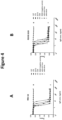
- Results are provided in Figure 8 , showing that the variants described herein have lower IC50s than D25 in neutralizing both RSV A2 and RSV B9320. This also demonstrates that there was no loss of activity against the A2 or B9320 virus with increased activity seen with E9-2 and B12-1 and only a nominal loss of activity against the B9320 virus with 1G7 GLM and E3-5.
- RSV A and RSV B virus mutants were isolated by passage three times in the presence of 250 ng/ml of 1G7-YTE.
- 1 G7 - YTE is the 1G7 antibody with the YTE mutation described above in section I.C above.
- the sequence of the RSV F protein was determined. Mutations correspond to regions that were previously defined in the co-crystal structure of RSV F with the parental D25 antibody. All resistant mutants contained changes in the region of RSV F protein in the F1 region between amino acids 200-213. Secondary mutations at position 294 were not shown to enhance resistance and were no more resistant than those with a single mutation in the region 200-213. Secondary mutations in the F2 region of the N208S mutation background resulted in enhanced resistance. Results are provided in Figure 9 .
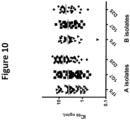
- a neutralization assay was performed by pre-incubation of the expanded clinical isolate viruses with a dilution series of the antibodies prior to infection of HEp2 cells. Infection of cells was measured as a function of F protein expression on the surface of the cells. IC50 values were calculated by non-linear fitting of neutralization curves. Viral replication was measured as in Example 2 (In Vitro Microneutralization Assay).
- Results are provided in Figure 10 .
- the IC50 for 1G7 and 1F5 are both lower than D25 for neutralizing either A isolates or B isolates of RSV in HEp2 cells.
Landscapes
- Health & Medical Sciences (AREA)
- Life Sciences & Earth Sciences (AREA)
- Chemical & Material Sciences (AREA)
- Virology (AREA)
- Organic Chemistry (AREA)
- Medicinal Chemistry (AREA)
- General Health & Medical Sciences (AREA)
- Immunology (AREA)
- Molecular Biology (AREA)
- Pharmacology & Pharmacy (AREA)
- Veterinary Medicine (AREA)
- Public Health (AREA)
- Animal Behavior & Ethology (AREA)
- Biochemistry (AREA)
- Biophysics (AREA)
- Genetics & Genomics (AREA)
- Proteomics, Peptides & Aminoacids (AREA)
- General Chemical & Material Sciences (AREA)
- Nuclear Medicine, Radiotherapy & Molecular Imaging (AREA)
- Chemical Kinetics & Catalysis (AREA)
- Oncology (AREA)
- Communicable Diseases (AREA)
- Epidemiology (AREA)
- Bioinformatics & Cheminformatics (AREA)
- Microbiology (AREA)
- Mycology (AREA)
- Engineering & Computer Science (AREA)
- Peptides Or Proteins (AREA)
- Medicines Containing Antibodies Or Antigens For Use As Internal Diagnostic Agents (AREA)
- Pulmonology (AREA)
- Micro-Organisms Or Cultivation Processes Thereof (AREA)
- Preparation Of Compounds By Using Micro-Organisms (AREA)
- Medicines That Contain Protein Lipid Enzymes And Other Medicines (AREA)
- Pharmaceuticals Containing Other Organic And Inorganic Compounds (AREA)
Abstract

Description
- This application claims the benefit of
U.S. Provisional Application Serial No. 61/927,819, filed January 15, 2014 - This application relates to the field of biotechnology and medicine.
- Respiratory Syncytial Virus (RSV) is a common cold virus belonging to the family of paramyxovirus. RSV is virulent, easily transmissible and the most common cause of lower respiratory tract disease in children of less than 2 years of age. Up to 98% of children attending day care will be infected in a single RSV season. Between 0.5% and 3.2% of children with RSV infection require hospitalization. Approximately 90,000 hospital admissions and 4,500 deaths per year were reported in United States. Major risk factors for hospitalization due to RSV are premature birth, chronic lung disease, congenital heart disease, compromised immunity, and age younger than 6 weeks in otherwise healthy children. There is a need for additional treatment for RSV positive bronchiolitis beside supportive care in the form of adequate nutrition and oxygen therapy. Antiviral therapies such as Ribavirin have not been proven to be effective in RSV infection. One monoclonal antibody, Palivizumab (also called Synagis®), is registered for prophylaxis against RSV infection. Palivizumab is a genetically engineered (humanized) monoclonal antibody to the fusion protein of RSV. While Palivizumab has been a very effective prophylactic, alternative antibodies and therapies providing additional coverage against RSV would be advantageous.
- It is an object to provide means and methods for counteracting and/or preventing an RSV infection. It is a further object to provide alternative and/or improved antibodies against RSV, or functional equivalents of such antibodies, and to provide stable cells capable of producing antibodies or functional equivalents thereof against RSV.
- In accordance with the description, a synthetic, recombinant, or isolated antibody or a functional part thereof capable of specifically binding Respiratory Syncytial Virus comprises:
- a. a heavy chain variable region CDR1 sequence comprising a sequence which is at least 70% identical to the sequence NYIIN (SEQ ID NO: 1) or DYIIN (SEQ ID NO: 9), and
- b. a heavy chain variable region CDR2 sequence comprising a sequence which is at least 75% identical to the sequence GIIPVLGTVHYAPKFQG (SEQ ID NO: 2) or GIIPVLGTVHYGPKFQG (SEQ ID NO: 10), and
- c. a heavy chain variable region CDR3 sequence comprising a sequence which is at least 70% identical to the sequence ETALVVSTTYLPHYFDN (SEQ ID NO: 3) or ETALVVSTTYRPHYFDN (SEQ ID NO: 11), and
- d. a light chain variable region CDR1 sequence comprising a sequence which is at least 85% identical to the sequence QASQDIVNYLN (SEQ ID NO: 4), and
- e. a light chain variable region CDR2 sequence comprising a sequence which is at least 70% identical to the sequence VASNLET (SEQ ID NO: 5), and
- f. a light chain variable region CDR3 sequence comprising a sequence which is at least 70% identical to the sequence QQYDNLP (SEQ ID NO: 6).
- In another embodiment, the antibody or functional part comprises:
- a. heavy chain variable region CDR1 sequence comprises a sequence which differs by one amino acid from NYIIN (SEQ ID NO: 1) or DYIIN (SEQ ID NO: 9),
- b. heavy chain variable region CDR2 sequence comprises a sequence which differs by one or two amino acids from GIIPVLGTVHYAPKFQG (SEQ ID NO: 2) or GIIPVLGTVHYGPKFQG (SEQ ID NO: 10),
- c. heavy chain variable region CDR3 sequence comprises a sequence which differs by one or two amino acid from ETALVVSTTYLPHYFDN (SEQ ID NO: 3) or ETALVVSTTYRPHYFDN (SEQ ID NO: 11),
- d. light chain variable region CDR1 sequence comprises a sequence which differs by one amino acid from QASQDIVNYLN (SEQ ID NO: 4),
- e. light chain variable region CDR2 sequence comprises a sequence which differs by one amino acid from VASNLET (SEQ ID NO: 5), and/or
- f. light chain variable region CDR3 sequence comprises a sequence which differs by one amino acid from QQYDNLP (SEQ ID NO: 6).
- In another embodiment, the antibody or functional part comprises
- a. heavy chain variable region CDR1 sequence comprises NYIIN (SEQ ID NO: 1) or DYIIN (SEQ ID NO: 9),
- b. heavy chain variable region CDR2 sequence comprises GIIPVLGTVHYAPKFQG (SEQ ID NO: 2) or GIIPVLGTVHYGPKFQG (SEQ ID NO: 10),
- c. heavy chain variable region CDR3 sequence comprises ETALVVSTTYLPHYFDN (SEQ ID NO: 3) or ETALVVSTTYRPHYFDN (SEQ ID NO: 11),
- d. light chain variable region CDR1 sequence comprises QASQDIVNYLN (SEQ ID NO: 4),
- e. light chain variable region CDR2 sequence comprises VASNLET (SEQ ID NO: 5), and
- f. light chain variable region CDR3 sequence comprises QQYDNLP (SEQ ID NO: 6).
- In a further embodiment, the antibody or functional part comprises at least the following amino acids in the heavy chain variable region that differ from SEQ ID NO: 7:
Position relative to SEQ ID NO: 7 Amino Acid 28 L 30 E 31 D 37 V 61 G 81 M 82 E 84 S - In an additional embodiment, at least the following amino acids in the heavy chain variable region that differ from SEQ ID NO: 7:
Position relative to SEQ ID NO: 7 Amino Acid 37 V 81 M 82 E 84 S - In a further embodiment, the antibody or functional part comprises at least the following amino acids in the heavy chain variable region that differ from SEQ ID NO: 7:
Position relative to SEQ ID NO: 7 Amino Acid 37 V 45 L 81 M 82 E 84 S - In an additional embodiment, the antibody or functional part comprises at least the following amino acids in the heavy chain variable region that differ from SEQ ID NO: 7:
Position relative to SEQ ID NO: 7 Amino Acid 19 K 23 K 28 T 29 F 30 S 37 V 45 L 81 M 82 E 84 S - In a further embodiment, the antibody or functional part comprises at least the following amino acids in the heavy chain variable region that differ from SEQ ID NO: 7:
Position relative to SEQ ID NO: 7 Amino Acid 30 E 31 D 37 V 61 G 81 M 82 E 84 S - In an additional embodiment, the antibody or functional part comprises the following amino acids in the heavy chain variable region that differ from SEQ ID NO: 7:
Position relative to SEQ ID NO: 7 Amino Acid 30 E 31 D 37 V 61 G 81 M 82 E 84 S 109 R - In an additional embodiment, the antibody or functional part comprises at least the following amino acids in the heavy chain variable region that differ from SEQ ID NO: 7:
Position relative to SEQ ID NO: 7 Amino Acid 19 K 23 K 28 L 30 E 31 D 37 V 61 G 77 S 81 M 84 S 98 R - In an additional embodiment, the antibody or functional part comprises at least the following amino acids in the heavy chain variable region that differ from SEQ ID NO: 7:
Position relative to SEQ ID NO: 7 Amino Acid 19 K 23 K 28 L 30 E 31 D 37 V 61 G 81 M 84 S - In a further embodiment, the antibody or functional part comprises at least the following amino acids in the heavy chain variable region that differ from SEQ ID NO: 7:
Position relative to SEQ ID NO: 7 Amino Acid 19 K 23 K 28 L 30 E 31 D 37 V 61 G 77 S 81 M 82 E 84 S - In an additional embodiment, the antibody or functional part comprises at least the following amino acids in the heavy chain variable region that differ from SEQ ID NO: 7:
Position relative to SEQ ID NO: 7 Amino Acid 19 K 23 K 28 L 30 E 31 D 37 V 61 G 77 S 81 M 84 S - In a further embodiment, the heavy chain variable region CDR1 sequence comprises a sequence which differs by one amino acid from either NYIIN (SEQ ID NO: 1) or DYIIN (SEQ ID NO: 9), the heavy chain variable region CDR2 sequence comprises a sequence which differs by one or two amino acids from GIIPVLGTVHYAPKFQG (SEQ ID NO: 2) or GIIPVLGTVHYGPKFQG (SEQ ID NO: 10), and/or the heavy chain variable region CDR3 sequence comprising a sequence which differs by one or two amino acids from ETALVVSTTYLPHYFDN (SEQ ID NO: 3) or ETALWSTTYRPHYFDN (SEQ ID NO: 11).
- In a further embodiment, the light chain variable region CDR1 sequence comprising a sequence which differs by one amino acid from QASQDIVNYLN (SEQ ID NO: 4), the light chain variable region CDR2 sequence comprising a sequence which differs by one amino acid from VASNLET (SEQ ID NO: 5), and/or the light chain variable region CDR3 comprises a sequence which differs by one amino acid from QQYDNLP (SEQ ID NO: 6).
- In a further embodiment, the heavy chain variable region CDR1 sequence comprises NYIIN (SEQ ID NO: 1) or DYIIN (SEQ ID NO: 9), the heavy chain variable region CDR2 sequence comprises GIIPVLGTVHYAPKFQG (SEQ ID NO: 2) or GIIPVLGTVHYGPKFQG (SEQ ID NO: 10), and/or the heavy chain variable region CDR3 sequence comprises ETALVVSTTYLPHYFDN (SEQ ID NO: 3) or ETALWSTTYRPHYFDN (SEQ ID NO: 11).
- In an additional embodiment, the light chain variable region CDR1 sequence comprises QASQDIVNYLN (SEQ ID NO: 4), the light chain variable region CDR2 sequence comprises VASNLET (SEQ ID NO: 5), and/or the light chain variable region CDR3 comprises QQYDNLP (SEQ ID NO: 6).
- In one embodiment, a synthetic, recombinant, or isolated antibody or functional part thereof capable of specifically binding to a RSV F antigen comprises
- a. a heavy chain variable region CDR1 sequence comprising the amino acid sequence DYIIN (SEQ ID NO: 9), and
- b. a heavy chain variable region CDR2 sequence comprising the amino acid sequence GIIPVLGTVHYGPKFQG (SEQ ID NO: 10), and
- c. a heavy chain variable region CDR3 sequence comprising the amino acid sequence ETALVVSTTYRPHYFDN (SEQ ID NO: 11), and
- d. a light chain variable region CDR1 sequence comprising the amino acid sequence QASQDIVNYLN (SEQ ID NO: 4), and
- e. a light chain variable region CDR2 sequence comprising the amino acid sequence VASNLET (SEQ ID NO: 5), and
- f. a light chain variable region CDR3 comprising the amino acid sequence QQYDNLP (SEQ ID NO: 6).
- In another embodiment, a synthetic, recombinant, or isolated antibody or a functional part thereof capable of specifically binding to a RSV F antigen comprises:
- a. a heavy chain variable region CDR1 sequence comprising the amino acid sequence DYIIN (SEQ ID NO: 9), and
- b. a heavy chain variable region CDR2 sequence comprising the amino acid sequence GIIPVLGTVHYGPKFQG (SEQ ID NO: 10), and
- c. a heavy chain variable region CDR3 sequence comprising the amino acid sequence ETALVVSTTYLPHYFDN (SEQ ID NO: 3), and
- d. a light chain variable region CDR1 sequence comprising the amino acid sequence QASQDIVNYLN (SEQ ID NO: 4), and
- e. a light chain variable region CDR2 sequence comprising the amino acid sequence VASNLET (SEQ ID NO: 5), and
- f. a light chain variable region CDR3 comprising the amino acid sequence QQYDNLP (SEQ ID NO: 6).
- In a further embodiment, the antibody or functional part has an Fc region having Y at position 252Y, T at position 254T, and E at position 256, wherein the numbering corresponds to the EU index in Kabat.
- In yet a further embodiment, a method of inhibiting RSV infection in a subject comprising administering the antibody or functional part described herein to the subject.
- In yet a further embodiment, a synthetic, recombinant, or isolated nucleic acid sequence encodes the antibody or functional part described herein.
- Additional objects and advantages will be set forth in part in the description which follows, and in part will be obvious from the description, or may be learned by practice. The objects and advantages will be realized and attained by means of the elements and combinations particularly pointed out in the appended claims.
- It is to be understood that both the foregoing general description and the following detailed description are exemplary and explanatory only and are not restrictive of the claims.
- The accompanying drawings, which are incorporated in and constitute a part of this specification, illustrate one (several) embodiment(s) and together with the description, serve to explain the principles described herein.
-
-
Figures 1A andB are a representation of the sequence for the D25 heavy chain and several heavy chain variants (J, L, and LA). -
Figure 2 is a representation of the sequence for the heavy chain of several optimized variants (1G7, 1F5, 2D10). -
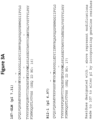
Figures 3A andB are a representation of the sequence for the heavy chain of four additional variants of the optimized variant 1G7. The variants (1G7-GLM, B12-1, E3-5, and E9-2) were made to alter pI by incorporating germline residues. -
Figures 4A and B show in vitro activity of D25 and several variants in a microneutralization assay. -
Figures 5A and B show that D25 and several variants offer protection against RSV A2 and RSV B subtype challenge. -
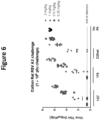
Figure 6 shows the results of a cotton rat RSV A2 challenge in animals treated with 1G7, 1F5, D25 (designated in the figure as D25wt), or no antibody. -
Figures 7A and B show that 1G7 protects against both RSV A2 and RSV B9320. Lung titers of RSV are plotted as a function of the serum concentration of human IgG at the time of harvest. -
Figures 8A and B show the neutralization of both RSV A2 and RSV B9320 by various antibodies. -
Figures 9A and B show the epitope for binding of 1G7 as defined by monoclonal antibody resistant mutants. -
Figure 10 shows the results of a neutralization assay against clinical isolates of RSV. - Table 1 provides a listing of certain sequences referenced in present embodiments.
Table 1 Description Sequence SEQ ID NO D25 HC CDR1 NYIIN 1 D25 HC CDR2 GIIPVLGTVHYAPKFQG 2 D25 HC CDR3 ETALVVSTTYLPHYFDN 3 D25 LC CDR1 QASQDIVNYLN 4 D25 LC CDR2 VASNLET 5 D25 LC CDR3 QQYDNLP 6 D25 heavy chain variable region 
7 D25 light chain variable region 
8 Alternative HC CDR1 DYIIN 9 Alternative HC CDR2 GIIPVLGTVHYGPKFQG 10 Alternative HC CDR3 ETALWSTTYRPHYFDN 11 J variant heavy chain variable region 
12 L variant heavy chain variable region 
13 LA variant heavy chain variable region 
14 1G7 heavy chain variable region 
15 1F5 heavy chain variable region 
16 2D 10 heavychain variable region 
17 1G7-GLM heavy chain variable region 
18 B 12-1 heavy chain variable region 
19 E3-5 heavy chain variable region 
20 E9-2 heavy chain variable region 
21 - Improved RSV-specific antibodies or functional parts thereof having improved properties as compared to other antibodies are provided. Antibodies or functional parts, e.g., antibodies or antigen-binding fragments, variants, or derivatives thereof include, but are not limited to, polyclonal, monoclonal, human, humanized, or chimeric antibodies, single chain antibodies, epitope-binding fragments, e.g., Fab, Fab' and F(ab')2, Fd, Fvs, single-chain Fvs (scFv), single-chain antibodies, disulfide-linked Fvs (sdFv), fragments comprising either a VL or VH domain, fragments produced by a Fab expression library. ScFv molecules are known in the art and are described, e.g., in
US patent 5,892,019 . Immunoglobulin or antibody molecules encompassed by this disclosure can be of any type (e.g., IgG, IgE, IgM, IgD, IgA, and IgY), class (e.g., IgG1, IgG2, IgG3, IgG4, IgA1 and IgA2) or subclass of immunoglobulin molecule. - For example, the inventors have succeeded in generating RSV-specific antibodies with improved properties over prior RSV-specific antibodies, including improved protection against RSV A subtypes and RSV B subtypes, improved neutralization, and lower IC50 values. Such antibodies have a particular high or strong affinity for RSV and are therefore particularly suitable for counteracting and/or at least in part preventing an RSV infection and/or adverse effects of an RSV infection. Antibodies and functional parts thereof are synonymous with RSV-specific binding molecules and include any full length antibodies or antibody parts that are able to specifically bind RSV.
- In one embodiment, at least one nongermline residue of the heavy chain variable region of D25 (SEQ ID NO: 7) is changed to a germline residue. In another embodiment, at least 2, 3, 4, 5, 6, 7, 8, 9, 10, 11, or 12 nongermline residues of the heavy chain variable region of D25 residues are switched back to a germline residue. In a further embodiment, at least one nongermline residue may be changed to a germline residue and at least one CDR position may be modified relative to SEQ ID NO: 7.
- One embodiment includes an isolated, synthetic, or recombinant antibody or a functional part thereof capable of specifically binding Respiratory Syncytial Virus and comprising:
- a) a heavy chain CDR1 sequence comprising a sequence which is at least 70%, 75%, 80%, 85%, 90%, or 94% identical to the sequence NYIIN (SEQ ID NO: 1) or DYIIN (SEQ ID NO: 9),
- b) a heavy chain CDR2 sequence comprising a sequence which is at least 70%, 75%, 80%, 85%, 90%, or 94% identical to the sequence GIIPVLGTVHYAPKFQG (SEQ ID NO: 2) or GIIPVLGTVHYGPKFQG (SEQ ID NO: 10),
- c) a heavy chain CDR3 sequence comprising a sequence which is at least 70%, 75%, 80%, 85%, 90%, or 94% identical to the sequence ETALVVSTTYLPHYFDN (SEQ ID NO: 3) or ETALVVSTTYRPHYFDN (SEQ ID NO: 11),
- d) a light chain CDR1 sequence comprising a sequence which is at least 70%, 75%, 80%, 85%, 90%, or 94% identical to the sequence QASQDIVNYLN (SEQ ID NO: 4),
- e) a light chain CDR2 sequence comprising a sequence which is at least 70%, 75%, 80%, 85%, 90%, or 94% identical to the sequence VASNLET (SEQ ID NO: 5), and
- f) a light chain CDR3 sequence comprising a sequence which is at least 70%, 75%, 80%, 85%, 90%, or 94% identical to the sequence QQYDNLP (SEQ ID NO: 6).
- "At least one amino acid in the heavy chain variable region differs from SEQ ID NO: 7" means that the antibody or functional part must comprise at least one amino acid difference from SEQ ID NO: 7, although, in some embodiments, it may comprise more than one difference from SEQ ID NO: 7. In some embodiments it includes substitutions outlined in Table 2, deletions or alternative amino acids at positions listed in Table 2, or differences (including deletions, substitutions, or additions) in positions not listed in Table 2. Position numbers in Table 2 are provided relative to SEQ ID NO: 7 and the position number may not ultimately be the same as the position number based on the consecutive numbering of amino acids in the antibody or functional part of interest. Instead, position numbers are assigned based on alignment with SEQ ID NO: 7.
- In one embodiment, the antibody or functional part includes a heavy chain and/or a light chain, wherein the heavy chain variable region is at least 90% identical to SEQ ID NO: 7 or SEQ ID NO: 15 and wherein the light chain variable region is at least 90% identical to SEQ ID NO: 8. In another embodiment, the heavy chain variable region is at least 91%, 92%, 93%, 94%, 95%, 96%, 97%, 98%, or 99% identical to SEQ ID NO: 7 or SEQ ID NO: 15. In another embodiment, the light chain variable region is at least 91%, 92%, 93%, 94%, 95%, 96%, 97%, 98%, or 99% identical to SEQ ID NO: 8.
- In one embodiment, the antibody or functional part comprises a heavy chain variable region CDR1 sequence comprises a sequence which differs by one amino acid from either NYIIN (SEQ ID NO: 1) or DYIIN (SEQ ID NO: 9).
- In one embodiment, the antibody or functional part comprises a heavy chain variable region CDR2 sequence comprises a sequence which differs by one or two amino acids from GIIPVLGTVHYAPKFQG (SEQ ID NO: 2) or GIIPVLGTVHYGPKFQG (SEQ ID NO: 10).
- In one embodiment, the antibody or functional part comprises a heavy chain variable region CDR3 sequence comprising a sequence which differs by one or two amino acids from ETALVVSTTYLPHYFDN (SEQ ID NO: 3) or ETALVVSTTYRPHYFDN (SEQ ID NO: 11).
- In one embodiment, the antibody or functional part comprises a light chain variable region CDR1 sequence comprising a sequence which differs by one amino acid from QASQDIVNYLN (SEQ ID NO: 4).
- In one embodiment, the antibody or functional part comprises a light chain variable region CDR2 sequence comprising a sequence which differs by one amino acid from VASNLET (SEQ ID NO: 5).
- In one embodiment, the antibody or functional part comprises a light chain variable region CDR3 comprises a sequence which differs by one amino acid from QQYDNLP (SEQ ID NO: 6).
- In a further embodiment, the antibody or functional part comprises a heavy chain variable region CDR1 sequence comprising a sequence which differs by one amino acid from NYIIN (SEQ ID NO: 1) or DYIIN (SEQ ID NO: 9), a heavy chain variable region CDR2 sequence comprising a sequence which differs by one or two amino acids from GIIPVLGTVHYAPKFQG (SEQ ID NO: 2) or GIIPVLGTVHYGPKFQG (SEQ ID NO: 10), a heavy chain variable region CDR3 sequence comprising a sequence which differs by one or two amino acid from ETALVVSTTYLPHYFDN (SEQ ID NO: 3) or ETALVVSTTYRPHYFDN (SEQ ID NO: 11), a light chain variable region CDR1 sequence comprising a sequence which differs by one amino acid from QASQDIVNYLN (SEQ ID NO: 4), a light chain variable region CDR2 sequence comprising a sequence which differs by one amino acid from VASNLET (SEQ ID NO: 5), and/or a light chain variable region CDR3 sequence comprising a sequence which differs by one amino acid from QQYDNLP (SEQ ID NO: 6).
- In some embodiments, the antibody or functional part comprises at least one or up to all of the identical CDRs as SEQ ID NO: 7 (heavy chain) and/or SEQ ID NO: 8 (light chain).
- In one embodiment, the antibody or functional part comprises a heavy chain variable region CDR1 sequence comprising NYIIN (SEQ ID NO: 1) or DYIIN (SEQ ID NO: 9).
- In one embodiment, the antibody or functional part comprises a heavy chain variable region CDR2 sequence comprising GIIPVLGTVHYAPKFQG (SEQ ID NO: 2) or GIIPVLGTVHYGPKFQG (SEQ ID NO: 10).
- In one embodiment, the antibody or functional part comprises a heavy chain variable region CDR3 sequence comprising ETALVVSTTYLPHYFDN (SEQ ID NO: 3) or ETALVVSTTYRPHYFDN (SEQ ID NO: 11).
- In one embodiment, the antibody of functional part comprises a heavy chain variable region CDR1 sequence comprising NYIIN (SEQ ID NO: 1) or DYIIN (SEQ ID NO: 9), a heavy chain variable region CDR2 sequence comprising GIIPVLGTVHYAPKFQG (SEQ ID NO: 2) or GIIPVLGTVHYGPKFQG (SEQ ID NO: 10), and/or a heavy chain variable region CDR3 sequence comprising ETALVVSTTYLPHYFDN (SEQ ID NO: 3) or ETALVVSTTYRPHYFDN (SEQ ID NO: 11).
- In one embodiment, the antibody or functional part comprises a light chain variable region CDR1 sequence comprises QASQDIVNYLN (SEQ ID NO: 4).
- In one embodiment, the antibody or functional part comprises a light chain variable region CDR2 sequence comprises VASNLET (SEQ ID NO: 5).
- In one embodiment, the antibody or functional part comprises a light chain variable region CDR3 comprises QQYDNLP (SEQ ID NO: 6).
- In one embodiment, the antibody of functional part comprises a light chain variable region CDR1 sequence comprises QASQDIVNYLN (SEQ ID NO: 4), a light chain variable region CDR2 sequence comprises VASNLET (SEQ ID NO: 5), and/or a light chain variable region CDR3 comprises QQYDNLP (SEQ ID NO: 6).
- In a further embodiment, the antibody or functional part comprises a heavy chain variable region CDR1 sequence comprising NYIIN (SEQ ID NO: 1) or DYIIN (SEQ ID NO: 9), a heavy chain variable region CDR2 sequence comprising GIIPVLGTVHYAPKFQG (SEQ ID NO: 2) or GIIPVLGTVHYGPKFQG (SEQ ID NO: 10), a heavy chain variable region CDR3 sequence comprising ETALVVSTTYLPHYFDN (SEQ ID NO: 3) or ETALVVSTTYRPHYFDN (SEQ ID NO: 11), a light chain variable region CDR1 sequence comprising QASQDIVNYLN (SEQ ID NO: 4), a light chain variable region CDR2 sequence comprising VASNLET (SEQ ID NO: 5), and/or a light chain variable region CDR3 sequence comprising QQYDNLP (SEQ ID NO: 6).
- In one embodiment, the antibody or functional part comprises a heavy chain variable region comprising a sequence which is 95% identical in the framework regions to a sequence chosen from SEQ ID NO: 12-21.
- In one embodiment, the antibody or functional part comprises a heavy chain variable region comprising a sequence which is identical in the framework regions to a sequence chosen from SEQ ID NO: 12-21.
- In one embodiment, the antibody or functional part comprises at least the following amino acids in the heavy chain variable region that differ from SEQ ID NO: 7:
Table 3: J Variant Position relative to SEQ ID NO: 7 Amino Acid 37 V 81 M 82 E 84 S - In one embodiment, the antibody or functional part comprises at least the following amino acids in the heavy chain variable region that differ from SEQ ID NO: 7:
Table 4: L Variant Position relative to SEQ ID NO: 7 Amino Acid 37 V 45 L 81 M 82 E 84 S - In one embodiment, the antibody or functional part comprises at least the following amino acids in the heavy chain variable region that differ from SEQ ID NO: 7:
Table 5: LA Variant Position relative to SEQ ID NO: 7 Amino Acid 19 K 23 K 28 T 29 F 30 S 37 V 45 L 81 M 82 E 84 S - In one embodiment, the antibody or functional part comprises at least the following amino acids in the heavy chain variable region that differ from SEQ ID NO: 7:
Table 6: IG7 Position relative to SEQ ID NO: 7 Amino Acid 28 L 30 E 31 D 37 V 61 G 81 M 82 E 84 S - In one embodiment, the antibody or functional part comprises at least the following amino acids in the heavy chain variable region that differ from SEQ ID NO: 7:
Table 7: 1F5 Position relative to SEQ ID NO: 7 Amino Acid 30 E 31 D 37 V 61 G 81 M 82 E 84 S - In one embodiment, the antibody or functional part comprises at least the following amino acids in the heavy chain variable region that differ from SEQ ID NO: 7:
Table 8: 2D10 Position relative to SEQ ID NO: 7 Amino Acid 30 E 31 D 37 V 61 G 81 M 82 E 84 S 109 R - In one embodiment, the antibody or functional part comprises at least the following amino acids in the heavy chain variable region that differ from SEQ ID NO: 7.
Table 9: 1G7-GLM Position relative to SEQ ID NO: 7 Amino Acid 19 K 23 K 28 L 30 E 31 D 37 V 61 G 77 S 81 M 84 S 98 R - In one embodiment, the antibody or functional part comprises at least the following amino acids in the heavy chain variable region that differ from SEQ ID NO: 7:
Table 10: B12-1 Position relative to SEQ ID NO: 7 Amino Acid 19 K 23 K 28 L 30 E 31 D 37 V 61 G 81 M 84 S - In one embodiment, the antibody or functional part comprises at least the following amino acids in the heavy chain variable region that differ from SEQ ID NO: 7:
Table 11: E3-5 Position relative to SEQ ID NO: 7 Amino Acid 19 K 23 K 28 L 30 E 31 D 37 V 61 G 77 S 81 M 82 E 84 S - In one embodiment, the antibody or functional part comprises at least the following amino acids in the heavy chain variable region that differ from SEQ ID NO: 7:
Table 12: E9-2 Position relative to SEQ ID NO: 7 Amino Acid 19 K 23 K 28 L 30 E 31 D 37 V 61 G 77 S 81 M 84 S - In one embodiment, the antibody or functional part comprises a heavy chain variable region sequence comprising a sequence which is at least 70%, 80%, 85%, 90%, 95%, 96%, 97%, 98%, 99%, or 100% identical to the sequence of SEQ ID NO: 12, SEQ ID NO: 13, SEQ ID NO: 14, SEQ ID NO: 15, SEQ ID NO: 16, SEQ ID NO: 17, SEQ ID NO: 18, SEQ ID NO: 19, SEQ ID NO: 20, or SEQ ID NO: 21. In another embodiment, the antibody or functional part comprises a heavy chain sequence variable region comprising a sequence which is at least 70%, 80%, 85%, 90%, 95%, 96%, 97%, 98%, 99%, or 100% identical to the framework (i.e., non CDR) sequence of SEQ ID NO: 12, SEQ ID NO: 13, SEQ ID NO: 14, SEQ ID NO: 15, SEQ ID NO: 16, SEQ ID NO: 17, SEQ ID NO: 18, SEQ ID NO: 19, SEQ ID NO: 20, or SEQ ID NO: 21.
- In another embodiment, the antibody or functional part comprises a light chain variable region sequence comprising a sequence which is at least 70%, 80%, 85%, 90%, 95%, 96%, 97%, 98%, 99%, or 100% identical to the sequence DIQMTQSPSSLSAAVGDRVTIT CQASQDIVNYLNWYQQKPGKAPKLLIYVASNLETGVPSRFSGSGSGTDFSLTISSLQPED VATYYCQQYDNLPLTFGGGTKVEIKRTV (SEQ ID NO: 8).
- In other embodiments, conservative amino acid substitution is applied. Conservative amino acid substitution involves substitution of one amino acid with another with generally similar properties (size, hydrophobicity, etc.) such that the overall functioning is likely not to be seriously affected.
- In one embodiment, the antibody or functional part may comprise at least one CDR mutation relative to the CDRs present in SEQ ID NO: 7. In one embodiment, the antibody or functional part may comprise at least one of the changes in Table 13. In another embodiment, the antibody or functional part may comprise one, two, or all three of the changes in Table 13.
Table 13 Position relative to SEQ ID NO: 7 Type of Change Amino Acid 31 CDR modification D 61 CDR modification G 109 CDR modification R - Another embodiment includes an isolated, synthetic, or recombinant antibody or a functional part thereof capable of specifically binding to a RSV F antigen and comprising a heavy chain variable region CDR1 sequence comprising the amino acid sequence DYIIN (SEQ ID NO: 9), a heavy chain variable region CDR2 sequence comprising the amino acid sequence GIIPVLGTVHYAPKFQG (SEQ ID NO: 2), a heavy chain variable region CDR3 sequence comprising the amino acid sequence ETALVVSTTYLPHYFDN (SEQ ID NO: 3), a light chain variable region CDR1 sequence comprising the amino acid sequence QASQDIVNYLN (SEQ ID NO: 4), a light chain variable region CDR2 sequence comprising the amino acid sequence VASNLET (SEQ ID NO: 5), and a light chain variable region CDR3 comprising the amino acid sequence QQYDNLP (SEQ ID NO: 6).
- Another embodiment includes an isolated, synthetic, or recombinant antibody or a functional part thereof capable of specifically binding to a RSV F antigen and comprising a heavy chain variable region CDR1 sequence comprising the amino acid sequence NYIIN (SEQ ID NO: 1), a heavy chain variable region CDR2 sequence comprising the amino acid sequence GIIPVLGTVHYGPKFQG (SEQ ID NO: 10), a heavy chain variable region CDR3 sequence comprising the amino acid sequence ETALVVSTTYLPHYFDN (SEQ ID NO: 3), a light chain variable region CDR1 sequence comprising the amino acid sequence QASQDIVNYLN (SEQ ID NO: 4), a light chain variable region CDR2 sequence comprising the amino acid sequence VASNLET (SEQ ID NO: 5), and a light chain variable region CDR3 comprising the amino acid sequence QQYDNLP (SEQ ID NO: 6).
- Another embodiment includes an isolated, synthetic, or recombinant antibody or a functional part thereof capable of specifically binding to a RSV F antigen and comprising a heavy chain variable region CDR1 sequence comprising the amino acid sequence NYIIN (SEQ ID NO: 1), a heavy chain variable region CDR2 sequence comprising the amino acid sequence GIIPVLGTVHYAPKFQG (SEQ ID NO: 2), a heavy chain variable region CDR3 sequence comprising the amino acid sequence ET AL VVSTTYRPHYFDN (SEQ ID NO: 11), a light chain variable region CDR1 sequence comprising the amino acid sequence QASQDIVNYLN (SEQ ID NO: 4), a light chain variable region CDR2 sequence comprising the amino acid sequence VASNLET (SEQ ID NO: 5), and a light chain variable region CDR3 comprising the amino acid sequence QQYDNLP (SEQ ID NO: 6).
- In another embodiment, an isolated, synthetic, or recombinant antibody or functional part thereof comprises a heavy chain variable region comprising heavy chain CDR1, CDR2, and CDR3 and a light chain comprising light chain CDR1, CDR2, and CDR3, wherein at least one, two, or all three of the heavy chain CDRs are chosen from column A, the remaining heavy chain CDRs (if any) are chosen from column B, and the light chain CDRs comprise column C in Table 14. Thus, in one embodiment, the light chain CDRs are provided in Table 14 column C and the heavy chain CDRs may be mixed-and-matched from columns A and B so long as the heavy chain has one of each of CDR1, CDR2, and CDR3.
Table 14: Alternative CDRs of One Set of Embodiments A B C Alternative CDRs D25 CDRs Light Chain CDRs CDR1 DYIIN SEQ ID NO: 9) NYIIN (SEQ ID NO: 1) QASQDIVNYLN (SEQ ID NO: 4) CDR2 GIIPVLGTVHYGPKFQG (SEQ ID NO: 10) GIIPVLGTVHYAPKFQG (SEQ ID NO: 2), VASNLET (SEQ ID NO: 5), CDR3 ETALVVSTTYRPHYFDN (SEQ ID NO: 11) ETALVVSTTYLPHYFDN (SEQ ID NO: 3), QQYDNLP (SEQ ID NO: 6). - The various alternative CDR embodiments do not necessarily contain any of the nongermline to germline mutations discussed above in section I. A, but any or all of those may optionally be present.
- In one embodiment, the antibody or functional part may comprise at least one of the alternative heavy chain CDRs from Table 14 and may have at least one other CDR modification. Specifically, in yet another embodiment, the antibody or functional part may comprise a heavy chain CDR1 sequence comprising a sequence which differs by one amino acid from NYIIN (SEQ ID NO: 1), a heavy chain CDR2 sequence comprises a sequence which differs by one or two amino acids from GHPVLGTVHYAPKFQG (SEQ ID NO: 2), a heavy chain CDR3 sequence comprises a sequence which differs by one or two amino acid from ETALVVSTTYLPHYFDN (SEQ ID NO: 3), a light chain CDR1 sequence comprises a sequence which differs by one amino acid from QASQDIVNYLN (SEQ ID NO: 4), a light chain CDR2 sequence comprises a sequence which differs by one amino acid from VASNLET (SEQ ID NO: 5), and/or a light chain CDR3 sequence comprises a sequence which differs by one amino acid from QQYDNLP (SEQ ID NO: 6), wherein at least one of heavy chain CDR1 is DYIIN SEQ ID NO: 9), heavy chain CDR2 is GIIPVLGTVHYGPKFQG (SEQ ID NO: 10), or heavy chain CDR3 is ETALVVSTTYRPHYFDN (SEQ ID NO: 11).
- In one embodiment, additional modifications may be made to antibodies or functional parts described herein to improve their half-life. In one embodiment, mutations such as deletion, addition, or substitution mutations may be made to the antibodies or functional parts to improve their half-life. In one embodiment, the Fc region may be mutated to include one, two, or all three of the following substitutions M252Y, S254T, and T256E, wherein the numbering corresponds to the EU index in Kabat. In one embodiment, the Fc region may be mutated to include all of the following substitutions M252Y, S254T, and T256E, wherein the numbering corresponds to the EU index in Kabat. Dall'Acqua et al., Properties of Human IgGls Engineered for Enhanced Binding to the Neonatal Fc Receptor (FcRn), J Biol Chem 281(33):23514-23524 (2006). The embodiment with all three substitutions is denoted as the YTE variant. Expressed differently, in one embodiment, the antibody or functional part has an Fc region having Y at position 252Y, T at position 254T, and E at position 256, wherein the numbering corresponds to the EU index in Kabat.
- In certain embodiment, the antibody or functional part has an IC50 value of less than 10 ng/ml in an in vitro neutralization assay wherein HEp-2 cells are infected with RSV and the antibody or functional part. In another embodiment, the IC50 is 9 ng/ml, 8 ng/ml, 7 ng/ml, 6 ng/ml, 5 ng/ml, 4 ng/ml, 3 ng/ml, or 2 ng/ml or less for RSV subtype A and/or RSV subtype B. In one embodiment, the IC50 is measured in the in vitro neutralization assay described in the examples, optionally for RSV A2 and/or RSV B9320.
- In one embodiment, the antibodies and functional parts thereof are effective at neutralizing RSV subtype A strains. In one embodiment, the antibodies and functional parts thereof are effective at neutralizing RSV subtype B strains. In another embodiment, the antibodies and functional parts thereof are effective at neutralizing both RSV subtype A and B strains.
- As used herein, the term antibody or functional part thereof is used in the broadest sense. It may be man-made such as monoclonal antibodies (mAbs) produced by conventional hybridoma technology, recombinant technology and/or a functional fragment thereof. It may include both intact immunoglobulin molecules for example a polyclonal antibody, a monoclonal antibody (mAb), a monospecific antibody, a bispecific antibody, a polyspecific antibody, a human antibody, a humanized antibody, an animal antibody (e.g. camelid antibody), chimeric antibodies, as well as portions, fragments, regions, peptides and derivatives thereof (provided by any known technique, such as, but not limited to, enzymatic cleavage, peptide synthesis, or recombinant techniques), such as, for example, immunoglobulin devoid of light chains, Fab, Fab', F (ab')2, Fv, scFv, antibody fragment, diabody, Fd, CDR regions, or any portion or peptide sequence of the antibody that is capable of binding antigen or epitope. In one embodiment, the functional part is a single chain antibody, a single chain variable fragment (scFv), a Fab fragment, or a F(ab')2 fragment.
- An antibody or functional part is said to be "capable of binding" a molecule if it is capable of specifically reacting with the molecule to thereby bind the molecule to the antibody. Antibody fragments or portions may lack the Fc fragment of intact antibody, clear more rapidly from the circulation, and may have less non-specific tissue binding than an intact antibody. Examples of antibody may be produced from intact antibodies using methods well known in the art, for example by proteolytic cleavage with enzymes such as papain (to produce Fab fragments) or pepsin (to produce F(ab')2 fragments). Portions of antibodies may be made by any of the above methods, or may be made by expressing a portion of the recombinant molecule. For example, the CDR region(s) of a recombinant antibody may be isolated and subcloned into an appropriate expression vector.
- In one embodiment, an antibody or functional part is a human antibody. The use of human antibodies for human therapy may diminish the chance of side effects due to an immunological reaction in a human individual against nonhuman sequences. In another embodiment, the antibody or functional part is humanized. In another embodiment, an antibody or functional part is a chimeric antibody. This way, sequences of interest, such as for instance a binding site of interest, can be included into an antibody or functional part.
- In one embodiment, the antibody may have an IgG, IgA, IgM, or IgE isotype. In one embodiment, the antibody is an IgG.
- The present embodiments further provides an isolated, synthetic, or recombinant nucleic acid sequence encoding any of the antibodies or functional parts described in section I.A or I.B above. Such nucleic acid is for instance isolated from a B-cell which is capable of producing an antibody or functional part. Such nucleic acids encode the heavy and light chain sequences set forth herein. Alternatively, such nucleic acids encode heavy and light chain sequences comprising the heavy and light chain CDRs, respectively, set forth herein. In some embodiments, the nucleic acids will encode functional parts of the antibodies described herein. Due to the degeneracy of the nucleic acid code, multiple nucleic acids will encode the same amino acid and all are encompassed herein.
- In one embodiment, an antibody or functional part may be used in a method of treatment or as a medicine. The method may be used for counteracting or at least in part preventing an RSV infection or for counteracting or at least in part preventing adverse effects of an RSV infection. The method also comprises administering to an individual in need thereof a therapeutically effective amount of an antibody or functional part as described herein. In one embodiment, the individual in need thereof is a human patient.
- In one embodiment, in order to counteract RSV, an antibody or functional part may be administered to an individual before an RSV infection has taken place, in other words as a prophylactic agent. Alternatively, an antibody or functional part may be administered when an individual is already infected by RSV. Said antibody or functional part may be administered to individuals with an increased risk of RSV infection, such as for instance children with premature birth, individuals with chronic lung disease, congenital heart disease and/or compromised immunity, children with an age younger than 6 weeks. Children with premature birth include both infants in their first year of life, as well as children in their second year of life and older children who remain at risk of RSV infection. Also elderly people have an increased risk of RSV infection and thus may be targeted for administration based on risk. The antibodies or functional parts may also be administered to individuals who have had a prior RSV infection.
- For therapeutic application, antibodies or functional parts are typically combined with a pharmaceutically acceptable carrier, adjuvant, diluent and/or excipient. In one embodiment, the antibodies or functional parts are combined with water for injection, In another embodiment, they are prepared in a sterile, preservative-free liquid solution with histidine, glycine, and chloride. In another embodiment, examples of suitable carriers for instance comprise keyhole limpet haemocyanin (KLH), serum albumin (e.g. BSA or RSA) and ovalbumin. In another embodiment, said suitable carrier comprises a solution like for example saline. In other embodiments, the antibodies or functional parts are provided in a lyophilized form and mixed with water for injection prior to administration.
- In yet another embodiment a nucleic acid encoding an antibody or functional part may be administered. Upon administration of such nucleic acid, antibodies or functional parts are produced by the host's machinery. Produced antibodies or functional parts are capable of preventing and/or counteracting RSV infection and/or the adverse effects of an RSV infection.
- A nucleic acid encoding a functional part of an antibody refers a nucleic acid at least 30 base pairs long, at least 50 base pairs long, or at least 100 base pairs long, comprising at least one expression characteristic (in kind not necessarily in amount) as a nucleic acid encoding an antibody. In one embodiment, a nucleic acid encoding a functional part of an antibody at least encodes an amino acid sequence comprising two or optionally three CDRs of the antibodies described herein.
- An isolated antibody producing cell capable of producing an antibody or functional part is also provided. The antibodies or functional parts described herein may be manufactured from a hybridoma that secretes the antibody or from a recombinantly produced cell that has been transformed or transfected with a gene or genes encoding the antibody or functional part.
- One embodiment includes a method of producing the antibody or functional part by culturing host cells under conditions wherein a nucleic acid is expressed to produce the antibody, followed by recovering the antibody. A variety of cell lines may be used for expressing the antibody or functional part, including, but not limited to, mammalian cell lines. In one embodiment, the cell lines may be human. In another embodiment, bacterial or insect cell lines may be used. In one embodiment, the cell lines include Chinese hamster ovary (CHO) cells, variants of CHO cells (for example DG44), 293 cells and NSO cells. In another embodiment, cell lines include VERY, BHK, Hela, COS, MDCK, 293F, 293T, 3T3, W138, BT483, Hs578T, HTB2, BT2O and T47D, CRL7O3O and HsS78Bst cells.
- Recombinant expression utilizes construction of an expression vector containing a polynucleotide that encodes the antibody or functional part. Once a polynucleotide has been obtained, a vector for the production of the antibody may be produced by recombinant DNA technology well known in the art. Expression vectors may include appropriate transcriptional and translational control signals. This may be accomplished using in vitro recombinant DNA techniques, synthetic techniques, and in vivo genetic recombination. In one embodiment, a replicable vector comprises a nucleic acid sequence encoding an antibody or functional part operably linked to a heterologous promoter.
- A variety of host-expression vector systems may be utilized to express antibodies or functional parts as described in
U.S. Pat. No. 5,807,715 . For example, mammalian cells such as Chinese hamster ovary cells (CHO), in conjunction with a vector such as the major intermediate early gene promoter element from human cytomegalovirus, are an effective expression system for antibodies (Foecking et al., Gene, 45:101 (1986); and Cockett et al., Bio/Technology, 8:2 (1990)). In addition, a host cell strain may be chosen which modulates the expression of inserted sequences, or modifies and processes the gene product in the specific fashion desired. Such modifications (e.g., glycosylation) and processing (e.g., cleavage) of protein products may be important for the function of the protein. Different host cells have characteristic and specific mechanisms for the post-translational processing and modification of proteins and gene products. Appropriate cell lines or host systems can be chosen to ensure the correct modification and processing of the protein of the invention. To this end, eukaryotic host cells which possess the cellular machinery for proper processing of the primary transcript, glycosylation, and phosphorylation of the gene product may be used. - In bacterial systems, a number of expression vectors may be selected depending upon the use intended for the antibody or functional part being expressed. For example, when a large quantity of such an antibody or functional part is to be produced, for the generation of pharmaceutical compositions comprising an antibody or functional part, vectors which direct the expression of high levels of fusion protein products that are readily purified may be desirable. Such vectors include, but are not limited to, the E. coli expression vector pUR278 (Ruther et al., EMBO, 12:1791 (1983)), in which the coding sequence may be ligated individually into the vector in frame with the lac Z coding region so that a fusion protein is produced; pIN vectors (Inouye & Inouye, 1985, Nucleic Acids Res. 13:3101-3109 (1985); Van Heeke & Schuster, 1989, J. Biol. Chem., 24:5503-5509 (1989)); and the like. pGEX vectors may also be used to express foreign polypeptides as fusion proteins with glutathione-S-transferase (GST). In general, such fusion proteins are soluble and can easily be purified from lysed cells by adsorption and binding to glutathione-agarose affinity matrix followed by elution in the presence of free glutathione. The pGEX vectors are designed to introduce a thrombin and/or factor Xa protease cleavage sites into the expressed polypeptide so that the cloned target gene product can be released from the GST moiety.
- In an insect system, Autographa califomica nuclear polyhedrosis virus (AcNPV) is used as a vector to express foreign genes. The virus grows in Spodoptera frugiperda cells. The protein coding sequence may be cloned individually into non-essential regions (for example, the polyhedrin gene) of the virus and placed under control of an AcNPV promoter (for example, the polyhedrin promoter).
- In mammalian host cells, a number of virus based expression systems may be utilized. In cases where an adenovirus is used as an expression vector, the coding sequence of interest may be ligated to an adenovirus transcription/translation control complex, e.g., the late promoter and tripartite leader sequence. This chimeric gene may then be inserted in the adenovirus genome by in vitro or in vivo recombination. Insertion into a non-essential region of the viral genome (e.g., region E1 or E3) will result in a recombinant virus that is viable and capable of expressing the antibody or functional part in infected hosts (e.g., see, Logan & Shenk, Proc. Natl. Acad. Sci. USA, 81:355-359 (1984)). Specific initiation signals may also be required for efficient translation of inserted antibody or functional part coding sequences. These signals include the ATG initiation codon and adjacent sequences. Furthermore, the initiation codon should generally be in frame with the reading frame of the desired coding sequence to ensure translation of the entire insert. These exogenous translational control signals and initiation codons can be of a variety of origins, both natural and synthetic. The efficiency of expression may be enhanced by the inclusion of appropriate transcription enhancer elements, transcription terminators, etc. (see, e.g., Bittner et al., Methods in Enzymol., 153:51-544(1987)).
- Stable expression can be used for long-term, high-yield production of recombinant proteins. For example, cell lines which stably express the protein molecule may be generated. Host cells can be transformed with an appropriately engineered vector comprising expression control elements (e.g., promoter, enhancer, transcription terminators, polyadenylation sites, etc.), and a selectable marker gene. Following the introduction of the foreign DNA, cells may be allowed to grow for 1-2 days in an enriched media, and then are switched to a selective media. The selectable marker in the recombinant plasmid confers resistance to the selection and allows cells that stably integrated the plasmid into their chromosomes to grow and form foci which in turn can be cloned and expanded into cell lines. Plasmids that encode an antibody or functional part can be used to introduce the gene/cDNA into any cell line suitable for production in culture.
- A number of selection systems may be used, including, but not limited to, the herpes simplex virus thymidine kinase (Wigler et al., Cell, 11:223 (1977)), hypoxanthineguanine phosphoribosyltransferase (Szybalska & Szybalski, Proc. Natl. Acad. Sci. USA, 48:202 (1992)), and adenine phosphoribosyltransferase (Lowy et al., Cell, 22:8-17 (1980)) genes can be employed in tk-, hgprt- or aprT-cells, respectively. Also, antimetabolite resistance can be used as the basis of selection for the following genes: dhfr, which confers resistance to methotrexate (Wigler et al., Natl. Acad. Sci. USA, 77:357 (1980); O'Hare et al., Proc. Natl. Acad. Sci. USA, 78:1527 (1981)); gpt, which confers resistance to mycophenolic acid (Mulligan & Berg, Proc. Natl. Acad. Sci. USA, 78:2072 (1981)); neo, which confers resistance to the aminoglycoside G-418 (Wu and Wu, Biotherapy 3:87-95 (1991); Tolstoshev, Ann. Rev. Pharmacol. Toxicol. 32:573-596 (1993); Mulligan, Science 260:926-932 (1993); and Morgan and Anderson, Ann. Rev. Biochem. 62:191-217 (1993); May, TIB TECH 11(5):155-2 15 (1993)); andhygro, which confers resistance to hygromycin (Santerre et al., Gene, 30:147 (1984)). Methods commonly known in the art of recombinant DNA technology may be routinely applied to select the desired recombinant clone, and such methods are described, for example, in Ausubel et al. (eds.), Current Protocols in Molecular Biology, John Wiley & Sons, NY (1993); Kriegler, Gene Transfer and Expression, A Laboratory Manual, Stockton Press, NY (1990); and in
Chapters - Once an antibody or functional part has been produced by recombinant expression, it may be purified by any method known in the art for purification of an immunoglobulin molecule, for example, by chromatography (e.g., ion exchange, affinity, particularly by affinity for the specific antigens Protein A or Protein G, and sizing column chromatography), centrifugation, differential solubility, or by any other standard technique for the purification of proteins. Further, the proteins of the present invention or fragments thereof may be fused to heterologous polypeptide sequences described herein or otherwise known in the art to facilitate purification.
- In some embodiments, RSV-specific antibody producing cells are generated which are stable for at least six months. In another embodiment, an RSV-specific antibody producing cell is stable for at least nine weeks, at least three months, or at least six months. In another embodiment, alternative methods of making antibodies and functional parts are well known in the art and described in at least
US Pat. No. 8,562,996 . - Reference will now be made in detail to the present exemplary embodiments, examples of which are illustrated in the accompanying drawings. Wherever possible, the same reference numbers will be used throughout the drawings to refer to the same or like parts. Other embodiments will be apparent to those skilled in the art from consideration of the specification and practice disclosed herein. The embodiments are further explained in the following examples. These examples do not limit the scope of the claims, but merely serve to clarify certain embodiments. It is intended that the specification and examples be considered as exemplary only, with a true scope and spirit being indicated by the following claims.
- The DNA fragments of 1G7 immunoglobulin variable light chain (VL) and variable heavy chain (VH), each containing desired mutations that improve the antibody's potency, were inserted into a human IgGlexpression vector containing the kappa light constant region and the CH1-hinge-CH2-CH3 IgG1 heavy constant region. To express 1G7 antibody, human embryonic kidney 293-F cells were transiently transfected with the 1G7-containing vector using 293Fectin™ reagent (Invitrogen, Carlsbad, CA). Cells were grown at 37°C, 120 rpm with 5% CO2 and 80% humidity. The culture media was fed on the second day by adding equal volume media and harvested 10 days post transfection. The supernatant was sterile filtered to remove cells and debris. The IgG was purified using protein A column (Hi-trap protein A column, Sigma) and eluted protein was dialyzed against PBS overnight at 4°C. The IgG concentration was determined by protein quantitation in NanoDrop (Thermo Scientific).
- The same approach was taken to produce the other antibodies.
- Microneutralization assays were performed as follows: Briefly, 2-fold serial dilutions of MAb were introduced into 384-well microtiter plates in HEp-2 cell culture medium at a volume of 15 µL/well. Subsequently, 15 µL of either RSV A2 or
RSV B 9320 virus diluted into HEp-2 cell culture medium to concentration ranging from 80 to 150 pfu/well and was added to each well including control wells containing HEp-2 cell culture medium alone, and plates were incubated for 1.5 hours at 37°C with 5% CO2. HEp-2 cells were added at 2.5 × 10⁵ cells/mL in 30 µL to each well and the plates were incubated at 37°C with 5% CO2. After 3 days for RSV A2 or 4 days for RSV B9320, medium was removed and 30 µL of ice cold 80% acetone/20% PBS was added to fix the cells. - Viral replication was measured by enzyme-linked immunosorbent assay (ELISA) using a horseradish peroxidase conjugated anti-RSV F MAb targeting the C site of RSV F (1331H) (Beeler and van Wyke Coelingh, J Virol. 63(7):2941-2950 (1989). 1331H MAb was diluted 1:6,000 in PBS and 30 µl was added to each well. Following two hours of incubation at 37°C, the plates were washed three times with PBS-T. TMB peroxidase 30 µL was added to each well and the plates were incubated at room temperature in the dark for 15 minutes. The reaction was stopped by the addition of 15 µL of 2N H2SO4 to each well. Substrate turnover was measured by monitoring absorbance at 450 nm using a microplate reader. IC50 values were calculated using a non-linear fit algorithm in Graphpad Prism using the log (inhibitor) vs. response with variable slope curve fit and represent the concentration of MAb required for a 50% reduction in absorbance measured at 450 nm.
- Results are provided in
Figure 4 , which shows that 1G7, 1F5, 2D10, and D25 each inhibited RSV A2 and RSV B9320 replication in the microneutralization. 1G7 was the most effective, followed by 1F5, 2D10, and then D25. - Animals were dosed with 0.1 ml of antibody by intramuscular injection at the various dosage levels indicated in the figure. Twenty-four hours later, animals were anesthetized using an isoffourane chamber and infected by intranasal instillation of 1×10⁶ pfu/animal of RSV strain A2. Four days later, animals were sacrificed by carbon dioxide asphyxiation; their lungs were surgically removed, bisected and frozen in liquid nitrogen or processed immediately. Blood samples were obtained by cardiac puncture at the time of sacrifice.
- To assess the effect of MAb administration on RSV replication in the lungs of cotton rats, RSV viral titer in cotton rat lung homogenates were determined for each dose group. For that purpose, harvested lungs were individually homogenized in 10 parts (weight/volume) Hanks Balanced Salt Solution plus sucrose phosphate using a Fast Prep 24 tissue homogenizer for 20 seconds with TeenALysing Matrix tubes at room temperature. The resulting suspensions were centrifuged at 930 ×g for 10 min at 4°C, and the supernatants were collected and stored at - 80°C until analysis. Lung homogenate samples were diluted 1:10 and 1:100 in culture medium, and 50 µL of either undiluted lung homogenate or diluted lung homogenate samples were added to duplicate wells of HEp-2 cells that had been seeded at a cell density of 2.5 × 10⁵ cells/well in 24-well plates, 24 hours prior to inoculation. After 1 hour incubation at 37°C with 5% CO2, the inoculum was replaced with culture medium containing 0.8% methylcellulose and the cells were incubated at 37°C with 5% CO2. Five days later the overlay was removed, and the cells were fixed and immuno-stained with an goat anti-RSV polyclonal antibody followed by a secondary anti-goat HRP antibody. Plaques were visualized by reaction with AEC reagent. Plaques were quantified under a microscope using a 10× objective. The limit of detection for this assay is 200 pfu/g of tissue. Samples with a viral titer below the limit of detection (< 200 pfu/g) were designated at 100 pfu/g (one-half of the lower limit of detection) for purposes of the statistical analysis. Results are provided in
Figure 5 , demonstrating that the J, L, and LA variants are all more effective than D25 in protecting against RSV A challenge, but that the L and LA variants were less effective in protecting against RSV B subtypes (with L performing better against one B strain than another). Based on this data, J was chosen as the starting point for further optimization. - The model discussed above in part (A) of this example was used to compare the ability of 1G7, 1F5, and D25 to protect against RSV challenge. Animals were dosed at 2 mg/kg, 1 mg/kg, 0.5 mg/kg, and 0.25 mg/kg. Results are shown in
Figure 6 . The data shows that 1G7 performed better than 1F5 in protecting against RSV challenge, though both were able to reduce the virus titer to the limit of detection. Both 1G7 and 1F5 performed better than D25. - The same cotton rat model was used as described in section (A) above. Each animal received 0.1 ml of antibody, with varying concentrations of antibody present, as reported in
Figure 7 . 1G7 demonstrates a dose-response relationship with RSV lung titer for both RSV A2 and RSV B9320. - The same cotton rat model was used as described in section (A) above.
- The concentrations of human IgG in cotton rat serum samples on the day of lung harvest were determined using an ELISA method. In this assay the human antibodies were captured by a goat anti-human antibody bound to microtiter plates. The goat anti-human IgG (H + L) antibody (0.5 µg/mL in 1 × PBS) was coated onto Nunc Maxisorp 384 well microtiter plates overnight at 4°C in a 30 µL volume. Plates were washed then blocked with 60 µL of a solution of PBS + 3% heat inactivated goat serum for 1 hour at room temperature. The blocking buffer was removed and samples were applied as follows: A two-fold serial dilution of the standard human antibody diluted in assay buffer was used for the standard curve with a concentration range of 500 ng/ml to 0.488 ng/ml. Standard curves were fitted using a 4 parameter curve fit.
- Results are provided in
Figure 8 , showing that the variants described herein have lower IC50s than D25 in neutralizing both RSV A2 and RSV B9320. This also demonstrates that there was no loss of activity against the A2 or B9320 virus with increased activity seen with E9-2 and B12-1 and only a nominal loss of activity against the B9320 virus with 1G7 GLM and E3-5. - RSV A and RSV B virus mutants were isolated by passage three times in the presence of 250 ng/ml of 1G7-YTE. 1 G7 - YTE is the 1G7 antibody with the YTE mutation described above in section I.C above. Following the last passage the sequence of the RSV F protein was determined. Mutations correspond to regions that were previously defined in the co-crystal structure of RSV F with the parental D25 antibody. All resistant mutants contained changes in the region of RSV F protein in the F1 region between amino acids 200-213. Secondary mutations at position 294 were not shown to enhance resistance and were no more resistant than those with a single mutation in the region 200-213. Secondary mutations in the F2 region of the N208S mutation background resulted in enhanced resistance. Results are provided in
Figure 9 . - A neutralization assay was performed by pre-incubation of the expanded clinical isolate viruses with a dilution series of the antibodies prior to infection of HEp2 cells. Infection of cells was measured as a function of F protein expression on the surface of the cells. IC50 values were calculated by non-linear fitting of neutralization curves. Viral replication was measured as in Example 2 (In Vitro Microneutralization Assay)..
- Results are provided in
Figure 10 . The IC50 for 1G7 and 1F5 are both lower than D25 for neutralizing either A isolates or B isolates of RSV in HEp2 cells. - All references cited herein, including patents, patent applications, papers, text books, and the like, and the references cited therein, to the extent that they are not already, are hereby incorporated herein by reference in their entirety for all purposes.
- The foregoing written specification is considered to be sufficient to enable one skilled in the art to practice the embodiments. The foregoing description and Examples detail certain embodiments and describes the best mode contemplated by the inventors. It will be appreciated, however, that no matter how detailed the foregoing may appear in text, the embodiments may be practiced in many ways and the claims include any equivalents thereof.
- The present invention will now be further defined with reference to the following numbered clauses:
1. A synthetic or recombinant antibody or a functional part thereof capable of specifically binding Respiratory Syncytial Virus and comprising: - a. a heavy chain variable region CDR1 sequence comprising a sequence which is at least 70% identical to the sequence NYIIN (SEQ ID NO: 1) or DYIIN (SEQ ID NO: 9), and
- b. a heavy chain variable region CDR2 sequence comprising a sequence which is at least 75% identical to the sequence GIIPVLGTVHYAPKFQG (SEQ ID NO: 2) or GIIPVLGTVHYGPKFQG (SEQ ID NO: 10), and
- c. a heavy chain variable region CDR3 sequence comprising a sequence which is at least 70% identical to the sequence ETALVVSTTYLPHYFDN (SEQ ID NO: 3) or ET AL VVSTTYRPHYFDN (SEQ ID NO: 11), and
- d. a light chain variable region CDR1 sequence comprising a sequence which is at least 85% identical to the sequence QASQDIVNYLN (SEQ ID NO: 4), and
- e. a light chain variable region CDR2 sequence comprising a sequence which is at least 70% identical to the sequence VASNLET (SEQ ID NO: 5), and
- f. a light chain variable region CDR3 sequence comprising a sequence which is at least 70% identical to the sequence QQYDNLP (SEQ ID NO: 6).
- a. heavy chain variable region CDR1 sequence comprises a sequence which differs by one amino acid from NYIIN (SEQ ID NO: 1) or DYIIN (SEQ ID NO: 9),
- b. heavy chain variable region CDR2 sequence comprises a sequence which differs by one or two amino acids from GIIPVLGTVHYAPKFQG (SEQ ID NO: 2) or GIIPVLGTVHYGPKFQG (SEQ ID NO: 10),
- c. heavy chain variable region CDR3 sequence comprises a sequence which differs by one or two amino acid from ETALVVSTTYLPHYFDN (SEQ ID NO: 3) or ETALVVSTTYRPHYFDN (SEQ ID NO: 11),
- d. light chain variable region CDR1 sequence comprises a sequence which differs by one amino acid from QASQDIVNYLN (SEQ ID NO: 4),
- e. light chain variable region CDR2 sequence comprises a sequence which differs by one amino acid from VASNLET (SEQ ID NO: 5), and/or
- f. light chain variable region CDR3 sequence comprises a sequence which differs by one amino acid from QQYDNLP (SEQ ID NO: 6).
- a. heavy chain variable region CDR1 sequence comprises NYIIN (SEQ ID NO: 1) or DYIIN (SEQ ID NO: 9),
- b. heavy chain variable region CDR2 sequence comprises
GIIPVLGTVHYAPKFQG (SEQ ID NO: 2) or GIIPVLGTVHYGPKFQG (SEQ ID NO: 10), - c. heavy chain variable region CDR3 sequence comprises
- ETALVVSTTYLPHYFDN (SEQ ID NO: 3) or
- ETALVVSTTYRPHYFDN (SEQ ID NO: 11),
- d. light chain variable region CDR1 sequence comprises QASQDIVNYLN (SEQ ID NO: 4),
- e. light chain variable region CDR2 sequence comprises VASNLET (SEQ ID NO: 5), and
- f. light chain variable region CDR3 sequence comprises QQYDNLP (SEQ ID NO: 6).
- a. a heavy chain variable region CDR1 sequence comprising the amino acid sequence DYIIN (SEQ ID NO: 9), and
- b. a heavy chain variable region CDR2 sequence comprising the amino acid sequence GIIPVLGTVHYGPKFQG (SEQ ID NO: 10), and
- c. a heavy chain variable region CDR3 sequence comprising the amino acid sequence ETALVVSTTYRPHYFDN (SEQ ID NO: 11), and
- d. a light chain variable region CDR1 sequence comprising the amino acid sequence QASQDIVNYLN (SEQ ID NO: 4), and
- e. a light chain variable region CDR2 sequence comprising the amino acid sequence VASNLET (SEQ ID NO: 5), and
- f. a light chain variable region CDR3 comprising the amino acid sequence QQYDNLP (SEQ ID NO: 6).
- a. a heavy chain variable region CDR1 sequence comprising the amino acid sequence DYIIN (SEQ ID NO: 9), and
- b. a heavy chain variable region CDR2 sequence comprising the amino acid sequence GIIPVLGTVHYGPKFQG (SEQ ID NO: 10), and
- c. a heavy chain variable region CDR3 sequence comprising the amino acid sequence ETALVVSTTYLPHYFDN (SEQ ID NO: 3), and
- d. a light chain variable region CDR1 sequence comprising the amino acid sequence QASQDIVNYLN (SEQ ID NO: 4), and
- e. a light chain variable region CDR2 sequence comprising the amino acid sequence VASNLET (SEQ ID NO: 5), and
- f. a light chain variable region CDR3 comprising the amino acid sequence QQYDNLP (SEQ ID NO: 6).
| Position relative to SEQ ID NO: 1 | Amino Acid |
| 19 | K |
| 23 | K |
| 28 | T or L |
| 29 | F |
| 30 | S or E |
| 37 | V |
| 45 | L |
| 77 | S |
| 81 | M |
| 82 | E or H |
| 84 | S |
| 98 | R |
| Table 2 | |||
| Position relative to SEQ ID NO: 7 | Type of | Amino Acid | |
| 19 | nongermline framework changed to germline | K | |
| 23 | nongermline framework changed to germline | K | |
| 28 | nongermline framework changed to germline | T or L | |
| 29 | nongermline framework changed to germline | F | |
| 30 | nongermline framework changed to germline | S or E | |
| 37 | nongermline framework changed to germline | V | |
| 45 | nongermline framework changed to germline | L | |
| 77 | nongermline framework changed to germline | S | |
| 81 | nongermline framework changed to germline | M | |
| 82 | nongermline framework changed to germline | E or H | |
| 84 | nongermline framework changed to germline | S | |
| 98 | nongermline framework changed to germline | R | |
| Position relative to SEQ ID NO: 1 | Amino Acid |
| 19 | K |
| 23 | K |
| 28 | T or L |
| 29 | F |
| 30 | S or E |
| 37 | V |
| 45 | L |
| 77 | S |
| 81 | M |
| 82 | E or H |
| 84 | S |
| 98 | |
| Position relative to SEQ ID NO: 7 | Amino Acid |
| 28 | L |
| 30 | E |
| 31 | D |
| 37 | V |
| 61 | G |
| 81 | M |
| 82 | E |
| 84 | |
| Position relative to SEQ ID NO: 7 | Amino Acid |
| 37 | V |
| 81 | M |
| 82 | E |
| 84 | |
| Position relative to SEQ ID NO: 7 | Amino Acid |
| 37 | V |
| 45 | L |
| 81 | M |
| 82 | E |
| 84 | |
| Position relative to SEQ ID NO: 7 | Amino Acid |
| 19 | K |
| 23 | K |
| 28 | T |
| 29 | F |
| 30 | S |
| 37 | V |
| 45 | L |
| 81 | M |
| 82 | E |
| 84 | S |
| Position relative to SEQ ID NO: 7 | Amino Acid |
| 30 | E |
| 31 | D |
| 37 | V |
| 61 | G |
| 81 | M |
| 82 | E |
| 84 | S |
| Position relative to SEQ ID NO: 7 | Amino Acid |
| 30 | E |
| 31 | D |
| 37 | V |
| 61 | G |
| 81 | M |
| 82 | E |
| 84 | S |
| 109 | |
| Position relative to SEQ ID NO: 7 | Amino Acid |
| 19 | K |
| 23 | K |
| 28 | L |
| 30 | E |
| 31 | D |
| 37 | V |
| 61 | G |
| 77 | S |
| 81 | M |
| 84 | S |
| 98 | |
| Position relative to SEQ ID NO: 7 | Amino Acid |
| 19 | K |
| 23 | K |
| 28 | L |
| 30 | E |
| 31 | D |
| 37 | V |
| 61 | G |
| 81 | M |
| 84 | |
| Position relative to SEQ ID NO: 7 | Amino Acid |
| 19 | K |
| 23 | K |
| 28 | L |
| 30 | E |
| 31 | D |
| 37 | V |
| 61 | G |
| 77 | S |
| 81 | M |
| 82 | E |
| 84 | |
| Position relative to SEQ ID NO: 7 | Amino Acid |
| 19 | K |
| 23 | K |
| 28 | L |
| 30 | E |
| 31 | D |
| 37 | V |
| 61 | G |
| 77 | S |
| 81 | M |
| 84 | |
15. The antibody or functional part of any one of clauses 1-2 or 4-14, wherein the heavy chain variable region CDR1 sequence comprises a sequence which differs by one amino acid from either NYIIN (SEQ ID NO: 1) or DYIIN (SEQ ID NO: 9).
16. The antibody or functional part of any one of clauses 1-2 or 4-15, wherein the heavy chain variable region CDR2 sequence comprises a sequence which differs by one or two amino acids from GIIPVLGTVHYAPKFQG (SEQ ID NO: 2) or GIIPVLGTVHYGPKFQG (SEQ ID NO: 10).
17. The antibody or functional part of any one of clauses 1-2 or 4-16, wherein the heavy chain variable region CDR3 sequence comprising a sequence which differs by one or two amino acids from ETALVVSTTYLPHYFDN (SEQ ID NO: 3) or ETALVVSTTYRPHYFDN (SEQ ID NO: 11).
18. The antibody or functional part of any one of clauses 1-2 or 4-17, wherein the light chain variable region CDR1 sequence comprising a sequence which differs by one amino acid from QASQDIVNYLN (SEQ ID NO: 4).
19. The antibody or functional part of any one of clauses 1-2 or 4-18, wherein the light chain variable region CDR2 sequence comprising a sequence which differs by one amino acid from VASNLET (SEQ ID NO: 5).
20. The antibody or functional part of any one of clauses 1-2 or 4-19, wherein the light chain variable region CDR3 comprises a sequence which differs by one amino acid from QQYDNLP (SEQ ID NO: 6).
21. The antibody or functional part of any one of clauses 1-2, or 4-14, or 16-20, wherein the heavy chain variable region CDR1 sequence comprises NYIIN (SEQ ID NO: 1) or DYIIN (SEQ ID NO: 9).
22. The antibody or functional part of any one of clauses 1-2, 4-15, or 17-21, wherein the heavy chain variable region CDR2 sequence comprises GIIPVLGTVHYAPKFQG (SEQ ID NO: 2) or GIIPVLGTVHYGPKFQG (SEQ ID NO: 10).
23. The antibody or functional part of any one of clauses 1-2, 4-16, or 18-22, wherein the heavy chain variable region CDR3 sequence comprises ETALVVSTTYLPHYFDN (SEQ ID NO: 3) or ETALVVSTTYRPHYFDN (SEQ ID NO: 11).
24. The antibody or functional part of any one of clauses 1-2, 4-17, or 19-23, wherein the light chain variable region CDR1 sequence comprises QASQDIVNYLN (SEQ ID NO: 4).
25. The antibody or functional part of any one of clauses 1-2, 4-18, or 20-24, wherein the light chain variable region CDR2 sequence comprises VASNLET (SEQ ID NO: 5).
26. The antibody or functional part of any one of clauses 1-2, 4-19, or 21-25, wherein the light chain variable region CDR3 comprises QQYDNLP (SEQ ID NO: 6).
27. The antibody or functional part of any one of clauses 1-26, wherein the heavy chain variable region comprises a sequence which is 95% identical in the framework regions to a sequence chosen from SEQ ID NO: 7 and 12-21.
28. The antibody or functional part of any one of clauses 1-26, wherein the heavy chain variable region comprises a sequence which is identical in the framework regions to a sequence chosen from SEQ ID NO: 12-21.
29. The antibody or functional part of any one of clauses 1-26, wherein the heavy chain variable region comprises a sequence which is at least 70% identical to a sequence chosen from SEQ ID NO: 12-21.
30. The antibody or functional part of any one of clauses 1-29, having a light chain variable region sequence comprising a sequence which is at least 70% identical to SEQ ID NO: 8.
31. The antibody or functional part of any one of clauses 1-29, having a light chain sequence variable region comprising a sequence which identical to SEQ ID NO: 8.
32. A synthetic or recombinant antibody or functional part thereof capable of specifically binding to a RSV F antigen and comprising
35. The functional part of any one of clauses 1-34, wherein the functional part is a single chain antibody, a single chain variable fragment (scFv), a Fab fragment, or a F(ab')2 fragment.
36. The antibody or functional part of any one of clauses 1-35, wherein the antibody or functional part has an IC50 of 5.0 ng/ml or less in a neutralization assay of RSV A2.
37. The antibody or functional part of any one of clauses 1-36, wherein the antibody or functional part has an IC50 or 3.0 ng/ml or less in a neutralization assay of RSV B9320.
38. The antibody or functional part of any one of clauses 1-37, wherein the antibody or functional part has an Fc region having Y at position 252Y, T at position 254T, and E at position 256, wherein the numbering corresponds to the EU index in Kabat.
39. A method of inhibiting RSV infection in a subject comprising administering the antibody or functional part of any one of clauses 1-38 to the subject.
40. The method of clause 39, wherein the subject is a human patient.
41. The method of clause 40, wherein the subject is a human patient who was born prematurely.
42. A synthetic, recombinant, or isolated nucleic acid sequence encoding the antibody or functional part of any one of clauses 1-38.
43. A method of inhibiting RSV infection in a subject comprising administering the nucleic acid of claim 42 to a subject.
44. An isolated antibody producing cell capable of producing the antibody or functional part of any one of clauses 1-38.
45. The antibody producing cell according to clause 44, which is stable for at least nine weeks.
Claims (16)
- An anti-Respiratory Syncytial Virus (RSV) antibody or antigen-binding fragment thereof, comprisinga light chain comprising SEQ ID NO: 8 anda heavy chain variable region that differs from SEQ ID NO: 7 by the following amino acid substitutions:(a)
Position relative to SEQ ID NO: 7 Amino Acid 28 L 30 E 31 D 37 V 61 G 81 M 82 E 84 S (b) by one amino acid substitution in heavy chain complementarity determining region 3 (HCOR3), wherein the one amino acid substitution is relative to SEQ ID NO: 3. - An anti-Respiratory Syncytial Virus (RSV) antibody or antigen-binding fragment thereof, comprising:
a heavy chain variable region comprising an amino acid sequence which differs by one amino acid from SEQ ID NO: 15 and a light chain comprising SEQ ID NO: 8, wherein the one amino acid difference from SEQ ID NO: 15 is in the heavy chain variable region CDR3 sequence: ETALVVSTTYLPHYFDN (SEQ ID NO:3). - An anti-Respiratory Syncytial Virus (RSV) antibody or antigen-binding fragment thereof, comprising:
a heavy chain variable region comprising an amino acid sequence which is at least 99% identical to SEQ ID NO: 15 and a light chain comprising SEQ ID NO: 8, wherein the heavy chain variable region CDR3 sequence is identical to, or differs by one amino acid from, ETALVVSTTYLPHYFDN (SEQ ID NO:3). - The antibody or antigen-binding fragment of any one of claims 1 to 3, wherein the antibody or antigen-binding fragment is fully human, humanized, or chimeric.
- The antibody or antigen-binding fragment of any one of claims 1 to 4, wherein the antibody or antigen-binding fragment comprises a human IgG1 isotype.
- The antibody or antigen-binding fragment of any one of claims 1 to 5, wherein the antibody or antigen-binding fragment comprises an Fc region with a tyrosine (Y) at amino acid position 252, a threonine (T) at amino acid position 254, and a glutamic acid (E) at amino acid position 256, wherein the position numbering corresponds to the EU index in Kabat.
- The antigen-binding fragment of any one of claims 1 to 5, wherein the antigen-binding fragment is a single chain antibody, a single chain variable fragment (scFv), a Fab fragment, or a F(ab')2 fragment.
- The antibody or antigen-binding fragment of any one of claims 1 to 7 for use in preventing adverse effects of an RSV infection in a subject.
- The antibody or antigen-binding fragment for use of claim 8, wherein the subject is at an increased risk of RSV infection, optionally wherein the subject has chronic lung disease, congenital heart disease, or compromised immunity.
- The antibody or antigen-binding fragment for use of claim 8 or claim 9, wherein the subject isa) a child of less than two years of age; orb) a child younger than six weeks of age.
- The antibody or antigen-binding fragment for use of any one of claims 8 to 10, wherein the subject is a child who was born prematurely.
- A synthetic recombinant or isolated nucleic acid encoding the antibody or antigen-binding fragment of any one of claims 1 to 7.
- A vector comprising the isolated nucleic acid of claim 12.
- An isolated cell comprising the vector of claim 13.
- A composition comprising the antibody or antigen-binding fragment of any one of claims 1 to 7 and a pharmaceutically acceptable carrier, adjuvant, diluent, and/or excipient.
- The composition of claim 15, formulated for intramuscular injection into a subject.
Applications Claiming Priority (4)
| Application Number | Priority Date | Filing Date | Title |
|---|---|---|---|
| US201461927819P | 2014-01-15 | 2014-01-15 | |
| PCT/US2015/011391 WO2015108967A2 (en) | 2014-01-15 | 2015-01-14 | Rsv-specific antibodies and functional parts thereof |
| EP15737068.5A EP3094353B1 (en) | 2014-01-15 | 2015-01-14 | Rsv-specific antibodies and functional parts thereof |
| EP20161884.0A EP3741390A1 (en) | 2014-01-15 | 2015-01-14 | Rsv-specific antibodies and functional parts thereof |
Related Parent Applications (2)
| Application Number | Title | Priority Date | Filing Date |
|---|---|---|---|
| EP15737068.5A Division EP3094353B1 (en) | 2014-01-15 | 2015-01-14 | Rsv-specific antibodies and functional parts thereof |
| EP20161884.0A Division EP3741390A1 (en) | 2014-01-15 | 2015-01-14 | Rsv-specific antibodies and functional parts thereof |
Publications (2)
| Publication Number | Publication Date |
|---|---|
| EP4353316A2 true EP4353316A2 (en) | 2024-04-17 |
| EP4353316A3 EP4353316A3 (en) | 2024-08-21 |
Family
ID=53543612
Family Applications (3)
| Application Number | Title | Priority Date | Filing Date |
|---|---|---|---|
| EP20161884.0A Withdrawn EP3741390A1 (en) | 2014-01-15 | 2015-01-14 | Rsv-specific antibodies and functional parts thereof |
| EP23215838.6A Pending EP4353316A3 (en) | 2014-01-15 | 2015-01-14 | Rsv-specific antibodies and functional parts thereof |
| EP15737068.5A Active EP3094353B1 (en) | 2014-01-15 | 2015-01-14 | Rsv-specific antibodies and functional parts thereof |
Family Applications Before (1)
| Application Number | Title | Priority Date | Filing Date |
|---|---|---|---|
| EP20161884.0A Withdrawn EP3741390A1 (en) | 2014-01-15 | 2015-01-14 | Rsv-specific antibodies and functional parts thereof |
Family Applications After (1)
| Application Number | Title | Priority Date | Filing Date |
|---|---|---|---|
| EP15737068.5A Active EP3094353B1 (en) | 2014-01-15 | 2015-01-14 | Rsv-specific antibodies and functional parts thereof |
Country Status (26)
| Country | Link |
|---|---|
| US (6) | US20160340414A1 (en) |
| EP (3) | EP3741390A1 (en) |
| JP (4) | JP6836398B2 (en) |
| KR (1) | KR102188437B1 (en) |
| CN (2) | CN105916520A (en) |
| AU (4) | AU2015206570A1 (en) |
| CA (1) | CA2933200C (en) |
| CY (2) | CY1123425T1 (en) |
| DK (1) | DK3094353T3 (en) |
| ES (1) | ES2795727T3 (en) |
| FI (1) | FIC20230016I1 (en) |
| FR (1) | FR23C1016I1 (en) |
| HR (1) | HRP20200607T1 (en) |
| HU (2) | HUE048855T2 (en) |
| LT (2) | LT3094353T (en) |
| LU (1) | LUC00305I2 (en) |
| MX (1) | MX374517B (en) |
| NL (1) | NL301228I2 (en) |
| NO (1) | NO2023016I1 (en) |
| PL (1) | PL3094353T3 (en) |
| PT (1) | PT3094353T (en) |
| RS (1) | RS60387B1 (en) |
| SI (1) | SI3094353T1 (en) |
| SM (1) | SMT202000282T1 (en) |
| TW (1) | TWI705974B (en) |
| WO (1) | WO2015108967A2 (en) |
Families Citing this family (9)
| Publication number | Priority date | Publication date | Assignee | Title |
|---|---|---|---|---|
| EP1997830A1 (en) | 2007-06-01 | 2008-12-03 | AIMM Therapeutics B.V. | RSV specific binding molecules and means for producing them |
| KR102188437B1 (en) | 2014-01-15 | 2020-12-08 | 메디뮨 엘엘씨 | Rsv-specific antibodies and functional parts thereof |
| EP3529272A2 (en) | 2016-10-21 | 2019-08-28 | Adimab, LLC | Anti-respiratory syncytial virus antibodies, and methods of their generation and use |
| TWI911431B (en) * | 2017-03-01 | 2026-01-11 | 英商梅迪繆思有限公司 | Anti-rsv monoclonal antibody formulation |
| SG11202007241WA (en) * | 2018-01-31 | 2020-08-28 | Wistar Inst | Nucleic acid antibody constructs for use against respiratory syncytial virus |
| CN111606993B (en) * | 2019-02-26 | 2022-06-28 | 中国科学院上海生命科学研究院 | Fully Human Broad-spectrum Neutralizing Antibody 4F1 Against Respiratory Syncytial Virus and Its Application |
| US12024553B2 (en) | 2019-04-30 | 2024-07-02 | Medimmune Limited | Dosage regimens for and compositions including anti-RSV antibodies |
| TW202340237A (en) | 2021-09-13 | 2023-10-16 | 英商梅迪繆思有限公司 | Prevention of respiratory syncytial virus lower respiratory tract infection with nirsevimab |
| CN119264248A (en) * | 2022-07-22 | 2025-01-07 | 北京智仁美博生物科技有限公司 | Anti-respiratory syncytial virus neutralizing antibodies and uses thereof |
Citations (3)
| Publication number | Priority date | Publication date | Assignee | Title |
|---|---|---|---|---|
| US5807715A (en) | 1984-08-27 | 1998-09-15 | The Board Of Trustees Of The Leland Stanford Junior University | Methods and transformed mammalian lymphocyte cells for producing functional antigen-binding protein including chimeric immunoglobulin |
| US5892019A (en) | 1987-07-15 | 1999-04-06 | The United States Of America, As Represented By The Department Of Health And Human Services | Production of a single-gene-encoded immunoglobulin |
| US8562996B2 (en) | 2007-06-01 | 2013-10-22 | Medimmune Limited | RSV-specific binding molecules and means for producing them |
Family Cites Families (20)
| Publication number | Priority date | Publication date | Assignee | Title |
|---|---|---|---|---|
| US6309853B1 (en) | 1994-08-17 | 2001-10-30 | The Rockfeller University | Modulators of body weight, corresponding nucleic acids and proteins, and diagnostic and therapeutic uses thereof |
| US20060115485A1 (en) * | 2004-10-29 | 2006-06-01 | Medimmune, Inc. | Methods of preventing and treating RSV infections and related conditions |
| WO2007024249A2 (en) * | 2004-11-10 | 2007-03-01 | Macrogenics, Inc. | Engineering fc antibody regions to confer effector function |
| ES2625798T3 (en) * | 2006-10-02 | 2017-07-20 | E. R. Squibb & Sons, L.L.C. | Human antibodies that bind to CXCR4 and their uses |
| MX2009009226A (en) | 2007-03-06 | 2009-10-28 | Symphogen As | RECOMBINANT ANTIBODIES FOR THE TREATMENT OF INFECTIONS WITH THE SYNCTIAL RESPIRATORY VIRUS. |
| EP2069400A4 (en) * | 2007-06-26 | 2012-03-07 | Medimmune Llc | METHODS OF TREATING RSV INFECTION AND ASSOCIATED STATES |
| US8092804B2 (en) * | 2007-12-21 | 2012-01-10 | Medimmune Limited | Binding members for interleukin-4 receptor alpha (IL-4Rα)-173 |
| BRPI0906490A2 (en) | 2008-01-15 | 2015-07-14 | Abbott Lab | Improved Mammal Expression Vectors and Usage |
| DK2454283T3 (en) * | 2009-07-15 | 2018-05-07 | Aimm Therapeutics Bv | METHODS AND PROCEDURES FOR MANUFACTURING HIGH EFFICIENCY ANTIBODIES |
| DK2464664T3 (en) * | 2009-08-13 | 2016-01-18 | Crucell Holland Bv | ANTIBODIES AGAINST HUMAN RESPIRATORY SYNCYTIAL VIRUS (RSV) AND METHODS FOR USING IT |
| US8568726B2 (en) | 2009-10-06 | 2013-10-29 | Medimmune Limited | RSV specific binding molecule |
| AU2009353693B2 (en) * | 2009-10-06 | 2016-07-21 | Medimmune Ltd | RSV-specific binding molecule |
| US20120263715A1 (en) | 2009-10-28 | 2012-10-18 | Medimmune, Llc | Topical Methods Of Treating RSV Infections And Related Conditions |
| EP2591000B1 (en) * | 2010-07-09 | 2017-05-17 | Janssen Vaccines & Prevention B.V. | Anti-human respiratory syncytial virus (rsv) antibodies and methods of use |
| US9228006B2 (en) * | 2012-03-16 | 2016-01-05 | University Health Network | Methods and compositions for modulating Toso activity |
| CN104487091A (en) | 2012-05-22 | 2015-04-01 | 夏尔人类遗传性治疗公司 | Anti-CCL2 antibodies for the treatment of scleroderma |
| ES2778899T3 (en) | 2013-02-01 | 2020-08-12 | Medimmune Llc | Respiratory syncytial virus F protein epitopes |
| KR102188437B1 (en) | 2014-01-15 | 2020-12-08 | 메디뮨 엘엘씨 | Rsv-specific antibodies and functional parts thereof |
| TWI911431B (en) | 2017-03-01 | 2026-01-11 | 英商梅迪繆思有限公司 | Anti-rsv monoclonal antibody formulation |
| BR112019018022A2 (en) | 2017-03-01 | 2020-06-02 | Medimmune Limited | MONOCLONAL ANTIBODY FORMULATIONS |
-
2015
- 2015-01-14 KR KR1020167020393A patent/KR102188437B1/en active Active
- 2015-01-14 DK DK15737068.5T patent/DK3094353T3/en active
- 2015-01-14 PL PL15737068T patent/PL3094353T3/en unknown
- 2015-01-14 EP EP20161884.0A patent/EP3741390A1/en not_active Withdrawn
- 2015-01-14 CN CN201580003410.4A patent/CN105916520A/en active Pending
- 2015-01-14 AU AU2015206570A patent/AU2015206570A1/en not_active Abandoned
- 2015-01-14 PT PT157370685T patent/PT3094353T/en unknown
- 2015-01-14 LT LTEP15737068.5T patent/LT3094353T/en unknown
- 2015-01-14 CN CN202211184987.8A patent/CN116355080A/en active Pending
- 2015-01-14 ES ES15737068T patent/ES2795727T3/en active Active
- 2015-01-14 HR HRP20200607TT patent/HRP20200607T1/en unknown
- 2015-01-14 EP EP23215838.6A patent/EP4353316A3/en active Pending
- 2015-01-14 CA CA2933200A patent/CA2933200C/en active Active
- 2015-01-14 SM SM20200282T patent/SMT202000282T1/en unknown
- 2015-01-14 MX MX2016008639A patent/MX374517B/en active IP Right Grant
- 2015-01-14 RS RS20200640A patent/RS60387B1/en unknown
- 2015-01-14 US US15/111,610 patent/US20160340414A1/en not_active Abandoned
- 2015-01-14 SI SI201531183T patent/SI3094353T1/en unknown
- 2015-01-14 JP JP2016541720A patent/JP6836398B2/en active Active
- 2015-01-14 EP EP15737068.5A patent/EP3094353B1/en active Active
- 2015-01-14 HU HUE15737068A patent/HUE048855T2/en unknown
- 2015-01-14 WO PCT/US2015/011391 patent/WO2015108967A2/en not_active Ceased
- 2015-01-15 TW TW104101373A patent/TWI705974B/en active
-
2018
- 2018-06-08 US US16/003,455 patent/US10689437B2/en active Active
-
2020
- 2020-02-10 JP JP2020020602A patent/JP2020103293A/en active Pending
- 2020-05-01 US US16/864,454 patent/US11186628B2/en active Active
- 2020-06-05 CY CY20201100509T patent/CY1123425T1/en unknown
- 2020-06-10 AU AU2020203831A patent/AU2020203831A1/en not_active Abandoned
-
2021
- 2021-06-25 AU AU2021204339A patent/AU2021204339B2/en active Active
- 2021-10-22 US US17/451,955 patent/US11661449B2/en active Active
-
2023
- 2023-01-27 JP JP2023010903A patent/JP2023052693A/en active Pending
- 2023-04-18 US US18/302,400 patent/US12173050B2/en active Active
- 2023-04-25 CY CY2023011C patent/CY2023011I2/en unknown
- 2023-04-25 NO NO2023016C patent/NO2023016I1/en unknown
- 2023-04-25 FR FR23C1016C patent/FR23C1016I1/en active Active
- 2023-04-26 NL NL301228C patent/NL301228I2/en unknown
- 2023-04-26 FI FIC20230016C patent/FIC20230016I1/en unknown
- 2023-04-27 LU LU00305C patent/LUC00305I2/fr unknown
- 2023-04-28 LT LTPA2023514C patent/LTC3094353I2/lt unknown
- 2023-05-02 HU HUS2300019C patent/HUS2300019I1/en unknown
-
2024
- 2024-11-11 US US18/943,007 patent/US20250179153A1/en active Pending
-
2025
- 2025-01-09 JP JP2025003702A patent/JP2025063143A/en active Pending
- 2025-02-14 AU AU2025201056A patent/AU2025201056A1/en active Pending
Patent Citations (3)
| Publication number | Priority date | Publication date | Assignee | Title |
|---|---|---|---|---|
| US5807715A (en) | 1984-08-27 | 1998-09-15 | The Board Of Trustees Of The Leland Stanford Junior University | Methods and transformed mammalian lymphocyte cells for producing functional antigen-binding protein including chimeric immunoglobulin |
| US5892019A (en) | 1987-07-15 | 1999-04-06 | The United States Of America, As Represented By The Department Of Health And Human Services | Production of a single-gene-encoded immunoglobulin |
| US8562996B2 (en) | 2007-06-01 | 2013-10-22 | Medimmune Limited | RSV-specific binding molecules and means for producing them |
Non-Patent Citations (24)
| Title |
|---|
| "Current Protocols in Human Genetics", 1994, JOHN WILEY & SONS |
| AUSUBEL ET AL.: "Current Protocols in Molecular Biology", 1993, JOHN WILEY & SONS |
| BEELERVAN WYKE COELINGH, J VIROL., vol. 63, no. 7, 1989, pages 2941 - 2950 |
| BITTNER ET AL., METHODS IN ENZYMOL., vol. 153, 1987, pages 51 - 544 |
| COCKETT ET AL., BIO/TECHNOLOGY, vol. 8, 1990, pages 2 |
| COLBERRE-GARAPIN ET AL., J. MOL. BIOL., vol. 150, 1981, pages 1 |
| FOECKING ET AL., GENE, vol. 45, 1986, pages 101 |
| INOUYEINOUYE, NUCLEIC ACIDS RES., vol. 13, 1985, pages 3101 - 3109 |
| KABAT. DALL'ACQUA ET AL.: "Properties of Human IgGls Engineered for Enhanced Binding to the Neonatal Fc Receptor (FcRn", J BIOL CHEM, vol. 281, no. 33, 2006, pages 23514 - 23524, XP002404904, DOI: 10.1074/jbc.M604292200 |
| KRIEGLER: "Gene Transfer and Expression, A Laboratory Manual", 1990, STOCKTON PRESS |
| LOGANSHENK, PROC. NATL. ACAD. SCI. USA, vol. 81, 1984, pages 355 - 359 |
| LOWY ET AL., CELL, vol. 22, 1980, pages 8 - 17 |
| MAY, TIB TECH, vol. 11, no. 5, 1993, pages 155 - 2 15 |
| MORGANANDERSON, ANN. REV. BIOCHEM., vol. 62, 1993, pages 191 - 217 |
| MULLIGAN, SCIENCE, vol. 260, 1993, pages 926 - 932 |
| O'HARE ET AL., PROC. NATL. ACAD. SCI. USA, vol. 78, 1981, pages 2072 |
| RUTHER ET AL., EMBO, vol. 12, 1983, pages 1791 |
| SANTERRE ET AL., GENE, vol. 30, 1984, pages 147 |
| SZYBALSKASZYBALSKI, PROC. NATL. ACAD. SCI. USA, vol. 48, 1992, pages 202 |
| TOLSTOSHEV, ANN. REV. PHARMACOL. TOXICOL., vol. 32, 1993, pages 573 - 596 |
| VAN HEEKESCHUSTER, J. BIOL. CHEM., vol. 24, 1989, pages 5503 - 5509 |
| WIGLER ET AL., CELL, vol. 11, 1977, pages 223 |
| WIGLER ET AL., NATL. ACAD. SCI. USA, vol. 77, 1980, pages 357 |
| WUWU, BIOTHERAPY, vol. 3, 1991, pages 87 - 95 |
Also Published As
Similar Documents
| Publication | Publication Date | Title |
|---|---|---|
| US12173050B2 (en) | RSV-specific antibodies and functional parts thereof | |
| US8124092B2 (en) | Antibodies against H5N1 strains of influenza A virus | |
| US20230242624A1 (en) | HUMAN ANTIBODIES AGAINST SEVERE ACUTE RESPIRATORY SYNDROME CORONAVIRUS-2 (SARS-CoV-2) | |
| JP2024522670A (en) | Antibodies to respiratory syncytial virus and uses thereof | |
| JP6538151B2 (en) | Anti-hepatitis C antibody and antigen binding fragment thereof | |
| HK40109087A (en) | Rsv-specific antibodies and functional parts thereof | |
| HK40041855A (en) | Rsv-specific antibodies and functional parts thereof | |
| RU2785598C2 (en) | Rsv-specific antibodies and their functional parts | |
| HK1225992B (en) | Rsv-specific antibodies and functional parts thereof | |
| BR112016015044B1 (en) | RSV-SPECIFIC ANTIBODIES AND FUNCTIONAL PARTS THEREOF | |
| JP5996707B2 (en) | RSV specific binding molecule |
Legal Events
| Date | Code | Title | Description |
|---|---|---|---|
| PUAI | Public reference made under article 153(3) epc to a published international application that has entered the european phase |
Free format text: ORIGINAL CODE: 0009012 |
|
| STAA | Information on the status of an ep patent application or granted ep patent |
Free format text: STATUS: THE APPLICATION HAS BEEN PUBLISHED |
|
| AC | Divisional application: reference to earlier application |
Ref document number: 3094353 Country of ref document: EP Kind code of ref document: P Ref document number: 3741390 Country of ref document: EP Kind code of ref document: P |
|
| AK | Designated contracting states |
Kind code of ref document: A2 Designated state(s): AL AT BE BG CH CY CZ DE DK EE ES FI FR GB GR HR HU IE IS IT LI LT LU LV MC MK MT NL NO PL PT RO RS SE SI SK SM TR |
|
| REG | Reference to a national code |
Ref country code: DE Ref legal event code: R079 Free format text: PREVIOUS MAIN CLASS: A61P0031120000 Ipc: A61K0039420000 |
|
| PUAL | Search report despatched |
Free format text: ORIGINAL CODE: 0009013 |
|
| AK | Designated contracting states |
Kind code of ref document: A3 Designated state(s): AL AT BE BG CH CY CZ DE DK EE ES FI FR GB GR HR HU IE IS IT LI LT LU LV MC MK MT NL NO PL PT RO RS SE SI SK SM TR |
|
| RIC1 | Information provided on ipc code assigned before grant |
Ipc: A61P 31/12 20060101ALI20240712BHEP Ipc: A61P 31/14 20060101ALI20240712BHEP Ipc: A61K 39/00 20060101ALI20240712BHEP Ipc: C07K 16/10 20060101ALI20240712BHEP Ipc: A61K 39/155 20060101ALI20240712BHEP Ipc: A61K 39/42 20060101AFI20240712BHEP |
|
| RAP3 | Party data changed (applicant data changed or rights of an application transferred) |
Owner name: MEDIMMUNE LIMITED |
|
| P01 | Opt-out of the competence of the unified patent court (upc) registered |
Free format text: CASE NUMBER: APP_48279/2024 Effective date: 20240822 |
|
| REG | Reference to a national code |
Ref country code: HK Ref legal event code: DE Ref document number: 40109087 Country of ref document: HK |
|
| STAA | Information on the status of an ep patent application or granted ep patent |
Free format text: STATUS: REQUEST FOR EXAMINATION WAS MADE |
|
| 17P | Request for examination filed |
Effective date: 20250221 |