EP4348371B1 - Verfahren und vorrichtung - Google Patents
Verfahren und vorrichtung Download PDFInfo
- Publication number
- EP4348371B1 EP4348371B1 EP22726163.3A EP22726163A EP4348371B1 EP 4348371 B1 EP4348371 B1 EP 4348371B1 EP 22726163 A EP22726163 A EP 22726163A EP 4348371 B1 EP4348371 B1 EP 4348371B1
- Authority
- EP
- European Patent Office
- Prior art keywords
- watercraft
- algorithm
- computer
- water
- environmental parameters
- Prior art date
- Legal status (The legal status is an assumption and is not a legal conclusion. Google has not performed a legal analysis and makes no representation as to the accuracy of the status listed.)
- Active
Links
Images

Classifications
-
- G—PHYSICS
- G05—CONTROLLING; REGULATING
- G05D—SYSTEMS FOR CONTROLLING OR REGULATING NON-ELECTRIC VARIABLES
- G05D1/00—Control of position, course, altitude or attitude of land, water, air or space vehicles, e.g. using automatic pilots
- G05D1/02—Control of position or course in two dimensions
- G05D1/0206—Control of position or course in two dimensions specially adapted to water vehicles
-
- G—PHYSICS
- G05—CONTROLLING; REGULATING
- G05D—SYSTEMS FOR CONTROLLING OR REGULATING NON-ELECTRIC VARIABLES
- G05D1/00—Control of position, course, altitude or attitude of land, water, air or space vehicles, e.g. using automatic pilots
- G05D1/60—Intended control result
- G05D1/606—Compensating for or utilising external environmental conditions, e.g. wind or water currents
-
- B—PERFORMING OPERATIONS; TRANSPORTING
- B63—SHIPS OR OTHER WATERBORNE VESSELS; RELATED EQUIPMENT
- B63G—OFFENSIVE OR DEFENSIVE ARRANGEMENTS ON VESSELS; MINE-LAYING; MINE-SWEEPING; SUBMARINES; AIRCRAFT CARRIERS
- B63G8/00—Underwater vessels, e.g. submarines; Equipment specially adapted therefor
- B63G8/001—Underwater vessels adapted for special purposes, e.g. unmanned underwater vessels; Equipment specially adapted therefor, e.g. docking stations
-
- G—PHYSICS
- G06—COMPUTING OR CALCULATING; COUNTING
- G06N—COMPUTING ARRANGEMENTS BASED ON SPECIFIC COMPUTATIONAL MODELS
- G06N3/00—Computing arrangements based on biological models
- G06N3/02—Neural networks
- G06N3/08—Learning methods
-
- G—PHYSICS
- G06—COMPUTING OR CALCULATING; COUNTING
- G06N—COMPUTING ARRANGEMENTS BASED ON SPECIFIC COMPUTATIONAL MODELS
- G06N3/00—Computing arrangements based on biological models
- G06N3/02—Neural networks
- G06N3/08—Learning methods
- G06N3/092—Reinforcement learning
-
- B—PERFORMING OPERATIONS; TRANSPORTING
- B63—SHIPS OR OTHER WATERBORNE VESSELS; RELATED EQUIPMENT
- B63G—OFFENSIVE OR DEFENSIVE ARRANGEMENTS ON VESSELS; MINE-LAYING; MINE-SWEEPING; SUBMARINES; AIRCRAFT CARRIERS
- B63G8/00—Underwater vessels, e.g. submarines; Equipment specially adapted therefor
- B63G8/001—Underwater vessels adapted for special purposes, e.g. unmanned underwater vessels; Equipment specially adapted therefor, e.g. docking stations
- B63G2008/002—Underwater vessels adapted for special purposes, e.g. unmanned underwater vessels; Equipment specially adapted therefor, e.g. docking stations unmanned
- B63G2008/004—Underwater vessels adapted for special purposes, e.g. unmanned underwater vessels; Equipment specially adapted therefor, e.g. docking stations unmanned autonomously operating
-
- G—PHYSICS
- G05—CONTROLLING; REGULATING
- G05D—SYSTEMS FOR CONTROLLING OR REGULATING NON-ELECTRIC VARIABLES
- G05D2101/00—Details of software or hardware architectures used for the control of position
- G05D2101/10—Details of software or hardware architectures used for the control of position using artificial intelligence [AI] techniques
- G05D2101/15—Details of software or hardware architectures used for the control of position using artificial intelligence [AI] techniques using machine learning, e.g. neural networks
-
- G—PHYSICS
- G05—CONTROLLING; REGULATING
- G05D—SYSTEMS FOR CONTROLLING OR REGULATING NON-ELECTRIC VARIABLES
- G05D2107/00—Specific environments of the controlled vehicles
- G05D2107/25—Aquatic environments
-
- G—PHYSICS
- G05—CONTROLLING; REGULATING
- G05D—SYSTEMS FOR CONTROLLING OR REGULATING NON-ELECTRIC VARIABLES
- G05D2109/00—Types of controlled vehicles
- G05D2109/30—Water vehicles
- G05D2109/38—Water vehicles operating under the water surface, e.g. submarines
-
- G—PHYSICS
- G06—COMPUTING OR CALCULATING; COUNTING
- G06N—COMPUTING ARRANGEMENTS BASED ON SPECIFIC COMPUTATIONAL MODELS
- G06N3/00—Computing arrangements based on biological models
- G06N3/02—Neural networks
- G06N3/04—Architecture, e.g. interconnection topology
Definitions
- the present invention relates to control of submarines and submersibles.
- US 10 191 489 B1 describes control systems for autonomous submersible structures.
- CN 108 508 473 A describes a water body gamma radiation stereoscopic monitoring system and method based on autonomous underwater vehicle.
- CN 111 026 145 A describes a sinking and floating and attitude control system suitable for upper-layer ocean robot.
- a first aspect provides a method of training a machine learning, ML, algorithm to control a watercraft as defined by claim 1 of the claims appended hereto.
- the ML algorithm is trained by determining relationships between the respective sets of environmental parameters and the corresponding actions of the watercraft of the set thereof, thereby providing a trained ML algorithm for controlling a watercraft, for example comprising navigating the watercraft towards a target.
- Control of submersed submarines and/or submersibles is complex: navigation is dependent on inter alia interpretation of environmental parameters, such as pressure, temperature, salinity, density, tide, current, relative velocity and/or seabed of the water, which in turn affect how the submersed submarines and/or submersibles are to be controlled.
- Navigation by a particular watercraft may require different control for different voyages due to changes in the environmental parameters, for example locally and/or temporally.
- Navigation to a new target for example through water not previously navigated, may be unpredictable.
- the environmental parameters may be interdependent and/or changes, for example globally and/or locally, thereto complex and/or not possible to model.
- the inventors have determined that autonomous control of navigation of submersed submarines and/or submersibles requires onboard machine learning.
- a submersed submarine and/or submersible determines its position and hence navigates using one or more techniques including: dead reckoning using course information obtained from a gyrocompass, measured speed and estimates of local ocean currents; inertial navigation system to estimate position using acceleration, deceleration, and pitch and roll; and bottom contour navigation where detailed hydrographic data have been charted and there is adequate variation in sea floor topography, enabling fathometer depth measurements to be compared with charted depth patterns.
- surface and near-surface navigation techniques such as satellite navigation, terrestrial radio-based navigation, celestial navigation and RADAR navigation, are precluded while active SONAR navigation may be readily detected and hence not used.
- the watercraft is a submarine or a submersible, for example a military submarine or submersible.
- the respective watercraft of the set thereof, including the first watercraft are submarines or submersibles, for example military submarines or submersibles.
- the respective watercraft of the set thereof, including the first watercraft are submerged in water (i.e. underwater, for example below periscope depth).
- the respective watercraft of the set thereof, including the first watercraft are communicatively isolated i.e. incommunicado, unable to or prevented from at least receiving transmissions from external sources.
- data transmission to and/or from submerged watercrafts is problematic, generally of low bandwidth (i.e.
- the computer or respective computers is aboard (i.e. on board the respective watercraft of the set thereof, including the first watercraft). That is, the ML algorithm is trained in isolation, using training data obtained by, for example only obtained by, the respective watercraft of the set thereof, including the first watercraft. Suitable computers are known.
- the steps of obtaining the training data and the training the ML algorithm may be consecutive (i.e. successive or serial, for example, obtaining all the training data followed by training the ML algorithm using the obtained training data) or concurrent (i.e. simultaneous or interleaved, for example, obtaining part of the training data such as a policy and a corresponding trajectory for a particular watercraft of the set thereof followed by training the ML algorithm using the obtained part of the training data and repeating).
- the training data may be obtained by recording (i.e. logging, storing in memory) the respective sets of environmental parameters and corresponding actions of the set of communicatively isolated watercraft, for example by including respective recorders thereof aboard the set of watercraft.
- the respective sets of environmental parameters and corresponding actions of the set of communicatively isolated watercraft may be obtained from a plurality of voyages through seas and/or oceans, for example according to pre-determined paths. Additionally and/or alternatively, one or more voyages may be repeated, to obtain respective sets of environmental parameters and corresponding actions of the set of communicatively isolated watercraft such that the ML algorithm may be trained for the same voyage under different environmental conditions, for example.
- the training data include respective responses of the set of watercraft to the corresponding actions. That is, respective effects on the set of watercraft caused by the corresponding actions are obtained. For example, if buoyancy of a watercraft is controlled by adjusting a level of a ballast tank thereof to maintain neutral buoyancy at a particular depth upon a change in salinity of the water, a response to the adjustment may be monitored.
- training the ML algorithm comprises determining relationships between the respective sets of environmental parameters, the corresponding actions and the respective responses thereto of the watercraft of the set thereof. That is, the ML algorithm may sense environmental parameters, monitor control actions and measure responses thereto (i.e. a control triangle), thereby providing iterative feedback control.
- the sets of environmental parameters include sensor signals, related to a pressure, a temperature, a salinity, a density, a tide, a current, a relative velocity and/or a seabed of the water. Suitable sensors for sensing these environmental parameters are known.
- bodies of water such as oceans, seas and lakes, comprise layers, determined by temperature.
- the upper or surface layer is the epipelagic zone and interacts with wind and waves, mixing the water and distributing heat.
- thermocline there is a thermocline at the base of this upper or surface layer.
- the thermocline is a transition layer between the warmer mixed water in the epipelagic zone and the cooler deep water below.
- the thermocline is characterised by a sudden change in temperature, decreasing rapidly from the epipelagic zone to the much colder deep water temperature.
- thermocline This sudden change in temperature of the water at the thermocline results correspondingly in a change in density of the water, thereby affecting buoyancy of the watercraft and hence necessitating control actions so as to navigate predictably and/or safely therethrough, reactive and/or proactive to the change in density of the water. For example, a decrease in the density of the water causes the watercraft to dive (i.e. move to a greater depth) while an increase in the density of the water causes the watercraft to surface (i.e. move to a lesser depth), until neutral buoyancy is achieved.
- thermoclines may be semi-permanent in the tropics, thermoclines are usually variable in temperate regions and shallow to nonexistent in polar regions, where the water column is cold from the surface to the bottom. That is, thermoclines are not constant and hence controlling the watercraft may not be pre-determined.
- detecting boundaries related to the environmental parameters further comprises detecting a boundary between salt water and fresh water, for example based on a sensed salinity and/or density of the water.
- boundaries between salt water and fresh water occur at estuaries, where rivers (i.e. fresh water) enter seas or oceans (i.e. salt water).
- Fresh water has a lower density than sea water and a distinct fresh water layer may form at the surface. This change in density of the water thereby affects buoyancy of the watercraft and hence necessitating control actions so as to navigate predictably and/or safely therethrough, reactive and/or proactive to the change in density of the water.
- Brackish water forms by mixing of the fresh water and salt water, having an intermediate density and similarly affecting buoyancy of the watercraft. More generally, fresh water pockets, aquifers and lenses may be present in seas and oceans. Generally, the locations and/or strengths of boundaries between salt water and fresh water change seasonally and yearly, for example according to rainfall. That is, boundaries between salt water and fresh water are not constant and hence controlling the watercraft may not be pre-determined.
- detecting boundaries related to the environmental parameters comprises further detecting a boundary between currents in the water, for example based on a sensed relative velocity (i.e. speed and direction) of the water with respect to the watercraft.
- a sensed relative velocity i.e. speed and direction
- surface currents are driven by global winds while differences in a density of the water, resulting from variability of a temperature of the water and a salinity of the water cause deep ocean currents, known as thermohaline circulation.
- the change in relative velocity and/or density of the water thereby affects a trajectory and/or a buoyancy of the watercraft and hence necessitating control actions so as to navigate predictably and/or safely therethrough, reactive and/or proactive to the change in relative velocity and/or density of the water.
- the locations and/or strengths of boundaries between currents change seasonally and yearly. That is, boundaries between currents are not constant and hence controlling the watercraft may not be pre-determined.
- obtaining the corresponding actions of the first watercraft comprises identifying actions performed by a human operator aboard the first watercraft. That is, the ML algorithm may be trained by determining relationships between the respective sets of environmental parameters and the corresponding actions of the watercraft of the set thereof, in which the actions are performed by the human operator and identified by the ML algorithm. That is, the ML algorithm monitors and learns from the human operator, by associating the environmental parameters with the identified actions performed by the human operator (i.e. watch and learn).
- obtaining the corresponding actions of the first watercraft comprises identifying remedial (i.e. corrective) actions performed by a human operator aboard the first watercraft responsive to actions implemented by the ML algorithm. That is, the human operator performs one or more remedial actions, so as correct erroneous actions, for example, implemented by the ML algorithm. In this way, the ML algorithm learns from errors implemented thereby, with control overseen by the human operator.
- remedial i.e. corrective
- the actions are selected from controlling a buoyancy, a rudder, a plane such as a bow plane, a sail plane or a stern plane, a thruster, a propeller, a propulsor (such as a pump jet) and/or a prime mover (such as an electric motor) of the watercraft. It should be understood that one or more actions may be performed and/or implemented. Generally, remedial actions may be as described with respect to the actions.
- the training data include respective trajectory parameters of the set of watercraft, related to a velocity, a depth, a bearing, a pitch, a roll and/or a yaw of the respective watercraft.
- Suitable detectors for detecting these trajectory parameters are known. That is, respective trajectory parameters of the set of watercraft are obtained, thereby characterising current trajectories thereof and changes thereto, for example caused by the corresponding actions are obtained. For example, if a bearing of a watercraft is controlled by adjusting a rudder thereof to navigate towards a target, such as a waypoint, a change in trajectory responsive to the adjustment may be monitored.
- training the ML algorithm comprises determining relationships between the respective sets of environmental parameters, the respective sets of trajectory parameters, the corresponding actions and optionally, respective responses thereto, of the watercraft of the set thereof. That is, the ML algorithm may sense environmental parameters, detect trajectories, monitor control actions and optionally measure responses thereto (i.e. a control triangle), thereby providing iterative feedback control.
- the training data include respective sets of shipping parameters, for example charts of shipping lanes.
- training the ML algorithm comprising determining relationships between the respective sets of shipping parameters and the corresponding actions of the watercraft of the set thereof. In this way, shipping lanes may be avoided, for example.
- the training data includes respective sets of passive SONAR signals.
- training the ML algorithm comprises determining relationships between respective sets of passive SONAR signals and the corresponding actions of the watercraft of the set thereof.
- the training data include respective policies and corresponding trajectories of the set of watercraft, wherein each policy relates to navigating a watercraft of the set thereof in the water towards a target and wherein each corresponding trajectory comprises a series of states in a state space of the watercraft; and training the ML algorithm comprising determining relationships between the respective policies and corresponding trajectories of the watercraft of the set thereof based on respective results of comparing the trajectories and the targets.
- a policy relates to navigating a watercraft towards a target and is a strategy used by the ML algorithm for navigating the watercraft towards the target. That is, the policy defines actions to be taken by the ML algorithm to navigate the watercraft towards the target according to inter alia the current trajectory and state of the watercraft.
- a policy ⁇ is defined in terms of a Markov Decision Process to which the policy ⁇ refers i.e. to navigating the watercraft towards the target.
- the ML algorithm comprises and/or is RL agent and the policy ( ⁇ ( s
- the respective policies of the set of watercraft are provided by a single policy, for example a single policy that is updated during the training, for example during the training of a RL agent, as described below.
- respective targets of the watercraft are the same target.
- the ML algorithm is trained, for example optimised, to navigate the watercraft towards a particular target.
- respective targets of the watercraft are different.
- the ML algorithm is trained to navigate the watercraft towards different targets.
- respective targets of the watercraft are static (i.e. stationary with respect to the environment).
- respective targets of the watercraft are moving (i.e. non-stationary with respect to the environment).
- a trajectory (also known as path) of a watercraft is the path of the watercraft through the water.
- a trajectory is influenced by inter alia the environmental parameters.
- Each trajectory comprises the series of states (i.e. successive states) in the state space of the watercraft.
- environments comprise two types of spaces: state spaces and action spaces.
- the total state at each time step in the environment may be sensed, for example by a RL agent.
- a fraction of the environment may be sensed, for example by a RL agent.
- the total of all the states in an environment is called the episode, which concludes with the last state, the terminal state.
- the series of states includes at least two different states.
- the watercraft has a single state at any given time (i.e. a current state at a current time) and that the watercraft transitions from a current state to a new state, for example directly without a transitionary state or indirectly with a transitionary state.
- navigating the watercraft of the set thereof towards the target comprises actioning state transitions of the watercraft, for example by a controller configured to control the watercraft for example provided by the ML algorithm such as an RL agent.
- a controller configured to control the watercraft for example provided by the ML algorithm such as an RL agent.
- the series of states includes finite (i.e. discrete, digital) states of the watercraft.
- the watercraft is navigated by transitioning discretely between the finite states, for example directly from a first state to a fourth state, such that the watercraft moves between states.
- transitions between relatively different states is accelerated, providing relatively more responsive control.
- the state space of the watercraft includes N of states, wherein N is a natural number greater than or equal to 2, for example 2, 3, 4, 5, 6, 7, 8, 9, 10 or more, and the series of states includes 2 or more of these N states. It should be understood that the N states are different states, for example corresponding with different configurations of the actions.
- the series of states includes a continuum (i.e. infinite, analogue) states of the watercraft.
- the watercraft is navigated by transitioning continuously between the infinite states, for example indirectly from a first state to a fourth state via a second state and a third state, such that the watercraft iterates between states.
- transitions between relatively different states is graduated, enabling feedback control thereof.
- each state of the series of states in the state space of the watercraft is associated with (i.e. due to, caused by) an action in an action space (also known as a control space), for example of a controller configured to control the watercraft for example provided by the ML algorithm such as an RL agent.
- an action causes a state transition of the watercraft.
- the ML algorithm comprises and/or is a reinforcement learning, RL, agent; and training the ML algorithm comprises training the agent, comprising:
- the ML algorithm comprises and/or is a reinforcement learning, RL, algorithm, for example a model-based RL algorithm or a model-free RL algorithm.
- RL reinforcement learning
- Other algorithms are known.
- Model-free RL algorithms are preferred, for example: a Q-learning algorithm such a DQN, C51, QR-DQN, HER, DDPG, TD3 or SAC algorithm; or a policy optimisation algorithm such as a policy gradient, A2C / A3C, PPO, TRPO, DDPG, TD3 or SAC algorithm.
- the ML algorithm comprises and/or is an ensemble method, using more than one algorithm, for example more than one model-free RL algorithm.
- the agent comprises and/or is a Deep Deterministic Policy Gradient, DDPG, agent and/or a Deep Q-Neural Network, DQN, agent.
- a second aspect provides a method of controlling a communicatively isolated watercraft as defined by claim 8 of the claims appended hereto.
- the watercraft is controlled to navigate towards the target, for example a waypoint, by the trained ML algorithm, for example autonomously without communication to an external controller (i.e. not by remote control, without data transmitted thereto).
- the watercraft, the computer, the trained ML algorithm, the navigating and/or the target may be as described with respect to the first aspect mutatis mutandis.
- the trained ML algorithm is trained according to the method of the first aspect.
- the method comprises obtaining, for example by the computer and/or by the trained ML algorithm such as by measuring and/or accessing, a set of environmental parameters, for example as described with respect to the first aspect.
- the method comprises controlling, by the trained ML algorithm, the watercraft responsive to the set of environmental parameters.
- the trained ML algorithm may control the watercraft reactively, for example according to changes in the environmental parameters and/or proactively, for example according to predicted or anticipated changes in the environmental parameters.
- navigating the watercraft towards the target comprises implementing, by the trained ML algorithm, a first action, wherein the first action is selected from controlling a buoyancy, a rudder, a plane such as a bow plane, a sail plane or a stern plane, a thruster, a propeller, a propulsor and/or a prime mover of the watercraft.
- implementing, by the trained ML algorithm, the first action comprises repeatedly and/or iteratively implementing, by the trained ML algorithm, the first action.
- implementing, by the trained ML algorithm, the first action comprises, by the trained ML algorithm, the first action according to a policy, for example as described with respect to the first aspect.
- navigating the watercraft towards the target comprises implementing, by the trained ML algorithm, a second action, as described with respect to the first action.
- navigating the watercraft towards the target is according to a policy, for example as described with respect to the first aspect.
- the trained ML algorithm controls the watercraft to navigate towards the target according to inter alia a current trajectory, environmental parameters and a state of the watercraft.
- navigating the watercraft towards the target comprises updating the policy, for example as described with respect to the first aspect. In this way, the training of the trained ML algorithm is improved.
- the watercraft is an autonomous and/or unmanned watercraft. In this way, the watercraft is controlled without assistance, for example without actions and/or remedial actions performed by a human operator.
- navigating the watercraft towards the target comprises navigating the watercraft via one or more boundaries related to environmental parameters, for example as described with respect to the first aspect.
- the watercraft may navigate through lakes, seas and/or oceans, for example, unassisted.
- a third aspect provides a communicatively isolated watercraft as defined by claim 13 of the claims appended hereto.
- a fourth aspect provides a computer comprising a processor and a memory configured to implement a method according to the first aspect and/or the second aspect.
- a fifth aspect provides a computer program comprising instructions which, when executed by a computer comprising a processor and a memory, cause the computer to perform a method according to the first aspect and/or the second aspect.
- a sixth aspect provides a non-transient computer-readable storage medium comprising instructions which, when executed by a computer comprising a processor and a memory, cause the computer to perform a method according to any of claims to the first aspect and/or the second aspect.
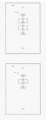
- Figure 1 shows a method 100 according to an exemplary embodiment.
- the method 100 is of training a machine learning, ML, algorithm to control a watercraft.
- the watercraft is a submarine or a submersible submerged in water.
- the method is implemented, at least in part, by a computer, comprising a processor and a memory, aboard the watercraft.
- the method comprises obtaining training data including respective sets of environmental parameters and corresponding actions of a set of communicatively isolated watercraft, including a first watercraft.
- the method comprises training the ML algorithm comprising determining relationships between the respective sets of environmental parameters and the corresponding actions of the watercraft of the set thereof.
- the method 100 may include any of the steps described with respect to the first aspect.
- FIG. 2 shows a method 200 according to an exemplary embodiment.
- the method 200 is of controlling a communicatively isolated watercraft.
- the watercraft is a submarine or a submersible submerged in water.
- the method is implemented, at least in part, by a computer, comprising a processor and a memory, aboard the watercraft.
- the method comprises controlling, by a trained machine learning, ML, algorithm, the watercraft, comprising navigating the watercraft towards a target.
- the method 200 may include any of the steps described with respect to the second aspect.
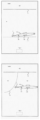
- Figure 3 shows a method according to an exemplary embodiment. Particularly, Figure 3 shows a side elevation view of a submarine 300 diving with a velocity V in water W (salt water), having a surface S and a thermocline T.
- the thermocline T i.e. a boundary
- temperature sensor signals i.e. environmental parameters.
- a density of the water W below the thermocline T is relatively higher, since a temperature of the water W therebelow is relatively lower, compared with the water W in the epipelagic zone.
- To maintain the velocity V of the submarine 300 upon diving through the thermocline T i.e.
- corresponding actions are actioned: a level in the ballast tank 302 of the submarine 300 is adjusted and optionally, an inclination of the bow plane 304 adjusted.
- the environmental parameters and the corresponding actions may be used for training the ML algorithm.
- the trained ML algorithm may implement these actions responsive to detecting the thermocline T.
- Figure 4 shows a method according to an exemplary embodiment.
- Figure 4 shows a side elevation view of a submarine 400 moving with a velocity V in salt water SW towards a fresh water FW pocket for example near an estuary, having a surface S.
- a boundary B between the salt water SW and the fresh water FW is detected, based on salinity sensor signals (i.e. environmental parameters).
- a density of the fresh water FW is relatively lower, compared with the salt water FW.
- corresponding actions are actioned: a level in the ballast tank 402 of the submarine 400 is adjusted and optionally, an inclination of the bow plane 404 adjusted.
- the environmental parameters and the corresponding actions may be used for training the ML algorithm.
- the trained ML algorithm may implement these actions responsive to detecting the boundary B.
- Figure 5 shows a method according to an exemplary embodiment. Particularly, Figure 5 shows a plan view of a submarine 500 moving with a velocity V in water W (salt water). A boundary B between currents C1 and C2 is detected, based on relative velocity sensor signals (i.e. environmental parameters). A velocity of the water W due to the current C1 is different to the velocity of the water W due to the current C2. To maintain the velocity V of the submarine 500 upon moving through the boundary B (i.e. including maintaining a constant bearing), corresponding actions are actioned: an inclination of the rudder plane 506 adjusted. The environmental parameters and the corresponding actions may be used for training the ML algorithm. Alternatively, the trained ML algorithm may implement these actions responsive to detecting the boundary B.
- the environmental parameters and the corresponding actions may be used for training the ML algorithm. Alternatively, the trained ML algorithm may implement these actions responsive to detecting the boundary B.
Landscapes
- Engineering & Computer Science (AREA)
- Physics & Mathematics (AREA)
- General Physics & Mathematics (AREA)
- Theoretical Computer Science (AREA)
- Aviation & Aerospace Engineering (AREA)
- Mechanical Engineering (AREA)
- Automation & Control Theory (AREA)
- Remote Sensing (AREA)
- Radar, Positioning & Navigation (AREA)
- Biophysics (AREA)
- Software Systems (AREA)
- Molecular Biology (AREA)
- Computing Systems (AREA)
- General Engineering & Computer Science (AREA)
- Evolutionary Computation (AREA)
- Mathematical Physics (AREA)
- General Health & Medical Sciences (AREA)
- Data Mining & Analysis (AREA)
- Computational Linguistics (AREA)
- Biomedical Technology (AREA)
- Artificial Intelligence (AREA)
- Life Sciences & Earth Sciences (AREA)
- Health & Medical Sciences (AREA)
- Control Of Position, Course, Altitude, Or Attitude Of Moving Bodies (AREA)
- Diaphragms For Electromechanical Transducers (AREA)
Claims (14)
- Verfahren zum Trainieren eines Algorithmus für maschinelles Lernen, ML, um ein Wasserfahrzeug zu steuern, wobei das Wasserfahrzeug ein U-Boot oder ein Tauchboot ist, das in Wasser untergetaucht ist, wobei das Verfahren, mindestens teilweise, durch einen Computer, umfassend einen Prozessor und einen Speicher, an Bord des Wasserfahrzeugs implementiert wird, das Verfahren umfassend:Erhalten (102) von Trainingsdaten, einschließlich jeweiliger Sätze von Umgebungsparametern und entsprechender Aktionen eines Satzes kommunikativ isolierter Wasserfahrzeuge, einschließlich eines ersten Wasserfahrzeugs; undTrainieren (104) des ML-Algorithmus, umfassend ein Bestimmen von Beziehungen zwischen den jeweiligen Sätzen von Umgebungsparametern und den entsprechenden Aktionen des Wasserfahrzeugs des Satzes davon,wobei das Bestimmen der Beziehungen zwischen den jeweiligen Sätzen von Umgebungsparametern und den entsprechenden Aktionen des Wasserfahrzeugs des Satzes davon ein Erkennen von Grenzen bezogen auf die Umgebungsparameter und ein Beziehen der entsprechenden Aktionen auf die erkannten Grenzen umfasst,das Verfahren dadurch gekennzeichnet, dass:das Erkennen von Grenzen bezogen auf die Umgebungsparameter das Erkennen einer Thermokline basierend auf einer erfassten Temperatur und/oder Dichte des Wassers umfasst, und die entsprechenden Aktionen Änderungen der Wasserdichte berücksichtigen, um eine konstante Tiefe, einen konstanten Auftrieb und/oder eine konstante Trajektorie des Wasserfahrzeugs durch die Thermokline aufrechtzuerhalten, undwobei das Wasserfahrzeug ein kommunikativ isoliertes Wasserfahrzeug ist.
- Verfahren nach Anspruch 1, wobei das Erhalten (102) der entsprechenden Aktionen des ersten Wasserfahrzeugs ein Identifizieren von Aktionen, die durch einen menschlichen Bediener an Bord des ersten Wasserfahrzeugs durchgeführt werden, umfasst.
- Verfahren nach einem der vorhergehenden Ansprüche, wobei das Erhalten (102) der entsprechenden Aktionen des ersten Wasserfahrzeugs das Identifizieren von Abhilfeaktionen umfasst, die durch einen menschlichen Bediener an Bord des ersten Wasserfahrzeugs als Reaktion auf Aktionen, die durch den ML-Algorithmus implementiert werden, durchgeführt werden.
- Verfahren nach einem der vorhergehenden Ansprüche, wobei die Aktionen ausgewählt sind aus Steuern eines Auftriebs, eines Ruders, einer Ebene, wie einer Bugebene, einer Segelebene oder einer Heckebene, eines Strahlruders, eines Propellers, eines Propulsors und/oder einer Antriebsmaschine des Wasserfahrzeugs.
- Verfahren nach einem der vorhergehenden Ansprüche, wobei die Sätze von Umgebungsparametern Sensorsignale bezogen auf einen Druck, eine Temperatur, einen Salzgehalt, eine Dichte, Gezeiten, eine Strömung, eine relative Geschwindigkeit und/oder einen Meeresboden des Wassers einschließen.
- Verfahren nach einem der vorhergehenden Ansprüche:wobei die Trainingsdaten jeweilige Richtlinien und entsprechende Trajektorien des Satzes von Wasserfahrzeugen einschließen, wobei sich jede Richtlinie auf ein Navigieren eines Wasserfahrzeugs des Satzes davon in dem Wasser in Richtung eines Ziels bezieht, und wobei jede entsprechende Trajektorie eine Reihe von Zuständen in einem Zustandsraum des Wasserfahrzeugs umfasst; undwobei das Trainieren (104) des ML-Algorithmus das Bestimmen von Beziehungen zwischen den jeweiligen Richtlinien und den entsprechenden Trajektorien des Wasserfahrzeugs des Satzes davon basierend auf jeweiligen Ergebnissen eines Vergleichens der Trajektorien und der Ziele umfasst.
- Verfahren nach Anspruch 6:wobei der ML-Algorithmus einen Agenten für bestärkendes Lernen, RL, umfasst und/oder ist; undwobei das Trainieren des ML-Algorithmus das Trainieren des Agenten umfasst, umfassend:(a) in Aktion bringen, durch den Agenten, eines Wasserfahrzeugs des Satzes davon gemäß einer entsprechenden Richtlinie, wobei die Richtlinie einen Aktionsraum des Agenten betrifft, umfassend das Navigieren des Wasserfahrzeugs des Satzes davon in Richtung eines Ziels, wobei dadurch eine entsprechende Trajektorie, umfassend eine Reihe von Zuständen in einem Zustandsraum des Wasserfahrzeugs, definiert wird, und wobei dadurch entsprechende Trainingsdaten erhalten werden;(b) Bestimmen einer Beziehung zwischen der Richtlinie und der Trajektorie basierend auf einem Ergebnis des Vergleichens der Trajektorie und des Ziels und Aktualisieren der Richtlinie basierend auf dem Ergebnis; und(c) Wiederholen der Schritte (a) und (b) für den Satz von Wasserfahrzeugen unter Verwendung der aktualisierten Richtlinie.
- Verfahren zum Steuern eines kommunikativ isolierten Wasserfahrzeugs, wobei das Wasserfahrzeug ein U-Boot oder ein Tauchboot ist, das in Wasser untergetaucht ist, wobei das Verfahren, mindestens teilweise, durch einen Computer, umfassend einen Prozessor und einen Speicher, an Bord des Wasserfahrzeugs implementiert wird, das Verfahren umfassend:
Steuern (202), durch einen trainierten Algorithmus für maschinelles Lernen, ML, der nach einem der vorhergehenden Ansprüche trainiert wird, des Wasserfahrzeugs, umfassend das Navigieren des Wasserfahrzeugs in Richtung eines Ziels. - Verfahren nach Anspruch 8, wobei das Navigieren des Wasserfahrzeugs in Richtung des Ziels gemäß einer Richtlinie erfolgt.
- Verfahren nach einem der Ansprüche 8 bis 9, umfassend das Erhalten eines Satzes von Umgebungsparametern.
- Verfahren nach einem der Ansprüche 8 bis 10, wobei das Wasserfahrzeug ein autonomes und/oder unbemanntes Wasserfahrzeug ist.
- Verfahren nach einem der Ansprüche 8 bis 11, wobei das Navigieren des Wasserfahrzeugs in Richtung des Ziels das Navigieren des Wasserfahrzeugs über eine oder mehrere Grenzen hinweg bezogen auf Umgebungsparameter umfasst.
- Kommunikativ isoliertes Wasserfahrzeug, wobei das Wasserfahrzeug ein U-Boot oder Tauchboot ist, einschließlich eines Computers, umfassend einen Prozessor und einen Speicher, an Bord, wobei der Computer einen trainierten Algorithmus für maschinelles Lernen, ML, umfasst, der nach einem der Ansprüche 1 bis 7 zum Steuern des Wasserfahrzeugs trainiert wird, umfassend das Navigieren des Wasserfahrzeugs in Richtung eines Ziels.
- Computer, umfassend einen Prozessor und einen Speicher, der konfiguriert ist, um ein Verfahren nach einem der Ansprüche 1 bis 12 zu implementieren, Computerprogramm, umfassend Anweisungen, die, wenn sie durch einen Computer, umfassend einen Prozessor und einen Speicher, ausgeführt werden, den Computer veranlassen, ein Verfahren nach einem der Ansprüche 1 bis 12 durchzuführen, nicht flüchtiges computerlesbares Speichermedium, umfassend Anweisungen, die, wenn sie durch einen Computer, umfassend einen Prozessor und einen Speicher, ausgeführt werden, den Computer veranlassen, ein Verfahren nach einem der Ansprüche 1 bis 12 durchzuführen.
Applications Claiming Priority (3)
| Application Number | Priority Date | Filing Date | Title |
|---|---|---|---|
| GB2107865.4A GB2607315A (en) | 2021-06-02 | 2021-06-02 | Method and apparatus |
| EP21275071.5A EP4099127A1 (de) | 2021-06-02 | 2021-06-02 | Methode und vorrichtung zum trainieren eines maschinellen lernalgorithmus |
| PCT/GB2022/051243 WO2022254177A1 (en) | 2021-06-02 | 2022-05-18 | Method and apparatus |
Publications (3)
| Publication Number | Publication Date |
|---|---|
| EP4348371A1 EP4348371A1 (de) | 2024-04-10 |
| EP4348371B1 true EP4348371B1 (de) | 2025-05-07 |
| EP4348371C0 EP4348371C0 (de) | 2025-05-07 |
Family
ID=81850704
Family Applications (1)
| Application Number | Title | Priority Date | Filing Date |
|---|---|---|---|
| EP22726163.3A Active EP4348371B1 (de) | 2021-06-02 | 2022-05-18 | Verfahren und vorrichtung |
Country Status (4)
| Country | Link |
|---|---|
| US (1) | US12411500B2 (de) |
| EP (1) | EP4348371B1 (de) |
| AU (1) | AU2022287270A1 (de) |
| WO (1) | WO2022254177A1 (de) |
Families Citing this family (2)
| Publication number | Priority date | Publication date | Assignee | Title |
|---|---|---|---|---|
| US12411500B2 (en) | 2021-06-02 | 2025-09-09 | Bae Systems Plc | Method and apparatus for controlling a communicatively isolated watercraft |
| CN119882740B (zh) * | 2025-01-11 | 2025-10-31 | 天津大学 | 一种基于深度强化学习的无人船路径跟踪控制方法 |
Family Cites Families (10)
| Publication number | Priority date | Publication date | Assignee | Title |
|---|---|---|---|---|
| US10191489B1 (en) * | 2016-11-08 | 2019-01-29 | X Development Llc | Control systems for autonomous submersible structures |
| US11430331B2 (en) * | 2017-09-08 | 2022-08-30 | Uatc, Llc | Power and thermal management systems and methods for autonomous vehicles |
| US11155324B2 (en) * | 2017-09-13 | 2021-10-26 | Hefring ehf. | Methods and systems for wave slam monitoring of water vessels |
| CN108508473B (zh) | 2018-05-30 | 2024-07-26 | 国家海洋技术中心 | 基于水下自主航行器的水体γ辐射立体监测系统及方法 |
| US11036232B2 (en) * | 2018-09-14 | 2021-06-15 | Huawei Technologies Co., Ltd | Iterative generation of adversarial scenarios |
| CN111026145B (zh) * | 2019-12-24 | 2023-06-23 | 上海海事大学 | 一种适用于上层海洋机器人沉浮及姿态控制系统 |
| WO2022074643A1 (en) * | 2020-10-08 | 2022-04-14 | Edgy Bees Ltd. | Improving geo-registration using machine-learning based object identification |
| US12411500B2 (en) | 2021-06-02 | 2025-09-09 | Bae Systems Plc | Method and apparatus for controlling a communicatively isolated watercraft |
| US11532186B1 (en) * | 2021-08-18 | 2022-12-20 | Beta Air, Llc | Systems and methods for communicating data of a vehicle |
| US20240027193A1 (en) * | 2022-07-22 | 2024-01-25 | Navico, Inc. | Dynamic easyrouting utilizing onboard sensors |
-
2022
- 2022-05-18 US US18/563,514 patent/US12411500B2/en active Active
- 2022-05-18 AU AU2022287270A patent/AU2022287270A1/en active Pending
- 2022-05-18 WO PCT/GB2022/051243 patent/WO2022254177A1/en not_active Ceased
- 2022-05-18 EP EP22726163.3A patent/EP4348371B1/de active Active
Also Published As
| Publication number | Publication date |
|---|---|
| US20240272644A1 (en) | 2024-08-15 |
| AU2022287270A1 (en) | 2023-12-14 |
| EP4348371C0 (de) | 2025-05-07 |
| WO2022254177A1 (en) | 2022-12-08 |
| US12411500B2 (en) | 2025-09-09 |
| EP4348371A1 (de) | 2024-04-10 |
Similar Documents
| Publication | Publication Date | Title |
|---|---|---|
| KR102682747B1 (ko) | 수중항주체의 경로설정방법. 이를 이용한 수중항주체의 최적제어방법 및 수중항주체 | |
| US9718523B2 (en) | Gliding robotic fish navigation and propulsion | |
| KR20230011310A (ko) | 선박의 자동 유도 방법, 선박의 자동 유도 프로그램, 선박의 자동 유도 시스템 및 선박 | |
| US9381985B2 (en) | Autonomous unmanned sailing vessel | |
| RU2460043C1 (ru) | Система навигации автономного необитаемого подводного аппарата | |
| Majohr et al. | Modelling, simulation and control of an autonomous surface marine vehicle for surveying applications Measuring Dolphin MESSIN | |
| EP4348371B1 (de) | Verfahren und vorrichtung | |
| JP3949932B2 (ja) | 自律型水中航走体の航走制御装置 | |
| EP3696078B1 (de) | Verfahren und system zur steuerung eines unbemannten überwasserschiffs | |
| CN113984061A (zh) | 一种基于因子图优化的uuv多海域综合导航系统设计方法 | |
| JP2019043289A (ja) | 航走制御装置及び航走制御方法 | |
| Bandyophadyay et al. | A simple reactive obstacle avoidance algorithm and its application in singapore harbor | |
| Lyon | The navigation of Arctic polar submarines | |
| EP4099127A1 (de) | Methode und vorrichtung zum trainieren eines maschinellen lernalgorithmus | |
| GB2607315A (en) | Method and apparatus | |
| Annamalai et al. | A robust navigation technique for integration in the guidance and control of an uninhabited surface vehicle | |
| CN117647981B (zh) | 一种无人艇智能航行控制方法、装置及设备 | |
| US20240310857A1 (en) | Auto-docking of marine vessels | |
| Pandey et al. | Autonomous navigation of catamaran surface vessel | |
| Butler et al. | Precision Hybrid Inertial/Acoustic Navigation System for a Long‐Range Autonomous Underwater Vehicle | |
| Edgar et al. | An experimental self-motion study of the Ocean Explorer AUV in controlled sea states | |
| US12454341B1 (en) | Marine propulsion control system, method, and user interface | |
| US12298769B1 (en) | Navigation control system and method for a marine vessel | |
| US20250321594A1 (en) | Systems and methods for controlling a watercraft via propulsion devices | |
| Tsay | Intelligent guidance and control laws for an autonomous underwater vehicle |
Legal Events
| Date | Code | Title | Description |
|---|---|---|---|
| STAA | Information on the status of an ep patent application or granted ep patent |
Free format text: STATUS: UNKNOWN |
|
| STAA | Information on the status of an ep patent application or granted ep patent |
Free format text: STATUS: THE INTERNATIONAL PUBLICATION HAS BEEN MADE |
|
| PUAI | Public reference made under article 153(3) epc to a published international application that has entered the european phase |
Free format text: ORIGINAL CODE: 0009012 |
|
| STAA | Information on the status of an ep patent application or granted ep patent |
Free format text: STATUS: REQUEST FOR EXAMINATION WAS MADE |
|
| 17P | Request for examination filed |
Effective date: 20231206 |
|
| AK | Designated contracting states |
Kind code of ref document: A1 Designated state(s): AL AT BE BG CH CY CZ DE DK EE ES FI FR GB GR HR HU IE IS IT LI LT LU LV MC MK MT NL NO PL PT RO RS SE SI SK SM TR |
|
| DAV | Request for validation of the european patent (deleted) | ||
| DAX | Request for extension of the european patent (deleted) | ||
| STAA | Information on the status of an ep patent application or granted ep patent |
Free format text: STATUS: EXAMINATION IS IN PROGRESS |
|
| 17Q | First examination report despatched |
Effective date: 20241122 |
|
| GRAP | Despatch of communication of intention to grant a patent |
Free format text: ORIGINAL CODE: EPIDOSNIGR1 |
|
| STAA | Information on the status of an ep patent application or granted ep patent |
Free format text: STATUS: GRANT OF PATENT IS INTENDED |
|
| INTG | Intention to grant announced |
Effective date: 20250220 |
|
| GRAS | Grant fee paid |
Free format text: ORIGINAL CODE: EPIDOSNIGR3 |
|
| GRAA | (expected) grant |
Free format text: ORIGINAL CODE: 0009210 |
|
| STAA | Information on the status of an ep patent application or granted ep patent |
Free format text: STATUS: THE PATENT HAS BEEN GRANTED |
|
| AK | Designated contracting states |
Kind code of ref document: B1 Designated state(s): AL AT BE BG CH CY CZ DE DK EE ES FI FR GB GR HR HU IE IS IT LI LT LU LV MC MK MT NL NO PL PT RO RS SE SI SK SM TR |
|
| REG | Reference to a national code |
Ref country code: GB Ref legal event code: FG4D |
|
| REG | Reference to a national code |
Ref country code: CH Ref legal event code: EP |
|
| REG | Reference to a national code |
Ref country code: DE Ref legal event code: R096 Ref document number: 602022014341 Country of ref document: DE |
|
| REG | Reference to a national code |
Ref country code: IE Ref legal event code: FG4D |
|
| U01 | Request for unitary effect filed |
Effective date: 20250508 |
|
| U07 | Unitary effect registered |
Designated state(s): AT BE BG DE DK EE FI FR IT LT LU LV MT NL PT RO SE SI Effective date: 20250520 |
|
| U20 | Renewal fee for the european patent with unitary effect paid |
Year of fee payment: 4 Effective date: 20250530 |
|
| PG25 | Lapsed in a contracting state [announced via postgrant information from national office to epo] |
Ref country code: ES Free format text: LAPSE BECAUSE OF FAILURE TO SUBMIT A TRANSLATION OF THE DESCRIPTION OR TO PAY THE FEE WITHIN THE PRESCRIBED TIME-LIMIT Effective date: 20250507 |
|
| PG25 | Lapsed in a contracting state [announced via postgrant information from national office to epo] |
Ref country code: GR Free format text: LAPSE BECAUSE OF FAILURE TO SUBMIT A TRANSLATION OF THE DESCRIPTION OR TO PAY THE FEE WITHIN THE PRESCRIBED TIME-LIMIT Effective date: 20250808 Ref country code: NO Free format text: LAPSE BECAUSE OF FAILURE TO SUBMIT A TRANSLATION OF THE DESCRIPTION OR TO PAY THE FEE WITHIN THE PRESCRIBED TIME-LIMIT Effective date: 20250807 |
|
| PG25 | Lapsed in a contracting state [announced via postgrant information from national office to epo] |
Ref country code: PL Free format text: LAPSE BECAUSE OF FAILURE TO SUBMIT A TRANSLATION OF THE DESCRIPTION OR TO PAY THE FEE WITHIN THE PRESCRIBED TIME-LIMIT Effective date: 20250507 |
|
| PG25 | Lapsed in a contracting state [announced via postgrant information from national office to epo] |
Ref country code: HR Free format text: LAPSE BECAUSE OF FAILURE TO SUBMIT A TRANSLATION OF THE DESCRIPTION OR TO PAY THE FEE WITHIN THE PRESCRIBED TIME-LIMIT Effective date: 20250507 |
|
| PG25 | Lapsed in a contracting state [announced via postgrant information from national office to epo] |
Ref country code: RS Free format text: LAPSE BECAUSE OF FAILURE TO SUBMIT A TRANSLATION OF THE DESCRIPTION OR TO PAY THE FEE WITHIN THE PRESCRIBED TIME-LIMIT Effective date: 20250807 |
|
| PG25 | Lapsed in a contracting state [announced via postgrant information from national office to epo] |
Ref country code: IS Free format text: LAPSE BECAUSE OF FAILURE TO SUBMIT A TRANSLATION OF THE DESCRIPTION OR TO PAY THE FEE WITHIN THE PRESCRIBED TIME-LIMIT Effective date: 20250907 |