EP4340175A1 - Rail for suspending electronic devices and system comprising such a rail and one or more electronic devices - Google Patents
Rail for suspending electronic devices and system comprising such a rail and one or more electronic devices Download PDFInfo
- Publication number
- EP4340175A1 EP4340175A1 EP22199810.7A EP22199810A EP4340175A1 EP 4340175 A1 EP4340175 A1 EP 4340175A1 EP 22199810 A EP22199810 A EP 22199810A EP 4340175 A1 EP4340175 A1 EP 4340175A1
- Authority
- EP
- European Patent Office
- Prior art keywords
- rail
- electronic devices
- suspended
- electronic device
- controller
- Prior art date
- Legal status (The legal status is an assumption and is not a legal conclusion. Google has not performed a legal analysis and makes no representation as to the accuracy of the status listed.)
- Withdrawn
Links
Images
Classifications
-
- H—ELECTRICITY
- H02—GENERATION; CONVERSION OR DISTRIBUTION OF ELECTRIC POWER
- H02J—ELECTRIC POWER NETWORKS; CIRCUIT ARRANGEMENTS OR SYSTEMS FOR SUPPLYING OR DISTRIBUTING ELECTRIC POWER; SYSTEMS FOR STORING ELECTRIC ENERGY
- H02J50/00—Circuit arrangements or systems for wireless supply or distribution of electric power
- H02J50/005—Mechanical details of housing or structure aiming to accommodate the power transfer means, e.g. mechanical integration of coils, antennas or transducers into emitting or receiving devices
-
- H—ELECTRICITY
- H02—GENERATION; CONVERSION OR DISTRIBUTION OF ELECTRIC POWER
- H02J—ELECTRIC POWER NETWORKS; CIRCUIT ARRANGEMENTS OR SYSTEMS FOR SUPPLYING OR DISTRIBUTING ELECTRIC POWER; SYSTEMS FOR STORING ELECTRIC ENERGY
- H02J50/00—Circuit arrangements or systems for wireless supply or distribution of electric power
- H02J50/10—Circuit arrangements or systems for wireless supply or distribution of electric power using inductive coupling
-
- H—ELECTRICITY
- H02—GENERATION; CONVERSION OR DISTRIBUTION OF ELECTRIC POWER
- H02J—ELECTRIC POWER NETWORKS; CIRCUIT ARRANGEMENTS OR SYSTEMS FOR SUPPLYING OR DISTRIBUTING ELECTRIC POWER; SYSTEMS FOR STORING ELECTRIC ENERGY
- H02J50/00—Circuit arrangements or systems for wireless supply or distribution of electric power
- H02J50/80—Circuit arrangements or systems for wireless supply or distribution of electric power involving the exchange of data, concerning supply or distribution of electric power, between transmitting devices and receiving devices
Definitions
- the present invention relates to the field of electrical power rails. More particularly, to rails configured to suspend one or more electronic devices, such as a light emitting device, a speaker, a temperature sensor, a CO 2 sensor, a humidity sensor, a light sensor, a camera, and/or a mesh network node.
- the present invention also relates a system comprising such a rail and to a method of mounting such rail.
- Rails for suspending electronic devices are commonly used both in residential building as well as in commercial buildings such as offices and stores.
- Existing rails often provides a fixation that is cumbersome to use. For example, most often two hands operation is needed in order to attach or move a device to be suspended by the rail is needed.
- a more user-friendly rail is in demand.
- rails of today are space-consuming and may even give anon-esthetic impression.
- a rail for suspending electronic devices comprising magnetic attachment means configured to suspend an electronic device; and a plurality of coils, positioned along a length of the rail. Each coil being configured to provide: inductive transfer of power to an electronic device suspended by the rail, and wireless communication with an electronic device suspended by the rail.
- a rail for suspending electronic devices is provided.
- the electronic devices can get power from the rail and be controlled from the rail. Due to the magnetic attachment means flexibility on the devices location on rail is enabled at the same time as alignment between the suspended electronic devices and the coils are provided.
- the magnetic attachment means further simplify fixation of an electronic device to be suspended by the rail, using magnetic attachment means provide for a simple installation of the electronic device, even one-hand operation is made possible.
- a user can add or remove electronic devices to the rail at any time depending on the need.
- Inductive transfer of energy from the rail to electronic devices suspended thereby is provided. Hence, transfer of energy is made wirelessly, giving the possibility to conceal the rail behind a thin non-conductive screen, such as a wallpaper or any other thin foil screen.
- multiple coils can be used for power-hungry electronic devices, i.e., one electronic device may be powered via multiple coils with multiple pick-up coils in the electronic device.
- Different electronic devices can be suspended by the rail without any specific order or numbers and mixed freely on the rail. Depending on the device characteristic, different usage of power and communication is possible independent of the other electronic devices suspended by the rail.
- the rail provides the possibility to be concealed behind a thin layer such as a wallpaper or any other thin foil screen. Such a layer may hence hide unused parts of the rail. Such a rail blends better in into the surrounding design.
- the magnetic attachment means may comprise a plurality of magnetic attachment points. A subset of the plurality of magnetic attachment points may be configured to suspend a single one of the one or more electronic devices.
- the rail may further comprise a plurality of light indicators. Each light indicator may be arranged in connection with a respective one of the plurality of coils. Such light indicators simplify the localization of the rail when mounting the electronic device, especially if the rail is concealed behind a thin layer.
- the rail may further comprise a light controller configured to set the plurality of light indicators in an on or off mode.
- the light controller may be configured to individually set the plurality of light indicators in an on or off mode.
- the rail may comprise a flat outer surface to which the electronic devices are suspendable via the magnetic attachment means.
- the rail may be arranged in a recess of a structure, such as a ceiling or wall, and hidden by a layer, such as a wallpaper or any other thin foil screen.
- the layer preferably being a non-conductive thin layer.
- the rail may further comprise a rail controller configured to individually control the electronic devices suspended by the rail.
- the rail controller may further be configured to wirelessly communicate with one or more devices not suspended by the rail.
- the rail may be able to act as single device towards a client or server.
- the rail controller can be set to present an interface towards a device external from the rail, such as a client or server.
- the rail controller may be set to relay communication to the electronic devices suspended by the rail. For example, in case the rail is suspending a number of light emitting devices, each light emitting device can be individually controlled via rail controller.
- the rail may further comprise a coil controller configured to individually control the plurality of coils.
- the rail may further comprise a connection interface configured to connect the rail to mains power and/or to another rail.
- a second aspect system comprising a rail according to the first aspect and one or more electronic devices suspended thereby is provided.
- the electronic devices may be selected from the group consisting of a light emitting device, a speaker, a temperature sensor, a CO 2 sensor, a humidity sensor, a light sensor, a camera, and a mesh network node.
- At least a subset of the electronic devices may comprise a built-in battery configured to at least intermittently power the electronic device.
- a built-in battery configured to at least intermittently power the electronic device.
- At least a subset of the electronic devices comprises a built-in short range wireless communication module configured to communicate with a device external from the system.
- the system may further comprise a plurality of rails according to the first aspect connected to each other.
- a method of mounting a rail according to the first aspect comprising: arranging the rail in a recess in a structure, such as a wall or a ceiling; and covering the rail with a layer, such as a wallpaper or any other thin foil screen.
- the layer preferably being a non-conductive thin layer.
- Fig. 1 illustrates a system 100 comprising a rail 110 for suspending electronic devices 120 and a plurality of electronic devices 120 suspended by the rail 110.
- the electronic devices 120 may be various electronic devices 120.
- the electronic devices 120 are selected from the group consisting of a light emitting device, a speaker, a temperature sensor, a CO 2 sensor, a humidity sensor, a light sensor, a camera, and a mesh network node.
- the rail 110 is typically configured to power the one or more electronic devices 120 suspended thereby.
- At least one of the electronic devices 120 may comprise a built-in battery 122.
- the built-in battery 122 is configured to at least intermittently power the electronic device 120.
- peak current limitations that exceed inductive power transfer that the rail 110 can provide may be handled.
- the device can be moved in relation to the rail 110 without loss of function and/or communication.
- At least one of the electronic devices may comprise a built-in short-range wireless communication module 124.
- the short-range wireless communication module 124 is configured to communicate with a device external from the system 100.
- the short-range wireless communication module 124 may be configured to communicate using any suitable communication protocol. Some non-limiting examples of such communication protocols are Wi-Fi, BLE, and Zigbee. It is however realized than any short-range communication protocol, having a range within 1 to 100 meters, may be used.
- the rail 110 may comprise an external power supply 118.
- the external power supply 118 may be connected to a connection interface 119 of the rail 110. More specifically to an input AC or DC power connection of the connection interface 119 of the rail 110.
- the external power supply 118 is configured to supply the rail 110 with power.
- the external power supply 118 may be an ordinary electrical plug connectable to an electrical power socket.
- the connection interface 119 of the rail 110 may be configured to connect the rail 110 to mains power.
- connection interface 119 may also act as a connection interface to another rail 110.
- connection interface 119 as a connection interface to another rail 110 both power and communication between the rails 110 may be provided through the connection interface 119.
- Communication between the rails 110 may, e.g., be made using Single Pair ethernet.
- Connection interfaces 119 of two different rails 110 may be connected to each other by an adapter or a cable. Multiple rails 110 can be connected in series in parallel or in star configuration.
- the rail 110 comprises a plurality of magnetic attachment means 112 and a plurality of coils 114.
- the rail 110 is preferably having a flat outer surface 113.
- the rail 100 may be concealed behind a non-conductive thin layer, such as a wallpaper or any other thin foil screen.
- the plurality of magnetic attachment means 112 are positioned along the length of the rail 110.
- the magnetic attachment means 112 are configured to suspend one or more electronic devices 120.
- the magnetic attachment means 112 may comprise magnetic attachment points.
- a subset of the plurality of magnetic attachment points may be configured to suspend a single one of the one or more electronic devices 120.
- the suspended electronic device can be aligned with a coil 114.
- two or more magnetic attachment points are used for suspending a single electronic device 120.
- three magnetic attachment points may be used, two on one side of the rail 110 and one on the opposite side of the rail 110 indicating a non-symmetric magnetic attachment means 112 indicating a preferred orientation of suspending an electronic device 120.
- the plurality of coils 114 are positioned along the length of the rail 110.
- the coils 114 may partially overlap for a higher density of possible attachment points for the electronic devices 120 to be suspended.
- Each coil 114 is configured to provide one or more of: inductive transfer of power to an electronic device 120 suspended by the rail 110, and wireless communication with an electronic device 120 suspended by the rail 110.
- the wireless communication via the coils 114 may by either proprietary or standardized, such as QI, inductive communication.
- the suspended electronic devices 120 may be individually controlled.
- the through the inductive communication via the coils 114 suspended electronic devices 120 may be identified using the inductive communication. For example, the type of suspended electronic device 120 may be identified.
- a location on the rail 110 of a suspended electronic device 120 may be identified.
- the inductive communication via the coils 114 may further be used for configuring and/or controlling each suspended electronic device 120.
- the rail 110 comprises a coil controller 115.
- the coil controller 115 is configured to control the coils 114.
- the coil controller 115 is configured to control the coils 114 individually.
- the coil controller 115 may be configured to power the coils 114 for providing inductive transfer of power to an electronic device 120 suspended by the rail 110.
- the coil controller 115 may be configured to safeguard so that coils 114 presently not being set to service a suspended electronic device 120 with power is unpowered.
- the coil controller 115 may be configured to monitor/measure power consumption of an electronic device 120 being suspended by the rail 110.
- the coil controller 115 may be configured to control wireless communication with an electronic device 120 suspended by the rail 110.
- the rail 110 may further comprise a plurality of light indicators 116. Each light indicator 116 is arranged in connection with a respective one of the plurality of coils 114. The light indicators 116 provide guidance for finding a magnetic attachment means 112 for an electronic device to be suspended by the rail 110. This is especially true in case the rail 110 is concealed behind a non-conductive thin layer of, e.g., wallpaper or any other thin foil screen.
- the rail 110 also comprises a light controller 117 configured to control the light indicators 116.
- the light controller 117 may set a light indicator 116 in an on mode or in an off mode.
- the light controller 117 is configured to control the light indicators 116 individually. Hence, a guide for where to suspend a particular one of the one or more electronic devices 120 may be given.
- the light indicator 116 may further be used for status indication.
- the rail 110 may further comprise a rail controller 111.
- Each electronic device 120 may be configured to identify itself and the rail controller 111 may therefore identify the electronic device 120 and its location on the rail 110.
- the rail controller 111 may be configured to keep record of each electronic device suspended by the rail. That is, the rail controller 111 may keep record on which electronic devices 120 are suspended by the rail 110 and what functionality the different electronic devices 120 may provide. Moreover, the rail controller 111 may monitor a status of each electronic device 120 suspended by the rail 110.
- the rail controller 111 may further be configured to individually control electronic devices 120 suspended by the rail 110. Such controlling of the electronic devices 120 suspended by the rail 110 is preferably made via inductive communication. That is, via communication controlled by the coil controller 115. Hence, each electronic device 120 can be identified and located on the rail 110. The rail controller 111 will keep track of each electronic device 120 suspended thereby. Further, the rail controller 111 may communicate to devices external from the rail 110 which electronic device 120 are available and how they can be controlled.
- the rail controller 111 may further be configured to wirelessly communicate with one or more devices not suspended by the rail 120.
- the one or more devices not suspended by the rail 110 may, e.g., be a client (such as a mobile device configured to control the one or more electronic devices 120 suspended by the rail 110), a server (such as home automation server configured to control the one or more electronic devices 120 suspended by the rail 110), or another rail 110 in a system of rails.
- the rail 110 may then act as a "single" device connected to a control device, e.g., the client or the server. This allows for simplified communication/connection between the control device and the electronic devices 120. Further, congestion in communication between the control device and the electronic devices 120 may be avoided.
- the rail controller 111 may further be configured to monitor energy consumption of each electronic device 120 suspended by the rail 110. Further, the rail controller 111 may monitor a total energy consumption of the rail 110 and all electronic device 120 suspended thereby.
- One or more of the rail controller 111, the coil controller 115 and the light controller 117 may be implemented as a hardware module a software module or a combination thereof.
- the rail controller 111, the coil controller 115 and/or the light controller 117 of the rail 110 may be integrated as a common controller.
- each electronic device 120 suspended by the rail 110 can operate in either individual mode or through communicating through the rail 110.
- the electronic device 120 can offer communication over Wi-Fi, BLE, Zigbee or other radio network.
- the major communication is set to be over Wi-Fi, BLE, Zigbee or other radio network.
- such an electronic device 120 can still utilize the communication via the rail 110 for other purposes, such as controlling its volume, identify neighboring electronic devices, etc.
- All electronic devices 120 on the rail 110 can utilize the communication via the rail 110, through the inductive coils 114.
- Typical communication via the rail 110 is used to identify the location of the electronic device 120, communicate small amount of data, e.g., exposed function and controls, control data to turn the electronic device 120 on/off light, set a volume etc.
- the rail controller 111 is configured to translate inductive communication to an internal multi-drop bus, e.g., Single-pair ethernet, hereby named rail-bus.
- an internal multi-drop bus e.g., Single-pair ethernet, hereby named rail-bus.
- one or more nodes can transfer the communication to any standard communication, such as Wifi, Ethernet, BLE etc.
- the rail 110 can act as a single node on a communication network, enabling access to all electronic devices 120 suspended by the rail 110.
- setup of the rail 110 can be exposed externally of the rail 110, to, e.g., simplify control, setup and maintenance.
- a method for mounting a rail 110 as discussed above in a structure such as a wall or a ceiling will be discussed.
- the method comprises arranging S302 the rail 110 in a recess in the structure; and covering S304 the rail 110 with a layer, such as a wallpaper or any other thin foil screen.
- the layer preferably being a non-conductive thin layer.
- the system 100 may comprise a plurality of rails 110.
- the rails 110 may be connected to each other in various layouts.
- the rails 110 may be interconnected via a connection interface 119 of the respective rail 110.
- a specific rail 110 may be connected to another rail 110.
- the rails 110 may be connected to in series, in parallel or in star topology.
- at least one of the rails 110 comprises an external power supply 118 connecting the system 100 of rails 110 to an external power supply, e.g., via an ordinary electrical plug connectable to an electrical power socket.
- a rail controller 111 of a single one of the rails 110 may be used as a main controller communicating with devices external from the system 100. In such case, the rail bus may be extended seamlessly.
- the device can select to turn them off if connected through the rail 110, in order to make setup and communication easier, and not to clutter up the radio space.
Landscapes
- Engineering & Computer Science (AREA)
- Computer Networks & Wireless Communication (AREA)
- Power Engineering (AREA)
- Charge And Discharge Circuits For Batteries Or The Like (AREA)
Abstract
Description
- The present invention relates to the field of electrical power rails. More particularly, to rails configured to suspend one or more electronic devices, such as a light emitting device, a speaker, a temperature sensor, a CO2 sensor, a humidity sensor, a light sensor, a camera, and/or a mesh network node. The present invention also relates a system comprising such a rail and to a method of mounting such rail.
- Rails for suspending electronic devices are commonly used both in residential building as well as in commercial buildings such as offices and stores. Existing rails often provides a fixation that is cumbersome to use. For example, most often two hands operation is needed in order to attach or move a device to be suspended by the rail is needed. Hence, a more user-friendly rail is in demand. Further, rails of today are space-consuming and may even give anon-esthetic impression. Hence, a more compact and nice-looking solution for suspending electronic devices as sought for.
- It is an object to mitigate, alleviate or eliminate one or more of the above-identified deficiencies in the art and disadvantages singly or in any combination and provide a possibility to solve one or more of the above-mentioned problems.
- According to a first aspect a rail for suspending electronic devices is provided. the rail comprising magnetic attachment means configured to suspend an electronic device; and a plurality of coils, positioned along a length of the rail. Each coil being configured to provide: inductive transfer of power to an electronic device suspended by the rail, and wireless communication with an electronic device suspended by the rail.
- Hence, a rail for suspending electronic devices is provided. The electronic devices can get power from the rail and be controlled from the rail. Due to the magnetic attachment means flexibility on the devices location on rail is enabled at the same time as alignment between the suspended electronic devices and the coils are provided. The magnetic attachment means further simplify fixation of an electronic device to be suspended by the rail, using magnetic attachment means provide for a simple installation of the electronic device, even one-hand operation is made possible. Hence, a user can add or remove electronic devices to the rail at any time depending on the need. Inductive transfer of energy from the rail to electronic devices suspended thereby is provided. Hence, transfer of energy is made wirelessly, giving the possibility to conceal the rail behind a thin non-conductive screen, such as a wallpaper or any other thin foil screen. Further, multiple coils can be used for power-hungry electronic devices, i.e., one electronic device may be powered via multiple coils with multiple pick-up coils in the electronic device. Different electronic devices can be suspended by the rail without any specific order or numbers and mixed freely on the rail. Depending on the device characteristic, different usage of power and communication is possible independent of the other electronic devices suspended by the rail. Further, the rail provides the possibility to be concealed behind a thin layer such as a wallpaper or any other thin foil screen. Such a layer may hence hide unused parts of the rail. Such a rail blends better in into the surrounding design.
- The magnetic attachment means may comprise a plurality of magnetic attachment points. A subset of the plurality of magnetic attachment points may be configured to suspend a single one of the one or more electronic devices.
- The rail may further comprise a plurality of light indicators. Each light indicator may be arranged in connection with a respective one of the plurality of coils. Such light indicators simplify the localization of the rail when mounting the electronic device, especially if the rail is concealed behind a thin layer.
- The rail may further comprise a light controller configured to set the plurality of light indicators in an on or off mode. The light controller may be configured to individually set the plurality of light indicators in an on or off mode.
- The rail may comprise a flat outer surface to which the electronic devices are suspendable via the magnetic attachment means. By forming the rail to have a flat outer surface the rail may be arranged in a recess of a structure, such as a ceiling or wall, and hidden by a layer, such as a wallpaper or any other thin foil screen. The layer preferably being a non-conductive thin layer.
- The rail may further comprise a rail controller configured to individually control the electronic devices suspended by the rail. The rail controller may further be configured to wirelessly communicate with one or more devices not suspended by the rail. Hence, the rail may be able to act as single device towards a client or server. The rail controller can be set to present an interface towards a device external from the rail, such as a client or server. The rail controller may be set to relay communication to the electronic devices suspended by the rail. For example, in case the rail is suspending a number of light emitting devices, each light emitting device can be individually controlled via rail controller.
- The rail may further comprise a coil controller configured to individually control the plurality of coils.
- The rail may further comprise a connection interface configured to connect the rail to mains power and/or to another rail.
- According to a second aspect system comprising a rail according to the first aspect and one or more electronic devices suspended thereby is provided.
- The electronic devices may be selected from the group consisting of a light emitting device, a speaker, a temperature sensor, a CO2 sensor, a humidity sensor, a light sensor, a camera, and a mesh network node.
- At least a subset of the electronic devices may comprise a built-in battery configured to at least intermittently power the electronic device. By arranging an electronic device to have its own battery inside peak current handling that exceeds the coil current transfer limitation is provided for. Moreover, rearrangement of the electronic device on the rail without loss off functions or communication is provided for. The electronic device may also use the rail as a charger for its built-in battery to be able to function without applied power from the rail.
- At least a subset of the electronic devices comprises a built-in short range wireless communication module configured to communicate with a device external from the system.
- The system may further comprise a plurality of rails according to the first aspect connected to each other.
- The above-mentioned features of the rail, when applicable, apply to this second aspect as well. In order to avoid undue repetition, reference is made to the above.
- According to a third aspect a method of mounting a rail according to the first aspect is provided. The method comprising: arranging the rail in a recess in a structure, such as a wall or a ceiling; and covering the rail with a layer, such as a wallpaper or any other thin foil screen. The layer preferably being a non-conductive thin layer.
- The above-mentioned features of the rail and/or system, when applicable, apply to this third aspect as well. In order to avoid undue repetition, reference is made to the above.
- A further scope of applicability will become apparent from the detailed description given below. However, it should be understood that the detailed description and specific examples are given by way of illustration only.
- It is to be understood that the terminology used herein is for purpose of describing particular embodiments only, and is not intended to be limiting. It must be noted that, as used in the specification and the appended claim, the articles "a," "an," "the," and "said" are intended to mean that there are one or more of the elements unless the context clearly dictates otherwise. Thus, for example, reference to "a unit" or "the unit" may include several devices, and the like. Furthermore, the words "comprising", "including", "containing" and similar wordings does not exclude other elements or steps.
- The above and other aspects will now be described in more detail, with reference to appended figures. The figures should not be considered limiting; instead, they are used for explaining and understanding.
- As illustrated in the figures, the sizes of layers and regions may be exaggerated for illustrative purposes and, thus, are provided to illustrate the general structures. Like reference numerals refer to like elements throughout.
-
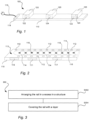
Fig. 1 illustrate a system comprising a rail for suspending electronic devices and a plurality of electronic devices suspended by the rail. -
Fig. 2 illustrate the rail ofFig. 1 in more detail. -
Fig. 3 is a block diagram of a method for mounting a rail illustrated in connection withFig. 1 to a structure. - The present invention will now be described more fully hereinafter with reference to the accompanying drawings, in which currently preferred embodiments of the invention are shown. This invention may, however, be embodied in many different forms and should not be construed as limited to the embodiments set forth herein; rather, these embodiments are provided for thoroughness and completeness, and to fully convey the scope of the invention to the skilled person.
-
Fig. 1 illustrates asystem 100 comprising arail 110 for suspendingelectronic devices 120 and a plurality ofelectronic devices 120 suspended by therail 110. Theelectronic devices 120 may be variouselectronic devices 120. Typically, theelectronic devices 120 are selected from the group consisting of a light emitting device, a speaker, a temperature sensor, a CO2 sensor, a humidity sensor, a light sensor, a camera, and a mesh network node. Among many functions, therail 110 is typically configured to power the one or moreelectronic devices 120 suspended thereby. - At least one of the
electronic devices 120 may comprise a built-inbattery 122. The built-inbattery 122 is configured to at least intermittently power theelectronic device 120. By having such built-inbattery 122, peak current limitations that exceed inductive power transfer that therail 110 can provide may be handled. Also, the device can be moved in relation to therail 110 without loss of function and/or communication. - At least one of the electronic devices may comprise a built-in short-range
wireless communication module 124. The short-rangewireless communication module 124 is configured to communicate with a device external from thesystem 100. The short-rangewireless communication module 124 may be configured to communicate using any suitable communication protocol. Some non-limiting examples of such communication protocols are Wi-Fi, BLE, and Zigbee. It is however realized than any short-range communication protocol, having a range within 1 to 100 meters, may be used. - The
rail 110 may comprise anexternal power supply 118. Theexternal power supply 118 may be connected to aconnection interface 119 of therail 110. More specifically to an input AC or DC power connection of theconnection interface 119 of therail 110. Theexternal power supply 118 is configured to supply therail 110 with power. For example, theexternal power supply 118 may be an ordinary electrical plug connectable to an electrical power socket. Hence, theconnection interface 119 of therail 110 may be configured to connect therail 110 to mains power. - The
connection interface 119 may also act as a connection interface to anotherrail 110. Usingconnection interface 119 as a connection interface to anotherrail 110 both power and communication between therails 110 may be provided through theconnection interface 119. Communication between therails 110 may, e.g., be made using Single Pair ethernet. Connection interfaces 119 of twodifferent rails 110 may be connected to each other by an adapter or a cable.Multiple rails 110 can be connected in series in parallel or in star configuration. - In connection with
fig. 2 therail 110 will be discussed in more detail. Therail 110 comprises a plurality of magnetic attachment means 112 and a plurality ofcoils 114. - The
rail 110 is preferably having a flatouter surface 113. By therail 110 having a flatouter surface 113, therail 100 may be concealed behind a non-conductive thin layer, such as a wallpaper or any other thin foil screen. - The plurality of magnetic attachment means 112 are positioned along the length of the
rail 110. The magnetic attachment means 112 are configured to suspend one or moreelectronic devices 120. The magnetic attachment means 112 may comprise magnetic attachment points. A subset of the plurality of magnetic attachment points may be configured to suspend a single one of the one or moreelectronic devices 120. By using defined connection points, e.g., in the form of point magnets, the suspended electronic device can be aligned with acoil 114. Typically, two or more magnetic attachment points are used for suspending a singleelectronic device 120. For example, three magnetic attachment points may be used, two on one side of therail 110 and one on the opposite side of therail 110 indicating a non-symmetric magnetic attachment means 112 indicating a preferred orientation of suspending anelectronic device 120. - The plurality of
coils 114 are positioned along the length of therail 110. Thecoils 114 may partially overlap for a higher density of possible attachment points for theelectronic devices 120 to be suspended. Eachcoil 114 is configured to provide one or more of: inductive transfer of power to anelectronic device 120 suspended by therail 110, and wireless communication with anelectronic device 120 suspended by therail 110. The wireless communication via thecoils 114 may by either proprietary or standardized, such as QI, inductive communication. Through the inductive communication via thecoils 114 the suspendedelectronic devices 120 may be individually controlled. Further, the through the inductive communication via thecoils 114 suspendedelectronic devices 120 may be identified using the inductive communication. For example, the type of suspendedelectronic device 120 may be identified. Moreover, a location on therail 110 of a suspendedelectronic device 120 may be identified. The inductive communication via thecoils 114 may further be used for configuring and/or controlling each suspendedelectronic device 120. - Preferably, the
rail 110 comprises acoil controller 115. Thecoil controller 115 is configured to control thecoils 114. Preferably, thecoil controller 115 is configured to control thecoils 114 individually. Thecoil controller 115 may be configured to power thecoils 114 for providing inductive transfer of power to anelectronic device 120 suspended by therail 110. Thecoil controller 115 may be configured to safeguard so thatcoils 114 presently not being set to service a suspendedelectronic device 120 with power is unpowered. Thecoil controller 115 may be configured to monitor/measure power consumption of anelectronic device 120 being suspended by therail 110. Thecoil controller 115 may be configured to control wireless communication with anelectronic device 120 suspended by therail 110. - The
rail 110 may further comprise a plurality oflight indicators 116. Eachlight indicator 116 is arranged in connection with a respective one of the plurality ofcoils 114. Thelight indicators 116 provide guidance for finding a magnetic attachment means 112 for an electronic device to be suspended by therail 110. This is especially true in case therail 110 is concealed behind a non-conductive thin layer of, e.g., wallpaper or any other thin foil screen. Typically, therail 110 also comprises alight controller 117 configured to control thelight indicators 116. Thelight controller 117 may set alight indicator 116 in an on mode or in an off mode. Typically, thelight controller 117 is configured to control thelight indicators 116 individually. Hence, a guide for where to suspend a particular one of the one or moreelectronic devices 120 may be given. Thelight indicator 116 may further be used for status indication. - The
rail 110 may further comprise arail controller 111. Eachelectronic device 120 may be configured to identify itself and therail controller 111 may therefore identify theelectronic device 120 and its location on therail 110. Therail controller 111 may be configured to keep record of each electronic device suspended by the rail. That is, therail controller 111 may keep record on whichelectronic devices 120 are suspended by therail 110 and what functionality the differentelectronic devices 120 may provide. Moreover, therail controller 111 may monitor a status of eachelectronic device 120 suspended by therail 110. Therail controller 111 may further be configured to individually controlelectronic devices 120 suspended by therail 110. Such controlling of theelectronic devices 120 suspended by therail 110 is preferably made via inductive communication. That is, via communication controlled by thecoil controller 115. Hence, eachelectronic device 120 can be identified and located on therail 110. Therail controller 111 will keep track of eachelectronic device 120 suspended thereby. Further, therail controller 111 may communicate to devices external from therail 110 whichelectronic device 120 are available and how they can be controlled. - The
rail controller 111 may further be configured to wirelessly communicate with one or more devices not suspended by therail 120. The one or more devices not suspended by therail 110 may, e.g., be a client (such as a mobile device configured to control the one or moreelectronic devices 120 suspended by the rail 110), a server (such as home automation server configured to control the one or moreelectronic devices 120 suspended by the rail 110), or anotherrail 110 in a system of rails. Hence, therail 110 may then act as a "single" device connected to a control device, e.g., the client or the server. This allows for simplified communication/connection between the control device and theelectronic devices 120. Further, congestion in communication between the control device and theelectronic devices 120 may be avoided. - The
rail controller 111 may further be configured to monitor energy consumption of eachelectronic device 120 suspended by therail 110. Further, therail controller 111 may monitor a total energy consumption of therail 110 and allelectronic device 120 suspended thereby. - One or more of the
rail controller 111, thecoil controller 115 and thelight controller 117 may be implemented as a hardware module a software module or a combination thereof. Therail controller 111, thecoil controller 115 and/or thelight controller 117 of therail 110 may be integrated as a common controller. - Hence, the
system 110 presented herein provided for that eachelectronic device 120 suspended by therail 110 can operate in either individual mode or through communicating through therail 110. Depending on the type ofelectronic device 120 and capabilities thereof, theelectronic device 120 can offer communication over Wi-Fi, BLE, Zigbee or other radio network. In case the suspendedelectronic device 120 is device in need of a lot of network bandwidth, such as a camera or speaker, the major communication is set to be over Wi-Fi, BLE, Zigbee or other radio network. However, such anelectronic device 120 can still utilize the communication via therail 110 for other purposes, such as controlling its volume, identify neighboring electronic devices, etc. - All
electronic devices 120 on therail 110 can utilize the communication via therail 110, through theinductive coils 114. Typical communication via therail 110 is used to identify the location of theelectronic device 120, communicate small amount of data, e.g., exposed function and controls, control data to turn theelectronic device 120 on/off light, set a volume etc. - The
rail controller 111 is configured to translate inductive communication to an internal multi-drop bus, e.g., Single-pair ethernet, hereby named rail-bus. On the rail bus, one or more nodes can transfer the communication to any standard communication, such as Wifi, Ethernet, BLE etc. This way, therail 110 can act as a single node on a communication network, enabling access to allelectronic devices 120 suspended by therail 110. This simplifies the setup and communication with an external control device, e.g., in the form of a control client (such as a smart phone or the like) or control server (such as a smart home central or the like). - Through the information kept on record by the
rail controller 111, such as device id, location etc., setup of therail 110 can be exposed externally of therail 110, to, e.g., simplify control, setup and maintenance. - In connection with
Fig. 3 a method for mounting arail 110 as discussed above in a structure, such as a wall or a ceiling will be discussed. The method comprises arranging S302 therail 110 in a recess in the structure; and covering S304 therail 110 with a layer, such as a wallpaper or any other thin foil screen. The layer preferably being a non-conductive thin layer. - The person skilled in the art realizes that the present invention by no means is limited to what is explicitly described above. On the contrary, many modifications and variations are possible within the scope of the appended claims.
- For example, the
system 100 may comprise a plurality ofrails 110. Therails 110 may be connected to each other in various layouts. Therails 110 may be interconnected via aconnection interface 119 of therespective rail 110. Hence, aspecific rail 110 may be connected to anotherrail 110. According to non-limiting examples, therails 110 may be connected to in series, in parallel or in star topology. Upon the system comprising a plurality ofrails 110, at least one of therails 110 comprises anexternal power supply 118 connecting thesystem 100 ofrails 110 to an external power supply, e.g., via an ordinary electrical plug connectable to an electrical power socket. Further, in case thesystem 100 comprises a plurality ofrails 110, arail controller 111 of a single one of therails 110 may be used as a main controller communicating with devices external from thesystem 100. In such case, the rail bus may be extended seamlessly. - Moreover, if
electronic devices 120 have their own means of communication with low bandwidth requirements, the device can select to turn them off if connected through therail 110, in order to make setup and communication easier, and not to clutter up the radio space. - Additionally, variations can be understood and effected by the skilled person in practicing the claimed invention, from a study of the drawings, the disclosure, and the appended claims.
Claims (15)
- A rail for suspending electronic devices (120), the rail comprising:magnetic attachment means (112) configured to suspend an electronic device (120); anda plurality of coils (114), positioned along a length of the rail, wherein each coil (114) is configured to provide:inductive transfer of power to an electronic device (120) suspended by the rail, andwireless communication with an electronic device (120) suspended by the rail.
- The rail according to claim 1, wherein the magnetic attachment means (112) comprises a plurality of magnetic attachment points, wherein a subset of the plurality of magnetic attachment points is configured to suspend a single one of the one or more electronic devices (120).
- The rail according to claim 1 or 2, further comprising a plurality of light indicators (116), wherein each light indicator (116) is arranged in connection with a respective one of the plurality of coils (114).
- The rail according to claim 3, further comprising a light controller (117) configured to set the plurality of light indicators (116) in an on or off mode.
- The rail according to any one of claims 1-4, having a flat outer surface (113) to which the electronic devices (120) are suspendable via the magnetic attachment means (112).
- The rail according to any one of claims 1-5, further comprising a rail controller (111) configured to individually control the electronic devices suspended by the rail.
- The rail according to claim 6, wherein the rail controller (111) is further configured to wirelessly communicate with one or more devices not suspended by the rail.
- The rail according to any one of claims 1-7, further comprising a coil controller (115) configured to individually control the plurality of coils.
- The rail according to any one of claims 1-8, further comprising a connection interface (119) configured to connect the rail to mains power and/or to another rail.
- A system comprising a rail (110) according to any one of claims 1-9 and one or more electronic devices (120) suspended thereby.
- The system according to claim 10, wherein the electronic devices (120) are selected from the group consisting of a light emitting device, a speaker, a temperature sensor, a CO2 sensor, a humidity sensor, a light sensor, a camera, and a mesh network node.
- The system according to claim 10 or 11, wherein at least a subset of the electronic devices (120) comprises a built-in battery (122) configured to at least intermittently power the electronic device (120).
- The system according to any one of claims 10-12, wherein at least a subset of the electronic devices (120) comprises a built-in short range wireless communication module (124) configured to communicate with a device external from the system.
- The system according to any one of claims 10-13, comprising a plurality of rails (110) according to any one of claims 1-9 connected to each other.
- A method of mounting a rail (110) according to any one of claim 1-9, the method comprising:arranging the rail (110) in a recess in a structure, such as a wall or a ceiling;covering the rail (110) with a layer, such as a wallpaper or screen.
Priority Applications (5)
| Application Number | Priority Date | Filing Date | Title |
|---|---|---|---|
| US19/112,401 US20250300495A1 (en) | 2022-09-19 | 2023-09-15 | Rail for suspending electronic devices and system comprising such a rail and one or more electronic devices |
| PCT/US2023/032828 WO2024064019A1 (en) | 2022-09-19 | 2023-09-15 | Rail for suspending electronic devices and system comprising such a rail and one or more electronic devices |
| CN202380066363.2A CN120019557A (en) | 2022-09-19 | 2023-09-15 | Track for hanging electronic equipment and system comprising such track and one or more electronic equipment |
| JP2025516225A JP2025533494A (en) | 2022-09-19 | 2023-09-15 | Rail for hanging electronic devices and system having such rail and one or more electronic devices |
| KR1020257009098A KR20250051097A (en) | 2022-09-19 | 2023-09-15 | A rail for suspending an electronic device, and a system comprising the rail and one or more electronic devices |
Applications Claiming Priority (1)
| Application Number | Priority Date | Filing Date | Title |
|---|---|---|---|
| US202263376127P | 2022-09-19 | 2022-09-19 |
Publications (1)
| Publication Number | Publication Date |
|---|---|
| EP4340175A1 true EP4340175A1 (en) | 2024-03-20 |
Family
ID=83598449
Family Applications (1)
| Application Number | Title | Priority Date | Filing Date |
|---|---|---|---|
| EP22199810.7A Withdrawn EP4340175A1 (en) | 2022-09-19 | 2022-10-05 | Rail for suspending electronic devices and system comprising such a rail and one or more electronic devices |
Country Status (1)
| Country | Link |
|---|---|
| EP (1) | EP4340175A1 (en) |
Citations (3)
| Publication number | Priority date | Publication date | Assignee | Title |
|---|---|---|---|---|
| US20090168306A1 (en) * | 2007-12-28 | 2009-07-02 | Sharp Jeffrey O | Load center with displaceable wiring plates |
| US20110221385A1 (en) * | 2006-01-31 | 2011-09-15 | Mojo Mobility, Inc. | Inductive power source and charging system |
| US20180159369A1 (en) * | 2016-12-01 | 2018-06-07 | Scosche Industries, Inc. | Magnetic device mount |
-
2022
- 2022-10-05 EP EP22199810.7A patent/EP4340175A1/en not_active Withdrawn
Patent Citations (3)
| Publication number | Priority date | Publication date | Assignee | Title |
|---|---|---|---|---|
| US20110221385A1 (en) * | 2006-01-31 | 2011-09-15 | Mojo Mobility, Inc. | Inductive power source and charging system |
| US20090168306A1 (en) * | 2007-12-28 | 2009-07-02 | Sharp Jeffrey O | Load center with displaceable wiring plates |
| US20180159369A1 (en) * | 2016-12-01 | 2018-06-07 | Scosche Industries, Inc. | Magnetic device mount |
Similar Documents
| Publication | Publication Date | Title |
|---|---|---|
| US8581743B2 (en) | Method and system for automated power meter infrastructure | |
| US9013060B2 (en) | Method and system for measuring, monitoring and controlling electrical power consumption | |
| RU2672259C2 (en) | Dc power distribution system | |
| EP2525630A1 (en) | Illumination apparatus | |
| US20110077788A1 (en) | Wireless Power Distribution System and Device | |
| EP2759161A1 (en) | Energy management system | |
| WO2018207017A1 (en) | Lighting control with location based communication | |
| US10725140B2 (en) | Operating of a transmission device of a lighting device comprising an illumination device | |
| CN103931161B (en) | Communication system and transmission unit for communication system | |
| JP3969451B2 (en) | Wiring device for power line carrier communication and power line carrier communication system | |
| EP4340175A1 (en) | Rail for suspending electronic devices and system comprising such a rail and one or more electronic devices | |
| US20250300495A1 (en) | Rail for suspending electronic devices and system comprising such a rail and one or more electronic devices | |
| WO2016170074A1 (en) | Power-line communication for non-domestic lighting | |
| CN206865482U (en) | A kind of 86 type things-internet gateways and internet of things networking system based on WiFi | |
| US9520742B2 (en) | Monitoring system and method | |
| JP2007166417A (en) | Remote monitor and control system | |
| KR102132920B1 (en) | Power monitoring system including electrical power saving device | |
| KR102132919B1 (en) | Power monitoring system including electrical power saving device | |
| CN208001377U (en) | Bluetooth Mesh intelligent radio industrial switch controllers and system | |
| JP2007189718A (en) | Wireless apparatus for power line communication | |
| CN111432369A (en) | Wireless acquisition method and wireless acquisition device for meteorological information | |
| CN218514524U (en) | Multifunctional wireless gateway device | |
| JP7042438B2 (en) | Communication equipment, communication systems, and lighting control systems | |
| KR20110116613A (en) | Receptacle LED Lamp with Networking Function | |
| CN105848379B (en) | A kind of lamps and lanterns networking control equipment |
Legal Events
| Date | Code | Title | Description |
|---|---|---|---|
| PUAI | Public reference made under article 153(3) epc to a published international application that has entered the european phase |
Free format text: ORIGINAL CODE: 0009012 |
|
| STAA | Information on the status of an ep patent application or granted ep patent |
Free format text: STATUS: REQUEST FOR EXAMINATION WAS MADE |
|
| 17P | Request for examination filed |
Effective date: 20231214 |
|
| AK | Designated contracting states |
Kind code of ref document: A1 Designated state(s): AL AT BE BG CH CY CZ DE DK EE ES FI FR GB GR HR HU IE IS IT LI LT LU LV MC ME MK MT NL NO PL PT RO RS SE SI SK SM TR |
|
| STAA | Information on the status of an ep patent application or granted ep patent |
Free format text: STATUS: EXAMINATION IS IN PROGRESS |
|
| 17Q | First examination report despatched |
Effective date: 20250807 |
|
| STAA | Information on the status of an ep patent application or granted ep patent |
Free format text: STATUS: THE APPLICATION HAS BEEN WITHDRAWN |
|
| 18W | Application withdrawn |
Effective date: 20251112 |