EP4339902A1 - Procédé et appareil de détection de cible lors de l'exécution de véhicules, dispositif et support - Google Patents
Procédé et appareil de détection de cible lors de l'exécution de véhicules, dispositif et support Download PDFInfo
- Publication number
- EP4339902A1 EP4339902A1 EP23159033.2A EP23159033A EP4339902A1 EP 4339902 A1 EP4339902 A1 EP 4339902A1 EP 23159033 A EP23159033 A EP 23159033A EP 4339902 A1 EP4339902 A1 EP 4339902A1
- Authority
- EP
- European Patent Office
- Prior art keywords
- detected
- target
- recognition result
- detector
- current target
- Prior art date
- Legal status (The legal status is an assumption and is not a legal conclusion. Google has not performed a legal analysis and makes no representation as to the accuracy of the status listed.)
- Pending
Links
Images



Classifications
-
- G—PHYSICS
- G06—COMPUTING OR CALCULATING; COUNTING
- G06V—IMAGE OR VIDEO RECOGNITION OR UNDERSTANDING
- G06V10/00—Arrangements for image or video recognition or understanding
- G06V10/70—Arrangements for image or video recognition or understanding using pattern recognition or machine learning
- G06V10/77—Processing image or video features in feature spaces; using data integration or data reduction, e.g. principal component analysis [PCA] or independent component analysis [ICA] or self-organising maps [SOM]; Blind source separation
- G06V10/80—Fusion, i.e. combining data from various sources at the sensor level, preprocessing level, feature extraction level or classification level
- G06V10/809—Fusion, i.e. combining data from various sources at the sensor level, preprocessing level, feature extraction level or classification level of classification results, e.g. where the classifiers operate on the same input data
-
- G—PHYSICS
- G06—COMPUTING OR CALCULATING; COUNTING
- G06V—IMAGE OR VIDEO RECOGNITION OR UNDERSTANDING
- G06V20/00—Scenes; Scene-specific elements
- G06V20/50—Context or environment of the image
- G06V20/56—Context or environment of the image exterior to a vehicle by using sensors mounted on the vehicle
- G06V20/588—Recognition of the road, e.g. of lane markings; Recognition of the vehicle driving pattern in relation to the road
-
- G—PHYSICS
- G06—COMPUTING OR CALCULATING; COUNTING
- G06V—IMAGE OR VIDEO RECOGNITION OR UNDERSTANDING
- G06V10/00—Arrangements for image or video recognition or understanding
- G06V10/70—Arrangements for image or video recognition or understanding using pattern recognition or machine learning
- G06V10/764—Arrangements for image or video recognition or understanding using pattern recognition or machine learning using classification, e.g. of video objects
-
- G—PHYSICS
- G06—COMPUTING OR CALCULATING; COUNTING
- G06V—IMAGE OR VIDEO RECOGNITION OR UNDERSTANDING
- G06V10/00—Arrangements for image or video recognition or understanding
- G06V10/70—Arrangements for image or video recognition or understanding using pattern recognition or machine learning
- G06V10/768—Arrangements for image or video recognition or understanding using pattern recognition or machine learning using context analysis, e.g. recognition aided by known co-occurring patterns
-
- G—PHYSICS
- G06—COMPUTING OR CALCULATING; COUNTING
- G06V—IMAGE OR VIDEO RECOGNITION OR UNDERSTANDING
- G06V10/00—Arrangements for image or video recognition or understanding
- G06V10/70—Arrangements for image or video recognition or understanding using pattern recognition or machine learning
- G06V10/77—Processing image or video features in feature spaces; using data integration or data reduction, e.g. principal component analysis [PCA] or independent component analysis [ICA] or self-organising maps [SOM]; Blind source separation
- G06V10/774—Generating sets of training patterns; Bootstrap methods, e.g. bagging or boosting
-
- G—PHYSICS
- G06—COMPUTING OR CALCULATING; COUNTING
- G06V—IMAGE OR VIDEO RECOGNITION OR UNDERSTANDING
- G06V10/00—Arrangements for image or video recognition or understanding
- G06V10/70—Arrangements for image or video recognition or understanding using pattern recognition or machine learning
- G06V10/86—Arrangements for image or video recognition or understanding using pattern recognition or machine learning using syntactic or structural representations of the image or video pattern, e.g. symbolic string recognition; using graph matching
-
- G—PHYSICS
- G06—COMPUTING OR CALCULATING; COUNTING
- G06V—IMAGE OR VIDEO RECOGNITION OR UNDERSTANDING
- G06V20/00—Scenes; Scene-specific elements
- G06V20/50—Context or environment of the image
- G06V20/56—Context or environment of the image exterior to a vehicle by using sensors mounted on the vehicle
- G06V20/58—Recognition of moving objects or obstacles, e.g. vehicles or pedestrians; Recognition of traffic objects, e.g. traffic signs, traffic lights or roads
- G06V20/582—Recognition of moving objects or obstacles, e.g. vehicles or pedestrians; Recognition of traffic objects, e.g. traffic signs, traffic lights or roads of traffic signs
-
- G—PHYSICS
- G06—COMPUTING OR CALCULATING; COUNTING
- G06V—IMAGE OR VIDEO RECOGNITION OR UNDERSTANDING
- G06V20/00—Scenes; Scene-specific elements
- G06V20/50—Context or environment of the image
- G06V20/56—Context or environment of the image exterior to a vehicle by using sensors mounted on the vehicle
- G06V20/58—Recognition of moving objects or obstacles, e.g. vehicles or pedestrians; Recognition of traffic objects, e.g. traffic signs, traffic lights or roads
- G06V20/584—Recognition of moving objects or obstacles, e.g. vehicles or pedestrians; Recognition of traffic objects, e.g. traffic signs, traffic lights or roads of vehicle lights or traffic lights
-
- G—PHYSICS
- G06—COMPUTING OR CALCULATING; COUNTING
- G06V—IMAGE OR VIDEO RECOGNITION OR UNDERSTANDING
- G06V2201/00—Indexing scheme relating to image or video recognition or understanding
- G06V2201/07—Target detection
Definitions
- the present application relates to the technical field of safety of intended functions of automatic driving, in particular to a target detection method and apparatus in running of vehicles, a device and a medium.
- target detection is widely used in face recognition, intelligent driving and other fields.
- target detection mainly focuses on detecting road participants, traffic signs and general obstacles. These kinds of scenarios require a large number of road test data collected by real vehicles.
- road test data collected by real vehicles.
- pedestrians, vehicles, non-motor vehicles or other obstacles there are a large number of sheltered samples in the road test data.
- features are incomplete or disappear, and the performance of a detector will decrease, which easily leads to inaccurate recognition results and missing recall. Therefore, how to improve the accuracy of recognition of a sheltered target has become a technical problem urgently needing to be solved.
- the present application provides a target detection method and apparatus in running of vehicles, a device and a medium, which solve the problem in the prior art of low accuracy of recognition of a sheltered target, easily leading to mis-recognition or missing detection.
- An embodiment of a first aspect of the present application provides a target detection method in running of vehicles, including the following steps: acquiring a picture to be detected of a target vehicle in a running process; inputting the picture to be detected into a pre-trained first detector, so that the first detector outputs a first recognition result of a reference target contained in the picture to be detected; inputting the picture to be detected into a pre-trained second detector, so that the second detector outputs a second recognition result of at least one target to be detected contained in the picture to be detected, each target to be detected and the reference target having a correspondence relationship; comparing the first recognition result with the second recognition result; and correcting the second recognition result according to a comparison result to obtain a target recognition result.
- the embodiment of the present application acquires a picture to be detected of a target vehicle in a running process; inputs the picture to be detected into a pre-trained first detector, so that the first detector outputs a first recognition result of a reference target contained in the picture to be detected; and inputs the picture to be detected into a pre-trained second detector, so that the second detector outputs a second recognition result of at least one target to be detected contained in the picture to be detected, each target to be detected and the reference target having a correspondence relationship.
- the first recognition result and the second recognition result also have a certain correspondence relationship.
- the first recognition result is compared with the second recognition result for mutual verification, so that the second recognition result is corrected according to a comparison result to obtain the accuracy of a target recognition result.
- the second recognition result includes a predicted category corresponding to each target to be detected, and a first confidence coefficient
- the first recognition result includes a baseline category corresponding to each target to be detected
- the correcting the second recognition result according to a comparison result to obtain a target recognition result includes: if the first recognition result is the same as the predicted category corresponding to a current target to be detected, determining that the predicted category corresponding to the current target to be detected is a correct result; if the first recognition result is different from the predicted category corresponding to the current target to be detected, determining that the predicted category corresponding to the current target to be detected is a confused result, and determining, according to first confidence coefficients of the prediction categories that correspond to other targets to be detected adjacent to the current target to be detected and are determined as the correct results, that the predicted category corresponding to the current target to be detected is a second confidence coefficient of the first recognition result; and if the second confidence coefficient reaches a predetermined threshold, correcting the predicted category corresponding to the current target to be detected to be the corresponding baseline category
- the embodiment of the present application can improve the accuracy of a target recognition result of a target to be detected.
- the determining, according to first confidence coefficients of the prediction categories that correspond to other targets to be detected adjacent to the current target to be detected and are determined as the correct results, that the predicted category corresponding to the current target to be detected is a second confidence coefficient of the first recognition result includes: averaging the first confidence coefficients of the prediction categories that correspond to other targets to be detected adjacent to the current target to be detected and are determined as the correct results to obtain that the predicted category corresponding to the current target to be detected is the second confidence coefficient of the first recognition result.
- the embodiment of the present application can ensure the reasonability of correction.
- the determining, according to first confidence coefficients of the prediction categories that correspond to other targets to be detected adjacent to the current target to be detected and are determined as the correct results, that the predicted category corresponding to the current target to be detected is a second confidence coefficient of the first recognition result includes: performing weighted average operation according to the first confidence coefficients of the prediction categories that correspond to other targets to be detected adjacent to the current target to be detected and are determined as the correct results and first confidence coefficients of the prediction categories that correspond to other targets to be detected adjacent to the current target to be detected and are determined as the confused results, and determining that the predicted category corresponding to the current target to be detected is the second confidence coefficient of the first recognition result, wherein a weight of the first confidence coefficient of each predicted category determined as the correct result is greater than a weight of the first confidence coefficient of each predicted category determined as the confused result.
- the confidence coefficients of the prediction categories that are determined as the correct results and the confused results can be comprehensively considered, thus ensuring the reasonability.
- the method further includes: acquiring first sample data containing the reference target and labeled data corresponding to the first sample data from road test data; training a pre-built first detector according to the first sample data and the labeled data corresponding to the first sample data, so as to enable the first detector to correctly output the first recognition result for the reference target; acquiring second sample data containing the target to be detected and labeled data corresponding to the second sample data from the road test data; and training a pre-built second detector according to the second sample data and the labeled data corresponding to the second sample data, so as to enable the second detector to correctly output the second recognition result for the target to be detected.
- the first detector and the second detector are respectively trained according to the first sample data and the second sample data as well as the labeled data corresponding to the first sample data and the second sample data in the road test data, so that the accuracy of the trained first detector and second detector can be ensured.
- the reference target is a lane guide sign
- the target to be detected is a road guide arrow.
- the comparing the first recognition result with the second recognition result includes: if the picture to be detected does not simultaneously contain the reference target and the target to be detected, comparing the first recognition result or second recognition result first acquired with a second recognition result or first recognition result later acquired within a predetermined time interval.
- the accuracy of a target recognition result can also be improved.
- An embodiment of a second aspect of the present application provides a target detection apparatus in running of vehicles, including: an acquisition module, configured to acquire a picture to be detected of a target vehicle in a running process; a first detection module, configured to input the picture to be detected into a pre-trained first detector, so that the first detector outputs a first recognition result of a reference target contained in the picture to be detected; a second detection module, configured to input the picture to be detected into a pre-trained second detector, so that the second detector outputs a second recognition result of at least one target to be detected contained in the picture to be detected, each target to be detected and the reference target having a correspondence relationship; a comparison module, configured to compare the first recognition result with the second recognition result; and a processing module, configured to correct the second recognition result according to a comparison result to obtain a target recognition result.
- the second recognition result includes a predicted category corresponding to each target to be detected, and a first confidence coefficient
- the first recognition result includes a baseline category corresponding to each target to be detected
- the processing module is configured to: if the first recognition result is the same as the predicted category corresponding to a current target to be detected, determine that the predicted category corresponding to the current target to be detected is a correct result; if the first recognition result is different from the predicted category corresponding to the current target to be detected, determine that the predicted category corresponding to the current target to be detected is a confused result, and determine, according to first confidence coefficients of the prediction categories that correspond to other targets to be detected adjacent to the current target to be detected and are determined as the correct results, that the predicted category corresponding to the current target to be detected is a second confidence coefficient of the first recognition result; and if the second confidence coefficient reaches a predetermined threshold, correct the predicted category corresponding to the current target to be detected to be the corresponding baseline category in the first recognition result.
- the processing module is configured to: average the first confidence coefficients of the prediction categories that correspond to other targets to be detected adjacent to the current target to be detected and are determined as the correct results to obtain that the predicted category corresponding to the current target to be detected is the second confidence coefficient of the first recognition result.
- the processing module is configured to: perform weighted average operation according to the first confidence coefficients of the prediction categories that correspond to other targets to be detected adjacent to the current target to be detected and are determined as the correct results and first confidence coefficients of the prediction categories that correspond to other targets to be detected adjacent to the current target to be detected and are determined as the confused results, and determine that the predicted category corresponding to the current target to be detected is the second confidence coefficient of the first recognition result, wherein a weight of the first confidence coefficient of each predicted category determined as the correct result is greater than a weight of the first confidence coefficient of each predicted category determined as the confused result.
- the processing module is also configured to: acquire first sample data containing the reference target and labeled data corresponding to the first sample data from road test data; train a pre-built first detector according to the first sample data and the labeled data corresponding to the first sample data, so as to enable the first detector to correctly output the first recognition result for the reference target; acquire second sample data containing the target to be detected and labeled data corresponding to the second sample data from the road test data; and train a pre-built second detector according to the second sample data and the labeled data corresponding to the second sample data, so as to enable the second detector to correctly output the second recognition result for the target to be detected.
- the reference target is a lane guide sign
- the target to be detected is a road guide arrow.
- the comparison module is configured to: if the picture to be detected does not simultaneously contain the reference target and the target to be detected, compare the first recognition result or second recognition result first acquired with a second recognition result or first recognition result later acquired within a predetermined time interval.
- An embodiment of a third aspect of the present application provides an electronic device, including: a memory, a processor and a computer program stored on the memory and operable on the processor, wherein the processor executes the program to implement the target detection method in running of vehicles of the above embodiments.
- An embodiment of a fourth aspect of the present application provides a computer-readable storage medium.
- the computer-readable storage medium stores a computer instruction.
- the computer instruction is configured to cause a computer to implement the target detection method in running of vehicles of the above embodiments.
- the embodiments of the present application can acquire a picture to be detected of a target vehicle in a running process; input the picture to be detected into a pre-trained first detector, so that the first detector outputs a first recognition result of a reference target contained in the picture to be detected; and input the picture to be detected into a pre-trained second detector, so that the second detector outputs a second recognition result of at least one target to be detected contained in the picture to be detected, each target to be detected and the reference target having a correspondence relationship.
- the first recognition result and the second recognition result also have a certain correspondence relationship.
- the first recognition result is compared with the second recognition result for mutual verification, so that the second recognition result is corrected according to a comparison result to obtain the accuracy of a target recognition result.
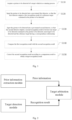
- Fig. 1 is a flowchart of a target detection method in running of vehicles provided according to an embodiment of the present application.
- the method can be applied to a terminal.
- the terminal may include but not limited to one or more of a smart phone, a tablet, a portable computer or a vehicle-mounted device.
- the method can also be applied to a server, which will not be specially limited.
- the target detection method in running of vehicles at least includes step S 110 to step S 150.
- the application of the method to a terminal is taken as an example below, which is described in detail below:
- step S 110 a picture to be detected of a target vehicle in a running process is acquired.
- an image acquisition device can be arranged on a target vehicle and is configured to acquire, in a running process of the target vehicle, a picture in front of the target vehicle in real time as the picture to be detected.
- step S120 the picture to be detected is input into a pre-trained first detector, so that the first detector outputs a first recognition result of a reference target contained in the picture to be detected.
- the reference target may be used for assisting in recognizing a target of a target to be detected.
- the target to be detected is a guide arrow on the road
- the reference target may be a lane guide sign on both sides of a lane.
- the terminal may input the picture to be detected into pre-trained first detector.
- the first detector may have target detection and recognition functions, and may recognize a target in the picture to be detected to output the first recognition result of the reference target contained in the picture to be detected.
- the first recognition result may include a driving direction of each lane in the lane guide sign, a relative distance and relative positions between lanes, and the like.
- step S130 the picture to be detected is input into a pre-trained second detector, so that the second detector outputs a second recognition result of at least one target to be detected contained in the picture to be detected, each target to be detected and the reference target having a correspondence relationship.
- the target to be detected may be an actual object target to be detected, such as the guide arrow on the road, a traffic light and a traffic sign.
- the terminal may also input the picture to be detected into the pre-trained second detector.
- the second detector also has the target detection and recognition functions. It should be understood that a difference between the first detector and the second detector is that they recognize different targets.
- the second detector may recognize the picture to be detected to output the second recognition result of at least one target to be detected contained in the picture to be detected.
- the second recognition result may include a predicted category corresponding to each target to be detected and a corresponding first confidence coefficient.
- one or more target detection algorithms of the YOLO collection, the R-CNN collection or SSD can be used to train the first detector and the second detector.
- the method also includes:
- the road test data may be road data taken by a real vehicle, and may be a video or an image.
- the first sample data containing the reference target can be screened from the road test data, and the first sample data is labeled.
- the reference target is a lane guide sign, a lane type of each lane, the relative positions between the lanes, and the like may be labeled.
- a pre-built first detector is then trained according to the first sample data and the labeled data corresponding to the first sample data, so as to enable the first detector to correctly output the first recognition result for the reference target.
- the second sample data containing the target to be detected can be screened from the road test data, and the second sample data is labeled.
- the target to be detected is a road guide arrow, a lane type corresponding to each road guide arrow, the relative positions between the lanes, and the like can be labeled.
- a pre-built second detector is then trained according to the second sample data and the labeled data corresponding to the second sample data, so as to enable the second detector to correctly output the second recognition result for the target to be detected.
- the accuracy of the recognition results of the first detector and the second detector is guaranteed through pre-training, and the accuracy of target detection after comparison is improved.
- step S140 the first recognition result is compared with the second recognition result.
- step S 150 the second recognition result is corrected according to a comparison result to obtain a target recognition result.
- the correction may be a process of correcting the second recognition result according to the first recognition result.
- the first recognition result since the first recognition result is recognized according to the reference target, the first recognition result may be used as priori information of the second recognition result, that is, the first recognition result may be used as a judgment basis for whether the second recognition result is correct.
- the first recognition result By means of comparing the first recognition result with the second recognition result, on the one hand, whether the second recognition result is correct can be verified, and a correct predicted category of a wrong second recognition result can be provided. Even if the target to be detected is sheltered, the accuracy of the target recognition result obtained after the correction can be guaranteed.
- the second recognition result includes a predicted category corresponding to each target to be detected and a first confidence coefficient
- the first recognition result includes a baseline category corresponding to each target to be detected.
- Step S 150 specifically includes: the second recognition result is corrected according to a comparison result to obtain a target recognition result, including:
- the first recognition result includes the baseline category corresponding to each target to be detected.
- the first recognition result is a recognition result corresponding to the reference target, so the first recognition result can be used as the judgment basis of whether the second recognition result is correct. Therefore, the predicted category in the first recognition result can be used as the baseline category of each target to be detected.
- the lane guide sign used as the reference target is taken as an example.
- the first recognition result includes the lane type of each lane in the lane guide sign, such as a left turn lane, a straight lane and a right turn lane, and the relative positions between the lanes, such as the left turn lane being located on the left side of the straight lane, and the like. Therefore, the lane type of each lane contained in the first recognition result can be used as the baseline category of each lane guide arrow (i.e. the target to be detected) in the second recognition result.
- the comparison result if the first recognition result is the same as the predicted category corresponding to the current target to be detected, it means that the predicted category corresponding to the current target to be detected is a correct recognition result and can be saved. It should be understood that the picture to be detected may contain more than one target to be detected. For a case where there are a plurality of targets to be detected, the second recognition result may include the prediction categories corresponding to multiple (two or more) targets to be detected, the confidence coefficients and the relative positions between the targets to be detected. Thus, when the first recognition result is compared with the second recognition result, the comparison can be carried out according to the relative positions in sequence.
- the predicted category corresponding to the current target to be detected can be determined as the confused result, that is, the second recognition result needs to be corrected.
- the predicted category of which is determined as the confused result it can be determined, according to the first confidence coefficients of the prediction categories that correspond to other targets to be detected adjacent to the current target to be detected and are determined as the correct results, that the predicted category corresponding to the current target to be detected shall be the second confidence coefficient of the first recognition result.
- the predicted category of which is determined as the confused result whether the comparison results of other targets to be detected adjacent to the current target to be detected have the prediction categories determined to be the correct results can be determined. If yes, it can be determined, according to the first confidence coefficients of the prediction categories that correspond to other targets to be detected and are determined as the correct results, that the predicted category corresponding to the current target to be detected shall be the second confidence coefficient of the first recognition result.
- the second confidence coefficient may be credibility for indicating that the first recognition result is correct. If the second confidence coefficient is larger, the credibility indicating that the predicted category shall be the baseline category is higher, and vice versa.
- three lane guide arrows i.e. the targets to be detected
- the prediction categories of arrow 1 and arrow 3 are the same as the baseline category in the corresponding first recognition result, and are determined to be the correct results, while the predicted category corresponding to arrow 2 is different from the baseline category in the corresponding first recognition result.
- the credibility indicating that the prediction categories determined to be the confused results shall be the corresponding baseline category is higher.
- the first confidence coefficients of the prediction categories that correspond to other targets to be detected adjacent to the current target to be detected and are determined to be the correct results can be averaged to obtain the second confidence coefficient of the current target to be detected.
- the second confidence coefficient may be compared with a preset predetermined threshold. If the second confidence coefficient reaches the predetermined threshold, that is, if the second confidence coefficient is greater than or equal to the predetermined threshold, the predicted category corresponding to the current target to be detected may be corrected to the corresponding baseline category, otherwise, the predicted category can be saved, the second recognition result that has been subjected to the above correction is output as the target recognition result.
- the reasonability of correction can be ensured, thus ensuring the accuracy of the target recognition result obtained.
- the step (that it is determined, according to the first confidence coefficients of the prediction categories that correspond to other targets to be detected adjacent to the current target to be detected and are determined as the correct results, that the predicted category corresponding to the current target shall be the second confidence coefficient of the first recognition result) includes: the first confidence coefficients of the prediction categories that correspond to other targets to be detected adjacent to the current target to be detected and are determined as the correct results are averaged to obtain that the predicted category corresponding to the current target to be detected shall be the second confidence coefficient of the first recognition result.
- the step (that it is determined, according to the first confidence coefficients of the prediction categories that correspond to other targets to be detected adjacent to the current target to be detected and are determined as the correct results, that the predicted category corresponding to the current target shall be the second confidence coefficient of the first recognition result) includes: weighted average operation is performed according to the first confidence coefficients of the prediction categories that correspond to other targets to be detected adjacent to the current target to be detected and are determined as the correct results and first confidence coefficients of the prediction categories that correspond to other targets to be detected adjacent to the current target to be detected and are determined as the confused results, and it is determined that the predicted category corresponding to the current target to be detected shall be the second confidence coefficient of the first recognition result, wherein a weight of the first confidence coefficient of each predicted category determined as the correct result is greater than a weight of the first confidence coefficient of each predicted category determined as the confused result.
- the weighted average operation can be performed on the first confidence coefficients of the prediction categories determined as the correct results and the first confidence coefficients determined as the confused results, so as to determine that the predicted category corresponding to the current target to be detected shall be the second confidence coefficient of the baseline category in the first recognition result.
- Those skilled in the art can set corresponding weights according to the prior experience.
- the weights of the first confidence coefficients of the prediction categories determined to be the correct results are greater than the weights of the first confidence coefficients of the prediction categories determined to be the confused results, so as to ensure the reasonability of weight setting.
- the step (that the first recognition result is compared with the second recognition result) includes: if the picture to be detected does not simultaneously contain the reference target and the target to be detected, the first recognition result or second recognition result first acquired is compared with a second recognition result or first recognition result later acquired within a predetermined time interval.
- the first recognition result or second recognition result first acquired can be compared with the second recognition result or first recognition result later acquired within the predetermined time interval, so that it can be ensured that the comparison can also be carried out even when the reference target and the target to be detected do not simultaneously appear in the picture to be detected.
- the predetermined time interval by means of setting the predetermined time interval, the validness of the first recognition result or second recognition result first acquired can be ensured, thus avoiding a failure of the first recognition result or the second recognition result caused by a long running distance of a vehicle due to an extremely large time interval. It should be noted that those skilled in the art can set the predetermined time interval according to the preceded experience, such as 5 S and 10 S.
- Fig. 2 is a block diagram of a system capable of applying the target detection method in running of vehicles provided according to an embodiment of the present application.
- the system includes a prior information extraction module, a target detection module and a target arbitration module.
- the prior information extraction module is configured to recognize the reference target contained in the picture to be detected and output corresponding prior information (i.e. the first recognition result).
- the target detection module is configured to recognize the target to be detected contained in the picture to be detected and output a corresponding recognition result (i.e. the second recognition result).
- the target arbitration module is configured to compare the prior information with the recognition result, so as to arbitrate (i.e. correct) the recognition result, and finally output a recognition result after arbitration, which is the target recognition result.
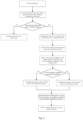
- Fig. 3 is a flowchart of algorithm labeling, training and actual prediction of a target detection method in running of vehicles according to an embodiment of the present application. A description will be made below by taking the application of the method to a road guide arrow scenario as an example.
- the prior information refers to information that has been obtained before algorithm training or prediction.
- the prior information may come from multiple sources, including but not limited to information fused by one or more of traffic lights, point cloud data and lane indicators.
- information including but not limited to the category, shape, position and the like of a lane is extracted from the lane guide sign of each road.
- Advantages are as follows: (1) The lane guide sign is usually located at a high place and is not easily sheltered. (2) The lane guide sign has a great contrast with the background and is easily accurately recognized.
- two detectors need to be trained respectively for the lane guide sign (i.e. the reference target) and the road guide arrow (i.e. the target to be detected).
- the training is carried out in two rounds.
- a lane guide sign detector (detector 1) is obtained.
- a sample containing a lane guide sign which can be a video or an image, is screened according to road test data collected by a real vehicle, and then the lane guide sign and each lane in the lane guide sign are labeled, including the position and category of the lane, thus obtaining a certain amount of labeled data.
- the sample and the corresponding labeled data are used for training.
- one or more target detection algorithms of the YOLO collection, R-CNN collection or SSD can be used for training to obtain the lane guide sign detector which can recognize various lane types.
- the second round refers to the first round, in which, a road guide arrow detector (detector 2) is obtained.
- a road guide arrow detector detector 2
- the labeled data of the second round is for a lane sample in the road test data.
- the two detectors there are two purposes: In application I, the two detectors can be used for automatic labeling. In application II, the two detectors can be deployed to mass production vehicles to support intelligent driving underlying services.
- the detectors have been deployed inside a mass production vehicle. After the mass production vehicle runs on a road, when the system carries out road lane recognition, the system will input collected picture information into the two detectors respectively:
- the lane guide sign detector detects whether there is a lane guide sign. If yes, the detector detects lane indication information including the number of lanes and a lane type (i.e. the baseline category) at the same time.
- the road guide arrow detector detects whether a guide arrow appears in the picture. If yes, the detector detects a category (i.e. the predicted category) of the guide arrow.
- the picture simultaneously contains the lane guide sign and the lane guide arrow on the road, which is referred to as a synchronous information scenario.
- the lane guide sign and the lane guide arrow do not appear in the same picture. For example, a lane guide sign picture appears first, and a lane guide arrow picture then appears on the road after several seconds, or the lane guide arrow picture appears first, and the lane guide sign picture then appears after several seconds, which is referred to as an asynchronous information scenario.
- the information output by the two detectors is highly consistent in theory and can echo each other.
- the information output by the two detectors may have a deviation, that is, the information does not correspond to the same road, so it should be comprehensively analyzed.
- case (1) Processes of target recognition and arbitration are described by taking case (1) as an example.
- the difference between case (2) and case (1) is the order of obtaining the prior information.
- the output information of the two detectors are aligned by setting atime window (i.e. the predetermined time interval). Within the time window, the information obtained first waits for the obtaining of another piece of information. If no data is obtained beyond the time window, a time window will be recreated by data obtained next time.
- Fig. 4 The whole detection process of case (1) is shown in Fig. 4 .
- the lane guide sign detector is referred to as a first detector
- the road guide arrow detector is referred to as a second detector.
- the first detector recognizes the position of the lane guide sign in the picture and lane guide information (the number of lanes, the relative positions of the guide lanes in the whole road, and the relative distance between the lanes) in the lane guide sign.
- lane guide information the number of lanes, the relative positions of the guide lanes in the whole road, and the relative distance between the lanes
- information of five lanes is contained, and there are four kinds of guide categories (i.e. A, B, C, and D).
- There is a relative distance between every two lanes and the lanes are connected to form a reference map. Nodes of the reference map represent the lane guide categories, and weights of edges (connecting lines between the nodes) represent the relative distances, thus forming the prior information of the road.
- the second detector recognizes the road guide arrow in the picture, including road guide arrow information of one or more lanes, and obtains the predicted category of each road guide arrow and the relative positions and relative distances between the road guide arrows.
- a subgraph similar to Fig. 5 is constructed to form predicted information of the road.
- the subgraph of the predicted information is matched with the reference map of the prior information, and two mapping manners (i.e. subgraph matching algorithm) are provided for this scenario: (1) If a road guide arrow of a current driving lane of a target vehicle is not sheltered by other vehicles, information of the road guide arrow can be used as a matching preference because the road guide arrow of the current lane is in the right front, with a small perspective realization degree, has a large proportion in the picture, and is accurately recognized more easily. The left and right lanes of the current lane are matched, and then the lanes on the next layer are matched. Weighted summation is performed on each matching result, with the weights decreasing layer by layer from the current lane.
- the matching manner with the highest score is selected as the lane matching result.
- the lanes with non-sheltered guide arrows are preferentially matched, which are searched from the left and right lanes. Matching starts from a first found non-sheltered lane that is the matching preference, and skips over sheltered lanes.
- the baseline category of each node (lane) is obtained according to an isomorphic subgraph.
- the baseline category and the predicted category are determined by a certain arbitration method to obtain a final category of each predicted target.
- An embodiment of the present application also provides an arbitration method, as shown in Fig. 6 :
- the nodes for voting in (2) may include confused nodes that are not arbitrated or confused nodes that are being arbitrated.
- the weighted average method is used to assign a larger weight to the correct nodes and assign a smaller weight to the confused nodes.
- the guide information of other lanes can be accurately calculated on the basis of the relative positions and relative distances according to the current lane and guide information of a vehicle.
- the intelligent driving system can make a decision plan according to an accurately recognized lane guidance to ensure the efficient development of its downstream applications.
- Fig. 7 is a schematic block diagram of a target detection apparatus in running of vehicles according to an embodiment of the present application.
- the target detection apparatus in running of vehicles includes:
- the second recognition result includes a predicted category corresponding to each target to be detected, and a first confidence coefficient
- the first recognition result includes a baseline category corresponding to each target to be detected
- the processing module 750 is configured to: if the first recognition result is the same as the predicted category corresponding to a current target to be detected, determine that the predicted category corresponding to the current target to be detected is a correct result; if the first recognition result is different from the predicted category corresponding to the current target to be detected, determine that the predicted category corresponding to the current target to be detected is a confused result, and determine, according to first confidence coefficients of the prediction categories that correspond to other targets to be detected adjacent to the current target to be detected and are determined as the correct results, that the predicted category corresponding to the current target to be detected is a second confidence coefficient of the first recognition result; and if the second confidence coefficient reaches a predetermined threshold, correct the predicted category corresponding to the current target to be detected to be the same predicted category as the first recognition result.
- the processing module 750 is configured to: average the first confidence coefficients of the prediction categories that correspond to other targets to be detected adjacent to the current target to be detected and are determined as the correct results to obtain that the predicted category corresponding to the current target to be detected is the second confidence coefficient of the first recognition result.
- the processing module 750 is configured to: perform weighted summation operation according to the first confidence coefficients of the prediction categories that correspond to other targets to be detected adjacent to the current target to be detected and are determined as the correct results and first confidence coefficients of the prediction categories that correspond to other targets to be detected adjacent to the current target to be detected and are determined as the confused results, and determine that the predicted category corresponding to the current target to be detected is the second confidence coefficient of the first recognition result, wherein a weight of the first confidence coefficient of each predicted category determined as the correct result is greater than a weight of the first confidence coefficient of each predicted category determined as the confused result.
- the processing module 750 is also configured to: acquire first sample data containing the reference target and labeled data corresponding to the first sample data from road test data; train a pre-built first detector according to the first sample data and the labeled data corresponding to the first sample data, so as to enable the first detector to correctly output the first recognition result for the reference target; acquire second sample data containing the target to be detected and labeled data corresponding to the second sample data from the road test data; and train a pre-built second detector according to the second sample data and the labeled data corresponding to the second sample data, so as to enable the second detector to correctly output the second recognition result for the target to be detected.
- the reference target is a lane guide sign
- the target to be detected is a road guide arrow.
- the comparison module 740 is configured to: if the picture to be detected does not simultaneously contain the reference target and the target to be detected, compare the first recognition result or second recognition result first acquired with a second recognition result or first recognition result later acquired within a predetermined time interval.
- the target detection apparatus in running of vehicles can acquire a picture to be detected of a target vehicle in a running process; input the picture to be detected into a pre-trained first detector, so that the first detector outputs a first recognition result of a reference target contained in the picture to be detected; and input the picture to be detected into a pre-trained second detector, so that the second detector outputs a second recognition result of at least one target to be detected contained in the picture to be detected, each target to be detected and the reference target having a correspondence relationship.
- the first recognition result and the second recognition result also have a certain correspondence relationship.
- the first recognition result is compared with the second recognition result for mutual verification, so that the second recognition result is corrected according to a comparison result to obtain the accuracy of a target recognition result.
- Fig. 8 is a schematic structural diagram of an electronic device provided by an embodiment of the present application.
- the electronic device may include: a memory 601, a processor 602, and a computer program stored in the memory 601 and executable on the processor 602.
- the processor 602 when executing programs, implements the target detection method in running of vehicles provided in the above embodiment.
- the electronic device also includes: a communication interface 603, configured to achieve communication between the memory 601 and the processor 602.
- the memory 601 is configured to store computer programs that are executable on the processor 602.
- the memory 601 may include a high-speed random access memory (RAM), or a non-volatile memory, for example, at least one disk memory.
- RAM random access memory
- non-volatile memory for example, at least one disk memory.
- the bus may be an industry standard architecture (ISA) bus, a peripheral component interconnection (PCI) bus, or an extended industry standard architecture (EISA) bus, etc.
- ISA industry standard architecture
- PCI peripheral component interconnection
- EISA extended industry standard architecture
- the bus may be divided into an address bus, a data bus, a control bus, and the like. For ease of representation, only a thick line is used in Fig. 6 , but it does not mean that there is only one bus or one type of bus.
- the memory 601, the processor 602 and the communication interface 603 are integrated on one chip, the memory 601, the processor 602 and the communication interface 603 can communicate with each other through internal interfaces.
- the processor 602 may be a central processing unit (CPU), or an application specific integrated circuit (ASIC), or is configured for implementing one or more ICs of the embodiment of the present application.
- CPU central processing unit
- ASIC application specific integrated circuit
- An embodiment of the present application further provides a computer-readable storage medium storing a computer program.
- the program when executed by a processor, implements the above target detection method in running of vehicles.
- references terms such as “one embodiment”, “some embodiments”, “examples”, “specific examples,” or “some examples” mean that specific features, structures, materials or characteristics described in combination with the embodiments or examples are included in at least one embodiment or example of the present application.
- the schematic representations of the above terms do not necessarily refer to the same embodiment or example.
- the described specific features, structures, materials or characteristics may be combined in any one or N embodiments or examples in an appropriate manner.
- those skilled in the art can connect and combine the different embodiments or examples and the features of the different embodiments or examples described in this specification without contradicting each other.
- first and second are used for descriptive purposes only and are not to be understood to indicate or imply relative importance or to imply the number of indicated technical features. Therefore, features defined by “first” and “second” can explicitly instruct or impliedly include at least one feature. In the description of the present application, unless expressly specified otherwise, the meaning of "N" is at least two, such as two and three.
- a "computer-readable medium” can be any apparatus that can contain, store, communicate, propagate, or transport the program for use by or in conjunction with an instruction execution system, apparatus, or device.
- computer-readable media include the following: an electrical connection part (an electronic apparatus) with one or N wiring, a portable computer disk cartridge (a magnetic apparatus), a random access memory (RAM), a read only memory (ROM), an erasable editable read only memory (EPROM or flash memory), a fiber optic apparatus, and a portable compact disc read only memory (CDROM).
- the computer-readable medium may even be paper or other suitable media on which the program may be printed, as optical scanning can be performed, for example, through the paper or other media, and next, editing and interpretation are performed; other suitable manners are used for performing processing if necessary, so as to obtain the program in an electronic manner; and the program is then stored in a computer memory.
- N steps or methods can be implemented by software or firmware stored in a memory and executed by a suitable instruction execution system.
- PGAs programmable gate arrays
- FPGAs field programmable gate arrays
- the program may be stored in a computer-readable storage medium.
- the program can include one of or a combination of the steps of the method embodiment.
- all functional units in all the embodiments of the present invention can be integrated into one processing module, or each unit can physically exist alone, or two or more units can be integrated in one module.
- the above integrated modules can be implemented in the form of hardware, or can be implemented in the form of software functional modules.
- the integrated module, if implemented in the form of a software functional unit and sold or used as a standalone product, may be stored in a computer-readable storage medium.
- the above-mentioned storage medium may be a read-only memory, a magnetic disk or an optical disk, and the like.
Landscapes
- Engineering & Computer Science (AREA)
- Theoretical Computer Science (AREA)
- Physics & Mathematics (AREA)
- General Physics & Mathematics (AREA)
- Multimedia (AREA)
- Computer Vision & Pattern Recognition (AREA)
- Computing Systems (AREA)
- Artificial Intelligence (AREA)
- Health & Medical Sciences (AREA)
- Databases & Information Systems (AREA)
- Evolutionary Computation (AREA)
- General Health & Medical Sciences (AREA)
- Medical Informatics (AREA)
- Software Systems (AREA)
- Traffic Control Systems (AREA)
- Image Analysis (AREA)
Applications Claiming Priority (1)
| Application Number | Priority Date | Filing Date | Title |
|---|---|---|---|
| CN202211129923.8A CN115497071B (zh) | 2022-09-16 | 2022-09-16 | 车辆行驶中的目标检测方法、装置、设备及介质 |
Publications (1)
| Publication Number | Publication Date |
|---|---|
| EP4339902A1 true EP4339902A1 (fr) | 2024-03-20 |
Family
ID=84468361
Family Applications (1)
| Application Number | Title | Priority Date | Filing Date |
|---|---|---|---|
| EP23159033.2A Pending EP4339902A1 (fr) | 2022-09-16 | 2023-02-28 | Procédé et appareil de détection de cible lors de l'exécution de véhicules, dispositif et support |
Country Status (3)
| Country | Link |
|---|---|
| EP (1) | EP4339902A1 (fr) |
| CN (1) | CN115497071B (fr) |
| MX (1) | MX2023003765A (fr) |
Citations (2)
| Publication number | Priority date | Publication date | Assignee | Title |
|---|---|---|---|---|
| US20160176341A1 (en) * | 2014-12-22 | 2016-06-23 | Volkswagen Ag | Early detection of exit only and shared lanes using perception technology |
| EP3312769B1 (fr) * | 2016-10-24 | 2019-09-25 | Hitachi, Ltd. | Appareil de traitement d'image, appareil d'avertissement, système de traitement d'image et procédé de traitement d'image |
Family Cites Families (2)
| Publication number | Priority date | Publication date | Assignee | Title |
|---|---|---|---|---|
| CN111414826B (zh) * | 2020-03-13 | 2024-09-06 | 腾讯科技(深圳)有限公司 | 一种地标箭头的识别方法、设备及存储介质 |
| EP3895950B1 (fr) * | 2020-04-16 | 2024-01-17 | Zenuity AB | Procédés et systèmes de surveillance et de gestion d'un système de commande automatique |
-
2022
- 2022-09-16 CN CN202211129923.8A patent/CN115497071B/zh active Active
-
2023
- 2023-02-28 EP EP23159033.2A patent/EP4339902A1/fr active Pending
- 2023-03-30 MX MX2023003765A patent/MX2023003765A/es unknown
Patent Citations (2)
| Publication number | Priority date | Publication date | Assignee | Title |
|---|---|---|---|---|
| US20160176341A1 (en) * | 2014-12-22 | 2016-06-23 | Volkswagen Ag | Early detection of exit only and shared lanes using perception technology |
| EP3312769B1 (fr) * | 2016-10-24 | 2019-09-25 | Hitachi, Ltd. | Appareil de traitement d'image, appareil d'avertissement, système de traitement d'image et procédé de traitement d'image |
Non-Patent Citations (2)
| Title |
|---|
| "Visual Object Recognition", 2 February 2011, SPRINGER INTERNATIONAL PUBLISHING, Cham, ISBN: 978-3-031-01553-3, ISSN: 1939-4608, article GRAUMAN KRISTEN ET AL: "Ch. 12.2: CONTEXT-BASED RECOGNITION", XP093070705 * |
| RABINOVICH ANDREW ET AL: "Objects in Context", 2007 IEEE 11TH INTERNATIONAL CONFERENCE ON COMPUTER VISION, 2 October 2007 (2007-10-02), pages 1 - 8, XP093070707, ISSN: 1550-5499, ISBN: 978-1-4244-1630-1, DOI: 10.1109/ICCV.2007.4408986 * |
Also Published As
| Publication number | Publication date |
|---|---|
| MX2023003765A (es) | 2024-03-18 |
| CN115497071A (zh) | 2022-12-20 |
| CN115497071B (zh) | 2025-09-12 |
Similar Documents
| Publication | Publication Date | Title |
|---|---|---|
| CN110163176B (zh) | 车道线变化位置识别方法、装置、设备和介质 | |
| CN110688971B (zh) | 虚线车道线的检测方法、装置和设备 | |
| JP4506790B2 (ja) | 道路情報生成装置、道路情報生成方法および道路情報生成プログラム | |
| CN115507862B (zh) | 车道线定位方法及装置、电子设备及存储介质 | |
| CN111267860B (zh) | 用于车辆的传感器融合目标预测装置和方法、以及车辆 | |
| CN111352414B (zh) | 用于车辆的假目标移除装置和方法及包括该装置的车辆 | |
| CN105973245A (zh) | 利用无人驾驶车辆更新在线地图的方法和装置 | |
| CN109034086B (zh) | 车辆重识别方法、装置及系统 | |
| CN113221750A (zh) | 车辆追踪方法、装置、设备及存储介质 | |
| CN111860512B (zh) | 一种车辆识别方法、装置、电子设备及计算机可读存储介质 | |
| CN112446375A (zh) | 车牌识别方法、装置、设备及存储介质 | |
| CN111386530B (zh) | 车辆检测方法和设备 | |
| CN110688883A (zh) | 车辆和行人检测方法及装置 | |
| CN116107591B (zh) | 基于corner cases的部署模型构建方法 | |
| CN112329886A (zh) | 双车牌识别方法、模型训练方法、装置、设备及存储介质 | |
| CN114118188B (zh) | 针对待检测图像中移动对象的处理系统、方法和存储介质 | |
| CN112232368A (zh) | 目标识别模型训练方法、目标识别方法及其相关装置 | |
| CN116964588A (zh) | 一种目标检测方法、目标检测模型训练方法及装置 | |
| CN115546263A (zh) | 应用于车辆的跨镜目标跟踪方法、装置、设备及介质 | |
| CN116721396B (zh) | 车道线检测方法、设备及存储介质 | |
| US12406477B2 (en) | Iterative refinement of annotated datasets | |
| CN113869364A (zh) | 图像处理方法、装置、电子设备及介质 | |
| CN114332435B (zh) | 一种基于三维重建的图像标注方法及装置 | |
| EP4339902A1 (fr) | Procédé et appareil de détection de cible lors de l'exécution de véhicules, dispositif et support | |
| CN111652145A (zh) | 一种公式检测的方法、装置、电子设备和存储介质 |
Legal Events
| Date | Code | Title | Description |
|---|---|---|---|
| PUAI | Public reference made under article 153(3) epc to a published international application that has entered the european phase |
Free format text: ORIGINAL CODE: 0009012 |
|
| STAA | Information on the status of an ep patent application or granted ep patent |
Free format text: STATUS: THE APPLICATION HAS BEEN PUBLISHED |
|
| AK | Designated contracting states |
Kind code of ref document: A1 Designated state(s): AL AT BE BG CH CY CZ DE DK EE ES FI FR GB GR HR HU IE IS IT LI LT LU LV MC ME MK MT NL NO PL PT RO RS SE SI SK SM TR |
|
| STAA | Information on the status of an ep patent application or granted ep patent |
Free format text: STATUS: REQUEST FOR EXAMINATION WAS MADE |
|
| 17P | Request for examination filed |
Effective date: 20240918 |
|
| RBV | Designated contracting states (corrected) |
Designated state(s): AL AT BE BG CH CY CZ DE DK EE ES FI FR GB GR HR HU IE IS IT LI LT LU LV MC ME MK MT NL NO PL PT RO RS SE SI SK SM TR |