EP4335969B1 - Kunstrasenfüllung mit olivenkernfragmenten und mikroporösen zeolithpartikeln - Google Patents
Kunstrasenfüllung mit olivenkernfragmenten und mikroporösen zeolithpartikeln Download PDFInfo
- Publication number
- EP4335969B1 EP4335969B1 EP22194961.3A EP22194961A EP4335969B1 EP 4335969 B1 EP4335969 B1 EP 4335969B1 EP 22194961 A EP22194961 A EP 22194961A EP 4335969 B1 EP4335969 B1 EP 4335969B1
- Authority
- EP
- European Patent Office
- Prior art keywords
- infill
- artificial turf
- olive pit
- olive
- fragments
- Prior art date
- Legal status (The legal status is an assumption and is not a legal conclusion. Google has not performed a legal analysis and makes no representation as to the accuracy of the status listed.)
- Active
Links
Images




Classifications
-
- E—FIXED CONSTRUCTIONS
- E01—CONSTRUCTION OF ROADS, RAILWAYS, OR BRIDGES
- E01C—CONSTRUCTION OF, OR SURFACES FOR, ROADS, SPORTS GROUNDS, OR THE LIKE; MACHINES OR AUXILIARY TOOLS FOR CONSTRUCTION OR REPAIR
- E01C13/00—Pavings or foundations specially adapted for playgrounds or sports grounds; Drainage, irrigation or heating of sports grounds
- E01C13/08—Surfaces simulating grass ; Grass-grown sports grounds
Definitions
- the invention relates generally to an artificial turf, and, more particularly, to an artificial turf infill comprising olive pit material, and a method of making said artificial turf infill.
- EP3868955A1 patent application describes using olive pit particles as infill for artificial turf which are produced by crushing naturally occurring pits in a grinder, granulator, or cracker mill.
- the general concept of using olive pit particles is rather known since at least 2010 by the publication of US2010/055461 patent application which describes an artificial turf having organic particles of a group consisting of, coconut shells, ground pecan shells, ground peanut shells, ground corn cobs, and ground olive stones.
- coconut shells coconut shells
- ground pecan shells ground peanut shells
- ground corn cobs ground olive stones
- an artificial turf infill comprising an olive pit material, and microporous zeolite particles, wherein the olive pit material has a bimodal size distribution with a major mode and a minor mode, wherein the major mode comprises rounded, thermally treated olive pit fragments (24) and has a peak between 0.5 mm to 4.0 mm, more in particular 0.5 mm to 2.5 mm, and most in particular 0.5 mm to 2.0 mm, and wherein the minor mode comprises olive pit particles (26) of less than 63 ⁇ m in an amount of at least 0.5 wt% and has a peak at less than 63 ⁇ m.
- the rounded and thermally treated olive pit fragments may be in an amount of at least 80.0 wt%, in particular 90.0 wt% to 99.0 wt%, more in particular 95.0 wt% to 99.0 wt%, and most in particular 98.0 wt% to 99.0 wt% of the total weight of the total olive pit material in the infill.
- the olive pit particles having a size of less than 63 ⁇ m may be in an amount of 1.0 wt% to 20.0 wt%, more in particular 1.0 wt% to 10.0 wt %, and most in particular 1.0 wt% to 2.0 wt% of the total olive pit material in the infill.
- the olive pit material has a bimodal size distribution with a major mode and a minor mode, wherein the major mode comprises the rounded, thermally treated olive pit fragments and has a peak between 0.5 mm to 4.0 mm, more in particular 0.5 mm to 2.5 mm, and most in particular 0.5 mm to 2.0 mm, and wherein the minor mode comprises the olive pit particles and has a peak at less than 63 ⁇ m.
- the microporous zeolite particles may have a grain size between 0.1 mm and 1.5 mm, in particular between 0.4 mm to 1.2 mm, and more in particular between 0.9 mm and 1.2 mm, and a maximum surface specific surface area of 21 m 2 /g.
- microporous zeolite particles may have a porosity between 15% and 20% volume parts.
- the microporous zeolite particles may have a grain size distribution wherein 70% to 90% of the grains by weight have a size in the range of 0.4 mm to 1.5 mm and 10% to 30% of the grains by weight have a size smaller than 0.4 mm.
- the microporous zeolite particles may have a hardness between 3.5 and 5.5 on the Mohs scale and a moisture level smaller than 6 wt% as measured by the wet method, i.e., based on the total weight of the zeolite solids and moisture.
- the artificial turf infill may further comprise at least one further bio-based material including pit fragments of at least one other stone-containing fruit, wherein the pit fragments of the further bio-based material have a different elasticity than the rounded, and thermally treated olive pit fragments, and wherein the at least one further bio-based material comprises cork particles, rounded cherry pit fragments, and combinations thereof.
- the artificial turf infill may comprise only bio-based materials and being free of any rubber, elastomeric, or polymer-based infill, and, in particular also free of any sand.
- Another aspect, non-claimed, of the present disclosure is directed to an artificial turf comprising the artificial turf infill as described above and in any of the claims 1-11.
- the artificial turf may further comprise:
- Yet another aspect of the present invention is directed to a method of creating an artificial turf, the method comprising:
- kits for manufacturing an artificial turf comprising the artificial turf infill of and at least one other component for making the artificial turf.
- the present invention uses larger size olive pit fragments from olive oil extraction processes without applying an additional crushing step.
- the sharp edges of the olive pit particles may make them uncomfortable to the skin of the artificial turf users and may even injure the skin of the artificial turf users.
- the present invention further treats the olive pit fragments for rounding their edges, make them smoother before using them as infill.
- the present invention olive pit fragments are thermally treated for removing the residual odor from the olives, increasing their surface hardness and tenacity, and making them antimicrobially resistant, and attrition resistant.
- the method of the present invention is free of a step which crushes or grinds the not-yet rounded olive pit fragments or the rounded olive-pit fragments.
- the present invention provides a bio-based infill that exhibits improved performance characteristics in varying weather conditions over an extended period of time.
- the bio-based infill includes an olive pit material and, in some embodiments, at least one other bio-based infill.
- the bio-based material includes microporous zeolite particles.
- the present invention further provides a method for making the artificial turf.
- the olive pit material is prepared using olive pit fragments generated in an oil extraction process which uses compression for extracting the olive oil.
- the oil extraction process may employ an olive press.
- the olive pit fragments may have sharp edges which are created when the olive pits break under the compression force in the olive press.
- the present invention uses a tumbling treatment of the olive pit fragments to smoothen their sharp edges, and provide rounded olive pit fragments which are substantially free of any sharp edges.
- the same tumbling process may also be used for any additional bio-based material.
- the additional bio-based material may be tumbled together with the olive pit fragments to enhance the effectiveness of the tumbling process in rounding the sharp edges of the olive pit fragments.
- the artificial turf infill comprises the rounded olive pit fragments prepared by the tumbling treatment process.
- Rounded as this term is used here, means that the fragments do not have sharp edges which can cause skin injury to the users of the artificial turf.
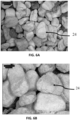
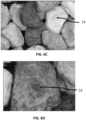
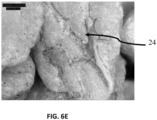
- rounded fragments are fragments generated in an abrasive process, in particular by tumbling. As a consequence of tumbling, traces of tumbling may be visible on the surface of the fragments.
- the tumbling of the olive pit fragments generates an olive pit material having bimodal size distribution with a major mode comprising rounded olive pit fragments having a size greater than 0.5 mm, in particular 0.5 mm to 4.0 mm, more in particular 0.5 mm to 2.5 mm, and most in particular 0.5 mm to 2.0 mm.
- a minor mode of the bimodal distribution comprises olive pit particles having a size of less than 63 ⁇ m.
- the tumbling is controlled to generate the olive pit particles having a size less than 63 ⁇ m in an amount of at least 0.5 wt%, in particular 1.0 wt% to 20.0 wt%, more in particular 1.0 wt% to 10.0 wt %, and most in particular 1.0 wt% to 2.0 wt% of a total olive pit material generated by the tumbling.
- Controlling the tumbling includes controlling the tumbling intensity and the duration of the tumbling among other things. Other parameters may include the presence or absence of other materials and the design characteristics of the tumbling apparatus such as internal design, size, and the presence of any baffles.
- the olive pit material comprising the olive pit fragments is thermally treated.
- the thermal treatment may be performed simultaneously with the tumbling treatment or separately from the tumbling treatment.
- the conditions of the thermal treatment may be modified to adjust its effects on the moisture and chemical composition of the olive pit material which in turn affect the properties of the olive pit fragments.
- the tumbling and/or thermal treatments allow adjusting the properties of the infill to improve the overall design of an artificial turf. For example, depending on turf blade length, density and other characteristics of an artificial turf, the infill may be modified as may be needed by changing the size, roundness, surface hardness, tenacity, moisture content and even chemical composition of the olive pit fragments. These adjustments can be done by changing the time, and intensity of the tumbling and/or of the thermal treatments.
- an artificial turf infill comprising rounded and thermally treated olive pit fragments.
- the infill comprises rounded and thermally treated olive pit fragments and optionally whole olive pits.
- the whole pits are olive pits which did not break during the oil extraction process or during the thermo-tumbling treatment.
- the infill comprises rounded and thermally treated olive pit fragments, olive pit particles and optionally also some whole olive pits.
- the size of the fragments can be adjusted within the aforementioned ranges to meet the specific design requirements of an artificial turf which may also depend on the length of the turf fibers and the density of the turf fibers.
- One of the advantages of the present invention is that the size, surface hardness, and degree of smoothness (or roughness) of the fragments, can be customized to meet the requirements of any particular artificial turf design by adjusting the processing conditions of the tumbling and thermal treatments.
- an "olive pit particle” is a piece of olive pit material with a size of less than 63 ⁇ m in size (larger dimension or diameter). It is noted that having the olive pit particles in the infill is generally advantageous because they tend to settle and form a lower stabilization layer which can eliminate the need for a stabilization layer of sand which is used conventionally in existing artificial turf infill systems.
- An infill without sand is desirable because sand tends to stick very tightly to the other artificial turf material (especially to the backing of the artificial turf) and can damage the shredders used to shred the artificial turf material when the artificial turf is recycled at the end of its useful life. Also, the process of installing the artificial turf is simplified because a step of adding a sand layer can be eliminated.
- the total amount of olive pit material in the infill comprises at least 80.0 wt%, in particular 90.0 wt% to 99.0 wt%, more in particular 95.0 wt% to 99.0 wt%, and most in particular 98.0 wt% to 99.0 wt% of the rounded and thermally treated olive pit fragments.
- the olive pit particles may be in an amount of at least 0.5 wt%, in particular 1.0 wt% to 20.0 wt%, more in particular 1.0 wt% to 10.0 wt%, and most in particular about 1.0 wt% to 2.0 wt% of the total weight of the olive pit material.
- a method of use of the artificial turf infill wherein the artificial turf infill can be used to form the infill of an artificial turf.
- the olive pits and olive pit fragments obtain a rounded shape which is designed to protect the skin of the players from injury, improves the packing density of the infill, reduces undesired water splashing in rainy conditions, and minimizes infill migration into the environment.
- the rounded and thermally treated olive pit material has no residual olive odor, has antimicrobial resistance, enhanced surface hardness and tenacity.
- the thermo-tumbler product comprises olive pit particles (dust-like particles generated by abrasion).
- the method of preparing the infill further comprises a sieving operation of the thermo-tumbler product to reduce the amount of the olive pit particles having a size of less than 63 ⁇ m to an amount of 2.0 % or less of the thermo-tumbler product, preferably to an amount of 1.0 to 2.0 % by weight of the thermo-tumbler product. Keeping this level of olive pit particles has been found to be beneficial because the olive pit particles allow for a higher packing density of the infill. According to some embodiments, further sieving is possible to reduce the amount of olive pit particles to less than 1.0 wt %.
- a sand, zeolite, and rounded olive pit fragment mixture is used in particular as the stabilization layer.
- the zeolite has the additional advantage of cooling the artificial turf.
- a zeolite and rounded olive pit fragment mixture is used in particular as the stabilization layer.
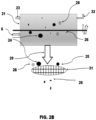
- the olive pit fragments 6 are formed in an olive oil extraction process 2, for example, during a compression operation of olives 1 for the extraction of the olive oil 3 from the olives.
- Olive oil extraction processes using compression of the olives are well known and, therefore, are not described here in detail.
- the olive pit fragments 6 may contain some whole pits, i.e., non-fractured pits.
- the infill 12 of figure 1 consists of a single layer of infill formed of only rounded and thermally treated olive pit fragments 24 and olive pit particles 26 from the thermo-tumbling process, without any rubber-based infill, or polymer-based infill and, more preferably, without any non-bio-based material including any sand.
- the olive pit particles 26 in the infill 12 may be reduced or totally removed by subjecting the thermo-tumbler product 29 to at least one sieving operation to remove some or all of the olive pit particles 26.
- the turf fibers 16 may be made of synthetic polymer material such as, for example, polyethylene (“PE”), polypropylene (“PP”), polyamide (“PA”), or combinations thereof.
- the fibers 16 may be mono filament, slit film, fibrillated, texturized, or combinations thereof.
- the backing 11 may be made of any suitable material.
- the backing 11 may comprise a thermoset polymer material.
- the backing 11 may comprise a polyurethane resin.
- the invention is not limited in any particular turf fiber or backing materials and other suitable turf fiber and backing materials may be used.
- the pile height of the artificial turf may vary by design and may be, for example, between about 10.0 mm to about 100.0 mm, preferably between 15.0 mm to 70.0 mm.
- the pile height is the distance measured from the bottom surface of the turf backing 11 to the tip of the fibers 16.
- the fibers 16 can be attached to the turf backing 11 by any suitable method including, for example, tufting, weaving, knitting, needle punching, or a combination thereof.
- the height of the infill 12 may vary by design and also the pile height.
- a typical infill height is from about 10.0 mm to 50.0 mm.
- the infill height is designed to provide adequate weight of the infill per square area of the infill to prevent movement and wrinkles on the artificial turf surface.
- the thermo-tumbling treatment of the olive pit fragments 24 comprises placing them inside a rotating thermo-tumbler 21 and tumbling them while at the same time flowing hot air through the thermo-tumbler 21 to obtain a mixture of rounded and thermally treated olive pit fragments, and olive pit particles.
- the olive pit articles may also be referred to as olive pit dust and are basically created in the thermo-tumbler through the abrasion of the sharp edges of the fragments.
- the intensity and duration of the tumbling can be adjusted to avoid excessive formation of olive pit particles 26. Typically, the intensity, and duration of the tumbling are controlled to keep the amount of olive pit particles to less than 5.0 wt%, and, more preferably, to less than 2.0 wt% of the total olive pit material.
- hot air or steam may be used for thermally treating the olive pit fragments.
- the olive pit particles are olive pit fragments of less than 63 ⁇ m.
- the thermo-tumbling treatment may be a batch or a continuous process.
- the thermo-tumbling treatment is a continuous process. Any suitable thermo-tumbling apparatus may be used.
- thermo-tumbler product 29 is sieved via a sieve 31 to remove the thermo-tumbler product olive pit particles 26.
- the rounded and thermally treated olive pit fragments 24 are used as infill for an artificial turf.
- the removed olive pit particles may be used for a stabilization layer of the infill.
- the rounded and thermally treated olive pit fragments 24 are used for the performance layer of the infill.
- the rounded and thermally treated olive pit fragments 24 free of the olive pit particles 26 can be used in a performance layer 38 for an artificial turf 30 either alone or together with a second bio-based material, such as, for example, cork particles and/or cherry pits 25.
- thermo-tumbler 21 When a second bio-based material such as the cork particles and/or the cherry pits 25 are used in the infill, they are preferably added in the thermo-tumbler 21 together with the olive pit fragments.
- zeolite in the form of microporous zeolite particles is also added in the thermo-tumbler 21.
- the rounded and thermally treated olive pit fragments when used the second bio-based material fragments 25 and the microporous zeolite particles can be separated from the olive pit particles 26 using the sieve 31.
- the use of cherry pits may further improve the infill shock absorption and force reduction.
- cork particles and/or cherry pits 25 are advantageous because they may allow better packing of the infill and better customization of the overall elasticity of the infill (i.e., the mixture of olive pit fragments cork particles and/or cherry pits) by adjusting the weight ratio of each of the rounded and thermally treated olive pit fragments and of the at least one other bio-based material in the infill to obtain the desired overall elasticity for the infill.
- the cork particles and/or the cherry pits may be subjected to the same thermo-tumbling process as the olive pit fragments by adding them into the thermo-tumbler 21.
- the cherry pits may be whole pits or fragmented pits before fed into the thermo-tumbler 21.
- the cherry pits may be the remnants of cherry pit commercial processes for making cherry juice, and the like.
- the olive pit fragments 24 and the cherry pits 25 are mixed together within the thermo-tumbler 21 which may further enhance the rounding of the olive pit fragments 24.
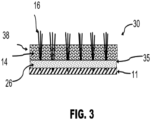
- the separated olive pit particles 26 using a sieving process are used as infill for a stabilization layer 35 preferably alone or together with any particles (of less than 63 ⁇ m size) of another bio-based material, while the rounded and thermally treated olive pit fragments 24 free of the olive pit particles 26 are used to form the performance layer 38 either alone or together with a second bio-based material fragments (of a size of 0.5 mm or greater) such as, cork particles and cherry pits 25.
- the artificial turf 30 comprises the stabilization layer 35 formed on the baking 11 of the artificial turf 30 exclusively with the olive pit olive pit particles or in a mixture with a second stabilizing bio-based material, and the performance layer 38 formed on the stabilization layer 35 formed exclusively with the rounded and thermally treated olive pit fragments 24 or with a mixture of the rounded and thermally treated olive pit fragments 24 and a second bio-based material particles, such as, preferably the cork particles and/or the cherry pit particles.
- the performance layer 38 comprises the rounded olive pit fragments 24 and second bio-based material of the cork fragments and/or cherry pit fragments 25 in a mixture prepared, for example, in the thermo-tumbler 21 and sieving the thermo-tumbler product to separate the olive pit particles 26 which are used for forming the stabilization layer 35.
- the stabilization layer 35 may optionally include sand which is currently widely used in state of the art infills, however, the present invention allows completely eliminating the need for using sand in the stabilization layer. Eliminating the sand is advantageous because it is non-bio-based material and creates problems in the shredders used in the recycling of the artificial turf at the end of the useful life of the artificial turf.
- microporous zeolite particles are added in the infill for providing a cooling effect for the artificial turf.
- particles of a reflective material may also be added.
- the grain size of the microporous zeolite particles is determined such that the resulting specific surface area of the particles is smaller than a maximum specific surface area.
- the maximum specific surface area of the microporous zeolite particles is the specific surface area that enables the water in the particles to release, under an ambient temperature, at a predefined minimum rate.
- a progressive release of the water by the microporous zeolite particles and avoidance of rapid evaporation of the water after the surface has been watered is desirable in order to allow a lower temperature to be maintained at the level of the field surface compared to the ambient temperature.
- the controlled release of absorbed water causes progressive cooling under evaporation for some time.
- the amount of watering usually necessary to refresh a field surface can be reduced.
- the grain structure of the microporous zeolite particles enables the formation of bound water surrounding particles surfaces and maintained by weak force of van der Waals force. This renders the release or desorption of the water easier in particular under ambient temperature (e.g., the solar energy is enough to desorb the water).
- the specific surface area of the microporous zeolite particles varies with its structure. For example, the finer the particles are, the larger the specific surface area is (i.e., the smaller the grain size is, the larger the specific surface area is).
- the specific surface area of the microporous zeolite particles may not exceed a minimum specific surface area. The minimum specific surface area may be the smallest possible specific surface area.
- the determined grain size may be the lower limit of a range of sizes, wherein the upper limit of the range may be determined using the minimum specific surface area.
- the microporous zeolite particles may for example have a grain size between 0.1 mm and 1.5 mm, in particular between 0.4 mm to 1.2 mm, more in particular between 0.9 mm and 1.2 mm, and a maximum surface specific surface area of 21m 2 /g.
- a selected specific surface area may be 20 m 2 /g.
- the artificial turf infillartificial turf infillinfill comprises microporous zeolite particles having a selected grain size smaller than 1.5 mm and a porosity between 15% and 20% volume parts.
- the microporous zeolite particles may have a grain size distribution wherein 70% to 90% of the grains by weight have a size in the range of 0.4 mm to 1.5 mm and 10.0% to 30% of the grains by weight have a size smaller than 0.4 mm.
- 0.6 wt% of the zeolite particles at most is not retainable on a 10-mesh screen.
- the microporous zeolite particles have a hardness between 3.5 and 5.5 on the Mohs scale.
- the moisture level in the microporous zeolite particles is smaller than 6 wt%.
- microporous zeolite particles allow a lower temperature to be maintained at the level of the field surface compared to the ambient temperature by the controlled release of water via evaporation. Thus, the amount of watering usually necessary to refresh a field surface may be reduced.
- the mixture of rounded and thermally treated olive pit fragments obtained from the thermo-tumbler is not sieved at all and is applied as obtained from the thermo-tumbler once the thermo-tumbling treatment is completed, on the backing of the artificial turf. It has been found that in a relative short time, the olive pit particles and the fragments separate with the olive pit particles settling at the bottom of the infill layer forming a stabilization layer and the larger rounded and thermally treated olive pit fragments form a performance layer over the stabilization layer with the olive pit particles.
- the transition from the olive pit particles layer to the rounded and thermally treated olive pit fragments layer may be gradual and that there may be an intermediate layer between the olive pit particles layer and the rounded olive pit particles comprising the two different particle size groups.
- a zeolite and optionally sand, preferably of zeolite may also be added.
- the following mixture is generated and applied on the artificial turf:
- the components a, b and c will automatically separate into different stabilizing and performance layers 45 and 48, respectively, with the olive pit particles 26 moving downward next to the carrier/backing 11 of the artificial turf because of their small particle size which makes them fall down filling the cavities between the larger objects and eventually make it all the way down shifting the larger particles upwards.
- the artificial turf fibers are not shown in figure 3 for simplicity of presentation.
- the various components are presented in a simplified schematic manner and not according to their actual shapes, and sizes.
- This embodiment (with or without the component 'b') is advantageous because the mixture is applied on the carrier or backing 11 of the artificial turf 40 in a single step and within a short period of use it separates by itself in a stabilization layer 45 comprising primarily olive pit particles 26 and when used the microporous zeolite particles 28, and a performance layer 45 comprising primarily of the rounded and thermally treated olive pit fragments 24.
- the microporous zeolite particles 28 of the component b when used, they separate also with the main bulk of it settling primarily within the stabilization layer 45.
- the microporous zeolite particles 28 provide a cooling effect in the infill of the artificial turf 40 and can also help the artificial turf stay drier in a rainy day because of their ability to soak water (through absorption) due to their microporous structure.
- the result is an artificial turf with less variable performance characteristic between warm, sunny days and cooler rainy days.
- the proposed infill comprising components a, b and c is advantageous because:
- these layers are formed automatically by a single-step application of the above-mentioned mixture comprising only components 'a' and 'c,' or a mixture comprising 'a', 'b' and 'c' and self-separation into the stabilizing and performance layers based on object size and specific gravity will achieve at least similar mechanical properties like a conventional two-layer artificial turf system with a stabilizing and performance layer.
- the infill mixture may include at least one other bio-based material such as cork particles and/or cherry pits 25 which after an initial settling period form part of the performance layer 48.
- the infill may further include any other suitable components such as an antimicrobial agent used for preventing the growth of bacteria, fungi, mold, or other microorganisms. Any suitable antimicrobial agent may be used and, according to some embodiments, the antimicrobial agent may also be added in the turf backing and/or turf fibers.
- the artificial turf may further include other components such as a reflective agent.
- the reflective agent may be added in the infill and/or in the polymer mixture for making the artificial turf fibers 16, for further preventing overheating of the fiber in warm and sunny conditions.
- the reflective agent may reduce the heat on the artificial turf field.
- Suitable reflective agents include titanium dioxide, zinc sulfide, tin oxide, aluminum oxide, zinc oxide, calcium sulfate, barium sulfate, calcium carbonate, antimony oxide, sodium silicate, aluminum silicate, silica, mica, clay, and the like.
- an infrared (IR) reflective agent is a mixed metal oxide type chosen from the group of the rutile (MeO2), hematite (Me2O3), or spinel (Me3O4) type with metals comprising cobalt, iron, trivalent chrome, tin, antimony, titanium, manganese and aluminum.
- the reflective agent may be used in an amount from 0.01 wt% to 8.0 wt%, preferably from 0.3 wt% to 5.0 wt%, more preferably from 0.3 wt% to 3.0 wt% based on the total fiber weight.
- a method of fabricating an infill for an artificial turf comprising, providing olive pit fragments separated from an olive extraction process compressing olives to extract olive oil from the olives (S50), feeding the olive pit fragments in a thermo-tumbler (S52), feeding hot air or steam through the thermo-tumbler (S54), tumbling the olive pit fragments (S56), and producing rounded and thermally treated olive pit fragments including olive pit particles (S58).
- the rounded and thermally treated olive pit fragments including the olive pit particles are used to form an infill for an artificial turf.
- the olive pit particles are separated from the thermo-tumbler product using sieving to remove all olive pit particles having a size of less than 63 ⁇ m.
- At least one of sand, and zeolite are added as a second component in the thermo-tumbler and mixed together with the olive pit fragments an/or the cherry pits.
- the performance layer includes the larger size bio-based material, i.e., the rounded olive fragments and when used also the cherry pits and when used also the zeolite particles. It should be understood that the thermo-tumbler process may also generate olive pit particles not only from the olive pits but also from the other components when used, i.e., the cherry pits, and the zeolites, and all these olive pit particles will settle at to form the stabilization layer, together with the most part or all of the sand used.
- the thermo-tumbler process may also generate olive pit particles not only from the olive pits but also from the other components when used, i.e., the cherry pits, and the zeolites, and all these olive pit particles will settle at to form the stabilization layer, together with the most part or all of the sand used.
- incorporating the turf fiber into the carrier includes positioning the fiber so that a first fraction of the fiber is located at the back side of a carrier, a second fraction of the fiber is protruding to the front side of the carrier and a third fraction of the fiber is inside the carrier (referred to also as the middle fraction of the fiber or the carrier portion of the fiber).
- the backing of the artificial turf is made of a thermoset polymer material, however the invention is not limited in this way and other suitable backing materials may be used.
- the thermoset material may include, for example, a polyurethane resin.
- weaving is a method of incorporating an artificial turf fiber (which can be a monofilament or a bundle of monofilaments) into an existing carrier, whereby the artificial turf fiber and the fiber(s) that built the carrier are interlaced.
- the interlaced fibers and the mesh form a fabric like or cloth like structure.
- an artificial tuft fiber is incorporated by weaving, the fiber interlaces a series of mesh fibers at least three times.
- a higher fraction of the artificial turf fiber is interlaced in the carrier material. This may increase the resistance to wear and tear of the artificial turf.
- microporous zeolite particles are added in an amount of 10.0 wt% of the total infill.
- the microporous zeolite particles have a grain size distribution wherein 80.0 wt% of the grains have a size in the range of 0.4 mm to 1.5 mm and 20 wt% of the grains have a size smaller than 0.4 mm.
- the infill mixture of the olive pit material and the microporous zeolite particles are processed together in the thermo-tumbler under the same conditions as in example 1 and the thermo-tumbler product without any sieving is applied on the thermoset polyurethane backing as in example 1.
- the infills of examples 1 and 2 are watered and their temperatures are measured at a center point of the infills under the same ambient temperatures 2 and 4 hours later after the watering of the infill whereas the infill of example 2 demonstrates consistently lower temperature than example 1.
- the olive pit materials of examples 3-5 compared to the olive pit material of Example 1, exhibit substantially improved antimicrobial resistance, enhanced abrasion resistance, and reduced hygroscopicity.
- the olive pit material of example 3 has significantly reduced hygroscopicity when compared to the olive pit material of example 1 while the olive pit materials of examples 4 and 5 exhibit almost no hygroscopicity at all. Because of the aforementioned significantly improved characteristics and in particular the reduced hygroscopicity, the olive pit material of example 3 is expected to exhibit significantly improved resistance to biodegradability and prolonged lifespan compared to the olive pit material of example 1.
Landscapes
- Engineering & Computer Science (AREA)
- Architecture (AREA)
- Civil Engineering (AREA)
- Structural Engineering (AREA)
- Road Paving Structures (AREA)
Claims (12)
- Kunstrasenfüllung, ein Olivenkernmaterial (24, 26) umfassend, dadurch gekennzeichnet, dass die Kunstrasenfüllung ferner umfasst:- mikroporöse Zeolithpartikel (28),- wobei das Olivenkernmaterial eine bimodale Größenverteilung mit einem Hauptmodus und einem Nebenmodus aufweist,- wobei der Hauptmodus abgerundete, wärmebehandelte Olivenkernfragmente (24) umfasst und einen Scheitelwert zwischen 0,5 mm bis 4,0 mm, spezieller von 0,5 mm bis 2,5 mm und ganz speziell von 0,5 mm bis 2,0 mm aufweist, und- wobei der Nebenmodus Olivenkernpartikel (26) von weniger als 63 µm in einer Menge von mindestens 0,5 Gew.-% umfasst und einen Scheitelwert bei weniger als 63 µm aufweist.
- Kunstrasenfüllung nach einem der vorangehenden Ansprüche, wobei das Olivenkernmaterial wärmebehandelt worden ist (S54), insbesondere bei einer Temperatur von 80 °C bis 250 °C.
- Kunstrasenfüllung nach einem der vorangehenden Ansprüche, wobei das Olivenkernmaterial abrasiv abgerundete Olivenkernfragmente (24), insbesondere in einer Umwälzeinrichtung abgerundete Olivenkernfragmente umfasst.
- Kunstrasenfüllung nach einem der Ansprüche 1-3 wobei die mikroporösen Zeolithpartikel (28) der Füllung in einer Menge von 1,0 bis 30,0 Gew.-%, insbesondere von 5,0 bis 25,0 Gew.-% und spezieller von 10,0 bis 20,0 Gew.-%, bezogen auf das Gesamtgewicht der Füllung (12), zugegeben werden.
- Kunstrasenfüllung nach einem der Ansprüche 1-4, wobei die mikroporösen Zeolithpartikel (28) eine Korngröße zwischen 0,1 mm und 1,5 mm, insbesondere zwischen 0,4 mm bis 1,2 mm, spezieller zwischen 0,9 mm und 1,2 mm, und eine maximale spezifische Oberfläche der Oberfläche von 21 m2/g aufweisen.
- Kunstrasenfüllung nach einem der Ansprüche 1-5 wobei die mikroporösen Zeolithpartikel (28) eine Porosität zwischen 15 % und 20 % Volumenteilen aufweisen.
- Kunstrasenfüllung nach einem der Ansprüche 1-6 wobei die mikroporösen Zeolithpartikel (28) eine Korngrößenverteilung aufweisen, wo 70 % bis 90 % der Körner, bezogen auf das Gewicht, eine Größe im Bereich von 0,4 mm bis 1,5 mm aufweisen und 10 % bis 30 % der Körner, bezogen auf das Gewicht, eine Größe unter 0,4 mm aufweisen.
- Kunstrasenfüllung nach einem der Ansprüche 1-7 wobei mindestens 10 %, insbesondere mindestens 50 %, insbesondere mindestens 70 % oder mindestens 90 % der Füllung, bezogen auf das Gewicht, von Olivenkernmaterial gebildet werden.
- Kunstrasenfüllung nach einem der Ansprüche 1-7, wobei die mikroporösen Zeolithpartikel (28) eine Härte zwischen 3,5 und 5,5 auf der Mohs-Skala und einen Feuchtigkeitsgehalt von unter 6 Gew.-% aufweisen.
- Kunstrasenfüllung nach einem der Ansprüche 1-9,- ferner mindestens ein weiteres biobasiertes Material (25) umfassend, einschließlich von Kernfragmenten mindestens einer anderen Steinfrucht,wobei Kernfragmente des weiteren biobasierten Materials (25) eine andere Elastizität aufweisen als die abgerundeten und wärmebehandelten Olivenkernfragmente, undwobei insbesondere das mindestens eine weitere biobasierte Material (25) ausgewählt ist aus einer Gruppe, die Korkpartikel, abgerundete Kirschkernfragmente und Kombinationen davon umfasst.
- Kunstrasenfüllung einem der Ansprüche 1-10, die nur biobasierte Materialien (25) umfasst und gänzlich frei ist von einer Füllung auf Gummi-, Elastomer- oder Polymerbasis und insbesondere auch gänzlich frei ist von Sand.
- Verfahren zum Erzeugen eines Kunstrasens, umfassend: Verlegen eines Kunstrasens, der eine Vielzahl von auf einem Träger angebrachten Kunstrasenfasern umfasst, gekennzeichnet durch:- Aufbringen der Kunstrasenfüllung nach einem der Ansprüche 1-11 auf dem verlegten Kunstrasen, zwischen den Kunstrasenfasern, wobei die Füllung zumindest eine Mischung aus den abgerundeten und wärmebehandelten Olivenkernfragmenten (24), den Olivenkernpartikeln (26) und den mikroporösen Zeolithpartikel (28) umfasst, wobei das Aufbringen der Kunstrasenfüllung auf dem verlegten Kunstrasen in einem einzigen Schritt durchgeführt wird, und- automatisches nach unten Rieseln lassen der Olivenkernpartikel (26) in der aufgebrachten Füllung, in Hohlräume zwischen den Olivenkernfragmenten (24), wodurch automatisch eine Stabilisierungsschicht (35, 45), die im Wesentlichen von den nach unten gerieselten Partikeln gebildet wird, und eine Leistungsschicht (38, 48), welche die abgerundeten Olivenkernfragmente (24) enthält, gebildet werden,wobei zumindest ein Teil der mikroporösen Zeolithpartikel (28) nach unten rieselt und sich in der Stabilisierungsschicht (35, 45) absetzt.
Priority Applications (6)
| Application Number | Priority Date | Filing Date | Title |
|---|---|---|---|
| EP22194961.3A EP4335969B1 (de) | 2022-09-09 | 2022-09-09 | Kunstrasenfüllung mit olivenkernfragmenten und mikroporösen zeolithpartikeln |
| EP23164421.2A EP4339371B1 (de) | 2022-09-09 | 2022-09-09 | Kunstrasenfüllung mit olivenkernfragmenten und mikroporösen zeolithpartikeln |
| EP23164428.7A EP4339372B1 (de) | 2022-09-09 | 2022-09-09 | Kunstrasenfüllung mit olivenkernfragmenten und mikroporösen zeolithpartikeln |
| ES22194961T ES2988312T3 (es) | 2022-09-09 | 2022-09-09 | Relleno de césped artificial con fragmentos de huesos de aceituna y partículas microporosas de zeolita |
| US18/068,320 US20240084523A1 (en) | 2022-09-09 | 2022-12-19 | Artificial turf infill with olive pit fragments and microporous zeolite particles |
| PCT/EP2023/074483 WO2024052418A1 (en) | 2022-09-09 | 2023-09-06 | Artificial turf infill with olive pit fragments and microporous zeolite particles |
Applications Claiming Priority (1)
| Application Number | Priority Date | Filing Date | Title |
|---|---|---|---|
| EP22194961.3A EP4335969B1 (de) | 2022-09-09 | 2022-09-09 | Kunstrasenfüllung mit olivenkernfragmenten und mikroporösen zeolithpartikeln |
Related Child Applications (4)
| Application Number | Title | Priority Date | Filing Date |
|---|---|---|---|
| EP23164428.7A Division EP4339372B1 (de) | 2022-09-09 | 2022-09-09 | Kunstrasenfüllung mit olivenkernfragmenten und mikroporösen zeolithpartikeln |
| EP23164428.7A Division-Into EP4339372B1 (de) | 2022-09-09 | 2022-09-09 | Kunstrasenfüllung mit olivenkernfragmenten und mikroporösen zeolithpartikeln |
| EP23164421.2A Division EP4339371B1 (de) | 2022-09-09 | 2022-09-09 | Kunstrasenfüllung mit olivenkernfragmenten und mikroporösen zeolithpartikeln |
| EP23164421.2A Division-Into EP4339371B1 (de) | 2022-09-09 | 2022-09-09 | Kunstrasenfüllung mit olivenkernfragmenten und mikroporösen zeolithpartikeln |
Publications (3)
| Publication Number | Publication Date |
|---|---|
| EP4335969A1 EP4335969A1 (de) | 2024-03-13 |
| EP4335969C0 EP4335969C0 (de) | 2024-07-10 |
| EP4335969B1 true EP4335969B1 (de) | 2024-07-10 |
Family
ID=83271570
Family Applications (3)
| Application Number | Title | Priority Date | Filing Date |
|---|---|---|---|
| EP23164421.2A Active EP4339371B1 (de) | 2022-09-09 | 2022-09-09 | Kunstrasenfüllung mit olivenkernfragmenten und mikroporösen zeolithpartikeln |
| EP22194961.3A Active EP4335969B1 (de) | 2022-09-09 | 2022-09-09 | Kunstrasenfüllung mit olivenkernfragmenten und mikroporösen zeolithpartikeln |
| EP23164428.7A Active EP4339372B1 (de) | 2022-09-09 | 2022-09-09 | Kunstrasenfüllung mit olivenkernfragmenten und mikroporösen zeolithpartikeln |
Family Applications Before (1)
| Application Number | Title | Priority Date | Filing Date |
|---|---|---|---|
| EP23164421.2A Active EP4339371B1 (de) | 2022-09-09 | 2022-09-09 | Kunstrasenfüllung mit olivenkernfragmenten und mikroporösen zeolithpartikeln |
Family Applications After (1)
| Application Number | Title | Priority Date | Filing Date |
|---|---|---|---|
| EP23164428.7A Active EP4339372B1 (de) | 2022-09-09 | 2022-09-09 | Kunstrasenfüllung mit olivenkernfragmenten und mikroporösen zeolithpartikeln |
Country Status (4)
| Country | Link |
|---|---|
| US (1) | US20240084523A1 (de) |
| EP (3) | EP4339371B1 (de) |
| ES (1) | ES2988312T3 (de) |
| WO (1) | WO2024052418A1 (de) |
Families Citing this family (1)
| Publication number | Priority date | Publication date | Assignee | Title |
|---|---|---|---|---|
| EP4335967B1 (de) * | 2022-09-09 | 2024-07-10 | Polytex Sportbeläge Produktions-GmbH | Verfahren zur herstellung von kunstrasenfüllung mit abgerundeten olivenkernfragmenten |
Family Cites Families (13)
| Publication number | Priority date | Publication date | Assignee | Title |
|---|---|---|---|---|
| US6582819B2 (en) | 1998-07-22 | 2003-06-24 | Borden Chemical, Inc. | Low density composite proppant, filtration media, gravel packing media, and sports field media, and methods for making and using same |
| AU756771B2 (en) | 1998-07-22 | 2003-01-23 | Borden Chemical, Inc. | Composite proppant, composite filtration media and methods for making and using same |
| US6551689B1 (en) | 1998-09-21 | 2003-04-22 | Fieldturf Holdings Inc. | Synthetic grass with resilient granular top surface layer |
| ES2633118T3 (es) | 2007-01-19 | 2017-09-19 | Brock International | Base para un sistema de césped |
| US20100055461A1 (en) | 2008-08-26 | 2010-03-04 | Daluise Daniel A | Artificial turf infill |
| ITPI20120099A1 (it) | 2012-09-28 | 2014-03-29 | Mar Project S R L | Materiale di intasamento perfezionato per manti in erba sintetica e manti ibridi sintetico-naturale e manti cosi' ottenuti |
| US10822752B2 (en) | 2015-06-15 | 2020-11-03 | Board Of Supervisors Of Louisiana State University And Agricultural And Mechanical College | Thermoplastic cellulosic fiber granules useful as infill materials for artificial turf |
| US20180080183A1 (en) | 2016-09-20 | 2018-03-22 | Tarkett Inc. | Organic infill for artificial turf fields |
| DK3601658T3 (da) * | 2017-03-29 | 2023-03-20 | Brock Usa Llc | Fyld til kunstgræssystem og fremstillingsfremgangsmåde |
| US11453982B2 (en) * | 2017-06-02 | 2022-09-27 | Benoit PINTAT | Artificial turf infill material |
| ES2961884T3 (es) | 2020-02-19 | 2024-03-14 | Tarkett Sports Canada Inc | Sistemas de relleno de huesos de aceituna y céspedes artificiales que tienen los mismos |
| US20210254290A1 (en) * | 2020-02-19 | 2021-08-19 | Fieldturf, Inc. | Olive pits infill systems and artificial turfs having the same |
| EP4001506B1 (de) * | 2020-11-13 | 2024-03-13 | Tarkett Sports Canada Inc. | Kunstrasensystem umfassend hydrophoben sand |
-
2022
- 2022-09-09 ES ES22194961T patent/ES2988312T3/es active Active
- 2022-09-09 EP EP23164421.2A patent/EP4339371B1/de active Active
- 2022-09-09 EP EP22194961.3A patent/EP4335969B1/de active Active
- 2022-09-09 EP EP23164428.7A patent/EP4339372B1/de active Active
- 2022-12-19 US US18/068,320 patent/US20240084523A1/en active Pending
-
2023
- 2023-09-06 WO PCT/EP2023/074483 patent/WO2024052418A1/en not_active Ceased
Also Published As
| Publication number | Publication date |
|---|---|
| EP4339372C0 (de) | 2024-07-10 |
| US20240084523A1 (en) | 2024-03-14 |
| WO2024052418A1 (en) | 2024-03-14 |
| EP4339372B1 (de) | 2024-07-10 |
| EP4335969C0 (de) | 2024-07-10 |
| EP4339371A1 (de) | 2024-03-20 |
| EP4339371C0 (de) | 2024-07-10 |
| EP4335969A1 (de) | 2024-03-13 |
| ES2988312T3 (es) | 2024-11-20 |
| EP4339371B1 (de) | 2024-07-10 |
| EP4339372A1 (de) | 2024-03-20 |
Similar Documents
| Publication | Publication Date | Title |
|---|---|---|
| US12247360B2 (en) | Infill for artificial turf system | |
| AU2024200909B2 (en) | Infill for artificial turf system | |
| EP4220054A1 (de) | Verfahren zur produktion eines füllmaterials für eine synthetische rasenfläche | |
| US20250116075A1 (en) | Process for production of an infill material for a synthetic turf surface | |
| EP4335969B1 (de) | Kunstrasenfüllung mit olivenkernfragmenten und mikroporösen zeolithpartikeln | |
| EP4335968B1 (de) | Verfahren zur herstellung einer kunstrasenfüllung mit wärmebehandeltem olivenkernmaterial | |
| EP4335967B1 (de) | Verfahren zur herstellung von kunstrasenfüllung mit abgerundeten olivenkernfragmenten | |
| US20240011227A1 (en) | Coconut hard shell granular infill for synthetic sport fields | |
| EP4219832B1 (de) | Füllmaterial für kunstrasenflächen und zugehöriges produktionsverfahren | |
| US20250101689A1 (en) | Infill material for synthetic turf surface and related production process |
Legal Events
| Date | Code | Title | Description |
|---|---|---|---|
| STAA | Information on the status of an ep patent application or granted ep patent |
Free format text: STATUS: EXAMINATION IS IN PROGRESS |
|
| PUAI | Public reference made under article 153(3) epc to a published international application that has entered the european phase |
Free format text: ORIGINAL CODE: 0009012 |
|
| 17P | Request for examination filed |
Effective date: 20230324 |
|
| AK | Designated contracting states |
Kind code of ref document: A1 Designated state(s): AL AT BE BG CH CY CZ DE DK EE ES FI FR GB GR HR HU IE IS IT LI LT LU LV MC MK MT NL NO PL PT RO RS SE SI SK SM TR |
|
| GRAP | Despatch of communication of intention to grant a patent |
Free format text: ORIGINAL CODE: EPIDOSNIGR1 |
|
| STAA | Information on the status of an ep patent application or granted ep patent |
Free format text: STATUS: GRANT OF PATENT IS INTENDED |
|
| INTG | Intention to grant announced |
Effective date: 20240408 |
|
| GRAS | Grant fee paid |
Free format text: ORIGINAL CODE: EPIDOSNIGR3 |
|
| GRAA | (expected) grant |
Free format text: ORIGINAL CODE: 0009210 |
|
| STAA | Information on the status of an ep patent application or granted ep patent |
Free format text: STATUS: THE PATENT HAS BEEN GRANTED |
|
| AK | Designated contracting states |
Kind code of ref document: B1 Designated state(s): AL AT BE BG CH CY CZ DE DK EE ES FI FR GB GR HR HU IE IS IT LI LT LU LV MC MK MT NL NO PL PT RO RS SE SI SK SM TR |
|
| REG | Reference to a national code |
Ref country code: CH Ref legal event code: EP |
|
| REG | Reference to a national code |
Ref country code: DE Ref legal event code: R096 Ref document number: 602022004445 Country of ref document: DE |
|
| U01 | Request for unitary effect filed |
Effective date: 20240801 |
|
| U07 | Unitary effect registered |
Designated state(s): AT BE BG DE DK EE FI FR IT LT LU LV MT NL PT SE SI Effective date: 20240819 |
|
| U20 | Renewal fee for the european patent with unitary effect paid |
Year of fee payment: 3 Effective date: 20240925 |
|
| REG | Reference to a national code |
Ref country code: ES Ref legal event code: FG2A Ref document number: 2988312 Country of ref document: ES Kind code of ref document: T3 Effective date: 20241120 |
|
| PG25 | Lapsed in a contracting state [announced via postgrant information from national office to epo] |
Ref country code: NO Free format text: LAPSE BECAUSE OF FAILURE TO SUBMIT A TRANSLATION OF THE DESCRIPTION OR TO PAY THE FEE WITHIN THE PRESCRIBED TIME-LIMIT Effective date: 20241010 |
|
| PG25 | Lapsed in a contracting state [announced via postgrant information from national office to epo] |
Ref country code: GR Free format text: LAPSE BECAUSE OF FAILURE TO SUBMIT A TRANSLATION OF THE DESCRIPTION OR TO PAY THE FEE WITHIN THE PRESCRIBED TIME-LIMIT Effective date: 20241011 Ref country code: PL Free format text: LAPSE BECAUSE OF FAILURE TO SUBMIT A TRANSLATION OF THE DESCRIPTION OR TO PAY THE FEE WITHIN THE PRESCRIBED TIME-LIMIT Effective date: 20240710 |
|
| PG25 | Lapsed in a contracting state [announced via postgrant information from national office to epo] |
Ref country code: IS Free format text: LAPSE BECAUSE OF FAILURE TO SUBMIT A TRANSLATION OF THE DESCRIPTION OR TO PAY THE FEE WITHIN THE PRESCRIBED TIME-LIMIT Effective date: 20241110 |
|
| PG25 | Lapsed in a contracting state [announced via postgrant information from national office to epo] |
Ref country code: HR Free format text: LAPSE BECAUSE OF FAILURE TO SUBMIT A TRANSLATION OF THE DESCRIPTION OR TO PAY THE FEE WITHIN THE PRESCRIBED TIME-LIMIT Effective date: 20240710 |
|
| PG25 | Lapsed in a contracting state [announced via postgrant information from national office to epo] |
Ref country code: RS Free format text: LAPSE BECAUSE OF FAILURE TO SUBMIT A TRANSLATION OF THE DESCRIPTION OR TO PAY THE FEE WITHIN THE PRESCRIBED TIME-LIMIT Effective date: 20241010 |
|
| PG25 | Lapsed in a contracting state [announced via postgrant information from national office to epo] |
Ref country code: RS Free format text: LAPSE BECAUSE OF FAILURE TO SUBMIT A TRANSLATION OF THE DESCRIPTION OR TO PAY THE FEE WITHIN THE PRESCRIBED TIME-LIMIT Effective date: 20241010 Ref country code: PL Free format text: LAPSE BECAUSE OF FAILURE TO SUBMIT A TRANSLATION OF THE DESCRIPTION OR TO PAY THE FEE WITHIN THE PRESCRIBED TIME-LIMIT Effective date: 20240710 Ref country code: NO Free format text: LAPSE BECAUSE OF FAILURE TO SUBMIT A TRANSLATION OF THE DESCRIPTION OR TO PAY THE FEE WITHIN THE PRESCRIBED TIME-LIMIT Effective date: 20241010 Ref country code: IS Free format text: LAPSE BECAUSE OF FAILURE TO SUBMIT A TRANSLATION OF THE DESCRIPTION OR TO PAY THE FEE WITHIN THE PRESCRIBED TIME-LIMIT Effective date: 20241110 Ref country code: HR Free format text: LAPSE BECAUSE OF FAILURE TO SUBMIT A TRANSLATION OF THE DESCRIPTION OR TO PAY THE FEE WITHIN THE PRESCRIBED TIME-LIMIT Effective date: 20240710 Ref country code: GR Free format text: LAPSE BECAUSE OF FAILURE TO SUBMIT A TRANSLATION OF THE DESCRIPTION OR TO PAY THE FEE WITHIN THE PRESCRIBED TIME-LIMIT Effective date: 20241011 |
|
| PG25 | Lapsed in a contracting state [announced via postgrant information from national office to epo] |
Ref country code: SM Free format text: LAPSE BECAUSE OF FAILURE TO SUBMIT A TRANSLATION OF THE DESCRIPTION OR TO PAY THE FEE WITHIN THE PRESCRIBED TIME-LIMIT Effective date: 20240710 |
|
| PG25 | Lapsed in a contracting state [announced via postgrant information from national office to epo] |
Ref country code: MC Free format text: LAPSE BECAUSE OF FAILURE TO SUBMIT A TRANSLATION OF THE DESCRIPTION OR TO PAY THE FEE WITHIN THE PRESCRIBED TIME-LIMIT Effective date: 20240710 |
|
| PG25 | Lapsed in a contracting state [announced via postgrant information from national office to epo] |
Ref country code: CZ Free format text: LAPSE BECAUSE OF FAILURE TO SUBMIT A TRANSLATION OF THE DESCRIPTION OR TO PAY THE FEE WITHIN THE PRESCRIBED TIME-LIMIT Effective date: 20240710 |
|
| PG25 | Lapsed in a contracting state [announced via postgrant information from national office to epo] |
Ref country code: SK Free format text: LAPSE BECAUSE OF FAILURE TO SUBMIT A TRANSLATION OF THE DESCRIPTION OR TO PAY THE FEE WITHIN THE PRESCRIBED TIME-LIMIT Effective date: 20240710 |
|
| PLBE | No opposition filed within time limit |
Free format text: ORIGINAL CODE: 0009261 |
|
| STAA | Information on the status of an ep patent application or granted ep patent |
Free format text: STATUS: NO OPPOSITION FILED WITHIN TIME LIMIT |
|
| 26N | No opposition filed |
Effective date: 20250411 |
|
| PG25 | Lapsed in a contracting state [announced via postgrant information from national office to epo] |
Ref country code: IE Free format text: LAPSE BECAUSE OF NON-PAYMENT OF DUE FEES Effective date: 20240909 |
|
| U20 | Renewal fee for the european patent with unitary effect paid |
Year of fee payment: 4 Effective date: 20250924 |
|
| PG25 | Lapsed in a contracting state [announced via postgrant information from national office to epo] |
Ref country code: RO Free format text: LAPSE BECAUSE OF FAILURE TO SUBMIT A TRANSLATION OF THE DESCRIPTION OR TO PAY THE FEE WITHIN THE PRESCRIBED TIME-LIMIT Effective date: 20240710 |
|
| PG25 | Lapsed in a contracting state [announced via postgrant information from national office to epo] |
Ref country code: CY Free format text: LAPSE BECAUSE OF FAILURE TO SUBMIT A TRANSLATION OF THE DESCRIPTION OR TO PAY THE FEE WITHIN THE PRESCRIBED TIME-LIMIT; INVALID AB INITIO Effective date: 20220909 |
|
| PGFP | Annual fee paid to national office [announced via postgrant information from national office to epo] |
Ref country code: ES Payment date: 20251030 Year of fee payment: 4 |