EP4335281B1 - Druckisolationskreislauf eines hydraulikkühlers für einen erntevorsatz einer landwirtschaftlichen erntemaschine - Google Patents
Druckisolationskreislauf eines hydraulikkühlers für einen erntevorsatz einer landwirtschaftlichen erntemaschine Download PDFInfo
- Publication number
- EP4335281B1 EP4335281B1 EP23194116.2A EP23194116A EP4335281B1 EP 4335281 B1 EP4335281 B1 EP 4335281B1 EP 23194116 A EP23194116 A EP 23194116A EP 4335281 B1 EP4335281 B1 EP 4335281B1
- Authority
- EP
- European Patent Office
- Prior art keywords
- valve
- cooler
- hydraulic
- hydraulic fluid
- pressure
- Prior art date
- Legal status (The legal status is an assumption and is not a legal conclusion. Google has not performed a legal analysis and makes no representation as to the accuracy of the status listed.)
- Active
Links
Images




Classifications
-
- A—HUMAN NECESSITIES
- A01—AGRICULTURE; FORESTRY; ANIMAL HUSBANDRY; HUNTING; TRAPPING; FISHING
- A01D—HARVESTING; MOWING
- A01D41/00—Combines, i.e. harvesters or mowers combined with threshing devices
- A01D41/12—Details of combines
- A01D41/127—Control or measuring arrangements specially adapted for combines
- A01D41/1274—Control or measuring arrangements specially adapted for combines for drives
-
- A—HUMAN NECESSITIES
- A01—AGRICULTURE; FORESTRY; ANIMAL HUSBANDRY; HUNTING; TRAPPING; FISHING
- A01D—HARVESTING; MOWING
- A01D41/00—Combines, i.e. harvesters or mowers combined with threshing devices
- A01D41/12—Details of combines
- A01D41/14—Mowing tables
- A01D41/142—Header drives
-
- A—HUMAN NECESSITIES
- A01—AGRICULTURE; FORESTRY; ANIMAL HUSBANDRY; HUNTING; TRAPPING; FISHING
- A01D—HARVESTING; MOWING
- A01D69/00—Driving mechanisms or parts thereof for harvesters or mowers
- A01D69/03—Driving mechanisms or parts thereof for harvesters or mowers fluid
-
- F—MECHANICAL ENGINEERING; LIGHTING; HEATING; WEAPONS; BLASTING
- F15—FLUID-PRESSURE ACTUATORS; HYDRAULICS OR PNEUMATICS IN GENERAL
- F15B—SYSTEMS ACTING BY MEANS OF FLUIDS IN GENERAL; FLUID-PRESSURE ACTUATORS, e.g. SERVOMOTORS; DETAILS OF FLUID-PRESSURE SYSTEMS, NOT OTHERWISE PROVIDED FOR
- F15B1/00—Installations or systems with accumulators; Supply reservoir or sump assemblies
- F15B1/02—Installations or systems with accumulators
- F15B1/025—Installations or systems with accumulators used for thermal compensation, e.g. to collect expanded fluid and to return it to the system as the system fluid cools down
-
- F—MECHANICAL ENGINEERING; LIGHTING; HEATING; WEAPONS; BLASTING
- F15—FLUID-PRESSURE ACTUATORS; HYDRAULICS OR PNEUMATICS IN GENERAL
- F15B—SYSTEMS ACTING BY MEANS OF FLUIDS IN GENERAL; FLUID-PRESSURE ACTUATORS, e.g. SERVOMOTORS; DETAILS OF FLUID-PRESSURE SYSTEMS, NOT OTHERWISE PROVIDED FOR
- F15B21/00—Common features of fluid actuator systems; Fluid-pressure actuator systems or details thereof, not covered by any other group of this subclass
- F15B21/04—Special measures taken in connection with the properties of the fluid
- F15B21/042—Controlling the temperature of the fluid
- F15B21/0423—Cooling
-
- F—MECHANICAL ENGINEERING; LIGHTING; HEATING; WEAPONS; BLASTING
- F15—FLUID-PRESSURE ACTUATORS; HYDRAULICS OR PNEUMATICS IN GENERAL
- F15B—SYSTEMS ACTING BY MEANS OF FLUIDS IN GENERAL; FLUID-PRESSURE ACTUATORS, e.g. SERVOMOTORS; DETAILS OF FLUID-PRESSURE SYSTEMS, NOT OTHERWISE PROVIDED FOR
- F15B2211/00—Circuits for servomotor systems
- F15B2211/40—Flow control
- F15B2211/415—Flow control characterised by the connections of the flow control means in the circuit
-
- F—MECHANICAL ENGINEERING; LIGHTING; HEATING; WEAPONS; BLASTING
- F15—FLUID-PRESSURE ACTUATORS; HYDRAULICS OR PNEUMATICS IN GENERAL
- F15B—SYSTEMS ACTING BY MEANS OF FLUIDS IN GENERAL; FLUID-PRESSURE ACTUATORS, e.g. SERVOMOTORS; DETAILS OF FLUID-PRESSURE SYSTEMS, NOT OTHERWISE PROVIDED FOR
- F15B2211/00—Circuits for servomotor systems
- F15B2211/40—Flow control
- F15B2211/415—Flow control characterised by the connections of the flow control means in the circuit
- F15B2211/41581—Flow control characterised by the connections of the flow control means in the circuit being connected to an output member and a return line
-
- F—MECHANICAL ENGINEERING; LIGHTING; HEATING; WEAPONS; BLASTING
- F15—FLUID-PRESSURE ACTUATORS; HYDRAULICS OR PNEUMATICS IN GENERAL
- F15B—SYSTEMS ACTING BY MEANS OF FLUIDS IN GENERAL; FLUID-PRESSURE ACTUATORS, e.g. SERVOMOTORS; DETAILS OF FLUID-PRESSURE SYSTEMS, NOT OTHERWISE PROVIDED FOR
- F15B2211/00—Circuits for servomotor systems
- F15B2211/40—Flow control
- F15B2211/42—Flow control characterised by the type of actuation
- F15B2211/426—Flow control characterised by the type of actuation electrically or electronically
-
- F—MECHANICAL ENGINEERING; LIGHTING; HEATING; WEAPONS; BLASTING
- F15—FLUID-PRESSURE ACTUATORS; HYDRAULICS OR PNEUMATICS IN GENERAL
- F15B—SYSTEMS ACTING BY MEANS OF FLUIDS IN GENERAL; FLUID-PRESSURE ACTUATORS, e.g. SERVOMOTORS; DETAILS OF FLUID-PRESSURE SYSTEMS, NOT OTHERWISE PROVIDED FOR
- F15B2211/00—Circuits for servomotor systems
- F15B2211/40—Flow control
- F15B2211/42—Flow control characterised by the type of actuation
- F15B2211/428—Flow control characterised by the type of actuation actuated by fluid pressure
-
- F—MECHANICAL ENGINEERING; LIGHTING; HEATING; WEAPONS; BLASTING
- F15—FLUID-PRESSURE ACTUATORS; HYDRAULICS OR PNEUMATICS IN GENERAL
- F15B—SYSTEMS ACTING BY MEANS OF FLUIDS IN GENERAL; FLUID-PRESSURE ACTUATORS, e.g. SERVOMOTORS; DETAILS OF FLUID-PRESSURE SYSTEMS, NOT OTHERWISE PROVIDED FOR
- F15B2211/00—Circuits for servomotor systems
- F15B2211/50—Pressure control
- F15B2211/505—Pressure control characterised by the type of pressure control means
- F15B2211/50509—Pressure control characterised by the type of pressure control means the pressure control means controlling a pressure upstream of the pressure control means
- F15B2211/50518—Pressure control characterised by the type of pressure control means the pressure control means controlling a pressure upstream of the pressure control means using pressure relief valves
-
- F—MECHANICAL ENGINEERING; LIGHTING; HEATING; WEAPONS; BLASTING
- F15—FLUID-PRESSURE ACTUATORS; HYDRAULICS OR PNEUMATICS IN GENERAL
- F15B—SYSTEMS ACTING BY MEANS OF FLUIDS IN GENERAL; FLUID-PRESSURE ACTUATORS, e.g. SERVOMOTORS; DETAILS OF FLUID-PRESSURE SYSTEMS, NOT OTHERWISE PROVIDED FOR
- F15B2211/00—Circuits for servomotor systems
- F15B2211/50—Pressure control
- F15B2211/515—Pressure control characterised by the connections of the pressure control means in the circuit
-
- F—MECHANICAL ENGINEERING; LIGHTING; HEATING; WEAPONS; BLASTING
- F15—FLUID-PRESSURE ACTUATORS; HYDRAULICS OR PNEUMATICS IN GENERAL
- F15B—SYSTEMS ACTING BY MEANS OF FLUIDS IN GENERAL; FLUID-PRESSURE ACTUATORS, e.g. SERVOMOTORS; DETAILS OF FLUID-PRESSURE SYSTEMS, NOT OTHERWISE PROVIDED FOR
- F15B2211/00—Circuits for servomotor systems
- F15B2211/50—Pressure control
- F15B2211/515—Pressure control characterised by the connections of the pressure control means in the circuit
- F15B2211/5159—Pressure control characterised by the connections of the pressure control means in the circuit being connected to an output member and a return line
-
- F—MECHANICAL ENGINEERING; LIGHTING; HEATING; WEAPONS; BLASTING
- F15—FLUID-PRESSURE ACTUATORS; HYDRAULICS OR PNEUMATICS IN GENERAL
- F15B—SYSTEMS ACTING BY MEANS OF FLUIDS IN GENERAL; FLUID-PRESSURE ACTUATORS, e.g. SERVOMOTORS; DETAILS OF FLUID-PRESSURE SYSTEMS, NOT OTHERWISE PROVIDED FOR
- F15B2211/00—Circuits for servomotor systems
- F15B2211/60—Circuit components or control therefor
- F15B2211/61—Secondary circuits
- F15B2211/611—Diverting circuits, e.g. for cooling or filtering
-
- F—MECHANICAL ENGINEERING; LIGHTING; HEATING; WEAPONS; BLASTING
- F15—FLUID-PRESSURE ACTUATORS; HYDRAULICS OR PNEUMATICS IN GENERAL
- F15B—SYSTEMS ACTING BY MEANS OF FLUIDS IN GENERAL; FLUID-PRESSURE ACTUATORS, e.g. SERVOMOTORS; DETAILS OF FLUID-PRESSURE SYSTEMS, NOT OTHERWISE PROVIDED FOR
- F15B2211/00—Circuits for servomotor systems
- F15B2211/60—Circuit components or control therefor
- F15B2211/62—Cooling or heating means
-
- F—MECHANICAL ENGINEERING; LIGHTING; HEATING; WEAPONS; BLASTING
- F15—FLUID-PRESSURE ACTUATORS; HYDRAULICS OR PNEUMATICS IN GENERAL
- F15B—SYSTEMS ACTING BY MEANS OF FLUIDS IN GENERAL; FLUID-PRESSURE ACTUATORS, e.g. SERVOMOTORS; DETAILS OF FLUID-PRESSURE SYSTEMS, NOT OTHERWISE PROVIDED FOR
- F15B2211/00—Circuits for servomotor systems
- F15B2211/60—Circuit components or control therefor
- F15B2211/63—Electronic controllers
- F15B2211/6303—Electronic controllers using input signals
- F15B2211/6306—Electronic controllers using input signals representing a pressure
-
- F—MECHANICAL ENGINEERING; LIGHTING; HEATING; WEAPONS; BLASTING
- F15—FLUID-PRESSURE ACTUATORS; HYDRAULICS OR PNEUMATICS IN GENERAL
- F15B—SYSTEMS ACTING BY MEANS OF FLUIDS IN GENERAL; FLUID-PRESSURE ACTUATORS, e.g. SERVOMOTORS; DETAILS OF FLUID-PRESSURE SYSTEMS, NOT OTHERWISE PROVIDED FOR
- F15B2211/00—Circuits for servomotor systems
- F15B2211/60—Circuit components or control therefor
- F15B2211/63—Electronic controllers
- F15B2211/6303—Electronic controllers using input signals
- F15B2211/6343—Electronic controllers using input signals representing a temperature
-
- F—MECHANICAL ENGINEERING; LIGHTING; HEATING; WEAPONS; BLASTING
- F15—FLUID-PRESSURE ACTUATORS; HYDRAULICS OR PNEUMATICS IN GENERAL
- F15B—SYSTEMS ACTING BY MEANS OF FLUIDS IN GENERAL; FLUID-PRESSURE ACTUATORS, e.g. SERVOMOTORS; DETAILS OF FLUID-PRESSURE SYSTEMS, NOT OTHERWISE PROVIDED FOR
- F15B2211/00—Circuits for servomotor systems
- F15B2211/60—Circuit components or control therefor
- F15B2211/66—Temperature control methods
Definitions
- the exemplary embodiments of the present invention relate generally to a header of an agricultural harvester and, in particular, to a hydraulic cooler pressure isolation circuit for an agricultural harvester header.
- the various movable components of an agricultural harvester header e.g., cutter bar, conveyor, reel, etc. are oftentimes driven or moved by hydraulic motors and/or hydraulic cylinders that are located on the header.
- the hydraulic fluid used to operate the hydraulic motors and hydraulic cylinders is typically stored in a hydraulic fluid reservoir located on the agricultural harvester, which also is commonly equipped with a pump for delivering the hydraulic fluid from the reservoir through a supply line to a hydraulic circuit on the header.
- the header hydraulic circuit includes, among other things, the hydraulic motors, hydraulic cylinders, typically a hydraulic fluid cooler and a return filter, as well as return and drain lines for returning hydraulic fluid to the reservoir.
- Hydraulic fluid coolers cannot normally withstand high pressures and, as such, are normally located on the low-pressure return line of hydraulic systems or circuits.
- a hydraulic fluid cooler on a combine header in which the hydraulic fluid is fully connected i.e., the only reservoir in the system is on the combine
- US 5,666,807 A discusses, according to its abstract, an oil cooler circuit that includes a pilot operated valve disposed in a conduit connecting the hydraulic system to the cooler and an electromagnetic pilot valve connected to one end of the pilot operated valve.
- the pilot valve is spring biased to its closed position when the temperature of the oil is above a predetermined temperature and is moved to an open position when the oil temperature is at or below the predetermined temperature.
- the end is vented to a tank at the open position of the pilot valve so that the pilot operated valve is maintained at the closed position to prevent cold viscous oil from being transmitted to the oil cooler when the oil temperature is below the predetermined temperature.
- US 10,260,824 B2 discusses, according to its abstract, a cooler bypass valve assembly for an agricultural implement that includes a cooler bypass valve configured to receive hydraulic fluid from a hydraulic supply.
- the cooler bypass valve position is adjustable between a first position that facilitates flow of the hydraulic fluid to a cooler bypass and restricts flow of the hydraulic fluid to a hydraulic fluid cooler, and a second position that blocks flow of the hydraulic fluid to the cooler bypass and facilitates flow of the hydraulic fluid to the hydraulic fluid cooler.
- the hydraulic fluid cooler is capable of reducing a temperature of the hydraulic fluid, and the cooler bypass directs the hydraulic fluid around the hydraulic fluid cooler.
- the cooler bypass valve assembly includes a control assembly that controls the cooler bypass valve position based on the temperature of the hydraulic fluid.
- US 8,038,518 B2 discusses, according to its abstract, an agricultural combine that includes a supporting structure.
- a work assembly is coupled to the supporting structure.
- the work assembly has a plurality of components to assist in the performing of crop processing operations.
- the work assembly is configured to define an air stream path.
- the work assembly has at least one rotary component that generates an air stream that flows through the air stream path to aid in crop processing in the work assembly.
- a fluid system is configured to circulate a fluid.
- the fluid system includes a fluid cooler that is positioned at a location in the air stream path to provide cooling of the fluid.
- US 9,717,179 B2 discusses, according to its abstract, a hydraulic system for use with an agricultural harvester header.
- the hydraulic system includes a reversible hydraulic pump that drives a reversible hydraulic motor in a forward or harvesting direction and a reverse or header cleaning direction.
- the system can further include a second reversible pump similarly driving a second reversible hydraulic motor in forward and reverse directions.
- the pumps and motors can be used to operate various header implements, e.g., the first pump and motor may be used to operate at least a crop cutting knife and the second pump and motor can be used to operate at least one conveyor.
- the pumps and motors operate within hydraulic circuits which share their hydraulic fluid with the harvester's hydraulic fluid reservoir, thereby reducing system weight, complexity and maintenance requirements.
- the hydraulic cooler pressure isolation circuit further comprises a first valve hydraulically connected to the supply line upstream the hydraulic fluid cooler, a return valve hydraulically connected to the return line downstream the hydraulic fluid cooler, a bypass valve hydraulically connected to the supply line upstream the first valve and to the return line downstream the return valve, and a second valve hydraulically connected to the return line downstream the hydraulic fluid cooler and upstream the return valve and operatively in fluid communication with the drain line.
- the first valve and the return valve are open, and the bypass valve, the pressure valve and the second valve are closed, whereby hydraulic fluid passes through the supply line from the pump, through the first valve to the hydraulic fluid cooler and passes through the return line from the hydraulic fluid cooler through the return valve to the reservoir.
- the hydraulic cooler pressure isolation circuit operates according to the following steps: (1) the first valve closes, the bypass valve opens, and the return valve closes in response to a threshold pilot pressure at an outlet port of the first valve, whereby hydraulic fluid bypasses the hydraulic fluid cooler through the open bypass valve and the return line downstream the closed return valve and flows to the reservoir, and (2) the second valve opens at a higher pilot pressure than the threshold pilot pressure that closes the first valve, whereby high pressure hydraulic fluid within the hydraulic fluid cooler is directed through the open second valve, passes through the drain line and flows to the reservoir.
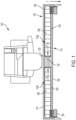
- a representative agricultural harvester 100 which, e.g., may be a combine harvester, is shown.
- the harvester includes a draper header 102 incorporating a cut crop barrier interface or crop ramp 104 according to the subject disclosure disposed between an elongate sidewardly extending cutter bar 106 and an elongate, sidewardly extending, endless belt draper conveyor 108 of the header 102.
- the header 102 comprises a frame 108, a portion of which is shown extending forwardly from a rear support frame structure 110 to the cutter bar 106.
- the frame 108 can have a variety of forms, but will generally comprise a chassis-like structure for supporting an elongate sidewardly extending cutter bar assembly 112 comprising the cutter bar 106, as well as at least one elongate sidewardly extending draper assembly comprising the draper conveyor 108, and other aspects of the header.
- the header 102 includes two draper assemblies 114A, 114B operable for conveying cut crop convergingly to a central conveyor 118, as generally denoted by arrows A, as the harvester moves in a forward direction denoted by arrow F through a field while cutting the crops.
- the central conveyor 118 conveys the cut crop into a feederhouse 130 of the harvester 100, which conveys the crop into the harvester for threshing and separation of crop therefrom.
- the cutter bar assembly 112 generally includes a sideward, longitudinally extending knife guard having a plurality of forward projecting fingers.
- the cutter bar assembly 112 carries an elongate sickle comprised of knife sections which are sidewardly reciprocated through and relative to the fingers for cutting crop as the harvester moves in forward direction F.
- a reel 124 extends across the header just above cutter bar assembly 112, and operates to feed the crop to the cutter bar for cutting.
- the header includes motors, e.g., hydraulic motors, for operating the cutter bar 106, draper conveyors 108, central conveyor 118 and reel 124, as well as extensible and retractable members, e.g., hydraulic cylinders, for raising and lowering the reel 124 and, possibly, the cutter bar.
- motors e.g., hydraulic motors
- extensible and retractable members e.g., hydraulic cylinders
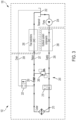
- the hydraulic cooler pressure isolation circuit 200 comprises a hydraulic fluid cooler 270, and the agricultural harvester 100 is equipped with a hydraulic fluid reservoir 202 and a pump 204.
- the agricultural harvester 100 and the header 102 share a supply line 206, a return line 207 and a drain line 208.
- the supply line 206 extends from the hydraulic fluid cooler for connecting to the pump of the agricultural harvester.
- the return line 207 extends from the hydraulic fluid cooler for connecting to the hydraulic fluid reservoir of the agricultural harvester.
- the drain line 208 is operatively in fluid communication with the supply line 206 and the return line 207 for connecting to the hydraulic fluid reservoir of the agricultural harvester.
- the hydraulic cooler pressure isolation circuit 200 further comprises a first valve 210 hydraulically connected to the supply line 206 upstream the hydraulic fluid cooler 270, a return valve 250 hydraulically connected to the return line 207 downstream the hydraulic fluid cooler, a bypass valve 260 hydraulically connected to the supply line upstream the first valve 210 and to the return line downstream the return valve, and a second valve 220 hydraulically connected to the return line downstream the hydraulic fluid cooler and upstream the return valve 250 and operatively in fluid communication with the drain line.
- a first valve 210 hydraulically connected to the supply line 206 upstream the hydraulic fluid cooler 270
- a return valve 250 hydraulically connected to the return line 207 downstream the hydraulic fluid cooler
- a bypass valve 260 hydraulically connected to the supply line upstream the first valve 210 and to the return line downstream the return valve
- a second valve 220 hydraulically connected to the return line downstream the hydraulic fluid cooler and upstream the return valve 250 and operatively in fluid communication with the drain line.
- control mechanisms for the first valve 210 and the second valve 220 such as solenoid coils, manual levers, or pilot lines to shift the valve spools to desired positions, as well as biasing springs for urging the valves to the default (closed) position.
- control mechanisms and biasing springs are known by those skilled in the art of hydraulic systems and are shown in later figures herein.
- the header 102 further includes conventional hydraulic system components 280 in the supply line 206.
- hydraulic system components can include, e.g., a manifold valve to control fluid flow and/or direction to actuators such as motors used to operate various mechanisms, e.g. cutter bar 106, draper conveyors 108, central conveyor 118 and reel 124 and hydraulic cylinders to provide linear movement as needed to the reel 124 and, possibly, the cutter bar.
- the agricultural harvester 100 typically includes flow restrictions 290 in the return line 207.
- flow restrictions can include quick couplers that allow the header to be hydraulically attached to and removed from the agricultural harvester, a manifold valve to control fluid flow and/or direction (which may be used for reverse flow to the header to facilitate deslug mode), a return filter to clean oil from harmful contamination, and flow lines (including hoses, tubes and fittings).
- quick couplers increased coupler size decreases pressure drop but increases cost and weight.
- the return filter larger filter size decreases pressure drop but increases cost, space consumption and weight.
- larger line size is generally better in that larger internal diameter results in less pressure drop, although larger line sizes increase cost and space consumption.
- longer flow line distances increase pressure drop (for a header, the distance to the combine reservoir can be significant, e.g., over 40 feet). Further, fewer fittings are preferred but not always practical.
- FIG. 3 there is schematically shown the hydraulic cooler pressure isolation circuit 200 under normal operating conditions, i.e., during machine operation in which the back pressure in the return line 207 (caused by flow restrictions) is sufficiently low as to not present any danger to the hydraulic fluid cooler 270.
- the first valve 210 and the return valve 250 are open, and the bypass valve 260 and the second valve 220 are closed.
- the bypass valve 260 remains closed as long as the combined pressure drop across the first valve 210 plus the pressure drop across the cooler 270 is less than the spring setting of the bypass valve.
- the second valve 220 remains closed to prevent excessive flow through the drain line 208 which can cause damage to other unillustrated components such as motor/pump shaft seals which would normally be connected to the same drain line.
- hydraulic fluid passes through the supply line 206 from the pump 204, through the first valve 210 to the hydraulic fluid cooler 270 and passes through the return line 207 from the hydraulic fluid cooler through the return valve 250 to the reservoir 202.
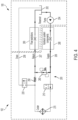
- valves 210 and 220 remain in their respective default positions while bypass valve 260 opens.
- hydraulic fluid bypasses the hydraulic fluid cooler 270 through the open bypass valve 260 and the return line 207 downstream the closed return valve 250 and flows to the reservoir 202.
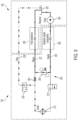
- FIG. 5 there is schematically shown the hydraulic cooler pressure isolation circuit 200 as it would appear when hydraulically isolating the hydraulic fluid cooler 270 in accordance with the subject disclosure.
- Such configuration is intended to occur if the return flow back pressure is sufficiently high to possibly cause structural damage to the cooler.
- the first valve 210 closes, the bypass valve 260 opens, and the return valve 250 closes, whereby hydraulic fluid bypasses the hydraulic fluid cooler through the open bypass valve 260 and the return line downstream the closed return valve 250 and flows to the reservoir.
- the first valve 210 closes to force all the oil flow though the bypass valve 260.
- FIG. 5 also represents the state of the hydraulic cooler pressure isolation circuit 200 wherein high pressure is experienced at the cooler that is normally associated with starting the machine with cold oil which has a high viscosity. Once the hydraulic fluid (oil) warms up, the system assumes the normal operating condition flow path shown in FIG. 3 .
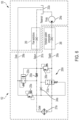
- FIG. 6 there is schematically shown a second exemplary embodiment of a hydraulic cooler pressure isolation circuit 200A for the header 102 of the agricultural harvester 100 according to the subject disclosure.
- the hydraulic cooler pressure isolation circuit 200A comprises a hydraulic fluid cooler 270a, and the agricultural harvester 100 is equipped with a hydraulic fluid reservoir 202a and a pump 204a.
- the agricultural harvester 100 and the header 102 share a supply line 206a, a return line 207a and a drain line 208a.
- the supply line 206a extends from the hydraulic fluid cooler for connecting to the pump of the agricultural harvester.
- the return line 207a extends from the hydraulic fluid cooler for connecting to the hydraulic fluid reservoir of the agricultural harvester.
- the drain line 208a is operatively in fluid communication with the supply line 206a and the return line 207a for connecting to the hydraulic fluid reservoir of the agricultural harvester.
- the hydraulic cooler pressure isolation circuit 200A further comprises a first valve 210a hydraulically connected to the supply line 206a upstream the hydraulic fluid cooler 270a, a return valve 250a hydraulically connected to the return line 207a downstream the hydraulic fluid cooler, a bypass valve 260a hydraulically connected to the supply line upstream the first valve 210a and to the return line downstream the return valve, and a second valve 220a hydraulically connected to the return line downstream the hydraulic fluid cooler and upstream the return valve 250a and operatively in fluid communication with the drain line.
- the hydraulic cooler pressure isolation circuit 200A further comprises a pressure valve 230a hydraulically connected to the drain line 208a and operatively in fluid communication with the first valve 210a, and a third valve 240a operatively in fluid communication with the first valve 210a, the bypass valve 260a, the second valve 220a and the pressure valve 230a.
- the first valve 210a and the second valve 220a can be two-position, two-port spool valves
- the bypass valve 260a and the pressure valve 230a can be differential pressure relief valves
- the return valve 250a can be a check valve
- the third valve 240a can be an orifice valve (which may be controlled, e.g., by a set screw).
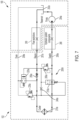
- FIG. 7 there is schematically shown the hydraulic cooler pressure isolation circuit 200A under normal operating conditions.
- the first valve 210a, the return valve 250a and the third valve 240a are open, and the bypass valve 260a, the pressure valve 230a and the second valve 220a are closed, whereby hydraulic fluid passes through the supply line 206a from the pump 204a, through the first valve 210a to the hydraulic fluid cooler 270a and passes through the return line 207a from the hydraulic fluid cooler through the return valve 250a to the reservoir 202a.
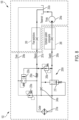
- FIG. 8 there is schematically shown the hydraulic cooler pressure isolation circuit 200A as it would appear when performing a first step in hydraulically isolating the hydraulic fluid cooler 270a in accordance with the subject disclosure.
- this first step as the backpressure at line 207a increases, the pressure in the pilot lines to valve 210a and inlet to valve 230a increase accordingly. Once this pressure exceeds the bias spring pressure of 230a, oil begins to flow across orifice 240a. When the pressure drop across 240a exceeds the bias spring setting of valve 210a, then valve 210a shifts to the closed position as shown in FIG. 8 . At this point in time, the bypass valve 260a opens due to the increased pressure at the inlet of valve 210a.
- valve 250a closes with the force of the associated bias spring.
- hydraulic fluid bypasses the hydraulic fluid cooler 270a through the open bypass valve 260a and continues to the return line 207a downstream the closed return valve 250a and flows to the reservoir 202a.
- a lesser portion of the hydraulic fluid flows through the pressure valve 230a into the drain line 208a whereupon it flows to the reservoir.
- the flow rate through 230a is intentionally minimized by properly sizing orifice 240a.
- FIG. 9 there is schematically shown the hydraulic cooler pressure isolation circuit 200A as it would appear when performing a second step in hydraulically isolating the hydraulic fluid cooler 270a in accordance with the subject disclosure.
- the second valve 220a opens at a higher pilot pressure than the threshold pilot pressure that closes the first valve 210a, whereby high pressure hydraulic fluid within the hydraulic fluid cooler 270a is directed through the open second valve 220a, passes through the drain line 208a and flows to the reservoir 202a.
- the hydraulic oil temperature is arbitrarily set at 0 degrees C (32 degrees F) to simulate a cold ambient startup condition and the flow from pump 204a is initially at 0 lpm.
- the pump flow through the hydraulic fluid cooler 270a increases quickly and, correspondingly, the back pressure (return line pressure) climbs due to the resistance (high viscosity) of the oil flow back to the reservoir.
- the hydraulic fluid flow path for this very brief time is illustrated on FIG. 7 .
- the next event to occur is the result of quickly rising back pressure in the return line which causes the second valve 220a to shift once the back pressure in the return line exceeds the spring setting of the second valve. This causes the pressure in the hydraulic fluid cooler 270a to drop significantly to protect the cooler from over-pressurization. It should be noted that the second valve 220a shifts at a higher pressure than the first valve 210a in order to prevent excessive flow through the drain line which can cause damage to other components (not shown in the diagrams) such as motor/pump shaft seals which would normally be connected to the same drain line.
- this valve shifts back to its spring-applied position which causes the pressure in the hydraulic fluid cooler 270a to build and match the system back pressure in the return line 207a. Thereafter, pressure in the hydraulic fluid cooler 270a and the return line decrease together as the oil viscosity decreases with increased oil temperature. At this time, which occurs from about 30 to 62 seconds, the system is configured like that shown in FIG. 8 and the back pressure is low enough as to not cause damage to the cooler.
- valve 230a When the system back pressure in the return line is below the threshold of the valve 230a, this valve closes and flow through 240a stops. This the pilot pressure at both ends of valve 210a to be equal which results in the first valve shifting to its default (spring-applied) position which allows the pump flow to be directed through the hydraulic fluid cooler 270a. This transition takes place between about 63 to 72 seconds after system startup. Once the transition is completed, the full pump flow (approximately 34 lpm) goes through the hydraulic system cooler from about 73 seconds and beyond. This mode is shown in FIG. 7 . At this point, the oil temperature continues to rise and the system back pressure in the return line decreases to some minimum value. When the oil temperature is sufficiently high (80 degrees C, for example), the hydraulic fluid cooler fan will turn on to provide cooling as needed to stabilize the system to a desired temperature.
- FIG. 10 there is schematically shown a third exemplary embodiment of a hydraulic cooler pressure isolation circuit 200B for the header 102 of the agricultural harvester 100 according to the subject disclosure.
- the hydraulic cooler pressure isolation circuit 200B comprises a hydraulic fluid cooler 270b, and the agricultural harvester 100 is equipped with a hydraulic fluid reservoir 202b and a pump 204b.
- the agricultural harvester 100 and the header 102 share a supply line 206b, a return line 207b and a drain line 208b.
- the supply line 206b extends from the hydraulic fluid cooler for connecting to the pump of the agricultural harvester.
- the return line 207b extends from the hydraulic fluid cooler for connecting to the hydraulic fluid reservoir of the agricultural harvester.
- the drain line 208b is operatively in fluid communication with the supply line 206b and the return line 207b for connecting to the hydraulic fluid reservoir of the agricultural harvester.
- the hydraulic cooler pressure isolation circuit 200B further comprises a first valve 210b hydraulically connected to the supply line 206b upstream the hydraulic fluid cooler 270b, a return valve 250b hydraulically connected to the return line 207b downstream the hydraulic fluid cooler, a bypass valve 260b hydraulically connected to the supply line upstream the first valve 210b and to the return line downstream the return valve, and a second valve 220b hydraulically connected to the return line downstream the hydraulic fluid cooler and upstream the return valve 250b and operatively in fluid communication with the drain line.
- the hydraulic cooler pressure isolation circuit 200B further comprises a temperature sensor 240b that senses a temperature of hydraulic fluid in the supply line 206b (preferably upstream the first valve 210b and upstream of the inlet to valve 260b), and a pressure sensor 230b that senses pressure in the return line 207b (preferably downstream return valve 250b).
- the first and second valves 210b and 220b are spring-biased solenoid valves.
- the spool positions of the first and second valves are determined by a bias spring and a solenoid coil. If power to a solenoid coil is off, the spool position is determined by the bias spring.
- the first valve 210b is normally open since the bias spring of the valve forces the spool into the open position.
- An electronic control unit (ECU) 300 receives power via an unillustrated electrical connection to the electrical system of the agricultural harvester 100 and may be carried by the agricultural harvester or the header.
- the ECU employs software program logic combined with signals provided by the temperature sensor 240b and the pressure sensor 230b to power the solenoid coils of the first and second valves 210b and 220b. For example, if the oil temperature in the supply line 206b as sensed by the temperature sensor 240b is low, it can be assumed no cooling is needed and the oil can bypass the hydraulic fluid cooler 270b. The exact temperature at which oil bypasses the cooler is determined by the software program and can be easily adjusted. Similarly, if the back pressure in the return line 207b as sensed by the pressure sensor 230b is elevated above a predetermined threshold, then action can be taken by the ECU 300 to protect the hydraulic fluid cooler, as described below.
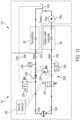
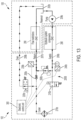
- FIG. 11 there is schematically shown the hydraulic cooler pressure isolation circuit 200B under normal operating conditions, i.e., during machine operation in which the back pressure in the return line 207b (caused by flow restrictions) is sufficiently low as to not present any danger to the hydraulic fluid cooler 270b.
- the first valve 210b and the return valve 250b are open, and the bypass valve 260b and the second valve 220b are closed.
- the bypass valve 260b remains closed as long as the combined pressure drop across the first valve 210b plus the pressure drop across the cooler 270b is less than the spring setting of the bypass valve.
- the second valve 220b remains closed to prevent excessive flow through the drain line 208b which can cause damage to other unillustrated components such as motor/pump shaft seals which would normally be connected to the same drain line.
- hydraulic fluid passes through the supply line 206b from the pump 204b, through the first valve 210b to the hydraulic fluid cooler 270b and passes through the return line 207b from the hydraulic fluid cooler through the return valve 250b to the reservoir 202b.
- bypass valve 260b opens to provide a path for the oil to return to the reservoir 202b and prevent damage to the cooler.
- FIGS. 11-13 the same general concept is illustrated in FIG. 4 .
- FIG 12 illustrates the situation where temperature sensor 240b sends the low oil temperature data to the ECU which processes this information and immediately sends power to the solenoid coils of the first and second valves 210b and 220b, whereby no oil is yet flowing to the cooler and any residual pressure at the cooler is dissipated through the second valve to the drain line 208b.
- the ECU commands thus carried out prepare the system for a safe startup by isolating the cooler from the impending high back pressure which will occur once the cold high viscosity oil starts flowing
- the closed first valve 210b creates back pressure in the supply line 206b sufficient to overcome the spring bias of the bypass valve 260b, whereby all flow is diverted through the bypass valve and the pressure in the cooler is the same as that of the drain line 208b.
- the hydraulic fluid cooler 270b is protected from damage.
- the ECU switches off power to the solenoid coils of the first and second valves 210b and 220b, and the oil flow reverts to the normal flow path as shown in FIG. 11 .
- the second valve 220b shifts to the default (closed) position before the first valve 210b shifts to the default (open) position under control of the ECU. This is necessary in order to prevent excessive flow through the drain line 208b which can cause damage to other unillustrated components such as motor/pump shaft seals which would normally be connected to the same drain line.
- the system back-pressure in the return line 207b is constantly measured by the pressure sensor 230b and this data is monitored by the ECU. If the back-pressure becomes elevated above a critical threshold level, the ECU can switch on power to the solenoid coils of the first and second valves 210b and 220b in order to protect the cooler 270b. The result is shown in FIG. 13 . However, in transitioning from the system arrangement shown in FIG. 11 to that of FIG. 13 , the first valve 210b shifts to the blocked or closed position (power-on) before the second valve 220b shifts to the open position (power-on) under control of the ECU.
Landscapes
- Engineering & Computer Science (AREA)
- Life Sciences & Earth Sciences (AREA)
- Environmental Sciences (AREA)
- Physics & Mathematics (AREA)
- Fluid Mechanics (AREA)
- Mechanical Engineering (AREA)
- General Engineering & Computer Science (AREA)
- Chemical & Material Sciences (AREA)
- Analytical Chemistry (AREA)
- Fluid-Pressure Circuits (AREA)
Claims (19)
- Druckisolationskreislauf (200, 200A, 200B) eines Hydraulikkühlers für einen Erntevorsatz (102) einer landwirtschaftlichen Erntemaschine (100), die mit einem Hydraulikfluidtank (202, 202a, 202b) und einer Pumpeinrichtung (204, 204a, 204b) ausgestattet ist, wobei der Druckisolationskreislauf des Hydraulikkühlers umfasst:einen Hydraulikfluidkühler (270, 270a, 270b);eine Vorlaufleitung (206, 206a, 206b), die sich von dem Hydraulikfluidkühler erstreckt, um mit der Pumpeinrichtung der Erntemaschine verbunden zu sein;eine Rücklaufleitung (207, 207a, 207b), die sich von dem Hydraulikfluidkühler erstreckt, um mit dem Hydraulikfluidtank der Erntemaschine verbunden zu sein;ein erstes Ventil (210, 210a, 210b), das stromauf von dem Hydraulikfluidkühler mit der Vorlaufleitung hydraulisch verbunden ist;ein Bypass-Ventil (260, 260a, 260b), das stromauf von dem ersten Ventil mit der Vorlaufleitung und mit der Rücklaufleitung hydraulisch verbunden ist; unddadurch gekennzeichnet, dassder Druckisolationskreislauf des Hydraulikkühlers umfasst:eine Ablaufleitung (208, 208a, 208b), die mit der Vorlaufleitung und der Rücklaufleitung wirkend in Fluidverbindung steht, um mit dem Hydraulikfluidtank der Erntemaschine verbunden zu sein;ein Rückflussventil (250, 250a, 250b), das stromab von dem Hydraulikfluidkühler mit der Rücklaufleitung hydraulisch verbunden ist; undein zweites Ventil (220, 220a, 220b), das mit der Rücklaufleitung stromab von dem Hydraulikfluidkühler und stromauf von dem Rückflussventil hydraulisch verbunden ist und mit der Ablaufleitung wirkend in Fluidverbindung steht; undweiterhin dadurch gekennzeichnet, dassdas Bypass-Ventil stromab von dem Rückflussventil mit der Rücklaufleitung hydraulisch verbunden ist.
- Druckisolationskreislauf eines Hydraulikkühlers nach Anspruch 1, wobei das Bypass-Ventil (260, 260a, 260b) dazu eingerichtet ist, zu öffnen, wenn das erste Ventil (210, 210a, 210b) schließt.
- Druckisolationskreislauf eines Hydraulikkühlers nach einem der Ansprüche 1 oder 2, wobei das zweite Ventil (220, 220a, 220b) dazu eingerichtet ist, bei einem Rücklaufdruck in der Rücklaufleitung (207, 207a, 207b) zu öffnen, der einen vorbestimmten Wert übersteigt.
- Druckisolationskreislauf eines Hydraulikkühlers nach einem der Ansprüche 1 bis 3, wobei, während des Normalbetriebs des Druckisolationskreislaufs, das erste Ventil (210, 210a, 210b) und das Rückflussventil (250, 250a, 250b) offen sind, und das Bypass-Ventil (260, 260a, 260b) und das zweite Ventil (220, 220a, 220b) geschlossen sind, sodass Hydraulikfluid von der Pumpeinrichtung (204, 204a, 204b) durch die Vorlaufleitung (206, 206a, 206b) strömt, durch das erste Ventil zum Hydraulikfluidkühler (270, 270a, 270b) strömt, und von dem Hydraulikfluidkühler durch die Rücklaufleitung (207, 207a, 207b) durch das Rückflussventil zum Hydraulikfluidtank (202, 202a, 202b) strömt.
- Druckisolationskreislauf eines Hydraulikkühlers nach Anspruch 4, wobei, während des Betriebs des Druckisolationskreislaufs, bei dem der Hydraulikfluidkühler von druckbeaufschlagtem Hydraulikfluid isoliert wird, der Druckisolationskreislauf die folgenden Schritte ausführt:(1) das erste Ventil (210, 210a, 210b) schließt, das Bypass-Ventil (260, 260a, 260b) öffnet, und das Rückflussventil (250, 250a, 250b) schließt, sodass Hydraulikfluid an dem Hydraulikfluidkühler (270, 270a, 270b) vorbei durch das offene Bypass-Ventil und die Rücklaufleitung (207, 207a, 207b) stromab von dem geschlossenen Rückflussventil strömt und zum Hydraulikfluidtank (202, 202a, 202b) fließt; und(2) das zweite Ventil (220, 220a, 220b) öffnet, nachdem das erste Ventil 210 schließt, sodass druckbeaufschlagtes Hydraulikfluid in dem Hydraulikfluidkühler durch das offene zweite Ventil geleitet wird, durch die Ablaufleitung (208, 208a, 208b) strömt und zu dem Hydraulikfluidtank fließt.
- Druckisolationskreislauf eines Hydraulikkühlers nach Anspruch 1, das des Weiteren umfasst:ein Druckventil (230a), das mit der Ablaufleitung (208a) hydraulisch verbunden ist und mit dem ersten Ventil (210a) wirkend in Fluidverbindung steht; undein drittes Ventil (240a), das mit dem ersten Ventil, dem Bypass-Ventil (260a), dem zweiten Ventil (220a) und dem Druckventil wirkend in Fluidverbindung steht.
- Druckisolationskreislauf eines Hydraulikkühlers nach Anspruch 6, wobei das erste Ventil (210a) dazu eingerichtet ist, basierend auf einer Federeinstellung des ersten Ventils und einer Federeinstellung des Druckventils (230a) zu schließen.
- Druckisolationskreislauf eines Hydraulikkühlers nach einem der Ansprüche 6 oder 7, wobei das erste Ventil (210a) und das zweite Ventil (220a) als Zwei-Positionen-Zwei-Wege-Schieberventile ausgeführt sind.
- Druckisolationskreislauf eines Hydraulikkühlers nach einem der Ansprüche 6 bis 8, wobei das Bypass-Ventil (260a) und das Druckventil (230a) als Differenzdruck-Entlastungsventile ausgeführt sind.
- Druckisolationskreislauf eines Hydraulikkühlers nach einem der Ansprüche 6 bis 9, wobei das Rückflussventil (250a) ein Rückschlagventil ist.
- Druckisolationskreislauf eines Hydraulikkühlers nach einem der Ansprüche 6 bis 10, wobei das dritte Ventil (240a) ein Blendenventil ist.
- Druckisolationskreislauf eines Hydraulikkühlers nach einem der Ansprüche 6 bis 11, wobei während des Normalbetriebs des Druckisolationskreislaufs, das erste Ventil (210a), das Rückflussventil (250a) und das dritte Ventil (240a) offen sind, und das Bypass-Ventil (260a), das Druckventil (230a) und das zweite Ventil (240a) geschlossen sind, sodass Hydraulikfluid von der Pumpeinrichtung (204a) durch die Zulaufleitung (206a) durch das erste Ventil zum Hydraulikfluidkühler (270a) strömt und von dem Hydraulikfluidkühler durch die Rücklaufleitung (207a) durch das Rückflussventil zum Hydraulikfluidtank strömt.
- Druckisolationskreislauf eines Hydraulikkühlers nach Anspruch 12, wobei während des Betriebs des Druckisolationskreislaufs, bei dem der Hydraulikfluidkühler von druckbeaufschlagtem Hydraulikfluid isoliert wird, der Druckisolationskreislauf die folgenden Schritte ausführt:(1) das dritte Ventil (240a) bleibt offen, das erste Ventil (210a) schließt, das Bypass-Ventil (260a) öffnet, das Druckventil (230a) öffnet und das Rückflussventil (250a) schließt, sodass Hydraulikfluid an dem Hydraulikfluidkühler (270a) vorbeiströmt durch:(a) das offene Bypass-Ventil und die Rücklaufleitung stromab von dem geschlossenen Rückflussventil und strömt zum Hydraulikfluidtank (202a), und(b) das Druckventil in die Ablaufleitung, sodass es zum Hydraulikfluidtank fließt; und(2) das zweite Ventil (220a) öffnet bei einem höheren Vorsteuerdruck als der Vorsteuerdruck-Schwellenwert, der das erste Ventil schließt, sodass druckbeaufschlagtes Hydraulikfluid in dem Hydraulikfluidkühler durch das offene zweite Ventil geleitet wird, durch die Ablaufleitung strömt und zum Hydraulikfluidtank fließt.
- Druckisolationskreislauf eines Hydraulikkühlers nach einem der Ansprüche 1 bis 5, wobei das erste und das zweite Ventil (210b, 220b) federvorgespannte Magnetventile sind.
- Druckisolationskreislauf eines Hydraulikkühlers nach Anspruch 14, das des Weiteren aufweist:einen Temperatursensor (240b) zum Erfassen einer Hydraulikfluid-Temperatur in der Zulaufleitung (206b); undeinen Drucksensor (230b) zum Erfassen eines Drucks in der Rücklaufleitung (207b).
- Druckisolationskreislauf eines Hydraulikkühlers nach Anspruch 15, das des Weiteren aufweist:
eine elektrische Steuereinheit (300), um das erste und das zweite federvorgespannte Magnetventil (210b, 220b) in Reaktion auf Signale mit Energie zu versorgen, die von dem Temperatursensor (240b) und dem Drucksensor (230b) bereitgestellt werden. - Druckisolationskreislauf eines Hydraulikkühlers nach Anspruch 16, wobei während des Normalbetriebs des Druckisolationskreislaufs das erste Ventil (210b) und das Rückflussventil (250b) offen sind, und das Bypass-Ventil (260b) und das zweite Ventil (220b) geschlossen sind, sodass Hydraulikfluid von der Pumpeinrichtung (204b) durch die Zulaufleitung (206b) durch das erste Ventil zum Hydraulikfluidkühler (270b) strömt und von dem Hydraulikfluidkühler durch die Rücklaufleitung (207b) durch das Rückflussventil zum Hydraulikfluidtank (202b) strömt.
- Druckisolationskreislauf eines Hydraulikkühlers nach Anspruch 17, wobei, wenn ein Übergang von dem Normalbetrieb des Druckisolationskreislaufs in die Isolation des Hydraulikfluidkühlers in dem Druckisolationskreislaufs erfolgt, das erste Ventil (210b) in eine geschlossene Position wechselt, bevor das zweite Ventil (220b) unter Steuerung durch die elektronische Steuereinheit (300) in eine offene Position wechselt; und wenn ein Übergang von der Isolation des Hydraulikfluidkühlers in dem Druckisolationskreislauf in den Normalbetrieb des Druckisolationskreislaufs erfolgt, das zweite Ventil in eine geschlossene Position wechselt, bevor das erste Ventil unter Steuerung durch die elektronische Steuereinheit in eine offene Position wechselt.
- Landwirtschaftliche Erntemaschine (100) mit:einem Erntevorsatz (102) mit dem Druckisolationskreislauf (200, 200A, 200B) für einen Hydraulikkühler nach Anspruch 1;einem Hydraulikfluidtank (202, 202a, 202b) zum Aufnehmen von Hydraulikfluid; undeiner Pumpeinrichtung (204, 204a, 204b), die mit dem Hydraulikfluidtank in Wirkverbindung steht.
Applications Claiming Priority (1)
| Application Number | Priority Date | Filing Date | Title |
|---|---|---|---|
| US17/899,229 US20240065154A1 (en) | 2022-08-30 | 2022-08-30 | Hydraulic cooler pressure isolation circuit for a header of an agricultural harvester |
Publications (2)
| Publication Number | Publication Date |
|---|---|
| EP4335281A1 EP4335281A1 (de) | 2024-03-13 |
| EP4335281B1 true EP4335281B1 (de) | 2025-04-09 |
Family
ID=87863648
Family Applications (1)
| Application Number | Title | Priority Date | Filing Date |
|---|---|---|---|
| EP23194116.2A Active EP4335281B1 (de) | 2022-08-30 | 2023-08-29 | Druckisolationskreislauf eines hydraulikkühlers für einen erntevorsatz einer landwirtschaftlichen erntemaschine |
Country Status (3)
| Country | Link |
|---|---|
| US (1) | US20240065154A1 (de) |
| EP (1) | EP4335281B1 (de) |
| BR (1) | BR102023016780A2 (de) |
Families Citing this family (2)
| Publication number | Priority date | Publication date | Assignee | Title |
|---|---|---|---|---|
| WO2025202930A1 (en) * | 2024-03-27 | 2025-10-02 | Dondi S.P.A. | Agricultural machine with hydraulic system for controlling the services of a tool-holder chassis in a simultaneous way independently from the actuation of the inter-row units |
| DE102024127351A1 (de) | 2024-09-23 | 2026-03-26 | Claas Selbstfahrende Erntemaschinen Gmbh | Selbstfahrende Erntemaschine |
Family Cites Families (12)
| Publication number | Priority date | Publication date | Assignee | Title |
|---|---|---|---|---|
| US5359836A (en) * | 1993-02-01 | 1994-11-01 | Control Concepts, Inc. | Agricultural harvester with closed loop header control |
| US5666807A (en) * | 1995-12-13 | 1997-09-16 | Caterpillar Inc. | Oil processor circuit |
| US8038518B2 (en) * | 2008-04-24 | 2011-10-18 | Deere & Company | Fluid cooler located in an air stream of a work assembly of an agricultural combine |
| KR101284156B1 (ko) * | 2012-12-11 | 2013-07-10 | 고인홍 | 독자적으로 점소등되는 led어레이들을 갖는 led 조명장치 |
| US10260824B2 (en) * | 2013-12-13 | 2019-04-16 | Cnh Industrial America Llc | Fluid cooler bypass system for an agricultural work vehicle |
| US9717179B2 (en) * | 2014-02-25 | 2017-08-01 | Cnh America Llc | Hydraulic system for a header of an agricultural harvester |
| JP6378618B2 (ja) * | 2014-11-25 | 2018-08-22 | Kyb株式会社 | 減衰バルブ及び緩衝器 |
| US10412890B2 (en) * | 2015-11-10 | 2019-09-17 | Macdon Industries Ltd. | Dual sickle knife drive |
| GB201611777D0 (en) * | 2016-07-06 | 2016-08-17 | Agco Int Gmbh | Utility vehicle fluid cooling |
| DE102016113394B3 (de) * | 2016-07-20 | 2017-10-19 | Ino8 Pty Ltd | Wärmemanagementsystem und -verfahren einer variablen Zylinderkühlung eines Verbrennungsmotors |
| US9982774B1 (en) * | 2017-03-16 | 2018-05-29 | GM Global Technology Operations LLC | Hydraulic control system for an automatic transmission |
| US11497165B2 (en) * | 2019-10-24 | 2022-11-15 | Cnh Industrial America Llc | Controlled lateral belt reverse for draper head of agricultural combine |
-
2022
- 2022-08-30 US US17/899,229 patent/US20240065154A1/en not_active Abandoned
-
2023
- 2023-08-21 BR BR102023016780-2A patent/BR102023016780A2/pt unknown
- 2023-08-29 EP EP23194116.2A patent/EP4335281B1/de active Active
Also Published As
| Publication number | Publication date |
|---|---|
| EP4335281A1 (de) | 2024-03-13 |
| BR102023016780A2 (pt) | 2024-03-12 |
| US20240065154A1 (en) | 2024-02-29 |
Similar Documents
| Publication | Publication Date | Title |
|---|---|---|
| EP4335281B1 (de) | Druckisolationskreislauf eines hydraulikkühlers für einen erntevorsatz einer landwirtschaftlichen erntemaschine | |
| US9717179B2 (en) | Hydraulic system for a header of an agricultural harvester | |
| US5791128A (en) | Reversible hydraulic drive apparatus | |
| EP3473076B1 (de) | Selbstständiger mähdrescherschneidwerkflügelnivellierer | |
| US7467505B2 (en) | Crop harvesting header with drive reversal | |
| US7497069B2 (en) | Crop harvesting header with reversible drive to the sickle knife | |
| CN104481934B (zh) | 自动防故障的致动系统 | |
| US8925439B2 (en) | Valve control valve circuit for operating a single acting hydraulic cylinder | |
| EP3281508B1 (de) | Elektronische einrastschaltung | |
| CA2609744C (en) | Crop harvesting header with reversible drive to the sickle knife | |
| AU2020371706A1 (en) | Controlled lateral belt reverse for draper head of agricultural combine | |
| EP3811761B1 (de) | Umkehrbare förderschnecke an einem erntevorsatz | |
| JP2004044795A (ja) | 産業用トラック用の電気油圧式昇降制御装置 | |
| BR102012010290A2 (pt) | combinada agrÍcola , e, circuito hidrÁulico | |
| US11353048B2 (en) | Working machine | |
| US20220169367A1 (en) | Redundant hydraulic power pack architecture for aircraft main landing gear system | |
| US6619020B1 (en) | Valve mechanism for a combine hydraulic system | |
| US6775966B2 (en) | Integrated combine reel drive system | |
| US7441406B2 (en) | Fluid circuit and industrial truck having a fluid circuit | |
| US3721301A (en) | Control system for a multiple row crop harvesting machine | |
| US6619021B1 (en) | Combine hydraulic reel drive shunt | |
| SU1358822A1 (ru) | Гидросистема зерноуборочного комбайна | |
| CN118284330B (zh) | 用于采伐机头部的控制回路 | |
| US20160340990A1 (en) | Collector circuit for drilling fluid circulation system and method for diverting the circulation of the fluid | |
| RU2028522C1 (ru) | Гидропривод |
Legal Events
| Date | Code | Title | Description |
|---|---|---|---|
| PUAI | Public reference made under article 153(3) epc to a published international application that has entered the european phase |
Free format text: ORIGINAL CODE: 0009012 |
|
| STAA | Information on the status of an ep patent application or granted ep patent |
Free format text: STATUS: THE APPLICATION HAS BEEN PUBLISHED |
|
| AK | Designated contracting states |
Kind code of ref document: A1 Designated state(s): AL AT BE BG CH CY CZ DE DK EE ES FI FR GB GR HR HU IE IS IT LI LT LU LV MC ME MK MT NL NO PL PT RO RS SE SI SK SM TR |
|
| STAA | Information on the status of an ep patent application or granted ep patent |
Free format text: STATUS: REQUEST FOR EXAMINATION WAS MADE |
|
| 17P | Request for examination filed |
Effective date: 20240913 |
|
| RBV | Designated contracting states (corrected) |
Designated state(s): AL AT BE BG CH CY CZ DE DK EE ES FI FR GB GR HR HU IE IS IT LI LT LU LV MC ME MK MT NL NO PL PT RO RS SE SI SK SM TR |
|
| GRAP | Despatch of communication of intention to grant a patent |
Free format text: ORIGINAL CODE: EPIDOSNIGR1 |
|
| STAA | Information on the status of an ep patent application or granted ep patent |
Free format text: STATUS: GRANT OF PATENT IS INTENDED |
|
| INTG | Intention to grant announced |
Effective date: 20241106 |
|
| GRAS | Grant fee paid |
Free format text: ORIGINAL CODE: EPIDOSNIGR3 |
|
| GRAA | (expected) grant |
Free format text: ORIGINAL CODE: 0009210 |
|
| STAA | Information on the status of an ep patent application or granted ep patent |
Free format text: STATUS: THE PATENT HAS BEEN GRANTED |
|
| AK | Designated contracting states |
Kind code of ref document: B1 Designated state(s): AL AT BE BG CH CY CZ DE DK EE ES FI FR GB GR HR HU IE IS IT LI LT LU LV MC ME MK MT NL NO PL PT RO RS SE SI SK SM TR |
|
| REG | Reference to a national code |
Ref country code: GB Ref legal event code: FG4D |
|
| REG | Reference to a national code |
Ref country code: CH Ref legal event code: EP |
|
| REG | Reference to a national code |
Ref country code: DE Ref legal event code: R096 Ref document number: 602023002821 Country of ref document: DE |
|
| REG | Reference to a national code |
Ref country code: IE Ref legal event code: FG4D |
|
| REG | Reference to a national code |
Ref country code: NL Ref legal event code: MP Effective date: 20250409 |
|
| PG25 | Lapsed in a contracting state [announced via postgrant information from national office to epo] |
Ref country code: NL Free format text: LAPSE BECAUSE OF FAILURE TO SUBMIT A TRANSLATION OF THE DESCRIPTION OR TO PAY THE FEE WITHIN THE PRESCRIBED TIME-LIMIT Effective date: 20250409 |
|
| REG | Reference to a national code |
Ref country code: AT Ref legal event code: MK05 Ref document number: 1782636 Country of ref document: AT Kind code of ref document: T Effective date: 20250409 |
|
| PG25 | Lapsed in a contracting state [announced via postgrant information from national office to epo] |
Ref country code: FI Free format text: LAPSE BECAUSE OF FAILURE TO SUBMIT A TRANSLATION OF THE DESCRIPTION OR TO PAY THE FEE WITHIN THE PRESCRIBED TIME-LIMIT Effective date: 20250409 Ref country code: PT Free format text: LAPSE BECAUSE OF FAILURE TO SUBMIT A TRANSLATION OF THE DESCRIPTION OR TO PAY THE FEE WITHIN THE PRESCRIBED TIME-LIMIT Effective date: 20250811 Ref country code: ES Free format text: LAPSE BECAUSE OF FAILURE TO SUBMIT A TRANSLATION OF THE DESCRIPTION OR TO PAY THE FEE WITHIN THE PRESCRIBED TIME-LIMIT Effective date: 20250409 |
|
| PGFP | Annual fee paid to national office [announced via postgrant information from national office to epo] |
Ref country code: DE Payment date: 20250827 Year of fee payment: 3 |
|
| REG | Reference to a national code |
Ref country code: LT Ref legal event code: MG9D |
|
| PG25 | Lapsed in a contracting state [announced via postgrant information from national office to epo] |
Ref country code: GR Free format text: LAPSE BECAUSE OF FAILURE TO SUBMIT A TRANSLATION OF THE DESCRIPTION OR TO PAY THE FEE WITHIN THE PRESCRIBED TIME-LIMIT Effective date: 20250710 Ref country code: NO Free format text: LAPSE BECAUSE OF FAILURE TO SUBMIT A TRANSLATION OF THE DESCRIPTION OR TO PAY THE FEE WITHIN THE PRESCRIBED TIME-LIMIT Effective date: 20250709 |
|
| PG25 | Lapsed in a contracting state [announced via postgrant information from national office to epo] |
Ref country code: PL Free format text: LAPSE BECAUSE OF FAILURE TO SUBMIT A TRANSLATION OF THE DESCRIPTION OR TO PAY THE FEE WITHIN THE PRESCRIBED TIME-LIMIT Effective date: 20250409 |
|
| PGFP | Annual fee paid to national office [announced via postgrant information from national office to epo] |
Ref country code: IT Payment date: 20250901 Year of fee payment: 3 |
|
| PG25 | Lapsed in a contracting state [announced via postgrant information from national office to epo] |
Ref country code: BG Free format text: LAPSE BECAUSE OF FAILURE TO SUBMIT A TRANSLATION OF THE DESCRIPTION OR TO PAY THE FEE WITHIN THE PRESCRIBED TIME-LIMIT Effective date: 20250409 |
|
| PG25 | Lapsed in a contracting state [announced via postgrant information from national office to epo] |
Ref country code: HR Free format text: LAPSE BECAUSE OF FAILURE TO SUBMIT A TRANSLATION OF THE DESCRIPTION OR TO PAY THE FEE WITHIN THE PRESCRIBED TIME-LIMIT Effective date: 20250409 |
|
| PG25 | Lapsed in a contracting state [announced via postgrant information from national office to epo] |
Ref country code: AT Free format text: LAPSE BECAUSE OF FAILURE TO SUBMIT A TRANSLATION OF THE DESCRIPTION OR TO PAY THE FEE WITHIN THE PRESCRIBED TIME-LIMIT Effective date: 20250409 |
|
| PGFP | Annual fee paid to national office [announced via postgrant information from national office to epo] |
Ref country code: FR Payment date: 20250825 Year of fee payment: 3 |
|
| PG25 | Lapsed in a contracting state [announced via postgrant information from national office to epo] |
Ref country code: RS Free format text: LAPSE BECAUSE OF FAILURE TO SUBMIT A TRANSLATION OF THE DESCRIPTION OR TO PAY THE FEE WITHIN THE PRESCRIBED TIME-LIMIT Effective date: 20250709 |
|
| PG25 | Lapsed in a contracting state [announced via postgrant information from national office to epo] |
Ref country code: IS Free format text: LAPSE BECAUSE OF FAILURE TO SUBMIT A TRANSLATION OF THE DESCRIPTION OR TO PAY THE FEE WITHIN THE PRESCRIBED TIME-LIMIT Effective date: 20250809 |
|
| PG25 | Lapsed in a contracting state [announced via postgrant information from national office to epo] |
Ref country code: LV Free format text: LAPSE BECAUSE OF FAILURE TO SUBMIT A TRANSLATION OF THE DESCRIPTION OR TO PAY THE FEE WITHIN THE PRESCRIBED TIME-LIMIT Effective date: 20250409 |
|
| REG | Reference to a national code |
Ref country code: DE Ref legal event code: R097 Ref document number: 602023002821 Country of ref document: DE |
|
| PG25 | Lapsed in a contracting state [announced via postgrant information from national office to epo] |
Ref country code: DK Free format text: LAPSE BECAUSE OF FAILURE TO SUBMIT A TRANSLATION OF THE DESCRIPTION OR TO PAY THE FEE WITHIN THE PRESCRIBED TIME-LIMIT Effective date: 20250409 Ref country code: SM Free format text: LAPSE BECAUSE OF FAILURE TO SUBMIT A TRANSLATION OF THE DESCRIPTION OR TO PAY THE FEE WITHIN THE PRESCRIBED TIME-LIMIT Effective date: 20250409 |
|
| PG25 | Lapsed in a contracting state [announced via postgrant information from national office to epo] |
Ref country code: CZ Free format text: LAPSE BECAUSE OF FAILURE TO SUBMIT A TRANSLATION OF THE DESCRIPTION OR TO PAY THE FEE WITHIN THE PRESCRIBED TIME-LIMIT Effective date: 20250409 |
|
| PG25 | Lapsed in a contracting state [announced via postgrant information from national office to epo] |
Ref country code: EE Free format text: LAPSE BECAUSE OF FAILURE TO SUBMIT A TRANSLATION OF THE DESCRIPTION OR TO PAY THE FEE WITHIN THE PRESCRIBED TIME-LIMIT Effective date: 20250409 |
|
| PG25 | Lapsed in a contracting state [announced via postgrant information from national office to epo] |
Ref country code: SK Free format text: LAPSE BECAUSE OF FAILURE TO SUBMIT A TRANSLATION OF THE DESCRIPTION OR TO PAY THE FEE WITHIN THE PRESCRIBED TIME-LIMIT Effective date: 20250409 |
|
| PLBE | No opposition filed within time limit |
Free format text: ORIGINAL CODE: 0009261 |
|
| STAA | Information on the status of an ep patent application or granted ep patent |
Free format text: STATUS: NO OPPOSITION FILED WITHIN TIME LIMIT |
|
| REG | Reference to a national code |
Ref country code: CH Ref legal event code: L10 Free format text: ST27 STATUS EVENT CODE: U-0-0-L10-L00 (AS PROVIDED BY THE NATIONAL OFFICE) Effective date: 20260218 |
|
| PG25 | Lapsed in a contracting state [announced via postgrant information from national office to epo] |
Ref country code: RO Free format text: LAPSE BECAUSE OF FAILURE TO SUBMIT A TRANSLATION OF THE DESCRIPTION OR TO PAY THE FEE WITHIN THE PRESCRIBED TIME-LIMIT Effective date: 20250409 |
|
| 26N | No opposition filed |
Effective date: 20260112 |
|
| PG25 | Lapsed in a contracting state [announced via postgrant information from national office to epo] |
Ref country code: MC Free format text: LAPSE BECAUSE OF FAILURE TO SUBMIT A TRANSLATION OF THE DESCRIPTION OR TO PAY THE FEE WITHIN THE PRESCRIBED TIME-LIMIT Effective date: 20250409 |
|
| PG25 | Lapsed in a contracting state [announced via postgrant information from national office to epo] |
Ref country code: LU Free format text: LAPSE BECAUSE OF NON-PAYMENT OF DUE FEES Effective date: 20250829 |