EP4334146B1 - Klimatisierungsanordnung für einen innenraum eines fahrzeugs - Google Patents
Klimatisierungsanordnung für einen innenraum eines fahrzeugs Download PDFInfo
- Publication number
- EP4334146B1 EP4334146B1 EP22730808.7A EP22730808A EP4334146B1 EP 4334146 B1 EP4334146 B1 EP 4334146B1 EP 22730808 A EP22730808 A EP 22730808A EP 4334146 B1 EP4334146 B1 EP 4334146B1
- Authority
- EP
- European Patent Office
- Prior art keywords
- air
- heat exchanger
- hot gas
- conditioning arrangement
- arrangement according
- Prior art date
- Legal status (The legal status is an assumption and is not a legal conclusion. Google has not performed a legal analysis and makes no representation as to the accuracy of the status listed.)
- Active
Links
Images



Classifications
-
- B—PERFORMING OPERATIONS; TRANSPORTING
- B60—VEHICLES IN GENERAL
- B60H—ARRANGEMENTS OF HEATING, COOLING, VENTILATING OR OTHER AIR-TREATING DEVICES SPECIALLY ADAPTED FOR PASSENGER OR GOODS SPACES OF VEHICLES
- B60H1/00—Heating, cooling or ventilating devices
- B60H1/32—Cooling devices
- B60H1/3204—Cooling devices using compression
- B60H1/3227—Cooling devices using compression characterised by the arrangement or the type of heat exchanger, e.g. condenser, evaporator
-
- B—PERFORMING OPERATIONS; TRANSPORTING
- B60—VEHICLES IN GENERAL
- B60H—ARRANGEMENTS OF HEATING, COOLING, VENTILATING OR OTHER AIR-TREATING DEVICES SPECIALLY ADAPTED FOR PASSENGER OR GOODS SPACES OF VEHICLES
- B60H1/00—Heating, cooling or ventilating devices
- B60H1/00271—HVAC devices specially adapted for particular vehicle parts or components and being connected to the vehicle HVAC unit
-
- B—PERFORMING OPERATIONS; TRANSPORTING
- B60—VEHICLES IN GENERAL
- B60H—ARRANGEMENTS OF HEATING, COOLING, VENTILATING OR OTHER AIR-TREATING DEVICES SPECIALLY ADAPTED FOR PASSENGER OR GOODS SPACES OF VEHICLES
- B60H1/00—Heating, cooling or ventilating devices
- B60H1/00321—Heat exchangers for air-conditioning devices
- B60H1/00335—Heat exchangers for air-conditioning devices of the gas-air type
-
- B—PERFORMING OPERATIONS; TRANSPORTING
- B60—VEHICLES IN GENERAL
- B60H—ARRANGEMENTS OF HEATING, COOLING, VENTILATING OR OTHER AIR-TREATING DEVICES SPECIALLY ADAPTED FOR PASSENGER OR GOODS SPACES OF VEHICLES
- B60H1/00—Heating, cooling or ventilating devices
- B60H1/02—Heating, cooling or ventilating devices the heat being derived from the propulsion plant
- B60H1/03—Heating, cooling or ventilating devices the heat being derived from the propulsion plant and from a source other than the propulsion plant
- B60H1/039—Heating, cooling or ventilating devices the heat being derived from the propulsion plant and from a source other than the propulsion plant from air leaving the interior of the vehicle, i.e. heat recovery
-
- B—PERFORMING OPERATIONS; TRANSPORTING
- B60—VEHICLES IN GENERAL
- B60H—ARRANGEMENTS OF HEATING, COOLING, VENTILATING OR OTHER AIR-TREATING DEVICES SPECIALLY ADAPTED FOR PASSENGER OR GOODS SPACES OF VEHICLES
- B60H1/00—Heating, cooling or ventilating devices
- B60H1/00642—Control systems or circuits; Control members or indication devices for heating, cooling or ventilating devices
- B60H1/00814—Control systems or circuits characterised by their output, for controlling particular components of the heating, cooling or ventilating installation
- B60H1/00821—Control systems or circuits characterised by their output, for controlling particular components of the heating, cooling or ventilating installation the components being ventilating, air admitting or air distributing devices
- B60H1/00835—Damper doors, e.g. position control
- B60H1/00849—Damper doors, e.g. position control for selectively commanding the induction of outside or inside air
-
- B—PERFORMING OPERATIONS; TRANSPORTING
- B60—VEHICLES IN GENERAL
- B60H—ARRANGEMENTS OF HEATING, COOLING, VENTILATING OR OTHER AIR-TREATING DEVICES SPECIALLY ADAPTED FOR PASSENGER OR GOODS SPACES OF VEHICLES
- B60H1/00—Heating, cooling or ventilating devices
- B60H1/00271—HVAC devices specially adapted for particular vehicle parts or components and being connected to the vehicle HVAC unit
- B60H2001/003—Component temperature regulation using an air flow
-
- B—PERFORMING OPERATIONS; TRANSPORTING
- B61—RAILWAYS
- B61D—BODY DETAILS OR KINDS OF RAILWAY VEHICLES
- B61D27/00—Heating, cooling, ventilating, or air-conditioning
- B61D27/0018—Air-conditioning means, i.e. combining at least two of the following ways of treating or supplying air, namely heating, cooling or ventilating
Definitions
- the invention relates to an air conditioning arrangement for an interior of a vehicle according to the preamble of claim 1.
- the air conditioning arrangement comprises an air conditioning device for providing conditioned room air and a cooling unit arranged in the interior, which has a refrigeration circuit which has a heat exchanger for cooling a coolant of the refrigeration circuit, which heat exchanger is exposed to the room air.
- the DE 10 2019 210 084 A1 which concerns a vehicle with a ventilation device and a cooling box device
- the DE 10 2012 108 886 A1 in which a heat exchanger arrangement and an air conditioning system of a motor vehicle are disclosed, air conditioning arrangements of the type mentioned at the outset are known.
- Such an air conditioning arrangement is found, for example, in the interior of vehicles, particularly rail vehicles.
- the interior of an on-board galley is air-conditioned, as far as its air is concerned, by means of an air conditioning unit, which provides essential parameters of the air, such as temperature and humidity, according to predetermined values.
- an air conditioning unit which provides essential parameters of the air, such as temperature and humidity, according to predetermined values.
- cooling units are also provided, which are used, for example, to provide cooling capacity in refrigerators, freezers, cooled display cases, etc.
- the cooling agent of the cooling unit is cooled at the heat exchanger/condenser of the cooling unit by means of the air present in the interior.
- the task of such an air conditioning arrangement is to dissipate the waste heat from a cooling unit as efficiently as possible.
- the air conditioning arrangement described at the outset is characterized in that the heat exchanger is spatially divided into a hot gas section and a low-temperature section, the room air sucked in to cool the heat exchanger is divided into an exhaust air portion and a recirculated air portion, the low-temperature section of the heat exchanger being supplied with the recirculated air portion of the room air and the hot gas section of the heat exchanger being supplied with the exhaust air portion of the room air.
- the recirculated air portion that is returned to the interior of the vehicle has a comparatively low temperature, so that the air conditioning unit that provides the room air for the interior of the vehicle can be operated with lower (cooling) power.
- the hot gas section of the heat exchanger is supplied with the exhaust air portion that is discharged from the vehicle after passing through the hot gas section.
- the low-temperature section prefferably supplied not only with the air that is later to be conveyed to the air conditioning unit as recirculated air, but with a total air flow that is only divided into a recirculated air portion and an exhaust air portion that is to be led further to the hot gas section after passing through the low-temperature section.
- heat exchangers can be used as heat exchangers for the cooling unit.
- the heat exchanger or condenser of the cooling circuit is used as Cross-counterflow heat exchanger is designed because this type of construction is particularly efficient under the given conditions in a vehicle.
- the hot gas section and the low temperature section of the heat exchanger can be directly adjacent to one another. Alternatively, it is possible to provide a spatial separation between the hot gas section and the low temperature section of the heat exchanger.
- the hot gas section is assigned a fan for sucking in the exhaust air portion from the room air and the low temperature section is assigned a fan for sucking in the recirculated air portion from the room air.
- the intake of cooling air takes place separately.
- the exhaust air portion of the room air is fed directly to the hot gas section and the recirculated air portion is fed directly to the low temperature section.
- an air distribution device arranged between the hot gas section and the low-temperature section, which divides the sucked-in room air into the exhaust air portion and the recirculated air portion.
- all of the room air, sucked in by a fan, for example, passes through the low-temperature section of the refrigeration unit.
- the air distribution device decouples a recirculated air portion from the air flow present there and directs it back into the interior of the vehicle.
- a remaining exhaust air portion of the sucked-in room air is guided further to the hot gas section of the heat exchanger and cools the coolant of the refrigeration circuit of the refrigeration unit in the hot gas section.
- the volume flow of the exhaust air portion is smaller than the volume flow of the recirculated air portion. Since the exhaust air portion leaves the heat exchanger at a much higher temperature, than the recirculated air portion, it is generally advantageous if the recirculated air portion is large in comparison to the exhaust air portion. However, it must be ensured that the required final temperature of the coolant, which must be present when it leaves the heat exchanger, is also reached. Depending on the application, there are therefore boundary conditions that must be observed for a minimum proportion of the room air that must be discharged as exhaust air.
- the volume flow of the exhaust air portion is less than 40% of the volume flow of the intake room air.
- the cooling unit can in particular be designed as a gas cooler, in which the hot gas section and the low-temperature section are each spatially separated from one another and are generally rectangular, possibly with the same width dimensions.
- the Figures 1 to 4 illustrate a first embodiment of an air conditioning arrangement for an on-board kitchen as an example for an interior of a vehicle, in particular a rail vehicle.
- An air conditioning unit 1 provides conditioned room air 2 for the interior of the vehicle.
- a cooling unit in the present embodiment a gas cooler 3, is arranged in the interior of the vehicle, which is used to provide cooling power for refrigerators, freezers, cooled display cases, for example.
- the gas cooler 3 is operated with a coolant that is guided in a cooling circuit 4.
- Figure 1 For reasons of clarity, only one condenser of this refrigeration circuit 4 designed as a heat exchanger is shown, which is used to cool the refrigerant.
- the condenser is spatially divided into a hot gas section 5 and a low temperature section 6.
- a fan 7 is assigned to the hot gas section 5 and a fan 8 to the low temperature section 6. Both the fan 7 and the fan 8 suck in room air 2 from the interior of the vehicle.
- the air volume flow conveyed by the fan 7 can be 350m 3 /h. and the air volume flow delivered by the fan 8 is 500m 3 /h.
- room air is guided past the low-temperature section 6, which is returned to the air conditioning unit 1 as recirculated air 9 after passing through the low-temperature section 6.
- the air conditioning unit 1 processes the recirculated air 9 in terms of temperature and humidity in such a way that it can in turn be released into the interior of the vehicle as room air 2.
- the room air 2 is typically a mixture of the recirculated air 9 and fresh air drawn in from the vehicle's surroundings.
- the room air sucked in by the fan 7 passes through the hot gas section 5 and is then discharged as exhaust air 10 to the outside of the vehicle.
- the interaction of the respectively sucked in room air 2 with the low temperature section 6 and the hot gas section 5 is described in more detail in Figure 2
- the structure of the heat exchanger, which forms the condenser of the cooling circuit of the gas cooler 3, corresponds to that of a cross-counterflow heat exchanger.
- the temperature of the coolant flowing into the hot gas section 5 is 90°C.
- a line arrangement 13 is provided, in the area of which the hot gas section 5 interacts with room air to cool the coolant. This means that the temperature of the coolant in a collector line 12 is 65°C.
- This temperature profile for the coolant also results from Figure 3 , where a curve K1 represents the temperature profile of the coolant and a curve L1 represents a temperature profile for the room air 2, each over the distance between the collector line 12 and the distributor line 11.
- the room air 2 used to cool the coolant in the area of the hot gas section 5 is discharged as the exhaust air 10 after passing through the hot gas section 5.
- the performance of the fan is 7 is dimensioned such that approximately 350m 3 /h of room air 2 is sucked in in the area of the hot gas section 5.
- the coolant cooled to a temperature of 65°C in the area of the hot gas section 5 is fed to a distributor line 14 of the low-temperature section 6 by means of a flow line 13.
- a line arrangement 16 is arranged between the distributor line 14 and a collector line 15 of the low-temperature section 6, in the area of which an interaction between the room air 2 and the coolant of the cooling circuit of the gas cooler 3 takes place.
- the coolant temperature in the example explained here is 45°C.
- the room air 2, which has passed through the low-temperature section 6, is fed to the air conditioning unit 1 as recirculated air 9 for post-treatment.
- Figure 4 shows schematically the temperature curves K2 and L2 for the refrigerant and the room air in the area of the low-temperature section 6.
- the temperature of the room air taken in is 32°C.
- the temperature of the circulating air 9 is 36°C, so that the air conditioning unit 1, which provides the room air 2 for the interior of the vehicle, only has to provide comparatively little cooling power in order to provide a desired target temperature for the room air 2 to be introduced into the passenger compartment.
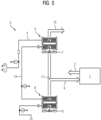
- FIGS. 5 , 6 , 7, 8 illustrate a second embodiment in which, compared to the first embodiment, only the type of intake of the room air 2 in the area of the hot gas section 5 and the type of guidance of the circulating air 9 from the low-temperature section 6 to the air conditioning unit 1 are changed.
- the air conditioning arrangement according to Figure 5 a fan for the direct intake of room air 2 for the hot gas section 5 is dispensed with. Instead, room air 2 is exclusively sucked in by the fan 8, which is assigned to the low-temperature section 6. All sucked-in room air 2 is guided in the direction of the hot gas section 5 after passing the low-temperature section 6.
- an air distribution device 17, which can be designed as a baffle, is arranged on this flow path. This air distribution device 17 decouples a portion of the air flow coming from the low-temperature section 6, which is to be guided to the air conditioning unit 1 as the recirculated air 9. A non-decoupled portion of the air flow coming from the low-temperature section 6 is fed to the hot gas section 5 and leaves the gas cooler 3 as the exhaust air 10.
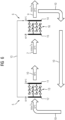
- the fan 8 for example, sucks in an air volume flow of 1000m 3 /h; after leaving the low-temperature section 6, a portion of 650m 3 /h is coupled out as recirculated air 9, while the remaining 350m 3 /h are fed to the hot gas section 5 and leave this as the exhaust air 10.
- the curve L4 of Figure 8 illustrates that the temperature of the air stream after passing the low temperature section 6 is 34°C. This is the temperature that is also approximately present at the air conditioning unit 1 for the circulating air 9. Compared to the first embodiment, the circulating air temperature is thus 2°C lower, so that the performance requirements for the air conditioning unit 1 for conditioning the circulating air 9 are overall more favorable.
Landscapes
- Engineering & Computer Science (AREA)
- Mechanical Engineering (AREA)
- Physics & Mathematics (AREA)
- Thermal Sciences (AREA)
- Chemical & Material Sciences (AREA)
- Combustion & Propulsion (AREA)
- Air-Conditioning For Vehicles (AREA)
Description
- Die Erfindung bezieht sich auf eine Klimatisierungsanordnung für einen Innenraum eines Fahrzeugs nach dem Oberbegriff von Anspruch 1. Danach umfasst die Klimatisierungsanordnung ein Klimagerät zur Bereitstellung von klimatisierter Raumluft und ein in dem Innenraum angeordnetes Kühlaggregat, das einen Kältekreis aufweist, der zur Entwärmung eines Kältemittels des Kältekreises einen Wärmetauscher aufweist, der mit der Raumluft beaufschlagt ist.
- Beispielsweise sind aus der
DE 198 47 504 C1 , die ein Verfahren zur Steuerung der Luftvolumenströme in einer raumlufttechnischen Anlage zum Gegenstand hat, derDE 10 2019 210 084 A1 , die ein Fahrzeug mit einer Entlüftungsvorrichtung und einer Kühlboxeinrichtung betrifft, und derDE 10 2012 108 886 A1 , in der eine Wärmeübertrageranordnung und ein Klimatisierungssystem eines Kraftfahrzeuges offenbart ist, jeweils Klimatisierungsanordnungen der eingangs genannten Art bekannt. - Eine solche Klimatisierungsanordnung liegt beispielsweise in Innenräumen von Fahrzeugen, insbesondere Schienenfahrzeugen, vor. So ist der Innenraum einer Bordküche, was seine Raumluft angeht, mittels eines Klimagerätes klimatisiert, welches wesentliche Parameter der Raumluft, wie Temperatur und Feuchtigkeit, gemäß vorgegebenen Werten bereitstellt. In einer solchen Bordküche sind zudem Kühlaggregate vorgesehen, die beispielsweise bei Kühlschränken, Gefrierschränken, gekühlten Vitrinen usw. zum Bereitstellen von Kälteleistung dienen.
- Eine Entwärmung eines Kältemittels des Kühlaggregats erfolgt am Wärmeübertrager/Kondensator des Kühlaggregats, und zwar mitttels der in dem Innenraum vorhandenen Raumluft.
- Bei einer solchen Klimatisierungsanordnung besteht die Aufgabe, die Abwärme eines Kühlaggregates möglichst effizient abzuführen.
- Diese Aufgabe wird gelöst durch eine Klimatisierungsanordnung nach Anspruch 1.
- Danach zeichnet sich die eingangs beschriebene Klimatisierungsanordnung dadurch aus, dass der Wärmetauscher räumlich in einen Heißgasabschnitt und in einen Niedertemperaturabschnitt aufgeteilt ist, die zum Entwärmen des Wärmetauschers angesaugte Raumluft in einen Fortluftanteil und einen Umluftanteil aufgeteilt ist, wobei der Niedertemperaturabschnitt des Wärmetauschers mit dem Umluftanteil der Raumluft und der Heißgasabschnitt des Wärmtauschers mit dem Fortluftanteil der Raumluft beaufschlagt ist.
- Durch die Maßnahme, den Heißgasabschnitt mit dem Fortluftanteil und den Niedertemperaturabschnitt mit dem Umluftanteil zu beaufschlagen, wird erreicht, dass der in den Innenraum des Fahrzeugs zurückzuleitenden Umluftanteil eine vergleichsweise niedrige Temperatur aufweist, so dass das Klimagerät, welches die Raumluft für den Innenraum des Fahrzeugs bereitstellt, mit geringerer (Kälte-)Leistung betrieben werden kann. Demgegenüber wird der Heißgasabschnitt des Wärmetauschers mit dem Fortluftanteil beaufschlagt, der nach Passieren des Heißgasabschnitts aus dem Fahrzeug abgeführt wird.
- Es ist insbesondere auch möglich, dass der Niedertemperaturabschnitt nicht nur mit der später als Umluft zum Klimagerät zu fördernden Luft beaufschlagt wird, sondern mit einem Gesamt-Luftstrom, der erst nach einem Passieren des Niedertemperaturabschnitts in einen Umluft- und einen weiter zum Heißgasabschnitt zu führenden Fortluftanteil aufgeteilt wird.
- Grundsätzlich sind als Wärmetauscher für das Kühlaggregat Wärmetauscher aller Art einsetzbar. Es ist jedoch bevorzugt, dass der Wärmetauscher bzw. Kondensator des Kältekreises als Kreuzgegenstrom-Wärmetauscher ausgebildet ist, da sich diese Bauart durch eine besonders hohe Effizienz bei den gegebenen Randbedingungen in einem Fahrzeug aufweist.
- Der Heißgasabschnitt und der Niedertemperaturabschnitt des Wärmetauschers können unmittelbar aneinander angrenzen. Alternativ dazu ist es möglich, dass eine räumliche Trennung des Heißgasabschnitts und des Niedertemperaturabschnitts des Wärmetauschers vorgesehen ist.
- In einer Weiterbildung der Erfindung ist dem Heißgasabschnitt ein Lüfter zum Ansaugen des Fortluftanteils aus der Raumluft und dem Niedertemperaturabschnitt ein Lüfter zum Ansaugen des Umluftanteils aus der Raumluft zugeordnet.Bei dieser Ausführungsform findet die Ansaugung von Kühlluft (spätere Umluft oder Fortluft) getrennt voneinander statt. Dem Heißgasabschnitt wird der Fortluftanteil und dem Niedertemperaturabschnitt wird der Umluftanteil der Raumluft unmittelbar zugeleitet.
- Alternativ dazu ist es möglich, eine zwischen dem Heißgasabschnitt und dem Niedertemperaturabschnitt angeordnete Luftverteileinrichtung vorzusehen, welche die angesaugte Raumluft in den Fortluftanteil und den Umluftanteil aufteilt. Bei dieser Ausführungsform passiert die gesamte, z. B. mittels eines Lüfters angesaugte Raumluft den Niedertemperaturabschnitt des Kälteaggregats. Auf einer Austrittsseite des Niedertemperaturabschnitts koppelt die Luftverteileinrichtung einen Umluftanteil aus dem dort vorliegenden Luftstrom aus und leitet diesen zurück in den Innenraum des Fahrzeugs. Ein verbleibender Fortluftanteil der angesaugten Raumluft wird weiter zum Heißgasabschnitt des Wärmetauschers geführt und entwärmt das Kühlmittel des Kältekreises des Kühlaggregats in dem Heißgasabschnitt.
- Vorzugsweise ist der Volumenstrom des Fortluftanteils kleiner als der Volumenstrom des Umluftanteils. Da der Fortluftanteil mit wesentlich höherer Temperatur den Wärmetauscher verlässt, als der Umluftanteil ist es grundsätzlich von Vorteil, wenn der Umluftanteil im Vergleich zum Fortluftanteil groß ist. Allerdings ist zu beachten, dass die erforderliche Endtemperatur des Kühlmittels, die bei Verlassen des Wärmetauschers vorliegen muss, auch erreicht wird. Je nach Anwendungsfall gibt es somit einzuhaltende Randbedingungen für ein Mindestanteil der Raumluft, der als Fortluft abzuführen ist.
- Vorzugsweise beträgt der Volumenstrom des Fortluftanteils weniger als 40% des Volumenstroms der angesaugten Raumluft.
- Das Kühlaggregat kann insbesondere als Gaskühler ausgeführt sein, bei dem der Heißgasabschnitt und der Niedertemperaturabschnitt jeweils räumlich voneinander getrennt und allgemein rechtwinklig, ggf. mit denselben Breitenabmessungen, ausgebildet sind.
- Ausführungsbeispiele der Erfindung werden nachfolgend unter Bezugnahme auf die Zeichnungen noch näher erläutert, wobei gleiche Komponenten mit denselben Bezugszeichen bezeichnet sind. Es zeigen:
- Figur 1
- eine schematische Darstellung einer Klimatisierungsanordnung für einen Fahrzeuginnenraum in einer ersten Ausführungsform,
- Figur 2
- eine schematische Darstellung einer strömungstechnischen Verschaltung der Klimatisierungsanordnung von
Figur 1 , - Figur 3
- eine schematische, grafische Darstellung von Temperaturverläufen eines Heißgasabschnitts der Klimatisierungsanordnung von
Figur 1 , - Figur 4
- eine schematische grafische Darstellung von Temperaturverläufen eines Niedertemperaturabschnitts der Klimatisierungsanordnung von
Figur 1 , - Figur 5
- eine schematische Darstellung einer Klimatisierungsanordnung für einen Fahrzeuginnenraum in einer zweiten Ausführungsform,
- Figur 6
- eine schematische Darstellung einer strömungstechnischen Verschaltung der Klimatisierungsanordnung von
Figur 5 , - Figur 7
- eine schematische, grafische Darstellung von Temperaturverläufen eines Heißgasabschnitts der Klimatisierungsanordnung von
Figur 5 und - Figur 8
- eine schematische grafische Darstellung von Temperaturverläufen eines Niedertemperaturabschnitts der Klimatisierungsanordnung von
Figur 5 . - Die
Figuren 1 bis 4 veranschaulichen eine erste Ausführungsform einer Klimatisierungsanordnung für eine Bordküche als Beispiel für einen Innenraum eines Fahrzeugs, insbesondere Schienenfahrzeugs. Ein Klimagerät 1 stellt für den Innenraum des Fahrzeugs klimatisierte Raumluft 2 bereit. In dem Innenraum des Fahrzeugs ist ein Kühlaggregat, im vorliegenden Ausführungsbeispiel ein Gaskühler 3 angeordnet, der zum Bereitstellen von Kälteleistung für beispielsweise Kühlschränke, Gefrierschränke, gekühlte Vitrinen eingesetzt wird. Der Gaskühler 3 wird mit einem Kältemittel betrieben, das in einem Kältekreis 4 geführt ist.Figur 1 zeigt aus Gründen der Übersichtlichkeit lediglich einen als Wärmetauscher ausgeführten Kondensator dieses Kältekreises 4, der zum Entwärmen des Kältemittels verwendet wird. - Der Kondensator ist räumlich in einen Heißgasabschnitt 5 und einen Niedertemperaturabschnitt 6 aufgeteilt. Im vorliegenden Ausführungsbeispiel ist dem Heißgasabschnitt 5 ein Lüfter 7 und dem Niedertemperaturabschnitt 6 ein Lüfter 8 zugeordnet. Sowohl der Lüfter 7 als auch der Lüfter 8 saugen Raumluft 2 aus dem Innenraum des Fahrzeugs an. Dabei kann beispielshalber der von dem Lüfter 7 geförderte Luftvolumenstrom 350m3/h und der von dem Lüfter 8 geförderte Luftvolumenstrom 500m3/h betragen.
- Mit Hilfe des Lüfters 8 wird an dem Niedertemperaturabschnitt 6 Raumluft vorbeigeführt, die nach Passieren des Niedertemperaturabschnitts 6 als Umluft 9 zum Klimagerät 1 zurückgeführt wird. Das Klimagerät 1 bereitet die Umluft 9 hinsichtlich Temperatur und Feuchtigkeit derart auf, dass sie wiederum als Raumluft 2 in den Innenraum des Fahrzeugs abgegeben werden kann. Typischer Weise handelt es sich bei der Raumluft 2 um ein Gemisch aus der Umluft 9 und aus einer Umgebung des Fahrzeugs angesaugter Frischluft.
- Die von dem Lüfter 7 angesaugte Raumluft passiert den Heißgasabschnitt 5 und wird sodann als Fortluft 10 nach außerhalb des Fahrzeugs abgeführt.
- Die Wechselwirkung der jeweils angesaugten Raumluft 2 mit dem Niedertemperaturabschnitt 6 und dem Heißgasabschnitt 5 geht näher aus
Figur 2 hervor. Die Struktur des Wärmetauschers, der den Kondensator des Kältekreises des Gaskühlers 3 bildet, entspricht derjenigen eines Kreuzgegenstromwärmetauschers. Im Bereich einer Verteilerleitung 11 beträgt die Temperatur des in den Heißgasabschnitt 5 einströmenden Kältemittels 90°C. Zwischen der Verteilerleitung 11 und einer Sammlerleitung 12 ist eine Leitungsanordnung 13 vorgesehen, in deren Bereich der Heißgasabschnitt 5 mit Raumluft zur Entwärmung des Kältemittels wechselwirkt. Das hat zur Folge, dass die Temperatur des Kühlmittels in einer Sammlerleitung 12 65°C beträgt. Dieser Temperaturverlauf für das Kühlmittel ergibt sich auch ausFigur 3 , wobei eine Kurve K1 den Temperaturverlauf des Kühlmittels und eine Kurve L1 einen Temperaturverlauf für die Raumluft 2 darstellt, jeweils über die Strecke zwischen der Sammlerleitung 12 und der Verteilerleitung 11. Die zum Kühlen des Kühlmittels im Bereich des Heißgasabschnitts 5 verwendete Raumluft 2 wird nach Passieren des Heißgasabschnitts 5 als die Fortluft 10 abgeführt. Dabei ist die Leistung des Lüfters 7 so bemessen, dass etwa 350m3/h an Raumluft 2 im Bereich des Heißgasabschnitts 5 angesaugt werden. - Das im Bereich des Heißgasabschnitts 5 auf eine Temperatur von 65°C abgekühlte Kältemittel wird mittels einer Strömungsleitung 13 zu einer Verteilerleitung 14 des Niedertemperaturabschnitts 6 geführt. Wiederum ist zwischen der Verteilerleitung 14 und einer Sammlerleitung 15 des Niedertemperaturabschnitts 6 eine Leitungsanordnung 16 angeordnet, in deren Bereich eine Wechselwirkung zwischen der Raumluft 2 und dem Kältemittel des Kältekreises des Gaskühlers 3 von Statten geht. Im Bereich der Sammlerleitung 15 beträgt die Kühlmitteltemperatur im vorliegend erläuterten Beispiel 45°C. Die Raumluft 2, welche den Niedertemperaturabschnitt 6 passiert hat, wird als Umluft 9 zur Nachbehandlung dem Klimagerät 1 zugeführt.
-
Figur 4 zeigt schematisch die Temperaturverläufe K2 und L2 für das Kältemittel bzw. die Raumluft im Bereich des Niedertemperaturabschnitts 6. - Sowohl im Bereich des Heißgasabschnitts 5 als auch im Bereich des Niedertemperaturabschnitts 6 beträgt die Temperatur der angesaugten Raumluft 32°C. Die Temperatur der Umluft 9 liegt bei 36°C, so dass das Klimagerät 1, welches die Raumluft 2 für den Innenraum des Fahrzeugs bereitstellt, lediglich vergleichsweise wenig Kälteleistung aufbringen muss, um eine gewünschte Solltemperatur für die in den Fahrgastinnenraum einzuleitende Raumluft 2 bereitzustellen.
- Die
Figuren 5 ,6 ,7, 8 veranschaulichen ein zweites Ausführungsbeispiel, bei dem im Vergleich zum ersten Ausführungsbeispiel ausschließlich die Art der Ansaugung der Raumluft 2 im Bereich des Heißgasabschnitts 5 und die Art der Führung der Umluft 9 von dem Niedertemperaturabschnitt 6 zum Klimagerät 1 geändert ist. - Im Gegensatz zum ersten Ausführungsbeispiel wird bei der Klimatisierungsanordnung nach
Figur 5 auf einen Lüfter zum unmittelbaren Ansaugen von Raumluft 2 für den Heißgasabschnitt 5 verzichtet. Stattdessen wird Raumluft 2 ausschließlich durch den Lüfter 8 angesaugt, der dem Niedertemperaturabschnitt 6 zugeordnet ist. Sämtliche angesaugte Raumluft 2 wird nach Passieren des Niedertemperaturabschnitts 6 in Richtung auf den Heißgasabschnitt 5 geführt. Auf diesem Strömungsweg ist jedoch eine Luftverteileinrichtung 17, die als Leitblech ausgeführt sein kann, angeordnet. Diese Luftverteileinrichtung 17 koppelt aus dem von dem Niedertemperaturabschnitt 6 kommenden Luftstrom einen Anteil aus, der als die Umluft 9 zum Klimagerät 1 zu führen ist. Ein nicht ausgekoppelter Anteil des Luftstroms, der von dem Niedertemperaturabschnitt 6 kommt, wird dem Heißgasabschnitt 5 zugeleitet und verlässt den Gaskühler 3 als die Fortluft 10. - Wie aus
Figur 6 hervorgeht, saugt der Lüfter 8 beispielsweise einen Luftvolumenstrom von 1000m3/h an, nach Verlassen des Niedertemperaturabschnitts 6 wird ein Anteil von 650m3/h als Umluft 9 ausgekoppelt, während verbleibende 350m3/h dem Heißgasabschnitt 5 zugeleitet werden und diesen als die Fortluft 10 verlassen. - Für die Temperaturverläufe des Kühlmittels und der den Heißgasabschnitt 5 passierenden Luft ergeben sich die Kurven K3, L3 von
Figur 7 . Die Verhältnisse am Niedertemperaturabschnitt 6 gehen ausFigur 8 hervor, vgl. die Temperaturverläufe K4, L4. Es ist ersichtlich, dass an der Verteilerleitung 11 des Heißgasabschnitts 5 das Kühlmittel eine Temperatur von 90°C aufweist, die nach Wechselwirkung mit dem Fortluftstrom 10 im Bereich der Sammlerleitung 12 des Heißgasabschnitts 5 auf 65°C abgesunken ist. Im Bereich des Niedertemperaturabschnitts 6 sinkt die Kühlmitteltemperatur von 65°C auf 45°C. - Die Kurve L4 von
Figur 8 veranschaulicht, dass die Temperatur des Luftstroms nach Passieren des Niedertemperaturabschnitts 6 34°C beträgt. Dies ist die Temperatur, die dann näherungsweise auch am Klimagerät 1 für die Umluft 9 vorliegt. Im Vergleich zum ersten Ausführungsbeispiel ist die Umlufttemperatur somit 2°C niedriger, so dass die Leistungsanforderungen an das Klimagerät 1 zum Konditionieren der Umluft 9 insgesamt günstiger sind.
Claims (9)
- Klimatisierungsanordnung für einen Innenraum eines Fahrzeugs, mit einem Klimagerät (1) zur Bereitstellung von klimatisierter Raumluft (2) und einem in dem Innenraum angeordneten Kühlaggregat, das einen Kältekreis (4) aufweist, der zur Entwärmung eines Kältemittels des Kältekreises (4) einen Wärmetauscher aufweist, der mit der Raumluft (2) beaufschlagt ist,
dadurch gekennzeichnet, dass
der Wärmetauscher räumlich in einen Heißgasabschnitt (5) und in einen Niedertemperaturabschnitt (6) aufgeteilt ist, die zum Entwärmen des Wärmetauschers angesaugte Raumluft (2) in einen Fortluftanteil (10) und einen Umluftanteil (9) aufgeteilt ist, wobei der Niedertemperaturabschnitt (6) des Wärmetauschers mit dem Umluftanteil (9) der Raumluft (2) und der Heißgasabschnitt (5) des Wärmetauschers mit dem Fortluftanteil (10) der Raumluft (2) beaufschlagt ist. - Klimatisierungsanordnung nach Anspruch 1,
dadurch gekennzeichnet, dass
der Wärmetauscher als Kreuzgegenstrom-Wärmetauscher ausgebildet ist. - Klimatisierungsanordnung nach Anspruch 1 oder 2,
dadurch gekennzeichnet, dass
der Heißgasabschnitt (5) und der Niedertemperaturabschnitt (6) des Wärmetauschers unmittelbar aneinander angrenzen. - Klimatisierungsanordnung nach einem der Ansprüche 1 oder 2,
dadurch gekennzeichnet, dass
der Heißgasabschnitt (5) und der Niedertemperaturabschnitt (6) des Wärmetauschers räumlich voneinander getrennt sind. - Klimatisierungsanordnung nach einem der Ansprüche 1 bis 4, dadurch gekennzeichnet, dass
dem Heißgasabschnitt (5) ein Lüfter (7) zum Ansaugen des Fortluftanteils (10) aus der Raumluft (2) und dem Niedertemperaturabschnitt (6) ein Lüfter (8) zum Ansaugen des Umluftanteils (9) aus der Raumluft (2) zugeordnet ist. - Klimatisierungsanordnung nach einem der Ansprüche 1 bis 4, dadurch gekennzeichnet, dass
eine zwischen dem Heißgasabschnitt (5) und dem Niedertemperaturabschnitt (6) angeordnete Luftverteileinrichtung vorgesehen ist, welche angesaugte Raumluft (2) in den Fortluftanteil (10) und den Umluftanteil (9) aufteilt. - Klimatisierungsanordnung nach einem der Ansprüche 1 bis 6, dadurch gekennzeichnet, dass
der Volumenstrom des Fortluftanteils (10) kleiner als der Volumenstrom des Umluftanteils (9) bemessen ist. - Klimatisierungsanordnung nach Anspruch 7,
dadurch gekennzeichnet, dass
der Volumenstrom des Fortluftanteils (10) weniger als 40% des Volumenstroms der angesaugten Raumluft (2) beträgt. - Klimatisierungsanordnung nach einem der Ansprüche 1 bis 8, dadurch gekennzeichnet, dass
das Kühlaggregat als Gaskühler (3) ausgeführt ist, bei dem der Heißgasabschnitt (9) und der Niedertemperaturabschnitt (6) jeweils allgemein rechtwinklig ausgebildet sind.
Applications Claiming Priority (2)
| Application Number | Priority Date | Filing Date | Title |
|---|---|---|---|
| DE102021206802.2A DE102021206802B3 (de) | 2021-06-30 | 2021-06-30 | Klimatisierungsanordnung für einen Innenraum eines Fahrzeugs |
| PCT/EP2022/064249 WO2023274638A1 (de) | 2021-06-30 | 2022-05-25 | Klimatisierungsanordnung für einen innenraum eines fahrzeugs |
Publications (3)
| Publication Number | Publication Date |
|---|---|
| EP4334146A1 EP4334146A1 (de) | 2024-03-13 |
| EP4334146B1 true EP4334146B1 (de) | 2025-03-05 |
| EP4334146C0 EP4334146C0 (de) | 2025-03-05 |
Family
ID=82067596
Family Applications (1)
| Application Number | Title | Priority Date | Filing Date |
|---|---|---|---|
| EP22730808.7A Active EP4334146B1 (de) | 2021-06-30 | 2022-05-25 | Klimatisierungsanordnung für einen innenraum eines fahrzeugs |
Country Status (6)
| Country | Link |
|---|---|
| US (1) | US12208660B2 (de) |
| EP (1) | EP4334146B1 (de) |
| DE (1) | DE102021206802B3 (de) |
| ES (1) | ES3031299T3 (de) |
| PL (1) | PL4334146T3 (de) |
| WO (1) | WO2023274638A1 (de) |
Family Cites Families (13)
| Publication number | Priority date | Publication date | Assignee | Title |
|---|---|---|---|---|
| AT311410B (de) * | 1971-03-24 | 1973-11-12 | Friedmann Kg Alex | Klimaanlage für Fahrzeuge, insbesondere Schienenfahrzeuge |
| EP0842799A3 (de) * | 1996-11-15 | 2003-03-05 | Calsonic Kansei Corporation | Wärmepumpenartige Klimaanlage für ein Kraftfahrzeug |
| DE19847504C1 (de) | 1998-10-15 | 2000-11-16 | Deutsche Bahn Ag | Verfahren zur Steuerung der Luftvolumenströme in einer raumlufttechnischen Anlage |
| CN102046405B (zh) * | 2008-05-30 | 2013-07-03 | 三菱电机株式会社 | 车辆用空调系统 |
| US8205709B2 (en) * | 2010-05-21 | 2012-06-26 | Ford Global Technologies, Llc. | Transmission fluid warming and cooling system |
| DE102010062660A1 (de) * | 2010-12-08 | 2012-06-14 | Bombardier Transportation Gmbh | Schienenfahrzeug mit einem Maschinenraum sowie mit mindestens einem Führerraum sowie Verfahren zur Erzeugung eines Überdrucks im Maschinenraum in Verbindungmit einer Klimatisierung mindestens eines Führerraumes |
| JP5866194B2 (ja) * | 2011-12-12 | 2016-02-17 | 川崎重工業株式会社 | 空調装置および鉄道車両 |
| DE102012108886B4 (de) | 2012-09-20 | 2019-02-14 | Hanon Systems | Wärmeübertrageranordnung und Klimatisierungssystem eines Kraftfahrzeuges |
| EP2969613B1 (de) * | 2013-03-13 | 2018-08-08 | Bergstrom, Inc. | Klimaanlage mit wärmerückgewinnungslüftung für frischluftzufuhr und temperatursteuerung |
| DE102014226512A1 (de) * | 2014-12-19 | 2016-06-23 | Bayerische Motoren Werke Aktiengesellschaft | Klimasystem für ein Fahrzeug und Verfahren zur Klimatisierung eines Fahrzeugs |
| DE102016219205B4 (de) * | 2016-10-04 | 2023-02-02 | Volkswagen Aktiengesellschaft | Mehrpassiger Luft/Kältemittel-Wärmeübertrager, Klimatisierungsvorrichtung für ein Kraftfahrzeug und Kraftfahrzeug |
| DE102017201186A1 (de) | 2017-01-25 | 2018-07-26 | Siemens Aktiengesellschaft | Fahrzeug mit einer zweistufigen Kälteanlage |
| DE102019210084B4 (de) | 2019-07-09 | 2021-05-20 | Audi Ag | Fahrzeug mit einer Entlüftungsvorrichtung und einer Kühlboxeinrichtung |
-
2021
- 2021-06-30 DE DE102021206802.2A patent/DE102021206802B3/de active Active
-
2022
- 2022-05-25 EP EP22730808.7A patent/EP4334146B1/de active Active
- 2022-05-25 US US18/575,914 patent/US12208660B2/en active Active
- 2022-05-25 ES ES22730808T patent/ES3031299T3/es active Active
- 2022-05-25 PL PL22730808.7T patent/PL4334146T3/pl unknown
- 2022-05-25 WO PCT/EP2022/064249 patent/WO2023274638A1/de not_active Ceased
Also Published As
| Publication number | Publication date |
|---|---|
| ES3031299T3 (en) | 2025-07-07 |
| EP4334146A1 (de) | 2024-03-13 |
| DE102021206802B3 (de) | 2022-07-28 |
| US12208660B2 (en) | 2025-01-28 |
| WO2023274638A1 (de) | 2023-01-05 |
| PL4334146T3 (pl) | 2025-05-19 |
| US20240262168A1 (en) | 2024-08-08 |
| EP4334146C0 (de) | 2025-03-05 |
Similar Documents
| Publication | Publication Date | Title |
|---|---|---|
| DE102014111971B4 (de) | Klimaanlage für ein Fahrzeug | |
| DE102015117962B4 (de) | Klimatisierungssystem zur Konditionierung der Luft eines Fahrgastraumes eines Kraftfahrzeuges | |
| DE102015117964B4 (de) | Klimatisierungssystem zur Konditionierung der Luft eines Fahrgastraumes eines Kraftfahrzeuges | |
| DE102015211606B4 (de) | Verdampfereinheit für eine Aufdachklimaanlage eines Straßenfahrzeugs sowie Aufdachklimaanlage mit Verdampfereinheit | |
| WO2013037335A1 (de) | Klimaanlage für schienenfahrzeuge | |
| DE112018005924T5 (de) | Fahrzeugklimaanlage | |
| DE4118745C2 (de) | Klimakompaktgerät für Fahrzeuge | |
| DE102020108969A1 (de) | Batterieelektrofahrzeug und verfahren zum kühlen einer hochspannungskomponente eines antriebsstrangs eines batterieelektrofahrzeugs | |
| DE102015211605A1 (de) | Kondensatoreinheit einer Aufdachklimaanlage | |
| DE102018215836A1 (de) | Modulare Aufdachklimaanlage | |
| DE102008052112B4 (de) | Klimatisierungsanordnung für einen Führerstand | |
| EP4334146B1 (de) | Klimatisierungsanordnung für einen innenraum eines fahrzeugs | |
| EP3895921B1 (de) | Heiz- und/oder klimaanlage mit verbesserter luftbehandlung und verfahren dazu | |
| DE112021000495T5 (de) | Fahrzeugklimaanlage und verfahren zur steuerung derselben | |
| DE10147113A1 (de) | Vorrichtung zum Temperieren und Belüften von Kraftfahrzeugen | |
| EP1636056B1 (de) | Bauanordnung für eine klimaanlage | |
| EP0663572B1 (de) | Kompaktklimagerät | |
| DE102014014462B4 (de) | Fahrzeugklimaanlage, Fahrzeug damit sowie Verfahren zum Betreiben einer Fahrzeugklimaanlage | |
| DE10233414B4 (de) | Vorrichtung und Verfahren zum Heizen und Kühlen eines Fahrzeuginnenraums | |
| DE10315733A1 (de) | Vorrichtung zum Austausch von Wärme | |
| DE102022004437A1 (de) | Kompaktes HLK-System für Fahrzeuge | |
| DE102016110604B4 (de) | Klimaanlage mit verbesserter Luftleitung und Verfahren dazu | |
| DE102007035240A1 (de) | Heizungs- und/oder Klimatisierungseinrichtung für ein Kraftfahrzeug | |
| DE112014004927T5 (de) | Kreis zur thermischen Behandlung, insbesondere für ein Kraftfahrzeug | |
| DE102018213835A1 (de) | Fahrzeug mit einem Kältemittelkreis |
Legal Events
| Date | Code | Title | Description |
|---|---|---|---|
| STAA | Information on the status of an ep patent application or granted ep patent |
Free format text: STATUS: UNKNOWN |
|
| STAA | Information on the status of an ep patent application or granted ep patent |
Free format text: STATUS: THE INTERNATIONAL PUBLICATION HAS BEEN MADE |
|
| PUAI | Public reference made under article 153(3) epc to a published international application that has entered the european phase |
Free format text: ORIGINAL CODE: 0009012 |
|
| STAA | Information on the status of an ep patent application or granted ep patent |
Free format text: STATUS: REQUEST FOR EXAMINATION WAS MADE |
|
| 17P | Request for examination filed |
Effective date: 20231206 |
|
| AK | Designated contracting states |
Kind code of ref document: A1 Designated state(s): AL AT BE BG CH CY CZ DE DK EE ES FI FR GB GR HR HU IE IS IT LI LT LU LV MC MK MT NL NO PL PT RO RS SE SI SK SM TR |
|
| DAV | Request for validation of the european patent (deleted) | ||
| DAX | Request for extension of the european patent (deleted) | ||
| GRAP | Despatch of communication of intention to grant a patent |
Free format text: ORIGINAL CODE: EPIDOSNIGR1 |
|
| STAA | Information on the status of an ep patent application or granted ep patent |
Free format text: STATUS: GRANT OF PATENT IS INTENDED |
|
| INTG | Intention to grant announced |
Effective date: 20241115 |
|
| GRAS | Grant fee paid |
Free format text: ORIGINAL CODE: EPIDOSNIGR3 |
|
| GRAA | (expected) grant |
Free format text: ORIGINAL CODE: 0009210 |
|
| STAA | Information on the status of an ep patent application or granted ep patent |
Free format text: STATUS: THE PATENT HAS BEEN GRANTED |
|
| AK | Designated contracting states |
Kind code of ref document: B1 Designated state(s): AL AT BE BG CH CY CZ DE DK EE ES FI FR GB GR HR HU IE IS IT LI LT LU LV MC MK MT NL NO PL PT RO RS SE SI SK SM TR |
|
| REG | Reference to a national code |
Ref country code: GB Ref legal event code: FG4D Free format text: NOT ENGLISH |
|
| REG | Reference to a national code |
Ref country code: CH Ref legal event code: EP |
|
| REG | Reference to a national code |
Ref country code: IE Ref legal event code: FG4D Free format text: LANGUAGE OF EP DOCUMENT: GERMAN |
|
| REG | Reference to a national code |
Ref country code: DE Ref legal event code: R096 Ref document number: 502022003111 Country of ref document: DE |
|
| U01 | Request for unitary effect filed |
Effective date: 20250305 |
|
| U07 | Unitary effect registered |
Designated state(s): AT BE BG DE DK EE FI FR IT LT LU LV MT NL PT RO SE SI Effective date: 20250311 |
|
| U20 | Renewal fee for the european patent with unitary effect paid |
Year of fee payment: 4 Effective date: 20250520 |
|
| PG25 | Lapsed in a contracting state [announced via postgrant information from national office to epo] |
Ref country code: RS Free format text: LAPSE BECAUSE OF FAILURE TO SUBMIT A TRANSLATION OF THE DESCRIPTION OR TO PAY THE FEE WITHIN THE PRESCRIBED TIME-LIMIT Effective date: 20250605 |
|
| REG | Reference to a national code |
Ref country code: ES Ref legal event code: FG2A Ref document number: 3031299 Country of ref document: ES Kind code of ref document: T3 Effective date: 20250707 |
|
| PGFP | Annual fee paid to national office [announced via postgrant information from national office to epo] |
Ref country code: PL Payment date: 20250516 Year of fee payment: 4 |
|
| PG25 | Lapsed in a contracting state [announced via postgrant information from national office to epo] |
Ref country code: NO Free format text: LAPSE BECAUSE OF FAILURE TO SUBMIT A TRANSLATION OF THE DESCRIPTION OR TO PAY THE FEE WITHIN THE PRESCRIBED TIME-LIMIT Effective date: 20250605 |
|
| PG25 | Lapsed in a contracting state [announced via postgrant information from national office to epo] |
Ref country code: HR Free format text: LAPSE BECAUSE OF FAILURE TO SUBMIT A TRANSLATION OF THE DESCRIPTION OR TO PAY THE FEE WITHIN THE PRESCRIBED TIME-LIMIT Effective date: 20250305 |
|
| PG25 | Lapsed in a contracting state [announced via postgrant information from national office to epo] |
Ref country code: GR Free format text: LAPSE BECAUSE OF FAILURE TO SUBMIT A TRANSLATION OF THE DESCRIPTION OR TO PAY THE FEE WITHIN THE PRESCRIBED TIME-LIMIT Effective date: 20250606 |
|
| PG25 | Lapsed in a contracting state [announced via postgrant information from national office to epo] |
Ref country code: SM Free format text: LAPSE BECAUSE OF FAILURE TO SUBMIT A TRANSLATION OF THE DESCRIPTION OR TO PAY THE FEE WITHIN THE PRESCRIBED TIME-LIMIT Effective date: 20250305 |
|
| RAP4 | Party data changed (patent owner data changed or rights of a patent transferred) |
Owner name: SIEMENS MOBILITY GMBH |
|
| U1H | Name or address of the proprietor changed after the registration of the unitary effect |
Owner name: SIEMENS MOBILITY GMBH; DE |
|
| PGFP | Annual fee paid to national office [announced via postgrant information from national office to epo] |
Ref country code: ES Payment date: 20250825 Year of fee payment: 4 |
|
| PG25 | Lapsed in a contracting state [announced via postgrant information from national office to epo] |
Ref country code: CZ Free format text: LAPSE BECAUSE OF FAILURE TO SUBMIT A TRANSLATION OF THE DESCRIPTION OR TO PAY THE FEE WITHIN THE PRESCRIBED TIME-LIMIT Effective date: 20250305 |
|
| PG25 | Lapsed in a contracting state [announced via postgrant information from national office to epo] |
Ref country code: SK Free format text: LAPSE BECAUSE OF FAILURE TO SUBMIT A TRANSLATION OF THE DESCRIPTION OR TO PAY THE FEE WITHIN THE PRESCRIBED TIME-LIMIT Effective date: 20250305 |
|
| PG25 | Lapsed in a contracting state [announced via postgrant information from national office to epo] |
Ref country code: IS Free format text: LAPSE BECAUSE OF FAILURE TO SUBMIT A TRANSLATION OF THE DESCRIPTION OR TO PAY THE FEE WITHIN THE PRESCRIBED TIME-LIMIT Effective date: 20250705 |
|
| REG | Reference to a national code |
Ref country code: CH Ref legal event code: H13 Free format text: ST27 STATUS EVENT CODE: U-0-0-H10-H13 (AS PROVIDED BY THE NATIONAL OFFICE) Effective date: 20251223 |
|
| PLBE | No opposition filed within time limit |
Free format text: ORIGINAL CODE: 0009261 |
|
| STAA | Information on the status of an ep patent application or granted ep patent |
Free format text: STATUS: NO OPPOSITION FILED WITHIN TIME LIMIT |
|
| REG | Reference to a national code |
Ref country code: CH Ref legal event code: L10 Free format text: ST27 STATUS EVENT CODE: U-0-0-L10-L00 (AS PROVIDED BY THE NATIONAL OFFICE) Effective date: 20260114 |
|
| PG25 | Lapsed in a contracting state [announced via postgrant information from national office to epo] |
Ref country code: CH Free format text: LAPSE BECAUSE OF NON-PAYMENT OF DUE FEES Effective date: 20250531 |
|
| PG25 | Lapsed in a contracting state [announced via postgrant information from national office to epo] |
Ref country code: MC Free format text: LAPSE BECAUSE OF FAILURE TO SUBMIT A TRANSLATION OF THE DESCRIPTION OR TO PAY THE FEE WITHIN THE PRESCRIBED TIME-LIMIT Effective date: 20250305 |
|
| 26N | No opposition filed |
Effective date: 20251208 |
|
| PG25 | Lapsed in a contracting state [announced via postgrant information from national office to epo] |
Ref country code: IE Free format text: LAPSE BECAUSE OF NON-PAYMENT OF DUE FEES Effective date: 20250525 |