EP4333538A1 - Kommunikationsverfahren, -system und -vorrichtung - Google Patents
Kommunikationsverfahren, -system und -vorrichtung Download PDFInfo
- Publication number
- EP4333538A1 EP4333538A1 EP22836754.6A EP22836754A EP4333538A1 EP 4333538 A1 EP4333538 A1 EP 4333538A1 EP 22836754 A EP22836754 A EP 22836754A EP 4333538 A1 EP4333538 A1 EP 4333538A1
- Authority
- EP
- European Patent Office
- Prior art keywords
- identifier
- information
- terminal
- network
- network element
- Prior art date
- Legal status (The legal status is an assumption and is not a legal conclusion. Google has not performed a legal analysis and makes no representation as to the accuracy of the status listed.)
- Granted
Links
Images



Classifications
-
- H—ELECTRICITY
- H04—ELECTRIC COMMUNICATION TECHNIQUE
- H04L—TRANSMISSION OF DIGITAL INFORMATION, e.g. TELEGRAPHIC COMMUNICATION
- H04L41/00—Arrangements for maintenance, administration or management of data switching networks, e.g. of packet switching networks
- H04L41/12—Discovery or management of network topologies
-
- H—ELECTRICITY
- H04—ELECTRIC COMMUNICATION TECHNIQUE
- H04W—WIRELESS COMMUNICATION NETWORKS
- H04W74/00—Wireless channel access
- H04W74/002—Transmission of channel access control information
- H04W74/004—Transmission of channel access control information in the uplink, i.e. towards network
-
- H—ELECTRICITY
- H04—ELECTRIC COMMUNICATION TECHNIQUE
- H04L—TRANSMISSION OF DIGITAL INFORMATION, e.g. TELEGRAPHIC COMMUNICATION
- H04L67/00—Network arrangements or protocols for supporting network services or applications
- H04L67/01—Protocols
- H04L67/12—Protocols specially adapted for proprietary or special-purpose networking environments, e.g. medical networks, sensor networks, networks in vehicles or remote metering networks
-
- H—ELECTRICITY
- H04—ELECTRIC COMMUNICATION TECHNIQUE
- H04W—WIRELESS COMMUNICATION NETWORKS
- H04W4/00—Services specially adapted for wireless communication networks; Facilities therefor
- H04W4/70—Services for machine-to-machine communication [M2M] or machine type communication [MTC]
-
- H—ELECTRICITY
- H04—ELECTRIC COMMUNICATION TECHNIQUE
- H04W—WIRELESS COMMUNICATION NETWORKS
- H04W40/00—Communication routing or communication path finding
- H04W40/24—Connectivity information management, e.g. connectivity discovery or connectivity update
-
- H—ELECTRICITY
- H04—ELECTRIC COMMUNICATION TECHNIQUE
- H04W—WIRELESS COMMUNICATION NETWORKS
- H04W74/00—Wireless channel access
- H04W74/002—Transmission of channel access control information
- H04W74/006—Transmission of channel access control information in the downlink, i.e. towards the terminal
-
- H—ELECTRICITY
- H04—ELECTRIC COMMUNICATION TECHNIQUE
- H04W—WIRELESS COMMUNICATION NETWORKS
- H04W8/00—Network data management
- H04W8/26—Network addressing or numbering for mobility support
-
- H—ELECTRICITY
- H04—ELECTRIC COMMUNICATION TECHNIQUE
- H04W—WIRELESS COMMUNICATION NETWORKS
- H04W88/00—Devices specially adapted for wireless communication networks, e.g. terminals, base stations or access point devices
- H04W88/18—Service support devices; Network management devices
-
- H—ELECTRICITY
- H04—ELECTRIC COMMUNICATION TECHNIQUE
- H04L—TRANSMISSION OF DIGITAL INFORMATION, e.g. TELEGRAPHIC COMMUNICATION
- H04L41/00—Arrangements for maintenance, administration or management of data switching networks, e.g. of packet switching networks
- H04L41/08—Configuration management of networks or network elements
- H04L41/0894—Policy-based network configuration management
-
- Y—GENERAL TAGGING OF NEW TECHNOLOGICAL DEVELOPMENTS; GENERAL TAGGING OF CROSS-SECTIONAL TECHNOLOGIES SPANNING OVER SEVERAL SECTIONS OF THE IPC; TECHNICAL SUBJECTS COVERED BY FORMER USPC CROSS-REFERENCE ART COLLECTIONS [XRACs] AND DIGESTS
- Y02—TECHNOLOGIES OR APPLICATIONS FOR MITIGATION OR ADAPTATION AGAINST CLIMATE CHANGE
- Y02D—CLIMATE CHANGE MITIGATION TECHNOLOGIES IN INFORMATION AND COMMUNICATION TECHNOLOGIES [ICT], I.E. INFORMATION AND COMMUNICATION TECHNOLOGIES AIMING AT THE REDUCTION OF THEIR OWN ENERGY USE
- Y02D30/00—Reducing energy consumption in communication networks
Definitions
- This application relates to the communication field, and more specifically, to a communication method, system, and apparatus.
- a fieldbus is an underlaying communication network in a production and manufacturing field.
- the fieldbus realizes two-way serial multi-drop digital communication between microcomputerbased field measurement and control instruments or devices, and has characteristics of real-time performance and high stability. Since the International Electrotechnical Commission (IEC) announced adoption of the IEC61158 fieldbus standard in 2000, there are more than 10 fieldbus standards.
- the Ethernet is a local area network commonly used in the commercial field. The combination of a transmission control protocol/an internet protocol (transmission control protocol/internet protocol, TCP/IP) protocol to form a foundation of the Ethernet and becomes a de facto standard in network applications. This also enables, to be an inevitable trend, implementing integrated factory monitoring by a fieldbus control system by integrating the Ethernet and an enterprise information network.
- a link layer discovery protocol (link layer discovery protocol, LLDP) run on a PROFINET IO system cannot discover a functional network element in a 5G core network, such as a user plane function (user plane function, UPF), a (radio) access network (radio access network, (R)AN).
- UPF user plane function
- R radio access network
- a packet of the LLDP is discarded because the packet cannot be identified by customer premise equipment (customer premise equipment, CPE) (which may be also referred to as user equipment (user equipment, UE)) in the 5G-based industrial Internet.
- CPE customer premise equipment
- UE user equipment
- a topology structure of the 5G-based industrial Internet cannot be obtained.
- management software cannot obtain information about an industrial terminal, and cannot accurately manage the industrial terminal. Therefore, how to obtain the topology structure of the 5G industrial Internet becomes an urgent problem to be solved.
- This application provides a communication method, system, and apparatus, to enable a network side or a network management server side to obtain a topology structure of a 5G industrial Internet, learn of a topology connection relationship between an industrial terminal, a network terminal, and a wireless network, implement management on the industrial terminal, and meet a personalized requirement of the industrial terminal.
- a communication method includes: A first network element receives first information, where the first information includes a first identifier of a first terminal.
- the first network element sends second information, where the second information includes the first identifier, the second information requests a second identifier of a first network, and the first network is a network accessed by the first terminal.
- the first network element receives third information, where the third information includes the second identifier.
- the first network element sends fourth information to a first server, where the fourth information indicates an association relationship between the first identifier and the second identifier, and the first server is configured to manage the first terminal.
- the first terminal may be a terminal device that integrates an industrial terminal device and a network terminal device
- the first server may be a device management server or a management and monitoring software server.
- the first server provides, by learning of a connection relationship between the first terminal and the first network, a service for the first terminal in a personalized manner, and implements management on the first terminal.
- the method includes: The first network element sends fifth information, where the fifth information includes the first identifier, the fifth information requests a third identifier of a second terminal, the second terminal is a device that connects the first terminal to the first network, and the first terminal is an industrial terminal device.
- the first network element receives sixth information, where the sixth information includes the third identifier.
- the first network element sends seventh information to the first server, where the seventh information indicates an association relationship between the first identifier and the third identifier.
- the second terminal is a network terminal, and the first terminal accesses the first network via the second terminal.
- the first server can provide, by learning of a connection relationship between the first terminal and the second terminal, the service for the first terminal in the personalized manner, and implements accurate management on the first terminal.
- the fifth information includes a first event identifier, and the first event identifier indicates to request the third identifier of the second terminal.
- the seventh information further indicates an association relationship between the first identifier, the second identifier, and the third identifier.
- the first server can learn of, by using the connection relationship between the first terminal and the second terminal and the connection relationship between the first terminal and the first network, a topology relationship between the first terminal, the second terminal, and the first network, can thus perform a subsequent operation by using the topology relationship, for example, calculating network load, and implements the accurate management on the first terminal.
- the third identifier includes an international mobile subscriber identity IMSI and/or an international mobile equipment identity IMEI and/or a permanent subscriber identifier SUPI and/or a general public subscription identifier GPSI.
- the first identifier includes a media access control layer MAC address and/or an internet protocol IP address and/or a device name and/or a device role and/or a device identifier.
- the first identifier may further include a device manufacturer of the first terminal, and/or a device instance (instance), and/or a subnet (subnet) accessed by the first terminal, and/or a gateway (gateway) accessed by the first terminal.
- a device manufacturer of the first terminal and/or a device instance (instance), and/or a subnet (subnet) accessed by the first terminal, and/or a gateway (gateway) accessed by the first terminal.
- the second identifier includes a first cell identifier and/or a first access point name APN.
- a communication system includes a first terminal, a first network element, and a first server.
- the first terminal is configured to send first information, where the first information includes a first identifier of the first terminal, and the first terminal accesses a first network.
- the first network element is configured to receive the first information.
- the first network element is further configured to send second information to the first server, where the second information includes the first identifier, and the second information requests a second identifier of the first network.
- the first network element is further configured to receive third information, where the third information includes the second identifier.
- the first network element is further configured to send fourth information to the first server, where the fourth information indicates an association relationship between the first identifier and the second identifier.
- the first server is configured to receive the fourth information, and the first server is further configured to manage the first terminal.
- the first terminal may be a terminal device that integrates an industrial terminal device and a network terminal device
- the first server may be a device management server or a management and monitoring software server.
- the first server provides, by learning of a connection relationship between the first terminal and the first network, a service for the first terminal in a personalized manner, and implements management on the first terminal.
- the communication system further includes a second terminal.
- the first network element is configured to send fifth information, where the fifth information includes the first identifier, the fifth information requests a third identifier of the second terminal, the second terminal is a device that connects the first terminal to the first network, and the first terminal is an industrial terminal device.
- the first network element is further configured to receive sixth information, where the sixth information includes the third identifier.
- the first network element is further configured to send seventh information to the first server, where the seventh information indicates an association relationship between the first identifier and the third identifier.
- the second terminal is a network terminal, and the first terminal accesses the first network via the second terminal.
- the first server can provide, by learning of a connection relationship between the first terminal and the second terminal, the service for the first terminal in the personalized manner, and implements accurate management on the first terminal.
- the fifth information includes a first event identifier, and the first event identifier indicates to request the third identifier of the second terminal.
- the seventh information further indicates an association relationship between the first identifier, the second identifier, and the third identifier.
- the first server can learn of, by using the connection relationship between the first terminal and the second terminal and the connection relationship between the first terminal and the first network, a topology relationship between the first terminal, the second terminal, and the first network, can thus perform a subsequent operation by using the topology relationship, for example, calculating network load, and implements the accurate management on the first terminal.
- the third identifier includes an international mobile subscriber identity IMSI and/or an international mobile equipment identity IMEI and/or a permanent subscriber identifier SUPI and/or a general public subscription identifier GPSI.
- the first identifier includes a media access control layer MAC address and/or an internet protocol IP address and/or a device name and/or a device role and/or a device identifier.
- the first identifier may further include a device manufacturer of the first terminal, a device instance (instance), a subnet (subnet) accessed by the first terminal, and a gateway (gateway) accessed by the first terminal.
- the second identifier includes a first cell identifier and/or a first access point name APN.
- a communication apparatus includes: a transceiver module, configured to receive first information, where the first information includes a first identifier of a first terminal.
- the transceiver module is further configured to send second information, where the second information includes the first identifier, the second information requests a second identifier of a first network, and the first network is a network accessed by the first terminal.
- the transceiver module is further configured to receive third information, where the third information includes the second identifier.
- the transceiver module is further configured to send fourth information to a first server, where the fourth information indicates an association relationship between the first identifier and the second identifier, and the first server is configured to manage the first terminal.
- the first terminal may be a terminal device that integrates an industrial terminal device and a network terminal device
- the first server may be a device management server or a management and monitoring software server.
- the first server provides, by learning of a connection relationship between the first terminal and the first network, a service for the first terminal in a personalized manner, and implements management on the first terminal.
- the apparatus includes: the transceiver module, further configured to send fifth information, where the fifth information includes the first identifier, the fifth information requests a third identifier of a second terminal, the second terminal is a device that connects the first terminal to the first network, and the first terminal is an industrial terminal device.
- the transceiver module is further configured to receive sixth information, where the sixth information includes the third identifier.
- the transceiver module is further configured to send seventh information to the first server, where the seventh information indicates an association relationship between the first identifier and the third identifier.
- the second terminal is a network terminal, and the first terminal accesses the first network via the second terminal.
- the first server can provide, by learning of a connection relationship between the first terminal and the second terminal, a service for the first terminal in a personalized manner, and implements accurate management on the first terminal.
- the fifth information includes a first event identifier, and the first event identifier indicates to request the third identifier of the second terminal.
- the seventh information further indicates an association relationship between the first identifier, the second identifier, and the third identifier.
- the first server can learn of, by using the connection relationship between the first terminal and the second terminal and the connection relationship between the first terminal and the first network, a topology relationship between the first terminal, the second terminal, and the first network, can thus perform a subsequent operation by using the topology relationship, for example, calculating network load, and implements the accurate management on the first terminal.
- the third identifier includes an international mobile subscriber identity IMSI and/or an international mobile equipment identity IMEI and/or a permanent subscriber identifier SUPI and/or a general public subscription identifier GPSI.
- the first identifier includes a media access control layer MAC address and/or an internet protocol IP address and/or a device name and/or a device role and/or a device identifier.
- the first identifier may further include a device manufacturer of the first terminal, and/or a device instance (instance), and/or a subnet (subnet) accessed by the first terminal, and/or a gateway (gateway) accessed by the first terminal.
- a device manufacturer of the first terminal and/or a device instance (instance), and/or a subnet (subnet) accessed by the first terminal, and/or a gateway (gateway) accessed by the first terminal.
- the second identifier includes a first cell identifier and/or a first access point name APN.
- a communication apparatus may be a communication apparatus in the foregoing method embodiment, or may be a chip disposed in the communication apparatus.
- the communication apparatus includes a communication interface and a processor, and optionally, further includes a memory.
- the memory is configured to store a computer program or instructions.
- the processor is coupled to the memory and the communication interface. When the processor performs the computer program or the instructions, the communication apparatus is enabled to perform the method performed by the communication apparatus in the foregoing method embodiment.
- the memory and the processor may be integrated, or may be independent components.
- a computer program product includes: computer program code, where when the computer program code is run, the method performed by the communication apparatus in the foregoing aspects is performed.
- this application provides a chip system.
- the chip system includes a processor, configured to implement functions of the communication apparatus in the methods in the foregoing aspects.
- the chip system further includes a memory, configured to store program instructions and/or data.
- the chip system may include a chip, or may include a chip and another discrete component.
- this application provides a computer-readable storage medium, where the computer-readable storage medium stores a computer program.
- the computer program When the computer program is run, the method performed by the communication apparatus in the foregoing aspects is implemented.
- NB-IoT narrow band-internet of things
- GSM global system of mobile communications
- CDMA code division multiple access
- WCDMA wideband code division multiple access
- general packet radio service general packet radio service, GPRS
- LTE long term evolution
- LTE frequency division duplex frequency division duplex
- FDD frequency division duplex
- TDD time division duplex
- UMTS universal mobile telecommunications system
- WiMAX worldwide interoperability for microwave access
- a terminal device in embodiments of this application may also be referred to as user equipment (user equipment, UE), an access terminal, a terminal device unit (subscriber unit), a terminal device station, a mobile station (mobile station, MS), a remote station, a remote terminal, a mobile device, a user terminal, a terminal, a wireless communication device, a terminal device agent, or a terminal device apparatus.
- the terminal device may include various handheld devices, in-vehicle devices, internet of things (internet of things, IoT) devices, wearable devices, computing devices that have a wireless communication function, or another processing device connected to a wireless modem.
- IoT internet of things
- the terminal device may further include a subscriber unit, a cellular phone (cellular phone), a smartphone (smartphone), a wireless data card, a personal digital assistant (personal digital assistant, PDA) computer, a tablet computer, a wireless modem (modem), a handheld device (handset), a laptop computer (laptop computer), a machine type communication (machine type communication, MTC) terminal, a station (station, ST) in a wireless local area network (wireless local area network, WLAN).
- a subscriber unit a cellular phone (cellular phone), a smartphone (smartphone), a wireless data card, a personal digital assistant (personal digital assistant, PDA) computer, a tablet computer, a wireless modem (modem), a handheld device (handset), a laptop computer (laptop computer), a machine type communication (machine type communication, MTC) terminal, a station (station, ST) in a wireless local area network (wireless local area network, WLAN).
- a wireless local area network wireless local area network
- the terminal device may be a cellular phone, a cordless phone, a session initiation protocol (session initiation protocol, SIP) phone, a wireless local loop (wireless local loop, WLL) station, and a next generation communication system, for example, a terminal device in a 5G network, or a terminal device in a future evolved PLMN network.
- a session initiation protocol session initiation protocol, SIP
- WLL wireless local loop
- the terminal device in embodiments of this application may alternatively be an industrial terminal device, and the industrial terminal device may include a controller device (for example, a programmable logic controller (programmable logic controller, PLC)), an industrial input/output (input/output, IO) device, or another device for an industrial operation in an industrial scenario.
- the industrial terminal device may access a 5G network via a 5G terminal device, to be managed and monitored by a server.
- the terminal device in embodiments of this application may alternatively be an industrial terminal having a 5G communication capability.
- the industrial terminal device has a built-in 5G communication module.
- a network device in embodiments of this application may be a device configured to communicate with the terminal device, and the network device may be a base transceiver station (base transceiver station, BTS) in a global system of mobile communications (global system of mobile communications, GSM) or code division multiple access (code division multiple access, CDMA), a NodeB (NodeB, NB) in a wideband code division multiple access (wideband code division multiple access, WCDMA) system, an evolved NodeB (evolved NodeB, eNB or eNodeB) in an LTE system, a radio controller in a cloud radio access network (cloud radio access network, CRAN) scenario, or a satellite base station in a satellite communication system.
- BTS base transceiver station
- GSM global system of mobile communications
- CDMA code division multiple access
- NodeB NodeB
- NB wideband code division multiple access
- WCDMA wideband code division multiple access
- eNodeB evolved NodeB
- eNB evolved
- the network device may be a relay station, an access point, an in-vehicle device, a wearable device, a network device in a 5G network, a network device in a future evolved PLMN network, or the like. This is not limited in embodiments of this application.
- central unit central unit, CU
- distributed unit distributed unit
- DU distributed unit
- control plane control plane
- user plane user plane
- a protocol data unit (protocol data unit, PDU) session is a session service for implementing PDU connectivity between UE and a data network, and is identified by a PDU session identifier (Session ID).
- a 5G local area network (local area network, LAN) is a LAN created by using 5G new radio.
- 5G LAN local area network
- reliable and efficient transmission in an industrial Internet can be implemented and isolation of a service in the LAN from a public network is maintained.
- CPE is a UE device defined in the 3rd generation partnership project (3rd Generation Partnership Project, 3GPP), and a current industrial input/output device (industrial terminal device) accesses a 5G-LAN network via the CPE.
- 3GPP 3rd Generation Partnership Project
- a programmable logic controller (programmable logic controller, PLC) is an electronic apparatus for a digital operation that is specially designed for application in an industrial environment.
- a human machine interface (human machine interface, HMI) is also referred to as a touchscreen monitor, and is an intelligent operation control and display apparatus.
- FIG. 1 is a diagram of an example of an application scenario applicable to an embodiment of this application.
- the user plane network element may be a user plane function (user plane function, UPF) network element.
- UPF user plane function
- the user plane network element may still be a UPF network element, or may have another name. This is not limited in this application.
- a data network 140 is configured to provide a network for data transmission.
- the data network may be a data network (data network, DN).
- the data network may still be a DN, or may have another name. This is not limited in this application.
- An access management network element 150 is mainly used for mobility management, access management, and the like, and may be configured to implement functions, for example, lawful interception and access authorization/authentication, other than session management in functions of a mobility management entity (mobility management entity, MME).
- mobility management entity mobility management entity
- the access management network element may be an access and mobility management function (access and mobility management function, AMF) network element.
- AMF access and mobility management function
- the access management network element may still be the AMF network element, or may have another name. This is not limited in this application.
- a session management network element 160 is mainly configured to: manage a session, assign and manage an internet protocol (internet protocol, IP) address of the terminal device, select a termination point that can manage a user plane function interface and a policy control and charging function interface, notify downlink data, and the like.
- IP internet protocol
- the session management network element may be a session management function (session management function, SMF) network element.
- SMF session management function
- the session management network element may still be the SMF network element, or may have another name. This is not limited in this application.
- a policy control network element 170 is configured to: guide a unified policy framework of a network behavior, and provide policy rule information for a control plane function network element (for example, the AMF network element or the SMF network element), and the like.
- the policy control network element may be a policy and charging rules function (policy and charging rules function, PCRF) network element.
- policy control network element may be a policy control function (policy control function, PCF) network element.
- policy control network element may still be the PCF network element, or may have another name. This is not limited in this application.
- a unified data repository (unified data repository, UDR) function network element 180 is configured to: provide subscription data for a UDM network element, or obtain subscription data from the UDM network element; and provide policy data for the PCF network element, or obtain policy data from the PCF network element, or the like.
- a data management network element 190 is used for processing an identifier of a terminal device, access authentication, registration, mobility management, or the like.
- the data management network element may be the unified data management (unified data management, UDM) network element.
- UDM unified data management
- the unified data management may still be the UDM network element, or may have another name. This is not limited in this application.
- a network exposure function network element 1100 is mainly configured to securely expose services and capabilities provided by 3GPP network functions, including internally exposing the service and the capability, exposing the service and the capability to a third party, or the like.
- the network exposure function network element may be a network exposure function (network exposure function, NEF) network element.
- NEF network exposure function
- the network exposure function network element may still be the NEF network element, or may have another name. This is not limited in this application.
- an application function (application function, AF) network element 1100 is configured to implement information exchange between an external server and a 3GPP network.
- the foregoing network element or the function may be a network element in a hardware device, may be a software function running on dedicated hardware, or may be a virtualized function instantiated on a platform (for example, a cloud platform).
- the NEF has a direct interface with the AMF and the SMF.
- the interfaces correspond to an N29 interface and an N51 interface respectively (which are not shown in the above figure for brevity), and are configured to expose a network capability of an operator to the third-party application functional entity.
- the N29 interface may be used by the NEF to directly subscribe a corresponding network event to the AMF, and update user configuration information.
- the N51 interface may be configured to update application configuration data on the SMF/UPF, for example, packet flow description PFD (Packet Flow Description) information corresponding to an Application ID.
- PFD Packet Flow Description
- a general user registration procedure may be briefly described as follows:
- the UE sends a registration request to the AMF via the AN.
- the AMF obtains subscription data from a specific UDM based on a user identifier.
- the UDM may obtain actual subscription data from the UDR.
- the AMF may further initiate a user policy control creation request (UEPolicyControl_Create) and an access management policy control creation request (AMPolicyControl_Create) to the PCF, to separately obtain a UE policy and an access control policy.
- UEPolicyControl_Create user policy control creation request
- AMPolicyControl_Create access management policy control creation request
- the PCF returns the access control policy to the AMF, and provides the UE policy for the UE via the AMF.
- a general session establishment procedure may be briefly described as follows:
- the UE sends a session establishment request to the AMF via the RAN.
- the AMF selects an SMF to serve a session, stores a correspondence between the SMF and the PDU session, and sends a session establishment request to the SMF.
- the SMF selects a corresponding UPF for the UE, establishes a user plane transmission path, and allocates an IP address to the UE.
- the SMF further initiates a policy control session establishment request to the PCF, to establish a policy control session between the SMF and the PCF.
- the SMF stores a correspondence between the policy control session and the PDU session.
- the AF may further establish an AF session with the PCF, and the PCF binds the AF session to the policy control session.
- the foregoing network architecture applied to embodiments of this application is merely an example of a network architecture described from a perspective of a 5G networking architecture, and a network architecture applicable to embodiments of this application is not limited thereto. Any network architecture that can implement functions of the foregoing network elements is applicable to embodiments of this application.
- network function entities such as the AMF, the SMF, the PCF, and the UDM are all referred to as network function (Network Function, NF) network elements.
- Network Function Network Function
- NF Network Function
- a set of network elements such as the AMF, the SMF, the PCF, and the UDM may be referred to as a control plane function (Control Plane Function, CPF) network element.
- CPF Control Plane Function
- Embodiments are described with reference to a core network device in embodiments of this application.
- Main functions of the core network are to provide a user connection, manage a user, complete service carrying, and act as a bearer network to provide an interface to an external network.
- Establishment of a user connection includes functions such as mobility management (mobile management, MM), call management (connection management, CM), switching/routing, and recording notification.
- User management includes user description, quality of service (Quality of Service, QoS), user communication accounting (accounting), a virtual home environment (virtual home environment, VHE), and security (corresponding security measures provided by an authentication center, including security management for a mobile service and security processing for external network access).
- a bearer connection (access) includes a public switched telephone network (public switched telephone network, PSTN) to the outside, an external circuit data network, a packet data network, an internet (internet), an intranet (intranet), a short message service (short message service, SMS) server of a mobile network, and the like.
- PSTN public switched telephone network
- intranet internet
- intranet intranet
- SMS short message service
- a basic service that the core network can provide includes mobile office, e-commerce, communication, an entertainment service, a travel and location-based service, a telemetry (telemetry) service, a simple message transfer service (monitoring and control), and the like.
- FIG. 2 is a diagram of another example of an application scenario applicable to an embodiment of this application.
- an industrial input/output (Input/Output, IO) device accesses a 5G-LAN via CPE, and is connected to monitoring and diagnosis software/an HMI and a PLC via a RAN, a UPF, and a switch (switch).
- IO input/output
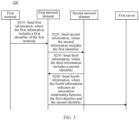
- FIG. 3 is a schematic flowchart of an example according to an embodiment of this application.
- S210 A first terminal sends first information, and a first network element receives the first information.
- the first information includes a first identifier of the first terminal.
- the first terminal may be a terminal device that integrates an industrial terminal device and a network terminal device.
- the first identifier includes a media access control layer MAC address and/or an internet protocol IP address and/or a device name and/or a device role and/or a device identifier.
- the first identifier may further include a device manufacturer of the first terminal, and/or a device instance (instance), and/or a subnet (subnet) accessed by the first terminal, and/or a gateway (gateway) accessed by the first terminal.
- a device manufacturer of the first terminal and/or a device instance (instance), and/or a subnet (subnet) accessed by the first terminal, and/or a gateway (gateway) accessed by the first terminal.
- the first network element sends fifth information to a third network element, and receives sixth information from the third network element.
- the fifth information includes the first identifier, the fifth information requests a third identifier of a second terminal, the second terminal is a device that connects the first terminal to the first network, and the first terminal is an industrial terminal device.
- the sixth information includes the third identifier.
- the second terminal is a network terminal, and the first terminal accesses the first network via the second terminal.
- the fifth information includes a first event identifier, and the first event identifier indicates to request the third identifier of the second terminal.
- the third identifier includes an international mobile subscriber identity IMSI and/or an international mobile equipment identity IMEI and/or a permanent subscriber identifier SUPI and/or a general public subscription identifier GPSI.
- S220 The first network element sends second information, and a second network element receives the second information.
- the second information includes the first identifier, the second information requests a second identifier of the first network, and the first network is a network accessed by the first terminal.
- the second identifier includes a first cell identifier and/or a first access point name APN.
- S230 The second network element sends third information, and the first network element receives the third information.
- the third information includes the second identifier.
- the first network element sends fourth information to a first server, and the first server receives the fourth information.
- the fourth information indicates an association relationship between the first identifier and the second identifier, and the first server is configured to manage the first terminal.
- the first server may be a device management server or a management and monitoring software server.
- the first network element sends seventh information to the first server, where the seventh information indicates an association relationship between the first identifier and the third identifier.
- the seventh information further indicates an association relationship between the first identifier, the second identifier, and the third identifier.
- the first server can learn of, by using the connection relationship between the first terminal and the second terminal and the connection relationship between the first terminal and the first network, a topology relationship between the first terminal, the second terminal, and the first network, can thus perform a subsequent operation by using the topology relationship, for example, calculating network load, and implements accurate management on the first terminal.
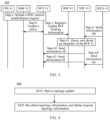
- FIG. 4 is a schematic flowchart of another example according to an embodiment of this application.
- CPE #1 establishes an Ethernet (Ethernet, ETH) PDU session and an IP PDU session with a UPF #1, and agent (agent) software on the CPE #1 completes registration on a device management server #1.
- S320 An IFES #1 sends information #A, and an industrial terminal #1 receives the information #A.
- this application proposes an industrial field enable service (industrial field enable service, IFES) application/service.
- the application is responsible for extracting information about an industrial terminal, a connection relationship between the industrial terminal and CPE, and an association relationship between the CPE and a network accessed by the CPE, for example, an association relationship between identity code information of the CPE and information about the network accessed by the CPE.
- the identity code information of the CPE may be: an international mobile subscriber identity (international mobile subscriber identity, IMSI), and an international mobile equipment identity (international mobile equipment identity, IMEI).
- the information about the network accessed by the CPE may be association information of information such as an access point name (Access Point Name, APN) and a cell identifier.
- the IFES used as an application/service may access a network (for example, a 5G core network) that the CPE connected. Therefore, the IFES may be considered as a type of an AF. This is not limited in this application.
- the IFES #1 sends the information #A via the UPF #1, a RAN #1, and the CPE #1, and the industrial terminal #1 receives the information #A via the CPE #1.
- the IFES sends the information #A by using a discovery and basic configuration protocol (discovery and basic configuration protocol, DCP).
- DCP discovery and basic configuration protocol
- the IFES #1 sends the information #A in a multicast manner, and one or more industrial terminals send response information to the IFES #1 after receiving the information #A.
- the following uses one of the industrial terminals, that is, the industrial terminal #1, as an example for description.
- the information #A requests device information of the industrial terminal #1 from the industrial terminal #1.
- the device information includes at least one of the following information:
- S330 The industrial terminal #1 determines information #B.
- the industrial terminal #1 determines the information #B, where the information #B is used by the industrial terminal #1 to respond to the information #A.
- the information #B includes the device information of the industrial terminal #1.
- the device information refer to the foregoing descriptions. Details are not described herein again.
- the industrial terminal #1 if the industrial terminal #1 runs normally, the industrial terminal #1 sends an identity confirmation (identity OK) message to the IFES #1, where the message indicates a successful query.
- identity OK identity confirmation
- S340 The industrial terminal #1 sends the information #B, and the IFES #1 receives the information #B.
- the industrial terminal #1 sends the information #B via the CPE #1, the RAN #1, and the UPF #1, and the IFES #1 receives the information #B via the UPF #1.
- the UPF #1 obtains a MAC address #1 of the industrial terminal #1.
- the industrial terminal #1 sends the information #B by using a DCP protocol.
- the industrial terminal #1 periodically sends the information #B.
- the IFES does not need to send the information #A
- the industrial terminal #1 does not need to receive the information #A.
- the IFES #1 generates the association relationship #1 based on the information #B, where the association relationship #1 is used to associate various pieces of device information of the industrial terminal, as shown in, for example, Table 1.
- Table 1 MAC address Device name IP address Device ID Device role ... MAC address #1 Device name #1 IP address #1 Device ID #1 Device role #1 ... ... ... ... ... ... ... ... ... ... ...
- the device information in Table 1 may further include other device information, such as the device manufacturer and the subnet.
- the device information the MAC address #1, the device name #1, the IP address #1, the device ID #1, and the device role #1 in Table 1 are device information of the industrial terminal #1.
- the device information is associated and corresponds to a same industrial terminal.
- the IFES #1 can learn of the device information of the industrial terminal #1 by using the information #B.
- FIG. 5 is a schematic flowchart of still another example according to an embodiment of this application, representing a specific process in which the IFES obtains the identifier of the CPE).
- Step a The CPE #1 initiates an Ethernet-type PDU session establishment request.
- Step b An SMF #1 updates a session management policy with a PCF #1.
- the SMF #1 when the SMF #1 updates the session management policy with the PCF #1, the SMF #1 sends the MAC address #1 to the PCF #1.
- the PCF #1 has a correspondence between the MAC address #1 and the CPE #1.
- the SMF #1 sends the MAC address #1 by using a session management policy association update request (session management policy association update request) message.
- session management policy association update request session management policy association update request
- the UPF #1 sends the MAC address #1 of the industrial terminal #1, the SMF #1 receives the MAC address #1, the SMF #1 sends the MAC address #1, and the PCF #1 receives the MAC address #1.
- the UPF #1 determines whether the MAC address #1 is a new MAC address. If the MAC address #1 is a new MAC address, the UPF #1 sends the MAC address #1, and if the MAC address #1 is not a new MAC address, it indicates that the MAC address #1 is already sent, and the MAC address #1 is not sent this time.
- Step c The PCF #1 initiates a binding information registration/update procedure to a BSF #1 based on the received MAC address #1 (that is, the MAC address of the industrial terminal #1) information, where the binding information registration/update procedure carries information #C, and the information #C includes at least one of the following information:
- Step d The IFES #1 may obtain identification information of the CPE #1 in the following two manners.
- the IFES #1 sends information #D to the PCF #1, where the information #D requests to query user identification information.
- the PCF #1 may determine, based on the information #D, an identifier (for example, the SUPI and the GSPI) of the CPE #1 corresponding to the MAC address #1, and send the identifier to the IFES #1.
- an identifier for example, the SUPI and the GSPI
- the information #D includes the MAC address information of the industrial terminal, for example, the MAC address #1 of the industrial terminal #1.
- the IFES #1 By sending the MAC address #1 of the industrial terminal #1, the IFES #1 requests, from a NEF, the identification information of the CPE #1 connected to the IFES #1.
- the information #D may further include the DNN.
- the information #D may further include an event identifier (event ID), indicating that a type of an event initiated by the information #D is a query user identifier.
- event ID an event identifier
- the IFES #1 determines and sends the information #D, and a NEF #1 receives the information #D.
- Step d1 The NEF #1 queries the BSF #1 for a PCF based on the MAC address #1, and obtains the identifier/address of the PCF #1.
- Step d2 The NEF #1 determines and sends information #E, and the PCF #1 receives the information #E.
- the NEF #1 sends the information #E to the PCF #1 based on the identifier/address of the PCF #1, where the information #E requests to query the identification information of the CPE #1 connected to the industrial terminal #1.
- the information #E includes the MAC address #1 of the industrial terminal #1, and may further include the DNN and/or the event identifier.
- Step d3 The PCF #1 determines and sends information #F, and the NEF #1 receives the information #F.
- the PCF #1 determines, based on the information #E, the identifier of the CPE #1 connected to the industrial terminal #1, and the information #F includes the identifier of the CPE #1.
- the information #F includes at least one of the following information:
- Step d4 The NEF #1 determines and sends information #G, and the IFES #1 receives the information #G.
- the NEF #1 determines the identifier of the CPE #1 based on the information #F, and the information #G includes the identifier of the CPE #1.
- the information #G For content of the information #G, refer to content of the information #F. Details are not described herein again.
- the PCF #1 determines and sends the information #G, and the PCF#1 receives the information #G.
- the IFES #1 determines an association relationship #2, where the association relationship #2 is used to associate the industrial terminal and the CPE.
- the IFES determines the association relationship #2 based on the information #G, as shown in, for example, Table 2.
- Table 2 MAC address IMSI ... MAC address #1 IMSI #1 ... ... ... ... ...
- the MAC address and the SUPI may also be used to associate the industrial terminal and the CPE, or the MAC address, the SUPI, and the IMSI are used to associate the industrial terminal and the CPE, that is, it only needs that the device information of the industrial terminal is associated with the identification information of the CPE. This is not limited in this application.
- an example of associating the industrial terminal #1 and the CPE #1 is used.
- the MAC address #1 of the industrial terminal #1 and the IMSI #1 of the CPE #1 are associated together, and it indicates that the industrial terminal #1 and the CPE #1 are in a relationship of a mutual connection.
- the information #H requests to query the device information of the CPE #1 and information about an accessed network.
- the information #H includes the IMSI #1 of the CPE #1, and may further include the event identifier (event ID), indicating that an initiated event is to query the device information of the CPE corresponding to the IMSI and the information about the accessed network.
- event ID the event identifier
- the device management server #1 sends information #I, and the IFES #1 receives the information #I.
- the device management server #1 determines the information #I based on the information #H, where the information #I includes information such as the IMEI #1 corresponding to the CPE #1 and/or the APN #1 corresponding to the CPE #1 and/or the cell identifier #1 corresponding to the CPE #1.
- the IFES #1 determines the association relationship #3 based on the information #I, where the association relationship #3 is used to associate the device information of the CPE and the information about the network accessed by the CPE, as shown in, for example, Table 3.
- Table 3 IMSI Cell identifier IMEI APN ...
- the IMSI and the cell identifier, or the IMSI, the IMEI, and the cell identifier, or the IMSI and the APN, or the IMSI, the cell identifier, and the APN may be used to associate the device information of the CPE and the information about the network accessed by the CPE.
- the content in Table 3 is merely used as an example of associating the device information of the CPE and the information about the network accessed by the CPE, and constitutes no limitation on this application.
- an example of associating the device information of the CPE #1 and the information about the network accessed by the CPE #1 is used for description.
- the IMSI #1 and the IMEI #1 are used as the device information of the CPE #1.
- the cell identifier #1 and the APN #1 are used as the information about the network accessed by the CPE #1.
- the device information of the CPE #1 and the information about the network accessed by the CPE #1 are associated together.
- S3110 The IFES #1 sends information #J, and a management and monitoring software server #1 receives the information #J.
- the information #J includes an association relationship #4, and the association relationship #4 is used to associate the industrial terminal, the CPE, and network information corresponding to the CPE.
- the IFES #1 determines the association relationship #4 based on the association relationship #1, the association relationship #2, and the association relationship #3, as shown in, for example, Table 4.
- Table 4 MAC address Device name IP address Device ID Device role IMSI Cell identifier IMEI APN ... MAC address #1 Device name #1 IP address #1 Device ID #1 Device role #1 IMSI #1 Cell identifier #1 IMEI #1 APN #1 ... ... ... ... ... ... ... ... ... ... ... ... ... ... ... ... ... ... ... ... ... ... ... ... ... ... ... ... ... ... ... ...
- a plurality of combinations such as the MAC address, the IP address, the IMSI, and the APN, or the MAC address, the device name, the IP address, the IMSI, the APN, and the cell identifier, or the MAC address, the device ID, the IP address, the IMSI, the APN, the cell identifier, and the IMEI may be used to associate the industrial terminal, the CPE, and the information about the network accessed by the CPE. This is not limited to the combinations in Table 4. Details are not described herein again in this application.
- an example of associating the industrial terminal #1, the CPE #1, and the information about the network accessed by the CPE #1 is used for description.
- the MAC address #1, the device name #1, the IP address #1, the device ID #1, and the device role #1 are used as device information corresponding to the industrial terminal #1.
- the IMSI #1 and the IMEI #1 are used as device information corresponding to the CPE #1.
- the APN #1 and the cell identifier #1 are used as the corresponding information about the network access by the CPE #1.
- the industrial terminal #1, the CPE #1, and the information about the network accessed by the CPE #1 are associated together.
- the IFES #1 learns of a topology relationship of an entire network by using the association relationship #4.
- the IFES #1 sends the information #J by using a simple network management protocol (simple network management protocol, SNMP).
- simple network management protocol simple network management protocol, SNMP
- the industrial terminal #1 is used as an example to describe obtaining a topology structure of the entire network by the IFES #1.
- the method 300 is also applicable to obtaining, by the IFES #1, the topology structure of the entire network including a plurality of industrial terminals.
- the IFES can obtain an association relationship between the industrial terminal and the CPE and an association relationship between the CPE and the network accessed by the CPE, thus learns of the topology structure of the entire network, to enable a core network to provide customized bandwidth or services based on requirements of different industrial terminals.
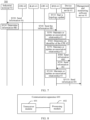
- FIG. 6 is a schematic flowchart of yet another example according to an embodiment of this application.
- the IFES #1 periodically updates a topology of an entire network.
- topology update timer there is a "topology update timer" inside the IFES #1.
- the timer expires, the IFES #1 is triggered to update the topology of the entire network.
- FIG. 7 is a schematic flowchart of yet still another example according to an embodiment of this application.
- the IFES #1 determines, based on the information #B1 and Table 1 (or the association relationship #1), whether the industrial terminal #2 is a new device.
- Table 1 MAC address Device name IP address Device ID Device role ... MAC address #1 Device name #1 IP address #1 Device ID #1 Device role #1 ... MAC address #2 Device name #2 IP address #2 Device ID #2 Device role #2 ... ... ... ... ... ... ... ... ... ...
- the device information are the device information of the industrial terminal #2.
- the industrial terminal #2 is determined an original device, and the device information in the information #B1 is not stored in Table 1.
- the IFES #1 if the IFES #1 receives no device information that is responded by the industrial terminal #1 and that corresponds to the MAC address #1, the IFES #1 deletes the device information related to the industrial terminal #1 in Table 1.
- the MAC address #2 that is the same as the MAC address #1 is received, other device information such as the IP address #1 is different from the IP address #2. Therefore, records such as "the MAC address #1, the device name #1, the IP address #1, the device ID #1, and the device role #1" corresponding to the industrial terminal #1 in Table 1 are deleted, and records such as "the MAC address #2, the device name #2, the IP address #2, the device ID #2, and the device role #2" corresponding to the industrial terminal #2 are stored.
- This scenario may be that the industrial terminal #1 changes the connected CPE, and the IFES #1 considers, as the new device, the industrial terminal #1 (that is, the industrial terminal #2) obtained by changing the CPE.
- S560 The IFES #1 receives identification information of CPE #2 corresponding to the industrial terminal #2.
- the IFES #1 stores, into Table 2, the MAC address #2 and the IMSI #2 corresponding to the CPE #2.
- An updated Table 2 is shown as follows: Table 2 MAC address IMSI ... MAC address #1 IMSI #1 ... MAC address #2 IMSI #2 ... ... ... ... ...
- S580 The IFES #1 sends information #H1, and a device management server #1 receives the information #H1.
- the information #H1 requests to query the device information of the CPE #2 and information about an accessed network. For specific content, refer to the method S380. Details are not described herein again.
- the device management server #1 sends information #I1, and the IFES #1 receives the information #11.
- the device management server #1 determines the information #I1 based on the information #H1, where the information #I1 includes information such as the IMEI #2 corresponding to the CPE #2 and/or an APN #2 corresponding to the CPE #2 and/or a cell identifier #2 corresponding to the CPE #2.
- the IFES #1 updates the association relationship #3 based on the information #I1, as shown in, for example, the following updated Table 3.
- Table 3 IMSI Cell identifier IMEI APN ... IMSI #1 Cell identifier #1 IMEI #1 APN #1 ... IMSI #2 Cell identifier #2 IMEI #2 APN #2 ... ... ... ... ... ... ... ... ... ...
- S5110 The IFES #1 sends information #J1, and a management and monitoring software server receives the information #J1.
- the IFES #1 determines an updated Table 4 based on the updated Table 1, the updated Table 2, and the updated Table 3.
- the updated Table 4 is shown as follows: Table 4 MAC address Device name IP address Device ID Device role IMSI Cell identifier IMEI APN ... MAC address #1 Device name #1 IP address #1 Device ID #1 Device role #1 IMSI #1 Cell identifier #1 IMEI #1 APN # 1 ... MAC address #2 Device name #2 IP address #2 Device ID #2 Device ID #2 Device role #2 IMSI #2 Cell identifier #2 IMEI #2 APN #2 ... ... ... ... ... ... ... ... ... ... ... ... ... ... ... ... ... ... ... ... ... ... ... ... ... ... ... ... ... ... ... ... ... ... ... ... ... ... ... ... ... ... ... ... ... ... ... ... ... ... ... ... ... ... ... ... ... ... ...
- the information #J1 includes a newly added association relationship between the industrial terminal #2, the CPE #2, and the information about the network accessed by the CPE #2 in Table 4.
- the information #J1 includes information such as the MAC address #2, the device name #2, the IP address #2, the device ID #2, the device role #2, the IMSI #2, the IMEI #2, the APN #2, and the cell identifier #2, so that the management and monitoring software server #1 easily learns of a latest topology structure of the entire network.
- the IFES is enabled to periodically update the topology relationship of the entire network, and periodically report the updated topology relationship of the entire network to the management and monitoring software.
- FIG. 8 and FIG. 9 each are a schematic structural diagram of a possible communication apparatus according to an embodiment of this application. These communication apparatuses can implement a function of the terminal device or the network device in the foregoing method embodiments, and thus can also achieve beneficial effects of the foregoing method embodiments.
- the communication apparatus may be a first communication apparatus (corresponding to the first network element) in the method 200, or may be a module (for example, a chip) used in the first communication apparatus.
- a communication apparatus 600 includes a transceiver module 601 and a processing module 602.
- the communication apparatus 600 may be configured to implement a function of the first communication apparatus in the method embodiment shown in FIG. 3 .
- the transceiver module 601 is configured to receive first information, where the first information includes a first identifier of a first terminal.
- the transceiver module 601 is further configured to send second information, where the second information includes the first identifier, the second information requests a second identifier of a first network, and the first network is a network accessed by the first terminal.
- the transceiver module 601 is further configured to receive third information, where the third information includes the second identifier.
- the transceiver module 601 is further configured to send fourth information to a first server, where the fourth information indicates an association relationship between the first identifier and the second identifier, and the first server is configured to manage the first terminal.
- the processing module 602 is configured to determine the second information and the fourth information.
- transceiver module 601 and the processing module 602 refer to related descriptions in the foregoing method embodiment. Details are not described herein again.
- a communication apparatus 700 includes a processor 710 and an interface circuit 720.
- the processor 710 and the interface circuit 720 are coupled to each other.
- the interface circuit 720 may be a transceiver or an input/output interface.
- the communication apparatus 700 may further include a memory 730, configured to store instructions executed by the processor 710, or store input data needed by the processor 710 to run the instructions, or store data generated after the processor 710 runs the instructions.
- the memory 730 and the processor 710 may be integrated, or may be independent components.
- the processor 710 is configured to perform a function of the foregoing processing module 602
- the interface circuit 720 is configured to perform a function of the foregoing transceiver module 601.
- the chip in the first communication apparatus implements a function of the first communication apparatus in the foregoing method embodiments.
- the chip in the first communication apparatus receives information from another module (for example, a radio frequency module or an antenna) in the first communication apparatus.
- the chip in the first communication apparatus sends information to another module (for example, the radio frequency module or the antenna) in the first communication apparatus.
- the processor in embodiments of this application may be a central processing unit (central processing unit, CPU), another general-purpose processor, a digital signal processor (digital signal processor, DSP), an application-specific integrated circuit (application-specific integrated circuit, ASIC), a field programmable gate array (field programmable gate array, FPGA) or another programmable logic device, a transistor logic device, a hardware component, or any combination thereof.
- the general-purpose processor may be a microprocessor, or may be any conventional processor.
- a system or a system embodiment is basically similar to a method embodiment, and thus is described briefly.
- the described system or the system embodiment is merely an example.
- the units described as separate parts may or may not be physically separate, and parts displayed as units may or may not be physical units, may be located in one position, or may be distributed on a plurality of network elements.
- Some or all of the modules may be selected based on an actual requirement to achieve the objectives of the solutions of embodiments. A person of ordinary skill in the art may understand and implement the embodiment without creative efforts.
- the method steps in embodiments of this application may be implemented in a hardware manner or may be implemented in a manner of executing software instructions by a processor.
- the software instructions may include a corresponding software module.
- the software module may be stored in a random access memory (random access memory, RAM), a flash memory, a read-only memory (read-only memory, ROM), a programmable read-only memory (programmable ROM, PROM), an erasable programmable read-only memory (erasable PROM, EPROM), an electrically erasable programmable read-only memory (electrically EPROM, EEPROM), a register, a hard disk drive, a removable hard disk drive, a CD-ROM, or any other form of storage medium well-known in the art.
- RAM random access memory
- ROM read-only memory
- PROM programmable read-only memory
- EPROM erasable programmable read-only memory
- electrically erasable programmable read-only memory electrically EPROM, EEP
- the storage medium is coupled to a processor, so that the processor can read information from the storage medium or write information into the storage medium.
- the storage medium may be a component of the processor.
- the processor and the storage medium may be located in the ASIC.
- the ASIC may be located in an access network device or a terminal device.
- the processor and the storage medium may alternatively exist in the access network device or the terminal device as discrete components.
- All or a part of the foregoing embodiments may be implemented by software, hardware, firmware, or any combination thereof.
- the software is used to implement embodiments, all or a part of embodiments may be implemented in a form of a computer program product.
- the computer program product includes one or more computer programs or instructions.
- the computer programs or the instructions are loaded and executed on a computer, all or some of the procedures or functions in embodiments of this application are implemented.
- the computer may be a general-purpose computer, a dedicated computer, a computer network, or any other programmable apparatus.
- the computer programs or the instructions may be stored in a computer-readable storage medium, or may be transmitted through the computer-readable storage medium.
- the computer-readable storage medium may be any usable medium accessible by a computer, or a data storage device such as a server integrating one or more usable media.
- the usable medium may be a magnetic medium, for example, a floppy disk, a hard disk drive, or a magnetic tape.
- the usable medium may alternatively be an optical medium, for example, a DVD; or may be a semiconductor medium, for example, a solid state disk (solid state disk, SSD).
- “at least one” means one or more, and "a plurality of” means two or more.
- the term “and/or” is an association relationship for describing associated objects and represents that three relationships may exist. For example, A and/or B may represent the following cases: Only A exists, both A and B exist, and only B exists, where A and B may be singular or plural.
- the character “/” generally indicates an “or” relationship between the associated objects. In a formula in this application, the character “/” indicates a "division" relationship between the associated objects.
Landscapes
- Engineering & Computer Science (AREA)
- Computer Networks & Wireless Communication (AREA)
- Signal Processing (AREA)
- Databases & Information Systems (AREA)
- Health & Medical Sciences (AREA)
- Computing Systems (AREA)
- General Health & Medical Sciences (AREA)
- Medical Informatics (AREA)
- Mobile Radio Communication Systems (AREA)
Applications Claiming Priority (2)
| Application Number | Priority Date | Filing Date | Title |
|---|---|---|---|
| CN202110760280.6A CN115589364A (zh) | 2021-07-06 | 2021-07-06 | 一种通信方法、系统和装置 |
| PCT/CN2022/101555 WO2023280000A1 (zh) | 2021-07-06 | 2022-06-27 | 一种通信方法、系统和装置 |
Publications (3)
| Publication Number | Publication Date |
|---|---|
| EP4333538A1 true EP4333538A1 (de) | 2024-03-06 |
| EP4333538A4 EP4333538A4 (de) | 2024-10-23 |
| EP4333538B1 EP4333538B1 (de) | 2025-10-01 |
Family
ID=84772068
Family Applications (1)
| Application Number | Title | Priority Date | Filing Date |
|---|---|---|---|
| EP22836754.6A Active EP4333538B1 (de) | 2021-07-06 | 2022-06-27 | Kommunikationsverfahren, -system und -vorrichtung |
Country Status (3)
| Country | Link |
|---|---|
| EP (1) | EP4333538B1 (de) |
| CN (1) | CN115589364A (de) |
| WO (1) | WO2023280000A1 (de) |
Families Citing this family (1)
| Publication number | Priority date | Publication date | Assignee | Title |
|---|---|---|---|---|
| CN120378992A (zh) * | 2024-01-23 | 2025-07-25 | 华为技术有限公司 | 一种通信方法及装置 |
Family Cites Families (7)
| Publication number | Priority date | Publication date | Assignee | Title |
|---|---|---|---|---|
| EP2230868B1 (de) * | 2009-03-18 | 2012-03-07 | Nokia Siemens Networks OY | Verfahren und Vorrichtung zur Verteilung von Topologieinformationen in Kommunikationsnetzwerken |
| CN105323780A (zh) * | 2014-07-18 | 2016-02-10 | 中兴通讯股份有限公司 | 物联网的终端拓扑管理服务方法、装置及系统 |
| CN108880899B (zh) * | 2018-06-30 | 2021-10-15 | 华为技术有限公司 | 一种网络拓扑图生成方法及服务器 |
| CN110913473B (zh) * | 2018-09-18 | 2021-07-27 | 大唐移动通信设备有限公司 | 选择方法、装置、管理功能实体、接入网节点、gmlc及nrf |
| CN109831334B (zh) * | 2019-02-20 | 2022-03-08 | 普联技术有限公司 | 网络拓扑构建方法、装置及终端设备 |
| KR102323235B1 (ko) * | 2019-05-03 | 2021-11-08 | 주식회사 케이티 | 스마트팩토리의 산업 장치 원격 제어 방법 및 장치 |
| CN113273135B (zh) * | 2019-05-22 | 2023-08-01 | Abb瑞士股份有限公司 | 变电站中的网络拓扑发现 |
-
2021
- 2021-07-06 CN CN202110760280.6A patent/CN115589364A/zh active Pending
-
2022
- 2022-06-27 EP EP22836754.6A patent/EP4333538B1/de active Active
- 2022-06-27 WO PCT/CN2022/101555 patent/WO2023280000A1/zh not_active Ceased
Also Published As
| Publication number | Publication date |
|---|---|
| WO2023280000A1 (zh) | 2023-01-12 |
| CN115589364A (zh) | 2023-01-10 |
| EP4333538A4 (de) | 2024-10-23 |
| EP4333538B1 (de) | 2025-10-01 |
Similar Documents
| Publication | Publication Date | Title |
|---|---|---|
| CN115039425B (zh) | 通过使用情况监控事件扩展Npcf_EventExposure | |
| EP4142218A1 (de) | Slice-zugriffsverfahren, -vorrichtung und -system | |
| US12096219B2 (en) | Communication method, terminal device and network device | |
| US20230388909A1 (en) | Ensuring network control of simultaneous access to network slices with application awareness | |
| WO2020151584A1 (zh) | 网络配置的方法和通信装置 | |
| US20230379806A1 (en) | Method and apparatus for supporting information acquisition, device, and readable storage medium | |
| CA3233649A1 (en) | Information transmission method and apparatus | |
| US20220286953A1 (en) | Slice selection subscription data enhancement | |
| CN117596583A (zh) | 动态发现核心网络中服务网络节点的方法、网络节点和介质 | |
| US20240137891A1 (en) | Method for performing onboarding and apparatus | |
| EP3800950A1 (de) | Verfahren und vorrichtung zur verwaltung von benutzerdaten | |
| WO2023015973A1 (zh) | 一种网络切片准入控制方法和装置 | |
| EP4513913A1 (de) | Richtlinienübertragungsverfahren sowie kommunikationsvorrichtung und -system | |
| EP4333538B1 (de) | Kommunikationsverfahren, -system und -vorrichtung | |
| CN116471705A (zh) | 用户设备路由选择策略处理方法及用户设备 | |
| CN116471706A (zh) | 用户设备路由选择策略提供方法及用户设备 | |
| WO2024032041A1 (zh) | 通信方法和通信装置 | |
| WO2021185303A1 (zh) | 一种订阅网络事件的方法和网络功能 | |
| JP7769004B2 (ja) | 情報処理方法、装置及び通信機器 | |
| US20250142449A1 (en) | Centralized counting in multi service areas | |
| CN118741767A (zh) | 通信方法及通信装置 | |
| WO2025167457A1 (zh) | 一种通信方法及装置 | |
| WO2024183604A1 (zh) | 通信方法及通信装置 | |
| WO2023061207A1 (zh) | 一种通信方法、通信装置及通信系统 | |
| KR20250170076A (ko) | 통신 방법 및 통신 장치 |
Legal Events
| Date | Code | Title | Description |
|---|---|---|---|
| STAA | Information on the status of an ep patent application or granted ep patent |
Free format text: STATUS: THE INTERNATIONAL PUBLICATION HAS BEEN MADE |
|
| PUAI | Public reference made under article 153(3) epc to a published international application that has entered the european phase |
Free format text: ORIGINAL CODE: 0009012 |
|
| STAA | Information on the status of an ep patent application or granted ep patent |
Free format text: STATUS: REQUEST FOR EXAMINATION WAS MADE |
|
| 17P | Request for examination filed |
Effective date: 20231201 |
|
| AK | Designated contracting states |
Kind code of ref document: A1 Designated state(s): AL AT BE BG CH CY CZ DE DK EE ES FI FR GB GR HR HU IE IS IT LI LT LU LV MC MK MT NL NO PL PT RO RS SE SI SK SM TR |
|
| REG | Reference to a national code |
Ref country code: DE Free format text: PREVIOUS MAIN CLASS: H04W0074000000 Ref country code: DE Ref legal event code: R079 Ref document number: 602022022451 Country of ref document: DE Free format text: PREVIOUS MAIN CLASS: H04W0074000000 Ipc: H04L0067120000 |
|
| DAV | Request for validation of the european patent (deleted) | ||
| DAX | Request for extension of the european patent (deleted) | ||
| A4 | Supplementary search report drawn up and despatched |
Effective date: 20240925 |
|
| RIC1 | Information provided on ipc code assigned before grant |
Ipc: H04L 41/12 20220101ALI20240919BHEP Ipc: H04W 8/26 20090101ALI20240919BHEP Ipc: H04W 4/70 20180101ALI20240919BHEP Ipc: H04W 74/00 20090101ALI20240919BHEP Ipc: H04L 67/12 20220101AFI20240919BHEP |
|
| RIC1 | Information provided on ipc code assigned before grant |
Ipc: H04W 88/18 20090101ALI20250403BHEP Ipc: H04W 40/24 20090101ALI20250403BHEP Ipc: H04L 41/12 20220101ALI20250403BHEP Ipc: H04W 8/26 20090101ALI20250403BHEP Ipc: H04W 4/70 20180101ALI20250403BHEP Ipc: H04W 74/00 20090101ALI20250403BHEP Ipc: H04L 67/12 20220101AFI20250403BHEP |
|
| GRAP | Despatch of communication of intention to grant a patent |
Free format text: ORIGINAL CODE: EPIDOSNIGR1 |
|
| STAA | Information on the status of an ep patent application or granted ep patent |
Free format text: STATUS: GRANT OF PATENT IS INTENDED |
|
| INTG | Intention to grant announced |
Effective date: 20250514 |
|
| GRAS | Grant fee paid |
Free format text: ORIGINAL CODE: EPIDOSNIGR3 |
|
| GRAA | (expected) grant |
Free format text: ORIGINAL CODE: 0009210 |
|
| STAA | Information on the status of an ep patent application or granted ep patent |
Free format text: STATUS: THE PATENT HAS BEEN GRANTED |
|
| P01 | Opt-out of the competence of the unified patent court (upc) registered |
Free format text: CASE NUMBER: UPC_APP_1887_4333538/2025 Effective date: 20250731 |
|
| AK | Designated contracting states |
Kind code of ref document: B1 Designated state(s): AL AT BE BG CH CY CZ DE DK EE ES FI FR GB GR HR HU IE IS IT LI LT LU LV MC MK MT NL NO PL PT RO RS SE SI SK SM TR |
|
| REG | Reference to a national code |
Ref country code: GB Ref legal event code: FG4D Ref country code: CH Ref legal event code: F10 Free format text: ST27 STATUS EVENT CODE: U-0-0-F10-F00 (AS PROVIDED BY THE NATIONAL OFFICE) Effective date: 20251001 |
|
| REG | Reference to a national code |
Ref country code: IE Ref legal event code: FG4D |
|
| REG | Reference to a national code |
Ref country code: DE Ref legal event code: R096 Ref document number: 602022022451 Country of ref document: DE |
|
| REG | Reference to a national code |
Ref country code: NL Ref legal event code: MP Effective date: 20251001 |
|
| REG | Reference to a national code |
Ref country code: AT Ref legal event code: MK05 Ref document number: 1843776 Country of ref document: AT Kind code of ref document: T Effective date: 20251001 |
|
| PG25 | Lapsed in a contracting state [announced via postgrant information from national office to epo] |
Ref country code: NL Free format text: LAPSE BECAUSE OF FAILURE TO SUBMIT A TRANSLATION OF THE DESCRIPTION OR TO PAY THE FEE WITHIN THE PRESCRIBED TIME-LIMIT Effective date: 20251001 |
|
| PG25 | Lapsed in a contracting state [announced via postgrant information from national office to epo] |
Ref country code: ES Free format text: LAPSE BECAUSE OF FAILURE TO SUBMIT A TRANSLATION OF THE DESCRIPTION OR TO PAY THE FEE WITHIN THE PRESCRIBED TIME-LIMIT Effective date: 20251001 |
|
| REG | Reference to a national code |
Ref country code: LT Ref legal event code: MG9D |
|
| PG25 | Lapsed in a contracting state [announced via postgrant information from national office to epo] |
Ref country code: NO Free format text: LAPSE BECAUSE OF FAILURE TO SUBMIT A TRANSLATION OF THE DESCRIPTION OR TO PAY THE FEE WITHIN THE PRESCRIBED TIME-LIMIT Effective date: 20260101 |
|
| PG25 | Lapsed in a contracting state [announced via postgrant information from national office to epo] |
Ref country code: FI Free format text: LAPSE BECAUSE OF FAILURE TO SUBMIT A TRANSLATION OF THE DESCRIPTION OR TO PAY THE FEE WITHIN THE PRESCRIBED TIME-LIMIT Effective date: 20251001 Ref country code: AT Free format text: LAPSE BECAUSE OF FAILURE TO SUBMIT A TRANSLATION OF THE DESCRIPTION OR TO PAY THE FEE WITHIN THE PRESCRIBED TIME-LIMIT Effective date: 20251001 Ref country code: HR Free format text: LAPSE BECAUSE OF FAILURE TO SUBMIT A TRANSLATION OF THE DESCRIPTION OR TO PAY THE FEE WITHIN THE PRESCRIBED TIME-LIMIT Effective date: 20251001 |
|
| PG25 | Lapsed in a contracting state [announced via postgrant information from national office to epo] |
Ref country code: RS Free format text: LAPSE BECAUSE OF FAILURE TO SUBMIT A TRANSLATION OF THE DESCRIPTION OR TO PAY THE FEE WITHIN THE PRESCRIBED TIME-LIMIT Effective date: 20260101 |
|
| PG25 | Lapsed in a contracting state [announced via postgrant information from national office to epo] |
Ref country code: IS Free format text: LAPSE BECAUSE OF FAILURE TO SUBMIT A TRANSLATION OF THE DESCRIPTION OR TO PAY THE FEE WITHIN THE PRESCRIBED TIME-LIMIT Effective date: 20260201 |
|
| PG25 | Lapsed in a contracting state [announced via postgrant information from national office to epo] |
Ref country code: CZ Free format text: LAPSE BECAUSE OF FAILURE TO SUBMIT A TRANSLATION OF THE DESCRIPTION OR TO PAY THE FEE WITHIN THE PRESCRIBED TIME-LIMIT Effective date: 20251001 Ref country code: PT Free format text: LAPSE BECAUSE OF FAILURE TO SUBMIT A TRANSLATION OF THE DESCRIPTION OR TO PAY THE FEE WITHIN THE PRESCRIBED TIME-LIMIT Effective date: 20260202 |
|
| PG25 | Lapsed in a contracting state [announced via postgrant information from national office to epo] |
Ref country code: PL Free format text: LAPSE BECAUSE OF FAILURE TO SUBMIT A TRANSLATION OF THE DESCRIPTION OR TO PAY THE FEE WITHIN THE PRESCRIBED TIME-LIMIT Effective date: 20251001 |
|
| PG25 | Lapsed in a contracting state [announced via postgrant information from national office to epo] |
Ref country code: LV Free format text: LAPSE BECAUSE OF FAILURE TO SUBMIT A TRANSLATION OF THE DESCRIPTION OR TO PAY THE FEE WITHIN THE PRESCRIBED TIME-LIMIT Effective date: 20251001 |
|
| PG25 | Lapsed in a contracting state [announced via postgrant information from national office to epo] |
Ref country code: BG Free format text: LAPSE BECAUSE OF FAILURE TO SUBMIT A TRANSLATION OF THE DESCRIPTION OR TO PAY THE FEE WITHIN THE PRESCRIBED TIME-LIMIT Effective date: 20251001 |