EP4333377A1 - Analysevorrichtung, analyseverfahren und analyseprogramm - Google Patents
Analysevorrichtung, analyseverfahren und analyseprogramm Download PDFInfo
- Publication number
- EP4333377A1 EP4333377A1 EP21945170.5A EP21945170A EP4333377A1 EP 4333377 A1 EP4333377 A1 EP 4333377A1 EP 21945170 A EP21945170 A EP 21945170A EP 4333377 A1 EP4333377 A1 EP 4333377A1
- Authority
- EP
- European Patent Office
- Prior art keywords
- alert
- clustering
- communication
- alerts
- cluster
- Prior art date
- Legal status (The legal status is an assumption and is not a legal conclusion. Google has not performed a legal analysis and makes no representation as to the accuracy of the status listed.)
- Pending
Links
Images




Classifications
-
- H—ELECTRICITY
- H04—ELECTRIC COMMUNICATION TECHNIQUE
- H04L—TRANSMISSION OF DIGITAL INFORMATION, e.g. TELEGRAPHIC COMMUNICATION
- H04L41/00—Arrangements for maintenance, administration or management of data switching networks, e.g. of packet switching networks
- H04L41/06—Management of faults, events, alarms or notifications
- H04L41/0631—Management of faults, events, alarms or notifications using root cause analysis; using analysis of correlation between notifications, alarms or events based on decision criteria, e.g. hierarchy, tree or time analysis
-
- G—PHYSICS
- G06—COMPUTING OR CALCULATING; COUNTING
- G06F—ELECTRIC DIGITAL DATA PROCESSING
- G06F11/00—Error detection; Error correction; Monitoring
- G06F11/07—Responding to the occurrence of a fault, e.g. fault tolerance
- G06F11/0703—Error or fault processing not based on redundancy, i.e. by taking additional measures to deal with the error or fault not making use of redundancy in operation, in hardware, or in data representation
- G06F11/0766—Error or fault reporting or storing
- G06F11/0787—Storage of error reports, e.g. persistent data storage, storage using memory protection
-
- G—PHYSICS
- G06—COMPUTING OR CALCULATING; COUNTING
- G06F—ELECTRIC DIGITAL DATA PROCESSING
- G06F11/00—Error detection; Error correction; Monitoring
- G06F11/07—Responding to the occurrence of a fault, e.g. fault tolerance
- G06F11/0703—Error or fault processing not based on redundancy, i.e. by taking additional measures to deal with the error or fault not making use of redundancy in operation, in hardware, or in data representation
- G06F11/0706—Error or fault processing not based on redundancy, i.e. by taking additional measures to deal with the error or fault not making use of redundancy in operation, in hardware, or in data representation the processing taking place on a specific hardware platform or in a specific software environment
- G06F11/0709—Error or fault processing not based on redundancy, i.e. by taking additional measures to deal with the error or fault not making use of redundancy in operation, in hardware, or in data representation the processing taking place on a specific hardware platform or in a specific software environment in a distributed system consisting of a plurality of standalone computer nodes, e.g. clusters, client-server systems
-
- H—ELECTRICITY
- H04—ELECTRIC COMMUNICATION TECHNIQUE
- H04L—TRANSMISSION OF DIGITAL INFORMATION, e.g. TELEGRAPHIC COMMUNICATION
- H04L41/00—Arrangements for maintenance, administration or management of data switching networks, e.g. of packet switching networks
- H04L41/06—Management of faults, events, alarms or notifications
- H04L41/0604—Management of faults, events, alarms or notifications using filtering, e.g. reduction of information by using priority, element types, position or time
-
- H—ELECTRICITY
- H04—ELECTRIC COMMUNICATION TECHNIQUE
- H04L—TRANSMISSION OF DIGITAL INFORMATION, e.g. TELEGRAPHIC COMMUNICATION
- H04L41/00—Arrangements for maintenance, administration or management of data switching networks, e.g. of packet switching networks
- H04L41/06—Management of faults, events, alarms or notifications
- H04L41/0631—Management of faults, events, alarms or notifications using root cause analysis; using analysis of correlation between notifications, alarms or events based on decision criteria, e.g. hierarchy, tree or time analysis
- H04L41/065—Management of faults, events, alarms or notifications using root cause analysis; using analysis of correlation between notifications, alarms or events based on decision criteria, e.g. hierarchy, tree or time analysis involving logical or physical relationship, e.g. grouping and hierarchies
-
- H—ELECTRICITY
- H04—ELECTRIC COMMUNICATION TECHNIQUE
- H04L—TRANSMISSION OF DIGITAL INFORMATION, e.g. TELEGRAPHIC COMMUNICATION
- H04L41/00—Arrangements for maintenance, administration or management of data switching networks, e.g. of packet switching networks
- H04L41/16—Arrangements for maintenance, administration or management of data switching networks, e.g. of packet switching networks using machine learning or artificial intelligence
Definitions
- the present invention relates to an analysis device, an analysis method, and an analysis program for analyzing an alert indicating abnormality of communication.
- Non Patent Literature 1 there is a technique in which, when a detection system presents an alert, those having the same category variable such as a type of threat indicated by the alert, a terminal device ID, a protocol, and a port number are presented together (see Non Patent Literature 1).
- a detection system filters an alert by using a category variable such as an IP address, a port number, or a protocol number indicated by an alert, or a communication start date and time as a key (see Patent Literature 1 and 2).
- Non Patent Literature 1 NOZOMI Guardian, [retrieved on May 25, 2021], the Internet ⁇ URL: https://www.exclusive-networks.com/fr/wp-content/uploads/sites/17/2020/12/FR-VR-Nozomi-Networks-Guardian.pd f>
- an object of the present invention is to solve the above-described problem and to reduce work required for determining whether an alert is due to overdetection.
- the present invention includes: an accumulation unit that accumulates alerts of communication determined not to be normal communication on the basis of a model indicating a feature of normal communication; a clustering unit that performs clustering of the alerts by using a feature amount of communication included in the accumulated alerts; a determination unit that determines, for each of clusters generated by the clustering, whether or not the cluster includes the same type of alert; and a result output unit that outputs a result of the clustering and a determination result as to whether or not each of the clusters includes the same type of alert.
- the analysis system 1 includes a sensing device 2 and an analysis server 10.
- the sensing device 2 observes communication of a terminal device (for example, an IoT device).
- the sensing device 2 observes communication of a terminal device by mirror setting of a network (NW) device to which the terminal device is connected. Then, the sensing device 2 generates information (processed information) obtained by processing an observation result of communication of the terminal device, generates a feature amount of communication from the processed information, and transmits the feature amount to the analysis server 10.
- NW network
- the feature amount of communication described above is, for example, information indicating an IP address of a terminal device that performs the communication, a transmission source IP address of a session, a transmission destination IP address of the session, a transmission destination port number of the session, a protocol number, session duration, a forward-direction total byte quantity, a forward-direction total packet quantity, a reverse-direction total byte quantity, a reverse-direction total packet quantity, or the like.
- the analysis server 10 determines whether the communication is normal communication on the basis of the feature amount of communication transmitted from the sensing device 2 and the model indicating the feature of the normal communication, and outputs an alert when determining that the communication is abnormal.
- the analysis server 10 calculates an anomaly score indicating a deviation between the feature amount of communication transmitted from the sensing device 2 and the model indicating the feature of normal communication, and outputs an alert when the anomaly score exceeds a predetermined threshold value. Thereafter, the operator of the analysis system 1 checks the contents of the alert, and when the alert is due to overdetection, feeds back that fact.
- the feedback here is, for example, work in which the operator registers, in the analysis server 10, that the alert is due to overdetection so that an alert does not occur for the same type of feature amount in the analysis server 10 thereafter.
- the analysis server 10 performs clustering of alerts so that the feature of each cluster clearly appears so that the operator can efficiently perform the above check work (can collectively perform the check work of the same type of alert).
- the analysis server 10 when performing clustering of alerts, the analysis server 10 excludes an alert of communication (for example, communication by a new terminal device) not included in communication data used for learning of the above model from a target of clustering.
- the analysis server 10 clusters alerts by using items of feature amount (for example, the session duration, the forward-direction total byte quantity, the forward-direction total packet quantity, the reverse-direction total byte quantity, the reverse-direction total packet quantity, or the like) in which communication features are likely to appear.
- the analysis server 10 when clustering the alerts, the analysis server 10 performs clustering by taking a difference from the value used for learning the model for each item for each terminal device indicated by the alert and normalizing the value.
- the analysis server 10 can perform clustering of the alerts such that the feature of each cluster clearly appears.
- the analysis server 10 outputs a determination result as to whether or not each cluster includes the same type of alert.
- the operator can identify clusters that can be done by one overdetection determination since the clusters include the same type of alert. As a result, it is possible to reduce work required for determining whether an alert is due to overdetection.
- the analysis server 10 since the analysis server 10 does not use payload information depending on a specific payload when performing clustering of alerts, it is also possible to cope with clustering of alerts of encrypted communication.
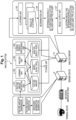
- the analysis server 10 includes a storage unit 12, a feature amount reception unit 131, a learning unit 132, an analysis unit (accumulation unit) 133, a screen display processing unit 134, a clustering unit 135, a determination unit 136, and a result output unit 137.
- the storage unit 12 stores information to be referred to when the analysis server 10 executes various processing and results of execution of various processing.
- the storage unit 12 stores a feature amount of communication acquired from the sensing device 2, a model indicating a feature of normal communication learned by the learning unit 132, a communication tuple (initial tuple) of a feature amount used for learning of the model, an analysis result (for example, the above anomaly score) of communication by the analysis unit 133, an alert group of communication determined not to be normal communication on the basis of the above model, or the like.
- the communication tuple of the feature amount used for learning of the model is referred to as an initial tuple.
- the initial tuple is, for example, the IP address of the terminal device, the transmission source IP address of the session, the transmission destination IP address of the session, the transmission destination port number of the session, the protocol number, and the like included in the feature amount used for learning of the model, but is not limited to the above five.
- the feature amount reception unit 131 receives the feature amount of communication from the sensing device 2. Then, the feature amount reception unit 131 accumulates the received feature amount of communication in the storage unit 12. For example, the feature amount reception unit 131 first receives the feature amount of communication for learning of the model (feature amount of normal communication), and accumulates the feature amount in the storage unit 12. Thereafter, the feature amount reception unit 131 receives the feature amount of communication to be detected and accumulates the feature amount in the storage unit 12.
- the learning unit 132 performs learning of the model indicating the feature of normal communication by using the feature amount of communication (feature amount of normal communication) accumulated in the storage unit 12. Thereafter, the learning unit 132 stores each parameter of the learned model and data (for example, initial tuple or the like) used for learning of the model in the storage unit 12.
- the analysis unit 133 analyzes the communication to be detected using the model learned by the learning unit 132. For example, the analysis unit 133 calculates an anomaly score indicating a deviation between the feature amount of communication to be detected and the above model. Then, in a case where the anomaly score exceeds a predetermined threshold value (that is, in a case where there is a high possibility that the communication is not normal communication), the analysis unit 133 outputs an alert.
- the alert includes, for example, identification information of communication that is a target of an alert, a date and time of occurrence of the communication, and the like. The output alert is accumulated in the storage unit 12.
- the screen display processing unit 134 displays the alert accumulated in the storage unit 12 on the screen.
- the screen display processing unit 134 displays a list of alerts accumulated in the storage unit 12 on the screen on the basis of the instruction input by the operator. Hence, the operator can check on the screen what alert has been output.
- the clustering unit 135 clusters the alerts on the basis of the feature amount of communication included in the alert accumulated in the storage unit 12.
- the clustering unit 135 acquires an alert and the feature amount of communication that is a target of the alert from the storage unit 12. Then, the clustering unit 135 clusters the alerts on the basis of the acquired feature amount of communication.
- the clustering unit 135 narrows down the items of the feature amount used for clustering among the feature amounts of communication that is a target of the alert and performs normalization so that the feature of each cluster clearly appears.
- the clustering unit 135 excludes an alert of a communication tuple different from the communication tuple (initial tuple) of the feature amount used for learning of the model from the target of clustering.
- the clustering unit 135 compares the communication tuple (initial tuple) of the feature amount used for learning of the model with the communication tuple of the feature amount of communication included in the alert, and excludes the alert having a different category variable (combination of the IP address of the terminal device itself, the transmission source IP address of the session, the transmission destination IP address of the session, the transmission destination port number of the session, and the protocol number) from the target of clustering.
- the clustering unit 135 can exclude the alert for which the reason of the alert is clear, such as communication from a new terminal device, from the target of clustering.
- the clustering unit 135 performs clustering by excluding information such as the date and time of occurrence of communication and the anomaly score from the information included in the alert. For example, the clustering unit 135 clusters the alerts by using at least one of the session duration, the forward-direction total byte quantity, the forward-direction total packet quantity, the reverse-direction total byte quantity, and the reverse-direction total packet quantity among the feature amounts of communication included in the alert.
- the clustering unit 135 clusters the alerts for each terminal device by using a value obtained by normalizing a difference between a value of the feature amount of communication used for learning of the model (value at the time of initial learning) and a value of the feature amount of the communication included in the alert.
- the clustering unit 135 calculates, for each terminal device, a difference from a value at the time of initial learning for each value of the session duration, the forward-direction total byte quantity, the forward-direction total packet quantity, the reverse-direction total byte quantity, and the reverse-direction total packet quantity among the feature amounts of communication in the alert. Then, the clustering unit 135 clusters the alerts by using a value obtained by converting the difference into a logarithmic scale (see Fig. 2 ).
- reference numeral 301 indicates a state in which the results of the clustering above are viewed from a direction in which the session duration and the reverse-direction total byte quantity are axes.
- a clustering algorithm used by the clustering unit 135 is, for example, Birch, k-means, or the like.
- the user of the analysis server 10 can set what clustering algorithm the clustering unit 135 uses.
- the description returns to Fig. 1 .
- the determination unit 136 determines whether or not each cluster generated by the clustering unit 135 includes the same type of alert.
- the determination unit 136 determines whether or not each cluster includes the same type of alert on the basis of the ratio of the number of alerts of each cluster to all alerts, the number of terminal devices that are targets of the alert in each cluster, the density of each cluster, and the like.
- the determination unit 136 calculates a value of (the number of alerts constituting the cluster/the number of all alerts) for each cluster, and determines that a cluster whose value is equal to or greater than a predetermined threshold value (for example, 70%) is a cluster including an alert that is the same type of alert.
- a predetermined threshold value for example, 70%
- the determination unit 136 calculates, for each cluster, how many terminal devices that are targets of the alert are included in the cluster, and determines that a cluster in which the calculated number is equal to or less than a predetermined threshold value (for example, one) is a cluster including the same type of alert.
- a predetermined threshold value for example, one
- the determination unit 136 creates a scatter diagram of clusters, calculates the density of the clusters using the area of the clusters on the scatter diagram and the number of alerts included in the clusters, and determines that a cluster whose calculated density is equal to or greater than a predetermined threshold value is a cluster including the same type of alert. For example, the determination unit 136 calculates (the number of alerts constituting the cluster/the area of the cluster) for each cluster, and determines that a cluster whose the calculated value is equal to or greater than a predetermined threshold value (for example, 1000) is a cluster including the same type of alert.
- a predetermined threshold value for example, 1000
- the determination unit 136 determines that a cluster satisfying any one of conditions (1) to (3) described below is a cluster including the same type of alert on the basis of the information indicated by reference numeral 302 for clusters (cluster1 to cluster7) indicated by reference numeral 301 in Fig. 3 will be described.
- the information indicated by reference numeral 302 is information indicating the number of alerts, the area, and the density of each terminal device (Iot-A, Iot-B, Iot-C, Iot-D, and Iot-E) for each cluster (cluster0 to cluster7) indicated by reference numeral 301.
- the cluster 0 (cluster0) is a cluster of only alerts of Iot-C and has a density of 1000 or more.
- the cluster 3 (cluster3) is also a cluster of only alerts of Iot-E and has a density of 1000 or more. Therefore, the determination unit 136 determines that cluster0 and clusters are clusters including the same type of alert.
- the description returns to Fig. 1 .
- the result output unit 137 outputs a result of clustering by the clustering unit 135 and a determination result by the determination unit 136 as to whether or not each cluster includes the same type of alert.
- the result output unit 137 outputs the result of clustering indicated by reference numeral 301 in Fig. 3 and information indicating that cluster0 and clusters are clusters including the same type of alert among the clusters (cluster1 to cluster7) indicated by reference numeral 301.
- an analysis server 10 it is possible to generate a cluster in which the feature of each cluster clearly appears when clustering of alerts is performed.
- the analysis server 10 outputs a determination result as to whether or not each cluster includes the same type of alert.
- the operator can identify clusters that can be done by one overdetection determination. As a result, it is possible to reduce work required for determining whether an alert is due to overdetection.
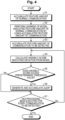
- the feature amount reception unit 131 of the analysis server 10 accumulates the feature amount of communication (the feature amount of normal communication) transmitted from the sensing device 2 in the storage unit 12 (S1 in Fig. 4 ).
- the learning unit 132 performs learning (initial learning) of a model indicating the feature of normal communication by using the feature amount of communication accumulated in S1 (S2).
- the feature amount reception unit 131 accumulates the feature amount of communication to be detected in the storage unit 12 (S3). Then, the analysis unit 133 calculates an anomaly score indicating a deviation between the feature amount of communication to be detected and the model learned in S2 (S4).
- the analysis unit 133 when determining that the anomaly score calculated in S4 exceeds the predetermined threshold value (Yes in S5), the analysis unit 133 generates an alert of the communication, and accumulates the alert in the storage unit 12 (S6). Then, when the processing has not yet been executed for any of the communication to be detected (No in S7), the analysis server 10 executes the processing of S4 and subsequent steps for the communication to be detected for which the processing has not been executed yet. On the other hand, when the processing has been executed for all the communication to be detected (Yes in S7), the analysis server 10 ends the processing.
- the analysis unit 133 determines that the anomaly score calculated in S4 is less than or equal to the predetermined threshold value (No in S5), and the processing has not yet been executed for any of the communication to be detected (No in S7), the processing of S4 and subsequent steps is executed for the communication to be detected for which the processing has not yet been executed.
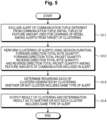
- the clustering unit 135 of the analysis server 10 excludes an alert of a communication tuple different from the communication tuple (initial tuple) of the feature amount used for learning of the model from the target of clustering among the alerts accumulated in the storage unit 12 (S11 in Fig. 5 ).
- the clustering unit 135 compares the communication tuple (initial tuple) used for learning of the model with the communication tuple of the feature amount of communication included in the alert, and excludes the alert having a different category variable (combination of the IP address of the terminal device, the transmission source IP address of the session, the transmission destination IP address of the session, the transmission destination port number of the session, and the protocol number) with respect to the initial tuple from the target of clustering.
- a different category variable combination of the IP address of the terminal device, the transmission source IP address of the session, the transmission destination IP address of the session, the transmission destination port number of the session, and the protocol number
- the clustering unit 135 clusters the alerts on the basis of the session duration, the forward-direction total byte quantity, the forward-direction total packet quantity, the reverse-direction total byte quantity, and the reverse-direction total packet quantity among the feature amounts of communication included in the alert (S12).
- the determination unit 136 determines regarding clusters generated by the clustering in S12 whether or not each cluster includes the same type of alert (S13).
- the determination unit 136 determines whether or not each cluster includes the same type of alert on the basis of the ratio of the number of alerts of each cluster to all alerts, the number of terminal devices that are targets of the alert in each cluster, the density of each cluster, and the like.
- the result output unit 137 outputs a result of the clustering in S12 and a determination result as to whether or not each cluster includes the same type of alert in S13 (S14).
- the analysis server 10 clusters the alerts and determines whether or not each cluster includes the same type of alert (S101: clustering).
- the operator checks the alert by using the result of clustering of the alerts above and the determination result as to whether or not each cluster includes the same type of alert. For example, the operator performs alert checking processing indicated in S102 to S108 for each alert or in units of clusters until there is no unchecked alert.
- the operator checks whether a communication pattern that is a target of the alert is a new communication pattern that has not been present at the time of learning of the model (S102). In addition, the operator checks whether or not a communication parameter that is a target of the alert is a new communication parameter of a learned communication pattern (S103). On the basis of the above check result, the operator inquires of a department in charge of the terminal device that is a target of the alert (S104). Then, as a result of the inquiry, when there is an abnormality in the terminal device (Yes in S105), the operator takes a measure corresponding to the abnormality (S106). Then, the alert checking processing ends. Thereafter, the analysis server 10 continues monitoring.
- the operator determines whether the alert is due to overdetection (S107). Then, when determining that the alert is due to overdetection (Yes in S107), the operator performs feedback of overdetection (S108). At this time, the operator collectively performs feedback of overdetection for clusters of the same type of alert.
- the analysis server 10 continues monitoring the communication of the terminal device.
- the analysis server 10 outputs the result of the clustering of the alerts and the determination result as to whether or not each cluster includes the same type of alert, so that the operator can perform determination regarding overdetection in units of clusters for clusters of the same type of alert and perform the feedback. As a result, it is possible to reduce work required for determining whether an alert is due to overdetection.
- the analysis server 10 applies ten patterns of loads (changes with respect to communication) including two types of loads with a small positive difference (10 0.2 times and 10 0.4 times), four types of loads with a large positive difference (10 1 times, 10 1.2 times, 10 1.4 times, and 10 1.6 times), three types of loads with a small negative difference (10 -0.2 times, 10 -0.4 times, and 10 -0.6 times), and a load of different communication tuple (difference due to category variable) as compared with communication in a normal state to the communication to be processed, and generates an alert.
- the analysis server 10 uses Birch as an alert clustering algorithm, and sets the number of clusters to be ten at maximum.
- Fig. 7 illustrates a result of clustering of the alerts related to the above ten patterns of communication by the analysis server 10 on the basis of the above condition.
- the number of alerts included in the largest cluster in which the alert ratio exceeds 70% among 828 alerts excluding alerts due to different communication tuple was 643.
- the analysis server 10 determines that the above largest cluster in which the alert ratio exceeds 70% is a cluster including the same type of alert and outputs the determination result, so that the operator can collectively perform determination regarding overdetection for the cluster.
- the above 643 alerts are compressed to 9 (1 for each load)
- the number of cases determined for overdetection by the operator is reduced from 939 to 305 (reduced by 67.5%).
- each component of each unit illustrated in the drawings is functionally conceptual and does not necessarily need to be physically configured as illustrated in the drawings.
- a specific form of distribution and integration of individual devices is not limited to the illustrated form, and all or part thereof can be functionally or physically distributed and integrated in any unit according to various loads, usage conditions, and the like.
- all or any part of each processing function performed in each device can be implemented by a CPU and a program to be executed by the CPU or can be implemented as hardware by wired logic.
- all or part of processing described as being automatically performed may be manually performed, or all or part of processing described as being manually performed may be automatically performed by a known method.
- the processing procedure, the control procedure, the specific name, and the information including various types of data and parameters that are illustrated in the literatures and the drawings above can be freely changed unless otherwise specified.
- the analysis server 10 described above can be implemented by installing a program in a desired computer as packaged software or online software. It is possible to cause, for example, an information processing device to execute the above program, thereby causing the information processing device to function as the analysis server 10.
- the information processing device mentioned here includes a desktop or a laptop personal computer.
- the information processing device also includes mobile communication terminals such as a smartphone, a mobile phone, and a personal handy-phone system (PHS) and terminals such as a personal digital assistant (PDA).
- PHS personal handy-phone system
- PDA personal digital assistant
- the analysis server 10 can be implemented as a server device that provides a service regarding the above processing for the client.
- the server device may be implemented as a web server or may be implemented as a cloud that provides a service regarding the above processing by outsourcing.
- FIG. 8 illustrates an example of a computer that executes an analysis program.
- a computer 1000 includes, for example, a memory 1010 and a CPU 1020.
- the computer 1000 also includes a hard disk drive interface 1030, a disk drive interface 1040, a serial port interface 1050, a video adapter 1060, and a network interface 1070. These units are connected to each other by a bus 1080.
- the memory 1010 includes read only memory (ROM) 1011 and random access memory (RAM) 1012.
- the ROM 1011 stores, for example, a boot program such as a basic input output system (BIOS).
- BIOS basic input output system
- the hard disk drive interface 1030 is connected to a hard disk drive 1090.
- the disk drive interface 1040 is connected to a disk drive 1100.
- a removable storage medium such as a magnetic disk or an optical disk is inserted into the disk drive 1100.
- the serial port interface 1050 is connected to, for example, a mouse 1110 and a keyboard 1120.
- the video adapter 1060 is connected with, for example, a display 1130.
- the hard disk drive 1090 stores, for example, an OS 1091, an application program 1092, a program module 1093, and program data 1094. That is, a program that defines each processing executed by the above analysis server 10 is implemented as the program module 1093 in which a code executable by the computer is written.
- the program module 1093 is stored in, for example, the hard disk drive 1090.
- the program module 1093 for executing processing similar to that of the functional configuration in the analysis server 10 is stored in the hard disk drive 1090.
- the hard disk drive 1090 may be replaced with a solid state drive (SSD).
- data to be used in the processing of the above embodiment is stored in, for example, the memory 1010 or the hard disk drive 1090 as the program data 1094.
- the CPU 1020 reads the program module 1093 and the program data 1094 stored in the memory 1010 and the hard disk drive 1090 to the RAM 1012 as necessary and executes the program module 1093 and the program data 1094.
- program module 1093 and the program data 1094 are not limited to being stored in the hard disk drive 1090, and may be stored in, for example, a removable storage medium and read by the CPU 1020 via the disk drive 1100 or the like.
- the program module 1093 and the program data 1094 may be stored in another computer connected via a network (local area network (LAN), wide area network (WAN), or the like). Then, the program module 1093 and the program data 1094 may be read by the CPU 1020 from another computer via the network interface 1070.
- LAN local area network
- WAN wide area network
Landscapes
- Engineering & Computer Science (AREA)
- Theoretical Computer Science (AREA)
- General Engineering & Computer Science (AREA)
- Computer Networks & Wireless Communication (AREA)
- Signal Processing (AREA)
- Quality & Reliability (AREA)
- Physics & Mathematics (AREA)
- General Physics & Mathematics (AREA)
- Computer Hardware Design (AREA)
- Data Exchanges In Wide-Area Networks (AREA)
- Analysing Materials By The Use Of Radiation (AREA)
- Investigating Or Analysing Biological Materials (AREA)
Applications Claiming Priority (1)
| Application Number | Priority Date | Filing Date | Title |
|---|---|---|---|
| PCT/JP2021/022220 WO2022259496A1 (ja) | 2021-06-10 | 2021-06-10 | 分析装置、分析方法、および、分析プログラム |
Publications (2)
| Publication Number | Publication Date |
|---|---|
| EP4333377A1 true EP4333377A1 (de) | 2024-03-06 |
| EP4333377A4 EP4333377A4 (de) | 2025-03-05 |
Family
ID=84425081
Family Applications (1)
| Application Number | Title | Priority Date | Filing Date |
|---|---|---|---|
| EP21945170.5A Pending EP4333377A4 (de) | 2021-06-10 | 2021-06-10 | Analysevorrichtung, analyseverfahren und analyseprogramm |
Country Status (6)
| Country | Link |
|---|---|
| US (1) | US20240256376A1 (de) |
| EP (1) | EP4333377A4 (de) |
| JP (1) | JP7582469B2 (de) |
| CN (1) | CN117397218A (de) |
| AU (1) | AU2021450034B2 (de) |
| WO (1) | WO2022259496A1 (de) |
Families Citing this family (1)
| Publication number | Priority date | Publication date | Assignee | Title |
|---|---|---|---|---|
| EP4651446A1 (de) * | 2023-02-17 | 2025-11-19 | NTT, Inc. | Informationsverarbeitungsvorrichtung, informationsverarbeitungsverfahren und informationsverarbeitungsprogramm |
Family Cites Families (13)
| Publication number | Priority date | Publication date | Assignee | Title |
|---|---|---|---|---|
| US10311455B2 (en) * | 2004-07-08 | 2019-06-04 | One Network Enterprises, Inc. | Computer program product and method for sales forecasting and adjusting a sales forecast |
| CN104937933A (zh) * | 2013-09-09 | 2015-09-23 | 奥林巴斯株式会社 | 画像显示装置、编码方法以及编码程序 |
| US9099162B2 (en) * | 2013-10-31 | 2015-08-04 | Oracle International Corporation | Media and drive validation in tape libraries |
| US10263836B2 (en) * | 2014-03-24 | 2019-04-16 | Microsoft Technology Licensing, Llc | Identifying troubleshooting options for resolving network failures |
| US10282458B2 (en) * | 2015-06-15 | 2019-05-07 | Vmware, Inc. | Event notification system with cluster classification |
| JP6690646B2 (ja) * | 2015-06-26 | 2020-04-28 | 日本電気株式会社 | 情報処理装置、情報処理システム、情報処理方法、及び、プログラム |
| JP6423402B2 (ja) * | 2015-12-16 | 2018-11-14 | パナソニック インテレクチュアル プロパティ コーポレーション オブ アメリカPanasonic Intellectual Property Corporation of America | セキュリティ処理方法及びサーバ |
| EP3800856B1 (de) * | 2018-02-20 | 2023-07-05 | Darktrace Holdings Limited | Cybersicherheitsanwendung für eine cloud-infrastruktur |
| JP7047636B2 (ja) | 2018-06-29 | 2022-04-05 | 日本電信電話株式会社 | 通信システム及び通信方法 |
| JP7131428B2 (ja) | 2019-02-22 | 2022-09-06 | 日本電信電話株式会社 | 通信端末装置、通信制御方法及び通信制御プログラム |
| US11539595B1 (en) * | 2020-02-28 | 2022-12-27 | Amazon Technologies, Inc. | Tracking cluster identity over time |
| US20210326744A1 (en) * | 2020-04-17 | 2021-10-21 | Microsoft Technology Licensing, Llc | Security alert-incident grouping based on investigation history |
| CN112600792B (zh) * | 2020-11-23 | 2022-04-08 | 国网山东省电力公司青岛供电公司 | 一种物联网设备的异常行为检测方法及系统 |
-
2021
- 2021-06-10 US US18/566,582 patent/US20240256376A1/en active Pending
- 2021-06-10 WO PCT/JP2021/022220 patent/WO2022259496A1/ja not_active Ceased
- 2021-06-10 CN CN202180098639.6A patent/CN117397218A/zh active Pending
- 2021-06-10 AU AU2021450034A patent/AU2021450034B2/en active Active
- 2021-06-10 EP EP21945170.5A patent/EP4333377A4/de active Pending
- 2021-06-10 JP JP2023526786A patent/JP7582469B2/ja active Active
Also Published As
| Publication number | Publication date |
|---|---|
| JPWO2022259496A1 (de) | 2022-12-15 |
| AU2021450034B2 (en) | 2024-11-21 |
| WO2022259496A1 (ja) | 2022-12-15 |
| EP4333377A4 (de) | 2025-03-05 |
| AU2021450034A1 (en) | 2023-12-07 |
| CN117397218A (zh) | 2024-01-12 |
| US20240256376A1 (en) | 2024-08-01 |
| JP7582469B2 (ja) | 2024-11-13 |
Similar Documents
| Publication | Publication Date | Title |
|---|---|---|
| US12438787B2 (en) | Analysis device, analysis system, analysis method, and analysis program | |
| US12386964B2 (en) | Multi-step approach for ransomware detection | |
| US11507881B2 (en) | Analysis apparatus, analysis method, and analysis program for calculating prediction error and extracting error factor | |
| CN109992473B (zh) | 应用系统的监控方法、装置、设备及存储介质 | |
| EP3121725A1 (de) | Informationsverarbeitungsvorrichtung und überwachungsverfahren | |
| CN106462702A (zh) | 用于在分布式计算机基础设施中获取并且分析电子取证数据的方法和系统 | |
| CN112988523A (zh) | 一种多维度的游戏系统告警方法和系统 | |
| EP4333377A1 (de) | Analysevorrichtung, analyseverfahren und analyseprogramm | |
| WO2016156431A1 (en) | Network operation | |
| CN112612679A (zh) | 系统运行状态监控方法、装置、计算机设备和存储介质 | |
| US10616081B2 (en) | Application aware cluster monitoring | |
| CN112583825B (zh) | 一种工业系统的异常检测方法和装置 | |
| US11899793B2 (en) | Information processing apparatus, control method, and program | |
| KR102464688B1 (ko) | 모니터링 결과의 이벤트 등급 결정 방법 및 장치 | |
| CN115589339A (zh) | 网络攻击类型识别方法、装置、设备以及存储介质 | |
| CN115269315A (zh) | 一种异常检测方法、装置、设备、介质 | |
| EP4524790A1 (de) | Anomaliedetektionsvorrichtung, anomaliedetektionsverfahren und anomaliedetektionsprogramm | |
| JP2019004284A (ja) | 異常検出装置、および、異常検出方法 | |
| CN117043770A (zh) | 通信业务传感器、分析方法以及分析程序 | |
| US20220229716A1 (en) | Evaluation device, system, control method, and program | |
| CN114650218A (zh) | 一种数据获取方法、设备、系统及存储介质 | |
| EP4440060A1 (de) | Verfahren zum erkennen von anomalien in einer infrastruktur zur virtualisierung von netzwerkfunktionen | |
| JP2020181235A (ja) | サーバ、セキュリティ監視システム、プログラム及びセキュリティ監視方法 | |
| US12072985B2 (en) | Policy evaluation apparatus, control method, and program | |
| EP3872640B1 (de) | Vorrichtung, verfahren und programm zur informationserzeugung |
Legal Events
| Date | Code | Title | Description |
|---|---|---|---|
| STAA | Information on the status of an ep patent application or granted ep patent |
Free format text: STATUS: THE INTERNATIONAL PUBLICATION HAS BEEN MADE |
|
| PUAI | Public reference made under article 153(3) epc to a published international application that has entered the european phase |
Free format text: ORIGINAL CODE: 0009012 |
|
| STAA | Information on the status of an ep patent application or granted ep patent |
Free format text: STATUS: REQUEST FOR EXAMINATION WAS MADE |
|
| 17P | Request for examination filed |
Effective date: 20231129 |
|
| AK | Designated contracting states |
Kind code of ref document: A1 Designated state(s): AL AT BE BG CH CY CZ DE DK EE ES FI FR GB GR HR HU IE IS IT LI LT LU LV MC MK MT NL NO PL PT RO RS SE SI SK SM TR |
|
| DAV | Request for validation of the european patent (deleted) | ||
| DAX | Request for extension of the european patent (deleted) | ||
| A4 | Supplementary search report drawn up and despatched |
Effective date: 20250130 |
|
| RIC1 | Information provided on ipc code assigned before grant |
Ipc: H04L 41/0604 20220101ALI20250124BHEP Ipc: H04L 41/16 20220101ALI20250124BHEP Ipc: H04L 41/0631 20220101ALI20250124BHEP Ipc: H04L 12/00 20060101AFI20250124BHEP |
|
| STAA | Information on the status of an ep patent application or granted ep patent |
Free format text: STATUS: EXAMINATION IS IN PROGRESS |
|
| RAP3 | Party data changed (applicant data changed or rights of an application transferred) |
Owner name: NTT, INC. |
|
| 17Q | First examination report despatched |
Effective date: 20250923 |