EP4332712B1 - Autonome fahrzeugsteuerung - Google Patents
Autonome fahrzeugsteuerung Download PDFInfo
- Publication number
- EP4332712B1 EP4332712B1 EP22192559.7A EP22192559A EP4332712B1 EP 4332712 B1 EP4332712 B1 EP 4332712B1 EP 22192559 A EP22192559 A EP 22192559A EP 4332712 B1 EP4332712 B1 EP 4332712B1
- Authority
- EP
- European Patent Office
- Prior art keywords
- autonomous vehicle
- collision
- costmap
- velocity
- examples
- Prior art date
- Legal status (The legal status is an assumption and is not a legal conclusion. Google has not performed a legal analysis and makes no representation as to the accuracy of the status listed.)
- Active
Links
Images



Classifications
-
- B—PERFORMING OPERATIONS; TRANSPORTING
- B60—VEHICLES IN GENERAL
- B60W—CONJOINT CONTROL OF VEHICLE SUB-UNITS OF DIFFERENT TYPE OR DIFFERENT FUNCTION; CONTROL SYSTEMS SPECIALLY ADAPTED FOR HYBRID VEHICLES; ROAD VEHICLE DRIVE CONTROL SYSTEMS FOR PURPOSES NOT RELATED TO THE CONTROL OF A PARTICULAR SUB-UNIT
- B60W60/00—Drive control systems specially adapted for autonomous road vehicles
- B60W60/001—Planning or execution of driving tasks
- B60W60/0015—Planning or execution of driving tasks specially adapted for safety
-
- B—PERFORMING OPERATIONS; TRANSPORTING
- B60—VEHICLES IN GENERAL
- B60W—CONJOINT CONTROL OF VEHICLE SUB-UNITS OF DIFFERENT TYPE OR DIFFERENT FUNCTION; CONTROL SYSTEMS SPECIALLY ADAPTED FOR HYBRID VEHICLES; ROAD VEHICLE DRIVE CONTROL SYSTEMS FOR PURPOSES NOT RELATED TO THE CONTROL OF A PARTICULAR SUB-UNIT
- B60W30/00—Purposes of road vehicle drive control systems not related to the control of a particular sub-unit, e.g. of systems using conjoint control of vehicle sub-units
- B60W30/08—Active safety systems predicting or avoiding probable or impending collision or attempting to minimise its consequences
- B60W30/095—Predicting travel path or likelihood of collision
- B60W30/0953—Predicting travel path or likelihood of collision the prediction being responsive to vehicle dynamic parameters
-
- B—PERFORMING OPERATIONS; TRANSPORTING
- B60—VEHICLES IN GENERAL
- B60W—CONJOINT CONTROL OF VEHICLE SUB-UNITS OF DIFFERENT TYPE OR DIFFERENT FUNCTION; CONTROL SYSTEMS SPECIALLY ADAPTED FOR HYBRID VEHICLES; ROAD VEHICLE DRIVE CONTROL SYSTEMS FOR PURPOSES NOT RELATED TO THE CONTROL OF A PARTICULAR SUB-UNIT
- B60W30/00—Purposes of road vehicle drive control systems not related to the control of a particular sub-unit, e.g. of systems using conjoint control of vehicle sub-units
- B60W30/08—Active safety systems predicting or avoiding probable or impending collision or attempting to minimise its consequences
- B60W30/095—Predicting travel path or likelihood of collision
-
- B—PERFORMING OPERATIONS; TRANSPORTING
- B60—VEHICLES IN GENERAL
- B60W—CONJOINT CONTROL OF VEHICLE SUB-UNITS OF DIFFERENT TYPE OR DIFFERENT FUNCTION; CONTROL SYSTEMS SPECIALLY ADAPTED FOR HYBRID VEHICLES; ROAD VEHICLE DRIVE CONTROL SYSTEMS FOR PURPOSES NOT RELATED TO THE CONTROL OF A PARTICULAR SUB-UNIT
- B60W30/00—Purposes of road vehicle drive control systems not related to the control of a particular sub-unit, e.g. of systems using conjoint control of vehicle sub-units
- B60W30/08—Active safety systems predicting or avoiding probable or impending collision or attempting to minimise its consequences
- B60W30/095—Predicting travel path or likelihood of collision
- B60W30/0956—Predicting travel path or likelihood of collision the prediction being responsive to traffic or environmental parameters
-
- B—PERFORMING OPERATIONS; TRANSPORTING
- B60—VEHICLES IN GENERAL
- B60W—CONJOINT CONTROL OF VEHICLE SUB-UNITS OF DIFFERENT TYPE OR DIFFERENT FUNCTION; CONTROL SYSTEMS SPECIALLY ADAPTED FOR HYBRID VEHICLES; ROAD VEHICLE DRIVE CONTROL SYSTEMS FOR PURPOSES NOT RELATED TO THE CONTROL OF A PARTICULAR SUB-UNIT
- B60W60/00—Drive control systems specially adapted for autonomous road vehicles
- B60W60/001—Planning or execution of driving tasks
- B60W60/0027—Planning or execution of driving tasks using trajectory prediction for other traffic participants
-
- G—PHYSICS
- G05—CONTROLLING; REGULATING
- G05D—SYSTEMS FOR CONTROLLING OR REGULATING NON-ELECTRIC VARIABLES
- G05D1/00—Control of position, course, altitude or attitude of land, water, air or space vehicles, e.g. using automatic pilots
- G05D1/20—Control system inputs
- G05D1/24—Arrangements for determining position or orientation
- G05D1/246—Arrangements for determining position or orientation using environment maps, e.g. simultaneous localisation and mapping [SLAM]
- G05D1/2464—Arrangements for determining position or orientation using environment maps, e.g. simultaneous localisation and mapping [SLAM] using an occupancy grid
-
- G—PHYSICS
- G05—CONTROLLING; REGULATING
- G05D—SYSTEMS FOR CONTROLLING OR REGULATING NON-ELECTRIC VARIABLES
- G05D1/00—Control of position, course, altitude or attitude of land, water, air or space vehicles, e.g. using automatic pilots
- G05D1/60—Intended control result
- G05D1/644—Optimisation of travel parameters, e.g. of energy consumption, journey time or distance
-
- G—PHYSICS
- G05—CONTROLLING; REGULATING
- G05D—SYSTEMS FOR CONTROLLING OR REGULATING NON-ELECTRIC VARIABLES
- G05D1/00—Control of position, course, altitude or attitude of land, water, air or space vehicles, e.g. using automatic pilots
- G05D1/60—Intended control result
- G05D1/69—Coordinated control of the position or course of two or more vehicles
- G05D1/693—Coordinated control of the position or course of two or more vehicles for avoiding collisions between vehicles
-
- G—PHYSICS
- G08—SIGNALLING
- G08G—TRAFFIC CONTROL SYSTEMS
- G08G1/00—Traffic control systems for road vehicles
- G08G1/16—Anti-collision systems
- G08G1/161—Decentralised systems, e.g. inter-vehicle communication
- G08G1/162—Decentralised systems, e.g. inter-vehicle communication event-triggered
-
- G—PHYSICS
- G08—SIGNALLING
- G08G—TRAFFIC CONTROL SYSTEMS
- G08G1/00—Traffic control systems for road vehicles
- G08G1/16—Anti-collision systems
- G08G1/166—Anti-collision systems for active traffic, e.g. moving vehicles, pedestrians, bikes
-
- B—PERFORMING OPERATIONS; TRANSPORTING
- B60—VEHICLES IN GENERAL
- B60W—CONJOINT CONTROL OF VEHICLE SUB-UNITS OF DIFFERENT TYPE OR DIFFERENT FUNCTION; CONTROL SYSTEMS SPECIALLY ADAPTED FOR HYBRID VEHICLES; ROAD VEHICLE DRIVE CONTROL SYSTEMS FOR PURPOSES NOT RELATED TO THE CONTROL OF A PARTICULAR SUB-UNIT
- B60W2520/00—Input parameters relating to overall vehicle dynamics
-
- B—PERFORMING OPERATIONS; TRANSPORTING
- B60—VEHICLES IN GENERAL
- B60W—CONJOINT CONTROL OF VEHICLE SUB-UNITS OF DIFFERENT TYPE OR DIFFERENT FUNCTION; CONTROL SYSTEMS SPECIALLY ADAPTED FOR HYBRID VEHICLES; ROAD VEHICLE DRIVE CONTROL SYSTEMS FOR PURPOSES NOT RELATED TO THE CONTROL OF A PARTICULAR SUB-UNIT
- B60W2520/00—Input parameters relating to overall vehicle dynamics
- B60W2520/10—Longitudinal speed
-
- B—PERFORMING OPERATIONS; TRANSPORTING
- B60—VEHICLES IN GENERAL
- B60W—CONJOINT CONTROL OF VEHICLE SUB-UNITS OF DIFFERENT TYPE OR DIFFERENT FUNCTION; CONTROL SYSTEMS SPECIALLY ADAPTED FOR HYBRID VEHICLES; ROAD VEHICLE DRIVE CONTROL SYSTEMS FOR PURPOSES NOT RELATED TO THE CONTROL OF A PARTICULAR SUB-UNIT
- B60W2540/00—Input parameters relating to occupants
- B60W2540/18—Steering angle
-
- B—PERFORMING OPERATIONS; TRANSPORTING
- B60—VEHICLES IN GENERAL
- B60W—CONJOINT CONTROL OF VEHICLE SUB-UNITS OF DIFFERENT TYPE OR DIFFERENT FUNCTION; CONTROL SYSTEMS SPECIALLY ADAPTED FOR HYBRID VEHICLES; ROAD VEHICLE DRIVE CONTROL SYSTEMS FOR PURPOSES NOT RELATED TO THE CONTROL OF A PARTICULAR SUB-UNIT
- B60W2554/00—Input parameters relating to objects
- B60W2554/40—Dynamic objects, e.g. animals, windblown objects
- B60W2554/404—Characteristics
- B60W2554/4042—Longitudinal speed
-
- B—PERFORMING OPERATIONS; TRANSPORTING
- B60—VEHICLES IN GENERAL
- B60W—CONJOINT CONTROL OF VEHICLE SUB-UNITS OF DIFFERENT TYPE OR DIFFERENT FUNCTION; CONTROL SYSTEMS SPECIALLY ADAPTED FOR HYBRID VEHICLES; ROAD VEHICLE DRIVE CONTROL SYSTEMS FOR PURPOSES NOT RELATED TO THE CONTROL OF A PARTICULAR SUB-UNIT
- B60W2554/00—Input parameters relating to objects
- B60W2554/80—Spatial relation or speed relative to objects
-
- B—PERFORMING OPERATIONS; TRANSPORTING
- B60—VEHICLES IN GENERAL
- B60W—CONJOINT CONTROL OF VEHICLE SUB-UNITS OF DIFFERENT TYPE OR DIFFERENT FUNCTION; CONTROL SYSTEMS SPECIALLY ADAPTED FOR HYBRID VEHICLES; ROAD VEHICLE DRIVE CONTROL SYSTEMS FOR PURPOSES NOT RELATED TO THE CONTROL OF A PARTICULAR SUB-UNIT
- B60W2554/00—Input parameters relating to objects
- B60W2554/80—Spatial relation or speed relative to objects
- B60W2554/805—Azimuth angle
-
- G—PHYSICS
- G05—CONTROLLING; REGULATING
- G05D—SYSTEMS FOR CONTROLLING OR REGULATING NON-ELECTRIC VARIABLES
- G05D2109/00—Types of controlled vehicles
- G05D2109/10—Land vehicles
-
- G—PHYSICS
- G08—SIGNALLING
- G08G—TRAFFIC CONTROL SYSTEMS
- G08G1/00—Traffic control systems for road vehicles
- G08G1/16—Anti-collision systems
- G08G1/161—Decentralised systems, e.g. inter-vehicle communication
- G08G1/163—Decentralised systems, e.g. inter-vehicle communication involving continuous checking
-
- H—ELECTRICITY
- H04—ELECTRIC COMMUNICATION TECHNIQUE
- H04L—TRANSMISSION OF DIGITAL INFORMATION, e.g. TELEGRAPHIC COMMUNICATION
- H04L67/00—Network arrangements or protocols for supporting network services or applications
- H04L67/01—Protocols
- H04L67/12—Protocols specially adapted for proprietary or special-purpose networking environments, e.g. medical networks, sensor networks, networks in vehicles or remote metering networks
Definitions
- Examples of the disclosure relate to autonomous vehicle control. Some relate to autonomous ground vehicle control.
- Some vehicles are configured to operate autonomously. For example, some vehicles are configured to navigate around an environment autonomously.
- WO 2022/120116 A2 discloses to amend a costmap in a restricted region where an autonomous vehicle travels. This leads to the fact, that this region is blocked for other autonomous vehicles.
- an apparatus comprising means for performing:
- amending a costmap of the autonomous vehicle comprises amending a costmap of the autonomous vehicle based, at least in part, on relative positioning and/or trajectories of the autonomous vehicle and the at least one of the at least one other autonomous vehicle to cause the autonomous vehicle to travel towards a predetermined side of a determined collision zone.
- the means are configured to determine the velocity and position of the autonomous vehicle, based, at least in part, on sensor information.
- the means are configured to control transmission of information at least indicative of the velocity, the position and at least a portion of the current trajectory of the autonomous vehicle.
- determining if a collision between the autonomous vehicle and at least one of the at least one other autonomous vehicle will occur comprises determining a probability distribution for the position of the at least one other autonomous vehicle along the current trajectory of the at least one other autonomous vehicle as a function of time.
- determining if a collision between the autonomous vehicle and at least one of the at least one other autonomous vehicle will occur comprises determining a probability distribution for the position of the autonomous vehicle along the current trajectory of the autonomous vehicle as a function of time.
- determining a probability distribution comprises using a trained Markov-model.
- the means are configured to:
- the means comprises
- amending a costmap of the autonomous vehicle comprises amending a costmap of the autonomous vehicle based, at least in part, on relative positioning and/or trajectories of the autonomous vehicle and the at least one of the at least one other autonomous vehicle to cause the autonomous vehicle to travel towards a predetermined side of a determined collision zone.
- the method comprises controlling transmission of information at least indicative of the velocity, the position and at least a portion of the current trajectory of the autonomous vehicle.
- determining if a collision between the autonomous vehicle and at least one of the at least one other autonomous vehicle will occur comprises determining a probability distribution for the position of the at least one other autonomous vehicle along the current trajectory of the at least one other autonomous vehicle as a function of time.
- a computer program comprising instructions which, when executed by an apparatus, cause the apparatus to perform at least the following:
- amending a costmap of the autonomous vehicle comprises amending a costmap of the autonomous vehicle based, at least in part, on relative positioning and/or trajectories of the autonomous vehicle and the at least one of the at least one other autonomous vehicle to cause the autonomous vehicle to travel towards a predetermined side of a determined collision zone.
- an apparatus comprising
- an apparatus comprising means for performing at least part of one or more methods disclosed herein.
- Examples of the disclosure relate to apparatus, methods, and/or computer programs for and/or involved in autonomous vehicle control.
- Examples of the disclosure relate to apparatus, methods, and/or computer programs for and/or collision avoidance in autonomous vehicles.
- Examples of the disclosure relate to apparatus, methods, and/or computer programs for and/or involved in predicting and avoiding a collision between autonomous vehicles.
- FIGs describe various examples of an apparatus 10 comprising means for performing:
- the means can comprise at least one processor; and at least one memory including computer program code, the at least one memory storing instructions that, when executed by the at least one processor, cause performance of the apparatus.
- an apparatus and/or device and/or component for performing one or more actions should also be considered to disclose an apparatus and/or device and/or component configured to perform the one or more actions.
- an apparatus and/or device and/or component configured to perform one or more actions should also be considered to disclose an apparatus and/or device and/or component for performing the one or more actions.
- FIG. 1 schematically illustrates an example of an apparatus 10.
- FIG. 1 Various features referred to in relation to FIG. 1 can be found in the other FIGs.
- the apparatus 10 is configured to receive information 16 at least indicative of at least a velocity 18, a position 20, and at least a portion of a current trajectory 22 of at least one other autonomous vehicle 24.
- Receiving information 16 can comprise receiving at least one signal and/or message 14.
- the apparatus 10 can be comprised and/or integrated in a device or devices.
- the apparatus 10 can be comprised and/or integrated in any suitable device or devices.
- the apparatus 10 can be comprised and/or integrated in an autonomous vehicle 12. See, for example, FIG. 2 .
- the apparatus 10 can be configured on a virtual machine in the cloud and can be configured to communicate with autonomous vehicle(s) 12 via appropriate interfaces.
- the apparatus 10 is configured to determine if a collision between the autonomous vehicle 12 and at least one of the at least one other autonomous vehicle 24 will occur, based, at least in part, on the received information 16 at least indicative of at least a velocity 18, a position 20, and at least a portion of a current trajectory 22 of at least one other autonomous vehicle 24 and a velocity 19, a position 21, and at least a portion of a current trajectory 23 of the autonomous vehicle 12.
- the apparatus 10 can be configured to determine at least a portion of a current trajectory 22 of the autonomous vehicle 12.
- the apparatus 10 is configured to control transmission of information 16 at least indicative of the velocity 19, the position 21, and at least a portion of the current trajectory 23 of the autonomous vehicle 12.
- Determining if a collision between the autonomous vehicle 12 and at least one of the at least one other autonomous vehicle 24 will occur can comprise determining a probability distribution for the position of the at least one other autonomous vehicle 24 along the current trajectory 22 of the at least one other autonomous vehicle 24 as a function of time.
- Determining if a collision between the autonomous vehicle 12 and at least one of the at least one other autonomous vehicle 24 will occur can comprise determining a probability distribution for the position of the autonomous vehicle along the current trajectory 22 of the autonomous vehicle 12 as a function of time.
- Determining a probability distribution can comprise using a trained Markov-model.
- the apparatus 10 is configured to, if it is determined that a collision will occur, amend a costmap 26 of the autonomous vehicle 12 based, at least in part, on relative positioning and/or trajectories of the autonomous vehicle 12 and the at least one of the at least one other autonomous vehicle 24 to manipulate cost in the costmap 26 in and/or around an area of a predicted collision zone 30.
- Amending a costmap 26 of the autonomous vehicle 12 can comprise amending a costmap 26 of the autonomous vehicle 12 based, at least in part, on relative positioning and/or trajectories of the autonomous vehicle 12 and the at least one of the at least one other autonomous vehicle 24 to cause the autonomous vehicle 12 to travel towards a predetermined side 32 of a determined collision zone 30.
- Amending a costmap 26 can comprise transmitting at least one signal 14 and/or message.
- Amending a costmap 26 can comprise interacting with at least one application programming interface (API).
- API application programming interface
- the apparatus 10 is configured to determine that a collision between the autonomous vehicle 12 and the at least one of the at least one other autonomous vehicle 24 will occur despite amending the costmap 26 of the autonomous vehicle 12; and to control movement of the autonomous vehicle 12 to avoid the collision based, at least in part, on a predetermined priority order for the autonomous vehicle 12 and the at least one of the at least one other autonomous vehicle 24.
- the apparatus 10 can comprise any number of additional elements not illustrated in the example of FIG. 1 .
- FIG. 2 schematically illustrates an example of an autonomous vehicle 12.
- the autonomous vehicle 12 can comprise any suitable autonomous vehicle 12.
- the autonomous vehicle 12 is an autonomous ground vehicle.
- an autonomous vehicle 12 can be considered a vehicle that can operate autonomously.
- an autonomous vehicle 12 can be considered a vehicle that, given at least one goal, can operate autonomously to achieve the at least one goal, without human input.
- the at least one goal can be provided by a human.
- an autonomous vehicle 12 can be considered a vehicle that can navigate autonomously through and/or around an environment.
- an autonomous vehicle 12 can be considered a vehicle that, given at least one goal, can navigate autonomously through and/or around an environment to the at least one goal and/or to achieve the at least one goal, without human input.
- the at least one goal can be provided by a human.
- an autonomous vehicle 12 can be considered a vehicle that is configured to sense its environment and operate autonomously.
- an autonomous vehicle 12 can be considered a vehicle that is configured, given at least one goal, to sense its environment and operate to achieve the at least one goal, without human input.
- the at least one goal can be provided by a human.
- the autonomous vehicle 12 can be considered at least one of: an unmanned vehicle, a driverless vehicle, a robot, a drone and so on.
- the autonomous vehicle 12 comprises at least one transceiver 38, at least one sensor 36 and an apparatus 10 as described in relation to FIG. 1 .
- the autonomous vehicle 12 can be considered an apparatus.
- the at least one transceiver 38 can comprise any suitable transceiver 38 or transceivers 38.
- the at least one transceiver 38 can comprise any suitable transceiver(s) 38 for transmitting and/or receiving at least one signal 14.
- the at least one transceiver 38 is configured to transmit and/or receive at least one signal using wired and/or wireless communication. Any suitable wired and/or wireless communication protocol or protocols can be used. For example, Wi-Fi and/or Bluetooth, and/or cellular communication protocol(s) can be used.
- At least one separate transmitter and receiver can be used instead of or in addition to the at least one transceiver 38
- the at least one transceiver 38 is configured to receive information 16 at least indicative of at least a velocity 18, a position 20, and at least a portion of a current trajectory 22 of at least one other autonomous vehicle 24.
- the at least one transceiver 38 is configured to transmit information 16 at least indicative of a velocity 19, a position 21, and at least a portion of a current trajectory 23 of the autonomous vehicle 12.
- the at least one sensor 36 can comprise any suitable sensor 36 or sensors 36.
- the at least one sensor 36 can comprise any suitable sensor 36 or sensors 36 configured to allow/enable, at least in part, the autonomous vehicle 12 to function/operate autonomously.
- the at least one sensor 36 can comprise any suitable sensor that can be used in determining a velocity 19 and/or a position 21 of the autonomous vehicle 12.
- the at least one sensor 36 can comprise any suitable sensor 36 configured to provide sensor information 34 to the apparatus 10 to allow/enable the apparatus 10 to determine a velocity 19 and/or a position 21 of the autonomous vehicle 12.
- the at least one sensor 36 can comprise, at least one motion sensor, at least one inertial measurement unit, at least one lidar and so on.
- the at least one sensor can be used in performing odometry.
- the at least one sensor 36 provides sensor information 34 to the apparatus 10, the apparatus 10 determines the velocity 19 and position 21 of the autonomous vehicle 12 and controls transmission of information 16 comprising the velocity 19, the position 21 and at least a portion of the current trajectory 23 of the autonomous vehicle 12 via the at least one transceiver 38.
- the at least one transceiver 38 can be considered at least one sensor 36.
- the apparatus 10 is configured to amend, if a collision is predicted, the costmap 26 of the autonomous vehicle 12.
- the autonomous vehicle 12 can comprise any number of additional components
- Signal(s) 14 can be communicated between the different elements of the autonomous vehicle 12 and the apparatus 10 in the example of FIG. 2 .
- the at least one transceiver 38 and the at least one sensor 36 are operationally coupled to the apparatus 10 and any number of intervening elements can exist between them (including no intervening elements).
- one or more elements of the autonomous vehicle 12 illustrated in the example of FIG. 2 can be integrated or combined.
- FIG. 3 illustrates an example of a method 300.
- method 300 can be considered a method of autonomous vehicle control.
- method 300 can be considered a method of avoiding collisions in autonomous vehicles.
- method 300 can be considered a method of predicting and avoiding a collision between autonomous vehicles.
- Method 300 can be performed by any suitable apparatus comprising any suitable means for performing the method 300.
- method 300 can be performed by the apparatus of FIGs 9A and 9B and/or the apparatus 10 of FIG. 1 and/or the autonomous vehicle 12 of FIG. 2 .
- method 300 comprises receiving, at an autonomous vehicle 12, information 16 at least indicative of at least a velocity 18, a position 20, and at least a portion of a current trajectory 22 of at least one other autonomous vehicle 24.
- Block 302 can be performed in any suitable way using any suitable method.
- receiving, at an autonomous vehicle 12, information 16 comprises receiving at least one signal 14 and/or message.
- the information 16 can be received directly or indirectly from the at least one other autonomous vehicle 24.
- each of the at least one other autonomous vehicle 24 can transmit the information 16 at least indicative of at least a velocity 18, a position 20, and at least a portion of a current trajectory 22 of the other autonomous vehicle 24.
- each of the at least one other autonomous vehicle 24 broadcasts its information 16.
- the information 16 can be received from an entity that is separate from the at least one other autonomous vehicle 24.
- Receiving the information 16 can comprise a low-bandwidth message exchange between the autonomous vehicle 12 and the at least one other autonomous vehicle 24.
- the information 16 can be received, at the autonomous vehicle 12, according to any suitable timing and/or schedule. In some examples, the information 16 is transmitted/received periodically.
- information 16 can be received from different ones of the at least one other autonomous vehicle 24 at different times.
- the autonomous vehicle 12 can comprise any suitable autonomous vehicle 12.
- the autonomous vehicle 12 can comprise an autonomous vehicle 12 as described in relation to FIG. 2 .
- the autonomous vehicle 12 is an autonomous ground vehicle. In examples, the autonomous vehicle 12 can be considered an unmanned vehicle.
- the at least one other autonomous vehicle 24 can comprise any suitable autonomous vehicle 12.
- the at least one other autonomous vehicle 24 can comprise an autonomous vehicle 12 as described in relation to FIG. 2 .
- the at least one other autonomous vehicle 24 comprises at least one other autonomous ground vehicle.
- the at least one other autonomous vehicle 24 can be the same as or different to the autonomous vehicle 12.
- the at least one other autonomous vehicle 24 can be considered the autonomous vehicle 12 and the autonomous vehicle 12 can be considered, at least part of, the at least one other autonomous vehicle 24.
- each autonomous vehicle 12 there can be a plurality of autonomous vehicles 12 and from the point of view of each autonomous vehicle 12 the remaining autonomous vehicle(s) 12 can be considered the at least one other autonomous vehicle 24.
- any of the plurality of autonomous vehicles 12 can be considered the autonomous vehicle 12 and, correspondingly, at least part of the at least one other autonomous vehicle 24.
- any of the plurality of autonomous vehicles 12 can be configured to perform at least part of one or more methods described herein.
- any of the plurality of autonomous vehicles 12 can be configured to perform method 300.
- the information 16 at least indicative of at least a velocity 18, a position 20, and at least a portion of a current trajectory 22 of at least one other autonomous vehicle 24 can comprise any suitable information having any suitable form.
- the information 16 comprises the velocity 18, position 20, and/or at least a portion of the current trajectory 22 of at least one other autonomous vehicle 24.
- the information 16 comprises information that can be processed to determine the velocity 18, position 20, and/or at least a portion of the current trajectory 22 of at least one other autonomous vehicle 24.
- the information 16 can comprise the estimated velocity 18, position 20 and at least portion of the current trajectory 22 of at least one other autonomous vehicle 24 when the estimation was made.
- the at least a portion of the current trajectory 22 can be considered the intent and/or short-term intent of the at least one other autonomous vehicle 24.
- the at least a portion of the current trajectory 22 can be considered the currently pursued segment of the trajectory 22.
- the at least a portion of the current trajectory 22 is configured to allow other autonomous vehicles to know if, for example, an autonomous vehicle 12 aims to continue straight, take a left turn, take a right turn and so on.
- a motion vector can comprise a pair of linear and angular velocity or a pair of tangential velocity and turn radius.
- the position of the at least one other autonomous vehicle 24 can be considered the pose of the at least one other autonomous vehicle 24.
- At least part of the information 16 for the at least one other autonomous vehicle 24 can be determined from local sensor(s) on the at least one other autonomous vehicle 24.
- each of the at least one other autonomous vehicle 24 determines its velocity 18, position 20, and at least a portion of its current trajectory 22 and broadcasts this information 16 to other autonomous vehicles 12, 24 in the vicinity.
- method 300 comprises determining if a collision between the autonomous vehicle 12 and at least one of the at least one other autonomous vehicle 24 will occur, based, at least in part, on the received information 16 at least indicative of at least a velocity 18, a position 20, and at least a portion of a current trajectory 22 of at least one other autonomous vehicle 24 and, at least, a velocity 19, a position 21, and at least a portion of a current trajectory 23 of the autonomous vehicle 12.
- Block 304 can be performed in any suitable way using any suitable method.
- determining if a collision between the autonomous vehicle 12 and at least one of the at least one other autonomous vehicle 24 will occur at block 304 comprises determining and/or estimating if the autonomous vehicle 12 and at least one of the at least one other autonomous vehicle 24 will be at an intersection of their respective trajectories at the same or similar time such that a collision will occur.
- determining if a collision between the autonomous vehicle 12 and at least one of the at least one other autonomous vehicle 24 will occur at block 304 comprises determining an estimated position of the at least one of the at least one other autonomous vehicle 24 as a function of time and/or determining an estimated position of the autonomous vehicle 12 as a function of time.
- the velocity 19, position 21, and at least a portion of the current trajectory 23 of the autonomous vehicle 12 can be determined in any suitable way using any suitable method.
- information can be received and/or processed to determine the velocity 19, position 21, and at least a portion of the current trajectory 23 of the autonomous vehicle 12.
- the at least a portion of a current trajectory of an autonomous vehicle 12 is received from a navigation stack of the autonomous vehicle 12.
- a navigation stack comprises at least one component configured to perform at least one method to determine a trajectory from a first point/location (point/location A) to a second, different point (point/location B) using, for example, shortest-path algorithm with respect to the costmap 26.
- Any suitable shortest-path algorithm or algorithms can be used.
- any suitable algorithm or algorithms that finds the shortest path within the constraints imposed by, for example, the costmap 26 can be used.
- A* algorithm and/or Dijkstra algorithm can be used.
- method 300 comprises determining the velocity 19 and position 21 of the autonomous vehicle 12, based, at least in part, on sensor information 34.
- sensor information 34 from one or more sensors 36 of the autonomous vehicle 12 can be used in determining the velocity 19 and position 21 of the autonomous vehicle 12. See, for example, FIG. 2 .
- method 300 comprises controlling transmission of information 16 at least indicative of the velocity 19, the position 21, and at least a portion of the current trajectory 23 of the autonomous vehicle 12.
- the autonomous vehicle 12 can transmit and/or broadcast its own information 16 to other autonomous vehicles 24, which can receive the information 16 as described in relation to block 302.
- the autonomous vehicle 12 can, from the point of view of other autonomous vehicle(s) behave as, at least part of, the at least one other autonomous vehicle 24.
- determining if a collision between the autonomous vehicle 12 and at least one of the at least one other autonomous vehicle 24 will occur comprises determining a probability distribution 52 for the position of the at least one other autonomous vehicle 24 along the current trajectory 22 of the at least one other autonomous vehicle 24 as a function of time.
- determining if a collision between the autonomous vehicle 12 and at least one of the at least one other autonomous vehicle 24 will occur comprises determining a probability distribution 52 for the position of the autonomous vehicle 12 along the current trajectory 22 of the autonomous vehicle 12 as a function of time.
- Determining a probability distribution 52 for the position of an autonomous vehicle 12 can be performed in any suitable way using any suitable method.
- determining a probability distribution 52 comprises using the velocity 18, 19, position 20, 21, and/or at least a portion of the current trajectory 22, 23 of the autonomous vehicle 12 and at least one other autonomous vehicle 24 in at least one model.
- the velocity 18,19, position 20,21 and/or at least a portion of the current trajectory 22,23 can be used as inputs into at least one model.
- any suitable model or models can be used.
- a travel-time estimation model that allows prediction of when autonomous vehicles 12 will reach different waypoints along their trajectory 22, and hence predict future collisions, can be used.
- the at least one model can comprise at least one trained model.
- the at least one model can comprise at least one model that has been trained based, at least in part, on the circumstances in which the autonomous vehicles 12, 24 are operating and/or the characteristics and/or configuration of the autonomous vehicles 12, 24 and so on.
- determining a probability distribution comprises using a trained Markov-model.
- a Markov-model can be used in any suitable way.
- the information 16 of the velocity 18, 19 position 20, 21 and current trajectory 22, 23 of the autonomous vehicle 12 and at least one other autonomous vehicle 24 is passed to a Markov-model.
- the Markov-model can be configured to output a conditional distribution of an autonomous vehicle's position as a function of time.
- the Markov-model can return an m x n matrix, where the columns represent waypoints along the current trajectory 22 and rows represent a timestep into the future.
- each row represents the conditional distribution of an autonomous vehicle's position, given the timestep corresponding to that row.
- FIG. 4 shows an example plot
- estimated position of an autonomous vehicle 12 after an amount of time is shown.
- estimated position of an autonomous vehicle 12 after four timesteps of one second is shown.
- probability is indicated on the Y-axis 42 and position, in the form of waypoints along a trajectory 22, is indicated on the X-axis 44.
- the true position 40 of the autonomous vehicle 12 is indicated by a star for comparison.
- line 48 represents the predicted position for the autonomous vehicle 12 at that time using a Markov model.
- the line 50 represents smoothed data from the Markov model.
- line 46 represents a prediction based on average-velocity extrapolation. It can be seen that average velocity extrapolation does not, in the example of FIG. 4 , represent the true position 40 of the autonomous vehicle 12 well.
- determining if a collision between the autonomous vehicle 12 and at least one of the at least one other autonomous vehicle 24 will occur comprises processing the determined probability distributions 52 for the positions of the autonomous vehicle 12 and the at least one other autonomous vehicle 24.
- determining if a collision between the autonomous vehicle 12 and at least one of the at least one other autonomous vehicle 24 will occur comprises comparing the determined probability distributions 52 for the positions of the autonomous vehicle 12 and the at least one other autonomous vehicle 24 to determine if a collision will and/or is likely to occur.
- determined probability distributions 52 for the positions of the autonomous vehicle 12 and the at least one other autonomous vehicle 24 can be analyzed, and/or checked, and/or compared to determine if there is at least one time where the autonomous vehicles 12, 24 will attempt to cross the same point/area at the same and/or similar time.
- determined probability distributions 52 for the positions of the autonomous vehicle 12 and the at least one other autonomous vehicle 24 can be analyzed, and/or checked, and/or compared to determine if there is at least one time where the autonomous vehicles 12, 24 will attempt to cross the same waypoint at the same and/or similar time.
- each future timestep it is checked whether the distance between the autonomous vehicle 12 and the at least one other autonomous vehicle 24 is less than the sum of their radiuses. For example, if this condition holds true, it indicates a future collision.
- determining if a collision between the autonomous vehicle 12 and at least one of the at least one other autonomous vehicle 24 will occur comprises determining a probability that a collision will occur.
- Determining a probability that a collision will occur can be performed in any suitable way using any suitable method.
- determining a probability that a collision will occur comprises processing/using the probability of an autonomous vehicle 12 to be at a location/waypoint and the probability of an other autonomous vehicle 24 to be at a location/waypoint.
- the probability that a collision will occur can be determined by the product of the probability of an autonomous vehicle 12 to be at waypoint x at time t and other autonomous vehicle 24 to be at waypoint y at time t, where the distance between waypoint x and waypoint y is less than the sum of the radiuses of the autonomous vehicles 12, 24.
- determining if a collision between the autonomous vehicle 12 and at least one of the at least one other autonomous vehicle 24 will occur comprises determining if the determined probability that a collision will occur is above a value.
- any suitable value can be used, for example the value can be any suitable value above zero. Accordingly, in some examples, the value can be set at zero, that is it is determined that a collision will occur if the determined probability is above zero.
- FIG. 5 illustrates an example scenario
- FIG. 5 an example of determining if a collision between an autonomous vehicle 12 and at least one other autonomous vehicle 24 is shown.
- advertised position 20a and current trajectory 22a of the autonomous vehicle 12 is shown.
- advertised position 20b and current trajectory 22b of the at least one other autonomous vehicle 24 is shown.
- Advertised information can be considered the information transmitted/broadcast by the autonomous vehicles.
- the actual, true position 40a of the autonomous vehicle 12 is also indicated in the example of FIG. 5 .
- probability distributions 52a, 52b for the positions of the autonomous vehicle 12 and at least one other autonomous vehicle 24 along their trajectories after a time.
- the probability distributions 52 indicate the probability of the position of the autonomous vehicle 12 and at least one other autonomous vehicle 24 along their respective trajectories 22a, b, after four timesteps of one second.
- the probability scales 54a, 54b, for the illustrated probability distributions 52a, 52a are shown to the right of FIG. 5 .
- the predicted collision zone 30 is indicated in the example of FIG 5 .
- the predicted collision zone 30 can be considered the position and/or area in which it is determined that the collision will/is likely to occur.
- method 300 comprises if it is determined that a collision will occur, amending a costmap 26 of the autonomous vehicle 12 based, at least in part, on relative positioning and/or trajectories of the autonomous vehicle 12 and that at least one of the at least one other autonomous vehicle 24 to manipulate cost in the costmap 26 in and/or around an area of a predicted collision zone 30.
- FIG. 3 illustrates a method 300 comprising:
- Block 306 can be performed in any suitable way using any suitable method.
- block 306 can comprise if it is determined that a collision will occur, amending a costmap 26 of the autonomous vehicle 12 based, at least in part, on relative positioning and/or trajectories of the autonomous vehicle 12 and the at least one of the at least one other autonomous vehicle 24 to manipulate cost in the costmap 26 in and/or around an area of a predicted collision zone 30 to avoid, and/or prevent, and/or avert, if possible, the determined collision.
- block 306 can comprise if it is determined that a collision will occur, amending a costmap 26 of the autonomous vehicle 12 based, at least in part, on relative positioning and/or trajectories of the autonomous vehicle 12 and the at least one of the at least one other autonomous vehicle 24 to manipulate cost in the costmap 26 in and/or around an area of a predicted collision zone 30 to cause the autonomous vehicle 12 to alter and/or amend its current trajectory 22, if possible, to avoid, and/or prevent, and/or avert the determined collision.
- a costmap 26 can be considered a two-dimensional occupancy grid where each cell has an associated value representing the cost of traversing the cell.
- the cell values can be in the range 1 to 100.
- unoccupied cells are assigned low-cost values whereas cells that are occupied are assigned high-cost values to prevent autonomous vehicles 12 from traversing occupied cells.
- Amending a costmap 26 can be considered changing, and/or altering, and/or updating, and/or modifying a costmap 26.
- Relative positioning and/or trajectories of the autonomous vehicle 12 and the at least one of the at least one other autonomous vehicle 24 can comprise the relative positioning and/or trajectories before, during and/or after the determined collision.
- Relative positioning of the autonomous vehicle 12 and the at least one of the at least one other autonomous vehicle 24 can comprise the positions of the autonomous vehicles 12, 24 relative to one another.
- the relative positioning of the autonomous vehicle 12 and at least one of the at least one other autonomous vehicle 24 can be determined based, at least in part, on the advertised/determined positions and/or the predicted positions.
- the relative positioning of the autonomous vehicle 12 and at least one of the at least one other autonomous vehicle 24 can be determined based, at least in part, on the positions 18 of the autonomous vehicles 12, 24 determined based, at least in part, on sensor information 34.
- the relative positioning of the autonomous vehicle 12 and at least one of the at least one other autonomous vehicle 24 can be determined based, at least in part, on the predicted positions determined at block 304.
- Relative trajectories of the autonomous vehicle 12 and the at least one of the at least one other autonomous vehicle 24 can comprise the relative locations and/or directions of the advertised respective trajectories relative to one another.
- amending the costmap 26 of the autonomous vehicle 12 is based, at least in part, on the velocity 18, 19 of the autonomous vehicles 12, 24.
- amending the costmap 26 of the autonomous vehicle 12 can be based, at least in part, on the relative velocity of the autonomous vehicle 12 and at least one other autonomous vehicle 24.
- the costmap 26 can be amended in any suitable way to manipulate cost in and/or around an area of a predicted collision zone 30.
- the costmap 26 can be amended in any suitable way to manipulate cost in and/or around an area of a predicted collision zone 30 to cause the autonomous vehicle 12 to alter and/or amend its current trajectory 22, if possible, to avoid, and/or prevent, and/or avert the determined collision.
- manipulating cost in the costmap 26 can comprise at least one of: increasing cost in the costmap 26, inflating cost in the costmap 26, raising cost in the costmap 26 in and/or around an area of a predicted collision zone 30.
- An area of a predicted collision zone 30 can comprise any suitable area in and/or around a predicted collision zone 30.
- the area of a predicted collision zone 30 the area in which it is determined that the likelihood of a collision is above a value, for example above zero.
- the collision-zone is determined as the set of waypoints/locations along the trajectory of the autonomous vehicle 12 where a collision is likely to happen, for example the likelihood is above zero.
- the size of the set can be set to one, which means the collision-zone is the first waypoint along the trajectory of the autonomous vehicle 12 where a collision is likely to happen.
- 'first' waypoint refers to the waypoint that is the closest to the autonomous vehicle's current position.
- manipulating cost in the costmap 26 comprises manipulating at least one value in at least one cell comprising at least part of the area of the predicted collision zone 30.
- amending a costmap 26 of the autonomous vehicle 12 comprises amending a costmap 26 of the autonomous vehicle 12 based, at least in part, on relative positioning and/or trajectories and/or velocity of the autonomous vehicle 12 and the at least one of the at least one other autonomous vehicle 24 to cause the autonomous vehicle 12 to avoid the determined collision, if possible, without introducing a further predicted collision.
- amending a costmap 26 of the autonomous vehicle 12 comprises amending a costmap 26 of the autonomous vehicle 12 based, at least in part, on relative positioning and/or trajectories and/or velocity of the autonomous vehicle 12 and the at least one of the at least one other autonomous vehicle 24 to cause the autonomous vehicle 12 to avoid the determined collision, if possible, without causing another predicted collision between the autonomous vehicle 12 and the at least one of the at least one other autonomous vehicle 24.
- amending a costmap 26 of the autonomous vehicle 12 comprises amending a costmap 26 of the autonomous vehicle 12 based, at least in part, on relative positioning and/or trajectories and/or velocity of the autonomous vehicle 12 and the at least one of the at least one other autonomous vehicle 24 to cause the autonomous vehicle 12 to avoid the determined collision in a predetermined way.
- amending a costmap 26 of the autonomous vehicle 12 comprises amending a costmap 26 of the autonomous vehicle 12 based, at least in part, on relative positioning and/or trajectories and/or velocity of the autonomous vehicle 12 and the at least one of the at least one other autonomous vehicle 24 to cause the autonomous vehicle 12 to travel towards a predetermined side 32 of a determined collision zone 30.
- the costmaps 26 of different autonomous vehicles 12, 24 involved in a determined collision can be amended differently due to the different relative positioning and/or trajectories and/or velocity of the autonomous vehicles 12, 24.
- the conflict zone 30 in each autonomous vehicle's costmap 26 is manipulated to yield conflict and oscillation-free replanning strategies.
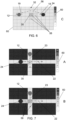
- FIG. 6 shows examples of amendment of a costmap 26 of an autonomous vehicle 12.
- part A of FIG. 6 an example of a costmap 26 of an autonomous vehicle 12 and other autonomous vehicle 24 is shown. In part A of FIG. 6 the costmaps 26 for the autonomous vehicles 12, 24 are the same.
- Each cell of the costmap 26 has an associated value or cost.
- the scale 60 of the costmap 26 is also shown to the right of the costmap 26.
- an autonomous vehicle 12 and other autonomous vehicle 24 are also illustrated in part A of FIG. 6.
- the autonomous vehicles 12, 24 are configured to perform method 300 and the advertised position 18, 19 velocity 20, 21 and current trajectory 22, 23 of the autonomous vehicles 12, 24 are indicated.
- the autonomous vehicles 12, 24 are heading straight towards each other, and the autonomous vehicles 12, 24 have determined that a collision will occur at a predicted collision zone 30.
- Part B of FIG. 6 is similar to part A, but shows an amended costmap 26 of the autonomous vehicle 12.
- part B of FIG. 6 the costmap 26 of the autonomous vehicle 12 has been amended and cost in three cells 58 in and around the area of the predicted collision zone 30 has been manipulated. In particular, cost in the three cells 58 has been increased.
- the cost in cell where the collision is predicted to occur has been increased.
- the cost in cells towards and to the left of the cell in where the collision has been predicted to occur has also been increased.
- the costmap 26 has therefore been updated to cause the autonomous vehicle to travel towards a predetermined side 32 of the determined collision zone 30.
- the updated trajectory 56 of the autonomous vehicle 12 is indicated in part B of FIG. 6 .
- Part C of FIG. 6 is similar to part B of FIG 6 , but shows the amended costmap 26 of the other autonomous vehicle 24.
- the determined collision is avoided without causing a further collision between the autonomous vehicles 12, 24.
- the autonomous vehicles 12, 24 are moved away from each other before getting too close to the determined collision zone 30 to create a safe distance between the autonomous vehicles 12, 24.
- this allows the collision to be avoided without needing access to and/or without tampering with a navigation stack 62 of the autonomous robots 12, 24.
- the other autonomous vehicle 24 would be the autonomous vehicle 12 (and the autonomous vehicle 12 would be the other autonomous vehicle 24).
- the reference numerals have been maintained through parts A, B and C for the purpose of clarity.
- the autonomous vehicles 12, 24 are alerted of the anticipated collision point without tampering with their navigation stack.
- the costmaps 26 of the autonomous vehicles 12, 24 are manipulated, via, for example, an exposed API.
- the collision zone 30 is drawn in the costmap 26 by increasing the value of the cells 58 where the collision 30 is likely to happen.
- the autonomous vehicle's internal navigation stack 62 Upon receiving the costmap updates, the autonomous vehicle's internal navigation stack 62 will replan to find the new lowest cost trajectory towards the robot's goal.
- this is avoided by drawing the collision zone 30 in a way that invokes autonomous vehicles to choose the different sides to pass each other.
- the collision-zone 30 is drawn to inflate the cost towards the left-hand side of the collision-point to encourage the autonomous vehicle 12 to keep right by replanning to the right of the collision-point.
- the collision-zone 30 is drawn to inflate the cost towards the right-hand side to encourage the autonomous vehicle to keep left by replanning towards the left-hand side of the collision.
- method 300 comprises determining that a collision between the autonomous vehicle 12 and the at least one of the at least one other autonomous vehicle 24 will occur despite amending the costmap 26 of the autonomous vehicle 12; and controlling movement of the autonomous vehicle 12 to avoid the collision based, at least in part, on a predetermined priority order for the autonomous vehicle 12 and the at least one other autonomous vehicle 24.
- Determining that a collision between the autonomous vehicle 12 and the at least one of the at least one other autonomous vehicle 24 will occur despite amending the costmap 26 can be performed in any suitable way using any suitable method.
- determining that the collision cannot be avoided comprises determining that no alternative trajectory can be determined.
- determining that the collision cannot be avoided comprises determining that the autonomous vehicle 12 has reached a proximity threshold to the determined conflict zone 30.
- any suitable proximity threshold can be used.
- any suitable proximity threshold equal to or greater than the sum of the radiuses of the autonomous vehicles 12, 24 can be used.
- ⁇ s' can be considered a margin that factors in uncertainty of localization, message propagation time, and/or travel-time estimation.
- determining that the collision cannot be avoided comprises determining that the autonomous vehicle 12 has reached a proximity threshold to at least one other autonomous vehicle 24.
- At least one identifier of the autonomous vehicle 12 can be transmitted, for example with information 16, to allow the autonomous vehicles 12 to determine the priority order when collisions cannot be avoided using costmap manipulation.
- Controlling movement of the autonomous vehicle 12 to avoid the collision based, at least in part, on a predetermined priority order for the autonomous vehicle 12 and the at least one other autonomous vehicle 24 can be performed in any suitable way using any suitable method.
- controlling movement of the autonomous vehicle 12 to avoid the collision based, at least in part, on a predetermined priority order for the autonomous vehicle 12 and the at least one other autonomous vehicle 24 comprises controlling speed of the autonomous vehicle 12.
- controlling movement of the autonomous vehicle 12 to avoid the collision based, at least in part, on a predetermined priority order for the autonomous vehicle 12 and the at least one other autonomous vehicle 24 comprises operating at least one braking mechanism of the autonomous vehicle 12.
- controlling movement of the autonomous vehicle 12 to avoid the collision based, at least in part, on a predetermined priority order for the autonomous vehicle 12 and the at least one other autonomous vehicle 24 comprises operating a handbrake of the autonomous vehicle 12.
- controlling movement of the autonomous vehicle 12 to avoid the collision based, at least in part, on a predetermined priority order for the autonomous vehicle 12 and the at least one other autonomous vehicle 24 comprises stopping the autonomous vehicle 12.
- controlling movement of the autonomous vehicle 12 to avoid the collision can comprise operating at least one braking mechanism of the autonomous vehicle 12, such as a handbrake of the autonomous vehicle 12, to stop the autonomous vehicle 12.
- the autonomous vehicle 12 will stop and yield to the at least one other autonomous vehicle 24 to avoid the collision, when the at least one other autonomous vehicle 24 has a higher priority than the autonomous vehicle 12.
- FIG. 7 By way of example, reference is made to FIG. 7 .
- FIG. 7 illustrates an example where manipulation of a costmap 26 will not avoid a determined collision.
- Part A of FIG. 7 is similar to part A of FIG. 6 . However, in the example of FIG. 7 two autonomous vehicles 12, 24 approach an intersection.
- the autonomous vehicles 12, 24 have determined that a collision will occur at the intersection and the costmaps 26 of the autonomous vehicles have been amended accordingly.
- the amended costmap 26 of the autonomous vehicle 12 is shown in part B of Fig. 7 .
- the autonomous vehicle 12 has priority and therefore the other autonomous vehicle 24 operates its handbrake to allow the autonomous vehicle 12 to pass through the collision zone first, thus avoiding the collision.
- handbrake manipulation is designed to address these scenarios.
- autonomous vehicles 12 after autonomous vehicles 12 detect a conflict and reflect the conflict in their costmap 26 using costmap manipulation as described herein, the autonomous vehicle's internal navigation stack 62 might fail to find an alternative path.
- the autonomous vehicles 12 perform a local election, based, at least in part on the priority order of the autonomous vehicles 12 for example using pre-learned or advertised identifiers, to determine the leader and the follower in a conflict.
- the follower starts an event to pull the handbrake when it is close to the conflict zone.
- a user-specified threshold value can determine how close the follower can get to the conflict zone.
- the follower Once the follower reaches the threshold, it indicates that the leader and follower failed to find an alternative path, and subsequently, the follower pulls the handbrake yielding the right of way to the leader.
- examples block 306 is not performed and therefore costmap manipulation is not performed. Instead, in examples, determined collisions are avoided using a predetermined priority order for the autonomous vehicles.
- determined collisions are avoided by controlling movement of the autonomous vehicle 12 to avoid the collision based, at least in part, on a predetermined priority order for the autonomous vehicle 12 and the at least one other autonomous vehicle 24 as described above.
- Controlling movement of the autonomous vehicle 12 be as described herein.
- controlling movement of the autonomous vehicle 12 can comprise operating at least one braking mechanism of the autonomous vehicle 12, such as a handbrake of the autonomous vehicle 12, to stop the autonomous vehicle 12.
- FIG. 3 illustrates a method 300 comprising: receiving, at an autonomous vehicle 12, information 16 at least indicative of at least a velocity 18, a position 20, and at least a portion of a current trajectory 22 of at least one other autonomous vehicle 24;
- FIG. 8 illustrates an example overview of examples of the disclosure.
- FIG. 8 schematically illustrates an autonomous vehicle 12 and at least one other autonomous vehicle 24.
- the functionality described herein can sit on top of a navigation stack 62 and operate without altering and/or tampering with the navigation stack 62.
- examples of the disclosure enable autonomous vehicles to anticipate and avoid collisions without causing further collisions.
- examples of the disclosure enable collision avoidance in autonomous vehicles without affecting and/or altering a navigation stack of the autonomous vehicle. Examples of the disclosure are therefore agnostic to the navigation stack/planner of the autonomous vehicle.
- Fig 9 illustrates an example of a controller 930 suitable for use in an apparatus, such as apparatus 10 of FIG. 1 and/or FIG. 2 .
- controller 930 can be considered an apparatus 10.
- controller 930 may be as controller circuitry.
- the controller 930 may be implemented in hardware alone, have certain aspects in software including firmware alone or can be a combination of hardware and software (including firmware).
- controller 930 may be implemented using instructions that enable hardware functionality, for example, by using executable instructions of a computer program 936 in a general-purpose or special-purpose processor 932 that may be stored on a computer readable storage medium (disk, memory etc) to be executed by such a processor 932.
- a general-purpose or special-purpose processor 932 may be stored on a computer readable storage medium (disk, memory etc) to be executed by such a processor 932.
- the processor 932 is configured to read from and write to the memory 934.
- the processor 932 may also comprise an output interface via which data and/or commands are output by the processor 932 and an input interface via which data and/or commands are input to the processor 932.
- the memory 934 stores a computer program 936 comprising computer program instructions (computer program code) that controls the operation of the apparatus when loaded into the processor 932.
- the computer program instructions, of the computer program 936 provide the logic and routines that enables the apparatus to perform the methods illustrated in the accompanying Figs.
- the processor 932 by reading the memory 934 is able to load and execute the computer program 936.
- the apparatus comprises:
- the computer program 936 may arrive at the apparatus via any suitable delivery mechanism 962.
- the delivery mechanism 962 may be, for example, a machine readable medium, a computer-readable medium, a non-transitory computer-readable storage medium, a computer program product, a memory device, a record medium such as a Compact Disc Read-Only Memory (CD-ROM) or a Digital Versatile Disc (DVD) or a solid-state memory, an article of manufacture that comprises or tangibly embodies the computer program 936.
- the delivery mechanism may be a signal configured to reliably transfer the computer program 936.
- the apparatus may propagate or transmit the computer program 936 as a computer data signal.
- the memory 934 comprises a random-access memory 958 and a read only memory 960.
- the computer program 936 can be stored in the read only memory 958. See, for example, Fig. 9B .
- processor 932 is illustrated as a single component/circuitry it may be implemented as one or more separate components/circuitry some or all of which may be integrated/removable.
- the processor 932 may be a single core or multi-core processor.
- references to 'computer-readable storage medium', 'computer program product', ⁇ tangibly embodied computer program' etc. or a 'controller', 'computer', 'processor' etc. should be understood to encompass not only computers having different architectures such as single /multi- processor architectures and sequential (Von Neumann)/parallel architectures but also specialized circuits such as field-programmable gate arrays (FPGA), application specific circuits (ASIC), signal processing devices and other processing circuitry.
- References to computer program, instructions, code etc. should be understood to encompass software for a programmable processor or firmware such as, for example, the programmable content of a hardware device whether instructions for a processor, or configuration settings for a fixed-function device, gate array or programmable logic device etc.
- circuitry may refer to one or more or all of the following:
- circuitry also covers an implementation of merely a hardware circuit or processor and its (or their) accompanying software and/or firmware.
- circuitry also covers, for example and if applicable to the particular claim element, a baseband integrated circuit for a mobile device or a similar integrated circuit in a server, a cellular network device, or other computing or network device.
- the blocks illustrated in the accompanying Figs may represent steps in a method and/or sections of code in the computer program 936.
- the illustration of a particular order to the blocks does not necessarily imply that there is a required or preferred order for the blocks and the order and arrangement of the block may be varied. Furthermore, it may be possible for some blocks to be omitted.
- the apparatus can comprise means for:
- an apparatus can comprise means for performing one or more methods, and/or at least part of one or more methods, as disclosed herein.
- an apparatus can be configured to perform one or more methods, and/or at least part of one or more methods, as disclosed herein.
Landscapes
- Engineering & Computer Science (AREA)
- Automation & Control Theory (AREA)
- Transportation (AREA)
- Mechanical Engineering (AREA)
- Physics & Mathematics (AREA)
- General Physics & Mathematics (AREA)
- Aviation & Aerospace Engineering (AREA)
- Radar, Positioning & Navigation (AREA)
- Remote Sensing (AREA)
- Human Computer Interaction (AREA)
- Control Of Driving Devices And Active Controlling Of Vehicle (AREA)
- Traffic Control Systems (AREA)
Claims (15)
- Vorrichtung (10), die Mittel umfasst, die zu Folgendem ausgelegt sind: Empfangen von Informationen (16), die mindestens mindestens eine Geschwindigkeit (18), eine Position (20) und mindestens einen Abschnitt einer aktuellen Trajektorie (22) mindestens eines anderen autonomen Fahrzeugs (24) anzeigen, an einem autonomen Fahrzeug (12); Bestimmen mindestens teilweise auf Basis der empfangenen Informationen (16), die mindestens mindestens eine Geschwindigkeit (18), eine Position (20) und mindestens einen Abschnitt einer aktuellen Trajektorie (22) von mindestens einem anderen autonomen Fahrzeug (24) und eine Geschwindigkeit (19), eine Position (21) und mindestens einen Abschnitt einer aktuellen Trajektorie (23) des autonomen Fahrzeugs (12) anzeigen, ob eine Kollision zwischen dem autonomen Fahrzeug (12) und mindestens einem des mindestens einen anderen autonomen Fahrzeugs (24) eintreten wird; und wenn bestimmt wird, dass eine Kollision eintreten wird, Ändern einer Kostenkarte (26) des autonomen Fahrzeugs (12) mindestens teilweise auf Basis einer relativen Positionierung und/oder von Trajektorien des autonomen Fahrzeugs (12) und dem mindestens einen des mindestens einen anderen autonomen Fahrzeugs (24), um Kosten in der Kostenkarte (26) in und/oder um einen Bereich einer vorhergesagten Kollisionszone (30) zu manipulieren.
- Vorrichtung nach Anspruch 1, wobei das Ändern einer Kostenkarte des autonomen Fahrzeugs das Ändern einer Kostenkarte des autonomen Fahrzeugs mindestens teilweise auf Basis einer relativen Positionierung und/oder von Trajektorien des autonomen Fahrzeugs und des mindestens einen des mindestens einen anderen autonomen Fahrzeugs umfasst, um das autonome Fahrzeug zu veranlassen, zu einer vorbestimmten Seite einer bestimmten Kollisionszone zu fahren.
- Vorrichtung nach Anspruch 1 oder 2, wobei die Mittel dazu ausgelegt sind, die Geschwindigkeit und die Position des autonomen Fahrzeugs mindestens teilweise auf Basis von Sensorinformationen zu bestimmen.
- Vorrichtung nach Anspruch 1, 2 oder 3, wobei die Mittel dazu ausgelegt sind, eine Übertragung von Informationen zu steuern, die mindestens die Geschwindigkeit, die Position und mindestens einen Abschnitt der aktuellen Trajektorie des autonomen Fahrzeugs anzeigen.
- Vorrichtung nach einem der vorhergehenden Ansprüche, wobei das Bestimmen, ob eine Kollision zwischen dem autonomen Fahrzeug und mindestens einem des mindestens einen anderen autonomen Fahrzeugs eintreten wird, das Bestimmen einer Wahrscheinlichkeitsverteilung für die Position des mindestens einen anderen autonomen Fahrzeugs zusammen mit der aktuellen Trajektorie des mindestens einen anderen autonomen Fahrzeugs als eine Funktion von Zeit umfasst.
- Vorrichtung nach einem der vorhergehenden Ansprüche, wobei das Bestimmen, ob eine Kollision zwischen dem autonomen Fahrzeug und mindestens einem des mindestens einen anderen autonomen Fahrzeugs eintreten wird, das Bestimmen einer Wahrscheinlichkeitsverteilung für die Position des autonomen Fahrzeugs zusammen mit der aktuellen Trajektorie des anderen autonomen Fahrzeugs als eine Funktion von Zeit umfasst.
- Vorrichtung nach Anspruch 5 oder 6, wobei das Bestimmen einer Wahrscheinlichkeitsverteilung das Verwenden eines trainierten Markov-Modells umfasst.
- Vorrichtung nach einem der vorhergehenden Ansprüche, wobei die Mittel zu Folgendem ausgelegt sind:Bestimmen, dass zwischen dem autonomen Fahrzeug und dem mindestens einen des mindestens einen anderen autonomen Fahrzeugs trotz Ändern der Kostenkarte des autonomen Fahrzeugs eine Kollision eintreten wird; undSteuern einer Bewegung des autonomen Fahrzeugs mindestens teilweise auf Basis einer vorbestimmten Prioritätsreihenfolge für das autonome Fahrzeug und das mindestens eine des mindestens einen anderen autonomen Fahrzeugs, um die Kollision zu vermeiden.
- Vorrichtung nach einem der vorhergehenden Ansprüche, wobei die Mittel Folgendes umfassenmindestens einen Prozessor; undmindestens einen Speicher, der Computerprogrammcode beinhaltet,wobei der mindestens eine Speicher Anweisungen speichert, die, wenn sie von dem mindestens einen Prozessor ausgeführt werden, die Durchführung der Vorrichtung veranlassen.
- Verfahren, das Folgendes umfasst:
Empfangen von Informationen (16), die mindestens mindestens eine Geschwindigkeit (18), eine Position (20) und mindestens einen Abschnitt einer aktuellen Trajektorie (22) mindestens eines anderen autonomen Fahrzeugs (24) anzeigen, an einem autonomen Fahrzeug (12); Bestimmen mindestens teilweise auf Basis der empfangenen Informationen (16), die mindestens mindestens eine Geschwindigkeit (18), eine Position (20) und mindestens einen Abschnitt einer aktuellen Trajektorie (22) von mindestens einem anderen autonomen Fahrzeug (24) und eine Geschwindigkeit (19), eine Position (21) und mindestens einen Abschnitt einer aktuellen Trajektorie (23) des autonomen Fahrzeugs (12) anzeigen, ob eine Kollision zwischen dem autonomen Fahrzeug (12) und mindestens einem des mindestens einen anderen autonomen Fahrzeugs (24) eintreten wird; und wenn bestimmt wird, dass eine Kollision eintreten wird, Ändern einer Kostenkarte (26) des autonomen Fahrzeugs (12) mindestens teilweise auf Basis einer relativen Positionierung und/oder von Trajektorien des autonomen Fahrzeugs (12) und dem mindestens einen des mindestens einen anderen autonomen Fahrzeugs (24), um Kosten in der Kostenkarte (26) in und/oder um einen Bereich einer vorhergesagten Kollisionszone (30) zu manipulieren. - Verfahren nach Anspruch 10, wobei das Ändern einer Kostenkarte des autonomen Fahrzeugs das Ändern einer Kostenkarte des autonomen Fahrzeugs mindestens teilweise auf Basis einer relativen Positionierung und/oder von Trajektorien des autonomen Fahrzeugs und des mindestens einen des mindestens einen anderen autonomen Fahrzeugs umfasst, um das autonome Fahrzeug zu veranlassen, zu einer vorbestimmten Seite einer bestimmten Kollisionszone zu fahren.
- Verfahren nach Anspruch 10 oder 11, das das Steuern einer Übertragung von Informationen umfasst, die mindestens die Geschwindigkeit, die Position und mindestens einen Abschnitt der aktuellen Trajektorie des autonomen Fahrzeugs anzeigen.
- Verfahren nach Anspruch 10, 11 oder 12, wobei das Bestimmen, ob eine Kollision zwischen dem autonomen Fahrzeug und mindestens einem des mindestens einen anderen autonomen Fahrzeugs eintreten wird, das Bestimmen einer Wahrscheinlichkeitsverteilung für die Position des mindestens einen anderen autonomen Fahrzeugs zusammen mit der aktuellen Trajektorie des mindestens einen anderen autonomen Fahrzeugs als eine Funktion von Zeit umfasst.
- Computerprogramm, das Anweisungen umfasst, die, wenn sie von einer Vorrichtung ausgeführt werden, die Vorrichtung veranlassen, mindestens Folgendes durchzuführen:
Empfangen von Informationen (16), die mindestens mindestens eine Geschwindigkeit (18), eine Position (20) und mindestens einen Abschnitt einer aktuellen Trajektorie (22) mindestens eines anderen autonomen Fahrzeugs (24) anzeigen, an einem autonomen Fahrzeug (12); Bestimmen mindestens teilweise auf Basis der empfangenen Informationen (16), die mindestens mindestens eine Geschwindigkeit (18), eine Position (20) und mindestens einen Abschnitt einer aktuellen Trajektorie (22) von mindestens einem anderen autonomen Fahrzeug (24) und eine Geschwindigkeit (19), eine Position (21) und mindestens einen Abschnitt einer aktuellen Trajektorie (23) des autonomen Fahrzeugs (12) anzeigen, ob eine Kollision zwischen dem autonomen Fahrzeug (12) und mindestens einem des mindestens einen anderen autonomen Fahrzeugs (24) eintreten wird; und wenn bestimmt wird, dass eine Kollision eintreten wird, Ändern einer Kostenkarte (26) des autonomen Fahrzeugs (12) mindestens teilweise auf Basis einer relativen Positionierung und/oder von Trajektorien des autonomen Fahrzeugs (12) und dem mindestens einen des mindestens einen anderen autonomen Fahrzeugs (24), um Kosten in der Kostenkarte (26) in und/oder um einen Bereich einer vorhergesagten Kollisionszone (30) zu manipulieren. - Computerprogramm nach Anspruch 14, wobei das Ändern einer Kostenkarte des autonomen Fahrzeugs das Ändern einer Kostenkarte des autonomen Fahrzeugs mindestens teilweise auf Basis einer relativen Positionierung und/oder von Trajektorien des autonomen Fahrzeugs und des mindestens einen des mindestens einen anderen autonomen Fahrzeugs umfasst, um das autonome Fahrzeug zu veranlassen, zu einer vorbestimmten Seite einer bestimmten Kollisionszone zu fahren.
Priority Applications (2)
| Application Number | Priority Date | Filing Date | Title |
|---|---|---|---|
| EP22192559.7A EP4332712B1 (de) | 2022-08-29 | 2022-08-29 | Autonome fahrzeugsteuerung |
| US18/351,203 US12576885B2 (en) | 2022-08-29 | 2023-07-12 | Autonomous vehicle control |
Applications Claiming Priority (1)
| Application Number | Priority Date | Filing Date | Title |
|---|---|---|---|
| EP22192559.7A EP4332712B1 (de) | 2022-08-29 | 2022-08-29 | Autonome fahrzeugsteuerung |
Publications (2)
| Publication Number | Publication Date |
|---|---|
| EP4332712A1 EP4332712A1 (de) | 2024-03-06 |
| EP4332712B1 true EP4332712B1 (de) | 2025-02-26 |
Family
ID=83151571
Family Applications (1)
| Application Number | Title | Priority Date | Filing Date |
|---|---|---|---|
| EP22192559.7A Active EP4332712B1 (de) | 2022-08-29 | 2022-08-29 | Autonome fahrzeugsteuerung |
Country Status (2)
| Country | Link |
|---|---|
| US (1) | US12576885B2 (de) |
| EP (1) | EP4332712B1 (de) |
Families Citing this family (2)
| Publication number | Priority date | Publication date | Assignee | Title |
|---|---|---|---|---|
| US12344257B2 (en) * | 2022-10-10 | 2025-07-01 | Waymo Llc | Methods and systems for adjusting vehicle behavior based on estimated unintentional lateral movements |
| US20240180071A1 (en) * | 2022-12-02 | 2024-06-06 | Embankscape Equipment LLC | Autonomous Mowers With Hazard Avoidance |
Family Cites Families (9)
| Publication number | Priority date | Publication date | Assignee | Title |
|---|---|---|---|---|
| US10429847B2 (en) * | 2017-09-22 | 2019-10-01 | Locus Robotics Corp. | Dynamic window approach using optimal reciprocal collision avoidance cost-critic |
| US10809734B2 (en) | 2019-03-13 | 2020-10-20 | Mobile Industrial Robots A/S | Route planning in an autonomous device |
| CN111006666B (zh) * | 2019-11-21 | 2021-10-29 | 深圳市优必选科技股份有限公司 | 机器人路径规划方法、装置、存储介质和机器人 |
| US11485384B2 (en) * | 2020-05-11 | 2022-11-01 | Zoox, Inc. | Unstructured vehicle path planner |
| US12124261B2 (en) * | 2020-11-20 | 2024-10-22 | Rapyuta Robotics Co., Ltd. | Systems and methods for optimizing route plans in an operating environment |
| EP4256413A2 (de) * | 2020-12-04 | 2023-10-11 | Crown Equipment Corporation | Systeme und verfahren zur verwaltung der bewegung von materialhandhabungsfahrzeugen |
| US11882023B2 (en) * | 2021-12-07 | 2024-01-23 | The Government Of The United States Of America, Represented By The Secretary Of The Navy | Methods and systems for multiagent pathfinding |
| US12469388B2 (en) * | 2022-03-31 | 2025-11-11 | Denso Corporation | Path prediction based on intersection information from map messages |
| TW202406697A (zh) * | 2022-04-06 | 2024-02-16 | 美商即時機器人股份有限公司 | 採用前瞻規劃之共享工作空間中機器人的運動規劃和控制 |
-
2022
- 2022-08-29 EP EP22192559.7A patent/EP4332712B1/de active Active
-
2023
- 2023-07-12 US US18/351,203 patent/US12576885B2/en active Active
Also Published As
| Publication number | Publication date |
|---|---|
| US12576885B2 (en) | 2026-03-17 |
| US20240067217A1 (en) | 2024-02-29 |
| EP4332712A1 (de) | 2024-03-06 |
Similar Documents
| Publication | Publication Date | Title |
|---|---|---|
| US10012984B2 (en) | System and method for controlling autonomous vehicles | |
| US11145206B2 (en) | Roadmap segmentation for robotic device coordination | |
| EP3789944B1 (de) | Sicherheitssystem für integrierte mensch/roboter-umgebungenanwendungen | |
| US10049578B2 (en) | Travel command generation device | |
| Saravanakumar et al. | Multipoint potential field method for path planning of autonomous underwater vehicles in 3D space | |
| CN112987760B (zh) | 一种轨迹规划方法、装置、存储介质及电子设备 | |
| US20180281785A1 (en) | System and Method for Controlling Lateral Motion of Vehicle | |
| US12576885B2 (en) | Autonomous vehicle control | |
| US12270657B2 (en) | Scene intelligence for collaborative semantic mapping with mobile robots | |
| EP4172707A1 (de) | Kantenberechnungsbasiertes wegplanungssystem für agv mit intelligentem abweichungskorrekturalgorithmus | |
| CN119987380B (zh) | 基于状态机的多机器人弹性编队控制方法及系统 | |
| CN119317886A (zh) | 用于在不确定环境中控制自动驾驶车辆的系统和方法 | |
| KR102179835B1 (ko) | 무선통신을 포함한 차량센서 기반의 객체선정 알고리즘 및 주변차량 주행 의도를 고려한 경로 예측 방법 및 시스템 | |
| CN111045433B (zh) | 一种机器人的避障方法、机器人及计算机可读存储介质 | |
| CN114148350B (zh) | 一种无人设备的控制方法及装置 | |
| US20260005942A1 (en) | Remote control apparatus, and method of remotely controlling mobile object | |
| JP7331835B2 (ja) | 自走装置、自走方法、及びプログラム | |
| CN111221318A (zh) | 一种基于模型预测控制算法的多机器人状态估计方法 | |
| US12333941B2 (en) | Method and device for exchanging maneuver information between vehicles | |
| EP3633955A1 (de) | Vorrichtung, verfahren und computerprogramm zur steuerung der drahtlosnetzwerkkapazität | |
| JP2024511234A (ja) | 感知によって発見可能な不確実な環境で動作するマシンの制御 | |
| KR102837082B1 (ko) | 다른 무인 이동체와의 충돌을 회피하기 위한 이동 경로를 결정하는 방법 | |
| JP7647901B2 (ja) | 制御システム、情報処理装置、制御方法、及び制御値生成方法 | |
| CN115113627B (zh) | 机器人、路径规划方法和计算机可读存储介质 | |
| Björnberg | Shared control for vehicle teleoperation with a virtual environment interface |
Legal Events
| Date | Code | Title | Description |
|---|---|---|---|
| PUAI | Public reference made under article 153(3) epc to a published international application that has entered the european phase |
Free format text: ORIGINAL CODE: 0009012 |
|
| STAA | Information on the status of an ep patent application or granted ep patent |
Free format text: STATUS: THE APPLICATION HAS BEEN PUBLISHED |
|
| AK | Designated contracting states |
Kind code of ref document: A1 Designated state(s): AL AT BE BG CH CY CZ DE DK EE ES FI FR GB GR HR HU IE IS IT LI LT LU LV MC MK MT NL NO PL PT RO RS SE SI SK SM TR |
|
| STAA | Information on the status of an ep patent application or granted ep patent |
Free format text: STATUS: REQUEST FOR EXAMINATION WAS MADE |
|
| REG | Reference to a national code |
Ref country code: DE Ref legal event code: R079 Free format text: PREVIOUS MAIN CLASS: G05D0001020000 Ipc: G05D0001693000 Ref country code: DE Ref legal event code: R079 Ref document number: 602022011043 Country of ref document: DE Free format text: PREVIOUS MAIN CLASS: G05D0001020000 Ipc: G05D0001693000 |
|
| 17P | Request for examination filed |
Effective date: 20240611 |
|
| RBV | Designated contracting states (corrected) |
Designated state(s): AL AT BE BG CH CY CZ DE DK EE ES FI FR GB GR HR HU IE IS IT LI LT LU LV MC MK MT NL NO PL PT RO RS SE SI SK SM TR |
|
| RIC1 | Information provided on ipc code assigned before grant |
Ipc: B60W 30/095 20120101ALI20240712BHEP Ipc: B60W 60/00 20200101ALI20240712BHEP Ipc: G05D 1/644 20240101ALI20240712BHEP Ipc: G05D 1/246 20240101ALI20240712BHEP Ipc: G05D 1/693 20240101AFI20240712BHEP |
|
| GRAP | Despatch of communication of intention to grant a patent |
Free format text: ORIGINAL CODE: EPIDOSNIGR1 |
|
| STAA | Information on the status of an ep patent application or granted ep patent |
Free format text: STATUS: GRANT OF PATENT IS INTENDED |
|
| INTG | Intention to grant announced |
Effective date: 20241004 |
|
| RIN1 | Information on inventor provided before grant (corrected) |
Inventor name: SALAUN, LOU Inventor name: HADZIC, ILIJA Inventor name: AYOUBI, SARA |
|
| GRAS | Grant fee paid |
Free format text: ORIGINAL CODE: EPIDOSNIGR3 |
|
| GRAA | (expected) grant |
Free format text: ORIGINAL CODE: 0009210 |
|
| STAA | Information on the status of an ep patent application or granted ep patent |
Free format text: STATUS: THE PATENT HAS BEEN GRANTED |
|
| AK | Designated contracting states |
Kind code of ref document: B1 Designated state(s): AL AT BE BG CH CY CZ DE DK EE ES FI FR GB GR HR HU IE IS IT LI LT LU LV MC MK MT NL NO PL PT RO RS SE SI SK SM TR |
|
| REG | Reference to a national code |
Ref country code: GB Ref legal event code: FG4D |
|
| REG | Reference to a national code |
Ref country code: CH Ref legal event code: EP |
|
| REG | Reference to a national code |
Ref country code: DE Ref legal event code: R096 Ref document number: 602022011043 Country of ref document: DE |
|
| REG | Reference to a national code |
Ref country code: IE Ref legal event code: FG4D |
|
| REG | Reference to a national code |
Ref country code: NL Ref legal event code: MP Effective date: 20250226 |
|
| PG25 | Lapsed in a contracting state [announced via postgrant information from national office to epo] |
Ref country code: RS Free format text: LAPSE BECAUSE OF FAILURE TO SUBMIT A TRANSLATION OF THE DESCRIPTION OR TO PAY THE FEE WITHIN THE PRESCRIBED TIME-LIMIT Effective date: 20250526 |
|
| PG25 | Lapsed in a contracting state [announced via postgrant information from national office to epo] |
Ref country code: FI Free format text: LAPSE BECAUSE OF FAILURE TO SUBMIT A TRANSLATION OF THE DESCRIPTION OR TO PAY THE FEE WITHIN THE PRESCRIBED TIME-LIMIT Effective date: 20250226 |
|
| PG25 | Lapsed in a contracting state [announced via postgrant information from national office to epo] |
Ref country code: PL Free format text: LAPSE BECAUSE OF FAILURE TO SUBMIT A TRANSLATION OF THE DESCRIPTION OR TO PAY THE FEE WITHIN THE PRESCRIBED TIME-LIMIT Effective date: 20250226 |
|
| PG25 | Lapsed in a contracting state [announced via postgrant information from national office to epo] |
Ref country code: ES Free format text: LAPSE BECAUSE OF FAILURE TO SUBMIT A TRANSLATION OF THE DESCRIPTION OR TO PAY THE FEE WITHIN THE PRESCRIBED TIME-LIMIT Effective date: 20250226 |
|
| REG | Reference to a national code |
Ref country code: LT Ref legal event code: MG9D |
|
| PG25 | Lapsed in a contracting state [announced via postgrant information from national office to epo] |
Ref country code: IS Free format text: LAPSE BECAUSE OF FAILURE TO SUBMIT A TRANSLATION OF THE DESCRIPTION OR TO PAY THE FEE WITHIN THE PRESCRIBED TIME-LIMIT Effective date: 20250626 Ref country code: NO Free format text: LAPSE BECAUSE OF FAILURE TO SUBMIT A TRANSLATION OF THE DESCRIPTION OR TO PAY THE FEE WITHIN THE PRESCRIBED TIME-LIMIT Effective date: 20250526 |
|
| PG25 | Lapsed in a contracting state [announced via postgrant information from national office to epo] |
Ref country code: NL Free format text: LAPSE BECAUSE OF FAILURE TO SUBMIT A TRANSLATION OF THE DESCRIPTION OR TO PAY THE FEE WITHIN THE PRESCRIBED TIME-LIMIT Effective date: 20250226 |
|
| PG25 | Lapsed in a contracting state [announced via postgrant information from national office to epo] |
Ref country code: HR Free format text: LAPSE BECAUSE OF FAILURE TO SUBMIT A TRANSLATION OF THE DESCRIPTION OR TO PAY THE FEE WITHIN THE PRESCRIBED TIME-LIMIT Effective date: 20250226 |
|
| PG25 | Lapsed in a contracting state [announced via postgrant information from national office to epo] |
Ref country code: PT Free format text: LAPSE BECAUSE OF FAILURE TO SUBMIT A TRANSLATION OF THE DESCRIPTION OR TO PAY THE FEE WITHIN THE PRESCRIBED TIME-LIMIT Effective date: 20250626 Ref country code: LV Free format text: LAPSE BECAUSE OF FAILURE TO SUBMIT A TRANSLATION OF THE DESCRIPTION OR TO PAY THE FEE WITHIN THE PRESCRIBED TIME-LIMIT Effective date: 20250226 |
|
| PG25 | Lapsed in a contracting state [announced via postgrant information from national office to epo] |
Ref country code: BG Free format text: LAPSE BECAUSE OF FAILURE TO SUBMIT A TRANSLATION OF THE DESCRIPTION OR TO PAY THE FEE WITHIN THE PRESCRIBED TIME-LIMIT Effective date: 20250226 Ref country code: GR Free format text: LAPSE BECAUSE OF FAILURE TO SUBMIT A TRANSLATION OF THE DESCRIPTION OR TO PAY THE FEE WITHIN THE PRESCRIBED TIME-LIMIT Effective date: 20250527 |
|
| REG | Reference to a national code |
Ref country code: AT Ref legal event code: MK05 Ref document number: 1771242 Country of ref document: AT Kind code of ref document: T Effective date: 20250226 |
|
| PG25 | Lapsed in a contracting state [announced via postgrant information from national office to epo] |
Ref country code: SE Free format text: LAPSE BECAUSE OF FAILURE TO SUBMIT A TRANSLATION OF THE DESCRIPTION OR TO PAY THE FEE WITHIN THE PRESCRIBED TIME-LIMIT Effective date: 20250226 |
|
| PG25 | Lapsed in a contracting state [announced via postgrant information from national office to epo] |
Ref country code: SM Free format text: LAPSE BECAUSE OF FAILURE TO SUBMIT A TRANSLATION OF THE DESCRIPTION OR TO PAY THE FEE WITHIN THE PRESCRIBED TIME-LIMIT Effective date: 20250226 |
|
| PG25 | Lapsed in a contracting state [announced via postgrant information from national office to epo] |
Ref country code: DK Free format text: LAPSE BECAUSE OF FAILURE TO SUBMIT A TRANSLATION OF THE DESCRIPTION OR TO PAY THE FEE WITHIN THE PRESCRIBED TIME-LIMIT Effective date: 20250226 |
|
| PGFP | Annual fee paid to national office [announced via postgrant information from national office to epo] |
Ref country code: DE Payment date: 20250702 Year of fee payment: 4 |
|
| PG25 | Lapsed in a contracting state [announced via postgrant information from national office to epo] |
Ref country code: IT Free format text: LAPSE BECAUSE OF FAILURE TO SUBMIT A TRANSLATION OF THE DESCRIPTION OR TO PAY THE FEE WITHIN THE PRESCRIBED TIME-LIMIT Effective date: 20250226 |
|
| PG25 | Lapsed in a contracting state [announced via postgrant information from national office to epo] |
Ref country code: AT Free format text: LAPSE BECAUSE OF FAILURE TO SUBMIT A TRANSLATION OF THE DESCRIPTION OR TO PAY THE FEE WITHIN THE PRESCRIBED TIME-LIMIT Effective date: 20250226 |
|
| PGFP | Annual fee paid to national office [announced via postgrant information from national office to epo] |
Ref country code: FR Payment date: 20250703 Year of fee payment: 4 |
|
| PG25 | Lapsed in a contracting state [announced via postgrant information from national office to epo] |
Ref country code: EE Free format text: LAPSE BECAUSE OF FAILURE TO SUBMIT A TRANSLATION OF THE DESCRIPTION OR TO PAY THE FEE WITHIN THE PRESCRIBED TIME-LIMIT Effective date: 20250226 Ref country code: CZ Free format text: LAPSE BECAUSE OF FAILURE TO SUBMIT A TRANSLATION OF THE DESCRIPTION OR TO PAY THE FEE WITHIN THE PRESCRIBED TIME-LIMIT Effective date: 20250226 |
|
| PG25 | Lapsed in a contracting state [announced via postgrant information from national office to epo] |
Ref country code: RO Free format text: LAPSE BECAUSE OF FAILURE TO SUBMIT A TRANSLATION OF THE DESCRIPTION OR TO PAY THE FEE WITHIN THE PRESCRIBED TIME-LIMIT Effective date: 20250226 |
|
| PG25 | Lapsed in a contracting state [announced via postgrant information from national office to epo] |
Ref country code: SK Free format text: LAPSE BECAUSE OF FAILURE TO SUBMIT A TRANSLATION OF THE DESCRIPTION OR TO PAY THE FEE WITHIN THE PRESCRIBED TIME-LIMIT Effective date: 20250226 |
|
| REG | Reference to a national code |
Ref country code: DE Ref legal event code: R097 Ref document number: 602022011043 Country of ref document: DE |
|
| PLBE | No opposition filed within time limit |
Free format text: ORIGINAL CODE: 0009261 |
|
| STAA | Information on the status of an ep patent application or granted ep patent |
Free format text: STATUS: NO OPPOSITION FILED WITHIN TIME LIMIT |
|
| REG | Reference to a national code |
Ref country code: CH Ref legal event code: L10 Free format text: ST27 STATUS EVENT CODE: U-0-0-L10-L00 (AS PROVIDED BY THE NATIONAL OFFICE) Effective date: 20260107 |
|
| 26N | No opposition filed |
Effective date: 20251127 |
|
| REG | Reference to a national code |
Ref country code: CH Ref legal event code: H13 Free format text: ST27 STATUS EVENT CODE: U-0-0-H10-H13 (AS PROVIDED BY THE NATIONAL OFFICE) Effective date: 20260324 |
|
| PG25 | Lapsed in a contracting state [announced via postgrant information from national office to epo] |
Ref country code: MC Free format text: LAPSE BECAUSE OF FAILURE TO SUBMIT A TRANSLATION OF THE DESCRIPTION OR TO PAY THE FEE WITHIN THE PRESCRIBED TIME-LIMIT Effective date: 20250226 |
|
| PG25 | Lapsed in a contracting state [announced via postgrant information from national office to epo] |
Ref country code: LU Free format text: LAPSE BECAUSE OF NON-PAYMENT OF DUE FEES Effective date: 20250829 |
|
| PG25 | Lapsed in a contracting state [announced via postgrant information from national office to epo] |
Ref country code: CH Free format text: LAPSE BECAUSE OF NON-PAYMENT OF DUE FEES Effective date: 20250831 |