EP4331597A2 - Carotinoide zur behandlung oder vorbeugung von übelkeit - Google Patents
Carotinoide zur behandlung oder vorbeugung von übelkeit Download PDFInfo
- Publication number
- EP4331597A2 EP4331597A2 EP23210174.1A EP23210174A EP4331597A2 EP 4331597 A2 EP4331597 A2 EP 4331597A2 EP 23210174 A EP23210174 A EP 23210174A EP 4331597 A2 EP4331597 A2 EP 4331597A2
- Authority
- EP
- European Patent Office
- Prior art keywords
- carotenoid
- microbe
- gfp
- rhizophila
- compound
- Prior art date
- Legal status (The legal status is an assumption and is not a legal conclusion. Google has not performed a legal analysis and makes no representation as to the accuracy of the status listed.)
- Pending
Links
Images























Classifications
-
- C—CHEMISTRY; METALLURGY
- C12—BIOCHEMISTRY; BEER; SPIRITS; WINE; VINEGAR; MICROBIOLOGY; ENZYMOLOGY; MUTATION OR GENETIC ENGINEERING
- C12P—FERMENTATION OR ENZYME-USING PROCESSES TO SYNTHESISE A DESIRED CHEMICAL COMPOUND OR COMPOSITION OR TO SEPARATE OPTICAL ISOMERS FROM A RACEMIC MIXTURE
- C12P23/00—Preparation of compounds containing a cyclohexene ring having an unsaturated side chain containing at least ten carbon atoms bound by conjugated double bonds, e.g. carotenes
-
- A—HUMAN NECESSITIES
- A61—MEDICAL OR VETERINARY SCIENCE; HYGIENE
- A61K—PREPARATIONS FOR MEDICAL, DENTAL OR TOILETRY PURPOSES
- A61K31/00—Medicinal preparations containing organic active ingredients
- A61K31/01—Hydrocarbons
- A61K31/015—Hydrocarbons carbocyclic
-
- C—CHEMISTRY; METALLURGY
- C12—BIOCHEMISTRY; BEER; SPIRITS; WINE; VINEGAR; MICROBIOLOGY; ENZYMOLOGY; MUTATION OR GENETIC ENGINEERING
- C12N—MICROORGANISMS OR ENZYMES; COMPOSITIONS THEREOF; PROPAGATING, PRESERVING, OR MAINTAINING MICROORGANISMS; MUTATION OR GENETIC ENGINEERING; CULTURE MEDIA
- C12N15/00—Mutation or genetic engineering; DNA or RNA concerning genetic engineering, vectors, e.g. plasmids, or their isolation, preparation or purification; Use of hosts therefor
- C12N15/01—Preparation of mutants without inserting foreign genetic material therein; Screening processes therefor
-
- A—HUMAN NECESSITIES
- A61—MEDICAL OR VETERINARY SCIENCE; HYGIENE
- A61K—PREPARATIONS FOR MEDICAL, DENTAL OR TOILETRY PURPOSES
- A61K31/00—Medicinal preparations containing organic active ingredients
- A61K31/045—Hydroxy compounds, e.g. alcohols; Salts thereof, e.g. alcoholates
-
- A—HUMAN NECESSITIES
- A61—MEDICAL OR VETERINARY SCIENCE; HYGIENE
- A61K—PREPARATIONS FOR MEDICAL, DENTAL OR TOILETRY PURPOSES
- A61K31/00—Medicinal preparations containing organic active ingredients
- A61K31/045—Hydroxy compounds, e.g. alcohols; Salts thereof, e.g. alcoholates
- A61K31/047—Hydroxy compounds, e.g. alcohols; Salts thereof, e.g. alcoholates having two or more hydroxy groups, e.g. sorbitol
-
- A—HUMAN NECESSITIES
- A61—MEDICAL OR VETERINARY SCIENCE; HYGIENE
- A61K—PREPARATIONS FOR MEDICAL, DENTAL OR TOILETRY PURPOSES
- A61K35/00—Medicinal preparations containing materials or reaction products thereof with undetermined constitution
- A61K35/66—Microorganisms or materials therefrom
-
- A—HUMAN NECESSITIES
- A61—MEDICAL OR VETERINARY SCIENCE; HYGIENE
- A61K—PREPARATIONS FOR MEDICAL, DENTAL OR TOILETRY PURPOSES
- A61K35/00—Medicinal preparations containing materials or reaction products thereof with undetermined constitution
- A61K35/66—Microorganisms or materials therefrom
- A61K35/74—Bacteria
-
- A—HUMAN NECESSITIES
- A61—MEDICAL OR VETERINARY SCIENCE; HYGIENE
- A61P—SPECIFIC THERAPEUTIC ACTIVITY OF CHEMICAL COMPOUNDS OR MEDICINAL PREPARATIONS
- A61P1/00—Drugs for disorders of the alimentary tract or the digestive system
- A61P1/08—Drugs for disorders of the alimentary tract or the digestive system for nausea, cinetosis or vertigo; Antiemetics
-
- C—CHEMISTRY; METALLURGY
- C12—BIOCHEMISTRY; BEER; SPIRITS; WINE; VINEGAR; MICROBIOLOGY; ENZYMOLOGY; MUTATION OR GENETIC ENGINEERING
- C12N—MICROORGANISMS OR ENZYMES; COMPOSITIONS THEREOF; PROPAGATING, PRESERVING, OR MAINTAINING MICROORGANISMS; MUTATION OR GENETIC ENGINEERING; CULTURE MEDIA
- C12N1/00—Microorganisms; Compositions thereof; Processes of propagating, maintaining or preserving microorganisms or compositions thereof; Processes of preparing or isolating a composition containing a microorganism; Culture media therefor
- C12N1/20—Bacteria; Culture media therefor
-
- C—CHEMISTRY; METALLURGY
- C12—BIOCHEMISTRY; BEER; SPIRITS; WINE; VINEGAR; MICROBIOLOGY; ENZYMOLOGY; MUTATION OR GENETIC ENGINEERING
- C12N—MICROORGANISMS OR ENZYMES; COMPOSITIONS THEREOF; PROPAGATING, PRESERVING, OR MAINTAINING MICROORGANISMS; MUTATION OR GENETIC ENGINEERING; CULTURE MEDIA
- C12N15/00—Mutation or genetic engineering; DNA or RNA concerning genetic engineering, vectors, e.g. plasmids, or their isolation, preparation or purification; Use of hosts therefor
- C12N15/09—Recombinant DNA-technology
- C12N15/63—Introduction of foreign genetic material using vectors; Vectors; Use of hosts therefor; Regulation of expression
- C12N15/74—Vectors or expression systems specially adapted for prokaryotic hosts other than E. coli, e.g. Lactobacillus, Micromonospora
-
- C—CHEMISTRY; METALLURGY
- C12—BIOCHEMISTRY; BEER; SPIRITS; WINE; VINEGAR; MICROBIOLOGY; ENZYMOLOGY; MUTATION OR GENETIC ENGINEERING
- C12N—MICROORGANISMS OR ENZYMES; COMPOSITIONS THEREOF; PROPAGATING, PRESERVING, OR MAINTAINING MICROORGANISMS; MUTATION OR GENETIC ENGINEERING; CULTURE MEDIA
- C12N15/00—Mutation or genetic engineering; DNA or RNA concerning genetic engineering, vectors, e.g. plasmids, or their isolation, preparation or purification; Use of hosts therefor
- C12N15/09—Recombinant DNA-technology
- C12N15/63—Introduction of foreign genetic material using vectors; Vectors; Use of hosts therefor; Regulation of expression
- C12N15/74—Vectors or expression systems specially adapted for prokaryotic hosts other than E. coli, e.g. Lactobacillus, Micromonospora
- C12N15/77—Vectors or expression systems specially adapted for prokaryotic hosts other than E. coli, e.g. Lactobacillus, Micromonospora for Corynebacterium; for Brevibacterium
-
- A—HUMAN NECESSITIES
- A61—MEDICAL OR VETERINARY SCIENCE; HYGIENE
- A61K—PREPARATIONS FOR MEDICAL, DENTAL OR TOILETRY PURPOSES
- A61K35/00—Medicinal preparations containing materials or reaction products thereof with undetermined constitution
- A61K2035/11—Medicinal preparations comprising living procariotic cells
-
- C—CHEMISTRY; METALLURGY
- C12—BIOCHEMISTRY; BEER; SPIRITS; WINE; VINEGAR; MICROBIOLOGY; ENZYMOLOGY; MUTATION OR GENETIC ENGINEERING
- C12N—MICROORGANISMS OR ENZYMES; COMPOSITIONS THEREOF; PROPAGATING, PRESERVING, OR MAINTAINING MICROORGANISMS; MUTATION OR GENETIC ENGINEERING; CULTURE MEDIA
- C12N15/00—Mutation or genetic engineering; DNA or RNA concerning genetic engineering, vectors, e.g. plasmids, or their isolation, preparation or purification; Use of hosts therefor
- C12N15/09—Recombinant DNA-technology
- C12N15/11—DNA or RNA fragments; Modified forms thereof; Non-coding nucleic acids having a biological activity
- C12N15/52—Genes encoding for enzymes or proenzymes
Definitions
- Chemotherapy-induced Nausea and Vomiting affects 70-80% of patients undergoing chemotherapy and is a leading cause of discontinuation of cancer treatment.
- the present disclosure provides technologies for treatment and/or prevention of certain diseases, disorders, and/or conditions, and furthermore provides technologies for assessing one or more characteristics of agents useful in such treatment and/or prevention.
- provided technologies relate to treatment of nausea and/or vomiting, and in some embodiments relate in particular to induced (e.g., chemotherapy-induced) nausea and/or vomiting. Alternatively, or additionally, in some embodiments, provided technologies relate to treatment or prevention of one or more feeding disorders (e.g., anorexia nervosa).
- induced e.g., chemotherapy-induced nausea and/or vomiting.
- provided technologies relate to treatment or prevention of one or more feeding disorders (e.g., anorexia nervosa).
- Nausea and/or vomiting are experienced with a number of diseases and disorders, and furthermore, can result from therapeutic treatments, such as chemotherapy. Regardless of the situation under which nausea and/or vomiting arise, both are generally considered unpleasant and undesirable. Therefore, subjects seek to avoid nausea and/or vomiting; such avoidance can lead, for example, to noncompliance with therapeutic treatments, e.g., when the patient perceives an association between such treatments and experienced nausea and/or vomiting.
- the present disclosure appreciates that certain biological pathways involved in surveillance of and/or response to toxins (e.g., toxin detoxification pathways), and particularly certain signaling pathways that transduce detection of translational deficits into induction of detoxification genes are conserved across animal phylogeny may also suppress aberrant human xenobiotic responses; the present disclosure teaches that such agents may have therapeutic potential in the treatment of certain diseases, disorders, or conditions, specifically including, for example, nausea and/or vomiting (e.g., chemotherapy-induced nausea, a major problem in cancer therapy), and/or in feeding disorders such as anorexia nervosa.
- nausea and/or vomiting e.g., chemotherapy-induced nausea, a major problem in cancer therapy
- feeding disorders such as anorexia nervosa.
- the present disclosure thus provides model systems (e.g., C. elegans ) of characterizing agents for usefulness as therapeutic agents as described herein. Moreover, the present disclosure documents use of such systems to identify and/or characterize certain useful such agents.
- model systems e.g., C. elegans
- certain carotenoid compounds are useful in the treatment and/or prevention of diseases, disorders and/or conditions such as nausea and/or vomiting (e.g., induced nausea such as chemotherapy-induced nausea) and/or one or more feeding disorders (e.g., anorexia nervosa).
- diseases, disorders and/or conditions such as nausea and/or vomiting (e.g., induced nausea such as chemotherapy-induced nausea) and/or one or more feeding disorders (e.g., anorexia nervosa).
- the present disclosure provides that certain carotenoid compounds (e.g., certain C50 carotenoid compounds) inhibit detoxification pathways, including those activated in response to translational deficits induced by toxins and/or by a mutation in a translation component.
- carotenoid compounds e.g., certain C50 carotenoid compounds
- the present disclosure recognizes that carotenoids are generally well-tolerated by mammals, including humans, and teaches that they are an attractive class of compounds for therapeutic use as described herein ( e.g., for the treatment and/or prevention of nausea and/or vomiting, and/or of one or more feeding disorders).
- C50 carotenoid compounds are naturally produced by microbes (as reviewed, for example, by Hencke et al., "C50 Carotenoids: Occurrence, Biosynthesis, Glycosylation, and Metabolic Engineering for their Overproduction", Chapter 5 of Bio-pigmentation and Biotechnological Implementations, Ed. Singh, Wiley & Sons, 2017 ).
- delivery of carotenoid compounds may be accomplished by administration of a composition that is or comprises a microbe that produces one or more carotenoid compound(s) of interest, or an extract or purified component thereof.
- such administration may be of a viable ( e . g ., microbe), and in certain embodiments may achieve colonization of administered microbe(s) in the recipient ( e . g ., as part of the recipient's microbiome.
- embodiments involving administration of microbe(s), and particularly of viable ( e.g., live) microbe(s) may offer certain advantages, such as, for example, reduced administrations (e.g., reduced frequency of dosing, term of dosing, total number of administered doses, volume and/or concentration of administered doses, and/or combinations thereof, etc), reduced costs, long term efficacy, etc.
- reduced administrations e.g., reduced frequency of dosing, term of dosing, total number of administered doses, volume and/or concentration of administered doses, and/or combinations thereof, etc
- reduced costs e.g., long term efficacy, etc.
- carotenoid compounds e.g., C50 carotenoid compounds
- delivery of carotenoid compounds for treatment as described herein is not limited to delivery of microbe(s), or even to extracts and/or components thereof; rather, useful carotenoid compounds (e.g., as described herein) may be prepared in whole or in part by chemical synthesis and/or may be purified from microbial sources (e.g., cultured microbial cells, which may be naturally-occurring and/or genetically or otherwise engineered cells).
- microbial sources e.g., cultured microbial cells, which may be naturally-occurring and/or genetically or otherwise engineered cells.
- compositions that deliver (e.g., that are or comprise microbe(s) and/or extract(s) or component(s) thereof and/or one or more pure carotenoid compound(s) as described herein) useful carotenoid compounds as described herein.
- compositions are administered orally ( e.g., via a pill, tablet, capsule, powder, lozenge, syrup, elixir, etc ) .
- oral administration is via a nutritional source such as a food or drink.
- C. elegans can be useful to characterize (e.g., to screen) agents to assess their impact on and/or usefulness in treating nausea and/or vomiting.
- C. elegans responds to translational deficits ( e.g., as may result from exposure to toxins and/or from mutation of a translation component) by induction of detoxification and defense response genes.
- agents that inhibit this induction can be useful in treatment of nausea and/or vomiting, and assessment of such inhibition can be useful to characterizing ( e.g., screening) such agents.
- carotenoid compounds can inhibit the C. elegans translation deficit surveillance and response pathways (e.g., the C. elegans xenobiotic detoxification response to a translational deficit); such carotenoid compounds may be useful in accordance with the present disclosure in therapeutic applications, such as to treat nausea and/or vomiting.
- the present disclosure specifically documents that a C50 carotenoid compound produced by Kocuria rhizophila inhibits C. elegans translation deficit surveillance and response pathways.
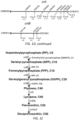
- the present disclosure describes a genetic analysis, that identifies the biosynthetic pathway for this carotenoid as mediating inhibition of the C.
- K. rhizophila extracts (i) recapitulate suppression of the C . elegans xenobiotic detoxification response to a translational deficit; and (ii) restore the ability of K. rhizophila carotenoid mutants to inhibit such detoxification response to defects in translation.
- C50 carotenoid compounds e.g., C50 carotenoid compounds produced by other bacterial species
- C. elegans translation deficit surveillance and response pathways e.g., the C. elegans xenobiotic detoxification response to a translational deficit
- C. glutamicum which produces the produces the C50 carotenoid decaprenoxanthin
- C. glutamicum carotenoid biosynthesis mutants are defective in this inhibition.
- carotenoid compounds as described herein e.g., C50 carotenoid compounds
- C50 carotenoid compounds suppress induction of xenobiotic detoxification by inhibiting a C. elegans bile acid signaling pathway that transduces detection of translational deficits into induction of detoxification genes.
- Suppression of translational surveillance by carotenoid compounds e.g., C50 carotenoid compounds as documented herein disables drug detoxification responses so that the potency of translational inhibitory drugs is enhanced.
- carotenoid compounds useful in accordance with the present disclosure may be characterized by their ability to increase potency of translational inhibitory drugs.
- a useful carotenoid compound is characterized in that, when such carotenoid compound is contacted with C. elegans in the presence of a translational inhibitory drug, one or more features of that translational inhibitory drug's impact on the C. elegans is enhanced relative to that observed under otherwise comparable conditions ( e.g., presence of the same translational inhibitory drug at the same concentration, etc. ) absent the carotenoid compound.
- carotenoid compounds e.g., certain C50 carotenoid compounds
- carotenoid compounds useful in accordance with the present disclosure may be characterized by their impact on C. elegans food aversion behaviors in the presence of relevant toxins.
- a useful carotenoid compound may be characterized in that, when such compound is contacted with C. elegans in the presence of a toxin targeting protein translation, one or more features of that toxin's impact on C.
- agents e.g., carotenoid compounds such as C50 carotenoid compounds
- agents shown to impact food aversion behavior as described herein may be particularly useful in treatment of one or more food aversion disorders such as, for example, anorexia nervosa.
- kits for the treatment of nausea and/or vomiting, or for the reduction of food aversion include administering to a subject in need thereof a therapeutically effective amount of a C50 carotenoid compound.
- the subject has or is at risk of developing nausea and/or vomiting associated with chemotherapy or radiation, e.g., chemotherapy-induced nausea and vomiting (CINV) or radiation-induced nausea and vomiting (RINV).
- chemotherapy or radiation e.g., chemotherapy-induced nausea and vomiting (CINV) or radiation-induced nausea and vomiting (RINV).
- the subject has or is at risk of developing post-operative nausea and vomiting (PONV).
- PONV post-operative nausea and vomiting
- the C50 carotenoid compound is decaprenoxanthin.
- the step of administering comprises administering a composition that is or comprises (i) a C50-carotenoid-compound-synthesizing microbe or component thereof, (ii) an extract from a C50-carotenoid-compound-synthesizing microbe, (iii) an extracted carotenoid compound, or (iv) a combination thereof.
- the C50-carotenoid-compound-synthesizing microbe is viable or alive.
- the step of administering comprises administering a sufficient amount of the microbe to colonize the subject's microbiome.
- the composition comprises or is prepared from a culture of the microbe.
- the microbe is a strain that is found in nature. In some embodiments, the microbe is an engineered microbe. In some embodiments, the engineered microbe comprises a genetic alteration relative to an otherwise comparable reference microbe so that it produces the C50 carotenoid compound at an absolute or relative level different from that of the reference microbe.
- the step of administering comprises administering a composition that comprises or delivers a synthesized C50 carotenoid compound.
- the C50-carotenoid-compound-synthesizing microbe is selected from the group consisting of Kocuria rhizophila, Corynebacterium glutamicum, Arthrobacter arilaitensis, and combinations thereof.
- compositions for oral delivery comprising a therapeutically effective amount of a C50 carotenoid compound, and a pharmaceutically acceptable carrier.
- the composition comprises a microbe that synthesizes the C50 carotenoid compound.
- the microbe is a cultured microbe.
- the microbe is an engineered microbe.
- the engineered microbe comprises a genetic alteration relative to an otherwise comparable reference microbe so that it produces the C50 carotenoid compound at an absolute or relative level different from that of the reference microbe.
- the microbe is living or viable.
- the microbe has been killed.
- the microbe is selected from the group consisting of Kocuria rhizophila, Corynebacterium glutamicum, Arthrobacter arilaitensis, and combinations thereof.
- the C50 carotenoid compound is at least 20% w/w of the composition.
- the C50 carotenoid compound is purified.
- the C50 carotenoid compound has a chemical structure found in nature.
- the C50 carotenoid compound is an analog of a reference C50 carotenoid compound found in nature.
- the C50 carotenoid compound is decaprenoxanthin.
- the therapeutic composition is a liquid, syrup, tablet, troche, gummy, capsule, powder, gel, or film.
- the method can include the steps of combining a pharmaceutically acceptable carrier with a C50 carotenoid compound; and formulating the combination into the therapeutic composition.
- the step of combining comprises combining the pharmaceutically acceptable carrier with a microbe that synthesizes the C50 carotenoid compound.
- the step of combining comprises combining the pharmaceutically acceptable carrier with a chemically synthesized C50 carotenoid compound.
- the subject has or is at risk of developing nausea and/or and vomiting associated with chemotherapy or radiation.
- the subject has or is at risk of developing chemotherapy-induced nausea and vomiting (CINV) or radiation-induced nausea and vomiting (RINV). In some embodiments, the subject has or is at risk of developing post-operative nausea and vomiting (PONV).
- CINV chemotherapy-induced nausea and vomiting
- RINV radiation-induced nausea and vomiting
- PONV post-operative nausea and vomiting
- the C50 carotenoid compound-synthesizing microbe is selected from the group consisting of Kocuria rhizophila, Corynebacterium glutamicum, Arthrobacter arilaitensis, and combinations thereof.
- a C50 carotenoid compound for treating nausea and/or vomiting, or for reducing food aversion, in a subject in need thereof, and a C50 carotenoid compound for use in treating nausea and/or vomiting or for reducing food aversion in a subject in need thereof.
- C50-carotenoid-compound-synthesizing microbe for treating nausea and/or vomiting or for reducing food aversion
- a C50-carotenoid-compound-synthesizing microbe for use in treating nausea and/or vomiting or for reducing food aversion, in a subject in need thereof.
- the C50 carotenoid compound-synthesizing microbe is selected from the group consisting of Kocuria rhizophila, Corynebacterium glutamicum, Arthrobacter arilaitensis, and combinations thereof.
- kits for assessing a carotenoid compound for anti-nausea and/or anti-emesis activity include the steps of (i) contacting a system with the carotenoid compound; and (ii) determining whether the carotenoid compound altered a feature of the system, wherein the feature is associated with nausea and/or vomiting.
- the step of determining comprises comparing the feature before and after performance of the step of contacting.
- the step of determining comprises comparing the feature after the step of contacting with a comparable reference.
- the comparable reference is a historical reference.
- the comparable reference is a negative control reference.
- the comparable reference is a positive control reference.
- the system is or comprises C. elegans.
- the feature is a level of food aversion.
- the feature is level or activity of a nucleic acid or protein, or form thereof.
- the feature is or comprises an aspect of a xenobiotic detoxification response.
- administration typically refers to the administration of a composition to a subject or system to achieve delivery of an agent to the subject or system.
- the agent is, or is included in, the composition; in some embodiments, the agent is generated through metabolism of the composition or one or more components thereof.
- routes may, in appropriate circumstances, be utilized for administration to a subject, for example a human.
- administration may be ocular, oral, parenteral, topical, etc.
- administration may be bronchial (e.g., by bronchial instillation), buccal, dermal (which may be or comprise, for example, one or more of topical to the dermis, intradermal, interdermal, transdermal, etc), enteral, intra-arterial, intradermal, intragastric, intramedullary, intramuscular, intranasal, intraperitoneal, intrathecal, intravenous, intraventricular, within a specific organ (e. g. intrahepatic), mucosal, nasal, oral, rectal, subcutaneous, sublingual, topical, tracheal (e.g., by intratracheal instillation), vaginal, vitreal, etc.
- bronchial e.g., by bronchial instillation
- buccal which may be or comprise, for example, one or more of topical to the dermis, intradermal, interdermal, transdermal, etc
- enteral intra-arterial, intradermal, intragastric,
- administration is oral administration.
- administration may involve only a single dose.
- administration may involve application of a fixed number of doses.
- administration may involve dosing that is intermittent (e.g., a plurality of doses separated in time) and/or periodic (e.g., individual doses separated by a common period of time) dosing.
- administration may involve continuous dosing (e.g., perfusion) for at least a selected period of time.
- an analog refers to a substance that shares one or more particular structural features, elements, components, or moieties with a reference substance. Typically, an “analog” shows significant structural similarity with the reference substance, for example sharing a core or consensus structure, but also differs in certain discrete ways.
- an analog is a substance that can be generated from the reference substance, e.g., by chemical manipulation of the reference substance. In some embodiments, an analog is a substance that can be generated through performance of a synthetic process substantially similar to (e.g., sharing a plurality of steps with) one that generates the reference substance. In some embodiments, an analog is or can be generated through performance of a synthetic process different from that used to generate the reference substance.
- Carotenoid compound refers to compounds that are members of the structurally diverse class of naturally-occurring carotenoid pigments, and structural analogs thereof. In nature, carotenoid compounds are typically synthesized from isoprenoid pathway intermediates. Carotenoids can be acyclic or cyclic, and may or may not contain oxygen, so that the term “carotenoids", in some embodiments, can include both carotenes and xanthophylls. Many carotenoids have strong light absorbing properties. In general, carotenoids are hydrocarbon compounds having a conjugated polyene carbon skeleton formally derived from the five-carbon compound isopentenyl pyrophosphate.
- carotenoid compounds may be triterpenes (C30 diapocarotenoids), tetraterpenes (C40 carotenoids), or other compounds that are, for example, C35, C50, C60, C70, C80 in length or other lengths.
- a carotenoid may have a length in excess of C200. More than 1000 different carotenoids have been identified in nature.
- Carotenoids include but are not limited to: antheraxanthin, adonirubin, adonixanthin, astaxanthin, canthaxanthin, capsorubrin, ⁇ -cryptoxanthin, ⁇ -carotene, ⁇ -carotene, ⁇ , ⁇ -carotene, ⁇ -carotene, echinenone, 3-hydroxyechinenone, 3'-hydroxyechinenone, ⁇ -carotene, ⁇ -carotene, 4-keto- ⁇ -carotene, ⁇ -carotene, ⁇ -cryptoxanthin, deoxyflexixanthin, diatoxanthin, 7,8-didehydroastaxanthin, didehydrolycopene, fucoxanthin, fucoxanthinol, isorenieratene, ⁇ -isorenieratene, lactucaxanthin, lutein, lycopene, myxo
- carotenoid compounds include derivatives of these molecules, which may include hydroxy-, methoxy-, oxo-, epoxy-, carboxy-, or aldehydic functional groups.
- carotenoids include oxygenated derivatives.
- included carotenoid compounds include ester (e.g., glycoside ester, fatty acid ester) and sulfate derivatives (e.g., esterified xanthophylls).
- Carotenogenic modification refers to a modification of a host organism that adjusts production of one or more carotenoids, as described herein.
- a carotenogenic modification may increase the production level of one or more carotenoids, and/or may alter relative production levels of different carotenoids.
- an inventive carotenogenic modification may be any chemical, physiological, genetic, or other modification that appropriately alters production of one or more carotenoids in a host organism produced by that organism as compared with the level produced in an otherwise identical organism not subject to the same modification.
- the carotenogenic modification will comprise a genetic modification, typically resulting in increased production of one or more selected carotenoids.
- the selected carotenoid is one or more C50 carotenoid compounds.
- Carotenoid biosynthesis polypeptide refers to any polypeptide that is involved in the synthesis of one or more carotenoids. To mention but a few, these carotenoid biosynthesis polypeptides include, for example, polypeptides of phytoene synthase, phytoene dehydrogenase (or desaturase), lycopene cyclase, carotenoid ketolase, carotenoid hydroxylase, astaxanthin synthase, carotenoid epsilon hydroxylase, lycopene cyclase (beta and epsilon subunits), carotenoid glucosyltransferase, and acyl CoA:diacyglycerol acyltransferase.
- Carotenoid-Compound-Synthesizing Microbe refers to a microbe (e.g., algae, fungi, bacteria) that synthesizes one or more carotenoid compounds.
- a carotenoid-compound-synthesizing microbe may naturally synthesize one or more carotenoids compounds.
- a carotenoid-compound-synthesizing microbe includes a carotenogenic modification.
- a carotenoid-compound-synthesizing compound may be genetically modified (e.g., to have one or more genetic alterations) so that it synthesizes one or more carotenoids at an absolute or relative level different from that of an otherwise comparable reference microbe that has not been so genetically modified (i.e., does not contain the genetic alteration(s)).
- a carotenoid-compound-synthesizing microbe has been genetically engineered to synthesize at least one carotenoid compound not synthesized by the microbe absent the genetic engineering.
- a carotenoid-compound-synthesizing microbe may have been genetically engineered so that its synthesis of one or more particular carotenoid compounds may be at a higher level relative to the microbe absent the genetic engineering.
- a higher level may be assessed in reference to a threshold level; in some embodiments, a higher level may be assessed in reference to another compound (e.g., another carotenoid compound) also produced by the microbe (prior to the genetic engineering).
- a carotenoid-compound-synthesizing microbe may have been genetically modified to add or increase expression of one or more genes encoding a carotenoid biosynthesis polypeptide.
- a carotenoid-compound-synthesizing microbe may have been genetically modified to increase carbon flow through a carotenoid biosynthesis pathway (e.g., by reducing carbon diversion into one or more other biosynthesis or metabolic pathways).
- a carotenoid-compound-synthesizing microbe may synthesize one or more carotenoid compounds having a particular number of carbon units.
- a carotenoid-compound-synthesizing microbe may synthesize (naturally or as a result of genetic modifications) one or more C50 carotenoid compounds; such a microbe may be referred to as a C50-synthesizing microbe.
- Comparable refers to two or more agents, entities, situations, sets of conditions, etc., that may not be identical to one another but that are sufficiently similar to permit comparison therebetween so that one skilled in the art will appreciate that conclusions may reasonably be drawn based on differences or similarities observed.
- comparable sets of conditions, circumstances, individuals, or populations are characterized by a plurality of substantially identical features and one or a small number of varied features.
- Dosage form may be used to refer to a physically discrete unit of an agent (e.g., a therapeutic agent) for administration to a subject.
- agent e.g., a therapeutic agent
- each such unit contains a predetermined quantity of agent.
- such quantity is a unit dosage amount (or a whole fraction thereof) appropriate for administration in accordance with a dosing regimen that has been determined to correlate with a desired or beneficial outcome when administered to a relevant population (i.e., with a therapeutic dosing regimen).
- a therapeutic dose form may be used to refer to a physically discrete unit of an agent (e.g., a therapeutic agent) for administration to a subject.
- each such unit contains a predetermined quantity of agent.
- such quantity is a unit dosage amount (or a whole fraction thereof) appropriate for administration in accordance with a dosing regimen that has been determined to correlate with a desired or beneficial outcome when administered to a relevant population (i.e., with a therapeutic dosing regimen).
- Dosing regimen may be used to refer to a set of unit doses (typically more than one) that are administered individually to a subject, typically separated by periods of time.
- a given agent has a recommended dosing regimen, which may involve one or more doses.
- a dosing regimen comprises a plurality of doses each of which is separated in time from other doses.
- individual doses are separated from one another by a time period of the same length; in some embodiments, a dosing regimen comprises a plurality of doses and at least two different time periods separating individual doses.
- all doses within a dosing regimen are of the same unit dose amount. In some embodiments, different doses within a dosing regimen are of different amounts. In some embodiments, a dosing regimen comprises a first dose in a first dose amount, followed by one or more additional doses in a second dose amount different from the first dose amount. In some embodiments, a dosing regimen comprises a first dose in a first dose amount, followed by one or more additional doses in a second dose amount same as the first dose amount In some embodiments, a dosing regimen is correlated with a desired or beneficial outcome when administered across a relevant population.
- Engineered refers to the aspect of having been manipulated by the hand of man.
- a cell or organism is considered to be “engineered” if it has been manipulated so that its genetic information is altered (e.g., new genetic material not previously present has been introduced, for example by transformation, mating, somatic hybridization, transfection, transduction, or other mechanism, or previously present genetic material is altered or removed, for example by substitution or deletion mutation, or by mating protocols).
- new genetic material not previously present has been introduced, for example by transformation, mating, somatic hybridization, transfection, transduction, or other mechanism, or previously present genetic material is altered or removed, for example by substitution or deletion mutation, or by mating protocols.
- progeny of an engineered polynucleotide or cell are typically still referred to as "engineered” even though the actual manipulation was performed on a prior entity.
- Excipient refers to an inactive (e.g., non-therapeutic) agent that may be included in a pharmaceutical composition, for example to provide or contribute to a desired consistency or stabilizing effect.
- suitable pharmaceutical excipients may include, for example, starch, glucose, lactose, sucrose, gelatin, malt, rice, flour, chalk, silica gel, sodium stearate, glycerol monostearate, talc, sodium chloride, dried skim milk, glycerol, propylene, glycol, water, ethanol and the like.
- a "functional" biological molecule is a biological molecule in a form in which it exhibits a property and/or activity by which it is characterized.
- a biological molecule may have two functions (i.e., bifunctional) or many functions (i.e., multifunctional).
- an appropriate reference measurement may be or comprise a measurement in a particular system (e.g., in a single individual) under otherwise comparable conditions absent presence of (e.g., prior to and/or after) a particular agent or treatment, or in presence of an appropriate comparable reference agent.
- an appropriate reference measurement may be or comprise a measurement in comparable system known or expected to respond in a particular way, in presence of the relevant agent or treatment.
- an appropriate reference is a negative reference; in some embodiments, an appropriate reference is a positive reference.
- Isolated refers to a substance and/or entity that has been (1) separated from at least some of the components with which it was associated when initially produced (whether in nature and/or in an experimental setting), and/or (2) designed, produced, prepared, and/or manufactured by the hand of man.
- an isolated substance or entity may be enriched; in some embodiments, an isolated substance or entity may be pure.
- isolated substances and/or entities may be separated from about 10%, about 20%, about 30%, about 40%, about 50%, about 60%, about 70%, about 80%, about 90%, about 91%, about 92%, about 93%, about 94%, about 95%, about 96%, about 97%, about 98%, about 99%, or more than about 99% of the other components with which they were initially associated.
- isolated agents are about 80%, about 85%, about 90%, about 91%, about 92%, about 93%, about 94%, about 95%, about 96%, about 97%, about 98%, about 99%, or more than about 99% pure.
- a substance is "pure" if it is substantially free of other components.
- a substance may still be considered “enriched”, “isolated” or even “pure”, after having been combined with certain other components such as, for example, one or more carriers or excipients (e.g., buffer, solvent, water, etc.); in such embodiments, percent isolation or purity of the substance is calculated without including such carriers or excipients.
- carriers or excipients e.g., buffer, solvent, water, etc.
- percent isolation or purity of the substance is calculated without including such carriers or excipients.
- composition refers to a composition in which an active agent is formulated together with one or more pharmaceutically acceptable carriers.
- the active agent is present in unit dose amount appropriate for administration in a therapeutic regimen that shows a statistically significant probability of achieving a predetermined therapeutic effect when administered to a relevant population.
- a pharmaceutical composition may be specially formulated for administration in solid or liquid form, including those adapted for the following: oral administration, for example, drenches (aqueous or non-aqueous solutions or suspensions), tablets, e.g., those targeted for buccal, sublingual, and systemic absorption, boluses, powders, granules, pastes for application to the tongue, capsules, powders, etc.
- an active agent may be or comprise a cell or population of cells (e.g., a culture, for example of a carotenoid-compound-synthesizing microbe); in some embodiments, an active agent may be or comprise an extract or component of a cell or population (e.g., culture) of cells.
- an active agent may be or comprise an isolated, purified, or pure compound. In some embodiments, an active agent may have been synthesized in vitro (e.g., via chemical and/or enzymatic synthesis). In some embodiments, an active agent may be or comprise a natural product (whether isolated from its natural source or synthesized in vitro).
- composition as disclosed herein, means that the carrier, diluent, or excipient is compatible with the other ingredients of the composition and not deleterious to the recipient thereof.
- compositions or vehicles such as a liquid or solid filler, diluent, excipient, or solvent encapsulating material, involved in carrying or transporting the subject compound from one organ, or portion of the body, to another organ, or portion of the body.
- Each carrier must be is “acceptable” in the sense of being compatible with the other ingredients of the formulation and not injurious to the patient.
- materials which can serve as pharmaceutically-acceptable carriers include: sugars, such as lactose, glucose and sucrose; starches, such as corn starch and potato starch; cellulose, and its derivatives, such as sodium carboxymethyl cellulose, ethyl cellulose and cellulose acetate; powdered tragacanth; malt; gelatin; talc; excipients, such as cocoa butter and suppository waxes; oils, such as peanut oil, cottonseed oil, safflower oil, sesame oil, olive oil, corn oil and soybean oil; glycols, such as propylene glycol; polyols, such as glycerin, sorbitol, mannitol and polyethylene glycol; esters, such as ethyl oleate and ethyl laurate; agar; buffering agents, such as magnesium hydroxide and aluminum hydroxide; alginic acid; pyrogen-free water; isotonic saline; Ring
- prevention refers to a delay of onset, and/or reduction in frequency and/or severity of one or more symptoms of a particular disease, disorder or condition. In some embodiments, prevention is assessed on a population basis such that an agent is considered to "prevent” a particular disease, disorder or condition if a statistically significant decrease in the development, frequency, and/or intensity of one or more symptoms of the disease, disorder or condition is observed in a population susceptible to the disease, disorder, or condition. In some embodiments, prevention may be considered complete, for example, when onset of a disease, disorder or condition has been delayed for a predefined period of time.
- Reference As used herein describes a standard or control relative to which a comparison is performed. For example, in some embodiments, an agent, animal, individual, population, sample, sequence or value of interest is compared with a reference or control agent, animal, individual, population, sample, sequence or value. In some embodiments, a reference or control is tested and/or determined substantially simultaneously with the testing or determination of interest. In some embodiments, a reference or control is a historical reference or control, optionally embodied in a tangible medium. Typically, as would be understood by those skilled in the art, a reference or control is determined or characterized under comparable conditions or circumstances to those under assessment. Those skilled in the art will appreciate when sufficient similarities are present to justify reliance on and/or comparison to a particular possible reference or control. In some embodiments, a reference is a negative control reference; in some embodiments, a reference is a positive control reference.
- risk refers to a likelihood that a particular individual will develop the disease, disorder, and/or condition. In some embodiments, risk is expressed as a percentage. In some embodiments, risk is from 0, 1, 2, 3, 4, 5, 6, 7, 8, 9, 10, 20, 30, 40, 50, 60, 70, 80, 90 up to 100%. In some embodiments risk is expressed as a risk relative to a risk associated with a reference sample or group of reference samples. In some embodiments, a reference sample or group of reference samples have a known risk of a disease, disorder, condition and/or event. In some embodiments a reference sample or group of reference samples are from individuals comparable to a particular individual. In some embodiments, relative risk is 0,1, 2, 3, 4, 5, 6, 7, 8, 9, 10, or more.
- sample typically refers to an aliquot of material obtained or derived from a source of interest.
- a source of interest is a biological or environmental source.
- a source of interest may be or comprise a cell or an organism, such as a microbe, a plant, or an animal (e.g., a human).
- a source of interest is or comprises biological tissue or fluid.
- a biological tissue or fluid may be or comprise amniotic fluid, aqueous humor, ascites, bile, bone marrow, blood, breast milk, cerebrospinal fluid, cerumen, chyle, chime, ejaculate, endolymph, exudate, feces, gastric acid, gastric juice, lymph, mucus, pericardial fluid, perilymph, peritoneal fluid, pleural fluid, pus, rheum, saliva, sebum, semen, serum, smegma, sputum, synovial fluid, sweat, tears, urine, vaginal secretions, vitreous humour, vomit, and/or combinations or component(s) thereof.
- a biological fluid may be or comprise an intracellular fluid, an extracellular fluid, an intravascular fluid (blood plasma), an interstitial fluid, a lymphatic fluid, and/or a transcellular fluid.
- a biological fluid may be or comprise a plant exudate.
- a biological tissue or sample may be obtained, for example, by aspirate, biopsy (e.g., fine needle or tissue biopsy), swab (e.g., oral, nasal, skin, or vaginal swab), scraping, surgery, washing or lavage (e.g., bronchioalveolar, ductal, nasal, ocular, oral, uterine, vaginal, or other washing or lavage).
- a biological sample is or comprises cells obtained from an individual.
- a sample is a "primary sample” obtained directly from a source of interest by any appropriate means.
- the term "sample” refers to a preparation that is obtained by processing (e.g., by removing one or more components of and/or by adding one or more agents to) a primary sample. For example, filtering using a semi-permeable membrane.
- processing e.g., by removing one or more components of and/or by adding one or more agents to
- a primary sample For example, filtering using a semi-permeable membrane.
- Such a "processed sample” may comprise, for example nucleic acids or proteins extracted from a sample or obtained by subjecting a primary sample to one or more techniques such as amplification or reverse transcription of nucleic acid, isolation and/or purification of certain components, etc.
- a subject refers to an individual to which a provided treatment is administered.
- a subject is mammal, e.g., a mammal that experiences or is susceptible to a disease, disorder, or condition as described herein; in some embodiments, a subject is a human or non-human veterinary subject, e.g., an ape, cat dog, monkey, or pig. In some embodiments, a subject is a human.
- a patient is suffering from or susceptible to one or more diseases, disorders or conditions as described herein.
- a patient displays one or more symptoms of a one or more diseases, disorders or conditions as described herein.
- a patient has been diagnosed with one or more diseases, disorders or conditions as described herein.
- the disorder or condition is or includes nausea and/or vomiting, and/or one or more food aversion disorders.
- a subject is suffering from or susceptible to cancer, or presence of one or more tumors.
- the subject is receiving or has received certain therapy to diagnose and/or to treat a disease, disorder, or condition.
- a subject has received a therapy (e.g., chemotherapy, radiation, and/or surgery) that induces nausea and/or vomiting.
- Symptoms are reduced: According to the present invention, "symptoms are reduced” when one or more symptoms of a particular disease, disorder or condition is reduced in magnitude (e.g., intensity, severity, etc.) and/or frequency. For purposes of clarity, a delay in the onset of a particular symptom is considered one form of reducing the frequency of that symptom.
- Therapeutic regimen refers to a dosing regimen whose administration across a relevant population may be correlated with a desired or beneficial therapeutic outcome.
- Therapeutically effective amount is meant an amount that produces the desired effect for which it is administered.
- the term refers to an amount that is sufficient, when administered to a population suffering from or susceptible to a disease, disorder, and/or condition in accordance with a therapeutic dosing regimen, to treat the disease, disorder, and/or condition.
- a therapeutically effective amount is one that reduces the incidence and/or severity of, and/or delays onset of, one or more symptoms of the disease, disorder, and/or condition.
- therapeutically effective amount does not in fact require successful treatment be achieved in a particular individual.
- a therapeutically effective amount may be that amount that provides a particular desired pharmacological response in a significant number of subjects when administered to patients in need of such treatment.
- reference to a therapeutically effective amount may be a reference to an amount as measured in one or more specific tissues (e.g., a tissue affected by the disease, disorder or condition) or fluids (e.g., blood, saliva, serum, sweat, tears, urine, etc.).
- tissue e.g., a tissue affected by the disease, disorder or condition
- fluids e.g., blood, saliva, serum, sweat, tears, urine, etc.
- a therapeutically effective amount of a particular agent or therapy may be formulated and/or administered in a single dose.
- a therapeutically effective agent may be formulated and/or administered in a plurality of doses, for example, as part of a dosing regimen.
- treatment refers to any administration of a therapy that partially or completely alleviates, ameliorates, relives, inhibits, delays onset of, reduces severity of, and/or reduces incidence of one or more symptoms, features, and/or causes of a particular disease, disorder, and/or condition.
- such treatment may be of a subject who does not exhibit signs of the relevant disease, disorder and/or condition and/or of a subject who exhibits only early signs of the disease, disorder, and/or condition.
- such treatment may be of a subject who exhibits one or more established signs of the relevant disease, disorder and/or condition.
- treatment may be of a subject who has been diagnosed as suffering from the relevant disease, disorder, and/or condition. In some embodiments, treatment may be of a subject known to have one or more susceptibility factors that are statistically correlated with increased risk of development of the relevant disease, disorder, and/or condition.
- the nematode Caenorhabditis elegans surveils for deficits in essential cellular activities caused, for example, by microbial toxins, and responds by activating a cellular surveillance-activated detoxification and defenses (cSADD) response (Melo and Ruvkun, 2012).
- cSADD cellular surveillance-activated detoxification and defenses
- the abundant RNAs and proteins of the ribosome and other proteins that mediate the translation of mRNA to proteins can be targets of microbial toxins and virulence factors. The activity of these translational components is monitored, and decrements in protein synthesis caused by toxins or mutations can be detected.
- Detection of decrements is coupled via a signal transduction cascade to activate xenobiotic detoxification and behavioral responses, such as food aversion via p38MAPK, bZIP/ZIP-2 transcription factor and bile acid like biosynthetic pathways (Melo and Ruvkun, 2012; Dunbar et al., 2012; Govindan et al., 2015).
- C. elegans can detect unanticipated pathogens and toxins.
- MAP kinase and bile acid biosynthetic pathway are conserved across animals; the present disclosure appreciates that a cSADD system of toxin surveillance and response may apply to animals other than C. elegans, and furthermore teaches that C. elegans may be useful as a model system to characterize agents that modulate this system and may be useful in certain therapeutic applications as described herein.
- the present disclosure further appreciates that an animal defensive strategy analogous or homologous to the C. elegans cSADD system is likely to drive evolution of bacterial countermeasures to thwart these defense responses; there are many examples of such evolutionary arms races between host and pathogen.
- commensal bacteria may also seek to silence such animal defense responses to establish a benign or symbiotic relationship.
- microbes e.g., bacteria synthesize various chemical compounds that have significant biological activities, including compounds that target the ribosome and/or associated translation factors (Berdy et al., 2005); such microbes have proven to be productive sources of drug or candidate drug compounds.
- the present disclosure (i) teaches useful therapeutic applications of agents that can inhibit certain detoxification pathways; (ii) provides a system for assessing one or more characteristics of agents relative to inhibition of such detoxification pathways; and (iii) identifies potential sources of such agents (e.g., microbes such as bacteria, which in some embodiments may be commensal microbes).
- the present disclosure provides that certain bacterial strains (e.g., those that produce certain carotenoid compounds, and in particular certain C50 carotenoid compounds) can be good sources of agents (e.g., certain useful carotenoid compounds) useful in accordance with the present disclosure. Furthermore, the present disclosure provides technologies for assessing one or more relevant characteristics of such agents.
- K. rhizophila In a microbial suppression screen of diverse bacteria for activities that abrogate activation of xenobiotic detoxification genes in C. elegans with a genetically-induced deficit in translation, a potent activity was identified from wild type K. rhizophila (Govindan et al., 2015). Genetic analysis of K. rhizophila was used to demonstrate that C50 carotenoid compounds can suppress the C. elegans translational toxin defense response.
- K. rhizophila which produces the C50 carotenoid compound decaprenoxanthin, inhibited the C. elegans cSADD translational and DNA damage toxin defense response.
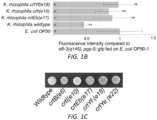
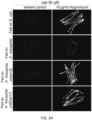
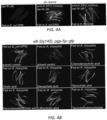
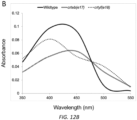
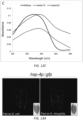
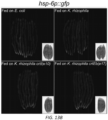
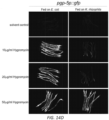
- Mutants in the K. rhizophila C50 carotenoid biosynthetic pathway failed to inhibit this C. elegans xenobiotic detoxification response ( Figure 1A-C ).
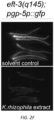
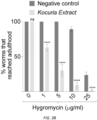
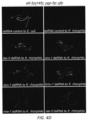
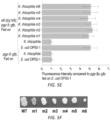
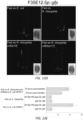
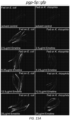
- Extracts of K. rhizophila suppressed this C. elegans xenobiotic detoxification response and also restored the ability of K. rhizophila carotenoid mutants to achieve such suppression ( Figures 2B & C ).
- K. rhizophila extracts also suppressed induction of C.
- K. rhizophila C50 carotenoid compound(s) also suppressed responses to RNA interference inactivation of other genes, such as a core ribosomal protein or aminocyl tRNA synthetase, that are required for protein synthesis.
- a C50 carotenoid from C. glutamicum also inhibited the induction of C. elegans xenobiotic detoxification pathways in response to translation deficit, showing that C50 carotenoid regulation of the C. elegans surveillance was not limited to one particular strain of bacteria.
- carotenoid compounds e.g., certain C50 carotenoid compounds
- certain carotenoid compounds are useful in various therapeutic applications, in particular including treatment of nausea and/or vomiting (specifically including induced nausea and/or vomiting such as chemotherapy-induced nausea and/or vomiting).
- Carotenoids have been most studied in photosynthetic bacteria and plants in which carotenoids are auxiliary light absorbing components in photosynthesis (Edge et al., 1997). In photosynthetic chlorophyll clusters, carotenoids can absorb and transduce light energy to photosynthetic electron transport systems, which then generate a pH gradient as reduction potential energy of photon-pumped electrons causes physical movements of multiple iron sulfur and heme proteins to move protons across the lipid bilayer.
- C50 carotenoid compounds may affect animal surveillance of translational components by a simple change in membrane fluidity. As shown herein, C50 carotenoid compounds suppressed induction of the C. elegans xenobiotic detoxification response by inhibiting a bile acid biosynthetic pathway. Although bile acids were traditionally thought to be emulsifiers of fat aiding in digestion, several recent studies have found bile acids to be signaling molecules that are important in metabolism as well as immune pathways. Bile acid signaling may be involved in CINV or induction of drug detoxification response in humans. The lipid solubility and abundance of carotenoids may contribute to their anti-bile acid signaling function in C. elegans surveillance of translational and DNA damage response.
- a cSADD response may not only induce xenobiotic detoxification but also food aversion behaviors.
- Aversion to food is an appropriate animal response because many toxins originate from bacterial pathogens that can be associated with or cause the rotting of food.
- Aversion to foods that are associated with the induction of xenobiotic detoxification and bacterial immunity pathways is likely to be an animal program derived from this evolutionary history.
- the present disclosure provides an insight that the Chemotherapy-induced Nausea and Vomiting (CINV) response in humans may be related to these xenobiotic aversion programs.
- CINV Chemotherapy-induced Nausea and Vomiting
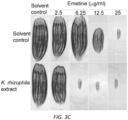
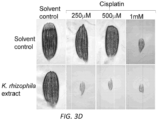
- Emetine which is an antibiotic that targets eukaryotic protein synthesis, is also highly emetogenic, as the name itself implies. These two drugs were not only able to induce xenobiotic detoxification response in C. elegans but also induced a strong food aversion.
- Thepgp-5 ABC transporter gene was strongly induced by toxins that cause DNA damage, and also by the chemically very distinct toxins that inhibit translation (but not by a wide range of toxins that target other pathways such as the mitochondria or ER) (Govindan et al., 2015).
- C. elegans food aversion is a good model for studying mechanisms underlying human CINV.
- Serotonergic pathways are involved in both C. elegans food aversion as well as human CINV (Melo and Ruvkun, 2012). Liver drug detoxification and elimination are a key concern in cancer chemotherapy; amplification of ABC transporters, which eliminate drugs faster, are frequently observed in drug resistant cancer patients.
- a K. rhizophila carotenoid extract caused hypersensitivity to xenobiotics that target protein translation, and also to xenobiotics that cause DNA damage by suppressing induction of drug detoxification pathways.
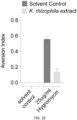
- K. rhizophila C50 carotenoid compounds suppressed the food aversion induced by emetogenic toxins, emetine or cisplatin.
- nausea and/or vomiting e.g., induced nausea and/or vomiting such as CINV, RINV, etc.
- C50 carotenoid compounds may be useful as a therapy for treating and/or reducing risk of one or more food aversion disorders (e.g., anorexia nervosa).
- the present disclosure provides systems for assessing one or more characteristics of agents relevant to usefulness as a therapy as described herein ( i.e., for treating and/or reducing risk of nausea and/or vomiting, and/or one or more food aversion disorders), and also demonstrates that useful such agents include compounds produced by certain microbes (e.g., bacteria), including certain commensal microbes.
- carotenoid compounds e.g., C50 carotenoid compounds
- various bacterial strains e.g., synthesized by bacterial enzymes
- various other compounds are produced by microbes and/or can be (and/or have been) manufactured by chemical synthesis and assessed for activities such as those embodied in systems exemplified therein.
- relevant diseases, disorders and conditions may be or include nausea and/or vomiting, and/or certain food aversion disorders.
- nausea and/or vomiting that can be treated as described herein may be associated with one or more of motion sickness, sea sickness, pregnancy ( e.g., morning sickness or hyperemesis gravidarum), pain, emotional stress, gallbladder disease, heart attack, concussion or brain injury ( e.g., brain tumor), overeating, gallbladder disease, infection, ulcers, gastroparesis, bowel obstruction, appendicitis, infection ( e.g., viral infection) etc.
- nausea and/or vomiting that can be treated as described herein may be induced nausea and/or vomiting, e.g., as induced by ingestion or other exposure to toxins (e.g., food poisoning, drug-induced nausea and/or vomiting, drunkenness, etc ) .
- induced nausea and/or vomiting that can be treated as described herein may be nausea and/or vomiting associated with chemotherapy or radiation.
- induced nausea and/or vomiting that can be treated as described herein may be CINV or radiation-induced nausea and vomiting (RINV); at least three types of emesis are commonly associated with the use of chemotherapeutic agents, i.e. acute emesis, delayed emesis and anticipatory emesis.
- induced nausea and/or vomiting that can be treated as described herein may be or include, e.g., post-operative nausea and vomiting (PONV).
- PONV post-operative nausea and vomiting
- methods of treatment provided by the present disclosure involve administering a therapeutically effective amount of a carotenoid compound as described herein to a subject who is in need of, or who has been determined to be in need of, such treatment.
- methods of treatment provided herein are prophylactic or preventative, e.g., may be administered to subjects prior to display of significant symptoms and/or to exposure to a particular expected inducement (e.g., to chemotherapy, radiotherapy, surgery, or other treatment (e.g., pharmacological treatment) that is associated with nausea and/or vomiting.
- a particular expected inducement e.g., to chemotherapy, radiotherapy, surgery, or other treatment (e.g., pharmacological treatment) that is associated with nausea and/or vomiting.
- methods of treatment provided herein are therapeutic, e.g., may be administered to subjects after development of significant symptoms of nausea and/or vomiting ( e.g., during or after at least one episode of nausea or vomiting.
- provided methods of treatment are administered to a subject that is a mammal, e.g., a mammal that experiences a disease, disorder, or condition as described herein; in some embodiments, a subject is a human or non-human veterinary subject, e.g., an ape, cat dog, monkey, or pig.
- treatment involves ameliorating at least one symptom of a disease, disorder, or condition associated with nausea.
- nausea results in food aversion, loss of appetite and/or reduced caloric intake, and potentially weight loss; in some embodiments, administration of a therapeutically effective amount of a carotenoid compound described herein can result in a reduction in nausea, vomiting, and/or food aversion.
- administration of a therapeutically effective amount of a carotenoid compound as described herein may achieve a restoration of appetite and/or a return or approach to normal caloric intake, a reduction, cessation, or slowing of weight loss, an increase in weight/weight gain, and/or a reduction in the frequency, duration, or severity of present or future episodes of nausea, vomiting, food aversion, and/or loss of appetite.
- the methods can include administration of a therapeutically effective amount of a carotenoid compound before, during (e.g., concurrently with), or after administration of a treatment that is expected to be associated with nausea and/or vomiting, e.g., a subject who is about to undergo chemotherapy, radiotherapy or other treatment that is associated with nausea and vomiting.
- subjects who receive treatment as described herein may be receiving and/or may have received other treatment (e.g., chemotherapeutic, radiotherapeutic, surgical, etc ) , for example that may induce vomiting or that may be intended to treat one or more symptoms or features of a disease disorder or condition as described herein, so that provide carotenoid therapy is administered in combination with such other therapy to treat the relevant disease, disorder, or condition.
- other treatment e.g., chemotherapeutic, radiotherapeutic, surgical, etc
- compositions that comprise or otherwise deliver carotenoid compound(s) (e.g., C50 carotenoid compounds) to subjects suffering from or susceptible to one or more diseases, disorders, or conditions as described herein.
- carotenoid compound(s) e.g., C50 carotenoid compounds
- Carotenoids are generally classified by number of 5-carbon isoprenoid units, resulting in different lengths of their carbon backbone. See, e.g., Henke et al., (2017). C50 Carotenoids: Occurrence, Biosynthesis, Glycosylation, and Metabolic Engineering for their Overproduction. In, Bio-pigmentation and Biotechnological Implementations, pp.107-126. doi:10.1002/9781119166191.ch5 ; Fernandes, Introductory Chapter: Carotenoids - A Brief Overview on Its Structure, Biosynthesis, Synthesis, and Applications. In Progress in Carotenoid Research. (2016) doi:10.5772/intechopen.79542 ; Mezzomo et al., (2016) Carotenoids Functionality, Sources, and Processing by Supercritical Technology: A Review in J. Chemistry Volume 2016:1 .
- carotenoid compounds useful in accordance with the present disclosure have a relatively long isoprene backbone, for example having a length within a range of about 45 to about 60 carbon atoms.
- useful carotenoid compounds as described herein may have an isoprene backbone that is 50 carbons long, i.e., may be C50 carotenoid compounds, e.g., decaprenoxanthin, or other C50 carotenoids, e.g., C50-astaxanthin (also called decaprenoastaxanthin; see Milon et al., Helv. Chim. Acta 69, 12-24 (1986 ); Furubayashi et al., Nat Commun.
- C50- ⁇ -carotene also called decapreno- ⁇ -carotene
- Karrer et al. Helv. Chim. Acta 34, 28-33 (1951 ); Furubayashi et al., Nat Commun.
- carotenoid compounds may be isolated from an organism (e.g., a plant or microbe) that has produced it. In some such embodiments, such plant or microbe may have been developed and/or cultivated by man. In some embodiments, a plant or microbe may be a natural plant or microbe. In some embodiments, a plant or microbe may be an engineered plant or microbe (e.g., a plant or microbe engineered to be a carotenoid-compound-synthesizing plant or microbe as described herein).
- an engineered plant or microbe e.g., a plant or microbe engineered to be a carotenoid-compound-synthesizing plant or microbe as described herein).
- a carotenoid compound may be isolated from a plant or microbial source (e.g., from a cultivar or culture thereof).
- a plant or microbial source e.g., from a cultivar or culture thereof.
- a carotenoid compound may be partly or wholly prepared in vitro (e.g., by chemical and/or enzymatic synthesis, or a combination thereof), and may optionally be further isolated and/or purified as is known in the art.
- a variety of technologies are known in the art that can be used to prepare extracts of cells or organisms that produce relevant carotenoid compounds, and/or to isolate extracts, components, or compounds therefrom, or to process ( e.g., to isolate and/or purify one or more carotenoid compounds from) in vitro carotenoid synthesis systems.
- processes e.g., to isolate and/or purify one or more carotenoid compounds from in vitro carotenoid synthesis systems.
- such technologies may include, for example, one or more of organic extraction, vacuum concentration, chromatography, and so on.
- carotenoids such as ⁇ -carotene, ⁇ -carotene, ⁇ -carotene, ⁇ -carotene, ⁇ -carotene, lutein, zeaxanthin, canthaxanthin, fucoxanthin, astaxanthin, antheraxanthin, and violaxanthin are synthesized by modification of the ends of lycopene through cyclization or oxidation.
- Higher order (more carbon atoms) carotenoids can be prepared, e.g., using in vitro methods or in vivo or ex vivo methods (e.g., via natural or genetically modified organisms).
- C50 carotenoids can be synthesized in vitro by the addition of two dimethylallyl pyrophosphate (DMAPP) molecules to C(2) and C(2') of the respective C40 carotenoid, or extracted from an organism (e.g., wild-type or engineered) that synthesizes the C50 carotenoid (e.g., a C50-carotenoid-compound-synthesizing microbe).
- DMAPP dimethylallyl pyrophosphate
- one or more carotenoid compounds for use in accordance with the present disclosure can be provided as purified, or substantially purified, molecules, or as less purified ( e.g., enriched) extracts of an organism that produces a carotenoid.
- a preparation that is or comprises one or more carotenoid compounds is incorporated into or otherwise used to generate a pharmaceutical composition as described herein, that, when administered to a subject, delivers a carotenoid compound thereto.
- a carotenoid preparation or carotenoid composition (e.g., a pharmaceutical composition that comprises or delivers a carotenoid compound) comprises at least 20%, 30%, 40%, 50%, 60%, 70%, 80%, 90%, 95%, 97%, or 99% w/w carotenoid compounds.
- compositions for use in accordance with the present disclosure are pharmaceutical compositions, e.g., for oral administration.
- Pharmaceutical compositions typically include an active agent (e.g., a carotenoid compound, such as a C50 carotenoid compound, or a source thereof), and a pharmaceutically acceptable carrier.
- an active agent e.g., a carotenoid compound, such as a C50 carotenoid compound, or a source thereof
- a pharmaceutically acceptable carrier include, for instance saline, solvents, dispersion media, coatings, antibacterial and antifungal agents, isotonic and absorption delaying agents, and the like, compatible with pharmaceutical administration.
- a pharmaceutical composition for use in accordance with the present disclosure may include and/or may be administered in conjunction with, one or more supplementary active compounds; in certain embodiments, such supplementary active agents can include ginger, curcumin, probiotics ( e , g , probiotic strains of one or more of the following genera: Lactobacillus, Bifidobacterium, Saccharomyces, Enterococcus, Streptococcus, Pediococcus, Leuconostoc, Bacillus, and/or Escherichia coli (see Fijan, Int J Environ Res Public Health.
- prebiotics nondigestible food ingredients that help support growth of probiotic bacteria, e.g., fructans such as fructooligosaccharides (FOS) and inulins, galactans such as galactooligosaccharides (GOS), dietary fibers such as resistant starch, pectin, beta-glucans, and xylooligosaccharides ( Hutkins et al., Curr Opin Biotechnol. 2016 Feb; 37: 1-7 )) and combinations thereof.
- FOS fructooligosaccharides
- GOS galactans
- dietary fibers such as resistant starch, pectin, beta-glucans, and xylooligosaccharides
- compositions are typically formulated to be compatible with its intended route of administration.
- routes of administration include oral administration.
- Oral compositions generally include an inert diluent or an edible carrier.
- an oral formulation may be or comprise a syrup, a liquid, a tablet, a troche, a gummy, a capsule, e.g., gelatin capsules, a powder, a gel, a film, etc.
- a pharmaceutical composition can contain, e.g., any one or more of the following inactive ingredients, or compounds of a similar nature: a binder such as microcrystalline cellulose, gum tragacanth or gelatin; an excipient such as starch or lactose, a disintegrating agent such as alginic acid, Primogel, or corn starch; a lubricant such as magnesium stearate or Sterotes; a glidant such as colloidal silicon dioxide; a sweetening agent such as sucrose or saccharin; or a flavoring agent such as peppermint, methyl salicylate, or orange flavoring.
- the compositions can be taken as-is or sprinkled onto or mixed into a food or liquid (such as water).
- a carotenoid composition that may be administered to subjects as described herein may be or comprise an ingestible item (e.g., a food or drink) that comprises ( e.g. , is supplemented with one or more carotenoids.
- a useful composition may contain one or more carotenoid compounds at a level higher than that at which the carotenoid compound is found in components thereof, and/or higher than normally present in the relevant foods or beverages, e.g., to provide a level of carotenoids that is sufficient to provide a therapeutic effect as described herein.
- a food can be or comprise one or more of bars, candies, baked goods, cereals, salty snacks, pastas, chocolates, and other solid foods, as well as liquid or semi-solid foods including yogurt, soups and stews, and beverages such as smoothies, shakes, juices, and other carbonated or non-carbonated beverages.
- foods are provided with carotenoids already included therein; in some embodiments, foods are prepared by a subject by mixing in carotenoids.
- compositions can be included in a kit, container, pack, or dispenser, together with instructions for administration or for use in a method described herein.
- a carotenoid composition as described herein may be or comprise one or more cells, tissues, or organisms (e.g., plant or microbe cells, tissues, or organisms) that produce ( e.g., have produced, and/or are producing) a relevant compound.
- cells, tissues, or organisms may have previously produced the relevant carotenoid; in some embodiments, such cells, tissues or organism are producing the carotenoid compound(s).
- carotenoid compositions may include cells, tissues, and/or organisms that have been killed (e.g., heat killed). Alternatively, in some embodiments, carotenoid compositions may include cells, tissues, and/or organisms that are viable or alive.
- methods of treatment as described herein involve administering one or more viable or living carotenoid-compound-synthesizing cells, tissues, or organisms.
- the cells, tissues, or organisms are microbial cells and are administered according to a regimen that achieves population of the subject's microbiome with administered cells.
- a carotenoid composition as described herein comprises and/or is formulated through use of one or more cell cultures and/or supernatants or pellets thereof, and/or a powder formed therefrom.
- technologies for preparing carotenoid compositions and/or preparations, and/or for preparing one or more carotenoid compositions (and particularly for preparing pharmaceutical compositions) may include one or more steps of assessing or characterizing a compound, preparation, or composition, e.g., as part of quality control. In some embodiments, if an assayed material does not meet pre-determined specifications for the relevant assessment, it is discarded. In some embodiments, if such assayed material does meet the pre-determined specifications, then it continues to be processed as described herein.
- the present disclosure provides systems that permit assessment of one or more agent characteristics relevant for usefulness as described herein.
- technologies for identifying and/or characterizing agents as described herein may involve comparisons with an appropriate reference (e . g ., with a positive control references and/or with a negative control reference).
- a reference may be or comprise a historical reference; in some embodiments, a reference may be or comprise a contemporaneous reference.
- provided technologies may be useful for screening test agents, e.g., that may be or comprise one or more polypeptides, peptides, inorganic or organic large or small molecules, or compositions that include or deliver them, in order to identify agents useful in methods as described herein.
- provided technologies may be useful to characterize one or more agents, for example, during development and/or commercialization of such agent, or a pharmaceutically acceptable composition thereof.
- small molecule refers to small organic or inorganic molecules of molecular weight below about 3,000 Daltons. In general, small molecules may have a molecular weight of less than 3,000 Daltons (Da).
- the small molecules can be, e.g., from at least about 100 Da to about 3,000 Da (e.g., between about 100 to about 3,000 Da, about 100 to about 2500 Da, about 100 to about 2,000 Da, about 100 to about 1,750 Da, about 100 to about 1,500 Da, about 100 to about 1,250 Da, about 100 to about 1,000 Da, about 100 to about 750 Da, about 100 to about 500 Da, about 200 to about 1500, about 500 to about 1000, about 300 to about 1000 Da, or about 100 to about 250 Da).
- a plurality of agents may be utilized to identify (e.g., to screen) and/or characterize a plurality of agents.
- such plurality is or comprises reasonably comparable agents (e.g., one or more particular small molecule compounds and a plurality of analogs thereof);
- a plurality of agents is or comprises a plurality of natural products (e.g., carotenoid compounds such as C50 carotenoid compounds) and/or one or more analogs thereof.
- a plurality of agents is or comprises a combinatorial library of small molecule compounds.
- Combinatorial techniques suitable for synthesizing small molecules are known in the art, e.g., as exemplified by Obrecht and Villalgordo, SolidSupported Combinatorial and Parallel Synthesis of Small-Molecular-Weight Compound Libraries, Pergamon-Elsevier Science Limited (1998 ), and include those such as the "split and pool” or “parallel” synthesis techniques, solid-phase and solution-phase techniques, and encoding techniques (see, for example, Czarnik, Curr. Opin. Chem. Bio. 1 :60-6 (1997 )).
- a number of small molecule libraries are commercially available. A number of suitable small molecule test compounds are listed in U.S. Patent No. 6,503,713 , incorporated herein by reference in its entirety.
- provided technologies may be used to screen and/or assess a plurality of agents that cover a variety of functions such as charge, aromaticity, hydrogen bonding, flexibility, size, length of side chain, hydrophobicity, and rigidity.
- libraries screened as described herein can comprise a variety of types of test compounds.
- a given library can comprise a set of structurally related or unrelated test compounds.
- a library may comprise a set of peptides or peptidomimetic molecules.
- a library may comprise carotenoid compounds, e.g., a naturally-occurring or synthetic carotenoid, e.g., a C35, C40, C45, C50, C55, or C60 carotenoid.
- provided technologies are utilized to assess a set of agents related to one another by systematically alteration of the structure of a first agent; in some such examples, the first agent may be or comprise a compound of known activity (e.g., a carotenoid compound such as a C50 carotenoid compound).
- a carotenoid compound such as a C50 carotenoid compound
- technologies provided herein utilize or generate correlations between structural features and presence or absence (or level) of biological activity of interest - i.e., structure-function relationships.
- structure-function relationships may be defined empirically; in some embodiments, structure-function relationships may be defined through utilization of computer modeling and/or analysis prediction methodologies.
- a food aversion assay as described herein is used.
- a test sample is, or is derived from (e.g., a sample taken from) an in vivo model of a disorder as described herein.
- a test compound is applied to a test sample comprising one or more C. elegans organisms, and one or more effects of the test compound is evaluated.
- the ability of a test compound to counteract food aversion in the presence of a chemotherapeutic agent or other nausea-inducing stimulus can be tested.
- effects on a reporter gene e.g., ABC transporter gene fusion pgp-5p::gfp
- effects on a reporter gene can be evaluated by detecting alterations in GFP fluorescence.
- other reporters could readily be used.
- a compound can be screened by a method described herein to determine whether it can reduce nausea (e.g., have anti-nausea activity), vomiting (e.g., have anti-emesis activity), and/or food aversion in a system (e.g., an animal model, e.g., C. elegans).
- a compound that is determined to reduce nausea (e.g., have anti-nausea activity), vomiting (e.g., have anti-emesis activity), and/or food aversion in a system e.g., an animal model, e.g., C. elegans
- a candidate compound that has been screened e.g., in a system having features associated with nausea, vomiting, and/or food aversion e.g., an in vivo model of a disease, disorder, or condition associated with nausea and/or vomiting, e.g., C. elegans, and determined to have a desirable effect on nausea, vomiting, and/or food aversion can be considered a candidate therapeutic agent.
- a candidate therapeutic agent can be tested in a larger animal model or in a clinical setting.
- Candidate therapeutic agents, once screened in a clinical setting can be therapeutic agents.
- Candidate compounds, candidate therapeutic agents, and therapeutic agents can be optionally optimized and/or derivatized, and formulated with physiologically acceptable excipients to form pharmaceutical compositions.
- a compound can be assessed by a method described herein to determine whether it can reduce nausea (e.g., have anti-nausea activity), vomiting (e.g., have anti-emesis activity), and/or food aversion in a system (e.g., an animal model, e.g., C. elegans).
- the present disclosure provides a method for assessing a compound (e.g., a carotenoid) to determine its ability to reduce nausea (e.g., anti-nausea activity), vomiting (e.g., anti-emesis activity), and/or food aversion in a system (e.g., an animal model, e.g., C. elegans).
- a method of assessing a compound to determine its ability to reduce nausea e.g., anti-nausea activity
- vomiting e.g., anti-emesis activity
- food aversion in a system e.g., an animal model, e.g., C. elegans
- an assay e.g., a release test, a stability test, an efficacy test, etc.
- a regulatory body e.g., United States Food and Drug Administration, European Medicines Agency, etc.
- a method of assessing a compound e.g., a carotenoid to determine its ability to reduce nausea (e.g., anti-nausea activity), vomiting (e.g., anti-emesis activity), and/or food aversion in a system (e.g., an animal model, e.g., C. elegans) is part of a method of manufacture.
- an assessment can be performed as part of a method of screening.
- a system can be an animal system.
- an animal system is a model system, e.g., C. elegans, cats, dogs, apes, or pigs.
- Assessed compounds determined to reduce nausea e.g., have anti-nausea activity
- vomiting e.g., have anti-emesis activity
- food aversion in a system e.g., an animal model, e.g., C. elegans
- an animal model e.g., C. elegans
- Such optimization can also be screened and/or assessed using the methods described herein.
- a method includes screening a first library of compounds using one or more steps known in the art and/or described herein, e.g., identifying one or more hits in a library, subjecting hits to systematic structural alteration to create a second library of compounds structurally related to a hit, screening a second library using the methods described herein, or a combination thereof.
- a method includes screening a first library of compounds using one or more steps known in the art and/or described herein, e.g., identifying one or more hits in a library, subjecting hits to systematic structural alteration to create a second library of compounds structurally related to a hit, screening a second library using the methods described herein, or a combination thereof.
- An assessed compound determined to reduce nausea e.g., have anti-nausea activity
- vomiting e.g., have anti-emesis activity
- food aversion in a system e.g., an animal model, e.g., C. elegans
- a variety of techniques useful for determining the structures of compounds can be used in methods described herein, e.g., NMR, mass spectrometry, gas chromatography equipped with electron capture detectors, fluorescence and absorption spectroscopy.
- the present disclosure provides the insight that compounds determined to reduce nausea (e.g., have anti-nausea activity), vomiting (e.g., have anti-emesis activity), and/or food aversion in a system (e.g., by the methods described herein) can be used in method of treatment, prevention, or delay of development or progression of a disease, disorder and/or condition described herein.
- the present disclosure provides the insight that compounds determined to reduce nausea (e.g., have anti-nausea activity), vomiting (e.g., have anti-emesis activity), and/or food aversion in a system (e.g., by the methods described herein) can be used in method of treating nausea, vomiting, and/or a food version described herein.
- An assessed compound determined to reduce nausea e.g., have anti-nausea activity), vomiting (e.g., have anti-emesis activity), and/or food aversion in a system (e.g., C. elegans) can be assessed in a second system (e.g., a large animal, e.g., ape, monkey, cat, dog, pig, etc.).
- a system is a human, e.g., a human with CINV or RINV, and a parameter is reduced severity, frequency, or duration of nausea, vomiting, and/or food aversion.
- 16S ribosomal sequence was amplified using specific primers and sequenced to identify the microbes.
- LB media as well as plates was used for culturing Kocuria rhizophila, Arthrobacter arilaitensis and Corynebacterium glutamicum and its mutants. 500 ml of overnight culture was seeded onto SK media plates and incubated at room temperature for 2 days before initiating the experiments.
- synchronized L1-larval stage animals grown until L4-larval stage or day one of adulthood in E. coli OP50 seeded plates and was washed in M9 buffer at least five times before transferring to the appropriate bacterial food.
- Hygromycin diluted in M9 solution to the desired concentration was added onto E. coli OP50 bacteria containing NGM plates.
- Stock solution of emetine or cisplatin was diluted in M9 and the desired concentration was added onto E. coli OP50 bacteria containing NGM plates.
- 750 ⁇ g/ml of K. rhizophila extracts was added onto E. coli OP50 bacteria containing NGM plates containing appropriate concentrations of hygromycin or cisplatin or emetine.
- synchronized L1-stage animals were dropped onto the drug containing plates and scored 4 days later.
- RNAi assays synchronized L1 larval stage animals of the appropriate genotype were fed with appropriate RNAi clones until they reach day one of adulthood. Subsequently, the RNAi-treated animals were washed in M9 at least five times to remove the E. coli bacteria and transferred to K. rhizophila seeded plates or E. coli OP50 seeded plates.
- Nematodes were mounted onto agar pads and images were acquired using a Zeiss AXIO Imager Z1 microscope fitted with a Zeiss AxioCam HRm camera and Axiovision 4.6 (Zeiss) software. All the fluorescence images shown within the same figure panel were collected together using the same exposure time. Images were converted to 8-bit image, thresholded and quantified using Imaged. Student's t test was used determine statistical significance. Low-magnification bright-field and GFP fluorescence images were acquired using a Zeiss AxioZoom V16, equipped with a Hammamatsu Orca flash 4.0 digital camera, and using Axiovision ZEN software.
- Mutagenesis was performed by treatment of overnight culture of K. rhizophila in PBS solution with 50 mM EMS for 45 minutes at 37°C. Serial dilutions of the mutagenized K. rhizophila cultures were plated onto LB media plates and ⁇ 2000 mutagenized bacterial colonies were picked and grown in LB solution. 500 ml of overnight culture was seeded onto SK media plates and incubated at room temperature for two days before initiating the experiments. Synchronized L1-larval stage in eft-3(q145); pgp-5p::gfp animals grown until L4-larval stage or day one of adulthood in E. coli OP50 seeded plates and was washed in M9 buffer at least five times before transferring to the K. rhizophila mutant bacterial food. The plates were visually screened after 24 hours for GFP induction.
- Genomic DNA extraction, library prep, Illumina MiniSeq sequencing and bioinformatics were all performed by The Sequencing Center located at Fort Collins, Colorado.
- K. rhizophila cultures grown in LB solution was washed with equal volume of water after centrifugation at 4000RPM for 15 min. After centrifugation to remove water, equal volume of acetone was added and centrifuged again at 4000RPM for 15 min. After removal of acetone, the bacterial pellets were extracted with methanol at 65°C in water bath after wrapping the samples with aluminum foil to protect from light. The samples were extracted with methanol multiple times until all the cells were bleached. The supernatant was filtered with Whatman filter paper No1.
- Protein extracts were obtained by chopping ⁇ 10 grams of adult rat liver into tiny pieces and homogenizing using Tissue- in T-PER tissue protein extraction reagent containing Roche protease inhibitors. Delipidation of the extract was done using methanol-chloroform. ⁇ 10mg of K. rhizophila carotenoids were incubated with 1gram of protein extract for one hour at 22°C. Unbound carotenoids were removed by size-exclusion chromatography using Bio-spin P-6 (6K MWCO).
- the carotenoid bound protein extract was subjected to DEAE anion-exchange sepharose resin column pre-equilibrated with anion-exchange buffer A (0.05M dibasic sodium phosphate, pH 8.0) at 4°C. The sample was allowed to flow through the column by gravity and the column was washed with anion-exchange buffer A. Proteins were eluted with 0.5M NaCl in 0.5 ml volumes. The yellow fractions were pooled, dialyzed to remove salts and concentrated using Vivaspin centrifugal concentrator columns. The yellow fractions were separated on 4-12% Native PAGE and the yellow-orange band visible was excised and mass spectrometry was conducted for identifying proteins.
- anion-exchange buffer A 0.05M dibasic sodium phosphate, pH 8.0
- Putative carotenoid biosynthetic cluster of Leifsonia xyli (Lxx15630, Lxx15620, Lxx15610, Lxx15600, Lxx15590, and Lxx15580) (Monteiro-Vitorello et al., 2004), Microbacterium testaceum (MTES_3133, MTES_3132, MTES_3131, MTES_3130, MTES_3129, and MTES_3128) (Morohoshi et al., 2011), Cellvibrio gilvus (Celgi_1516, Celgi_1515, Celgi_1514, Celgi_1513, Celgi_1512, and Celgi_1511) (Christopherson et al., 2013), Cellulomonas fimi (Celf_3171, Celf_3170, Celf_3169, Celf_3168, Celf_3167, and Celf_3166) (Christopherson et al., 2013), San
- Plantibacter sp. H53 (A4X17_RS18565, A4X17 _RS18570, A4X17 _RS18575, A4X17_RS18580, A4X17_RS18585, and A4X17 _RS18590), Curtobacterium sp.
- EDF46_RS08000 EDF46_RS08005, EDF46_RS08010, EDF46_RS08015, EDF46_RS08020, and EDF46_RS08025)
- Salinibacterium xinjiangense SAMN06296378_0676, SAMN06296378_0677, SAMN06296378_0678, SAMN06296378_0679, SAMN06296378_0680, and SAMN06296378_0681
- Agromyces sp Agromyces sp.
- AVP42_RS01110, AVP42_RS01115, AVP42_RS01120, AVP42_RS01125, AVP42_RS01130, and AVP42_RS01135) Microbacterium barkeri (MBR4_RS00310, MBR4_RS00315, MBR4_RS00320, MBR4_RS00325, MBR4_RS00330, and MBR4_RS00335), Arthrobacter koreensis (BN2404_RS04370, BN2404_RS04375, BN2404_RS04380, BN2404_RS04385, BN2404_RS04390, and BN2404_RS04395), Cryobacterium roop Humanse (GY21_RS00565, GY21_RS00570, GY21_RS00575, GY21_RS00580, GY21_RS00585, and GY21 _RS00590), Microbacterium oxydans (RN51_RS07325, RN
- Microbacterium paraoxydans SAMN04489809 _1122, SAMN04489809_1123, SAMN04489809_1124, SAMN04489809_1125, SAMN04489809 _1126, and SAMN04489809_1127
- Agromyces subbeticus H521_RS21795, H521_RS21800, H521_RS0106365, H521_RS0106370, H521_RS21805, and H521_RS0106380
- Arthrobacter crystallopoietes D477 _RS18370, D477_RS18375, D477_RS18380, D477_RS18385, and D477_RS18390, D477_RS18395
- Georgenia satyanarayanai DSZ44_RS04745, DSZ44_RS04750, DSZ44_RS04755, DSZ44_RS04760, DSZ44_RS04765,
- Arthrobacter arilatensis Arthrobacter arilatensis (AARI_13710, AARI_13720, AARI_13730, AARI_13740, AARI_13760, and AARI_13750) (Monnet et al., 2010) are very similar have a similar size and show the same organization as in the genome of K. rhizophila.
- rhizophila except for the insertion of an unrelated gene cg0722 between crtE and crtB in C. glutamicum or HMPREF0290_1088 in C . efficiens.
- an additional carotenoid cluster NCg10600, NCg10598, NCg10597, NCg10596, NCgl0595, and NCg10594 in also present in the genome.
- Ksed_13840, Ksed_13830, Ksed_13820, Ksed_13810, Ksed_13800 the genes responsible for carotenoid production (Ksed_13840, Ksed_13830, Ksed_13820, Ksed_13810, Ksed_13800) are arranged in the same cluster while Ksed_16070, which encodes for geranylgeranyl pyrophosphate synthase is located elsewhere in the genome (Sims et al., 2009).
- HMPREF0183_0793 the genes responsible for carotenoid production (HMPREF0183_0794, HMPREF0183_0795, HMPREF0183_0796, and HMPREF0183_0797) are located in the same cluster while HMPREF0183_0437, which encodes for polyprenyl synthetase is located elsewhere in the genome.
- Bcav_3492, Bcav_3491, Bcav_3490, Bcav_3489, Bcav_3488 the genes responsible for carotenoid production (Bcav_3492, Bcav_3491, Bcav_3490, Bcav_3489, Bcav_3488) are located in the same cluster while Bcav_0970, which encodes for polyprenyl synthetase is located elsewhere in the genome (Land et al., 2009).
- the carotenoid biosynthetic cluster is similar in size and organization to that of K. rhizophila except for the insertion of two unrelated genes Bfae_04460 and Bfae_04450 between Bfae_04470 and Bfae_04440.
- Decaprenoxanthin was the first C50 carotenoid discovered from Flavobacterium dehydrogenans (now known as Agromyces mediolanus (Liaaen-Jensen et al., 1968)).
- Example 1 Bacterial carotenoids suppress C . elegans surveillance of translational deficits
- C. elegans xenobiotic detoxification genes for example, the C. elegans ABC transporter gene pgp-5
- C. elegans ABC transporter gene pgp-5 can be induced by toxin, RNAi, or mutational inhibition of ribosomal proteins, tRNA synthetases, and other genes implicated in translation (Govindan et al., 2015). Even when the defects in translation are limited to the germline, for example, in the C.
- rhizophila is a gram-positive coccus of the phylum Actinobacteria, a clade rich in drug biosynthetic pathways.
- K. rhizophila species are found in various ecological niches including soils and the C. elegans gut microbiome in natural populations of nematodes from orchards (Felix et al., 2010).
- K. rhizophila species are normal inhabitants of skin and mucous membrane of human and animals, but can be associated with human infections.
- K. rhizophila pathways responsible for the inhibition of pgp-5p::gfp induction in a C. elegans strain carrying a genetic deficit in translation eft-3(q145)
- a forward genetic screen was conducted for K. rhizophila mutant strains that are defective in the inhibition of pgp-5p::gfp induction.
- About 2000 individual K. rhizophila strains that grew normally on bacterial LB plates after EMS mutagenesis were fed to eft-3(q145); pgv-5p::gfp animals. These 2000 individual wells of distinct K.
- rhizophila mutant strains were screened for mutant bacterial strains that failed to suppress pgp-5p::gfp induction in the eft-3(q145); pgp-Sp::gfp animals.
- Six K. rhizophila mutant strains were identified that failed to induce pgp-5p::gfp in eft-3(q145); pgp-5p::gfp animals ( Figure 5A & E ).
- Visual inspection revealed that all these mutant strains had defects in colony pigmentation compared to wild type K. rhizophila ( Figure 5F ). Wildtype K. rhizophila is yellow, whereas the six mutant colonies were red or white or orange.
- Genome sequencing of 23 EMS-mutagenized K. rhizophila mutants that failed to suppress pgp-5p::gfp induction in the eft-3(q145) mutant revealed that each carried a mutation in one of six carotenoid biosynthetic cluster genes ( Figure 6B ; Figure 1C-E ).
- Carotenoids are yellow to red colored pigments, which are produced by a terpenoid biosynthetic pathway.
- the genome of K. rhizophila contains an operon that encodes predicted carotenoid (crt) biosynthetic genes (Takarada et al., 2008).
- crtE KRH_20850; encoding GGPP synthase
- crtB KRH_20840; encoding phytoene synthase
- crtI KRH_20830; encoding phytoene desaturase
- crtEb KRH_20800; encoding lycopene elongase
- crtYe KRH_20820; encoding C 50 carotenoid epsilon cyclase
- crtYf KRH_20810; encoding C 50 carotenoid epsilon cyclase
- C 50 carotenoids are rare in nature and very few of them have been characterized (Krubasik et al., 2001a; Krubasik et al., 2001b; Norgard et al., 1970; Tao et al., 2007; Netzer et al., 2010).
- crtI which encodes phytoene desaturase, including six missense mutations ( e21, e11, e23, e14, e5, and e13 ) and two nonsense mutations ( e15 and e10 ) ( Figure 1C-E ).
- Crtl catalyzes the conversion of the non-colored phytoene to lycopene, which is red. All these crtI mutants were white colored colonies ( Figure 6B ; Figure 1C ) similar to C. glutamicum ⁇ crtI mutant (Heider et al., 2012) ( Figure 6C ) and thus likely lacked lycopene synthesis.
- the six missense mutations were in highly conserved residues suggesting that they may be important for protein function ( Figure 8 ).
- the e4, e6, and e8 were missense mutations in the crtB gene, which encodes phytoene synthase ( Figure 1D & E ). All these missense mutations were in highly conserved residues suggesting that they may be important for protein function ( Figure 9 ).
- These mutants produced white bacterial colonies ( Figure 6B ; Figure 1C ) as was observed in C. glutamicum ⁇ crtB mutant (Heider et al., 2012) ( Figure 6C ).
- e17 was an early stop mutation in crtEb which is predicted to produce a truncated protein of just 13 amino acids ( Figure 10 ). Mutations in crtYe and crtYf were defective in the last step; the homologs of these genes catalyze synthesis of decaprenoxanthin. These mutants produced pale red to orange colonies ( Figure 6B ). Interestingly, the C . glutamicum ⁇ crtY mutant accumulated flavuxanthin and also exhibited a pale orange to red color (Heider et al., 2012) ( Figure 6C ).
- C . glutamicum ATCC13032 is known to produce decaprenoxanthin, whether feeding C . glutamicum ATCC13032 feeding would suppress pgp-5p::gfp induction was tested in eft-3(q145),pgp-5p::gfp animals. Feeding wild type C. glutamicum ATCC13032 to eft-3(q145),pgp-5p::gfp animals suppressed pgp-5p::gfp induction ( Figure 2A & B ). In C.
- glutamicum ATCC13032 the carotenoid gene cluster CrtE-cg0722-CrtBIYeYfEb mediates decaprenoxanthin biosynthesis (Heider et al., 2012).
- C . glutamicum ATCC13032 deletion mutants in crtY, crtEb, crtI, and, crtB, which are known to lack decaprenoxanthin production (Heider et al., 2012) could suppress pgp-5p::gfp induction in eft-3(q145),pgp-5p::gfp animals was tested.
- glutamicum showed normal pgp-5p::gfp induction, unlike the same strain grown on wild type C . glutamicum ( Figure 2A & B ).
- the pigmented bacterium Arthrobacter arilaitensis is known to produce decaprenoxanthin (Monnet et al., 2010); experiments tested whether feeding A. arilaitensis feeding would suppress pgp-5p::gfp induction in eft-3(q145),pgp-5p::gfp animals. Feeding A. arilaitensis to eft-3(q145),pgp-5p::gfp animals also suppressed pgp-5p::gfp expression ( Figure 2C ).
- C. glutamicum, A. arilaitensis, or K. rhizophila produce a pigmented carotenoid that mediates suppression of translational surveillance to the induction of ABC transporter detoxification responses.
- Carotenoids such as decaprenoxanthin are lipophilic molecules that localize to the cell membrane and can be easily extracted in non-polar solvents.
- K. rhizophila cultures were extracted with such solvents ( Figure 11 ).
- TLC analysis of the extract revealed the presence of yellow-orange pigment ( Figure 2D ).
- HPLC analysis of a methanol extract from K. rhizophila was complexed with at least six different components ( Figure 11 ; Figure 2E ). These peaks were named according to the time of elution times as peak 1 (5.4 min), peak 2 (6.3), peak 3 (6.5), peak 4 (7.2), peak 5 (7.8), and peak 6 (8.7) ( Figure 2E ).
- crtI(e10) and crtb(e6) showed no absorption at all.
- the methanol extracts from crtYf(e18) showed two separate absorption peaks one at ⁇ 400 nm and another minor one at ⁇ 500nm.
- rhizophila carotenoid biosynthetic mutants when eft-3(q145);pgp-5p::gfp animals were fed on K. rhizophila crtEb(e17), crtB(e6) or crtI(e10) mutants supplemented with K. rhizophila wildtype extract, GFP was not induced while in the animals fed on control extract, the GFP expression was induced by the C . elegans eft-3 mutation ( Figure 2G ).
- K. rhizophila carotenoid mutants to suppress pgp-5p::gfp in a translation-defective C . elegans mutant
- K. rhizophila pigmentation mutants might induce pgp-5p::gfp even in a wildtype C. elegans background.
- wild type C . elegans carrying the pgp-5p::gfp fusion gene were fed on K. rhizophila crtEb(e17), crtYe(e22), crtYf(e18), crtB(e6) or crtI(e10) mutants. The results showed that K .
- hsp-4p::gfp and hsp-6p::gfp are reporters of endoplasmic reticulum unfolded protein response (UPR ER ) and mitochondrial unfolded protein response (UPR mito ) respectively (Yoneda et al., 2004; Calfon et al., 2002).
- clec-60 is a C-type lectin/CUB domain protein induced by the gram-positive pathogens, S. aureus and M . nematophilum (O'Rourke et al., 2006).
- F35E12.5p::GFP is a CUB domain protein induced by Y. pestis, M. nematophilum and P.
- K. rhizophila wildtype and carotenoid mutants were fed on K . rhizophila wildtype and carotenoid mutants.
- the K. rhizophila did not induce hsp-4p::gfp expression ( Figure 13A ).
- K. rhizophila wildtype or carotenoid mutant did not induce hsp-6p::gfp expression ( Figure 13B ).
- rhizophila wildtype or carotenoid mutants does not induce F35E12.5p::GFP ( Figure 13D ). ButK. rhizophila wildtype or carotenoid mutants induced clec-60::GFP ( Figure 13C ), which is induced by gram positive bacteria. Because K. rhizophila is also a gram-positive bacterium, the induction of clec-60 is most likely an immune response to a pathogen.
- C50 carotenoids have multiple conjugated double bonds, they are likely to have antioxidant activity (Edge et al., 1997). However, it is unlikely that the ROS-quenching property of carotenoids is responsible for the suppression of pgp-5p::gfp induction for several reasons. First, pgp-5p::gfp is not induced by oxidative stress (Govindan et al., 2015). Second, whether known antioxidants can suppress the induction of pgp-Sp: :gfp was tested in a C . elegans translation defective mutant. eft-3(q145);pgp-5p::gfp animals grown on E.
- coli OP50 were treated with either N-acetyl cysteine, ascorbic acid, trolox or resveratrol and screened after 50 hours at 20°C.
- the induction of pgp-5p::gfp was not significantly different in animals treated with antioxidants compared to mock-treated eft-3(q14S);pgp-5p::gfp animals ( Figure 14A ).
- Third, commercially available carotenoids were tested for the ability to suppress the induction of pgp-Sp: :gfp in a C . elegans translation defective mutant. eft-3(q145);pgp-5p::gfp animals grown on E.
- coli OP50 were treated with either beta-carotene or astaxanthin and screened after 50 hours at 20°C.
- the induction of pgp-5p::gfp was not significantly different in animals fed on these antioxidants compared to mock-treated eft-3(q145);pgp-5p::gfp animals ( Figure 14B ).
- eft-3(q145);pgp-5p::gfp animals were fed on E. coli expressing either zeaxanthin, neurosporene, violaxanthin, delta-carotene, or alpha-carotene and screened for GFP induction.
- the induction of pgp-5p::gfp was not significantly different in animals fed on E. coli expressing carotenoids compared to mock-treated eft-3(q145);pgp-5p::gfp animals ( Figure 14C ). None of these carotenoids are C50 class carotenoids.
- K. rhizophila also suppresses the detoxification response to translation inhibiting drugs.
- Hygromycin is a bacterially-produced antibiotic (from Streptomyces hygroscopicus ) that inhibits translation and induces xenobiotic detoxification in C. elegans. While 10 ⁇ g/ml of hygromycin induces pgp-5p::gfp expression in animals fed E. coli OP50, animals fed K. rhizophila and 10 ⁇ g/ml of hygromycin failed to induce pgp-5p::gfp ( Figure 3A ; Figure 14D ).
- pgp-5p::gfp was activated in response to genotoxic stress induced by cisplatin, which interferes with DNA replication. While 1 mM cisplatin induces pgp-5p::gfp expression in animals fed E. coli OP50, animals fed K. rhizophila and 1mM cisplatin fail to induce pgp-5p::gfp ( Figure 15C ). By contrast, pgp-5p::gfp animals fed K. rhizophila crtI(e10), crtEb(e17), or crtYe(e22) did not affect the GFP induction in response to cisplatin treatment ( Figure 15C ).
- K. rhizophila carotenoids suppress the induction of C . elegans xenobiotic detoxification genes by translation defects
- the ability of K. rhizophila carotenoids to increase C . elegans sensitivity to translational inhibitors was evaluated. While >80% of wildtype animals fed E. coli OP50 and 10 ⁇ g/ml hygromycin reach adulthood in four days, ⁇ 10% of animals fed on E. coli OP50 and 10 ⁇ g/ml hygromycin and K. rhizophila carotenoid extract reach adulthood in four days ( Figure 3B ; Figure 15D ).
- C . elegans food aversion behaviors are induced when animals are exposed to xenobiotics or essential gene inactivations (Melo and Ruvkun, 2012). Exposing animals to hygromycin (ribosomal translation inhibitor) or cisplatin (DNA replication inhibitor) induces strong food aversion. While ⁇ 40% of animals exposed to 25 ⁇ g/ml hygromycin display food aversion behavior, ⁇ 15% of animals exposed to 25 ⁇ g/ml hygromycin and K. rhizophila carotenoid extract show aversion ( Figure 3E ).
- Example 2 C . elegans pathway analysis of K. rhizophila inhibition of translational surveillance
- C. elegans xenobiotic detoxification genes by translation inhibition is dependent on a bile acid signaling pathway (Govindan et al., 2015).
- C. elegans with genetic defects in bile acid biosynthesis fail to activate pgp-5p::gfp in response to eft-3(q145), RNAi of translational components, or G418 drug inhibition of translation, but that mammalian bile acids can reanimate this signal (Govindan et al., 2015).
- K. rhizophila feeding inhibits the induction of pgp-5p::gfp in eft-3(q145) animals, addition of exogenous mammalian bile acids reactivates GFP expression even in the presence of wild type K. rhizophila ( Figures 4B & C ).
- K. rhizophila carotenoids act either upstream or at the bile acid signaling step of this C . elegans translational surveillance and response pathway.
- pgp-5p::gfp expression was abrogated. Similar reduction of pgp-5p::gfp expression was found in the animals fed on 23 other dsRNA fed animals (Table 1). However, we found that in eft-3(q145);pgp-5p::gfp animals fed on lbp-5 dsRNA, pgp-5p::gfp expression was not suppressed ( Figure 4D ).
- lbp-5 encodes an intracellular fatty acid binding protein that is predicted to function as a transporter of hydrophobic molecules such as lipids and steroid hormones (Xu et al., 2014).
- liver cell extracts were chosen for identifying the carotenoid binding protein(s) for several reasons: First, it is the major site of xenobiotic detoxification. Second, it is the site of bile acid biosynthesis. Third, liver has a known carotenoid transport system. Fourth, large quantities of tissue can be easily obtained which was not feasible in C. elegans. To identify carotenoid binding proteins, protein extracts from rat liver were incubated with K. rhizophila carotenoid and unbound carotenoids were removed using size-exclusion chromatography.
- the carotenoid bound protein extract was subjected to anion-exchange chromatography and the protein fractions were eluted.
- the yellow fractions (indicating the presence of carotenoids) were pooled, concentrated and desalted.
- the concentrated peak was yellow-orange in color, indicating the presence of carotenoids was analyzed on native PAGE and the yellow-orange band visible was excised and mass spectrometry was conducted to identify proteins.
- 48 proteins were identified by mass spectrometry (Table 2).
- one of the proteins identified was FABP1 (Fatty acid binding protein1), which is the homolog of C . elegans LBP-5.
- PAK2 p21 protein kinase
- elegans pak-1 which we previously identified as a hit in the genome-wide RNAi screen required for pgp-5p::gfp induction in response to translation inhibition (Govindan et al., 2015).
- RNAi screen of the C. elegans homologs of these rat proteins was conducted.
- eft-3(q145);pgp-5p::gfp animals were fed on E. coli expressing dsRNA for the C . elegans homolog of each of the carotenoid binding proteins.
- RNAi of most of carotenoid binding proteins did not block pgp-5p::gfp induction in eft-3(q145);pgp-5p::gfp animals except for pak-1 RNAi (Table 2).
- AMACR alpha-methylacyl-CoA Racemase
- C24A3.4 and ZK892.4 are homologs of AMACR ( Figure 16A ).
- RNAi of C24A3.4 or ZK892.4 individually do not suppress the induction of pgp-5p::gfp in eft-3(q145);pgp-5p::gfp animals, double RNAi of C24A3.4 and ZK892.4 suppressed pgp-5p::gfp induction ( Figure 16B ).
- Table 2 List of proteins identified in Mass spectrometry and effect of RNAi of their C. elegans homologs on the suppression of gfp expression in eft-3(q145); pgp-5p::gfp animals in response to K. rhizophila RNAi on eft-3(q145); pgp-5::gfp, Transferred to Total Human Protein Worm Gene Description Sequencing E .
- Verified + - 10 EHD3 rme-1 Plays a role in endocytic transport Verified + - 11 NUDC nud-1 Nuclear distribution C homolog 8 CLTC chc-1 Clathrin, heavy chain (He) Verified + + 6 METAP2 map-2 Methionyl aminopeptidase 2 Verified + - 6 PAK2 pak-1 P21-activated kinase 2 Verified - - 6 EIF2S2 K04G2.1 Eukaryotic translation initiation factor Verified + - 6 RPS4X rps-4 Ribosomal protein S4, X-linked 5 2-Sep unc-59 Filament-forming cytoskeletal GTPase Verified + - 5 AMACR C24A3.4 alpha-methylacyl-CoA racemase Verified + - 5 ABCF1 F18E2.2 ATP-binding cassette,
Landscapes
- Health & Medical Sciences (AREA)
- Life Sciences & Earth Sciences (AREA)
- Chemical & Material Sciences (AREA)
- Genetics & Genomics (AREA)
- Engineering & Computer Science (AREA)
- Organic Chemistry (AREA)
- General Health & Medical Sciences (AREA)
- Wood Science & Technology (AREA)
- Zoology (AREA)
- Bioinformatics & Cheminformatics (AREA)
- Biotechnology (AREA)
- General Engineering & Computer Science (AREA)
- Biomedical Technology (AREA)
- Microbiology (AREA)
- Medicinal Chemistry (AREA)
- Veterinary Medicine (AREA)
- Pharmacology & Pharmacy (AREA)
- Public Health (AREA)
- Animal Behavior & Ethology (AREA)
- Molecular Biology (AREA)
- Biochemistry (AREA)
- Epidemiology (AREA)
- Physics & Mathematics (AREA)
- Biophysics (AREA)
- Plant Pathology (AREA)
- General Chemical & Material Sciences (AREA)
- Chemical Kinetics & Catalysis (AREA)
- Mycology (AREA)
- Nuclear Medicine, Radiotherapy & Molecular Imaging (AREA)
- Otolaryngology (AREA)
- Hospice & Palliative Care (AREA)
- Tropical Medicine & Parasitology (AREA)
- Virology (AREA)
- Acyclic And Carbocyclic Compounds In Medicinal Compositions (AREA)
- Medicines Containing Material From Animals Or Micro-Organisms (AREA)
- Micro-Organisms Or Cultivation Processes Thereof (AREA)
- Medicines That Contain Protein Lipid Enzymes And Other Medicines (AREA)
- Pharmaceuticals Containing Other Organic And Inorganic Compounds (AREA)
- Measuring Or Testing Involving Enzymes Or Micro-Organisms (AREA)
Applications Claiming Priority (3)
| Application Number | Priority Date | Filing Date | Title |
|---|---|---|---|
| US201962802398P | 2019-02-07 | 2019-02-07 | |
| PCT/US2019/031814 WO2020162959A1 (en) | 2019-02-07 | 2019-05-10 | Carotenoids for treating or preventing nausea |
| EP19914334.8A EP3921026B1 (de) | 2019-02-07 | 2019-05-10 | C50 carotinoide zur behandlung oder vorbeugung von übelkeit |
Related Parent Applications (2)
| Application Number | Title | Priority Date | Filing Date |
|---|---|---|---|
| EP19914334.8A Division EP3921026B1 (de) | 2019-02-07 | 2019-05-10 | C50 carotinoide zur behandlung oder vorbeugung von übelkeit |
| EP19914334.8A Division-Into EP3921026B1 (de) | 2019-02-07 | 2019-05-10 | C50 carotinoide zur behandlung oder vorbeugung von übelkeit |
Publications (2)
| Publication Number | Publication Date |
|---|---|
| EP4331597A2 true EP4331597A2 (de) | 2024-03-06 |
| EP4331597A3 EP4331597A3 (de) | 2024-05-15 |
Family
ID=71946373
Family Applications (2)
| Application Number | Title | Priority Date | Filing Date |
|---|---|---|---|
| EP19914334.8A Active EP3921026B1 (de) | 2019-02-07 | 2019-05-10 | C50 carotinoide zur behandlung oder vorbeugung von übelkeit |
| EP23210174.1A Pending EP4331597A3 (de) | 2019-02-07 | 2019-05-10 | Carotinoide zur behandlung oder vorbeugung von übelkeit |
Family Applications Before (1)
| Application Number | Title | Priority Date | Filing Date |
|---|---|---|---|
| EP19914334.8A Active EP3921026B1 (de) | 2019-02-07 | 2019-05-10 | C50 carotinoide zur behandlung oder vorbeugung von übelkeit |
Country Status (10)
| Country | Link |
|---|---|
| US (2) | US11001870B2 (de) |
| EP (2) | EP3921026B1 (de) |
| JP (3) | JP7746159B2 (de) |
| CN (1) | CN113660980A (de) |
| AU (2) | AU2019428070B2 (de) |
| CA (1) | CA3128277A1 (de) |
| DK (1) | DK3921026T3 (de) |
| ES (1) | ES2974189T3 (de) |
| PT (1) | PT3921026T (de) |
| WO (1) | WO2020162959A1 (de) |
Citations (6)
| Publication number | Priority date | Publication date | Assignee | Title |
|---|---|---|---|---|
| US6503713B1 (en) | 1999-10-04 | 2003-01-07 | University Of Medicine And Dentistry Of New Jersey | Methods for identifying RNA binding compounds |
| US20040091958A1 (en) | 1995-12-22 | 2004-05-13 | Van Ooijen Albert Johnnes Joseph | Recombinant materials for carotenoid production |
| US20050260699A1 (en) | 2000-11-22 | 2005-11-24 | Desouza Mervyn L | Carotenoid biosynthesis |
| US20090197321A1 (en) | 2008-02-05 | 2009-08-06 | Ming-Hsi Chiou | Strain of genetically reengineered escherichia coli for biosynthesis of high yield carotenoids after mutation screening |
| US20140170700A1 (en) | 2011-06-10 | 2014-06-19 | National University Corporation Chiba University | Method For Producing Carotenoids Each Having 50 Carbon Atoms |
| WO2016102342A1 (en) | 2014-12-23 | 2016-06-30 | Haldor Topsøe A/S | Particle separating catalytic chemical reactor and particle separator |
Family Cites Families (16)
| Publication number | Priority date | Publication date | Assignee | Title |
|---|---|---|---|---|
| US6197329B1 (en) * | 1999-05-03 | 2001-03-06 | Drugtech Corporation | Anti-nausea compositions and methods |
| PT1739178E (pt) * | 1999-07-05 | 2010-11-17 | Actogenix Nv | Libertação de péptidos trifólios |
| BRPI0613660A2 (pt) * | 2005-07-18 | 2012-11-06 | Basf Ag | microorganismo, cassete de expressão de metl, vetor, métodos para produzir metionina, licopeno, nìveis incrementados de um carotenóide desejado, pelo menos dois compostos em um processo de fermentação, um composto carotenóide desejado, pelo menos dois compostos em um processo de fermentação, um composto carotenóide, e um produto quìmico fino contendo enxofre, e para incrementar a capacidade de produção de metionina em um microorganismo, e, sequência de dna |
| ES2626610T3 (es) * | 2005-08-30 | 2017-07-25 | Intrexon Actobiotics Nv | Bacterias de ácido láctico productoras del anti-TNF alfa para el tratamiento de la enfermedad inflamatoria intestinal |
| GB0524873D0 (en) | 2005-12-06 | 2006-01-11 | New Royal Holloway & Bedford | Bacterial production of carotenoids |
| US20100124583A1 (en) * | 2008-04-30 | 2010-05-20 | Xyleco, Inc. | Processing biomass |
| JP2009159929A (ja) * | 2007-12-13 | 2009-07-23 | Fujifilm Corp | 油性組成物 |
| US20090263514A1 (en) * | 2008-04-21 | 2009-10-22 | Govindan Gopinathan | Cold and flu tonic |
| WO2011125619A1 (ja) * | 2010-04-08 | 2011-10-13 | 国立大学法人旭川医科大学 | 腸管保護剤 |
| US8637263B1 (en) | 2010-10-14 | 2014-01-28 | Epiomed Therapeutics, Inc. | Assay for determination of compounds having anti-emetic activity |
| US10682385B2 (en) | 2014-01-10 | 2020-06-16 | Aftab Ahmad | Saffron treatment method for mammalian maladies |
| CN106455661A (zh) * | 2014-05-21 | 2017-02-22 | 雀巢产品技术援助有限公司 | 营养物质的个性化补充 |
| WO2016172658A2 (en) | 2015-04-23 | 2016-10-27 | Kaleido Biosciences, Inc. | Microbiome regulators and related uses thereof |
| WO2017035526A1 (en) | 2015-08-27 | 2017-03-02 | The General Hospital Corporation | Methods and compositions for inhibiting detoxification response |
| WO2017187183A1 (en) | 2016-04-27 | 2017-11-02 | Itara Therapeutics | Methods for the identification of bifunctional compounds |
| KR102089836B1 (ko) * | 2017-03-15 | 2020-03-16 | (주)바이오일레븐 | 트립토판분해효소 음성균과 인터페론 감마 형성을 유도하는 균주를 이용한 염증성 질환 예방 및 치료용 약학적 조성물 또는 이를 이용한 치료방법 |
-
2019
- 2019-05-10 CN CN201980095134.7A patent/CN113660980A/zh active Pending
- 2019-05-10 JP JP2021546255A patent/JP7746159B2/ja active Active
- 2019-05-10 PT PT199143348T patent/PT3921026T/pt unknown
- 2019-05-10 AU AU2019428070A patent/AU2019428070B2/en active Active
- 2019-05-10 ES ES19914334T patent/ES2974189T3/es active Active
- 2019-05-10 EP EP19914334.8A patent/EP3921026B1/de active Active
- 2019-05-10 US US16/409,546 patent/US11001870B2/en active Active
- 2019-05-10 WO PCT/US2019/031814 patent/WO2020162959A1/en not_active Ceased
- 2019-05-10 EP EP23210174.1A patent/EP4331597A3/de active Pending
- 2019-05-10 DK DK19914334.8T patent/DK3921026T3/da active
- 2019-05-10 CA CA3128277A patent/CA3128277A1/en active Pending
-
2021
- 2021-04-12 US US17/228,110 patent/US20210230660A1/en active Pending
-
2023
- 2023-06-01 JP JP2023090609A patent/JP2023110011A/ja active Pending
-
2025
- 2025-10-24 JP JP2025179239A patent/JP2026012220A/ja active Pending
- 2025-12-04 AU AU2025275239A patent/AU2025275239A1/en active Pending
Patent Citations (6)
| Publication number | Priority date | Publication date | Assignee | Title |
|---|---|---|---|---|
| US20040091958A1 (en) | 1995-12-22 | 2004-05-13 | Van Ooijen Albert Johnnes Joseph | Recombinant materials for carotenoid production |
| US6503713B1 (en) | 1999-10-04 | 2003-01-07 | University Of Medicine And Dentistry Of New Jersey | Methods for identifying RNA binding compounds |
| US20050260699A1 (en) | 2000-11-22 | 2005-11-24 | Desouza Mervyn L | Carotenoid biosynthesis |
| US20090197321A1 (en) | 2008-02-05 | 2009-08-06 | Ming-Hsi Chiou | Strain of genetically reengineered escherichia coli for biosynthesis of high yield carotenoids after mutation screening |
| US20140170700A1 (en) | 2011-06-10 | 2014-06-19 | National University Corporation Chiba University | Method For Producing Carotenoids Each Having 50 Carbon Atoms |
| WO2016102342A1 (en) | 2014-12-23 | 2016-06-30 | Haldor Topsøe A/S | Particle separating catalytic chemical reactor and particle separator |
Non-Patent Citations (59)
| Title |
|---|
| ABT, B. ET AL.: "Complete genome sequence of Cellulomonas flavigena type strain (134", STAND GENOMIC SCI, vol. 3, 2010, pages 15 - 25 |
| ARPIN, N.FIASSON, J. L.NORGARD, S.BORCH, G.LIAAEN-JENSEN, S.: "Bacterial carotenoids, XLVI. C50-Carotenoids, 14. C50-Carotenoids from Arthrobacter glacialis", ACTA CHEM. SCAND., B, ORG. CHEM. BIOCHEM., vol. 29, 1975, pages 921 - 926 |
| AUTIO, K. J. ET AL.: "Role of AMACR (a-methylacyl-CoA racemase) and MFE-1 (peroxisomal multifunctional enzyme-1) in bile acid synthesis in mice", BIOCHEM J, vol. 461, 2014, pages 125 - 135 |
| BERDY, J.: "Bioactive microbial metabolites", J. ANTIBIOT., vol. 58, 2005, pages 1 - 26, XP002471302 |
| BOLZ, D. D.TENOR, J. L.ABALLAY, A.: "A conserved PMK-1/p38 MAPK is required in caenorhabditis elegans tissue-specific immune response to Yersinia pestis infection", J BIOL CHEM, vol. 285, 2010, pages 10832 - 10840 |
| CALFON, M. ET AL.: "IRE1 couples endoplasmic reticulum load to secretory capacity by processing the XBP-1 mRNA", NATURE, vol. 415, 2002, pages 92 - 96, XP002458270, DOI: 10.1038/415092a |
| CHRISTOPHERSON, M. R. ET AL.: "The genome sequences of Cellulomonas fimi and ''Cellvibrio gilvus'' reveal the cellulolytic strategies of two facultative anaerobes, transfer of 'Cellvibrio gilvus' to the genus Cellulomonas, and proposal of Cellulomonas gilvus sp. nov", PLOS ONE, vol. 8, 2013, pages e53954 |
| CZARNIK, CURR. OPIN. CHEM. BIO, vol. 1, 1997, pages 60 - 6 |
| DUNBAR, T. L. T.YAN, Z. Z.BALLA, K. M. K.SMELKINSON, M. G. M.TROEMEL, E. R.: "E. C. elegans detects pathogen-induced translational inhibition to activate immune signaling", CELL HOST MICROBE, vol. 11, 2012, pages 375 - 386, XP055366778, DOI: 10.1016/j.chom.2012.02.008 |
| EDGE, R.MCGARVEY, D. J.TRUSCOTT, T. G.: "The carotenoids as anti-oxidants--a review", J. PHOTOCHEM. PHOTOBIOL. B, BIOL., vol. 41, 1997, pages 189 - 200, XP055639567 |
| FELIX, M.-A.BRAENDLE, C.: "The natural history of Caenorhabditis elegans", CURR., vol. 20, 2010, pages R965 - 9 |
| FERNANDES: "Introductory Chapter: Carotenoids - A Brief Overview on Its Structure, Biosynthesis, Synthesis, and Applications", PROGRESS IN CAROTENOID RESEARCH, 2018 |
| FIJAN, INT J ENVIRON RES PUBLIC HEALTH, vol. 11, no. 5, May 2014 (2014-05-01), pages 4745 - 4767 |
| FUKUOKA, S.AJIKI, Y.OHGA, T.KAWANAMI, Y.IZUMORI, K.: "Production of dihydroxy C50-carotenoid by Aureobacterium sp. FERM P-18698", BIOSCI. BIOTECHNOL. BIOCHEM., vol. 68, 2004, pages 2646 - 2648 |
| FURUBAYASHI ET AL., NAT COMMUN., vol. 6, 2015, pages 7534 |
| GIUFFRIDA, D. ET AL.: "Characterisation of the C50 carotenoids produced by strains of the cheese-ripening bacterium Arthrobacter arilaitensis", INTERNATIONAL DAIRY JOURNAL, vol. 55, 2016, pages 10 - 16 |
| GOVINDAN, J. A. ET AL.: "Lipid signalling couples translational surveillance to systemic detoxification in Caenorhabditis elegans", NAT CELL BIOL, vol. 17, 2015, pages 1294 - 1303, XP037797995, DOI: 10.1038/ncb3229 |
| GRANT, B. D.SATO, M.: "Intracellular trafficking", WORMBOOK, 2006, pages 1 - 9 |
| HEIDER ET AL., APPL MICROBIOL BIOT, vol. 98, no. 10, 2014, pages 4355 - 68 |
| HEIDER, S. A. E.PETERS-WENDISCH, P.WENDISCH, V. F.: "Carotenoid biosynthesis and overproduction in Corynebacterium glutamicum", BMC MICROBIOL., vol. 12, 2012, pages 198, XP021140880, DOI: 10.1186/1471-2180-12-198 |
| HENKE ET AL.: "C50 Carotenoids: Occurrence, Biosynthesis, Glycosylation, and Metabolic Engineering for their Overproduction", BIO-PIGMENTATION AND BIOTECHNOLOGICAL IMPLEMENTATIONS, 2017, pages 107 - 126 |
| HENKE ET AL.: "Carotenoid Production by Corynebacterium: The Workhorse of Industrial Amino Acid Production as Host for Production of a Broad Spectrum of C40 and C50 Carotenoids, Carotenoids", 14 June 2017, INTECH OPEN |
| HUTKINS ET AL., CURR OPIN BIOTECHNOL., vol. 37, February 2016 (2016-02-01), pages 1 - 7 |
| IVANOVA, N. ET AL.: "Complete genome sequence of Sanguibacter keddieii type strain (ST-74", STAND GENOMIC SCI, vol. 1, 2009, pages 110 - 118 |
| KALINOWSKI, J. ET AL.: "The complete Corynebacterium glutamicum ATCC 13032 genome sequence and its impact on the production of L-aspartate-derived amino acids and vitamins", J. BIOTECHNOL., vol. 104, 2003, pages 5 - 25, XP002371548, DOI: 10.1016/S0168-1656(03)00154-8 |
| KARRER ET AL., HELV. CHIM. ACTA, vol. 34, 1951, pages 28 - 33 |
| KLASSEN, J. L.: "Phylogenetic and evolutionary patterns in microbial carotenoid biosynthesis are revealed by comparative genomics", PLOS ONE, vol. 5, 2010, pages e11257 |
| KRUBASIK, P. ET AL.: "Detailed biosynthetic pathway to decaprenoxanthin diglucoside in Corynebacterium glutamicum and identification of novel intermediates", ARCH. MICROBIOL., vol. 176, 2001, pages 217 - 223, XP055380099, DOI: 10.1007/s002030100315 |
| KRUBASIK, P.KOBAYASHI, M.SANDMANN, G.: "Expression and functional analysis of a gene cluster involved in the synthesis of decaprenoxanthin reveals the mechanisms for C50 carotenoid formation", EUR. J. BIOCHEM., vol. 268, 2001, pages 3702 - 3708, XP002283022, DOI: 10.1046/j.1432-1327.2001.02275.x |
| LAND, M. ET AL.: "Complete genome sequence of Beutenbergia cavernae type strain (HKI 0122", STAND GENOMIC SCI, vol. 1, 2009, pages 21 - 28 |
| LAPIDUS, A. ET AL.: "Complete genome sequence of Brachybacterium faecium type strain (Schefferle 6-10", STAND GENOMIC SCI, vol. 1, 2009, pages 3 - 11, XP055136300, DOI: 10.4056/sigs.492 |
| LI ET AL., SCIENTIFIC REPORTS, vol. 9, no. 2982, 2019 |
| LIAAEN-JENSEN, S.HERTZBERG, S.WEEKS, O. B.SCHWIETER, U.: "Bacterial carotenoids XXVII. C50-carotenoids. 3. Structure determination of dehydrogenans-P439", ACTA CHEM SCAND, vol. 22, 1968, pages 1171 - 1186 |
| MELO, J. A.RUVKUN, G.: "Inactivation of conserved C. elegans genes engages pathogen- and xenobiotic-associated defenses", CELL, vol. 149, 2012, pages 452 - 466, XP055957396 |
| MEZZOMO ET AL.: "Carotenoids Functionality, Sources, and Processing by Supercritical Technology: A Review", J. CHEMISTRY, vol. 2016, no. 1, 2016 |
| MILON ET AL., HELV. CHIM. ACTA, vol. 69, 1986, pages 12 - 24 |
| MONNET, C. ET AL.: "The arthrobacter arilaitensis Re117 genome sequence reveals its genetic adaptation to the surface of cheese", PLOS ONE, vol. 5, 2010, pages e15489 |
| MONTEIRO-VITORELLO, C. B. ET AL.: "The genome sequence of the gram-positive sugarcane pathogen Leifsonia xyli subsp. xyli", MOL. PLANT MICROBE INTERACT., vol. 17, 2004, pages 827 - 836 |
| MOROHOSHI, T.WANG, W.-Z.SOMEYA, N.IKEDA, T.: "Genome sequence of Microbacterium testaceum StLB037, an N-acylhomoserine lactone-degrading bacterium isolated from potato leaves", JBACTERIOL, vol. 193, 2011, pages 2072 - 2073, XP055077499, DOI: 10.1128/JB.00180-11 |
| NETZER, R. ET AL.: "Biosynthetic pathway for γ-cyclic sarcinaxanthin in Micrococcus luteus: heterologous expression and evidence for diverse and multiple catalytic functions of C(50) carotenoid cyclases", JBACTERIOL, vol. 192, 2010, pages 5688 - 5699 |
| NISHIO, Y. ET AL.: "Comparative complete genome sequence analysis of the amino acid replacements responsible for the thermostability of Corynebacterium efficiens", GENOME RES., vol. 13, 2003, pages 1572 - 1579, XP055524380, DOI: 10.1101/gr.1285603 |
| NIU ET AL., SYNTHETIC AND SYSTEMS BIOTECHNOLOGY, vol. 2, 2017, pages 167 - 175 |
| NORGARD, S.AASEN, A. J.LIAAEN-JENSEN, S.: "Bacterial carotenoids. 32. C50-carotenoids 6. Carotenoids from Corynebacterium poinsettiae including four new C50-diols", ACTA CHEM SCAND, vol. 24, 1970, pages 2183 - 2197, XP009101925, DOI: 10.3891/acta.chem.scand.24-2183 |
| OBRECHTVILLALGORDO: "SolidSupported Combinatorial and Parallel Synthesis of Small-Molecular-Weight Compound Libraries", 1998, PERGAMON-ELSEVIER SCIENCE LIMITED |
| O'ROURKE, D.BABAN, D.DEMIDOVA, M.MOTT, R.HODGKIN, J.: "Genomic clusters, putative pathogen recognition molecules, and antimicrobial genes are induced by infection of C. elegans with M. nematophilum", GENOME RES., vol. 16, 2006, pages 1005 - 1016 |
| PFANDER, PURE AND APPLIED CHEMISTRY, vol. 66, no. 10-11, 1994, pages 2369 - 2374 |
| PILBROW, J.SABHERWAL, M.GARAMA, D.CAME, A.: "A novel fatty acid-binding protein-like carotenoid-binding protein from the gonad of the New Zealand sea urchin Evechinus chloroticus", PLOS ONE, vol. 9, 2014, pages e106465 |
| PUKALL, R. ET AL.: "Complete genome sequence of Jonesia denitrificans type strain (Prevot 55134", STAND GENOMIC SCI, vol. 1, 2009, pages 262 - 269 |
| SIMS, D. ET AL.: "Complete genome sequence of Kytococcus sedentarius type strain (541", STAND GENOMIC SCI, vol. 1, 2009, pages 12 - 20 |
| SUTTHIWONG, N.DUFOSSE, L.: "Production of carotenoids by Arthrobacter arilaitensis strains isolated from smear-ripened cheeses", FEMS MICROBIOL. LETT., vol. 360, 2014, pages 174 - 181 |
| TAKARADA, H. ET AL.: "Complete genome sequence of the soil actinomycete Kocuria rhizophila", JBACTERIOL, vol. 190, 2008, pages 4139 - 4146, XP008161257, DOI: 10.1128/JB.01853-07 |
| TAO, L.YAO, H.CHENG, Q.: "Genes from a Dietzia sp. for synthesis of C40 and C50 beta-cyclic carotenoids", GENE, vol. 386, 2007, pages 90 - 97, XP005808303, DOI: 10.1016/j.gene.2006.08.006 |
| TOBIASARNOLD, BIOCHIM BIOPHYS ACTA, vol. 1761, no. 2, February 2006 (2006-02-01), pages 235 - 46 |
| TROEMEL, E. R. ET AL.: "p38 MAPK regulates expression of immune response genes and contributes to longevity in C. elegans", PLOS GENET, vol. 2, 2006, pages e183 |
| UMENO ET AL., J BACTERIOL, vol. 186, 2004, pages 1531 - 1536 |
| WANG ET AL., BIOTECHNOL ADV, vol. 25, no. 3, 2007, pages 211 - 22 |
| WEEKS, O. B.MONTES, A. R.ANDREWES, A. G.: "Structure of the principal carotenoid pigment of Cellulomonas biazotea", JBACTERIOL, vol. 141, 1980, pages 1272 - 1278 |
| XU, M.CHOI, E.-Y.PAIK, Y.-K.: "Mutation of the lbp-5 gene alters metabolic output in Caenorhabditis elegans", BMB REP, vol. 47, 2014, pages 15 - 20 |
| YONEDA, T. ET AL.: "Compartment-specific perturbation of protein handling activates genes encoding mitochondrial chaperones", J. CELL. SCI., vol. 117, 2004, pages 4055 - 4066 |
Also Published As
| Publication number | Publication date |
|---|---|
| AU2019428070A1 (en) | 2021-08-19 |
| JP2026012220A (ja) | 2026-01-23 |
| US11001870B2 (en) | 2021-05-11 |
| PT3921026T (pt) | 2024-03-22 |
| CA3128277A1 (en) | 2020-08-13 |
| CN113660980A (zh) | 2021-11-16 |
| KR20210125018A (ko) | 2021-10-15 |
| AU2025275239A1 (en) | 2026-01-15 |
| JP2023110011A (ja) | 2023-08-08 |
| EP3921026A4 (de) | 2022-10-19 |
| EP3921026A1 (de) | 2021-12-15 |
| DK3921026T3 (da) | 2024-03-18 |
| AU2019428070B2 (en) | 2025-09-11 |
| EP3921026B1 (de) | 2023-12-20 |
| JP2022520762A (ja) | 2022-04-01 |
| US20200255882A1 (en) | 2020-08-13 |
| ES2974189T3 (es) | 2024-06-26 |
| US20210230660A1 (en) | 2021-07-29 |
| WO2020162959A1 (en) | 2020-08-13 |
| JP7746159B2 (ja) | 2025-09-30 |
| EP4331597A3 (de) | 2024-05-15 |
Similar Documents
| Publication | Publication Date | Title |
|---|---|---|
| US20250228277A1 (en) | Microbial compositions comprising ellagitannin and methods of use | |
| US12285446B2 (en) | Compositions and methods for improving mitochondrial function | |
| EP3921026B1 (de) | C50 carotinoide zur behandlung oder vorbeugung von übelkeit | |
| HK40105695A (en) | Carotenoids for treating or preventing nausea | |
| HK40070023A (en) | C50 carotenoids for treating or preventing nausea | |
| HK40070023B (en) | C50 carotenoids for treating or preventing nausea | |
| HK40065048A (en) | Carotenoids for treating or preventing nausea | |
| HK40117530A (en) | Microbial compositions comprising ellagitannin and methods of use | |
| HK40107607A (zh) | 包含鞣花单宁的微生物组合物及使用方法 | |
| HK40061746B (en) | Microbial compositions comprising ellagitannin and methods of use | |
| HK40061746A (en) | Microbial compositions comprising ellagitannin and methods of use |
Legal Events
| Date | Code | Title | Description |
|---|---|---|---|
| PUAI | Public reference made under article 153(3) epc to a published international application that has entered the european phase |
Free format text: ORIGINAL CODE: 0009012 |
|
| STAA | Information on the status of an ep patent application or granted ep patent |
Free format text: STATUS: THE APPLICATION HAS BEEN PUBLISHED |
|
| AC | Divisional application: reference to earlier application |
Ref document number: 3921026 Country of ref document: EP Kind code of ref document: P |
|
| AK | Designated contracting states |
Kind code of ref document: A2 Designated state(s): AL AT BE BG CH CY CZ DE DK EE ES FI FR GB GR HR HU IE IS IT LI LT LU LV MC MK MT NL NO PL PT RO RS SE SI SK SM TR |
|
| REG | Reference to a national code |
Ref country code: DE Ref legal event code: R079 Free format text: PREVIOUS MAIN CLASS: A61K0035740000 Ipc: A61K0031015000 |
|
| PUAL | Search report despatched |
Free format text: ORIGINAL CODE: 0009013 |
|
| AK | Designated contracting states |
Kind code of ref document: A3 Designated state(s): AL AT BE BG CH CY CZ DE DK EE ES FI FR GB GR HR HU IE IS IT LI LT LU LV MC MK MT NL NO PL PT RO RS SE SI SK SM TR |
|
| RIC1 | Information provided on ipc code assigned before grant |
Ipc: A61K 35/74 20150101ALI20240410BHEP Ipc: C12N 15/01 20060101ALI20240410BHEP Ipc: C12N 1/20 20060101ALI20240410BHEP Ipc: A61P 1/08 20060101ALI20240410BHEP Ipc: A61K 33/00 20060101ALI20240410BHEP Ipc: A61K 31/00 20060101ALI20240410BHEP Ipc: C12N 15/00 20060101ALI20240410BHEP Ipc: C12N 15/52 20060101ALI20240410BHEP Ipc: C12P 1/00 20060101ALI20240410BHEP Ipc: A61K 35/00 20060101ALI20240410BHEP Ipc: A61K 31/045 20060101ALI20240410BHEP Ipc: A61K 31/015 20060101AFI20240410BHEP |
|
| REG | Reference to a national code |
Ref country code: HK Ref legal event code: DE Ref document number: 40105695 Country of ref document: HK |
|
| STAA | Information on the status of an ep patent application or granted ep patent |
Free format text: STATUS: REQUEST FOR EXAMINATION WAS MADE |
|
| 17P | Request for examination filed |
Effective date: 20241115 |
|
| RBV | Designated contracting states (corrected) |
Designated state(s): AL AT BE BG CH CY CZ DE DK EE ES FI FR GB GR HR HU IE IS IT LI LT LU LV MC MK MT NL NO PL PT RO RS SE SI SK SM TR |
|
| STAA | Information on the status of an ep patent application or granted ep patent |
Free format text: STATUS: EXAMINATION IS IN PROGRESS |
|
| 17Q | First examination report despatched |
Effective date: 20250221 |