EP4330356B1 - Kraftstoffzusammensetzungen - Google Patents
Kraftstoffzusammensetzungen Download PDFInfo
- Publication number
- EP4330356B1 EP4330356B1 EP22725380.4A EP22725380A EP4330356B1 EP 4330356 B1 EP4330356 B1 EP 4330356B1 EP 22725380 A EP22725380 A EP 22725380A EP 4330356 B1 EP4330356 B1 EP 4330356B1
- Authority
- EP
- European Patent Office
- Prior art keywords
- fuel
- fuel composition
- composition according
- gasoline
- compound
- Prior art date
- Legal status (The legal status is an assumption and is not a legal conclusion. Google has not performed a legal analysis and makes no representation as to the accuracy of the status listed.)
- Active
Links
Images


Classifications
-
- C—CHEMISTRY; METALLURGY
- C10—PETROLEUM, GAS OR COKE INDUSTRIES; TECHNICAL GASES CONTAINING CARBON MONOXIDE; FUELS; LUBRICANTS; PEAT
- C10L—FUELS NOT OTHERWISE PROVIDED FOR; NATURAL GAS; SYNTHETIC NATURAL GAS OBTAINED BY PROCESSES NOT COVERED BY SUBCLASSES C10G OR C10K; LIQUIFIED PETROLEUM GAS; USE OF ADDITIVES TO FUELS OR FIRES; FIRE-LIGHTERS
- C10L10/00—Use of additives to fuels or fires for particular purposes
-
- C—CHEMISTRY; METALLURGY
- C10—PETROLEUM, GAS OR COKE INDUSTRIES; TECHNICAL GASES CONTAINING CARBON MONOXIDE; FUELS; LUBRICANTS; PEAT
- C10L—FUELS NOT OTHERWISE PROVIDED FOR; NATURAL GAS; SYNTHETIC NATURAL GAS OBTAINED BY PROCESSES NOT COVERED BY SUBCLASSES C10G OR C10K; LIQUIFIED PETROLEUM GAS; USE OF ADDITIVES TO FUELS OR FIRES; FIRE-LIGHTERS
- C10L1/00—Liquid carbonaceous fuels
- C10L1/04—Liquid carbonaceous fuels essentially based on blends of hydrocarbons
-
- C—CHEMISTRY; METALLURGY
- C10—PETROLEUM, GAS OR COKE INDUSTRIES; TECHNICAL GASES CONTAINING CARBON MONOXIDE; FUELS; LUBRICANTS; PEAT
- C10L—FUELS NOT OTHERWISE PROVIDED FOR; NATURAL GAS; SYNTHETIC NATURAL GAS OBTAINED BY PROCESSES NOT COVERED BY SUBCLASSES C10G OR C10K; LIQUIFIED PETROLEUM GAS; USE OF ADDITIVES TO FUELS OR FIRES; FIRE-LIGHTERS
- C10L1/00—Liquid carbonaceous fuels
- C10L1/10—Liquid carbonaceous fuels containing additives
- C10L1/14—Organic compounds
-
- C—CHEMISTRY; METALLURGY
- C10—PETROLEUM, GAS OR COKE INDUSTRIES; TECHNICAL GASES CONTAINING CARBON MONOXIDE; FUELS; LUBRICANTS; PEAT
- C10L—FUELS NOT OTHERWISE PROVIDED FOR; NATURAL GAS; SYNTHETIC NATURAL GAS OBTAINED BY PROCESSES NOT COVERED BY SUBCLASSES C10G OR C10K; LIQUIFIED PETROLEUM GAS; USE OF ADDITIVES TO FUELS OR FIRES; FIRE-LIGHTERS
- C10L1/00—Liquid carbonaceous fuels
- C10L1/10—Liquid carbonaceous fuels containing additives
- C10L1/14—Organic compounds
- C10L1/16—Hydrocarbons
- C10L1/1608—Well defined compounds, e.g. hexane, benzene
-
- C—CHEMISTRY; METALLURGY
- C10—PETROLEUM, GAS OR COKE INDUSTRIES; TECHNICAL GASES CONTAINING CARBON MONOXIDE; FUELS; LUBRICANTS; PEAT
- C10L—FUELS NOT OTHERWISE PROVIDED FOR; NATURAL GAS; SYNTHETIC NATURAL GAS OBTAINED BY PROCESSES NOT COVERED BY SUBCLASSES C10G OR C10K; LIQUIFIED PETROLEUM GAS; USE OF ADDITIVES TO FUELS OR FIRES; FIRE-LIGHTERS
- C10L1/00—Liquid carbonaceous fuels
- C10L1/10—Liquid carbonaceous fuels containing additives
- C10L1/14—Organic compounds
- C10L1/18—Organic compounds containing oxygen
- C10L1/182—Organic compounds containing oxygen containing hydroxy groups; Salts thereof
- C10L1/1822—Organic compounds containing oxygen containing hydroxy groups; Salts thereof hydroxy group directly attached to (cyclo)aliphatic carbon atoms
-
- C—CHEMISTRY; METALLURGY
- C10—PETROLEUM, GAS OR COKE INDUSTRIES; TECHNICAL GASES CONTAINING CARBON MONOXIDE; FUELS; LUBRICANTS; PEAT
- C10L—FUELS NOT OTHERWISE PROVIDED FOR; NATURAL GAS; SYNTHETIC NATURAL GAS OBTAINED BY PROCESSES NOT COVERED BY SUBCLASSES C10G OR C10K; LIQUIFIED PETROLEUM GAS; USE OF ADDITIVES TO FUELS OR FIRES; FIRE-LIGHTERS
- C10L1/00—Liquid carbonaceous fuels
- C10L1/10—Liquid carbonaceous fuels containing additives
- C10L1/14—Organic compounds
- C10L1/22—Organic compounds containing nitrogen
- C10L1/222—Organic compounds containing nitrogen containing at least one carbon-to-nitrogen single bond
-
- C—CHEMISTRY; METALLURGY
- C10—PETROLEUM, GAS OR COKE INDUSTRIES; TECHNICAL GASES CONTAINING CARBON MONOXIDE; FUELS; LUBRICANTS; PEAT
- C10L—FUELS NOT OTHERWISE PROVIDED FOR; NATURAL GAS; SYNTHETIC NATURAL GAS OBTAINED BY PROCESSES NOT COVERED BY SUBCLASSES C10G OR C10K; LIQUIFIED PETROLEUM GAS; USE OF ADDITIVES TO FUELS OR FIRES; FIRE-LIGHTERS
- C10L2200/00—Components of fuel compositions
- C10L2200/04—Organic compounds
-
- C—CHEMISTRY; METALLURGY
- C10—PETROLEUM, GAS OR COKE INDUSTRIES; TECHNICAL GASES CONTAINING CARBON MONOXIDE; FUELS; LUBRICANTS; PEAT
- C10L—FUELS NOT OTHERWISE PROVIDED FOR; NATURAL GAS; SYNTHETIC NATURAL GAS OBTAINED BY PROCESSES NOT COVERED BY SUBCLASSES C10G OR C10K; LIQUIFIED PETROLEUM GAS; USE OF ADDITIVES TO FUELS OR FIRES; FIRE-LIGHTERS
- C10L2200/00—Components of fuel compositions
- C10L2200/04—Organic compounds
- C10L2200/0407—Specifically defined hydrocarbon fractions as obtained from, e.g. a distillation column
- C10L2200/0415—Light distillates, e.g. LPG, naphtha
- C10L2200/0423—Gasoline
-
- C—CHEMISTRY; METALLURGY
- C10—PETROLEUM, GAS OR COKE INDUSTRIES; TECHNICAL GASES CONTAINING CARBON MONOXIDE; FUELS; LUBRICANTS; PEAT
- C10L—FUELS NOT OTHERWISE PROVIDED FOR; NATURAL GAS; SYNTHETIC NATURAL GAS OBTAINED BY PROCESSES NOT COVERED BY SUBCLASSES C10G OR C10K; LIQUIFIED PETROLEUM GAS; USE OF ADDITIVES TO FUELS OR FIRES; FIRE-LIGHTERS
- C10L2230/00—Function and purpose of a components of a fuel or the composition as a whole
- C10L2230/22—Function and purpose of a components of a fuel or the composition as a whole for improving fuel economy or fuel efficiency
-
- C—CHEMISTRY; METALLURGY
- C10—PETROLEUM, GAS OR COKE INDUSTRIES; TECHNICAL GASES CONTAINING CARBON MONOXIDE; FUELS; LUBRICANTS; PEAT
- C10L—FUELS NOT OTHERWISE PROVIDED FOR; NATURAL GAS; SYNTHETIC NATURAL GAS OBTAINED BY PROCESSES NOT COVERED BY SUBCLASSES C10G OR C10K; LIQUIFIED PETROLEUM GAS; USE OF ADDITIVES TO FUELS OR FIRES; FIRE-LIGHTERS
- C10L2270/00—Specifically adapted fuels
- C10L2270/02—Specifically adapted fuels for internal combustion engines
-
- C—CHEMISTRY; METALLURGY
- C10—PETROLEUM, GAS OR COKE INDUSTRIES; TECHNICAL GASES CONTAINING CARBON MONOXIDE; FUELS; LUBRICANTS; PEAT
- C10L—FUELS NOT OTHERWISE PROVIDED FOR; NATURAL GAS; SYNTHETIC NATURAL GAS OBTAINED BY PROCESSES NOT COVERED BY SUBCLASSES C10G OR C10K; LIQUIFIED PETROLEUM GAS; USE OF ADDITIVES TO FUELS OR FIRES; FIRE-LIGHTERS
- C10L2270/00—Specifically adapted fuels
- C10L2270/02—Specifically adapted fuels for internal combustion engines
- C10L2270/023—Specifically adapted fuels for internal combustion engines for gasoline engines
Definitions
- the present invention relates to a liquid fuel composition, in particular to a liquid fuel composition having improved power and/or acceleration properties.
- the present invention also relates to use of said fuel compositions for improving the power and/or acceleration properties of an internal combustion engine.
- Laminar burning velocity (also referred to as "flame speed”) is a fundamental combustion property of any fuel/air mixture.
- flame speed is a fundamental combustion property of any fuel/air mixture.
- formulating gasoline fuel blends having faster burning velocities can be an effective strategy for enhancing engine and vehicle performance.
- Faster burning fuels can lead to a more optimum combustion phasing resulting in a more efficient energy transfer and hence a faster acceleration and better performance.
- US 2011/308140 A1 discloses gasoline compositions comprising hydrocarbon-based additives which increase flame speed of the fuel, the additives being C5-C12 hydrocarbons containing at least one cyclopropyl group and at least one acetylenic group.
- IDT ignition delay time
- SI-ICE spark-ignition internal combustion engine
- a fuel composition comprising:
- the fuel compositions of the present invention provide increased flame speed, reduced burn duration, increased burn rate, improved power output and improved acceleration performance. Surprisingly the present invention achieves this without effecting the Ignition Delay Time (IDT).
- IDT Ignition Delay Time
- power output refers to the amount of resistance power required to maintain a fixed speed at wide open throttle conditions in Chassis Dynamometer testing.
- the term “improving” embraces any degree of improvement.
- the improvement may for instance be 0.05% or more, preferably 0.1% or more, more preferably 0.2% or more, even more preferably 0.5% or more, especially 1% or more, more especially 2% or more, even more especially 50 or more, of the power output of an analogous fuel formulation, prior to adding a tetraalkylethane compound, and also an alkylbenzene compound, to it in accordance with the present invention.
- the improvement in power output may even be as high as 10% of the power output of an analogous fuel formulation, prior to adding a tetraalkylethane compound and an alkylbenzene compound to it in accordance with the present invention.
- the power output provided by a fuel composition may be determined in any known manner.
- acceleration refers to the amount of time required for the engine to increase in speed between two fixed speed conditions in a given gear.
- the term “improving” embraces any degree of improvement.
- the improvement may for instance be 0.05% or more, preferably 0.1% or more, more preferably 0.2% or more, even more preferably 0.5% or more, especially 1% or more, more especially 2% or more and even more especially 5% or more of the acceleration provided by an analogous fuel formulation, prior to adding a tetraalkylethane compound and an alkylbenzene compound to it in accordance with the present invention.
- the improvement in acceleration may even be as high as 10% of the acceleration provided by an analogous fuel formulation, prior to adding a tetraalkylethane compound and an alkylbenzene compound to it in accordance with the present invention.
- the power output and acceleration provided by a fuel composition may be determined in any known manner for instance using the standard test methods as set out in SAE Paper 2005-01-0239 and SAE Paper 2005-01-0244.
- LFS laminar flame speed'
- LFS laminar flame speed'
- the term "increasing" embraces any degree of increase.
- the increase may for instance be 0.05% or more, preferably 0.1% or more, more preferably 10 or more, and especially 5% or more of the flame speed of an analogous fuel formulation, prior to adding the claimed additives to it in accordance with the present invention.
- the increase in flame speed may be at most 10% of the flame speed of an analogous fuel formulation, prior to adding the claimed additives to it in accordance with the present invention.
- the flame speed of a fuel composition may be determined in any known manner, for instance measurement of LFS can be performed using any one of the following three methods:
- the following method for measuring flame speed uses a net pressure method: Mittal, M., Zhu, G. and Schock H., 'Fast mass-fraction-burned calculation using the net pressure method for real-time applications', Proc. Instn Mech Engrs, Part D: J. Automobile Engineering 223 (3) (2009): 389-394 .
- 'burn duration' as used herein means the time required (in engine crank angle degrees) for combustion to progress from 10% to 90% (referred to as AI 10-90 in the Examples below).
- AI 50-90 is also used in relation to burn duration and means the time required (in engine crank angle degrees) for combustion to progress from 50% to 90%.
- the burn duration of a fuel composition may be determined in any known manner, for instance using the test method disclosed in the Examples section hereinbelow.
- the liquid fuel composition of the present invention comprises a base fuel suitable for use in an internal combustion engine, a tetraalkylethane compound and am alkylbenzene compound.
- the base fuel suitable for use in an internal combustion engine is a gasoline or a diesel fuel, and therefore the liquid fuel composition of the present invention is typically a gasoline composition or a diesel fuel composition.
- the tetraalkylethane compound used herein is a compound having the formula (I): wherein Ar represents an aryl group and each X is independently selected from a hydrogen atom, unsubstituted, straight chain or branched C 1 -C 12 saturated or unsaturated alkyl group, (CH 2 ) n OH, (CH 2 ) n NH 2 , wherein n is in the range from 1 to 9, preferably in the range from 1 to 6, more preferably in the range from 1 to 4, even more preferably in the range from 1 to 3, provided that at least one of the X groups in each CX 3 group is a hydrogen atom.
- each CX 3 group is a hydrogen atom.
- three of the X groups in each CX 3 group is a hydrogen atom.
- the Ar of the tetraalkylethane compound is an unsubstituted aromatic group, such as a phenyl, biphenyl, naphthyl or anthracyl. More preferably, Ar is an unsubstituted phenyl group.
- cumene which is commercially available.
- dicumene can be prepared by several known methods, as described in US4,072,811 .
- each X group is independently selected from a hydrogen atom and an unsubstituted, straight chain or branched, saturated or unsaturated C 1 -C 6 , more preferably C 1 -C 3 , alkyl group, provided that at least one of the X groups in each CX 3 group is a hydrogen atom.
- each X group is independently selected from a hydrogen atom and an unsubstituted, straight chain or branched, saturated C 1 -C 6 , preferably C 1 -C 3 , alkyl group, provided that at least one of the X groups in each CX 3 group is a hydrogen atom.
- each X group is independently selected from a hydrogen atom, and an unsubstituted straight chain, saturated C 1 -C 6 , preferably C 1 -C 3 , alkyl group, especially methyl, ethyl and propyl.
- Suitable tetraalkylethane compounds of Formula (I) include:
- the tetralkylethane compound is 1,1'(1,1,2,2-tetramethyl-1,1-ethanediyl)bis-benzene (dicumene).
- Dicumene is commercially available from Aldrich and various other chemical suppliers.
- the tetraalkylethane compound is preferably present in the fuel composition at a level from 30ppm to 10 wt%, preferably from 100ppm to 5 wt%, more preferably from 100ppm to 1 wt%, even more preferably from 100ppm to 5000ppm, especially from 500ppm to 2000ppm, by weight of the fuel composition.
- the fuel compositions of the present invention also comprise an alkylbenzene compound having a formula (II) below: wherein each R1-R6 group is independently selected from hydrogen and a C 1 -C 6 alkyl group, wherein at least one of the R1-R6 groups is a C 1 -C 6 alkyl group.
- three R1-R6 groups in the alkylbenzene compound are independently selected from a C 1 -C 6 alkyl group.
- the alkylbenzene compound is a trimethylbenzene compound.
- the alkylbenzene compound is 1,3,5-trimethylbenzene.
- 1,3,5-trimethylbenzene is commercially available from Aldrich and other chemical suppliers.
- the alkylbenzene compound is preferably present in the fuel composition at a level from 30ppm to 2 wt%, preferably from 100ppm to 1 wt%, more preferably from 100ppm to 5000ppm, even more preferably from 500ppm to 2000ppm, by weight of the fuel composition.
- the tetraalkylethane compound and the alkylbenzene compound may be blended together with any other additives e.g. additive performance package(s) to produce an additive blend.
- the additive blend is then added to a base fuel to produce a liquid fuel composition.
- the amount of performance package(s) in the additive blend is preferably in the range of from 0.1 to 99.8 wt%, more preferably in the range of from 5 to 50 wt%, by weight of the additive blend.
- the amount of the performance package present in the liquid fuel composition of the present invention is in the range of 15 ppmw (parts per million by weight) to 10 %wt, based on the overall weight of the liquid fuel composition. More preferably, the amount of the performance package present in the liquid fuel composition of the present invention additionally accords with one or more of the parameters (i) to (xv) listed below:
- the gasoline may be any gasoline suitable for use in an internal combustion engine of the spark-ignition (petrol) type known in the art, including automotive engines as well as in other types of engine such as, for example, off road and aviation engines.
- the gasoline used as the base fuel in the liquid fuel composition of the present invention may conveniently also be referred to as 'base gasoline'.
- Gasolines typically comprise mixtures of hydrocarbons boiling in the range from 25 to 230°C (EN-ISO 3405), the optimal ranges and distillation curves typically varying according to climate and season of the year.
- the hydrocarbons in a gasoline may be derived by any means known in the art, conveniently the hydrocarbons may be derived in any known manner from straight-run gasoline, synthetically-produced aromatic hydrocarbon mixtures, thermally or catalytically cracked hydrocarbons, hydro-cracked petroleum fractions, catalytically reformed hydrocarbons or mixtures of these.
- the specific distillation curve, hydrocarbon composition, research octane number (RON) and motor octane number (MON) of the gasoline are not critical.
- gasolines comprise components selected from one or more of the following groups; saturated hydrocarbons, olefinic hydrocarbons, aromatic hydrocarbons, and oxygenated hydrocarbons.
- the gasoline may comprise a mixture of saturated hydrocarbons, olefinic hydrocarbons, aromatic hydrocarbons, and, optionally, oxygenated hydrocarbons.
- the olefinic hydrocarbon content of the gasoline is in the range of from 0 to 40 percent by volume based on the gasoline (ASTM D1319); preferably, the olefinic hydrocarbon content of the gasoline is in the range of from 0 to 30 percent by volume based on the gasoline, more preferably, the olefinic hydrocarbon content of the gasoline is in the range of from 0 to 20 percent by volume based on the gasoline.
- the aromatic hydrocarbon content of the gasoline is in the range of from 0 to 70 percent by volume based on the gasoline (ASTM D1319), for instance the aromatic hydrocarbon content of the gasoline is in the range of from 10 to 60 percent by volume based on the gasoline; preferably, the aromatic hydrocarbon content of the gasoline is in the range of from 0 to 50 percent by volume based on the gasoline, for instance the aromatic hydrocarbon content of the gasoline is in the range of from 10 to 50 percent by volume based on the gasoline.
- the gasoline base fuel comprises less than 10 vol% of aromatics, based on the total base fuel. In another embodiment herein, the gasoline base fuel comprises less than 2 vol% of aromatics having 9 carbon atoms or greater, based on the total base fuel.
- the benzene content of the gasoline is at most 10 percent by volume, more preferably at most 5 percent by volume, especially at most 1 percent by volume based on the gasoline.
- the gasoline preferably has a low or ultra low sulphur content, for instance at most 1000 ppmw (parts per million by weight), preferably no more than 500 ppmw, more preferably no more than 100, even more preferably no more than 50 and most preferably no more than even 10 ppmw.
- the gasoline also preferably has a low total lead content, such as at most 0.005 g/l, most preferably being lead free - having no lead compounds added thereto (i.e. unleaded).
- the oxygenate content of the gasoline may be up to 85 percent by weight (EN 1601) (e.g. ethanol per se) based on the gasoline.
- the oxygenate content of the gasoline may be up to 35 per cent by weight, preferably up to 25 percent by weight, more preferably up to 10 percent by weight.
- the oxygen concentration will have a minimum concentration selected from any one of 0, 0.2, 0.4, 0.6, 0.8, 1.0, and 1.2 percent by weight, and a maximum concentration selected from any one of 12, 8, 7.2, 5, 4.5, 4.0, 3.5, 3.0, and 2.7 percent by weight.
- oxygenated hydrocarbons examples include alcohols, ethers, esters, ketones, aldehydes, carboxylic acids and their derivatives, and oxygen containing heterocyclic compounds.
- the oxygenated hydrocarbons that may be incorporated into the gasoline are selected from alcohols (such as methanol, ethanol, propanol, 2-propanol, butanol, tert-butanol, iso-butanol and 2-butanol), ethers (preferably ethers containing 5 or more carbon atoms per molecule, e.g., methyl tert-butyl ether and ethyl tert-butyl ether) and esters (preferably esters containing 5 or more carbon atoms per molecule); a particularly preferred oxygenated hydrocarbon is ethanol.
- oxygenated hydrocarbons When oxygenated hydrocarbons are present in the gasoline, the amount of oxygenated hydrocarbons in the gasoline may vary over a wide range.
- gasolines comprising a major proportion of oxygenated hydrocarbons are currently commercially available in countries such as Brazil and U.S.A., e.g. ethanol per se and E85, as well as gasolines comprising a minor proportion of oxygenated hydrocarbons, e.g. E10 and E5. Therefore, the gasoline may contain up to 100 percent by volume oxygenated hydrocarbons.
- E100 fuels as used in Brazil are also included herein.
- the amount of oxygenated hydrocarbons present in the gasoline is selected from one of the following amounts: up to 85 percent by volume; up to 70 percent by volume; up to 65 percent by volume; up to 30 percent by volume; up to 20 percent by volume; up to 15 percent by volume; and, up to 10 percent by volume, depending upon the desired final formulation of the gasoline.
- the gasoline may contain at least 0.5, 1.0 or 2.0 percent by volume oxygenated hydrocarbons.
- gasolines which have an olefinic hydrocarbon content of from 0 to 20 percent by volume (ASTM D1319), an oxygen content of from 0 to 5 percent by weight (EN 1601), an aromatic hydrocarbon content of from 0 to 50 percent by volume (ASTM D1319) and a benzene content of at most 1 percent by volume.
- gasoline blending components which can be derived from sources other than crude oil, such as low carbon gasoline fuels from either biomass or CO 2 , and blends thereof with each other or with fossil-derived gasoline streams and components.
- sources other than crude oil such as low carbon gasoline fuels from either biomass or CO 2 , and blends thereof with each other or with fossil-derived gasoline streams and components.
- suitable examples of such fuels include:
- gasoline blending components which can be derived from a biological source.
- gasoline blending components can be found in WO2009/077606 , WO2010/028206 , WO2010/000761 , European patent application nos. 09160983.4 , 09176879.6 , 09180904.6 , and US patent application serial no. 61/312307 .
- the base gasoline or the gasoline composition of the present invention may conveniently include one or more optional fuel additives, in addition to the essential tetraalkylethane compound and the essential alkylbenzene compound mentioned above.
- the concentration and nature of the optional fuel additive(s) that may be included in the base gasoline or the gasoline composition of the present invention is not critical.
- suitable types of fuel additives that can be included in the base gasoline or the gasoline composition of the present invention include anti-oxidants, corrosion inhibitors, detergents, dehazers, antiknock additives, metal deactivators, valve-seat recession protectant compounds, dyes, solvents, carrier fluids, diluents and markers. Examples of suitable such additives are described generally in US Patent No. 5,855,629 .
- the fuel additives can be blended with one or more solvents to form an additive concentrate, the additive concentrate can then be admixed with the base gasoline or the gasoline composition of the present invention.
- the (active matter) concentration of any optional additives present in the base gasoline or the gasoline composition of the present invention is preferably up to 1 percent by weight, more preferably in the range from 5 to 2000 ppmw, advantageously in the range of from 300 to 1500 ppmw, such as from 300 to 1000 ppmw.
- gasoline composition may also contain synthetic or mineral carrier oils and/or solvents.
- mineral carrier oils are fractions obtained in crude oil processing, such as brightstock or base oils having viscosities, for example, from the SN 500 - 2000 class; and also aromatic hydrocarbons, paraffinic hydrocarbons and alkoxyalkanols.
- mineral carrier oil is a fraction which is obtained in the refining of mineral oil and is known as "hydrocrack oil” (vacuum distillate cut having a boiling range of from about 360 to 500 °C, obtainable from natural mineral oil which has been catalytically hydrogenated under high pressure and isomerized and also deparaffinized).
- suitable synthetic carrier oils are: polyolefins (poly-alpha-olefins or poly (internal olefin)s), (poly)esters, (poly)alkoxylates, polyethers, aliphatic polyether amines, alkylphenol-started polyethers, alkylphenol-started polyether amines and carboxylic esters of long-chain alkanols.
- Suitable polyolefins are olefin polymers, in particular based on polybutene or polyisobutene (hydrogenated or nonhydrogenated).
- suitable polyethers or polyetheramines are preferably compounds comprising polyoxy-C 2 -C 4 -alkylene moieties which are obtainable by reacting C 2 -C 60 -alkanols, C 6 -C 30 -alkanediols, mono- or di-C 2 -C 30 -alkylamines, C 1 -C 30 -alkylcyclohexanols or C 1 -C 30 -alkylphenols with from 1 to 30 mol of ethylene oxide and/or propylene oxide and/or butylene oxide per hydroxyl group or amino group, and, in the case of the polyether amines, by subsequent reductive amination with ammonia, monoamines or polyamines.
- the polyether amines used may be poly-C 2 -C 6 -alkylene oxide amines or functional derivatives thereof. Typical examples thereof are tridecanol butoxylates or isotridecanol butoxylates, isononylphenol butoxylates and also polyisobutenol butoxylates and propoxylates, and also the corresponding reaction products with ammonia.
- carboxylic esters of long-chain alkanols are in particular esters of mono-, di- or tricarboxylic acids with long-chain alkanols or polyols, as described in particular in DE-A-38 38 918 .
- the mono-, di- or tricarboxylic acids used may be aliphatic or aromatic acids; suitable ester alcohols or polyols are in particular long-chain representatives having, for example, from 6 to 24 carbon atoms.
- esters are adipates, phthalates, isophthalates, terephthalates and trimellitates of isooctanol, isononanol, isodecanol and isotridecanol, for example di-(n- or isotridecyl) phthalate.
- suitable synthetic carrier oils are alcohol-started polyethers having from about 5 to 35, for example from about 5 to 30, C 3 -C 6 -alkylene oxide units, for example selected from propylene oxide, n-butylene oxide and isobutylene oxide units, or mixtures thereof.
- suitable starter alcohols are long-chain alkanols or phenols substituted by long-chain alkyl in which the long-chain alkyl radical is in particular a straight-chain or branched C 6 -C 18 -alkyl radical.
- Preferred examples include tridecanol and nonylphenol.
- suitable synthetic carrier oils are alkoxylated alkylphenols, as described in DE-A-10 102 913.6 .
- Mixtures of mineral carrier oils, synthetic carrier oils, and mineral and synthetic carrier oils may also be used.
- any solvent and optionally co-solvent suitable for use in fuels may be used.
- suitable solvents for use in fuels include: non-polar hydrocarbon solvents such as kerosene, heavy aromatic solvent ("solvent naphtha heavy", “Solvesso 150"), toluene, xylene, paraffins, petroleum, white spirits, those sold by Shell companies under the trademark "SHELLSOL", and the like.
- suitable co-solvents include: polar solvents such as esters and, in particular, alcohols (e.g.
- LINEVOL LINEVOL 79 alcohol which is a mixture of C 7-9 primary alcohols, or a C 12-14 alcohol mixture which is commercially available).
- Dehazers/demulsifiers suitable for use in liquid fuels are well known in the art.
- Non-limiting examples include glycol oxyalkylate polyol blends (such as sold under the trade designation TOLAD TM 9312), alkoxylated phenol formaldehyde polymers, phenol/formaldehyde or C 1-18 alkylphenol/-formaldehyde resin oxyalkylates modified by oxyalkylation with C 1-18 epoxides and diepoxides (such as sold under the trade designation TOLAD TM 9308), and C 1-4 epoxide copolymers cross-linked with diepoxides, diacids, diesters, diols, diacrylates, dimethacrylates or diisocyanates, and blends thereof.
- the glycol oxyalkylate polyol blends may be polyols oxyalkylated with C 1-4 epoxides.
- the C 1-18 alkylphenol phenolformaldehyde resin oxyalkylates modified by oxyalkylation with C 1-18 epoxides and diepoxides may be based on, for example, cresol, t-butyl phenol, dodecyl phenol or dinonyl phenol, or a mixture of phenols (such as a mixture of t-butyl phenol and nonyl phenol).
- the dehazer should be used in an amount sufficient to inhibit the hazing that might otherwise occur when the gasoline without the dehazer contacts water, and this amount will be referred to herein as a "haze-inhibiting amount.” Generally, this amount is from about 0.1 to about 20 ppmw (e.g. from about 0.1 to about 10 ppm), more preferably from 1 to 15 ppmw, still more preferably from 1 to 10 ppmw, advantageously from 1 to 5 ppmw based on the weight of the gasoline.
- corrosion inhibitors for example based on ammonium salts of organic carboxylic acids, said salts tending to form films, or of heterocyclic aromatics for nonferrous metal corrosion protection; antioxidants or stabilizers, for example based on amines such as phenyldiamines, e.g.
- p-phenylenediamine N,N'-di-sec-butyl-p-phenyldiamine, dicyclohexylamine or derivatives thereof or of phenols such as 2,4-di-tert-butylphenol or 3,5-di-tert-butyl-4-hydroxy-phenylpropionic acid; anti-static agents; metallocenes such as ferrocene; methylcyclopentadienylmanganese tricarbonyl; lubricity additives, such as certain fatty acids, alkenylsuccinic esters, bis(hydroxyalkyl) fatty amines, hydroxyacetamides or castor oil; and also dyes (markers). Amines may also be added, if appropriate, for example as described in WO 03/076554 .
- anti valve seat recession additives may be used such as sodium or potassium salts of polymeric organic acids.
- the gasoline compositions herein can also comprise a detergent additive.
- Suitable detergent additives include those disclosed in WO2009/50287 ,
- Preferred detergent additives for use in the gasoline composition herein typically have at least one hydrophobic hydrocarbon radical having a number-average molecular weight (Mn) of from 85 to 20 000 and at least one polar moiety selected from:
- the hydrophobic hydrocarbon radical in the above detergent additives which ensures the adequate solubility in the base fluid, has a number-average molecular weight (Mn) of from 85 to 20 000, especially from 113 to 10 000, in particular from 300 to 5000.
- Typical hydrophobic hydrocarbon radicals, especially in conjunction with the polar moieties (A1), (A8) and (A9), include polyalkenes (polyolefins), such as the polypropenyl, polybutenyl and polyisobutenyl radicals each having Mn of from 300 to 5000, preferably from 500 to 2500, more preferably from 700 to 2300, and especially from 700 to 1000.
- Additives comprising mono- or polyamino groups (A1) are preferably polyalkenemono- or polyalkenepolyamines based on polypropene or conventional (i.e. having predominantly internal double bonds) polybutene or polyisobutene having Mn of from 300 to 5000.
- a possible preparative route is by chlorination and subsequent amination or by oxidation of the double bond with air or ozone to give the carbonyl or carboxyl compound and subsequent amination under reductive (hydrogenating) conditions.
- the amines used here for the amination may be, for example, ammonia, monoamines or polyamines, such as dimethylaminopropylamine, ethylenediamine, diethylenetriamine, triethylenetetramine or tetraethylenepentamine.
- Corresponding additives based on polypropene are described in particular in WO-A-94/24231 .
- Further preferred additives comprising monoamino groups (A1) are the hydrogenation products of the reaction products of polyisobutenes having an average degree of polymerization of from 5 to 100, with nitrogen oxides or mixtures of nitrogen oxides and oxygen, as described in particular in WO-A-97/03946 .
- additives comprising monoamino groups (A1) are the compounds obtainable from polyisobutene epoxides by reaction with amines and subsequent dehydration and reduction of the amino alcohols, as described in particular in DE-A-196 20 262 .
- Additives comprising polyoxy-C 2 -C 4 -alkylene moieties are preferably polyethers or polyetheramines which are obtainable by reaction of C 2 - to C 60 -alkanols, C 6 - to C 30 -alkanediols, mono- or di-C 2 -C 30 -alkylamines, C 1 -C 30 -alkylcyclohexanols or C 1 -C 30 -alkylphenols with from 1 to 30 mol of ethylene oxide and/or propylene oxide and/or butylene oxide per hydroxyl group or amino group and, in the case of the polyether-amines, by subsequent reductive amination with ammonia, monoamines or polyamines.
- Such products are described in particular in EP-A-310 875 , EP-A-356 725 , EP-A-700 985 and US-A-4 877 416 .
- polyethers such products also have carrier oil properties. Typical examples of these are tridecanol butoxylates, isotridecanol butoxylates, isononylphenol butoxylates and polyisobutenol butoxylates and propoxylates and also the corresponding reaction products with ammonia.
- Additives comprising moieties derived from succinic anhydride and having hydroxyl and/or amino and/or amido and/or imido groups are preferably corresponding derivatives of polyisobutenylsuccinic anhydride which are obtainable by reacting conventional or highly reactive polyisobutene having Mn of from 300 to 5000 with maleic anhydride by a thermal route or via the chlorinated polyisobutene.
- derivatives with aliphatic polyamines such as ethylenediamine, diethylenetriamine, triethylenetetramine or tetraethylenepentamine. Such additives are described in particular in US-A-4 849 572 .
- Additives comprising moieties obtained by Mannich reaction of substituted phenols with aldehydes and mono- or polyamines are preferably reaction products of polyisobutene-substituted phenols with formaldehyde and mono- or polyamines such as ethylenediamine, diethylenetriamine, triethylenetetramine, tetraethylenepentamine or dimethylaminopropylamine.
- the polyisobutenyl-substituted phenols may stem from conventional or highly reactive polyisobutene having Mn of from 300 to 5000. Such "polyisobutene-Mannich bases" are described in particular in EP-A-831 141 .
- the detergent additive used in the gasoline compositions of the present invention contains at least one nitrogen-containing detergent, more preferably at least one nitrogen-containing detergent containing a hydrophobic hydrocarbon radical having a number average molecular weight in the range of from 300 to 5000.
- the nitrogen-containing detergent is selected from a group comprising polyalkene monoamines, polyetheramines, polyalkene Mannich amines and polyalkene succinimides.
- the nitrogen-containing detergent may be a polyalkene monoamine.
- amounts (concentrations, % vol, ppmw, % wt) of components are of active matter, i.e. exclusive of volatile solvents/diluent materials.
- the base fuel used is a diesel fuel
- the diesel fuel used as the base fuel in the present invention includes diesel fuels for use in automotive compression ignition engines, as well as in other types of engine such as for example off road, marine, railroad and stationary engines.
- the diesel fuel used as the base fuel in the liquid fuel composition of the present invention may conveniently also be referred to as ⁇ diesel base fuel'.
- the diesel base fuel may itself comprise a mixture of two or more different diesel fuel components, and/or be additivated as described below.
- Such diesel fuels will contain one or more base fuels which may typically comprise liquid hydrocarbon middle distillate gas oil(s), for instance petroleum derived gas oils.
- base fuels which may typically comprise liquid hydrocarbon middle distillate gas oil(s), for instance petroleum derived gas oils.
- Such fuels will typically have boiling points within the usual diesel range of 150 to 400°C, depending on grade and use. They will typically have a density from 750 to 1000 kg/m 3 , preferably from 780 to 860 kg/m 3 , at 15°C (e.g. ASTM D4502 or IP 365) and a cetane number (ASTM D613) of from 35 to 120, more preferably from 40 to 85. They will typically have an initial boiling point in the range 150 to 230°C and a final boiling point in the range 290 to 400°C. Their kinematic viscosity at 40°C (ASTM D445) might suitably be from 1.2 to 4.5 mm 2 /s.
- An example of a petroleum derived gas oil is a Swedish Class 1 base fuel, which will have a density from 800 to 820 kg/m 3 at 15°C (SS-EN ISO 3675, SS-EN ISO 12185), a T95 of 320°C or less (SS-EN ISO 3405) and a kinematic viscosity at 40°C (SS-EN ISO 3104) from 1.4 to 4.0 mm 2 /s, as defined by the Swedish national specification EC1.
- diesel blending components which can be derived from sources other than crude oil, such as low carbon diesel fuels from either biomass or CO 2 , and blends thereof which each other or with fossil-derived diesel streams and components.
- sources other than crude oil such as low carbon diesel fuels from either biomass or CO 2 , and blends thereof which each other or with fossil-derived diesel streams and components.
- suitable examples of such fuels include:
- Fischer-Tropsch fuels may for example be derived from natural gas, natural gas liquids, petroleum or shale oil, petroleum or shale oil processing residues, coal or biomass.
- the amount of Fischer-Tropsch derived fuel used in the diesel fuel may be from 0% to 100%v of the overall diesel fuel, preferably from 5% to 100%v, more preferably from 5% to 75%v. It may be desirable for such a diesel fuel to contain 10%v or greater, more preferably 20%v or greater, still more preferably 30%v or greater, of the Fischer-Tropsch derived fuel. It is particularly preferred for such diesel fuels to contain 30 to 75%v, and particularly 30 to 70%v, of the Fischer-Tropsch derived fuel. The balance of the diesel fuel is made up of one or more other diesel fuel components.
- Such a Fischer-Tropsch derived fuel component is any fraction of the middle distillate fuel range, which can be isolated from the (optionally hydrocracked) Fischer-Tropsch synthesis product. Typical fractions will boil in the naphtha, kerosene or gas oil range. Preferably, a Fischer-Tropsch product boiling in the kerosene or gas oil range is used because these products are easier to handle in for example domestic environments. Such products will suitably comprise a fraction larger than 90 wt% which boils between 160 and 400°C, preferably to about 370°C.
- Fischer-Tropsch derived kerosene and gas oils are described in EP-A-0583836 , WO-A-97/14768 , WO-A-97/14769 , WO-A-00/11116 , WO-A-00/11117 , WO-A-01/83406 , WO-A-01/83648 , WO-A-01/83647 , WO-A-01/83641 , WO-A-00/20535 , WO-A-00/20534 , EP-A-1101813 , US-A-5766274 , US-A-5378348 , US-A-5888376 and US-A-6204426 .
- the Fischer-Tropsch product will suitably contain more than 80 wt% and more suitably more than 95 wt% iso and normal paraffins and less than 1 wt% aromatics, the balance being naphthenics compounds.
- the content of sulphur and nitrogen will be very low and normally below the detection limits for such compounds. For this reason the sulphur content of a diesel fuel composition containing a Fischer-Tropsch product may be very low.
- the diesel fuel composition preferably contains no more than 5000ppmw sulphur, more preferably no more than 500ppmw, or no more than 350ppmw, or no more than 150ppmw, or no more than 100ppmw, or no more than 70ppmw, or no more than 50ppmw, or no more than 30ppmw, or no more than 20ppmw, or most preferably no more than 10ppmw sulphur.
- diesel fuel components for use herein include the so-called “biofuels” which derive from biological materials. Examples include fatty acid alkyl esters (FAAE). Examples of such components can be found in WO2008/135602 . Fully hydrogenated FAAEs are also available and called 'renewable diesel'. Biofuels can be derived from animal oils or vegetable oils.
- biological materials include fatty acid alkyl esters (FAAE). Examples of such components can be found in WO2008/135602 . Fully hydrogenated FAAEs are also available and called 'renewable diesel'.
- Biofuels can be derived from animal oils or vegetable oils.
- renewable diesel fuels from solid bio mass and bio oil can be used herein, such as that disclosed in US2013/0008081A1 .
- the diesel base fuel may itself be additivated (additive-containing) or unadditivated (additive-free). If additivated, e.g. at the refinery, it will contain minor amounts of one or more additives selected for example from anti-static agents, pipeline drag reducers, flow improvers (e.g. ethylene/vinyl acetate copolymers or acrylate/maleic anhydride copolymers), lubricity additives, antioxidants and wax anti-settling agents.
- additives selected for example from anti-static agents, pipeline drag reducers, flow improvers (e.g. ethylene/vinyl acetate copolymers or acrylate/maleic anhydride copolymers), lubricity additives, antioxidants and wax anti-settling agents.
- Detergent-containing diesel fuel additives are known and commercially available. Such additives may be added to diesel fuels at levels intended to reduce, remove, or slow the build-up of engine deposits.
- detergents suitable for use in diesel fuel additives for the present purpose include polyolefin substituted succinimides or succinamides of polyamines, for instance polyisobutylene succinimides or polyisobutylene amine succinamides, aliphatic amines, Mannich bases or amines and polyolefin (e.g. polyisobutylene) maleic anhydrides.
- Succinimide dispersant additives are described for example in GB-A-960493 , EP-A-0147240 , EP-A-0482253 , EP-A-0613938 , EP-A-0557516 and WO-A-98/42808 .
- Particularly preferred are polyolefin substituted succinimides such as polyisobutylene succinimides.
- the diesel fuel additive mixture may contain other components in addition to the detergent.
- lubricity enhancers e.g. alkoxylated phenol formaldehyde polymers
- anti-foaming agents e.g. polyether-modified polysiloxanes
- ignition improvers cetane improvers
- anti-rust agents e.g. 2-ethylhexyl nitrate (EHN), cyclohexyl nitrate, di-tert-butyl peroxide and those disclosed in US-A-4208190 at column 2, line 27 to column 3, line 21
- anti-rust agents e.g.
- a propane-1,2-diol semi-ester of tetrapropenyl succinic acid, or polyhydric alcohol esters of a succinic acid derivative the succinic acid derivative having on at least one of its alpha-carbon atoms an unsubstituted or substituted aliphatic hydrocarbon group containing from 20 to 500 carbon atoms, e.g. the pentaerythritol diester of polyisobutylene-substituted succinic acid); corrosion inhibitors; reodorants; anti-wear additives; anti-oxidants (e.g.
- phenolics such as 2,6-di-tert-butylphenol, or phenylenediamines such as N,N'-di-sec-butyl-p-phenylenediamine); metal deactivators; combustion improvers; static dissipator additives; cold flow improvers; and wax anti-settling agents.
- the diesel fuel additive mixture may contain a lubricity enhancer, especially when the diesel fuel composition has a low (e.g. 500 ppmw or less) sulphur content.
- the lubricity enhancer is conveniently present at a concentration of less than 1000 ppmw, preferably between 50 and 1000 ppmw, more preferably between 70 and 1000 ppmw.
- Suitable commercially available lubricity enhancers include ester- and acid-based additives.
- Other lubricity enhancers are described in the patent literature, in particular in connection with their use in low sulphur content diesel fuels, for example in:
- the diesel fuel composition may also be preferred for the diesel fuel composition to contain an anti-foaming agent, more preferably in combination with an anti-rust agent and/or a corrosion inhibitor and/or a lubricity enhancing additive.
- the (active matter) concentration of each such optional additive component in the additivated diesel fuel composition is preferably up to 10000 ppmw, more preferably in the range from 0.1 to 1000 ppmw, advantageously from 0.1 to 300 ppmw, such as from 0.1 to 150 ppmw.
- the (active matter) concentration of any dehazer in the diesel fuel composition will preferably be in the range from 0.1 to 20 ppmw, more preferably from 1 to 15 ppmw, still more preferably from 1 to 10 ppmw, and especially from 1 to 5 ppmw.
- the (active matter) concentration of any ignition improver present will preferably be 2600 ppmw or less, more preferably 2000 ppmw or less, even more preferably 300 to 1500 ppmw.
- the (active matter) concentration of any detergent in the diesel fuel composition will preferably be in the range from 5 to 1500 ppmw, more preferably from 10 to 750 ppmw, most preferably from 20 to 500 ppmw.
- the fuel additive mixture will typically contain a detergent, optionally together with other components as described above, and a diesel fuel-compatible diluent, which may be a mineral oil, a solvent such as those sold by Shell companies under the trade mark "SHELLSOL", a polar solvent such as an ester and, in particular, an alcohol, e.g. hexanol, 2-ethylhexanol, decanol, isotridecanol and alcohol mixtures such as those sold by Shell companies under the trade mark "LINEVOL”, especially LINEVOL 79 alcohol which is a mixture of C 7-9 primary alcohols, or a C 12-14 alcohol mixture which is commercially available.
- a diesel fuel-compatible diluent which may be a mineral oil, a solvent such as those sold by Shell companies under the trade mark "SHELLSOL”, a polar solvent such as an ester and, in particular, an alcohol, e.g. hexanol, 2-ethylhexanol, decan
- the total content of the additives in the diesel fuel composition may be suitably between 0 and 10000 ppmw and preferably below 5000 ppmw.
- amounts (concentrations, % vol, ppmw, % wt) of components are of active matter, i.e. exclusive of volatile solvents/diluent materials.
- the liquid fuel composition of the present invention can be produced by admixing the essential tetraalkylethane compound and alkylbenzene compound with a base fuel suitable for use in an internal combustion engine. Since the base fuel to which the essential fuel additive is admixed is a gasoline, then the liquid fuel composition produced is a gasoline composition; likewise, if the base fuel to which the additive is admixed is a diesel fuel, then the liquid fuel composition produced is a diesel fuel composition.
- liquid fuel compositions provide benefits in terms of improved power, improved acceleration, reduced burn duration, increased flame speed and improved fuel economy of an internal combustion engine being fuelled by the liquid fuel composition containing said tetraalkylethane compound and said alkylbenzene compound relative to the internal combustion engine being fuelled by the liquid base fuel.
- Combustion enhancement could be shown in basically two modes: pre-ignition delay (octane boosting, important for reduced knock at high compression ratio) or flame speed improver (shortened burn duration leading to improved power).
- the base fuel is an E10 fuel (containing 10% ethanol) meeting North American maingrade specification ASTM D4814 containing no performance additive.
- TMB 1,3,5-trimethylbenzene
- Table 1 also shows the RON and MON values for each fuel formulation.
- Table 1 Example TMB (ppm) Dicumene (ppm) RON MON RON-MON 1 (Comparative) 5000ppm 90.9 85.5 5.4 2 (Comparative) 5000ppm 92.1 86.7 5.4 3 (1:1) 5000ppm 5000ppm 91.4 84.9 6.5 4 (10:1) 5wt% 5000ppm 92.9 85.2 7.7 Base Fuel 0 0 92.2 86 6.2
- the engine used for these experiments was the Gasoline single cylinder engine. This engine was manufactured by AVL and based on the EA888 2.0L Audi TFSI/VW TSI (Euro 6). The single cylinder bench engine details are shown in Table 2 below. Table 2 Parameter: Details: Manufacturer AVL Displaced Volume 454 cm 3 Cylinders 1 Stroke 86 mm Bore 82 mm Compression ratio Variable 8-12, (10:1 chosen) Number of valves 2 inlet; 2 outlet Maximum engine speed 5000 rpm (3300 rpm chosen) Aspiration Slightly Boosted (max 2.5 bar absolute) Injection PFI (solenoid injector) Other IMEP up to 25 bar, Max. peak pressure 130 bar continuous
- test protocol was run with base fuel and one test fuel (one of Examples 1-4) per day:
- test fuel blend was screened twice, once in each of two randomized loops (Example 2 was tested once).
- Figure 1 is a graphical representation of the experimental data set out in Table 4 for Examples 1 to 4 (the Example number being on the x axis and the average % difference in Pmax being on the y axis).
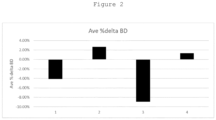
- Figure 2 is a graphical representation of the experimental data set out in Table 5 for Examples 1 to 4 (the Example number being on the x axis and the % difference in burn duration being on the y axis).
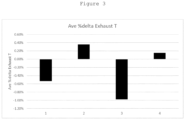
- Figure 3 is a graphical representation of the experimental data set out in Table 6 for Examples 1 to 4 (the Example number being on the x axis and the average % difference in Exhaust Temperature being on the y axis).
- Figure 4 is a graphical representation of the experimental data set out in Table 7 for Examples 1 to 4 (the Example number being on the x axis and the average % difference in burn duration (AI 50-90%) being on the y axis).
- Table 4 Example Loop P max (bar) Delta P max % Difference P max Least Sq.
Landscapes
- Chemical & Material Sciences (AREA)
- Oil, Petroleum & Natural Gas (AREA)
- Engineering & Computer Science (AREA)
- Organic Chemistry (AREA)
- Chemical Kinetics & Catalysis (AREA)
- General Chemical & Material Sciences (AREA)
- Combustion & Propulsion (AREA)
- Liquid Carbonaceous Fuels (AREA)
Claims (17)
- Kraftstoffzusammensetzung, umfassend:(a) einen Basiskraftstoff, der für die Verwendung in einem Verbrennungsmotor geeignet ist; und(b) eine Tetraalkylethanverbindung, die die Formel (I) aufweist:
 c) eine Alkylbenzolverbindung, die die Formel (II) aufweist
- Kraftstoffzusammensetzung nach Anspruch 1, wobei drei R1-R6-Gruppen in dem Alkylbenzol unabhängig ausgewählt sind aus einer C1-C6-Alkylgruppe.
- Kraftstoffzusammensetzung nach Anspruch 1 oder 2, wobei die Alkylbenzolverbindung eine Trimethylbenzolverbindung ist.
- Kraftstoffzusammensetzung nach einem der Ansprüche 1 bis 3, wobei die Alkylbenzolverbindung 1,3,5-Trimethylbenzol ist.
- Kraftstoffzusammensetzung nach einem der Ansprüche 1 bis 4, wobei die Alkylbenzolverbindung in einem Gehalt von 30 ppm bis 2 Gew.-% der Kraftstoffzusammensetzung vorhanden ist.
- Kraftstoffzusammensetzung nach einem der Ansprüche 1 bis 5, wobei Ar der Tetraalkylethanverbindung eine unsubstituierte aromatische Gruppe ist, ausgewählt aus Phenyl, Biphenyl, Naphthyl oder Anthracyl.
- Kraftstoffzusammensetzung nach einem der Ansprüche 1 bis 6, wobei Ar eine unsubstituierte Phenylgruppe ist.
- Kraftstoffzusammensetzung nach einem der Ansprüche 1 bis 7, wobei jedes X unabhängig ausgewählt ist aus einem Wasserstoffatom, unsubstituierter, geradkettiger oder verzweigter C1-C6-Alkylgruppe, vorausgesetzt, dass mindestens eine der X Gruppen in jeder CX3-Gruppe ein Wasserstoffatom ist.
- Kraftstoffzusammensetzung nach einem der Ansprüche 1 bis 8, wobei die Tetralkylethanverbindung 1,1'(1,1,2,2-Tetramethyl-1,1-ethandiyl)bisbenzol ist.
- Kraftstoffzusammensetzung nach einem der Ansprüche 1 bis 9, wobei die Tetraalkylethanverbindung in der Kraftstoffzusammensetzung in einem Gehalt von 30 ppm bis 10 Gew.-% der Kraftstoffzusammensetzung vorhanden ist.
- Kraftstoffzusammensetzung nach einem der Ansprüche 1 bis 10, wobei der Basiskraftstoff ein Benzinbasiskraftstoff ist.
- Kraftstoffzusammensetzung nach einem der Ansprüche 1 bis 11, wobei der Basiskraftstoff weniger als 10 Vol.-% Aromaten umfasst, basierend auf dem gesamten Basiskraftstoff.
- Kraftstoffzusammensetzung nach einem der Ansprüche 1 bis 12, wobei der Basiskraftstoff weniger als 2 Vol.-% Aromaten umfasst, die 9 oder mehr Kohlenstoffatome aufweisen, basierend auf dem gesamten Basiskraftstoff.
- Verwendung einer Kraftstoffzusammensetzung nach einem der Ansprüche 1 bis 13 zum Verbessern der Leistungsabgabe eines Verbrennungsmotors.
- Verwendung einer Kraftstoffzusammensetzung nach einem der Ansprüche 1 bis 13 zum Verbessern der Beschleunigung eines Verbrennungsmotors.
- Verwendung einer Kraftstoffzusammensetzung nach einem der Ansprüche 1 bis 13 zum Reduzieren der Brenndauer in einem Verbrennungsmotor.
- Verwendung einer Kraftstoffzusammensetzung nach einem der Ansprüche 1 bis 13 zum Erhöhen der Flammengeschwindigkeit in einem Verbrennungsmotor.
Applications Claiming Priority (2)
| Application Number | Priority Date | Filing Date | Title |
|---|---|---|---|
| US202163179781P | 2021-04-26 | 2021-04-26 | |
| PCT/EP2022/060541 WO2022228989A1 (en) | 2021-04-26 | 2022-04-21 | Fuel compositions |
Publications (2)
| Publication Number | Publication Date |
|---|---|
| EP4330356A1 EP4330356A1 (de) | 2024-03-06 |
| EP4330356B1 true EP4330356B1 (de) | 2025-01-01 |
Family
ID=81846456
Family Applications (1)
| Application Number | Title | Priority Date | Filing Date |
|---|---|---|---|
| EP22725380.4A Active EP4330356B1 (de) | 2021-04-26 | 2022-04-21 | Kraftstoffzusammensetzungen |
Country Status (7)
| Country | Link |
|---|---|
| US (1) | US20240182804A1 (de) |
| EP (1) | EP4330356B1 (de) |
| JP (1) | JP2024515769A (de) |
| CN (1) | CN117178047A (de) |
| BR (1) | BR112023021530A2 (de) |
| MX (1) | MX2023012349A (de) |
| WO (1) | WO2022228989A1 (de) |
Family Cites Families (58)
| Publication number | Priority date | Publication date | Assignee | Title |
|---|---|---|---|---|
| NL272563A (de) | 1960-12-16 | |||
| US4072811A (en) | 1974-10-17 | 1978-02-07 | Akzona Incorporated | Novel chlorinated dicumene initiators |
| US4010622A (en) * | 1975-06-18 | 1977-03-08 | Etter Berwyn E | Method of transporting natural gas |
| US4208190A (en) | 1979-02-09 | 1980-06-17 | Ethyl Corporation | Diesel fuels having anti-wear properties |
| CA1270642A (en) | 1983-12-30 | 1990-06-26 | John Vincent Hanlon | Fuel compositions |
| DE3732908A1 (de) | 1987-09-30 | 1989-04-13 | Basf Ag | Polyetheramine enthaltende kraftstoffe fuer ottomotoren |
| US4877416A (en) | 1987-11-18 | 1989-10-31 | Chevron Research Company | Synergistic fuel compositions |
| US4849572A (en) | 1987-12-22 | 1989-07-18 | Exxon Chemical Patents Inc. | Process for preparing polybutenes having enhanced reactivity using boron trifluoride catalysts (PT-647) |
| DE3826608A1 (de) | 1988-08-05 | 1990-02-08 | Basf Ag | Polyetheramine oder polyetheraminderivate enthaltende kraftstoffe fuer ottomotoren |
| DE3838918A1 (de) | 1988-11-17 | 1990-05-23 | Basf Ag | Kraftstoffe fuer verbrennungsmaschinen |
| EP0482253A1 (de) | 1990-10-23 | 1992-04-29 | Ethyl Petroleum Additives Limited | Umweltfreundliche Kraftstoffzusammensetzungen und Zusätze dafür |
| US5186722A (en) * | 1991-06-25 | 1993-02-16 | Cantrell Research, Incorporated | Hydrocarbon-based fuels from biomass |
| US5490864A (en) | 1991-08-02 | 1996-02-13 | Texaco Inc. | Anti-wear lubricity additive for low-sulfur content diesel fuels |
| EP0557516B1 (de) | 1991-09-13 | 1996-07-17 | Chevron Chemical Company | Polyisobutenylsuccinimide enthaltende brennstoffzusammensetzungen |
| DE4142241A1 (de) | 1991-12-20 | 1993-06-24 | Basf Ag | Kraftstoffe fuer ottomotoren |
| US5385588A (en) * | 1992-06-02 | 1995-01-31 | Ethyl Petroleum Additives, Inc. | Enhanced hydrocarbonaceous additive concentrate |
| RU2101324C1 (ru) | 1992-08-18 | 1998-01-10 | Шелл Интернэшнл Рисерч Маатсхаппий Б.В. | Способ получения углеводородного топлива |
| GB9304350D0 (en) | 1993-03-03 | 1993-04-21 | Bp Chemicals Additives | Fuel and lubricating oil compositions |
| DE4309074A1 (de) | 1993-03-20 | 1994-09-22 | Basf Ag | Als Kraftstoffadditiv geeignete Mischungen |
| DE4313088A1 (de) | 1993-04-22 | 1994-10-27 | Basf Ag | Poly-1-n-alkenamine und diese enthaltende Kraft- und Schmierstoffzusammensetzungen |
| US5378348A (en) | 1993-07-22 | 1995-01-03 | Exxon Research And Engineering Company | Distillate fuel production from Fischer-Tropsch wax |
| GB9411614D0 (en) | 1994-06-09 | 1994-08-03 | Exxon Chemical Patents Inc | Fuel oil compositions |
| DE4432038A1 (de) | 1994-09-09 | 1996-03-14 | Basf Ag | Polyetheramine enthaltende Kraftstoffe für Ottomotoren |
| DE19525938A1 (de) | 1995-07-17 | 1997-01-23 | Basf Ag | Verfahren zur Herstellung von organischen Stickstoffverbindungen, spezielle organische Stickstoffverbindungen und Mischungen aus solchen Verbindungen sowie deren Verwendung als Kraft- und Schmierstoffadditive |
| US5689031A (en) | 1995-10-17 | 1997-11-18 | Exxon Research & Engineering Company | Synthetic diesel fuel and process for its production |
| US6296757B1 (en) | 1995-10-17 | 2001-10-02 | Exxon Research And Engineering Company | Synthetic diesel fuel and process for its production |
| TW477784B (en) | 1996-04-26 | 2002-03-01 | Shell Int Research | Alkoxy acetic acid derivatives |
| DE19620262A1 (de) | 1996-05-20 | 1997-11-27 | Basf Ag | Verfahren zur Herstellung von Polyalkenaminen |
| TW449617B (en) | 1996-07-05 | 2001-08-11 | Shell Int Research | Fuel oil compositions |
| US5888376A (en) | 1996-08-23 | 1999-03-30 | Exxon Research And Engineering Co. | Conversion of fischer-tropsch light oil to jet fuel by countercurrent processing |
| GB9618546D0 (en) | 1996-09-05 | 1996-10-16 | Bp Chemicals Additives | Dispersants/detergents for hydrocarbons fuels |
| US5766274A (en) | 1997-02-07 | 1998-06-16 | Exxon Research And Engineering Company | Synthetic jet fuel and process for its production |
| WO1998042808A1 (en) | 1997-03-21 | 1998-10-01 | Infineum Holdings Bv | Fuel oil compositions |
| US6162956A (en) | 1998-08-18 | 2000-12-19 | Exxon Research And Engineering Co | Stability Fischer-Tropsch diesel fuel and a process for its production |
| US6180842B1 (en) | 1998-08-21 | 2001-01-30 | Exxon Research And Engineering Company | Stability fischer-tropsch diesel fuel and a process for its production |
| EP1835011A1 (de) | 1998-10-05 | 2007-09-19 | Sasol Technology (Pty) Ltd | Biologisch abbaubare Mitteldestillate und ihre Herstellung |
| EP1129155A1 (de) | 1998-10-05 | 2001-09-05 | Sasol Technology (Proprietary) Limited | Verfahren zur herstellung von mitteldestillaten und durch dieses verfahren hergesellte destillate |
| AU765382C (en) * | 1999-06-11 | 2004-09-02 | Bp Oil International Limited | Fuel composition |
| EP1101813B1 (de) | 1999-11-19 | 2014-03-19 | ENI S.p.A. | Verfahren zur Herstellung von Mitteldestillaten aus geradkettigen Paraffinen |
| US6204426B1 (en) | 1999-12-29 | 2001-03-20 | Chevron U.S.A. Inc. | Process for producing a highly paraffinic diesel fuel having a high iso-paraffin to normal paraffin mole ratio |
| US6663767B1 (en) | 2000-05-02 | 2003-12-16 | Exxonmobil Research And Engineering Company | Low sulfur, low emission blends of fischer-tropsch and conventional diesel fuels |
| AU5528001A (en) | 2000-05-02 | 2001-11-12 | Exxonmobil Res & Eng Co | Wide cut fischer-tropsch diesel fuels |
| US6787022B1 (en) | 2000-05-02 | 2004-09-07 | Exxonmobil Research And Engineering Company | Winter diesel fuel production from a fischer-tropsch wax |
| ES2266194T3 (es) | 2000-05-02 | 2007-03-01 | Exxonmobil Research And Engineering Company | Uso de mezclas de combustible fischer-tropsch/materiales craqueados para lograr emisiones bajas. |
| US6616776B1 (en) * | 2002-11-06 | 2003-09-09 | Chevron Oronite Company Llc | Method for removing engine deposits in a reciprocating internal combustion engine |
| CN1301315C (zh) | 2002-03-14 | 2007-02-21 | 国际壳牌研究有限公司 | 汽油添加剂 |
| WO2007061903A1 (en) * | 2005-11-17 | 2007-05-31 | Cps Biofuels, Inc. | Alternative fuel and fuel additive compositions |
| WO2008135602A2 (en) | 2007-05-08 | 2008-11-13 | Shell Internationale Research Maatschappij B.V. | Diesel fuel compositions comprising a gas oil base fuel and a fatty acid alkyl ester |
| EP2203544B1 (de) | 2007-10-19 | 2016-03-09 | Shell Internationale Research Maatschappij B.V. | Benzinzusammensetzungen für verbrennungsmotoren |
| US8372164B2 (en) | 2007-12-19 | 2013-02-12 | Shell Oil Company | Gasoline composition and process for the preparation of alkylfurfuryl ether |
| US7546834B1 (en) * | 2008-04-29 | 2009-06-16 | Ford Global Technologies, Llc | Selectably fueling with natural gas or direct injection ethanol |
| EP2304001B1 (de) | 2008-07-02 | 2019-08-07 | Shell International Research Maatschappij B.V. | Flüssigkraftstoffzusammensetzungen |
| US8697924B2 (en) | 2008-09-05 | 2014-04-15 | Shell Oil Company | Liquid fuel compositions |
| US20130008081A1 (en) | 2009-06-30 | 2013-01-10 | Proton Power, Inc. | Methods and systems for making liquid fuel from cellulose in thermal reactors |
| EP2582777B1 (de) * | 2010-06-21 | 2016-03-23 | Shell Oil Company | Kraftstoffzusammensetzung und ihre verwendung |
| US8846587B2 (en) * | 2011-03-24 | 2014-09-30 | Elevance Renewable Sciences, Inc. | Functionalized monomers and polymers |
| WO2014143390A1 (en) * | 2013-03-15 | 2014-09-18 | Braly George W | High octane unleaded aviation gasoline |
| WO2015171712A1 (en) * | 2014-05-07 | 2015-11-12 | Chevron U.S.A. Inc. | Fuel modifiers for natural gas reciprocating engines |
-
2022
- 2022-04-21 WO PCT/EP2022/060541 patent/WO2022228989A1/en not_active Ceased
- 2022-04-21 JP JP2023565581A patent/JP2024515769A/ja active Pending
- 2022-04-21 BR BR112023021530A patent/BR112023021530A2/pt unknown
- 2022-04-21 EP EP22725380.4A patent/EP4330356B1/de active Active
- 2022-04-21 CN CN202280027997.2A patent/CN117178047A/zh active Pending
- 2022-04-21 US US18/552,461 patent/US20240182804A1/en active Pending
- 2022-04-21 MX MX2023012349A patent/MX2023012349A/es unknown
Also Published As
| Publication number | Publication date |
|---|---|
| BR112023021530A2 (pt) | 2023-12-19 |
| WO2022228989A1 (en) | 2022-11-03 |
| US20240182804A1 (en) | 2024-06-06 |
| JP2024515769A (ja) | 2024-04-10 |
| CN117178047A (zh) | 2023-12-05 |
| EP4330356A1 (de) | 2024-03-06 |
| MX2023012349A (es) | 2023-10-30 |
Similar Documents
| Publication | Publication Date | Title |
|---|---|---|
| EP3397734B1 (de) | Kraftstoffzusammensetzung | |
| US10808195B2 (en) | Fuel compositions | |
| US20230227742A1 (en) | Fuel composition | |
| US9587195B2 (en) | Liquid composition | |
| US20150113857A1 (en) | Liquid fuel compositions | |
| EP2891699B1 (de) | Bleifreie Kraftstoffzusammensetzungen | |
| US9434900B2 (en) | Liquid fuel compositions | |
| EP4330356B1 (de) | Kraftstoffzusammensetzungen | |
| US12338405B2 (en) | Fuel compositions | |
| EP4408957B1 (de) | Kraftstoffzusammensetzungen | |
| US20250382536A1 (en) | Fuel compositions | |
| CN120092069A (zh) | 燃料组合物 | |
| EP2949733A1 (de) | Ottokraftstoffzusammensetzungen enthaltend als uv-absorber wirksame oxanilidverbindungen |
Legal Events
| Date | Code | Title | Description |
|---|---|---|---|
| STAA | Information on the status of an ep patent application or granted ep patent |
Free format text: STATUS: UNKNOWN |
|
| STAA | Information on the status of an ep patent application or granted ep patent |
Free format text: STATUS: THE INTERNATIONAL PUBLICATION HAS BEEN MADE |
|
| PUAI | Public reference made under article 153(3) epc to a published international application that has entered the european phase |
Free format text: ORIGINAL CODE: 0009012 |
|
| STAA | Information on the status of an ep patent application or granted ep patent |
Free format text: STATUS: REQUEST FOR EXAMINATION WAS MADE |
|
| 17P | Request for examination filed |
Effective date: 20231017 |
|
| AK | Designated contracting states |
Kind code of ref document: A1 Designated state(s): AL AT BE BG CH CY CZ DE DK EE ES FI FR GB GR HR HU IE IS IT LI LT LU LV MC MK MT NL NO PL PT RO RS SE SI SK SM TR |
|
| DAV | Request for validation of the european patent (deleted) | ||
| DAX | Request for extension of the european patent (deleted) | ||
| GRAP | Despatch of communication of intention to grant a patent |
Free format text: ORIGINAL CODE: EPIDOSNIGR1 |
|
| STAA | Information on the status of an ep patent application or granted ep patent |
Free format text: STATUS: GRANT OF PATENT IS INTENDED |
|
| GRAS | Grant fee paid |
Free format text: ORIGINAL CODE: EPIDOSNIGR3 |
|
| GRAA | (expected) grant |
Free format text: ORIGINAL CODE: 0009210 |
|
| STAA | Information on the status of an ep patent application or granted ep patent |
Free format text: STATUS: THE PATENT HAS BEEN GRANTED |
|
| INTG | Intention to grant announced |
Effective date: 20241105 |
|
| AK | Designated contracting states |
Kind code of ref document: B1 Designated state(s): AL AT BE BG CH CY CZ DE DK EE ES FI FR GB GR HR HU IE IS IT LI LT LU LV MC MK MT NL NO PL PT RO RS SE SI SK SM TR |
|
| REG | Reference to a national code |
Ref country code: GB Ref legal event code: FG4D |
|
| REG | Reference to a national code |
Ref country code: DE Ref legal event code: R096 Ref document number: 602022009399 Country of ref document: DE |
|
| REG | Reference to a national code |
Ref country code: CH Ref legal event code: EP |
|
| REG | Reference to a national code |
Ref country code: IE Ref legal event code: FG4D |
|
| REG | Reference to a national code |
Ref country code: NL Ref legal event code: FP |
|
| PGFP | Annual fee paid to national office [announced via postgrant information from national office to epo] |
Ref country code: NL Payment date: 20250314 Year of fee payment: 4 |
|
| REG | Reference to a national code |
Ref country code: LT Ref legal event code: MG9D |
|
| REG | Reference to a national code |
Ref country code: AT Ref legal event code: MK05 Ref document number: 1756236 Country of ref document: AT Kind code of ref document: T Effective date: 20250101 |
|
| PG25 | Lapsed in a contracting state [announced via postgrant information from national office to epo] |
Ref country code: FI Free format text: LAPSE BECAUSE OF FAILURE TO SUBMIT A TRANSLATION OF THE DESCRIPTION OR TO PAY THE FEE WITHIN THE PRESCRIBED TIME-LIMIT Effective date: 20250101 |
|
| PG25 | Lapsed in a contracting state [announced via postgrant information from national office to epo] |
Ref country code: PL Free format text: LAPSE BECAUSE OF FAILURE TO SUBMIT A TRANSLATION OF THE DESCRIPTION OR TO PAY THE FEE WITHIN THE PRESCRIBED TIME-LIMIT Effective date: 20250101 |
|
| PGFP | Annual fee paid to national office [announced via postgrant information from national office to epo] |
Ref country code: DE Payment date: 20250305 Year of fee payment: 4 |
|
| PG25 | Lapsed in a contracting state [announced via postgrant information from national office to epo] |
Ref country code: ES Free format text: LAPSE BECAUSE OF FAILURE TO SUBMIT A TRANSLATION OF THE DESCRIPTION OR TO PAY THE FEE WITHIN THE PRESCRIBED TIME-LIMIT Effective date: 20250101 |
|
| PG25 | Lapsed in a contracting state [announced via postgrant information from national office to epo] |
Ref country code: NO Free format text: LAPSE BECAUSE OF FAILURE TO SUBMIT A TRANSLATION OF THE DESCRIPTION OR TO PAY THE FEE WITHIN THE PRESCRIBED TIME-LIMIT Effective date: 20250401 Ref country code: IS Free format text: LAPSE BECAUSE OF FAILURE TO SUBMIT A TRANSLATION OF THE DESCRIPTION OR TO PAY THE FEE WITHIN THE PRESCRIBED TIME-LIMIT Effective date: 20250501 |
|
| PG25 | Lapsed in a contracting state [announced via postgrant information from national office to epo] |
Ref country code: HR Free format text: LAPSE BECAUSE OF FAILURE TO SUBMIT A TRANSLATION OF THE DESCRIPTION OR TO PAY THE FEE WITHIN THE PRESCRIBED TIME-LIMIT Effective date: 20250101 |
|
| PG25 | Lapsed in a contracting state [announced via postgrant information from national office to epo] |
Ref country code: LV Free format text: LAPSE BECAUSE OF FAILURE TO SUBMIT A TRANSLATION OF THE DESCRIPTION OR TO PAY THE FEE WITHIN THE PRESCRIBED TIME-LIMIT Effective date: 20250101 Ref country code: PT Free format text: LAPSE BECAUSE OF FAILURE TO SUBMIT A TRANSLATION OF THE DESCRIPTION OR TO PAY THE FEE WITHIN THE PRESCRIBED TIME-LIMIT Effective date: 20250502 |
|
| PG25 | Lapsed in a contracting state [announced via postgrant information from national office to epo] |
Ref country code: GR Free format text: LAPSE BECAUSE OF FAILURE TO SUBMIT A TRANSLATION OF THE DESCRIPTION OR TO PAY THE FEE WITHIN THE PRESCRIBED TIME-LIMIT Effective date: 20250402 Ref country code: BG Free format text: LAPSE BECAUSE OF FAILURE TO SUBMIT A TRANSLATION OF THE DESCRIPTION OR TO PAY THE FEE WITHIN THE PRESCRIBED TIME-LIMIT Effective date: 20250101 |
|
| PG25 | Lapsed in a contracting state [announced via postgrant information from national office to epo] |
Ref country code: AT Free format text: LAPSE BECAUSE OF FAILURE TO SUBMIT A TRANSLATION OF THE DESCRIPTION OR TO PAY THE FEE WITHIN THE PRESCRIBED TIME-LIMIT Effective date: 20250101 |
|
| PGFP | Annual fee paid to national office [announced via postgrant information from national office to epo] |
Ref country code: TR Payment date: 20250409 Year of fee payment: 4 |
|
| PG25 | Lapsed in a contracting state [announced via postgrant information from national office to epo] |
Ref country code: CZ Free format text: LAPSE BECAUSE OF FAILURE TO SUBMIT A TRANSLATION OF THE DESCRIPTION OR TO PAY THE FEE WITHIN THE PRESCRIBED TIME-LIMIT Effective date: 20250101 |
|
| PG25 | Lapsed in a contracting state [announced via postgrant information from national office to epo] |
Ref country code: SE Free format text: LAPSE BECAUSE OF FAILURE TO SUBMIT A TRANSLATION OF THE DESCRIPTION OR TO PAY THE FEE WITHIN THE PRESCRIBED TIME-LIMIT Effective date: 20250101 |
|
| REG | Reference to a national code |
Ref country code: DE Ref legal event code: R097 Ref document number: 602022009399 Country of ref document: DE |
|
| PG25 | Lapsed in a contracting state [announced via postgrant information from national office to epo] |
Ref country code: SM Free format text: LAPSE BECAUSE OF FAILURE TO SUBMIT A TRANSLATION OF THE DESCRIPTION OR TO PAY THE FEE WITHIN THE PRESCRIBED TIME-LIMIT Effective date: 20250101 |
|
| PG25 | Lapsed in a contracting state [announced via postgrant information from national office to epo] |
Ref country code: DK Free format text: LAPSE BECAUSE OF FAILURE TO SUBMIT A TRANSLATION OF THE DESCRIPTION OR TO PAY THE FEE WITHIN THE PRESCRIBED TIME-LIMIT Effective date: 20250101 |
|
| PG25 | Lapsed in a contracting state [announced via postgrant information from national office to epo] |
Ref country code: IT Free format text: LAPSE BECAUSE OF FAILURE TO SUBMIT A TRANSLATION OF THE DESCRIPTION OR TO PAY THE FEE WITHIN THE PRESCRIBED TIME-LIMIT Effective date: 20250101 |
|
| PG25 | Lapsed in a contracting state [announced via postgrant information from national office to epo] |
Ref country code: EE Free format text: LAPSE BECAUSE OF FAILURE TO SUBMIT A TRANSLATION OF THE DESCRIPTION OR TO PAY THE FEE WITHIN THE PRESCRIBED TIME-LIMIT Effective date: 20250101 |
|
| PG25 | Lapsed in a contracting state [announced via postgrant information from national office to epo] |
Ref country code: RO Free format text: LAPSE BECAUSE OF FAILURE TO SUBMIT A TRANSLATION OF THE DESCRIPTION OR TO PAY THE FEE WITHIN THE PRESCRIBED TIME-LIMIT Effective date: 20250101 |
|
| PG25 | Lapsed in a contracting state [announced via postgrant information from national office to epo] |
Ref country code: SK Free format text: LAPSE BECAUSE OF FAILURE TO SUBMIT A TRANSLATION OF THE DESCRIPTION OR TO PAY THE FEE WITHIN THE PRESCRIBED TIME-LIMIT Effective date: 20250101 |
|
| PLBE | No opposition filed within time limit |
Free format text: ORIGINAL CODE: 0009261 |
|
| STAA | Information on the status of an ep patent application or granted ep patent |
Free format text: STATUS: NO OPPOSITION FILED WITHIN TIME LIMIT |
|
| REG | Reference to a national code |
Ref country code: CH Ref legal event code: L10 Free format text: ST27 STATUS EVENT CODE: U-0-0-L10-L00 (AS PROVIDED BY THE NATIONAL OFFICE) Effective date: 20251112 |
|
| REG | Reference to a national code |
Ref country code: CH Ref legal event code: H13 Free format text: ST27 STATUS EVENT CODE: U-0-0-H10-H13 (AS PROVIDED BY THE NATIONAL OFFICE) Effective date: 20251125 |
|
| 26N | No opposition filed |
Effective date: 20251002 |
|
| PG25 | Lapsed in a contracting state [announced via postgrant information from national office to epo] |
Ref country code: LU Free format text: LAPSE BECAUSE OF NON-PAYMENT OF DUE FEES Effective date: 20250421 |
|
| PG25 | Lapsed in a contracting state [announced via postgrant information from national office to epo] |
Ref country code: MC Free format text: LAPSE BECAUSE OF FAILURE TO SUBMIT A TRANSLATION OF THE DESCRIPTION OR TO PAY THE FEE WITHIN THE PRESCRIBED TIME-LIMIT Effective date: 20250101 |
|
| REG | Reference to a national code |
Ref country code: BE Ref legal event code: MM Effective date: 20250430 |
|
| PG25 | Lapsed in a contracting state [announced via postgrant information from national office to epo] |
Ref country code: FR Free format text: LAPSE BECAUSE OF NON-PAYMENT OF DUE FEES Effective date: 20250430 |
|
| PG25 | Lapsed in a contracting state [announced via postgrant information from national office to epo] |
Ref country code: BE Free format text: LAPSE BECAUSE OF NON-PAYMENT OF DUE FEES Effective date: 20250430 |
|
| PG25 | Lapsed in a contracting state [announced via postgrant information from national office to epo] |
Ref country code: CH Free format text: LAPSE BECAUSE OF NON-PAYMENT OF DUE FEES Effective date: 20250430 |