EP4326129B1 - Navigationssteuerung von autonomen reinigungsrobotern - Google Patents
Navigationssteuerung von autonomen reinigungsrobotern Download PDFInfo
- Publication number
- EP4326129B1 EP4326129B1 EP22713139.8A EP22713139A EP4326129B1 EP 4326129 B1 EP4326129 B1 EP 4326129B1 EP 22713139 A EP22713139 A EP 22713139A EP 4326129 B1 EP4326129 B1 EP 4326129B1
- Authority
- EP
- European Patent Office
- Prior art keywords
- robot
- cleaning robot
- obstacle
- autonomous cleaning
- along
- Prior art date
- Legal status (The legal status is an assumption and is not a legal conclusion. Google has not performed a legal analysis and makes no representation as to the accuracy of the status listed.)
- Active
Links
Images












Classifications
-
- A—HUMAN NECESSITIES
- A47—FURNITURE; DOMESTIC ARTICLES OR APPLIANCES; COFFEE MILLS; SPICE MILLS; SUCTION CLEANERS IN GENERAL
- A47L—DOMESTIC WASHING OR CLEANING; SUCTION CLEANERS IN GENERAL
- A47L11/00—Machines for cleaning floors, carpets, furniture, walls, or wall coverings
- A47L11/40—Parts or details of machines not provided for in groups A47L11/02 - A47L11/38, or not restricted to one of these groups, e.g. handles, arrangements of switches, skirts, buffers, levers
- A47L11/4011—Regulation of the cleaning machine by electric means; Control systems and remote control systems therefor
-
- G—PHYSICS
- G05—CONTROLLING; REGULATING
- G05D—SYSTEMS FOR CONTROLLING OR REGULATING NON-ELECTRIC VARIABLES
- G05D1/00—Control of position, course, altitude or attitude of land, water, air or space vehicles, e.g. using automatic pilots
- G05D1/02—Control of position or course in two dimensions
- G05D1/021—Control of position or course in two dimensions specially adapted to land vehicles
- G05D1/0212—Control of position or course in two dimensions specially adapted to land vehicles with means for defining a desired trajectory
- G05D1/0214—Control of position or course in two dimensions specially adapted to land vehicles with means for defining a desired trajectory in accordance with safety or protection criteria, e.g. avoiding hazardous areas
-
- G—PHYSICS
- G05—CONTROLLING; REGULATING
- G05D—SYSTEMS FOR CONTROLLING OR REGULATING NON-ELECTRIC VARIABLES
- G05D1/00—Control of position, course, altitude or attitude of land, water, air or space vehicles, e.g. using automatic pilots
- G05D1/02—Control of position or course in two dimensions
- G05D1/021—Control of position or course in two dimensions specially adapted to land vehicles
- G05D1/0212—Control of position or course in two dimensions specially adapted to land vehicles with means for defining a desired trajectory
- G05D1/0219—Control of position or course in two dimensions specially adapted to land vehicles with means for defining a desired trajectory ensuring the processing of the whole working surface
-
- G—PHYSICS
- G05—CONTROLLING; REGULATING
- G05D—SYSTEMS FOR CONTROLLING OR REGULATING NON-ELECTRIC VARIABLES
- G05D1/00—Control of position, course, altitude or attitude of land, water, air or space vehicles, e.g. using automatic pilots
- G05D1/02—Control of position or course in two dimensions
- G05D1/021—Control of position or course in two dimensions specially adapted to land vehicles
- G05D1/0227—Control of position or course in two dimensions specially adapted to land vehicles using mechanical sensing means, e.g. for sensing treated area
- G05D1/0229—Control of position or course in two dimensions specially adapted to land vehicles using mechanical sensing means, e.g. for sensing treated area in combination with fixed guiding means
-
- G—PHYSICS
- G05—CONTROLLING; REGULATING
- G05D—SYSTEMS FOR CONTROLLING OR REGULATING NON-ELECTRIC VARIABLES
- G05D1/00—Control of position, course, altitude or attitude of land, water, air or space vehicles, e.g. using automatic pilots
- G05D1/20—Control system inputs
- G05D1/24—Arrangements for determining position or orientation
- G05D1/244—Arrangements for determining position or orientation using passive navigation aids external to the vehicle, e.g. markers, reflectors or magnetic means
-
- G—PHYSICS
- G05—CONTROLLING; REGULATING
- G05D—SYSTEMS FOR CONTROLLING OR REGULATING NON-ELECTRIC VARIABLES
- G05D1/00—Control of position, course, altitude or attitude of land, water, air or space vehicles, e.g. using automatic pilots
- G05D1/60—Intended control result
- G05D1/617—Safety or protection, e.g. defining protection zones around obstacles or avoiding hazards
-
- G—PHYSICS
- G05—CONTROLLING; REGULATING
- G05D—SYSTEMS FOR CONTROLLING OR REGULATING NON-ELECTRIC VARIABLES
- G05D1/00—Control of position, course, altitude or attitude of land, water, air or space vehicles, e.g. using automatic pilots
- G05D1/60—Intended control result
- G05D1/617—Safety or protection, e.g. defining protection zones around obstacles or avoiding hazards
- G05D1/622—Obstacle avoidance
-
- G—PHYSICS
- G05—CONTROLLING; REGULATING
- G05D—SYSTEMS FOR CONTROLLING OR REGULATING NON-ELECTRIC VARIABLES
- G05D1/00—Control of position, course, altitude or attitude of land, water, air or space vehicles, e.g. using automatic pilots
- G05D1/60—Intended control result
- G05D1/648—Performing a task within a working area or space, e.g. cleaning
-
- A—HUMAN NECESSITIES
- A47—FURNITURE; DOMESTIC ARTICLES OR APPLIANCES; COFFEE MILLS; SPICE MILLS; SUCTION CLEANERS IN GENERAL
- A47L—DOMESTIC WASHING OR CLEANING; SUCTION CLEANERS IN GENERAL
- A47L2201/00—Robotic cleaning machines, i.e. with automatic control of the travelling movement or the cleaning operation
- A47L2201/04—Automatic control of the travelling movement; Automatic obstacle detection
-
- G—PHYSICS
- G05—CONTROLLING; REGULATING
- G05D—SYSTEMS FOR CONTROLLING OR REGULATING NON-ELECTRIC VARIABLES
- G05D2105/00—Specific applications of the controlled vehicles
- G05D2105/10—Specific applications of the controlled vehicles for cleaning, vacuuming or polishing
-
- G—PHYSICS
- G05—CONTROLLING; REGULATING
- G05D—SYSTEMS FOR CONTROLLING OR REGULATING NON-ELECTRIC VARIABLES
- G05D2107/00—Specific environments of the controlled vehicles
- G05D2107/40—Indoor domestic environment
-
- G—PHYSICS
- G05—CONTROLLING; REGULATING
- G05D—SYSTEMS FOR CONTROLLING OR REGULATING NON-ELECTRIC VARIABLES
- G05D2109/00—Types of controlled vehicles
- G05D2109/10—Land vehicles
Definitions
- An autonomous mobile robot can autonomously move about a space to perform a task.
- the autonomous mobile robot can include a controller that navigates the autonomous mobile robot in response to input.
- the autonomous mobile robot can include sensors for detecting objects in the space. The sensors can produce sensor signals in response to detection of objects in the space, and the controller can receive these sensor signals as input for controlling navigation of the autonomous mobile robot.
- the task performed by the autonomous mobile robot as the autonomous mobile robot is navigated about the space can vary.
- the autonomous mobile robot can be a cleaning robot (e.g., to vacuum, sweep, scrub, or mop a floor surface in the space) or a patrol robot (e.g., to observe objects in the space).
- the operations include moving the autonomous cleaning robot along a first portion of a path toward a waypoint, detecting, with the ranging sensor, the obstacle along the path between the first portion of the path and a second portion of the path, navigating the autonomous cleaning robot about the obstacle along a trajectory that maintains at least a clearance distance between the autonomous cleaning robot and the obstacle, and moving the autonomous cleaning robot along the second portion of the path.
- the method or the operations include initiating a coverage routine in which the autonomous cleaning robot moves along a plurality of rows.
- the path can correspond to a row of the plurality of rows.
- the method or the operations include initiating a relocation behavior in which the autonomous cleaning robot moves from a first room to a second room along the path.
- selecting the trajectory of the plurality of selectable alternative trajectories based on at least the distances between the plurality of selectable alternative trajectories and the waypoint includes computing scores for the plurality of selectable alternative trajectories as a function of at least the distances.
- the distances are first distances
- computing the scores includes computing the scores for the plurality of selectable alternative trajectories as a function of at least (i) the first distances and (ii) second distances between the plurality of selectable alternative trajectories and the path.
- navigating the autonomous cleaning robot about the obstacle includes detecting the presence of the obstacle in a first area surrounding the autonomous cleaning robot, detecting the presence of the obstacle in a second area offset from the first area, and moving the autonomous cleaning robot away from the obstacle in response to detecting the presence of the obstacle in the first area and the second area.
- Rotating the autonomous cleaning robot in place can include rotating the autonomous cleaning robot in place after moving the autonomous cleaning robot away from the obstacle.
- implementations of the systems and methods described in this disclosure can improve navigation of autonomous mobile robots relative to obstacles above floor surfaces in a space.
- an autonomous mobile robot can be navigated relative to the obstacle without contacting the obstacle, thereby reducing impact on the obstacle.
- the reduced impact can prevent motion of the obstacle in response to the contact between the autonomous mobile robot and the obstacle, and can also reduce noise produced due to the contact.
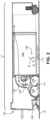
- FIGS. 2 and 3A-3B illustrate examples of the robot 100.
- the robot 100 collects debris 106 from the floor surface 10 as the robot 100 traverses the floor surface 10.
- the robot 100 is a household robot that has a small profile so that the robot 100 can fit under furniture within a home.
- a height H1 (shown in FIG. 2 ) of the robot 100 relative to the floor surface is, for example, no more than 13 centimeters.
- the robot 100 is also compact.
- An overall length L1 (shown in FIG. 2 ) of the robot 100 and an overall width W1 (shown in FIG. 3A ) can each be between 15 and 60 centimeters, e.g., between 15 and 30 centimeters, 20 and 30 centimeters, 25 and 35 centimeters, 20 and 40 centimeters, 30 and 40 centimeters, 40 and 50 centimeters, or 50 and 60 centimeters.
- the overall width W1 can correspond to a width of the housing infrastructure 103 of the robot 100, e.g., a width of the forward portion 101 of the robot 100 and a width of the rearward portion 102.
- the independent control of the drive wheels 112, 114 enables the controller 109 to select from several different trajectories for the robot 100, e.g., turning the robot 100 in place, moving the robot 100 along an arc, moving in a straight line in the forward drive direction F, moving the robot in a straight line in the rearward drive direction R, and other movements that possible from independent control of two drive wheels on left and right portions of an autonomous mobile robot.
- the robot 100 further includes a passive caster wheel 115 extending through the bottom portion 113 of the housing infrastructure 103.
- the caster wheel 115 is not powered. Together, the drive wheels 112 and the caster wheel 115 cooperate to support the housing infrastructure 103 above the floor surface 10.
- the caster wheel 115 is disposed along the rearward portion 102 of the housing infrastructure 103, and the drive wheels 112 are disposed forward of the caster wheel 115.
- the rotatable members 118 can be rotatable about parallel horizontal axes to agitate debris 106 on the floor surface 10 and direct the debris 106 toward the cleaning inlet 117, into the cleaning inlet 117, and into a suction pathway 145 (shown in FIG. 2 ) in the robot 100.
- the rotatable members 118 can be positioned entirely within the forward portion 101 of the robot 100.
- the rotatable members 118 include elastomeric shells that contact debris 106 on the floor surface 10 to direct debris 106 through the cleaning inlet 117 between the rotatable members 118 and into an interior of the robot 100, e.g., into a debris bin 124 (shown in FIG.
- the rotatable members 118 rotate relative to the housing infrastructure 103.
- the rotatable members 118 further contact the floor surface 10 to agitate debris 106 on the floor surface 10.
- the rotatable members 118 include bristles to sweep the debris 106 into the suction pathway 145, while in other implementations, the rotatable members 118 are formed of an elastomeric material and have elastomeric vanes that engage the debris 106 to move the debris into the suction pathway 145.
- the robot 100 further includes a brush 126 that rotates about a non-horizontal axis.
- the robot 100 includes a motor 128 operably connected to the brush 126 to rotate the brush 126.
- the brush 126 is a side brush laterally offset from a fore-aft axis FA of the robot 100 such that the brush 126 extends beyond an outer perimeter of the housing infrastructure 103 of the robot 100 and can thereby be capable of engaging debris on portions of the floor surface 10 that the rotatable members 118 typically cannot reach, e.g., portions of the floor surface 10 outside of a portion of the floor surface 10 directly underneath the robot 100.
- the brush 126 can clean along an edge in the space 20 as the robot 100 moves during an edge following mode (as discussed in this disclosure).
- the one or more electrical sensors are configured to detect features in the space 20, such as objects, obstacles, features of the floor surface 10, features on walls in the space 20. Detection of these features can be used as input for the controller 109 to control navigation of the robot 100 about the floor surface 10 and, as discussed in this disclosure, can be used to generate maps for the robot 100 to efficiently navigate about the space 20. Sensors of the robot 100 can be used to generate data for a global map, local maps, or both.
- the ranging sensor 105 is mounted on the forward portion 101 of the robot 100, e.g., along a front surface 111 of the robot 100.
- the ranging sensor 105 can be mounted in or behind the bumper 108 and can be protected by a transparent window.
- the ranging sensor 105 includes a first light emitter 105a and a second light emitter 105b.
- the first light emitter 105a can project light along a first line in the space 20, and the second light emitter 105b can project light along a second line in the space 20.
- the first light emitter 105a can be angled downward to project light onto the floor surface 10
- the second light emitter 105b can be angled upward to project light above the floor surface 10.
- the sensor system further includes an image capture device 140, e.g., a camera, directed toward a top portion 142 of the housing infrastructure 103.
- the image capture device 140 generates digital imagery of the space of the robot 100 as the robot 100 moves about the floor surface 10.
- the image capture device 140 is angled in an upward direction, e.g., angled between 30 degrees and 80 degrees from the floor surface 10 about which the robot 100 navigates.
- the camera when angled upward, is able to capture images of wall surfaces of the space so that features corresponding to objects on the wall surfaces can be used for localization.
- An edge following sensor 148 of the robot 100 can be used to detect an obstacle on a lateral side 149a of the robot 100, e.g., a right side of the robot 100.
- the edge following sensor 148 in this regard, is also an obstacle detection sensor.
- the edge following sensor 148 can be, for example, an optical sensor, an ultrasonic sensor, or another ranging sensor that is used to detect the obstacle.
- the edge following sensor 148 can generate signals indicative of a distance of the detected obstacle from the robot 100.
- the robot 100 can include other obstacle detection sensors positioned around a periphery of the robot 100.
- the robot 100 can include one or more proximity sensors on a front portion of the robot 100. The proximity sensors can also be used to detect obstacles forward of the robot 100.
- the edge following mode allows the robot 100 to clean along the edges of the room, where debris can accumulate more easily, while maintaining an edge following distance from the edges of the room, e.g., a distance less than 1 centimeter, less than 0.5 centimeters, etc., using the edge following sensor 148 (shown in FIG. 3B ) of the robot 100.
- the controller 109 can generate one or more waypoints to move the robot 100 from a first area to a second area.
- the first area can correspond to a first room
- the second area can correspond to a second room.
- the first area can correspond to a first region within a room
- the second area can correspond to a second region within the room.
- Other modes are possible.
- the robot 100 is controlled to navigate about the obstacle.
- the robot 100 can, for example, initiate an obstacle avoidance mode in which one or more commands are issued to cause the robot 100 to move around the obstacle without contacting the obstacle.
- commands can be repeatedly issued to the robot 100 to cause the robot 100 to move along a series of trajectories that move the robot 100 from the first portion of the path along which the robot 100 moves at the operation 502, move the robot 100 away from the path and around the obstacle to avoid the obstacle, and move the robot 100 back toward the path so that the robot 100 can move along a remainder of the path (e.g., at an operation 508).
- the series of trajectories as described with respect to implementations represented in FIG. 6 , are selected such that the robot 100 does not collide with the obstacle and maintains a threshold distance from the obstacle.
- the process 500 can vary in implementations.
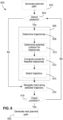
- a process 600 shown in FIG. 6 represents some implementations of the process 500.
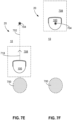
- FIGS. 7A-7F illustrate an example of the robot 100 during the process 600.
- FIGS. 7A-7F show the robot 100 encountering an obstacle 700 as the robot 100 is moved along the path 702 and avoiding the obstacle 700 in an obstacle avoidance mode.
- an obstacle can be detected.
- the obstacle detected blocks at least a trajectory of the robot 100.
- the robot 100 detects the obstacle if the controller 109 determines that the robot 100 would collide with the obstacle if the robot 100 were controlled to follow a trajectory corresponding to the most recent command issued to the robot 100.
- the operation 604 can be similar to the operation 504, and the obstacle can be detected in ways similar to those described with respect to the operation 504. If the obstacle is not detected, then an operation 616, the robot 100 is navigated to move along a selected trajectory that corresponds to a trajectory for moving the robot 100 along the planned path generated at the operation 602. If the obstacle is detected, then the operation 606 is performed and an obstacle avoidance mode is initiated.
- the process 600 proceeds to the operation 606 even if the robot 100 does not detect an obstacle using its sensor system while the robot 100 is at its current location. For example, the process 600 can proceed to the operation 606 in the event that no obstacle is detected because an obstacle was recently detected by the robot 100. This can allow the robot 100 to perform obstacle avoidance trajectories for a sufficient number of iterations to clear the obstacle and return to the planned path. For example, at the operation 604, a threshold time period can be used to determine whether to proceed to the operation 606. During a threshold time period after an obstacle is detected, the process 600 proceeds to the operation 606.
- the robot 100 moves closer to the obstacle 700 until the robot 100 is sufficiently close to detect the obstacle 700.
- the obstacle 700 is detected by the sensor system of the robot 100. In particular, at least part of the obstacle 700 is detected in the local map 708.
- an operation 606 is performed to initiate an obstacle avoidance mode.
- the obstacle avoidance mode can be an override behavior that overrides the planned path 702 for the robot 100.
- the operation 606 can include one or more sub-operations, e.g., operations 608, 610, 612, 614.
- the exploration trajectories 804 include trajectories to move the robot 100 leftward (e.g., the trajectories 804a, 804b, 804c) and rightward (e.g., the trajectories 804d, 804e, 804f). Other exploration trajectories are possible in implementations.
- the adjustment trajectories can include any trajectory with speeds for the wheels between 0.9 and 1.1 meters per second.
- Fixed intervals can be used for the adjustment trajectories as well. The fixed intervals can be selected such that the potential trajectories include the same number of exploration trajectories and adjustment trajectories. Referring to FIG.
- the adjustment trajectories can include trajectories 806a, 806b, 806c, 806d, 806e, 806f (collectively referred to as adjustment trajectories 806).
- the adjustment trajectories 806 include trajectories to move the robot 100 leftward (e.g., the trajectories 806a, 806b, 806c) and rightward (e.g., the trajectories 806d, 806e, 806f).
- Other adjustment trajectories are possible in implementations.
- the parameter that is varied can be a motion parameter of the robot 100, e.g., a speed of the robot 100 or a heading of the robot 100.
- the drive system of the robot 100 can be controlled to vary the speed and the heading of the robot 100 within a range for the exploration trajectories or within another, more limited range for the adjustment trajectories.
- a condition is checked to determine whether the robot 100 has reached an end of the planned path. If the condition is not satisfied, the process 600 proceeds to the operation 604.
- the operation 606 is performed if an obstacle is detected. And then the robot 100 is navigated along another selected trajectory at the operation 616.
- the controller 109 can initiate an initial iteration of the operation 616 and then repeatedly perform subsequent iterations of the operation 616 if the condition is not satisfied.
- the operation 606 for selecting a trajectory to avoid an obstacle can be repeated performed.
- the operations 608, 610, and 612 can be repeatedly performed to determine trajectories and select a high-scoring trajectory of the trajectories. And then the operation 614 can be repeatedly performed to cause the robot 100 to be navigated along the high-scoring trajectory.
- the condition can vary in implementations.
- the condition corresponds to a position of the robot 100 being on the planned path to the waypoint that the robot 100 was advancing along at the operation 602. If this condition is satisfied, then the robot 100 is able to be controlled to continue advancing along the planned path.
- the condition corresponds to a minimum distance between a position of the robot 100 and the planned path exceeding a threshold distance. Such a condition can be checked in order to determine whether the robot 100 has moved too far from the planned path.
- the minimum distance between the position of the robot 100 and the planned path can be an indicator of whether the obstacle that the robot 100 is avoiding at the operation 606 may be a large obstacle that cannot be avoided in a way that allows the robot 100 to return to the planned path.
- multiple conditions are checked at the operation 618, and if any of the conditions is satisfied, the process 600 proceeds to an operation 620 in which a next planned path is generated, and the process 600 is repeated to move to the robot 100 to a waypoint at least partially defining the next planned path.
- the trajectories 714, 716 can correspond to trajectories selected as part of the operation 606, and the trajectory 718 can correspond to a trajectory that is not selected as part of the operation 606.
- the trajectory 718 can be a selected trajectory that moves the robot 100 along the path 702, e.g., skipping the operation 606.
- FIG. 7F when the robot 100 arrives at the waypoint 704, another waypoint can be generated or selected and another planned path can be generated, e.g., at the operation 620.
- the process 600 can be repeated for this next planned path.
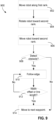
- the robot 100 reaches an end of the first rank.
- the controller 109 can determine that a location of the robot 100 correspond to an end of the first rank, e.g., using the global map and the localization methods described in this disclosure.
- the robot 100 is rotated toward a second rank.
- the robot 100 can be, for example, rotated in place toward the second rank.
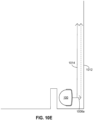
- the robot 100 reaches an end of the rank 1004a (shown in FIG. 10A ), e.g., at the operation 904.
- the robot 100 is turned toward the rank 1004b, e.g., at the operation 906.
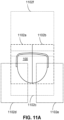
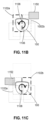
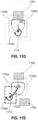
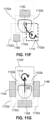
- the controller 109 proceeds to determine whether obstacles are present in the area 1102d and the area 1102e. In some implementations, the controller 109 makes these determinations at the same time, e.g., determine whether obstacles are present in the area 1102d and determines whether obstacles are present in the area 1102e. Alternatively, the controller 109 makes these determinations sequentially.
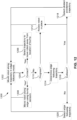
- the controller 109 can select the obstacle avoidance trajectory, e.g., at the operation 1218. In some cases, as discussed in this disclosure, no alternative obstacle avoidance trajectory is available, and the robot 100 can be controlled to rotate in place at the operation 1212. If no collision for the edge following trajectory is detected at the operation 1216, then the process 1200 proceeds as normal to the operation 1220 with the controller 109 selecting the edge following trajectory for navigating the robot 100 at the operation 1202.
- a computer program can be written in any form of programming language, including compiled or interpreted languages, or declarative or procedural languages; and it can be deployed in any form, including as a stand alone program, e.g., as an app, or as a module, component, engine, subroutine, or other unit suitable for executing in a computing environment, which environment may include one or more computers interconnected by a data communication network in one or more locations.
- the robot 100 can initiate the second obstacle avoidance mode to allow the robot 100 to contact objects to confirm that the objects are indeed obstacles.
- a user can select a setting that disables the first obstacle avoidance mode and only allow the robot 100 to operate in the second obstacle avoidance mode.
- a user can select a setting for a minimum edge following distance or a minimum obstacle clearance distance for the robot 100. For example, when the robot 100 avoids an obstacle or follows an edge of the obstacle, the robot 100 can be controlled to maintain a distance from the obstacle. In some implementations, this distance is user-selectable. The distance can be selected to be between 0 and 2 centimeters, e.g., a distance less than 2 centimeters, a distance less than 1 centimeter, less than 0.5 centimeters.
Landscapes
- Engineering & Computer Science (AREA)
- Physics & Mathematics (AREA)
- General Physics & Mathematics (AREA)
- Automation & Control Theory (AREA)
- Aviation & Aerospace Engineering (AREA)
- Radar, Positioning & Navigation (AREA)
- Remote Sensing (AREA)
- Electric Vacuum Cleaner (AREA)
- Control Of Position, Course, Altitude, Or Attitude Of Moving Bodies (AREA)
- General Engineering & Computer Science (AREA)
Claims (15)
- Autonomer Reinigungsroboter (100), der Folgendes umfasst:ein Antriebssystem, das zum Bewegen des autonomen Reinigungsroboters über eine Bodenfläche (10) betreibbar ist;einen Reinigungseinlass (117) in einem Bodenabschnitt des autonomen Reinigungsroboters, wobei der autonome Reinigungsroboter dazu ausgelegt ist, Schmutz durch den Reinigungseinlass in den autonomen Reinigungsroboter zu saugen;einen Abstandsmesssensor (105), der auf einen Abschnitt der Bodenfläche vor dem autonomen Reinigungsroboter gerichtet und dazu ausgelegt ist, im Abschnitt der Bodenfläche relativ zum autonomen Reinigungsroboter eine Position eines Hindernisses (700; 800) zu messen;eine Steuerung (109), die dazu ausgelegt ist, Anweisungen auszuführen, um Operationen durchzuführen, wobei die Operationen Folgendes umfassen:während der autonome Reinigungsroboter entlang eines ersten Abschnitts eines Pfades (702; 1002) zu einem Wegpunkt bewegt wird, Detektieren des Hindernisses entlang des Pfades zwischen dem ersten Abschnitt des Pfades und einem zweiten Abschnitt des Pfades mit dem Abstandsmesssensor, Navigieren des autonomen Reinigungsroboters um das Hindernis entlang einer Trajektorie, die zwischen dem autonomen Reinigungsroboter und dem Hindernis mindestens einen Sicherheitsabstand einhält, undBewegen des autonomen Reinigungsroboters entlang des zweiten Abschnitts des Pfades, dadurch gekennzeichnet, dass das Navigieren des autonomen Reinigungsroboters um das Hindernis Folgendes umfasst:Bestimmen einer Vielzahl von auswählbaren alternativen Trajektorien (802; 802a, 802b; 804a-f; 712, 714), um das Hindernis zu vermeiden,Auswählen der Trajektorie aus der Vielzahl von auswählbaren alternativen Trajektorien mindestens auf Basis von Abständen zwischen der Vielzahl von auswählbaren alternativen Trajektorien und dem Wegpunkt undNavigieren des autonomen Reinigungsroboters entlang der ausgewählten Trajektorie oderdadurch, dass das Hindernis ein erstes Hindernis ist und die Operationen Folgendes umfassen:Initiieren eines Kantenfolgemodus, um den autonomen Reinigungsroboter entlang einer Kante eines zweiten Hindernisses über der Bodenfläche zu bewegen, undEinhalten mindestens des Sicherheitsabstands zwischen dem autonomen Reinigungsroboter und dem zweiten Hindernis, wenn der autonome Reinigungsroboter entlang der Kante bewegt wird.
- Autonomer Reinigungsroboter nach Anspruch 1, wobei der Abschnitt der Bodenfläche einem Bereich der Bodenfläche vor dem autonomen Reinigungsroboter entspricht und sich über mindestens eine Breite des autonomen Reinigungsroboters erstreckt.
- Autonomer Reinigungsroboter nach Anspruch 1, wobei:die Operationen das Initiieren einer Abdeckungsroutine umfassen, bei der sich der autonome Reinigungsroboter entlang einer Vielzahl von Reihen bewegt, undder Pfad einer Reihe der Vielzahl von Reihen entspricht.
- Autonomer Reinigungsroboter nach Anspruch 1, wobei:
die Operationen das Initiieren eines Umpositionierungsverhaltens umfassen, bei dem sich der autonome Reinigungsroboter entlang des Pfades von einem ersten Raum zu einem zweiten Raum bewegt. - Autonomer Reinigungsroboter nach Anspruch 1, wobei die Operationen ferner das wiederholte Durchführen von Wiederholungen des Bestimmens, des Auswählens und des Navigierens, bis eine Bedingung erfüllt ist, umfassen.
- Autonomer Reinigungsroboter nach Anspruch 5, wobei die Bedingung einer Position des autonomen Reinigungsroboters entspricht, der sich auf dem Pfad zu einem Wegpunkt befindet, oder wobei die Bedingung einem Mindestabstand zwischen einer Position des autonomen Reinigungsroboters und des Pfades entspricht, der einen Schwellwert überschreitet, oder wobei die Bedingung einer Zeitmenge, die während der Wiederholungen vergangen ist und einen Schwellwert überschreitet, entspricht.
- Autonomer Reinigungsroboter nach Anspruch 1, wobei:
das Auswählen der Trajektorie der Vielzahl von auswählbaren alternativen Trajektorien mindestens auf Basis der Abstände zwischen der Vielzahl von auswählbaren alternativen Trajektorien und dem Wegpunkt Folgendes umfasst:
Berechnen von Bewertungen für die Vielzahl von auswählbaren alternativen Trajektorien mindestens in Abhängigkeit von den Abständen. - Autonomer Reinigungsroboter nach Anspruch 7, wobei:die Abstände erste Abstände sind unddas Berechnen der Bewertungen Folgendes umfasst:
Berechnen der Bewertungen für die Vielzahl von auswählbaren alternativen Trajektorien in Abhängigkeit von mindestens (i) den ersten Abständen und (ii) den zweiten Abständen zwischen der Vielzahl von auswählbaren alternativen Trajektorien und dem Pfad, wahlweise wobei:
das Berechnen der Bewertungen Folgendes umfasst:
Berechnen der Bewertungen für die Vielzahl von auswählbaren alternativen Trajektorien in Abhängigkeit von mindestens (i) den ersten Abständen, (ii) den zweiten Abständen und (iii) Kursen der Vielzahl von auswählbaren alternativen Trajektorien. - Autonomer Reinigungsroboter nach Anspruch 1, wobei die Operationen ferner das wiederholte Durchführen von Wiederholungen des Bestimmens, des Auswählens und des Navigierens umfassen, wahlweise wobei die Vielzahl von auswählbaren alternativen Trajektorien eine oder mehrere Schablonentrajektorien umfasst, die während des Auswählens von jeder der Wiederholungen auswählbar sind, ferner wahlweise wobei:das Bewegen des autonomen Reinigungsroboters entlang des Pfades zum Wegpunkt das Bewegen des autonomen Reinigungsroboters entlang des Pfades mit einer ersten Geschwindigkeit umfasst; unddie eine oder die mehreren Schablonentrajektorien mindestens eines von Folgendem umfassen:einer ersten Schablonentrajektorie, auf der der autonome Reinigungsroboter entlang des Pfades mit einer zweiten Geschwindigkeit bewegt wird, die kleiner ist als die erste Geschwindigkeit,einer zweiten Schablonentrajektorie, auf der der autonome Reinigungsroboter am Ort gedreht wird, odereiner dritten Schablonentrajektorie, auf der der autonome Reinigungsroboter entlang eines Bogens bewegt wird.
- Autonomer Reinigungsroboter nach Anspruch 8, wobei:
die Vielzahl von auswählbaren alternativen Trajektorien eine auswählbare alternative Trajektorie umfasst, die der auswählbaren Trajektorie einer letzten Wiederholung der Wiederholungen entspricht, die mit einer Anpassung modifiziert wurde, oder wobei:
die Vielzahl von auswählbaren alternativen Trajektorien eine Trajektorie mit einer Geschwindigkeit und einem Kurs umfasst, wobei die Geschwindigkeit und der Kurs einer aktuellen Geschwindigkeit und einem aktuellen Kurs des autonomen Reinigungsroboters mit einer Anpassung entsprechen. - Autonomer Reinigungsroboter nach einem der Ansprüche 1-10, wobei das Navigieren des autonomen Reinigungsroboters um das Hindernis Folgendes umfasst:
Drehen des autonomen Reinigungsroboters am Ort, wobei:
das Navigieren des autonomen Reinigungsroboters um das Hindernis Folgendes umfasst:Detektieren des Vorhandenseins des Hindernisses in einem ersten Bereich, der den autonomen Reinigungsroboter umgibt, undDetektieren des Vorhandenseins des Hindernisses in einem zweiten Bereich, der gegenüber dem ersten Bereich versetzt ist; und das Drehen des autonomen Reinigungsroboters am Ort das Drehen des autonomen Reinigungsroboters am Ort in Reaktion auf das Detektieren des Vorhandenseins des Hindernisses im ersten Bereich und im zweiten Bereich vom zweiten Bereich weg umfasst, oder wobei:
das Navigieren des autonomen Reinigungsroboters um das Hindernis Folgendes umfasst:Detektieren des Vorhandenseins des Hindernisses in einem ersten Bereich, der den autonomen Reinigungsroboter umgibt,Detektieren des Vorhandenseins des Hindernisses in einem zweiten Bereich, der gegenüber dem ersten Bereich versetzt ist, und Bewegen des autonomen Reinigungsroboters vom Hindernis weg in Reaktion auf das Detektieren des Vorhandenseins des Hindernisses im ersten Bereich und im zweiten Bereich und das Drehen des autonomen Reinigungsroboters am Ort das Drehen des autonomen Reinigungsroboters am Ort nach Wegbewegen des autonomen Reinigungsroboters vom Hindernis umfasst. - Autonomer Reinigungsroboter nach Anspruch 1, wobei das Einhalten mindestens des Sicherheitsabstands zwischen dem autonomen Reinigungsroboter und dem zweiten Hindernis Folgendes umfasst:Bestimmen von Kantenfolgetrajektorien mit einer ersten Häufigkeit,Bestimmen von Hindernisvermeidungstrajektorien mit einer zweiten Häufigkeit, die kleiner ist als die erste Häufigkeit,Bestimmen, dass eine der Kantenfolgetrajektorien zu einem Kontakt zwischen dem autonomen Reinigungsroboter und dem zweiten Hindernis führt, undNavigieren des autonomen Reinigungsroboters entlang einer ausgewählten Hindernisvermeidungstrajektorie der Hindernisvermeidungstrajektorien in Reaktion auf das Bestimmen, dass eine der Kantenfolgetrajektorien zu einem Kontakt zwischen dem autonomen Reinigungsroboter und dem zweiten Hindernis führt.
- Autonomer Reinigungsroboter nach Anspruch 1, wobei der Kantenfolgemodus ein erster Kantenfolgemodus ist und die Operationen Folgendes umfassen:
Initiieren eines zweiten Kantenfolgemodus, in dem der autonome Reinigungsroboter auf Basis einer Detektion einer Kante unter Verwendung eines Aufprallsensors (139a; 139b) des autonomen Reinigungsroboters entlang der Kante bewegt wird. - Verfahren, das Folgendes umfasst:während ein autonomer Reinigungsroboter (10) entlang eines ersten Abschnitts eines Pfades (702; 1002) zu einem Wegpunkt bewegt wird, Detektieren eines Hindernisses (700; 800) vor dem autonomen Reinigungsroboter entlang des Pfades zwischen dem ersten Abschnitt des Pfades und einem zweiten Abschnitt des Pfades mit einem Abstandsmesssensor (105) des autonomen Reinigungsroboters, Navigieren des autonomen Reinigungsroboters um das Hindernis undBewegen des autonomen Reinigungsroboters entlang des zweiten Abschnitts des Pfades, dadurch gekennzeichnet, dass das Navigieren des autonomen Reinigungsroboters um das Hindernis Folgendes umfasst:Bestimmen einer Vielzahl von auswählbaren alternativen Trajektorien (802; 802a, 802b; 804a-f; 712, 714), um das Hindernis zu vermeiden,Auswählen der Trajektorie aus der Vielzahl von auswählbaren alternativen Trajektorien mindestens auf Basis von Abständen zwischen der Vielzahl von auswählbaren alternativen Trajektorien und dem Wegpunkt undNavigieren des autonomen Reinigungsroboters entlang der ausgewählten Trajektorie oderdadurch, dass das Hindernis ein erstes Hindernis ist und die Operationen Folgendes umfassen:Initiieren eines Kantenfolgemodus, um den autonomen Reinigungsroboter entlang einer Kante eines zweiten Hindernisses über der Bodenfläche zu bewegen, undEinhalten mindestens des Sicherheitsabstands zwischen dem autonomen Reinigungsroboter und dem zweiten Hindernis, wenn der autonome Reinigungsroboter entlang der Kante bewegt wird.
- Ein oder mehrere nichttransitorische computerlesbare Medien, auf denen Anweisungen gespeichert sind, die von einem oder mehreren Verarbeitungsvorrichtungen ausführbar sind und nach einer derartigen Ausführung die eine oder die mehreren Verarbeitungsvorrichtungen veranlassen, Operationen durchzuführen, die Folgendes umfassen:während ein autonomer Reinigungsroboter (100) entlang eines ersten Abschnitts eines Pfades (702; 1002) zu einem Wegpunkt bewegt wird, Detektieren eines Hindernisses (700; 800) vor dem autonomen Reinigungsroboter entlang des Pfades zwischen dem ersten Abschnitt des Pfades und einem zweiten Abschnitt des Pfades mit einem Abstandsmesssensor (105) des autonomen Reinigungsroboters, Navigieren des autonomen Reinigungsroboters um das Hindernis undBewegen des autonomen Reinigungsroboters entlang des zweiten Abschnitts des Pfades, dadurch gekennzeichnet, dass das Navigieren des autonomen Reinigungsroboters um das Hindernis Folgendes umfasst:Bestimmen einer Vielzahl von auswählbaren alternativen Trajektorien (802; 802a, 802b; 804a-f; 712, 714), um das Hindernis zu vermeiden,Auswählen der Trajektorie aus der Vielzahl von auswählbaren alternativen Trajektorien mindestens auf Basis von Abständen zwischen der Vielzahl von auswählbaren alternativen Trajektorien und dem Wegpunkt undNavigieren des autonomen Reinigungsroboters entlang der ausgewählten Trajektorie oderdadurch, dass das Hindernis ein erstes Hindernis ist und die Operationen Folgendes umfassen:Initiieren eines Kantenfolgemodus, um den autonomen Reinigungsroboter entlang einer Kante eines zweiten Hindernisses über der Bodenfläche zu bewegen, undEinhalten mindestens des Sicherheitsabstands zwischen dem autonomen Reinigungsroboter und dem zweiten Hindernis, wenn der autonome Reinigungsroboter entlang der Kante bewegt wird.
Applications Claiming Priority (2)
| Application Number | Priority Date | Filing Date | Title |
|---|---|---|---|
| US17/239,166 US11940800B2 (en) | 2021-04-23 | 2021-04-23 | Navigational control of autonomous cleaning robots |
| PCT/US2022/019159 WO2022225617A1 (en) | 2021-04-23 | 2022-03-07 | Navigational control of autonomous cleaning robots |
Publications (2)
| Publication Number | Publication Date |
|---|---|
| EP4326129A1 EP4326129A1 (de) | 2024-02-28 |
| EP4326129B1 true EP4326129B1 (de) | 2025-04-16 |
Family
ID=80952292
Family Applications (1)
| Application Number | Title | Priority Date | Filing Date |
|---|---|---|---|
| EP22713139.8A Active EP4326129B1 (de) | 2021-04-23 | 2022-03-07 | Navigationssteuerung von autonomen reinigungsrobotern |
Country Status (3)
| Country | Link |
|---|---|
| US (1) | US11940800B2 (de) |
| EP (1) | EP4326129B1 (de) |
| WO (1) | WO2022225617A1 (de) |
Families Citing this family (20)
| Publication number | Priority date | Publication date | Assignee | Title |
|---|---|---|---|---|
| US11835343B1 (en) * | 2004-08-06 | 2023-12-05 | AI Incorporated | Method for constructing a map while performing work |
| US11287826B2 (en) | 2018-10-12 | 2022-03-29 | Boston Dynamics, Inc. | Terrain aware step planning system |
| CN114942638A (zh) * | 2019-04-02 | 2022-08-26 | 北京石头创新科技有限公司 | 机器人工作区域地图构建方法、装置 |
| EP4010773B1 (de) | 2019-08-06 | 2024-05-29 | Boston Dynamics, Inc. | Begrenzte mobilitätskartierung |
| US11268816B2 (en) | 2019-08-06 | 2022-03-08 | Boston Dynamics, Inc. | Intermediate waypoint generator |
| US12468300B2 (en) | 2021-06-04 | 2025-11-11 | Boston Dynamics, Inc. | Detecting negative obstacles |
| US12461531B2 (en) | 2021-06-04 | 2025-11-04 | Boston Dynamics, Inc. | Topology processing for waypoint-based navigation maps |
| WO2022256821A1 (en) * | 2021-06-04 | 2022-12-08 | Boston Dynamics, Inc. | Directed exploration for navigation in dynamic environments |
| US12304082B2 (en) | 2021-06-04 | 2025-05-20 | Boston Dynamics, Inc. | Alternate route finding for waypoint-based navigation maps |
| US11906314B2 (en) * | 2021-09-10 | 2024-02-20 | Nec Corporation | System for waypoint selection and method of using |
| US12186912B2 (en) * | 2021-10-21 | 2025-01-07 | Gideon Brothers d.o.o. | Capability-aware pathfinding for autonomous mobile robots |
| US12449822B2 (en) | 2022-06-23 | 2025-10-21 | Boston Dynamics, Inc. | Ground clutter avoidance for a mobile robot |
| US12510897B2 (en) * | 2022-08-11 | 2025-12-30 | Honda Motor Co., Ltd. | Return node map |
| JP2024075370A (ja) * | 2022-11-22 | 2024-06-03 | ヤンマーホールディングス株式会社 | 自動走行方法、作業車両及び自動走行システム |
| CN119562782A (zh) * | 2023-01-03 | 2025-03-04 | 深圳市闪至科技有限公司 | 扫地机器人的控制方法、装置、扫地机器人、系统及存储介质 |
| CN116350125B (zh) * | 2023-03-07 | 2026-02-03 | 深圳市无限动力发展有限公司 | 应用于扫地机的清扫方法、装置、设备和存储介质 |
| CN115993830B (zh) * | 2023-03-21 | 2023-06-06 | 佛山隆深机器人有限公司 | 一种基于障碍物躲避的路径规划方法、装置以及机器人 |
| CN119184570A (zh) * | 2023-06-16 | 2024-12-27 | 科沃斯机器人股份有限公司 | 清洁设备 |
| CN116540746B (zh) * | 2023-07-05 | 2023-09-15 | 成都壹为新能源汽车有限公司 | 一种新能源清扫控制方法 |
| CN119024835A (zh) * | 2024-08-08 | 2024-11-26 | 北京石头创新科技有限公司 | 清洁设备的控制方法、系统、设备及存储介质 |
Family Cites Families (35)
| Publication number | Priority date | Publication date | Assignee | Title |
|---|---|---|---|---|
| US6810305B2 (en) * | 2001-02-16 | 2004-10-26 | The Procter & Gamble Company | Obstruction management system for robots |
| GB0126497D0 (en) * | 2001-11-03 | 2002-01-02 | Dyson Ltd | An autonomous machine |
| KR100745975B1 (ko) | 2004-12-30 | 2007-08-06 | 삼성전자주식회사 | 그리드 맵을 사용하여 최소 이동 경로로 이동하는 방법 및장치 |
| KR101290379B1 (ko) * | 2005-12-02 | 2013-07-26 | 아이로보트 코퍼레이션 | 자동 커버리지 로봇 운행 시스템 |
| EP2816434A3 (de) * | 2005-12-02 | 2015-01-28 | iRobot Corporation | Roboter mit autonomem Wirkungsbereich |
| US7441298B2 (en) | 2005-12-02 | 2008-10-28 | Irobot Corporation | Coverage robot mobility |
| US8961695B2 (en) * | 2008-04-24 | 2015-02-24 | Irobot Corporation | Mobile robot for cleaning |
| US8892251B1 (en) * | 2010-01-06 | 2014-11-18 | Irobot Corporation | System and method for autonomous mopping of a floor surface |
| WO2012099694A1 (en) | 2010-12-30 | 2012-07-26 | Irobot Corporation | Coverage robot navigation |
| US9020637B2 (en) * | 2012-11-02 | 2015-04-28 | Irobot Corporation | Simultaneous localization and mapping for a mobile robot |
| US9278690B2 (en) | 2013-12-18 | 2016-03-08 | Irobot Corporation | Autonomous mobile robot |
| CN111568297B (zh) * | 2014-07-01 | 2023-02-03 | 三星电子株式会社 | 清洁机器人及其控制方法 |
| KR102272187B1 (ko) * | 2014-07-01 | 2021-07-06 | 삼성전자주식회사 | 청소 로봇 및 그 제어 방법 |
| KR101598385B1 (ko) * | 2014-11-11 | 2016-03-02 | 한양대학교 산학협력단 | 직선 정보 기반 장소 인식을 이용한 로봇의 자율주행 방법 및 자율 주행 로봇 |
| US9717387B1 (en) | 2015-02-26 | 2017-08-01 | Brain Corporation | Apparatus and methods for programming and training of robotic household appliances |
| CN108885436B (zh) | 2016-01-15 | 2021-12-14 | 美国iRobot公司 | 自主监视机器人系统 |
| TWI689387B (zh) * | 2016-05-17 | 2020-04-01 | 南韓商Lg電子股份有限公司 | 行動機器人 |
| US20200047337A1 (en) * | 2016-07-13 | 2020-02-13 | Discovery Robotics | Robotic platform with event based mode change |
| US20200047343A1 (en) * | 2016-07-13 | 2020-02-13 | Discovery Robotics | Remote planning and locally adaptive service mapping |
| US10571925B1 (en) | 2016-08-29 | 2020-02-25 | Trifo, Inc. | Autonomous platform guidance systems with auxiliary sensors and task planning |
| US10001780B2 (en) * | 2016-11-02 | 2018-06-19 | Brain Corporation | Systems and methods for dynamic route planning in autonomous navigation |
| US11339580B2 (en) * | 2017-08-22 | 2022-05-24 | Pentair Water Pool And Spa, Inc. | Algorithm for a pool cleaner |
| DE102017120218A1 (de) * | 2017-09-01 | 2019-03-07 | RobArt GmbH | Bewegungsplanung für autonome mobile roboter |
| JP7063154B2 (ja) * | 2018-07-06 | 2022-05-09 | トヨタ自動車株式会社 | 情報処理装置および情報処理方法 |
| US11464375B2 (en) * | 2018-09-04 | 2022-10-11 | Irobot Corporation | Navigation of autonomous mobile robots |
| GB2577915B (en) * | 2018-10-10 | 2021-06-16 | Dyson Technology Ltd | Path planning |
| US12089793B2 (en) * | 2018-12-07 | 2024-09-17 | Yujin Robot Co., Ltd. | Autonomously traveling mobile robot and traveling control method therefor |
| US11537141B2 (en) * | 2019-12-19 | 2022-12-27 | Diversey, Inc. | Robotic cleaning device with dynamic area coverage |
| CN111026121A (zh) * | 2019-12-20 | 2020-04-17 | 华南智能机器人创新研究院 | 智能清扫车多层次立体避障控制方法及装置 |
| US20210197377A1 (en) * | 2019-12-26 | 2021-07-01 | X Development Llc | Robot plan online adjustment |
| KR102423573B1 (ko) * | 2020-01-08 | 2022-07-20 | 엘지전자 주식회사 | 인공지능을 이용한 이동 로봇 및 이동 로봇의 제어방법 |
| CA3105484A1 (en) * | 2020-01-10 | 2021-07-10 | Bissell Inc. | Autonomous floor cleaner and method for autonomous floor cleaning |
| CN112155486A (zh) * | 2020-09-30 | 2021-01-01 | 王丽敏 | 扫地机器人的控制方法和控制装置 |
| CN112641369A (zh) * | 2021-01-29 | 2021-04-13 | 河南工程学院 | 一种家用玻璃清洁机器人控制系统 |
| US12137625B2 (en) * | 2021-03-15 | 2024-11-12 | Kubota Corporation | Work vehicle and control system for work vehicle |
-
2021
- 2021-04-23 US US17/239,166 patent/US11940800B2/en active Active
-
2022
- 2022-03-07 EP EP22713139.8A patent/EP4326129B1/de active Active
- 2022-03-07 WO PCT/US2022/019159 patent/WO2022225617A1/en not_active Ceased
Also Published As
| Publication number | Publication date |
|---|---|
| EP4326129A1 (de) | 2024-02-28 |
| WO2022225617A1 (en) | 2022-10-27 |
| US20220342421A1 (en) | 2022-10-27 |
| US11940800B2 (en) | 2024-03-26 |
Similar Documents
| Publication | Publication Date | Title |
|---|---|---|
| EP4326129B1 (de) | Navigationssteuerung von autonomen reinigungsrobotern | |
| US11966227B2 (en) | Mapping for autonomous mobile robots | |
| US11385653B2 (en) | Mobile robot area cleaning | |
| CN110870720B (zh) | 自主移动机器人的导航 | |
| US12210360B2 (en) | Control of autonomous mobile robots | |
| JP7423656B2 (ja) | 自律移動ロボットの制御 | |
| EP4117498B1 (de) | Steuerung von autonomen mobilen robotern | |
| JP2022549572A (ja) | 自律モバイルロボットのための画像捕捉デバイス、ならびに関連するシステムおよび方法 | |
| WO2022060530A1 (en) | Robot localization and mapping accommodating non-unique landmarks |
Legal Events
| Date | Code | Title | Description |
|---|---|---|---|
| STAA | Information on the status of an ep patent application or granted ep patent |
Free format text: STATUS: UNKNOWN |
|
| STAA | Information on the status of an ep patent application or granted ep patent |
Free format text: STATUS: THE INTERNATIONAL PUBLICATION HAS BEEN MADE |
|
| PUAI | Public reference made under article 153(3) epc to a published international application that has entered the european phase |
Free format text: ORIGINAL CODE: 0009012 |
|
| STAA | Information on the status of an ep patent application or granted ep patent |
Free format text: STATUS: REQUEST FOR EXAMINATION WAS MADE |
|
| 17P | Request for examination filed |
Effective date: 20231120 |
|
| AK | Designated contracting states |
Kind code of ref document: A1 Designated state(s): AL AT BE BG CH CY CZ DE DK EE ES FI FR GB GR HR HU IE IS IT LI LT LU LV MC MK MT NL NO PL PT RO RS SE SI SK SM TR |
|
| DAV | Request for validation of the european patent (deleted) | ||
| DAX | Request for extension of the european patent (deleted) | ||
| GRAP | Despatch of communication of intention to grant a patent |
Free format text: ORIGINAL CODE: EPIDOSNIGR1 |
|
| STAA | Information on the status of an ep patent application or granted ep patent |
Free format text: STATUS: GRANT OF PATENT IS INTENDED |
|
| INTG | Intention to grant announced |
Effective date: 20241025 |
|
| GRAS | Grant fee paid |
Free format text: ORIGINAL CODE: EPIDOSNIGR3 |
|
| GRAA | (expected) grant |
Free format text: ORIGINAL CODE: 0009210 |
|
| STAA | Information on the status of an ep patent application or granted ep patent |
Free format text: STATUS: THE PATENT HAS BEEN GRANTED |
|
| AK | Designated contracting states |
Kind code of ref document: B1 Designated state(s): AL AT BE BG CH CY CZ DE DK EE ES FI FR GB GR HR HU IE IS IT LI LT LU LV MC MK MT NL NO PL PT RO RS SE SI SK SM TR |
|
| REG | Reference to a national code |
Ref country code: GB Ref legal event code: FG4D |
|
| REG | Reference to a national code |
Ref country code: CH Ref legal event code: EP Ref country code: DE Ref legal event code: R096 Ref document number: 602022013245 Country of ref document: DE |
|
| REG | Reference to a national code |
Ref country code: IE Ref legal event code: FG4D |
|
| REG | Reference to a national code |
Ref country code: NL Ref legal event code: MP Effective date: 20250416 |
|
| PG25 | Lapsed in a contracting state [announced via postgrant information from national office to epo] |
Ref country code: NL Free format text: LAPSE BECAUSE OF FAILURE TO SUBMIT A TRANSLATION OF THE DESCRIPTION OR TO PAY THE FEE WITHIN THE PRESCRIBED TIME-LIMIT Effective date: 20250416 |
|
| REG | Reference to a national code |
Ref country code: AT Ref legal event code: MK05 Ref document number: 1784934 Country of ref document: AT Kind code of ref document: T Effective date: 20250416 |
|
| PG25 | Lapsed in a contracting state [announced via postgrant information from national office to epo] |
Ref country code: FI Free format text: LAPSE BECAUSE OF FAILURE TO SUBMIT A TRANSLATION OF THE DESCRIPTION OR TO PAY THE FEE WITHIN THE PRESCRIBED TIME-LIMIT Effective date: 20250416 Ref country code: PT Free format text: LAPSE BECAUSE OF FAILURE TO SUBMIT A TRANSLATION OF THE DESCRIPTION OR TO PAY THE FEE WITHIN THE PRESCRIBED TIME-LIMIT Effective date: 20250818 Ref country code: ES Free format text: LAPSE BECAUSE OF FAILURE TO SUBMIT A TRANSLATION OF THE DESCRIPTION OR TO PAY THE FEE WITHIN THE PRESCRIBED TIME-LIMIT Effective date: 20250416 |
|
| REG | Reference to a national code |
Ref country code: LT Ref legal event code: MG9D |
|
| PG25 | Lapsed in a contracting state [announced via postgrant information from national office to epo] |
Ref country code: GR Free format text: LAPSE BECAUSE OF FAILURE TO SUBMIT A TRANSLATION OF THE DESCRIPTION OR TO PAY THE FEE WITHIN THE PRESCRIBED TIME-LIMIT Effective date: 20250717 Ref country code: NO Free format text: LAPSE BECAUSE OF FAILURE TO SUBMIT A TRANSLATION OF THE DESCRIPTION OR TO PAY THE FEE WITHIN THE PRESCRIBED TIME-LIMIT Effective date: 20250716 |
|
| PG25 | Lapsed in a contracting state [announced via postgrant information from national office to epo] |
Ref country code: PL Free format text: LAPSE BECAUSE OF FAILURE TO SUBMIT A TRANSLATION OF THE DESCRIPTION OR TO PAY THE FEE WITHIN THE PRESCRIBED TIME-LIMIT Effective date: 20250416 |
|
| PG25 | Lapsed in a contracting state [announced via postgrant information from national office to epo] |
Ref country code: BG Free format text: LAPSE BECAUSE OF FAILURE TO SUBMIT A TRANSLATION OF THE DESCRIPTION OR TO PAY THE FEE WITHIN THE PRESCRIBED TIME-LIMIT Effective date: 20250416 |
|
| PG25 | Lapsed in a contracting state [announced via postgrant information from national office to epo] |
Ref country code: HR Free format text: LAPSE BECAUSE OF FAILURE TO SUBMIT A TRANSLATION OF THE DESCRIPTION OR TO PAY THE FEE WITHIN THE PRESCRIBED TIME-LIMIT Effective date: 20250416 |
|
| PG25 | Lapsed in a contracting state [announced via postgrant information from national office to epo] |
Ref country code: AT Free format text: LAPSE BECAUSE OF FAILURE TO SUBMIT A TRANSLATION OF THE DESCRIPTION OR TO PAY THE FEE WITHIN THE PRESCRIBED TIME-LIMIT Effective date: 20250416 |
|
| PG25 | Lapsed in a contracting state [announced via postgrant information from national office to epo] |
Ref country code: RS Free format text: LAPSE BECAUSE OF FAILURE TO SUBMIT A TRANSLATION OF THE DESCRIPTION OR TO PAY THE FEE WITHIN THE PRESCRIBED TIME-LIMIT Effective date: 20250716 |
|
| PG25 | Lapsed in a contracting state [announced via postgrant information from national office to epo] |
Ref country code: IS Free format text: LAPSE BECAUSE OF FAILURE TO SUBMIT A TRANSLATION OF THE DESCRIPTION OR TO PAY THE FEE WITHIN THE PRESCRIBED TIME-LIMIT Effective date: 20250816 |
|
| PG25 | Lapsed in a contracting state [announced via postgrant information from national office to epo] |
Ref country code: LV Free format text: LAPSE BECAUSE OF FAILURE TO SUBMIT A TRANSLATION OF THE DESCRIPTION OR TO PAY THE FEE WITHIN THE PRESCRIBED TIME-LIMIT Effective date: 20250416 |
|
| PG25 | Lapsed in a contracting state [announced via postgrant information from national office to epo] |
Ref country code: DK Free format text: LAPSE BECAUSE OF FAILURE TO SUBMIT A TRANSLATION OF THE DESCRIPTION OR TO PAY THE FEE WITHIN THE PRESCRIBED TIME-LIMIT Effective date: 20250416 Ref country code: SM Free format text: LAPSE BECAUSE OF FAILURE TO SUBMIT A TRANSLATION OF THE DESCRIPTION OR TO PAY THE FEE WITHIN THE PRESCRIBED TIME-LIMIT Effective date: 20250416 |
|
| REG | Reference to a national code |
Ref country code: DE Ref legal event code: R097 Ref document number: 602022013245 Country of ref document: DE |
|
| PG25 | Lapsed in a contracting state [announced via postgrant information from national office to epo] |
Ref country code: CZ Free format text: LAPSE BECAUSE OF FAILURE TO SUBMIT A TRANSLATION OF THE DESCRIPTION OR TO PAY THE FEE WITHIN THE PRESCRIBED TIME-LIMIT Effective date: 20250416 |
|
| PG25 | Lapsed in a contracting state [announced via postgrant information from national office to epo] |
Ref country code: EE Free format text: LAPSE BECAUSE OF FAILURE TO SUBMIT A TRANSLATION OF THE DESCRIPTION OR TO PAY THE FEE WITHIN THE PRESCRIBED TIME-LIMIT Effective date: 20250416 |
|
| PG25 | Lapsed in a contracting state [announced via postgrant information from national office to epo] |
Ref country code: SK Free format text: LAPSE BECAUSE OF FAILURE TO SUBMIT A TRANSLATION OF THE DESCRIPTION OR TO PAY THE FEE WITHIN THE PRESCRIBED TIME-LIMIT Effective date: 20250416 |
|
| PG25 | Lapsed in a contracting state [announced via postgrant information from national office to epo] |
Ref country code: IT Free format text: LAPSE BECAUSE OF FAILURE TO SUBMIT A TRANSLATION OF THE DESCRIPTION OR TO PAY THE FEE WITHIN THE PRESCRIBED TIME-LIMIT Effective date: 20250416 |
|
| PLBE | No opposition filed within time limit |
Free format text: ORIGINAL CODE: 0009261 |
|
| STAA | Information on the status of an ep patent application or granted ep patent |
Free format text: STATUS: NO OPPOSITION FILED WITHIN TIME LIMIT |
|
| REG | Reference to a national code |
Ref country code: CH Ref legal event code: L10 Free format text: ST27 STATUS EVENT CODE: U-0-0-L10-L00 (AS PROVIDED BY THE NATIONAL OFFICE) Effective date: 20260225 |
|
| 26N | No opposition filed |
Effective date: 20260119 |