EP4318708B1 - Semi-interpenetrating polymer network (sipn) electrolyte and preparation method and use thereof - Google Patents
Semi-interpenetrating polymer network (sipn) electrolyte and preparation method and use thereof Download PDFInfo
- Publication number
- EP4318708B1 EP4318708B1 EP23188291.1A EP23188291A EP4318708B1 EP 4318708 B1 EP4318708 B1 EP 4318708B1 EP 23188291 A EP23188291 A EP 23188291A EP 4318708 B1 EP4318708 B1 EP 4318708B1
- Authority
- EP
- European Patent Office
- Prior art keywords
- sipn
- electrolyte
- organic solvent
- photoinitiator
- diallyl compound
- Prior art date
- Legal status (The legal status is an assumption and is not a legal conclusion. Google has not performed a legal analysis and makes no representation as to the accuracy of the status listed.)
- Active
Links
Images


Classifications
-
- H—ELECTRICITY
- H01—ELECTRIC ELEMENTS
- H01M—PROCESSES OR MEANS, e.g. BATTERIES, FOR THE DIRECT CONVERSION OF CHEMICAL ENERGY INTO ELECTRICAL ENERGY
- H01M10/00—Secondary cells; Manufacture thereof
- H01M10/05—Accumulators with non-aqueous electrolyte
- H01M10/056—Accumulators with non-aqueous electrolyte characterised by the materials used as electrolytes, e.g. mixed inorganic/organic electrolytes
- H01M10/0564—Accumulators with non-aqueous electrolyte characterised by the materials used as electrolytes, e.g. mixed inorganic/organic electrolytes the electrolyte being constituted of organic materials only
- H01M10/0565—Polymeric materials, e.g. gel-type or solid-type
-
- H—ELECTRICITY
- H01—ELECTRIC ELEMENTS
- H01M—PROCESSES OR MEANS, e.g. BATTERIES, FOR THE DIRECT CONVERSION OF CHEMICAL ENERGY INTO ELECTRICAL ENERGY
- H01M10/00—Secondary cells; Manufacture thereof
- H01M10/05—Accumulators with non-aqueous electrolyte
- H01M10/052—Li-accumulators
- H01M10/0525—Rocking-chair batteries, i.e. batteries with lithium insertion or intercalation in both electrodes; Lithium-ion batteries
-
- H—ELECTRICITY
- H01—ELECTRIC ELEMENTS
- H01M—PROCESSES OR MEANS, e.g. BATTERIES, FOR THE DIRECT CONVERSION OF CHEMICAL ENERGY INTO ELECTRICAL ENERGY
- H01M10/00—Secondary cells; Manufacture thereof
- H01M10/42—Methods or arrangements for servicing or maintenance of secondary cells or secondary half-cells
- H01M10/4235—Safety or regulating additives or arrangements in electrodes, separators or electrolyte
-
- H—ELECTRICITY
- H01—ELECTRIC ELEMENTS
- H01M—PROCESSES OR MEANS, e.g. BATTERIES, FOR THE DIRECT CONVERSION OF CHEMICAL ENERGY INTO ELECTRICAL ENERGY
- H01M2300/00—Electrolytes
- H01M2300/0085—Immobilising or gelification of electrolyte
-
- H—ELECTRICITY
- H01—ELECTRIC ELEMENTS
- H01M—PROCESSES OR MEANS, e.g. BATTERIES, FOR THE DIRECT CONVERSION OF CHEMICAL ENERGY INTO ELECTRICAL ENERGY
- H01M2300/00—Electrolytes
- H01M2300/0088—Composites
- H01M2300/0091—Composites in the form of mixtures
-
- Y—GENERAL TAGGING OF NEW TECHNOLOGICAL DEVELOPMENTS; GENERAL TAGGING OF CROSS-SECTIONAL TECHNOLOGIES SPANNING OVER SEVERAL SECTIONS OF THE IPC; TECHNICAL SUBJECTS COVERED BY FORMER USPC CROSS-REFERENCE ART COLLECTIONS [XRACs] AND DIGESTS
- Y02—TECHNOLOGIES OR APPLICATIONS FOR MITIGATION OR ADAPTATION AGAINST CLIMATE CHANGE
- Y02E—REDUCTION OF GREENHOUSE GAS [GHG] EMISSIONS, RELATED TO ENERGY GENERATION, TRANSMISSION OR DISTRIBUTION
- Y02E60/00—Enabling technologies; Technologies with a potential or indirect contribution to GHG emissions mitigation
- Y02E60/10—Energy storage using batteries
Definitions
- the present disclosure relates to the technical field of solid polymer electrolytes, in particular to a semi-interpenetrating polymer network (SIPN) electrolyte and a preparation method and use thereof.
- SIPN semi-interpenetrating polymer network
- the present disclosure provides a semi-interpenetrating polymer network (SIPN) electrolyte, including the following raw materials: poly(vinylidene fluoride-co-hexafluoropropylene), a diallyl compound, a crosslinking agent, a plasticizer, a photoinitiator , and a lithium salt; where
- the plasticizer is one or more selected from the group consisting of propylene carbonate, ethylene carbonate, dimethyl carbonate, diethyl carbonate, fluorovinyl hydrochloride, and ethyl methyl carbonate.
- the photoinitiator is one or more selected from the group consisting of benzoylbenzene, phenylbenzophenone, 4-methylbenzophenone, 1-hydroxycyclohexyl phenyl ketone, and 2,2-dimethoxy-2-phenylacetophenone; and the lithium salt is one or more selected from the group consisting of LiPF 6 , LiClO 4 , LiTFSI, LiFSI, LiBOB, and LiDFOB.
- the present disclosure further provides a preparation method of the SIPN electrolyte, including the following steps:
- the ultraviolet irradiation is conducted at a wavelength of 100 nm to 380 nm and a light intensity of (10-200) mW ⁇ cm -2 for 0.5 h to 1.5 h.
- the SIPN electrolyte can undergo a thiol-ene click reaction under ultraviolet irradiation to form a solid electrolyte containing a semi-interpenetrating network structure.
- the poly(vinylidene fluoride-co-hexafluoropropylene) not only enhances mechanical properties of the semi-interpenetrating network structure, but also improves an ionic conductivity of a film of the SIPN electrolyte at room temperature. In this way, an obtained polymer lithium battery can obtain an excellent rate performance and a cycle stability.
- the present disclosure further provides a preparation method of the SIPN electrolyte, including the following steps: mixing the poly(vinylidene fluoride-co-hexafluoropropylene), the lithium salt, the diallyl compound, the crosslinking agent, the plasticizer, and the photoinitiator with an organic solvent to obtain a precursor solution; and forming a film from the precursor solution, and subjecting the film to ultraviolet irradiation to obtain the SIPN electrolyte.
- the preparation method has simple operation, mild conditions, and low cost.
- the present disclosure provides a semi-interpenetrating polymer network (SIPN) electrolyte, including the following raw materials: poly(vinylidene fluoride-co-hexafluoropropylene), a diallyl compound, a crosslinking agent, a plasticizer, a photoinitiator , and a lithium salt; where
- N,N'-carbonyldiimidazole, N,N'-diisopropylethylamine, and polyethylene glycol monomethyl ether are mixed with a first organic solvent to allow first elimination to obtain a terminal methylimidazole-based polyethylene oxide.
- the first organic solvent is preferably one or more of dichloromethane, chloroform, methanol, ethanol, acetone, acetonitrile, DMSO, DMF, and DMA.
- the first organic solvent includes two or more of the above specific options, there is no special limitation on a proportion of the above specific substances, which can be mixed according to any proportion.
- the N,N'-carbonyldiimidazole, the N,N'-diisopropylethylamine, and the polyethylene glycol monomethyl ether are at a mass ratio of preferably (1-15):(1-15):20, more preferably (1-10):(1-10):20, and most preferably (1-7):(1-7):20.
- the N,N'-carbonyldiimidazole and the first organic solvent are at a mass-to-volume ratio of preferably 1 g: (1-30) mL, more preferably 1 g: (1-20) mL, most preferably 1 g: (1-10) mL.
- the first elimination is preferably conducted under stirring.
- a stirring process There is no special limitation on a stirring process, and a process well known to those skilled in the art can be used.
- the first elimination is conducted at preferably a room temperature for preferably 6 h to 24 h.
- the terminal methylimidazole-based polyethylene oxide and 2,2-bis(allyloxymethyl)-1-butanol are mixed with a second organic solvent to allow second elimination to obtain the diallyl compound.
- the film is preferably formed by: coating the precursor solution on a surface of a substrate, and then drying.
Landscapes
- Chemical & Material Sciences (AREA)
- Engineering & Computer Science (AREA)
- General Chemical & Material Sciences (AREA)
- Manufacturing & Machinery (AREA)
- Chemical Kinetics & Catalysis (AREA)
- Electrochemistry (AREA)
- Condensed Matter Physics & Semiconductors (AREA)
- Physics & Mathematics (AREA)
- Materials Engineering (AREA)
- Dispersion Chemistry (AREA)
- General Physics & Mathematics (AREA)
- Inorganic Chemistry (AREA)
- Addition Polymer Or Copolymer, Post-Treatments, Or Chemical Modifications (AREA)
- Polymerisation Methods In General (AREA)
- Compositions Of Macromolecular Compounds (AREA)
- Conductive Materials (AREA)
Description
- The present disclosure relates to the technical field of solid polymer electrolytes, in particular to a semi-interpenetrating polymer network (SIPN) electrolyte and a preparation method and use thereof.
- Lithium-ion batteries are widely used due to their high energy density and working voltage, long cycle life, low self-discharge rate, no memory effect, fast charging and discharging, and environmental friendliness. However, traditional liquid lithium secondary batteries contain a large amount of organic electrolytes, and are easily volatile, flammable, and explosive, thus posing a major safety hazard. Compared with organic electrolytes, polymer electrolytes can avoid the leakage of traditional lithium batteries and improve the safety performance of batteries. Moreover, the polymer electrolytes show better compatibility with electrodes and inhibit the growth of lithium dendrites. Furthermore, desirable mechanical processing properties of the polymer electrolytes make thin-film, miniaturized, flexible, and bendable lithium batteries possible. At present, a commonly used electrolyte for polymer electrolyte batteries is polyethylene oxide. However, polyethylene oxide electrolytes have high interfacial impedance and low ionic conductivity at room temperature.
- To address these issues, researchers have proposed a variety of modification schemes, such as preparation of random copolymers, block copolymers, network polymers, or comb polymers. These polymers can enhance a lithium-conducting function to a certain extent, but still need to improve their rate and cycle performances.
- Cheng, C.L. et al in article "Microporous PVdF-HFP based gel polymer electrolytes reinforced by PEGDMA network" (Electrochemistry Communications, vol. 6, no. 6, 1 June 2004, pages 531-535) disclose a process to prepare microporous poly(vinylidene fluoride-co-hexafluoropropylene) (PVdF-HFP) copolymer based gel electrolyte with polyethylene glycol dimethacrylate (PEGDMA) network without the need for extraction process, where the microporous structure in polymer matrix is achieved by solvent controlled evaporation from solution containing a copolymer in a mixture of volatile solvent and nonsolvent.
- Haoyu Fan et al in article "UV-curable PVdF-HFP-based gel electrolytes with semi-interpenetrating polymer network for dendrite-free Lithium metal batteries" (Journal of Electroanalytical Chemistry, vol. 871, 31 May 2020, Elsevier) disclose a PVdF-HFP based gel polymer electrolytes synthesized by UV-curing method, where the PEGMA and PEGDA are employed to enhance the mechanical properties of the electrolyte by forming 3D semi-interpenetrating polymer network.
- Zhong Ren et al in article "Polymer electrolytes based on poly (vinylidene fluoride-co-hexafluoropropylene) with crosslinked poly (ethylene glycol) for lithium batteries" (Solid State Ionics, vol. 180, no, 9-10, 29 May 2009, pages 693-697, Elsevier) disclose a method for preparing semi-interpenetrating polymer networks of PVDF-HFP based electrolytes with crosslinked diepoxy polyethylene glycol (DIEPEG). In the method, impurities are avoided because of a moderate reaction temperature at 50°C and poly(ethylenimine)(PEI) as the crosslinking agent.
- An objective of the present disclosure is to provide an SIPN electrolyte and a preparation method and use thereof. The SIPN electrolyte has an excellent rate performance and a stable cycle performance.
- To achieve the above objective of the present disclosure, the present disclosure provides the following technical solutions.
- The present disclosure provides a semi-interpenetrating polymer network (SIPN) electrolyte, including the following raw materials: poly(vinylidene fluoride-co-hexafluoropropylene), a diallyl compound, a crosslinking agent, a plasticizer, a photoinitiator , and a lithium salt; where
- the poly(vinylidene fluoride-co-hexafluoropropylene), the diallyl compound, the crosslinking agent, the plasticizer, and the photoinitiator are at a mass ratio of (10-40):(30-70):(1-5):(1-20):(2-10);
- the lithium salt and the SIPN electrolyte are at a mass ratio of 1:(2-10); the diallyl compound has a structure shown in Formula 1:

- n is a positive integer;
- a preparation method of the diallyl compound includes the following steps:
- mixing N,N'-carbonyldiimidazole, N,N'-diisopropylethylamine, and polyethylene glycol monomethyl ether with a first organic solvent to allow first elimination to obtain a terminal methylimidazole-based polyethylene oxide; and
- mixing the terminal methylimidazole-based polyethylene oxide and 2,2-bis(allyloxymethyl)-1-butanol (containing mono- and tri-substituted products) with a second organic solvent to allow second elimination to obtain the diallyl compound;
- where the crosslinking agent is one or more selected from the group consisting of pentaerythritol tetrakis(3-mercaptopropionate), dipentaerythritol hexakis(3-mercaptopropionate), trimethylolpropane tris(3-mercaptopropionate), and pentaerythritol tetrakis(2-mercaptoacetate); and
- a preparation method of the SIPN electrolyte including the following steps:
- mixing the poly(vinylidene fluoride-co-hexafluoropropylene), the lithium salt, the diallyl compound, the crosslinking agent, the plasticizer, and the photoinitiator with an organic solvent to obtain a precursor solution; and
- forming a film from the precursor solution, and subjecting the film to ultraviolet irradiation to obtain the SIPN electrolyte.
- Preferably, the N,N'-carbonyldiimidazole, the N,N'-diisopropylethylamine, and the polyethylene glycol monomethyl ether are at a mass ratio of (1-15):(1-15):20; and
the terminal methylimidazole-based polyethylene oxide and the 2,2-bis(allyloxymethyl)-1-butanol (containing mono- and tri-substituted products) are at a mass ratio of 10:(1-10). - Preferably, the first organic solvent and the second organic solvent are independently selected from the group consisting of dichloromethane, chloroform, methanol, ethanol, acetone, acetonitrile, dimethylsulfoxide (DMSO), N,N-dimethylformamide (DMF), and N,N-dimethylacetamide (DMA).
- Preferably, the first elimination and the second elimination each are conducted under stirring; and
the first elimination and the second elimination are conducted at a room temperature for independently 6 h to 24 h. - Preferably, the plasticizer is one or more selected from the group consisting of propylene carbonate, ethylene carbonate, dimethyl carbonate, diethyl carbonate, fluorovinyl hydrochloride, and ethyl methyl carbonate.
- Preferably, the photoinitiator is one or more selected from the group consisting of benzoylbenzene, phenylbenzophenone, 4-methylbenzophenone, 1-hydroxycyclohexyl phenyl ketone, and 2,2-dimethoxy-2-phenylacetophenone; and
the lithium salt is one or more selected from the group consisting of LiPF6, LiClO4, LiTFSI, LiFSI, LiBOB, and LiDFOB. - The present disclosure further provides a preparation method of the SIPN electrolyte, including the following steps:
- mixing the poly(vinylidene fluoride-co-hexafluoropropylene), the lithium salt, the diallyl compound, the crosslinking agent, the plasticizer, and the photoinitiator with an organic solvent to obtain a precursor solution; and
- forming a film from the precursor solution, and subjecting the film to ultraviolet irradiation to obtain the SIPN electrolyte.
- Preferably, the ultraviolet irradiation is conducted at a wavelength of 100 nm to 380 nm and a light intensity of (10-200) mW·cm-2 for 0.5 h to 1.5 h.
- The present disclosure further provides use of the SIPN electrolyte in a polymer lithium battery.
- The present disclosure provides a semi-interpenetrating polymer network (SIPN) electrolyte, including the following raw materials: poly(vinylidene fluoride-co-hexafluoropropylene), a diallyl compound, a crosslinking agent, a plasticizer, a photoinitiator , and a lithium salt; where the poly(vinylidene fluoride-co-hexafluoropropylene), the diallyl compound, the crosslinking agent, the plasticizer, and the photoinitiator are at a mass ratio of (10-40):(30-70):(1-5):(1-20):(2-10); and the lithium salt and oxirane groups in the SIPN electrolyte are at a mass ratio of 1:(1-10). In the present disclosure, the SIPN electrolyte can undergo a thiol-ene click reaction under ultraviolet irradiation to form a solid electrolyte containing a semi-interpenetrating network structure. The poly(vinylidene fluoride-co-hexafluoropropylene) not only enhances mechanical properties of the semi-interpenetrating network structure, but also improves an ionic conductivity of a film of the SIPN electrolyte at room temperature. In this way, an obtained polymer lithium battery can obtain an excellent rate performance and a cycle stability. According to the description of examples, the SIPN electrolyte has an ion conductivity of 2.45×10⁻⁴ S·cm-1 at room temperature; a lithium iron phosphate-based lithium battery assembled with the film of the SIPN electrolyte has a specific discharge capacity of up to 160 mA·h·g-1 at a rate of 0.1 C.
- The present disclosure further provides a preparation method of the SIPN electrolyte, including the following steps: mixing the poly(vinylidene fluoride-co-hexafluoropropylene), the lithium salt, the diallyl compound, the crosslinking agent, the plasticizer, and the photoinitiator with an organic solvent to obtain a precursor solution; and forming a film from the precursor solution, and subjecting the film to ultraviolet irradiation to obtain the SIPN electrolyte. The preparation method has simple operation, mild conditions, and low cost.
-
-
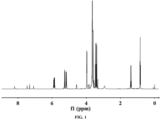
FIG. 1 shows a proton nuclear magnetic resonance spectrogram of the diallyl compound of the present disclosure; -
FIG. 2 shows a curve that an ion conductivity of the SIPN electrolyte in Example 1 changes with temperature; -
FIG. 3 shows a room-temperature cycle test result of a button cell assembled by the SIPN electrolyte prepared in Example 1; -
FIG. 4 shows a cycle test result of a Li//Li symmetric button cell assembled by the SIPN electrolyte prepared in Example 1; and -
FIG. 5 shows a room-temperature rate cycle test result of a Li//Li symmetric button cell assembled by the SIPN electrolyte prepared in Example 2. - The present disclosure provides a semi-interpenetrating polymer network (SIPN) electrolyte, including the following raw materials: poly(vinylidene fluoride-co-hexafluoropropylene), a diallyl compound, a crosslinking agent, a plasticizer, a photoinitiator , and a lithium salt; where
- the poly(vinylidene fluoride-co-hexafluoropropylene), the diallyl compound, the crosslinking agent, the plasticizer, and the photoinitiator are at a mass ratio of (10-40):(30-70):(1-5):(1-20):(2-10); and
- the lithium salt and the SIPN electrolyte are at a mass ratio of 1:(2-10); the diallyl compound has a structure shown in Formula 1:

- n is a positive integer;
- a preparation method of the diallyl compound comprises the following steps:
- mixing N,N'-carbonyldiimidazole, N,N'-diisopropylethylamine, and polyethylene glycol monomethyl ether with a first organic solvent to allow first elimination to obtain a terminal methylimidazole-based polyethylene oxide; and
- mixing the terminal methylimidazole-based polyethylene oxide and 2,2-bis(allyloxymethyl)-1-butanol (containing mono- and tri-substituted products) with a second organic solvent to allow second elimination to obtain the diallyl compound;
- where the crosslinking agent is one or more selected from the group consisting of pentaerythritol tetrakis(3-mercaptopropionate), dipentaerythritol hexakis(3-mercaptopropionate), trimethylolpropane tris(3-mercaptopropionate), and pentaerythritol tetrakis(2-mercaptoacetate); and
- a preparation method of the SIPN electrolyte comprises the following steps:
- mixing the poly(vinylidene fluoride-co-hexafluoropropylene), the lithium salt, the diallyl compound, the crosslinking agent, the plasticizer, and the photoinitiator with an organic solvent to obtain a precursor solution; and
- forming a film from the precursor solution, and subjecting the film to ultraviolet irradiation to obtain the SIPN electrolyte.
- In the present disclosure, unless otherwise specified, all raw materials for preparation are commercially available products well known to those skilled in the art.
- In the present disclosure, N,N'-carbonyldiimidazole, N,N'-diisopropylethylamine, and polyethylene glycol monomethyl ether are mixed with a first organic solvent to allow first elimination to obtain a terminal methylimidazole-based polyethylene oxide.
- In the present disclosure, the first organic solvent is preferably one or more of dichloromethane, chloroform, methanol, ethanol, acetone, acetonitrile, DMSO, DMF, and DMA. When the first organic solvent includes two or more of the above specific options, there is no special limitation on a proportion of the above specific substances, which can be mixed according to any proportion.
- In the present disclosure, the N,N'-carbonyldiimidazole, the N,N'-diisopropylethylamine, and the polyethylene glycol monomethyl ether are at a mass ratio of preferably (1-15):(1-15):20, more preferably (1-10):(1-10):20, and most preferably (1-7):(1-7):20.
- In the present disclosure, the N,N'-carbonyldiimidazole and the first organic solvent are at a mass-to-volume ratio of preferably 1 g: (1-30) mL, more preferably 1 g: (1-20) mL, most preferably 1 g: (1-10) mL.
- In the present disclosure, the mixing includes preferably: mixing the N,N'-carbonyldiimidazole, the N,N'-diisopropylethylamine, and a part of the first organic solvent, and discharging air to obtain a first solution; mixing the polyethylene glycol monomethyl ether and a remaining part of the first organic solvent to obtain a second solution; adding the second solution to the first solution. There is no special limitation on a ratio of the part of the first organic solvent and the remaining part of the first organic solvent, and a ratio well known to those skilled in the art can be used to ensure that the first solution and the second solution are fully dissolved.
- In the present disclosure, the first elimination is preferably conducted under stirring. There is no special limitation on a stirring process, and a process well known to those skilled in the art can be used. The first elimination is conducted at preferably a room temperature for preferably 6 h to 24 h.
- In the present disclosure, the terminal methylimidazole-based polyethylene oxide and 2,2-bis(allyloxymethyl)-1-butanol (containing mono- and tri-substituted products) are mixed with a second organic solvent to allow second elimination to obtain the diallyl compound.
- In the present disclosure, the second organic solvent is preferably one or more of dichloromethane, chloroform, methanol, ethanol, acetone, acetonitrile, DMSO, DMF, and DMA. When the second organic solvent includes two or more of the above specific options, there is no special limitation on a proportion of the above specific substances, which can be mixed according to any proportion.
- In the present disclosure, the terminal methylimidazole-based polyethylene oxide and the 2,2-bis(allyloxymethyl)-1-butanol (containing mono- and tri-substituted products) are at a mass ratio of preferably 10:(1-10), more preferably 10:(1-8), and most preferably 10:(1-5).
- In the present invention, the terminal methylimidazole-based polyethylene oxide and the second organic solvent are at a mass-to-volume ratio of preferably 1 g: (1-30) mL, more preferably 1 g: (1-20) mL, and most preferably 1 g: (1-10) mL.
- In the present disclosure, there is no special limitation on a mixing process, which can be conducted by adopting a process well known to those skilled in the art.
- In the present disclosure, the second elimination is preferably conducted under stirring. There is no special limitation on a stirring process, and a process well known to those skilled in the art can be used. The second elimination is conducted at preferably a room temperature for preferably 6 h to 24 h.
- In the present disclosure, the crosslinking agent is one or more selected from the group consisting of pentaerythritol tetrakis(3-mercaptopropionate), dipentaerythritol hexakis(3-mercaptopropionate), trimethylolpropane tris(3-mercaptopropionate), and pentaerythritol tetrakis(2-mercaptoacetate). When the crosslinking agent includes two or more of the above specific options, there is no special limitation on a proportion of the above specific substances, which can be mixed according to any proportion.
- In the present disclosure, the plasticizer is one or more selected from the group consisting of propylene carbonate, ethylene carbonate, dimethyl carbonate, diethyl carbonate, fluorovinyl hydrochloride, and ethyl methyl carbonate. When the plasticizer includes two or more of the above specific options, there is no special limitation on a proportion of the above specific substances, which can be mixed according to any proportion.
- In the present disclosure, the photoinitiator is one or more selected from the group consisting of benzoylbenzene, phenylbenzophenone, 4-methylbenzophenone, 1-hydroxycyclohexyl phenyl ketone, and 2,2-dimethoxy-2-phenylacetophenone. When the photoinitiator includes two or more of the above specific options, there is no special limitation on a proportion of the above specific substances, which can be mixed according to any proportion.
- In the present disclosure, the lithium salt is one or more selected from the group consisting of LiPF6, LiClO4, LiTFSI, LiFSI, LiBOB, and LiDFOB. When the lithium salt includes two or more of the above specific options, there is no special limitation on a proportion of the above specific substances, which can be mixed according to any proportion.
- In the present disclosure, the poly(vinylidene fluoride-co-hexafluoropropylene), the diallyl compound, the crosslinking agent, the plasticizer, and the photoinitiator are at a mass ratio of preferably (10-40):(30-70):(1-5):(1-20):(2-10), more preferably (15-35):(35-60):( 2-4):(3-15):(4-8), and most preferably (20-30):(40-50):(2.5-3.5):(5-10):(5-6).
- In the present disclosure, the lithium salt and the SIPN electrolyte are at a mass ratio of 1:(1-10), more preferably 1:(2-9), and most preferably 1:(3-7).
- The present disclosure further provides a preparation method of the SIPN electrolyte, including the following steps:
- mixing the poly(vinylidene fluoride-co-hexafluoropropylene), the lithium salt, the diallyl compound, the crosslinking agent, the plasticizer, and the photoinitiator with an organic solvent to obtain a precursor solution; and
- forming a film from the precursor solution, and subjecting the film to ultraviolet irradiation to obtain the SIPN electrolyte.
- In the present disclosure, the poly(vinylidene fluoride-co-hexafluoropropylene), the lithium salt, the diallyl compound, the crosslinking agent, the plasticizer, and the photoinitiator are mixed with an organic solvent to obtain a precursor solution.
- In the present disclosure, the organic solvent is preferably one or more of dichloromethane, chloroform, methanol, ethanol, acetone, acetonitrile, DMSO, DMF, and DMA. When the organic solvent includes two or more of the above specific options, there is no special limitation on a proportion of the above specific substances, which can be mixed according to any proportion.
- In the present disclosure, the mixing includes preferably: mixing the poly(vinylidene fluoride-co-hexafluoropropylene) and the organic solvent, adding the lithium salt, the diallyl compound, the crosslinking agent, and the plasticizer in sequence, stirring for 5 h to 12 h until uniformly dispersed, adding the photoinitiator and continuing to stir for 1 h to 5 h.
- In the present disclosure, a film is formed from the precursor solution, and the film is subjected to ultraviolet irradiation to obtain the SIPN electrolyte.
- In the present disclosure, the precursor solution is preferably subjected to ultrasonic treatment for 2 min to 5 min before the film is formed. There is no special limitation on a frequency of the ultrasonic treatment, and a frequency well known to those skilled in the art can be used.
- In the present disclosure, the film is preferably formed by: coating the precursor solution on a surface of a substrate, and then drying.
- In the present disclosure, the coating includes preferably scraping the precursor solution onto the surface of the substrate with a doctor blade with a groove of 250 µm. The substrate is preferably a polytetrafluoroethylene substrate.
- In the present disclosure, the drying is preferably vacuum drying; and the vacuum drying is conducted at preferably 60°C to 120°C, more preferably 80°C to 100°C for preferably 0.5 h to 18 h, more preferably 1 h to 10 h.
- In the present disclosure, the ultraviolet irradiation is conducted at a wavelength of preferably 100 nm to 380 nm, more preferably 150 nm to 300 nm and a light intensity of (10-200) mW·cm-2, more preferably (80-130) mW·cm-2 for preferably 0.5 h to 1.5 h, more preferably 0.8 h to 1.2 h.
- The present disclosure further provides use of the SIPN electrolyte in a polymer lithium battery. In the present disclosure, there is no special limitation on a use method, and the SIPN electrolyte can be used as an electrolyte between a cathode and an anode in the polymer lithium battery by a method well known to those skilled in the art.
- The SIPN electrolyte and the preparation method and the use thereof provided by the present disclosure will be described in detail below in conjunction with examples, but should not be construed as limiting the scope of the disclosure.
- 0.85 g of N,N'-carbonyldiimidazole and 0.646 g of N,N'-diisopropylethylamine were dissolved in 20 mL of dichloromethane, and air in a device was removed to obtain a first solution; 5 g of polyethylene glycol monomethyl ether with a molar mass of 1,000 g/mol was dissolved in 50 mL of dichloromethane to obtain a second solution; the second solution was added to the first solution, and stirred at room temperature for 24 h to obtain terminal methylimidazole-based polyethylene oxide.
- 3 g of the terminal methylimidazole-based polyethylene oxide and 0.645 g of 2,2-bis(allyloxymethyl)-1-butanol were dissolved in 30 mL of chloroform, and stirred at room temperature for 24 h to obtain a diallyl compound.
- 0.3610 g of poly(vinylidene fluoride-co-hexafluoropropylene) was dissolved in 2 mL of DMF; 0.60 g of LiTFSI, 1 g of the diallyl compound, 0.2033 g of pentaerythritol tetrakis(3-mercaptopropionate), and 0.078 g of fluoroethylene carbonate were added, stirred for 5 h to uniformity, then added with 0.031 g of a photoinitiator (the photoinitiator was 2,2-dimethoxy-2-phenylacetophenone) and then continuously stirred for 1 h to obtain a homogeneous precursor solution.
the precursor solution was subjected to ultrasonic treatment for 5 min, scraped onto a rectangular polytetrafluoroethylene plate using a scraper with a groove of 250 µm, dried in vacuum at 60°C for 1 h, and subjected to ultraviolet irradiation for 1 h (wavelength: 365 nm, light intensity: 150 mW cm-2) to obtain a film; the film was peeled off from the polytetrafluoroethylene plate for demolding to obtain an SIPN electrolyte (with a thickness of 161 µm). - The diallyl compound was subjected to a nuclear magnetic resonance test, and the test results were shown in
FIG. 1. FIG. 1 showed a proton nuclear magnetic resonance spectrogram of the diallyl compound. As shown inFIG. 1 , the diallyl compound had a structure consistent with that shown inFormula 1. -
FIG. 2 showed a curve that an ion conductivity of the SIPN electrolyte changed with temperature. As shown inFIG. 2 , an original ionic conductivity at 25°C was 2.45×10⁻⁴ S·cm-1, and an ionic conductivity at 90°C was 2.00×10⁻³ S·cm-1, indicating that the ionic conductivity increased with the increase of temperature. - The SIPN electrolyte prepared in Example 1 was used as an electrolyte to assemble a button cell, where a cathode active material was lithium iron phosphate, a current collector was aluminum foil, a conductive agent was acetylene black, and a binder was polytetrafluoroethylene; an anode was lithium metal.
FIG. 3 showed a room-temperature cycle test result of a button cell assembled by the SIPN electrolyte. As shown inFIG. 3 , for the button cell assembled with the SIPN electrolyte: at a rate of 0.1 C, the SIPN electrolyte-based battery exhibited an initial discharge capacity of 149.3 mA·h·g-1, which maintained at 159.9 mA·h·g-1 after 65 cycles; and the battery had a Coulombic efficiency consistently above 98%. -
FIG. 4 showed a cycle test result of a Li//Li symmetric button cell assembled by the SIPN electrolyte prepared in Example 1. The symmetric cell was cycled for one hour of Li+ electroplating and one hour of Li+ stripping with a 12-mm-diameter lithium foil at a current density of 0.05 mA cm-2; where a negative voltage and a positive voltage represented electroplated and stripped lithium ions, respectively. After 1200 h of cycling, the positive voltage was maintained at 0.05 V, indicating that an interface between the Li anode and the electrolyte film was relatively stable, while the electrolyte film and the lithium anode showed excellent interfacial compatibility. - 0.85 g of N,N'-carbonyldiimidazole and 0.646 g of N,N'-diisopropylethylamine were dissolved in 20 mL of dichloromethane, and air in a device was removed to obtain a first solution; 5 g of polyethylene glycol monomethyl ether with a molar mass of 1,000 g/mol was dissolved in 50 mL of dichloromethane to obtain a second solution; the second solution was added to the first solution, and stirred at room temperature for 24 h to obtain terminal methylimidazole-based polyethylene oxide.
- 3 g of the terminal methylimidazole-based polyethylene oxide and 0.645 g of 2,2-bis(allyloxymethyl)-1-butanol were dissolved in 30 mL of chloroform, and stirred at room temperature for 24 h to obtain a diallyl compound.
- 0.2407 g of poly(vinylidene fluoride-co-hexafluoropropylene) was dissolved in 1.4 mL of DMF; 0.60 g of LiTFSI, 1 g of the diallyl compound, 0.2033 g of pentaerythritol tetrakis(3-mercaptopropionate), and 0.072 g of fluoroethylene carbonate were added, stirred for 5 h to uniformity, then added with 0.029 g of a photoinitiator (the photoinitiator was 2,2-dimethoxy-2-phenylacetophenone) and then continuously stirred for 1 h to obtain a homogeneous precursor solution.
- The precursor solution was subjected to ultrasonic treatment for 5 min, scraped onto a rectangular polytetrafluoroethylene plate using a scraper with a groove of 250 µm, dried in vacuum at 60°C for 1 h, and subjected to ultraviolet irradiation for 1 h (wavelength: 365 nm, light intensity: 150 mW cm-2) to obtain a film; the film was peeled off from the polytetrafluoroethylene plate for demolding to obtain an SIPN electrolyte (with a thickness of 161 µm).
-
FIG. 5 showed a room-temperature rate cycle test result of a Li//Li symmetric button cell assembled by the SIPN electrolyte. As shown inFIG. 5 , the lithium iron phosphate had a specific discharge capacity of 160 mAh·g-1 at a rate of 0.1 C under room temperature; the specific discharge capacity at 0.2 C rate was 150 mAh g-1; the specific discharge capacity at 0.5 C rate was 145 mAh g-1; the specific discharge capacity at 1 C rate was 120 mAh·g-1. Moreover, when the current rate was restored to the initial 0.1 C, the specific discharge capacity was almost completely restored, indicating that the button cell had excellent rate performance. - 0.85 g of N,N'-carbonyldiimidazole and 0.646 g of N,N'-diisopropylethylamine were dissolved in 20 mL of dichloromethane, and air in a device was removed to obtain a first solution; 5 g of polyethylene glycol monomethyl ether with a molar mass of 1,000 g/mol was dissolved in 50 mL of dichloromethane to obtain a second solution; the second solution was added to the first solution, and stirred at room temperature for 24 h to obtain terminal methylimidazole-based polyethylene oxide.
- 3 g of the terminal methylimidazole-based polyethylene oxide and 0.645 g of 2,2-bis(allyloxymethyl)-1-butanol were dissolved in 30 mL of chloroform, and stirred at room temperature for 24 h to obtain a diallyl compound.
- 0.4813 g of poly(vinylidene fluoride-co-hexafluoropropylene) was dissolved in 3 mL of DMF; 0.60 g of LiTFSI, 1 g of the diallyl compound, 0.2033 g of pentaerythritol tetrakis(3-mercaptopropionate), and 0.085 g of fluoroethylene carbonate were added, stirred for 5 h to uniformity, then added with 0.034 g of a photoinitiator (the photoinitiator was 2,2-dimethoxy-2-phenylacetophenone) and then continuously stirred for 1 h to obtain a homogeneous precursor solution.
- The precursor solution was subjected to ultrasonic treatment for 5 min, scraped onto a rectangular polytetrafluoroethylene plate using a scraper with a groove of 250 µm, dried in vacuum at 60°C for 1 h, and subjected to ultraviolet irradiation for 1 h (wavelength: 365 nm, light intensity: 150 mW cm-2) to obtain a film; the film was peeled off from the polytetrafluoroethylene plate for demolding to obtain an SIPN electrolyte (with a thickness of 161 µm).
- 1.703 g of N,N'-carbonyldiimidazole and 1.29 g of N,N'-diisopropylethylamine were dissolved in 20 mL of dichloromethane, and air in a device was removed to obtain a first solution; 5 g of polyethylene glycol monomethyl ether with a molar mass of 500 g/mol was dissolved in 50 mL of dichloromethane to obtain a second solution; the second solution was added to the first solution, and stirred at room temperature for 24 h to obtain terminal methylimidazole-based polyethylene oxide.
- 3 g of the terminal methylimidazole-based polyethylene oxide and 1.135 g of 2,2-bis(allyloxymethyl)-1-butanol (containing mono- and tri-substituted products) were dissolved in 30 mL of chloroform, and stirred at room temperature for 24 h to obtain a diallyl compound.
- 0.4026 g of poly(vinylidene fluoride-co-hexafluoropropylene) was dissolved in 2.6 mL of DMF; 0.54 g of LiTFSI, 1 g of the diallyl compound, 0.3420 g of pentaerythritol tetrakis(3-mercaptopropionate), and 0.087 g of fluoroethylene carbonate were added, stirred for 5 h to uniformity, then added with 0.035 g of a photoinitiator (the photoinitiator was 2,2-dimethoxy-2-phenylacetophenone) and then continuously stirred for 1 h to obtain a homogeneous precursor solution.
- The precursor solution was subjected to ultrasonic treatment for 5 min, scraped onto a rectangular polytetrafluoroethylene plate using a scraper with a groove of 250 µm, dried in vacuum at 60°C for 1 h, and subjected to ultraviolet irradiation for 1 h (wavelength: 365 nm, light intensity: 150 mW cm-2) to obtain a film; the film was peeled off from the polytetrafluoroethylene plate for demolding to obtain an SIPN electrolyte (with a thickness of 161 µm).
- 1.703 g of N,N'-carbonyldiimidazole and 1.29 g of N,N'-diisopropylethylamine were dissolved in 20 mL of dichloromethane, and air in a device was removed to obtain a first solution; 5 g of polyethylene glycol monomethyl ether with a molar mass of 500 g/mol was dissolved in 50 mL of dichloromethane to obtain a second solution; the second solution was added to the first solution, and stirred at room temperature for 24 h to obtain terminal methylimidazole-based polyethylene oxide.
- 3 g of the terminal methylimidazole-based polyethylene oxide and 1.135 g of 2,2-bis(allyloxymethyl)-1-butanol (containing mono- and tri-substituted products) were dissolved in 30 mL of chloroform, and stirred at room temperature for 24 h to obtain a diallyl compound.
- 0.2684 g of poly(vinylidene fluoride-co-hexafluoropropylene) was dissolved in 1.6 mL of DMF; 0.54 g of LiTFSI, 1 g of the diallyl compound, 0.3420 g of pentaerythritol tetrakis(3-mercaptopropionate), and 0.080 g of fluoroethylene carbonate were added, stirred for 5 h to uniformity, then added with 0.032 g of a photoinitiator (the photoinitiator was 2,2-dimethoxy-2-phenylacetophenone) and then continuously stirred for 1 h to obtain a homogeneous precursor solution.
- The precursor solution was subjected to ultrasonic treatment for 5 min, scraped onto a rectangular polytetrafluoroethylene plate using a scraper with a groove of 250 µm, dried in vacuum at 60°C for 1 h, and subjected to ultraviolet irradiation for 1 h (wavelength: 365 nm, light intensity: 150 mW cm-2) to obtain a film; the film was peeled off from the polytetrafluoroethylene plate for demolding to obtain an SIPN electrolyte (with a thickness of 161 µm).
- 1.703 g of N,N'-carbonyldiimidazole and 1.29 g of N,N'-diisopropylethylamine were dissolved in 20 mL of dichloromethane, and air in a device was removed to obtain a first solution; 5 g of polyethylene glycol monomethyl ether with a molar mass of 500 g/mol was dissolved in 50 mL of dichloromethane to obtain a second solution; the second solution was added to the first solution, and stirred at room temperature for 24 h to obtain terminal methylimidazole-based polyethylene oxide.
- 3 g of the terminal methylimidazole-based polyethylene oxide and 1.135 g of 2,2-bis(allyloxymethyl)-1-butanol (containing mono- and tri-substituted products) were dissolved in 30 mL of chloroform, and stirred at room temperature for 24 h to obtain a diallyl compound.
- 0.5372 g of poly(vinylidene fluoride-co-hexafluoropropylene) was dissolved in 3.2 mL of DMF; 0.54 g of LiTFSI, 1 g of the diallyl compound, 0.3420 g of pentaerythritol tetrakis(3-mercaptopropionate), and 0.094 g of fluoroethylene carbonate were added, stirred for 5 h to uniformity, then added with 0.038 g of a photoinitiator (the photoinitiator was 2,2-dimethoxy-2-phenylacetophenone) and then continuously stirred for 1 h to obtain a homogeneous precursor solution.
- The precursor solution was subjected to ultrasonic treatment for 5 min, scraped onto a rectangular polytetrafluoroethylene plate using a scraper with a groove of 250 µm, dried in vacuum at 60°C for 1 h, and subjected to ultraviolet irradiation for 1 h (wavelength: 365 nm, light intensity: 150 mW cm-2) to obtain a film; the film was peeled off from the polytetrafluoroethylene plate for demolding to obtain an SIPN electrolyte (with a thickness of 161 µm).
- The test results of the cycle performance and rate performance of the Li//Li symmetrical button cell assembled with the SIPN electrolyte in Examples 3 to 6 were similar to those of Examples 1 and 2.
Claims (9)
- A semi-interpenetrating polymer network (SIPN) electrolyte, comprising the following raw materials: poly(vinylidene fluoride-co-hexafluoropropylene), a diallyl compound, a crosslinking agent, a plasticizer, a photoinitiator , and a lithium salt; whereinthe poly(vinylidene fluoride-co-hexafluoropropylene), the diallyl compound, the crosslinking agent, the plasticizer, and the photoinitiator are at a mass ratio of (10-40):(30-70):(1-5):(1-20):(2-10);the lithium salt and the SIPN electrolyte are at a mass ratio of 1:(2-10);the diallyl compound has a structure shown in Formula 1:
 n is a positive integer;a preparation method of the diallyl compound comprises the following steps:mixing N,N'-carbonyldiimidazole, N,N'-diisopropylethylamine, and polyethylene glycol monomethyl ether with a first organic solvent to allow first elimination to obtain a terminal methylimidazole-based polyethylene oxide; andmixing the terminal methylimidazole-based polyethylene oxide and 2,2-bis(allyloxymethyl)-1-butanol (containing mono- and tri-substituted products) with a second organic solvent to allow second elimination to obtain the diallyl compound; whereinthe crosslinking agent is one or more selected from the group consisting of pentaerythritol tetrakis(3-mercaptopropionate), dipentaerythritol hexakis(3-mercaptopropionate), trimethylolpropane tris(3-mercaptopropionate), and pentaerythritol tetrakis(2-mercaptoacetate); anda preparation method of the SIPN electrolyte comprises the following steps:mixing the poly(vinylidene fluoride-co-hexafluoropropylene), the lithium salt, the diallyl compound, the crosslinking agent, the plasticizer, and the photoinitiator with an organic solvent to obtain a precursor solution; andforming a film from the precursor solution, and subjecting the film to ultraviolet irradiation to obtain the SIPN electrolyte.
 - The SIPN electrolyte according to claim 1, wherein the N,N'-carbonyldiimidazole, the N,N'-diisopropylethylamine, and the polyethylene glycol monomethyl ether are at a mass ratio of (1-15):(1-15):20; and
the terminal methylimidazole-based polyethylene oxide and the 2,2-bis(allyloxymethyl)-1-butanol (containing mono- and tri-substituted products) are at a mass ratio of 10:(1-10). - The SIPN electrolyte according to claim 1 or 2, wherein
the first organic solvent and the second organic solvent are independently selected from the group consisting of dichloromethane, chloroform, methanol, ethanol, acetone, acetonitrile, dimethylsulfoxide (DMSO), N,N-dimethylformamide (DMF), and N,N-dimethylacetamide (DMA). - The SIPN electrolyte according to claim 3, wherein the first elimination and the second elimination each are conducted under stirring; and
the first elimination and the second elimination are conducted at a room temperature for independently 6 h to 24 h. - The SIPN electrolyte according to claim 1, wherein the plasticizer is one or more selected from the group consisting of propylene carbonate, ethylene carbonate, dimethyl carbonate, diethyl carbonate, fluoroethylene carbonate, and ethyl methyl carbonate.
- The SIPN electrolyte according to claim 1, wherein the photoinitiator is one or more selected from the group consisting of benzoylbenzene, phenylbenzophenone, 4-methylbenzophenone, 1-hydroxycyclohexyl phenyl ketone, and 2,2-dimethoxy-2-phenylacetophenone; and
the lithium salt is one or more selected from the group consisting of LiPF6, LiClO4, LiTFSI, LiFSI, LiBOB, and LiDFOB. - A preparation method of the SIPN electrolyte according to any one of claims 1 to 6, comprising the following steps:mixing the poly(vinylidene fluoride-co-hexafluoropropylene), the lithium salt, the diallyl compound, the crosslinking agent, the plasticizer, and the photoinitiator with an organic solvent to obtain a precursor solution; andforming a film from the precursor solution, and subjecting the film to ultraviolet irradiation to obtain the SIPN electrolyte.
- The preparation method according to claim 7, wherein the ultraviolet irradiation is conducted at a wavelength of 100 nm to 380 nm and a light intensity of (10-200) mW·cm-2 for 0.5 h to 1.5 h.
- Use of the SIPN electrolyte according to any one of claims 1 to 6 in a polymer lithium battery.
Applications Claiming Priority (1)
| Application Number | Priority Date | Filing Date | Title |
|---|---|---|---|
| CN202210913575.7A CN115498254B (en) | 2022-08-01 | 2022-08-01 | Semi-interpenetrating network polymer electrolyte and preparation method and application thereof |
Publications (4)
| Publication Number | Publication Date |
|---|---|
| EP4318708A2 EP4318708A2 (en) | 2024-02-07 |
| EP4318708A3 EP4318708A3 (en) | 2024-03-06 |
| EP4318708B1 true EP4318708B1 (en) | 2025-07-09 |
| EP4318708C0 EP4318708C0 (en) | 2025-07-09 |
Family
ID=84466353
Family Applications (1)
| Application Number | Title | Priority Date | Filing Date |
|---|---|---|---|
| EP23188291.1A Active EP4318708B1 (en) | 2022-08-01 | 2023-07-28 | Semi-interpenetrating polymer network (sipn) electrolyte and preparation method and use thereof |
Country Status (2)
| Country | Link |
|---|---|
| EP (1) | EP4318708B1 (en) |
| CN (1) | CN115498254B (en) |
Families Citing this family (2)
| Publication number | Priority date | Publication date | Assignee | Title |
|---|---|---|---|---|
| CN115954539B (en) * | 2022-12-30 | 2025-01-28 | 吉林省东驰新能源科技有限公司 | A self-healing network polymer electrolyte and its preparation method and application, polymer lithium battery |
| CN119285844B (en) * | 2024-09-09 | 2025-11-21 | 哈尔滨工业大学 | Dual-network interpenetrating shape memory solid electrolyte and preparation method thereof |
Family Cites Families (10)
| Publication number | Priority date | Publication date | Assignee | Title |
|---|---|---|---|---|
| KR100335649B1 (en) * | 1999-07-22 | 2002-05-08 | 윤덕용 | Composition of Gel-Type Polymer Electrolytes Comprising Vinylidenefluoride and Acrylate Polymers and Process for Preparing the Same |
| US10862129B2 (en) * | 2017-04-12 | 2020-12-08 | Global Graphene Group, Inc. | Lithium anode-protecting polymer layer for a lithium metal secondary battery and manufacturing method |
| US10964951B2 (en) * | 2017-08-14 | 2021-03-30 | Global Graphene Group, Inc. | Anode-protecting layer for a lithium metal secondary battery and manufacturing method |
| CN110661034A (en) * | 2018-06-29 | 2020-01-07 | 日立化成株式会社 | Polymer electrolyte composition, polymer electrolyte sheet and method for producing the same, electrode for electrochemical device, polymer secondary battery |
| CN111864258A (en) * | 2019-04-26 | 2020-10-30 | 日立化成株式会社 | Solid-state composite electrolyte membrane, method for producing the same, and polymer secondary battery |
| CN111499876B (en) * | 2020-04-17 | 2021-04-20 | 东北师范大学 | A network polymer and its preparation method, a semi-interpenetrating network polymer electrolyte and a polymer lithium battery |
| WO2022120660A1 (en) * | 2020-12-09 | 2022-06-16 | 中国科学院深圳先进技术研究院 | Asymmetric solid electrolyte and preparation method therefor, and solid lithium battery and preparation method therefor |
| CN113745656A (en) * | 2021-09-08 | 2021-12-03 | 哈尔滨工业大学 | Polyisocyanuratebased flame-retardant gel polymer electrolyte and preparation method thereof |
| CN113964380B (en) * | 2021-10-15 | 2024-08-23 | 常州大学 | Self-repairing polymer electrolyte capable of in-situ thermal polymerization and preparation method thereof |
| CN114373986A (en) * | 2022-01-14 | 2022-04-19 | 吉林省东驰新能源科技有限公司 | Polymer solid electrolyte membrane, preparation method thereof and all-solid-state battery |
-
2022
- 2022-08-01 CN CN202210913575.7A patent/CN115498254B/en active Active
-
2023
- 2023-07-28 EP EP23188291.1A patent/EP4318708B1/en active Active
Also Published As
| Publication number | Publication date |
|---|---|
| CN115498254B (en) | 2023-07-18 |
| EP4318708C0 (en) | 2025-07-09 |
| CN115498254A (en) | 2022-12-20 |
| EP4318708A2 (en) | 2024-02-07 |
| EP4318708A3 (en) | 2024-03-06 |
Similar Documents
| Publication | Publication Date | Title |
|---|---|---|
| EP3261164B1 (en) | Gel polymer electrolyte, method for preparing same, and electrochemical device comprising same | |
| KR101451805B1 (en) | Additive for electrolyte of lithium secondary battery, organic electrolytic solution comprising the same and Lithium battery using the solution | |
| CN1612377A (en) | Negative electrode for lithium metal battery and lithium metal battery comprising the same | |
| EP4318708B1 (en) | Semi-interpenetrating polymer network (sipn) electrolyte and preparation method and use thereof | |
| KR100528933B1 (en) | Organic electrolytic solution and lithium battery employing the same | |
| KR20040065412A (en) | Organic electrolytic solution and lithium battery employing the same | |
| CN110034328A (en) | A kind of ion liquid polymer gel electrolyte and preparation method for solid state lithium battery | |
| CN112993395A (en) | Lithium single-ion polyimide gel polymer electrolyte, different plasticizers and preparation process | |
| KR20070113794A (en) | Organic electrolyte and lithium battery employing the same | |
| CN112993396B (en) | Polymer solid-state electrolyte membrane, preparation method thereof, and all-solid-state battery | |
| KR101807693B1 (en) | Gel polymer electrolyte and Lithium battery comprising gel polymer electrolyte and method for preparing gel polymer electrolyte | |
| CN110690500A (en) | Polymer electrolyte with high voltage window | |
| CN116169371B (en) | Grafted-NH 2 solid polymer electrolyte and preparation method thereof | |
| US20240120533A1 (en) | Semi-interpenetrating polymer networks as separators for use in alkali metal batteries | |
| JP5048341B2 (en) | Electrochemical device development method | |
| Pateriya et al. | Polymer composites for lithium-ion batteries | |
| CN119529282B (en) | Method for preparing self-repairing polysilazane gel electrolyte by in-situ polymerization method at room temperature | |
| KR20210001108A (en) | Polymer electrolyte film for lithium metal electrode, electrode structure and electrochemical device including the same, and manufacturing method of the polymer electrolyte film | |
| Ue et al. | Comparison of Cathode Utilization between Polymeric Organodisulfide and Titanium Disulfide in Solid Polymer Electrolyte Rechargeable Lithium Cells | |
| CN119890301A (en) | Application of biaromatic ring compound in serving as positive electrode active material of solid-state lithium battery | |
| CN113036077A (en) | Artificial solid-phase electrolyte interface film modified lithium battery cathode and preparation method and application thereof | |
| CN113764723B (en) | Polymer electrolyte, polymer electrolyte layer and all-solid-state lithium-ion battery | |
| KR20240115909A (en) | Battery comprising a cathode having a high concentration electrolyte and a metal substrate and a protective layer | |
| JP4438141B2 (en) | Polymer lithium secondary battery | |
| KR102960779B1 (en) | A cathode comprising a metal substrate and a protective layer |
Legal Events
| Date | Code | Title | Description |
|---|---|---|---|
| PUAI | Public reference made under article 153(3) epc to a published international application that has entered the european phase |
Free format text: ORIGINAL CODE: 0009012 |
|
| STAA | Information on the status of an ep patent application or granted ep patent |
Free format text: STATUS: REQUEST FOR EXAMINATION WAS MADE |
|
| PUAL | Search report despatched |
Free format text: ORIGINAL CODE: 0009013 |
|
| 17P | Request for examination filed |
Effective date: 20230728 |
|
| AK | Designated contracting states |
Kind code of ref document: A2 Designated state(s): AL AT BE BG CH CY CZ DE DK EE ES FI FR GB GR HR HU IE IS IT LI LT LU LV MC ME MK MT NL NO PL PT RO RS SE SI SK SM TR |
|
| AK | Designated contracting states |
Kind code of ref document: A3 Designated state(s): AL AT BE BG CH CY CZ DE DK EE ES FI FR GB GR HR HU IE IS IT LI LT LU LV MC ME MK MT NL NO PL PT RO RS SE SI SK SM TR |
|
| RIC1 | Information provided on ipc code assigned before grant |
Ipc: H01M 10/0525 20100101ALI20240126BHEP Ipc: H01M 10/0565 20100101AFI20240126BHEP |
|
| GRAP | Despatch of communication of intention to grant a patent |
Free format text: ORIGINAL CODE: EPIDOSNIGR1 |
|
| STAA | Information on the status of an ep patent application or granted ep patent |
Free format text: STATUS: GRANT OF PATENT IS INTENDED |
|
| GRAS | Grant fee paid |
Free format text: ORIGINAL CODE: EPIDOSNIGR3 |
|
| INTG | Intention to grant announced |
Effective date: 20250507 |
|
| GRAA | (expected) grant |
Free format text: ORIGINAL CODE: 0009210 |
|
| STAA | Information on the status of an ep patent application or granted ep patent |
Free format text: STATUS: THE PATENT HAS BEEN GRANTED |
|
| AK | Designated contracting states |
Kind code of ref document: B1 Designated state(s): AL AT BE BG CH CY CZ DE DK EE ES FI FR GB GR HR HU IE IS IT LI LT LU LV MC ME MK MT NL NO PL PT RO RS SE SI SK SM TR |
|
| REG | Reference to a national code |
Ref country code: GB Ref legal event code: FG4D |
|
| REG | Reference to a national code |
Ref country code: CH Ref legal event code: EP |
|
| REG | Reference to a national code |
Ref country code: IE Ref legal event code: FG4D |
|
| REG | Reference to a national code |
Ref country code: DE Ref legal event code: R096 Ref document number: 602023004655 Country of ref document: DE |
|
| U01 | Request for unitary effect filed |
Effective date: 20250808 |
|
| U07 | Unitary effect registered |
Designated state(s): AT BE BG DE DK EE FI FR IT LT LU LV MT NL PT RO SE SI Effective date: 20250821 |
|
| U20 | Renewal fee for the european patent with unitary effect paid |
Year of fee payment: 3 Effective date: 20250909 |
|
| PG25 | Lapsed in a contracting state [announced via postgrant information from national office to epo] |
Ref country code: IS Free format text: LAPSE BECAUSE OF FAILURE TO SUBMIT A TRANSLATION OF THE DESCRIPTION OR TO PAY THE FEE WITHIN THE PRESCRIBED TIME-LIMIT Effective date: 20251109 |
|
| PG25 | Lapsed in a contracting state [announced via postgrant information from national office to epo] |
Ref country code: NO Free format text: LAPSE BECAUSE OF FAILURE TO SUBMIT A TRANSLATION OF THE DESCRIPTION OR TO PAY THE FEE WITHIN THE PRESCRIBED TIME-LIMIT Effective date: 20251009 |
|
| PG25 | Lapsed in a contracting state [announced via postgrant information from national office to epo] |
Ref country code: HR Free format text: LAPSE BECAUSE OF FAILURE TO SUBMIT A TRANSLATION OF THE DESCRIPTION OR TO PAY THE FEE WITHIN THE PRESCRIBED TIME-LIMIT Effective date: 20250709 |
|
| PG25 | Lapsed in a contracting state [announced via postgrant information from national office to epo] |
Ref country code: GR Free format text: LAPSE BECAUSE OF FAILURE TO SUBMIT A TRANSLATION OF THE DESCRIPTION OR TO PAY THE FEE WITHIN THE PRESCRIBED TIME-LIMIT Effective date: 20251010 |
|
| PG25 | Lapsed in a contracting state [announced via postgrant information from national office to epo] |
Ref country code: PL Free format text: LAPSE BECAUSE OF FAILURE TO SUBMIT A TRANSLATION OF THE DESCRIPTION OR TO PAY THE FEE WITHIN THE PRESCRIBED TIME-LIMIT Effective date: 20250709 |
|
| PG25 | Lapsed in a contracting state [announced via postgrant information from national office to epo] |
Ref country code: RS Free format text: LAPSE BECAUSE OF FAILURE TO SUBMIT A TRANSLATION OF THE DESCRIPTION OR TO PAY THE FEE WITHIN THE PRESCRIBED TIME-LIMIT Effective date: 20251009 |
|
| PG25 | Lapsed in a contracting state [announced via postgrant information from national office to epo] |
Ref country code: ES Free format text: LAPSE BECAUSE OF FAILURE TO SUBMIT A TRANSLATION OF THE DESCRIPTION OR TO PAY THE FEE WITHIN THE PRESCRIBED TIME-LIMIT Effective date: 20250709 |
|
| PG25 | Lapsed in a contracting state [announced via postgrant information from national office to epo] |
Ref country code: SM Free format text: LAPSE BECAUSE OF FAILURE TO SUBMIT A TRANSLATION OF THE DESCRIPTION OR TO PAY THE FEE WITHIN THE PRESCRIBED TIME-LIMIT Effective date: 20250709 |
|
| PGFP | Annual fee paid to national office [announced via postgrant information from national office to epo] |
Ref country code: AT Payment date: 20260410 Year of fee payment: 3 |
|
| PG25 | Lapsed in a contracting state [announced via postgrant information from national office to epo] |
Ref country code: CZ Free format text: LAPSE BECAUSE OF FAILURE TO SUBMIT A TRANSLATION OF THE DESCRIPTION OR TO PAY THE FEE WITHIN THE PRESCRIBED TIME-LIMIT Effective date: 20250709 |
|
| PG25 | Lapsed in a contracting state [announced via postgrant information from national office to epo] |
Ref country code: SK Free format text: LAPSE BECAUSE OF FAILURE TO SUBMIT A TRANSLATION OF THE DESCRIPTION OR TO PAY THE FEE WITHIN THE PRESCRIBED TIME-LIMIT Effective date: 20250709 |