EP4317448A1 - Sophorolipid-derivat - Google Patents
Sophorolipid-derivat Download PDFInfo
- Publication number
- EP4317448A1 EP4317448A1 EP22777578.0A EP22777578A EP4317448A1 EP 4317448 A1 EP4317448 A1 EP 4317448A1 EP 22777578 A EP22777578 A EP 22777578A EP 4317448 A1 EP4317448 A1 EP 4317448A1
- Authority
- EP
- European Patent Office
- Prior art keywords
- sophorolipid
- compound
- group
- analysis
- derivative
- Prior art date
- Legal status (The legal status is an assumption and is not a legal conclusion. Google has not performed a legal analysis and makes no representation as to the accuracy of the status listed.)
- Pending
Links
Images




Classifications
-
- C—CHEMISTRY; METALLURGY
- C07—ORGANIC CHEMISTRY
- C07H—SUGARS; DERIVATIVES THEREOF; NUCLEOSIDES; NUCLEOTIDES; NUCLEIC ACIDS
- C07H15/00—Compounds containing hydrocarbon or substituted hydrocarbon radicals directly attached to hetero atoms of saccharide radicals
- C07H15/02—Acyclic radicals, not substituted by cyclic structures
- C07H15/04—Acyclic radicals, not substituted by cyclic structures attached to an oxygen atom of the saccharide radical
- C07H15/08—Polyoxyalkylene derivatives
-
- C—CHEMISTRY; METALLURGY
- C12—BIOCHEMISTRY; BEER; SPIRITS; WINE; VINEGAR; MICROBIOLOGY; ENZYMOLOGY; MUTATION OR GENETIC ENGINEERING
- C12P—FERMENTATION OR ENZYME-USING PROCESSES TO SYNTHESISE A DESIRED CHEMICAL COMPOUND OR COMPOSITION OR TO SEPARATE OPTICAL ISOMERS FROM A RACEMIC MIXTURE
- C12P19/00—Preparation of compounds containing saccharide radicals
- C12P19/12—Disaccharides
-
- C—CHEMISTRY; METALLURGY
- C07—ORGANIC CHEMISTRY
- C07H—SUGARS; DERIVATIVES THEREOF; NUCLEOSIDES; NUCLEOTIDES; NUCLEIC ACIDS
- C07H15/00—Compounds containing hydrocarbon or substituted hydrocarbon radicals directly attached to hetero atoms of saccharide radicals
- C07H15/02—Acyclic radicals, not substituted by cyclic structures
- C07H15/04—Acyclic radicals, not substituted by cyclic structures attached to an oxygen atom of the saccharide radical
-
- A—HUMAN NECESSITIES
- A23—FOODS OR FOODSTUFFS; TREATMENT THEREOF, NOT COVERED BY OTHER CLASSES
- A23K—FODDER
- A23K20/00—Accessory food factors for animal feeding-stuffs
- A23K20/10—Organic substances
- A23K20/158—Fatty acids; Fats; Products containing oils or fats
-
- A—HUMAN NECESSITIES
- A23—FOODS OR FOODSTUFFS; TREATMENT THEREOF, NOT COVERED BY OTHER CLASSES
- A23K—FODDER
- A23K20/00—Accessory food factors for animal feeding-stuffs
- A23K20/10—Organic substances
- A23K20/163—Sugars; Polysaccharides
-
- A—HUMAN NECESSITIES
- A23—FOODS OR FOODSTUFFS; TREATMENT THEREOF, NOT COVERED BY OTHER CLASSES
- A23L—FOODS, FOODSTUFFS OR NON-ALCOHOLIC BEVERAGES, NOT OTHERWISE PROVIDED FOR; PREPARATION OR TREATMENT THEREOF
- A23L2/00—Non-alcoholic beverages; Dry compositions or concentrates therefor; Preparation or treatment thereof
- A23L2/52—Adding ingredients
-
- A—HUMAN NECESSITIES
- A23—FOODS OR FOODSTUFFS; TREATMENT THEREOF, NOT COVERED BY OTHER CLASSES
- A23L—FOODS, FOODSTUFFS OR NON-ALCOHOLIC BEVERAGES, NOT OTHERWISE PROVIDED FOR; PREPARATION OR TREATMENT THEREOF
- A23L29/00—Foods or foodstuffs containing additives; Preparation or treatment thereof
- A23L29/10—Foods or foodstuffs containing additives; Preparation or treatment thereof containing emulsifiers
-
- A—HUMAN NECESSITIES
- A23—FOODS OR FOODSTUFFS; TREATMENT THEREOF, NOT COVERED BY OTHER CLASSES
- A23L—FOODS, FOODSTUFFS OR NON-ALCOHOLIC BEVERAGES, NOT OTHERWISE PROVIDED FOR; PREPARATION OR TREATMENT THEREOF
- A23L33/00—Modifying nutritive qualities of foods; Dietetic products; Preparation or treatment thereof
- A23L33/10—Modifying nutritive qualities of foods; Dietetic products; Preparation or treatment thereof using additives
- A23L33/125—Modifying nutritive qualities of foods; Dietetic products; Preparation or treatment thereof using additives containing carbohydrate syrups; containing sugars; containing sugar alcohols; containing starch hydrolysates
-
- A—HUMAN NECESSITIES
- A23—FOODS OR FOODSTUFFS; TREATMENT THEREOF, NOT COVERED BY OTHER CLASSES
- A23L—FOODS, FOODSTUFFS OR NON-ALCOHOLIC BEVERAGES, NOT OTHERWISE PROVIDED FOR; PREPARATION OR TREATMENT THEREOF
- A23L33/00—Modifying nutritive qualities of foods; Dietetic products; Preparation or treatment thereof
- A23L33/10—Modifying nutritive qualities of foods; Dietetic products; Preparation or treatment thereof using additives
- A23L33/14—Yeasts or derivatives thereof
- A23L33/145—Extracts
-
- A—HUMAN NECESSITIES
- A61—MEDICAL OR VETERINARY SCIENCE; HYGIENE
- A61K—PREPARATIONS FOR MEDICAL, DENTAL OR TOILETRY PURPOSES
- A61K47/00—Medicinal preparations characterised by the non-active ingredients used, e.g. carriers or inert additives; Targeting or modifying agents chemically bound to the active ingredient
- A61K47/06—Organic compounds, e.g. natural or synthetic hydrocarbons, polyolefins, mineral oil, petrolatum or ozokerite
- A61K47/26—Carbohydrates, e.g. sugar alcohols, amino sugars, nucleic acids, mono-, di- or oligo-saccharides; Derivatives thereof, e.g. polysorbates, sorbitan fatty acid esters or glycyrrhizin
-
- A—HUMAN NECESSITIES
- A61—MEDICAL OR VETERINARY SCIENCE; HYGIENE
- A61K—PREPARATIONS FOR MEDICAL, DENTAL OR TOILETRY PURPOSES
- A61K8/00—Cosmetics or similar toiletry preparations
- A61K8/18—Cosmetics or similar toiletry preparations characterised by the composition
- A61K8/30—Cosmetics or similar toiletry preparations characterised by the composition containing organic compounds
- A61K8/60—Sugars; Derivatives thereof
-
- A—HUMAN NECESSITIES
- A61—MEDICAL OR VETERINARY SCIENCE; HYGIENE
- A61Q—SPECIFIC USE OF COSMETICS OR SIMILAR TOILETRY PREPARATIONS
- A61Q19/00—Preparations for care of the skin
- A61Q19/10—Washing or bathing preparations
-
- C—CHEMISTRY; METALLURGY
- C05—FERTILISERS; MANUFACTURE THEREOF
- C05G—MIXTURES OF FERTILISERS COVERED INDIVIDUALLY BY DIFFERENT SUBCLASSES OF CLASS C05; MIXTURES OF ONE OR MORE FERTILISERS WITH MATERIALS NOT HAVING A SPECIFIC FERTILISING ACTIVITY, e.g. PESTICIDES, SOIL-CONDITIONERS, WETTING AGENTS; FERTILISERS CHARACTERISED BY THEIR FORM
- C05G3/00—Mixtures of one or more fertilisers with additives not having a specially fertilising activity
- C05G3/50—Surfactants; Emulsifiers
-
- C—CHEMISTRY; METALLURGY
- C09—DYES; PAINTS; POLISHES; NATURAL RESINS; ADHESIVES; COMPOSITIONS NOT OTHERWISE PROVIDED FOR; APPLICATIONS OF MATERIALS NOT OTHERWISE PROVIDED FOR
- C09K—MATERIALS FOR MISCELLANEOUS APPLICATIONS, NOT PROVIDED FOR ELSEWHERE
- C09K23/00—Use of substances as emulsifying, wetting, dispersing, or foam-producing agents
- C09K23/52—Natural or synthetic resins or their salts
-
- C—CHEMISTRY; METALLURGY
- C11—ANIMAL OR VEGETABLE OILS, FATS, FATTY SUBSTANCES OR WAXES; FATTY ACIDS THEREFROM; DETERGENTS; CANDLES
- C11D—DETERGENT COMPOSITIONS; USE OF SINGLE SUBSTANCES AS DETERGENTS; SOAP OR SOAP-MAKING; RESIN SOAPS; RECOVERY OF GLYCEROL
- C11D1/00—Detergent compositions based essentially on surface-active compounds; Use of these compounds as a detergent
- C11D1/02—Anionic compounds
- C11D1/04—Carboxylic acids or salts thereof
- C11D1/06—Ether- or thioether carboxylic acids
-
- C—CHEMISTRY; METALLURGY
- C11—ANIMAL OR VEGETABLE OILS, FATS, FATTY SUBSTANCES OR WAXES; FATTY ACIDS THEREFROM; DETERGENTS; CANDLES
- C11D—DETERGENT COMPOSITIONS; USE OF SINGLE SUBSTANCES AS DETERGENTS; SOAP OR SOAP-MAKING; RESIN SOAPS; RECOVERY OF GLYCEROL
- C11D3/00—Other compounding ingredients of detergent compositions covered in group C11D1/00
- C11D3/16—Organic compounds
- C11D3/20—Organic compounds containing oxygen
- C11D3/2003—Alcohols; Phenols
-
- C—CHEMISTRY; METALLURGY
- C11—ANIMAL OR VEGETABLE OILS, FATS, FATTY SUBSTANCES OR WAXES; FATTY ACIDS THEREFROM; DETERGENTS; CANDLES
- C11D—DETERGENT COMPOSITIONS; USE OF SINGLE SUBSTANCES AS DETERGENTS; SOAP OR SOAP-MAKING; RESIN SOAPS; RECOVERY OF GLYCEROL
- C11D3/00—Other compounding ingredients of detergent compositions covered in group C11D1/00
- C11D3/16—Organic compounds
- C11D3/20—Organic compounds containing oxygen
- C11D3/22—Carbohydrates or derivatives thereof
-
- C—CHEMISTRY; METALLURGY
- C12—BIOCHEMISTRY; BEER; SPIRITS; WINE; VINEGAR; MICROBIOLOGY; ENZYMOLOGY; MUTATION OR GENETIC ENGINEERING
- C12N—MICROORGANISMS OR ENZYMES; COMPOSITIONS THEREOF; PROPAGATING, PRESERVING, OR MAINTAINING MICROORGANISMS; MUTATION OR GENETIC ENGINEERING; CULTURE MEDIA
- C12N1/00—Microorganisms; Compositions thereof; Processes of propagating, maintaining or preserving microorganisms or compositions thereof; Processes of preparing or isolating a composition containing a microorganism; Culture media therefor
- C12N1/14—Fungi; Culture media therefor
- C12N1/16—Yeasts; Culture media therefor
- C12N1/18—Baker's yeast; Brewer's yeast
- C12N1/185—Saccharomyces isolates
-
- C—CHEMISTRY; METALLURGY
- C12—BIOCHEMISTRY; BEER; SPIRITS; WINE; VINEGAR; MICROBIOLOGY; ENZYMOLOGY; MUTATION OR GENETIC ENGINEERING
- C12P—FERMENTATION OR ENZYME-USING PROCESSES TO SYNTHESISE A DESIRED CHEMICAL COMPOUND OR COMPOSITION OR TO SEPARATE OPTICAL ISOMERS FROM A RACEMIC MIXTURE
- C12P19/00—Preparation of compounds containing saccharide radicals
- C12P19/44—Preparation of O-glycosides, e.g. glucosides
-
- C—CHEMISTRY; METALLURGY
- C12—BIOCHEMISTRY; BEER; SPIRITS; WINE; VINEGAR; MICROBIOLOGY; ENZYMOLOGY; MUTATION OR GENETIC ENGINEERING
- C12R—INDEXING SCHEME ASSOCIATED WITH SUBCLASSES C12C - C12Q, RELATING TO MICROORGANISMS
- C12R2001/00—Microorganisms ; Processes using microorganisms
- C12R2001/645—Fungi ; Processes using fungi
- C12R2001/85—Saccharomyces
Definitions
- the present invention relates to a novel sophorolipid derivative and a composition containing the derivative.
- sugar-based surfactants having a hydrophilic group composed of sugar sugar-based biosurfactants which are natural surfactants derived from microorganisms and have high safety are known as excellent surfactants.
- a sophorolipid is a glycolipid, has an amphipathic structure and therefore has a strong surface active action, and has high biodegradability and safety, so that applications of it are being developed as a leading biosurfactant.
- Starmerella bombicola a basidiomycetous yeast
- Starmerella bombicola a basidiomycetous yeast
- productivity of biosurfactants reaches even to 400 g or more per L of a culture solution, so that it is used for the production on a commercial basis.
- a sophorolipid is a glycolipid having a lactonic (LSL) molecular structure represented by the following formula (3) and formed by the ether linkage of a hydroxy fatty acid to the 1 position of a sophorose which is a disaccharide formed by the (2 ⁇ 1) ether linkage of glucose units and/or an acidic (ASL) molecular structure represented by the following formula (4).
- LSL lactonic
- ASL acidic
- a lactonic (nonionic) sophorolipid and an acidic (anionic) one are greatly different from each other in the properties as a surfactant and techniques for obtaining a mixture of them different in composition, a method of separately preparing them, or the like is being developed to increase the variety of the structure or function of sophorolipid products.
- a sophorolipid produced by the aforesaid Starmerella bombicola is generally obtained as a 6 to 8 : 2 to 4 mixture of a lactonic form and an acidic form and the lactonic form, a main component, shows excellent surface tension reducing ability at a low concentration compared to an acidic form (Non-Patent Document 1) and in addition, shows high antibacterial activity (Non-Patent Document 2).
- Patent Document 1 a detergent containing a chemically-stable highly-pure acidic sophorolipid obtained by the ring-opening of a lactone ring by hydrolysis
- Patent Document 2 a method of selectively producing only an acidic sophorolipid by culturing Candida floricola as a producing microorganism
- Non-Patent Document 4 it has also been reported that by culturing Candida batistae as a producing strain, a sophorolipid with different structures of fatty acid moieties that bind to sophorose can be obtained.
- An object of the present invention is to provide a novel sophorolipid derivative usable in a wide range of fields such as feedstuff, fertilizers, food and drink, agrichemicals, pharmaceuticals, quasi drugs, or cosmetics.
- Another object of the present invention is to provide a composition containing a novel sophorolipid, particularly, a surfactant, a detergent, or an emulsifier containing it.
- sophorolipid derivatives having a novel structure.
- the present invention relates to a sophorolipid derivative described in the following general (1) and (2).
- the present invention relates to a surfactant, a detergent, a dispersant, or an emulsifier described in the following (3) and (4).
- the surfactant, the detergent, the dispersant, or the emulsifier according to the (3) which is feedstuff, a fertilizer, food and drink, an agrichemical, a pharmaceutical, a quasi-drug, or a cosmetic.
- novel sophorolipid derivatives of the present invention exhibit surface activity and self-organization characteristics different from those of conventional sophorolipids and function as an excellent detergent component, so that they can increase the structural and functional varieties of sophorolipid products. Compared to conventional sophorolipids, they function as a nonionic surfactant having high water solubility.
- sophorolipid derivatives derived from highly-safe natural products, so that products obtained therefrom can have enhanced safety and therefore can be applied to a wide range of fields such as feedstuff, fertilizers, food and drink, agrichemicals, pharmaceuticals, quasi drugs, or cosmetics.
- the present invention relates to a novel sophorolipid derivative and a composition containing the derivative.
- the sophorolipid derivative (which may hereinafter be called “SL derivative”) of the present invention is represented by the following general formula (1).
- R 1 to R 3 each independently represent hydrogen, any of fatty acid esters having 2 to 22 carbon atoms, or the above SL group, provided that at least one of R 1 to R 3 is the SL group.
- Any of fatty acid esters having 2 to 22 carbon atoms is represented by -(O)C-hydrocarbon group and this hydrocarbon group has 1 to 21 carbon atoms.
- R are the same or different and each represent hydrogen or an acetyl group.
- R n is a linear or branched alkyl or alkenyl group having 13 to 21 carbon atoms.
- the SL derivative of the present invention may be any one of the compounds represented by the following chemical formula (2):
- the SL group has the same meaning as described in the formula (1) and R' is a fatty acid ester having 2 to 22 carbon atoms and is represented by a - (O)C- hydrocarbon group.
- the number of carbon atoms of this hydrocarbon group is 1 to 21.
- the SL derivative of the present invention can be obtained from a cultured product of an SL-producing microorganism, but can be chemically synthesized because it is a glyceride of an SL.
- esterification esterification or reverse reaction of hydrolysis
- a SL and glycerin with an immobilized enzyme such as lipase as a catalyst in a non-alcoholic organic solvent (chloroform, toluene, acetone, or the like) or without a solvent; or by carrying out an ester exchange reaction using a plant oil (triglyceride) instead of the glycerin.
- a lactonic form LSL
- the SL derivative of the present invention can be produced by mixing it with glycerin or the like and heating and stirring the resulting mixture.
- a hydroxyl group of a SL group can be acetylated by reacting it with acetic anhydride or the like even after it is obtained from the culture.
- a SL derivative for example, all Rs of the SL groups of chemical formula (1) are acetyl groups
- lipophilicity by introducing acetyl groups to all hydroxyl groups.
- the composition of the present invention can be applied to feedstuff, fertilizers, food and drink, agrichemicals, pharmaceuticals, quasi drugs, or cosmetics, or additives thereto.
- an amount of the SL derivative contained in the composition of the present invention is not particularly limited, it is 0.01 to 100 wt%, preferably 0.1 to 50 wt%, more preferably 1 to 30 wt%.
- the amount of the SL derivative in the composition is as small as 1 wt% or less, the resulting composition has less water solubility, while the amount as large as 50 wt% or more may reduce the economic efficiency.
- a preservation medium 10 g/L of a yeast extract, 20 g/L of peptone, 20 g/L of glucose, and 20 g/L of agar
- the microbial culture solution obtained in (1) was inoculated in an Erlenmeyer flask containing 30 mL of a liquid medium composed of 10 g/L of a yeast extract, 20 g/L of peptone, 100 g/L of glucose, and 100 g/L of a rapeseed oil and shake-cultured at 28°C for 7 days.
- LSL lactonic SL
- ASL acidic SL
- the solid SL mixture was dissolved in acetone and the resulting solution was placed on a silica gel column obtained by filling a glass column tube with silica gel (Wakogel C-200) and purified by column chromatography using a chloroform-acetone mixture as a developing solvent.
- the separation and recovery of LSL were performed at a chloroform:acetone ratio of 8:2, followed by those of acidic SL at 2:8.
- the fractions thus recovered were confirmed to be intended LSL specimen and ASL specimen, respectively, by thin-layer chromatographic analysis which will be described later.
- Example 2 The solid SL mixture obtained in Example 1 was dissolved in methanol and the resulting solution was subjected to thin-layer chromatographic (TLC) analysis.
- TLC thin-layer chromatographic
- Example 1 contains a glycolipid different from the conventionally known LSL and ASL.
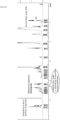
- ASL and LSL were detected after the retention time of 3 to 10 minutes and 12 to 16 minutes, respectively, and then, three unknown component peaks (A, B, and C) were detected after around 18 minutes, around 20 minutes, and around 22 minutes, respectively.
- the results were consistent with those of the reversed-phase TLC analysis in Example 2 showing the detection of an unknown glycolipid after that of ASL and LSL.
- Compound A was a clear and viscous solid
- B was a clear solid harder than A
- C was a waxy white solid.
- FIGS. 4 to 6 show the respective results of the LC/MS analysis conducted under separation conditions similar to those of Example 3 by using the HPLC described in Example 3 to which an electrospray ionization mass spectrometer (ESI-MS) (Exactive Plus, product of Thermo Fisher Scientific) was connected.
- ESI-MS electrospray ionization mass spectrometer
- Such a pattern was frequently observed from glycolipid type biosurfactants and the component other than the main component was presumed to have one acetyl group removed therefrom. Further, they contained components (1582, 2271, and 1845) obtained by adding 114 to the main components or components obtained by subtracting 42 therefrom, respectively. The components were all presumed to be obtained by partially modifying the functional group of the main component.
- Compounds A to C are presumed to contain components having the same basic structure but different in fatty acid composition.
- Compound B is an SL derivative having, in addition to the structure of ASL, a chemical structure showing those two kinds of peaks.
- Examples of a typical compound exhibiting peaks near 5.3 ppm and near 4.1 to 4.4 ppm include the glycerin skeleton of an oil or fat (fatty acid triglyceride).
- Compound B is presumed to be represented by the chemical formula (6) in which ASL is ester-linked to three hydroxyl groups of glycerin.
- Compound B is identified as the compound of the chemical formula (6).
- Compound A is presumed to be a compound of the chemical formula (5) in which two ASLs are linked to glycerin and Compound C is presumed to be a compound of the chemical formula (7) in which two ASLs and one long-chain fatty acid are ester-linked to glycerin.
- Their molecular weight is consistent with that of the main component of each compound confirmed in Example 5, supporting the results of this structural analysis.
- Derivatives contained in the cultured product of a producing microorganism are not limited to them.
- Example 4 Compounds A, B, and C separated from each other in Example 4 were weighed (each, 10 mg) in measuring flasks, respectively, and diluted with distilled water to prepare 1 mg/mL (0.1 wt.%) aqueous solutions ( FIG. 11 ).
- aqueous solutions were obtained by completely dissolving Compound A and Compound B, but the aqueous solution of Compound C became clouded. Further, 10 mg/mL (1 wt%) aqueous solutions of Compounds A and B were prepared respectively in a similar manner. The aqueous solution of A became clouded and Compound B was dissolved completely. The clouded aqueous solutions of Compounds A and C were allowed to stand in a refrigerator and then, they were both dissolved completely to be a clear aqueous solution.
- phase change of the aqueous solutions depending on the temperature is a reversible phenomenon, showing that it has a cloud point at room temperature (25°C) or less.
- FIG. 12 shows a logarithmically plotted graph of the concentration and the surface tension of the aqueous solutions.
- Compound C showed almost no change in the surface tension of its aqueous solution regardless of the concentration, while Compounds A and B showed a significant reduction in surface tension with an increase in the concentration. In addition, both were confirmed to have two-step inflection points in the plot with an increase in the concentration.
- CMC critical micelle concentration
- LSL has CMC of 1.4 ⁇ 10 -5 M and ⁇ CMC of 32.3 mN/m and ASL has CMC of 1.2 ⁇ 10 -4 M and ⁇ CMC of 37.1 mN/m, according to the literature.
- the novel SL derivatives found this time have remarkably high water solubility and exhibit mild surface tension reducing ability, though they are a nonionic surfactant, in other words, they are a surfactant very suitable for use in an aqueous system.
- MALDI-TOF/MS Matrix assisted laser ionization time-of-flight mass spectrum
- Example 1 MALDI-TOF/MS analysis of the solid SL mixture obtained in Example 1 was performed by JMS-3000 SpiralTOF-MS, product of JASCO Corporation, with 2',4',6'-trihydroxyacetophenone (THAP) as a matrix ( FIG. 13 ).
- a peak of a structurally-unidentified compound having a structure of m/z 803.4 and different from that of conventional LSL and ASL was detected.
- Example 4 The compound B obtained in Example 4 (20 mg) was dissolved in acetone (1 mL) in a vial bottle, and acetic anhydride (200 ⁇ L) and triethylamine (10 ⁇ L) were added, respectively. The reaction solution was allowed to stand overnight at room temperature. After the reaction, all solvents were removed by drying under reduced pressure, and the product was recovered.
- Reversed-phase TLC analysis of the product detected a compound with a lower mobility due to the acetylation, that is more hydrophobic than the starting compound B. Therefore, the progress of the acetylation reaction was confirmed. Subsequently, HPLC and LC/MS analysis of the product was performed in the same method as in Examples 3 and 5. On the HPLC chart, the peak of the product shifted to the longer retention time side, that is, to the hydrophobic side ( FIG. 14 ), as in the above reversed-phase TLC. In addition, the molecular ion peaks of the main component of the product were 2536, 2578, 2494, etc.
- the novel SL derivatives of the present invention are sophorolipid derivatives having excellent water solubility, surface tension reducing ability, and self-organization characteristics and derived from highly-safe natural products, so that they can be applied to a wide range of fields such as feedstuff, fertilizers, food and drink, agrichemicals, pharmaceuticals, quasi drugs, and cosmetics.
Landscapes
- Life Sciences & Earth Sciences (AREA)
- Chemical & Material Sciences (AREA)
- Health & Medical Sciences (AREA)
- Engineering & Computer Science (AREA)
- Organic Chemistry (AREA)
- Wood Science & Technology (AREA)
- Polymers & Plastics (AREA)
- Zoology (AREA)
- General Health & Medical Sciences (AREA)
- Food Science & Technology (AREA)
- Mycology (AREA)
- Chemical Kinetics & Catalysis (AREA)
- Biochemistry (AREA)
- Biotechnology (AREA)
- Genetics & Genomics (AREA)
- Nutrition Science (AREA)
- Microbiology (AREA)
- Bioinformatics & Cheminformatics (AREA)
- Molecular Biology (AREA)
- Oil, Petroleum & Natural Gas (AREA)
- Veterinary Medicine (AREA)
- Animal Behavior & Ethology (AREA)
- Public Health (AREA)
- General Chemical & Material Sciences (AREA)
- General Engineering & Computer Science (AREA)
- Animal Husbandry (AREA)
- Epidemiology (AREA)
- Medicinal Chemistry (AREA)
- Emergency Medicine (AREA)
- Pharmacology & Pharmacy (AREA)
- Dermatology (AREA)
- Pest Control & Pesticides (AREA)
- Birds (AREA)
- Biomedical Technology (AREA)
- Virology (AREA)
- Tropical Medicine & Parasitology (AREA)
- Botany (AREA)
- Crystallography & Structural Chemistry (AREA)
- Materials Engineering (AREA)
- Saccharide Compounds (AREA)
Applications Claiming Priority (3)
| Application Number | Priority Date | Filing Date | Title |
|---|---|---|---|
| JP2021059097A JP6954548B1 (ja) | 2021-03-31 | 2021-03-31 | 新規ソホロリピッド誘導体 |
| JP2021162645A JP2023053549A (ja) | 2021-10-01 | 2021-10-01 | 新規ソホロリピッド誘導体 |
| PCT/JP2022/012536 WO2022210011A1 (ja) | 2021-03-31 | 2022-03-18 | 新規ソホロリピッド誘導体 |
Publications (2)
| Publication Number | Publication Date |
|---|---|
| EP4317448A1 true EP4317448A1 (de) | 2024-02-07 |
| EP4317448A4 EP4317448A4 (de) | 2025-01-22 |
Family
ID=83456085
Family Applications (1)
| Application Number | Title | Priority Date | Filing Date |
|---|---|---|---|
| EP22777578.0A Pending EP4317448A4 (de) | 2021-03-31 | 2022-03-18 | Sophorolipid-derivat |
Country Status (7)
| Country | Link |
|---|---|
| US (1) | US20230348515A1 (de) |
| EP (1) | EP4317448A4 (de) |
| KR (1) | KR102794922B1 (de) |
| CN (1) | CN116261400A (de) |
| AU (1) | AU2022249520B2 (de) |
| BR (1) | BR112023003599A2 (de) |
| WO (1) | WO2022210011A1 (de) |
Cited By (3)
| Publication number | Priority date | Publication date | Assignee | Title |
|---|---|---|---|---|
| EP4632053A1 (de) | 2025-04-15 | 2025-10-15 | Evonik Operations GmbH | Verfahren zur behandlung einer metalloberfläche |
| EP4692292A1 (de) | 2024-08-06 | 2026-02-11 | Evonik Operations GmbH | Verbessertes verfahren zur keimung von bakteriensporen |
| WO2026032787A1 (en) | 2024-08-06 | 2026-02-12 | Evonik Operations Gmbh | Bacillus subtilis strains in cleaning solutions and animal feeding |
Families Citing this family (1)
| Publication number | Priority date | Publication date | Assignee | Title |
|---|---|---|---|---|
| EP4651716A1 (de) * | 2022-12-22 | 2025-11-26 | Locus Solutions IPCO, LLC | Sophorolipide und sophorolipidderivate als tankmischungsadditive und adjuvantien in pflanzenschutzformulierungen |
Family Cites Families (7)
| Publication number | Priority date | Publication date | Assignee | Title |
|---|---|---|---|---|
| KR100569238B1 (ko) * | 2004-01-19 | 2006-04-10 | 학교법인 인하학원 | 콩기름 부산물을 이용한 소포로리피드의 생산방법 |
| JP4548827B2 (ja) | 2004-09-06 | 2010-09-22 | サラヤ株式会社 | 生分解性の液体洗浄剤組成物 |
| JP2008247845A (ja) | 2007-03-30 | 2008-10-16 | National Institute Of Advanced Industrial & Technology | 酸型ソホロースリピッドの生産方法 |
| JP5649268B2 (ja) * | 2008-05-15 | 2015-01-07 | サラヤ株式会社 | ソホロリピッドを含む吸着抑制組成物 |
| KR20100022289A (ko) * | 2008-08-19 | 2010-03-02 | 인하대학교 산학협력단 | C-22 소포로리피드 유도체 화합물 및 이의 제조방법 |
| JP6088872B2 (ja) * | 2013-03-22 | 2017-03-01 | サラヤ株式会社 | ラクトン型ソホロリピッドの分解が抑制されたソホロリピッド粉末 |
| EP3034613B1 (de) | 2013-08-09 | 2025-01-08 | Saraya Co., Ltd. | Neuartige sophorolipidverbindung und zusammensetzung, die diese enthält |
-
2022
- 2022-03-18 CN CN202280006101.2A patent/CN116261400A/zh active Pending
- 2022-03-18 BR BR112023003599A patent/BR112023003599A2/pt unknown
- 2022-03-18 AU AU2022249520A patent/AU2022249520B2/en active Active
- 2022-03-18 WO PCT/JP2022/012536 patent/WO2022210011A1/ja not_active Ceased
- 2022-03-18 US US18/016,898 patent/US20230348515A1/en not_active Abandoned
- 2022-03-18 EP EP22777578.0A patent/EP4317448A4/de active Pending
- 2022-03-18 KR KR1020237001198A patent/KR102794922B1/ko active Active
Cited By (8)
| Publication number | Priority date | Publication date | Assignee | Title |
|---|---|---|---|---|
| EP4692292A1 (de) | 2024-08-06 | 2026-02-11 | Evonik Operations GmbH | Verbessertes verfahren zur keimung von bakteriensporen |
| WO2026032787A1 (en) | 2024-08-06 | 2026-02-12 | Evonik Operations Gmbh | Bacillus subtilis strains in cleaning solutions and animal feeding |
| WO2026032786A1 (en) | 2024-08-06 | 2026-02-12 | Evonik Operations Gmbh | Priestia megaterium strains in cleaning and animal feeding |
| WO2026032788A1 (en) | 2024-08-06 | 2026-02-12 | Evonik Operations Gmbh | Improved method for reducing malodor |
| WO2026032785A1 (en) | 2024-08-06 | 2026-02-12 | Evonik Operations Gmbh | Bacillus licheniformis strains in cleaning and animal feeding |
| WO2026032784A1 (en) | 2024-08-06 | 2026-02-12 | Evonik Operations Gmbh | Bacillus velezensis strains in cleaning and animal feeding |
| WO2026032783A1 (en) | 2024-08-06 | 2026-02-12 | Evonik Operations Gmbh | Bacillus velezensis strains in cleaning and animal feeding |
| EP4632053A1 (de) | 2025-04-15 | 2025-10-15 | Evonik Operations GmbH | Verfahren zur behandlung einer metalloberfläche |
Also Published As
| Publication number | Publication date |
|---|---|
| AU2022249520B2 (en) | 2025-07-24 |
| AU2022249520A1 (en) | 2023-09-28 |
| EP4317448A4 (de) | 2025-01-22 |
| TW202304945A (zh) | 2023-02-01 |
| WO2022210011A1 (ja) | 2022-10-06 |
| KR102794922B1 (ko) | 2025-04-11 |
| KR20230022444A (ko) | 2023-02-15 |
| BR112023003599A2 (pt) | 2023-10-31 |
| CN116261400A (zh) | 2023-06-13 |
| US20230348515A1 (en) | 2023-11-02 |
Similar Documents
| Publication | Publication Date | Title |
|---|---|---|
| EP4317448A1 (de) | Sophorolipid-derivat | |
| Marcelino et al. | Biosurfactants production by yeasts using sugarcane bagasse hemicellulosic hydrolysate as new sustainable alternative for lignocellulosic biorefineries | |
| Fukuoka et al. | A basidiomycetous yeast, Pseudozyma tsukubaensis, efficiently produces a novel glycolipid biosurfactant. The identification of a new diastereomer of mannosylerythritol lipid-B | |
| Katsoura et al. | Effect of different reaction parameters on the lipase-catalyzed selective acylation of polyhydroxylated natural compounds in ionic liquids | |
| Ashby et al. | Property control of sophorolipids: influence of fatty acid substrate and blending | |
| He et al. | A novel chemo-enzymatic synthesis of hydrophilic phytosterol derivatives | |
| Fukuoka et al. | Characterization of new glycolipid biosurfactants, tri-acylated mannosylerythritol lipids, produced by Pseudozyma yeasts | |
| Goossens et al. | Enhanced separation and analysis procedure reveals production of tri-acylated mannosylerythritol lipids by Pseudozyma aphidis | |
| Tang et al. | Efficient purification of sophorolipids via chemical modifications coupled with extractions and their potential applications as antibacterial agents | |
| Morita et al. | Identification of Pseudozyma graminicola CBS 10092 as a producer of glycolipid biosurfactants, mannosylerythritol lipids | |
| JP2008247845A (ja) | 酸型ソホロースリピッドの生産方法 | |
| Correia et al. | Cost-effective rhamnolipid production by Burkholderia thailandensis E264 using agro-industrial residues | |
| Kulakovskaya et al. | Extracellular glycolipids of yeasts: biodiversity, biochemistry, and prospects | |
| Imura et al. | Enzymatic conversion of diacetylated sophoroselipid into acetylated glucoselipid: surface-active properties of novel bolaform biosurfactants | |
| Zerhusen et al. | Microbial synthesis of nonionic Long‐chain Sophorolipid emulsifiers obtained from fatty alcohol and mixed lipid feeding | |
| Powalla et al. | Penta-and disaccharide lipid formation by Nocardia corynebacteroides grown on n-alkanes | |
| JP5344274B2 (ja) | 新規マンノシルエリスリトールリピッドおよびその製造方法 | |
| JP5339335B2 (ja) | 新規マンノシルエリスリトール及びその製造方法 | |
| JP6954548B1 (ja) | 新規ソホロリピッド誘導体 | |
| Langer et al. | Production and modification of bioactive biosurfactants | |
| TWI911429B (zh) | 新穎槐糖脂質衍生物 | |
| Kim et al. | Enzymatic synthesis of alkyl glucosides using Leuconostoc mesenteroides dextransucrase | |
| EP3116886A1 (de) | Hexosederivate, herstellung und verwendungen davon | |
| Bollmann et al. | Structures and properties of sophorolipids in dependence of microbial strain, lipid substrate and post-modification | |
| JP4803436B2 (ja) | 水溶性マンノシルエリスリトールリピッド及びその製造方法 |
Legal Events
| Date | Code | Title | Description |
|---|---|---|---|
| STAA | Information on the status of an ep patent application or granted ep patent |
Free format text: STATUS: UNKNOWN |
|
| STAA | Information on the status of an ep patent application or granted ep patent |
Free format text: STATUS: THE INTERNATIONAL PUBLICATION HAS BEEN MADE |
|
| PUAI | Public reference made under article 153(3) epc to a published international application that has entered the european phase |
Free format text: ORIGINAL CODE: 0009012 |
|
| STAA | Information on the status of an ep patent application or granted ep patent |
Free format text: STATUS: REQUEST FOR EXAMINATION WAS MADE |
|
| 17P | Request for examination filed |
Effective date: 20230104 |
|
| AK | Designated contracting states |
Kind code of ref document: A1 Designated state(s): AL AT BE BG CH CY CZ DE DK EE ES FI FR GB GR HR HU IE IS IT LI LT LU LV MC MK MT NL NO PL PT RO RS SE SI SK SM TR |
|
| DAV | Request for validation of the european patent (deleted) | ||
| DAX | Request for extension of the european patent (deleted) | ||
| A4 | Supplementary search report drawn up and despatched |
Effective date: 20250102 |
|
| RIC1 | Information provided on ipc code assigned before grant |
Ipc: C11D 3/22 20060101ALI20241218BHEP Ipc: C11D 1/68 20060101ALI20241218BHEP Ipc: C11D 1/06 20060101ALI20241218BHEP Ipc: C09K 23/52 20220101ALI20241218BHEP Ipc: C07H 15/08 20060101ALI20241218BHEP Ipc: C07H 15/04 20060101ALI20241218BHEP Ipc: C05G 3/50 20200101ALI20241218BHEP Ipc: A61Q 19/10 20060101ALI20241218BHEP Ipc: A61K 47/26 20060101ALI20241218BHEP Ipc: A61K 8/60 20060101ALI20241218BHEP Ipc: A23L 33/145 20160101ALI20241218BHEP Ipc: A23L 33/125 20160101ALI20241218BHEP Ipc: A23L 29/10 20160101ALI20241218BHEP Ipc: A23L 2/52 20060101ALI20241218BHEP Ipc: C12N 1/18 20060101ALI20241218BHEP Ipc: A23K 20/163 20160101ALI20241218BHEP Ipc: A23K 20/158 20160101ALI20241218BHEP Ipc: C12P 19/44 20060101ALI20241218BHEP Ipc: C11D 3/20 20060101ALI20241218BHEP Ipc: C12P 19/12 20060101AFI20241218BHEP |