EP4311368B1 - Verfahren und vorrichtungen zur zusammenarbeit zwischen netzwerken in einem drahtloskommunikationssystem - Google Patents
Verfahren und vorrichtungen zur zusammenarbeit zwischen netzwerken in einem drahtloskommunikationssystem Download PDFInfo
- Publication number
- EP4311368B1 EP4311368B1 EP23214993.0A EP23214993A EP4311368B1 EP 4311368 B1 EP4311368 B1 EP 4311368B1 EP 23214993 A EP23214993 A EP 23214993A EP 4311368 B1 EP4311368 B1 EP 4311368B1
- Authority
- EP
- European Patent Office
- Prior art keywords
- communication system
- terminal
- switching
- gateway
- link
- Prior art date
- Legal status (The legal status is an assumption and is not a legal conclusion. Google has not performed a legal analysis and makes no representation as to the accuracy of the status listed.)
- Active
Links
Images










Classifications
-
- H—ELECTRICITY
- H04—ELECTRIC COMMUNICATION TECHNIQUE
- H04W—WIRELESS COMMUNICATION NETWORKS
- H04W76/00—Connection management
- H04W76/20—Manipulation of established connections
-
- H—ELECTRICITY
- H04—ELECTRIC COMMUNICATION TECHNIQUE
- H04W—WIRELESS COMMUNICATION NETWORKS
- H04W36/00—Hand-off or reselection arrangements
- H04W36/14—Reselecting a network or an air interface
- H04W36/144—Reselecting a network or an air interface over a different radio air interface technology
-
- H—ELECTRICITY
- H04—ELECTRIC COMMUNICATION TECHNIQUE
- H04W—WIRELESS COMMUNICATION NETWORKS
- H04W76/00—Connection management
- H04W76/10—Connection setup
- H04W76/12—Setup of transport tunnels
-
- H—ELECTRICITY
- H04—ELECTRIC COMMUNICATION TECHNIQUE
- H04W—WIRELESS COMMUNICATION NETWORKS
- H04W76/00—Connection management
- H04W76/10—Connection setup
- H04W76/15—Setup of multiple wireless link connections
- H04W76/16—Involving different core network technologies, e.g. a packet-switched [PS] bearer in combination with a circuit-switched [CS] bearer
-
- H—ELECTRICITY
- H04—ELECTRIC COMMUNICATION TECHNIQUE
- H04W—WIRELESS COMMUNICATION NETWORKS
- H04W76/00—Connection management
- H04W76/20—Manipulation of established connections
- H04W76/25—Maintenance of established connections
-
- H—ELECTRICITY
- H04—ELECTRIC COMMUNICATION TECHNIQUE
- H04W—WIRELESS COMMUNICATION NETWORKS
- H04W76/00—Connection management
- H04W76/20—Manipulation of established connections
- H04W76/27—Transitions between radio resource control [RRC] states
-
- H—ELECTRICITY
- H04—ELECTRIC COMMUNICATION TECHNIQUE
- H04W—WIRELESS COMMUNICATION NETWORKS
- H04W88/00—Devices specially adapted for wireless communication networks, e.g. terminals, base stations or access point devices
- H04W88/02—Terminal devices
- H04W88/06—Terminal devices adapted for operation in multiple networks or having at least two operational modes, e.g. multi-mode terminals
-
- H—ELECTRICITY
- H04—ELECTRIC COMMUNICATION TECHNIQUE
- H04W—WIRELESS COMMUNICATION NETWORKS
- H04W92/00—Interfaces specially adapted for wireless communication networks
- H04W92/02—Inter-networking arrangements
-
- H—ELECTRICITY
- H04—ELECTRIC COMMUNICATION TECHNIQUE
- H04W—WIRELESS COMMUNICATION NETWORKS
- H04W88/00—Devices specially adapted for wireless communication networks, e.g. terminals, base stations or access point devices
- H04W88/16—Gateway arrangements
-
- H—ELECTRICITY
- H04—ELECTRIC COMMUNICATION TECHNIQUE
- H04W—WIRELESS COMMUNICATION NETWORKS
- H04W92/00—Interfaces specially adapted for wireless communication networks
- H04W92/04—Interfaces between hierarchically different network devices
- H04W92/045—Interfaces between hierarchically different network devices between access point and backbone network device
Definitions
- the disclosure relates to a wireless communication system, and more particularly, to methods and apparatuses for interworking between networks in a wireless communication system.
- the 5G or pre-5G communication system is also called a “beyond 4G network” communication system or a "post LTE System.”
- FQAM FSK and QAM modulation
- SWSC sliding window superposition coding
- ACM advanced coding modulation
- FBMC filter bank multi carrier
- NOMA non-orthogonal multiple access
- SCMA sparse code multiple access
- the disclosure has been made in order to solve the above-described problems, and the disclosure provide a method and an apparatus for performing interworking without dependency between a 4G network and a 5G network.
- the present invention is directed to subject matter as defined in the claims.
- a method by a terminal for performing communication in a wireless communication system as defined in the appended claims in order to solve the above-described problems, a method by a terminal for performing communication in a wireless communication system as defined in the appended claims.
- a terminal for performing communication in a wireless communication system as defined in the appended claims.
- a gateway device for performing communication in a wireless communication system as defined in the appended claims.
- an interworking system without dependency between a legacy 4G network and a 5G network is provided, and through this, 5G service launch and development can be performed quickly and conveniently.
- a 5G GW can allocate the same IP address to the UE and it can support a seamless service between 4G and 5G through session binding between 4G and 5G.
- APN access point name
- a 5G GW can allocate the same IP address to the UE and it can support a seamless service between 4G and 5G through session binding between 4G and 5G.
- stability of a 5G radio link using mmWave may be lowered, and even in such an environment, a 4G fallback can be quickly performed in order to secure stability of the service.
- each block of the flowchart illustrations, and combinations of blocks in the flowchart illustrations can be implemented by computer program instructions.
- These computer program instructions can be provided to a processor of a general purpose computer, special purpose computer, or other programmable data processing apparatus to produce a machine, such that the instructions, which execute via the processor of the computer or other programmable data processing apparatus, create means for implementing the functions specified in the flowchart block or blocks.
- These computer program instructions may also be stored in a computer usable or computer-readable memory that can direct a computer or other programmable data processing apparatus to function in a particular manner, such that the instructions stored in the computer usable or computer-readable memory produce an article of manufacture including instruction means that implement the function specified in the flowchart block or blocks.
- the computer program instructions may also be loaded onto a computer or other programmable data processing apparatus to cause a series of operational steps to be performed on the computer or other programmable apparatus to produce a computer implemented process such that the instructions that execute on the computer or other programmable apparatus provide steps for implementing the functions specified in the flowchart block or blocks.
- each block of the flowchart illustrations may represent a module, segment, or portion of code, which includes one or more executable instructions for implementing the specified logical function(s). It should also be noted that in some alternative implementations, the functions noted in the blocks may occur out of the order. For example, two blocks shown in succession may in fact be executed substantially concurrently or the blocks may sometimes be executed in the reverse order, depending upon the functionality involved.
- ⁇ unit means, but is not limited to, a software or hardware component, such as FPGA or ASIC, which performs certain tasks.
- ⁇ unit is not meant to be limited to software or hardware.
- the term “ ⁇ unit” may advantageously be configured to reside on the addressable storage medium and configured to execute on one or more processors.
- ⁇ unit may include, by way of example, components, such as software components, object-oriented software components, class components and task components, processes, functions, attributes, procedures, subroutines, segments of program code, drivers, firmware, microcode, circuitry, data, databases, data structures, tables, arrays, and variables.
- components and " ⁇ units” may be combined into fewer components and “ ⁇ units” or further separated into additional components and “-units”. Further, the components and “ ⁇ units” may be implemented to operate one or more CPUs in a device or a security multimedia card.
- Embodiments of the disclosure described hereinafter relate to interworking without dependency between a first wireless communication system and a second wireless communication system.
- the first wireless communication system is exemplified as 4G
- the second wireless communication system is exemplified as 5G, but the wireless communication systems are not limited thereto.
- 4G may mean long term evolution (LTE)
- 5G may means a communication network implemented in ultrahigh frequency (mmWave) bands, e.g., 28 GHz bands.
- LTE long term evolution
- mmWave ultrahigh frequency
- the existing 4G base station, core name, and interface name have been quoted as 5G base station, core name, and interface name, respectively, but in the 5G and post-5G standards, the 5G base station, the core name, and the interface name may be changed although the basic functions thereof are the same.
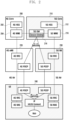
- FIG. 1 is a diagram illustrating the concept of interworking between networks based on a standalone mode according to an embodiment of the disclosure.
- the disclosure introduces an interworking system without dependency between a legacy 4G network and a 5G network.
- user equipment (UE, which can be used interchangeably with terminal or user device) 100 independently performs non-access stratum (NAS) operations, such as registration, attach, service request, and mobility, in 4G and 5G networks.
- NAS non-access stratum
- the UE supports an inter-RAT switching function between 4G and 5G through a common APN at a core level of a network.
- service names e.g., Intemet APN 134
- a 5G gateway (GW) 130 performs the same IP address allocation and session binding between 4G and 5G with respect to the UE to support a seamless service between 4G and 5G.
- the UE capable of determining the radio state most quickly performs link switch decision between 4G and 5G, and in order to match switching synchronization with an anchor in the 5G GW (hereinafter, interchangeably used with GW), the UE transmits a signaling message (e.g., link switch request) to the anchor in the GW.
- a signaling message e.g., link switch request
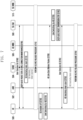
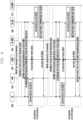
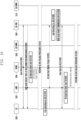
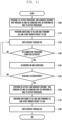
- FIG. 12 is a flowchart illustrating fast 4G fallback and 5G recovery procedures when a 5G radio problem occurs in a dependent 4G-5G RRC state mode of a terminal.
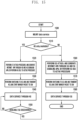
- FIG. 13 is a flowchart illustrating a procedure in the case of no traffic with respect to 4G in a dependent 4G-5G RRC state mode of a terminal.
- a data service through 4G is performed. If user traffic exists, the data service is continuously performed, whereas if the user traffic does not exist, the 4G base station starts an inactivity timer, and the terminal determines whether the inactivity timer in the 4G base station expires at operation 1310. If the inactivity timer expires, the 4G active to idle procedure (i.e., 4G RRC connection release process) is performed at operation 1320. Thereafter, if the 5G connection triggering condition is not satisfied and the existing 5G modem-on and searching state is maintained, 5G modem-off may be performed (1325). If the inactivity timer does not expire, the terminal returns to operation 1300.
- the 4G active to idle procedure i.e., 4G RRC connection release process
- a data service through 5G is performed. If user traffic exists, the data service is continuously performed, whereas if the user traffic does not exist, the 5G base station starts an inactivity timer, and the terminal determines whether the inactivity timer expires at operation 1410. If the inactivity timer expires, the 5G active to idle procedure (i.e., 5G RRC connection release process) is performed (1420). If the inactivity timer does not expire, the terminal returns to operation 1400.
- the 5G active to idle procedure i.e., 5G RRC connection release process
- 5G modem-off may be performed (1430), and the terminal performs switching to a 4G link and it transmits a 4G link start marker packet to the 5G GW (1440). Thereafter, if necessary, the terminal performs the data service through 4G (1450), and if the user traffic exists, the data service is continuously performed, whereas if the 5G connection triggering condition is satisfied, 5G connection and switching may be performed.
- the 4G base station starts the inactivity timer.
- the terminal determines whether the inactivity timer in the 4G base station expires. If the inactivity timer expires, the terminal performs 4G active to idle procedure (i.e., 4G RRC connection release) (1470). If the inactivity timer does not expire, the terminal returns to operation 1450.
- MO/MT data service is generated, and at operation 1510, the terminal identifies whether only the 4G network is available. If only the 4G network is available, the terminal, at operation 1520, performs LTE attach procedure and generation of the Intemet APN through 4G and 4G signaling APN, or 4G idle to active procedure. Thereafter, at operation 1530, the terminal performs switching to a 4G link, and it transmits a 4G link start marker packet to the 5G GW. If path setup to 4G is immediately performed during an initial access, operation 1530 can be omitted. Thereafter, the terminal performs a data service through 4G with the 4G base station (1540).
- the terminal determines whether the 5G network is available (1550), and if the 5G network is available, the terminal performs 5G attach and it generates the Intemet APN through 5G and 5G signaling APN, or it performs 5G idle to active procedure (1560). If the 5G network is not available, the terminal, at operation 1540, continuously performs the data service. At operation 1570 after operation 1560, the terminal performs switching to the 5G link, and it transmits the 5G link start marker packet to the 5G GW. Thereafter, the terminal performs the data service through the 5G connection.
- the terminal performs operation 1560.
- the GW performs an LTE attach procedure according to a request from the terminal, generation of the Intemet APN through 4G and 4G signaling APN, or an active procedure in the case where 4G is in an idle state.
- the GW receives the 4G link start marker packet from the terminal. Thereafter, the GW performs switching to the 4G link (1610). If path setup to 4G is immediately performed during an initial access, operations 1605 and 1610 can be omitted. Thereafter, at operation 1615, if the GW pre-transmits a keep alive packet on a 4G path, it interrupts transmission of the keep alive packet. Thereafter, at operation 1620, the GW performs the data service through 4G.
- the GW performs the 5G attach procedure according to the request from the terminal, generates Intemet APN through 5G and 5G signaling APN, and performs allocation of the same IP as that of 4G and 4G-5G session binding in the performing process. Further, if 5G is in an idle state, an active procedure is performed. In other cases (e.g., if 5G is in a pre-connected state), operation 1625 can be omitted. Thereafter, at operation 1630, the GW identifies whether the 5G link start marker packet transmitted by the terminal is received. If the GW receives the 5G link start marker packet, it performs switching to the 5G link (1635).
- the GW determines whether the 4G link start marker packet is received, and if the packet is received, the GW returns to operation 1610, whereas if the packet is not received, the GW returns to operation 1645.
- FIG. 17 is a flowchart illustrating fast 4G fallback and 5G recovery procedures in the case of a 5G radio problem of a GW in a dependent 4G-5G RRC state mode.
- the GW pre-transmits the keep alive packet to the 4G path after the switching to the 4G link is performed at operation 1720, the GW interrupts transmission of the keep alive packet. Thereafter, the GW perform the data service through 4G with the terminal.
- the GW performs the data service through 4G. If user traffic exists, the GW continuously performs the data service, whereas if the user traffic does not exist, the 4G base station starts an inactivity timer. The GW determines whether the inactivity timer expires (1810), and if the inactivity timer in the 4G base station expires due to the continuous nonexistence of the user traffic, the GW performs 4G active to idle procedure (4G S1 connection release) at operation 1820. If the inactivity timer does not expire, the GW returns to operation 1800 to perform the data service through 4G.
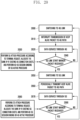
- FIG. 19 is another flowchart illustrating 4G and 5G idle procedures in the case of no traffic of a GW in a dependent 4G-5G RRC state mode.
- the GW is performing a data service through 5G.
- the GW returns to operation 1900 to continuously perform the data service.
- the GW After operation 1940, if the user traffic exists, the GW continuously performs the data service using 4G, whereas if the user traffic does not exist, the 4G base station starts the inactivity timer. The GW determines whether the inactivity timer expires (1950), and if the inactivity timer in the 4G base station expires due to the continuous nonexistence of the user traffic, the GW performs 4G active to idle procedure (4G S1 connection release) at operation 1960.
- the GW performs the LTE attach procedure according to the request from the terminal, generates the Intemet APN through 4G and 4G signaling APN, and performs allocation of the same IP and 4G-5G session binding if the existing 5G connection exists in the performing process, or the GW performs the active procedure and then it move to operation 2090 if 4G is in an idle state.
- the GW identifies whether the 4G link start marker packet is received from the terminal, and if the packet is received, the GW perform the switching to the 4G link (2000). If the path setup to 4G is immediately performed during the initial access, operations 2090 and 2000 can also be omitted. If the keep alive packet is pre-transmitted to the 4G path after operation 2000, the GW interrupts transmission of the keep alive packet
- the message is transmitted from the 5G GW to the UE through the 4G eNB, and it is periodically transmitted to the corresponding network in order to maintain the RRC of an available network (e.g., 4G) that can be switched for fast fallback in a connected state.
- an available network e.g., 4G
- the 4G start marker message is transmitted from the UE to the 5G GW through the 4G eNB, and the message ID may be 0x00 00 00 04.
- This message is for the UE to perform switching notification to the 5G GW after the switching operation from 5G to 4G, and for the 5G GW to request switching from 5G to 4G, and it may be repeatedly transmitted with a specific period and the specific number of transmissions for reliable reception during transmission to the 5G GW. As an example, the message may be repeatedly transmitted 10 times for each 100 ms.
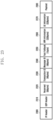
- the reserved ID 2320 is composed of 8 bytes that can be set to "0" in all.
- the transaction ID is composed of 4 bytes, and the ID value may start from “1", and in particular, the ID value can start from "1", and it can be increased by 1 whenever the link change occurs. Further, in the case of repeatedly transmitting the same message for reliable transmission, the same transaction ID may be used.
- the message ID is a field indicating the attribute of the message with 4 bytes
- a 4G start marker may be 0x00 00 00 A4
- a 5G start marker may be 0x00 00 00 05.
- a 4G start complete may be 0x00 00 00 A4
- a 5G start complete may be 0x00 00 00 A5, and keep alive may be 0x00 00 00 0F.
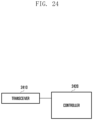
- a terminal may include a transceiver 2410 and a controller 2420.
- the transceiver 2410 may transmit and receive signals with a 4G or 5G base station.
- the controller 2420 may control to receive a packet for maintaining a connection to the first wireless network from the node.
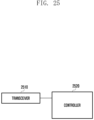
- controller 2520 The above-described function of the controller 2520 is exemplary, and it is to be noted that the controller can be configured to perform all functions described in the description.
Landscapes
- Engineering & Computer Science (AREA)
- Computer Networks & Wireless Communication (AREA)
- Signal Processing (AREA)
- Mobile Radio Communication Systems (AREA)
Claims (15)
- Verfahren eines Endgeräts (500) in einem drahtlosen Kommunikationssystem, wobei das Verfahren Folgendes umfasst:Kommunizieren (S534, 1120) mit einem Gateway (508) auf der Grundlage einer ersten Paketdatennetz-, PDN-,Verbindung, die sich auf ein erstes Kommunikationssystem bezieht; femer gekennzeichnet durchAufbauen (S538, 1160) eines Trägers mit dem Gateway in einem zweiten Kommunikationssystem, während sich das Endgerät in einem Funkressourcensteuerungs-, RRC-,Verbindungszustand im ersten Kommunikationssystem befindet;Aufbauen (S540, 1160) einer zweiten PDN-Verbindung, die sich auf das zweite Kommunikationssystem bezieht;Durchführen eines Umschaltens (S544, 1170) vom ersten Kommunikationssystem zum zweiten Kommunikationssystem,Übertragen (S546, 1170) eines Verbindungsstartmarkierungspakets an das Gateway (508) basierend auf der zweiten PDN-Verbindung; undÜbertragen und Empfangen (S552, 1180) von Daten unter Verwendung des Gateways (508) basierend auf der zweiten PDN-Verbindung.
- Verfahren nach Anspruch 1,wobei der Träger verwendet wird, um ein Umschalten zwischen dem ersten Kommunikationssystem und dem zweiten Kommunikationssystem zu unterstützen, undwobei das erste Kommunikationssystem einem Kemnetz der 4. Generation und das zweite Kommunikationssystem einem Kemnetz der 5. Generation entspricht.
- Verfahren nach Anspruch 1, wobei das Verbindungsstartmarkierungspaket mindestens eines von einem Intemet Protocol-, IP-,Header, einem User Datagram Protocol-, UDP-,Header, einem Steuerungsnachrichtentypindikator oder einem Fast-Fallback-Steuerungs-Flag umfasst.
- Verfahren nach Anspruch 1, femer umfassend:Empfangen eines Keepalive-Pakets vom Gateway basierend auf der ersten PDN-Verbindung, die sich auf ein erstes Kommunikationssystem bezieht,wobei das Keepalive-Paket mindestens eines von einem Intemet Protocol-, IP-,Header, einem User Datagram Protocol-, UDP-,Header oder einem Steuerungsnachrichtentypindikator umfasst, undwobei der Steuerungsnachrichtentypindikator verwendet wird, um das Keepalive-Paket anzuzeigen.
- Verfahren eines Gateways (508) in einem drahtlosen Kommunikationssystem, wobei das Verfahren Folgendes umfasst:Kommunizieren (S534, 1120) mit einem Endgerät (500) auf der Grundlage einer ersten Paketdatennetz-, PDN-,Verbindung, die sich auf ein erstes Kommunikationssystem bezieht; femer gekennzeichnet durchAufbauen (S538, 1160) eines Trägers mit dem Endgerät (500) in einem zweiten Kommunikationssystem, während sich das Endgerät in einem Funkressourcensteuerungs-, RRC-, Verbindungszustand im ersten Kommunikationssystem befindet;Aufbauen (S540, 1160) einer zweiten PDN-Verbindung, die sich auf das zweite Kommunikationssystem bezieht;Durchführen eines Umschaltens (S544, 1170) vom ersten Kommunikationssystem zum zweiten Kommunikationssystem,Empfangen (S546, 1170) eines Verbindungsstartmarkierungspakets von dem Endgerät basierend auf der zweiten PDN-Verbindung; undÜbertragen und Empfangen (S552, 1180) von Daten unter Verwendung des Endgeräts basierend auf der zweiten PDN-Verbindung, die sich auf das zweite Kommunikationssystem bezieht.
- Verfahren nach Anspruch 5,wobei der Träger verwendet wird, um ein Umschalten zwischen dem ersten Kommunikationssystem und dem zweiten Kommunikationssystem zu unterstützen, undwobei das erste Kommunikationssystem einem Kemnetz der 4. Generation und das zweite Kommunikationssystem einem Kemnetz der 5. Generation entspricht.
- Verfahren nach Anspruch 5, wobei das Verbindungsstartmarkierungspaket mindestens eines von einem Intemet Protocol-, IP-,Header, einem User Datagram Protocol-, UDP-,Header, einem Steuerungsnachrichtentypindikator oder einem Fast-Fallback-Steuerungs-Flag umfasst.
- Verfahren nach Anspruch 6, femer umfassend:Übertragen eines Keepalive-Pakets an das Endgerät basierend auf der ersten PDN-Verbindung, die sich auf ein erstes Kommunikationssystem bezieht,wobei das Keepalive-Paket mindestens eines von einem Intemet Protocol-, IP-,Header, einem User Datagram Protocol-, UDP-,Header oder einem Steuerungsnachrichtentypindikator umfasst, undwobei der Steuerungsnachrichtentypindikator verwendet wird, um das Keepalive-Paket anzuzeigen.
- Endgerät (500) für ein drahtloses Kommunikationssystem, wobei das Endgerät Folgendes umfasst:einen Speicher, der Anweisungen speichert;einen Transceiver; undeinen Prozessor,wobei die Anweisungen, wenn sie von dem Prozessor ausgeführt werden, das Endgerät veranlassen zum:Kommunizieren (S534, 1120) mit einem Gateway (508) auf der Grundlage einer ersten Paketdatennetz-, PDN-,Verbindung, die sich auf ein erstes Kommunikationssystem bezieht, durch den Transceiver; ferner dadurch gekennzeichnet, dass die Anweisungen das Endgerät veranlassen zumAufbauen (S538, 1160) eines Trägers mit dem Gateway (508) in einem zweiten Kommunikationssystem, während sich das Endgerät in einem Funkressourcensteuerungs-, RRC-, Verbindungszustand im ersten Kommunikationssystem befindet,Aufbauen (S540, 1160) einer zweiten PDN-Verbindung, die sich auf das zweite Kommunikationssystem bezieht,Durchführen eines Umschaltens (S544, 1170) vom ersten Kommunikationssystem zum zweiten Kommunikationssystem,Übertragen (S546, 1170) eines Verbindungsstartmarkierungspakets an das Gateway (508) basierend auf der zweiten PDN-Verbindung, undÜbertragen und Empfangen (S552, 1180) von Daten unter Verwendung des Gateways (508) basierend auf der zweiten PDN-Verbindung, durch den Transceiver.
- Endgerät nach Anspruch 9,wobei der Träger verwendet wird, um ein Umschalten zwischen dem ersten Kommunikationssystem und dem zweiten Kommunikationssystem zu unterstützen, undwobei das erste Kommunikationssystem einem Kemnetz der 4. Generation und das zweite Kommunikationssystem einem Kemnetz der 5. Generation entspricht.
- Endgerät nach Anspruch 9, wobei das Verbindungsstartmarkierungspaket mindestens eines von einem Intemet Protocol-, IP-,Header, einem User Datagram Protocol-, UDP-,Header, einem Steuenmgsnachrichtentypindikator oder einem Fast-Fallback-Steuerungs-Flag umfasst.
- Endgerät nach Anspruch 9,wobei die Anweisungen, wenn sie vom Prozessor ausgeführt werden, das Endgerät dazu veranlassen, ein Keepalive-Paket vom Gateway basierend auf der ersten PDN-Verbindung, die sich auf ein erstes Kommunikationssystem bezieht, über den Transceiver zu empfangen,wobei das Keepalive-Paket mindestens eines von einem Intemet Protocol-, IP-,Header, einem User Datagram Protocol-, UDP-,Header oder einem Steuenmgsnachrichtentypindikator umfasst, undwobei der Steuerungsnachrichtentypindikator verwendet wird, um das Keepalive-Paket anzuzeigen.
- Gateway (508) für ein drahtloses Kommunikationssystem, wobei das Gateway (508) Folgendes umfasst:einen Speicher, der Anweisungen speichert;einen Transceiver; undeinen Prozessor,wobei die Anweisungen, wenn sie von dem Prozessor ausgeführt werden, das Gateway (508) veranlassen zum:Kommunizieren (S534, 1120) mit einem Terminal (500) auf der Grundlage einer ersten Paketdatennetz-, PDN-,Verbindung, die sich auf ein erstes Kommunikationssystem bezieht, durch den Transceiver; ferner dadurch gekennzeichnet, dass die Anweisungen das Gateway veranlassen zumAufbauen (S538, 1160) eines Trägers mit dem Endgerät (500) in einem zweiten Kommunikationssystem, während sich das Endgerät in einem Funkressourcensteuerungs-, RRC-, Verbindungszustand im ersten Kommunikationssystem befindet;Aufbauen (S540, 1160) einer zweiten PDN-Verbindung, die sich auf das zweite Kommunikationssystem bezieht;Durchführen (S544, 1170) eines Umschaltens vom ersten Kommunikationssystem zum zweiten Kommunikationssystem,Empfangen (S546, 1170) eines Verbindungsstartmarkierungspakets von dem Endgerät basierend auf der zweiten PDN-Verbindung; undÜbertragen und Empfangen (S552, 1180) von Daten unter Verwendung des Endgeräts basierend auf der zweiten PDN-Verbindung, die sich auf das zweite Kommunikationssystem bezieht, über den Transceiver.
- Gateway nach Anspruch 13, wobei der Träger verwendet wird, um ein Umschalten zwischen dem ersten Kommunikationssystem und dem zweiten Kommunikationssystem zu unterstützen, und
wobei das erste Kommunikationssystem einem Kemnetz der 4. Generation und das zweite Kommunikationssystem einem Kemnetz der 5. Generation entspricht. - Gateway nach Anspruch 13, wobei das Verbindungsstartmarkierungspaket mindestens eines von einem Intemet Protocol-, IP-,Header, einem User Datagram Protocol-, UDP-,Header, einem Steuenmgsnachrichtentypindikator oder einem Fast-Fallback-Steuerungs-Flag umfasst.
Applications Claiming Priority (5)
| Application Number | Priority Date | Filing Date | Title |
|---|---|---|---|
| KR20170008345 | 2017-01-17 | ||
| KR20170019650 | 2017-02-13 | ||
| KR1020170024409A KR102865961B1 (ko) | 2017-01-17 | 2017-02-23 | 무선 통신 시스템에서 네트워크 간 인터워킹 방법 및 장치 |
| PCT/KR2018/000809 WO2018135861A1 (ko) | 2017-01-17 | 2018-01-17 | 무선 통신 시스템에서 네트워크 간 인터워킹 방법 및 장치 |
| EP18741066.7A EP3557941B1 (de) | 2017-01-17 | 2018-01-17 | Verfahren und vorrichtung zur vernetzung zwischen netzwerken in einem drahtloskommunikationssystem |
Related Parent Applications (1)
| Application Number | Title | Priority Date | Filing Date |
|---|---|---|---|
| EP18741066.7A Division EP3557941B1 (de) | 2017-01-17 | 2018-01-17 | Verfahren und vorrichtung zur vernetzung zwischen netzwerken in einem drahtloskommunikationssystem |
Publications (4)
| Publication Number | Publication Date |
|---|---|
| EP4311368A2 EP4311368A2 (de) | 2024-01-24 |
| EP4311368A3 EP4311368A3 (de) | 2024-05-15 |
| EP4311368B1 true EP4311368B1 (de) | 2025-07-02 |
| EP4311368C0 EP4311368C0 (de) | 2025-07-02 |
Family
ID=62908728
Family Applications (1)
| Application Number | Title | Priority Date | Filing Date |
|---|---|---|---|
| EP23214993.0A Active EP4311368B1 (de) | 2017-01-17 | 2018-01-17 | Verfahren und vorrichtungen zur zusammenarbeit zwischen netzwerken in einem drahtloskommunikationssystem |
Country Status (2)
| Country | Link |
|---|---|
| EP (1) | EP4311368B1 (de) |
| WO (1) | WO2018135861A1 (de) |
Families Citing this family (3)
| Publication number | Priority date | Publication date | Assignee | Title |
|---|---|---|---|---|
| WO2020048357A1 (zh) * | 2018-09-04 | 2020-03-12 | Oppo广东移动通信有限公司 | 网络状态显示控制方法及装置 |
| WO2021208107A1 (en) * | 2020-04-18 | 2021-10-21 | Qualcomm Incorporated | An optimization method to recover ps service quickly |
| CN115004779B (zh) * | 2020-11-30 | 2024-07-05 | 华为技术有限公司 | 通信方法及装置 |
Family Cites Families (5)
| Publication number | Priority date | Publication date | Assignee | Title |
|---|---|---|---|---|
| US20070224988A1 (en) * | 2006-03-24 | 2007-09-27 | Interdigital Technology Corporation | Method and apparatus for performing a handover procedure between a 3gpp lte network and an alternative wireless network |
| US8477785B2 (en) * | 2010-07-09 | 2013-07-02 | Stoke, Inc. | Method and system for interworking a WLAN into a WWAN for session and mobility management |
| US8964698B2 (en) * | 2012-04-09 | 2015-02-24 | Telefonaktiebolaget L M Ericsson (Publ) | Link failure detection and interworking system relocation in circuit switched fallback |
| CN104902524A (zh) * | 2014-03-06 | 2015-09-09 | 中兴通讯股份有限公司 | 一种终端自动切换数据链路的方法及终端 |
| WO2016137174A1 (ko) * | 2015-02-23 | 2016-09-01 | 삼성전자주식회사 | 적응적으로 데이터 경로를 변경하기 위한 장치 및 방법 |
-
2018
- 2018-01-17 EP EP23214993.0A patent/EP4311368B1/de active Active
- 2018-01-17 WO PCT/KR2018/000809 patent/WO2018135861A1/ko not_active Ceased
Also Published As
| Publication number | Publication date |
|---|---|
| EP4311368A2 (de) | 2024-01-24 |
| WO2018135861A1 (ko) | 2018-07-26 |
| EP4311368C0 (de) | 2025-07-02 |
| EP4311368A3 (de) | 2024-05-15 |
Similar Documents
| Publication | Publication Date | Title |
|---|---|---|
| EP3557941B1 (de) | Verfahren und vorrichtung zur vernetzung zwischen netzwerken in einem drahtloskommunikationssystem | |
| US11606734B2 (en) | Handover method in wireless communication system and apparatus therefor | |
| EP3703399B1 (de) | Verfahren zur unterstützung und bereitstellung von ladn-dienst in einem drahtloskommunikationssystem und vorrichtung dafür | |
| US12004022B2 (en) | Method and apparatus for improving voice service quality in wireless communication system | |
| US9980310B2 (en) | Method for processing unsuccessful PDN establishment request | |
| US20210105734A1 (en) | Method and apparatus for data transport control between wireless network systems | |
| EP3972346B1 (de) | Verbindungsumschaltungsverfahren und kommunikationsvorrichtung | |
| EP4354770A1 (de) | Verfahren und vorrichtung zur datenübertragung | |
| KR20220045239A (ko) | 통신 시스템 | |
| CN109076416B (zh) | 用于在无线通信系统中提供电路交换服务的方法和装置 | |
| US20190116526A1 (en) | Device and Method of Handling a Protocol Data Unit Session and a Network Slice | |
| CN115004848B (zh) | 无线通信方法和终端设备 | |
| CN108347725B (zh) | 通信方法和设备 | |
| US12238790B2 (en) | MA PDU session and user plane resource establishment for data transmission | |
| US20240323913A1 (en) | Method and apparatus for operating terminal and network in wireless communication system | |
| CN114600548A (zh) | 一种链路切换方法及装置、通信设备 | |
| EP4311368A2 (de) | Verfahren und vorrichtung zur zusammenarbeit zwischen netzwerken in einem drahtloskommunikationssystem | |
| EP4021076A1 (de) | Optimiertes eps fallback verfahren | |
| CN115278861B (zh) | 协议数据单元会话建立异常处理方法及用户设备 | |
| WO2020147699A1 (en) | Handling of qos flow description without valid eps bearer context | |
| WO2020168467A1 (en) | Terminal and method for performing a group communication | |
| CN114747254A (zh) | 信息发送方法、接收方法、装置、设备及存储介质 | |
| US20230217540A1 (en) | Ma pdu deactivation procedure for ma pdu with pdn leg | |
| EP4521847A1 (de) | Verfahren und vorrichtung zum betrieb eines endgeräts in einem drahtloskommunikationssystem |
Legal Events
| Date | Code | Title | Description |
|---|---|---|---|
| PUAI | Public reference made under article 153(3) epc to a published international application that has entered the european phase |
Free format text: ORIGINAL CODE: 0009012 |
|
| STAA | Information on the status of an ep patent application or granted ep patent |
Free format text: STATUS: THE APPLICATION HAS BEEN PUBLISHED |
|
| AC | Divisional application: reference to earlier application |
Ref document number: 3557941 Country of ref document: EP Kind code of ref document: P |
|
| AK | Designated contracting states |
Kind code of ref document: A2 Designated state(s): AL AT BE BG CH CY CZ DE DK EE ES FI FR GB GR HR HU IE IS IT LI LT LU LV MC MK MT NL NO PL PT RO RS SE SI SK SM TR |
|
| REG | Reference to a national code |
Ref legal event code: R079 Free format text: PREVIOUS MAIN CLASS: H04W0076250000 Ipc: H04W0036140000 Ref country code: DE Ref document number: 602018083358 Country of ref document: DE |
|
| PUAL | Search report despatched |
Free format text: ORIGINAL CODE: 0009013 |
|
| AK | Designated contracting states |
Kind code of ref document: A3 Designated state(s): AL AT BE BG CH CY CZ DE DK EE ES FI FR GB GR HR HU IE IS IT LI LT LU LV MC MK MT NL NO PL PT RO RS SE SI SK SM TR |
|
| RIC1 | Information provided on ipc code assigned before grant |
Ipc: H04W 92/04 20090101ALN20240408BHEP Ipc: H04W 88/16 20090101ALI20240408BHEP Ipc: H04W 92/02 20090101ALI20240408BHEP Ipc: H04W 76/27 20180101ALI20240408BHEP Ipc: H04W 76/25 20180101ALI20240408BHEP Ipc: H04W 88/06 20090101ALI20240408BHEP Ipc: H04W 76/16 20180101ALI20240408BHEP Ipc: H04W 36/14 20090101AFI20240408BHEP |
|
| STAA | Information on the status of an ep patent application or granted ep patent |
Free format text: STATUS: REQUEST FOR EXAMINATION WAS MADE |
|
| 17P | Request for examination filed |
Effective date: 20240729 |
|
| RBV | Designated contracting states (corrected) |
Designated state(s): AL AT BE BG CH CY CZ DE DK EE ES FI FR GB GR HR HU IE IS IT LI LT LU LV MC MK MT NL NO PL PT RO RS SE SI SK SM TR |
|
| GRAP | Despatch of communication of intention to grant a patent |
Free format text: ORIGINAL CODE: EPIDOSNIGR1 |
|
| STAA | Information on the status of an ep patent application or granted ep patent |
Free format text: STATUS: GRANT OF PATENT IS INTENDED |
|
| INTG | Intention to grant announced |
Effective date: 20250128 |
|
| GRAS | Grant fee paid |
Free format text: ORIGINAL CODE: EPIDOSNIGR3 |
|
| GRAA | (expected) grant |
Free format text: ORIGINAL CODE: 0009210 |
|
| STAA | Information on the status of an ep patent application or granted ep patent |
Free format text: STATUS: THE PATENT HAS BEEN GRANTED |
|
| AC | Divisional application: reference to earlier application |
Ref document number: 3557941 Country of ref document: EP Kind code of ref document: P |
|
| AK | Designated contracting states |
Kind code of ref document: B1 Designated state(s): AL AT BE BG CH CY CZ DE DK EE ES FI FR GB GR HR HU IE IS IT LI LT LU LV MC MK MT NL NO PL PT RO RS SE SI SK SM TR |
|
| REG | Reference to a national code |
Ref country code: GB Ref legal event code: FG4D |
|
| REG | Reference to a national code |
Ref country code: CH Ref legal event code: EP |
|
| REG | Reference to a national code |
Ref country code: DE Ref legal event code: R096 Ref document number: 602018083358 Country of ref document: DE |
|
| REG | Reference to a national code |
Ref country code: IE Ref legal event code: FG4D |
|
| U01 | Request for unitary effect filed |
Effective date: 20250710 |
|
| U07 | Unitary effect registered |
Designated state(s): AT BE BG DE DK EE FI FR IT LT LU LV MT NL PT RO SE SI Effective date: 20250716 |
|
| PG25 | Lapsed in a contracting state [announced via postgrant information from national office to epo] |
Ref country code: IS Free format text: LAPSE BECAUSE OF FAILURE TO SUBMIT A TRANSLATION OF THE DESCRIPTION OR TO PAY THE FEE WITHIN THE PRESCRIBED TIME-LIMIT Effective date: 20251102 |
|
| PGFP | Annual fee paid to national office [announced via postgrant information from national office to epo] |
Ref country code: GB Payment date: 20251222 Year of fee payment: 9 |
|
| PG25 | Lapsed in a contracting state [announced via postgrant information from national office to epo] |
Ref country code: NO Free format text: LAPSE BECAUSE OF FAILURE TO SUBMIT A TRANSLATION OF THE DESCRIPTION OR TO PAY THE FEE WITHIN THE PRESCRIBED TIME-LIMIT Effective date: 20251002 |
|
| PG25 | Lapsed in a contracting state [announced via postgrant information from national office to epo] |
Ref country code: HR Free format text: LAPSE BECAUSE OF FAILURE TO SUBMIT A TRANSLATION OF THE DESCRIPTION OR TO PAY THE FEE WITHIN THE PRESCRIBED TIME-LIMIT Effective date: 20250702 |
|
| PG25 | Lapsed in a contracting state [announced via postgrant information from national office to epo] |
Ref country code: GR Free format text: LAPSE BECAUSE OF FAILURE TO SUBMIT A TRANSLATION OF THE DESCRIPTION OR TO PAY THE FEE WITHIN THE PRESCRIBED TIME-LIMIT Effective date: 20251003 |
|
| PG25 | Lapsed in a contracting state [announced via postgrant information from national office to epo] |
Ref country code: CZ Free format text: LAPSE BECAUSE OF FAILURE TO SUBMIT A TRANSLATION OF THE DESCRIPTION OR TO PAY THE FEE WITHIN THE PRESCRIBED TIME-LIMIT Effective date: 20250702 |
|
| PG25 | Lapsed in a contracting state [announced via postgrant information from national office to epo] |
Ref country code: PL Free format text: LAPSE BECAUSE OF FAILURE TO SUBMIT A TRANSLATION OF THE DESCRIPTION OR TO PAY THE FEE WITHIN THE PRESCRIBED TIME-LIMIT Effective date: 20250702 |
|
| PG25 | Lapsed in a contracting state [announced via postgrant information from national office to epo] |
Ref country code: RS Free format text: LAPSE BECAUSE OF FAILURE TO SUBMIT A TRANSLATION OF THE DESCRIPTION OR TO PAY THE FEE WITHIN THE PRESCRIBED TIME-LIMIT Effective date: 20251002 |
|
| PG25 | Lapsed in a contracting state [announced via postgrant information from national office to epo] |
Ref country code: ES Free format text: LAPSE BECAUSE OF FAILURE TO SUBMIT A TRANSLATION OF THE DESCRIPTION OR TO PAY THE FEE WITHIN THE PRESCRIBED TIME-LIMIT Effective date: 20250702 |
|
| U20 | Renewal fee for the european patent with unitary effect paid |
Year of fee payment: 9 Effective date: 20260122 |
|
| PG25 | Lapsed in a contracting state [announced via postgrant information from national office to epo] |
Ref country code: SM Free format text: LAPSE BECAUSE OF FAILURE TO SUBMIT A TRANSLATION OF THE DESCRIPTION OR TO PAY THE FEE WITHIN THE PRESCRIBED TIME-LIMIT Effective date: 20250702 |
|
| PG25 | Lapsed in a contracting state [announced via postgrant information from national office to epo] |
Ref country code: SK Free format text: LAPSE BECAUSE OF FAILURE TO SUBMIT A TRANSLATION OF THE DESCRIPTION OR TO PAY THE FEE WITHIN THE PRESCRIBED TIME-LIMIT Effective date: 20250702 |
|
| PLBE | No opposition filed within time limit |
Free format text: ORIGINAL CODE: 0009261 |
|
| STAA | Information on the status of an ep patent application or granted ep patent |
Free format text: STATUS: NO OPPOSITION FILED WITHIN TIME LIMIT |
|
| REG | Reference to a national code |
Ref country code: CH Ref legal event code: L10 Free format text: ST27 STATUS EVENT CODE: U-0-0-L10-L00 (AS PROVIDED BY THE NATIONAL OFFICE) Effective date: 20260518 |
|
| 26N | No opposition filed |
Effective date: 20260407 |