EP4310808A1 - Detecting mounting of an object at a terminal device - Google Patents
Detecting mounting of an object at a terminal device Download PDFInfo
- Publication number
- EP4310808A1 EP4310808A1 EP22202414.3A EP22202414A EP4310808A1 EP 4310808 A1 EP4310808 A1 EP 4310808A1 EP 22202414 A EP22202414 A EP 22202414A EP 4310808 A1 EP4310808 A1 EP 4310808A1
- Authority
- EP
- European Patent Office
- Prior art keywords
- detection data
- data
- alert
- sequence
- generating
- Prior art date
- Legal status (The legal status is an assumption and is not a legal conclusion. Google has not performed a legal analysis and makes no representation as to the accuracy of the status listed.)
- Pending
Links
Images







Classifications
-
- G—PHYSICS
- G07—CHECKING-DEVICES
- G07F—COIN-FREED OR LIKE APPARATUS
- G07F19/00—Complete banking systems; Coded card-freed arrangements adapted for dispensing or receiving monies or the like and posting such transactions to existing accounts, e.g. automatic teller machines
- G07F19/20—Automatic teller machines [ATMs]
- G07F19/207—Surveillance aspects at ATMs
-
- G—PHYSICS
- G06—COMPUTING OR CALCULATING; COUNTING
- G06K—GRAPHICAL DATA READING; PRESENTATION OF DATA; RECORD CARRIERS; HANDLING RECORD CARRIERS
- G06K7/00—Methods or arrangements for sensing record carriers, e.g. for reading patterns
- G06K7/0013—Methods or arrangements for sensing record carriers, e.g. for reading patterns by galvanic contacts, e.g. card connectors for ISO-7816 compliant smart cards or memory cards, e.g. SD card readers
- G06K7/0021—Methods or arrangements for sensing record carriers, e.g. for reading patterns by galvanic contacts, e.g. card connectors for ISO-7816 compliant smart cards or memory cards, e.g. SD card readers for reading/sensing record carriers having surface contacts
-
- G—PHYSICS
- G07—CHECKING-DEVICES
- G07F—COIN-FREED OR LIKE APPARATUS
- G07F19/00—Complete banking systems; Coded card-freed arrangements adapted for dispensing or receiving monies or the like and posting such transactions to existing accounts, e.g. automatic teller machines
- G07F19/20—Automatic teller machines [ATMs]
- G07F19/205—Housing aspects of ATMs
- G07F19/2055—Anti-skimming aspects at ATMs
-
- G—PHYSICS
- G06—COMPUTING OR CALCULATING; COUNTING
- G06F—ELECTRIC DIGITAL DATA PROCESSING
- G06F17/00—Digital computing or data processing equipment or methods, specially adapted for specific functions
- G06F17/10—Complex mathematical operations
- G06F17/14—Fourier, Walsh or analogous domain transformations, e.g. Laplace, Hilbert, Karhunen-Loeve, transforms
- G06F17/148—Wavelet transforms
-
- G—PHYSICS
- G06—COMPUTING OR CALCULATING; COUNTING
- G06F—ELECTRIC DIGITAL DATA PROCESSING
- G06F17/00—Digital computing or data processing equipment or methods, specially adapted for specific functions
- G06F17/10—Complex mathematical operations
- G06F17/16—Matrix or vector computation, e.g. matrix-matrix or matrix-vector multiplication, matrix factorization
-
- G—PHYSICS
- G06—COMPUTING OR CALCULATING; COUNTING
- G06K—GRAPHICAL DATA READING; PRESENTATION OF DATA; RECORD CARRIERS; HANDLING RECORD CARRIERS
- G06K7/00—Methods or arrangements for sensing record carriers, e.g. for reading patterns
- G06K7/0013—Methods or arrangements for sensing record carriers, e.g. for reading patterns by galvanic contacts, e.g. card connectors for ISO-7816 compliant smart cards or memory cards, e.g. SD card readers
- G06K7/0086—Methods or arrangements for sensing record carriers, e.g. for reading patterns by galvanic contacts, e.g. card connectors for ISO-7816 compliant smart cards or memory cards, e.g. SD card readers the connector comprising a circuit for steering the operations of the card connector
- G06K7/0091—Methods or arrangements for sensing record carriers, e.g. for reading patterns by galvanic contacts, e.g. card connectors for ISO-7816 compliant smart cards or memory cards, e.g. SD card readers the connector comprising a circuit for steering the operations of the card connector the circuit comprising an arrangement for avoiding intrusions and unwanted access to data inside of the connector
-
- G—PHYSICS
- G06—COMPUTING OR CALCULATING; COUNTING
- G06N—COMPUTING ARRANGEMENTS BASED ON SPECIFIC COMPUTATIONAL MODELS
- G06N20/00—Machine learning
- G06N20/10—Machine learning using kernel methods, e.g. support vector machines [SVM]
-
- G—PHYSICS
- G06—COMPUTING OR CALCULATING; COUNTING
- G06N—COMPUTING ARRANGEMENTS BASED ON SPECIFIC COMPUTATIONAL MODELS
- G06N3/00—Computing arrangements based on biological models
- G06N3/02—Neural networks
- G06N3/04—Architecture, e.g. interconnection topology
- G06N3/044—Recurrent networks, e.g. Hopfield networks
- G06N3/0442—Recurrent networks, e.g. Hopfield networks characterised by memory or gating, e.g. long short-term memory [LSTM] or gated recurrent units [GRU]
-
- G—PHYSICS
- G06—COMPUTING OR CALCULATING; COUNTING
- G06N—COMPUTING ARRANGEMENTS BASED ON SPECIFIC COMPUTATIONAL MODELS
- G06N3/00—Computing arrangements based on biological models
- G06N3/02—Neural networks
- G06N3/04—Architecture, e.g. interconnection topology
- G06N3/045—Combinations of networks
-
- G—PHYSICS
- G06—COMPUTING OR CALCULATING; COUNTING
- G06N—COMPUTING ARRANGEMENTS BASED ON SPECIFIC COMPUTATIONAL MODELS
- G06N3/00—Computing arrangements based on biological models
- G06N3/02—Neural networks
- G06N3/04—Architecture, e.g. interconnection topology
- G06N3/0464—Convolutional networks [CNN, ConvNet]
-
- G—PHYSICS
- G07—CHECKING-DEVICES
- G07F—COIN-FREED OR LIKE APPARATUS
- G07F9/00—Details other than those peculiar to special kinds or types of apparatus
- G07F9/02—Devices for alarm or indication, e.g. when empty; Advertising arrangements in coin-freed apparatus
- G07F9/026—Devices for alarm or indication, e.g. when empty; Advertising arrangements in coin-freed apparatus for alarm, monitoring and auditing in vending machines or means for indication, e.g. when empty
Definitions
- This invention relates to a computer-implemented method, a data processing system, and a computer program product for detecting mounting of an object, such as a card skimmer, at a terminal device, such as an automated teller machine (ATM).
- ATM automated teller machine
- Certain embodiments of the present invention provide a system for more accurately detecting mounting of an object, such as a card skimmer, at a terminal device, such as at the fascia of an ATM. Certain embodiments of the present invention provide a technical solution that addresses at least the technical problem of false positive skimmer alerts, which can occur, for example, in the event of the ATM being exposed to rain. In particular, rain may cause technical problems with a capacitive sensor signal. In addition, certain embodiments of the present invention enable faster data processing and data formatting after the raw data has been obtained.
- a computer-implemented method for detecting mounting of an object at a terminal device comprising: receiving detection data from one or more sensors, generating a wavelet matrix based on the detection data, and generating an ambient environment alert based on the wavelet matrix.
- the ambient environment alert comprises an ambient weather alert.
- the ambient weather alert comprises a rain alert.
- the method further comprises: converting the detection data from a time domain to a frequency domain using a wavelet transform to obtain converted detection data, and generating the wavelet matrix based on the converted detection data.
- the method further comprises: identifying one or more features in the wavelet matrix, wherein generating the ambient environment alert being comprises generating the ambient environment alert based on the one or more identified features.
- identifying the one or more features in the wavelet matrix comprises identifying the one or more features using a first machine learning model.
- the first machine learning model comprises a convolutional neural network model.
- the method further comprises: determining, based on the detection data, a sequence comprising (i) an idle state during a first time period, (ii) an approach state during a second time period, and (iii) an object mounting state during a third time period.
- the method further comprises: generating a tamper alert based on the determined sequence.
- the detection data comprises a signal having a substantially constant amplitude at a first level.
- the detection data comprises a signal having a negative peak amplitude that is lower than the first level.
- the detection data comprises a signal having a substantially constant amplitude at a third level that is higher than the first level.
- determining the sequence comprises determining the sequence using a second machine learning model.
- the second machine learning model comprises a long short-term memory recurrent neural network model.
- sequence determination occurs at least partially in parallel with the wavelet matrix generation.
- the terminal device comprises an automated teller machine device.
- the object comprises a card skimmer device.
- the method further comprises: identifying a plurality of peaks in a historical data set, identifying a subset of the historical data set based on the identified plurality of peaks, identifying a set of features from the subset of the historical data, augmenting the identified set of features using a labelled data set to obtain a training data set, and training, based on the training data set, at least one of a first machine learning model or a second machine learning model to perform ambient weather detection or tamper detection, respectively.
- a data processing system for detecting mounting of an object at a terminal device, the system comprising a processor and a memory storing machine-executable instructions, the processor configured to access the memory and execute the machine-executable instructions to: receive detection data from one or more sensors, generate a wavelet matrix based on the detection data, and generate an ambient environment alert based on the wavelet matrix.
- a computer program product comprising a non-transitory computer-readable medium storing machine-executable instructions executable by a processor to perform a method, comprising: receiving, over a first period of time, first detection data from one or more sensors, generating a wavelet matrix based on the first detection data, generating an ambient environment alert signal based on the wavelet matrix, receiving, over a second period of time, second detection data from the one or more sensors, determining a sequence from the second detection data, and generating a tamper alert signal responsive to determining the sequence.
- a computer-implemented method for detecting mounting of an object at a terminal device comprising the steps of: receiving detection data from one or more sensors, generating a wavelet matrix based on the detection data, and generating an ambient environment alert based on the wavelet matrix.
- the terminal device may comprise an automated teller machine device.
- the method may detect mounting of an object at a bezel of the automated teller machine device.
- the object may comprise a card skimmer device.
- the ambient environment alert may comprise an ambient weather alert.
- the ambient weather alert may comprise a rain alert.
- various embodiments of the invention reduce the incidence of false positive card skimmer alerts that would otherwise be generated in scenarios in which the ATM encounters rain or other ambient weather conditions, but no attempt to mount a card skimmer device is made.
- embodiments of the invention provide a technical solution that addresses the technical problem of false positive card skimmer alerts such as when exposure of the ATM to rain or other ambient weather conditions causes technical problems with signals from capacitive sensors.
- Embodiments of the invention may thus achieve the technical effects of high accuracy card skimmer alerts and minimization of false positive card skimmer alerts due to ambient weather events such as rain.
- embodiments of the invention achieve enhanced reliability and reduce unnecessary maintenance visits by a technical specialist. The ATM may thus remain functioning correctly and customer transactions may remain unaffected.
- the ambient weather alert is not limited to a rain alert and may comprise other types of weather alerts as well for detecting types of weather conditions around the ATM other than rain.
- the ambient weather alert may be a wind alert, a cold weather alert, or a hot weather alert. Wind or cold or hot weather may cause false positive readings from the sensors. In particular, rapid temperature changes may produce mechanical expansion or contraction of the fascia or the brackets of the ATM that may cause false positive readings. In some cases, this may indicate incorrectly built or incorrectly fitted hardware.
- the wavelet matrix retains localised time data for more accurate rain alert signal generation.
- the detection data received from the sensors may be time series data. By capturing the localized time data, the period of time during which an alert was generated can be determined. Capturing and retaining the localized time data also allows for running a machine learning model on data retrieved from ATMs that lack a machine learning capability such that those time periods during which it may have been raining can be identified. This may be particularly relevant to scenarios in which false positive card skimmer alerts are suspected to be present within the data logs.
- a wavelet transform may be used to convert the detection data from the time domain to the frequency domain to generate the wavelet matrix.
- the wavelet transform may be a continuous wavelet transform or may be a discrete wavelet transform.
- the wavelet transform may include passing the detection data through a high pass filter and/or a low pass filter. For instance, rain may create high frequency signals, such that passing the detection data through a high pass filter may retain the high frequency rain signals and discard/ignore other lower frequency signals such as noise.
- the method may comprise the step of identifying one or more features in the wavelet matrix and generating the ambient environment alert based on the one or more identified features.
- An example identified feature may be an increase in real rain noise. This noise may be a higher frequency, but lower amplitude signal compared to the idle signal data. Over a period of several hours, build-up of moisture on the card reader - such as in cases where the ATM bezel design may lead to pooling of some water - may cause a change in amplitude of the signal. By focusing on the frequency change, embodiments of the invention enable the other changes in signal data to be ignored.
- the one or more features may be identified from the wavelet matrix using a first machine learning model.
- the first machine learning model may provide a highly accurate and highly efficient means of identifying the features.
- the first machine learning model may comprise a convolutional neural network model.
- the convolutional neural network model may be updated over time as new training data becomes available. If an upgrade or improvement becomes available, the first machine learning model may be quickly updated based on a software update without requiring technically complex and time-consuming hardware modifications.
- the method may comprise the step of determining, based on the detection data, a sequence that includes (i) an idle state during a first time period, (ii) an approach state during a second time period, and (iii) an object mounting state during a third time period.
- the second time period may be subsequent to the first time period.
- the third time period may be subsequent to the second time period.
- the method may comprise the step of generating a tamper alert signal based on the determined sequence. Determining the sequence and then generating the tamper alert signal based thereon may enable a more accurate detection of mounting of a card skimmer to an ATM.
- embodiments of the invention reduce the incidence of false positive card skimmer alerts.
- This enhanced detection capability leads to improved customer confidence in the operation of the ATM.
- a reduction in false positive card skimmer alerts results in less time-consuming technical maintenance of the ATM by a technical specialist.
- the detection data may have a substantially constant amplitude at a first level during the first time period. Further, the detection data may have a negative peak amplitude during the second time period, the negative peak being substantially lower than the first level. In addition, the detection data may have a substantially constant amplitude at a third level during the third time period, the third level being substantially higher than the first level. In another embodiment, the detection data may have a short period, e.g., a few seconds, of very high and low peaks during the second time period. The short period of very high and low peaks may be indicative of a card skimmer being mounted to the ATM.
- the sequence may be determined using a second machine learning model.
- the second machine learning model may provide a highly accurate and highly efficient means of identifying the sequence.
- the second machine learning model may comprise a deep learning model.
- the deep learning model may comprise a long short-term memory recurrent neural network model.
- the long short-term memory recurrent neural network model is highly effective at filtering out noise in signals.
- the long short-term memory recurrent neural network model may be updated over time as new training data on a new card skimmer attack becomes available. If an upgrade or improvement to the long short-term memory recurrent neural network model becomes available, the second machine learning model may be updated based on a software update without requiring technically complex and time-consuming hardware modifications.
- the second machine learning model may comprise a support vector machine.
- the second machine learning model may comprise a one-dimensional (1-D) convolutional neural network model configured to identify one or more distinguishing features in the detection data.
- the 1-D convolutional neural network model may provide increased accuracy when analysing 1-D data, such as time-series data from an ATM.
- the one or more sensors may comprise a capacitive-based sensor, a mmWave Radar, and/or a time-of-flight sensor.
- the capacitive-based sensor may be mounted adjacent to a magnetic card reader device.
- the capacitive-based sensor may be configured to generate the detection data upon the object being placed adjacent to an exterior portion of the bezel.
- a method may comprise the steps of: generating a set of training data, and training at least one of the first machine learning model and the second machine learning model based on the set of training data.
- the method may avoid the otherwise time-consuming and repetitive manual process of data extraction and labelling of associated activities.
- the method results in a faster process of creating the training data from the large, raw data set.
- the cleaner training data results in improved accuracy of the overall machine learning model.
- the set of training data may be generated by: receiving a set of historical data, and identifying one or more features in the set of historical data, each of the one or more features representing a corresponding activity. It is not uncommon to have very large sets of historical data. Manual analysis of such a large set of historical data would be a hugely time-consuming task.
- Embodiments of the invention enable an automated analysis of historical data that, in turn, enables the automatic identification of activities, such as a presence of a card skimmer at an ATM; a presence of a customer hand at the ATM; an idle status of the ATM; a transaction status of the ATM; different types of transactions based on information from other devices, such as replenishment when the fascia door is open, cheque processing, cash recycling, contactless card touches, or screen touches for menu parsing; and so forth. Certain embodiments of the invention also enable the automatic labelling of the activities accordingly.
- the one or more features may be identified by: determining one or more peaks in the set of historical data and generating one or more sub-sets of data based on the one or more determined peaks.
- each sub-set of data includes padding data on either side of the peak. The padding data may make it easier to visualize the feature.
- the padding data may provide information of the context of the activity, such as an 'IDLE' state before or a 'SKIMMER' state after, and the peak may provide information on a 'HAND ACTIVITY'.
- the one or more peaks may be determined by applying a moving average and a standard deviation to the set of historical data.
- the set of training data may be generated by: receiving a set of label data, and augmenting the one or more identified features with the set of label data.
- the label data may be automatically created based on transaction activity data from other devices, such as replenishment when the fascia door is open, cash taken, and the like.
- the invention also provides, in another aspect, a data processing system for detecting mounting of an object at a terminal device, the system comprising a processor configured to access a memory or other computer-readable medium storing machine-executable instructions and execute the instructions to: receive detection data from one or more sensors, generate a wavelet matrix based on the detection data, and generate an ambient environment alert based on the wavelet matrix.
- a computer program product comprising instructions capable of causing a computer system to perform a method of the invention when the computer program product is executed on the computer system.
- the computer program product may be embodied on a record medium, or a carrier signal, or a read-only memory.
- a computer-implemented data processing system 1 configured to detect mounting of an object at a self-service terminal device, in accordance with example embodiments of the disclosed technology.
- the system 1 may be provided in the form of a skimmer protection solution (SPS).
- SPS skimmer protection solution
- criminals may attempt to steal credit card details by utilizing a card skimmer device that records the magnetic stripe present on the card.
- the system 1 may detect the presence of a card skimmer device placed on the facia of an automated teller machine (ATM), for example. More specifically, the system 1 may be employed to detect mounting of a card skimmer device at a bezel of an ATM, for example.
- ATM automated teller machine
- the system 1 may include a microcontroller configured to manage the functions of the system 1, to gather data from sensors/outputs to effectors used by the system 1, and to report to the ATM PC core, for example via a USB 2.0.
- the system 1 may perform the following functions: detect unusual objects placed within the vicinity of the card reader entry/exit slot; report the presence of unusual objects placed within the vicinity of the card reader entry/exit slot; report faults that disable or inhibit the function of detecting unusual objects (e.g., electromagnetic disruption of unusual objects, those having magnetic read heads, etc.) placed within the vicinity of the card reader entry/exit slot; and so forth.
- unusual objects e.g., electromagnetic disruption of unusual objects, those having magnetic read heads, etc.
- the system 1 receives detection data 3 from a plurality of sensors 2.
- the sensors 2 may be distinct from the system 1, while in other embodiments, the system 1 may include the sensors 2.
- the sensors 2 are provided in the form of capacitive-based sensors.
- the capacitive-based sensors 2 may be mounted adjacent to a magnetic card reader device.
- the capacitive-based sensors 2 may generate the detection data 3 responsive to a card skimmer device being placed adjacent to an exterior portion of the bezel of the ATM.
- the detection data 3 may be captured from a series of capacitive sensors 2 around the card (magstripe) reader of the ATM.
- the capacitive sensors 2 may detect the presence of unusual objects which have magnetic read heads in the vicinity of the card reader entry/exit slot.
- the system 1 may include an analog to digital converter (ADC) that receives, at its input channel, continuous analog signals from a transmitter-receiver electrode pair.
- ADC analog to digital converter
- the system core driver may select the channel to scan. As an example, the selected channel may be sampled every 180 ms and an event may be returned to the system core driver with 32-bit readings.
- the ADC converts the readings from selected ones of the sensors 2 into unsigned 32-bit digital values, which may be transmitted to the processor at a rate of 180 ms per channel.
- the system 1 includes a second machine learning model 4.
- the second machine learning model 4 may be a deep learning model, such as a long short-term memory recurrent neural network (LSTM-RNN) model. While the machine learning model 4 may be referred to herein as an LSTM-RNN model for explanatory purposes, it should be appreciated that the model 4 is not limited to an LSTM-RNN model and may be any suitable machine learning model including any suitable type of neural network.
- the LSTM-RNN model 4 may determine a sequence 5 based on the detection data 3.
- the sequence 5 may include (i) an idle state during a first time period 'a', (ii) a hand approach state during a second time period 'b' subsequent to the first time period 'a', and (iii) a card skimmer mounting state during a third time period 'c' subsequent to the second time period 'b'.
- the detection data 3 has a substantially constant amplitude at a first level 12 during the first time period 'a'.
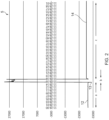
- the detection data 3 has a negative peak amplitude 13 during the second time period 'b'. The negative peak 13 is lower than the first level 12 ( Fig. 2 ).
- the detection data 3 has a substantially constant amplitude at a third level 14 during the third time period 'c'.
- the third level 14 is higher than the first level 12 ( Fig. 2 ).
- the card skimmer mounting state indicates that the card skimmer device remains mounted to the bezel of the ATM.
- the hand approach causes a signal spike to occur, which is then followed by an increase in signal amplitude from the amplitude 12 during time period 'a' to the amplitude 14 during time period 'c'.
- the increased amplitude 14 may remain for the duration that the skimmer remains on the bezel.
- the system 1 generates a tamper alert signal 6 based on the sequence determination 5.
- the tamper alert signal 6 may indicate that the card skimmer has been mounted to the bezel of the ATM.
- the deep learning model 4 enhances the accuracy of the system's 1 card skimmer detection accuracy.
- the system 1 may be configured to collect data relating to different states/scenarios/events, such as an idle state, a skimmer mounting state, a hand approach state, transactions, and a weather event such as rain. Data related to these scenarios/events may be classified accordingly and fed through the LSTM-RNN model 4 to detect the sequence 5.
- the LSTM-RNN model 4 may detect the sequence 5 as including and based on observing the first amplitude 12 corresponding to the idle state during the first time period 'a', the signal spike during the second time period 'b', and finally the increased amplitude 14 during the third time period 'c'.
- the sequence 5 may be detected as further including the negative peak amplitude 13 observed during an initial portion of the second time period 'b'.
- the model 4, which may be trained using historical sensor data may be configured to generate, based on the input sensor data, a classification result that indicates whether a card skimmer is present or not.
- the LSTM-RNN model 4 may be particularly suited for detecting sequential data and learning from the context of a situation.
- the LSTM-RNN model 4 may be trained to detect the sequence 5 and to generate the card skimmer alert 6 responsive to detection of the sequence 5.
- the model 4 may, based on its training, ignore other signal sequences representative of legitimate activities, such as a hand approach alone, legitimate transactions, ambient weather such as rain, and the like, and refrain from generating the card skimmer alert 6 in such scenarios. In this manner, the model 4 aids in reducing false positive card skimmer alerts caused by other factors such as ambient weather conditions (e.g., rain). Rain can lead to a noisy and unpredictable signal.
- Such a signal could otherwise lead to a false positive card skimmer alert if not for the enhanced reliability provided by the model 4, which in example embodiments, is trained to detect the specific sequence 5 and generate the alert 6 responsive to detection of the sequence 5 rather than in response to other signal amplitude change sequences that may be reflective of legitimate, non-card skimmer related events.
- the system 1 converts the detection data 3 from the time domain to the frequency domain using a wavelet transform 7 to generate a wavelet matrix of coefficients 8.
- An example of detection data 3 is illustrated in Fig. 3a .
- An example of a wavelet transform 7 is illustrated in Fig. 4 .
- An example of a wavelet matrix 8 is illustrated in Fig. 5 .
- the wavelet matrix 8 of Fig. 5 is generated using the detection data 3 of Fig. 3a and the wavelet transform 7 of Fig. 4 .
- the system 1 includes a first machine learning model 9.
- the first machine learning model 9 is provided in the form of a convolutional neural network (CNN) model.
- the CNN model 9 may be configured to identify features 10 in the wavelet matrix 8.
- the system 1 may then generate an ambient environment alert signal 11 based on the identified features 10.
- the ambient environment alert signal 11 may comprise an ambient weather alert signal.
- the ambient weather alert signal may comprise a rain alert signal 11 ( Fig. 8 ).
- the system 1 addresses the technical problem of rain causing the signal 3 from the capacitive sensors 2 to become noisy.
- rain can cause a gradual build up in amplitude over time.
- Such noise or amplitude build-up could otherwise potentially lead to false positive card skimmer alerts.
- the signal 3 from the sensors 2 may become noisy. Over time, this may cause a gradual increase in the signal amplitude.
- Fig. 3 illustrates the detection data 3 with a build-up of amplitude of the signal from the sensors 2 over time due to rain. When this occurs, it may be difficult to distinguish between an increase in signal amplitude caused by rain compared to an increase in amplitude caused by an actual card skimmer being mounted to the ATM.
- the system 1 uses the wavelet transform 7 to analyse the change in frequency without losing the localised time information of the signal 3.
- the wavelet transform 7 retains information on both frequency and time for enhanced signal analysis.
- the wavelet transform 7 may be a mathematical function which divides a continuous time signal into separate scale components.
- the wavelet transform 7 may be discrete or continuous.
- the wavelet matrix 8 may provide a spectrum of frequencies along with an indication of when these frequencies occur.
- the system 1 may generate a scalogram based on the wavelet matrix 8.
- An example of a scalogram 15 is illustrated in Fig. 6 .
- An example of another type of scalogram 16 is illustrated in Fig. 7 .
- a scalogram is a visual representation of the information in the wavelet matrix of coefficients 8.
- the CNN model 9 may identify the features 10 in the scalogram.
- the scalogram may provide a means to view information about scale components.
- a scalogram may be a graph containing patterns which vary depending on the wavelet used. The amount of information shown in each scalogram depends on the window size used to analyse the signal data 3.
- An example of a scalogram image 15 produced by a Mexican hat wavelet transform is illustrated in Fig. 6 .
- An example of a scalogram image 16 produced by a Morlet wavelet transform is illustrated in Fig. 7 .
- the CNN model 9 may be configured to identify the distinguishing features 10 in the scalogram images with a high degree of accuracy. The system 1 may thus identify when it is raining based on these distinguishing features 10, and any false positive card skimmer alerts during rain may be removed.
- the system 1 receives the detection data 3 from the capacitive-based sensors 2 ( Fig. 1 ) responsive to a card skimmer device being placed adjacent to the exterior portion of the bezel. Based on the detection data 3, the LSTM-RNN model 4 determines the sequence 5 including (i) the idle state during the first time period 'a', (ii) the approach state during the second time period 'b', and (iii) the card skimmer mounting state during the third time period 'c'. The system 1 then generates the tamper alert signal 6 based on the sequence determination. In parallel, in example embodiments, the system 1 converts the detection data 3 from the time domain to the frequency domain using the wavelet transform 7 to generate the wavelet matrix 8. The CNN model 9 identifies the features 10 in the wavelet matrix 8. The system 1 then generates the rain alert signal 11 based on the identified features 10.
- the system 20 may receive a large set of historical data 21 ( Fig. 9a ).
- the historical data 21 may include previous detection data from capacitive-based sensors 2 mounted adjacent to magnetic card reader devices.
- the capacitive-based sensors 2 may have generated the previous detection data during normal operation of the ATM, and also, potentially, upon card skimmer devices being placed adjacent to the exterior portion of bezels of the ATMs.
- Fig. 9a(i) illustrates a portion 40 of the historical data 21 of Fig. 9a .
- the historical data portion 40 represents the raw sensor data for a time period during which a card skimmer is being successively mounted to the ATM and removed from the ATM.
- the system 20 applies a moving average 22 and a standard deviation 23 to the set of historical data 21 based on a pre-defined threshold to identify a plurality of peaks 24 in the set of historical data 21.
- the system 20 may then generate a sub-set of data 25 based on each identified peak 24 ( Fig. 9b ).
- the sub-set of data 25 may include a pre-defined number of surrounding padding data points on either side of the identified peak 24.
- the peak value 24 is set as '1' and the surrounding padding data points on either side of the peak 24 are set as '0'.
- the system 20 may be configured to identify a set of features 26 in the set of historical data 21 using the sub-sets 25 ( Fig. 9c ).
- Each of the features 26 may represent an activity, such as a customer hand approaching the ATM or a card skimmer device being mounted to the ATM.
- Each of the activities may be identified based on different patterns being observed for the peaks 24 in the capacitive sensor signal 21. For instance, in the case of a card skimmer event, a peak may be identified due to the hand approach followed by an increase in the average amplitude of the signal. The increase in the average signal amplitude may vary depending on the size of the card skimmer device. In the event that the card skimmer is removed, another peak may be identified followed by the signal amplitude returning to the same level as at the idle state. In the event that a peak is identified but is not followed by an increase in the average amplitude of the signal from its amplitude in the idle state, the system 20 may determine that only a hand approach or other normal user activity has occurred. In the event that a transaction is being performed at the ATM, the system 20 may identify a multitude of consecutive peaks.
- the system 20 reduces noise present within the data 21 by applying the moving window average 22 to calculate the mean value of all data points within the data 21. Then, for any new data points that are a certain predefined number of standard deviations away from the moving average 22, a signal may be detected.
- signals may be either '0' or '1', where the latter represents the identified peak 24 within the data set 21.
- the signals ('0' or '1') within the sub-set array 25 represent the indices within the data set 21 where the feature 26, such as a transaction, starts and ends.
- the feature 26 may be extracted with the extra padding data from before and after the feature 26.
- An example extracted feature 26 with peaks 24 is plotted in the graph illustrated in Fig. 10 .
- the system 20 may receive a set of user pre-defined label data 27 ( Fig. 11 ), and the system 20 may augment the identified features 26 with the set of label data 27 to generate a set of training data 28.
- the set of label data 27 may include information on the category of the type of hand approach, for example, a customer hand approach or a thief skimmer hand approach.
- the system 20 may then train the LSTM-RNN model 4 and the CNN model 9 based on the set of training data 28.
- the process of data extraction and labelling is typically time-consuming.
- the system 20 speeds up this process by extracting key features 26 from the large skimmer data set 21.
- the system 20 identifies, for example, features representative of hand activity, transactions, and skimmer activity within the large data set 21. As a result, the overall data pre-processing stage is faster and results in a cleaner training data set 28. Consequently, the resultant card skimmer detection is more accurate.
- the system 20 receives the set of historical data 21 ( Fig. 9 ).
- the system 20 applies the moving average 22 and the standard deviation 23 to the set of historical data 21 to identify the plurality of peaks 24 in the set of historical data 21.
- the system 20 generates the sub-set of data 25 based on each identified peak 24.
- the system 20 identifies the set of features 26 using the sub-sets 25.
- the system 20 receives the set of label data 27 and augments the identified features 26 with the set of label data 27 to generate the set of training data 28.
- the system 20 then trains the LSTM-RNN model 4 and the CNN model 9 based on the set of training data 28.
- the embodiments of the invention described previously with reference to the accompanying drawings comprise a computer system and processes performed by the computer system.
- the invention also extends to computer programs, particularly computer programs stored on or in a carrier adapted to bring the invention into practice.
- the program may be in the form of source code, object code, or a code intermediate source and object code, such as in partially compiled form or in any other form suitable for use in the implementation of the method according to the invention.
- the carrier may comprise a storage medium such as ROM, such as a CD-ROM, or magnetic recording medium, such as a floppy disk or hard disk.
- the carrier may be an electrical or optical signal which may be transmitted via an electrical or an optical cable or by radio or any other means.
Landscapes
- Engineering & Computer Science (AREA)
- Physics & Mathematics (AREA)
- Theoretical Computer Science (AREA)
- General Physics & Mathematics (AREA)
- Mathematical Physics (AREA)
- Data Mining & Analysis (AREA)
- Software Systems (AREA)
- Artificial Intelligence (AREA)
- General Engineering & Computer Science (AREA)
- Computing Systems (AREA)
- Evolutionary Computation (AREA)
- Health & Medical Sciences (AREA)
- Life Sciences & Earth Sciences (AREA)
- Biomedical Technology (AREA)
- Biophysics (AREA)
- Computational Linguistics (AREA)
- General Health & Medical Sciences (AREA)
- Molecular Biology (AREA)
- Mathematical Analysis (AREA)
- Mathematical Optimization (AREA)
- Pure & Applied Mathematics (AREA)
- Computational Mathematics (AREA)
- Computer Vision & Pattern Recognition (AREA)
- Accounting & Taxation (AREA)
- Business, Economics & Management (AREA)
- Databases & Information Systems (AREA)
- Algebra (AREA)
- Finance (AREA)
- Medical Informatics (AREA)
- Financial Or Insurance-Related Operations Such As Payment And Settlement (AREA)
- Alarm Systems (AREA)
- Geophysics And Detection Of Objects (AREA)
Abstract
Description
- This invention relates to a computer-implemented method, a data processing system, and a computer program product for detecting mounting of an object, such as a card skimmer, at a terminal device, such as an automated teller machine (ATM).
- It is known to attempt to detect a card skimmer placed by a thief on a fascia of an ATM. If such a card skimmer is mounted to the ATM, this may enable the thief to steal a customer's card information. However, known approaches for detecting card skimmers suffer from various drawbacks, technical solutions to which are disclosed herein.
- Certain embodiments of the present invention provide a system for more accurately detecting mounting of an object, such as a card skimmer, at a terminal device, such as at the fascia of an ATM. Certain embodiments of the present invention provide a technical solution that addresses at least the technical problem of false positive skimmer alerts, which can occur, for example, in the event of the ATM being exposed to rain. In particular, rain may cause technical problems with a capacitive sensor signal. In addition, certain embodiments of the present invention enable faster data processing and data formatting after the raw data has been obtained.
- According to a first aspect of the present invention there is provided a computer-implemented method for detecting mounting of an object at a terminal device, the method comprising: receiving detection data from one or more sensors, generating a wavelet matrix based on the detection data, and generating an ambient environment alert based on the wavelet matrix.
- Aptly, the ambient environment alert comprises an ambient weather alert.
- Aptly, the ambient weather alert comprises a rain alert.
- Aptly, the method further comprises: converting the detection data from a time domain to a frequency domain using a wavelet transform to obtain converted detection data, and generating the wavelet matrix based on the converted detection data.
- Aptly, the method further comprises: identifying one or more features in the wavelet matrix, wherein generating the ambient environment alert being comprises generating the ambient environment alert based on the one or more identified features.
- Aptly, identifying the one or more features in the wavelet matrix comprises identifying the one or more features using a first machine learning model.
- Aptly, the first machine learning model comprises a convolutional neural network model.
- Aptly, the method further comprises: determining, based on the detection data, a sequence comprising (i) an idle state during a first time period, (ii) an approach state during a second time period, and (iii) an object mounting state during a third time period.
- Aptly, the method further comprises: generating a tamper alert based on the determined sequence.
- Aptly, during the idle state, the detection data comprises a signal having a substantially constant amplitude at a first level.
- Aptly, during the approach state, the detection data comprises a signal having a negative peak amplitude that is lower than the first level.
- Aptly, during the object mounting state, the detection data comprises a signal having a substantially constant amplitude at a third level that is higher than the first level.
- Aptly, determining the sequence comprises determining the sequence using a second machine learning model.
- Aptly, the second machine learning model comprises a long short-term memory recurrent neural network model.
- Aptly, the sequence determination occurs at least partially in parallel with the wavelet matrix generation.
- Aptly, the terminal device comprises an automated teller machine device.
- Aptly, the object comprises a card skimmer device.
- Aptly, the method further comprises: identifying a plurality of peaks in a historical data set, identifying a subset of the historical data set based on the identified plurality of peaks, identifying a set of features from the subset of the historical data, augmenting the identified set of features using a labelled data set to obtain a training data set, and training, based on the training data set, at least one of a first machine learning model or a second machine learning model to perform ambient weather detection or tamper detection, respectively.
- According to a second aspect of the present invention there is provided a data processing system for detecting mounting of an object at a terminal device, the system comprising a processor and a memory storing machine-executable instructions, the processor configured to access the memory and execute the machine-executable instructions to: receive detection data from one or more sensors, generate a wavelet matrix based on the detection data, and generate an ambient environment alert based on the wavelet matrix.
- According to a third aspect of the present invention there is provided a computer program product comprising a non-transitory computer-readable medium storing machine-executable instructions executable by a processor to perform a method, comprising: receiving, over a first period of time, first detection data from one or more sensors, generating a wavelet matrix based on the first detection data, generating an ambient environment alert signal based on the wavelet matrix, receiving, over a second period of time, second detection data from the one or more sensors, determining a sequence from the second detection data, and generating a tamper alert signal responsive to determining the sequence.
- According to an embodiment of the invention, there is provided a computer-implemented method for detecting mounting of an object at a terminal device, the method comprising the steps of: receiving detection data from one or more sensors, generating a wavelet matrix based on the detection data, and generating an ambient environment alert based on the wavelet matrix. In example embodiments, the terminal device may comprise an automated teller machine device. In example embodiments, the method may detect mounting of an object at a bezel of the automated teller machine device. In example embodiments, the object may comprise a card skimmer device.
- The ambient environment alert may comprise an ambient weather alert. The ambient weather alert may comprise a rain alert. By generating the rain alert signal, various embodiments of the invention reduce the incidence of false positive card skimmer alerts that would otherwise be generated in scenarios in which the ATM encounters rain or other ambient weather conditions, but no attempt to mount a card skimmer device is made. In particular, embodiments of the invention provide a technical solution that addresses the technical problem of false positive card skimmer alerts such as when exposure of the ATM to rain or other ambient weather conditions causes technical problems with signals from capacitive sensors. Embodiments of the invention may thus achieve the technical effects of high accuracy card skimmer alerts and minimization of false positive card skimmer alerts due to ambient weather events such as rain. By reducing false positive card skimmer alerts, embodiments of the invention achieve enhanced reliability and reduce unnecessary maintenance visits by a technical specialist. The ATM may thus remain functioning correctly and customer transactions may remain unaffected.
- The ambient weather alert is not limited to a rain alert and may comprise other types of weather alerts as well for detecting types of weather conditions around the ATM other than rain. For example, the ambient weather alert may be a wind alert, a cold weather alert, or a hot weather alert. Wind or cold or hot weather may cause false positive readings from the sensors. In particular, rapid temperature changes may produce mechanical expansion or contraction of the fascia or the brackets of the ATM that may cause false positive readings. In some cases, this may indicate incorrectly built or incorrectly fitted hardware.
- In example embodiments, the wavelet matrix retains localised time data for more accurate rain alert signal generation. The detection data received from the sensors may be time series data. By capturing the localized time data, the period of time during which an alert was generated can be determined. Capturing and retaining the localized time data also allows for running a machine learning model on data retrieved from ATMs that lack a machine learning capability such that those time periods during which it may have been raining can be identified. This may be particularly relevant to scenarios in which false positive card skimmer alerts are suspected to be present within the data logs.
- In some embodiments, a wavelet transform may be used to convert the detection data from the time domain to the frequency domain to generate the wavelet matrix. The wavelet transform may be a continuous wavelet transform or may be a discrete wavelet transform. The wavelet transform may include passing the detection data through a high pass filter and/or a low pass filter. For instance, rain may create high frequency signals, such that passing the detection data through a high pass filter may retain the high frequency rain signals and discard/ignore other lower frequency signals such as noise.
- In some embodiments, the method may comprise the step of identifying one or more features in the wavelet matrix and generating the ambient environment alert based on the one or more identified features. An example identified feature may be an increase in real rain noise. This noise may be a higher frequency, but lower amplitude signal compared to the idle signal data. Over a period of several hours, build-up of moisture on the card reader - such as in cases where the ATM bezel design may lead to pooling of some water - may cause a change in amplitude of the signal. By focusing on the frequency change, embodiments of the invention enable the other changes in signal data to be ignored. The one or more features may be identified from the wavelet matrix using a first machine learning model. The first machine learning model may provide a highly accurate and highly efficient means of identifying the features. The first machine learning model may comprise a convolutional neural network model. The convolutional neural network model may be updated over time as new training data becomes available. If an upgrade or improvement becomes available, the first machine learning model may be quickly updated based on a software update without requiring technically complex and time-consuming hardware modifications.
- In some embodiments, the method may comprise the step of determining, based on the detection data, a sequence that includes (i) an idle state during a first time period, (ii) an approach state during a second time period, and (iii) an object mounting state during a third time period. The second time period may be subsequent to the first time period. The third time period may be subsequent to the second time period. In some embodiments, the method may comprise the step of generating a tamper alert signal based on the determined sequence. Determining the sequence and then generating the tamper alert signal based thereon may enable a more accurate detection of mounting of a card skimmer to an ATM. For instance, by generating the tamper alert signal responsive to the sequence being identified, embodiments of the invention reduce the incidence of false positive card skimmer alerts. This enhanced detection capability leads to improved customer confidence in the operation of the ATM. A reduction in false positive card skimmer alerts results in less time-consuming technical maintenance of the ATM by a technical specialist.
- In some embodiments, the detection data may have a substantially constant amplitude at a first level during the first time period. Further, the detection data may have a negative peak amplitude during the second time period, the negative peak being substantially lower than the first level. In addition, the detection data may have a substantially constant amplitude at a third level during the third time period, the third level being substantially higher than the first level. In another embodiment, the detection data may have a short period, e.g., a few seconds, of very high and low peaks during the second time period. The short period of very high and low peaks may be indicative of a card skimmer being mounted to the ATM.
- In some embodiments, the sequence may be determined using a second machine learning model. The second machine learning model may provide a highly accurate and highly efficient means of identifying the sequence. The second machine learning model may comprise a deep learning model. The deep learning model may comprise a long short-term memory recurrent neural network model. The long short-term memory recurrent neural network model is highly effective at filtering out noise in signals. The long short-term memory recurrent neural network model may be updated over time as new training data on a new card skimmer attack becomes available. If an upgrade or improvement to the long short-term memory recurrent neural network model becomes available, the second machine learning model may be updated based on a software update without requiring technically complex and time-consuming hardware modifications. In some embodiments, the second machine learning model may comprise a support vector machine.
- In some embodiments, in lieu of a sequence determination, the second machine learning model may comprise a one-dimensional (1-D) convolutional neural network model configured to identify one or more distinguishing features in the detection data. The 1-D convolutional neural network model may provide increased accuracy when analysing 1-D data, such as time-series data from an ATM.
- In some embodiments, the one or more sensors may comprise a capacitive-based sensor, a mmWave Radar, and/or a time-of-flight sensor. In some embodiments, the capacitive-based sensor may be mounted adjacent to a magnetic card reader device. In some embodiments, the capacitive-based sensor may be configured to generate the detection data upon the object being placed adjacent to an exterior portion of the bezel.
- According to an example embodiment of the invention, a method may comprise the steps of: generating a set of training data, and training at least one of the first machine learning model and the second machine learning model based on the set of training data. By automatically generating the set of training data, the method may avoid the otherwise time-consuming and repetitive manual process of data extraction and labelling of associated activities. As such, the method results in a faster process of creating the training data from the large, raw data set. Moreover, the cleaner training data results in improved accuracy of the overall machine learning model.
- In some embodiments, the set of training data may be generated by: receiving a set of historical data, and identifying one or more features in the set of historical data, each of the one or more features representing a corresponding activity. It is not uncommon to have very large sets of historical data. Manual analysis of such a large set of historical data would be a hugely time-consuming task. Embodiments of the invention enable an automated analysis of historical data that, in turn, enables the automatic identification of activities, such as a presence of a card skimmer at an ATM; a presence of a customer hand at the ATM; an idle status of the ATM; a transaction status of the ATM; different types of transactions based on information from other devices, such as replenishment when the fascia door is open, cheque processing, cash recycling, contactless card touches, or screen touches for menu parsing; and so forth. Certain embodiments of the invention also enable the automatic labelling of the activities accordingly.
- In some embodiments, the one or more features may be identified by: determining one or more peaks in the set of historical data and generating one or more sub-sets of data based on the one or more determined peaks. In some embodiments, each sub-set of data includes padding data on either side of the peak. The padding data may make it easier to visualize the feature. The padding data may provide information of the context of the activity, such as an 'IDLE' state before or a 'SKIMMER' state after, and the peak may provide information on a 'HAND ACTIVITY'.
- In some embodiments, the one or more peaks may be determined by applying a moving average and a standard deviation to the set of historical data. The set of training data may be generated by: receiving a set of label data, and augmenting the one or more identified features with the set of label data. The label data may be automatically created based on transaction activity data from other devices, such as replenishment when the fascia door is open, cash taken, and the like.
- The invention also provides, in another aspect, a data processing system for detecting mounting of an object at a terminal device, the system comprising a processor configured to access a memory or other computer-readable medium storing machine-executable instructions and execute the instructions to: receive detection data from one or more sensors, generate a wavelet matrix based on the detection data, and generate an ambient environment alert based on the wavelet matrix.
- In a further aspect of the invention there is provided a computer program product comprising instructions capable of causing a computer system to perform a method of the invention when the computer program product is executed on the computer system. The computer program product may be embodied on a record medium, or a carrier signal, or a read-only memory.
- Embodiments of the present invention will now be described hereinafter, by way of example only, with reference to the accompanying drawings, in which:
-
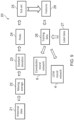
Fig. 1 is a hybrid system and flow diagram for detecting mounting of an object at a terminal device, according to example embodiments of the disclosed technology, -
Fig. 2 is a graph illustrating detection data captured according to example embodiments of the disclosed technology, -
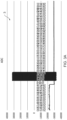
Fig. 3 is a graph illustrating detection data captured according to example embodiments of the disclosed technology, -
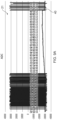
Fig. 3a is a graph illustrating detection data captured according to example embodiments of the disclosed technology, -
Fig. 4 is an extract of instruction code of a wavelet transform according to example embodiments of the disclosed technology, -
Fig. 5 is a wavelet matrix according to example embodiments of the disclosed technology, -
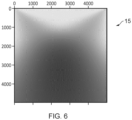
Figs. 6 and7 are scalogram images according to example embodiments of the disclosed technology, -
Fig. 8 is a graph illustrating an ambient environment alert according to example embodiments of the disclosed technology, -
Fig. 9 is a flow diagram of a method for training machine learning models according to example embodiments of the disclosed technology, -
Fig. 9a is a graph illustrating historical data of the method ofFig. 9 , -
Fig. 9a(i) is a graph illustrating part of the historical data ofFig. 9a , -
Fig. 9b is a graph illustrating sub-sets of data of the method ofFig. 9 , -
Fig. 9c is an image illustrating features of the method ofFig. 9 , -
Fig. 10 is a graph illustrating a peak of the method ofFig. 9 , and -
Fig. 11 is a graph illustrating label data of the method ofFig. 9 . - In the drawings like reference numerals refer to like parts.
- Referring to the drawings, and initially to
Figs. 1 to 8 thereof, there is illustrated a computer-implementeddata processing system 1 configured to detect mounting of an object at a self-service terminal device, in accordance with example embodiments of the disclosed technology. In an embodiment, thesystem 1 may be provided in the form of a skimmer protection solution (SPS). In certain scenarios, criminals may attempt to steal credit card details by utilizing a card skimmer device that records the magnetic stripe present on the card. Thesystem 1 may detect the presence of a card skimmer device placed on the facia of an automated teller machine (ATM), for example. More specifically, thesystem 1 may be employed to detect mounting of a card skimmer device at a bezel of an ATM, for example. - In an embodiment, the
system 1 may include a microcontroller configured to manage the functions of thesystem 1, to gather data from sensors/outputs to effectors used by thesystem 1, and to report to the ATM PC core, for example via a USB 2.0. In example embodiments, thesystem 1 may perform the following functions: detect unusual objects placed within the vicinity of the card reader entry/exit slot; report the presence of unusual objects placed within the vicinity of the card reader entry/exit slot; report faults that disable or inhibit the function of detecting unusual objects (e.g., electromagnetic disruption of unusual objects, those having magnetic read heads, etc.) placed within the vicinity of the card reader entry/exit slot; and so forth. - As illustrated in
Fig. 1 , thesystem 1 receivesdetection data 3 from a plurality ofsensors 2. In some embodiments, thesensors 2 may be distinct from thesystem 1, while in other embodiments, thesystem 1 may include thesensors 2. In an example embodiment, thesensors 2 are provided in the form of capacitive-based sensors. The capacitive-basedsensors 2 may be mounted adjacent to a magnetic card reader device. The capacitive-basedsensors 2 may generate thedetection data 3 responsive to a card skimmer device being placed adjacent to an exterior portion of the bezel of the ATM. For example, thedetection data 3 may be captured from a series ofcapacitive sensors 2 around the card (magstripe) reader of the ATM. Thecapacitive sensors 2 may detect the presence of unusual objects which have magnetic read heads in the vicinity of the card reader entry/exit slot. Thesystem 1 may include an analog to digital converter (ADC) that receives, at its input channel, continuous analog signals from a transmitter-receiver electrode pair. The system core driver may select the channel to scan. As an example, the selected channel may be sampled every 180 ms and an event may be returned to the system core driver with 32-bit readings. In one embodiment, the ADC converts the readings from selected ones of thesensors 2 into unsigned 32-bit digital values, which may be transmitted to the processor at a rate of 180 ms per channel. - In example embodiments, the
system 1 includes a secondmachine learning model 4. The secondmachine learning model 4 may be a deep learning model, such as a long short-term memory recurrent neural network (LSTM-RNN) model. While themachine learning model 4 may be referred to herein as an LSTM-RNN model for explanatory purposes, it should be appreciated that themodel 4 is not limited to an LSTM-RNN model and may be any suitable machine learning model including any suitable type of neural network. The LSTM-RNN model 4 may determine asequence 5 based on thedetection data 3. - As illustrated in
Fig. 2 , in an example embodiment, thesequence 5 may include (i) an idle state during a first time period 'a', (ii) a hand approach state during a second time period 'b' subsequent to the first time period 'a', and (iii) a card skimmer mounting state during a third time period 'c' subsequent to the second time period 'b'. In the example ofFIG. 2 , thedetection data 3 has a substantially constant amplitude at afirst level 12 during the first time period 'a'. In addition, thedetection data 3 has anegative peak amplitude 13 during the second time period 'b'. Thenegative peak 13 is lower than the first level 12 (Fig. 2 ). Thedetection data 3 has a substantially constant amplitude at athird level 14 during the third time period 'c'. Thethird level 14 is higher than the first level 12 (Fig. 2 ). The card skimmer mounting state indicates that the card skimmer device remains mounted to the bezel of the ATM. In example embodiments, when the card skimmer is placed on the bezel during time period 'b', the hand approach causes a signal spike to occur, which is then followed by an increase in signal amplitude from theamplitude 12 during time period 'a' to theamplitude 14 during time period 'c'. The increasedamplitude 14 may remain for the duration that the skimmer remains on the bezel. - Referring again to
FIG. 1 , in example embodiments, thesystem 1 generates atamper alert signal 6 based on thesequence determination 5. Thetamper alert signal 6 may indicate that the card skimmer has been mounted to the bezel of the ATM. In example embodiments, thedeep learning model 4 enhances the accuracy of the system's 1 card skimmer detection accuracy. Thesystem 1 may be configured to collect data relating to different states/scenarios/events, such as an idle state, a skimmer mounting state, a hand approach state, transactions, and a weather event such as rain. Data related to these scenarios/events may be classified accordingly and fed through the LSTM-RNN model 4 to detect thesequence 5. In some embodiments, the LSTM-RNN model 4 may detect thesequence 5 as including and based on observing thefirst amplitude 12 corresponding to the idle state during the first time period 'a', the signal spike during the second time period 'b', and finally the increasedamplitude 14 during the third time period 'c'. Optionally, thesequence 5 may be detected as further including thenegative peak amplitude 13 observed during an initial portion of the second time period 'b'. Themodel 4, which may be trained using historical sensor data, may be configured to generate, based on the input sensor data, a classification result that indicates whether a card skimmer is present or not. In some embodiments, the LSTM-RNN model 4 may be particularly suited for detecting sequential data and learning from the context of a situation. - The LSTM-
RNN model 4 may be trained to detect thesequence 5 and to generate thecard skimmer alert 6 responsive to detection of thesequence 5. In some embodiments, themodel 4 may, based on its training, ignore other signal sequences representative of legitimate activities, such as a hand approach alone, legitimate transactions, ambient weather such as rain, and the like, and refrain from generating thecard skimmer alert 6 in such scenarios. In this manner, themodel 4 aids in reducing false positive card skimmer alerts caused by other factors such as ambient weather conditions (e.g., rain). Rain can lead to a noisy and unpredictable signal. Such a signal could otherwise lead to a false positive card skimmer alert if not for the enhanced reliability provided by themodel 4, which in example embodiments, is trained to detect thespecific sequence 5 and generate thealert 6 responsive to detection of thesequence 5 rather than in response to other signal amplitude change sequences that may be reflective of legitimate, non-card skimmer related events. - As illustrated in
Fig. 1 , in example embodiments, thesystem 1 converts thedetection data 3 from the time domain to the frequency domain using awavelet transform 7 to generate a wavelet matrix ofcoefficients 8. An example ofdetection data 3 is illustrated inFig. 3a . An example of awavelet transform 7 is illustrated inFig. 4 . An example of awavelet matrix 8 is illustrated inFig. 5 . Thewavelet matrix 8 ofFig. 5 is generated using thedetection data 3 ofFig. 3a and the wavelet transform 7 ofFig. 4 . - In example embodiments, the
system 1 includes a firstmachine learning model 9. In some embodiments, the firstmachine learning model 9 is provided in the form of a convolutional neural network (CNN) model. TheCNN model 9 may be configured to identifyfeatures 10 in thewavelet matrix 8. Thesystem 1 may then generate an ambient environmentalert signal 11 based on the identified features 10. The ambient environmentalert signal 11 may comprise an ambient weather alert signal. The ambient weather alert signal may comprise a rain alert signal 11 (Fig. 8 ). - The
system 1 addresses the technical problem of rain causing thesignal 3 from thecapacitive sensors 2 to become noisy. In particular, rain can cause a gradual build up in amplitude over time. Such noise or amplitude build-up could otherwise potentially lead to false positive card skimmer alerts. When thesystem 1 is exposed to rain, thesignal 3 from thesensors 2 may become noisy. Over time, this may cause a gradual increase in the signal amplitude.Fig. 3 illustrates thedetection data 3 with a build-up of amplitude of the signal from thesensors 2 over time due to rain. When this occurs, it may be difficult to distinguish between an increase in signal amplitude caused by rain compared to an increase in amplitude caused by an actual card skimmer being mounted to the ATM. - In example embodiments, to address this technical problem, the
system 1 uses thewavelet transform 7 to analyse the change in frequency without losing the localised time information of thesignal 3. Thewavelet transform 7 retains information on both frequency and time for enhanced signal analysis. The wavelet transform 7 may be a mathematical function which divides a continuous time signal into separate scale components. The wavelet transform 7 may be discrete or continuous. In particular, thewavelet matrix 8 may provide a spectrum of frequencies along with an indication of when these frequencies occur. - Alternatively, the
system 1 may generate a scalogram based on thewavelet matrix 8. An example of ascalogram 15 is illustrated inFig. 6 . An example of another type ofscalogram 16 is illustrated inFig. 7 . A scalogram is a visual representation of the information in the wavelet matrix ofcoefficients 8. TheCNN model 9 may identify thefeatures 10 in the scalogram. - In further detail, the scalogram may provide a means to view information about scale components. A scalogram may be a graph containing patterns which vary depending on the wavelet used. The amount of information shown in each scalogram depends on the window size used to analyse the
signal data 3. An example of ascalogram image 15 produced by a Mexican hat wavelet transform is illustrated inFig. 6 . An example of ascalogram image 16 produced by a Morlet wavelet transform is illustrated inFig. 7 . TheCNN model 9 may be configured to identify the distinguishing features 10 in the scalogram images with a high degree of accuracy. Thesystem 1 may thus identify when it is raining based on these distinguishingfeatures 10, and any false positive card skimmer alerts during rain may be removed. - In use, in example embodiments, the
system 1 receives thedetection data 3 from the capacitive-based sensors 2 (Fig. 1 ) responsive to a card skimmer device being placed adjacent to the exterior portion of the bezel. Based on thedetection data 3, the LSTM-RNN model 4 determines thesequence 5 including (i) the idle state during the first time period 'a', (ii) the approach state during the second time period 'b', and (iii) the card skimmer mounting state during the third time period 'c'. Thesystem 1 then generates thetamper alert signal 6 based on the sequence determination. In parallel, in example embodiments, thesystem 1 converts thedetection data 3 from the time domain to the frequency domain using thewavelet transform 7 to generate thewavelet matrix 8. TheCNN model 9 identifies thefeatures 10 in thewavelet matrix 8. Thesystem 1 then generates therain alert signal 11 based on the identified features 10. - Referring now to
Figs. 9 to 11 , there is illustrated a computer-implementeddata processing system 20 for training the LSTM-RNN model 4 and theCNN model 9. Thesystem 20 may receive a large set of historical data 21 (Fig. 9a ). Thehistorical data 21 may include previous detection data from capacitive-basedsensors 2 mounted adjacent to magnetic card reader devices. The capacitive-basedsensors 2 may have generated the previous detection data during normal operation of the ATM, and also, potentially, upon card skimmer devices being placed adjacent to the exterior portion of bezels of the ATMs.Fig. 9a(i) illustrates aportion 40 of thehistorical data 21 ofFig. 9a . Thehistorical data portion 40 represents the raw sensor data for a time period during which a card skimmer is being successively mounted to the ATM and removed from the ATM. - In example embodiments, the
system 20 applies a movingaverage 22 and astandard deviation 23 to the set ofhistorical data 21 based on a pre-defined threshold to identify a plurality ofpeaks 24 in the set ofhistorical data 21. Thesystem 20 may then generate a sub-set ofdata 25 based on each identified peak 24 (Fig. 9b ). The sub-set ofdata 25 may include a pre-defined number of surrounding padding data points on either side of the identifiedpeak 24. In this example, thepeak value 24 is set as '1' and the surrounding padding data points on either side of the peak 24 are set as '0'. Thesystem 20 may be configured to identify a set offeatures 26 in the set ofhistorical data 21 using the sub-sets 25 (Fig. 9c ). Each of thefeatures 26 may represent an activity, such as a customer hand approaching the ATM or a card skimmer device being mounted to the ATM. - Each of the activities may be identified based on different patterns being observed for the
peaks 24 in thecapacitive sensor signal 21. For instance, in the case of a card skimmer event, a peak may be identified due to the hand approach followed by an increase in the average amplitude of the signal. The increase in the average signal amplitude may vary depending on the size of the card skimmer device. In the event that the card skimmer is removed, another peak may be identified followed by the signal amplitude returning to the same level as at the idle state. In the event that a peak is identified but is not followed by an increase in the average amplitude of the signal from its amplitude in the idle state, thesystem 20 may determine that only a hand approach or other normal user activity has occurred. In the event that a transaction is being performed at the ATM, thesystem 20 may identify a multitude of consecutive peaks. - In example embodiments, the
system 20 reduces noise present within thedata 21 by applying the movingwindow average 22 to calculate the mean value of all data points within thedata 21. Then, for any new data points that are a certain predefined number of standard deviations away from the movingaverage 22, a signal may be detected. In some embodiments, signals may be either '0' or '1', where the latter represents the identifiedpeak 24 within thedata set 21. In example embodiments, the signals ('0' or '1') within thesub-set array 25 represent the indices within the data set 21 where thefeature 26, such as a transaction, starts and ends. Thefeature 26 may be extracted with the extra padding data from before and after thefeature 26. An example extractedfeature 26 withpeaks 24 is plotted in the graph illustrated inFig. 10 . - In example embodiments, the
system 20 may receive a set of user pre-defined label data 27 (Fig. 11 ), and thesystem 20 may augment the identified features 26 with the set oflabel data 27 to generate a set oftraining data 28. The set oflabel data 27 may include information on the category of the type of hand approach, for example, a customer hand approach or a thief skimmer hand approach. Thesystem 20 may then train the LSTM-RNN model 4 and theCNN model 9 based on the set oftraining data 28. The process of data extraction and labelling is typically time-consuming. Thesystem 20 speeds up this process by extracting key features 26 from the largeskimmer data set 21. Thesystem 20 identifies, for example, features representative of hand activity, transactions, and skimmer activity within thelarge data set 21. As a result, the overall data pre-processing stage is faster and results in a cleanertraining data set 28. Consequently, the resultant card skimmer detection is more accurate. - In example embodiments, in use, the
system 20 receives the set of historical data 21 (Fig. 9 ). Thesystem 20 applies the movingaverage 22 and thestandard deviation 23 to the set ofhistorical data 21 to identify the plurality ofpeaks 24 in the set ofhistorical data 21. Thesystem 20 generates the sub-set ofdata 25 based on each identifiedpeak 24. Thesystem 20 identifies the set offeatures 26 using the sub-sets 25. Thesystem 20 receives the set oflabel data 27 and augments the identified features 26 with the set oflabel data 27 to generate the set oftraining data 28. Thesystem 20 then trains the LSTM-RNN model 4 and theCNN model 9 based on the set oftraining data 28. - The embodiments of the invention described previously with reference to the accompanying drawings comprise a computer system and processes performed by the computer system. However, the invention also extends to computer programs, particularly computer programs stored on or in a carrier adapted to bring the invention into practice. The program may be in the form of source code, object code, or a code intermediate source and object code, such as in partially compiled form or in any other form suitable for use in the implementation of the method according to the invention. The carrier may comprise a storage medium such as ROM, such as a CD-ROM, or magnetic recording medium, such as a floppy disk or hard disk. The carrier may be an electrical or optical signal which may be transmitted via an electrical or an optical cable or by radio or any other means.
- Throughout the description and claims of this specification, the words "comprise" and "contain" and variations of them mean "including but not limited to" and they are not intended to (and do not) exclude other moieties, additives, components, integers or steps. Throughout the description and claims of this specification, the singular encompasses the plural unless the context otherwise requires. In particular, where the indefinite article is used, the specification is to be understood as contemplating plurality as well as singularity, unless the context requires otherwise.
- Although the present disclosure has been particularly shown and described with reference to the preferred embodiments and various aspects thereof, it will be appreciated by those of ordinary skill in the art that various changes and modifications may be made without departing from the spirit and scope of the disclosure. It is intended that the appended claims be interpreted as including the embodiments described herein, the alternatives mentioned above, and all equivalents thereto.
- Features, integers, characteristics, or groups described in conjunction with a particular aspect, embodiment or example of the invention are to be understood to be applicable to any other aspect, embodiment or example described herein unless incompatible therewith. All of the features disclosed in this specification (including any accompanying claims, abstract and drawings), and/or all of the steps of any method or process so disclosed, may be combined in any combination, except combinations where at least some of the features and/or steps are mutually exclusive. The invention is not restricted to any details of any foregoing embodiments. The invention extends to any novel one, or novel combination, of the features disclosed in this specification (including any accompanying claims, abstract and drawings), or to any novel one, or any novel combination, of the steps of any method or process so disclosed.
- The reader's attention is directed to all papers and documents which are filed concurrently with or prior to this specification in connection with this application and which are open to public inspection with this specification, and the contents of all such papers and documents are incorporated herein by reference.
Claims (15)
- A computer-implemented method for detecting mounting of an object at a terminal device, the method comprising:receiving detection data from one or more sensors,generating a wavelet matrix based on the detection data, andgenerating an ambient environment alert based on the wavelet matrix.
- The method of claim 1, wherein the ambient environment alert comprises an ambient weather alert, and optionally wherein the ambient weather alert comprises a rain alert.
- The method of claim 1, further comprising:converting the detection data from a time domain to a frequency domain using a wavelet transform to obtain converted detection data, andgenerating the wavelet matrix based on the converted detection data.
- The method of claim 1, further comprising:identifying one or more features in the wavelet matrix,wherein generating the ambient environment alert being comprises generating the ambient environment alert based on the one or more identified features.
- The method of claim 4, wherein identifying the one or more features in the wavelet matrix comprises identifying the one or more features using a first machine learning model, wherein optionally the first machine learning model comprises a convolutional neural network model.
- The method of claim 1, further comprising:determining, based on the detection data, a sequence comprising (i) an idle state during a first time period, (ii) an approach state during a second time period, and (iii) an object mounting state during a third time period, and optionallygenerating a tamper alert based on the determined sequence.
- The method of claim 6, wherein, during the idle state, the detection data comprises a signal having a substantially constant amplitude at a first level, and optionally wherein, during the approach state, the detection data comprises a signal having a negative peak amplitude that is lower than the first level.
- The method of claim 6, wherein, during the object mounting state, the detection data comprises a signal having a substantially constant amplitude at a third level that is higher than the first level.
- The method of claim 6, wherein determining the sequence comprises determining the sequence using a second machine learning model, and optionally wherein the second machine learning model comprises a long short-term memory recurrent neural network model.
- The method of claim 6, wherein the sequence determination occurs at least partially in parallel with the wavelet matrix generation.
- The method of claim 1, wherein the terminal device comprises an automated teller machine device.
- The method of claim 1, wherein the object comprises a card skimmer device.
- The method of claim 1, further comprising:identifying a plurality of peaks in a historical data set,identifying a subset of the historical data set based on the identified plurality of peaks,identifying a set of features from the subset of the historical data,augmenting the identified set of features using a labelled data set to obtain a training data set, andtraining, based on the training data set, at least one of a first machine learning model or a second machine learning model to perform ambient weather detection or tamper detection, respectively.
- A data processing system for detecting mounting of an object at a terminal device, the system comprising a processor and a memory storing machine-executable instructions, the processor configured to access the memory and execute the machine-executable instructions to:receive detection data from one or more sensors,generate a wavelet matrix based on the detection data, andgenerate an ambient environment alert based on the wavelet matrix.
- A computer program product comprising a non-transitory computer-readable medium storing machine-executable instructions executable by a processor to perform a method, comprising:receiving, over a first period of time, first detection data from one or more sensors,generating a wavelet matrix based on the first detection data,generating an ambient environment alert signal based on the wavelet matrix,receiving, over a second period of time, second detection data from the one or more sensors,determining a sequence from the second detection data, andgenerating a tamper alert signal responsive to determining the sequence.
Applications Claiming Priority (1)
| Application Number | Priority Date | Filing Date | Title |
|---|---|---|---|
| US17/866,789 US12039395B2 (en) | 2022-07-18 | 2022-07-18 | Method for detecting mounting of an object at a terminal device |
Publications (1)
| Publication Number | Publication Date |
|---|---|
| EP4310808A1 true EP4310808A1 (en) | 2024-01-24 |
Family
ID=83899670
Family Applications (1)
| Application Number | Title | Priority Date | Filing Date |
|---|---|---|---|
| EP22202414.3A Pending EP4310808A1 (en) | 2022-07-18 | 2022-10-19 | Detecting mounting of an object at a terminal device |
Country Status (4)
| Country | Link |
|---|---|
| US (1) | US12039395B2 (en) |
| EP (1) | EP4310808A1 (en) |
| JP (1) | JP7530955B2 (en) |
| CN (1) | CN117423186B (en) |
Families Citing this family (2)
| Publication number | Priority date | Publication date | Assignee | Title |
|---|---|---|---|---|
| US12121328B2 (en) * | 2007-12-24 | 2024-10-22 | Dynamics Inc. | Credit, security, debit cards and the like with buttons |
| US20240038029A1 (en) * | 2022-07-29 | 2024-02-01 | Ncr Corporation | Skimmer detection and mitigation |
Citations (1)
| Publication number | Priority date | Publication date | Assignee | Title |
|---|---|---|---|---|
| US20220036133A1 (en) * | 2020-07-28 | 2022-02-03 | International Business Machines Corporation | Context aware anomaly detection |
Family Cites Families (21)
| Publication number | Priority date | Publication date | Assignee | Title |
|---|---|---|---|---|
| JPH10307186A (en) | 1997-05-07 | 1998-11-17 | Mitsubishi Electric Corp | Signal processing device |
| JP2003089194A (en) * | 2001-09-18 | 2003-03-25 | Toyo Ink Mfg Co Ltd | Printing plate mounting / confirmation device and printing machine using this device |
| JP2008225670A (en) * | 2007-03-09 | 2008-09-25 | Takami Hasegawa | Skimming device detection system |
| JP5004991B2 (en) | 2009-04-02 | 2012-08-22 | 三菱電機株式会社 | Intruder identification device |
| CN103733231B (en) * | 2011-08-30 | 2016-03-23 | 日立欧姆龙金融系统有限公司 | Magnetic recording media reading device |
| BG66444B1 (en) * | 2012-04-03 | 2014-08-29 | "СънБрайт Системс България" ООД | A method, device, sensor, and algorithm for detecting devices for thieving atm information |
| JP6053151B2 (en) | 2013-03-19 | 2016-12-27 | 綜合警備保障株式会社 | Unauthorized object detection device and unauthorized object detection system |
| JP6472649B2 (en) | 2014-12-08 | 2019-02-20 | 日本電産サンキョー株式会社 | Card reader |
| US9928705B2 (en) * | 2015-06-16 | 2018-03-27 | Utc Fire & Security Corporation | Threat detection system |
| US20170061167A1 (en) * | 2015-08-25 | 2017-03-02 | Ncr Corporation | Skimmer device detection |
| US11368454B2 (en) * | 2016-05-19 | 2022-06-21 | Prove Identity, Inc. | Implicit authentication for unattended devices that need to identify and authenticate users |
| US10497199B2 (en) * | 2017-05-17 | 2019-12-03 | The Toronto-Dominion Bank | Card reader tampering detector |
| JP7067168B2 (en) * | 2018-03-22 | 2022-05-16 | 富士フイルムビジネスイノベーション株式会社 | Image processing equipment and image processing system |
| JP7202140B2 (en) | 2018-10-26 | 2023-01-11 | 日本電産サンキョー株式会社 | Information processing device and foreign matter detection method |
| US10783388B2 (en) * | 2018-10-26 | 2020-09-22 | Alibaba Group Holding Limited | Spoof detection using multiple image acquisition devices |
| KR102051791B1 (en) * | 2018-11-16 | 2020-01-08 | 고려대학교 산학협력단 | System and method of monitoring soil gas and processing correspondence |
| KR102209401B1 (en) * | 2018-12-17 | 2021-02-01 | 주식회사 포스코 | Apparatus and method for fault diagnosis of gearbox using cnn |
| JP7368114B2 (en) | 2019-06-10 | 2023-10-24 | ニデックインスツルメンツ株式会社 | Card reader and card reader control method |
| CN111739233A (en) * | 2020-05-12 | 2020-10-02 | 广东奔腾达电子有限公司 | Anti-skimming system and method and self-service financial equipment |
| US12020137B2 (en) * | 2020-12-11 | 2024-06-25 | Visa International Service Association | System, method, and computer program product for evolutionary learning in verification template matching during biometric authentication |
| CN114267011A (en) * | 2021-12-08 | 2022-04-01 | 北京京能电力股份有限公司 | Distribution room live equipment misoperation detection system |
-
2022
- 2022-07-18 US US17/866,789 patent/US12039395B2/en active Active
- 2022-10-19 EP EP22202414.3A patent/EP4310808A1/en active Pending
- 2022-12-06 CN CN202211579454.XA patent/CN117423186B/en active Active
- 2022-12-28 JP JP2022211151A patent/JP7530955B2/en active Active
Patent Citations (1)
| Publication number | Priority date | Publication date | Assignee | Title |
|---|---|---|---|---|
| US20220036133A1 (en) * | 2020-07-28 | 2022-02-03 | International Business Machines Corporation | Context aware anomaly detection |
Non-Patent Citations (1)
| Title |
|---|
| MINSTER JOHN: "Guest Article: ATM Skimming Solutions Deployed By Financial Institution - Convergint", 19 March 2018 (2018-03-19), pages 1 - 7, XP093057117, Retrieved from the Internet <URL:https://www.convergint.com/guest-article-atm-skimming-solutions-deployed-by-financial-institution/> [retrieved on 20230623] * |
Also Published As
| Publication number | Publication date |
|---|---|
| JP7530955B2 (en) | 2024-08-08 |
| JP2024012252A (en) | 2024-01-30 |
| CN117423186A (en) | 2024-01-19 |
| CN117423186B (en) | 2026-01-09 |
| US12039395B2 (en) | 2024-07-16 |
| US20240020492A1 (en) | 2024-01-18 |
Similar Documents
| Publication | Publication Date | Title |
|---|---|---|
| CN109003390B (en) | Commodity identification method, unmanned vending machine and computer-readable storage medium | |
| US11386756B2 (en) | Counter-fraud measures for an ATM device | |
| US20190279468A1 (en) | Surveillance device | |
| JP7530955B2 (en) | Detection of attachment of object to terminal device | |
| CN106340138B (en) | A kind of trading activity detection method and device | |
| US11474613B2 (en) | Gesture recognition device and method using radar | |
| EP3376438B1 (en) | A system and method for detecting change using ontology based saliency | |
| US20100061630A1 (en) | Specific Emitter Identification Using Histogram of Oriented Gradient Features | |
| CN118348562B (en) | Navigation decoy signal interference signal identification marking system | |
| CN120451874B (en) | Multifunctional Online Video Monitoring Method and Device for Transmission Lines | |
| CN119418272B (en) | An intelligent security system, method, device and storage medium based on AI analysis | |
| AU2013204156A1 (en) | Classification apparatus and program | |
| KR20200000001A (en) | Apparatus and method for biometrics using finger vein feature and finger shape based on deep learning | |
| CN118425703A (en) | Method and device for identifying partial discharge signals of ultra-high frequency multi-peak characteristics of hydro-generators | |
| US20100217572A1 (en) | Method and device for automatic pattern recognition | |
| CN120785758B (en) | Internet of things equipment binding method and system based on AI behavior data | |
| CN116552441A (en) | A vehicle collision recognition method and device | |
| CN120808448A (en) | Method, device, equipment and medium for detecting shopping settlement fraud risk | |
| CN115622730A (en) | Training method of face attack detection model, face attack detection method and device | |
| JP2025139551A (en) | Information processing program, information processing method, and information processing device | |
| CN112700312A (en) | Method, server, client and system for settling account of object | |
| CN118116086A (en) | Model training method, face fake attack detection device and storage medium | |
| KR102697088B1 (en) | Ai image analizing method for pereimeter intrusion detection system using cctv | |
| CN117523605A (en) | Substation animal intrusion detection method based on multi-sensor information fusion | |
| CN118348484B (en) | Target fragment extraction method and device, electronic equipment and storage medium |
Legal Events
| Date | Code | Title | Description |
|---|---|---|---|
| PUAI | Public reference made under article 153(3) epc to a published international application that has entered the european phase |
Free format text: ORIGINAL CODE: 0009012 |
|
| STAA | Information on the status of an ep patent application or granted ep patent |
Free format text: STATUS: THE APPLICATION HAS BEEN PUBLISHED |
|
| AK | Designated contracting states |
Kind code of ref document: A1 Designated state(s): AL AT BE BG CH CY CZ DE DK EE ES FI FR GB GR HR HU IE IS IT LI LT LU LV MC ME MK MT NL NO PL PT RO RS SE SI SK SM TR |
|
| STAA | Information on the status of an ep patent application or granted ep patent |
Free format text: STATUS: REQUEST FOR EXAMINATION WAS MADE |
|
| 17P | Request for examination filed |
Effective date: 20240724 |
|
| RBV | Designated contracting states (corrected) |
Designated state(s): AL AT BE BG CH CY CZ DE DK EE ES FI FR GB GR HR HU IE IS IT LI LT LU LV MC ME MK MT NL NO PL PT RO RS SE SI SK SM TR |
|
| RAP1 | Party data changed (applicant data changed or rights of an application transferred) |
Owner name: CARDTRONICS USA, INC. |
|
| P01 | Opt-out of the competence of the unified patent court (upc) registered |
Free format text: CASE NUMBER: APP_59789/2024 Effective date: 20241105 |