EP4305697B1 - Brennstoffzelleneinheit - Google Patents
Brennstoffzelleneinheit Download PDFInfo
- Publication number
- EP4305697B1 EP4305697B1 EP22708397.9A EP22708397A EP4305697B1 EP 4305697 B1 EP4305697 B1 EP 4305697B1 EP 22708397 A EP22708397 A EP 22708397A EP 4305697 B1 EP4305697 B1 EP 4305697B1
- Authority
- EP
- European Patent Office
- Prior art keywords
- connection elements
- elements
- bipolar plates
- fuel cell
- indicator
- Prior art date
- Legal status (The legal status is an assumption and is not a legal conclusion. Google has not performed a legal analysis and makes no representation as to the accuracy of the status listed.)
- Active
Links
Images




Classifications
-
- H—ELECTRICITY
- H01—ELECTRIC ELEMENTS
- H01M—PROCESSES OR MEANS, e.g. BATTERIES, FOR THE DIRECT CONVERSION OF CHEMICAL ENERGY INTO ELECTRICAL ENERGY
- H01M8/00—Fuel cells; Manufacture thereof
- H01M8/24—Grouping of fuel cells, e.g. stacking of fuel cells
- H01M8/2404—Processes or apparatus for grouping fuel cells
-
- H—ELECTRICITY
- H01—ELECTRIC ELEMENTS
- H01M—PROCESSES OR MEANS, e.g. BATTERIES, FOR THE DIRECT CONVERSION OF CHEMICAL ENERGY INTO ELECTRICAL ENERGY
- H01M8/00—Fuel cells; Manufacture thereof
- H01M8/02—Details
- H01M8/0202—Collectors; Separators, e.g. bipolar separators; Interconnectors
-
- H—ELECTRICITY
- H01—ELECTRIC ELEMENTS
- H01M—PROCESSES OR MEANS, e.g. BATTERIES, FOR THE DIRECT CONVERSION OF CHEMICAL ENERGY INTO ELECTRICAL ENERGY
- H01M8/00—Fuel cells; Manufacture thereof
- H01M8/10—Fuel cells with solid electrolytes
- H01M2008/1095—Fuel cells with polymeric electrolytes
-
- H—ELECTRICITY
- H01—ELECTRIC ELEMENTS
- H01M—PROCESSES OR MEANS, e.g. BATTERIES, FOR THE DIRECT CONVERSION OF CHEMICAL ENERGY INTO ELECTRICAL ENERGY
- H01M8/00—Fuel cells; Manufacture thereof
- H01M8/04—Auxiliary arrangements, e.g. for control of pressure or for circulation of fluids
- H01M8/04298—Processes for controlling fuel cells or fuel cell systems
- H01M8/04313—Processes for controlling fuel cells or fuel cell systems characterised by the detection or assessment of variables; characterised by the detection or assessment of failure or abnormal function
- H01M8/04537—Electric variables
-
- Y—GENERAL TAGGING OF NEW TECHNOLOGICAL DEVELOPMENTS; GENERAL TAGGING OF CROSS-SECTIONAL TECHNOLOGIES SPANNING OVER SEVERAL SECTIONS OF THE IPC; TECHNICAL SUBJECTS COVERED BY FORMER USPC CROSS-REFERENCE ART COLLECTIONS [XRACs] AND DIGESTS
- Y02—TECHNOLOGIES OR APPLICATIONS FOR MITIGATION OR ADAPTATION AGAINST CLIMATE CHANGE
- Y02E—REDUCTION OF GREENHOUSE GAS [GHG] EMISSIONS, RELATED TO ENERGY GENERATION, TRANSMISSION OR DISTRIBUTION
- Y02E60/00—Enabling technologies; Technologies with a potential or indirect contribution to GHG emissions mitigation
- Y02E60/30—Hydrogen technology
- Y02E60/50—Fuel cells
Definitions
- the present invention relates to a fuel cell unit according to the preamble of claim 1 and a method for producing a fuel cell unit according to the preamble of claim 7.
- Fuel cell units as galvanic cells convert continuously supplied fuel and oxidizing agent into electrical energy using redox reactions at an anode and cathode.
- Fuel cells are used in a wide variety of stationary and mobile applications, for example in houses without a connection to a power grid or in motor vehicles, in rail transport, in aviation, in space travel and in shipping. In fuel cell units, a large number of fuel cells are arranged one above the other in a stack.
- the fuel cell unit For proper and reliable operation of the fuel cell unit, it is necessary to monitor at least one parameter of the fuel cells, for example the voltage and the humidity of the fuel cells.
- the humidity is determined indirectly, for example, using the impedance as a further parameter.
- the voltage applied to the bipolar plates of the fuel cells is conducted by means of power lines to a current collector bar and a cable harness as data transmission devices and from the data transmission devices to a central monitoring unit as Fuel Cell Control Unit so that the data for the voltage parameter is the voltage of the current conducted in power lines itself.
- a fuel cell unit with 400 fuel cells arranged one above the other comprises 401 bipolar plates, and each bipolar plate is mechanically and electrically connected to a power line by means of connecting elements. For this reason, a total of 401 power lines are to be connected to 401 bipolar plates by means of 401 connecting elements. Pins are designed as connecting elements at the ends of the power lines, and these pins are inserted into holes or openings as counter-connecting elements in the bipolar plates, so that positive and/or non-positive fixations are formed between the connecting elements and counter-connecting elements. The power lines are thus fixed to the bipolar plates in a positive and/or non-positive manner using the pins and holes and are electrically connected to the bipolar plates.
- the bipolar plates have a thickness of approximately 1 mm, and the holes in the bipolar plates have a diameter of approximately 0.7 mm.
- the pins are inserted manually by skilled workers into the holes in the bipolar plates, so that this work process is complex and carries a high risk of error and damage.
- the pins as the connecting elements may not be inserted into the holes or openings, but rather between the bipolar plates, so that a short circuit occurs between the bipolar plates.
- the pins are essentially not visually detectable or visible in the holes and openings, just as they are when correctly assembled, so that a visual inspection of incorrect assembly of the pins is not possible.
- the DE 10 2019 220 527 A1 shows a cell unit as a cell stack for converting electrochemical energy comprising individual cells arranged one above the other, a monitoring unit as a computing unit for monitoring at least one parameter of the individual cells, at least one data transmission device for transmitting data relating to the at least one parameter from the individual cells to the monitoring unit.
- the cell unit has several additional monitoring units as computing units for monitoring at least one parameter of the individual cells and at least one data transmission device for transmitting data relating to the at least one parameter from the individual cells to the additional monitoring units, whereby the
- Additional monitoring units each have an energy storage device.
- DE 10 2018 110870 A1 describes a contacting of plates of a cell stack by means of clamping devices that are arranged parallel to each other and each contact one cell.
- Fuel cell unit as a fuel cell stack for the electrochemical generation of electrical energy, comprising stacked fuel cells with proton exchange membranes, anodes, cathodes, gas diffusion layers and bipolar plates, power lines for electrical connection to the bipolar plates of the fuel cells and for monitoring the fuel cells by means of detecting at least one parameter of the fuel cells and the power lines are electrically connected to connecting elements, connecting elements for fastening to the bipolar plates with fixings and for electrically conductive connection to the bipolar plates and the connecting elements are electrically conductively connected to the power lines so that the power lines are electrically conductively connected to the bipolar plates by means of the connecting elements, counter-connecting elements formed on the bipolar plates and the connecting elements are fastened to the counter-connecting elements with fixings so that the connecting elements are electrically conductively connected to the counter-connecting elements and bipolar plates, wherein indicator elements are formed on the bipolar plates for optical monitoring of the correct arrangement of the connecting elements on the counter-connecting elements and the indicator elements can be viewed from outside the fuel
- the indicator elements can be optically detected, i.e. they are optically visible, so that the correct arrangement of the connecting elements on the counter-connecting elements can be easily determined from the outside of the fuel cell stack. This can be done, for example, by visual inspection during assembly or with the help of a camera that uses appropriate image processing software and a computer to record the arrangement and position of the indicator elements at predetermined indicator positions.
- the connecting elements are designed as bolts, pins or pins on the power lines and the counter-connecting elements are designed as openings or holes on the bipolar plates or vice versa, the connecting elements are designed as openings or holes on the power lines and the counter-connecting elements are designed as bolts, pins or pins on the bipolar plates.
- the connecting elements can thus be mechanically inserted into the openings or holes particularly easily and can thus be fixed to one another and/or to one another in a form-fitting and/or force-fitting manner due to the geometry of the connecting elements and the counter-connecting elements.
- the indicator elements protrude from the bipolar plates, in particular the length of the connecting elements is greater than the length of the counter-connecting elements, so that partial areas of the connecting elements protrude from the counter-connecting elements and the partial areas of the connecting elements can be optically detected as indicator elements.
- the connecting elements thus also form at least partially the indicator elements.
- recesses are formed in the bipolar plates and the indicator elements can be optically detected through the recesses from outside the fuel cell stack.
- the recesses are formed, for example, as punched holes in a plane perpendicular to the fictitious plane spanned by the fuel cells or the recesses are openings in a direction parallel to the fictitious planes spanned by the bipolar plates.
- the fuel cell unit comprises a monitoring unit as a computing unit for monitoring at least one parameter of the fuel cells.
- the fuel cell unit expediently comprises a data transmission device for transmitting data relating to the at least one parameter of the fuel cells to be detected from the power lines to the monitoring unit.
- Inventive method for producing a fuel cell unit as a fuel cell stack for electrochemical generation of electrical energy with the steps: providing a fuel cell unit with stacked fuel cells, the fuel cells comprising proton exchange membranes, anodes, cathodes, gas diffusion layers and bipolar plates with counter-connection elements, providing power lines for electrical connection to the bipolar plates of the fuel cells and for monitoring at least one parameter of the fuel cells, providing connection elements which are electrically conductively connected to the power lines, electrically connecting the power lines to the bipolar plates by attaching the connection elements to counter-connection elements of the bipolar plates with fixings and the connection elements are electrically conductively connected to the counter-connection elements on the bipolar plates, wherein during the fixing of the connection elements to the counter-connection elements of indicator elements, a relative movement is carried out between the bipolar plates and the indicator elements, so that after the connection elements have been properly fixed to the counter-connection elements, the indicator elements can be visually seen from outside the fuel cell stack. can be detected.
- the indicator elements are therefore mechanical components which carry out a
- the indicator elements before the connecting elements are inserted into the counter-connecting elements, the indicator elements cannot be optically detected from outside the fuel cell stack, in particular not optically detected at predetermined indicator positions on the bipolar plates.
- the indicator elements Before the connecting elements are inserted into the counter-connecting elements, the indicator elements are thus preferably arranged within the bipolar plates and cannot be optically detected, i.e. are not visible. Due to the relative movement between the indicator elements and the bipolar plates during the fixing of the fixing elements, a relative movement occurs from optically non-detectable positions or positions outside the indicator positions to optically detectable positions of the indicator elements in the indicator positions.
- the indicator elements are arranged outside the indicator positions before the fastening of the connecting elements to the counter-connecting elements, in particular the indicator positions in these positions outside the indicator positions are not optically detectable or are optically detectable.
- the indicator elements can be optically detected from outside the fuel cell stack in predetermined indicator positions on the bipolar plates if the connecting elements are properly attached to the mating connecting elements. Due to the fixed indicator positions of the indicator elements, the correct arrangement of the connecting elements on the mating connecting elements can thus be reliably checked.
- the relative movement between the bipolar plates and the indicator elements is carried out due to a kinematic and/or mechanical operative connection between the connecting elements and the indicator elements.
- the kinematic and/or mechanical operative connection is, for example, a contact between the indicator elements and the connecting elements, so that a force, in particular a compressive force, can be applied from the connecting elements to the indicator elements in order to move the indicator elements, or the indicator elements are at least partially formed by the connecting elements, so that the kinematic and/or mechanical operative connection between the connecting elements and the indicator elements is present.
- the indicator elements are formed by the connecting elements or additional indicator elements as separate components in addition to the connecting elements.
- the connecting elements are designed as bolts, pins or pins on the power lines and the counter-connecting elements are designed as, preferably channel-shaped, openings or holes on the bipolar plates or, conversely, the connecting elements are designed as, preferably channel-shaped, openings or Holes are formed on the power lines and the mating connection elements are designed as bolts, pins or pins on the bipolar plates.
- the openings or bores and the connecting elements are designed such that after the connecting elements have been properly fixed to the mating connecting elements, the connecting elements protrude from the openings or bores and the partial areas of the connecting elements which protrude from the openings or bores and have been moved by the mating connecting elements form the indicator elements and the partial areas of the connecting elements can be optically detected from outside the fuel cell stack.
- the connecting elements are expediently attached to the counter-connecting elements on the bipolar plates using a robot by means of a relative movement between the connecting elements and counter-connecting elements.
- the stacked bipolar plates and/or the indicator elements are optically recorded by a camera, the data from the camera are evaluated by a computer with image processing software, and the correct arrangement of the connecting elements in the counter-connecting elements is monitored depending on the data determined by the image processing software on the positions of the bipolar plates and/or indicator elements, in particular on the indicator positions of the indicator elements.
- the camera and the computer as well as the image processing software can thus be used to check the correct arrangement of the indicator elements at the indicator positions and thus the correct arrangement of the connecting elements on the counter-connecting elements can be checked automatically and independently.
- the connecting elements and the counter-connecting elements are designed with a complementary geometry at contact surfaces between the connecting elements and counter-connecting elements.
- the openings or bores as the counter-connecting elements or connecting elements form a bearing, in particular a plain bearing and/or rolling bearing, for the movable indicator elements.
- the indicator elements are arranged at initial positions before the formation of the fixations of the connecting elements on the counter-connecting elements and after the proper fixation of the connecting elements on the counter-connecting elements, the indicator elements are arranged at the indicator positions and preferably the indicator elements are optically detectable or not optically detectable in the initial positions.
- the fixings are at least partially, in particular completely, formed by the connecting elements and the counter-connecting elements, preferably one fixing is formed by one connecting element and one counter-connecting element.
- the connecting elements are made of an electrically conductive material, for example metal, in particular copper, brass and/or stainless steel, and/or of an electrically conductive plastic and/or of an electrically conductive ceramic material.
- the indicator elements and/or the connecting elements are bendable and/or made of a bendable material.
- the opening and/or holes can thus be curved so that the connecting element can be and/or is bent during insertion of the connecting element into the counter-connecting element.
- the indicator elements are bent and/or bendable during the relative movement between the bipolar plates and the indicator elements.
- the connecting elements are fastened to the counter-connecting elements with fixings in that the fixing elements are arranged within the counter-connecting elements, in particular the connecting elements are fastened to the counter-connecting elements in a form-fitting and/or force-fitting manner, preferably clamped in.
- the fixing of the connecting elements to the counter-connecting elements is carried out in such a way that the connecting elements are introduced into the counter-connecting elements, so that a positive and/or non-positive fixing of the connecting elements to the counter-connecting elements is thereby produced.
- the connecting elements are fixed to the counter-connecting elements in a form-fitting and/or force-fitting and/or material-fitting manner.
- the electrical connection of the power lines to the bipolar plates is carried out by fixing the connecting elements to counter-connecting elements of the bipolar plates in a form-fitting and/or force-fitting and/or material-fitting manner
- the material-locking fixations are produced by means of laser welding and/or ultrasonic welding.
- the bipolar plates in particular at least 90% or 99% of the bipolar plates or all of the bipolar plates, are expediently electrically connected to one, in particular only one, power line by means of one or more, in particular only one, connecting elements.
- the power lines also form the connecting elements.
- the power lines can also be designed as rigid rods, so that end regions of the power lines also form the connecting elements.
- the fuel cell unit comprises a monitoring unit as a computing unit for monitoring at least one parameter of the fuel cells.
- the parameter of the fuel cells is Preferably, the voltage of the fuel cells can be monitored so that the monitoring unit forms a CVM system (Cell Voltage Monitoring System).
- the fuel cell unit comprises a data transmission device for transmitting data regarding the at least one parameter of the fuel cells to be detected from the power lines to the monitoring unit.
- the power lines are expediently connected electrically and mechanically to the data transmission device using additional connecting elements.
- the fuel cell unit is manufactured using a process described in this patent application.
- the material-locking fixations are produced by welding, in particular laser welding and/or ultrasonic welding.
- the fixings of the connecting elements to the counter-connecting elements are produced by a process unit for producing the fixings, in particular form-fitting and/or force-fitting and/or material-fitting fixings, being moved in space by a robot.
- the process unit for example a pair of pliers or a gripper or a laser or an ultrasonic transducer with a sonotrode, is brought by the robot into a corresponding process position on the bipolar plate and the fixing is then produced.
- one, in particular only one, connecting element is fixed to the robot at one, in particular only one, counter-connecting element of the bipolar plate.
- position data on the geometric arrangement of the bipolar plates and/or counter-connecting elements of the fuel cell unit and the relative position of the robot to the bipolar plates and/or counter-connecting elements of the fuel cell unit are stored in a computer and, depending on the position data, the movement of the robot, in particular of the process unit moved by the robot and Connecting elements, controlled in space, preferably in an initial phase of the movement of the process unit to one bipolar plate each.
- the at least one parameter of the fuel cells monitored by the power lines is the voltage difference between at least two bipolar plates, in particular the voltage differences between at least two immediately adjacent bipolar plates.
- the fuel cell unit comprises at least one generator for generating a monitoring signal, in particular alternating current, and with the at least one data transmission device and the power lines, the monitoring signal can be transmitted from the at least one generator to the bipolar plates for applying the monitoring signal to the bipolar plates, in particular for detecting the impedance as a parameter of the fuel cell.
- the monitoring signal can be transmitted from the at least one generator to the bipolar plates for applying the monitoring signal to the bipolar plates, in particular for detecting the impedance as a parameter of the fuel cell.
- the at least one data transmission device is designed as at least one power line and/or as at least one current collector strip with power lines and/or as at least one CAN interface and/or at least one LIN interface and/or at least one radio transmission means.
- the radio transmission means transmits the data by radio, for example with WLAN or Bluetooth.
- the connecting elements expediently form, in particular exclusively, the power lines. If, for example, a radio transmission means is arranged directly on the connecting elements, the connecting elements therefore also function, in particular exclusively, as power lines.
- the at least one parameter is the electrical voltage and/or the impedance of at least one monitored fuel cell.
- the fuel cell unit comprises at least one connecting device, in particular several connecting devices, and clamping elements.
- Useful components for fuel cells include proton exchange membranes, anodes, cathodes, gas diffusion layers and bipolar plates.
- the fuel cells each comprise a proton exchange membrane, an anode, a cathode, at least one gas diffusion layer and at least one bipolar plate.
- the connecting device is designed as a bolt and/or is rod-shaped.
- the clamping elements are conveniently designed as clamping plates.
- Fuel cell system in particular for a motor vehicle, comprising a fuel cell unit as a fuel cell stack with fuel cells, a compressed gas storage device for storing gaseous fuel, a gas conveying device for conveying a gaseous oxidizing agent to the cathodes of the fuel cells, wherein the fuel cell unit is designed as a fuel cell unit described in this patent application.
- the gas conveying device is designed as a blower or a compressor.
- the fuel cell unit comprises at least 3, 4, 5 or 6 connecting devices.
- clamping elements are plate-shaped and/or disc-shaped and/or flat and/or designed as a grid.
- the fuel is hydrogen, hydrogen-rich gas, reformate gas or natural gas.
- the fuel cells are preferably essentially flat and/or disc-shaped.
- the oxidizing agent is air with oxygen or pure oxygen.
- the fuel cell unit is a PEM fuel cell unit with PEM fuel cells.
- the invention further comprises a computer program with program code means stored on a computer-readable data carrier in order to carry out a method described in this patent application when the computer program is executed on a computer or a corresponding computing unit.
- the invention also includes a computer program product with program code means stored on a computer-readable data carrier in order to carry out a method described in this patent application when the computer program is executed on a computer or a corresponding computing unit.
- a fuel cell 2 is shown as a PEM fuel cell 3 (polymer electrolyte fuel cell 3).
- the principle of fuel cells 2 is that electrical energy or electrical current is generated by means of an electrochemical reaction.
- Hydrogen H 2 is passed to an anode 7 as a gaseous fuel and the anode 7 forms the negative pole.
- a gaseous oxidizing agent namely air with oxygen, is passed to a cathode 8, ie the oxygen in the air provides the necessary gaseous oxidizing agent.
- Reduction electroctron absorption
- Oxidation as electron release is carried out at the anode 7.
- the difference between the normal potentials of the electrode pairs under standard conditions as a reversible fuel cell voltage or open circuit voltage of the unloaded fuel cell 2 is 1.23 V. This theoretical voltage of 1.23 V is not achieved in practice. In the idle state and with small currents, voltages of over 1.0 V can be achieved and when operating with larger currents, voltages between 0.5 V and 1.0 V are achieved.
- the series connection of several fuel cells 2, in particular a fuel cell unit 1 as a fuel cell stack 1 of several fuel cells 2 arranged in alignment, has a higher voltage which corresponds to the number of fuel cells 2 multiplied by the individual voltage of each fuel cell 2.
- the fuel cell 2 also comprises a proton exchange membrane 5 (Proton Exchange Membrane, PEM), which is arranged between the anode 7 and the cathode 8.
- PEM Proton Exchange Membrane
- the anode 7 and cathode 8 are layered or disc-shaped.
- the PEM 5 acts as an electrolyte, catalyst carrier and separator for the reaction gases.
- the PEM 5 also acts as an electrical insulator and prevents an electrical short circuit between the anode 7 and cathode 8.
- 12 ⁇ m to 150 ⁇ m thick, proton-conducting films made of perfluorinated and sulfonated polymers are used.
- the PEM 5 conducts the protons H + and essentially blocks ions other than protons H + , so that charge transport can take place due to the permeability of the PEM 5 for the protons H + .
- the PEM 5 is essentially impermeable to the reaction gases oxygen O 2 and hydrogen H 2 , ie it blocks the flow of oxygen O 2 and hydrogen H 2 between a gas space 31 at the anode 7 with fuel hydrogen H 2 and the gas space 32 at the cathode 8 with air or oxygen O 2 as oxidizing agent.
- the proton conductivity of the PEM 5 increases with increasing temperature and increasing water content.
- the electrodes 7, 8 are located as the anode 7 and cathode 8.
- a unit consisting of the PEM 5 and the electrodes 7, 8 is referred to as a membrane electrode array 6 (MEA).
- MEA membrane electrode array 6
- the electrodes 7, 8 are pressed onto the PEM 5.
- the electrodes 7, 8 are platinum-containing carbon particles which are bonded to PTFE (polytetrafluoroethylene), FEP (fluorinated ethylene-propylene copolymer), PFA (perfluoroalkoxy), PVDF (polyvinylidene fluoride) and/or PVA (polyvinyl alcohol) are bonded and are hot-pressed into microporous carbon fiber, glass fiber or plastic mats.
- a catalyst layer 30 is normally applied to the electrodes 7, 8 on the side facing the gas spaces 31, 32.
- the catalyst layer 30 on the gas space 31 with fuel at the anode 7 comprises nanodisperse platinum-ruthenium on graphitized soot particles that are bonded to a binding agent.
- the catalyst layer 30 on the gas space 32 with oxidizing agent at the cathode 8 similarly comprises nanodisperse platinum.
- National ® a PTFE emulsion or polyvinyl alcohol are used as binding agents.
- a gas diffusion layer 9 (Gas Diffusion Layer, GDL) is located on the anode 7 and the cathode 8.
- the gas diffusion layer 9 on the anode 7 distributes the fuel from channels 12 for fuel evenly to the catalyst layer 30 on the anode 7.
- the gas diffusion layer 9 on the cathode 8 distributes the oxidizing agent from channels 13 for oxidizing agent evenly to the catalyst layer 30 on the cathode 8.
- the GDL 9 also draws off reaction water in the opposite direction to the flow direction of the reaction gases, i.e. in one direction from the catalyst layer 30 to the channels 12, 13. Furthermore, the GDL 9 keeps the PEM 5 moist and conducts the current.
- the GDL 9 is constructed, for example, from a hydrophobic carbon paper and a bonded carbon powder layer.
- the fuel cells 2 are layered and disc-shaped and this also applies to the components proton exchange membranes 5, anodes 7, cathodes 8, gas diffusion layers 9 and bipolar plates 10.
- the fuel cells 2 and the components of the fuel cells 2 span fictitious planes 54 that are aligned parallel to each other.
- a bipolar plate 10 rests on the GDL 9.
- the electrically conductive bipolar plate 10 serves as a current collector, for water drainage and for conducting the reaction gases through a channel structure 29 and/or a flow field 29 and for dissipating the waste heat, which occurs in particular during the exothermic electrochemical reaction at the cathode 8.
- channels 14 for conducting a liquid or gaseous coolant are incorporated into the bipolar plate 10.
- the channel structure 29 on the gas space 31 for fuel is formed by channels 12.
- the channel structure 29 on The gas space 32 for oxidizing agents is formed by channels 13.
- the material used for the bipolar plates 10 may be, for example, metal, conductive plastics and composite materials or graphite.
- a fuel cell unit 1 and/or a fuel cell stack 1 and/or a fuel cell stack 1 and/or a fuel cell stack several fuel cells 2 are arranged one above the other ( Fig. 4 ).
- Fig. 1 is an exploded view of two fuel cells 2 arranged one above the other.
- a seal 11 seals the gas chambers 31, 32 in a fluid-tight manner.
- hydrogen H 2 is stored as fuel at a pressure of, for example, 350 bar to 700 bar.
- the fuel is led through a high-pressure line 18 to a pressure reducer 20 to reduce the pressure of the fuel in a medium-pressure line 17 from approximately 10 bar to 20 bar. From the medium-pressure line 17, the fuel is led to an injector 19.
- the pressure of the fuel is reduced to an injection pressure between 1 bar and 3 bar.
- the fuel is fed to a supply line 16 for fuel ( Fig. 1 ) and from the supply line 16 to the channels 12 for fuel, which form the channel structure 29 for fuel.
- the fuel thereby flows through the gas space 31 for the fuel.
- the gas space 31 for the fuel is formed by the channels 12 and the GDL 9 at the anode 7.
- the fuel not consumed in the redox reaction at the anode 7 and possibly water from a controlled humidification of the anode 7 are discharged from the fuel cells 2 through a discharge line 15.
- a gas conveying device 22 for example designed as a blower 23 or a compressor 24, conveys air from the environment as an oxidizing agent into a supply line 25 for oxidizing agents. From the supply line 25, the air is fed to the channels 13 for oxidizing agents, which form a channel structure 29 on the bipolar plates 10 for oxidizing agents, so that the oxidizing agent flows through the gas space 32 for the oxidizing agent.
- the gas space 32 for the oxidizing agent is formed by the channels 13 and the GDL 9 on the cathode 8.
- Discharge line 26 from the fuel cells 2.
- a supply line 27 is used to supply coolant into the channels 14 for coolant and a discharge line 28 is used to discharge the coolant passed through the channels 14.
- the supply and discharge lines 15, 16, 25, 26, 27, 28 are in Fig. 1 For reasons of simplification, they are shown as separate lines and can actually be designed differently, for example as holes in a frame (not shown) or as aligned holes in the end region (not shown) of bipolar plates 10 lying on top of one another.
- the fuel cell stack 1 together with the compressed gas storage device 21 and the gas conveying device 22 forms a fuel cell system 4.
- the fuel cells 2 are arranged between two clamping elements 33 as clamping plates 34.
- An upper clamping plate 35 rests on the uppermost fuel cell 2 and a lower clamping plate 36 rests on the lowermost fuel cell 2.
- the fuel cell unit 1 comprises approximately 300 to 400 fuel cells 2, which for reasons of graphic design are not all shown in Fig. 4 are shown.
- the clamping elements 33 apply a compressive force to the fuel cells 2, ie the upper clamping plate 35 rests with a compressive force on the uppermost fuel cell 2 and the lower clamping plate 36 rests with a compressive force on the lowermost fuel cell 2.
- the fuel cell stack 2 is thus clamped in order to ensure the tightness for the fuel, the oxidizing agent and the coolant, in particular due to the elastic seal 11, and also to keep the electrical contact resistance within the fuel cell stack 1 as low as possible.
- four connecting devices 39 are designed as bolts 40 on the fuel cell unit 1, which are subjected to tensile stress.
- the four bolts 40 are firmly connected to the chipboards 34.
- At least one parameter of the fuel cell unit 1 is monitored by a monitoring unit 37 ( Fig. 6 ).
- the voltage of the fuel cells 2 is monitored as an essential parameter, ie the difference in voltage between two bipolar plates 10.
- the monitoring unit 37 FCCU, Fuel Cell Control Unit
- CVM system Cell Voltage Monitoring system
- All bipolar plates 10 are electrically and mechanically connected to power lines 43 and the power lines 43 are connected to a Data transmission device 38 is electrically connected to the monitoring unit 37.
- Each power line 43 is thus electrically connected to the monitoring unit 37 for detecting at least one parameter.
- the data transmission device 38 is formed by a current collector bar 41 with contact surfaces 42 and a cable harness 47.
- the power lines 43 are electrically connected to the bipolar plates 10 by connecting elements 44.
- the current collector bar 41 is electrically connected to the monitoring unit 37 by the cable harness 47.
- Each bipolar plate 10 is positively and/or non-positively connected to a connecting element 44 by means of a positive and/or non-positive fixation 46 of a connecting element 44 to a counter-connecting element 57 in the bipolar plate 10, so that one bipolar plate 10 is electrically connected to one power line 43 each.
- the power lines 43 are electrically connected to the connecting elements 44. Due to the positive and/or force-fitting fixation 46 of the connecting elements 44 on the counter-connecting elements 57, the connecting elements 44 are mechanically and electrically connected to the counter-connecting elements 57 and bipolar plates 10.
- the power lines 43 are mechanically and electrically connected to the contact surfaces 42 of the current collector strip 41 using additional connecting elements 45.
- the number of contact surfaces 42 corresponds to the number of power lines 43 and each power line 43 is connected to a contact surface 42.
- the additional connecting elements 45 are designed as material-fit connections, for example soldered connections.
- the bipolar plates 10, the power lines 43, the connecting elements 44, the counter-connecting elements 57 and the contact surfaces 42 are made of an electrically conductive material, in particular metal.
- the number of bipolar plates 10 thus corresponds to the number of power lines 43, the number of connecting elements 44, the number of counter-connecting elements 57 and the number of additional connecting elements 45.
- the electrical voltage between two bipolar plates 10 is recorded as a parameter and if the recorded voltage deviates from a predetermined target value range, an error message is issued by the monitoring unit 37.
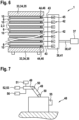
- a robot 48 comprises robot arms 49 and robot joints 50. Simple robots 48 can also be used as robots 48, which can essentially only perform linear movements parallel and perpendicular to the fictitious planes 54, so that the costs of manufacturing can be reduced even further.
- a process unit 52 as a laser 53, a camera 51 and a gripper 56 are attached to an end region of a last robot arm 49. The gripper 56 is attached to the last robot arm 49 with a motor-driven joint (not shown).
- a computer 55 with a processor and a data storage device controls the robot 48.
- Position data on the intended geometric arrangement of the bipolar plates 10 and/or indicator elements 59 and/or counter-connection elements 57 and/or on the relative position of the robot 48 to the fuel cell unit 1 are stored in the data storage device.
- the camera 51 optically captures images of the bipolar plates 10 and the indicator elements 59 and the actual relative position of the bipolar plates 10 to the robot 48 is captured using image processing software in the computer 55.
- the movement of the robot 48 is thus controlled as a function of the intended position data stored in the data memory and/or the data determined by the image processing software regarding the actual position of the bipolar plates 10 relative to the robot 48.
- the stored position data can thus be corrected with the data determined by the image processing software regarding the actual position of the bipolar plates 10 relative to the robot 48, so that deviations in the geometric arrangement of the bipolar plates 10 due to manufacturing inaccuracies advantageously have no effect on production.
- a counter-connecting element 57 is formed as a channel-shaped opening 58 or as a channel-shaped bore 58.
- the connecting elements 44 which are electrically conductive and mechanically connected to the power lines 43, are formed as pins 62, pins 62 or bolts 62 ( Fig. 8 and 9 ). In the Fig. 8 and 9 In the first embodiment shown, the connecting elements 44 are connected to a plug 64 In this case, several connecting elements 44 are normally arranged and fixed on a plug 64. The power lines 43 then lead from the plugs 64 to the current collector strip 41 and to the monitoring unit 37. The plugs 64 with several pins 62 (not shown) are in Fig. 6 not shown.
- the pins 62 as the connecting elements 44 are inserted into the channel-shaped openings 58 as the counter-connecting elements 57.
- the diameter of the pins 62 is slightly larger than the diameter of the channel-shaped openings 58, so that during the insertion of the pins 62 into the channel-shaped openings 58, a positive and non-positive fixation 46 of the pins 62 at the channel-shaped openings 58 is produced.
- the movement of the plugs 64 with the pins 62 for inserting the pins 62 into the channel-shaped openings 58 of the bipolar plates 10 can be carried out either by manually moving the plugs 64 and thus inserting the pins 62 into the channel-shaped openings 58, or by gripping the pins 62 with the gripper 56 of the robot 48 and then inserting the pins 62 into the openings 58 by the robot 48.
- a material-fitting fixation 46 can also be carried out by means of the laser 53 on the robot 48. This process of properly arranging the connecting elements 44 on the counter-connecting elements 57 is carried out until one connecting element 44 is arranged in a mechanically and electrically conductive manner in each of the bipolar plates 10.
- FIG. 8 and 9 A first embodiment of an indicator element 59 is shown.
- the partial view is shown before the arrangement of the pin 62 in the opening 58 and in Fig. 9 the correct arrangement of the pin 62 within the channel-shaped opening 58 is shown.
- the channel-shaped opening 58 is straight and the connecting element 44 as the pin 62 is also designed as a straight pin 62 made of stainless steel.
- the length of the pin 62 is greater than the length of the channel-shaped opening 58, so that after the correct arrangement of the pin 62 in the opening 58, an end region of the pin 62 as the connecting element 44 protrudes from the channel-shaped opening 58 and thus a portion of the connecting element 44, which consists of the opening 58 protrudes, optically detectable, i.e. visible.
- This portion of the connecting element 44, which protrudes from the opening 58 thus forms the indicator element 59, 61, which is formed by the connecting element 44.
- the indicator element 59, 61 is in an initial position and in Fig. 9 in the indicator position.
- a second embodiment is shown. In the following, essentially only the differences from the first embodiment are described.
- the opening 58 as the counter-connecting element 57 ends in a recess 63 of the bipolar plate 10.
- the indicator element 59, 61, formed by the connecting element 44 does not protrude beyond the outer edge of the bipolar plate 10, but is arranged within the recess 63. This has the advantage that no additional installation space outside the outer edge of the bipolar plate 10 is necessary for the indicator element 59, 61.
- a third embodiment is shown. In the following, only the differences from the first embodiment are described.
- an indicator element 59, 60 is arranged as an additional indicator element 59, 60, ie a supplementary component in addition to the connecting element 44.
- the bendable indicator element 59, 60 is already arranged in the counter-connection element 57.
- the bendable indicator element 59, 60 is made, for example, from a bendable plastic.
- the indicator element 59, 60 is arranged completely within the channel-shaped counter-connection element 57 and is therefore not optically detectable, i.e. not optically visible.
- the connection element 44 there is mechanical contact between the end of the pin 62 and the end of the indicator element 59, 60, so that a kinematic and/or mechanical operative connection is thereby created between the connection element 44 and the indicator element 59, 60 is produced and thus a pressure force is applied to the indicator element 59, 60 by the connecting element 44 during insertion, so that a relative movement between the bipolar plate 10 and the indicator element 59, 60 is carried out by the indicator element 59, 60 and the indicator element 59, 60 is moved out of the channel-shaped opening 58 and a portion of the indicator element 59, 60 protrudes from the bipolar plate 10 and is optically visible from the outside ( Fig. 13 ). Due to the curved
- a fourth embodiment is shown.
- the connecting element 44 is made of a bendable and electrically conductive plastic.
- the counter-connecting element 57 as the channel-shaped opening 58 has a curvature.
- a bend is thus carried out on an area of the pin 62 due to the channel-shaped opening 58 with a bend of approximately 90°, so that when the connecting element 44 is properly arranged in the counter-connecting element 57 as shown in Fig. 15 a partial area of the pin 62 in the recess 63 is optically detectable and thus a partial area of the bendable pin 62 forms the indicator element 59, 61.
- all indicator elements 59 are in the specified indicator positions.
- the correct arrangement of the connecting elements 44 in the counter-connecting elements 57 can be determined particularly easily by simply visually checking the position of the indicator elements 59, i.e. whether the indicator elements 59 on each bipolar plate 10 are in the specified indicator position. This can either be easily checked by a fitter by visual inspection or, for example, by means of the camera 51 on the robot arm 49 of the robot 48.
- the specified indicator positions of the indicator elements 59 are stored in the computer 55. and these predetermined indicator positions can also be corrected and adapted to corresponding manufacturing inaccuracies due to the optical detection of the bipolar plates 10.
- the fuel cell unit 1 according to the invention and the method according to the invention for producing the fuel cell unit 1 have significant advantages. Incorrect assembly of connecting elements 44 outside the correct arrangement on the counter-connecting elements 57 can be easily detected visually using the indicator elements 59. This makes it easy to detect an assembly error during the production process of the fuel cell unit 1, so that errors in the fuel cell unit 1 due to an incorrect arrangement of the connecting elements 44 on the counter-connecting elements 57 are ruled out. This advantageously reduces the error rate during the production of the fuel cell unit 1 and increases the reliability of the produced fuel cell unit 1.
Landscapes
- Life Sciences & Earth Sciences (AREA)
- Engineering & Computer Science (AREA)
- Manufacturing & Machinery (AREA)
- Sustainable Development (AREA)
- Sustainable Energy (AREA)
- Chemical & Material Sciences (AREA)
- Chemical Kinetics & Catalysis (AREA)
- Electrochemistry (AREA)
- General Chemical & Material Sciences (AREA)
- Fuel Cell (AREA)
Description
- Die vorliegende Erfindung betrifft eine Brennstoffzelleneinheit gemäß dem Oberbegriff des Anspruches 1 und ein Verfahren zur Herstellung einer Brennstoffzelleneinheit gemäß dem Oberbegriff des Anspruches 7.
- Brennstoffzelleneinheiten als galvanische Zellen wandeln mittels Redoxreaktionen an einer Anode und Kathode kontinuierlich zugeführten Brennstoff und Oxidationsmittels in elektrische Energie um. Brennstoffzellen werden in den unterschiedlichsten stationären und mobilen Anwendungen eingesetzt, beispielsweise in Häusern ohne Anschluss an ein Stromnetz oder in Kraftfahrzeugen, im Schienenverkehr, in der Luftfahrt, in der Raumfahrt und in der Schifffahrt. In Brennstoffzelleneinheiten sind eine Vielzahl von Brennstoffzellen übereinander in einem Stapel als Stack angeordnet.
- Für einen ordnungsgemäßen und zuverlässigen Betrieb der Brennstoffzelleneinheit ist es notwendig, wenigstens einen Parameter der Brennstoffzellen, beispielsweise die Spannung und die Feuchtigkeit der Brennstoffzellen, zu überwachen. Die Feuchtigkeit wird beispielsweise mit der Impedanz als weiteren Parameter mittelbar bestimmt. Bei der Überwachung beispielsweise der Spannung wird die anliegende Spannung an den Bipolarplatten der Brennstoffzellen mittels Stromleitungen zu einer Stromabnehmerleiste und einem Kabelbaum als Datenübertragungsvorrichtungen geleitet und von den Datenübertragungsvorrichtungen zu einer zentralen Überwachungseinheit als Fuel Cell Control Unit übertragen, so dass die Daten für den Parameter der Spannung die Spannung des in Stromleitungen geleiteten Stromes selbst ist.
- Eine Brennstoffzelleneinheit mit 400 übereinander angeordneten Brennstoffzellen umfasst 401 Bipolarplatten und jede Bipolarplatte ist mechanisch und elektrisch mittels Verbindungselementen mit je einer Stromleitung zu verbunden. Aus diesem Grund sind insgesamt 401 Stromleitungen mittels 401 Verbindungselementen mit 401 Bipolarplatten zu verbinden. An den Enden der Stromleitungen sind Pins als Verbindungselemente ausgebildet und diese Pins werden in Bohrungen oder Öffnungen als Gegenverbindungselementen in den Bipolarplatten gesteckt, so dass form- und/oder kraftschlüssige Fixierungen zwischen den Verbindungselementen und Gegenverbindungselementen ausgebildet werden. Die Stromleitungen sind mit den Pins und Bohrungen somit form- und/oder kraftschlüssig an den Bipolarplatten fixiert und elektrisch leitend mit den Bipolarplatten verbunden. Die Bipolarplatten weisen eine Dicke von ca. 1 mm auf und die Bohrungen in den Bipolarplatten sind mit einem Durchmesser von ungefähr 0,7 mm ausgebildet. Die Pins werden manuell von Facharbeitern in die Bohrungen der Bipolarplatten gesteckt, so dass dieser Arbeitsvorgang aufwendig mit einem hohen Fehler- und Beschädigungsrisiko ist. Dabei können die Pins als die Verbindungselemente auch bei einer Fehlmontage nicht in die Bohrungen oder Öffnungen eingesteckt werden, sondern zwischen den Bipolarplatten, so dass ein Kurzschluss zwischen den Bipolarplatten auftritt. Bei dieser Fehlmontage sind die Pins analog wie bei einer korrekten Montage in den Bohrungen und Öffnungen optisch im Wesentlich nicht erfassbar bzw. sichtbar, so dass eine optische Prüfung einer Fehlmontage der Pins nicht möglich ist.
- Die
DE 10 2019 220 527 A1 zeigt eine Zelleneinheit als Zellenstapel zur Wandlung elektrochemischer Energie umfassend übereinander angeordnete Einzelzellen, eine Überwachungseinheit als Recheneinheit zur Überwachung von wenigstens einem Parameter der Einzelzellen, wenigstens eine Datenübertragungsvorrichtung zur Übertragung von Daten hinsichtlich des wenigstens einen Parameters von den Einzelzellen zu der Überwachungseinheit. wobei die Zelleneinheit mehrere Zusatzüberwachungseinheiten als Recheneinheiten zur Überwachung von wenigstens einem Parameter der Einzelzellen und wenigstens eine Datenübertragungsvorrichtung zur Übertragung von Daten hinsichtlich des wenigstens einen Parameters von den Einzelzellen zu den Zusatzüberwachungseinheiten umfasst, wobei die - Zusatzüberwachungseinheiten jeweils einen Energiespeicher aufweisen.
-
DE 10 2018 110870 A1 beschreibt eine Kontaktierung von Platten eines Zellstapels mit Hilfe von Klemmvorrichtungen, die parallel zueinander angeordnet sind und die jeweils eine Zelle kontaktieren. - Erfindungsgemäße Brennstoffzelleneinheit als Brennstoffzellenstapel zur elektrochemischen Erzeugung von elektrischer Energie, umfassend gestapelt angeordnete Brennstoffzellen mit Protonenaustauschermembranen, Anoden, Kathoden, Gasdiffusionssichten und Bipolarplatten, Stromleitungen zur elektrischen Verbindung mit den Bipolarplatten der Brennstoffzellen und zur Überwachung der Brennstoffzellen mittels einer Erfassung wenigstens eines Parameters der Brennstoffzellen und die Stromleitungen elektrisch mit Verbindungselementen verbunden sind, Verbindungselemente zur Befestigung an den Bipolarplatten mit Fixierungen sowie zur elektrisch leitenden Verbindung mit den Bipolarplatten und die Verbindungselemente elektrisch leitend mit den Stromleitungen verbunden sind, so dass die Stromleitungen elektrisch leitend mittels der Verbindungselemente mit den Bipolarplatten verbunden sind, an den Bipolarplatten ausgebildete Gegenverbindungselemente und an den Gegenverbindungselementen die Verbindungselemente mit Fixierungen befestigt sind, so dass die Verbindungselemente elektrisch leitend mit den Gegenverbindungselementen und Bipolarplatten verbunden sind, wobei an den Bipolarplatten Indikatorelemente ausgebildet sind zur optischen Überwachung der ordnungsgemäßen Anordnung der Verbindungselemente an den Gegenverbindungselementen und die Indikatorelemente von außerhalb des Brennstoffzellenstapels optisch erfassbar sind. Die Indikatorelemente sind optisch erfassbar, das heißt optisch sichtbar, sodass dadurch in einfacher Weise von außen an dem Brennstoffzellenstapel die ordnungsgemäße Anordnung der Verbindungselemente an den Gegenverbindungselementen erfassbar ist. Dies kann beispielsweise mittels Augenschein während der Montage ausgeführt werden oder mithilfe einer Kamera, die mit einer entsprechenden Bildverarbeitungssoftware und einem Computer die Anordnung und Position der Indikatorelemente an vorgegebenen Indikatorpositionen erfasst.
- In einer zusätzlichen Ausgestaltung sind die Verbindungselemente als Bolzen, Stifte oder Pins an den Stromleitungen ausgebildet und die Gegenverbindungselemente sind als Öffnungen oder Bohrungen an den Bipolarplatten ausgebildet oder umgekehrt sind die Verbindungselemente als Öffnungen oder Bohrungen an den Stromleitungen ausgebildet und die Gegenverbindungselemente sind als Bolzen, Stifte oder Pins an den Bipolarplatten ausgebildet. Die Verbindungselemente können dadurch besonders einfach mechanisch in die Öffnungen oder Bohrungen eingeführt werden und dadurch form- und/oder kraftschlüssig aufgrund der Geometrie der Verbindungselemente und der Gegenverbindungselemente miteinander und/oder aneinander fixiert werden.
- In einer zusätzlichen Ausgestaltung ragen die Indikatorelemente aus den Bipolarplatten heraus, insbesondere ist die Länge der Verbindungselemente größer als die Länge der Gegenverbindungselemente, so dass Teilbereiche der Verbindungselemente aus den Gegenverbindungselemente herausragen und die Teilbereiche der Verbindungselemente als Indikatorelemente optisch erfassbar sind. Die Verbindungselemente bilden damit wenigstens teilweise auch die Indikatorelemente.
- In einer zusätzlichen Ausgestaltung sind in den Bipolarplatten Aussparungen ausgebildet und die Indikatorelemente sind durch die Aussparungen von außerhalb des Brennstoffzellenstapels optisch erfassbar. Die Aussparung sind beispielsweise als Durchstanzungen in einer Ebene senkrecht zu der von den Brennstoffzellen aufgespannten fiktiven Ebene ausgebildet oder die Aussparungen sind Öffnungen in einer Richtung parallel zu den von den Bipolarplatten aufgespannten fiktiven Ebenen.
- In einer ergänzenden Variante umfasst die Brennstoffzelleneinheit eine Überwachungseinheit als Recheneinheit zur Überwachung des wenigstens einen Parameter der Brennstoffzellen.
- Zweckmäßig umfasst die Brennstoffzelleneinheit eine Datenübertragungsvorrichtung zur Übertragung von Daten hinsichtlich des wenigstens einen zu erfassenden Parameters der Brennstoffzellen von den Stromleitungen zu der Überwachungseinheit.
- Erfindungsgemäßes Verfahren zur Herstellung einer Brennstoffzelleneinheit als Brennstoffzellenstapel zur elektrochemischen Erzeugung von elektrischer Energie mit den Schritten: zur Verfügung stellen einer Brennstoffzelleneinheit mit gestapelt angeordneten Brennstoffzellen, die Brennstoffzellen umfassend Protonenaustauschermembranen, Anoden, Kathoden, Gasdiffusionssichten und Bipolarplatten mit Gegenverbindungselementen, zur Verfügung stellen von Stromleitungen zur elektrischen Verbindung mit den Bipolarplatten der Brennstoffzellen und zur Überwachung wenigstens eines Parameters der Brennstoffzellen, zur Verfügung stellen von Verbindungselementen, welche elektrisch leitend mit den Stromleitungen verbunden sind, elektrisches Verbinden der Stromleitungen mit den Bipolarplatten indem die Verbindungselemente an Gegenverbindungselementen der Bipolarplatten mit Fixierungen befestigt werden und die Verbindungselemente elektrisch leitend mit den Gegenverbindungselementen an den Bipolarplatten verbunden werden, wobei während des Fixierens der Verbindungselemente an den Gegenverbindungselementen von Indikatorelementen eine Relativbewegung zwischen den Bipolarplatten und den Indikatorelementen ausgeführt wird, sodass nach der ordnungsgemäßen Fixierung der Verbindungselemente an den Gegenverbindungselementen die Indikatorelemente von außerhalb des Brennstoffzellenstapels optisch erfassbar sind. Die Indikatorelemente sind somit mechanische Bauteile, welche während des Fixierens der Verbindungselemente an den Gegenverbindungselementen eine Relativbewegung zwischen den Bipolarplatten und den Indikatorelementen ausführen.
- In einer ergänzenden Variante sind vor dem Einführen der Verbindungselemente in die Gegenverbindungselemente die Indikatorelemente von außerhalb des Brennstoffzellenstapels nicht optisch erfassbar, insbesondere nicht an vorgegebenen Indikatorpositionen an den Bipolarplatten optisch erfassbar. Vor dem Einführen der Verbindungselemente in die Gegenverbindungselemente sind somit die Indikatorelemente vorzugsweise innerhalb der Bipolarplatten angeordnet und optisch nicht erfassbar, das heißt nicht sichtbar. Aufgrund der Relativbewegung zwischen den Indikatorelementen und den Bipolarplatten während des Fixierens der Fixierungselemente erfolgt eine Relativbewegung von optisch nicht erfassbaren Positionen oder Positionen außerhalb der Indikatorpositionen zu optisch erfassbaren Positionen der Indikatorelemente in den Indikatorpositionen. Vorzugsweise sind die Indikatorelemente vor der Befestigung der Verbindungselemente an den Gegenverbindungselementen außerhalb der Indikatorpositionen angeordnet, insbesondere sind die Indikatorpositionen in diesen Positionen außerhalb der Indikatorpositionen optisch nicht erfassbar oder optisch erfassbar.
- In einer ergänzenden Variante sind die Indikatorelemente von außerhalb des Brennstoffzellenstapels in vorgegebenen Indikatorpositionen an den Bipolarplatten optisch erfassbar, falls die Verbindungselemente ordnungsgemäß an den Gegenverbindungselementen befestigt sind. Aufgrund der fest vorgegebenen Indikatorpositionen der Indikatorelemente kann somit zuverlässig die ordnungsgemäße Anordnung der Verbindungselemente an den Gegenverbindungselementen geprüft werden.
- In einer zusätzlichen Ausgestaltung wird die Relativbewegung zwischen den Bipolarplatten und den Indikatorelementen ausgeführt aufgrund einer kinematischen und/oder mechanischen Wirkverbindung zwischen den Verbindungselementen und den Indikatorelementen. Die kinematische und/oder mechanische Wirkverbindung ist beispielsweise ein Kontakt zwischen den Indikatorelementen und den Verbindungselementen, sodass dadurch von den Verbindungselementen auf die Indikatorelemente eine Kraft, insbesondere Druckkraft, aufbringbar ist zum Bewegen der Indikatorelemente oder die Indikatorelemente sind wenigstens teilweise von den Verbindungselementen gebildet, sodass dadurch die kinematische und/oder mechanische Wirkverbindung zwischen den Verbindungselementen und den Indikatorelementen vorhanden ist.
- In einer ergänzenden Ausgestaltung sind die Indikatorelemente von den Verbindungselementen oder Zusatzindikatorelementen als gesonderte Bauteile in Ergänzung zu den Verbindungselementen gebildet.
- In einer zusätzlichen Ausgestaltung sind die Verbindungselemente als Bolzen, Stifte oder Pins an den Stromleitungen ausgebildet und die Gegenverbindungselemente sind als, vorzugsweise kanalförmige, Öffnungen oder Bohrungen an den Bipolarplatten ausgebildet oder umgekehrt sind die Verbindungselemente als, vorzugsweise kanalförmige, Öffnungen oder Bohrungen an den Stromleitungen ausgebildet und die Gegenverbindungselemente sind als Bolzen, Stifte oder Pins an den Bipolarplatten ausgebildet.
- In einer weiteren Ausgestaltung sind die Öffnungen oder Bohrungen und die Verbindungselemente dahingehend ausgebildet, so dass nach der ordnungsgemäßen Fixierung der Verbindungselemente an den Gegenverbindungselementen die Verbindungselemente aus den Öffnungen oder Bohrungen heraus ragen und die Teilbereiche der Verbindungselemente, welche aus den Öffnungen oder Bohrungen heraus ragen und durch die Gegenverbindungselemente bewegt worden sind, die Indikatorelemente bilden und die Teilbereiche der Verbindungselemente von außerhalb des Brennstoffzellenstapels optisch erfassbar sind.
- Zweckmäßig werden die Verbindungselemente mit einem Roboter an den Gegenverbindungselementen an den Bipolarplatten befestigt mittels einer Relativbewegung zwischen den Verbindungselementen und Gegenverbindungselementen.
- In einer weiteren Ausführungsform werden von einer Kamera die gestapelten Bipolarplatten und/oder die Indikatorelemente optisch erfasst, die Daten der Kamera werden von einem Computer mit einer Bildverarbeitungssoftware ausgewertet und in Abhängigkeit von der mittels der Bildverarbeitungssoftware ermittelten Daten zu den Positionen der Bipolarplatten und/oder Indikatorelemente, insbesondere zu Indikatorpositionen der Indikatorelemente, wird die ordnungsgemäßen Anordnung der Verbindungselemente in den Gegenverbindungselementen überwacht. In vorteilhafter Weise kann somit mit der Kamera und dem Computer sowie der Bildverarbeitungssoftware die ordnungsgemäße Anordnung der Indikatorelemente an den Indikatorpositionen geprüft werden und somit automatisiert und selbstständig die korrekte Anordnung der Verbindungselemente an den Gegenverbindungselementen geprüft werden.
- In einer zusätzlichen Ausgestaltung sind die Verbindungselemente und die Gegenverbindungselemente mit einer komplementären Geometrie an Kontaktflächen zwischen den Verbindungselementen und Gegenverbindungselementen ausgebildet.
- In einer weiteren Ausgestaltung bilden die Öffnungen oder Bohrungen als die Gegenverbindungselemente oder Verbindungselemente eine Lagerung, insbesondere Gleitlagerung und/oder Wälzlagerung, für die beweglichen Indikatorelemente.
- In einer ergänzenden Variante sind die Indikatorelemente vor der Ausbildung der Fixierungen der Verbindungselemente an den Gegenverbindungselemente an Anfangspositionen angeordnet und nach der ordnungsgemäßen Fixierung der Verbindungselemente an den Gegenverbindungselementen sind die Indikatorelemente an den Indikatorpositionen angeordnet und vorzugsweise sind die Indikatorelemente in den Anfangspositionen optisch erfassbar oder nicht optisch erfassbar.
- In einer weiteren Ausgestaltung sind die Fixierungen wenigstens teilweise, insbesondere vollständig, von den Verbindungselementen und den Gegenverbindungselementen gebildet, vorzugsweise ist je eine Fixierung von je einem Verbindungselement und je einem Gegenverbindungselement gebildet.
- In einer zusätzlichen Ausgestaltung sind die Verbindungselemente aus einem elektrisch leitfähigen Material, beispielsweise Metall, insbesondere Kupfer, Messing und/oder Edelstahl, und/oder aus einem elektrisch leitfähigen Kunststoff und/oder aus einem elektrisch leitfähigen keramischen Werkstoff ausgebildet.
- In einer ergänzenden Variante sind die Indikatorelemente und/oder die Verbindungselemente biegbar und/oder aus einem biegbaren Material ausgebildet. Bei biegbaren Indikatorelementen und/oder Verbindungselementen können somit die Öffnung und/oder Bohrungen gekrümmt ausgebildet werden, sodass dadurch während des Einführens des Verbindungselements in das Gegenverbindungselement dadurch eine Biegung des Verbindungselements ausführbar ist und/oder ausgeführt wird. Dies gilt analog auch für die Indikatorelemente, sodass während der Relativbewegung zwischen den Bipolarplatten und den Indikatorelementen die Indikatorelemente gebogen werden und/oder biegbar sind.
- In einer zusätzlichen Ausgestaltung sind die Verbindungselemente an den Gegenverbindungselementen mit Fixierungen befestigt, indem die Fixierungselemente innerhalb der Gegenverbindungselemente angeordnet sind, insbesondere die Verbindungselemente form- und/oder kraftschlüssig an den Gegenverbindungselementen befestigt, vorzugsweise eingeklemmt, sind.
- In einer zusätzlichen Ausgestaltung erfolgt das Fixieren der Verbindungselemente an den Gegenverbindungselementen dahingehend, dass die Verbindungselemente in die Gegenverbindungselemente eingeführt werden, sodass dadurch eine form- und/oder kraftschlüssige Fixierung der Verbindungselemente an den Gegenverbindungselementen hergestellt wird.
- In einer weiteren Variante sind die Verbindungselemente an den Gegenverbindungselementen formschlüssig und/oder kraftschlüssig und/oder stoffschlüssig fixiert.
- In einer ergänzenden Ausführungsform wird das elektrische Verbinden der Stromleitungen mit den Bipolarplatten ausgeführt indem die Verbindungselemente an Gegenverbindungselementen der Bipolarplatten formschlüssig und/oder kraftschlüssig und/oder stoffschlüssig fixiert werden
- In einer weiteren Ausgestaltung sind die stoffschlüssigen Fixierungen mittels Laserschweißen und/oder Ultraschallweißen hergestellt.
- Zweckmäßig sind die Bipolarplatten, insbesondere wenigstens 90% oder 99% der Bipolarplatten oder sämtliche Bipolarplatten, mittels je einer bzw. einem, insbesondere nur je einer bzw. nur je einem, Verbindungselement mit je einer, insbesondere nur je einer, Stromleitung elektrisch verbunden.
- Vorzugsweise bilden die Stromleitungen zusätzlich die Verbindungselemente. Die Stromleitungen können auch als starre Stäbe ausgebildet sein, so dass Endbereiche der Stromleitungen zusätzlich die Verbindungselemente bilden.
- In einer ergänzenden Variante umfasst die Brennstoffzelleneinheit eine Überwachungseinheit als Recheneinheit zur Überwachung des wenigstens einen Parameter der Brennstoffzellen. Als Parameter der Brennstoffzellen ist vorzugsweise die Spannung der Brennstoffzellen überwachbar, so dass die Überwachungseinheit ein CVM-System (Cell Voltage Monitoring-System) bildet.
- In einer zusätzlichen Ausführungsform umfasst die Brennstoffzelleneinheit eine Datenübertragungsvorrichtung zur Übertragung von Daten hinsichtlich des wenigstens einen zu erfassenden Parameters der Brennstoffzellen von den Stromleitungen zu der Überwachungseinheit.
- Zweckmäßig sind die Stromleitungen mit Zusatzverbindungselementen mit der Datenübertragungsvorrichtung elektrisch und mechanisch verbunden.
- In einer zusätzlichen Variante ist die Brennstoffzelleneinheit mit einem in dieser Schutzrechtsanmeldung beschriebenen Verfahren hergestellt.
- Vorzugsweise werden die stoffschlüssigen Fixierungen mittels Schweißen, insbesondere Laserschweißen und/oder Ultraschallweißen, hergestellt.
- In einer ergänzenden Ausgestaltung werden die Fixierungen der Verbindungselemente an den Gegenverbindungselementen hergestellt indem eine Prozesseinheit zur Herstellung der Fixierungen, insbesondere formschlüssige und/oder kraftschlüssige und/oder stoffschlüssige Fixierungen, von einem Roboter im Raum bewegt wird. Die Prozesseinheit, beispielsweise eine Zange oder ein Greifer oder ein Laser oder ein Ultraschallwandler mit Sonotrode, wird von dem Roboter in eine entsprechende Prozessposition an der Bipolarplatte gebracht und anschließend wird die Fixierung hergestellt.
- In einer weiteren Ausgestaltung wird je ein, insbesondere nur je ein Verbindungselement mit dem Roboter an je einem, insbesondere nur je einem, Gegenverbindungselement der Bipolarplatte fixiert.
- Vorzugsweise sind in einem Computer Positionsdaten zur geometrischen Anordnung der Bipolarplatten und/oder Gegenverbindungselemente der Brennstoffzelleneinheit und der relativen Position des Roboters zu den Bipolarplatten und/oder Gegenverbindungselementen der Brennstoffzelleneinheit gespeichert und in Abhängigkeit von den Positionsdaten wird die Bewegung des Roboters, insbesondere der von dem Roboter bewegten Prozesseinheit und Verbindungselementen, im Raum gesteuert, vorzugsweise in einer Anfangsphase der Bewegung der Prozesseinheit zu je einer Bipolarplatte.
- In einer ergänzenden Ausführungsform ist der wenigstens eine mit den Stromleitungen überwachte Parameter der Brennstoffzellen die Spannungsdifferenz zwischen wenigstens zwei Bipolarplatten, insbesondere die Spannungsdifferenzen zwischen je wenigstens zwei unmittelbar benachbarten Bipolarplatten.
- Vorzugsweise umfasst die Brennstoffzelleneinheit wenigstens einen Generator zur Erzeugung eines Überwachungssignales, insbesondere Wechselstrom, und mit der wenigstens einen Datenübertragungsvorrichtung und den Stromleitungen ist das Überwachungssignal von dem wenigstens einen Generator zu den Bipolarplatten übertragbar zur Beaufschlagung der Bipolarplatten mit dem Überwachungssignal, insbesondere zur Erfassung der Impedanz als einen Parameter der Brennstoffzelle.
- In einer weiteren Variante ist die wenigstens eine Datenübertragungsvorrichtung als wenigstens eine Stromleitung und/oder als wenigstens eine Stromabnehmerleiste mit Stromleitungen und/oder als wenigstens eine CAN-Schnittstelle und/oder wenigstens eine LIN-Schnittstelle und/oder wenigstens ein Funkübertragungsmittel ausgebildet. Das Funkübertragungsmittel überträgt die Daten mittels Funk, beispielsweise mit WLAN oder Bluetooth.
- Zweckmäßig bilden die Verbindungselemente, insbesondere ausschließlich, die Stromleitungen. Bei einer unmittelbaren Anordnung beispielsweise eines Funkübertragungsmittels an den Verbindungselementen fungieren somit die Verbindungselemente, insbesondere ausschließlich, auch als Stromleitungen.
- In einer ergänzenden Ausgestaltung ist der wenigstens eine Parameter die elektrische Spannung und/oder die Impedanz wenigstens einer überwachten Brennstoffzelle.
- In einer weiteren Variante umfasst die Brennstoffzelleneinheit wenigstens eine Verbindungsvorrichtung, insbesondere mehrere Verbindungsvorrichtungen, und Spannelemente.
- Zweckmäßig sind Komponenten für Brennstoffzellen Protonenaustauschermembranen, Anoden, Kathoden, Gasdiffusionsschichten und Bipolarplatten.
- In einer weiteren Ausgestaltung umfassen die Brennstoffzellen jeweils eine Protonenaustauschermembran, eine Anode, eine Kathode, wenigstens eine Gasdiffusionsschicht und wenigstens eine Bipolarplatte.
- In einer weiteren Ausführungsform ist die Verbindungsvorrichtung als ein Bolzen ausgebildet und/oder ist stabförmig.
- Zweckmäßig sind die Spannelemente als Spannplatten ausgebildet.
- Erfindungsgemäßes Brennstoffzellensystem, insbesondere für ein Kraftfahrzeug, umfassend eine Brennstoffzelleneinheit als Brennstoffzellenstapel mit Brennstoffzellen, einen Druckgasspeicher zur Speicherung von gasförmigem Brennstoff, eine Gasfördervorrichtung zur Förderung eines gasförmigen Oxidationsmittels zu den Kathoden der Brennstoffzellen, wobei die Brennstoffzelleneinheit als eine in dieser Schutzrechtsanmeldung beschriebene Brennstoffzelleneinheit ausgebildet ist.
- In einer weiteren Variante ist die Gasfördervorrichtung als ein Gebläse oder ein Kompressor ausgebildet.
- Insbesondere umfasst die Brennstoffzelleneinheit wenigstens 3, 4, 5 oder 6 Verbindungsvorrichtungen.
- In einer weiteren Ausgestaltung sind die Spannelemente plattenförmig und/oder scheibenförmig und/oder eben ausgebildet und/oder als ein Gitter ausgebildet.
- Vorzugsweise ist der Brennstoff Wasserstoff, wasserstoffreiches Gas, Reformatgas oder Erdgas.
- Zweckmäßig sind die Brennstoffzellen im Wesentlichen eben und/oder scheibenförmig ausgebildet.
- In einer ergänzenden Variante ist das Oxidationsmittel Luft mit Sauerstoff oder reiner Sauerstoff.
- Vorzugsweise ist die Brennstoffzelleneinheit eine PEM-Brennstoffzelleneinheit mit PEM-Brennstoffzellen.
- Die Erfindung umfasst ferner ein Computerprogramm mit Programmcodemitteln, die auf einem computerlesbaren Datenträger gespeichert sind, um ein in dieser Schutzrechtsanmeldung beschriebenes Verfahren durchzuführen, wenn das Computerprogramm auf einem Computer oder einer entsprechenden Recheneinheit durchgeführt wird.
- Bestandteil der Erfindung ist außerdem ein Computerprogrammprodukt mit Programmcodemitteln, die auf einem computerlesbaren Datenträger gespeichert sind, um ein in dieser Schutzrechtsanmeldung beschriebenes Verfahren durchzuführen, wenn das Computerprogramm auf einem Computer oder einer entsprechenden Recheneinheit durchgeführt wird.
- Im Nachfolgenden werden Ausführungsbeispiele der Erfindung unter Bezugnahme auf die beigefügten Zeichnungen näher beschrieben. Es zeigt:
- Fig. 1
- eine stark vereinfachte Explosionsdarstellung eines Brennstoffzellensystems mit Komponenten einer Brennstoffzelle,
- Fig. 2
- eine perspektivische Ansicht eines Teils einer Brennstoffzelle,
- Fig. 3
- einen Längsschnitt durch eine Brennstoffzelle,
- Fig. 4
- eine perspektivische Ansicht einer Brennstoffzelleneinheit als Brennstoffzellenstapel, d. h. einen Brennstoffzellenstack,
- Fig. 5
- einen Schnitt durch die Brennstoffzelleneinheit gemäß
Fig. 4 , - Fig. 6
- einen Schnitt durch die Brennstoffzelleneinheit mit Darstellung von Stromleitungen, einer Datenübertragungsvorrichtung und einer Überwachungseinheit zur Überwachung wenigstens eines Parameters der Brennstoffzellen,
- Fig. 7
- eine stark vereinfachte Darstellung eines Roboters,
- Fig. 8
- eine Teildraufsicht einer Bipolarplatte und eines Steckers mit einem Verbindungselement vor einer ordnungsgemäßen Anordnung des Verbindungselementes an einem Gegenverbindungselement der Bipolarplatte in einem ersten Ausführungsbeispiel,
- Fig. 9
- eine Teildraufsicht der Bipolarplatte und des Steckers mit dem Verbindungselement nach der ordnungsgemäßen Anordnung des Verbindungselementes an dem Gegenverbindungselement der Bipolarplatte in dem ersten Ausführungsbeispiel,
- Fig. 10
- eine Teildraufsicht der Bipolarplatte und des Steckers mit dem Verbindungselement vor der ordnungsgemäßen Anordnung des Verbindungselementes an dem Gegenverbindungselement der Bipolarplatte in einem zweiten Ausführungsbeispiel,
- Fig. 11
- eine Teildraufsicht der Bipolarplatte und des Steckers mit dem Verbindungselement nach der ordnungsgemäßen Anordnung des Verbindungselementes an dem Gegenverbindungselement der Bipolarplatte in dem zweiten Ausführungsbeispiel,
- Fig. 12
- eine Teildraufsicht der Bipolarplatte und des Steckers mit dem Verbindungselement vor der ordnungsgemäßen Anordnung des Verbindungselementes an dem Gegenverbindungselement der Bipolarplatte in einem dritten Ausführungsbeispiel,
- Fig. 13
- eine Teildraufsicht der Bipolarplatte und des Steckers mit dem Verbindungselement nach der ordnungsgemäßen Anordnung des Verbindungselementes an dem Gegenverbindungselement der Bipolarplatte in dem dritten Ausführungsbeispiel,
- Fig. 14
- eine Teildraufsicht der Bipolarplatte und des Steckers mit dem Verbindungselement vor der ordnungsgemäßen Anordnung des Verbindungselementes an dem Gegenverbindungselement der Bipolarplatte in einem vierten Ausführungsbeispiel und
- Fig. 15
- eine Teildraufsicht der Bipolarplatte und des Steckers mit dem Verbindungselement nach der ordnungsgemäßen Anordnung des Verbindungselementes an dem Gegenverbindungselement der Bipolarplatte in dem vierten Ausführungsbeispiel.
- In den
Fig. 1 bis 3 ist der grundlegende Aufbau einer Brennstoffzelle 2 als einer PEM-Brennstoffzelle 3 (Polymerelektrolyt-Brennstoffzelle 3) dargestellt. Das Prinzip von Brennstoffzellen 2 besteht darin, dass mittels einer elektrochemischen Reaktion elektrische Energie bzw. elektrischer Strom erzeugt wird. An einer Anode 7 wird Wasserstoff H2 als gasförmiger Brennstoff geleitet und die Anode 7 bildet den Minuspol. An einer Kathode 8 wird ein gasförmiges Oxidationsmittel, nämlich Luft mit Sauerstoff, geleitet, d. h. der Sauerstoff in der Luft stellt das notwendige gasförmige Oxidationsmittel zur Verfügung. An der Kathode 8 findet eine Reduktion (Elektronenaufnahme) statt. Die Oxidation als Elektronenabgabe wird an der Anode 7 ausgeführt. - Die Redoxgleichungen der elektrochemischen Vorgänge lauten:
Kathode: O2 + 4 H+ + 4 e- --» 2 H2O
Anode: 2 H2 --» 4 H+ + 4 e-
Summenreaktionsgleichung von Kathode und Anode: 2 H2 + O2 --» 2 H2O
- Die Differenz der Normalpotentiale der Elektrodenpaare unter Standardbedingungen als reversible Brennstoffzellenspannung oder Leerlaufspannung der unbelasteten Brennstoffzelle 2 beträgt 1,23 V. Diese theoretische Spannung von 1,23 V wird in der Praxis nicht erreicht. Im Ruhezustand und bei kleinen Strömen können Spannungen über 1,0 V erreicht werden und im Betrieb mit größeren Strömen werden Spannungen zwischen 0,5 V und 1,0 V erreicht. Die Reihenschaltung von mehreren Brennstoffzellen 2, insbesondere eine Brennstoffzelleneinheit 1 als Brennstoffzellenstapel 1 von mehreren fluchtend gestapelt angeordneten Brennstoffzellen 2, weist eine höhere Spannung auf, welche der Zahl der Brennstoffzellen 2 multipliziert mit der Einzelspannung je einer Brennstoffzelle 2 entspricht.
- Die Brennstoffzelle 2 umfasst außerdem eine Protonenaustauschermembran 5 (Proton Exchange Membrane, PEM), welche zwischen der Anode 7 und der Kathode 8 angeordnet ist. Die Anode 7 und Kathode 8 sind schichtförmig bzw. scheibenförmig ausgebildet. Die PEM 5 fungiert als Elektrolyt, Katalysatorträger und Separator für die Reaktionsgase. Die PEM 5 fungiert außerdem als elektrischer Isolator und verhindert einen elektrischen Kurzschluss zwischen der Anode 7 und Kathode 8. Im Allgemeinen werden 12 µm bis 150 µm dicke, protonenleitende Folien aus perfluorierten und sulfonierten Polymeren eingesetzt. Die PEM 5 leitet die Protonen H+ und sperrt andere Ionen als Protonen H+ im Wesentlichen, so dass aufgrund der Durchlässigkeit der PEM 5 für die Protonen H+ der Ladungstransport erfolgen kann. Die PEM 5 ist für die Reaktionsgase Sauerstoff O2 und Wasserstoff H2 im Wesentlichen undurchlässig, d. h. sperrt die Strömung von Sauerstoff O2 und Wasserstoff H2 zwischen einem Gasraum 31 an der Anode 7 mit Brennstoff Wasserstoff H2 und dem Gasraum 32 an der Kathode 8 mit Luft bzw. Sauerstoff O2 als Oxidationsmittel. Die Protonenleitfähigkeit der PEM 5 vergrößert sich mit steigender Temperatur und steigenden Wassergehalt.
- Auf den beiden Seiten der PEM 5, jeweils zugewandt zu den Gasräumen 31, 32, liegen die Elektroden 7, 8 als die Anode 7 und Kathode 8 auf. Eine Einheit aus der PEM 5 und den Elektroden 7, 8 wird als Membranelektrodenanordnung 6 (Membran Electrode Array, MEA) bezeichnet. Die Elektroden 7, 8 sind mit der PEM 5 verpresst. Die Elektroden 7, 8 sind platinhaltige Kohlenstoffpartikel, die an PTFE (Polytetrafluorethylen), FEP (Fluoriertes Ethylen-Propylen-Copolymer), PFA (Perfluoralkoxy), PVDF (Polyvinylidenfluorid) und/oder PVA (Polyvinylalkohol) gebunden sind und in mikroporösen Kohlefaser-, Glasfaser- oder Kunststoffmatten heißverpresst sind. An den Elektroden 7, 8 sind auf der Seite zu den Gasräumen 31, 32 hin normalerweise jeweils eine Katalysatorschichten 30 aufgebracht. Die Katalysatorschicht 30 an dem Gasraum 31 mit Brennstoff an der Anode 7 umfasst nanodisperses Platin-Ruthenium auf grafitierten Rußpartikeln, die an einem Bindemittel gebunden sind. Die Katalysatorschicht 30 an dem Gasraum 32 mit Oxidationsmittel an der Kathode 8 umfasst analog nanodisperses Platin. Als Bindemittel werden beispielsweise Nation®, eine PTFE-Emulsion oder Polyvinylalkohol eingesetzt.
- Auf der Anode 7 und der Kathode 8 liegt eine Gasdiffusionsschicht 9 (Gas Diffusion Layer, GDL) auf. Die Gasdiffusionsschicht 9 an der Anode 7 verteilt den Brennstoff aus Kanälen 12 für Brennstoff gleichmäßig auf die Katalysatorschicht 30 an der Anode 7. Die Gasdiffusionsschicht 9 an der Kathode 8 verteilt das Oxidationsmittel aus Kanälen 13 für Oxidationsmittel gleichmäßig auf die Katalysatorschicht 30 an der Kathode 8. Die GDL 9 zieht außerdem Reaktionswasser in umgekehrter Richtung zur Strömungsrichtung der Reaktionsgase ab, d. h. in einer Richtung je von der Katalysatorschicht 30 zu den Kanälen 12, 13. Ferner hält die GDL 9 die PEM 5 feucht und leitet den Strom. Die GDL 9 ist beispielsweise aus einem hydrophobierten Kohlepapier und einer gebundenen Kohlepulverschicht aufgebaut. Die Brennstoffzellen 2 sind schichtförmige und scheibenförmig ausgebildet und dies gilt auch für die Komponenten Protonenaustauschermembranen 5, Anoden 7, Kathoden 8, Gasdiffusionssichten 9 und Bipolarplatten 10. Die Brennstoffzellen 2 und die Komponenten der Brennstoffzellen 2 spannen fiktive Ebenen 54, die parallel zueinander ausgerichtet sind.
- Auf der GDL 9 liegt eine Bipolarplatte 10 auf. Die elektrisch leitfähige Bipolarplatte 10 dient als Stromkollektor, zur Wasserableitung und zur Leitung der Reaktionsgase durch eine Kanalstruktur 29 und/oder ein Flussfeld 29 und zur Ableitung der Abwärme, welche insbesondere bei der exothermischen elektrochemischen Reaktion an der Kathode 8 auftritt. Zum Ableiten der Abwärme sind in die Bipolarplatte 10 Kanäle 14 zur Durchleitung eines flüssigen oder gasförmigen Kühlmittels eingearbeitet. Die Kanalstruktur 29 an dem Gasraum 31 für Brennstoff ist von Kanälen 12 gebildet. Die Kanalstruktur 29 an dem Gasraum 32 für Oxidationsmittel ist von Kanälen 13 gebildet. Als Material für die Bipolarplatten 10 werden beispielsweise Metall, leitfähige Kunststoffe und Kompositwerkstoffe oder Grafit eingesetzt.
- In einer Brennstoffzelleneinheit 1 und/oder einem Brennstoffzellenstapel 1 und/oder einem Brennstoffzellenstack 1 sind mehrere Brennstoffzellen 2 übereinander angeordnet (
Fig. 4 ). InFig. 1 ist eine Explosionsdarstellung von zwei übereinander angeordneten Brennstoffzellen 2 abgebildet. Eine Dichtung 11 dichtet die Gasräume 31, 32 fluiddicht ab. In einem Druckgasspeicher 21 (Fig. 1 ) ist Wasserstoff H2 als Brennstoff mit einem Druck von beispielsweise 350 bar bis 700 bar gespeichert. Aus dem Druckgasspeicher 21 wird der Brennstoff durch eine Hochdruckleitung 18 zu einem Druckminderer 20 geleitet zur Reduzierung des Druckes des Brennstoffes in einer Mitteldruckleitung 17 von ungefähr 10 bar bis 20 bar. Aus der Mitteldruckleitung 17 wird der Brennstoff zu einem Injektor 19 geleitet. An dem Injektor 19 wird der Druck des Brennstoffes auf einen Einblasdruck zwischen 1 bar und 3 bar reduziert. Von dem Injektor 19 wird der Brennstoff einer Zufuhrleitung 16 für Brennstoff (Fig. 1 ) zugeführt und von der Zufuhrleitung 16 den Kanälen 12 für Brennstoff, welche die Kanalstruktur 29 für Brennstoff bilden. Der Brennstoff durchströmt dadurch den Gasraum 31 für den Brennstoff. Der Gasraum 31 für den Brennstoff ist von den Kanälen 12 und der GDL 9 an der Anode 7 gebildet. Nach dem Durchströmen der Kanäle 12 wird der nicht in der Redoxreaktion an der Anode 7 verbrauchte Brennstoff und gegebenenfalls Wasser aus einer kontrollieren Befeuchtung der Anode 7 durch eine Abfuhrleitung 15 aus den Brennstoffzellen 2 abgeleitet. - Eine Gasfördereinrichtung 22, beispielsweise als ein Gebläse 23 oder ein Kompressor 24 ausgebildet, fördert Luft aus der Umgebung als Oxidationsmittel in eine Zufuhrleitung 25 für Oxidationsmittel. Aus der Zufuhrleitung 25 wird die Luft den Kanälen 13 für Oxidationsmittel, welche eine Kanalstruktur 29 an den Bipolarplatten 10 für Oxidationsmittel bilden, zugeführt, so dass das Oxidationsmittel den Gasraum 32 für das Oxidationsmittel durchströmt. Der Gasraum 32 für das Oxidationsmittel ist von den Kanälen 13 und der GDL 9 an der Kathode 8 gebildet. Nach dem Durchströmen der Kanäle 13 bzw. des Gasraumes 32 für das Oxidationsmittel 32 wird das nicht an der Kathode 8 verbrauchte Oxidationsmittel und das an der Kathode 8 aufgrund der elektrochemischen Redoxreaktion entstehenden Reaktionswasser durch eine Abfuhrleitung 26 aus den Brennstoffzellen 2 abgeleitet. Eine Zufuhrleitung 27 dient zur Zuführung von Kühlmittel in die Kanäle 14 für Kühlmittel und eine Abfuhrleitung 28 dient zur Ableitung des durch die Kanäle 14 geleiteten Kühlmittels. Die Zu- und Abfuhrleitungen 15, 16, 25, 26, 27, 28 sind in
Fig. 1 aus Vereinfachungsgründen als gesonderte Leitungen dargestellt und können konstruktiv tatsächlich unterschiedlich ausgebildet sein, beispielsweise als Bohrungen in einem Rahmen (nicht dargestellt) oder als fluchtende Bohrungen am Endbereich (nicht dargestellt) aufeinander liegender Bipolarplatten 10. Der Brennstoffzellenstack 1 zusammen mit dem Druckgasspeicher 21 und der Gasfördereinrichtung 22 bildet ein Brennstoffzellensystem 4. - In der Brennstoffzelleneinheit 1 sind die Brennstoffzellen 2 zwischen zwei Spannelementen 33 als Spannplatten 34 angeordnet. Eine obere Spannplatte 35 liegt auf der obersten Brennstoffzelle 2 auf und eine untere Spannplatte 36 liegt auf der untersten Brennstoffzelle 2 auf. Die Brennstoffzelleneinheit 1 umfasst ungefähr 300 bis 400 Brennstoffzellen 2, die aus zeichnerischen Gründen nicht alle in
Fig. 4 dargestellt sind. Die Spannelemente 33 bringen auf die Brennstoffzellen 2 eine Druckkraft auf, d. h. die obere Spannplatte 35 liegt mit einer Druckkraft auf der obersten Brennstoffzelle 2 auf und die untere Spannplatte 36 liegt mit einer Druckkraft auf der untersten Brennstoffzelle 2 auf. Damit ist der Brennstoffzellenstapel 2 verspannt, um die Dichtheit für den Brennstoff, das Oxidationsmittel und das Kühlmittel, insbesondere aufgrund der elastischen Dichtung 11, zu gewährleisten und außerdem den elektrischen Kontaktwiderstand innerhalb des Brennstoffzellenstapels 1 möglichst klein zu halten. Zur Verspannung der Brennstoffzellen 2 mit den Spannelementen 33 sind an der Brennstoffzelleneinheit 1 vier Verbindungsvorrichtungen 39 als Bolzen 40 ausgebildet, welche auf Zug beansprucht sind. Die vier Bolzen 40 sind mit den Spanplatten 34 fest verbunden. - Wenigstens ein Parameter der Brennstoffzelleneinheit 1 wird von einer Überwachungseinheit 37 überwacht (
Fig. 6 ). Als wesentlicher Parameter wird die Spannung der Brennstoffzellen 2 überwacht, d. h. die Differenz der Spannung zwischen zwei Bipolarplatten 10. Die Überwachungseinheit 37 (FCCU, Fuel Cell Control Unit) bildet damit insbesondere ein CVM-System (Cell Voltage Monitoring-System). Sämtliche Bipolarplatten 10 sind elektrisch und mechanisch mit Stromleitungen 43 verbunden und die Stromleitungen 43 sind mit einer Datenübertragungsvorrichtung 38 mit der Überwachungseinheit 37 elektrisch verbunden. Jede Stromleitung 43 ist somit zur Erfassung des wenigstens eines Parameters elektrisch mit der Überwachungseinheit 37 verbunden. Die Datenübertragungsvorrichtung 38 ist von einer Stromabnehmerleiste 41 mit Kontaktflächen 42 und einem Kabelbaum 47 gebildet. Die Stromleitungen 43 sind mit Verbindungselementen 44 elektrisch mit den Bipolarplatten 10 verbunden. Die Stromabnehmerleiste 41 ist mit dem Kabelbaum 47 elektrisch mit der Überwachungseinheit 37 verbunden. Jede Bipolarplatte 10 ist mittels je einer form- und/oder kraftschlüssigen Fixierung 46 eines Verbindungselementes 44 an einem Gegenverbindungselement 57 in der Bipolarplatte 10 form- und/oder kraftschlüssig mit einem Verbindungselement 44 verbunden, so dass je eine Bipolarplatte 10 mit je einer Stromleitung 43 elektrisch leitend verbunden ist. Die Stromleitungen 43 sind elektrisch leitend mit den Verbindungselementen 44 verbunden. Aufgrund der form- und/oder kraftschlüssigen Fixierung 46 der Verbindungselemente 44 an den Gegenverbindungselementen 57 sind die Verbindungselemente 44 mechanisch und elektrisch leitend mit den Gegenverbindungselementen 57 und Bipolarplatten 10 verbunden. Die Stromleitungen 43 sind mit Zusatzverbindungselementen 45 mechanisch und elektrisch mit den Kontaktflächen 42 der Stromabnehmerleiste 41 verbunden. Die Anzahl der Kontaktflächen 42 entspricht der Anzahl der Stromleitungen 43 und jede Stromleitung 43 ist mit je einer Kontaktfläche 42 verbunden. Die Zusatzverbindungselemente 45 sind als stoffschlüssige Verbindungen, beispielsweise Lötverbindungen, ausgebildet. Die Bipolarplatten 10, die Stromleitungen 43, die Verbindungselemente 44, die Gegenverbindungselemente 57 und die Kontaktflächen 42 sind aus einem elektrisch leitfähigem Material, insbesondere Metall, ausgebildet. - Die Anzahl der Bipolarplatten 10 entspricht somit der Anzahl der Stromleitungen 43, der Anzahl der Verbindungselemente 44, der Anzahl der Gegenverbindungselemente 57 und der Anzahl der Zusatzverbindungselemente 45. Als Parameter wird beispielsweise die elektrische Spannung zwischen zwei Bipolarplatten 10 erfasst und bei einer Abweichung der erfassten Spannung von einem vorgegebenen Sollwertbereich wird von der Überwachungseinheit 37 eine Fehlermeldung ausgegeben.
- Bei der Herstellung der Brennstoffzelleneinheit 1 werden Brennstoffzellen 2 gestapelt zu der Brennstoffzelleneinheit 1 als Brennstoffzellenstapel 1 angeordnet, d. h. die Brennstoffzelleneinheit 1 mit den gestapelt angeordneten Brennstoffzellen 2 zur Verfügung gestellt. Ein Roboter 48 umfasst Roboterarme 49 und Robotergelenke 50. Als Roboter 48 können auch einfache gebaute Roboter 48 eingesetzt werden, welche im Wesentlichen nur geradlinige Bewegungen parallel und senkrecht zu den fiktiven Ebenen 54 ausführen können, so dass die Kosten für Herstellung noch weiter reduziert werden können. An einem Endbereich eines letzten Roboterarmes 49 sind eine Prozesseinheit 52 als ein Laser 53, eine Kamera 51 und eine Greifzange 56 befestigt. Die Greifzange 56 ist mit einem motorisch bewegbaren Gelenk (nicht dargestellt) an dem letzten Roboterarm 49 befestigt. Ein Computer 55 mit einem Prozessor und einem Datenspeicher steuert der Roboter 48. In dem Datenspeicher sind Positionsdaten zur vorgesehenen geometrischen Anordnung der Bipolarplatten 10 und/oder Indikatorelementen 59 und/oder Gegenverbindungselementen 57 und/oder zur relativen Position des Roboters 48 zu der Brennstoffzelleneinheit 1 gespeichert. Die Kamera 51 erfasst optisch Bilder der Bipolarplatten 10 und der Indikatorelemente 59 und mit einer Bildverarbeitungssoftware in dem Computer 55 wird die tatsächliche relative Position der Bipolarplatten 10 zu dem Roboter 48 erfasst. Die Steuerung der Bewegung des Roboters 48 erfolgt somit in Abhängigkeit von den in dem Datenspeicher gespeicherten vorgesehenen Positionsdaten und/oder den von der Bildverarbeitungssoftware bestimmten Daten zur tatsächlichen Position der Bipolarplatten 10 relativ zu dem Roboter 48. Die gespeicherten Positionsdaten können somit mit den von der Bildverarbeitungssoftware bestimmten Daten zur tatsächlichen Position der Bipolarplatten 10 relativ zu dem Roboter 48 korrigiert werden, so dass in vorteilhafter Weise Abweichungen in der geometrischen Anordnung der Bipolarplatten 10 aufgrund von Fertigungsungenauigkeiten keine Auswirkungen auf die Herstellung haben.
- In jeder Bipolarplatte 10 ist je ein Gegenverbindungselement 57 als eine kanalförmige Öffnung 58 oder als eine kanalförmige Bohrung 58 ausgebildet. Die Verbindungselemente 44, welche elektrisch leitend und mechanisch mit den Stromleitungen 43 verbunden sind, sind als Pins 62, Stifte 62 oder als Bolzen 62 ausgebildet (
Fig. 8 und 9 ). In dem inFig. 8 und 9 dargestellten ersten Ausführungsbeispiel sind die Verbindungselemente 44 an einem Stecker 64 befestigt. Dabei sind an einem Stecker 64 normalerweise mehrere Verbindungselemente 44 angeordnet und fixiert. Von den Steckern 64 führen dann die Stromleitungen 43 zu der Stromabnehmerleiste 41 und zu der Überwachungseinheit 37. Die Stecker 64 mit mehreren Pins 62 (nicht dargestellt) sind inFig. 6 nicht dargestellt. Für die Fixierung der Verbindungselemente 44 innerhalb der Gegenverbindungselemente 57 werden die Pins 62 als die Verbindungselemente 44 in die kanalförmigen Öffnungen 58 als den Gegenverbindungselementen 57 eingeführt. Dabei ist der Durchmesser der Pins 62 geringfügig größer als der Durchmesser der kanalförmigen Öffnungen 58, sodass dadurch während des Einführens der Pins 62 in die kanalförmigen Öffnungen 58 eine form- und kraftschlüssige Fixierung 46 der Pins 62 an den kanalförmigen Öffnungen 58 hergestellt wird. Die Bewegung der Stecker 64 mit den Pins 62 zum Einführen der Pins 62 in die kanalförmigen Öffnungen 58 der Bipolarplatten 10 kann entweder dadurch ausgeführt werden, dass die Stecker 64 manuell von Hand bewegt werden und somit die Pins 62 in die kanalförmigen Öffnungen 58 eingeführt werden oder die Pins 62 von der Greifzange 56 des Roboters 48 gegriffen werden und anschließend von dem Roboter 48 die Pins 62 in die Öffnungen 58 eingeführt werden. Anstelle einer form- und/oder kraftschlüssigen Fixierung der Verbindungselemente 48 an den Gegenverbindungselementen 57 kann auch eine stoffschlüssige Fixierung 46 ausgeführt werden mittels des Lasers 53 an dem Roboter 48. Dieser Vorgang der ordnungsgemäßen Anordnung der Verbindungselemente 44 an den Gegenverbindungselementen 57 wird solange ausgeführt, bis in sämtlichen Bipolarplatten 10 je ein Verbindungselement 44 mechanisch und elektrisch leitend angeordnet ist. - In
Fig. 8 und 9 ist ein erstes Ausführungsbeispiel für ein Indikatorelement 59 dargestellt. InFig. 8 ist die Teilansicht vor der Anordnung des Pins 62 in der Öffnung 58 dargestellt und inFig. 9 ist die ordnungsgemäße Anordnung des Pins 62 innerhalb der kanalförmigen Öffnung 58 dargestellt. Die kanalförmige Öffnung 58 ist gerade und auch das Verbindungselement 44 als der Pin 62 ist als ein gerader Stift 62 aus Edelstahl ausgebildet. Die Länge des Pins 62 ist größer als die Länge der kanalförmigen Öffnung 58, sodass dadurch nach der ordnungsgemäßen Anordnung des Pins 62 in der Öffnung 58 ein Endbereich des Pins 62 als das Verbindungselement 44 aus der kanalförmigen Öffnung 58 herausragt und damit ein Teilbereich des Verbindungselements 44, welcher aus der Öffnung 58 herausragt, optisch erfassbar, das heißt sichtbar ist. Dieser Teilbereich, welcher aus der Öffnung 58 herausragt, des Verbindungselements 44 bildet damit das Indikatorelement 59, 61, welches gebildet ist von dem Verbindungselement 44. InFig. 8 befindet sich das Indikatorelement 59, 61 in einer Anfangsposition und inFig. 9 in der Indikatorposition. - In
Fig. 10 und 11 ist ein zweites Ausführungsbeispiel dargestellt. Im Nachfolgenden werden im Wesentlichen nur die Unterschiede zu dem ersten Ausführungsbeispiel beschrieben. Die Öffnung 58 als das Gegenverbindungselement 57 endet in einer Aussparung 63 der Bipolarplatte 10. Nach der ordnungsgemäßen Anordnung des Verbindungselements 44 in dem Gegenverbindungselement 57 überragt somit das Indikatorelement 59, 61, gebildet von dem Verbindungselement 44, nicht den äußeren Rand der Bipolarplatte 10, sondern ist innerhalb der Aussparung 63 angeordnet. Dies hat den Vorteil, dass für das Indikatorelement 59, 61 kein zusätzlicher Bauraum außerhalb des äußeren Randes der Bipolarplatte 10 notwendig ist. - In
Fig. 12 und 13 ist ein drittes Ausführungsbeispiel dargestellt. Im Nachfolgenden werden im Wesentlichen nur die Unterschiede zu dem ersten Ausführungsbeispiel beschrieben. In der kanalförmigen Öffnung 58 ist ein Indikatorelement 59, 60 als ein Zusatzindikatorelement 59, 60, d. h. ein ergänzendes Bauteil zusätzlich zu dem Verbindungselement 44 angeordnet. InFig. 12 ist somit vor der Anordnung und dem Einführen des Verbindungselements 44 in die kanalförmige Öffnung 58 als dem Gegenverbindungselement 57 bereits das biegbare Indikatorelement 59, 60 in dem Gegenverbindungselement 57 angeordnet. Das biegbare Indikatorelement 59, 60 ist beispielsweise aus einem biegbaren Kunststoff ausgebildet. Dabei ist vor dem Anordnen des Verbindungselements 44 innerhalb des Gegenverbindungselements 57 das Indikatorelement 59, 60 vollständig innerhalb des kanalförmigen Gegenverbindungselements 57 angeordnet und damit optisch nicht erfassbar, das heißt optisch nicht sichtbar. Während des Einführens des Verbindungselements 44 in das Gegenverbindungselement 57 kommt es zu einem mechanischen Kontakt zwischen dem Ende des Pins 62 und dem Ende des Indikatorelements 59, 60, sodass dadurch eine kinematische und/oder mechanische Wirkverbindung zwischen dem Verbindungselement 44 und dem Indikatorelement 59, 60 hergestellt wird und somit von dem Verbindungselement 44 während des Einführens eine Druckkraft auf das Indikatorelement 59, 60 aufgebracht wird, sodass dadurch von dem Indikatorelement 59, 60 eine Relativbewegung zwischen der Bipolarplatte 10 und dem Indikatorelement 59, 60 ausgeführt wird und das Indikatorelement 59, 60 aus der kanalförmigen Öffnung 58 herausbewegt wird und ein Teilbereich des Indikatorelements 59, 60 aus der Bipolarplatte 10 herausragt und von außen optisch sichtbar ist (Fig. 13 ). Aufgrund der gekrümmten kanalförmigen Öffnung 58 wird das Verbindungselement 44 und das Indikatorelement 59, 60 während der Bewegung in der Öffnung 58 gebogen. - In
Fig. 14 und 15 ist ein viertes Ausführungsbeispiel dargestellt. Im Nachfolgenden werden im Wesentlichen nur die Unterschiede zu dem zweiten Ausführungsbeispiel beschrieben. Das Verbindungselement 44 ist aus einem biegbaren und elektrisch leitfähigen Kunststoff ausgebildet. Das Gegenverbindungselement 57 als die kanalförmige Öffnung 58 weist eine Krümmung auf. Während des Einführens des Pins 62 in die kanalförmige Öffnung 58 wird somit eine Biegung an einem Bereich des Pins 62 aufgrund der kanalförmigen Öffnung 58 ausgeführt mit einer Biegung von ungefähr 90°, sodass dadurch bei der ordnungsgemäßen Anordnung des Verbindungselements 44 in dem Gegenverbindungselement 57 gemäß der Darstellung inFig. 15 ein Teilbereich des Pins 62 in der Aussparung 63 optisch erfassbar ist und damit ein Teilbereich des biegbaren Pins 62 das Indikatorelement 59, 61 ausbildet. - Nach der ordnungsgemäßen Anordnung von sämtlichen Verbindungselementen 44 in den Gegenverbindungselementen 57 befinden sich sämtliche Indikatorelemente 59 in vorgegebenen Indikatorpositionen. Die ordnungsgemäße Anordnung der Verbindungselemente 44 in den Gegenverbindungselementen 57 kann dadurch besonders einfach erfasst werden, indem lediglich die Position der Indikatorelemente 59 optisch geprüft wird, das hießt, ob sich die Indikatorelemente 59 an jeder Bipolarplatte 10 in der vorgegebenen Indikatorposition befinden. Dies kann entweder von einem Monteur mittels Augenschein einfach geprüft werden oder beispielsweise mittels der Kamera 51 an dem Roboterarm 49 des Roboters 48. In dem Computer 55 sind die vorgegebenen Indikatorpositionen der Indikatorelemente 59 gespeichert und diese vorgegebenen Indikatorpositionen können aufgrund der optischen Erfassung der Bipolarplatten 10 auch an entsprechende Fertigungsungenauigkeiten korrigiert und angepasst werden. Soweit sich ein Verbindungselement 44 nicht in der ordnungsgemäßen Anordnung in dem Gegenverbindungselement 57 befindet, beispielsweise aufgrund eines Fertigungsfehlers ein Verbindungselement 44 zwischen zwei Bipolarplatten 10 eingeführt worden ist, kann diese Fehlmontage sofort erkannt werden und entsprechend korrigiert werden oder die Montage wird von dem Roboter 48 abgebrochen und diese Fehlmontage kann anschließend korrigiert werden, manuell von einem Monteur.
- Insgesamt betrachtet sind mit der erfindungsgemäßen Brennstoffzelleneinheit 1 und dem erfindungsgemäßen Verfahren zur Herstellung der Brennstoffzelleneinheit 1 wesentliche Vorteile verbunden. Eine Fehlmontage von Verbindungselementen 44 außerhalb der ordnungsgemäßen Anordnung an den Gegenverbindungselementen 57 kann einfach optisch mittels der Indikatorelemente 59 erfasst werden. Damit kann bereits während des Herstellungsprozesses der Brennstoffzelleneinheit 1 ein Montagefehler einfach erkannt werden, sodass dadurch Fehler an der Brennstoffzelleneinheit 1 aufgrund einer nicht ordnungsgemäßen Anordnung der Verbindungselemente 44 an den Gegenverbindungselementen 57 ausgeschlossen sind. Damit wird in vorteilhafter Weise bei der Herstellung der Brennstoffzelleneinheit 1 die Fehlerquote reduziert und die Zuverlässigkeit der hergestellten Brennstoffzelleneinheit 1 erhöht.
Claims (15)
- Brennstoffzelleneinheit (1) als Brennstoffzellenstapel (1) zur elektrochemischen Erzeugung von elektrischer Energie, umfassend- gestapelt angeordnete Brennstoffzellen (2) mit Protonenaustauschermembranen (5), Anoden (7), Kathoden (8), Gasdiffusionssichten (9) und Bipolarplatten (10),- Stromleitungen (43) zur elektrischen Verbindung mit den Bipolarplatten (10) der Brennstoffzellen (2) und zur Überwachung der Brennstoffzellen (2) mittels einer Erfassung wenigstens eines Parameters der Brennstoffzellen (2) und die Stromleitungen (43) elektrisch mit Verbindungselementen (44) verbunden sind,- Verbindungselemente (44) zur Befestigung an den Bipolarplatten (10) mit Fixierungen (46) sowie zur elektrisch leitenden Verbindung mit den Bipolarplatten (10) und die Verbindungselemente (44) elektrisch leitend mit den Stromleitungen (43) verbunden sind, so dass die Stromleitungen (43) elektrisch leitend mittels der Verbindungselemente (44) mit den Bipolarplatten (10) verbunden sind,- an den Bipolarplatten (10) ausgebildete Gegenverbindungselemente (57) und an den Gegenverbindungselementen (57) die Verbindungselemente (44) mit Fixierungen (46) befestigt sind, so dass die Verbindungselemente (44) elektrisch leitend mit den Gegenverbindungselementen (57) und Bipolarplatten (10) verbunden sind,dadurch gekennzeichnet, dass
an den Bipolarplatten (10) Indikatorelemente (59, 60, 61) ausgebildet sind zur optischen Überwachung der ordnungsgemäßen Anordnung der Verbindungselemente (44) an den Gegenverbindungselementen (57) und die Indikatorelemente von außerhalb des Brennstoffzellenstapels (1) optisch erfassbar sind. - Brennstoffzelleneinheit nach Anspruch 1,
dadurch gekennzeichnet, dass
die Verbindungselemente (44) als Bolzen (62), Stifte (62) oder Pins (62) an den Stromleitungen (43) ausgebildet sind und die Gegenverbindungselemente (57) als Öffnungen (58) oder Bohrungen (58) an den Bipolarplatten (10) ausgebildet sind oder umgekehrt. - Brennstoffzelleneinheit nach Anspruch 1 oder 2,
dadurch gekennzeichnet, dass
die Indikatorelemente (59, 61) aus den Bipolarplatten (10) herausragen, insbesondere die Länge der Verbindungselemente (44) größer ist als die Länge der Gegenverbindungselemente (57), so dass Teilbereiche der Verbindungselemente (44) aus den Gegenverbindungselemente (57) herausragen und die Teilbereiche der Verbindungselemente (44) als Indikatorelemente (59, 61) optisch erfassbar sind. - Brennstoffzelleneinheit nach einem oder mehreren der vorhergehenden Ansprüche,
dadurch gekennzeichnet, dass
in den Bipolarplatten (10) Aussparungen (63) ausgebildet sind und die Indikatorelemente (59, 60, 61) durch die Aussparungen (63) von außerhalb des Brennstoffzellenstapels (1) optisch erfassbar sind. - Brennstoffzelleneinheit nach einem oder mehreren der vorhergehenden Ansprüche,
dadurch gekennzeichnet, dass
die Brennstoffzelleneinheit (1) eine Überwachungseinheit (37) als Recheneinheit (37) zur Überwachung des wenigstens einen Parameter der Brennstoffzellen (2) umfasst. - Brennstoffzelleneinheit nach Anspruch 5,
dadurch gekennzeichnet, dass
die Brennstoffzelleneinheit (1) eine Datenübertragungsvorrichtung (38, 43) zur Übertragung von Daten hinsichtlich des wenigstens einen zu erfassenden Parameters der Brennstoffzellen (2) von dem Stromleitungen (43) zu der Überwachungseinheit (37) umfasst. - Verfahren zur Herstellung einer Brennstoffzelleneinheit (1) als Brennstoffzellenstapel (1) zur elektrochemischen Erzeugung von elektrischer Energie mit den Schritten:- zur Verfügung stellen einer Brennstoffzelleneinheit (1) mit gestapelt angeordneten Brennstoffzellen (2), die Brennstoffzellen (2) umfassend Protonenaustauschermembranen (5), Anoden (7), Kathoden (8), Gasdiffusionssichten (9) und Bipolarplatten (10) mit Gegenverbindungselementen (57),- zur Verfügung stellen von Stromleitungen (43) zur elektrischen Verbindung mit den Bipolarplatten (10) der Brennstoffzellen (2) und zur Überwachung wenigstens eines Parameters der Brennstoffzellen (2),- zur Verfügung stellen von Verbindungselementen (44), welche elektrisch leitend mit den Stromleitungen (43) verbunden sind,- elektrisches Verbinden der Stromleitungen (43) mit den Bipolarplatten (10) indem die Verbindungselemente (44) an Gegenverbindungselementen (57) der Bipolarplatten (10) mit Fixierungen (46) befestigt werden und die Verbindungselemente (44) elektrisch leitend mit den Gegenverbindungselementen (57) an den Bipolarplatten (10) verbunden werden,dadurch gekennzeichnet, dass
während des Fixierens der Verbindungselemente (44) an den Gegenverbindungselementen (57) von Indikatorelementen (59, 60, 61) eine Relativbewegung zwischen den Bipolarplatten (10) und den Indikatorelementen (59. 60. 61) ausgeführt wird, so dass nach der ordnungsgemäßen Fixierung der Verbindungselemente (44) an den Gegenverbindungselementen (57) die Indikatorelemente (59, 60, 61) von außerhalb des Brennstoffzellenstapels (1) optisch erfassbar sind. - Verfahren nach Anspruch 7,
dadurch gekennzeichnet, dass
vor dem Einführen der Verbindungselemente (44) in die Gegenverbindungselemente (57) die Indikatorelemente (59, 60, 61) von außerhalb des Brennstoffzellenstapels (1) nicht optisch erfassbar sind, insbesondere nicht an vorgegebenen Indikatorpositionen an den Bipolarplatten (10) optisch erfassbar sind. - Verfahren nach Anspruch 7 oder 8,
dadurch gekennzeichnet, dass
die Indikatorelemente (59, 60, 61) von außerhalb des Brennstoffzellenstapels (1) in vorgegebenen Indikatorpositionen an den Bipolarplatten (10) optisch erfassbar sind, falls die Verbindungselemente (44) ordnungsgemäß an den Gegenverbindungselementen (57) befestigt worden sind. - Verfahren nach einem oder mehreren der Ansprüche 7 bis 9,
dadurch gekennzeichnet, dass
die Relativbewegung zwischen den Bipolarplatten (10) und den Indikatorelementen (59, 60, 61) ausgeführt wird aufgrund einer kinematischen und/oder mechanischen Wirkverbindung zwischen den Verbindungselementen (44) und den Indikatorelementen (57). - Verfahren nach einem oder mehreren der Ansprüche 7 bis 10,
dadurch gekennzeichnet, dass
die Indikatorelemente (59, 61) von den Verbindungselementen (44) oder Zusatzindikatorelementen (59, 60) als gesonderte Bauteile in Ergänzung zu den Verbindungselementen (44) gebildet sind. - Verfahren nach einem oder mehreren der Ansprüche 7 bis 11,
dadurch gekennzeichnet, dass
die Verbindungselemente (44) als Bolzen (62), Stifte (62) oder Pins (62) an den Stromleitungen (43) ausgebildet sind und die Gegenverbindungselemente (57) als, vorzugsweise kanalförmige, Öffnungen (58) oder Bohrungen (58) an den Bipolarplatten (10) ausgebildet sind oder umgekehrt. - Verfahren nach einem oder mehreren der Ansprüche 7 bis 12,
dadurch gekennzeichnet, dass
die Öffnungen (58) oder Bohrungen (58) und die Verbindungselemente (44) dahingehend ausgebildet sind, so dass nach der ordnungsgemäßen Fixierung der Verbindungselemente (44) an den Gegenverbindungselementen (57) die Verbindungselemente (44) aus den Öffnungen (58) oder Bohrungen (58) heraus ragen und die Teilbereiche der Verbindungselemente (44), welche aus den Öffnungen (58) oder Bohrungen (58) heraus ragen und durch die Gegenverbindungselemente (57) bewegt worden sind, die Indikatorelemente (59, 61) bilden und die Teilbereiche der Verbindungselemente (44) von außerhalb des Brennstoffzellenstapels (1) optisch erfassbar sind. - Verfahren nach einem oder mehreren der Ansprüche 7 bis 13,
dadurch gekennzeichnet, dass
die Verbindungselemente (44) mit einem Roboter (44) an den Gegenverbindungselementen (57) der Bipolarplatten (10) befestigt werden mittels einer Relativbewegung zwischen den Verbindungselementen (44) und den Gegenverbindungselementen (57). - Verfahren nach einem oder mehreren der Ansprüche 7 bis 14,
dadurch gekennzeichnet, dass
von einer Kamera (51) die gestapelten Bipolarplatten (10) und/oder die Indikatorelemente (59, 60, 61) optisch erfasst werden, die Daten der Kamera (51) von einem Computer (55) mit einer Bildverarbeitungssoftware ausgewertet werden und in Abhängigkeit von der mittels der Bildverarbeitungssoftware ermittelten Daten zu den Positionen der Bipolarplatten (10) und/oder Indikatorelemente (59, 60, 61), insbesondere zu Indikatorpositionen der Indikatorelemente (59, 60, 61), die ordnungsgemäßen Anordnung der Verbindungselemente (44) in den Gegenverbindungselementen (57) überwacht wird.
Applications Claiming Priority (2)
| Application Number | Priority Date | Filing Date | Title |
|---|---|---|---|
| DE102021202185.9A DE102021202185A1 (de) | 2021-03-08 | 2021-03-08 | Brennstoffzelleneinheit |
| PCT/EP2022/052420 WO2022189072A1 (de) | 2021-03-08 | 2022-02-02 | Brennstoffzelleneinheit |
Publications (2)
| Publication Number | Publication Date |
|---|---|
| EP4305697A1 EP4305697A1 (de) | 2024-01-17 |
| EP4305697B1 true EP4305697B1 (de) | 2024-11-27 |
Family
ID=80682560
Family Applications (1)
| Application Number | Title | Priority Date | Filing Date |
|---|---|---|---|
| EP22708397.9A Active EP4305697B1 (de) | 2021-03-08 | 2022-02-02 | Brennstoffzelleneinheit |
Country Status (3)
| Country | Link |
|---|---|
| EP (1) | EP4305697B1 (de) |
| DE (1) | DE102021202185A1 (de) |
| WO (1) | WO2022189072A1 (de) |
Family Cites Families (5)
| Publication number | Priority date | Publication date | Assignee | Title |
|---|---|---|---|---|
| JP2008235096A (ja) * | 2007-03-22 | 2008-10-02 | Toyota Motor Corp | 燃料電池の製造方法、燃料電池セパレータおよびその搬送システム |
| DE102015016779A1 (de) * | 2015-12-23 | 2016-05-25 | Daimler Ag | Verfahren zur Montage eines Brennstoffzellenstapels und Vorrichtung zur Durchführung des Verfahrens |
| JP2018137126A (ja) * | 2017-02-22 | 2018-08-30 | トヨタ自動車株式会社 | セルコネクタユニット |
| JP6798433B2 (ja) * | 2017-06-26 | 2020-12-09 | トヨタ自動車株式会社 | 燃料電池モジュール及びその製造方法、コネクタ |
| DE102019220527A1 (de) | 2019-12-23 | 2021-06-24 | Robert Bosch Gmbh | Zelleneinheit |
-
2021
- 2021-03-08 DE DE102021202185.9A patent/DE102021202185A1/de active Pending
-
2022
- 2022-02-02 EP EP22708397.9A patent/EP4305697B1/de active Active
- 2022-02-02 WO PCT/EP2022/052420 patent/WO2022189072A1/de not_active Ceased
Also Published As
| Publication number | Publication date |
|---|---|
| WO2022189072A1 (de) | 2022-09-15 |
| DE102021202185A1 (de) | 2022-09-08 |
| EP4305697A1 (de) | 2024-01-17 |
Similar Documents
| Publication | Publication Date | Title |
|---|---|---|
| WO2021197746A1 (de) | Brennstoffzelleneinheit | |
| DE60217138T2 (de) | Elektrische kontaktvorrichtung für eine brennstoffzelle | |
| DE102015217821B4 (de) | Aktivierungsvorrichtung für einen Brennstoffzellenstapel | |
| WO2014063847A1 (de) | Membran-elektroden-anordnung sowie brennstoffzelle mit einer solchen | |
| WO2014139964A1 (de) | Bipolarplatte für eine brennstoffzelle, brennstoffzelle und verfahren zur herstellung der bipolarplatte | |
| DE102020209663A1 (de) | Brennstoffzelleneinheit | |
| DE102021206581A1 (de) | Verfahren zur Herstellung einer Bipolarplatte | |
| WO2024022697A2 (de) | Verfahren zur herstellung einer bipolarplatte | |
| DE102011010607A1 (de) | Plattenverbindungsverfahren für einen eingebetteten brennstoffzellensensor | |
| DE102022203814A1 (de) | Verfahren zur Herstellung einer Bipolarplatte | |
| DE102018102980A1 (de) | Polymerelektrolyt-brennstoffzellen und verfahren zu deren herstellung | |
| WO2022189072A1 (de) | Brennstoffzelleneinheit | |
| WO2021129990A1 (de) | Zelleneinheit | |
| DE102015224125A1 (de) | Herstellungsverfahren einer Separatorplatte sowie eines Brennstoffzellensystems | |
| DE102008030080B4 (de) | Verfahren zum Erzeugen einer Brennstoffzelle und Verfahren zum Erzeugen eines Brennstoffzellenstapels | |
| WO2022263393A2 (de) | Verfahren zur herstellung einer elektrochemischen zelleneinheit | |
| WO2022263394A1 (de) | Verfahren zur herstellung einer elektrochemischen zelleneinheit | |
| DE102020206904A1 (de) | Brennstoffzelleneinheit | |
| DE102020211646A1 (de) | Verfahren zur Herstellung einer Brennstoffzelleneinheit | |
| DE102022202025A1 (de) | Elektrochemische Zelleneinheit | |
| DE102021208748A1 (de) | Verfahren zur Herstellung einer Kontaktplatte | |
| DE102020211641A1 (de) | Brennstoffzelleneinheit und Elektrolysezelleneinheit | |
| DE102004063457A1 (de) | Membran-Elektrodeneinheit einer Brennstoffzelle | |
| WO2022063868A1 (de) | Verfahren zur herstellung einer brennstoffzelleneinheit | |
| DE102019213786A1 (de) | Brennstoffzelleneinheit |
Legal Events
| Date | Code | Title | Description |
|---|---|---|---|
| STAA | Information on the status of an ep patent application or granted ep patent |
Free format text: STATUS: UNKNOWN |
|
| STAA | Information on the status of an ep patent application or granted ep patent |
Free format text: STATUS: THE INTERNATIONAL PUBLICATION HAS BEEN MADE |
|
| PUAI | Public reference made under article 153(3) epc to a published international application that has entered the european phase |
Free format text: ORIGINAL CODE: 0009012 |
|
| STAA | Information on the status of an ep patent application or granted ep patent |
Free format text: STATUS: REQUEST FOR EXAMINATION WAS MADE |
|
| 17P | Request for examination filed |
Effective date: 20231009 |
|
| AK | Designated contracting states |
Kind code of ref document: A1 Designated state(s): AL AT BE BG CH CY CZ DE DK EE ES FI FR GB GR HR HU IE IS IT LI LT LU LV MC MK MT NL NO PL PT RO RS SE SI SK SM TR |
|
| DAV | Request for validation of the european patent (deleted) | ||
| DAX | Request for extension of the european patent (deleted) | ||
| GRAP | Despatch of communication of intention to grant a patent |
Free format text: ORIGINAL CODE: EPIDOSNIGR1 |
|
| STAA | Information on the status of an ep patent application or granted ep patent |
Free format text: STATUS: GRANT OF PATENT IS INTENDED |
|
| RIC1 | Information provided on ipc code assigned before grant |
Ipc: H01M 8/0202 20160101ALI20240731BHEP Ipc: H01M 8/10 20160101ALI20240731BHEP Ipc: H01M 8/04537 20160101ALI20240731BHEP Ipc: H01M 8/2404 20160101AFI20240731BHEP |
|
| INTG | Intention to grant announced |
Effective date: 20240808 |
|
| GRAS | Grant fee paid |
Free format text: ORIGINAL CODE: EPIDOSNIGR3 |
|
| GRAA | (expected) grant |
Free format text: ORIGINAL CODE: 0009210 |
|
| STAA | Information on the status of an ep patent application or granted ep patent |
Free format text: STATUS: THE PATENT HAS BEEN GRANTED |
|
| AK | Designated contracting states |
Kind code of ref document: B1 Designated state(s): AL AT BE BG CH CY CZ DE DK EE ES FI FR GB GR HR HU IE IS IT LI LT LU LV MC MK MT NL NO PL PT RO RS SE SI SK SM TR |
|
| REG | Reference to a national code |
Ref country code: GB Ref legal event code: FG4D Free format text: NOT ENGLISH |
|
| REG | Reference to a national code |
Ref country code: CH Ref legal event code: EP |
|
| REG | Reference to a national code |
Ref country code: DE Ref legal event code: R096 Ref document number: 502022002236 Country of ref document: DE |
|
| REG | Reference to a national code |
Ref country code: IE Ref legal event code: FG4D Free format text: LANGUAGE OF EP DOCUMENT: GERMAN |
|
| REG | Reference to a national code |
Ref country code: LT Ref legal event code: MG9D |
|
| REG | Reference to a national code |
Ref country code: NL Ref legal event code: MP Effective date: 20241127 |
|
| PG25 | Lapsed in a contracting state [announced via postgrant information from national office to epo] |
Ref country code: HR Free format text: LAPSE BECAUSE OF FAILURE TO SUBMIT A TRANSLATION OF THE DESCRIPTION OR TO PAY THE FEE WITHIN THE PRESCRIBED TIME-LIMIT Effective date: 20241127 Ref country code: PT Free format text: LAPSE BECAUSE OF FAILURE TO SUBMIT A TRANSLATION OF THE DESCRIPTION OR TO PAY THE FEE WITHIN THE PRESCRIBED TIME-LIMIT Effective date: 20250327 Ref country code: IS Free format text: LAPSE BECAUSE OF FAILURE TO SUBMIT A TRANSLATION OF THE DESCRIPTION OR TO PAY THE FEE WITHIN THE PRESCRIBED TIME-LIMIT Effective date: 20250327 |
|
| PG25 | Lapsed in a contracting state [announced via postgrant information from national office to epo] |
Ref country code: FI Free format text: LAPSE BECAUSE OF FAILURE TO SUBMIT A TRANSLATION OF THE DESCRIPTION OR TO PAY THE FEE WITHIN THE PRESCRIBED TIME-LIMIT Effective date: 20241127 Ref country code: NL Free format text: LAPSE BECAUSE OF FAILURE TO SUBMIT A TRANSLATION OF THE DESCRIPTION OR TO PAY THE FEE WITHIN THE PRESCRIBED TIME-LIMIT Effective date: 20241127 |
|
| PG25 | Lapsed in a contracting state [announced via postgrant information from national office to epo] |
Ref country code: BG Free format text: LAPSE BECAUSE OF FAILURE TO SUBMIT A TRANSLATION OF THE DESCRIPTION OR TO PAY THE FEE WITHIN THE PRESCRIBED TIME-LIMIT Effective date: 20241127 |
|
| PG25 | Lapsed in a contracting state [announced via postgrant information from national office to epo] |
Ref country code: ES Free format text: LAPSE BECAUSE OF FAILURE TO SUBMIT A TRANSLATION OF THE DESCRIPTION OR TO PAY THE FEE WITHIN THE PRESCRIBED TIME-LIMIT Effective date: 20241127 |
|
| PG25 | Lapsed in a contracting state [announced via postgrant information from national office to epo] |
Ref country code: NO Free format text: LAPSE BECAUSE OF FAILURE TO SUBMIT A TRANSLATION OF THE DESCRIPTION OR TO PAY THE FEE WITHIN THE PRESCRIBED TIME-LIMIT Effective date: 20250227 |
|
| PG25 | Lapsed in a contracting state [announced via postgrant information from national office to epo] |
Ref country code: LV Free format text: LAPSE BECAUSE OF FAILURE TO SUBMIT A TRANSLATION OF THE DESCRIPTION OR TO PAY THE FEE WITHIN THE PRESCRIBED TIME-LIMIT Effective date: 20241127 Ref country code: GR Free format text: LAPSE BECAUSE OF FAILURE TO SUBMIT A TRANSLATION OF THE DESCRIPTION OR TO PAY THE FEE WITHIN THE PRESCRIBED TIME-LIMIT Effective date: 20250228 |
|
| PG25 | Lapsed in a contracting state [announced via postgrant information from national office to epo] |
Ref country code: PL Free format text: LAPSE BECAUSE OF FAILURE TO SUBMIT A TRANSLATION OF THE DESCRIPTION OR TO PAY THE FEE WITHIN THE PRESCRIBED TIME-LIMIT Effective date: 20241127 |
|
| PGFP | Annual fee paid to national office [announced via postgrant information from national office to epo] |
Ref country code: FR Payment date: 20250219 Year of fee payment: 4 |
|
| PGFP | Annual fee paid to national office [announced via postgrant information from national office to epo] |
Ref country code: IT Payment date: 20250228 Year of fee payment: 4 |
|
| PG25 | Lapsed in a contracting state [announced via postgrant information from national office to epo] |
Ref country code: RS Free format text: LAPSE BECAUSE OF FAILURE TO SUBMIT A TRANSLATION OF THE DESCRIPTION OR TO PAY THE FEE WITHIN THE PRESCRIBED TIME-LIMIT Effective date: 20250227 |
|
| PG25 | Lapsed in a contracting state [announced via postgrant information from national office to epo] |
Ref country code: SM Free format text: LAPSE BECAUSE OF FAILURE TO SUBMIT A TRANSLATION OF THE DESCRIPTION OR TO PAY THE FEE WITHIN THE PRESCRIBED TIME-LIMIT Effective date: 20241127 |
|
| PGFP | Annual fee paid to national office [announced via postgrant information from national office to epo] |
Ref country code: DE Payment date: 20250422 Year of fee payment: 4 |
|
| PG25 | Lapsed in a contracting state [announced via postgrant information from national office to epo] |
Ref country code: DK Free format text: LAPSE BECAUSE OF FAILURE TO SUBMIT A TRANSLATION OF THE DESCRIPTION OR TO PAY THE FEE WITHIN THE PRESCRIBED TIME-LIMIT Effective date: 20241127 |
|
| PG25 | Lapsed in a contracting state [announced via postgrant information from national office to epo] |
Ref country code: EE Free format text: LAPSE BECAUSE OF FAILURE TO SUBMIT A TRANSLATION OF THE DESCRIPTION OR TO PAY THE FEE WITHIN THE PRESCRIBED TIME-LIMIT Effective date: 20241127 |
|
| PG25 | Lapsed in a contracting state [announced via postgrant information from national office to epo] |
Ref country code: RO Free format text: LAPSE BECAUSE OF FAILURE TO SUBMIT A TRANSLATION OF THE DESCRIPTION OR TO PAY THE FEE WITHIN THE PRESCRIBED TIME-LIMIT Effective date: 20241127 |
|
| PG25 | Lapsed in a contracting state [announced via postgrant information from national office to epo] |
Ref country code: SK Free format text: LAPSE BECAUSE OF FAILURE TO SUBMIT A TRANSLATION OF THE DESCRIPTION OR TO PAY THE FEE WITHIN THE PRESCRIBED TIME-LIMIT Effective date: 20241127 |
|
| PG25 | Lapsed in a contracting state [announced via postgrant information from national office to epo] |
Ref country code: CZ Free format text: LAPSE BECAUSE OF FAILURE TO SUBMIT A TRANSLATION OF THE DESCRIPTION OR TO PAY THE FEE WITHIN THE PRESCRIBED TIME-LIMIT Effective date: 20241127 |
|
| REG | Reference to a national code |
Ref country code: DE Ref legal event code: R097 Ref document number: 502022002236 Country of ref document: DE |
|
| PG25 | Lapsed in a contracting state [announced via postgrant information from national office to epo] |
Ref country code: SE Free format text: LAPSE BECAUSE OF FAILURE TO SUBMIT A TRANSLATION OF THE DESCRIPTION OR TO PAY THE FEE WITHIN THE PRESCRIBED TIME-LIMIT Effective date: 20241127 |
|
| PG25 | Lapsed in a contracting state [announced via postgrant information from national office to epo] |
Ref country code: MC Free format text: LAPSE BECAUSE OF FAILURE TO SUBMIT A TRANSLATION OF THE DESCRIPTION OR TO PAY THE FEE WITHIN THE PRESCRIBED TIME-LIMIT Effective date: 20241127 |
|
| REG | Reference to a national code |
Ref country code: CH Ref legal event code: PL |
|
| PLBE | No opposition filed within time limit |
Free format text: ORIGINAL CODE: 0009261 |
|
| STAA | Information on the status of an ep patent application or granted ep patent |
Free format text: STATUS: NO OPPOSITION FILED WITHIN TIME LIMIT |
|
| PG25 | Lapsed in a contracting state [announced via postgrant information from national office to epo] |
Ref country code: LU Free format text: LAPSE BECAUSE OF NON-PAYMENT OF DUE FEES Effective date: 20250202 |
|
| PG25 | Lapsed in a contracting state [announced via postgrant information from national office to epo] |
Ref country code: CH Free format text: LAPSE BECAUSE OF NON-PAYMENT OF DUE FEES Effective date: 20250228 |
|
| 26N | No opposition filed |
Effective date: 20250828 |
|
| REG | Reference to a national code |
Ref country code: BE Ref legal event code: MM Effective date: 20250228 |
|
| PG25 | Lapsed in a contracting state [announced via postgrant information from national office to epo] |
Ref country code: BE Free format text: LAPSE BECAUSE OF NON-PAYMENT OF DUE FEES Effective date: 20250228 |
|
| PG25 | Lapsed in a contracting state [announced via postgrant information from national office to epo] |
Ref country code: IE Free format text: LAPSE BECAUSE OF NON-PAYMENT OF DUE FEES Effective date: 20250202 |
|
| PGFP | Annual fee paid to national office [announced via postgrant information from national office to epo] |
Ref country code: AT Payment date: 20260301 Year of fee payment: 5 |