EP4299293B1 - Verfahren zur reparatur durch auskleidung und reparaturkit dafür - Google Patents
Verfahren zur reparatur durch auskleidung und reparaturkit dafür Download PDFInfo
- Publication number
- EP4299293B1 EP4299293B1 EP23179373.8A EP23179373A EP4299293B1 EP 4299293 B1 EP4299293 B1 EP 4299293B1 EP 23179373 A EP23179373 A EP 23179373A EP 4299293 B1 EP4299293 B1 EP 4299293B1
- Authority
- EP
- European Patent Office
- Prior art keywords
- lined
- electro
- winding
- liner
- welding
- Prior art date
- Legal status (The legal status is an assumption and is not a legal conclusion. Google has not performed a legal analysis and makes no representation as to the accuracy of the status listed.)
- Active
Links
Images



Classifications
-
- F—MECHANICAL ENGINEERING; LIGHTING; HEATING; WEAPONS; BLASTING
- F16—ENGINEERING ELEMENTS AND UNITS; GENERAL MEASURES FOR PRODUCING AND MAINTAINING EFFECTIVE FUNCTIONING OF MACHINES OR INSTALLATIONS; THERMAL INSULATION IN GENERAL
- F16L—PIPES; JOINTS OR FITTINGS FOR PIPES; SUPPORTS FOR PIPES, CABLES OR PROTECTIVE TUBING; MEANS FOR THERMAL INSULATION IN GENERAL
- F16L55/00—Devices or appurtenances for use in, or in connection with, pipes or pipe systems
- F16L55/16—Devices for covering leaks in pipes or hoses, e.g. hose-menders
- F16L55/168—Devices for covering leaks in pipes or hoses, e.g. hose-menders from outside the pipe
-
- B—PERFORMING OPERATIONS; TRANSPORTING
- B29—WORKING OF PLASTICS; WORKING OF SUBSTANCES IN A PLASTIC STATE IN GENERAL
- B29C—SHAPING OR JOINING OF PLASTICS; SHAPING OF MATERIAL IN A PLASTIC STATE, NOT OTHERWISE PROVIDED FOR; AFTER-TREATMENT OF THE SHAPED PRODUCTS, e.g. REPAIRING
- B29C65/00—Joining or sealing of preformed parts, e.g. welding of plastics materials; Apparatus therefor
- B29C65/02—Joining or sealing of preformed parts, e.g. welding of plastics materials; Apparatus therefor by heating, with or without pressure
- B29C65/34—Joining or sealing of preformed parts, e.g. welding of plastics materials; Apparatus therefor by heating, with or without pressure using heated elements which remain in the joint, e.g. "verlorenes Schweisselement"
- B29C65/3404—Joining or sealing of preformed parts, e.g. welding of plastics materials; Apparatus therefor by heating, with or without pressure using heated elements which remain in the joint, e.g. "verlorenes Schweisselement" characterised by the type of heated elements which remain in the joint
- B29C65/342—Joining or sealing of preformed parts, e.g. welding of plastics materials; Apparatus therefor by heating, with or without pressure using heated elements which remain in the joint, e.g. "verlorenes Schweisselement" characterised by the type of heated elements which remain in the joint comprising at least a single wire, e.g. in the form of a winding
-
- B—PERFORMING OPERATIONS; TRANSPORTING
- B29—WORKING OF PLASTICS; WORKING OF SUBSTANCES IN A PLASTIC STATE IN GENERAL
- B29C—SHAPING OR JOINING OF PLASTICS; SHAPING OF MATERIAL IN A PLASTIC STATE, NOT OTHERWISE PROVIDED FOR; AFTER-TREATMENT OF THE SHAPED PRODUCTS, e.g. REPAIRING
- B29C65/00—Joining or sealing of preformed parts, e.g. welding of plastics materials; Apparatus therefor
- B29C65/02—Joining or sealing of preformed parts, e.g. welding of plastics materials; Apparatus therefor by heating, with or without pressure
- B29C65/34—Joining or sealing of preformed parts, e.g. welding of plastics materials; Apparatus therefor by heating, with or without pressure using heated elements which remain in the joint, e.g. "verlorenes Schweisselement"
- B29C65/3404—Joining or sealing of preformed parts, e.g. welding of plastics materials; Apparatus therefor by heating, with or without pressure using heated elements which remain in the joint, e.g. "verlorenes Schweisselement" characterised by the type of heated elements which remain in the joint
- B29C65/342—Joining or sealing of preformed parts, e.g. welding of plastics materials; Apparatus therefor by heating, with or without pressure using heated elements which remain in the joint, e.g. "verlorenes Schweisselement" characterised by the type of heated elements which remain in the joint comprising at least a single wire, e.g. in the form of a winding
- B29C65/3432—Joining or sealing of preformed parts, e.g. welding of plastics materials; Apparatus therefor by heating, with or without pressure using heated elements which remain in the joint, e.g. "verlorenes Schweisselement" characterised by the type of heated elements which remain in the joint comprising at least a single wire, e.g. in the form of a winding comprising several wires, e.g. in the form of several independent windings
-
- B—PERFORMING OPERATIONS; TRANSPORTING
- B29—WORKING OF PLASTICS; WORKING OF SUBSTANCES IN A PLASTIC STATE IN GENERAL
- B29C—SHAPING OR JOINING OF PLASTICS; SHAPING OF MATERIAL IN A PLASTIC STATE, NOT OTHERWISE PROVIDED FOR; AFTER-TREATMENT OF THE SHAPED PRODUCTS, e.g. REPAIRING
- B29C65/00—Joining or sealing of preformed parts, e.g. welding of plastics materials; Apparatus therefor
- B29C65/02—Joining or sealing of preformed parts, e.g. welding of plastics materials; Apparatus therefor by heating, with or without pressure
- B29C65/34—Joining or sealing of preformed parts, e.g. welding of plastics materials; Apparatus therefor by heating, with or without pressure using heated elements which remain in the joint, e.g. "verlorenes Schweisselement"
- B29C65/3472—Joining or sealing of preformed parts, e.g. welding of plastics materials; Apparatus therefor by heating, with or without pressure using heated elements which remain in the joint, e.g. "verlorenes Schweisselement" characterised by the composition of the heated elements which remain in the joint
- B29C65/3476—Joining or sealing of preformed parts, e.g. welding of plastics materials; Apparatus therefor by heating, with or without pressure using heated elements which remain in the joint, e.g. "verlorenes Schweisselement" characterised by the composition of the heated elements which remain in the joint being metallic
- B29C65/348—Joining or sealing of preformed parts, e.g. welding of plastics materials; Apparatus therefor by heating, with or without pressure using heated elements which remain in the joint, e.g. "verlorenes Schweisselement" characterised by the composition of the heated elements which remain in the joint being metallic with a polymer coating
-
- B—PERFORMING OPERATIONS; TRANSPORTING
- B29—WORKING OF PLASTICS; WORKING OF SUBSTANCES IN A PLASTIC STATE IN GENERAL
- B29C—SHAPING OR JOINING OF PLASTICS; SHAPING OF MATERIAL IN A PLASTIC STATE, NOT OTHERWISE PROVIDED FOR; AFTER-TREATMENT OF THE SHAPED PRODUCTS, e.g. REPAIRING
- B29C65/00—Joining or sealing of preformed parts, e.g. welding of plastics materials; Apparatus therefor
- B29C65/82—Testing the joint
- B29C65/8207—Testing the joint by mechanical methods
- B29C65/8246—Pressure tests, e.g. hydrostatic pressure tests
-
- B—PERFORMING OPERATIONS; TRANSPORTING
- B29—WORKING OF PLASTICS; WORKING OF SUBSTANCES IN A PLASTIC STATE IN GENERAL
- B29C—SHAPING OR JOINING OF PLASTICS; SHAPING OF MATERIAL IN A PLASTIC STATE, NOT OTHERWISE PROVIDED FOR; AFTER-TREATMENT OF THE SHAPED PRODUCTS, e.g. REPAIRING
- B29C66/00—General aspects of processes or apparatus for joining preformed parts
- B29C66/01—General aspects dealing with the joint area or with the area to be joined
- B29C66/05—Particular design of joint configurations
- B29C66/10—Particular design of joint configurations particular design of the joint cross-sections
- B29C66/11—Joint cross-sections comprising a single joint-segment, i.e. one of the parts to be joined comprising a single joint-segment in the joint cross-section
- B29C66/112—Single lapped joints
- B29C66/1122—Single lap to lap joints, i.e. overlap joints
-
- B—PERFORMING OPERATIONS; TRANSPORTING
- B29—WORKING OF PLASTICS; WORKING OF SUBSTANCES IN A PLASTIC STATE IN GENERAL
- B29C—SHAPING OR JOINING OF PLASTICS; SHAPING OF MATERIAL IN A PLASTIC STATE, NOT OTHERWISE PROVIDED FOR; AFTER-TREATMENT OF THE SHAPED PRODUCTS, e.g. REPAIRING
- B29C66/00—General aspects of processes or apparatus for joining preformed parts
- B29C66/50—General aspects of joining tubular articles; General aspects of joining long products, i.e. bars or profiled elements; General aspects of joining single elements to tubular articles, hollow articles or bars; General aspects of joining several hollow-preforms to form hollow or tubular articles
- B29C66/51—Joining tubular articles, profiled elements or bars; Joining single elements to tubular articles, hollow articles or bars; Joining several hollow-preforms to form hollow or tubular articles
- B29C66/52—Joining tubular articles, bars or profiled elements
- B29C66/522—Joining tubular articles
- B29C66/5227—Joining tubular articles for forming multi-tubular articles by longitudinally joining elementary tubular articles wall-to-wall (e.g. joining the wall of a first tubular article to the wall of a second tubular article) or for forming multilayer tubular articles
- B29C66/52271—Joining tubular articles for forming multi-tubular articles by longitudinally joining elementary tubular articles wall-to-wall (e.g. joining the wall of a first tubular article to the wall of a second tubular article) or for forming multilayer tubular articles one tubular article being placed inside the other
- B29C66/52272—Joining tubular articles for forming multi-tubular articles by longitudinally joining elementary tubular articles wall-to-wall (e.g. joining the wall of a first tubular article to the wall of a second tubular article) or for forming multilayer tubular articles one tubular article being placed inside the other concentrically, e.g. for forming multilayer tubular articles
-
- B—PERFORMING OPERATIONS; TRANSPORTING
- B29—WORKING OF PLASTICS; WORKING OF SUBSTANCES IN A PLASTIC STATE IN GENERAL
- B29C—SHAPING OR JOINING OF PLASTICS; SHAPING OF MATERIAL IN A PLASTIC STATE, NOT OTHERWISE PROVIDED FOR; AFTER-TREATMENT OF THE SHAPED PRODUCTS, e.g. REPAIRING
- B29C66/00—General aspects of processes or apparatus for joining preformed parts
- B29C66/50—General aspects of joining tubular articles; General aspects of joining long products, i.e. bars or profiled elements; General aspects of joining single elements to tubular articles, hollow articles or bars; General aspects of joining several hollow-preforms to form hollow or tubular articles
- B29C66/51—Joining tubular articles, profiled elements or bars; Joining single elements to tubular articles, hollow articles or bars; Joining several hollow-preforms to form hollow or tubular articles
- B29C66/53—Joining single elements to tubular articles, hollow articles or bars
- B29C66/532—Joining single elements to the wall of tubular articles, hollow articles or bars
-
- B—PERFORMING OPERATIONS; TRANSPORTING
- B29—WORKING OF PLASTICS; WORKING OF SUBSTANCES IN A PLASTIC STATE IN GENERAL
- B29C—SHAPING OR JOINING OF PLASTICS; SHAPING OF MATERIAL IN A PLASTIC STATE, NOT OTHERWISE PROVIDED FOR; AFTER-TREATMENT OF THE SHAPED PRODUCTS, e.g. REPAIRING
- B29C66/00—General aspects of processes or apparatus for joining preformed parts
- B29C66/50—General aspects of joining tubular articles; General aspects of joining long products, i.e. bars or profiled elements; General aspects of joining single elements to tubular articles, hollow articles or bars; General aspects of joining several hollow-preforms to form hollow or tubular articles
- B29C66/51—Joining tubular articles, profiled elements or bars; Joining single elements to tubular articles, hollow articles or bars; Joining several hollow-preforms to form hollow or tubular articles
- B29C66/54—Joining several hollow-preforms, e.g. half-shells, to form hollow articles, e.g. for making balls, containers; Joining several hollow-preforms, e.g. half-cylinders, to form tubular articles
- B29C66/547—Joining several hollow-preforms, e.g. half-cylinders, to form tubular articles, e.g. endless tubes
-
- B—PERFORMING OPERATIONS; TRANSPORTING
- B29—WORKING OF PLASTICS; WORKING OF SUBSTANCES IN A PLASTIC STATE IN GENERAL
- B29C—SHAPING OR JOINING OF PLASTICS; SHAPING OF MATERIAL IN A PLASTIC STATE, NOT OTHERWISE PROVIDED FOR; AFTER-TREATMENT OF THE SHAPED PRODUCTS, e.g. REPAIRING
- B29C66/00—General aspects of processes or apparatus for joining preformed parts
- B29C66/70—General aspects of processes or apparatus for joining preformed parts characterised by the composition, physical properties or the structure of the material of the parts to be joined; Joining with non-plastics material
- B29C66/73—General aspects of processes or apparatus for joining preformed parts characterised by the composition, physical properties or the structure of the material of the parts to be joined; Joining with non-plastics material characterised by the intensive physical properties of the material of the parts to be joined, by the optical properties of the material of the parts to be joined, by the extensive physical properties of the parts to be joined, by the state of the material of the parts to be joined or by the material of the parts to be joined being a thermoplastic or a thermoset
- B29C66/739—General aspects of processes or apparatus for joining preformed parts characterised by the composition, physical properties or the structure of the material of the parts to be joined; Joining with non-plastics material characterised by the intensive physical properties of the material of the parts to be joined, by the optical properties of the material of the parts to be joined, by the extensive physical properties of the parts to be joined, by the state of the material of the parts to be joined or by the material of the parts to be joined being a thermoplastic or a thermoset characterised by the material of the parts to be joined being a thermoplastic or a thermoset
- B29C66/7392—General aspects of processes or apparatus for joining preformed parts characterised by the composition, physical properties or the structure of the material of the parts to be joined; Joining with non-plastics material characterised by the intensive physical properties of the material of the parts to be joined, by the optical properties of the material of the parts to be joined, by the extensive physical properties of the parts to be joined, by the state of the material of the parts to be joined or by the material of the parts to be joined being a thermoplastic or a thermoset characterised by the material of the parts to be joined being a thermoplastic or a thermoset characterised by the material of at least one of the parts being a thermoplastic
- B29C66/73921—General aspects of processes or apparatus for joining preformed parts characterised by the composition, physical properties or the structure of the material of the parts to be joined; Joining with non-plastics material characterised by the intensive physical properties of the material of the parts to be joined, by the optical properties of the material of the parts to be joined, by the extensive physical properties of the parts to be joined, by the state of the material of the parts to be joined or by the material of the parts to be joined being a thermoplastic or a thermoset characterised by the material of the parts to be joined being a thermoplastic or a thermoset characterised by the material of at least one of the parts being a thermoplastic characterised by the materials of both parts being thermoplastics
-
- B—PERFORMING OPERATIONS; TRANSPORTING
- B29—WORKING OF PLASTICS; WORKING OF SUBSTANCES IN A PLASTIC STATE IN GENERAL
- B29C—SHAPING OR JOINING OF PLASTICS; SHAPING OF MATERIAL IN A PLASTIC STATE, NOT OTHERWISE PROVIDED FOR; AFTER-TREATMENT OF THE SHAPED PRODUCTS, e.g. REPAIRING
- B29C73/00—Repairing of articles made from plastics or substances in a plastic state, e.g. of articles shaped or produced by using techniques covered by this subclass or subclass B29D
- B29C73/04—Repairing of articles made from plastics or substances in a plastic state, e.g. of articles shaped or produced by using techniques covered by this subclass or subclass B29D using preformed elements
- B29C73/10—Repairing of articles made from plastics or substances in a plastic state, e.g. of articles shaped or produced by using techniques covered by this subclass or subclass B29D using preformed elements using patches sealing on the surface of the article
-
- B—PERFORMING OPERATIONS; TRANSPORTING
- B29—WORKING OF PLASTICS; WORKING OF SUBSTANCES IN A PLASTIC STATE IN GENERAL
- B29C—SHAPING OR JOINING OF PLASTICS; SHAPING OF MATERIAL IN A PLASTIC STATE, NOT OTHERWISE PROVIDED FOR; AFTER-TREATMENT OF THE SHAPED PRODUCTS, e.g. REPAIRING
- B29C73/00—Repairing of articles made from plastics or substances in a plastic state, e.g. of articles shaped or produced by using techniques covered by this subclass or subclass B29D
- B29C73/24—Apparatus or accessories not otherwise provided for
- B29C73/30—Apparatus or accessories not otherwise provided for for local pressing or local heating
- B29C73/34—Apparatus or accessories not otherwise provided for for local pressing or local heating for local heating
Definitions
- the present invention relates to a method of repairing by lining a hollow or solid body made of plastic material, such as for example a conduit or a pipe made of high density polyethylene (HDPE).
- a hollow or solid body made of plastic material such as for example a conduit or a pipe made of high density polyethylene (HDPE).
- HDPE high density polyethylene
- HDPE high-density polyethylene
- the present invention therefore aims to propose a long-lasting and waterproof repair solution, suitable for the repair of hollow or solid bodies, made of weldable thermoplastic material, for example HDPE material, and in particular present in civil engineering structures such as bridges made of external prestressed concrete.
- the preformed jacket further comprises at least two vents, namely an injection vent and an outlet vent.
- the method consists of placing at least one winding of electro-welding wire around the body between the preformed liner and the section to be lined.
- the invention is therefore a repair by liner with transverse electro-welding, which can be implemented for repairs that must be carried out in a confined or difficult-to-access space.
- the method of the invention allows for a durable, watertight seal adapted to the vibration constraints of bridges, thanks to the securing, via a winding of electro-welding wire, of a preformed liner around the defective section.
- the single longitudinal opening of the liner allows in particular a progressive tightening of the liner around the defective section during electro-welding, so as to properly amalgamate the sheath of the electro-welding wire to the body and the jacket.
- each vent protrudes from the outer surface of the jacket and can be configured or sized to allow, for example, the introduction of a chemical injection product under optimal pressure conditions.
- a chemical injection product may be petroleum wax-based and is intended in particular to ensure the protection of prestressing cables in the decks of civil engineering structures, for example to limit corrosion.
- Each vent can also be configured to allow inspection of the structure once the jacket repair is complete, for example by injecting a pressurized liquid to test the leaktightness of the repair. These vents can also facilitate subsequent regular testing of the repaired body during the life of the structure.
- the preformed liner may include more than two vents.
- the number of vents can be adapted according to the lined length, so as to avoid the appearance of uninjected pockets or deformation of the liner under the effect of the injection pressure.
- the present invention is particularly suitable for the repair of hollow or solid bodies located in a constrained or bulky environment, in particular in situations where the implementation of standard plastic welding methods is impossible or difficult to achieve.
- the opening closure can be achieved by longitudinal electro-welding via a separate electro-welding rod or via a part of the winding by extrusion welding.
- the winding can be formed from a continuous winding or from several separate and independent windings, depending on the length and diameter of the portion to be lined as well as the thermoplastic material.
- the winding is formed from a single spiral.
- at least one turn is located at each of the end zones of the portion to be lined, so as to obtain a tight transverse weld of the jacket to the body.
- the winding may be formed of at least two spirals connected by a straight portion extending substantially parallel to a longitudinal axis of the portion to be lined, each spiral being positioned at an end zone of the portion to be lined and being formed of one or more turns, for example three turns, and the straight portion being intended to be located at the longitudinal opening of the liner.
- the winding may also comprise one or more intermediate spirals between the two spirals positioned at the end zones of the portion to be lined.
- the winding is formed of at least two spirals independent of each other, at least each end zone of the portion to be lined being provided with one of the two spirals and each spiral being formed of one or more turns, for example three turns.
- the winding may also comprise one or more independent intermediate spirals arranged between the two spirals positioned at the end zones of the portion to be lined.
- the winding is produced with several electro-welding wires, the ends of each spiral thus having to be connected to an electrical source.
- the spirals are connected so as to form a parallel circuit.
- the turns of each spiral are contiguous, i.e. adjacent turns touch but do not cross each other, and the ends of the winding or each spiral to be connected to a power supply are spaced at least a predefined distance apart, to avoid a short circuit.
- the body may have a circular, square, triangular or other cross-section.
- the body may be cylindrical.
- the invention may in particular be implemented for repairs on civil engineering structures, such as bridges with external prestressing, or on steam generator conduits of pressurized water nuclear reactors, or on fluid distribution pipes made of thermoplastic material.
- the body can be made of high-density polyethylene (HDPE), polyurethane, polyvinyl chloride (PVC), polyamide or based on ABS-type polymers.
- HDPE high-density polyethylene
- PVC polyvinyl chloride
- ABS-type polymers polyamide
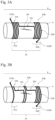
- a repair or reinforcement kit by lining a hollow or solid body 3 , for example a cylindrical conduit, having a defective zone 30, consists of at least one or more sections of electro-welding wires 1 and a preformed jacket 2 .
- Each electro-welding wire 1 is formed of at least one electric wire 10 coated in a sheath 11 made of thermoplastic material similar to that of the conduit to be lined.
- the electro-welding wire 3 may in particular be in the form of a flexible thermoplastic rod, for example approximately 5 mm in diameter, incorporating several electric wires wound inside a sheath made of thermoplastic material of composition similar to that of the body 3 or at least of the defective zone 30.
- the preformed jacket 2 has a section of similar shape to that of the conduit and is of length L equal to that of the portion to be lined.
- the preformed jacket 2 has a longitudinal opening 20 extending over the entire length L of the jacket 2, and is made of thermoplastic material of composition similar to that of the conduit.
- an electro-welding wire is wound around the area to be lined 31.
- the winding is notably formed of two spirals 14a, 14b connected by a substantially straight portion 13c extending longitudinally along a longitudinal axis X of the portion to be lined 31.
- Each of the spirals 13a, 13b is positioned at an end zone 31a, 31b of the portion to be lined 31 and is formed of one or more turns 130.
- the straight portion 13c is positioned to be preferably located at the longitudinal opening 30 of the jacket 3.
- the electrical connection is made at the two ends 131a and 131b.
- the winding may also comprise an intermediate spiral 13d between the two spirals 13a and 13b and connected by substantially straight portions 13c and 13d.
- an electro-welding wire is wound around the area to be lined 31 to form a single spiral 14, and the electro-welding is carried out by connecting the ends 141, 142 of the spiral 14 to a power supply.
- the winding is formed of a first spiral 15a and a second spiral 15b independent of the first spiral 15a.
- the first spiral 15a is positioned at a first end zone 31a of the portion to be lined 31, and the second spiral 15b is positioned at a second end zone 31b of the portion to be lined 31.
- the first and second spirals 15a, 15b are each formed of one or more turns.
- the electrical connection is made at the ends 151a, 152a, 151b and 151b of each of the first and second spirals 15a, 15b.
- the jacket is positioned to cover the winding and the area to be lined and electro-welding of the jacket 2 to the body 3 is carried out by applying an electric current to the winding for a predefined duration, accompanied by a progressive tightening of the jacket 2 on the body 3, so as to fuse the electro-welding wire to the jacket and to the body to ensure adhesion of the different parts to each other and sealing of the whole.
- the preformed jacket is advantageously provided with at least two vents, for example two vents 5a-5b ( figures 7 And 8 ) or for example three vents 5a-5c ( figure 9 ), each acting as an injection vent or an outlet vent.
- the number of vents distributed along the jacket makes it possible to reduce the lengths to be injected.
- the winding can be formed of two independent spirals 15a-15b ( Figure 7 ) or several independent spirals 15a-15c ( figure 8 ).
- the solution of the present invention is particularly suitable for repairing a cylindrical conduit with a diameter ranging from a few centimeters to several meters in diameter.
- the preformed liner used can have a thickness of a few millimeters and a length ranging from a few centimeters to several meters.
- the liner can be made from tube, plate or film, and includes injection vents regardless of its length or thickness.
- the parameters relating to the duration of electro-welding, the voltages and currents to be applied depend on the characteristics of the electro-welding wire generally provided by the manufacturer of the electro-welding wire, the dimensions of the jacket, the winding pattern and the thermoplastic material.
Landscapes
- Engineering & Computer Science (AREA)
- Mechanical Engineering (AREA)
- General Engineering & Computer Science (AREA)
- Branch Pipes, Bends, And The Like (AREA)
Claims (9)
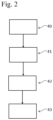
- Verfahren zur Reparatur oder Verstärkung durch Auskleidung eines Hohl- oder Vollkörpers (3), der einen defekten Bereich (30) aufweist, das folgende Schritte umfasst:- Abgrenzung (40) auf der Außenfläche des Körpers (3) eines auszukleidenden Abschnitts (31), der den defekten Bereich (30) einschließt, wobei der Körper (3) aus einem schweißbaren thermoplastischen Material besteht;- Durchführung (41) mindestens einer Wicklung eines Elektroschweißdrahts (1) rund um diesen Körper (3) auf dem auszukleidenden Abschnitt (31), wobei der Elektroschweißdraht (1) aus mindestens einem elektrischen Leiterdraht (10) besteht, der in eine Hülle (11) aus thermoplastischem Material eingebettet ist, das dem des Körpers (3) ähnlich ist;- Positionierung (42) einer vorgeformten Auskleidung (2) rund um den auszukleidenden Abschnitt (31), wobei die vorgeformte Auskleidung (2) einen Abschnitt mit einer ähnlichen Form wie die des Körpers (3) aufweist und eine Länge (L) hat, die der des auszukleidenden Abschnitts (31) entspricht, wobei die vorgeformte Auskleidung (2) eine Öffnung (20) aufweist, die sich über ihre gesamte Länge erstreckt, und aus einem thermoplastischen Material besteht, das dem des Körpers (3) ähnlich ist, und- Durchführung (43) der Elektroschweißung der Auskleidung (2) an den Körper (3) durch Anlegen eines elektrischen Stroms an die Wicklung während einer vordefinierten Dauer, gleichzeitig mit einem progressiven Festziehen der Auskleidung (2) auf dem Körper (3);dadurch gekennzeichnet, dass die vorgeformte Auskleidung (2) ferner mindestens eine Einspritzöffnung (a) und eine Auslassöffnung (5b) umfasst.
- Reparaturverfahren zur nach Anspruch 1, bei dem das Verschließen der Öffnung (20) durch Längsschweißen eines Elekroschweißstabs oder durch Wicklung erfolgt.
- Reparaturverfahren nach Anspruch 1, bei dem die Wicklung aus einer Spirale (14) besteht und sich mindestens eine Windung an jedem der Endbereiche des auszukleidenden Abschnitts befindet, so dass eine dichte Querverschweißung der Auskleidung auf dem Körper erhalten wird.
- Reparaturverfahren nach Anspruch 3, bei dem die Wicklung aus mindestens zwei Spiralen (13a, 13b) gebildet wird, die durch einen geraden Abschnitt (13c) verbunden sind, der sich im Wesentlichen parallel zu einer Längsachse (X) des auszukleidenden Abschnitts (31) erstreckt, wobei jede Spirale (13a, 13b) an einem Ende des auszukleidenden Abschnitts (31) positioniert ist und aus einer oder mehreren Windungen besteht, und der gerade Abschnitt (13c) dazu bestimmt ist, sich im Bereich der Längsöffnung (20) der Auskleidung (2) zu befinden.
- Reparaturverfahren nach Anspruch 3, bei dem die Wicklung aus mindestens zwei voneinander unabhängigen Spiralen (15, 15b) gebildet wird, wobei mindestens jeder Endbereich (31a, 31b) des auszukleidenden Abschnitts (31) mit einer der beiden Spiralen (15a, 15b) versehen ist und jede Spirale aus einer oder mehreren Windungen gebildet ist.
- Reparaturverfahren nach Anspruch 5, bei dem die Wicklung ferner eine oder mehrere unabhängige, zwischen den beiden Spiralen (15a, 15b) angeordnete Zwischenspiralen (15c) umfasst.
- Reparaturverfahren nach einem der Ansprüche 1 bis 6, bei dem die Windungen jeder Spirale aneinander anliegen.
- Reparaturverfahren nach einem der Ansprüche 1 bis 7, bei dem der Körper (3) ein Leitungsrohr ist, in dem Kabel oder Litzen zur externen Vorspannung verlaufen, die in einer Brücke vorhanden sind.
- Kit zur Reparatur oder Verstärkung durch Auskleidung eines Hohl- oder Vollkörpers (3), der einen defekten Bereich (30) aufweist, das mindestens umfasst:- einen oder mehrere Elektroschweißdrähte (1), wobei jeder Elektroschweißdraht (1) aus mindestens einem elektrischen Leiterdraht (10) besteht, der in eine Hülle (11) aus thermoplastischem Material eingebettet ist, das dem des Körpers (3) ähnlich ist- eine vorgeformte Auskleidung (2), die einen Abschnitt mit einer ähnlichen Form wie die des Körpers (3) aufweist und eine Länge hat, die der des auszukleidenden Abschnitts (31) entspricht, wobei die vorgeformte Auskleidung (2) eine Öffnung (20) aufweist, die sich über ihre gesamte Länge erstreckt, und aus einem thermoplastischen Material besteht, das dem des Körpers (3) ähnlich ist,dadurch gekennzeichnet, dass die vorgeformte Auskleidung (2) ferner mindestens eine Einspritzöffnung (5a) und eine Auslassöffnung (5b) umfasst.
Applications Claiming Priority (1)
| Application Number | Priority Date | Filing Date | Title |
|---|---|---|---|
| FR2206517A FR3137323B1 (fr) | 2022-06-29 | 2022-06-29 | Procede de reparation par chemisage et kit de reparation correspondant |
Publications (3)
| Publication Number | Publication Date |
|---|---|
| EP4299293A1 EP4299293A1 (de) | 2024-01-03 |
| EP4299293C0 EP4299293C0 (de) | 2025-05-21 |
| EP4299293B1 true EP4299293B1 (de) | 2025-05-21 |
Family
ID=83506490
Family Applications (1)
| Application Number | Title | Priority Date | Filing Date |
|---|---|---|---|
| EP23179373.8A Active EP4299293B1 (de) | 2022-06-29 | 2023-06-15 | Verfahren zur reparatur durch auskleidung und reparaturkit dafür |
Country Status (2)
| Country | Link |
|---|---|
| EP (1) | EP4299293B1 (de) |
| FR (1) | FR3137323B1 (de) |
Families Citing this family (1)
| Publication number | Priority date | Publication date | Assignee | Title |
|---|---|---|---|---|
| FR3137997B1 (fr) * | 2022-07-13 | 2024-07-26 | Claude Scuoch | Procédé et dispositif de réparation de gaine de câble de précontrainte |
Family Cites Families (3)
| Publication number | Priority date | Publication date | Assignee | Title |
|---|---|---|---|---|
| SE534975C2 (sv) * | 2009-10-16 | 2012-03-06 | Tsc Innovation Ab | Förfarande vid och anordning för installation och reparation av isolerade ledningsrör |
| WO2012019283A1 (en) * | 2010-08-11 | 2012-02-16 | Powercore International Ltd. | Internal electrofusion ring coupler |
| GB2595711B (en) * | 2020-06-04 | 2022-10-19 | Advance Technical Systems Ltd | Power convertor |
-
2022
- 2022-06-29 FR FR2206517A patent/FR3137323B1/fr active Active
-
2023
- 2023-06-15 EP EP23179373.8A patent/EP4299293B1/de active Active
Also Published As
| Publication number | Publication date |
|---|---|
| FR3137323A1 (fr) | 2024-01-05 |
| EP4299293C0 (de) | 2025-05-21 |
| FR3137323B1 (fr) | 2024-07-12 |
| EP4299293A1 (de) | 2024-01-03 |
Similar Documents
| Publication | Publication Date | Title |
|---|---|---|
| AU2013232843B2 (en) | Multilayer pipeline in a polymer material, device for manufacture of the multilayer pipeline and a method for manufacturing the multilayer pipeline | |
| EP3535111B1 (de) | Verfahren zur montage von thermoplastischen rohren durch induktionsschweissen | |
| JPWO2000022334A1 (ja) | 複合高圧管及びその接合方法 | |
| EP4299293B1 (de) | Verfahren zur reparatur durch auskleidung und reparaturkit dafür | |
| AU2001234836B2 (en) | Apparatus for forming field joints on plastic coated pipe | |
| AU2012339552B2 (en) | Connection for a thermoplastic pipe, assembly and method | |
| FR2963654A1 (fr) | Conduite comportant un chemisage interne et un manchon tubulaire de jonction en matiere plastique | |
| FR2888309A1 (fr) | Piece de raccordement de conduites comportant une chemise interne, procede de revetement et procede d'assemblage | |
| FR2876773A1 (fr) | Conduite comportant une chemise interne, notamment conduite sous-marine | |
| CA2365867A1 (en) | Joining of reinforced thermoplastic pipe (rtp) for high pressure transportation applications | |
| AU2001234836A1 (en) | Apparatus for forming field joints on plastic coated pipe | |
| US20080150277A1 (en) | Method and assembly for repairing, joining or strengthening pipes made of plastics | |
| FR2494024A1 (fr) | Cable electrique sous-marin comportant des moyens de raidissement tubulaires et son procede de realisation | |
| FR2899665A1 (fr) | "conduite flexible a embouts d'extremite integres" | |
| EP3464977B1 (de) | Verfahren zum verbinden zweier einheitlicher elementen einer leitung zur förderung von flüssigkeiten durch eine hülse | |
| FR2968380A1 (fr) | Conduite rigide-deroulee avec gaine polymere et methode de fabrication de la conduite rigide-deroulee | |
| JPS6128507B2 (de) | ||
| US20130113210A1 (en) | Shrink sleeve for joining insulated pipes | |
| JP2680292B2 (ja) | 斜材ケーブルのオーバラップ工法と保護管 | |
| FR2656403A1 (fr) | Procede de fixation d'une piece de raccordement a l'extremite d'une canalisation et raccord de canalisation obtenu par ce procede. | |
| EP3464985B1 (de) | Verfahren zum verbinden zweier einzelner fluidtransportrohrelemente mit starren schalen | |
| FR3159343A1 (fr) | Manchon et son procede de fabrication | |
| OA19065A (en) | Méthode d'assemblage de tubes thermoplastiques par soudage par induction. | |
| FR2656824A1 (fr) | Procede d'assemblage de pieces plastiques et pieces destinees a etre assemblees. | |
| OA18912A (en) | Procédé de raccordement de deux éléments unitaires de conduite de transport de fluides au moyen de coques rigides |
Legal Events
| Date | Code | Title | Description |
|---|---|---|---|
| PUAI | Public reference made under article 153(3) epc to a published international application that has entered the european phase |
Free format text: ORIGINAL CODE: 0009012 |
|
| STAA | Information on the status of an ep patent application or granted ep patent |
Free format text: STATUS: THE APPLICATION HAS BEEN PUBLISHED |
|
| AK | Designated contracting states |
Kind code of ref document: A1 Designated state(s): AL AT BE BG CH CY CZ DE DK EE ES FI FR GB GR HR HU IE IS IT LI LT LU LV MC ME MK MT NL NO PL PT RO RS SE SI SK SM TR |
|
| STAA | Information on the status of an ep patent application or granted ep patent |
Free format text: STATUS: REQUEST FOR EXAMINATION WAS MADE |
|
| 17P | Request for examination filed |
Effective date: 20240104 |
|
| RBV | Designated contracting states (corrected) |
Designated state(s): AL AT BE BG CH CY CZ DE DK EE ES FI FR GB GR HR HU IE IS IT LI LT LU LV MC ME MK MT NL NO PL PT RO RS SE SI SK SM TR |
|
| GRAP | Despatch of communication of intention to grant a patent |
Free format text: ORIGINAL CODE: EPIDOSNIGR1 |
|
| STAA | Information on the status of an ep patent application or granted ep patent |
Free format text: STATUS: GRANT OF PATENT IS INTENDED |
|
| RIC1 | Information provided on ipc code assigned before grant |
Ipc: F16L 47/03 20060101ALI20250213BHEP Ipc: B29C 65/00 20060101ALI20250213BHEP Ipc: B29C 73/10 20060101ALI20250213BHEP Ipc: B29C 73/34 20060101ALI20250213BHEP Ipc: F16L 55/168 20060101ALI20250213BHEP Ipc: B29C 65/82 20060101ALI20250213BHEP Ipc: B29C 65/34 20060101AFI20250213BHEP |
|
| INTG | Intention to grant announced |
Effective date: 20250306 |
|
| GRAS | Grant fee paid |
Free format text: ORIGINAL CODE: EPIDOSNIGR3 |
|
| GRAA | (expected) grant |
Free format text: ORIGINAL CODE: 0009210 |
|
| STAA | Information on the status of an ep patent application or granted ep patent |
Free format text: STATUS: THE PATENT HAS BEEN GRANTED |
|
| AK | Designated contracting states |
Kind code of ref document: B1 Designated state(s): AL AT BE BG CH CY CZ DE DK EE ES FI FR GB GR HR HU IE IS IT LI LT LU LV MC ME MK MT NL NO PL PT RO RS SE SI SK SM TR |
|
| REG | Reference to a national code |
Ref country code: GB Ref legal event code: FG4D Free format text: NOT ENGLISH |
|
| REG | Reference to a national code |
Ref country code: CH Ref legal event code: EP |
|
| REG | Reference to a national code |
Ref country code: IE Ref legal event code: FG4D Free format text: LANGUAGE OF EP DOCUMENT: FRENCH |
|
| U01 | Request for unitary effect filed |
Effective date: 20250521 |
|
| U07 | Unitary effect registered |
Designated state(s): AT BE BG DE DK EE FI FR IT LT LU LV MT NL PT RO SE SI Effective date: 20250527 |
|
| U20 | Renewal fee for the european patent with unitary effect paid |
Year of fee payment: 3 Effective date: 20250630 |
|
| PG25 | Lapsed in a contracting state [announced via postgrant information from national office to epo] |
Ref country code: ES Free format text: LAPSE BECAUSE OF FAILURE TO SUBMIT A TRANSLATION OF THE DESCRIPTION OR TO PAY THE FEE WITHIN THE PRESCRIBED TIME-LIMIT Effective date: 20250521 |
|
| PG25 | Lapsed in a contracting state [announced via postgrant information from national office to epo] |
Ref country code: NO Free format text: LAPSE BECAUSE OF FAILURE TO SUBMIT A TRANSLATION OF THE DESCRIPTION OR TO PAY THE FEE WITHIN THE PRESCRIBED TIME-LIMIT Effective date: 20250821 Ref country code: GR Free format text: LAPSE BECAUSE OF FAILURE TO SUBMIT A TRANSLATION OF THE DESCRIPTION OR TO PAY THE FEE WITHIN THE PRESCRIBED TIME-LIMIT Effective date: 20250822 |
|
| PG25 | Lapsed in a contracting state [announced via postgrant information from national office to epo] |
Ref country code: PL Free format text: LAPSE BECAUSE OF FAILURE TO SUBMIT A TRANSLATION OF THE DESCRIPTION OR TO PAY THE FEE WITHIN THE PRESCRIBED TIME-LIMIT Effective date: 20250521 |
|
| PG25 | Lapsed in a contracting state [announced via postgrant information from national office to epo] |
Ref country code: HR Free format text: LAPSE BECAUSE OF FAILURE TO SUBMIT A TRANSLATION OF THE DESCRIPTION OR TO PAY THE FEE WITHIN THE PRESCRIBED TIME-LIMIT Effective date: 20250521 |
|
| PG25 | Lapsed in a contracting state [announced via postgrant information from national office to epo] |
Ref country code: RS Free format text: LAPSE BECAUSE OF FAILURE TO SUBMIT A TRANSLATION OF THE DESCRIPTION OR TO PAY THE FEE WITHIN THE PRESCRIBED TIME-LIMIT Effective date: 20250821 |
|
| PG25 | Lapsed in a contracting state [announced via postgrant information from national office to epo] |
Ref country code: IS Free format text: LAPSE BECAUSE OF FAILURE TO SUBMIT A TRANSLATION OF THE DESCRIPTION OR TO PAY THE FEE WITHIN THE PRESCRIBED TIME-LIMIT Effective date: 20250921 |
|
| PG25 | Lapsed in a contracting state [announced via postgrant information from national office to epo] |
Ref country code: SM Free format text: LAPSE BECAUSE OF FAILURE TO SUBMIT A TRANSLATION OF THE DESCRIPTION OR TO PAY THE FEE WITHIN THE PRESCRIBED TIME-LIMIT Effective date: 20250521 |
|
| PG25 | Lapsed in a contracting state [announced via postgrant information from national office to epo] |
Ref country code: CZ Free format text: LAPSE BECAUSE OF FAILURE TO SUBMIT A TRANSLATION OF THE DESCRIPTION OR TO PAY THE FEE WITHIN THE PRESCRIBED TIME-LIMIT Effective date: 20250521 |
|
| PG25 | Lapsed in a contracting state [announced via postgrant information from national office to epo] |
Ref country code: SK Free format text: LAPSE BECAUSE OF FAILURE TO SUBMIT A TRANSLATION OF THE DESCRIPTION OR TO PAY THE FEE WITHIN THE PRESCRIBED TIME-LIMIT Effective date: 20250521 |
|
| PG25 | Lapsed in a contracting state [announced via postgrant information from national office to epo] |
Ref country code: MC Free format text: LAPSE BECAUSE OF FAILURE TO SUBMIT A TRANSLATION OF THE DESCRIPTION OR TO PAY THE FEE WITHIN THE PRESCRIBED TIME-LIMIT Effective date: 20250521 |
|
| PLBE | No opposition filed within time limit |
Free format text: ORIGINAL CODE: 0009261 |
|
| STAA | Information on the status of an ep patent application or granted ep patent |
Free format text: STATUS: NO OPPOSITION FILED WITHIN TIME LIMIT |
|
| REG | Reference to a national code |
Ref country code: CH Ref legal event code: L10 Free format text: ST27 STATUS EVENT CODE: U-0-0-L10-L00 (AS PROVIDED BY THE NATIONAL OFFICE) Effective date: 20260402 |
|
| PG25 | Lapsed in a contracting state [announced via postgrant information from national office to epo] |
Ref country code: IE Free format text: LAPSE BECAUSE OF NON-PAYMENT OF DUE FEES Effective date: 20250615 |