EP4297408A1 - Videoabspielverfahren, endgerätevorrichtung, vorrichtung, system und speichermedium - Google Patents
Videoabspielverfahren, endgerätevorrichtung, vorrichtung, system und speichermedium Download PDFInfo
- Publication number
- EP4297408A1 EP4297408A1 EP22770439.2A EP22770439A EP4297408A1 EP 4297408 A1 EP4297408 A1 EP 4297408A1 EP 22770439 A EP22770439 A EP 22770439A EP 4297408 A1 EP4297408 A1 EP 4297408A1
- Authority
- EP
- European Patent Office
- Prior art keywords
- video
- clip
- target type
- video clip
- model
- Prior art date
- Legal status (The legal status is an assumption and is not a legal conclusion. Google has not performed a legal analysis and makes no representation as to the accuracy of the status listed.)
- Pending
Links
Images








Classifications
-
- H—ELECTRICITY
- H04—ELECTRIC COMMUNICATION TECHNIQUE
- H04N—PICTORIAL COMMUNICATION, e.g. TELEVISION
- H04N21/00—Selective content distribution, e.g. interactive television or video on demand [VOD]
- H04N21/40—Client devices specifically adapted for the reception of or interaction with content, e.g. set-top-box [STB]; Operations thereof
- H04N21/47—End-user applications
- H04N21/472—End-user interface for requesting content, additional data or services; End-user interface for interacting with content, e.g. for content reservation or setting reminders, for requesting event notification, for manipulating displayed content
- H04N21/47217—End-user interface for requesting content, additional data or services; End-user interface for interacting with content, e.g. for content reservation or setting reminders, for requesting event notification, for manipulating displayed content for controlling playback functions for recorded or on-demand content, e.g. using progress bars, mode or play-point indicators or bookmarks
-
- H—ELECTRICITY
- H04—ELECTRIC COMMUNICATION TECHNIQUE
- H04N—PICTORIAL COMMUNICATION, e.g. TELEVISION
- H04N21/00—Selective content distribution, e.g. interactive television or video on demand [VOD]
- H04N21/20—Servers specifically adapted for the distribution of content, e.g. VOD servers; Operations thereof
- H04N21/23—Processing of content or additional data; Elementary server operations; Server middleware
- H04N21/234—Processing of video elementary streams, e.g. splicing of video streams or manipulating encoded video stream scene graphs
- H04N21/23418—Processing of video elementary streams, e.g. splicing of video streams or manipulating encoded video stream scene graphs involving operations for analysing video streams, e.g. detecting features or characteristics
-
- G—PHYSICS
- G06—COMPUTING OR CALCULATING; COUNTING
- G06V—IMAGE OR VIDEO RECOGNITION OR UNDERSTANDING
- G06V10/00—Arrangements for image or video recognition or understanding
- G06V10/40—Extraction of image or video features
- G06V10/44—Local feature extraction by analysis of parts of the pattern, e.g. by detecting edges, contours, loops, corners, strokes or intersections; Connectivity analysis, e.g. of connected components
-
- G—PHYSICS
- G06—COMPUTING OR CALCULATING; COUNTING
- G06V—IMAGE OR VIDEO RECOGNITION OR UNDERSTANDING
- G06V10/00—Arrangements for image or video recognition or understanding
- G06V10/70—Arrangements for image or video recognition or understanding using pattern recognition or machine learning
- G06V10/762—Arrangements for image or video recognition or understanding using pattern recognition or machine learning using clustering, e.g. of similar faces in social networks
-
- H—ELECTRICITY
- H04—ELECTRIC COMMUNICATION TECHNIQUE
- H04N—PICTORIAL COMMUNICATION, e.g. TELEVISION
- H04N21/00—Selective content distribution, e.g. interactive television or video on demand [VOD]
- H04N21/20—Servers specifically adapted for the distribution of content, e.g. VOD servers; Operations thereof
- H04N21/23—Processing of content or additional data; Elementary server operations; Server middleware
- H04N21/233—Processing of audio elementary streams
-
- H—ELECTRICITY
- H04—ELECTRIC COMMUNICATION TECHNIQUE
- H04N—PICTORIAL COMMUNICATION, e.g. TELEVISION
- H04N21/00—Selective content distribution, e.g. interactive television or video on demand [VOD]
- H04N21/20—Servers specifically adapted for the distribution of content, e.g. VOD servers; Operations thereof
- H04N21/23—Processing of content or additional data; Elementary server operations; Server middleware
- H04N21/239—Interfacing the upstream path of the transmission network, e.g. prioritizing client content requests
- H04N21/2393—Interfacing the upstream path of the transmission network, e.g. prioritizing client content requests involving handling client requests
-
- H—ELECTRICITY
- H04—ELECTRIC COMMUNICATION TECHNIQUE
- H04N—PICTORIAL COMMUNICATION, e.g. TELEVISION
- H04N21/00—Selective content distribution, e.g. interactive television or video on demand [VOD]
- H04N21/20—Servers specifically adapted for the distribution of content, e.g. VOD servers; Operations thereof
- H04N21/25—Management operations performed by the server for facilitating the content distribution or administrating data related to end-users or client devices, e.g. end-user or client device authentication, learning user preferences for recommending movies
- H04N21/251—Learning process for intelligent management, e.g. learning user preferences for recommending movies
-
- H—ELECTRICITY
- H04—ELECTRIC COMMUNICATION TECHNIQUE
- H04N—PICTORIAL COMMUNICATION, e.g. TELEVISION
- H04N21/00—Selective content distribution, e.g. interactive television or video on demand [VOD]
- H04N21/40—Client devices specifically adapted for the reception of or interaction with content, e.g. set-top-box [STB]; Operations thereof
- H04N21/43—Processing of content or additional data, e.g. demultiplexing additional data from a digital video stream; Elementary client operations, e.g. monitoring of home network or synchronising decoder's clock; Client middleware
- H04N21/431—Generation of visual interfaces for content selection or interaction; Content or additional data rendering
-
- H—ELECTRICITY
- H04—ELECTRIC COMMUNICATION TECHNIQUE
- H04N—PICTORIAL COMMUNICATION, e.g. TELEVISION
- H04N21/00—Selective content distribution, e.g. interactive television or video on demand [VOD]
- H04N21/40—Client devices specifically adapted for the reception of or interaction with content, e.g. set-top-box [STB]; Operations thereof
- H04N21/43—Processing of content or additional data, e.g. demultiplexing additional data from a digital video stream; Elementary client operations, e.g. monitoring of home network or synchronising decoder's clock; Client middleware
- H04N21/431—Generation of visual interfaces for content selection or interaction; Content or additional data rendering
- H04N21/4312—Generation of visual interfaces for content selection or interaction; Content or additional data rendering involving specific graphical features, e.g. screen layout, special fonts or colors, blinking icons, highlights or animations
- H04N21/4316—Generation of visual interfaces for content selection or interaction; Content or additional data rendering involving specific graphical features, e.g. screen layout, special fonts or colors, blinking icons, highlights or animations for displaying supplemental content in a region of the screen, e.g. an advertisement in a separate window
-
- H—ELECTRICITY
- H04—ELECTRIC COMMUNICATION TECHNIQUE
- H04N—PICTORIAL COMMUNICATION, e.g. TELEVISION
- H04N21/00—Selective content distribution, e.g. interactive television or video on demand [VOD]
- H04N21/40—Client devices specifically adapted for the reception of or interaction with content, e.g. set-top-box [STB]; Operations thereof
- H04N21/43—Processing of content or additional data, e.g. demultiplexing additional data from a digital video stream; Elementary client operations, e.g. monitoring of home network or synchronising decoder's clock; Client middleware
- H04N21/437—Interfacing the upstream path of the transmission network, e.g. for transmitting client requests to a VOD server
-
- H—ELECTRICITY
- H04—ELECTRIC COMMUNICATION TECHNIQUE
- H04N—PICTORIAL COMMUNICATION, e.g. TELEVISION
- H04N21/00—Selective content distribution, e.g. interactive television or video on demand [VOD]
- H04N21/40—Client devices specifically adapted for the reception of or interaction with content, e.g. set-top-box [STB]; Operations thereof
- H04N21/43—Processing of content or additional data, e.g. demultiplexing additional data from a digital video stream; Elementary client operations, e.g. monitoring of home network or synchronising decoder's clock; Client middleware
- H04N21/44—Processing of video elementary streams, e.g. splicing a video clip retrieved from local storage with an incoming video stream or rendering scenes according to encoded video stream scene graphs
- H04N21/44008—Processing of video elementary streams, e.g. splicing a video clip retrieved from local storage with an incoming video stream or rendering scenes according to encoded video stream scene graphs involving operations for analysing video streams, e.g. detecting features or characteristics in the video stream
-
- H—ELECTRICITY
- H04—ELECTRIC COMMUNICATION TECHNIQUE
- H04N—PICTORIAL COMMUNICATION, e.g. TELEVISION
- H04N21/00—Selective content distribution, e.g. interactive television or video on demand [VOD]
- H04N21/40—Client devices specifically adapted for the reception of or interaction with content, e.g. set-top-box [STB]; Operations thereof
- H04N21/45—Management operations performed by the client for facilitating the reception of or the interaction with the content or administrating data related to the end-user or to the client device itself, e.g. learning user preferences for recommending movies, resolving scheduling conflicts
- H04N21/466—Learning process for intelligent management, e.g. learning user preferences for recommending movies
- H04N21/4668—Learning process for intelligent management, e.g. learning user preferences for recommending movies for recommending content, e.g. movies
-
- H—ELECTRICITY
- H04—ELECTRIC COMMUNICATION TECHNIQUE
- H04N—PICTORIAL COMMUNICATION, e.g. TELEVISION
- H04N21/00—Selective content distribution, e.g. interactive television or video on demand [VOD]
- H04N21/60—Network structure or processes for video distribution between server and client or between remote clients; Control signalling between clients, server and network components; Transmission of management data between server and client, e.g. sending from server to client commands for recording incoming content stream; Communication details between server and client
- H04N21/65—Transmission of management data between client and server
- H04N21/658—Transmission by the client directed to the server
- H04N21/6581—Reference data, e.g. a movie identifier for ordering a movie or a product identifier in a home shopping application
-
- H—ELECTRICITY
- H04—ELECTRIC COMMUNICATION TECHNIQUE
- H04N—PICTORIAL COMMUNICATION, e.g. TELEVISION
- H04N21/00—Selective content distribution, e.g. interactive television or video on demand [VOD]
- H04N21/60—Network structure or processes for video distribution between server and client or between remote clients; Control signalling between clients, server and network components; Transmission of management data between server and client, e.g. sending from server to client commands for recording incoming content stream; Communication details between server and client
- H04N21/65—Transmission of management data between client and server
- H04N21/658—Transmission by the client directed to the server
- H04N21/6583—Acknowledgement
-
- H—ELECTRICITY
- H04—ELECTRIC COMMUNICATION TECHNIQUE
- H04N—PICTORIAL COMMUNICATION, e.g. TELEVISION
- H04N21/00—Selective content distribution, e.g. interactive television or video on demand [VOD]
- H04N21/80—Generation or processing of content or additional data by content creator independently of the distribution process; Content per se
- H04N21/83—Generation or processing of protective or descriptive data associated with content; Content structuring
- H04N21/845—Structuring of content, e.g. decomposing content into time segments
- H04N21/8456—Structuring of content, e.g. decomposing content into time segments by decomposing the content in the time domain, e.g. in time segments
Definitions
- This application relates to the field of terminal technologies, and in particular, to a video playback method, a terminal device, an apparatus, a system, and a storage medium.
- some video playback software actively analyzes a historical watching record of the user and recommends a video of a same type or a similar plot to the user.
- an interest point of the user is usually transient.
- Recommending a related video after the historical watching record is analyzed cannot catch an association psychology of the user in a video watching process in time.
- the video playback software analyzes this watching record after the user completes watching the current video. The user may lose an interest when Demi-Gods and Semi-Devils of the 97 version is recommended to the user. How to catch the association psychology of the user in the video watching process and recommend related content in time becomes an urgent problem to be resolved.
- Embodiments of this application provide a video playback method, a terminal device, an apparatus, a system, and a storage medium, to recommend another video clip having a same plot to a user at a video clip in a currently played video, actively cater to an association psychology of the user for the same plot clip, quickly implement split-screen and simultaneous-display playback of a plurality of video clips having the same plot, and improve user experience.
- this application provides a video playback method, applied to a terminal device including a display, and the method includes: detecting a playback location of a first video, and prompting, when a start location of a first video clip in the first video is played, a user whether to watch another video clip having a same plot as the first video clip at the same time; sending a same plot clip request of the first video clip to a video cloud platform in response to a confirmation operation of the user; receiving, from the video cloud platform, a video corresponding to the another video clip, and a start location and an end location of the another video clip; and playing a part or all of the another video clip and the first video clip on a same interface.
- the first video has at least one related version video
- the related version video of the first video includes the another video clip having the same plot as the first video clip.
- the related version video of the first video is a video corresponding to the another video clip.
- the first video may further include a second video clip, and in a related version video, there may also be another video clip having the same plot as the second video clip.
- the start location and the end location may be both summarized as a start time and a stop time of a video clip in a corresponding video.
- the method further includes: prompting, when playing of the first video clip and/or the another video clip is completed, the user whether to continue to watch the first video and/or the video corresponding to the another video clip; and continuing to play, when the user chooses to continue to watch the first video and the video corresponding to the another video clip, the first video and the video corresponding to the another video clip; closing, when the user chooses to watch the first video, the video corresponding to the another video clip; or closing, when the user chooses to watch the video corresponding to the another video clip, the first video.
- the user is prompted, after playing of the first video clip and/or the another video clip is completed, whether to continue to watch the first video and/or the video corresponding to the another video clip, and then the corresponding video is played based on a chosen of the user. This can improve user experience.
- the method before the playback location of the first video is detected, the method further includes: sending a watching request of the first video to the video cloud platform; receiving the first video, and the start location and an end location of the first video clip from the video cloud platform; and playing the first video.
- the terminal device requests the first video from the video cloud platform, and then receives the first video, and the start location and the end location of the first video clip from the video cloud platform, to detect the playback location of the first video in a playback process of the first video.
- This further prompts the user at the first video clip whether to obtain the another video clip having the same plot as the first video clip, actively caters to the association psychology of the user having the same plot clip, and improves user experience.
- an embodiment of this application provides another video playback method, applied to a video cloud platform.
- the method includes: receiving a same plot clip request of a first video clip from a terminal device, where the first video clip is located in a first video; and sending, to the terminal device, a video corresponding to another video clip having a same plot as the first video clip, and a start location and an end location of the another video clip, to enable the terminal device to play a part or all of the another video clip and the first video clip on a same interface.
- the terminal device can implement split-screen and simultaneous-display playback of a plurality of video clips having the same plot. This caters to an association psychology of a user for the same plot clip in a current video watching process, provides intuitive video clip comparison, and improves user experience.
- the method before the same plot clip request of the first video clip from the terminal device is received, the method further includes: receiving a watching request of the first video from the terminal device; and sending the first video, and the start location and the end location of the first video clip to the terminal device.
- the video cloud platform After receiving the watching request of the first video from the terminal device, the video cloud platform sends the first video, and the start location and the end location of the first video clip to the terminal device, so that the terminal device can detect a playback location of the first video; and prompts, when the first video clip in the first video is played, the user whether to watch the another video clip having the same plot as the first video clip.
- the method before the same plot clip request of the first video clip from the terminal device is received, the method further includes: obtaining a plurality of video clips having the same plot from a plurality of videos, and separately recording a start location and an end location of each video clip in the plurality of video clips having the same plot.
- the first video is any video in the plurality of videos, and the plurality of video clips having the same plot include the first video clip and the another video clip.
- the video cloud platform may send the another video clip having the same plot to the terminal device, so that the terminal device quickly implements split-screen and simultaneous-display playback of a plurality of video clips having the same plot, caters to the association psychology of the user for the same plot clip, and improves user experience.
- obtaining a plurality of video clips having the same plot from a plurality of videos includes: obtaining a plurality of target type clips from the plurality of videos; and obtaining the plurality of video clips having the same plot from the plurality of target type clips.
- the target type clip is a video clip that meets a specific condition, and the condition may be set based on an actual requirement. This is not specifically limited in this embodiment of this application.
- the plurality of target type clips are obtained from the plurality of videos, and then the plurality of video clips having the same plot are obtained from the plurality of target type clips, so that the quantity of video clips for determining the plot can be reduced.
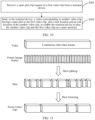
- obtaining a plurality of target type clips from the plurality of videos includes: separately performing shot splitting on each video in the plurality of videos, to obtain a shot set corresponding to each video; separately performing shot clustering on the shot set of each video by using a cluster algorithm, to obtain a video clip set corresponding to each video; and separately inputting each video clip in the video clip set into a target type detection model, to obtain the plurality of target type clips.
- the target type detection model is used to determine whether a video clip meets a specific condition and whether the video clip belongs to the target type clip.
- obtaining the plurality of video clips having the same plot from the plurality of target type clips includes: extracting audio, an image, and a subtitle document from a current target type clip, where the current target type clip is any target type clip in the plurality of target type clips; respectively inputting the audio, the image, and the subtitle document of the current target type clip into an audio feature extraction model, an image feature extraction model, and a document feature extraction model, to obtain a first audio feature vector, a first image feature vector, and a first document feature vector of the current target type clip; respectively inputting the first audio feature vector, the first image feature vector, and the first document feature vector of the current target type clip into an audio feature refinement model, an image feature refinement model, and a document feature refinement model, to obtain a second audio feature vector, a second image feature vector, and a second document feature vector of the current target type clip; performing vector splicing on the second audio feature vector, the second image feature vector, and the second document feature vector of the current target type clip;
- the audio, the image, and the subtitle document are first extracted from the current target type clip, and then are respectively input into a corresponding feature extraction model, to obtain the first audio feature vector, the first image feature vector, and the first document feature vector of the current target type clip.
- the three feature vectors are respectively input into a corresponding feature refinement model, to obtain the second audio feature vector, the second image feature vector, and the second document feature vector of the current target type clip, and the three obtained feature vectors are performed vector splicing, to obtain the fused feature vector of the current target type clip.
- the fused feature vector is input of the current target type clip into the classification model, to obtain the first label of the current target type clip.
- the keyword of the current target type clip is extracted, and the keyword and the first label are combined, to obtain the second label of the current target type clip.
- the plurality of target type clip having the same second label is used as the plurality of video clips having the same plot.
- a feature vector is extracted and corresponding processing is performed to obtain a second label of each target type clip, and then the plurality of video clips having the same plot are identified based on the second label, and the video clips are associated, so that the terminal device can prompt the user in a current video playback process whether to obtain the another video clip having the same plot. This caters to the association psychology of the user, implements split-screen and simultaneous-display playback of the plurality of video clips having the same plot, and improves user experience.
- the audio feature extraction model is a VGGish network model
- the image feature extraction model is an Inception-V3 network model
- the classification model is a mixture of experts model
- the audio feature refinement model is a first NetVLAD model
- the image feature refinement model is a second NetVLAD model
- the document feature refinement model is a third NetVLAD model. Model parameters of the first NetVLAD model, the second NetVLAD model, and the third NetVLAD model are different.
- an embodiment of this application provides a terminal device, and the terminal device includes: a prompting module, configured to detect a playback location of a first video, and prompt, when a start location of a first video clip in the first video is played, a user whether to watch another video clip having a same plot as the first video clip at the same time; a sending module, configured to send a same plot clip request of the first video clip to a video cloud platform; a receiving module, configured to receive, from the video cloud platform, a video corresponding to the another video clip, and a start location and an end location of the another video clip; and a display module, configured to play a part or all of the another video clip and the first video clip on a same interface.
- a prompting module configured to detect a playback location of a first video, and prompt, when a start location of a first video clip in the first video is played, a user whether to watch another video clip having a same plot as the first video clip at the same time
- a sending module configured to send
- the modules of the terminal device are specifically configured to implement the method according to any embodiment of the first aspect.
- an embodiment of this application provides an apparatus, and the apparatus includes: a receiving module, configured to receive a same plot clip request of a first video clip from a terminal device, where the first video clip is located in a first video; and a sending module, configured to send, to the terminal device, a video corresponding to another video clip having a same plot as the first video clip, and a start location and an end location of the another video clip, to enable the terminal device to play a part or all of the another video clip and the first video clip on a same interface.
- the modules of the foregoing apparatus are specifically configured to implement the method according to any embodiment of the second aspect.
- an embodiment of this application provides another apparatus.
- the apparatus includes a processor, a memory, and a transceiver.
- the processor, the memory, and the transceiver may be connected to each other by using a bus, or may be integrated.
- the processor is configured to read program code stored in the memory, to perform the method according to any embodiment of the first aspect or the second aspect.
- an embodiment of this application provides another video playback system.
- the system includes the foregoing terminal device and/or the apparatus.
- an embodiment of the present invention provides a computer-readable storage medium.
- the computer-readable storage medium is configured to store implementation code of any method according to the first aspect or the second aspect.
- a video cloud platform pre-obtains a plurality of video clips having a same plot from a plurality of videos, separately records a start location and an end location of each video clip in the plurality of video clips having the same plot, and associates the plurality of video clips having the same plot.
- the video cloud platform not only sends the first video to the terminal device, but also sends the start location and the end location of the first video clip in the first video to the terminal device, so that the terminal device can detect a playback location of the first video.
- the terminal device prompts, when the start location of the first video clip is played, the user whether to watch another video clip having the same plot as the first video clip.
- the video cloud platform After receiving a request from the terminal device, the video cloud platform sends, to the terminal device, a video corresponding to the another video clip having the same plot as the first video clip, and a start location and an end location of the another video clip, so that the terminal device can quickly implement split-screen and simultaneous-display playback of the plurality of video clips having the same plot, and provide intuitive comparison.
- the terminal device prompts, when playing of the first video clip and/or the another video clip is completed, the user whether to continue to watch a video corresponding to the first video and/or the another video clip, and then continues to play, based on a chosen of the user, the corresponding video. This improves user experience.
- a user is watching a video by using a terminal device.
- the user associates another video clip having a same plot in a related version video.
- the current video is Demi-Gods and Semi-Devils of the 03 version which is starred by Hu Jun.
- the user watches a video clip of the plot "Qiao Feng Three Brothers Battle Shaolin Temple", it occurs to the user that the another video clip in the related version video has the same plot.
- the related version video may be Demi-Gods and Semi-Devils of the 97 version which is starred by Chen Haomin, or may be Demi-Gods and Semi-Devils of the 13 version which is starred by Zhong Hanliang, these related versions video each include a video clip of the plot "Qiaofeng Three Brothers Battle Shaolin Temple". If the current video is Once Upon a Time in Lingjian Mountain of the TV series version, when the user watches a video clip "Avoid Meteor Impact", it may occur to the user that Once Upon a Time in Lingjian Mountain of the animation version has the same plot. If the current video is Chinese Paladin 3 of the TV series version, when the user watches a video clip of "Jing Tian Battle Chong Lou the Demonor", it may occur to the user that Chinese Paladin 3 of the game version has the same plot.
- the current video and another related version video are related version videos of each other.
- the related version videos are a plurality of different movie and video versions adapted from a same story (including a same novel, game, cartoon, or the like).
- different versions videos such as a TV series version, a movie version, an animation version, a game version video or the like are adapted from the same novel.
- a plurality of related version videos usually have a same drama name, and certainly, corresponding drama names, titles, and the like may also be different.
- the plurality of related version videos usually include some video clips having the same plot, and the video clips easily cause an association psychology of the user.
- a search keyword of the user may not be accurate. For example, if a drama name of the current video is searched, only a related version video whose name is the same as the drama name of the current video can be found, and a related version video whose name is different from the drama name cannot be found, and a start time and a stop time of the video clip having the same plot in the related version video cannot be accurately located.
- the video clip having the same plot in the current video clip and the another related version video cannot be directly played at the same time, and the association psychology of the user in a watching process cannot be caught in time and the visual comparison between the same plot clips cannot be provided.
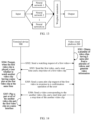
- FIG. 2 is a diagram of an architecture of a video playback system in a solution according to an embodiment of this application.
- the video playback system includes a terminal device 900 and a video cloud platform 200.
- the terminal device 900 is configured to: detect a playback location of a first video, and prompt, when a start location of a first video clip in the first video is played, a user whether to watch another video clip having a same plot as the first video clip at the same time; and send a same plot clip request of the first video clip to a video cloud platform 200 in response to a confirmation operation of the user.
- the video cloud platform 200 is configured to: receive a same plot clip request of a first video clip from the terminal device 900; and send, to the terminal device 900, a video corresponding to another video clip having a same plot as the first video clip, and a start location and an end location of the another video clip, to enable the terminal device 900 to play a part or all of the another video clip and the first video clip on a same interface.
- the first video has at least one related version video
- the first video and the video corresponding to the another video clip are related version videos of each other
- the related version video of the first video includes the another video clip having the same plot as the first video clip.
- the terminal device 900 and the video cloud platform 200 may be connected by using a network.
- the network may be a wired network, or may be a wireless network, or may be a combination of the two.
- the video cloud platform 200 may have a plurality of types of division.
- FIG. 2 shows an example of division.
- the video cloud platform 200 includes a video media asset center 201 and a video content understanding module 202.
- the video content understanding module 202 is configured to analyze video content to obtain corresponding video information.
- the video media asset center 201 is configured to: store a video resource and the video information; and send corresponding content based on a requirement of the terminal device 900. It should be understood that various methods and functions implemented by the video cloud platform 200 may be separately implemented by the video media asset center 201 and the video content understanding module 202.
- the video cloud platform 200 may be deployed on a physical server, for example, an X86 server, an ARM server, or the like, or may be deployed on a virtual machine (virtual machine, VM) implemented by using a general-purpose physical server and a network functions virtualization (network functions virtualization, NFV) technology.
- the virtual machine refers to a complete computer system that is simulated by using software, that has a complete hardware system function and that runs in a completely isolated environment, for example, a virtual machine in a cloud data center. This is not specifically limited in this application. It should be understood that the video cloud platform 200 may be deployed on a single physical server or a single virtual machine, or may be deployed on a computer cluster.
- the video media asset center 201 and the video content understanding module 202 may be deployed on a same server or a server cluster, or may be deployed on different servers.
- the two may be connected by using the network.
- the network may be the wired network, or may be the wireless network, or may be the combination of the two. This is not specifically limited in this application.
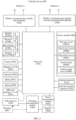
- FIG. 3 is a schematic diagram of a structure of a terminal device 900 according to an embodiment of this application.
- the terminal device 900 may be a mobile phone, a tablet computer, a wearable device, an in-vehicle device, a notebook computer, a smart television, or the like.
- a specific type of the terminal device 900 is not limited in this application.
- the terminal device 900 may include: a processor 910, an external memory interface 920, an internal memory 921, a universal serial bus (universal serial bus, USB) interface 930, a charging management module 940, a power management module 941, a battery 942, an antenna 1, an antenna 2, a mobile communication module 950, a wireless communication module 960, an audio module 970, a sensor module 980, a button 990, a motor 991, an indicator 992, a display 993, a camera 994, a user identify module (subscriber identify module, SIM) card interface 995, and the like.
- the audio module 970 may include a speaker 970A, a receiver 970B, a microphone 970C, and a headset jack 970D.
- the sensor module 980 may include a pressure sensor 980A, a gyroscope sensor 980B, a fingerprint sensor 980C, a touch sensor 980D, an ambient light sensor 980E, and the like.
- the terminal device 900 may include more or fewer components than those shown in the figure, or combine some components, or split some components, or have different component arrangements.
- the components shown in the figure may be implemented by hardware, software, or a combination of software and hardware.
- the processor 910 may include one or more processing units.
- the processor 910 may include an application processor (application processor, AP), a modem processor, a graphics processing unit (graphics processing unit, GPU), an image signal processor (image signal processor, ISP), a controller, a memory, a video codec, a digital signal processor (digital signal processor, DSP), a baseband processor, a neural-network processing unit (neural-network processing unit, NPU), and/or the like.
- Different processing units may be independent components, or may be integrated into one or more processors.
- the controller may be a nerve center and a command center of the terminal device 900.
- the controller may generate an operation control signal based on instruction operation code and a time sequence signal, to complete control of instruction reading and instruction execution.
- a memory may be further disposed in the processor 910, and is configured to store instructions and data.
- the memory in the processor 910 is a high-speed buffer storage.
- the memory may store instructions or data that has been used or cyclically used by the processor 910. If the processor 910 needs to use the instructions or the data again, the instructions or the data may be directly invoked from the memory. This avoids repeated access, reduces waiting time of the processor 910, and improves system efficiency.
- the processor 910 may include one or more interfaces.
- the interface may include an inter-integrated circuit (inter-integrated circuit, I2C) interface, an inter-integrated circuit sound (inter-integrated circuit sound, I2S) interface, a pulse code modulation (pulse code modulation, PCM) interface, a universal asynchronous receiver/transmitter (universal asynchronous receiver/transmitter, UART) interface, a mobile industry processor interface (mobile industry processor interface, MIPI), a general-purpose input/output (general-purpose input/output, GPIO) interface, a subscriber identity module (subscriber identity module, SIM) interface, a universal serial bus (universal serial bus, USB) interface, and/or the like.
- I2C inter-integrated circuit
- I2S inter-integrated circuit sound
- PCM pulse code modulation
- PCM pulse code modulation
- UART universal asynchronous receiver/transmitter
- MIPI mobile industry processor interface
- GPIO general-purpose input/output
- an interface connection relationship between the modules illustrated in this embodiment of this application is merely an example for description, and does not constitute a limitation on the structure of the terminal device 900.
- the terminal device 900 may use an interface connection manner different from that in the foregoing embodiment, or use a combination of a plurality of interface connection manners.
- the charging management module 940 is configured to receive a charging input from a charger.
- the charger may be a wireless charger or a wired charger.
- the power management module 941 is configured to connect to the battery 942, the charging management module 940, and the processor 910.
- the power management module 941 receives input of the battery 942 and/or the charging management module 940, and supplies power to the processor 910, the external memory 920, the internal memory 921, the display 993, the mobile communication module 950, the wireless communication module 960, and the like.
- a wireless communication function of the terminal device 900 may be implemented by using the antenna 1, the antenna 2, the mobile communication module 950, the wireless communication module 960, the modem processor, the baseband processor, and the like.
- the terminal device 900 implements a display function by using the GPU, the display 993, the application processor, and the like.
- the GPU is a microprocessor for graphics processing, and is connected to the display 993 and the application processor.
- the GPU is configured to: perform mathematical and geometric computation, and render an image.
- the processor 910 may include one or more GPUs, which execute program instructions to generate or change display information.
- the display 993 is configured to display an image, a video, and the like.
- the display 993 includes a display panel.
- the display panel may be a liquid crystal display (liquid crystal display, LCD), an organic light-emitting diode (organic light-emitting diode, OLED), an active-matrix organic light emitting diode (active-matrix organic light emitting diode, AMOLED), a flexible light-emitting diode (flexible light-emitting diode, FLED), a mini-LED, a micro-LED, a micro-OLED, a quantum dot light emitting diode (quantum dot light emitting diodes, QLED), or the like.
- the terminal device 900 can include one or N displays 993. N is a positive integer greater than 1.
- the terminal device 900 may implement a shooting function by using the ISP, the camera 994, the video codec, the GPU, the display 993, the application processor, and the like.
- the ISP is configured to process data fed back by the camera 994.
- the camera 994 is configured to capture a static image or a video. An optical image of an object is generated through the shots, and is projected onto the photosensitive element.
- the photosensitive element may be a charge coupled device (charge coupled device, CCD) or a complementary metal-oxide-semiconductor (complementary metal-oxide-semiconductor, CMOS) phototransistor.
- CCD charge coupled device
- CMOS complementary metal-oxide-semiconductor
- the light-sensitive element converts an optical signal into an electrical signal, and then transmits the electrical signal to the ISP to convert the electrical signal into a digital image signal.
- the ISP outputs the digital image signal to the DSP for processing.
- the DSP converts the digital image signal into an image signal in a standard format such as RGB or YUV.
- the digital signal processor is configured to process a digital signal, and may process another digital signal in addition to the digital image signal.
- the video codec is configured to compress or decompress a digital video.
- the terminal device 900 may support one or more types of video codecs. In this way, the terminal device 900 may play or record videos in a plurality of coding formats, for example, moving picture experts group (moving picture experts group, MPEG)-1, MPEG-2, MPEG-3, and MPEG-4.
- MPEG moving picture experts group
- the NPU is a neural-network (neural-network, NN) computing processor, quickly processes input information by referring to a structure of a biological neural network, for example, by referring to a mode of transmission between human brain neurons, and may further continuously perform self-learning.
- Applications such as intelligent cognition of the terminal device 900, for example, image recognition, facial recognition, speech recognition, document understanding, and the like, can be implemented by using the NPU.
- the external memory interface 920 may be configured to connect to an external memory card, for example, a micro SD card, to extend a storage capability of the terminal device 900.
- the external memory card communicates with the processor 910 through the external memory interface 920, to implement a data storage function. For example, files such as music and videos are stored in the external storage card.
- the internal memory 921 may be configured to store computer-executable program code.
- the executable program code includes instructions.
- the processor 910 runs the instructions stored in the internal memory 921, to perform various function applications and data processing of the terminal device 900.
- the internal memory 921 may include a program storage region and a data storage region.
- the program storage region may store an operating system and an application needed by at least one function (for example, a fingerprint recognition function, and the like).
- the data storage region may store data created during use of the terminal device 900.
- the internal memory 921 may include a high-speed random access memory, or may include a nonvolatile memory, for example, at least one magnetic disk storage device, a flash memory, a universal flash storage (universal flash storage, UFS), or the like.
- the terminal device 900 may implement an audio function by using the audio module 970, the speaker 970A, the receiver 970B, the microphone 970C, the headset jack 970D, the application processor, and the like, for example, audio playing, recording, and the like.
- the audio module 970 is configured to convert digital audio information into an analog audio signal output, and is also configured to convert an analog audio input into a digital audio signal.
- the speaker 970A also referred to as a "loudspeaker" is configured to convert an audio electrical signal into a sound signal.
- the receiver 970B also referred to as an "earpiece" is configured to convert an audio electrical signal into a sound signal.
- the microphone 970C also referred to as a "mike” or a “mic”, is configured to convert a sound signal into an electrical signal.
- the headset jack 970D is configured to connect to a wired headset.
- the headset jack 970D may be the USB port 930, or may be a 3.5 mm open mobile terminal platform (open mobile terminal platform, OMTP) standard interface or a cellular telecommunications industry association of the USA (cellular telecommunications industry association of the USA, CTIA) standard interface.
- the pressure sensor 980A is configured to sense a pressure signal, and can convert the pressure signal into an electrical signal.
- the pressure sensor 980A may be disposed on the display 993.
- the gyroscope sensor 980B may be configured to determine a motion posture of the terminal device 900. In some embodiments, angular velocities of the terminal device 900 around three axes (namely, x, y, and z axes) may be determined by using the gyroscope sensor 980B.
- the fingerprint sensor 980C is configured to collect a fingerprint.
- the terminal device 900 may implement fingerprint unlocking, application lock access, and the like by using a feature of a collected fingerprint.
- the touch sensor 980D is also referred to as a touch panel.
- the touch sensor 980D may be disposed in the display 993, and the touch sensor 980D and the display 993 form a touchscreen, which is also referred to as a "touch control screen".
- the touch sensor 980D is configured to detect a touch operation performed on or near the touch sensor.
- the touch sensor may transfer the detected touch operation to the application processor to determine a type of the touch event.
- a visual output related to the touch operation may be provided by using the display 993.
- the touch sensor 980D may alternatively be disposed on a surface of the terminal device 900 at a location different from a location of the display 993.
- the ambient light sensor 980E is configured to sense ambient light brightness.
- the terminal device 900 may adaptively adjust brightness of the display 993 based on the sensed ambient light brightness.
- the button 990 includes a power button, a volume button, and the like.
- the button 990 may be a mechanical button or a touch button.
- the terminal device 900 may receive a button input, and generate a button signal input related to a user setting and function control of the terminal device 900.
- the indicator 992 may be an indicator light, and may be configured to indicate a charging state and a power change, or may be configured to indicate a message, an incoming call, a notification, and the like.
- the SIM card interface 995 is configured to connect to a SIM card.
- the SIM card can be inserted into the SIM card interface 995 or removed from the SIM card interface 995, to implement contact with or separation from the terminal device 900.
- the terminal device 900 uses an eSIM, in other words, an embedded SIM card.
- the eSIM card can be embedded in the terminal device 900, and cannot be separated from the terminal device 900.
- a software system of the terminal device 900 may use a layered architecture, an event-driven architecture, a microkernel architecture, a microservice architecture, a cloud architecture, or the like.
- an Android system with the layered architecture is used as an example to describe the software structure of the terminal device 900.
- FIG. 4 is a block diagram of a software structure of a terminal device 900 according to an embodiment of this application.
- a layered architecture software is divided into several layers, and each layer has a clear role and task.
- the layers communicate with each other through a software interface.
- the Android system is divided into four layers: an application layer, an application framework layer, an Android runtime (Android runtime) and system library, and a kernel layer from top to bottom.
- the application layer may include a series of application packages.
- the application package may include applications (which may also be referred to as an application) such as weather, music, a calculator, an email, a camera, a gallery, a call, a WLAN, Bluetooth, a video, and an SMS text message.
- applications which may also be referred to as an application
- the application framework layer provides an application programming interface (application programming interface, API) and a programming framework for an application at the application layer.
- the application framework layer includes some predefined functions.
- the application framework layer may include a window manager, a content provider, a view system, a phone manager, a resource manager, a notification manager, and the like.
- the window manager is configured to manage a window program.
- the window manager may obtain a size of the display, determine whether there is a status bar, perform screen locking, take a screenshot, and the like.
- the content provider is configured to: store and obtain data, and enable the data to be accessed by the application.
- the data may include a video, an image, audio, calls that are made and answered, a browsing history and bookmarks, a personal address book, and the like.
- the view system includes visual controls such as a control for displaying a text and a control for displaying a picture.
- the view system may be configured to construct the application.
- a display screen may include one or more views.
- a video playback interface including a video application may include a view for displaying the text and a view for displaying the picture.
- the phone manager is configured to provide a communication function of the terminal device 900, for example, management of a call status (including answering, declining, or the like).
- the resource manager provides various resources such as a localized character string, an icon, a picture, a layout file, a video file, and the like for an application.
- the notification manager enables an application to display notification information in the status bar, and may be configured to convey a message of a notification type.
- the notification manager may automatically disappear after a short pause without requiring a user interaction.
- the notification manager is configured to notify download completion, give a message notification, and the like.
- the notification manager may alternatively be a notification that appears in a top status bar of the system in a form of a graph or a scroll bar document, for example, a notification of an application running on the background, or may be a notification that appears on the display in a form of a dialog screen.
- document information is displayed in the status bar, a prompt tone is given, the terminal device vibrates, an indicator light blinks, or the like.
- the Android runtime includes a kernel library and a virtual machine.
- the Android runtime is responsible for scheduling and management of the Android system.
- the kernel library includes two parts: a function that needs to be called in Java language and a kernel library of Android.
- the application layer and the application framework layer run on the virtual machine.
- the virtual machine executes java files of the application layer and the application framework layer as binary files.
- the virtual machine is configured to implement functions such as object lifecycle management, stack management, thread management, security and exception management, and garbage collection.
- the system library may include a plurality of functional modules, for example, a surface manager (surface manager), a media library (Media Library), a three-dimensional graphics processing library (for example, OpenGL ES), and a 2D graphics engine (for example, SGL).
- a surface manager surface manager
- Media Library media library
- 3-dimensional graphics processing library for example, OpenGL ES
- 2D graphics engine for example, SGL
- the surface manager is configured to manage a display subsystem and provide fusion of 2D and 3D layers for a plurality of applications.
- the media library supports playback and recording in a plurality of commonly used audio and video formats, and static image files.
- the media library may support a plurality of audio and video coding formats, for example, MPEG-4, H.264, MP3, AAC, AMR, JPG, and PNG.
- the three-dimensional graphics processing library is configured to implement three-dimensional graphics drawing, image rendering, composition, layer processing, and the like.
- the 2D graphics engine is a drawing engine for 2D drawing.
- the kernel layer is a layer between hardware and software.
- the kernel layer includes at least a display driver, a camera driver, an audio driver, and a sensor driver.
- FIG. 5 is a schematic flowchart of a video playback method according to an embodiment of this application. The method is applied to a terminal device 900. The method includes the following steps.
- S101 Detect a playback location of a first video, and prompt, when a start location of a first video clip in the first video is played, a user whether to watch another video clip having a same plot as the first video clip at the same time.
- the first video has at least one related version video.
- the related version videos are different movie and video versions adapted from a same story (including a same novel, game, cartoon, or the like).
- different versions videos such as a TV series version, a movie version, an animation version, a game version video or the like are adapted from the same novel.
- the related version video of the first video includes the another video clip having the same plot as the first video clip.
- the following describes a user prompting manner in this embodiment of this application (an example in which the terminal device 900 is a smartphone is used for description).
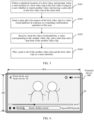
- a video playback interface 20 is displayed on a display of a terminal device 900, and a width of the video playback interface 20 is W0 and a height of the video playback interface 20 is H0.
- the terminal device 900 is playing the 36 th episode of Demi-Gods and Semi-Devils of the 97 version in a full screen manner (that is, the entire video playback interface 20 is used as a playback region of a current video), and duration of the entire episode is 44 minutes and 47 seconds.
- the current video may be used as the first video in this embodiment of this application.
- the first video includes a video clip of a plot of "Sweeping Monk in Shaolin Temple Fighting".
- the video clip is used as the first video clip, and a start location and an end location of the first video clip in the first video are 17 minutes and 23 seconds and 22 minutes and 57 seconds respectively.
- the terminal device 900 prompts the user whether to watch another video clip having the same plot as the first video clip at the same time. This may have the following several manners.
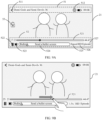
- the video playback interface 20 displays a bullet screen 31 of "Well-known Scene! Sweeping Monk in Shaolin Temple Fighting, other versions are also excellent, click to choose to watch the same screen".
- the user may confirm watching by tapping the bullet screen 31. If no tapping operation of the user is detected within the display time of the bullet screen 31, the first video continues to be played in the video playback interface 20.
- a dialog box 32 appears in the video playback interface 20, and the dialog box 32 includes a text of "High energy alert! Sweeping Monk in Shaolin Temple Fighting, other versions are also excellent, Do you want to watch them at the same time?" You can click "Yes” in the dialog box to confirm the operation. Similarly, if no confirmation operation of the user is detected within a set display time or that the user taps "No" is detected, the dialog box 32 disappears, and the first video continues to be played in the video playback interface 20.
- the terminal device 900 may further use another prompting manner.
- the terminal device 900 may send a voice prompt to ask the user whether to watch the another video clip having a same plot as the first video clip at the same time, then receive a voice signal input by the user, and determine, based on the voice signal, whether the user confirms to watch.
- the terminal device 900 may further have more other prompt manners, specific prompt content may be adjusted, and there may be a plurality of operation manners of the user. This is not specifically limited in this application.
- the terminal device 900 before detecting the playback location of the first video, sends a watching request of the first video to the video cloud platform 200; receives the first video, and a start location and an end location of the first video clip from the video cloud platform 200; and plays the first video. It may be understood that, after the user inputs the watching request of the first video by using the terminal device 900, the terminal device 900 sends the watching request of the first video to the video cloud platform 200, and then receives the first video, and the start location and the end location of the first video clip from the video cloud platform 200, so that the terminal device 900 can detect the playback location of the first video, and then provide, when the first video clip is played, a corresponding prompt. This caters to an association psychology of the user for the same plot clip.
- S102 Send a same plot clip request of the first video clip to the video cloud platform 200 in response to the confirmation operation of the user.
- a confirmation manner of the user is not specifically limited in this embodiment of this application.
- S 103 Receive, from the video cloud platform 200, a video corresponding to another video clip, and a start time and a stop time of the another video clip.
- the start time and the stop time include a start location and an end location.
- the video corresponding to the another video clip and the first video herein are related version videos of each other, and the videos include a plurality of video clips having the same plot.
- a plurality of related version videos may be in a one-to-one correspondence with the plurality of video clips having the same plot.
- the terminal device 900 receives a part or all another video clip from the video cloud platform 200.
- the video cloud platform 200 only sends the corresponding video clip to the terminal device 900, but does not send a complete video corresponding to each video clip.
- S 104 Play a part or all of the another video clip and the first video clip on a same interface.
- a plurality of video clips having the same plot that include the first video clip are played on a same interface (that is, split-screen and simultaneous-display playback).
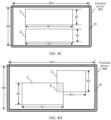
- the video playback interface 20 is displayed on the display of the terminal device 900, and the width of the video playback interface 20 is W0 and the height of the video playback interface 20 is H0.
- the video playback interface 20 includes a first playback region 21 and a second playback region 22.
- a width and a height of the first playback region 21 are respectively W1 and H1
- a width and a height of the second playback region are respectively W2 and H2, where 0 ⁇ H1 ⁇ H0, 0 ⁇ H2 ⁇ H0, 0 ⁇ W1 ⁇ W0, and 0 ⁇ W2 ⁇ W0.
- the first video clip is displayed in the first playback region 21, and a second video clip in a second video is displayed in the second playback region.
- the first video and the second video are related version videos, and the second video clip is another video clip having the same plot as the first video clip.
- the size of the first playback region 21 is different from the size of the second playback region 22, that is, W1 ⁇ W2 and/or H1 ⁇ H2.
- the first playback region 21 and the second playback region 22 present a top-down location relationship.
- the first playback region 21 and the second playback region 22 present a diagonal location relationship.
- the first playback region 21 is located in a lower left corner of the video playback interface 20
- the second playback region 22 is located in an upper right corner of the video playback interface 20
- the first playback region 21 and the second playback region 22 present the diagonal location relationship.
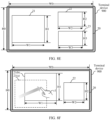
- the video playback interface 20 may further include a third playback region 23, a width and a height of the third playback region 23 are respectively W3 and H3, 0 ⁇ H3 ⁇ H0, and 0 ⁇ W3 ⁇ W0.
- a third video clip in a third video is displayed in the third playback region 23.
- the third video, the first video, and the second video are related version videos, and the third video clip is a video clip having the same plot as the first video clip and the second video clip.
- the first playback region 21, the second playback region 22, and the third playback region 23 may be horizontally arranged in a manner shown in FIG. 8A , or may be vertically arranged, or may be arranged in a diagonal manner.
- the first playback region 21, the second playback region 22, and the third playback region 23 present a location relationship shown in FIG. 8E .
- the first playback region 21 is located on the left side of the video playback interface 20
- the second playback region 22 and the third playback region 23 are both located on the right side of the video playback interface 20 and present a top-down location relationship.
- the video playback interface 20 may further include more playback regions, and different video clips having the same plot as the first video clip are respectively displayed in the playback regions.
- the playback regions may present various different location relationships. The location relationships are not listed one by one herein for brevity of the specification. Sizes of the playback regions may be the same or may be different.
- a remaining region in the video playback interface 20 other than each playback region may be filled by using a black edge, a picture, or the like.
- the video playback interface 20 includes a first video playback region 21, the second playback region 22, and the third playback region 23.
- the video playback interface 20 changes from FIG. 8E to FIG. 8B .
- the third playback region 23 is closed, a location of the second playback region 22 changes from the lower right corner of the video playback interface 20 to the right side, and both the first playback region 21 and the second playback region 22 are zoomed in, to better adapt to the video playback interface 20.
- the playback regions may overlap. As shown in FIG. 8D , the first playback region 21 and the second playback region 22 partially overlap, and an overlapping region R is a part filled with slashes in the figure.
- a location of each playback region may be adjusted.
- a location of the first playback region 21 is adjusted.
- the terminal device 900 adjusts the first playback region 21 from a first location 21(a) depicted by dashed lines to a second location 21(b) in response to a location adjustment operation c1 (for example, long pressing the first playback region 21 and dragging the first playback region 21 in a direction of an arrow) of the user.
- a location adjustment operation c1 for example, long pressing the first playback region 21 and dragging the first playback region 21 in a direction of an arrow
- the size of each playback region may be adjusted.
- a size of the first playback region 21 is adjusted.
- the terminal device 900 adjusts the first playback region 21 from a first area 21(c) depicted by dashed lines to a second area 21(d) in response to a size adjustment operation c2 of the user (for example, long pressing an upper right corner of the first playback region 21 and dragging the upper right corner in a direction of an arrow).
- the first area 21(c) is not equal to the second area 21(d).
- the first playback region 21 may be zoomed in by using this operation, or the first playback region 21 may be zoomed out.
- the width-to-height ratio (W1/H1) of the first playback region 21 before and after a change may be the same, or may be different, that is, the first playback region 21 may be zoomed in or zoomed out proportionally, or may be different from an original proportion.
- W1/H1 The width-to-height ratio
- the terminal device 900 may alternatively automatically adjust the location and the size of each playback region based on a quantity of video clips that need to be played and an image ratio of the video.
- a quantity of playback regions and the size of the playback region are alternatively set by the user.
- a sound of only one of the video clips may be played, and the another video clip is muted, to avoid mutual interference between the sounds of the video clips.
- the user may directly choose to display a video in a playback region in a full screen manner.
- the video clips may be sorted in descending order of scores of corresponding videos, and a set quantity of video clips that rank in the top are respectively displayed in different playback regions.
- the foregoing embodiments are described when the terminal device 900 performs landscape playback, and actually, portrait playback may be alternatively performed.
- FIG. 8H in a case of portrait playback, the first playback region 21 and the second playback region 22 are displayed on the video playback interface 20, a width and a height of the first playback region 21 are respectively W1 and H1, and a width and a height of the second playback region are respectively W2 and H2, where 0 ⁇ H1 ⁇ W0, 0 ⁇ H2 ⁇ W0, 0 ⁇ W1 ⁇ H0, and 0 ⁇ W2 ⁇ H0.
- the first video clip is displayed in the first playback region 21, and the second video clip is displayed in the second playback region 22.
- a quantity of playback regions in the case of portrait playback and a location, a size, an adjustment manner, and the like of each playback region are similar to those in the case of landscape playback, and an implementation is similar. For brevity of the specification, the implementations are not listed one by one.
- the plurality of video clips having the same plot may be played on different displays of a same terminal device 900.
- each playback region may include some controls, configured to control content played in each playback region.
- the following uses an example in which the first video is played in the first playback region 21 to describe various controls included in each playback region and related operations.
- the first playback region 21 includes a top operation bar 51, a bottom operation bar 52, and a screen locking control 53.
- the top operation bar 51 includes a return control 511, a setting control 512, and other icons (for example, a video title, a power icon, a time icon, and the like).
- the return control 511 is used to exit a current video, and may directly close a current playback region, or may return to a previous interface.
- the setting control 512 is configured to set an image ratio of the current video, and the like. Caching the current video, adding the current video to favorites, sharing the current video, and the like may further be chosen in the setting control 512.
- the bottom operation bar 52 includes a progress bar 521, a playback control 522, a next episode control 523, a bullet screen control 524, a speed control 525, a definition control 526, and an episode choosing control 527.
- the progress bar 521 is used to display total duration of the current video and a current playback location, and the user may further control a playback location of the current video by using the progress bar 521. For example, as shown in FIG. 9A , a left end of the progress bar 521 shows that the current video is played to 17 minutes and 23 seconds. As shown in FIG. 9B , the user long presses the progress bar 521 and drags the progress bar to a location of 25 minutes and 23 seconds based on a direction of an arrow, so that the current video starts to be played from a new location (25:23) in the first playback region 21.
- the playback control 522 is configured to control playing or pausing of the current video. Certainly, the user may further implement playing or pausing by performing an operation such as double-clicking the first playback region 21. This is not specifically limited in this application.
- the next episode control 523 is configured to switch to a next video of the current video.
- the bullet screen control 524 is configured to control whether to enable the bullet screen. If the bullet screen control 524 is set to an on state, a bullet screen appears in the first playback region 21, and the user may further enter a text in an input bar of the bullet screen control 524 and send a bullet screen; or if the bullet screen control 524 is set to an off state, no bullet screen is displayed in the first playback region 21. Certainly, a size, a location, a color, transparency, and the like of the bullet screen may be further set.
- the speed control 525 is used to control a playback speed of the current video.
- the terminal device 900 receives an input operation c3 (for example, click) of the user on the speed control 525, the speed control 525 changes from "speed" to "1.5X", and the current video starts to be played at 1.5 speed.
- the current video may be alternatively adjusted to be played at another speed, for example, 0.5x, 1.25x, or the like.
- the definition control 526 is configured to choose a definition of the current video. For example, in FIG. 9A , “high definition” is chosen, and the user may alternatively choose a definition such as "standard definition", “full high definition”, or the like to play the current video.
- the episode choosing control 527 is configured to choose an episode to be watched. As shown in FIG. 9A , a currently chosen episode is a 36 th episode of Demi-Gods and Semi-Devils, and a name and a serial number of the episode of the current video are displayed in the top operation bar 51.
- the screen locking control 53 is configured to lock a screen and hide another operation control to avoid accidental touch.
- an acceleration operation may be performed on the current video.
- the terminal device 900 detects a long pressing operation c4 performed by the user on the first playback region 21, and then displays an acceleration icon 5d in the first playback region 21, and the current video starts to be played at a speed of 2x (or another speed).
- the acceleration icon 5d disappears, the current video stops being played at an accelerated speed, and an original playback speed is restored.
- each playback region the video may be played based on an original image ratio of the video, or a video image may be stretched correspondingly, or the entire playback region is directly covered, and the user may alternatively adjust the image ratio of the video.
- a size of each playback region may be adaptively adjusted based on a quantity of videos that need to be played and the original image ratio of the video, to prevent the video image from being stretched and distorted.
- FIG. 9A to FIG. 9D are merely examples of schematic diagrams of playback regions.
- the playback region may further include more or fewer controls.
- the control may be presented in another form, and the user may operate the controls in different manners. This is not specifically limited in this application.
- the method further includes: The terminal device 900 prompts, when playing of the first video clip and/or the another video clip is completed, the user whether to continue to watch the first video and/or the video corresponding to the another video clip; and continues to play, when the user chooses to continue to watch the first video and the video corresponding to the another video clip, the first video and the video corresponding to the another video clip; closes, when the user chooses to watch the first video, the video corresponding to the another video clip; or closes, when the user chooses to watch the video corresponding to the another video clip, the first video.
- step S101 may be used to prompt the user whether to continue to watch the first video and/or the video corresponding to the another video clip.
- a specific prompt manner, content, and a user operation manner are not limited in this application.
- a playback region in which the video clip is located is directly closed without prompting the user.
- the locations and sizes of other playback regions can be automatically adjusted.
- the method in the foregoing steps S101 and S102 may also be implemented by using a video application, and the video application includes a background management module and a display module.
- the terminal device 900 can detect the playback location of the first video in a process of playing the first video, and then prompts, when the start location of the first video clip in the first video is played, the user whether to watch the another video clip having the same plot as the first video. This caters to the association psychology of the user for the same plot clip.
- the terminal device 900 sends a request to the video cloud platform 200 in response to the confirmation operation of the user, and then receives the video corresponding to the another video clip and the start time and the stop time of each another video clip from the video cloud platform 200; and then plays the part or all of the another video clip and the first video clip on the same interface, to quickly implement split-screen and simultaneous-display playback of the plurality of video clips having the same plot, and provide intuitive comparison for the video clips having the same plot.
- the user is prompted whether to continue to watch the first video and/or the video corresponding to the another video clip, and then the corresponding video is played based on the chosen of the user. This improves user experience.
- FIG. 10 is a schematic flowchart of another video playback method according to an embodiment of this application. The method is applied to a video cloud platform 200. The method includes the following steps.
- S201 Receive a same plot clip request of a first video clip from a terminal device 900.
- the first video clip is located in the first video. It should be noted that the first video has at least one related version video, and at least one another video clip having a same plot as the first video clip exists in the related version video.
- the video cloud platform 200 before receiving the same plot clip request of the first video clip from the terminal device 900, receives a watching request of the first video from the terminal device 900; and sends the first video, and a start location and an end location of the first video clip to the terminal device 900.
- the video cloud platform 200 after receiving the watching request of the first video from the terminal device 900, not only sends the first video to the terminal device 900, but also sends the start time and the stop time of the first video clip in the first video to the terminal device 900, so that the terminal device 900 can prompt, when the first video clip in the first video is played, a user whether to watch the another video clip having the same plot as the first video clip. This caters to an association psychology of the user.
- the method before the same plot clip request of the first video clip from the terminal device 900 is received, the method further includes: obtaining a plurality of video clips having the same plot from a plurality of videos, and separately recording a start location and an end location of each video clip in the plurality of video clips having the same plot.
- the first video is any video in the plurality of videos, and the plurality of video clips having the same plot include the first video clip and the another video clip. That is, the plurality of videos are a plurality of related version videos of the first video, and the plurality of videos include the plurality of video clips having the same plot.
- the plurality of video clips having the same plot may be identified in the plurality of videos in a manual manner, and the start location and the end location of each video clip (that is, the start time and the stop time of each video clip in a corresponding video) are marked, and then the plurality of video clips are associated as a set of video clips on which split-screen and simultaneous-display playback can be implemented.
- the plurality of videos may have a plurality of sets of video clips on which split-screen and simultaneous-display playback can be implemented, and each video set on which split-screen and simultaneous-display playback can be implemented includes the plurality of video clips having the same plot.
- obtaining a plurality of video clips having the same plot from a plurality of videos includes: obtaining a plurality of target type clips from the plurality of videos; and then obtaining the plurality of video clips having the same plot from the plurality of target type clips.
- the plurality of videos are a plurality of different movie versions adapted from a same story, and the plurality of videos usually have plurality of groups of video clips having the same plot, but not all video clips having the same plot easily cause the association psychology of the user.
- the plurality of target type clips may be first obtained from the plurality of videos, and then plurality of video clips having the same plot are obtained from the plurality of target type clips, in this way, all video clips do not need to be performed plot analysis.
- the target type clip is a video clip that meets a specific condition, and may be considered as a clip type that easily causes an association of the user.
- the condition may be set based on an actual requirement. This is not specifically limited in this embodiment of this application.
- the target type clip may include some fierce fighting scenes in a movie and television drama, where the video clip usually includes exciting soundtracks, fast-switching shots, highly conflicting narrations, and the like; may also include some romantic scenes in a movie and television drama, where the video clip usually includes comforting soundtracks, some specific lines, and the like; and may further include some fierce gunshot clips, where such video clips often contain continuous gunshots, fast-switching shots, and the like.
- a video clip that meets the foregoing feature/condition may be used as a target type clip, or the target type clip may be referred to as a highlight clip.
- the following describes how to determine, by using an artificial intelligence (artificial intelligence, AI) algorithm or a manual labeling manner, which video clip in the plurality of videos belongs to the target type clip.
- AI artificial intelligence
- a video clip that meets another condition may also be used as the target type clip based on an actual requirement. This is not specifically limited in this application.
- obtaining a plurality of target type clips from the plurality of videos includes: separately performing shot splitting on each video in the plurality of videos, to obtain a shot set corresponding to each video; separately performing shot clustering on the shot set of each video by using a cluster algorithm, to obtain a video clip set corresponding to each video; and separately inputting each video clip in the video clip set into a target type detection model, to obtain the plurality of target type clips.
- FIG. 11 is a schematic diagram of video structuring according to an embodiment of this application.
- a hierarchical structure of a video includes a video (video), a scene (scene), a shot (shot), and a frame (frame).
- the video may be considered as a data stream formed by a series of image frames that are interdependent in terms of time.
- the frame (also referred to as an image frame or a video frame) is a basic composition unit in a video data stream, and each frame may be considered as an independent static image.
- the video data stream is formed by these continuous image frames.
- the image frames that are continuous in terms of time are played continuously at an equal interval, to form a dynamic video.
- a video sampling rate is 25 frames/second, that is, each second of a video includes 25 frames of images.
- the shot is a continuous frame sequence captured by a single camera, and is a basic structure layer for further structuring the video data stream.
- the shot does not have or has weak semantic information, and emphasizes visual content similarity of the frame sequence. For example, in a dialog scene, the shot is switched between two heroes.
- a 1 st hero included in a video is a shot, switching to the other hero forms another shot, and a shot boundary is between adjacent shots.
- the scene is a high-level abstract concept and semantic representation that are included by the video, and consists of several shots that are semantically related and adjacent in terms of time.
- a scene usually includes a complete plot.
- a dialog scene includes a plot of communication between two persons.
- a video cloud platform 200 performs the following steps on each video in the plurality of videos, to obtain a target type clip included in each video.
- Shot splitting A current video is read, a shot boundary detection method is used to detect a shot boundary in the video, and then the video is split into a plurality of independent shots from the shot boundary, that is, a shot set corresponding to the current video is obtained.
- the current video is any video in the plurality of videos.
- the shot boundary detection method includes a pixel difference method, a histogram boundary method, a block matching method, and the like.
- the shot boundary detection method is not specifically limited in this application.
- the following provides brief descriptions by using the histogram boundary method as an example.
- content of adjacent frames in a shot does not change greatly, and histograms are similar.
- the histogram boundary method uses this feature to determine whether there is shot shearing between two frames.
- grayscale, luminance, color, and the like of pixels of adjacent frames are first classified into N levels, and then a histogram is obtained through statistics collection of a quantity of pixels for each level for comparing.
- N is a quantity of levels of color quantization
- H i ( n ) represents a quantity of pixels of an n th color level of the i th frame
- H j ( n ) represents a quantity of pixels of the n th color level of the j th frame.
- a histogram of each channel of an RGB image is obtained, and then two adjacent frames are compared based on histograms of a plurality of channels. It should be noted that this embodiment of this application is not limited to comparing histograms of two adjacent frames in a video. Alternatively, the video may be sampled first, and histograms of extracted adjacent key frames are compared.
- Shot clustering A cluster algorithm is used to perform shot clustering on a plurality of shots in the shot set corresponding to the current video, to obtain video clips, that is, obtain a video clip set corresponding to the current video.
- the cluster algorithm may use a K-means (k-means) algorithm. Specifically, an average of all images in each shot is calculated first. For example, there are 50 images in a shot, and an average value is obtained for each pixel location of the 50 images, to obtain an average image corresponding to the shot. Then, a size of the average image is adjusted to a set size, and input into an Inception-V3 network (described below) to extract a feature vector corresponding to the shot. Then, the k-means algorithm is used to cluster feature vectors corresponding to a plurality of shots, and shots corresponding to feature vectors belonging to a same category are spliced into a video clip. Finally, the current video is divided into a plurality of video clips. It should be noted that, the cluster algorithm is not specifically limited in this application, and another cluster algorithm may be used to cluster the shot into video clips.
- k-means K-means
- Target type clip determining A target type detection model is used to determine whether each video clip in the video clip set of the current video belongs to the target type clip.
- the target type detection model in this application is implemented based on a graph neural network (graph neural network, GNN).
- GNN graph neural network
- the graph neural network is trained by using the sample set (input data of a graph neural network model includes an audio feature vector obtained by performing feature extraction on audio of the video clip and an image feature vector obtained by performing feature extraction on an image frame of the video clip, specifically, extraction may be separately performed by using a corresponding feature extraction network, and then the image feature vector and the audio feature vector are fused and then input into the graph neural network), and a parameter of the graph neural network is updated to obtain the target type detection model. Then, an unlabeled video clip is classified by using the target type detection model, the target type clip is identified, and a start time and a stop time that is of a video clip identified as the target type clip and that is in an original video is recorded.
- a type of the graph neural network is not specifically limited in this application, and may be any one of a graph convolutional network, a graph attention network, a graph self-coding machine, a graph generative network, or a graph time-space network.
- obtaining the plurality of video clips having the same plot from the plurality of target type clips includes: extracting audio, an image, and a subtitle document from a current target type clip, where the current target type clip is any target type clip in the plurality of target type clips; respectively inputting the audio, the image, and the subtitle document of the current target type clip into an audio feature extraction model, an image feature extraction model, and a document feature extraction model, to obtain a first audio feature vector, a first image feature vector, and a first document feature vector of the current target type clip; respectively inputting the first audio feature vector, the first image feature vector, and the first document feature vector of the current target type clip into an audio feature refinement model, an image feature refinement model, and a document feature refinement model, to obtain a second audio feature vector, a second image feature vector, and a second document feature vector of the current target type clip; performing vector splicing on the second audio feature vector, the second image feature vector, and the second document feature vector of the current target type clip, to obtain
- FIG. 12 is a diagram of an architecture of a multi-modal video analytics system according to an embodiment of this application.
- the system includes an information extraction module, a feature extraction module, a feature refinement module, a feature fusion module, and a classification model.
- the feature extraction module includes an audio feature extraction model, an image feature extraction model, and a document feature extraction model.
- the feature refinement module includes an audio feature refinement model, an image feature refinement model, and a document feature refinement model. The following steps are separately performed on a current target type clip to obtain a first label of the current target type clip.
- the current target type clip is any target type clip in a plurality of target type clips.
- the feature extraction module separates audio, an image, and a video optical character recognition (video optional character recognition, OCR) subtitle document from the current target type clip, and then the feature extraction module performs feature extraction on the audio, the video image, and the OCR subtitle document to obtain a series of bottom-layer features.
- image features extracted from the video image include a color feature, a texture feature, a shape feature, a spatial relationship feature, and the like of the image; and audio features extracted from the audio include a tone feature, an important pause, and the like.
- the extracted bottom-layer features are respectively input into corresponding feature refinement models to obtain higher-level features.
- audio extracted from the current target type clip is first input into an audio feature extraction model, to obtain a plurality of first audio feature vectors.
- the audio feature extraction model may be a VGGish network model.
- the VGGish is a model obtained through pre-training a large quantity of YouTube datasets.
- the VGGish is a model of a VGG neural network style, and supports extraction of a 128-dimensional feature vector having semantics from an audio waveform.
- the extracted first audio feature vector herein is 128-dimensional by default.
- the VGGish model may be adjusted, to change a dimension of the output first audio feature vector.
- the plurality of extracted first audio feature vectors are input into an audio feature refinement model, to obtain a second audio feature vector.
- the audio feature refinement model may be a first NetVLAD model.
- the plurality of first audio feature vectors are processed by using a NetVLAD algorithm, to obtain a higher-level feature, which is referred to as the second audio feature vector that may be set to be 128-dimensional.
- the NetVLAD algorithm is developed from a vector of locally aggregated descriptors (vector of locally aggregated descriptors, VLAD) algorithm.
- VLAD vector of locally aggregated descriptors
- the NetVLAD algorithm is introduced in the following descriptions. It may be understood that, the first audio feature vector is processed by using the NetVLAD algorithm, and the obtained second audio feature vector is more distinguished relative to the first audio feature vector.
- an image (including a plurality of image frames) extracted from the current target type clip is first input into the image feature extraction model to obtain a plurality of first image feature vectors, and each image frame has one corresponding first image feature vector.
- the image feature extraction model may be an Inception-V3 network model.
- the Inception-V3 network model is a feedforward neural network model that includes convolution or related calculation and has a deep structure and that is launched by Google, and is a representative algorithm for performing image feature extraction based on deep learning.
- the Inception-V3 network model supports extraction of a 1024-dimensional first image feature vector from an image. Certainly, the first image feature vector may alternatively be set to another dimension.
- the plurality of extracted first image feature vectors are input into the image feature refinement model, to obtain a second image feature vector.
- the image feature refinement model may be a second NetVLAD model.
- the plurality of first image feature vectors are also processed by using the NetVLAD algorithm, to obtain a higher-level feature, which is referred to as the second image feature vector that may be set to be 1024-dimensional herein.
- an OCR technology is used to extract a subtitle document from the current target type clip, to obtain the OCR subtitle document.
- the OCR technology can automatically identify text content that appears in a video, including a subtitle, a bullet screen, some texts of a natural scene, a vertical text, WordArt, and the like.
- the subtitle document is mainly extracted.
- the extracted OCR subtitle document is input into the document feature extraction model to obtain a first document feature vector.
- the document feature extraction model may use a word embedding (word embedding) algorithm, for example, a term frequency-inverse document frequency (term frequency-inverse document frequency, TF-IDF) algorithm.
- a plurality of extracted first document feature vectors are input into the document feature refinement model, to obtain a second document feature vector.
- the document feature refinement model may be a third NetVLAD model.
- the plurality of first document feature vectors are processed by using the NetVLAD algorithm, to obtain a higher-level feature, which is referred to as the second document feature vector that may be set to be 256-dimensional herein.
- N image frames extracted from the current target type clip are separately input into an Inception-V3 model, to obtain N D-dimensional first image feature vectors x i . i ⁇ [1, N], and x i is a first image feature vector corresponding to an i th image frame.
- the N D-dimensional first image feature vectors are converted into K D-dimensional feature vectors V k by using Formula (2).
- K is a quantity of clustering centers (K is adjustable), the clustering center is represented by c k , j ⁇ [1, D], k ⁇ [1, K ] , x i ( j ) represents a j th feature value of the first image feature vector corresponding to the i th image frame, and c k ( j ) represents a j th feature value of a k th clustering center.
- w k , b k and c k herein are parameters that need to be obtained through learning in the NetVLAD algorithm.
- K D-dimensional feature vectors V k are averaged, to obtain a D-dimensional feature vector, that is, the second image feature vector. Operations on the audio and the OCR subtitle document of the current target type clip are similar, and the second audio feature vector and the second document feature vector are obtained separately.
- the second audio feature vector, the second image feature vector, and the second document feature vector of the current target type clip are input into the feature fusion module to perform feature fusion, to obtain a fused feature vector of the current target type clip.
- vector splicing may be directly performed on the foregoing three feature vectors to obtain one fused feature vector.
- the extracted second audio feature vector is 128-dimensional
- the extracted second image feature vector is 1024-dimensional
- the extracted second document feature vector is 256-dimensional.
- Feature vectors of the foregoing three dimensions are directly spliced to obtain a 1408-dimensional (that is, 128 + 1025 + 256) fused feature vector.
- dimensions of various feature vectors mentioned above are adjustable. This embodiment of this application provides only some reference values, and does not specifically limit the dimensions.
- the fused feature vector of the current target type clip is input into the classification model, to obtain a probability that the current target type clip belongs to each preset category, and then the current target type clip is classified into a preset category with a highest probability, to obtain the first label of the current target type clip.
- a name of the preset category and a quantity of preset categories may be set based on an actual application scene. This is not specifically limited in this application. For example, four preset categories: fighting, shooting, quarreling, and kissing may be set.
- the classification model may be a mixture of experts (mixture of experts, MOE) model.
- the MOE model is an integration method based on a plurality of modules.
- a plurality of neural networks that is, a plurality of experts
- Different neural networks have different structures, parameters, and the like, and therefore have different focuses.
- predictions that is, probabilities of belonging to each preset category
- Each neural network provides a prediction, and then performs weighted summation calculation based on weights of different neural networks, to output a final prediction.
- a structure of the plurality of neural networks in the MOE model is not limited in this embodiment of this application.
- the plurality of neural networks may be a fully connected neural network, a convolutional neural network, or the like. Parameters and weights of the neural networks need to be obtained through training.
- a keyword/key phrase of the current target type clip needs to be obtained, for example, a person name or a place name, and then the keyword of the current target type clip and the first label are combined to obtain a second label of the current target type clip.
- the keyword may be extracted from the OCR subtitle document.
- a target type clip is processed by a multi-modal video analytics system, to obtain that the target type clip belongs to a "fighting" category, that is, the first label is "fighting".
- a video resource stored in a video cloud platform 200 has some matched metadata information.
- an episode of a drama has some matched introductions, which describe key information (for example, tasks and locations that appear and general story plots) in the video. Therefore, some keywords may also be extracted from metadata information of an original video corresponding to the current target type clip, and combined with the first label of the current target type clip to obtain the second label.
- a manner of extracting a keyword, a manner of combining labels, and the like are not specifically limited in this application.
- the set is a video set on which split-screen and simultaneous-display playback can be implemented and that corresponds to a plurality of videos.
- a start time and a stop time that are of each video clip in the set and that are in the original video are recorded, and the content is stored as video information.
- the plurality of videos may have a plurality of video sets on which split-screen and simultaneous-display playback can be implemented, and each video set on which split-screen and simultaneous-display playback can be implemented includes a plurality of video clips having the same plot.
- the system further needs to be trained.
- the plurality of target type clips are obtained, and categories to which the target type clips belong are manually labeled, to obtain the sample set.
- the sample set is used to train an original multi-modal analytics system, and the parameters of the three models in the feature refinement module and the classification model are updated, to obtain the multi-modal analytics system used in this embodiment of this application.
- identifying the target type clip, labeling the start time and the stop time of each video clip, obtaining the first label or the second label of the target type clip, extracting the keyword, and constructing the video set on which split-screen and simultaneous-display playback can be implemented may all be completed by using manual operations. That is, the video clips having the same plot in the plurality of videos, and the start time and the stop time may be directly and manually labeled as the video set on which split-screen and simultaneous-display playback can be implemented.
- S202 Send, to a terminal device 900, a video corresponding to another video clip having the same plot as a first video clip, and a start location and an end location of the another video clip, to enable the terminal device 900 to play the another video clip and the first video clip on a same interface.
- the video cloud platform 200 sends, to the terminal device 900, a part or all of the another video clip having the same plot as the first video clip.
- the video cloud platform 200 may send only a part of videos corresponding to another video clip and corresponding information, and a quantity of sent videos may be determined based on a setting of a user or a setting of the video cloud platform 200.
- the video cloud platform 200 may send only the part or all of the video clips, and does not need to send a complete video.
- the video cloud platform 200 may include a video media asset center 201 and a video content understanding module 202, and all the embodiment methods in S201 to S202 may be separately or jointly performed by the two.
- the plurality of video clips having the same plot from the plurality of videos are pre-identified and associated, and a start time and a stop time of each video clip is separately recorded.
- the terminal device 900 sends a start time and a stop time of the first video clip in the first video to the terminal device 900 in addition sending the first video, so that the terminal device 900 prompts, when the first video clip is played, the user whether to watch the another video clip having the same plot as the first video clip. This caters to an association psychology of the user for a same plot clip.
- the video cloud platform 200 when receiving a same plot clip request of the first video clip from the terminal device 900, sends the video corresponding to the another video clip having the same plot as the first video clip and the start time and the stop time of the another video clip, so that the terminal device 900 plays the part or all of the another video clip and the first video clip on a same interface (at the same time), that is, implements split-screen and simultaneous-display playback of the plurality of video clips having the same plot. This provides intuitive comparison, and improves user experience.
- FIG. 14 is a schematic flowchart of still another video playback method according to an embodiment of this application.
- the method is applied to a video playback system.
- the video playback system includes a terminal device 900 and a video cloud platform 200.
- the method includes the following steps.
- the video cloud platform 200 obtains the plurality of video clips having the same plot from the plurality of videos, and generates video information.
- the plurality of videos are related version videos, and the plurality of videos are in a one-to-one correspondence with the plurality of video clips having the same plot.
- the video information includes a start time and a stop time of each video clip in the plurality of video clips having the same plot.
- the first video is any video in the plurality of videos, and the plurality of video clips having the same plot includes the first video clip and the another video clip.
- this step is the same as S202. Refer to the foregoing description.
- the terminal device 900 sends a watching request of the first video to the video cloud platform 200.
- the video cloud platform 200 sends the first video and a start time and a stop time of the first video clip to the terminal device 900.
- the start time and the stop time include a start location and an end location of the first video clip in the first video.
- the terminal device 900 plays the first video, and prompts, when the start location of the first video clip is played, the user whether to also play the another video clip having the same plot as the first video clip.
- a user prompting manner by the terminal device 900 is the same as the prompting manner. For details, refer to the foregoing description.
- the terminal device 900 sends a same plot clip request of the first video to the video cloud platform 200 in response to a confirmation operation of the user.
- the video cloud platform 200 sends, to the terminal device 900, a video corresponding to the another video clip, and a start time and a stop time of the another video clip.
- the foregoing another video clip have the same plot as the first video clip, and is derived from a related version of the first video.
- the terminal device 900 plays a part or all of the another video clip and the first video clip on a same interface.
- step S102 This step is the same as step S102. Details are not described herein again.
- FIG. 15 is a schematic diagram of another terminal device 900 according to an embodiment of this application.
- the terminal device 900 includes a prompting module 901, a sending module 902, a receiving module 903, and a display module 904.
- the prompting module 901 is configured to detect a playback location of a first video, and prompt, when a start location of a first video clip in the first video is played, a user whether to watch another video clip having a same plot as a first video clip at the same time.
- the sending module 902 is configured to send a same plot clip request of the first video clip to a video cloud platform.
- the receiving module 903 is configured to receive, from the video cloud platform, a video corresponding to the another video clip, and a start location and an end location of the another video clip.
- the display module 904 is configured to play a part or all of the another video clip and the first video clip on a same interface.
- the modules of the terminal device 900 are specifically configured to implement the method in any embodiment of the video playback method in FIG. 5 or FIG. 14 .
- the modules of the terminal device 900 are specifically configured to implement the method in any embodiment of the video playback method in FIG. 5 or FIG. 14 .
- details are not described herein again.
- FIG. 16 is a schematic diagram of an apparatus 1600 according to an embodiment of this application.
- the apparatus 1600 includes a receiving module 1601 and a sending module 1602.
- the receiving module 1601 is configured to receive a same plot clip request of a first video clip from a terminal device.
- the first video clip is located in a first video.
- the sending module 1602 is configured to send, to the terminal device, a video corresponding to another video clip having a same plot as the first video clip, and a start location and an end location of the another video clip, to enable the terminal device to play a part or all of the another video clip and the first video clip on a same interface.
- the apparatus 1600 further includes a processing module 1603.
- the processing module 1603 is configured to: obtain a plurality of video clips having the same plot from a plurality of videos; and separately record a start location and an end location of each video clip in the plurality of video clips having the same plot.
- the first video is any video in the plurality of videos, and the plurality of video clips having the same plot include the first video clip and the another video clip.
- the modules of the apparatus 1600 are specifically configured to implement functions of the video cloud platform 200 in the video playback method in FIG. 10 or FIG. 14 .
- the modules of the apparatus 1600 are specifically configured to implement functions of the video cloud platform 200 in the video playback method in FIG. 10 or FIG. 14 .
- An embodiment of this application further provides a video playback system.
- the video playback system includes the terminal device 900 and/or the apparatus 1600.
- An embodiment of this application further provides a computer-readable storage medium.
- the computer-readable storage medium stores instructions. When the instructions are run on a processor, the method procedures in FIG. 5 , FIG. 10 , and FIG. 14 are implemented.
- An embodiment of this application further provides a computer program product.
- the computer program product runs on a processor, the method procedures, in FIG. 5 , FIG. 10 , and FIG. 14 are implemented.
- the program may be stored in a computer-readable storage medium. When the program runs, the procedures of the method embodiments are included.
- the storage medium may include: a magnetic disk, an optical disc, a read-only memory (Read-Only Memory, ROM), a random access memory (Random Access Memory, RAM), or the like.
Landscapes
- Engineering & Computer Science (AREA)
- Multimedia (AREA)
- Signal Processing (AREA)
- Databases & Information Systems (AREA)
- Theoretical Computer Science (AREA)
- Computer Vision & Pattern Recognition (AREA)
- Physics & Mathematics (AREA)
- General Physics & Mathematics (AREA)
- Computing Systems (AREA)
- Artificial Intelligence (AREA)
- Health & Medical Sciences (AREA)
- Human Computer Interaction (AREA)
- Evolutionary Computation (AREA)
- General Health & Medical Sciences (AREA)
- Medical Informatics (AREA)
- Software Systems (AREA)
- Business, Economics & Management (AREA)
- Marketing (AREA)
- Two-Way Televisions, Distribution Of Moving Picture Or The Like (AREA)
- Television Signal Processing For Recording (AREA)
Applications Claiming Priority (2)
| Application Number | Priority Date | Filing Date | Title |
|---|---|---|---|
| CN202110281163.1A CN115086710B (zh) | 2021-03-16 | 2021-03-16 | 视频播放方法、终端设备、装置、系统及存储介质 |
| PCT/CN2022/080618 WO2022194084A1 (zh) | 2021-03-16 | 2022-03-14 | 视频播放方法、终端设备、装置、系统及存储介质 |
Publications (2)
| Publication Number | Publication Date |
|---|---|
| EP4297408A1 true EP4297408A1 (de) | 2023-12-27 |
| EP4297408A4 EP4297408A4 (de) | 2024-07-24 |
Family
ID=83245861
Family Applications (1)
| Application Number | Title | Priority Date | Filing Date |
|---|---|---|---|
| EP22770439.2A Pending EP4297408A4 (de) | 2021-03-16 | 2022-03-14 | Videoabspielverfahren, endgerätevorrichtung, vorrichtung, system und speichermedium |
Country Status (4)
| Country | Link |
|---|---|
| US (2) | US12267560B2 (de) |
| EP (1) | EP4297408A4 (de) |
| CN (3) | CN117221625A (de) |
| WO (1) | WO2022194084A1 (de) |
Families Citing this family (4)
| Publication number | Priority date | Publication date | Assignee | Title |
|---|---|---|---|---|
| CN117221625A (zh) * | 2021-03-16 | 2023-12-12 | 花瓣云科技有限公司 | 视频播放方法、视频客户端、视频播放系统及存储介质 |
| CN119277138A (zh) * | 2023-07-06 | 2025-01-07 | 脸萌有限公司 | 视频检测方法、装置、电子设备及存储介质 |
| CN119545064A (zh) * | 2023-08-30 | 2025-02-28 | 北京有竹居网络技术有限公司 | 一种页面显示方法、装置和存储介质 |
| WO2025213475A1 (zh) * | 2024-04-12 | 2025-10-16 | 北京字跳网络技术有限公司 | 对视频匹配的指示和交互 |
Family Cites Families (33)
| Publication number | Priority date | Publication date | Assignee | Title |
|---|---|---|---|---|
| US20050273807A1 (en) * | 2004-05-14 | 2005-12-08 | Nissing Nicholas J | Audiovisual works and methods relating to creating, transmitting and/or displaying versions thereof |
| US20090006368A1 (en) * | 2007-06-29 | 2009-01-01 | Microsoft Corporation | Automatic Video Recommendation |
| JP5297893B2 (ja) * | 2009-05-26 | 2013-09-25 | 日本電信電話株式会社 | 映像サービスにおけるコンテンツリコメンド装置、コンテンツリコメンド方法、コンテンツリコメンドシステムおよびコンテンツリコメンドプログラム |
| US20110113438A1 (en) * | 2009-11-06 | 2011-05-12 | Sony Corporation | Method and system of displaying information of specific interest to a user on a television |
| US8719248B2 (en) * | 2011-05-26 | 2014-05-06 | Verizon Patent And Licensing Inc. | Semantic-based search engine for content |
| US9544650B1 (en) * | 2013-08-20 | 2017-01-10 | Google Inc. | Methods, systems, and media for presenting news items corresponding to media content |
| US9756392B2 (en) * | 2013-08-29 | 2017-09-05 | Disney Enterprises, Inc. | Non-linear navigation of video content |
| WO2015054361A1 (en) * | 2013-10-08 | 2015-04-16 | The Echo Nest Corporation | Systems, methods, and computer program products for providing contextually-aware video recommendation |
| US9426538B2 (en) * | 2013-11-20 | 2016-08-23 | At&T Intellectual Property I, Lp | Method and apparatus for presenting advertising in content having an emotional context |
| US9639634B1 (en) * | 2014-01-28 | 2017-05-02 | Google Inc. | Identifying related videos based on relatedness of elements tagged in the videos |
| CN105653530B (zh) * | 2014-11-12 | 2021-11-30 | 上海交通大学 | 一种高效可伸缩的多媒体传送、存储和呈现方法 |
| CN106161873A (zh) * | 2015-04-28 | 2016-11-23 | 天脉聚源(北京)科技有限公司 | 一种视频信息提取推送方法及系统 |
| US20170026689A1 (en) * | 2015-07-22 | 2017-01-26 | Thomson Licensing | User interface for displaying video play relative to episodes in a series |
| US10389782B2 (en) * | 2015-09-30 | 2019-08-20 | Apple Inc. | Synchronized playback of alternate content version |
| CN105677735B (zh) | 2015-12-30 | 2020-04-21 | 腾讯科技(深圳)有限公司 | 一种视频搜索方法及装置 |
| US9781479B2 (en) * | 2016-02-29 | 2017-10-03 | Rovi Guides, Inc. | Methods and systems of recommending media assets to users based on content of other media assets |
| US10616624B2 (en) * | 2017-03-01 | 2020-04-07 | Rhinobird Inc. | Multi-angle video synchronization and multi-angle video interface |
| CN111656794A (zh) * | 2017-12-14 | 2020-09-11 | 乐威指南公司 | 基于标记的内容聚合相关媒体内容的系统和方法 |
| US10147461B1 (en) * | 2017-12-29 | 2018-12-04 | Rovi Guides, Inc. | Systems and methods for alerting users to differences between different media versions of a story |
| KR102085908B1 (ko) * | 2018-05-10 | 2020-03-09 | 네이버 주식회사 | 컨텐츠 제공 서버, 컨텐츠 제공 단말 및 컨텐츠 제공 방법 |
| CN110149558B (zh) * | 2018-08-02 | 2023-03-28 | 腾讯科技(深圳)有限公司 | 一种基于内容识别的视频播放实时推荐方法及系统 |
| CN109309860B (zh) * | 2018-10-16 | 2020-07-28 | 腾讯科技(深圳)有限公司 | 提示信息的展示方法和装置、存储介质、电子装置 |
| CN111083522A (zh) * | 2018-10-21 | 2020-04-28 | 黄小东 | 视频分发、播放及用户特征标签获取方法 |
| US11265597B2 (en) * | 2018-10-23 | 2022-03-01 | Rovi Guides, Inc. | Methods and systems for predictive buffering of related content segments |
| CN109640129B (zh) * | 2018-12-12 | 2020-02-07 | 北京字节跳动网络技术有限公司 | 视频推荐方法、装置,客户端设备、服务器及存储介质 |
| CN110245256A (zh) * | 2019-06-20 | 2019-09-17 | 广州酷狗计算机科技有限公司 | 媒体内容推送方法、装置及存储介质 |
| CN110602546A (zh) * | 2019-09-06 | 2019-12-20 | Oppo广东移动通信有限公司 | 视频生成方法、终端及计算机可读存储介质 |
| CN110826461A (zh) * | 2019-10-31 | 2020-02-21 | 深圳市网心科技有限公司 | 视频内容识别方法、装置、电子设备及存储介质 |
| US11109103B2 (en) * | 2019-11-27 | 2021-08-31 | Rovi Guides, Inc. | Systems and methods for deep recommendations using signature analysis |
| CN111131901B (zh) * | 2019-12-05 | 2022-07-12 | 北京奇艺世纪科技有限公司 | 处理长视频数据的方法、装置、计算机设备和存储介质 |
| CN111143610B (zh) * | 2019-12-30 | 2021-03-02 | 腾讯科技(深圳)有限公司 | 一种内容推荐方法、装置、电子设备和存储介质 |
| CN111611436B (zh) * | 2020-06-24 | 2023-07-11 | 深圳市雅阅科技有限公司 | 一种标签数据处理方法、装置以及计算机可读存储介质 |
| CN117221625A (zh) * | 2021-03-16 | 2023-12-12 | 花瓣云科技有限公司 | 视频播放方法、视频客户端、视频播放系统及存储介质 |
-
2021
- 2021-03-16 CN CN202311269719.0A patent/CN117221625A/zh active Pending
- 2021-03-16 CN CN202110281163.1A patent/CN115086710B/zh active Active
- 2021-03-16 CN CN202311269740.0A patent/CN117939193A/zh active Pending
-
2022
- 2022-03-14 EP EP22770439.2A patent/EP4297408A4/de active Pending
- 2022-03-14 WO PCT/CN2022/080618 patent/WO2022194084A1/zh not_active Ceased
-
2023
- 2023-09-15 US US18/468,307 patent/US12267560B2/en active Active
-
2025
- 2025-03-06 US US19/072,278 patent/US20250203166A1/en active Pending
Also Published As
| Publication number | Publication date |
|---|---|
| EP4297408A4 (de) | 2024-07-24 |
| CN117939193A (zh) | 2024-04-26 |
| CN115086710A (zh) | 2022-09-20 |
| WO2022194084A1 (zh) | 2022-09-22 |
| CN115086710B (zh) | 2023-10-20 |
| US20240031655A1 (en) | 2024-01-25 |
| US20250203166A1 (en) | 2025-06-19 |
| US12267560B2 (en) | 2025-04-01 |
| CN117221625A (zh) | 2023-12-12 |
Similar Documents
| Publication | Publication Date | Title |
|---|---|---|
| CN113453040B (zh) | 短视频的生成方法、装置、相关设备及介质 | |
| US12267560B2 (en) | Video playback method, terminal device, apparatus, system, and storage medium | |
| US12361711B2 (en) | Slow-motion video shooting method and electronic device | |
| US12542966B2 (en) | Shooting method and electronic device for saving an image frame from a video | |
| CN111465918B (zh) | 在预览界面中显示业务信息的方法及电子设备 | |
| US10410679B2 (en) | Producing video bits for space time video summary | |
| WO2021013145A1 (zh) | 应用快速启动方法及相关装置 | |
| CN111491187A (zh) | 视频的推荐方法、装置、设备及存储介质 | |
| US12010257B2 (en) | Image classification method and electronic device | |
| WO2024082914A1 (zh) | 视频问答方法及电子设备 | |
| WO2022206605A1 (zh) | 确定目标对象的方法、拍摄方法和装置 | |
| WO2024016564A9 (zh) | 二维码识别方法、电子设备以及存储介质 | |
| CN115334367B (zh) | 视频的摘要信息生成方法、装置、服务器以及存储介质 | |
| CN116546274A (zh) | 视频切分方法、选取方法、合成方法及相关装置 | |
| CN116828099B (zh) | 一种拍摄方法、介质和电子设备 | |
| CN118824282A (zh) | 模型训练方法、装置、电子设备及存储介质 | |
| CN117692762B (zh) | 拍摄方法及电子设备 | |
| CN113835582A (zh) | 一种终端设备、信息显示方法和存储介质 | |
| US20240062392A1 (en) | Method for determining tracking target and electronic device | |
| CN117112087B (zh) | 一种桌面卡片的排序方法、电子设备以及介质 | |
| CN112149653A (zh) | 信息处理方法、装置、电子设备及存储介质 | |
| WO2026021142A1 (zh) | 视频交互方法和装置 | |
| WO2026036925A1 (zh) | 内容展示的方法、装置、计算机设备、存储介质和计算机程序产品 | |
| CN117812377A (zh) | 一种显示设备及智能剪辑方法 | |
| CN118625966A (zh) | 服务卡片的显示方法及电子设备 |
Legal Events
| Date | Code | Title | Description |
|---|---|---|---|
| STAA | Information on the status of an ep patent application or granted ep patent |
Free format text: STATUS: THE INTERNATIONAL PUBLICATION HAS BEEN MADE |
|
| PUAI | Public reference made under article 153(3) epc to a published international application that has entered the european phase |
Free format text: ORIGINAL CODE: 0009012 |
|
| STAA | Information on the status of an ep patent application or granted ep patent |
Free format text: STATUS: REQUEST FOR EXAMINATION WAS MADE |
|
| 17P | Request for examination filed |
Effective date: 20230920 |
|
| AK | Designated contracting states |
Kind code of ref document: A1 Designated state(s): AL AT BE BG CH CY CZ DE DK EE ES FI FR GB GR HR HU IE IS IT LI LT LU LV MC MK MT NL NO PL PT RO RS SE SI SK SM TR |
|
| DAV | Request for validation of the european patent (deleted) | ||
| DAX | Request for extension of the european patent (deleted) | ||
| A4 | Supplementary search report drawn up and despatched |
Effective date: 20240625 |
|
| RIC1 | Information provided on ipc code assigned before grant |
Ipc: H04N 21/658 20110101ALI20240619BHEP Ipc: H04N 21/466 20110101ALI20240619BHEP Ipc: H04N 21/431 20110101ALI20240619BHEP Ipc: H04N 21/25 20110101ALI20240619BHEP Ipc: H04N 21/233 20110101ALI20240619BHEP Ipc: H04N 21/234 20110101AFI20240619BHEP |