EP4295884B1 - System zur linderung von hyperventilation auf der basis eines beatmungsgeräts - Google Patents
System zur linderung von hyperventilation auf der basis eines beatmungsgeräts Download PDFInfo
- Publication number
- EP4295884B1 EP4295884B1 EP23735577.1A EP23735577A EP4295884B1 EP 4295884 B1 EP4295884 B1 EP 4295884B1 EP 23735577 A EP23735577 A EP 23735577A EP 4295884 B1 EP4295884 B1 EP 4295884B1
- Authority
- EP
- European Patent Office
- Prior art keywords
- subject
- carbon dioxide
- oxygen
- respiratory
- determining
- Prior art date
- Legal status (The legal status is an assumption and is not a legal conclusion. Google has not performed a legal analysis and makes no representation as to the accuracy of the status listed.)
- Active
Links
Images
Classifications
-
- A—HUMAN NECESSITIES
- A61—MEDICAL OR VETERINARY SCIENCE; HYGIENE
- A61M—DEVICES FOR INTRODUCING MEDIA INTO, OR ONTO, THE BODY; DEVICES FOR TRANSDUCING BODY MEDIA OR FOR TAKING MEDIA FROM THE BODY; DEVICES FOR PRODUCING OR ENDING SLEEP OR STUPOR
- A61M16/00—Devices for influencing the respiratory system of patients by gas treatment, e.g. ventilators; Tracheal tubes
- A61M16/10—Preparation of respiratory gases or vapours
- A61M16/12—Preparation of respiratory gases or vapours by mixing different gases
- A61M16/122—Preparation of respiratory gases or vapours by mixing different gases with dilution
-
- A—HUMAN NECESSITIES
- A61—MEDICAL OR VETERINARY SCIENCE; HYGIENE
- A61B—DIAGNOSIS; SURGERY; IDENTIFICATION
- A61B5/00—Measuring for diagnostic purposes; Identification of persons
- A61B5/02—Detecting, measuring or recording for evaluating the cardiovascular system, e.g. pulse, heart rate, blood pressure or blood flow
- A61B5/024—Measuring pulse rate or heart rate
-
- A—HUMAN NECESSITIES
- A61—MEDICAL OR VETERINARY SCIENCE; HYGIENE
- A61B—DIAGNOSIS; SURGERY; IDENTIFICATION
- A61B5/00—Measuring for diagnostic purposes; Identification of persons
- A61B5/08—Measuring devices for evaluating the respiratory organs
- A61B5/082—Evaluation by breath analysis, e.g. determination of the chemical composition of exhaled breath
-
- A—HUMAN NECESSITIES
- A61—MEDICAL OR VETERINARY SCIENCE; HYGIENE
- A61B—DIAGNOSIS; SURGERY; IDENTIFICATION
- A61B5/00—Measuring for diagnostic purposes; Identification of persons
- A61B5/145—Measuring characteristics of blood in vivo, e.g. gas concentration or pH-value ; Measuring characteristics of body fluids or tissues, e.g. interstitial fluid or cerebral tissue
- A61B5/14542—Measuring characteristics of blood in vivo, e.g. gas concentration or pH-value ; Measuring characteristics of body fluids or tissues, e.g. interstitial fluid or cerebral tissue for measuring blood gases
-
- A—HUMAN NECESSITIES
- A61—MEDICAL OR VETERINARY SCIENCE; HYGIENE
- A61M—DEVICES FOR INTRODUCING MEDIA INTO, OR ONTO, THE BODY; DEVICES FOR TRANSDUCING BODY MEDIA OR FOR TAKING MEDIA FROM THE BODY; DEVICES FOR PRODUCING OR ENDING SLEEP OR STUPOR
- A61M16/00—Devices for influencing the respiratory system of patients by gas treatment, e.g. ventilators; Tracheal tubes
- A61M16/0057—Pumps therefor
- A61M16/0066—Blowers or centrifugal pumps
-
- A—HUMAN NECESSITIES
- A61—MEDICAL OR VETERINARY SCIENCE; HYGIENE
- A61M—DEVICES FOR INTRODUCING MEDIA INTO, OR ONTO, THE BODY; DEVICES FOR TRANSDUCING BODY MEDIA OR FOR TAKING MEDIA FROM THE BODY; DEVICES FOR PRODUCING OR ENDING SLEEP OR STUPOR
- A61M16/00—Devices for influencing the respiratory system of patients by gas treatment, e.g. ventilators; Tracheal tubes
- A61M16/021—Devices for influencing the respiratory system of patients by gas treatment, e.g. ventilators; Tracheal tubes operated by electrical means
- A61M16/022—Control means therefor
- A61M16/024—Control means therefor including calculation means, e.g. using a processor
-
- A—HUMAN NECESSITIES
- A61—MEDICAL OR VETERINARY SCIENCE; HYGIENE
- A61M—DEVICES FOR INTRODUCING MEDIA INTO, OR ONTO, THE BODY; DEVICES FOR TRANSDUCING BODY MEDIA OR FOR TAKING MEDIA FROM THE BODY; DEVICES FOR PRODUCING OR ENDING SLEEP OR STUPOR
- A61M16/00—Devices for influencing the respiratory system of patients by gas treatment, e.g. ventilators; Tracheal tubes
- A61M16/10—Preparation of respiratory gases or vapours
- A61M16/1005—Preparation of respiratory gases or vapours with O2 features or with parameter measurement
-
- A—HUMAN NECESSITIES
- A61—MEDICAL OR VETERINARY SCIENCE; HYGIENE
- A61M—DEVICES FOR INTRODUCING MEDIA INTO, OR ONTO, THE BODY; DEVICES FOR TRANSDUCING BODY MEDIA OR FOR TAKING MEDIA FROM THE BODY; DEVICES FOR PRODUCING OR ENDING SLEEP OR STUPOR
- A61M16/00—Devices for influencing the respiratory system of patients by gas treatment, e.g. ventilators; Tracheal tubes
- A61M16/10—Preparation of respiratory gases or vapours
- A61M16/12—Preparation of respiratory gases or vapours by mixing different gases
-
- A—HUMAN NECESSITIES
- A61—MEDICAL OR VETERINARY SCIENCE; HYGIENE
- A61M—DEVICES FOR INTRODUCING MEDIA INTO, OR ONTO, THE BODY; DEVICES FOR TRANSDUCING BODY MEDIA OR FOR TAKING MEDIA FROM THE BODY; DEVICES FOR PRODUCING OR ENDING SLEEP OR STUPOR
- A61M16/00—Devices for influencing the respiratory system of patients by gas treatment, e.g. ventilators; Tracheal tubes
- A61M16/10—Preparation of respiratory gases or vapours
- A61M16/12—Preparation of respiratory gases or vapours by mixing different gases
- A61M16/122—Preparation of respiratory gases or vapours by mixing different gases with dilution
- A61M16/125—Diluting primary gas with ambient air
-
- A—HUMAN NECESSITIES
- A61—MEDICAL OR VETERINARY SCIENCE; HYGIENE
- A61M—DEVICES FOR INTRODUCING MEDIA INTO, OR ONTO, THE BODY; DEVICES FOR TRANSDUCING BODY MEDIA OR FOR TAKING MEDIA FROM THE BODY; DEVICES FOR PRODUCING OR ENDING SLEEP OR STUPOR
- A61M16/00—Devices for influencing the respiratory system of patients by gas treatment, e.g. ventilators; Tracheal tubes
- A61M16/10—Preparation of respiratory gases or vapours
- A61M16/1005—Preparation of respiratory gases or vapours with O2 features or with parameter measurement
- A61M2016/102—Measuring a parameter of the content of the delivered gas
- A61M2016/1025—Measuring a parameter of the content of the delivered gas the O2 concentration
-
- A—HUMAN NECESSITIES
- A61—MEDICAL OR VETERINARY SCIENCE; HYGIENE
- A61M—DEVICES FOR INTRODUCING MEDIA INTO, OR ONTO, THE BODY; DEVICES FOR TRANSDUCING BODY MEDIA OR FOR TAKING MEDIA FROM THE BODY; DEVICES FOR PRODUCING OR ENDING SLEEP OR STUPOR
- A61M16/00—Devices for influencing the respiratory system of patients by gas treatment, e.g. ventilators; Tracheal tubes
- A61M16/10—Preparation of respiratory gases or vapours
- A61M16/1005—Preparation of respiratory gases or vapours with O2 features or with parameter measurement
- A61M2016/102—Measuring a parameter of the content of the delivered gas
- A61M2016/103—Measuring a parameter of the content of the delivered gas the CO2 concentration
-
- A—HUMAN NECESSITIES
- A61—MEDICAL OR VETERINARY SCIENCE; HYGIENE
- A61M—DEVICES FOR INTRODUCING MEDIA INTO, OR ONTO, THE BODY; DEVICES FOR TRANSDUCING BODY MEDIA OR FOR TAKING MEDIA FROM THE BODY; DEVICES FOR PRODUCING OR ENDING SLEEP OR STUPOR
- A61M2202/00—Special media to be introduced, removed or treated
- A61M2202/0007—Special media to be introduced, removed or treated introduced into the body
-
- A—HUMAN NECESSITIES
- A61—MEDICAL OR VETERINARY SCIENCE; HYGIENE
- A61M—DEVICES FOR INTRODUCING MEDIA INTO, OR ONTO, THE BODY; DEVICES FOR TRANSDUCING BODY MEDIA OR FOR TAKING MEDIA FROM THE BODY; DEVICES FOR PRODUCING OR ENDING SLEEP OR STUPOR
- A61M2202/00—Special media to be introduced, removed or treated
- A61M2202/02—Gases
- A61M2202/0208—Oxygen
-
- A—HUMAN NECESSITIES
- A61—MEDICAL OR VETERINARY SCIENCE; HYGIENE
- A61M—DEVICES FOR INTRODUCING MEDIA INTO, OR ONTO, THE BODY; DEVICES FOR TRANSDUCING BODY MEDIA OR FOR TAKING MEDIA FROM THE BODY; DEVICES FOR PRODUCING OR ENDING SLEEP OR STUPOR
- A61M2202/00—Special media to be introduced, removed or treated
- A61M2202/02—Gases
- A61M2202/0225—Carbon oxides, e.g. Carbon dioxide
-
- A—HUMAN NECESSITIES
- A61—MEDICAL OR VETERINARY SCIENCE; HYGIENE
- A61M—DEVICES FOR INTRODUCING MEDIA INTO, OR ONTO, THE BODY; DEVICES FOR TRANSDUCING BODY MEDIA OR FOR TAKING MEDIA FROM THE BODY; DEVICES FOR PRODUCING OR ENDING SLEEP OR STUPOR
- A61M2205/00—General characteristics of the apparatus
- A61M2205/18—General characteristics of the apparatus with alarm
-
- A—HUMAN NECESSITIES
- A61—MEDICAL OR VETERINARY SCIENCE; HYGIENE
- A61M—DEVICES FOR INTRODUCING MEDIA INTO, OR ONTO, THE BODY; DEVICES FOR TRANSDUCING BODY MEDIA OR FOR TAKING MEDIA FROM THE BODY; DEVICES FOR PRODUCING OR ENDING SLEEP OR STUPOR
- A61M2205/00—General characteristics of the apparatus
- A61M2205/33—Controlling, regulating or measuring
- A61M2205/3303—Using a biosensor
-
- A—HUMAN NECESSITIES
- A61—MEDICAL OR VETERINARY SCIENCE; HYGIENE
- A61M—DEVICES FOR INTRODUCING MEDIA INTO, OR ONTO, THE BODY; DEVICES FOR TRANSDUCING BODY MEDIA OR FOR TAKING MEDIA FROM THE BODY; DEVICES FOR PRODUCING OR ENDING SLEEP OR STUPOR
- A61M2205/00—General characteristics of the apparatus
- A61M2205/33—Controlling, regulating or measuring
- A61M2205/3327—Measuring
-
- A—HUMAN NECESSITIES
- A61—MEDICAL OR VETERINARY SCIENCE; HYGIENE
- A61M—DEVICES FOR INTRODUCING MEDIA INTO, OR ONTO, THE BODY; DEVICES FOR TRANSDUCING BODY MEDIA OR FOR TAKING MEDIA FROM THE BODY; DEVICES FOR PRODUCING OR ENDING SLEEP OR STUPOR
- A61M2205/00—General characteristics of the apparatus
- A61M2205/33—Controlling, regulating or measuring
- A61M2205/3331—Pressure; Flow
-
- A—HUMAN NECESSITIES
- A61—MEDICAL OR VETERINARY SCIENCE; HYGIENE
- A61M—DEVICES FOR INTRODUCING MEDIA INTO, OR ONTO, THE BODY; DEVICES FOR TRANSDUCING BODY MEDIA OR FOR TAKING MEDIA FROM THE BODY; DEVICES FOR PRODUCING OR ENDING SLEEP OR STUPOR
- A61M2205/00—General characteristics of the apparatus
- A61M2205/50—General characteristics of the apparatus with microprocessors or computers
-
- A—HUMAN NECESSITIES
- A61—MEDICAL OR VETERINARY SCIENCE; HYGIENE
- A61M—DEVICES FOR INTRODUCING MEDIA INTO, OR ONTO, THE BODY; DEVICES FOR TRANSDUCING BODY MEDIA OR FOR TAKING MEDIA FROM THE BODY; DEVICES FOR PRODUCING OR ENDING SLEEP OR STUPOR
- A61M2205/00—General characteristics of the apparatus
- A61M2205/50—General characteristics of the apparatus with microprocessors or computers
- A61M2205/502—User interfaces, e.g. screens or keyboards
-
- A—HUMAN NECESSITIES
- A61—MEDICAL OR VETERINARY SCIENCE; HYGIENE
- A61M—DEVICES FOR INTRODUCING MEDIA INTO, OR ONTO, THE BODY; DEVICES FOR TRANSDUCING BODY MEDIA OR FOR TAKING MEDIA FROM THE BODY; DEVICES FOR PRODUCING OR ENDING SLEEP OR STUPOR
- A61M2205/00—General characteristics of the apparatus
- A61M2205/58—Means for facilitating use, e.g. by people with impaired vision
- A61M2205/581—Means for facilitating use, e.g. by people with impaired vision by audible feedback
-
- A—HUMAN NECESSITIES
- A61—MEDICAL OR VETERINARY SCIENCE; HYGIENE
- A61M—DEVICES FOR INTRODUCING MEDIA INTO, OR ONTO, THE BODY; DEVICES FOR TRANSDUCING BODY MEDIA OR FOR TAKING MEDIA FROM THE BODY; DEVICES FOR PRODUCING OR ENDING SLEEP OR STUPOR
- A61M2205/00—General characteristics of the apparatus
- A61M2205/58—Means for facilitating use, e.g. by people with impaired vision
- A61M2205/583—Means for facilitating use, e.g. by people with impaired vision by visual feedback
-
- A—HUMAN NECESSITIES
- A61—MEDICAL OR VETERINARY SCIENCE; HYGIENE
- A61M—DEVICES FOR INTRODUCING MEDIA INTO, OR ONTO, THE BODY; DEVICES FOR TRANSDUCING BODY MEDIA OR FOR TAKING MEDIA FROM THE BODY; DEVICES FOR PRODUCING OR ENDING SLEEP OR STUPOR
- A61M2205/00—General characteristics of the apparatus
- A61M2205/60—General characteristics of the apparatus with identification means
- A61M2205/6018—General characteristics of the apparatus with identification means providing set-up signals for the apparatus configuration
-
- A—HUMAN NECESSITIES
- A61—MEDICAL OR VETERINARY SCIENCE; HYGIENE
- A61M—DEVICES FOR INTRODUCING MEDIA INTO, OR ONTO, THE BODY; DEVICES FOR TRANSDUCING BODY MEDIA OR FOR TAKING MEDIA FROM THE BODY; DEVICES FOR PRODUCING OR ENDING SLEEP OR STUPOR
- A61M2230/00—Measuring parameters of the user
- A61M2230/005—Parameter used as control input for the apparatus
-
- A—HUMAN NECESSITIES
- A61—MEDICAL OR VETERINARY SCIENCE; HYGIENE
- A61M—DEVICES FOR INTRODUCING MEDIA INTO, OR ONTO, THE BODY; DEVICES FOR TRANSDUCING BODY MEDIA OR FOR TAKING MEDIA FROM THE BODY; DEVICES FOR PRODUCING OR ENDING SLEEP OR STUPOR
- A61M2230/00—Measuring parameters of the user
- A61M2230/04—Heartbeat characteristics, e.g. ECG, blood pressure modulation
-
- A—HUMAN NECESSITIES
- A61—MEDICAL OR VETERINARY SCIENCE; HYGIENE
- A61M—DEVICES FOR INTRODUCING MEDIA INTO, OR ONTO, THE BODY; DEVICES FOR TRANSDUCING BODY MEDIA OR FOR TAKING MEDIA FROM THE BODY; DEVICES FOR PRODUCING OR ENDING SLEEP OR STUPOR
- A61M2230/00—Measuring parameters of the user
- A61M2230/04—Heartbeat characteristics, e.g. ECG, blood pressure modulation
- A61M2230/06—Heartbeat rate only
-
- A—HUMAN NECESSITIES
- A61—MEDICAL OR VETERINARY SCIENCE; HYGIENE
- A61M—DEVICES FOR INTRODUCING MEDIA INTO, OR ONTO, THE BODY; DEVICES FOR TRANSDUCING BODY MEDIA OR FOR TAKING MEDIA FROM THE BODY; DEVICES FOR PRODUCING OR ENDING SLEEP OR STUPOR
- A61M2230/00—Measuring parameters of the user
- A61M2230/20—Blood composition characteristics
- A61M2230/202—Blood composition characteristics partial carbon oxide pressure, e.g. partial dioxide pressure (P-CO2)
-
- A—HUMAN NECESSITIES
- A61—MEDICAL OR VETERINARY SCIENCE; HYGIENE
- A61M—DEVICES FOR INTRODUCING MEDIA INTO, OR ONTO, THE BODY; DEVICES FOR TRANSDUCING BODY MEDIA OR FOR TAKING MEDIA FROM THE BODY; DEVICES FOR PRODUCING OR ENDING SLEEP OR STUPOR
- A61M2230/00—Measuring parameters of the user
- A61M2230/20—Blood composition characteristics
- A61M2230/205—Blood composition characteristics partial oxygen pressure (P-O2)
-
- A—HUMAN NECESSITIES
- A61—MEDICAL OR VETERINARY SCIENCE; HYGIENE
- A61M—DEVICES FOR INTRODUCING MEDIA INTO, OR ONTO, THE BODY; DEVICES FOR TRANSDUCING BODY MEDIA OR FOR TAKING MEDIA FROM THE BODY; DEVICES FOR PRODUCING OR ENDING SLEEP OR STUPOR
- A61M2230/00—Measuring parameters of the user
- A61M2230/20—Blood composition characteristics
- A61M2230/208—Blood composition characteristics pH-value
-
- A—HUMAN NECESSITIES
- A61—MEDICAL OR VETERINARY SCIENCE; HYGIENE
- A61M—DEVICES FOR INTRODUCING MEDIA INTO, OR ONTO, THE BODY; DEVICES FOR TRANSDUCING BODY MEDIA OR FOR TAKING MEDIA FROM THE BODY; DEVICES FOR PRODUCING OR ENDING SLEEP OR STUPOR
- A61M2230/00—Measuring parameters of the user
- A61M2230/30—Blood pressure
-
- A—HUMAN NECESSITIES
- A61—MEDICAL OR VETERINARY SCIENCE; HYGIENE
- A61M—DEVICES FOR INTRODUCING MEDIA INTO, OR ONTO, THE BODY; DEVICES FOR TRANSDUCING BODY MEDIA OR FOR TAKING MEDIA FROM THE BODY; DEVICES FOR PRODUCING OR ENDING SLEEP OR STUPOR
- A61M2230/00—Measuring parameters of the user
- A61M2230/40—Respiratory characteristics
- A61M2230/43—Composition of exhalation
- A61M2230/432—Composition of exhalation partial CO2 pressure (P-CO2)
Definitions
- the present disclosure relates to a technical field of ventilators, and more particularly to a method and a system for addressing hyperventilation based on a ventilator device.
- ventilators are a commonly accepted device for emergency and treatment of respiratory diseases, and are widely used in hospitals for emergency, intensive care, and bedside respiratory resuscitation and treatment in various departments.
- Current composition of ventilation is oxygen O 2 and air, which are mixed in different proportions according to the patient's condition, and then supplied to the patient to meet the patient's demand for oxygen.
- Some prior art ventilators are known, for example, from the documents US 10,071,218 B2 , US 10,016,573 B2 , CN 208 710 724 U , CN 109 107 007 A1 and CN 111 658 932 A .
- the present disclosure provides a method and a system for addressing hyperventilation based on a ventilator device, which can quickly and accurately determine whether a subject has respiratory alkalosis by monitoring the carbon dioxide partial pressure of the subject, and can effectively alleviate respiratory alkalosis of the subject by adjusting the mixing ratio of oxygen and carbon dioxide, thus improving the efficiency and safety of resolving respiratory alkalosis caused by hyperventilation.
- the present invention provides a system for addressing hyperventilation as defined in claim 1.
- An object of the present disclosure is to provide a method and a system for addressing hyperventilation based on a ventilator device, which can quickly and accurately determine whether a subject has respiratory alkalosis by monitoring the carbon dioxide partial pressure of the subject, and can effectively alleviate respiratory alkalosis of the subject by adjusting the mixing ratio of oxygen and carbon dioxide, thus improving the efficiency and safety of resolving respiratory alkalosis caused by hyperventilation.
- the present disclosure provides a method for addressing hyperventilation based on a ventilator device, comprising steps of:
- obtaining the carbon dioxide partial pressure of the subject comprises steps of:
- displaying the carbon dioxide partial pressure in real time on the predetermined displayer comprises steps of:
- determining whether the subject is experiencing respiratory alkalosis based on the carbon dioxide partial pressure comprises steps of:
- determining that the subject satisfies the respiratory alkalosis characteristics comprises steps of:
- obtaining the vital sign data of the subject when the respiratory alkalosis occurs and determining the degree of the respiratory alkalosis of the subject based on the vital sign data comprise steps of
- determining a pH status of the subject based on a comparison result, and determining the degree of the respiratory alkalosis of the subject based on the pH status comprises steps of:
- adjusting the mixing ratio of the oxygen and the carbon dioxide based on the degree of the respiratory alkalosis, then re-supplying the subject, and monitoring the respiratory status of the subject in real time comprise steps of:
- monitoring respiration data of the subject in real time based on the delivery result comprises steps of:
- a system for addressing hyperventilation based on a ventilator device comprising:
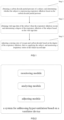
- This embodiment provides a method for addressing hyperventilation based on a ventilator device, as shown in Fig. 1 , comprising steps of:
- the subject refers to a patient or casualty who is being supplied via a ventilator.
- the carbon dioxide partial pressure refers to arterial carbon dioxide and end-expiratory carbon dioxide, wherein the arterial carbon dioxide is used to reflect a carbon dioxide level in patient's arterial blood, and end-expiratory carbon dioxide is used to reflect patient's pulmonary ventilation.
- determining whether the subject is experiencing respiratory alkalosis based on the carbon dioxide partial pressure means that the subject is determined to have respiratory alkalosis when the carbon dioxide partial pressure of the subject is below a normal range.
- the vital sign data refers to subject heart rate, blood pressure, pulse beat rate, etc.
- the degree of the respiratory alkalosis refers to an extent to which the subject body PH is significantly high due to the hyperventilation during treatment with the ventilator device.
- adjusting the mixing ratio of the oxygen and the carbon dioxide based on the degree of the respiratory alkalosis means that the carbon dioxide ratio is appropriately increased to alleviate the respiratory alkalosis of the subject.
- monitoring the respiratory status of the subject in real time refers to real-time monitoring of changes in subject physical parameters after air supply regimen is changed, wherein the mixing ratio of the oxygen and the carbon dioxide is dynamically adjusted based on the relief of the respiratory alkalosis in the subject.
- the beneficial effect of the above technical solution is that the method can quickly and accurately determine whether a subject has respiratory alkalosis by monitoring the carbon dioxide partial pressure of the subject, and can effectively alleviate respiratory alkalosis of the subject by adjusting the mixing ratio of oxygen and carbon dioxide, thus improving the efficiency and safety of resolving respiratory alkalosis caused by hyperventilation.
- obtaining the carbon dioxide partial pressure of the subject comprises steps of:
- the ventilation start moment refers to time information when the subject receives gas from the ventilator device.
- the target control instruction refers to controlling a machine to detect the carbon dioxide partial pressure, so as to facilitate the acquisition of the carbon dioxide partial pressure of the subject.
- the predetermined sensor is set up in advance to monitor the carbon dioxide partial pressure in the subject, which is, for example, a blood gas analyzer.
- the target detection site refers to a certain part of the body, such as arm, where the carbon dioxide partial pressure of the subject is measured.
- the predetermined displayer is pre-programmed on the predetermined sensor to display the real-time monitored carbon dioxide partial pressure.
- the beneficial effect of the above technical solution is that by determining the ventilation start moment, the carbon dioxide partial pressure of the subject can be monitored immediately at the beginning of ventilation; furthermore, by determining the target detection site, the carbon dioxide partial pressure of the subject can be monitored by sensors in a timely and effective manner, which provides a reference basis for accurate and timely detection of hyperventilation.
- displaying the carbon dioxide partial pressure in real time on the predetermined displayer comprises steps of:
- the target value refers to the carbon dioxide partial pressure of the subject at different time points.
- the preprocessing refers to removing data that is too large or too small for the carbon dioxide partial pressure to ensure that the final carbon dioxide partial pressure is reliable and valid.
- the effective carbon dioxide partial pressure refers to the remaining carbon dioxide partial pressure after removing anomalous data from the carbon dioxide partial pressure.
- the data characteristics refer to the quantity of the effective carbon dioxide partial pressure and the specific value of the effective carbon dioxide partial pressure corresponding to each time point.
- the target points refer to the sampling points for the effective carbon dioxide partial pressure.
- the predetermined visualization component refers to a graphical plug-in for converting the format of the effective carbon dioxide partial pressure.
- the beneficial effect of the above technical solution is that by analyzing and processing the carbon dioxide partial pressure of the subject, graphical representation of the carbon dioxide of the subject at different time points can be easily realized, thus improving the accuracy and efficiency of determining whether the subject is hyperventilating or not.
- determining whether the subject is experiencing respiratory alkalosis based on the carbon dioxide partial pressure comprises steps of:
- the historical training data refer to fluctuation ranges of the carbon dioxide partial pressure for different subjects when taking ventilator treatment, and the fluctuation range of the carbon dioxide partial pressure corresponds to physical conditions of the different subjects.
- the standard fluctuation range refers to a normal fluctuation range of the carbon dioxide partial pressure allowed in the human body, usually 35-45 mmHg.
- the minimum value refers to a lower limit of the standard fluctuation range.
- satisfying the respiratory alkalosis characteristics means that carbon dioxide partial pressure of the subject is below the standard fluctuation range, i.e., meeting the symptom of low carbon dioxide partial pressure.
- the beneficial effect of the above technical solution is that by accurately determining the standard fluctuation range of the carbon dioxide partial pressure based on the historical training data, it facilitates the comparison of the carbon dioxide partial pressure of the subject with the standard fluctuation range, which further facilitates the determination of whether the subject is hyperventilating and experiencing respiratory alkalosis, thereby improving the efficiency and accuracy of respiratory alkalosis determination.
- determining that the subject satisfies the respiratory alkalosis characteristics comprises steps of:
- the preset sampling device is set up in advance for blood collection from the subject.
- the blood sample refers to the sample data obtained after sampling the blood of the subject.
- the pH analysis refers to determining the blood pH of the subject by means of a specialized testing agent or appropriate testing instrument.
- the beneficial effect of the above technical solution is that the pH value of the subject body is measured in the case of an abnormal carbon dioxide partial pressure, thereby ensuring accurate PH analysis of the subject body, providing reliable and accurate determination of whether the subject has respiratory alkalosis, and facilitating the timely mixing ratio adjustment of the oxygen and the carbon dioxide in the presence of respiratory alkalosis, which can achieve rapid relief of respiratory alkalosis in the subject.
- obtaining the vital sign data of the subject when the respiratory alkalosis occurs and determining the degree of the respiratory alkalosis of the subject based on the vital sign data comprise steps of
- the predetermined vital sign measuring device is set up in advance for the collection of vital sign data from the subject.
- the ID information is used to mark the data upload address of an interface between the predetermined vital sign measuring device and a statistical backend.
- the vital sign data package refers to a package of vital sign data collected by the predetermined vital sign measuring device, which contains the vital sign data of the subject.
- the device type refers to a function of the predetermined vital sign measuring device, which may be, for example, but is not limited to, an ECG, a blood pressure monitor, etc.
- the predetermined protocol plug-in is used to parse an encapsulated vital sign data package collected by a corresponding device type, which is necessary for the back-end data processing.
- the target protocol plug-in refers to a protocol plug-in used to match the current vital sign measuring device, and is one or more of the predetermined protocol plug-in.
- the attribute information refers to a data type of the vital sign data, a corresponding data volume, etc.
- the initial vital sign data refers to vital sign data obtained by parsing the vital sign data package collected by the predetermined vital sign measuring device, which may contain missing or abnormal vital sign data.
- the target cleaning rule refers to a method for screening or inventorying the vital initial sign data.
- the target vital sign data refer to valid vital sign data obtained by screening the abnormal data from the initial vital sign data under the target cleaning rules.
- the reference peak point is a peak in the waveform profile that is selected as a reference point, so as to traversed forwards or backwards.
- the ghost peak is a peak in the waveform profile that does not represent changes in the vital sign data of the subject.
- the peak time series refers to determining a relationship between each and a corresponding time point.
- the target change value refers to judging a distance between adjacent peaks to determine whether vital sign data change of the subject is regular and whether the distance between adjacent peaks is within a predetermined requirements, which is obtained by comparing the waveform profile with corresponding vital sign data of the subject under normal breathing conditions.
- the predetermined threshold is set in advance to determine whether the target change value is within an acceptable range.
- the target difference value refers to a difference between the target change value and a corresponding predetermined threshold, which measures the degree of difference between current vital sign data of the subject and standard sign data.
- the standard fluctuation range refers to a range within which the vital sign data of subject is allowed to vary from the standard vital sign data.
- obtaining the target vital sign data of the subject comprises steps of:
- the cerebral oxygen utilization refers to an extent to which the subject utilizes the inhaled oxygen.
- the beneficial effect of the above technical solution is that the vital sign data of the subject is measured by the predetermined vital sign measuring device, and is analyzed to obtain the change of the vital sign data of the subject, ensuring that the collected vital sign data of the subject is accurate and reliable. Meanwhile, based on the degree of difference between the vital sign data of the subject and the standard vital sign data, the current degree of the respiratory alkalosis of the subject can be accurately determined, which facilitates accurate adjustment of the gas mixing ratio of the subject to ensure effective resolution of the respiratory alkalosis of the subject.
- determining a pH status of the subject based on a comparison result, and determining the degree of the respiratory alkalosis of the subject based on the pH status comprises steps of:
- the bicarbonate ion concentration refers to a concentration obtained after ion reaction in the subject during using the ventilator device, wherein a higher concentration indicates higher respiratory alkalosis in the subject.
- the standard bicarbonate ion concentration threshold is set in advance to indicate a value of a bicarbonate ion concentration allowed to be received in the body.
- the first difference threshold and the second difference threshold are set in advance to measure an extent to which the bicarbonate ion concentration in the subject exceeds the standard bicarbonate ion concentration threshold.
- the first alarm alert can be, for example, a sound alarm.
- the second alarm alert can be, for example, a light alarm.
- the third alarm alert can be, for example, a combination of sound and light alarms.
- the beneficial effect of the above technical solution is that by analyzing the degree of the respiratory alkalosis of the subject, alarm operation corresponding to each degree of the respiratory alkalosis of the subject can be performed, so that the gas mixing ratio can be adjusted in time according to the alarm operation, thus ensuring the safety of the subject.
- adjusting the mixing ratio of the oxygen and the carbon dioxide based on the degree of the respiratory alkalosis, then re-supplying the subject, and monitoring the respiratory status of the subject in real time comprise steps of:
- the initial mixing ratio refers to a current mixing ratio of the oxygen to the carbon dioxide received by the subject.
- the target characteristic refers to a change in the vital sign data of the subject, which may be, for example, the difference between the vital sign data and the standard sign data.
- the target carbon dioxide ratio adjustment range refers to an extent to which the ratio of the carbon dioxide in the initial mixture needs to be adjusted, which is 1%-6%.
- the initial adjustment parameter refers to an extent of an initial adjustment, wherein the ratio of the carbon dioxide scaling is modified by 1%-6% in a gradient form.
- the baseline mixing ratio refers to the gas mixture that is re-supplied to the subject after adjusting the ratio of the carbon dioxide in the initial mixing ratio, wherein the ratio of the carbon dioxide is continuously adjusted according to the baseline mixing ratio until the respiratory alkalosis of the subject is resolved.
- the pressure balance regulation means optimizing the pressure of the two gases according to the input pressure of the oxygen and the carbon dioxide to ensure that the two gases can be mixed.
- the baseline gas mixture refers to the mixture obtained by mixing the oxygen with the carbon dioxide and sine according to the base mixture ratio.
- the respiratory data refers to the subject heart rate, pulse rate, etc.
- the beneficial effect of the above technical solution is that the ratio of the carbon dioxide is accurately adjusted according to the degree of the respiratory alkalosis of the subject, and the pressure balance of the oxygen and the carbon dioxide is regulated after the adjustment, so that the gas mixture can be effectively transferred to the subject. This improves the effectiveness of treating the respiratory alkalosis and also ensures the safety of the subject.
- monitoring respiration data of the subject in real time based on the delivery result comprises steps of:
- the heartbeat waveform profile refers to an ECG waveform of the subject.
- determining whether the subject has respiratory abnormalities based on the heartbeat waveform profile means comparing the heartbeat waveform profile of the subject with the heartbeat waveform profile under normal conditions to determine whether the subject has the respiratory abnormality.
- the target cause refers to factors that cause abnormal breathing in the subject, such as, but not limited to, abnormalities in personal physical parameters and abnormalities in the ventilator device.
- the operating modes refer to two modes of air supply that the ventilator device can provide, which are mixing oxygen and carbon dioxide, and mixing oxygen and air.
- the beneficial effect of the above technical solution is that by adjusting the mixing ratio of the carbon dioxide in the gas mixture, the respiratory condition of the subject is monitored in real time, and the cause of abnormality can be solved in time when the respiratory condition of subject is abnormal, thus ensuring that the respiratory alkalosis of the subject can be solved effectively, and the efficiency and safety of the treatment are improved.
- This embodiment provides a system for addressing hyperventilation based on a ventilator device is provided, as shown in Fig. 2 , comprising:
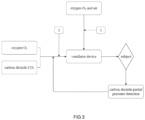
- Fig. 3 working principles of the ventilator device are shown in Fig. 3 , wherein 1 and 2 are the toe modes of air supply of the ventilator device.
- the beneficial effect of the above technical solution is that by monitoring the carbon dioxide partial pressure of the subject, it can quickly and accurately determine whether the subject is suffering from the respiratory alkalosis, and by adjusting the mixing ratio of the oxygen and the carbon dioxide, the system can effectively relieve the respiratory alkalosis of the subject and improve the efficiency and safety of solving the respiratory alkalosis caused by hyperventilation.
Landscapes
- Health & Medical Sciences (AREA)
- Life Sciences & Earth Sciences (AREA)
- Veterinary Medicine (AREA)
- Public Health (AREA)
- Biomedical Technology (AREA)
- Heart & Thoracic Surgery (AREA)
- Animal Behavior & Ethology (AREA)
- General Health & Medical Sciences (AREA)
- Engineering & Computer Science (AREA)
- Pulmonology (AREA)
- Anesthesiology (AREA)
- Hematology (AREA)
- Emergency Medicine (AREA)
- Physics & Mathematics (AREA)
- Medical Informatics (AREA)
- Biophysics (AREA)
- Pathology (AREA)
- Molecular Biology (AREA)
- Surgery (AREA)
- Cardiology (AREA)
- Physiology (AREA)
- Optics & Photonics (AREA)
- Measurement Of The Respiration, Hearing Ability, Form, And Blood Characteristics Of Living Organisms (AREA)
- Investigating Or Analysing Biological Materials (AREA)
Claims (1)
- System zum Behandeln von Hyperventilation basierend auf einer Beatmungsvorrichtung,
gekennzeichnet durch:ein Überwachungsmodul zum Erhalten eines Kohlendioxid-Partialdrucks einer Person und zum Bestimmen, ob die Person an einer respiratorischen Alkalose leidet, basierend auf dem Kohlendioxid-Partialdruck;ein Analysemodul zum Erhalten von Vitalzeichendaten der Person, wenn die respiratorische Alkalose auftritt, und zum Bestimmen eines Grades der respiratorischen Alkalose der Person basierend auf den Vitalzeichendaten; undein Anpassungsmodul zum Anpassen eines Mischungsverhältnisses von Sauerstoff und Kohlendioxid basierend auf dem Grad der respiratorischen Alkalose, zum anschließenden erneuten Versorgen der Person und zum Überwachen eines Atmungsstatus der Person in Echtzeit;wobei das Anpassen des Mischungsverhältnisses von Sauerstoff und Kohlendioxid basierend auf dem Grad der respiratorischen Alkalose, das anschließende erneute Versorgen der Person und das Überwachen des Atmungsstatus der Person in Echtzeit folgende Schritte umfassen:Erhalten des Grads der respiratorischen Alkalose der Person während der Probennahme eines Gasgemischs, das die Person derzeit erhält, und des Analysierens des Gasgemischs basierend auf einem Ergebnis der Probenahme, um ein anfängliches Mischungsverhältnis des Sauerstoffs und des Kohlendioxids in dem Gasgemisch zu erhalten;Extrahieren einer Zieleigenschaft für den Grad der respiratorischen Alkalose der Person und Bestimmen eines Ziel-Anpassungsbereichs für das Kohlendioxidverhältnis zum Abschwächen des Grads der respiratorischen Alkalose in der Person basierend auf der Zieleigenschaft, wobei der Ziel-Anpassungsbereich für das Kohlendioxidverhältnis 1 % - 6 % beträgt;Bestimmen eines anfänglichen Anpassungsparameters für ein Kohlendioxid-Mischungsverhältnis im anfänglichen Mischungsverhältnis des Sauerstoffs und des Kohlendioxids basierend auf dem Ziel-Anpassungsbereich für das Kohlendioxid-Verhältnis, und Anpassen des anfänglichen Mischungsverhältnisses des Sauerstoffs und des Kohlendioxids basierend auf dem anfänglichen Anpassungsparameter, um ein Basismischungsverhältnis zu erhalten;Bestimmen eines Gasdrucks des Sauerstoffs und des Kohlendioxids durch die Beatmungsvorrichtung basierend auf dem Basismischungsverhältnis, und Regulieren eines Druckausgleichs des Sauerstoffs und des Kohlendioxids basierend auf dem Gasdruck;Mischen des Sauerstoffs mit dem Kohlendioxid basierend auf einem Ergebnis der Druckausgleichsregulierung, um eine Basisgasmischung zu bekommen, und Abgeben der Basisgasmischung an die Person basierend auf der Beatmungsvorrichtung;Überwachen der Atmungsdaten der Person in Echtzeit basierend auf einem Abgabeergebnis, und Anpassen eines Kohlendioxidverhältnisses in der Basisgasmischung in einer Gradientenform basierend auf den Atmungsdaten; und Bestimmen eines Abgabezeitraums des Gasgemisches jedes Gradienten basierend auf den Ergebnissen der Gradientenanpassung, und Abgeben der Gasmischung jedes Gradienten an die Person basierend auf dem Abgabezeitraum, bis die Atmungsdaten der Person wieder normal sind, wodurch die Anpassung des Gemischs aus Sauerstoff und Kohlendioxid abgeschlossen wird.
Applications Claiming Priority (2)
| Application Number | Priority Date | Filing Date | Title |
|---|---|---|---|
| CN202210480186.XA CN114849007B (zh) | 2022-05-05 | 2022-05-05 | 一种基于呼吸机装置解决过度通气的方法及系统 |
| PCT/CN2023/083666 WO2023213154A1 (zh) | 2022-05-05 | 2023-03-24 | 一种基于呼吸机装置解决过度通气的方法及系统 |
Publications (4)
| Publication Number | Publication Date |
|---|---|
| EP4295884A1 EP4295884A1 (de) | 2023-12-27 |
| EP4295884A4 EP4295884A4 (de) | 2024-06-19 |
| EP4295884C0 EP4295884C0 (de) | 2024-12-11 |
| EP4295884B1 true EP4295884B1 (de) | 2024-12-11 |
Family
ID=82634743
Family Applications (1)
| Application Number | Title | Priority Date | Filing Date |
|---|---|---|---|
| EP23735577.1A Active EP4295884B1 (de) | 2022-05-05 | 2023-03-24 | System zur linderung von hyperventilation auf der basis eines beatmungsgeräts |
Country Status (4)
| Country | Link |
|---|---|
| US (1) | US20240382705A1 (de) |
| EP (1) | EP4295884B1 (de) |
| CN (1) | CN114849007B (de) |
| WO (1) | WO2023213154A1 (de) |
Families Citing this family (3)
| Publication number | Priority date | Publication date | Assignee | Title |
|---|---|---|---|---|
| CN114849007B (zh) * | 2022-05-05 | 2023-04-18 | 广州蓝仕威克医疗科技有限公司 | 一种基于呼吸机装置解决过度通气的方法及系统 |
| CN114887184B (zh) * | 2022-05-05 | 2023-04-07 | 广州蓝仕威克医疗科技有限公司 | 一种基于混合气体解决患者呼吸机脱机的方法及装置 |
| CN117695488A (zh) * | 2023-12-19 | 2024-03-15 | 深圳市安保医疗科技股份有限公司 | 呼吸机供氧控制方法、装置、介质及呼吸机 |
Family Cites Families (22)
| Publication number | Priority date | Publication date | Assignee | Title |
|---|---|---|---|---|
| JPH0677022B2 (ja) * | 1990-04-27 | 1994-09-28 | 株式会社島津製作所 | 生体内の酸塩基平衡の判定法および装置 |
| US10071218B2 (en) * | 2006-01-24 | 2018-09-11 | Zoll Medical Corporation | Reperfusion protection in resuscitation |
| US8789529B2 (en) * | 2009-08-20 | 2014-07-29 | Covidien Lp | Method for ventilation |
| US9937308B2 (en) * | 2010-12-17 | 2018-04-10 | Koninklijke Philips N.V. | System and method for customizable automated control of fraction of inspired oxygen and/or positive end expiratory pressure to maintain oxygenation |
| ES2775208T3 (es) * | 2013-05-24 | 2020-07-24 | Mermaid Care As | Un sistema y un procedimiento correspondiente para estimar la actividad respiratoria de pacientes ventilados mecánicamente |
| CA2914406A1 (en) * | 2013-06-05 | 2014-12-11 | Michael Klein | Controlling arterial blood gas concentration |
| US10016573B2 (en) * | 2013-12-03 | 2018-07-10 | Anatoly Mayburd | Systems and methods for body temperature management |
| DE102015015440A1 (de) * | 2015-12-02 | 2017-06-08 | Drägerwerk AG & Co. KGaA | Anästhesiebeatmungsvorrichtung zur automatischen Beatmung eines Patienten |
| EP3838139B1 (de) * | 2016-12-05 | 2024-01-03 | Medipines Corporation | Vorrichtung für atemmessungen mit atemgasproben |
| BR102016029897A2 (pt) * | 2016-12-19 | 2018-07-17 | Soc Beneficente Israelita Brasileira Hospital Albert Einstein | sistema e método de controle inteligente, baseado em aprendizado de máquina, para modular níveis de concentração end-tidal através de ajustes no volume e na concentração de um fluxo de gases respiratórios de entrada em tempo real |
| CN208710724U (zh) * | 2018-05-16 | 2019-04-09 | 江苏大学附属医院 | 一种呼吸装置 |
| CN109107007B (zh) * | 2018-07-10 | 2024-08-02 | 上海敏恒企业咨询有限公司 | 一种智能APRVplus呼吸机通气系统及使用方法 |
| CN109009155A (zh) * | 2018-08-23 | 2018-12-18 | 广州医科大学附属第二医院 | 一种血气酸碱分析方法 |
| CN109718437A (zh) * | 2018-12-28 | 2019-05-07 | 北京谊安医疗系统股份有限公司 | 呼吸支持设备的呼吸参数调节方法、装置及呼吸支持设备 |
| CN210871585U (zh) * | 2019-08-26 | 2020-06-30 | 浙江纳雄医疗器械有限公司 | 一种旁流式二氧化碳测量装置 |
| CN111067527A (zh) * | 2020-01-08 | 2020-04-28 | 天津市第一中心医院 | 一种用于呼吸性碱中毒的二氧化碳回收装置 |
| CN111658932A (zh) * | 2020-07-21 | 2020-09-15 | 南京鼓楼医院 | 一种用于自主呼吸激发试验的呼吸器 |
| CN111991663B (zh) * | 2020-09-14 | 2023-08-01 | 江西安联医疗器械有限公司 | 一种自动提供氧气治疗方案的3联智能系统 |
| EP4228727A1 (de) * | 2020-10-13 | 2023-08-23 | Politecnico Di Torino | Cpap-kit zur unterstützung der atmung |
| CN112957579A (zh) * | 2021-03-10 | 2021-06-15 | 山东大学齐鲁医院 | 治疗气管插管或气管切开病人呼吸性碱中毒的器具 |
| CN113289182B (zh) * | 2021-07-09 | 2023-09-15 | 重庆医科大学附属第一医院 | 一种氧疗监测调控系统和调控方法 |
| CN114849007B (zh) * | 2022-05-05 | 2023-04-18 | 广州蓝仕威克医疗科技有限公司 | 一种基于呼吸机装置解决过度通气的方法及系统 |
-
2022
- 2022-05-05 CN CN202210480186.XA patent/CN114849007B/zh active Active
-
2023
- 2023-03-24 WO PCT/CN2023/083666 patent/WO2023213154A1/zh not_active Ceased
- 2023-03-24 EP EP23735577.1A patent/EP4295884B1/de active Active
- 2023-03-24 US US18/266,590 patent/US20240382705A1/en active Pending
Also Published As
| Publication number | Publication date |
|---|---|
| CN114849007A (zh) | 2022-08-05 |
| EP4295884A1 (de) | 2023-12-27 |
| WO2023213154A1 (zh) | 2023-11-09 |
| EP4295884C0 (de) | 2024-12-11 |
| EP4295884A4 (de) | 2024-06-19 |
| CN114849007B (zh) | 2023-04-18 |
| US20240382705A1 (en) | 2024-11-21 |
Similar Documents
| Publication | Publication Date | Title |
|---|---|---|
| EP4295884B1 (de) | System zur linderung von hyperventilation auf der basis eines beatmungsgeräts | |
| EP2438855B1 (de) | Wellenforminterpretation zur Atemanalyse | |
| US10314515B2 (en) | Capnography device and method | |
| Burton et al. | Does end‐tidal carbon dioxide monitoring detect respiratory events prior to current sedation monitoring practices? | |
| AU2011213041B2 (en) | System and method for diagnosing sleep apnea based on results of multiple approaches to sleep apnea identification | |
| US11147507B2 (en) | Decision support system for cardiopulmonary resuscitation (CPR) | |
| US20120016251A1 (en) | System for Respiration Data Processing and Characterization | |
| JPH09164130A (ja) | 血中アルコール濃度の信頼性を確認する方法及び装置 | |
| WO2009063443A2 (en) | Medical system, apparatus and method | |
| Howe et al. | The use of end-tidal capnography to monitor non-intubated patients presenting with acute exacerbation of asthma in the emergency department | |
| CN118800458B (zh) | 一种心胸外科术后并发症预测方法及系统 | |
| EP4295758B1 (de) | Verfahren und vorrichtung zur verminderung des entzugs eines beatmungsgerätes basierend auf einem gasgemisch | |
| JP2020513934A (ja) | カプノメトリ及び酸素飽和度を組み合わせた生理学的モニタリング判断支援システム | |
| CN118800474A (zh) | 一种患者术后恢复数据分析方法及系统 | |
| US20040167425A1 (en) | Anesthetic-state determing | |
| CA2889825C (en) | Process and apparatus for the detection of the concentration and/or amount of carbon dioxide per unit of time contained in a flow of gas to be monitored | |
| Kuhlen et al. | Validation and clinical application of a continuous P0. 1 measurement using standard respiratory equipment | |
| Navabi et al. | Detection of false alarms using an integrated anesthesia monitor | |
| Huygen et al. | A new ventilation inhomogeneity index from multiple breath indicator gas washout tests in mechanically ventilated patients | |
| CN120432184B (zh) | 一种术前麻醉风险智能评估系统及方法 | |
| Ewald Jr et al. | Analysis of the inspiratory flow-volume curve: should it always precede the forced expiratory maneuver? | |
| EP4079221A1 (de) | System zur identifizierung eines zustands eines anwenders | |
| Raine | Technology in respiratory medicine: main topic | |
| Gibson | 4 Respiratory Function Tests in Occupational Lung Disorders | |
| Scanlan et al. | Pulmonary Function Testing |
Legal Events
| Date | Code | Title | Description |
|---|---|---|---|
| STAA | Information on the status of an ep patent application or granted ep patent |
Free format text: STATUS: UNKNOWN |
|
| STAA | Information on the status of an ep patent application or granted ep patent |
Free format text: STATUS: THE INTERNATIONAL PUBLICATION HAS BEEN MADE |
|
| PUAI | Public reference made under article 153(3) epc to a published international application that has entered the european phase |
Free format text: ORIGINAL CODE: 0009012 |
|
| STAA | Information on the status of an ep patent application or granted ep patent |
Free format text: STATUS: REQUEST FOR EXAMINATION WAS MADE |
|
| 17P | Request for examination filed |
Effective date: 20230711 |
|
| AK | Designated contracting states |
Kind code of ref document: A1 Designated state(s): AL AT BE BG CH CY CZ DE DK EE ES FI FR GB GR HR HU IE IS IT LI LT LU LV MC ME MK MT NL NO PL PT RO RS SE SI SK SM TR |
|
| A4 | Supplementary search report drawn up and despatched |
Effective date: 20240523 |
|
| RIC1 | Information provided on ipc code assigned before grant |
Ipc: A61B 5/08 20060101ALI20240516BHEP Ipc: A61M 16/12 20060101AFI20240516BHEP |
|
| REG | Reference to a national code |
Ref country code: DE Free format text: PREVIOUS MAIN CLASS: A61M0016120000 Ref country code: DE Ref legal event code: R079 Ref document number: 602023001341 Country of ref document: DE Free format text: PREVIOUS MAIN CLASS: A61M0016120000 Ipc: A61M0016000000 |
|
| GRAP | Despatch of communication of intention to grant a patent |
Free format text: ORIGINAL CODE: EPIDOSNIGR1 |
|
| STAA | Information on the status of an ep patent application or granted ep patent |
Free format text: STATUS: GRANT OF PATENT IS INTENDED |
|
| RIC1 | Information provided on ipc code assigned before grant |
Ipc: A61B 5/08 20060101ALI20240709BHEP Ipc: A61M 16/12 20060101ALI20240709BHEP Ipc: A61M 16/00 20060101AFI20240709BHEP |
|
| DAV | Request for validation of the european patent (deleted) | ||
| DAX | Request for extension of the european patent (deleted) | ||
| INTG | Intention to grant announced |
Effective date: 20240718 |
|
| GRAS | Grant fee paid |
Free format text: ORIGINAL CODE: EPIDOSNIGR3 |
|
| GRAA | (expected) grant |
Free format text: ORIGINAL CODE: 0009210 |
|
| STAA | Information on the status of an ep patent application or granted ep patent |
Free format text: STATUS: THE PATENT HAS BEEN GRANTED |
|
| AK | Designated contracting states |
Kind code of ref document: B1 Designated state(s): AL AT BE BG CH CY CZ DE DK EE ES FI FR GB GR HR HU IE IS IT LI LT LU LV MC ME MK MT NL NO PL PT RO RS SE SI SK SM TR |
|
| REG | Reference to a national code |
Ref country code: GB Ref legal event code: FG4D |
|
| REG | Reference to a national code |
Ref country code: CH Ref legal event code: EP |
|
| REG | Reference to a national code |
Ref country code: IE Ref legal event code: FG4D |
|
| REG | Reference to a national code |
Ref country code: DE Ref legal event code: R096 Ref document number: 602023001341 Country of ref document: DE |
|
| U01 | Request for unitary effect filed |
Effective date: 20250108 |
|
| U07 | Unitary effect registered |
Designated state(s): AT BE BG DE DK EE FI FR IT LT LU LV MT NL PT RO SE SI Effective date: 20250115 |
|
| PG25 | Lapsed in a contracting state [announced via postgrant information from national office to epo] |
Ref country code: HR Free format text: LAPSE BECAUSE OF FAILURE TO SUBMIT A TRANSLATION OF THE DESCRIPTION OR TO PAY THE FEE WITHIN THE PRESCRIBED TIME-LIMIT Effective date: 20241211 |
|
| PG25 | Lapsed in a contracting state [announced via postgrant information from national office to epo] |
Ref country code: ES Free format text: LAPSE BECAUSE OF FAILURE TO SUBMIT A TRANSLATION OF THE DESCRIPTION OR TO PAY THE FEE WITHIN THE PRESCRIBED TIME-LIMIT Effective date: 20241211 |
|
| PG25 | Lapsed in a contracting state [announced via postgrant information from national office to epo] |
Ref country code: NO Free format text: LAPSE BECAUSE OF FAILURE TO SUBMIT A TRANSLATION OF THE DESCRIPTION OR TO PAY THE FEE WITHIN THE PRESCRIBED TIME-LIMIT Effective date: 20250311 |
|
| PG25 | Lapsed in a contracting state [announced via postgrant information from national office to epo] |
Ref country code: GR Free format text: LAPSE BECAUSE OF FAILURE TO SUBMIT A TRANSLATION OF THE DESCRIPTION OR TO PAY THE FEE WITHIN THE PRESCRIBED TIME-LIMIT Effective date: 20250312 |
|
| PG25 | Lapsed in a contracting state [announced via postgrant information from national office to epo] |
Ref country code: RS Free format text: LAPSE BECAUSE OF FAILURE TO SUBMIT A TRANSLATION OF THE DESCRIPTION OR TO PAY THE FEE WITHIN THE PRESCRIBED TIME-LIMIT Effective date: 20250311 |
|
| U20 | Renewal fee for the european patent with unitary effect paid |
Year of fee payment: 3 Effective date: 20250328 |
|
| PG25 | Lapsed in a contracting state [announced via postgrant information from national office to epo] |
Ref country code: SM Free format text: LAPSE BECAUSE OF FAILURE TO SUBMIT A TRANSLATION OF THE DESCRIPTION OR TO PAY THE FEE WITHIN THE PRESCRIBED TIME-LIMIT Effective date: 20241211 |
|
| PG25 | Lapsed in a contracting state [announced via postgrant information from national office to epo] |
Ref country code: PL Free format text: LAPSE BECAUSE OF FAILURE TO SUBMIT A TRANSLATION OF THE DESCRIPTION OR TO PAY THE FEE WITHIN THE PRESCRIBED TIME-LIMIT Effective date: 20241211 |
|
| PG25 | Lapsed in a contracting state [announced via postgrant information from national office to epo] |
Ref country code: IS Free format text: LAPSE BECAUSE OF FAILURE TO SUBMIT A TRANSLATION OF THE DESCRIPTION OR TO PAY THE FEE WITHIN THE PRESCRIBED TIME-LIMIT Effective date: 20250411 |
|
| PG25 | Lapsed in a contracting state [announced via postgrant information from national office to epo] |
Ref country code: SK Free format text: LAPSE BECAUSE OF FAILURE TO SUBMIT A TRANSLATION OF THE DESCRIPTION OR TO PAY THE FEE WITHIN THE PRESCRIBED TIME-LIMIT Effective date: 20241211 |
|
| PG25 | Lapsed in a contracting state [announced via postgrant information from national office to epo] |
Ref country code: CZ Free format text: LAPSE BECAUSE OF FAILURE TO SUBMIT A TRANSLATION OF THE DESCRIPTION OR TO PAY THE FEE WITHIN THE PRESCRIBED TIME-LIMIT Effective date: 20241211 |
|
| PG25 | Lapsed in a contracting state [announced via postgrant information from national office to epo] |
Ref country code: MC Free format text: LAPSE BECAUSE OF FAILURE TO SUBMIT A TRANSLATION OF THE DESCRIPTION OR TO PAY THE FEE WITHIN THE PRESCRIBED TIME-LIMIT Effective date: 20241211 |
|
| PLBE | No opposition filed within time limit |
Free format text: ORIGINAL CODE: 0009261 |
|
| STAA | Information on the status of an ep patent application or granted ep patent |
Free format text: STATUS: NO OPPOSITION FILED WITHIN TIME LIMIT |
|
| U1N | Appointed representative for the unitary patent procedure changed after the registration of the unitary effect |
Representative=s name: SANTARELLI; FR |
|
| 26N | No opposition filed |
Effective date: 20250912 |
|
| PG25 | Lapsed in a contracting state [announced via postgrant information from national office to epo] |
Ref country code: IE Free format text: LAPSE BECAUSE OF NON-PAYMENT OF DUE FEES Effective date: 20250324 |