EP4294718B1 - Autopilotsystem für schiffe - Google Patents
Autopilotsystem für schiffe Download PDFInfo
- Publication number
- EP4294718B1 EP4294718B1 EP22706622.2A EP22706622A EP4294718B1 EP 4294718 B1 EP4294718 B1 EP 4294718B1 EP 22706622 A EP22706622 A EP 22706622A EP 4294718 B1 EP4294718 B1 EP 4294718B1
- Authority
- EP
- European Patent Office
- Prior art keywords
- autopilot
- vessel
- autopilot system
- rudder
- rudders
- Prior art date
- Legal status (The legal status is an assumption and is not a legal conclusion. Google has not performed a legal analysis and makes no representation as to the accuracy of the status listed.)
- Active
Links
Images


Classifications
-
- B—PERFORMING OPERATIONS; TRANSPORTING
- B63—SHIPS OR OTHER WATERBORNE VESSELS; RELATED EQUIPMENT
- B63H—MARINE PROPULSION OR STEERING
- B63H25/00—Steering; Slowing-down otherwise than by use of propulsive elements; Dynamic anchoring, i.e. positioning vessels by means of main or auxiliary propulsive elements
- B63H25/42—Steering or dynamic anchoring by propulsive elements; Steering or dynamic anchoring by propellers used therefor only; Steering or dynamic anchoring by rudders carrying propellers
-
- B—PERFORMING OPERATIONS; TRANSPORTING
- B63—SHIPS OR OTHER WATERBORNE VESSELS; RELATED EQUIPMENT
- B63H—MARINE PROPULSION OR STEERING
- B63H25/00—Steering; Slowing-down otherwise than by use of propulsive elements; Dynamic anchoring, i.e. positioning vessels by means of main or auxiliary propulsive elements
- B63H25/02—Initiating means for steering, for slowing down, otherwise than by use of propulsive elements, or for dynamic anchoring
- B63H25/04—Initiating means for steering, for slowing down, otherwise than by use of propulsive elements, or for dynamic anchoring automatic, e.g. reacting to compass
-
- B—PERFORMING OPERATIONS; TRANSPORTING
- B63—SHIPS OR OTHER WATERBORNE VESSELS; RELATED EQUIPMENT
- B63H—MARINE PROPULSION OR STEERING
- B63H25/00—Steering; Slowing-down otherwise than by use of propulsive elements; Dynamic anchoring, i.e. positioning vessels by means of main or auxiliary propulsive elements
- B63H25/06—Steering by rudders
-
- B—PERFORMING OPERATIONS; TRANSPORTING
- B63—SHIPS OR OTHER WATERBORNE VESSELS; RELATED EQUIPMENT
- B63B—SHIPS OR OTHER WATERBORNE VESSELS; EQUIPMENT FOR SHIPPING
- B63B79/00—Monitoring properties or operating parameters of vessels in operation
- B63B79/40—Monitoring properties or operating parameters of vessels in operation for controlling the operation of vessels, e.g. monitoring their speed, routing or maintenance schedules
-
- B—PERFORMING OPERATIONS; TRANSPORTING
- B63—SHIPS OR OTHER WATERBORNE VESSELS; RELATED EQUIPMENT
- B63H—MARINE PROPULSION OR STEERING
- B63H25/00—Steering; Slowing-down otherwise than by use of propulsive elements; Dynamic anchoring, i.e. positioning vessels by means of main or auxiliary propulsive elements
- B63H25/02—Initiating means for steering, for slowing down, otherwise than by use of propulsive elements, or for dynamic anchoring
- B63H25/04—Initiating means for steering, for slowing down, otherwise than by use of propulsive elements, or for dynamic anchoring automatic, e.g. reacting to compass
- B63H2025/045—Initiating means for steering, for slowing down, otherwise than by use of propulsive elements, or for dynamic anchoring automatic, e.g. reacting to compass making use of satellite radio beacon positioning systems, e.g. the Global Positioning System [GPS]
-
- B—PERFORMING OPERATIONS; TRANSPORTING
- B63—SHIPS OR OTHER WATERBORNE VESSELS; RELATED EQUIPMENT
- B63H—MARINE PROPULSION OR STEERING
- B63H25/00—Steering; Slowing-down otherwise than by use of propulsive elements; Dynamic anchoring, i.e. positioning vessels by means of main or auxiliary propulsive elements
- B63H25/06—Steering by rudders
- B63H2025/066—Arrangements of two or more rudders; Steering gear therefor
Definitions
- the present disclosure relates to an autopilot system for automatically steering a marine vessel and to a marine vessel comprising such an autopilot system.
- Vessels such as marine vessels can be subject to variable marine and weather conditions, such as wind, water current, wave effect, that may apply significant side forces and moments to the vessels when underway, causing the vessels to drift and hence to deviate from an intended course.
- marine vessels typically make use of an autopilot system based on feedback from a navigation system in order to stay on course, especially for longer cruising distances.
- Autopilot systems typically operate by automatically controlling rudder deflection in order to compensate for the drift caused by the above factors.
- Marine vessels may be provided with various propulsion systems. The mostly used propulsion systems to date are based on combustions engines, in particular diesel engines. Most vessels have a single engine connected to a single propeller and direction is controlled by rudder steering using either one or two rudders. Other marine vessels may be provided with two engines and also two rudders on the port side and on the starboard side respectively. This is typical especially for multihull vessels such as catamarans.
- the propulsion systems can be rotatable about a steering axis, e.g. comprising a saildrive transmission system comprising a vertical rotatable intermediate shaft extending downward through a bottom surface of the hull or hulls of the marine vessel.
- a saildrive transmission system comprising a vertical rotatable intermediate shaft extending downward through a bottom surface of the hull or hulls of the marine vessel.
- rotating outboards engines hanging at the stem of the vessel can be used in other types of vessels.
- Such rotating propulsion systems may be however not suitable or not preferred for some types of vessels, they can be structurally more complex and require more maintenance compared to propulsion systems with fixed axes, which however require an additional rudder steering system for direction control.
- Some other special and rare marine vessels such as amphibious vessels do not typically have a rudder either nor propulsion systems with rotatable axis.
- a separate shift and throttle system for each engine may be used, even in autopilot mode, as disclosed e.g. in US 2018/0244362 A1 .
- an autopilot system for automatically steering a marine vessel that enables precise direction control of the vessel while reducing drag force and hence reducing power consumption at a certain vessel velocity or increasing vessel velocity at a certain power consumption, and while preserving the option to use a rudder steering mechanism for direction control at least in manual mode and, according to some embodiments, also in other situations when this may be more convenient.
- a marine vessel comprising such an autopilot system and presenting the same advantages is herein also disclosed.
- the marine vessel comprises two electric motors respectively connected to a port side propulsor and to a starboard side propulsor, a port side rudder and a starboard side rudder and a rudder steering mechanism, a navigation system for determining the vessel position with respect to an intended course, and an autopilot system for automatically steering the marine vessel.
- the autopilot system of the present disclosure is configured to operate according to one or more autopilot modes, comprising at least a motor steering autopilot mode where the autopilot system is configured to automatically control the rudder steering mechanism in order to lock the rudders at a fixed angle, and based on a feedback from the navigation system to independently and dynamically adjust power supply to each of the port side propulsor and of the starboard side propulsor by independently and dynamically regulating electric power supply to the respective electric motors in order to maintain the vessel on course.
- one or more autopilot modes comprising at least a motor steering autopilot mode where the autopilot system is configured to automatically control the rudder steering mechanism in order to lock the rudders at a fixed angle, and based on a feedback from the navigation system to independently and dynamically adjust power supply to each of the port side propulsor and of the starboard side propulsor by independently and dynamically regulating electric power supply to the respective electric motors in order to maintain the vessel on course.
- a “marine vessel” is a vessel such as a boat, a yacht, a ship, a ferry or any other floating vessel, either monohull or multihull, adapted for navigation on water, such as ocean, sea, lake, river, regardless of its use, e.g. as a leisure vessel, or for commercial or dedicated use, e.g. as a charter yacht, a fishing boat, a ferry for transportation of people and/or other vehicles, a ship for transportation of goods, etc...
- the marine vessel of the present disclosure is a vessel provided with an electric propulsion system as sole propulsion system or as main or complementary propulsion system, e.g.
- the marine vessel of the present disclosure is a vessel provided with at least two independently controllable electric motors respectively connected to a port side propulsor and to a starboard side propulsor.
- the marine vessel is a catamaran provided with two hulls, at the port side and starboard side respectively, and an electric motor connected to a respective propulsor for each hull.
- the yachting industry like the automobile industry is evolving towards more ecological and sustainable solutions, which are based on the gradual replacement of combustion engines with electric motors and of fuel tanks with battery packs for energy storage.
- the continuous developments in the battery industry especially with respect to storage capacity, safety, recharging speed, and decreasing costs, make this change more and more valuable and logical.
- yachts and especially those with a larger beam to length ratio can offer sufficient surface for installing independent and renewable energy sources such as solar panels and/or wind turbines for autonomous battery recharging.
- Current designs such as those from a leading manufacturer of solar yachts (Silent-Yachts) manage to achieve an energy production of e.g.
- a combustion-based generator is typically provided as a backup solution for battery recharging in case of prolonged cast sky over several days or when increased velocity is required over a prolonged time.
- the autopilot system of the present disclosure is particularly suitable for this kind of marine vessels.
- An advantage of electric motors is the possibility to achieve a fine control of electric power supply, resulting in fine control of the motor speed in terms of revolution per minute (rpm), without complex mechanical transmissions having fixed gear ratios, hence resulting in the possibility to fine control the speed of the propulsors, with a precision of up to 1 rpm or even less and in a reproducible manner, when electronically controlled. It is thus possible to control each electric motor independently so that the difference in propulsor speed can be that small if needed and adjusted dynamically as needed in any rpm range, even at low speeds of a few rpm.
- propulsor may refer to any rotatable propulsion device, which transforms rotational power into linear thrust by acting upon water.
- the propulsors are typically propellers and they are typically located aft at a fixed position and angle with respect to the vessel hull.
- the propellers are connected to the respective electric motors via respective propeller shafts through the hull(s) of the vessel.
- the port side rudder and the starboard side rudder may be located aft or forward with respect to the port side propulsor and the starboard side propulsor respectively.
- the rudder steering mechanism typically comprises a mechanical and/or hydraulic interconnection between the rudders and at least one steering wheel, at least for larger vessels, for manually adjusting the rudders angle (deflection) and hence the vessel direction or heading. Other smaller vessels may use a steering bar instead of a steering wheel for example.
- electronic means for rudder control may be used, e.g. electronic steering systems making use of electronic levers, joysticks and the like or other digital directional commands configured to send an electric input or signal to one or more rudder drive units and to cause a movement of the rudders by the drive unit(s).
- the term "navigation system” may refer to any electronic system for determining and/or monitoring the vessel position with respect to an intended course.
- the navigation system is typically a satellite-based navigation system such as a global positioning system (GPS), a global navigation satellite system (GLONASS) or combinations thereof, that can provide real time positioning and also determination of velocity. It typically includes also an electronic chart system for visually displaying and monitoring the vessel position on a chart and provides the possibility to set a destination and to monitor the advancement to the set destination.
- GPS global positioning system
- GLONASS global navigation satellite system
- Other types of navigation system can be in principle also used in alternative or in addition such as a gyrocompass or a fluxgate compass for heading monitoring.
- An “autopilot system” as herein disclosed is an electronically controlled device, which can be configured to operate according to one or more autopilot modes, in order to automatically steer and maintain the vessel on course.
- the autopilot system is configured to automatically control the rudder steering mechanism in order to adjust and lock the rudders at a fixed angle, and based on a feedback from the navigation system to independently and dynamically adjust power supply to each of the port side propulsor and of the starboard side propulsor by independently and dynamically regulating electric power supply to the respective electric motors in order to maintain the vessel on course.
- Adjusting power supply to the propulsors means adjusting the rotational power transmitted by the respective motors to the propulsors and resulting in a respective change of propulsor speed, measured typically in rpm.
- the autopilot system is electronically connected also to the rudder steering mechanism and is configured to control power supply to one or more rudder drive units, based on a feedback from one or more rudder angle sensor(s) and/or based on drive unit position feedback, in order to adjust and/or lock the rudders angle, besides being connected to power control units of the electric motors.
- the autopilot system is configured to maintain a constant average vessel velocity and/or a constant average total electric power consumption.
- average vessel velocity refers to the average velocity that a vessel is required to maintain in order to cover a certain distance in a certain period of time and not to the actual vessel velocity at any given point in the same period of time, as this may vary depending on actual conditions, such as actual wind speed and direction, water current and waves at each particular point in time.
- maintaining the average vessel velocity constant means maintaining a certain vessel velocity about constant over a certain distance or until a willful change of vessel velocity occurs.
- the vessel velocity is typically measured as speed over ground (SOG) with respect to the bottom of the sea and as determined by the navigation system. This is typically different from the vessel velocity with respect to the water surface, as measured by other sensors, the difference being mostly due to the effect of water current.
- the average vessel velocity may however refer to any of these two speeds.
- the unit of measure is typically in nautical miles per hour or knots.
- average total electric power consumption refers to the cumulative electric power drainage, typically measured in ampere hour (Ah) or watt hour (Wh), by both electric motors over a certain distance and/or a certain period of time, whereas the individual power consumption of each electric motor may differ between the two electric motors depending on the effective use of each motor by the autopilot system during the same time and distance, and whereas the actual total electric power consumption at any given point in the same period of time may vary depending on actual vessel velocity and actual conditions, such as actual wind speed and direction, water current and waves at each particular point in time.
- maintaining the average total electric power consumption constant means maintaining a pre-defined power consumption about constant over a certain distance or until a willful change of vessel velocity occurs.
- One way to maintain the average total electric power consumption constant is to regulate power supply to the electric motors such as an increase of power supply to one motor is compensated by a decrease of power supply of the same amount to the other motor.
- the autopilot system may be configured to automatically adapt the average vessel velocity based on the average total electric power consumption and the power reserve such as at least to decrease the average vessel velocity if the power reserve is insufficient to reach the set destination at current average total electric power consumption and/or optionally to increase the vessel velocity if the power reserve allows it.
- the fixed angle at which the autopilot system locks the rudders is an angle at which the rudders are parallel to the longitudinal axis of the vessel or bow heading or is an angle at which the rudders are parallel to the intended course.
- the fixed angle is an angle at which the rudders are parallel to the longitudinal axis of the vessel or bow heading if the rudders are located aft with respect to the propulsors and/or if the vessel comprises a port side keel and a starboard side keel aligned with the respective rudders and propulsors.
- This angle is typically the angle at which the rudders cause the least resistance in such conditions.
- the fixed angle is an angle at which the rudders are parallel to the intended course or true heading if the rudders are located forward with respect to the propulsors. In this position the propulsors have less or no direct influence on the forces acting on the rudders when the vessel is moving forwards.
- this rudder angle may be the angle at which the rudders cause the least resistance in such conditions.
- the fixed angle is an empirically determined angle at which effective average total electric power consumption is minimum at a certain vessel velocity for the intended course.
- This angle may be automatically determined by the autopilot system by e.g. sequentially testing different rudder angles (scanning across an angle range) and determining the total electric power consumption at each angle. This may be convenient in case of e.g. larger drifts or particular wave conditions, where the benefits of a complementary rudder action, despite the additional resistance generated, may nevertheless result in less power consumption.
- the autopilot system may be configured to maintain the determined angle fixed, until a willful change of vessel velocity or change of intended course occurs or if the electric power consumption significantly changes along the course, in which case a new angle may be determined and fixed.
- the autopilot system is responsive to a manual change of vessel velocity and/or change of intended course by re-adjusting the power supply to each of the port side propulsor and of the starboard side propulsor, while maintaining the rudders angle fixed.
- the dynamic power adjustment is further based on any one or more actual data from any one or more additional sensors or data sources, the data including any one or more of wind direction, water current direction, wave direction, swell, depth, yaw, pitch, roll.
- the marine vessel further comprises a throttle mechanism comprising two independent control units for individual manual control of power supply to each electric motor, wherein individual manual control of power supply to each electric motor is disabled when the autopilot system is activated.
- the throttle mechanism may comprise a speed and direction (forward - backward) control handle for each electric motor, which may be particularly useful when maneuvering the vessel in limited spaces such as harbors and bays, and for mooring.
- the throttle mechanism may comprise electronic push commands, e.g. digital buttons for incremental speed change and direction change.
- manual control may be further simplified by a combined mechanism such as a joystick.
- the autopilot system when the autopilot system is activated, only manual control of vessel velocity is enabled though the throttle mechanism.
- the autopilot system comprises an autopilot mode selection function and is further configured to operate according to one or more additional autopilot modes selected from a rudder steering autopilot mode and a hybrid steering autopilot mode.
- the autopilot system is configured to maintain the electric power supply to each of the electric motors constant and to automatically and dynamically control the rudder steering mechanism in order to maintain the vessel on course to the set destination and/or on the intended course.
- This conventional autopilot mode can be more convenient in case e.g. the vessel is cruising by wind propulsion under sail and with the electric motors off, whereas the motor steering autopilot mode can be more convenient for the same vessel cruising by motor propulsion, e.g. in absence of wind or in case of insufficient or unfavorable wind and/ or marine conditions.
- the motor steering autopilot mode may be used with the minimum power necessary for direction control only, while the main propulsion power is still provided by wind, in which case an increase of vessel velocity may be expected, also due to the reduced drag caused by the rudders.
- the rudder steering autopilot mode may be also selected in connection to the use of only one of the two electric motors, e.g. in case of malfunction of one of the electric motors, thus acting as a backup autopilot mode when only one motor is functioning and automatic direction control could not be obtained otherwise.
- the power supply to both electric motors is the same in the rudder steering autopilot mode.
- the power supply to each electric motor may be however different, although constant, e.g. as a complementary action to the action of the rudder steering mechanism in order e.g. to reduce the angle range of rudder deflection, in which case the autopilot system may be configured to determine the optimal difference in power supply between the electric motors in order to maintain the vessel on course with minimal rudder steering deflections.
- the autopilot system is configured to independently and dynamically regulate electric power supply to the respective electric motors and also to automatically and dynamically control the rudder steering mechanism in order to maintain the vessel on course.
- This autopilot mode may be more convenient when for example the conditions affecting the vessel course are less steady, e.g. in more wavy conditions, and the consequent continuous adjustment of power to the electric motors may cause excessive strain to the motors and/or to the electronic control, whereas using only the rudder steering mechanism may cause unnecessary resistance and higher power consumption.
- a hybrid mode which uses both rudder deflection control, e.g. in a reduced angle range to minimize resistance, and motor direction control, e.g. with reduced power adjustment range to minimize strain, could be the best compromise in such cases while still reducing power consumption.
- manual control of the rudder steering mechanism is disabled when the autopilot system is activated, in any autopilot mode, and enabled as soon as the autopilot system is deactivated.
- the option to use a rudder steering mechanism for direction control in manual mode may be convenient in many circumstances like when moving the vessel for short distances or maneuvering the vessel in small spaces, or in case of frequent changes of direction, e.g. in competitive sport activities like regattas or leisure sailing, or when it is desired or more practical for any other reason.
- the option to use a rudder steering mechanism for direction control in manual mode may be also important in cases of e.g. malfunction of the autopilot system and/or of one or both motors, or when the autopilot system fails to maintain the vessel on course, e.g. in case of extreme marine and weather conditions.
- the present disclosure is also related to a marine vessel comprising the autopilot system according to any of the embodiments described.
- the marine vessel further comprises a rechargeable battery pack as power supply for the electric motors and at least one renewable energy source for recharging the battery pack.
- the battery pack comprises lithium-ion cells, but any other types of rechargeable batteries may in principle be used.
- the at least one renewable energy source is a photovoltaic system.
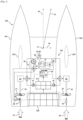
- FIG.1 shows schematically a marine vessel 200 and in particular a catamaran with a port side hull 201 and a starboard side hull 202, comprising a port side electric motor 11 and a starboard side electric motor 12, respectively connected to a port side propeller 21 and to a starboard side propeller 22 via respective propeller shafts 23, 24, a rechargeable battery pack 210 as electric power supply for the electric motors 11, 12 and a photovoltaic system 220 as renewable energy source for recharging the battery pack 210.
- the marine vessel 200 may optionally comprise a port side keel 203 and a starboard side keel 204, e.g. in some cases when the marine vessel 200 is a sailing vessel.
- the marine vessel 200 comprises a vessel steering system 100 comprising a port side rudder 31 and a starboard side rudder 32 connected to each other, so that they can be deflected simultaneously with the same angle, and a rudder steering mechanism 30 comprising a steering wheel 33, a rudder control unit 34 connected to one or more rudder drive units 36 and at least one rudder angle feedback sensor 35.
- the vessel steering system 100 further comprises a navigation system 40 for determining the vessel position 41 with respect to an intended course 42.
- the vessel steering system 100 further comprises an autopilot system 50 for automatically steering the marine vessel 200 configured to operate according to one or more autopilot modes 51, 52, 53, eventually comprising an autopilot mode selection function to select between any of the autopilot modes 51, 52, 53.
- the autopilot system 50 comprises at least a motor steering autopilot mode 51 where the autopilot system 50 is configured to automatically control the rudder steering mechanism 30 in order to lock the rudders 31, 32 at a fixed angle, and based on a feedback from the navigation system 40 to independently and dynamically adjust power supply 15', 16' to each of the port side propeller 21 and of the starboard side propeller 22 respectively by independently and dynamically regulating electric power supply 15, 16 to the respective electric motors 11, 12 via respective motor control units 13, 14 in order to maintain the vessel 200 on course 42.
- the autopilot system 50 in the motor steering autopilot mode 51 is configured to dynamically correct the bow heading 43 in order to counteract the actual lateral forces 44 acting on the vessel 200 as the vessel position 41 advances and to maintain the vessel 200 on the intended course 42 by independently and dynamically adjusting the electric power supply 15, 16 to each of the port side motor 11 and starboard side motor 12, while maintaining the angle of the rudders 31, 32 fixed with respect to the bow heading 43.
- the port side rudder 31 and the starboard side rudder 32 are in this example located aft with respect to the port side propeller 21 and to the starboard side propeller 22 respectively.
- the fixed rudder angle is an angle at which the rudders 31, 32 are parallel to the longitudinal axis of the vessel 200 that is in line with the bow heading 43.
- the autopilot system 50 may be configured to maintain a constant average vessel velocity or a constant average total electric power consumption 15, 16 or to provide an option to select between the two.
- the dynamic electric power adjustment 15, 16 is further based on any one or more actual data from any one or more additional sensors 60 or data sources, the data including any one or more of wind direction, water current direction, wave direction, swell, depth, yaw, pitch, roll.
- the autopilot system 50 in the motor steering autopilot mode 51 is responsive to a manual change of vessel velocity and/or manual change of course 42 by re-adjusting the electric power supply 15, 16 to each of the port side propeller 21 and of the starboard side propeller 22, while maintaining the rudders angle fixed.
- a manual change of course 42 may be enabled e.g. by digital control units 71, the pressing of which may result in a change of the bow heading 43 either towards left or towards right, e.g. stepwise in steps of 1 degree, 5 degrees, 10 degrees.
- digital control units 72 the pressing of which may result in a manual change of vessel velocity, e.g. by a stepwise increase or decrease of vessel velocity, may be used.
- the vessel steering system 100 further comprises a throttle mechanism 80 comprising two independent handles 81, 82 for individual manual control of electric power supply 15, 16 to each electric motor 11, 12 respectively, where individual manual control of electric power supply 15, 16 to each electric motor 11, 12 is disabled when the autopilot system 50 is activated, at least in the motor steering autopilot mode 51.
- a throttle mechanism 80 comprising two independent handles 81, 82 for individual manual control of electric power supply 15, 16 to each electric motor 11, 12 respectively, where individual manual control of electric power supply 15, 16 to each electric motor 11, 12 is disabled when the autopilot system 50 is activated, at least in the motor steering autopilot mode 51.
- the autopilot system 50 when the autopilot system 50 is activated, only manual control of vessel velocity either via digital control units 72 or by synchronous actuation of the throttle mechanism 80 is enabled.
- manual control of the steering wheel 33 is disabled when the autopilot system 50 is activated.
- manual control of the rudder steering mechanism 30 is disabled when the autopilot system 50 is activated, in any autopilot mode, and enabled as soon as the
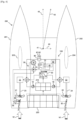
- [ Fig.2 ] shows schematically the same marine vessel 200 of [ Fig.1 ], where the autopilot system 50 comprises an autopilot mode selection function and is further configured to operate according to an additional rudder steering autopilot mode 52 and where this has been selected.
- the autopilot system 50 is configured to maintain the electric power supply 15, 16 to each of the electric motors 11, 12 constant and to automatically and dynamically control the rudder steering mechanism 30, by dynamically adjusting the rudders angle ⁇ with respect to the longitudinal axis of the vessel or bow heading 43, thus correcting the bow heading 43 in order to counteract the actual lateral forces 44 acting on the vessel 200 as the vessel position 41 advances and to maintain the vessel 200 on the intended course 42.
- the electric power supply 15, 16 to both electric motors 11, 12 is the same, but it may be respectively different, although constant, in other cases.
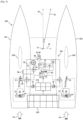
- [ Fig.3 ] shows schematically the same marine vessel 200 of [ Fig.1 ] and [ Fig.2 ], where the autopilot system 50 comprises an autopilot mode selection function and is further configured to operate according to an additional hybrid steering autopilot mode 53 and where this has been selected.
- the autopilot system 50 is configured to independently and dynamically regulate power supply 15, 16 to each of the electric motors 11, 12 respectively, and also to automatically and dynamically control the rudder steering mechanism 30 by dynamically adjusting the rudders angle ⁇ with respect to the longitudinal axis of the vessel or bow heading 43, thus correcting the bow heading 43, by the combined action of electric power control and rudder angle control, in order to counteract the actual lateral forces 44 acting on the vessel 200 as the vessel position 41 advances and to maintain the vessel 200 on the intended course 42.
- [ Fig.4 ] shows the same vessel 200 of [ Fig.1 ] in the motor steering autopilot mode 51, where the rudder angle is fixed, with the difference that according to this embodiment, the fixed rudder angle is an empirically determined angle ⁇ at which effective average total electric power consumption 15, 16 is minimum at a certain vessel velocity for the intended course 42.
- the angle ⁇ remains fixed at least until a willful change of vessel velocity or change of intended course 42 occurs or if the total electric power consumption 15, 16 significantly changes along the course 42, in which case a new angle ⁇ may be determined and fixed.
- [ Fig.5 ] shows a marine vessel 200' that is a variant of the marine vessel 200 of [ Fig.1]-4 , where the rudders 31, 32 are located forward with respect to the propulsors 21, 22 respectively.
- This configuration may be more typical in case of the electric motors 11, 12 being connected to the respective propulsors 21, 22 via e.g. a saildrive transmission system comprising a vertical intermediate shaft extending downward through the respective hulls 201, 202 that connects to propeller shafts 23', 24' respectively.
- the autopilot system 50 is in the motor steering autopilot mode 51.
- the fixed rudder angle is an angle ⁇ at which the rudders 31, 32 are parallel to the intended course 42, the angle ⁇ remaining fixed as long as the intended course 42 remains fixed.
- the autopilot system 50 may be configured to operate according to any of the other autopilot modes 52, 53 or according to different embodiments of the autopilot mode 51, as described above, also in connection to this variant of the marine vessel 200'.
Landscapes
- Chemical & Material Sciences (AREA)
- Engineering & Computer Science (AREA)
- Combustion & Propulsion (AREA)
- Mechanical Engineering (AREA)
- Ocean & Marine Engineering (AREA)
- Control Of Position, Course, Altitude, Or Attitude Of Moving Bodies (AREA)
Claims (15)
- Autopilotsystem (50) zum automatischen Steuern eines Wasserfahrzeugs (200, 200'), wobei das Wasserfahrzeug (200, 200') zwei Elektromotoren (11, 12), die jeweils mit einem backbordseitigen Propulsor (21) und einem steuerbordseitigen Propulsor (22) verbunden sind, ein backbordseitiges Ruder (31) und ein steuerbordseitiges Ruder (32) und einen Rudersteuerungsmechanismus (30) umfasst, ein Navigationssystem (40) zum Bestimmen der Wasserfahrzeugsposition (41) in Bezug auf einen beabsichtigten Kurs (42), wobei das Autopilotsystem (50) so konfiguriert ist, dass es gemäß einem oder mehreren Autopilotmodi (51, 52, 53) arbeitet, die mindestens einen Motorsteuerungs-Autopilotmodus (51) umfassen, wobei das Autopilotsystem (50) automatisch den Rudersteuerungsmechanismus (30) steuert, um die Ruder (31, 32) in einem festen Winkel zu arretieren, bei dem die Ruder (31, 32) den geringsten Widerstand verursachen, und basierend auf einer Rückmeldung von dem Navigationssystem (40) die Energieversorgung (15', 16') zu jedem des backbordseitigen Propulsors (21) und des steuerbordseitigen Propulsors (22) unabhängig und dynamisch einstellt, indem die elektrische Energieversorgung (15, 16) zu den jeweiligen Elektromotoren (11, 12) unabhängig und dynamisch reguliert wird, um das Wasserfahrzeug auf Kurs (42) zu halten, wodurch der Energieverbrauch bei einer bestimmten Wasserfahrzeugsgeschwindigkeit reduziert oder die Wasserfahrzeugsgeschwindigkeit bei einem bestimmten Energieverbrauch im Motorsteuerungs-Autopilotmodus erhöht wird, während die Möglichkeit erhalten bleibt, den Rudersteuerungsmechanismus (30) zur Richtungssteuerung zumindest im manuellen Modus oder in anderen Situationen zu verwenden.
- Autopilotsystem (50) nach Anspruch 1, wobei das Autopilotsystem (50) so konfiguriert ist, dass es eine konstante durchschnittliche Wasserfahrzeugsgeschwindigkeit und/oder einen konstanten durchschnittlichen elektrischen Gesamtstromverbrauch aufrechterhält.
- Autopilotsystem (50) nach Anspruch 1 oder 2, wobei der feste Winkel ein Winkel ist, bei dem die Ruder (31, 32) parallel zu einer Längsachse des Wasserfahrzeugs (200, 200') oder zur Bugrichtung (43) sind, oder ein Winkel (θ) ist, bei dem die Ruder (31, 32) parallel zum beabsichtigten Kurs (42) sind.
- Autopilotsystem (50) nach Anspruch 3, wobei der feste Winkel ein Winkel ist, bei dem die Ruder (31, 32) parallel zur Längsachse des Wasserfahrzeugs (200, 200') oder zur Bugrichtung (43) liegen, wenn die Ruder (31, 32) achtern in Bezug auf die Propulsoren (21, 22) angeordnet sind und/oder wenn das Wasserfahrzeug (200, 200') einen Backbord-Kiel (203) und einen Steuerbord-Kiel (204) aufweist, die mit den jeweiligen Rudern (31, 32) und Propulsoren (21, 22) ausgerichtet sind.
- Autopilotsystem (50) nach Anspruch 3, wobei der feste Winkel ein Winkel (θ) ist, bei dem die Ruder (31, 32) parallel zum beabsichtigten Kurs (42) sind, wenn die Ruder (31, 32) jeweils vorwärts in Bezug auf die Propulsoren (21, 22) angeordnet sind.
- Autopilotsystem (50) nach Anspruch 1 oder 2, wobei der feste Winkel ein empirisch ermittelter Winkel (θ) ist, bei dem der effektive durchschnittliche elektrische Gesamtstromverbrauch bei einer bestimmten Wasserfahrzeugsgeschwindigkeit für den beabsichtigten Kurs (42) minimal ist.
- Autopilotsystem (50) nach einem der vorhergehenden Ansprüche, wobei das Autopilotsystem (50) auf eine manuelle Änderung der Wasserfahrzeugsgeschwindigkeit und/oder eine manuelle Kursänderung (42) reagiert, indem es die Stromversorgung (15', 16') für jeden des backbordseitigen Propulsors (21) und des steuerbordseitigen Propulsors (22) neu einstellt, während der Ruderwinkel fest bleibt.
- Das Autopilotsystem (50) nach einem der vorhergehenden Ansprüche, wobei die dynamische Energieversorgungseinstellung außerdem auf einem oder mehreren tatsächlichen Daten von einem oder mehreren zusätzlichen Sensoren (60) oder Datenquellen basiert, wobei die Daten eine oder mehrere der folgenden Daten umfassen: Windrichtung, Wasserströmungsrichtung, Wellenrichtung, Seegang, Tiefe, Gieren, Nicken und Rollen.
- Das Autopilotsystem (50) nach einem der vorhergehenden Ansprüche, wobei das Autopilotsystem (50) eine Autopilotmodus-Auswahlfunktion umfasst und ferner so konfiguriert ist, dass es gemäß einem oder mehreren zusätzlichen Autopilotmodi (52, 53) arbeitet, die aus einem Autopilotmodus mit Rudersteuerung (52) und einem Autopilotmodus mit Hybridsteuerung (53) ausgewählt werden.
- Das Autopilotsystem (50) nach Anspruch 9, wobei das Autopilotsystem (50) gemäß dem Rudersteuerungs-Autopilotmodus (52) dazu konfiguriert ist, die Energieversorgung (15, 16) jedes der Elektromotoren (11, 12) konstant zu halten und den Rudersteuerungsmechanismus (30) automatisch und dynamisch zu steuern, um das Wasserfahrzeug (200, 200') auf Kurs (42) zu halten, und wobei das Autopilotsystem (50) gemäß dem Hybridsteuerungs-Autopilotmodus (53) dazu konfiguriert ist, die Energieversorgung (15, 16) der jeweiligen Elektromotoren (11, 12) unabhängig und dynamisch zu regeln und auch den Rudersteuerungsmechanismus (30) automatisch und dynamisch zu steuern, um das Wasserfahrzeug (200, 200') auf Kurs (42) zu halten.
- Das Autopilotsystem (50) nach Anspruch 10, wobei die Energieversorgung (15, 16) beider Elektromotoren (11, 12) im Rudersteuerungs-Autopilotmodus (52) dieselbe ist.
- Das Autopilotsystem (50) nach einem der vorhergehenden Ansprüche, wobei die manuelle Steuerung des Rudersteuermechanismus (30) deaktiviert ist, wenn das Autopilotsystem (50) aktiviert ist, und aktiviert wird, sobald das Autopilotsystem (50) deaktiviert wird.
- Ein Wasserfahrzeug (200, 200') mit zwei unabhängig steuerbaren Elektromotoren (11, 12), die jeweils mit einem backbordseitigen Propulsor (21) und einem steuerbordseitigen Propulsor (22) verbunden sind, einem backbordseitigen Ruder (31) und ein steuerbordseitigen Ruder (32) und einem Rudersteuermechanismus (30), einem Navigationssystem (40) zum Bestimmen der Wasserfahrzeugsposition (41) in Bezug auf einen beabsichtigten Kurs (42) und einem Autopilotsystem (50) zum automatischen Steuern des Wasserfahrzeugs (200, 200') nach einem der Ansprüche 1 bis 12.
- Das Wasserfahrzeug (200, 200') nach Anspruch 13 umfassend ferner einen Hebelmechanismus (80) mit zwei unabhängigen Griffen (81, 82) zur individuellen manuellen Steuerung der Energieversorgung (15, 16) jedes Elektromotors (11, 12), wobei die individuelle manuelle Steuerung der Energieversorgung (15, 16) jedes Elektromotors (11, 12) deaktiviert ist, wenn das Autopilotsystem (50) aktiviert ist.
- Das Wasserfahrzeug nach Anspruch 13 oder 14, das ferner einen wiederaufladbaren Batteriesatz (210) als elektrische Energieversorgung (15, 16) für die Elektromotoren (11, 12) und mindestens eine erneuerbare Energiequelle (220) zum Wiederaufladen des Batteriesatzes (210) umfasst.
Applications Claiming Priority (2)
| Application Number | Priority Date | Filing Date | Title |
|---|---|---|---|
| EP21020083 | 2021-02-21 | ||
| PCT/EP2022/054169 WO2022175502A1 (en) | 2021-02-21 | 2022-02-20 | Autopilot system for marine vessels |
Publications (3)
| Publication Number | Publication Date |
|---|---|
| EP4294718A1 EP4294718A1 (de) | 2023-12-27 |
| EP4294718C0 EP4294718C0 (de) | 2025-06-18 |
| EP4294718B1 true EP4294718B1 (de) | 2025-06-18 |
Family
ID=74701367
Family Applications (1)
| Application Number | Title | Priority Date | Filing Date |
|---|---|---|---|
| EP22706622.2A Active EP4294718B1 (de) | 2021-02-21 | 2022-02-20 | Autopilotsystem für schiffe |
Country Status (4)
| Country | Link |
|---|---|
| US (1) | US20240092472A1 (de) |
| EP (1) | EP4294718B1 (de) |
| WO (1) | WO2022175502A1 (de) |
| ZA (1) | ZA202308499B (de) |
Families Citing this family (2)
| Publication number | Priority date | Publication date | Assignee | Title |
|---|---|---|---|---|
| WO2023131689A1 (en) | 2022-01-09 | 2023-07-13 | Mario Curcio | Steering-support system for marine vessels |
| EP4632521B1 (de) * | 2024-04-12 | 2026-03-18 | CPAC Systems AB | Autopilotsteuerung eines wasserfahrzeugs |
Citations (1)
| Publication number | Priority date | Publication date | Assignee | Title |
|---|---|---|---|---|
| US20200062368A1 (en) * | 2017-04-07 | 2020-02-27 | Remøy Sea Group AS | Arrangement for manoeuvring a boat |
Family Cites Families (8)
| Publication number | Priority date | Publication date | Assignee | Title |
|---|---|---|---|---|
| NO327025B1 (no) * | 2005-12-07 | 2009-04-06 | Marine Cybernetics As | Fremgangsmate og system for forbedret DP/PMS testing av et marint reguleringssystem |
| WO2008133494A1 (en) * | 2007-04-26 | 2008-11-06 | Gideon Raphael Goudsmit | Vessel with retractable motor/generator assembly |
| NO334692B1 (no) * | 2013-02-25 | 2014-05-12 | Tecom Analytical Systems | Fremgangsmåte for styring av et ubemannet havfartøy |
| JP6596700B2 (ja) * | 2014-10-23 | 2019-10-30 | ヤンマー株式会社 | 操船装置 |
| US10671073B2 (en) * | 2017-02-15 | 2020-06-02 | Brunswick Corporation | Station keeping system and method |
| US20180244362A1 (en) | 2017-02-24 | 2018-08-30 | Bae Systems Land & Armaments L.P. | Smart marine throttle |
| WO2018228696A1 (en) * | 2017-06-15 | 2018-12-20 | Abb Schweiz Ag | Controlling marine vessel |
| US20190039708A1 (en) * | 2017-08-02 | 2019-02-07 | Steering Solutions Ip Holding Corporation | Marine electric power steering autopilot system |
-
2022
- 2022-02-20 EP EP22706622.2A patent/EP4294718B1/de active Active
- 2022-02-20 US US18/276,023 patent/US20240092472A1/en active Pending
- 2022-02-20 WO PCT/EP2022/054169 patent/WO2022175502A1/en not_active Ceased
-
2023
- 2023-09-04 ZA ZA2023/08499A patent/ZA202308499B/en unknown
Patent Citations (1)
| Publication number | Priority date | Publication date | Assignee | Title |
|---|---|---|---|---|
| US20200062368A1 (en) * | 2017-04-07 | 2020-02-27 | Remøy Sea Group AS | Arrangement for manoeuvring a boat |
Also Published As
| Publication number | Publication date |
|---|---|
| EP4294718C0 (de) | 2025-06-18 |
| WO2022175502A1 (en) | 2022-08-25 |
| EP4294718A1 (de) | 2023-12-27 |
| US20240092472A1 (en) | 2024-03-21 |
| ZA202308499B (en) | 2023-10-25 |
Similar Documents
| Publication | Publication Date | Title |
|---|---|---|
| US7416458B2 (en) | Controller for propulsion unit, control program for propulsion unit controller, method of controlling propulsion unit controller, and controller for watercraft | |
| US4371346A (en) | System for propulsion of boats by means of winds and streams and for recovery of energy | |
| US8875643B2 (en) | Ship, in particular freight ship, with a magnus rotor | |
| US8583300B2 (en) | Automatic stabilizing unit for watercrafts | |
| EP1981757B1 (de) | Verfahren und anordnung zur steuerung einer antriebsanordnung in einem wasserfahrzeug | |
| US20150259033A1 (en) | Trimaran having outriggers with propulsors | |
| CN110831851B (zh) | 水上船舶推进单元校准方法 | |
| US5413461A (en) | Method and apparatus for controlling a propulsion engine output based on the net axial force on a propeller shaft | |
| EP4294718B1 (de) | Autopilotsystem für schiffe | |
| JP7622274B2 (ja) | 燃費算出装置及び船舶 | |
| US9139272B2 (en) | Internally actuated autonomous sailing buoy | |
| JP2000211585A (ja) | 風力利用船 | |
| Patil et al. | Design optimization of an AUV for performing depth control maneuver | |
| EP2064607B1 (de) | Lenksteuersystem für ein seefahrzeug und verfahren zum betrieb eines solchen lenksteuersystems | |
| EP3885250B1 (de) | Wasserfahrzeug und wasserfahrzeugsteuerungssystem | |
| US20250042527A1 (en) | Steering-support system for marine vessels | |
| US20240132192A1 (en) | Hybrid propulsion system for a pleasure boat | |
| JP2005254956A (ja) | ウォータジェット推進船の自動定点保持装置 | |
| EP4524023B1 (de) | Schiffsantriebssystem zur bewegung eines wasserfahrzeugs in seitlicher richtung und steuerungsverfahren dafür | |
| Rieg et al. | Technical Evaluation of the RHS 200 for High Speed Ferry Applications and Coast Guard Missions |
Legal Events
| Date | Code | Title | Description |
|---|---|---|---|
| STAA | Information on the status of an ep patent application or granted ep patent |
Free format text: STATUS: UNKNOWN |
|
| STAA | Information on the status of an ep patent application or granted ep patent |
Free format text: STATUS: THE INTERNATIONAL PUBLICATION HAS BEEN MADE |
|
| PUAI | Public reference made under article 153(3) epc to a published international application that has entered the european phase |
Free format text: ORIGINAL CODE: 0009012 |
|
| STAA | Information on the status of an ep patent application or granted ep patent |
Free format text: STATUS: REQUEST FOR EXAMINATION WAS MADE |
|
| 17P | Request for examination filed |
Effective date: 20230903 |
|
| AK | Designated contracting states |
Kind code of ref document: A1 Designated state(s): AL AT BE BG CH CY CZ DE DK EE ES FI FR GB GR HR HU IE IS IT LI LT LU LV MC MK MT NL NO PL PT RO RS SE SI SK SM TR |
|
| DAV | Request for validation of the european patent (deleted) | ||
| DAX | Request for extension of the european patent (deleted) | ||
| GRAP | Despatch of communication of intention to grant a patent |
Free format text: ORIGINAL CODE: EPIDOSNIGR1 |
|
| STAA | Information on the status of an ep patent application or granted ep patent |
Free format text: STATUS: GRANT OF PATENT IS INTENDED |
|
| INTG | Intention to grant announced |
Effective date: 20240717 |
|
| GRAJ | Information related to disapproval of communication of intention to grant by the applicant or resumption of examination proceedings by the epo deleted |
Free format text: ORIGINAL CODE: EPIDOSDIGR1 |
|
| STAA | Information on the status of an ep patent application or granted ep patent |
Free format text: STATUS: REQUEST FOR EXAMINATION WAS MADE |
|
| INTC | Intention to grant announced (deleted) | ||
| GRAP | Despatch of communication of intention to grant a patent |
Free format text: ORIGINAL CODE: EPIDOSNIGR1 |
|
| STAA | Information on the status of an ep patent application or granted ep patent |
Free format text: STATUS: GRANT OF PATENT IS INTENDED |
|
| GRAJ | Information related to disapproval of communication of intention to grant by the applicant or resumption of examination proceedings by the epo deleted |
Free format text: ORIGINAL CODE: EPIDOSDIGR1 |
|
| STAA | Information on the status of an ep patent application or granted ep patent |
Free format text: STATUS: REQUEST FOR EXAMINATION WAS MADE |
|
| INTG | Intention to grant announced |
Effective date: 20241111 |
|
| INTC | Intention to grant announced (deleted) | ||
| GRAP | Despatch of communication of intention to grant a patent |
Free format text: ORIGINAL CODE: EPIDOSNIGR1 |
|
| STAA | Information on the status of an ep patent application or granted ep patent |
Free format text: STATUS: GRANT OF PATENT IS INTENDED |
|
| INTG | Intention to grant announced |
Effective date: 20250129 |
|
| GRAS | Grant fee paid |
Free format text: ORIGINAL CODE: EPIDOSNIGR3 |
|
| GRAA | (expected) grant |
Free format text: ORIGINAL CODE: 0009210 |
|
| STAA | Information on the status of an ep patent application or granted ep patent |
Free format text: STATUS: THE PATENT HAS BEEN GRANTED |
|
| AK | Designated contracting states |
Kind code of ref document: B1 Designated state(s): AL AT BE BG CH CY CZ DE DK EE ES FI FR GB GR HR HU IE IS IT LI LT LU LV MC MK MT NL NO PL PT RO RS SE SI SK SM TR |
|
| REG | Reference to a national code |
Ref country code: GB Ref legal event code: FG4D |
|
| REG | Reference to a national code |
Ref country code: CH Ref legal event code: EP |
|
| REG | Reference to a national code |
Ref country code: DE Ref legal event code: R096 Ref document number: 602022016082 Country of ref document: DE |
|
| REG | Reference to a national code |
Ref country code: CH Ref legal event code: EP |
|
| REG | Reference to a national code |
Ref country code: IE Ref legal event code: FG4D |
|
| U01 | Request for unitary effect filed |
Effective date: 20250618 |
|
| U07 | Unitary effect registered |
Designated state(s): AT BE BG DE DK EE FI FR IT LT LU LV MT NL PT RO SE SI Effective date: 20250627 |
|
| U79 | Statement concerning licences of right filed [unitary effect] |
Effective date: 20250627 |
|
| PG25 | Lapsed in a contracting state [announced via postgrant information from national office to epo] |
Ref country code: NO Free format text: LAPSE BECAUSE OF FAILURE TO SUBMIT A TRANSLATION OF THE DESCRIPTION OR TO PAY THE FEE WITHIN THE PRESCRIBED TIME-LIMIT Effective date: 20250918 Ref country code: GR Free format text: LAPSE BECAUSE OF FAILURE TO SUBMIT A TRANSLATION OF THE DESCRIPTION OR TO PAY THE FEE WITHIN THE PRESCRIBED TIME-LIMIT Effective date: 20250919 |
|
| PG25 | Lapsed in a contracting state [announced via postgrant information from national office to epo] |
Ref country code: HR Free format text: LAPSE BECAUSE OF FAILURE TO SUBMIT A TRANSLATION OF THE DESCRIPTION OR TO PAY THE FEE WITHIN THE PRESCRIBED TIME-LIMIT Effective date: 20250618 |
|
| PG25 | Lapsed in a contracting state [announced via postgrant information from national office to epo] |
Ref country code: RS Free format text: LAPSE BECAUSE OF FAILURE TO SUBMIT A TRANSLATION OF THE DESCRIPTION OR TO PAY THE FEE WITHIN THE PRESCRIBED TIME-LIMIT Effective date: 20250918 |
|
| PG25 | Lapsed in a contracting state [announced via postgrant information from national office to epo] |
Ref country code: IS Free format text: LAPSE BECAUSE OF FAILURE TO SUBMIT A TRANSLATION OF THE DESCRIPTION OR TO PAY THE FEE WITHIN THE PRESCRIBED TIME-LIMIT Effective date: 20251018 |
|
| PG25 | Lapsed in a contracting state [announced via postgrant information from national office to epo] |
Ref country code: SM Free format text: LAPSE BECAUSE OF FAILURE TO SUBMIT A TRANSLATION OF THE DESCRIPTION OR TO PAY THE FEE WITHIN THE PRESCRIBED TIME-LIMIT Effective date: 20250618 |
|
| PG25 | Lapsed in a contracting state [announced via postgrant information from national office to epo] |
Ref country code: CZ Free format text: LAPSE BECAUSE OF FAILURE TO SUBMIT A TRANSLATION OF THE DESCRIPTION OR TO PAY THE FEE WITHIN THE PRESCRIBED TIME-LIMIT Effective date: 20250618 |
|
| PG25 | Lapsed in a contracting state [announced via postgrant information from national office to epo] |
Ref country code: PL Free format text: LAPSE BECAUSE OF FAILURE TO SUBMIT A TRANSLATION OF THE DESCRIPTION OR TO PAY THE FEE WITHIN THE PRESCRIBED TIME-LIMIT Effective date: 20250618 |
|
| PG25 | Lapsed in a contracting state [announced via postgrant information from national office to epo] |
Ref country code: SK Free format text: LAPSE BECAUSE OF FAILURE TO SUBMIT A TRANSLATION OF THE DESCRIPTION OR TO PAY THE FEE WITHIN THE PRESCRIBED TIME-LIMIT Effective date: 20250618 |
|
| PG25 | Lapsed in a contracting state [announced via postgrant information from national office to epo] |
Ref country code: ES Free format text: LAPSE BECAUSE OF FAILURE TO SUBMIT A TRANSLATION OF THE DESCRIPTION OR TO PAY THE FEE WITHIN THE PRESCRIBED TIME-LIMIT Effective date: 20250618 |
|
| U20 | Renewal fee for the european patent with unitary effect paid |
Year of fee payment: 5 Effective date: 20260214 |
|
| PLBE | No opposition filed within time limit |
Free format text: ORIGINAL CODE: 0009261 |
|
| STAA | Information on the status of an ep patent application or granted ep patent |
Free format text: STATUS: NO OPPOSITION FILED WITHIN TIME LIMIT |
|
| REG | Reference to a national code |
Ref country code: CH Ref legal event code: L10 Free format text: ST27 STATUS EVENT CODE: U-0-0-L10-L00 (AS PROVIDED BY THE NATIONAL OFFICE) Effective date: 20260430 |