EP4290178A2 - Steuerungssystem und steuerungsverfahren zur steuerung einer elektrischen gehhilfevorrichtung - Google Patents
Steuerungssystem und steuerungsverfahren zur steuerung einer elektrischen gehhilfevorrichtung Download PDFInfo
- Publication number
- EP4290178A2 EP4290178A2 EP23174041.6A EP23174041A EP4290178A2 EP 4290178 A2 EP4290178 A2 EP 4290178A2 EP 23174041 A EP23174041 A EP 23174041A EP 4290178 A2 EP4290178 A2 EP 4290178A2
- Authority
- EP
- European Patent Office
- Prior art keywords
- walking aid
- aid device
- electric walking
- user
- controller
- Prior art date
- Legal status (The legal status is an assumption and is not a legal conclusion. Google has not performed a legal analysis and makes no representation as to the accuracy of the status listed.)
- Pending
Links
Images

Classifications
-
- A—HUMAN NECESSITIES
- A61—MEDICAL OR VETERINARY SCIENCE; HYGIENE
- A61G—TRANSPORT, PERSONAL CONVEYANCES, OR ACCOMMODATION SPECIALLY ADAPTED FOR PATIENTS OR DISABLED PERSONS; OPERATING TABLES OR CHAIRS; CHAIRS FOR DENTISTRY; FUNERAL DEVICES
- A61G5/00—Chairs or personal conveyances specially adapted for patients or disabled persons, e.g. wheelchairs
- A61G5/10—Parts, details or accessories
- A61G5/1051—Arrangements for steering
-
- G—PHYSICS
- G01—MEASURING; TESTING
- G01C—MEASURING DISTANCES, LEVELS OR BEARINGS; SURVEYING; NAVIGATION; GYROSCOPIC INSTRUMENTS; PHOTOGRAMMETRY OR VIDEOGRAMMETRY
- G01C21/00—Navigation; Navigational instruments not provided for in groups G01C1/00 - G01C19/00
- G01C21/20—Instruments for performing navigational calculations
-
- A—HUMAN NECESSITIES
- A61—MEDICAL OR VETERINARY SCIENCE; HYGIENE
- A61G—TRANSPORT, PERSONAL CONVEYANCES, OR ACCOMMODATION SPECIALLY ADAPTED FOR PATIENTS OR DISABLED PERSONS; OPERATING TABLES OR CHAIRS; CHAIRS FOR DENTISTRY; FUNERAL DEVICES
- A61G5/00—Chairs or personal conveyances specially adapted for patients or disabled persons, e.g. wheelchairs
- A61G5/04—Chairs or personal conveyances specially adapted for patients or disabled persons, e.g. wheelchairs motor-driven
-
- A—HUMAN NECESSITIES
- A61—MEDICAL OR VETERINARY SCIENCE; HYGIENE
- A61G—TRANSPORT, PERSONAL CONVEYANCES, OR ACCOMMODATION SPECIALLY ADAPTED FOR PATIENTS OR DISABLED PERSONS; OPERATING TABLES OR CHAIRS; CHAIRS FOR DENTISTRY; FUNERAL DEVICES
- A61G5/00—Chairs or personal conveyances specially adapted for patients or disabled persons, e.g. wheelchairs
- A61G5/10—Parts, details or accessories
-
- A—HUMAN NECESSITIES
- A61—MEDICAL OR VETERINARY SCIENCE; HYGIENE
- A61G—TRANSPORT, PERSONAL CONVEYANCES, OR ACCOMMODATION SPECIALLY ADAPTED FOR PATIENTS OR DISABLED PERSONS; OPERATING TABLES OR CHAIRS; CHAIRS FOR DENTISTRY; FUNERAL DEVICES
- A61G5/00—Chairs or personal conveyances specially adapted for patients or disabled persons, e.g. wheelchairs
- A61G5/10—Parts, details or accessories
- A61G5/1005—Wheelchairs having brakes
-
- A—HUMAN NECESSITIES
- A61—MEDICAL OR VETERINARY SCIENCE; HYGIENE
- A61H—PHYSICAL THERAPY APPARATUS, e.g. DEVICES FOR LOCATING OR STIMULATING REFLEX POINTS IN THE BODY; ARTIFICIAL RESPIRATION; MASSAGE; BATHING DEVICES FOR SPECIAL THERAPEUTIC OR HYGIENIC PURPOSES OR SPECIFIC PARTS OF THE BODY
- A61H3/00—Appliances for aiding patients or disabled persons to walk about
- A61H3/04—Wheeled walking aids for patients or disabled persons
-
- G—PHYSICS
- G05—CONTROLLING; REGULATING
- G05D—SYSTEMS FOR CONTROLLING OR REGULATING NON-ELECTRIC VARIABLES
- G05D1/00—Control of position, course, altitude or attitude of land, water, air or space vehicles, e.g. using automatic pilots
- G05D1/02—Control of position or course in two dimensions
- G05D1/021—Control of position or course in two dimensions specially adapted to land vehicles
- G05D1/0231—Control of position or course in two dimensions specially adapted to land vehicles using optical position detecting means
- G05D1/0246—Control of position or course in two dimensions specially adapted to land vehicles using optical position detecting means using a video camera in combination with image processing means
- G05D1/0248—Control of position or course in two dimensions specially adapted to land vehicles using optical position detecting means using a video camera in combination with image processing means in combination with a laser
-
- G—PHYSICS
- G05—CONTROLLING; REGULATING
- G05D—SYSTEMS FOR CONTROLLING OR REGULATING NON-ELECTRIC VARIABLES
- G05D1/00—Control of position, course, altitude or attitude of land, water, air or space vehicles, e.g. using automatic pilots
- G05D1/02—Control of position or course in two dimensions
- G05D1/021—Control of position or course in two dimensions specially adapted to land vehicles
- G05D1/0268—Control of position or course in two dimensions specially adapted to land vehicles using internal positioning means
- G05D1/0274—Control of position or course in two dimensions specially adapted to land vehicles using internal positioning means using mapping information stored in a memory device
-
- H—ELECTRICITY
- H04—ELECTRIC COMMUNICATION TECHNIQUE
- H04N—PICTORIAL COMMUNICATION, e.g. TELEVISION
- H04N7/00—Television systems
- H04N7/18—Closed-circuit television [CCTV] systems, i.e. systems in which the video signal is not broadcast
-
- A—HUMAN NECESSITIES
- A61—MEDICAL OR VETERINARY SCIENCE; HYGIENE
- A61G—TRANSPORT, PERSONAL CONVEYANCES, OR ACCOMMODATION SPECIALLY ADAPTED FOR PATIENTS OR DISABLED PERSONS; OPERATING TABLES OR CHAIRS; CHAIRS FOR DENTISTRY; FUNERAL DEVICES
- A61G2203/00—General characteristics of devices
- A61G2203/10—General characteristics of devices characterised by specific control means, e.g. for adjustment or steering
-
- A—HUMAN NECESSITIES
- A61—MEDICAL OR VETERINARY SCIENCE; HYGIENE
- A61G—TRANSPORT, PERSONAL CONVEYANCES, OR ACCOMMODATION SPECIALLY ADAPTED FOR PATIENTS OR DISABLED PERSONS; OPERATING TABLES OR CHAIRS; CHAIRS FOR DENTISTRY; FUNERAL DEVICES
- A61G2203/00—General characteristics of devices
- A61G2203/10—General characteristics of devices characterised by specific control means, e.g. for adjustment or steering
- A61G2203/12—Remote controls
-
- A—HUMAN NECESSITIES
- A61—MEDICAL OR VETERINARY SCIENCE; HYGIENE
- A61G—TRANSPORT, PERSONAL CONVEYANCES, OR ACCOMMODATION SPECIALLY ADAPTED FOR PATIENTS OR DISABLED PERSONS; OPERATING TABLES OR CHAIRS; CHAIRS FOR DENTISTRY; FUNERAL DEVICES
- A61G2203/00—General characteristics of devices
- A61G2203/10—General characteristics of devices characterised by specific control means, e.g. for adjustment or steering
- A61G2203/20—Displays or monitors
-
- A—HUMAN NECESSITIES
- A61—MEDICAL OR VETERINARY SCIENCE; HYGIENE
- A61G—TRANSPORT, PERSONAL CONVEYANCES, OR ACCOMMODATION SPECIALLY ADAPTED FOR PATIENTS OR DISABLED PERSONS; OPERATING TABLES OR CHAIRS; CHAIRS FOR DENTISTRY; FUNERAL DEVICES
- A61G2203/00—General characteristics of devices
- A61G2203/10—General characteristics of devices characterised by specific control means, e.g. for adjustment or steering
- A61G2203/22—General characteristics of devices characterised by specific control means, e.g. for adjustment or steering for automatically guiding movable devices, e.g. stretchers or wheelchairs in a hospital
-
- A—HUMAN NECESSITIES
- A61—MEDICAL OR VETERINARY SCIENCE; HYGIENE
- A61G—TRANSPORT, PERSONAL CONVEYANCES, OR ACCOMMODATION SPECIALLY ADAPTED FOR PATIENTS OR DISABLED PERSONS; OPERATING TABLES OR CHAIRS; CHAIRS FOR DENTISTRY; FUNERAL DEVICES
- A61G2203/00—General characteristics of devices
- A61G2203/30—General characteristics of devices characterised by sensor means
-
- A—HUMAN NECESSITIES
- A61—MEDICAL OR VETERINARY SCIENCE; HYGIENE
- A61G—TRANSPORT, PERSONAL CONVEYANCES, OR ACCOMMODATION SPECIALLY ADAPTED FOR PATIENTS OR DISABLED PERSONS; OPERATING TABLES OR CHAIRS; CHAIRS FOR DENTISTRY; FUNERAL DEVICES
- A61G2203/00—General characteristics of devices
- A61G2203/30—General characteristics of devices characterised by sensor means
- A61G2203/40—General characteristics of devices characterised by sensor means for distance
-
- A—HUMAN NECESSITIES
- A61—MEDICAL OR VETERINARY SCIENCE; HYGIENE
- A61G—TRANSPORT, PERSONAL CONVEYANCES, OR ACCOMMODATION SPECIALLY ADAPTED FOR PATIENTS OR DISABLED PERSONS; OPERATING TABLES OR CHAIRS; CHAIRS FOR DENTISTRY; FUNERAL DEVICES
- A61G2203/00—General characteristics of devices
- A61G2203/70—General characteristics of devices with special adaptations, e.g. for safety or comfort
-
- A—HUMAN NECESSITIES
- A61—MEDICAL OR VETERINARY SCIENCE; HYGIENE
- A61H—PHYSICAL THERAPY APPARATUS, e.g. DEVICES FOR LOCATING OR STIMULATING REFLEX POINTS IN THE BODY; ARTIFICIAL RESPIRATION; MASSAGE; BATHING DEVICES FOR SPECIAL THERAPEUTIC OR HYGIENIC PURPOSES OR SPECIFIC PARTS OF THE BODY
- A61H3/00—Appliances for aiding patients or disabled persons to walk about
- A61H3/04—Wheeled walking aids for patients or disabled persons
- A61H2003/043—Wheeled walking aids for patients or disabled persons with a drive mechanism
-
- A—HUMAN NECESSITIES
- A61—MEDICAL OR VETERINARY SCIENCE; HYGIENE
- A61H—PHYSICAL THERAPY APPARATUS, e.g. DEVICES FOR LOCATING OR STIMULATING REFLEX POINTS IN THE BODY; ARTIFICIAL RESPIRATION; MASSAGE; BATHING DEVICES FOR SPECIAL THERAPEUTIC OR HYGIENIC PURPOSES OR SPECIFIC PARTS OF THE BODY
- A61H3/00—Appliances for aiding patients or disabled persons to walk about
- A61H3/04—Wheeled walking aids for patients or disabled persons
- A61H2003/046—Wheeled walking aids for patients or disabled persons with braking means
-
- A—HUMAN NECESSITIES
- A61—MEDICAL OR VETERINARY SCIENCE; HYGIENE
- A61H—PHYSICAL THERAPY APPARATUS, e.g. DEVICES FOR LOCATING OR STIMULATING REFLEX POINTS IN THE BODY; ARTIFICIAL RESPIRATION; MASSAGE; BATHING DEVICES FOR SPECIAL THERAPEUTIC OR HYGIENIC PURPOSES OR SPECIFIC PARTS OF THE BODY
- A61H2201/00—Characteristics of apparatus not provided for in the preceding codes
- A61H2201/50—Control means thereof
- A61H2201/5007—Control means thereof computer controlled
- A61H2201/501—Control means thereof computer controlled connected to external computer devices or networks
-
- A—HUMAN NECESSITIES
- A61—MEDICAL OR VETERINARY SCIENCE; HYGIENE
- A61H—PHYSICAL THERAPY APPARATUS, e.g. DEVICES FOR LOCATING OR STIMULATING REFLEX POINTS IN THE BODY; ARTIFICIAL RESPIRATION; MASSAGE; BATHING DEVICES FOR SPECIAL THERAPEUTIC OR HYGIENIC PURPOSES OR SPECIFIC PARTS OF THE BODY
- A61H2230/00—Measuring physical parameters of the user
- A61H2230/85—Contour of the body
- A61H2230/855—Contour of the body used as a control parameter for the apparatus
Definitions
- This disclosure relates to a control system and a control method, and in particular to a control system and a control method for controlling an electric walking aid device.
- Electric walking aid devices such as electric walking aids, electric walking aid chairs, electric lifts, and electric wheelchairs, can assist users with mobility issues to move.
- the user must either approach the electric walking aid device by himself/herself or be assisted by a bystander to bring the electric walking aid device closer to the user. This limits the convenience of using the electric walking aid device. Therefore, it is one of the research focuses of the technicians in this field to control the electric walking aid device to actively approach the user to improve the convenience of using the electric walking aid device.
- the disclosure provides a control system and a control method for controlling an electric walking aid device, capable of controlling the electric walking aid device to actively approach a user.
- the control system of the disclosure is used to control the electric walking aid device.
- the control system includes a panoramic camera, a navigation information device, and a controller.
- the panoramic camera is disposed on the electric walking aid device.
- the panoramic camera captures a panoramic image around the electric walking aid device.
- the navigation information device is disposed on the electric walking aid device.
- the navigation information device generates navigation information.
- the controller is coupled to the panoramic camera and the navigation information device. The controller detects the user according to the panoramic image, and controls the electric walking aid device to approach the user according to the navigation information.
- the control method of the disclosure is used to control the electric walking aid device.
- the control method includes the followings.
- a panoramic image around the electric walking aid device is captured through a panoramic camera.
- Navigation information is generated by a navigation information device.
- a user is detected according to the panoramic image, and the electric walking aid device is controlled to approach the user according to the navigation information.
- control system and the control method of the disclosure use the panoramic camera to capture the panoramic image around the electric walking aid device, and use the navigation information device to generate the navigation information.
- the control system and the control method of the disclosure detect the user according to the panoramic image, and control the electric walking aid device to approach the user according to the navigation information. In this way, the convenience of using the electric walking aid device may be improved.
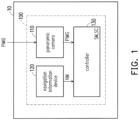
- FIG. 1 is a schematic diagram of a control system according to an embodiment of the disclosure.
- a control system 100 is used to control an electric walking aid device 10.
- the electric walking aid device 10 is, for example, an electric walking aid, an electric walking aid chair, an electric lift, an electric wheelchair, and other mobility assistance devices.
- the control system 100 includes a panoramic camera 110, a navigation information device 120, and a controller 130.
- the panoramic camera 110 is disposed on the electric walking aid device 10.
- the panoramic camera 110 captures a panoramic image PIMG around the electric walking aid device 10.
- the panoramic image PIMG is a 360° panoramic image around the electric walking aid device 10.
- the panoramic camera 110 may be realized by multiple image capture circuits with various image capture angles.
- the navigation information device 120 is disposed on the electric walking aid device 10.
- the navigation information device 120 generates navigation information NM.
- the controller 130 is coupled to the panoramic camera 110 and the navigation information device 120.
- the controller 130 receives the panoramic image PIMG and the navigation information NM.
- the controller 130 detects a user according to the panoramic image PIMG, and controls the electric walking aid device 10 to approach the user according to the navigation information NM.
- the controller 130 provides a control signal SC according to the navigation information NM to control the electric walking aid device 10, so that the electric walking aid device 10 may approach the user.
- the controller 130 is, for example, a central processing unit (CPU), or other programmable general purpose or special purpose microprocessor, digital signal processor (DSP), programmable controller, application specific integrated circuit (ASIC), programmable logic device (PLD), or other similar devices, or a combination of the devices, which may load and execute a computer program.
- CPU central processing unit
- DSP digital signal processor
- ASIC application specific integrated circuit
- PLD programmable logic device
- the controller 130 detects the user in the panoramic image PIMG according to the panoramic image PIMG, so as to know the user's position in the panoramic image PIMG.
- the controller 130 also navigates the electric walking aid device 10 according to the navigation information NM, thereby controlling the electric walking aid device 10 to approach the user. In this way, the convenience of using the electric walking aid device 10 may be improved.
- the controller 130 controls the electric walking aid device 10 to move in a field, so that the navigation information device 120 generates the navigation information NM of the field.
- the field may be an indoor environment and/or an outdoor environment.
- the controller 130 may construct a real-time map SM.
- the controller 130 may perform simultaneous localization and mapping (SLAM) calculations according to the navigation information NM, so as to provide the real-time map SM for the field.
- the real-time map SM corresponds to an environment of the field.
- the real-time map SM records obstacles in the field and spatial information of the electric walking aid device 10 moving freely in the field.
- the controller 130 may generate the control signal SC based on the real-time map SM and the navigation information NM, know movements of the electric walking aid device 10 in the environment of the field (e.g., current position, speed, etc.), and use the control signal SC to control the movements of the electric walking aid device 10. Further, the controller 130 performs a Visual SLAM operation, thereby providing the real-time map SM for the field.
- the controller 130 may use the navigation information NM to know a movement status of the electric walking aid device 10 in the real-time map SM or the current position in the field.
- the movement status includes a direction of a movement and a speed of a movement.
- the controller 130 may use the real-time map SM and the navigation information NM to provide the control signal SC, so as to navigate the electric walking aid device 10.
- the controller 130 also performs at least one of human detection and joint point detection of the user according to the panoramic image PIMG.
- the controller 130 recognizes the user through the human detection, and knows the user's position in the panoramic image PIMG.
- the controller 130 knows the user's posture through the joint point detection, such as standing, sitting, squatting, sleeping or hand raising.
- the controller 130 obtains multiple joint point coordinates of the user through the joint point detection, uses the joint point coordinates to determine the user's skeleton distribution, and knows the user's posture according to the user's skeleton distribution.
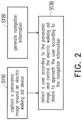
- FIG. 2 is a flow chart of a control method according to an embodiment of the disclosure.
- the control method shown in FIG. 2 is applicable to the electric walking aid device 10.
- the panoramic camera 110 captures the panoramic image PIMG around the electric walking aid device 10.
- the navigation information device 120 generates the navigation information NM.
- the controller 130 detects the user according to the panoramic image PIMG, and controls the electric walking aid device 10 to approach the user according to the navigation information NM.
- the implementation details of steps S110 to S130 are fully described or taught in the embodiment of FIG. 1 , and therefore will not be repeated in the following.
- FIG. 3 is a schematic diagram of a control system according to another embodiment of the disclosure.
- a control system 200 may be used to implement or replace the control system 100.
- the control system 200 includes a panoramic camera 210, a navigation information device 220, and a controller 230.
- the panoramic camera 210 captures the panoramic image PIMG around the electric walking aid device 10.
- the navigation information device 220 includes an inertial measurement unit (IMU) 221 and a depth camera 222.
- the navigation information NM includes acceleration information IF1 and point cloud information IF2.
- the inertial measurement unit 221 obtains the acceleration information IF1 as the electric walking aid device 10 moves in the field.
- the acceleration information IF1 is associated with a trajectory of the electric walking aid device 10 as it moves in the field.
- the depth camera 222 generates the point cloud information IF2 of the field.
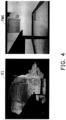
- FIG. 4 is a schematic diagram of a comparison of point cloud information and an original image according to an embodiment of the disclosure.
- FIG. 4 shows single point cloud information IF2 and a single original image FIMG.
- the depth camera 222 receives the original image FIMG, and generates the point cloud information IF2 according to the original image FIMG.
- the point cloud information IF2 includes a point cloud image corresponding to the original image FIMG of the field.
- the point cloud image includes multiple depth information of multiple feature points.
- the controller 230 includes a real-time map generation module 231 and a calculation model 232.
- the real-time map generation module 231 receives the acceleration information IF1 and the point cloud information IF2, and creates the real-time map SM according to the acceleration information IF1 and the point cloud information IF2.
- the real-time map SM may be created when the electric walking aid device 10 enters the field for the first time.
- the controller 230 may control the electric walking aid device 10 to move in the field, and the navigation information device 220 scans the environment of the field to generate the acceleration information IF1 and the point cloud information IF2, thereby enabling the real-time map generation module 231 to create the real-time map SM.
- the controller 230 detects the user according to the panoramic image PIMG, and controls the electric walking aid device 10 to approach the user according to the real-time map SM.
- the calculation model 232 performs the human detection and the joint point detection according to the panoramic image PIMG. Therefore, the controller 230 may know the user's position in the panoramic image PIMG and the user's posture.
- the calculation model 232 may include, for example, a YOLO (You only look once) calculation model and an OpenPose human posture recognition model, but the disclosure is not limited thereto.
- the controller 230 controls the electric walking aid device 10 to approach the user according to the real-time map SM. Based on the real-time map SM, the controller 230 may avoid possible obstacles when approaching the user.
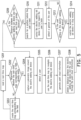
- FIG. 5 is a flow chart of a control method according to another embodiment of the disclosure.
- the control method shown in FIG. 5 is applicable to an electric walking aid device (e.g., the electric walking aid device 10 shown in FIG. 1 ).
- a loaded real-time map is read.
- the controller 230 reads the loaded real-time map.
- the controller 230 determines whether the real-time map SM corresponding to the field already exists according to the loaded map. That is, the controller 230 determines whether the loaded map includes the real-time map SM corresponding to the field.
- step S203 the controller 230 creates the real-time map SM corresponding to the field.
- the controller 230 may control the electric walking aid device to move in the field, and the navigation information device 220 scans the environment of the field in step S203 to generate the acceleration information IF1 and the point cloud information IF2, thereby enabling the controller 230 to create the real-time map SM corresponding to the field.
- the newly generated real-time map SM corresponding to the field will be read by the controller 230 in step S201.
- step S202 determines in step S202 that the real-time map SM corresponding to the field exists, this means that the real-time map SM in the field has been created.
- step S204 the panoramic camera 210 captures the panoramic image PIMG around the electric walking aid device.
- step S205 the controller 230 detects the user's position in the panoramic image PIMG.
- step S206 the controller 230 uses the real-time map SM corresponding to the field to navigate the electric walking aid device in step S206, thereby enabling the electric walking aid device to approach the user.
- step S207 the depth camera 222 continuously generates the point cloud information IF2 during a process of the controller 230 navigating the electric walking aid device.
- step S208 the controller 230 obtains a distance DIS between the electric walking aid device and the user through the point cloud information IF2.
- step S209 the controller 230 compares a preset distance to the distance DIS between the electric walking aid device and the user. When the distance DIS between the electric walking aid device and the user is greater than or equal to the preset distance, the control method returns to step S204. That is, once the real-time map SM corresponding to the field exists, the control method will perform steps S204 to S209 in a loop until the distance DIS is less than the preset distance.
- the preset distance may be set to, for example, 1 meter or tens of centimeters, and the disclosure is not limited thereto.
- step S209 when the distance DIS between the electric walking aid device and the user is less than the preset distance, the controller 230 searches for a position behind the user's back in step S210.
- the controller 230 searches for the position behind the user's back according to the panoramic image PIMG in step S210. Further, in step S210, the controller 230 finds out the position behind the user's back according to a detection result of the at least one of the human detection and the j oint point detection on the panoramic image PIMG.
- the controller 230 may, for example, use the OpenPose human posture recognition model to perform the joint point detection on the panoramic image PIMG to obtain joint point detection information, and use the YOLO calculation model to perform human detection on the panoramic image PIMG to obtain human detection information.
- the controller 230 uses an EfficientNet tool to classify information of the user's back. Further, the controller 230 integrates the information of the user's back with the human detection information and the joint point detection information to find out a direction or position of the user's back.
- the controller 230 determines the direction in which the user is facing or facing away according to the detection result of the at least one of the human detection and the joint point detection on the panoramic image PIMG.
- the controller 230 determines that the user is facing the electric walking aid device according to the detection result of the at least one of the human detection and the joint point detection
- the controller 230 controls the electric walking aid device to go around the user to reach the user's back.
- step S211 is proceed.
- step S211 the controller 230 controls the electric walking aid device to move toward the user's back, and detects a gesture GES of the user in step S212.
- the controller 230 controls the electric walking aid device to move slowly toward the user's back in step S211, and detects the gesture GES of the user according to the panoramic image PIMG in step S212.
- step S213 the controller 230 determines whether the user is sitting on the electric walking aid device.
- the controller determines whether the user is sitting on the electric walking aid device according to the detection result of the at least one of the human detection and the joint point detection.
- the controller 230 in step S211 controls the electric walking aid device to move toward the user's back.
- the controller 230 in step S214 controls the electric walking aid device to stop moving.
- the controller 230 may end the navigation and give control of the electric walking aid device to the user.
- the control system 200 may recognize the user's actions or gestures through the panoramic image PIMG to activate the control method as shown in FIG. 5 .
- the controller 230 determines that the user's gesture matches a preset gesture according to the detection result of the at least one of the human detection and the joint point detection on the panoramic image PIMG (the disclosure is not limited thereto).
- the controller 230 starts the control method shown in FIG. 5 according to the preset gesture.
- control system and the control method of the disclosure use the panoramic camera to capture the panoramic image around the electric walking aid device and use the navigation information device to generate the navigation information.
- the control system and the control method of the disclosure detect the user according to the panoramic image, and control the electric walking aid device to approach the user according to the navigation information. In this way, the electric walking aid device may be controlled to approach the user.
- the convenience of using the electric walking aid device may be improved.
Landscapes
- Engineering & Computer Science (AREA)
- Health & Medical Sciences (AREA)
- General Health & Medical Sciences (AREA)
- Life Sciences & Earth Sciences (AREA)
- Animal Behavior & Ethology (AREA)
- Public Health (AREA)
- Veterinary Medicine (AREA)
- Radar, Positioning & Navigation (AREA)
- Remote Sensing (AREA)
- Physics & Mathematics (AREA)
- Automation & Control Theory (AREA)
- General Physics & Mathematics (AREA)
- Aviation & Aerospace Engineering (AREA)
- Pain & Pain Management (AREA)
- Rehabilitation Therapy (AREA)
- Physical Education & Sports Medicine (AREA)
- Epidemiology (AREA)
- Multimedia (AREA)
- Signal Processing (AREA)
- Computer Vision & Pattern Recognition (AREA)
- Optics & Photonics (AREA)
- Electromagnetism (AREA)
- Navigation (AREA)
- Control Of Position, Course, Altitude, Or Attitude Of Moving Bodies (AREA)
- Traffic Control Systems (AREA)
- Rehabilitation Tools (AREA)
- Control And Safety Of Cranes (AREA)
Applications Claiming Priority (1)
| Application Number | Priority Date | Filing Date | Title |
|---|---|---|---|
| TW111121316A TWI822096B (zh) | 2022-06-08 | 2022-06-08 | 用於控制電動助行裝置的控制系統以及控制方法 |
Publications (2)
| Publication Number | Publication Date |
|---|---|
| EP4290178A2 true EP4290178A2 (de) | 2023-12-13 |
| EP4290178A3 EP4290178A3 (de) | 2024-03-06 |
Family
ID=86426024
Family Applications (1)
| Application Number | Title | Priority Date | Filing Date |
|---|---|---|---|
| EP23174041.6A Pending EP4290178A3 (de) | 2022-06-08 | 2023-05-17 | Steuerungssystem und steuerungsverfahren zur steuerung einer elektrischen gehhilfevorrichtung |
Country Status (5)
| Country | Link |
|---|---|
| US (1) | US20230404823A1 (de) |
| EP (1) | EP4290178A3 (de) |
| JP (1) | JP7553654B2 (de) |
| KR (1) | KR102797954B1 (de) |
| TW (1) | TWI822096B (de) |
Family Cites Families (18)
| Publication number | Priority date | Publication date | Assignee | Title |
|---|---|---|---|---|
| US20110130940A1 (en) * | 2008-05-23 | 2011-06-02 | Foundacion Fatronik | Wheelchair and method for correcting the guidance of a wheelchair |
| TW201224396A (en) * | 2010-12-15 | 2012-06-16 | Tomtom Int Bv | Methods and systems for obtaining location information |
| US20130317735A1 (en) * | 2012-05-25 | 2013-11-28 | Nokia Corporation | Method and apparatus for associating panoramic images with routing information |
| CN104718507B (zh) * | 2012-11-05 | 2017-03-29 | 松下知识产权经营株式会社 | 自主行走装置的行走信息生成装置、方法以及自主行走装置 |
| WO2015126095A1 (ko) * | 2014-02-21 | 2015-08-27 | 삼성전자 주식회사 | 전자 장치 |
| US10852730B2 (en) * | 2017-02-08 | 2020-12-01 | Brain Corporation | Systems and methods for robotic mobile platforms |
| TWI652054B (zh) * | 2017-05-05 | 2019-03-01 | 國立虎尾科技大學 | 具有辨色循跡移動之輪椅裝置 |
| EP3646127B1 (de) * | 2017-06-29 | 2024-05-29 | Munevo GmbH | Rollstuhl-sondersteuerung |
| US10656652B2 (en) * | 2017-08-10 | 2020-05-19 | Patroness, LLC | System and methods for sensor integration in support of situational awareness for a motorized mobile system |
| TWM556590U (zh) * | 2017-12-05 | 2018-03-11 | Lin ze yu | 無線全功能輪椅型代步導航自走載具系統 |
| US10744048B2 (en) * | 2018-04-09 | 2020-08-18 | Toyota Motor North America, Inc. | Wheelchair apparatuses including usage features |
| US20190365592A1 (en) | 2018-06-04 | 2019-12-05 | John Mark Norton | Mobility assistance device |
| CN108897328B (zh) | 2018-08-27 | 2024-05-10 | 桂林电子科技大学 | 轮椅机器人及其室内自主导航方法 |
| WO2020119912A1 (de) * | 2018-12-13 | 2020-06-18 | Leica Geosystems Ag | Vermessungsverfahren, messsysteme und messhilfsinstrumente |
| KR20200128883A (ko) * | 2019-05-07 | 2020-11-17 | 건국대학교 글로컬산학협력단 | 자율주행 휠체어 및 제어 시스템 |
| US11967161B2 (en) | 2020-06-26 | 2024-04-23 | Amazon Technologies, Inc. | Systems and methods of obstacle detection for automated delivery apparatus |
| JP7487057B2 (ja) * | 2020-09-14 | 2024-05-20 | 株式会社東芝 | 作業推定装置、方法およびプログラム |
| CN112869968B (zh) * | 2021-01-14 | 2023-01-17 | 安徽金百合医疗器械有限公司 | 一种基于电动轮椅自主运行方法及其装置 |
-
2022
- 2022-06-08 TW TW111121316A patent/TWI822096B/zh active
-
2023
- 2023-02-28 KR KR1020230027025A patent/KR102797954B1/ko active Active
- 2023-04-25 US US18/306,802 patent/US20230404823A1/en active Pending
- 2023-05-17 EP EP23174041.6A patent/EP4290178A3/de active Pending
- 2023-05-25 JP JP2023086237A patent/JP7553654B2/ja active Active
Also Published As
| Publication number | Publication date |
|---|---|
| JP7553654B2 (ja) | 2024-09-18 |
| KR20230169834A (ko) | 2023-12-18 |
| US20230404823A1 (en) | 2023-12-21 |
| EP4290178A3 (de) | 2024-03-06 |
| TW202349154A (zh) | 2023-12-16 |
| TWI822096B (zh) | 2023-11-11 |
| JP2023180221A (ja) | 2023-12-20 |
| KR102797954B1 (ko) | 2025-04-23 |
Similar Documents
| Publication | Publication Date | Title |
|---|---|---|
| CN109551476B (zh) | 结合云服务系统的机器人系统 | |
| CN106726209B (zh) | 一种基于脑机接口与人工智能的智能轮椅控制方法 | |
| CN114391777B (zh) | 清洁机器人的障碍躲避方法、装置、电子设备及介质 | |
| US12032377B2 (en) | Mobility aid robot navigating method and mobility aid robot using the same | |
| US20190184569A1 (en) | Robot based on artificial intelligence, and control method thereof | |
| CN111319044A (zh) | 物品抓取方法、装置、可读存储介质及抓取机器人 | |
| CN105406556B (zh) | 一种辅助设备充电系统及方法 | |
| CN112106004A (zh) | 信息处理装置、信息处理方法和程序 | |
| WO2023273492A1 (zh) | 人体姿态判断方法及使用该方法的移动机器 | |
| EP4290178A2 (de) | Steuerungssystem und steuerungsverfahren zur steuerung einer elektrischen gehhilfevorrichtung | |
| Park et al. | A nursing robot system for the elderly and the disabled | |
| Diao et al. | Design and realization of a novel obstacle avoidance algorithm for intelligent wheelchair bed using ultrasonic sensors | |
| TWI555524B (zh) | 機器人的行動輔助系統 | |
| CN115551456A (zh) | 移动辅助装置、移动辅助方法以及程序 | |
| Elarbi-Boudihir et al. | Eye-in-hand/eye-to-hand configuration for a wmra control based on visual servoing | |
| CN114073625B (zh) | 一种可自主导航的脑电控制电动轮椅 | |
| Palla et al. | Embedded implementation of an eye-in-hand visual servoing control for a wheelchair mounted robotic arm | |
| CN115778695A (zh) | 智能轮椅、控制方法、电子设备及存储介质 | |
| CN116619359A (zh) | 基于姿态调整及投影校准的家居陪护机器人的交互方法 | |
| Maskeliunas et al. | Multimodal wheelchair control for the paralyzed people | |
| PV et al. | Iot operated wheel chair | |
| Megalingam et al. | Unconventional indoor navigation: gesture based wheelchair control | |
| Reddy et al. | Movement based and Voice enabled Device Switching for basic needs of Physically Challenged Persons | |
| ASHWATHNARAYAN et al. | Performance comparison of indoor navigation and obstacle avoidance methods for low-cost implementation in wheelchairs | |
| CN116385489B (zh) | 基于rgbd相机的目标跟随方法及系统 |
Legal Events
| Date | Code | Title | Description |
|---|---|---|---|
| PUAI | Public reference made under article 153(3) epc to a published international application that has entered the european phase |
Free format text: ORIGINAL CODE: 0009012 |
|
| STAA | Information on the status of an ep patent application or granted ep patent |
Free format text: STATUS: THE APPLICATION HAS BEEN PUBLISHED |
|
| AK | Designated contracting states |
Kind code of ref document: A2 Designated state(s): AL AT BE BG CH CY CZ DE DK EE ES FI FR GB GR HR HU IE IS IT LI LT LU LV MC ME MK MT NL NO PL PT RO RS SE SI SK SM TR |
|
| PUAL | Search report despatched |
Free format text: ORIGINAL CODE: 0009013 |
|
| AK | Designated contracting states |
Kind code of ref document: A3 Designated state(s): AL AT BE BG CH CY CZ DE DK EE ES FI FR GB GR HR HU IE IS IT LI LT LU LV MC ME MK MT NL NO PL PT RO RS SE SI SK SM TR |
|
| RIC1 | Information provided on ipc code assigned before grant |
Ipc: G05D 1/00 20060101ALI20240130BHEP Ipc: G05D 1/02 20200101ALI20240130BHEP Ipc: A61G 5/10 20060101ALI20240130BHEP Ipc: A61G 5/04 20130101ALI20240130BHEP Ipc: G01C 21/20 20060101AFI20240130BHEP |
|
| STAA | Information on the status of an ep patent application or granted ep patent |
Free format text: STATUS: REQUEST FOR EXAMINATION WAS MADE |
|
| 17P | Request for examination filed |
Effective date: 20240507 |
|
| RBV | Designated contracting states (corrected) |
Designated state(s): AL AT BE BG CH CY CZ DE DK EE ES FI FR GB GR HR HU IE IS IT LI LT LU LV MC ME MK MT NL NO PL PT RO RS SE SI SK SM TR |
|
| STAA | Information on the status of an ep patent application or granted ep patent |
Free format text: STATUS: EXAMINATION IS IN PROGRESS |
|
| 17Q | First examination report despatched |
Effective date: 20250826 |