EP4289869B1 - Verfahren zur herstellung von stärke-betainat - Google Patents
Verfahren zur herstellung von stärke-betainat Download PDFInfo
- Publication number
- EP4289869B1 EP4289869B1 EP22709375.4A EP22709375A EP4289869B1 EP 4289869 B1 EP4289869 B1 EP 4289869B1 EP 22709375 A EP22709375 A EP 22709375A EP 4289869 B1 EP4289869 B1 EP 4289869B1
- Authority
- EP
- European Patent Office
- Prior art keywords
- starch
- solution
- betainate
- transesterification
- methyl
- Prior art date
- Legal status (The legal status is an assumption and is not a legal conclusion. Google has not performed a legal analysis and makes no representation as to the accuracy of the status listed.)
- Active
Links
Images



Classifications
-
- C—CHEMISTRY; METALLURGY
- C08—ORGANIC MACROMOLECULAR COMPOUNDS; THEIR PREPARATION OR CHEMICAL WORKING-UP; COMPOSITIONS BASED THEREON
- C08B—POLYSACCHARIDES; DERIVATIVES THEREOF
- C08B31/00—Preparation of derivatives of starch
- C08B31/02—Esters
- C08B31/04—Esters of organic acids, e.g. alkenyl-succinated starch
-
- C—CHEMISTRY; METALLURGY
- C08—ORGANIC MACROMOLECULAR COMPOUNDS; THEIR PREPARATION OR CHEMICAL WORKING-UP; COMPOSITIONS BASED THEREON
- C08B—POLYSACCHARIDES; DERIVATIVES THEREOF
- C08B30/00—Preparation of starch, degraded or non-chemically modified starch, amylose, or amylopectin
- C08B30/12—Degraded, destructured or non-chemically modified starch, e.g. mechanically, enzymatically or by irradiation; Bleaching of starch
-
- C—CHEMISTRY; METALLURGY
- C08—ORGANIC MACROMOLECULAR COMPOUNDS; THEIR PREPARATION OR CHEMICAL WORKING-UP; COMPOSITIONS BASED THEREON
- C08L—COMPOSITIONS OF MACROMOLECULAR COMPOUNDS
- C08L3/00—Compositions of starch, amylose or amylopectin or of their derivatives or degradation products
- C08L3/04—Starch derivatives, e.g. crosslinked derivatives
- C08L3/06—Esters
Definitions
- the present invention relates to a process for producing starch betainate, in particular to a process for producing starch betainate in solution with an aprotic solvent or in a dry medium with a ball mill.
- cationic starches are produced by etherification of starch with (3-chloro-2-hydroxypropyl)trimethylammonium chloride (CHPTAC) or 2,3-epoxypropyltrimethylammonium chloride (EPTAC) [1].
- CHPTAC (3-chloro-2-hydroxypropyl)trimethylammonium chloride
- EPTAC 2,3-epoxypropyltrimethylammonium chloride
- These cationic starches are extensively used in papermaking, both as wet end additive and as sizing agents [2-4]. Additionally, they have been shown to be effective flocculants in wastewater treatment [5]. Due to their alleged biodegradability, along with the high availability of starch, CSs are frequently advocated as environmentally-friendly alternatives to synthetic polyelectrolytes [2,6]. However, some issues have put the greenness of cationic polysaccharide ethers under question [7]. EPTAC (or CHPTAC) ultimately comes from propylene, the reaction produces undesirable by-products, and highly
- BM Ball milling
- Some key physicochemical properties of starch get clearly affected by BM. Its crystallinity decreases, becoming more reactive [19, 20]. Its porosity increases by developing cavities in the granules [21] and so does the pasting stability, resulting in lower viscosity when dispersed in water [22].
- Starch nanoparticles in the range of 9-12 nm can be obtained from 1-100 ⁇ m granules [23].
- none of those contributions implied a chemical reaction concurrently with ball milling.
- Li et al.'s [24] dry synthesis of octenyl succinate starch should be mentioned. The authors highlighted that the structural disruption of starch granules by ball milling increased the reactivity.
- EP1312616B1 describes the production of compounds of the betaine-polysaccharide family by reacting a polysaccharide with an N,N-dialkylaminocarboxylic acid in the presence of a polar aprotic solvent such as dimethylsulfoxide (DMSO) and/or dimethylformamide, and a quaternary agent that consists of a halide, such as a chloride, an iodide or a bromide.
- a polar aprotic solvent such as dimethylsulfoxide (DMSO) and/or dimethylformamide
- a quaternary agent that consists of a halide, such as a chloride, an iodide or a bromide.
- WO00/15669 describes the preparation of cationic starch by covalently bonding betaine via an ester bond to a part of the hydroxyl groups of the starch.
- the process described in this invention intends to eliminate these deficiencies of the state of the art, still allowing obtaining a product with a high degree of purity and whiteness, without any decrease in the whiteness level of the product obtained by the process described in this document in relation to the initial product.
- Starch betainate has interesting antimicrobial properties and its use in the production of food packaging is of special relevance. For this, its film-forming properties are also important, namely for the creation of barriers on the surface of the paper for allowing safety and maintenance of the different packaged foods in a good state of conservation.
- starch obtained by the process described in this invention in the production of uncoated fine printing and writing paper, since its cationicity allows binding with the negative components, conferring mechanical strength properties and aiding in the retention of fines and mineral fillers. In this way, paper machine drainability and operability are also improved.
- starch can also be added to the surface of the paper, in surface sizing formulations, promoting improved optical properties and printability. Due to the aforementioned improvement in mechanical strength, when applied to the surface, the starch can also promote the reduction of vessel picking and the releasing of dust.
- starch betainate is obtained by transesterification in polar aprotic solvents and, also for the first time, this reaction is carried out using a ball mill.
- this reaction is carried out using a ball mill.
- the methyl betainate was synthesized and transesterified with starch, both under homogeneous conditions (wet method) and by ball milling.
- betaine hydrochloride is esterified by adding an equimolar amount of thionyl chloride to methanol followed by the addition of betaine hydrochloride until a solution of methyl betainate chloride is produced. After refluxing this solution, the methanol is evaporated, a trituration with ethyl ether occurs, and then it is dried in vacuum, washed with ethyl ether until the yellow color disappears and the solid methyl betainate chloride obtained is stored under vacuum. These procedures are followed by the transesterification of starch with betainate chloride obtained in solution with an aprotic solvent or in a dry medium. Finally, the unreacted methyl betainate is removed by dissolving the resulting product in distilled water, with stirring and heating, and reprecipitation in ethanol.
- Native and cooked starches are used in the process described. In the case of using cooked starches, there is a previous step that involves cooking them in distilled water and using a buffer solution of ⁇ -amylase subsequently denatured.
- the transesterification takes place in solution and in an alkaline medium, with the pre-activation of the starch taking place with a solution of sodium hydroxide in ethanol, at reflux, and obtaining an alkalized starch suspension.
- This step is followed by vacuum filtration of the obtained alkalized starch suspension and washing with ethanol followed by washing with ethyl ether until excess sodium hydroxide and ethanol are removed from the solid alkalized starch obtained.
- This product is then transesterified with methyl betainate chloride in solution with an aprotic solvent and at temperatures between 50 and 90°C, with subsequent reflux of the resulting solution also taking place. Finally, the resulting solution is precipitated in absolute ethanol, followed by washing with ethanol, vacuum filtration and drying in an oven.
- the transesterification takes place in solution and in an acidic medium, being transesterified with methyl betainate chloride in solution with an aprotic solvent previously acidified with a strong acid, and at temperatures between 50 and 90 °C and subsequent reflux of the resulting solution.
- the resulting solution is precipitated in absolute ethanol, followed by an ethanol wash, vacuum filtration and oven drying.
- the strong acid is sulfuric acid.
- the aprotic solvent is dimethylformamide or dimethylsulfoxide.
- the transesterification takes place in a dry and basic medium, through the pre-activation of the starch, as already described above, to obtain solid alkalized starch, followed by the transesterification of the alkalized starch obtained with methyl betainate chloride in a ball mill at room temperature.
- the transesterification takes place in a dry and acidic medium, with the transesterification of the starch taking place with methyl betainate chloride after mixing with an acid in solid state and with a pKa equal to or less than 1, in a ball mill at room temperature.
- the solid acid is sulfamic acid.
- Betaine hydrochloride is first esterified with thionyl chloride and methanol.
- the starch is then efficiently converted to starch betainate in aprotic solvents such as dimethylformamide (DMF)/dimethylsulfoxide (DMSO), and using a strong acid as a catalyst or a preactivation of the polymer in sodium hydroxide (NaOH)/ethanol.
- aprotic solvents such as dimethylformamide (DMF)/dimethylsulfoxide (DMSO)
- a strong acid as a catalyst
- NaOH sodium hydroxide
- solid state transesterification is carried out by means of a ball mill, for which a solid and less corrosive acid is used. Degrees of substitution of up to 0.4 are obtained using, for example, alkaline activation and DMF as a medium.
- starch betainate produced in polar aprotic solvents especially when the degree of substitution (DS) is high, can be dissolved in water, even in cold water, with strong decrystallization taking place, since the granular structure is completely broken, no retrogradation is observed.
- starch betainate produced by the processes described in this patent application unlike conventional cationic starches, i.e. etherified with (2-hydroxypropyl)-3-trimethylammonium groups), is biologically based and biocompatible.
- the described process also does not generate unwanted by-products.
- starch betainate Pfeifer et al., 2017 [25] exemplifies its antimicrobial properties and its use in paper production: the presence of starch betainate reduces the growth of bacteria on the paper substrate, being clearly an advantage for packaging with food application. As with other starches, the application of starch betainate to paper results in the improvement of different paper properties such as retention, water permeability, and strength of the paper produced.
- the highest degree of substitution, 0.4 was obtained by depolymerizing the starch with amylase, pre-activating it in NaOH/ethanol, and reacting it in DMF with three mol of methyl betainate chloride per mol of anhydroglucose unit (AGU).
- AGU anhydroglucose unit
- the ball milling process allowed the starch betainate to retain a similar molecular weight and did not cause appreciable degradation, particularly when alkaline activation was selected. Although the degrees of substitution achieved (0.04) were lower than those achieved in DMF, these are still within the range of values considered high for cationic starches with application in paper production.
- Corn starch was dried at 100 °C for 2 h before use. Its average molecular weight, as estimated by viscometry (ISO 3105) and using Mark-Houwink parameters for amylose [26], was at least 3.2 ⁇ 105 g mol -1 , corresponding to an approximately degree of polymerization (DP) of 2.0 ⁇ 10 3 .
- Betaine hydrochloride (BetHCl, 99%) was used as-is for esterification. Thionyl chloride (97%) and sulfamic acid (99.3%) were used. The used solvents were purified or dried prior to use following standard procedures. Other commercially available compounds were used without further purification.
- the cationic starch ester was characterized by 1 H and 13 C NMR spectroscopy, infrared spectroscopy, thermogravimetric analysis, viscosity measurements, optical microscopy (in water) and scanning electron microscopy (dry).
- Corn starch was cooked in distilled water using ⁇ -amylase in a buffer solution (0.45 ⁇ Lg -1 of starch) under continuous stirring and heating for 5 min at 80 °C.
- the enzyme was deactivated by adding 1M ZnSO 4 (170 ⁇ Lg -1 of starch) and temperature was then raised up to 95 °C for 15 min. After cooking, the carbohydrate solution was cooled down up to environmental temperature and absolute ethanol was added to precipitate the cooked starch, which was then vacuum filtered and stored in an oven at 50 °C.
- Transesterification was carried out using native and cooked starch (0.5g) and methyl betainate chloride in an acidic and alkaline medium.
- the alkaline medium was obtained by pre-activating the starch with a solution of NaOH in ethanol (8 w/w %), at reflux for 60 min.
- the alkalized starch suspension is vacuum filtered, washed with ethanol to remove excess NaOH, and then with ethyl ether to remove ethanol.
- the product is stored under vacuum for a maximum of one day or used immediately in transesterification reactions.
- methyl betainate chloride and alkalized starch are dissolved in 10 ml of dimethylformamide (DMF)/dimethylsulfoxide (DMSO) and refluxed for 24h at 70°C ( Figure 2 , reaction B).
- the product obtained is precipitated in absolute ethanol (100-150 ml), washed 2-3 times with ethanol, filtered in vacuum and stored in an oven at 50°C.
- the effect of different molar ratios of methyl betainate:starch (from 1 to 3) on the degree of substitution was evaluated in both media.
- the transesterification reaction was also carried out using a ball mill (Retsch brand, model MM200), using 0.5 g of native/cooked corn starch and methyl betainate chloride under alkaline and acidic conditions (two balls, 25 sec -1 , 2 h).
- alkaline medium the previous activation of the cooked starch was carried out.
- acid catalyst sulfamic acid (0.01 g) was used.
- the solid product is, in this case, obtained directly.
- Betaine hydrochloride esterification analysis (BetHCl)
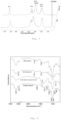
- the singlets at 3.34, 3.83 and 4.36 ppm correspond to the nine hydrogens of the quaternary ammonium methyl groups of MeBetCl and BetHCl, the three methoxyl hydrogens and the two methylene hydrogens of MeBetCl, respectively ( Figure 3, a ).
- the singlet at 4.31 ppm is due to unconverted BetHCl.
- Figure 5 shows the 1 H NMR spectrum for a representative sample of SB, obtained in DMF with basic catalysis (Experiment 2 in Table 1).
- the singlet at 3.28 ppm is assigned to the nine hydrogens of the quaternary ammonium methyl groups. Resonances from 3.5 to 4 ppm represent the hydrogens attached to carbons 2, 4, 5, 6 (H-6 and H-6') and 3 of the AGU, usually in that order.
- the doublet for the anomeric proton H -1 ( ⁇ ) is in the low field (5.35 ppm). There was a certain shift to higher values of chemical shift of all signals after cationization, but the clearest change between AGU protons was the signal broadening, given the coexistence of substituted and unsubstituted units. This most clearly affected the two C-6 hydrogens.
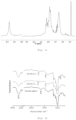
- All mid-infrared spectra in Figure 6 exhibit some fundamental bands typical of polysaccharides, at 3273 cm -1 and 2912 cm -1 , related to the O - H and C - H elongation vibration, respectively.
- the absorption at 1648 cm -1 is attributed to an O-H angular deformation vibration due to water sorption.
- Other bands, such as those at 1341 cm -1 , 1149 cm -1 , 994 cm -1 , 860 cm -1 indicate the C - H elongation, C - O - C elongation asymmetric, C - O - H and C - O elongation, respectively.
- the band at 927 cm -1 is associated with the vibration of the D-glucopyranose ring.
- the strong absorption band at 1022 cm -1 can be attributed to the C - O - H elongation, while at 1242 cm -1 it is specific for carbon 6 of AGU [31].
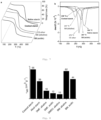
- Figure 8 depicts the calculations of inherent viscosities ( v inh ) for cooked starch, alkaline starch and starch betainate obtained with a molar ratio of 2 (experiments 2, 6 and 10 in Table 1; experiments 2 and 4 in Table two). Since the measurements were performed with very dilute solutions, the inherent viscosity is approximately the same as the intrinsic viscosity. However, the molecular weight cannot be estimated reliably, as the degree of branching of amylopectin in the samples, on which the Mark-Houwink parameters are very dependent [35], is unknown.
- FIGS 9 and 10 Images of starch, cooked starch and cationic starch derivatives are shown in Figures 9 and 10 . While the former shows the form of particles suspended in water with a little iodine, the latter presents a SEM view of dry samples.
- the native starch particles used in this work ( Figures 9, a ) and 8, a)) include spherical granules (diameter 1-10 ⁇ m), lenticular granules and small aggregates. This granular or semi-crystalline structure was lost in all treatments and not recovered in cold water ( Figure 9 , b-d)). Thus, it can be said that there was no retrogradation, which is desirable in applications where the amorphous form is preferred, such as in the food industry [21].
- the SB/BM sample clearly retained a certain degree of molecular order ( Figure 10, f )), showing structures more similar to native starch.
- amorphous starch derivatives The particle size of amorphous starch derivatives is not relevant, as the macromolecules simply agglomerated when precipitated from ethanol. However, the surface changes in these massive clusters are appreciable and significant.
- the smooth surface of the cooked starch ( Figure 10, b ) was transformed into rough and meso or macroporous structures by transesterification ( Figure 10 , c-f)), but not by conventional etherification for a highly substituted CS ( Figure 10, g )). Even dextrins formed in acidic DMSO were recovered as porous blocks ( Figure 10, e )).
Landscapes
- Chemical & Material Sciences (AREA)
- Health & Medical Sciences (AREA)
- Chemical Kinetics & Catalysis (AREA)
- Medicinal Chemistry (AREA)
- Polymers & Plastics (AREA)
- Organic Chemistry (AREA)
- Life Sciences & Earth Sciences (AREA)
- Engineering & Computer Science (AREA)
- Biochemistry (AREA)
- Materials Engineering (AREA)
- Crystallography & Structural Chemistry (AREA)
- Polysaccharides And Polysaccharide Derivatives (AREA)
Claims (11)
- Verfahren zur Herstellung eines Stärkebetainats, umfassend die folgenden Schritte:a) Veresterung von Betainhydrochlorid durch Zugabe einer äquimolaren Menge Thionylchlorid zu Methanol, gefolgt von der Zugabe von Betainhydrochlorid, bis eine Lösung von Methylbetainatchlorid entsteht;b) Rückfluss der in Schritt a) erhaltenen Methylbetainatchlorid-Lösung, gefolgt von Verdampfen des Methanols, Verreiben mit einem Ethylether, Vakuumtrocknen und Waschen mit einem Ethylether, bis die gelbe Farbe verschwindet, und Lagerung des erhaltenen Methylbetainatchlorid-Feststoffs unter Vakuum;c) Umesterung einer Stärke mit dem in Schritt b) erhaltenen Betainatchlorid in einer Lösung mit einem aprotischen Lösungsmittel oder in einem trockenen Medium;d) Entfernen von nicht umgesetztem Methylbetainat durch Auflösen des aus Schritt c) resultierenden Produkts in destilliertem Wasser unter Rühren und Erhitzen und erneutes Ausfällen in Ethanol.
- Verfahren nach Anspruch 1, wobei die Stärke in Schritt c) nativ ist.
- Verfahren nach Anspruch 1, wobei die Stärke in Schritt c) gekocht wird.
- Verfahren nach dem vorhergehenden Anspruch, wobei es vor Schritt c) einen Schritt des Kochens der Stärke in destilliertem Wasser und der Verwendung einer anschließend denaturierten α-Amylase-Pufferlösung umfasst.
- Verfahren nach einem der vorhergehenden Ansprüche, wobei die Umesterung in Schritt c) in Lösung und in einem alkalischen Medium stattfindet und die folgenden Schritte umfasst:e) Voraktivierung der Stärke mit einer Lösung von Natriumhydroxid in Ethanol unter Rückfluss und Erhalt einer alkalisierten Stärkesuspension;f) Vakuumfiltration der in Schritt e) erhaltenen alkalisierten Stärkesuspension und Waschen mit Ethanol, gefolgt von Waschen mit einem Ethylether, bis überschüssiges Natriumhydroxid und Ethanol aus der erhaltenen festen alkalisierten Stärke entfernt sind;g) Umesterung der in Schritt f) erhaltenen alkalisierten Stärke mit Methylbetainatchlorid in Lösung mit einem aprotischen Lösungsmittel und bei Temperaturen zwischen 50 und 90 °C und anschließendes Rückflusskochen der resultierenden Lösung;h) Ausfällung der aus Schritt g) resultierenden Lösung in absolutem Ethanol, gefolgt von Waschen mit Ethanol, Vakuumfiltration und Trocknen in einem Ofen.
- Verfahren nach einem der vorhergehenden Ansprüche 1 bis 4, wobei die Umesterung in Schritt c) in Lösung und in einem sauren Medium stattfindet und die folgenden Schritte umfasst:i) Umesterung der Stärke mit Methylbetainatchlorid in einer Lösung mit einem aprotischen Lösungsmittel, das zuvor mit einer starken Säure angesäuert wurde, und bei Temperaturen zwischen 50 °C und 90 °C und anschließendes Rückflusskochen der resultierenden Lösung;j) Ausfällung der aus Schritt i) resultierenden Lösung in absolutem Ethanol, gefolgt von Waschen mit Ethanol, Vakuumfiltration und Trocknen in einem Ofen.
- Verfahren nach dem vorhergehenden Anspruch, wobei die starke Säure in Schritt i) Schwefelsäure ist.
- Verfahren nach einem der vorhergehenden Ansprüche 6 bis 7, wobei das aprotische Lösungsmittel in Schritt i) Dimethylformamid oder Dimethylsulfoxid ist.
- Verfahren nach einem der vorhergehenden Ansprüche 1 bis 5, das in trockenem und basischem Medium stattfindet und die folgenden Schritte umfasst:k) Voraktivierung der Stärke gemäß den Schritten e) und f) von Anspruch 5, um feste alkalisierte Stärke zu erhalten;l) Umesterung der in Schritt k) erhaltenen alkalisierten Stärke mit Methylbetainchlorid in einer Kugelmühle bei Raumtemperatur.
- Process according to one of the preceding claims 1 to 4, which takes place in a dry and acidic medium and comprises the following steps:
m) transesterification of the starch with the methyl betaine chloride after mixing with a solid acid and with a pKa of 1 or less in a ball mill at room temperature. - Process according to the preceding claim, wherein the solid acid in step m) is sulfamic acid.
Applications Claiming Priority (2)
| Application Number | Priority Date | Filing Date | Title |
|---|---|---|---|
| PT117053A PT117053B (pt) | 2021-02-08 | 2021-02-08 | Método de obtenção de betainato de amido |
| PCT/IB2022/051030 WO2022168011A1 (pt) | 2021-02-08 | 2022-02-07 | Método de obtenção de betainato de amido |
Publications (3)
| Publication Number | Publication Date |
|---|---|
| EP4289869A1 EP4289869A1 (de) | 2023-12-13 |
| EP4289869C0 EP4289869C0 (de) | 2024-09-04 |
| EP4289869B1 true EP4289869B1 (de) | 2024-09-04 |
Family
ID=80685037
Family Applications (1)
| Application Number | Title | Priority Date | Filing Date |
|---|---|---|---|
| EP22709375.4A Active EP4289869B1 (de) | 2021-02-08 | 2022-02-07 | Verfahren zur herstellung von stärke-betainat |
Country Status (3)
| Country | Link |
|---|---|
| EP (1) | EP4289869B1 (de) |
| PT (1) | PT117053B (de) |
| WO (1) | WO2022168011A1 (de) |
Families Citing this family (1)
| Publication number | Priority date | Publication date | Assignee | Title |
|---|---|---|---|---|
| CN121405969B (zh) * | 2025-12-25 | 2026-04-17 | 农业农村部环境保护科研监测所 | 用于粪水净化的淀粉基多糖絮凝剂的制备及强化堆肥效率的方法 |
Family Cites Families (1)
| Publication number | Priority date | Publication date | Assignee | Title |
|---|---|---|---|---|
| FI107387B (fi) * | 1998-09-15 | 2001-07-31 | Raisio Chem Oy | Uusi kationinen tärkkelys, sen valmistus ja käyttö |
-
2021
- 2021-02-08 PT PT117053A patent/PT117053B/pt active IP Right Grant
-
2022
- 2022-02-07 WO PCT/IB2022/051030 patent/WO2022168011A1/pt not_active Ceased
- 2022-02-07 EP EP22709375.4A patent/EP4289869B1/de active Active
Also Published As
| Publication number | Publication date |
|---|---|
| WO2022168011A1 (pt) | 2022-08-11 |
| PT117053B (pt) | 2023-01-20 |
| EP4289869C0 (de) | 2024-09-04 |
| PT117053A (pt) | 2022-08-08 |
| EP4289869A1 (de) | 2023-12-13 |
Similar Documents
| Publication | Publication Date | Title |
|---|---|---|
| Lawal et al. | Single and multi-step carboxymethylation of water yam (Dioscorea alata) starch: Synthesis and characterization | |
| Sharma et al. | Novel approach on the synthesis of starch betainate by transesterification | |
| Sirviö et al. | Synthesis of highly cationic water-soluble cellulose derivative and its potential as novel biopolymeric flocculation agent | |
| Tijsen et al. | An experimental study on the carboxymethylation of granular potato starch in non-aqueous media | |
| Mathew et al. | Morphological investigation of nanocomposites from sorbitol plasticized starch and tunicin whiskers | |
| Yaacob et al. | Optimization of reaction conditions for carboxymethylated sago starch | |
| Ren et al. | Synthesis and characterization of novel cationic SCB hemicelluloses with a low degree of substitution | |
| AU2013245244B2 (en) | Method for the preparation of cellulose ethers with a high solids process, product obtained and uses of the product | |
| Heydarzadeh et al. | Catalyst-free conversion of alkali cellulose to fine carboxymethyl cellulose at mild conditions | |
| Gotlieb et al. | Starch derivatization: Fascinating and unique industrial opportunitiesFascinating and unique industrial opportunities | |
| Chen et al. | Aerobic oxidation of starch catalyzed by isopolyoxovanadate Na4Co (H2O) 6V10O28 | |
| Bakouri et al. | Etherification and cross-linking effect on physicochemical properties of Zea mays starch executed at different sequences in 1-butyl-3-methylimidazolium chloride [BMIM] Cl ionic liquid media | |
| Shuaiyang et al. | Preparation of xylan citrate—A potential adsorbent for industrial wastewater treatment | |
| TW583189B (en) | Process for producing high molecular weight oxidized cellulose, oxidized cellulose and process for producing a superabsorbent material comprising oxidized cellulose | |
| EP1969014B1 (de) | Verfahren zur modifizierung von stärke | |
| EP4289869A1 (de) | Verfahren zur herstellung von stärke-betainat | |
| Karić et al. | A green approach to starch modification by solvent-free method with betaine hydrochloride | |
| Qiu et al. | Regioselective C6-OH oxidation of starch by laccase-TEMPO-system: A multi-scale structure evolution and water absorption properties study | |
| US20020072598A1 (en) | High molecular weight oxidized cellulose | |
| Xie et al. | Phosphorylation of corn starch in an ionic liquid | |
| Ye et al. | Oxidation of cornstarch using oxygen as oxidant without catalyst | |
| JPH07252302A (ja) | 熱可塑性生分解性多糖誘導体、それらの製造法及びそれらの利用 | |
| JP2017179182A (ja) | パラミロン誘導体及びその製造方法、並びにナノファイバー及びその製造方法 | |
| Xu et al. | Porous cationic cellulose beads prepared by homogeneous in-situ quaternization and acid induced regeneration for water/moisture absorption | |
| Tian et al. | A comparative investigation of gelatinized and regenerated starch composites reinforced by microfibrillated cellulose |
Legal Events
| Date | Code | Title | Description |
|---|---|---|---|
| STAA | Information on the status of an ep patent application or granted ep patent |
Free format text: STATUS: UNKNOWN |
|
| STAA | Information on the status of an ep patent application or granted ep patent |
Free format text: STATUS: THE INTERNATIONAL PUBLICATION HAS BEEN MADE |
|
| PUAI | Public reference made under article 153(3) epc to a published international application that has entered the european phase |
Free format text: ORIGINAL CODE: 0009012 |
|
| STAA | Information on the status of an ep patent application or granted ep patent |
Free format text: STATUS: REQUEST FOR EXAMINATION WAS MADE |
|
| 17P | Request for examination filed |
Effective date: 20230802 |
|
| AK | Designated contracting states |
Kind code of ref document: A1 Designated state(s): AL AT BE BG CH CY CZ DE DK EE ES FI FR GB GR HR HU IE IS IT LI LT LU LV MC MK MT NL NO PL PT RO RS SE SI SK SM TR |
|
| GRAP | Despatch of communication of intention to grant a patent |
Free format text: ORIGINAL CODE: EPIDOSNIGR1 |
|
| STAA | Information on the status of an ep patent application or granted ep patent |
Free format text: STATUS: GRANT OF PATENT IS INTENDED |
|
| DAV | Request for validation of the european patent (deleted) | ||
| DAX | Request for extension of the european patent (deleted) | ||
| INTG | Intention to grant announced |
Effective date: 20240327 |
|
| GRAS | Grant fee paid |
Free format text: ORIGINAL CODE: EPIDOSNIGR3 |
|
| GRAA | (expected) grant |
Free format text: ORIGINAL CODE: 0009210 |
|
| STAA | Information on the status of an ep patent application or granted ep patent |
Free format text: STATUS: THE PATENT HAS BEEN GRANTED |
|
| AK | Designated contracting states |
Kind code of ref document: B1 Designated state(s): AL AT BE BG CH CY CZ DE DK EE ES FI FR GB GR HR HU IE IS IT LI LT LU LV MC MK MT NL NO PL PT RO RS SE SI SK SM TR |
|
| REG | Reference to a national code |
Ref country code: GB Ref legal event code: FG4D |
|
| REG | Reference to a national code |
Ref country code: CH Ref legal event code: EP |
|
| REG | Reference to a national code |
Ref country code: IE Ref legal event code: FG4D |
|
| REG | Reference to a national code |
Ref country code: DE Ref legal event code: R096 Ref document number: 602022005894 Country of ref document: DE |
|
| U01 | Request for unitary effect filed |
Effective date: 20240930 |
|
| U07 | Unitary effect registered |
Designated state(s): AT BE BG DE DK EE FI FR IT LT LU LV MT NL PT RO SE SI Effective date: 20241024 |
|
| PG25 | Lapsed in a contracting state [announced via postgrant information from national office to epo] |
Ref country code: NO Free format text: LAPSE BECAUSE OF FAILURE TO SUBMIT A TRANSLATION OF THE DESCRIPTION OR TO PAY THE FEE WITHIN THE PRESCRIBED TIME-LIMIT Effective date: 20241204 |
|
| PG25 | Lapsed in a contracting state [announced via postgrant information from national office to epo] |
Ref country code: GR Free format text: LAPSE BECAUSE OF FAILURE TO SUBMIT A TRANSLATION OF THE DESCRIPTION OR TO PAY THE FEE WITHIN THE PRESCRIBED TIME-LIMIT Effective date: 20241205 |
|
| PG25 | Lapsed in a contracting state [announced via postgrant information from national office to epo] |
Ref country code: HR Free format text: LAPSE BECAUSE OF FAILURE TO SUBMIT A TRANSLATION OF THE DESCRIPTION OR TO PAY THE FEE WITHIN THE PRESCRIBED TIME-LIMIT Effective date: 20240904 |
|
| PG25 | Lapsed in a contracting state [announced via postgrant information from national office to epo] |
Ref country code: ES Free format text: LAPSE BECAUSE OF FAILURE TO SUBMIT A TRANSLATION OF THE DESCRIPTION OR TO PAY THE FEE WITHIN THE PRESCRIBED TIME-LIMIT Effective date: 20240904 Ref country code: RS Free format text: LAPSE BECAUSE OF FAILURE TO SUBMIT A TRANSLATION OF THE DESCRIPTION OR TO PAY THE FEE WITHIN THE PRESCRIBED TIME-LIMIT Effective date: 20241204 |
|
| PG25 | Lapsed in a contracting state [announced via postgrant information from national office to epo] |
Ref country code: RS Free format text: LAPSE BECAUSE OF FAILURE TO SUBMIT A TRANSLATION OF THE DESCRIPTION OR TO PAY THE FEE WITHIN THE PRESCRIBED TIME-LIMIT Effective date: 20241204 Ref country code: NO Free format text: LAPSE BECAUSE OF FAILURE TO SUBMIT A TRANSLATION OF THE DESCRIPTION OR TO PAY THE FEE WITHIN THE PRESCRIBED TIME-LIMIT Effective date: 20241204 Ref country code: HR Free format text: LAPSE BECAUSE OF FAILURE TO SUBMIT A TRANSLATION OF THE DESCRIPTION OR TO PAY THE FEE WITHIN THE PRESCRIBED TIME-LIMIT Effective date: 20240904 Ref country code: GR Free format text: LAPSE BECAUSE OF FAILURE TO SUBMIT A TRANSLATION OF THE DESCRIPTION OR TO PAY THE FEE WITHIN THE PRESCRIBED TIME-LIMIT Effective date: 20241205 Ref country code: ES Free format text: LAPSE BECAUSE OF FAILURE TO SUBMIT A TRANSLATION OF THE DESCRIPTION OR TO PAY THE FEE WITHIN THE PRESCRIBED TIME-LIMIT Effective date: 20240904 |
|
| U20 | Renewal fee for the european patent with unitary effect paid |
Year of fee payment: 4 Effective date: 20250206 |
|
| PG25 | Lapsed in a contracting state [announced via postgrant information from national office to epo] |
Ref country code: IS Free format text: LAPSE BECAUSE OF FAILURE TO SUBMIT A TRANSLATION OF THE DESCRIPTION OR TO PAY THE FEE WITHIN THE PRESCRIBED TIME-LIMIT Effective date: 20250104 |
|
| PG25 | Lapsed in a contracting state [announced via postgrant information from national office to epo] |
Ref country code: SM Free format text: LAPSE BECAUSE OF FAILURE TO SUBMIT A TRANSLATION OF THE DESCRIPTION OR TO PAY THE FEE WITHIN THE PRESCRIBED TIME-LIMIT Effective date: 20240904 |
|
| PG25 | Lapsed in a contracting state [announced via postgrant information from national office to epo] |
Ref country code: PL Free format text: LAPSE BECAUSE OF FAILURE TO SUBMIT A TRANSLATION OF THE DESCRIPTION OR TO PAY THE FEE WITHIN THE PRESCRIBED TIME-LIMIT Effective date: 20240904 Ref country code: CZ Free format text: LAPSE BECAUSE OF FAILURE TO SUBMIT A TRANSLATION OF THE DESCRIPTION OR TO PAY THE FEE WITHIN THE PRESCRIBED TIME-LIMIT Effective date: 20240904 |
|
| PG25 | Lapsed in a contracting state [announced via postgrant information from national office to epo] |
Ref country code: SK Free format text: LAPSE BECAUSE OF FAILURE TO SUBMIT A TRANSLATION OF THE DESCRIPTION OR TO PAY THE FEE WITHIN THE PRESCRIBED TIME-LIMIT Effective date: 20240904 |
|
| PLBE | No opposition filed within time limit |
Free format text: ORIGINAL CODE: 0009261 |
|
| STAA | Information on the status of an ep patent application or granted ep patent |
Free format text: STATUS: NO OPPOSITION FILED WITHIN TIME LIMIT |
|
| 26N | No opposition filed |
Effective date: 20250605 |
|
| PG25 | Lapsed in a contracting state [announced via postgrant information from national office to epo] |
Ref country code: MC Free format text: LAPSE BECAUSE OF FAILURE TO SUBMIT A TRANSLATION OF THE DESCRIPTION OR TO PAY THE FEE WITHIN THE PRESCRIBED TIME-LIMIT Effective date: 20240904 |
|
| REG | Reference to a national code |
Ref country code: CH Ref legal event code: PL |
|
| PG25 | Lapsed in a contracting state [announced via postgrant information from national office to epo] |
Ref country code: CH Free format text: LAPSE BECAUSE OF NON-PAYMENT OF DUE FEES Effective date: 20250228 |
|
| PG25 | Lapsed in a contracting state [announced via postgrant information from national office to epo] |
Ref country code: IE Free format text: LAPSE BECAUSE OF NON-PAYMENT OF DUE FEES Effective date: 20250207 |
|
| U20 | Renewal fee for the european patent with unitary effect paid |
Year of fee payment: 5 Effective date: 20260211 |
|
| PG25 | Lapsed in a contracting state [announced via postgrant information from national office to epo] |
Ref country code: CY Free format text: LAPSE BECAUSE OF FAILURE TO SUBMIT A TRANSLATION OF THE DESCRIPTION OR TO PAY THE FEE WITHIN THE PRESCRIBED TIME-LIMIT Effective date: 20240904 |
|
| PG25 | Lapsed in a contracting state [announced via postgrant information from national office to epo] |
Ref country code: TR Free format text: LAPSE BECAUSE OF FAILURE TO SUBMIT A TRANSLATION OF THE DESCRIPTION OR TO PAY THE FEE WITHIN THE PRESCRIBED TIME-LIMIT Effective date: 20240904 |