EP4284068B1 - Verfahren zur zellenzugangssteuerung und endgerät - Google Patents
Verfahren zur zellenzugangssteuerung und endgerät Download PDFInfo
- Publication number
- EP4284068B1 EP4284068B1 EP21940247.6A EP21940247A EP4284068B1 EP 4284068 B1 EP4284068 B1 EP 4284068B1 EP 21940247 A EP21940247 A EP 21940247A EP 4284068 B1 EP4284068 B1 EP 4284068B1
- Authority
- EP
- European Patent Office
- Prior art keywords
- terminal device
- access
- cell
- terminal
- information
- Prior art date
- Legal status (The legal status is an assumption and is not a legal conclusion. Google has not performed a legal analysis and makes no representation as to the accuracy of the status listed.)
- Active
Links
Images




Classifications
-
- H—ELECTRICITY
- H04—ELECTRIC COMMUNICATION TECHNIQUE
- H04W—WIRELESS COMMUNICATION NETWORKS
- H04W48/00—Access restriction; Network selection; Access point selection
- H04W48/02—Access restriction performed under specific conditions
-
- H—ELECTRICITY
- H04—ELECTRIC COMMUNICATION TECHNIQUE
- H04B—TRANSMISSION
- H04B7/00—Radio transmission systems, i.e. using radiation field
- H04B7/14—Relay systems
- H04B7/15—Active relay systems
- H04B7/185—Space-based or airborne stations; Stations for satellite systems
- H04B7/1851—Systems using a satellite or space-based relay
- H04B7/18513—Transmission in a satellite or space-based system
-
- H—ELECTRICITY
- H04—ELECTRIC COMMUNICATION TECHNIQUE
- H04B—TRANSMISSION
- H04B7/00—Radio transmission systems, i.e. using radiation field
- H04B7/14—Relay systems
- H04B7/15—Active relay systems
- H04B7/185—Space-based or airborne stations; Stations for satellite systems
- H04B7/1853—Satellite systems for providing telephony service to a mobile station, i.e. mobile satellite service
- H04B7/18565—Arrangements for preventing unauthorised access or for providing user protection
-
- H—ELECTRICITY
- H04—ELECTRIC COMMUNICATION TECHNIQUE
- H04W—WIRELESS COMMUNICATION NETWORKS
- H04W48/00—Access restriction; Network selection; Access point selection
- H04W48/08—Access restriction or access information delivery, e.g. discovery data delivery
-
- H—ELECTRICITY
- H04—ELECTRIC COMMUNICATION TECHNIQUE
- H04W—WIRELESS COMMUNICATION NETWORKS
- H04W56/00—Synchronisation arrangements
- H04W56/004—Synchronisation arrangements compensating for timing error of reception due to propagation delay
- H04W56/0045—Synchronisation arrangements compensating for timing error of reception due to propagation delay compensating for timing error by altering transmission time
-
- H—ELECTRICITY
- H04—ELECTRIC COMMUNICATION TECHNIQUE
- H04W—WIRELESS COMMUNICATION NETWORKS
- H04W48/00—Access restriction; Network selection; Access point selection
- H04W48/02—Access restriction performed under specific conditions
- H04W48/04—Access restriction performed under specific conditions based on user or terminal location or mobility data, e.g. moving direction, speed
-
- H—ELECTRICITY
- H04—ELECTRIC COMMUNICATION TECHNIQUE
- H04W—WIRELESS COMMUNICATION NETWORKS
- H04W48/00—Access restriction; Network selection; Access point selection
- H04W48/08—Access restriction or access information delivery, e.g. discovery data delivery
- H04W48/12—Access restriction or access information delivery, e.g. discovery data delivery using downlink control channel
-
- H—ELECTRICITY
- H04—ELECTRIC COMMUNICATION TECHNIQUE
- H04W—WIRELESS COMMUNICATION NETWORKS
- H04W48/00—Access restriction; Network selection; Access point selection
- H04W48/16—Discovering, processing access restriction or access information
-
- H—ELECTRICITY
- H04—ELECTRIC COMMUNICATION TECHNIQUE
- H04W—WIRELESS COMMUNICATION NETWORKS
- H04W48/00—Access restriction; Network selection; Access point selection
- H04W48/20—Selecting an access point
-
- H—ELECTRICITY
- H04—ELECTRIC COMMUNICATION TECHNIQUE
- H04W—WIRELESS COMMUNICATION NETWORKS
- H04W84/00—Network topologies
- H04W84/02—Hierarchically pre-organised networks, e.g. paging networks, cellular networks, WLAN [Wireless Local Area Network] or WLL [Wireless Local Loop]
- H04W84/04—Large scale networks; Deep hierarchical networks
- H04W84/06—Airborne or Satellite Networks
Definitions
- Embodiments of the present disclosure relate to the technical field of communication, and in particular to a method for controlling cell access and a terminal device.
- NTN Non-Terrestrial Network
- Patent applications CN111918359A and WO2021028853A1 provide teachings related to the technical field of the application.
- the invention comprises a method for controlling cell access and a terminal device as set forth in the appended set of claims.
- a method for controlling cell access is provided as set forth in claim 1.
- terminal device is provided as set forth in claim 9.
- a terminal device determines whether the terminal device is allowed to access a cell corresponding to a network device or barred from accessing the cell according to the first information from the network device (the first information is used for determining whether a respective terminal device corresponding to each of the first terminal type and the second terminal type is allowed to access the cell corresponding to the network device or barred from accessing the cell) and a terminal type of the terminal device. Therefore, cell access by terminal devices with different types can be controlled separately and more flexibly, and network resources can be better utilized.
- the NTN technology is studied by relevant standard organizations, the NTN technology generally provides communication services to terrestrial users by means of satellite communication.
- satellite communication has many unique advantages.
- the satellite communication is not limited by regions of the users.
- general terrestrial communication may not cover regions such as oceans, mountains, deserts, etc., where communication devices cannot be set up or communication coverage cannot be done due to sparse population.
- the satellite communication since one satellite may cover a large area of ground and the satellite may orbit around the earth in orbital motion, theoretically, every corner on the earth can be covered by the satellite communication.
- the satellite communication has great social value.
- the satellite communication can cover remote mountainous regions, and poor and underdeveloped countries or regions at a lower cost, so that people in these regions can enjoy advanced voice communication and mobile Internet technology, which is conducive to narrowing the digital divide with developed areas and promoting the development of these regions.
- the satellite communication distance is long, and the communication cost may not increase significantly with the increase of communication distance.
- the satellite communication has high stability and may not be limited by natural disasters.
- LEO Low-Earth Orbit
- MEO Medium-Earth Orbit
- GEO Geostationary Earth Orbit
- HEO High Elliptical Orbit
- LEO and GEO are mainly studied.
- the altitude of the LEO satellites ranges from 500 km to 1500 km, and the corresponding orbital period is about 1.5 hours to 2 hours.
- Signal propagation delay of single-hop communication between users is generally less than 20 ms.
- the maximum satellite visible duration is 20 minutes.
- the signal propagation distance is short, link loss is small, and transmission power requirements for the terminal devices are not high.
- the orbital altitude of the GEO satellites is 35,786 km and the rotation period around the Earth is 24 hours.
- the signal propagation delay of single-hop communication between users is generally 250 ms.
- a satellite In order to ensure the coverage of satellites and improve the system capacity of the entire satellite communication system, a satellite covers the ground with multiple beams, and one satellite may form dozens or even hundreds of beams to cover the ground.
- a satellite beam can cover the ground area with a diameter of dozens to hundreds of kilometers.
- the satellite network architecture includes: a terminal device 10, a satellite 20, an NTN gateway 30, an access network device 40, and a core network device 50.
- the terminal device 10 and the access network device 40 may communicate through an air interface (such as a Uu interface).
- the access network device 40 may be deployed on the ground, and the uplink and downlink communications between the terminal device 10 and the access network device 40 may be relayed through the satellite 20 and the NTN gateway 30 (typically located on the ground).
- the terminal device 10 sends the uplink signal to the satellite 20, and the satellite 20 forwards this uplink signal to the NTN gateway 30, the NTN gateway 30 forwards this uplink signal to the access network device 40, and then the access network device 40 sends this uplink signal to the core network device 50.
- the downlink signal is sent by the core network device 50 to the access network device 40.
- the access network device 40 sends the downlink signal to the NTN gateway 30, the NTN gateway 30 forwards this downlink signal to the satellite 20, and the satellite 20 forwards this downlink signal to the terminal device 10.
- the satellite network architecture includes: a terminal device 10, a satellite 20, an NTN gateway 30 and a core network device 50.
- functions of the access network device 40 are integrated in the satellite 20, i.e., the satellite 20 has the functions of the access network device 40.
- the terminal device 10 and the satellite 20 may communicate through an air interface (such as a Uu interface).
- the satellite 20 and the NTN gateway 30 may communicate through a Satellite Radio Interface (SRI).
- SRI Satellite Radio Interface
- the terminal device 10 sends the uplink signal to the satellite 20, and the satellite 20 forwards this uplink signal to the NTN gateway 30, the NTN gateway 30 sends this uplink signal to the core network device 50.
- the downlink signal is sent by the core network device 50 to the NTN gateway 30, the NTN gateway 30 forwards this downlink signal to the satellite 20, and the satellite 20 forwards this downlink signal to the terminal device 10.
- the access network device 40 is a device for providing wireless communication services to the terminal device 10.
- a connection may be established between the access network device 40 and the terminal device 10, through the connection the communication including signaling and data interaction can be performed.
- the number of the access network devices 40 may be more than one, and two adjacent access network devices 40 may also communicate in a wired or wireless manner.
- the terminal device 10 may switch between different access network devices 40, i.e., establish connections with different access network devices 40.
- the access network device 40 in the cellular communication network may be a base station.
- the base station is an apparatus deployed in an access network for providing a wireless communication function for the terminal device 10.
- the base station may include various forms of macro base stations, micro base stations, relay stations, access points, and the like.
- the names of devices with base station functions may be different, for example, in 5G NR systems, they are referred to as gNodeB or gNB. With the evolution of communication technology, the name "base station" may change.
- the above-mentioned apparatuses providing wireless communication functions for the terminal device 10 are collectively referred to as base stations or access network devices.
- the terminal device 10 involved in embodiments of the present disclosure may include various devices with wireless communication functions such as handheld devices, vehicle-mounted devices, wearable devices, computing devices or other processing devices connected to a wireless modem, as well as various forms of User Equipment (UE), Mobile Stations (MSs), terminal devices, and the like.
- UE User Equipment
- MSs Mobile Stations
- terminal devices for convenience of description, in the embodiments of the present disclosure, the above-mentioned devices are collectively referred to as terminal devices.
- the term "UE” is used in some places to represent “terminal device”.
- the "network device” may be an access network device (such as a base station) or a satellite.
- the NTN network may include multiple satellites 20.
- a satellite 20 may cover a certain range of the ground area, to provide wireless communication services to terminal devices 10 in this ground area.
- the satellite 20 may make orbital motion around the Earth, and by arranging multiple satellites 20, communication coverage of different areas of the Earth surface can be achieved.
- MIB Master Information Block
- UAC Unified Access Control
- UAC mechanism is introduced in NR for control the load on the network side. Firstly, an access identity and an access category are defined.
- the access identity represents the identity characteristics of the UE itself.
- the standardized access identities in NR are 0 to 15, where 3 to 10 are undefined.
- the access category represents service attributes of UE-initiated calls, where 0 to 7 are standardized access types, 32 to 63 are access categories defined by operators, and others are undefined access categories.
- the Radio Access Network broadcasts access control information related to the access category and the access identity, and the UE Access Stratum (AS) executes an Access Class Barrring (ACB) check according to the broadcast access control information and the access category and access identity provided by AS/Non Access Stratum (NAS).
- RAN Radio Access Network
- AS UE Access Stratum
- ABB Access Class Barrring
- the UAC parameters are configured for each access category and for each Public Land Mobile Network (PLMN).
- PLMN Public Land Mobile Network
- the network side is configured with up to 8 UAC-BarringInfoSets, and each UAC-BarringInfoSet contains the following parameters:
- Each access category is associated with a UAC-BarringInfoSet, the total number of access categories are 64 (access category 0 does not need to be configured).
- the UAC parameters may be configured for each PLMN, and each PLMN is associated with one UAC-BarringPerCatList. If UAC parameters do not configured for each PLMN information, the above configuration is applicable to all PLMNs.
- uac-AccessCategory1-SelectionAssistanceInfo is configured, to assist in determining whether the ACB check is performed on the access category 1.
- the UE Based on the above UAC configuration parameters, the UE performs the UAC check process as follows.
- the NAS decides the access identity, the access category, and a cause value.
- the NAS provides the access identity and the access category to the AS, and the AS performs ACB check, if the ACB check is passed, the AS notifies the NAS, and the NAS provides the cause value to the AS.
- the NAS stops or allows service transmission.
- paging triggering and RAN-based Notification Area Update (RNAU) triggering events triggered by the AS, such as paging triggering and RAN-based Notification Area Update (RNAU) triggering (information interaction between NAS and AS belongs to UE implementation behavior), in which: Paging: the access category is 0 and paging is not controlled by ABC. The cause value is rewritten, NAS and AS interact, and NAS provides the cause value information.
- RNAU Notification Area Update
- RNAU the access category is 8 and RNAU is decided by the AS, the access identity is provided by NAS to AS, and decision of how and when to perform interaction belongs to implementation.
- the cause value is decided by the AS as rna-Update.
- a signal propagation delay between UE and a satellite in an NTN increases greatly.
- the signal transmission delays between these terminal devices and the satellite may also be significantly different due to different positions of the UEs.
- the maximum difference of signal transmission delays between different UEs and the base station in an NTN cell is 10.3ms.
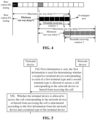
- Such a large difference in signal transmission delays may lead to a problem that preambles sent by different UEs, using the same Random Access Channel (RACH) resource to send the preambles, arrive at the base station at different times.
- RACH Random Access Channel
- a length of a preamble receiving window on the base station side should be extended to 2* (maximum one way delay-minimum one way delay), as illustrated in FIG. 3 .
- the base station After receiving a preamble, the base station needs to know at which RACH Occasion (RO) the preamble is sent by the UE, so as to determine an initial Timing Advance (TA) of the UE.
- RO RACH Occasion
- TA Timing Advance
- an idea of solution is to ensure that the time interval between adjacent ROs in the time domain is not less than the length of the RACH receiving window when configuring RACH resources by the network.
- the RACH capacity may be reduced.
- the UE may estimate the TA by itself and use the estimated TA to send the preamble. Since the UE has adjusted its uplink timing before sending the preamble, thus for the UE with TA pre-compensation capability, the network may not actually need to use the above extended RACH receiving window to receive the preamble. Therefore, for the terminal device with TA pre-compensation capability, since the extended RACH receiving window is not needed to receive the preamble, there is no limitation on the time interval between adjacent ROs, thereby improving the RACH capacity to a certain extent.
- a terminal device determines whether the terminal device is allowed to access a cell corresponding to a network device or barred from accessing the cell according to first information from the network device (the first information is for determining whether a respective terminal device corresponding to each of the first terminal type and the second terminal type is allowed to access the cell corresponding to the network device or barred from accessing the cell) and a terminal type of the terminal device. Therefore, cell access by terminal devices with different types can be controlled separately and more flexibly, and network resources can be better utilized.
- the terminal device in response to the terminal device being of the first terminal type (for example, the terminal device has a TA pre-compensation capability, or the terminal device has a positioning capability, or the terminal device has the TA pre-compensation capability and the positioning capability), the terminal device firstly determines whether the terminal device corresponding to the first terminal type is allowed to access the cell corresponding to the network device. Further, if it is determined that the terminal device corresponding to the first terminal type is barred from accessing the cell corresponding to the network device, the terminal device further determines whether the terminal device corresponding to the second terminal type is allowed to access the cell corresponding to the network device.
- the terminal device can be ensured to access the network using the TA pre-compensation capability more greatly, so as to ensure the RACH capacity, and the terminal device may access the network without using the TA pre-compensation capability when the network is congested, thereby increasing the opportunity of successful access and improving the access success rate.
- FIG. 5 it is illustrated a flowchart of a method for controlling cell access provided by an embodiment of the present disclosure.
- the method may be applied to the network architecture illustrated in FIG. 1 or FIG. 2 .
- the method may include the following operations (510 to 520).
- a network device sends first information to a terminal device, the first information is used for determining whether a respective terminal device corresponding to each of a first terminal type and a second terminal type is allowed to access a cell corresponding to the network device or barred from accessing the cell.
- the terminal device receives the first information from the network device.
- the terminal type includes at least a first terminal type and a second terminal type.
- the first terminal type and the second terminal type are two different terminal types.
- the first information is used for determining whether the terminal device corresponding to the first terminal type is allowed to access the cell corresponding to the network device or barred from accessing the cell, and also used for determining whether the terminal device corresponding to the second terminal type is allowed to access the cell corresponding to the network device or barred from accessing the cell.
- the terminal type is determined based on the capability possessed by the terminal devices, i.e. the terminal devices may be classified into different types according to the different capabilities possessed by different terminal devices.
- the terminal type is determined based on at least one of the TA pre-compensation capability and the positioning capability.
- the TA pre-compensation capability refers to the capability of the terminal device to carry out TA pre-compensation using the positioning capability in combination with ephemeris information of a satellite and/or time information broadcast by system information.
- the terminal device with the TA pre-compensation capability may estimate a TA corresponding to a service link between itself and a satellite, obtain a first TA in combination with information such as a common TA broadcast by the network, and use the first TA to carry out TA compensation to send msg1, which is a message for sending a preamble during a random access process.
- the positioning capability refers to a capability of the terminal device to obtain its own position information, such as Global Navigation Satellite System (GNSS) positioning capability.
- GNSS Global Navigation Satellite System
- the terminal device with the first terminal type has the TA pre-compensation capability, and the terminal device with the second terminal type have no TA pre-compensation capability.
- the terminal device with the first terminal type has the positioning capability, and the terminal device with the second terminal type has no positioning capability.
- the terminal device with the first terminal type has the TA pre-compensation capability and the positioning capability, and the terminal device with the second terminal type has no TA pre-compensation capability or positioning capability or has neither the TA pre-compensation capability nor the positioning capability.
- the first information is used for explicitly or implicitly indicating the cell corresponding to the network device that the terminal device corresponding to each of the first terminal type and the second terminal type is allowed to access or barred from accessing.
- the first information includes one of cell access barred indication information, random access resource configuration information, and UAC configuration information. Introductory of the above information is described with reference to the following embodiments.
- the network device sends the first information through system information.
- the network device sends the system information, and the system information includes the first information.
- the terminal device receives the system information including the first information from the network device.
- the network device broadcasts the system information, and the system information includes the first information.
- the first information is contained in its entirety in an MIB.
- the cell access barred indication information in the MIB may be reused for a certain terminal type (specifically reused for which terminal type may be agreed by a protocol or newly configured), and new cell access barred indication information may be added in the MIB for other terminal types.
- the terminal types including the first terminal type and the second terminal type described above as an example, the original cell access barred indication information in the MIB may be reused for the first terminal type, i.e.
- New cell access barrd indication information added in the MIB (e.g. the remaining 1-bit reserved field in the MIB is used for the newly added cell access barred indication information) is for the second terminal type to use, i.e. whether the terminal device corresponding to the second terminal type is allowed to access the cell corresponding to the network device or barred from the cell is determined based on the newly added cell access barred indication information in the MIB.
- the original cell access barred indication information in the MIB may be reused for the second terminal type, i.e.
- New cell access barred indication information added in the MIB (e.g. the remaining 1-bit reserved field in the MIB is used for the newly added cell access barred indication information) is for the first terminal type to use, i.e. whether the terminal device corresponding to the first terminal type is allowed to access the cell corresponding to the network device or barred from the cell is determined based on the newly added cell access barred indication information in the MIB.
- the first information is contained in its entirety in a System Information Block (SIB).
- SIB may be SIB 1, SIB 2, or another SIB, which is not limited herein.
- unused bits in the SIB are utilized to indicate respective cell access barred indication information corresponding to at least two terminal types (e.g. including a first terminal type and a second terminal type), respectively.
- the first information is distributed in an MIB and at least one SIB, or the first information is distributed in multiple SIBs.
- the SIB may be SIB 1, SIB 2, or another SIB, which is not limited in the present disclosure.
- the cell access barred indication information in the MIB may be reused for a certain terminal type (specifically reused for which terminal type may be agreed by a protocol or newly configured), and new cell access barred indication information may be added in the SIB for other terminal types.
- the cell access barred indication information in the MIB may be reused for the first terminal type, i.e. whether the terminal device corresponding to the first terminal type is allowed to access the cell corresponding to the network device or barred from accessing the cell is determined based on the cell access barred indication information in the MIB.
- New cell access barred indication information added in the SIB e.g. SIB 1, SIB 2, or another SIB
- SIB 1, SIB 2, or another SIB is for the second terminal type to use, i.e. whether the terminal device corresponding to the second terminal type is allowed to access the cell corresponding to the network device or barred from the cell is determined based on the cell access barred indication information in the SIB.
- the cell access barred indication information in the MIB may be reused for the second terminal type, i.e. whether the terminal device corresponding to the second terminal type is allowed to access the cell corresponding to the network device or barred from accessing the cell is determined based on the cell access barred indication information in the MIB.
- New cell access barred indication information added in the SIB e.g. SIB 1, SIB 2, or another SIB is for the first terminal type to use, i.e. whether the terminal device corresponding to the first terminal type is allowed to access the cell corresponding to the network device or barred from the cell is determined based on the cell access barred indication information in the SIB.
- the terminal device determines whether the terminal device is allowed to access the cell corresponding to the network device or barred from accessing the cell according to first information from the network device and the terminal type of the terminal device.
- the terminal device accesses the cell or does not access the cell according to the determination that the terminal device is allowed to access the cell or barred from accessing the cell. For example, if the terminal device determines that it is allowed to access the cell, it accesses the cell; and if the terminal device determines that it is barred from accessing the cell, it does not access the cell.
- a priority that the terminal device with the first terminal type accesses the cell is higher than a priority that the terminal device with the second terminal type accesses the cell. That is, in response to the terminal device being of the first terminal type, it is firstly determined whether the terminal device corresponding to the first terminal type is allowed to access the cell.
- the terminal device determines that the it is allowed to access the cell.
- the terminal device determines that the it is allowed to access the cell.
- the terminal device determines that it is allowed to access the cell. In addition, in response to the first information indicating that the terminal device corresponding to the first terminal type is barred from accessing the cell and the first information further indicating that the terminal device corresponding to the second terminal type is barred from accessing the cell, the terminal device determines that the terminal device is barred from accessing the cell.
- the terminal device in response to the terminal device being of the first terminal type, the terminal device firstly determines whether the terminal device corresponding to the first terminal type is allowed to access the cell or barred from accessing the cell based on the first information; and if the terminal device corresponding to the first terminal type is allowed to access the cell, the terminal device determines that the terminal device is allowed to access the cell. If the terminal device corresponding to the first terminal type is barred from accessing the cell, then the terminal device determines whether the terminal device corresponding to the second terminal type is allowed to access the cell or barred from accessing the cell based on the first information; and if the terminal device corresponding to the second terminal type is allowed to access the cell, the terminal device determines that the terminal device is allowed to access the cell. In addition, if the terminal device corresponding to the second terminal type is barred from accessing the cell, then the terminal device determines that the terminal device is barred from accessing the cell.
- the terminal device in response to the terminal device being of the first terminal type (e.g. the terminal device having the TA pre-compensation capability, or the terminal device having the positioning capability, or the terminal device having the TA pre-compensation capability and the positioning capability), and the first information indicating that at least one of the terminal device corresponding to the first terminal type or the terminal device corresponding to the second terminal type is allowed to access the cell, the terminal device determines that the terminal device is allowed to access the cell. In addition, if the first information indicates that the terminal device corresponding to the first terminal type and the terminal device corresponding to the second terminal type are barred from accessing the cell, then the terminal device determines that the terminal device is barred from accessing the cell.
- the terminal device determines that the terminal device is barred from accessing the cell.
- the terminal device determines, based on the first information, whether the terminal device corresponding to the first terminal type is allowed to access the cell or barred from accessing the cell and whether the terminal device corresponding to the second terminal type is allowed to access the cell or barred from accessing the cell; and if the terminal device corresponding to the first terminal type is allowed to access the cell, the terminal device determines that the terminal device is allowed to access the cell.
- the terminal device corresponding to the first terminal type is barred from accessing the cell and the terminal device corresponding to the second terminal type is allowed to access the cell
- the terminal device determines that the terminal device is allowed to access the cell.
- the terminal device corresponding to the first terminal type is barred from accessing the cell and the terminal device corresponding to the second terminal type is barred from accessing the cell
- the terminal device determines that the terminal device is barred from accessing the cell.
- the terminal device in response to the terminal device being of the first terminal type, if the terminal device corresponding to the first terminal type is allowed to access the cell, the terminal device performs a random access by using a random access resource configured for the first terminal type; and if the terminal device corresponding to the first terminal type is barred from accessing the cell and the terminal device corresponding to the second terminal type is allowed to access the cell, the terminal device performs the random access by using a random access resource configured for the second terminal type.
- the terminal device determines that the terminal device is allowed to access the cell. In addition, if the first information indicates that the terminal device corresponding to the second terminal type is barred from accessing the cell, then the terminal device determines that the terminal device is barred from accessing the cell.
- the terminal device determines that the terminal device is barred from accessing the cell.
- the terminal device determines whether the terminal device corresponding to the second terminal type is barred from accessing the cell or allowed to access the cell based on the first information; if the terminal device corresponding to the second terminal type is allowed to access the cell, the terminal device determines that it is allowed to access the cell; and if the terminal device corresponding to the second terminal type is barred from accessing the cell, then the terminal device determines that it is barred from accessing the cell.
- the terminal device performs the random access by using the random access resource configured for the second terminal type.
- the multiple random access resources may occupy different time-frequency domain positions.
- the terminal device selects the random access resource for random access, it may select one random access resource from the multiple random access resources, for example, it may select one RO, from multiple ROs, to send a preamble.
- Different terminal devices may select different random access resources to initiate random access, for example, they may select different ROs to send the preamble.
- both the terminal device corresponding to the first terminal type and the terminal device corresponding to the second terminal type may initiate the random access, for example, the terminal device corresponding to the first terminal type and the terminal device corresponding to the second terminal type send the preamble at different ROs.
- the terminal device corresponding to the first terminal type may be firstly accessed if there are not multiple random access resources for selection.
- the terminal device corresponding to the first terminal type and the terminal device corresponding to the second terminal type need to use the same RO to send the preamble
- the terminal device corresponding to the first terminal type may firstly use this RO to send the preamble, ensuring that the terminal device corresponding to the first terminal type is firstly accessed.
- a terminal device corresponding to the second terminal type may be firstly accessed if there are not multiple random access resources for selection, which is not limited by the present disclosure.
- a terminal device determines whether the terminal device is allowed to access a cell corresponding to a network device or barred from accessing the cell according to first information from the network device (the first information is for determining whether a respective terminal device corresponding to each of the first terminal type and the second terminal type is allowed to access the cell corresponding to the network device or barred from accessing the cell) and a terminal type of the terminal device. Therefore, cell access by terminal devices with different types can be controlled separately and more flexibly, and network resources can be better utilized.
- the terminal device in response to the terminal device being of the first terminal type (the terminal device having the TA pre-compensation capability and the positioning capability), the terminal device firstly determines whether the terminal device corresponding to the first terminal type is allowed to access the cell corresponding to the network device. Further, if it is determined that the terminal device corresponding to the first terminal type is barred from accessing the cell corresponding to the network device, the terminal device further determines whether the terminal device corresponding to the second terminal type is allowed to access the cell corresponding to the network device.
- the terminal device can be ensured to access the network using TA pre-compensation capability more greatly, so as to ensure the RACH capacity, and the terminal device may access the network without using the TA pre-compensation capability when the network is congested, thereby increasing the opportunity of successful access and improving the access success rate.
- the first information includes cell access barred indication information, which indicates whether the access is allowed or barred.
- the cell access barred indication information may be cell barred information cellBarred for explicitly indicating whether a cell corresponding to the network device is allowed to reside or barred from residing. For example, when the cellBarred information indicates Barred, the access is barred, and when the cellBarred information indicates NotBarred, the access is allowed.
- the cell access barred indication information corresponding to the terminal type is the first indication information
- the terminal device corresponding to the terminal type is allowed to access the cell
- the terminal device corresponding to the terminal type is allowed to reside in the cell
- the cell access barred indication information corresponding to the terminal type is the second indication information
- the terminal device corresponding to the terminal type is barred from accessing the cell
- the terminal device corresponding to the terminal type is barred from residing in the cell.
- the first indication information is different from the second indication information, for example, the first indication information is 0 and the second indication information is 1, or the first indication information is 1 and the second indication information is 0.
- the cellBarred information may be implemented in bits.
- the cellBarred information is represented by 1 bit, e.g. 0 or 1.
- 0 represents Barred, which means that the access is allowed
- 1 represents NotBarred, which means that the access is barred.
- 1 represents Barred, which means that the access is allowed
- 0 represents NotBarred, which means that the access is barred.
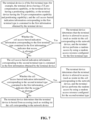
- the terminal device determines whether the terminal device is allowed to access the cell corresponding to the network device or barred from accessing the cell according to the cell access barred indication information corresponding to the terminal type of the terminal device. For example, as illustrated in FIG.
- the terminal device determines that the terminal device is allowed to access (such as reside in) the cell corresponding to the network device; or, if the cell access barred indication information corresponding to the terminal type of the terminal device contained in the first information indicates that the access is barred, then the terminal device determines that the terminal device is barred from accessing (such as residing in) the cell corresponding to the network device.
- the cell access barred indication information corresponding to the first terminal type indicates that the access is allowed
- the cell access barred indication information corresponding to the second terminal type indicates that the access is barred
- the terminal device determines that the terminal device is allowed to access (such as reside in) the cell corresponding to the network device; and if the terminal device is of the second terminal type, then the terminal device determines that the terminal device is barred from accessing (such as residing in) the cell corresponding to the network device.
- the terminal device determines that the terminal device is allowed to access (such as reside in) the cell corresponding to the network device; or, if the cell access barred indication information corresponding to the first terminal type contained in the first information indicates that the access is barred and the cell access barred indication information corresponding to the second terminal type contained in the first information indicates that the access is allowed, then the terminal device determines that the terminal device is allowed to access (such as reside in) the cell corresponding to the network device; or, if the cell access barred indication information corresponding to the first terminal type contained in the first information indicates that the access is barred and the cell access barred indication information corresponding to the second terminal type contained in the first information indicates that the access is allowed, then the terminal device determines that the terminal device is allowed to access (such as reside in) the cell corresponding to the network device; or, if the cell access barred indication information corresponding to the first terminal type contained in the first information indicates that the access is barred and the cell access barred indication information corresponding
- the terminal device determines that the terminal device is allowed to access (such as reside in) the cell corresponding to the network device; or, if the cell access barred indication information corresponding to the first terminal type contained in the first information indicates that the access is barred and the cell access barred indication information corresponding to the second terminal type contained in the first information indicates that the access is barred, then the terminal device determines that the terminal device is barred from accessing (such as residing in) the cell corresponding to the network device.
- the terminal device determines that the terminal device is barred from accessing (such as residing in) the cell corresponding to the network device.
- the terminal device in a case where the terminal device is of the first terminal type, if the terminal device with the first terminal type is allowed to access the cell corresponding to the network device, then the terminal device performs a random access by using the random access resource configured for the first terminal type; or, if the terminal device with the first terminal type is barred from accessing the cell corresponding to the network device and the terminal device with the second terminal type is allowed to access the cell, then the terminal device performs the random access by using the random access resource configured for the second terminal type.
- the terminal device in a case where the terminal device is of the second terminal type (for example, the terminal device having no TA pre-compensation capability, or the terminal device having no positioning capability, or the terminal device having no TA pre-compensation capability and/or positioning capability), if the cell access barred indication information corresponding to the second terminal type contained in the first information indicates that the access is allowed, then the terminal device determines that the terminal device is allowed to access (such as reside in) the cell corresponding to the network device; or, if the cell access barred indication information corresponding to the second terminal type contained in the first information indicates that the access is barred, then the terminal device determines that the terminal device is barred from accessing (such as residing in) the cell corresponding to the network device.
- the terminal device is of the second terminal type (for example, the terminal device having no TA pre-compensation capability, or the terminal device having no positioning capability, or the terminal device having no TA pre-compensation capability and/or positioning capability).
- the terminal device performs the random access by using the random access resource configured for the second terminal type.
- the terminal device determines whether it is allowed to select or reselect another intra-frequency cell of the cell corresponding to the network device for access according to the intra frequency reselection indication information corresponding to the terminal type of the terminal device.
- the intra-frequency cell refers to the cell with the same frequency of the cell.
- the intra frequency reselection indication information may be intraFreqReselection, which indicates whether the terminal device is allowed to select or reselect the suboptimal cell with the current frequency in response to the current cell being the optimal cell with the current frequency and the terminal device being not allowed to reside in the current cell.
- the first information also includes the respective intra frequency reselection indication information corresponding to each of the at least two terminal types.
- the first information in response to the at least two terminal types including the first terminal type and the second terminal type, includes, in addition to the cell access barred indication information corresponding to the first terminal type and the cell access barred indication information corresponding to the second terminal type, the intra frequency reselection indication information corresponding to the first terminal type and the intra frequency reselection indication information corresponding to the second terminal type.
- each cell access barred indication information is configured for a respective one of different terminal types, and it is explicitly indicated the access is allowed or barred through the cell access barred indication information, cell access by terminal devices with different types can be controlled separately.
- the terminal device in response to the terminal device being of the first terminal type (the terminal device having the TA pre-compensation capability and the positioning capability), the terminal device firstly determines whether the terminal device is allowed to access the cell corresponding to the network device based on the cell access barred indication information corresponding to the first terminal type. Further, if it is determined that the terminal device with the first terminal type is barred from accessing the cell corresponding to the network device, the terminal device further determines whether the terminal device is allowed to access the cell corresponding to the network device based on the cell access barred indication information corresponding to the second terminal type.
- the terminal device can be ensured to access the network using TA pre-compensation capability more greatly, so as to ensure the RACH capacity, and the terminal device may access the network without using the TA pre-compensation capability when the network is congested, thereby increasing the opportunity of successful access and improving the access success rate.
- the first information includes random access resource configuration information, which indicates that the access is allowed or barred.
- the random access resource configuration information implicitly indicates that the access is allowed or barred.
- the random access resource configuration information is information for configuring a random access resource (such as an RO), in some embodiments, it may be utilized to implicitly indicate that the access is allowed or barred.
- the fact that the random access resource configuration information corresponding to a terminal type is contained in the first information indicates that the terminal device corresponding to the terminal type is allowed to access the cell; or the fact that the random access resource configuration information corresponding to a terminal type is not contained in the first information indicates that the terminal device corresponding to the terminal type is barred from accessing the cell.
- a fact that the random access resource configuration information is associated with the first terminal type indicates that the terminal device corresponding to the first terminal type is allowed to access the cell; and/or a fact that the random access resource configuration information is associated with the second terminal type indicates that the terminal device corresponding to the first terminal type is allowed to access the cell.
- the situation that the random access resource configuration information corresponding to the first terminal type is contained in the first information, and/or, the random access resource configuration information corresponding to the second terminal type is contained in the first information indicates that the terminal device corresponding to the first terminal type is allowed to access the cell.
- the situation that the random access resource configuration information corresponding to the first terminal type is not contained in the first information and the random access resource configuration information corresponding to the second terminal type is not contained in the first information indicates that the terminal device corresponding to the first terminal type is barred from accessing the cell and the terminal device corresponding to the second terminal type is barred from accessing the cell.
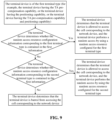
- the terminal device determines whether the terminal device is allowed to access the cell corresponding to the network device or barred from accessing the cell according to the situation whether the random access resource configuration information corresponding to the terminal type of the terminal device is contained in the first information. For example, as illustrated in FIG. 8 , if the random access resource configuration information corresponding to the terminal type of the terminal device is contained in the first information, then the terminal device determines that the terminal device is allowed to access the cell corresponding to the network device; or, if the random access resource configuration information corresponding to the terminal type of the terminal device is not contained in the first information, then the terminal device determines that the terminal device is barred from accessing the cell corresponding to the network device.
- the terminal device determines that the terminal device is allowed to access the cell corresponding to the network device; and if the terminal device is of the second terminal type, then the terminal device determines that the terminal device is barred from accessing the cell corresponding to the network device.
- the terminal device determines that the terminal device is allowed to access the cell corresponding to the network device; or, if the random access resource configuration information corresponding to the first terminal type is not contained in the first information and the random access resource configuration information corresponding to the second terminal type is contained in the first information, the terminal device determines that the terminal device is allowed to access the cell corresponding to the network device; or, if the random access resource configuration information corresponding to the first terminal type is not contained in the first information and the random access resource configuration information corresponding to the second terminal type is not contained in the first information, the terminal device determines that the terminal device is allowed to access the cell corresponding to the network device; or, if the random access resource configuration information corresponding to the first terminal type is not contained in the first information and the random access resource configuration information corresponding to the second terminal type is not contained in the first information, the terminal device determines that the terminal device is barred from accessing the cell corresponding to the network device.
- the terminal device determines that the terminal device is barred from accessing the cell corresponding to the network device.
- the terminal device in a case where the terminal device is of the first terminal type (for example, the terminal device having the TA pre-compensation capability, or the terminal device having the positioning capability, or the terminal device having the TA pre-compensation capability and the positioning capability): if the random access resource configuration information corresponding to the first terminal type is contained in the first information, or the random access resource configuration information corresponding to the second terminal type is contained in the first information, the terminal device determines that the terminal device is allowed to access the cell corresponding to the network device; or, if the random access resource configuration information corresponding to the first terminal type is not contained in the first information and the random access resource configuration information corresponding to the second terminal type is not contained in the first information, the terminal device determines that the terminal device is barred from accessing the cell corresponding to the network device.
- the terminal device determines that the terminal device is barred from accessing the cell corresponding to the network device.
- the terminal device performs a random access by using the random access resource configured for the first terminal type; or, if the terminal device with the first terminal type is barred from accessing the cell corresponding to the network device and the terminal device with the second terminal type is allowed to access the cell, then the terminal device performs the random access by using the random access resource configured for the second terminal type.
- the terminal device in a case where the terminal device is of the second terminal type (for example, the terminal device having no TA pre-compensation capability, or the terminal device having no positioning capability, or the terminal device having no TA pre-compensation capability and/or positioning capability), if the random access resource configuration information corresponding to the second terminal type is contained in the first information, then the terminal device determines that the terminal device is allowed to access the cell corresponding to the network device; or, if the random access resource configuration information corresponding to the second terminal type is not contained in the first information, then the terminal device determines that the terminal device is barred from accessing the cell corresponding to the network device.
- the terminal device is of the second terminal type (for example, the terminal device having no TA pre-compensation capability, or the terminal device having no positioning capability, or the terminal device having no TA pre-compensation capability and/or positioning capability)
- the terminal device determines that the terminal device is allowed to access the cell corresponding to the network device; or, if the random access resource configuration information corresponding to
- the terminal device performs the random access by using the random access resource configured for the second terminal type.
- each random access resource configuration information is configured/not configured for a respective one of different terminal types, and it is implicitly indicated the access is allowed or barred through the random access resource configuration information, cell access by terminal devices with different types can be controlled separately.
- the terminal device in response to the terminal device being of the first terminal type (the terminal device having the TA pre-compensation capability and the positioning capability), the terminal device firstly determines whether the terminal device is allowed to access the cell corresponding to the network device based on the situation whether the random access resource configuration information corresponding to the first terminal type is contained in the first information. Further, if it is determined that the first terminal type is barred from accessing the cell corresponding to the network device, the terminal device further determines whether the terminal device is allowed to access the cell corresponding to the network device based on the situation whether the random access resource configuration information corresponding to the second terminal type is contained in the first information.
- the terminal device can be ensured to access the network using the TA pre-compensation capability more greatly, so as to ensure the RACH capacity, and the terminal device may access the network without using the TA pre-compensation capability when the network is congested, thereby increasing the opportunity of successful access and improving the access success rate.
- the first information includes UAC configuration information
- the UAC configuration information is used for the terminal device to determine whether the terminal device is allowed to access the cell or barred from accessing the cell according to a UAC check result.
- the UAC configuration information includes at least one of: UAC-BarringInfoSetIndex corresponding to each access category, uac-BarringFactor corresponding to each access category, uac-BarringTime corresponding to each access category, and uac-BarringForAccessIdentity corresponding to each access category.
- UAC-BarringInfoSetIndex corresponding to each access category
- uac-BarringFactor corresponding to each access category
- uac-BarringTime corresponding to each access category
- uac-BarringForAccessIdentity corresponding to each access category.
- the terminal device with the terminal type in response to a UAC check performed based on the UAC configuration information corresponding to a terminal type being successful, it is determined that the terminal device with the terminal type is allowed to access the cell; or in response to the UAC check performed based on the UAC configuration information corresponding to a terminal type being unsuccessful, it is determined that the terminal device with the terminal type is barred from accessing the cell.
- the terminal device corresponding to the first terminal type in response to the UAC check performed based on the UAC configuration information corresponding to the first terminal type being successful, it is determined that the terminal device corresponding to the first terminal type is allowed to access the cell; and/or in response to the UAC check performed based on the UAC configuration information corresponding to the second terminal type being successful, it is determined that the terminal device corresponding to the first terminal type is allowed to access the cell.
- the terminal device corresponding to the first terminal type is barred from accessing the cell.
- the UAC configuration information corresponding to the first terminal type and the UAC configuration information corresponding to the second terminal type may be the same or different.
- the terminal device performs the UAC check based on the UAC configuration information corresponding to the first terminal type.
- the terminal device performs the UAC check based on the UAC configuration information corresponding to the second terminal type.
- the above UAC check process may be performed as follows.
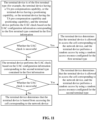
- the terminal device in response to the first information including the UAC configuration information, performs the UAC check according to the UAC configuration information corresponding to the terminal type of the terminal device, and determines whether the terminal device is allowed to access the cell corresponding to the network device or barred from accessing the cell based on the UAC check result. For example, as illustrated in FIG.
- the terminal device performs the UAC check based on the UAC configuration information, contained in the first information, corresponding to the terminal type of the terminal device; if the UAC check is successful, then the terminal device determines that the terminal device is allowed to access the cell corresponding to the network device; or, if the UAC check is unsuccessful, then the terminal device determines that the terminal device is barred from accessing the cell corresponding to the network device.
- the terminal device when the UAC configuration information corresponding to the first terminal type and the UAC configuration information corresponding to the second terminal type are contained in the first information, if the terminal device is of the first terminal type, then the terminal device performs the UAC check based on the UAC configuration information corresponding to the first terminal type, and determines that the terminal device is allowed to access the cell corresponding to the network device in response to the UAC check being successful and that the terminal device is barred from accessing the cell corresponding to the network device in response to the UAC check being unsuccessful; and if the terminal device is the second terminal type, then the terminal device performs the UAC check based on the UAC configuration information corresponding to the second terminal type, and determines that the terminal device is allowed to access the cell corresponding to the network device in response to the UAC check being successful and that the terminal device is barred from accessing the cell corresponding to the network device in response to the UAC check being unsuccessful.
- the terminal device in a case where the terminal device is of the first terminal type (for example, the terminal device having the TA pre-compensation capability, or the terminal device having the positioning capability, or the terminal device having the TA pre-compensation capability and the positioning capability), if the UAC check performed based on the UAC configuration information corresponding to the first terminal type contained in the first information being successful, then the terminal device determines that the terminal device is allowed to access the cell corresponding to the network device; or, if the UAC check performed based on the UAC configuration information corresponding to the first terminal type contained in the first information being unsuccessful and the UAC check performed based on the UAC configuration information corresponding to the second terminal type contained in the first information being successful, then the terminal device determines that the terminal device is allowed to access the cell corresponding to the network device; or, if the UAC check performed based on the UAC configuration information corresponding to the first terminal type contained in the first information being unsuccessful and the UAC check performed based on the UAC configuration information corresponding
- the terminal device determines that the terminal device is allowed to access the cell corresponding to the network device; or, if the UAC check performed based on the UAC configuration information corresponding to the first terminal type contained in the first information being unsuccessful and the UAC check performed based on the UAC configuration information corresponding to the first terminal type contained in the first information being unsuccessful, then the terminal device determines that the terminal device is barred from accessing the cell corresponding to the network device.
- the terminal device is of the first terminal type (for example, the terminal device having the TA pre-compensation capability, or the terminal device having the positioning capability, or the terminal device having the TA pre-compensation capability and the positioning capability).
- the terminal device in a case where the terminal device is of the first terminal type, if the terminal device with the first terminal type is allowed to access the cell corresponding to the network device, then the terminal device performs a random access by using the random access resource configured for the first terminal type; or, if the terminal device with the first terminal type is barred from accessing the cell corresponding to the network device and the terminal device with the second terminal type is allowed to access the cell, then the terminal device performs the random access by using the random access resource configured for the second terminal type.
- the terminal device in response to the terminal device being of the second terminal type (for example, the terminal device having no TA pre-compensation capability, or the terminal device having no positioning capability, or the terminal device having no TA pre-compensation capability and/or positioning capability), performs the UAC check based on the UAC configuration information corresponding to the second terminal type contained in the first information, if the UAC check is successful, then it is determined that the terminal device is allowed to access the cell corresponding to the network device, and if the UAC check is unsuccessful, then it is determined that the terminal device is barred from accessing the cell corresponding to the network device.
- the terminal device performs the UAC check based on the UAC configuration information corresponding to the second terminal type contained in the first information, if the UAC check is successful, then it is determined that the terminal device is allowed to access the cell corresponding to the network device, and if the UAC check is unsuccessful, then it is determined that the terminal device is barred from accessing the cell corresponding to the network device.
- the terminal device performs the random access by using the random access resource configured for the second terminal type.
- each UAC configuration information is configured for a respective one of different terminal types, and it is determined whether the access is allowed or barred based on the UAC check performed based on the UAC configuration information, cell access by terminal devices with different types can be controlled separately.
- the terminal device in response to the terminal device being of the first terminal type (the terminal device having the TA pre-compensation capability and the positioning capability), the terminal device firstly determines whether the terminal device is allowed to access the cell corresponding to the network device based on the UAC configuration information corresponding to the first terminal type. Further, if it is determined that the terminal device with the first terminal type is barred from accessing the cell corresponding to the network device, the terminal device further determines whether the terminal device is allowed to access the cell corresponding to the network device based on the UAC configuration information corresponding to the second terminal type.
- the terminal device can be ensured to access the network using TA pre-compensation capability more greatly, so as to ensure the RACH capacity, and the terminal device may access the network without using the TA pre-compensation capability when the network is congested, thereby increasing the opportunity of successful access and improving the access success rate.
- the network device in response to the first information including the cell access barred indication information (e.g. cellBarred information) or the UAC configuration information, may also configure the random access resource configuration information for the terminal device.
- the random access resource configuration information may be used for configuring the random access resource corresponding to the first terminal type and/or the random access resource corresponding to the second terminal type, so that the terminal device initiates the random access by using the random access resource corresponding to a certain terminal type.
- the technical solution of the present disclosure is introduced and explained only from the perspective of interaction between the terminal device and the network device.
- the steps performed by the terminal device may be individually implemented as a method for controlling cell access on the terminal device side
- the steps performed by the network device may be individually implemented as a method for controlling cell access on the network device side.
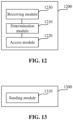
- FIG. 12 it is illustrated a block diagram of an apparatus for controlling cell access provided by an embodiment of the present disclosure.
- the apparatus has functions of implementing the above method examples, the functions may be implemented by hardware or by hardware executing corresponding software.
- the apparatus may be the terminal device involved above, or may be arranged in the terminal device.
- the apparatus 1200 includes a determination module 1210.
- the determination module 1210 is configured to determine whether the terminal device is allowed to access a cell corresponding to a network device or barred from accessing the cell according to first information from the network device and a terminal type of the terminal device;
- the terminal type includes at least a first terminal type and a second terminal type
- the first information is used for determining whether a respective terminal device corresponding to each of the first terminal type and the second terminal type is allowed to access the cell or barred from accessing the cell.
- the apparatus 1200 may include an access module 1220.
- the access module 1220 is configured to access or not access the cell according to the determination that the terminal device is allowed to access the cell or barred from accessing the cell.
- the determination module 1210 is configured to, in response to the terminal device being of the first terminal type and the first information indicating that the terminal device corresponding to the first terminal type is allowed to access the cell, determine that the terminal device is allowed to access the cell.
- the access module 1220 is configured to perform a random access by using a random access resource configured for the first terminal type.
- the determination module 1210 is further configured to, in response to the first information indicating that the terminal device corresponding to the first terminal type is barred from accessing the cell and the first information further indicating that the terminal device corresponding to the second terminal type is allowed to access the cell, determine that the terminal device is allowed to access the cell.
- the access module 1220 is configured to perform a random access by using a random access resource configured for the second terminal type.
- the determination module 1210 is further configured to, in response to the first information indicating that the terminal device corresponding to the first terminal type is barred from accessing the cell and the first information further indicating that the terminal device corresponding to the second terminal type is barred from accessing the cell, determine that the terminal device is barred from accessing the cell.
- the determination module 1210 is configured to, in response to the terminal device being of the first terminal type and the first information indicating that at least one of the terminal device corresponding to the first terminal type or the terminal device corresponding to the second terminal type is allowed to access the cell, determine that the terminal device is allowed to access the cell.
- the access module 1220 is configured to, in response to the first information indicating that the terminal device corresponding to the first terminal type and the terminal device corresponding to the second terminal type are allowed to access the cell, or, the first information indicating that the terminal device corresponding to the first terminal type is allowed to access the cell and the terminal device corresponding to the second terminal type is barred from accessing the cell, perform a random access by using a random access resource configured for the first terminal type; or, in response to the first information indicating that the terminal device corresponding to the second terminal type is allowed to access the cell and the terminal device corresponding to the first terminal type is barred from accessing the cell, perform a random access by using a random access resource configured for the second terminal type.
- the determination module 1210 is configured to, in response to the terminal device being of the first terminal type and the first information indicating that the terminal device corresponding to the first terminal type and the terminal device corresponding to the second terminal type are barred from accessing the cell, determine that the terminal device is barred from accessing the cell.
- the determination module 1210 is configured to, in response to the terminal device being of the second terminal type and the first information indicating that the terminal device corresponding to the second terminal type is allowed to access the cell, determine that the terminal device is allowed to access the cell.
- the access module 1220 is used to perform a random access by using a random access resource configured for the second terminal type.
- the determination module 1210 is configured to, in response to the first information indicating that the terminal device corresponding to the second terminal type is barred from accessing the cell, determine that the terminal device is barred from accessing the cell.
- the terminal type is determined based on at least one of the following capabilities: a TA pre-compensation capability or a GNSS positioning capability.
- the first terminal type has a TA pre-compensation capability and the second terminal type has no TA pre-compensation capability; or, the first terminal type has a GNSS positioning capability, and the second terminal type has no GNSS positioning capability.
- the first terminal type has the TA pre-compensation capability and GNSS positioning capability, and the second terminal type has no TA pre-compensation capability or GNSS positioning capability or has neither the TA pre-compensation capability nor the GNSS positioning capability.
- the first information includes cellBarred information, the cellBarred information indicating Barred represents that the access is barred, and the cellBarred information indicating NotBarred represents that the access is allowed.
- the first information includes random access resource configuration information indicating that the access is allowed or barred.
- the first information includes UAC configuration information
- the UAC configuration information is used for the terminal device to determine whether the terminal device is allowed to access the cell or barred from accessing the cell according to a UAC check result.
- the apparatus 1200 may include a receiving module 1230.
- the receiving module 1230 is configured to receive the first information from the network device through system information.
- the first information is contained in its entirety in a MIB; or the first information is contained in its entirety in a SIB; or, the first information is distributed in an MIB and at least one SIB, or the first information is distributed in multiple SIBs.
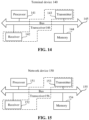
- FIG. 13 it is illustrated a block diagram of an apparatus for controlling cell access provided by an embodiment not being part of the present disclosure.
- the apparatus has functions of implementing the above method examples, the functions can be implemented by hardware or by hardware executing corresponding software.
- the apparatus may be the network device involved above, or may be arranged in the network device.
- the apparatus 1300 may include a sending module 1310.
- the sending module 1310 is configured to send first information, the first information enables a terminal device to determine whether the terminal device is allowed to access a cell corresponding to the network device or barred from accessing the cell according to the first information and a terminal type of the terminal device.
- the terminal type includes at least a first terminal type and a second terminal type
- the first information is used for determining whether a respective terminal device corresponding to each of the first terminal type and the second terminal type is allowed to access the cell or barred from accessing the cell.
- the first information indicates that the terminal device corresponding to the first terminal type is allowed to access the cell and enables the terminal device with the first terminal type to determine that the terminal device is allowed to access the cell.
- a random access resource configured for the first terminal type is used by the terminal device to perform a random access.
- the first information indicates that the terminal device corresponding to the first terminal type is barred from accessing the cell and the first information further indicates that the terminal device corresponding to the second terminal type is allowed to access the cell, the first information enables the terminal device to determine that the terminal device is allowed to access the cell.
- a random access resource configured for the second terminal type is used by the terminal device to perform a random access.
- the first information indicates that the terminal device corresponding to the first terminal type is barred from accessing the cell and the first information further indicates that the terminal device corresponding to the second terminal type is barred from accessing the cell, the first information enables the terminal device to determine that the terminal device is barred from accessing the cell.
- the first information indicates that at least one of the terminal device corresponding to the first terminal type or the terminal device corresponding to the second terminal type is allowed to access the cell and enables the terminal device with the first terminal type to determine that the terminal device is allowed to access the cell.
- the first information indicates that the terminal device corresponding to the first terminal type and the terminal device corresponding to the second terminal type are allowed to access the cell, or, the first information indicates that the terminal device corresponding to the first terminal type is allowed to access the cell and the terminal device corresponding to the second terminal type is barred from accessing the cell, a random access resource configured for the first terminal type is used by the terminal device to perform a random access; or, the first information indicates that the terminal device corresponding to the second terminal type is allowed to access the cell and the terminal device corresponding to the first terminal type is barred from accessing the cell, a random access resource configured for the second terminal type is used by the terminal device to perform a random access.
- the first information indicates that the terminal device corresponding to the first terminal type and the terminal device corresponding to the second terminal type are barred from accessing the cell and enables the terminal device to determine that the terminal device is barred from accessing the cell in response to the terminal device being of the first terminal type.
- the first information indicates that the terminal device corresponding to the second terminal type is allowed to access the cell and enables the terminal device with the second terminal type to determine that the terminal device is allowed to access the cell.
- a random access resource configured for the second terminal type is used by the terminal device to perform a random access.
- the first information indicates that the terminal device corresponding to the second terminal type is barred from accessing the cell and enables the terminal device to determine that the terminal device is barred from accessing the cell.
- the terminal type is determined based on at least one of the following capabilities: a TA pre-compensation capability or a GNSS positioning capability.
- the first terminal type has a TA pre-compensation capability and the second terminal type has no TA pre-compensation capability; or, the first terminal type has a GNSS positioning capability, and the second terminal type has no GNSS positioning capability; or, the first terminal type has a TA pre-compensation capability and a GNSS positioning capability, and the second terminal type has no TA pre-compensation capability or GNSS positioning capability or has neither the TA pre-compensation capability nor the GNSS positioning capability.
- the first information includes cellBarred information, the cellBarred information indicating Barred represents that the access is barred, and the cellBarred information indicating NotBarred represents that the access is allowed.
- the first information includes random access resource configuration information indicating that the access is allowed or barred.
- the first information includes UAC configuration information, and the UAC configuration information is used for the terminal device to determine whether the terminal device is allowed to access the cell or barred from accessing the cell according to a UAC check result.
- the sending module 1310 is configured to send the first information through system information.
- the first information is contained in its entirety in a MIB; or the first information is contained in its entirety in a SIB; or, the first information is distributed in an MIB and at least one SIB, or the first information is distributed in multiple SIBs.
- the terminal device 140 may include: a processor 141, a receiver 142, a transmitter 143, a memory 144 and a bus 145.
- the processor 141 includes one or more processing cores and executes various functional applications and information processing by running software programs and modules.
- the receiver 142 and transmitter 143 may be implemented as a transceiver 146 which may be a communication chip.
- the memory 144 is connected to the processor 141 through the bus 145.
- the memory 144 may be configured to store a computer program, and the processor 141 is configured to execute the computer program to implement the various steps performed by the terminal device in the above method embodiments.
- the memory 144 may be implemented by any type of volatile or non-volatile memory device or a combination thereof, the volatile or non-volatile memory device including but not limited to: a Random Access Memory (RAM) and a Read-Only Memory (ROM), an Erasable Programmable Read-Only Memory (EPROM), an Electrically Erasable Programmable Read-Only Memory (EEPROM), a flash memory or another solid-state memory technology, a Compact Disc Read-Only Memory (CD-ROM), a Digital Video Disc (DVD) or other optical memories, cassettes, magnetic tapes, magnetic disk memories or other magnetic memory devices.
- RAM Random Access Memory
- ROM Read-Only Memory
- EPROM Erasable Programmable Read-Only Memory
- EEPROM Electrically Erasable Programmable Read-Only Memory
- flash memory or another solid-state memory technology
- CD-ROM Compact Disc Read-Only Memory
- DVD Digital Video Disc
- the processor 141 is configured to determine whether the terminal device is allowed to access a cell corresponding to a network device or barred from accessing the cell according to first information from the network device and a terminal type of the terminal device.
- the terminal type includes at least a first terminal type and a second terminal type
- the first information is used for determining whether a respective terminal device corresponding to each of the first terminal type and the second terminal type is allowed to access the cell or barred from accessing the cell.
- the network device 150 may include: a processor 151, a receiver 152, a transmitter 153, a memory 154 and a bus 155.
- the processor 151 includes one or more processing cores and executes various functional applications and information processing by running software programs and modules.
- the receiver 152 and transmitter 153 may be implemented as a transceiver 156 which may be a communication chip.
- the memory 154 is connected to the processor 151 through the bus 155.
- the memory 154 may be configured to store a computer program, and the processor 151 is configured to execute the computer program to implement the various steps performed by the network device in the above method embodiments.
- the memory 154 may be implemented by any type of volatile or non-volatile memory device or a combination thereof, the volatile or non-volatile memory device including but not limited to: an RAM and an ROM, an EPROM, an EEPROM, a flash memory or another solid-state memory technology, a CD-ROM, a DVD or other optical memories, cassettes, magnetic tapes, magnetic disk memories or other magnetic memory devices.
- volatile or non-volatile memory device including but not limited to: an RAM and an ROM, an EPROM, an EEPROM, a flash memory or another solid-state memory technology, a CD-ROM, a DVD or other optical memories, cassettes, magnetic tapes, magnetic disk memories or other magnetic memory devices.
- the transceiver 156 is configured to send first information to a terminal device, the first information is used for the terminal device to determine whether the terminal device is allowed to access a cell corresponding to the network device or barred from accessing the cell according to the first information and a terminal type of the terminal device.
- the terminal type includes at least a first terminal type and a second terminal type
- the first information is used for determining whether a respective terminal device corresponding to each of the first terminal type and the second terminal type is allowed to access the cell or barred from accessing the cell.
- the present disclosure also provides a computer-readable storage medium having stored thereon a computer program which, when being executed by a processor of the terminal device, causes the processor to perform the method for controlling cell access of the above terminal device side.
- the present disclosure also provides a computer-readable storage medium having stored thereon a computer program which, when being executed by a processor, causes the processor to perform method for controlling cell access of the above network device side.
- the computer-readable storage medium may include an ROM, an RAM, a Solid State Drives (SSD), an optical disk, or the like.
- the random access memory may include a Resistive Random Access Memory (ReRAM) and a Dynamic Random Access Memory (DRAM).
- ReRAM Resistive Random Access Memory
- DRAM Dynamic Random Access Memory
- the present disclosure also provides a chip, the chip includes at least one of a programmable logic circuitry or program instructions, and when the chip is operated by the terminal device, the at least one of programmable logic circuitry or program instructions implement the above method for controlling cell access of the terminal device side.
- the present disclosure also provides a chip, the chip includes at least one of programmable logic circuitry or program instructions, and when the chip is operated by the network device, the at least one of programmable logic circuitry or program instructions implement the above method for controlling cell access of the network device side.
- the present disclosure also provides a computer program product or a computer program including computer instructions stored in a computer-readable storage medium from which a processor of the terminal device reads and executes the computer instructions to perform the above method for controlling cell access of the terminal device side.
- the present disclosure also provides a computer program product or a computer program including computer instructions stored in a computer-readable storage medium from which a processor of the network device reads and executes the computer instructions to perform the above method for controlling cell access of the network device side.
- indication in embodiments of the present disclosure may be a direct indication, may be an indirect indication, or may be indicative of an association.
- a indicating B may represent that A directly indicates B, for example, B may be obtained by A; may also represent that A indirectly indicates B, for example, A indicates C, and B may be obtained by C; and may also represent that there is an association between A and B.
- corresponding may represent that there is a direct correspondence or an indirect correspondence relationship between the listed objects, may also represent that there is an association between the listed objects, and may also be a relationship of indicating and being indicated, configuring and being configured, etc.
- step numbers described herein only exemplify a possible performing sequence between the steps, and in some other embodiments, the above steps may also be performed not in the sequence of numbering, such as two different numbered steps being performed simultaneously, or two different numbered steps being performed in the reverse sequence to the illustration, which is not limited by embodiments of the present disclosure.
- the functions described in embodiments of the present disclosure may be implemented in hardware, software, firmware or any combination thereof. When implemented in software, these functions may be stored in a computer-readable medium or transmitted as one or more instructions or codes on the computer-readable medium.
- the computer-readable medium includes a computer storage medium and a communication medium, where the communication medium includes any medium that facilitates the transfer of a computer program from one place to another.
- the storage medium may be any available medium accessible to a general-purpose or special-purpose computer.
Landscapes
- Engineering & Computer Science (AREA)
- Computer Networks & Wireless Communication (AREA)
- Signal Processing (AREA)
- Computer Security & Cryptography (AREA)
- Physics & Mathematics (AREA)
- Astronomy & Astrophysics (AREA)
- Aviation & Aerospace Engineering (AREA)
- General Physics & Mathematics (AREA)
- Mobile Radio Communication Systems (AREA)
Claims (15)
- Verfahren zum Steuern eines Zellenzugriffs, das durch eine Endgeräteinrichtung durchgeführt wird, wobei das Verfahren Folgendes umfasst:Bestimmen (520), ob der Endgeräteinrichtung der Zugriff auf eine mit einer Netzeinrichtung korrespondierende Zelle gewährt wird oder der Zugriff auf die Zelle verweigert wird, gemäß ersten Informationen von der Netzeinrichtung und einem Endgerättyp der Endgeräteinrichtung;wobei der Endgerättyp mindestens einen ersten Endgerättyp und einen zweiten Endgerättyp umfasst, eine Endgeräteinrichtung mit dem ersten Endgerättyp eine Timing-Advance-Vorkompensationsfähigkeit, TA-Vorkompensationsfähigkeit, und eine Global-Navigation-Satellite-System-Positionsbestimmungsfähigkeit, GNSS-Positionsbestimmungsfähigkeit, aufweist und eine Endgeräteinrichtung mit dem zweiten Endgerättyp keine TA-Vorkompensationsfähigkeit oder GNSS-Positionsbestimmungsfähigkeit aufweist oder weder die TA-Vorkompensationsfähigkeit noch die GNSS-Positionsbestimmungsfähigkeit aufweist, wobei die ersten Informationen zum Bestimmen, ob einer jeweiligen mit jedem von dem ersten Endgerättyp und dem zweiten Endgerättyp korrespondierenden Endgeräteinrichtung der Zugriff auf die Zelle gewährt wird oder der Zugriff auf die Zelle verweigert wird, verwendet werden,wobei das Bestimmen (520), ob der Endgeräteinrichtung der Zugriff auf die mit der Netzeinrichtung korrespondierende Zelle gewährt wird oder der Zugriff auf die Zelle verweigert wird, gemäß den ersten Informationen von der Netzeinrichtung und dem Endgerättyp der Endgeräteinrichtung Folgendes umfasst:als Reaktion darauf, dass die Endgeräteinrichtung von dem ersten Endgerättyp ist, Bestimmen, ob der mit dem ersten Endgerättyp korrespondierenden Endgeräteinrichtung der Zugriff auf die Zelle gewährt wird oder der Zugriff auf die Zelle verweigert wird, basierend auf den ersten Informationen;als Reaktion darauf, dass die ersten Informationen anzeigen, dass der mit dem ersten Endgerättyp korrespondierenden Endgeräteinrichtung der Zugriff auf die Zelle gewährt wird, Bestimmen, dass der Endgeräteinrichtung der Zugriff auf die Zelle gewährt wird; undals Reaktion darauf, dass die ersten Informationen anzeigen, dass der mit dem ersten Endgerättyp korrespondierenden Endgeräteinrichtung der Zugriff auf die Zelle verweigert wird, Bestimmen, ob der mit dem zweiten Endgerättyp korrespondierenden Endgeräteinrichtung der Zugriff auf die Zelle gewährt wird oder der Zugriff auf die Zelle verweigert wird, basierend auf den ersten Informationen und als Reaktion darauf, dass die ersten Informationen ferner anzeigen, dass der mit dem zweiten Endgerättyp korrespondierenden Endgeräteinrichtung der Zugriff auf die Zelle gewährt wird, Bestimmen, dass der Endgeräteinrichtung, die von dem ersten Endgerättyp ist, der Zugriff auf die Zelle gewährt wird, und Zugreifen auf die Zelle ohne Verwenden der TA-Vorkompensationsfähigkeit.
- Verfahren nach Anspruch 1, wobei das Bestimmen (520), ob der Endgeräteinrichtung der Zugriff auf die mit der Netzeinrichtung korrespondierende Zelle gewährt wird oder der Zugriff auf die Zelle verweigert wird, gemäß den ersten Informationen von der Netzeinrichtung und dem Endgerättyp der Endgeräteinrichtung ferner Folgendes umfasst:
als Reaktion darauf, dass die Endgeräteinrichtung von dem zweiten Endgerättyp ist und die ersten Informationen anzeigen, dass der mit dem zweiten Endgerättyp korrespondierenden Endgeräteinrichtung der Zugriff auf die Zelle gewährt wird, Bestimmen, dass der Endgeräteinrichtung der Zugriff auf die Zelle gewährt wird. - Verfahren nach Anspruch 1, wobei das Verfahren ferner Folgendes umfasst:
beim Bestimmen, dass der Endgeräteinrichtung, die von dem ersten Endgerättyp ist, der Zugriff auf die Zelle gewährt wird, als Reaktion darauf, dass die ersten Informationen ferner anzeigen, dass der mit dem zweiten Endgerättyp korrespondierenden Endgeräteinrichtung der Zugriff auf die Zelle gewährt wird, Durchführen eines Direktzugriffs unter Verwendung einer für den zweiten Endgerättyp konfigurierten Direktzugriffsressource. - Verfahren nach einem der Ansprüche 1 bis 3, wobei die ersten Informationen cellBarred-Informationen umfassen, die cellBarred-Informationen, die Barred anzeigen, darstellen, dass der Zugriff verweigert wird, und die cellBarred-Informationen, die NotBarred anzeigen, darstellen, dass der Zugriff gewährt wird.
- Verfahren nach einem der Ansprüche 1 bis 4, wobei die ersten Informationen Direktzugriffsressourcenkonfigurationsinformationen umfassen, die anzeigen, dass der Zugriff gewährt oder verweigert wird, und wobei mindestens eines von Folgendem gilt:eine Gegebenheit, dass die Direktzugriffsressourcenkonfigurationsinformationen dem ersten Endgerättyp zugeordnet sind, zeigt an, dass der mit dem ersten Endgerättyp korrespondierenden Endgeräteinrichtung der Zugriff auf die Zelle gewährt wird; odereine Gegebenheit, dass die Direktzugriffsressourcenkonfigurationsinformationen dem zweiten Endgerättyp zugeordnet sind, zeigt an, dass der mit dem ersten Endgerättyp korrespondierenden Endgeräteinrichtung der Zugriff auf die Zelle gewährt wird.
- Verfahren nach einem der Ansprüche 1 bis 4, wobei die ersten Informationen Unified-Access-Control-Konfigurationsinformationen, UAC-Konfigurationsinformationen, umfassen und die UAC-Konfigurationsinformationen dafür verwendet werden, dass die Endgeräteinrichtung gemäß einem UAC-Prüfungsergebnis bestimmt, ob der Endgeräteinrichtung der Zugriff auf die Zelle gewährt wird oder der Zugriff auf die Zelle verweigert wird, und wobei mindestens eines von Folgendem gilt:als Reaktion darauf, dass eine UAC-Prüfung, die basierend auf den mit dem ersten Endgerättyp korrespondierenden UAC-Konfigurationsinformationen durchgeführt wird, erfolgreich ist, Bestimmen, dass der mit dem ersten Endgerättyp korrespondierenden Endgeräteinrichtung der Zugriff auf die Zelle gewährt wird; oderals Reaktion darauf, dass eine UAC-Prüfung, die basierend auf den mit dem zweiten Endgerättyp korrespondierenden UAC-Konfigurationsinformationen durchgeführt wird, erfolgreich ist, Bestimmen, dass der mit dem ersten Endgerättyp korrespondierenden Endgeräteinrichtung der Zugriff auf die Zelle gewährt wird.
- Verfahren nach einem der Ansprüche 1 bis 6, das ferner Folgendes umfasst:
Empfangen der ersten Informationen von der Netzeinrichtung durch Systeminformationen. - Verfahren nach Anspruch 7, wobeidie ersten Informationen in ihrer Gesamtheit in einem Main Information Block, MIB, enthalten sind; oderdie ersten Informationen in ihrer Gesamtheit in einem System Information Block, SIB, enthalten sind; oderdie ersten Informationen in einem MIB und mindestens einem SIB verteilt sind; oderdie ersten Informationen in einer Vielzahl von SIBs verteilt sind.
- Endgeräteinrichtung, die Folgendes umfasst:ein Bestimmungsmodul (1210), das konfiguriert ist, um gemäß ersten Informationen von einer Netzeinrichtung und einem Endgerättyp der Endgeräteinrichtung zu bestimmen, ob der Endgeräteinrichtung der Zugriff auf eine mit der Netzeinrichtung korrespondierende Zelle gewährt wird oder der Zugriff auf die Zelle verweigert wird;wobei der Endgerättyp mindestens einen ersten Endgerättyp und einen zweiten Endgerättyp umfasst und die Endgeräteinrichtung mit dem ersten Endgerättyp eine Timing-Advance-Vorkompensationsfähigkeit, TA-Vorkompensationsfähigkeit, und eine Global-Navigation-Satellite-System-Positionsbestimmungsfähigkeit, GNSS-Positionsbestimmungsfähigkeit, aufweist und die Endgeräteinrichtung mit dem zweiten Endgerättyp keine TA-Vorkompensationsfähigkeit oder GNSS-Positionsbestimmungsfähigkeit aufweist oder weder die TA-Vorkompensationsfähigkeit noch die GNSS-Positionsbestimmungsfähigkeit aufweist, wobei die ersten Informationen zum Bestimmen, ob einer jeweiligen mit jedem von dem ersten Endgerättyp und dem zweiten Endgerättyp korrespondierenden Endgeräteinrichtung der Zugriff auf die Zelle gewährt wird oder der Zugriff auf die Zelle verweigert wird, verwendet werden,wobei das Bestimmungsmodul (1210) speziell für Folgendes konfiguriert ist:als Reaktion darauf, dass die Endgeräteinrichtung von dem ersten Endgerättyp ist, Bestimmen, ob der mit dem ersten Endgerättyp korrespondierenden Endgeräteinrichtung der Zugriff auf die Zelle gewährt wird oder der Zugriff auf die Zelle verweigert wird, basierend auf den ersten Informationen;als Reaktion darauf, dass die ersten Informationen anzeigen, dass der mit dem ersten Endgerättyp korrespondierenden Endgeräteinrichtung der Zugriff auf die Zelle gewährt wird, Bestimmen, dass der Endgeräteinrichtung der Zugriff auf die Zelle gewährt wird; undals Reaktion darauf, dass die ersten Informationen anzeigen, dass der mit dem ersten Endgerättyp korrespondierenden Endgeräteinrichtung der Zugriff auf die Zelle verweigert wird, Bestimmen, ob der mit dem zweiten Endgerättyp korrespondierenden Endgeräteinrichtung der Zugriff auf die Zelle gewährt wird oder der Zugriff auf die Zelle verweigert wird, basierend auf den ersten Informationen und als Reaktion darauf, dass die ersten Informationen ferner anzeigen, dass der mit dem zweiten Endgerättyp korrespondierenden Endgeräteinrichtung der Zugriff auf die Zelle gewährt wird, Bestimmen, dass der Endgeräteinrichtung, die von dem ersten Endgerättyp ist, der Zugriff auf die Zelle gewährt wird, und Zugreifen auf die Zelle ohne Verwenden der TA-Vorkompensationsfähigkeit.
- Endgeräteinrichtung nach Anspruch 9, wobei das Bestimmungsmodul (1210) ferner für Folgendes konfiguriert ist:
als Reaktion darauf, dass die Endgeräteinrichtung von dem zweiten Endgerättyp ist und die ersten Informationen anzeigen, dass der mit dem zweiten Endgerättyp korrespondierenden Endgeräteinrichtung der Zugriff auf die Zelle gewährt wird, Bestimmen, dass der Endgeräteinrichtung der Zugriff auf die Zelle gewährt wird. - Endgeräteinrichtung nach Anspruch 9, wobei das Zugriffsmodul (1220) für Folgendes konfiguriert ist:
Durchführen eines Direktzugriffs unter Verwendung einer für den zweiten Endgerättyp konfigurierten Direktzugriffsressource, wenn das Bestimmungsmodul (1210) bestimmt, dass der Endgeräteinrichtung, die von dem ersten Endgerättyp ist, der Zugriff auf die Zelle gewährt wird, als Reaktion darauf, dass die ersten Informationen ferner anzeigen, dass der mit dem zweiten Endgerättyp korrespondierenden Endgeräteinrichtung der Zugriff auf die Zelle gewährt wird. - Endgeräteinrichtung nach einem der Ansprüche 9 bis 11, wobei die ersten Informationen cellBarred-Informationen umfassen, die cellBarred-Informationen, die Barred anzeigen, darstellen, dass der Zugriff verweigert wird, und die cellBarred-Informationen, die NotBarred anzeigen, darstellen, dass der Zugriff gewährt wird.
- Endgeräteinrichtung nach einem der Ansprüche 9 bis 12, wobei die ersten Informationen Direktzugriffsressourcenkonfigurationsinformationen umfassen, die anzeigen, dass der Zugriff gewährt oder verweigert wird, und wobei mindestens eines von Folgendem gilt:eine Gegebenheit, dass die Direktzugriffsressourcenkonfigurationsinformationen dem ersten Endgerättyp zugeordnet sind, zeigt an, dass der mit dem ersten Endgerättyp korrespondierenden Endgeräteinrichtung der Zugriff auf die Zelle gewährt wird; odereine Gegebenheit, dass die Direktzugriffsressourcenkonfigurationsinformationen dem zweiten Endgerättyp zugeordnet sind, zeigt an, dass der mit dem ersten Endgerättyp korrespondierenden Endgeräteinrichtung der Zugriff auf die Zelle gewährt wird.
- Endgeräteinrichtung nach einem der Ansprüche 9 bis 12, wobei die ersten Informationen Unified-Access-Control-Konfigurationsinformationen, UAC-Konfigurationsinformationen, umfassen und die UAC-Konfigurationsinformationen dafür verwendet werden, dass die Endgeräteinrichtung gemäß einem UAC-Prüfungsergebnis bestimmt, ob der Endgeräteinrichtung der Zugriff auf die Zelle gewährt wird oder der Zugriff auf die Zelle verweigert wird, und wobei das Bestimmungsmodul (1210) ferner konfiguriert ist, um mindestens eines von Folgendem durchzuführen:als Reaktion darauf, dass eine UAC-Prüfung, die basierend auf den mit dem ersten Endgerättyp korrespondierenden UAC-Konfigurationsinformationen durchgeführt wird, erfolgreich ist, Bestimmen, dass der mit dem ersten Endgerättyp korrespondierenden Endgeräteinrichtung der Zugriff auf die Zelle gewährt wird; oderals Reaktion darauf, dass eine UAC-Prüfung, die basierend auf den mit dem zweiten Endgerättyp korrespondierenden UAC-Konfigurationsinformationen durchgeführt wird, erfolgreich ist, Bestimmen, dass der mit dem ersten Endgerättyp korrespondierenden Endgeräteinrichtung der Zugriff auf die Zelle gewährt wird.
- Endgeräteinrichtung nach einem der Ansprüche 9 bis 14, die ferner Folgendes umfasst:ein Empfangsmodul (1230), das konfiguriert ist, um die ersten Informationen von der Netzeinrichtung durch Systeminformationen zu empfangen, und wobeidie ersten Informationen in ihrer Gesamtheit in einem Main Information Block, MIB, enthalten sind; oderdie ersten Informationen in ihrer Gesamtheit in einem System Information Block, SIB, enthalten sind; oderdie ersten Informationen in einem MIB und mindestens einem SIB verteilt sind; oderdie ersten Informationen in einer Vielzahl von SIBs verteilt sind.
Applications Claiming Priority (1)
| Application Number | Priority Date | Filing Date | Title |
|---|---|---|---|
| PCT/CN2021/095333 WO2022241794A1 (zh) | 2021-05-21 | 2021-05-21 | 小区接入控制方法、装置、设备及存储介质 |
Publications (3)
| Publication Number | Publication Date |
|---|---|
| EP4284068A1 EP4284068A1 (de) | 2023-11-29 |
| EP4284068A4 EP4284068A4 (de) | 2024-03-27 |
| EP4284068B1 true EP4284068B1 (de) | 2025-04-02 |
Family
ID=84140139
Family Applications (1)
| Application Number | Title | Priority Date | Filing Date |
|---|---|---|---|
| EP21940247.6A Active EP4284068B1 (de) | 2021-05-21 | 2021-05-21 | Verfahren zur zellenzugangssteuerung und endgerät |
Country Status (4)
| Country | Link |
|---|---|
| US (1) | US20230422147A1 (de) |
| EP (1) | EP4284068B1 (de) |
| CN (1) | CN117280762A (de) |
| WO (1) | WO2022241794A1 (de) |
Families Citing this family (6)
| Publication number | Priority date | Publication date | Assignee | Title |
|---|---|---|---|---|
| CN118714628A (zh) * | 2023-03-27 | 2024-09-27 | 华为技术有限公司 | 网络接入方法、装置及系统 |
| CN118785315A (zh) * | 2023-04-07 | 2024-10-15 | 华为技术有限公司 | 一种接入方法及装置 |
| CN119922651A (zh) * | 2023-10-31 | 2025-05-02 | 华为技术有限公司 | 接入控制方法及相关装置 |
| CN120050746A (zh) * | 2023-11-24 | 2025-05-27 | 维沃移动通信有限公司 | 系统消息接收方法、发送方法、装置、终端及设备 |
| WO2025249981A1 (ko) * | 2024-05-31 | 2025-12-04 | 엘지전자 주식회사 | 비지상 네트워크 통신에서의 무선 접속 방법 및 장치 |
| WO2026059399A1 (ko) * | 2024-09-13 | 2026-03-19 | 엘지전자 주식회사 | 무선 통신 시스템에서 통신을 수행하기 위한 방법 및 장치 |
Family Cites Families (5)
| Publication number | Priority date | Publication date | Assignee | Title |
|---|---|---|---|---|
| JP5536617B2 (ja) * | 2010-11-12 | 2014-07-02 | 株式会社Nttドコモ | 移動通信システム及び移動端末 |
| WO2014010919A1 (en) * | 2012-07-10 | 2014-01-16 | Lg Electronics Inc. | Method and apparatus for performing access class barring in wireless communication system |
| EP4014657A1 (de) * | 2019-08-15 | 2022-06-22 | Telefonaktiebolaget LM Ericsson (publ) | Verfahren zur zellenauswahl und plmn-auswahl auf der grundlage von rach-vorkompensation |
| CN120529390A (zh) * | 2020-07-03 | 2025-08-22 | 中兴通讯股份有限公司 | 接入控制方法、第一网络节点、第二网络节点及存储介质 |
| WO2022126556A1 (zh) * | 2020-12-17 | 2022-06-23 | 北京小米移动软件有限公司 | 一种接入控制方法、接入控制装置及存储介质 |
-
2021
- 2021-05-21 EP EP21940247.6A patent/EP4284068B1/de active Active
- 2021-05-21 WO PCT/CN2021/095333 patent/WO2022241794A1/zh not_active Ceased
- 2021-05-21 CN CN202180097855.9A patent/CN117280762A/zh active Pending
-
2023
- 2023-09-07 US US18/243,337 patent/US20230422147A1/en active Pending
Also Published As
| Publication number | Publication date |
|---|---|
| CN117280762A (zh) | 2023-12-22 |
| WO2022241794A1 (zh) | 2022-11-24 |
| EP4284068A1 (de) | 2023-11-29 |
| EP4284068A4 (de) | 2024-03-27 |
| US20230422147A1 (en) | 2023-12-28 |
Similar Documents
| Publication | Publication Date | Title |
|---|---|---|
| EP4284068B1 (de) | Verfahren zur zellenzugangssteuerung und endgerät | |
| US12069561B2 (en) | Cell access control method and apparatus, device, and storage medium | |
| US20250067877A1 (en) | Method and device for processing global navigation satellite system validity | |
| US12185273B2 (en) | Method and apparatus for information transmission, device, and storage medium | |
| US20240031960A1 (en) | Synchronization method and apparatus, and terminal device, and network device | |
| WO2024159341A1 (zh) | Gnss测量方法、装置、设备及存储介质 | |
| US20240155692A1 (en) | Communication method, terminal device and network device | |
| US12513640B2 (en) | Method for timing advance reporting in NTN, method for timing advance receiving in NTN, and device | |
| US20250374328A1 (en) | Random access method and apparatus, device, and storage medium | |
| WO2022077141A1 (zh) | 随机接入响应接收窗的确定方法、装置、设备及介质 | |
| US20240224274A1 (en) | Sr triggering method and random access method and apparatuses, device and storage medium | |
| WO2023230844A1 (zh) | 小区参数的配置方法、装置、设备及存储介质 | |
| WO2022205232A1 (zh) | 覆盖增强等级的确定方法、配置方法、装置及存储介质 | |
| RU2839000C2 (ru) | Способ и устройство для обработки достоверности фиксации глобальной навигационной спутниковой системы | |
| US20250374333A1 (en) | Method for transmitting uplink message, terminal and network device | |
| WO2022116099A1 (zh) | 随机接入的触发控制方法、装置、设备及存储介质 | |
| EP4340494B1 (de) | Drahtloskommunikationsverfahren, endgerätevorrichtung und netzwerkvorrichtung | |
| EP4672836A1 (de) | Kommunikationsverfahren und -vorrichtung, endgerätevorrichtung, medium, chip, produkt und programm | |
| CN121002923A (zh) | 一种传输控制方法、装置、通信设备及存储介质 | |
| WO2022021308A1 (zh) | 带宽检查方法、装置、计算机设备及存储介质 |
Legal Events
| Date | Code | Title | Description |
|---|---|---|---|
| STAA | Information on the status of an ep patent application or granted ep patent |
Free format text: STATUS: THE INTERNATIONAL PUBLICATION HAS BEEN MADE |
|
| PUAI | Public reference made under article 153(3) epc to a published international application that has entered the european phase |
Free format text: ORIGINAL CODE: 0009012 |
|
| STAA | Information on the status of an ep patent application or granted ep patent |
Free format text: STATUS: REQUEST FOR EXAMINATION WAS MADE |
|
| 17P | Request for examination filed |
Effective date: 20230824 |
|
| AK | Designated contracting states |
Kind code of ref document: A1 Designated state(s): AL AT BE BG CH CY CZ DE DK EE ES FI FR GB GR HR HU IE IS IT LI LT LU LV MC MK MT NL NO PL PT RO RS SE SI SK SM TR |
|
| REG | Reference to a national code |
Ref country code: DE Ref legal event code: R079 Free format text: PREVIOUS MAIN CLASS: H04W0048100000 Ipc: H04W0048020000 Ref document number: 602021028711 Country of ref document: DE |
|
| A4 | Supplementary search report drawn up and despatched |
Effective date: 20240227 |
|
| RIC1 | Information provided on ipc code assigned before grant |
Ipc: H04B 7/185 20060101ALN20240221BHEP Ipc: H04W 56/00 20090101ALN20240221BHEP Ipc: H04W 48/16 20090101ALN20240221BHEP Ipc: H04W 48/12 20090101ALN20240221BHEP Ipc: H04W 48/04 20090101ALN20240221BHEP Ipc: H04W 84/06 20090101ALN20240221BHEP Ipc: H04W 48/20 20090101ALN20240221BHEP Ipc: H04W 48/02 20090101AFI20240221BHEP |
|
| DAV | Request for validation of the european patent (deleted) | ||
| DAX | Request for extension of the european patent (deleted) | ||
| GRAP | Despatch of communication of intention to grant a patent |
Free format text: ORIGINAL CODE: EPIDOSNIGR1 |
|
| STAA | Information on the status of an ep patent application or granted ep patent |
Free format text: STATUS: GRANT OF PATENT IS INTENDED |
|
| RIC1 | Information provided on ipc code assigned before grant |
Ipc: H04W 48/16 20090101ALN20241126BHEP Ipc: H04W 48/12 20090101ALN20241126BHEP Ipc: H04W 48/04 20090101ALN20241126BHEP Ipc: H04W 84/06 20090101ALN20241126BHEP Ipc: H04W 48/20 20090101ALN20241126BHEP Ipc: H04W 56/00 20090101ALI20241126BHEP Ipc: H04B 7/185 20060101ALI20241126BHEP Ipc: H04W 48/02 20090101AFI20241126BHEP |
|
| INTG | Intention to grant announced |
Effective date: 20241213 |
|
| GRAS | Grant fee paid |
Free format text: ORIGINAL CODE: EPIDOSNIGR3 |
|
| GRAA | (expected) grant |
Free format text: ORIGINAL CODE: 0009210 |
|
| STAA | Information on the status of an ep patent application or granted ep patent |
Free format text: STATUS: THE PATENT HAS BEEN GRANTED |
|
| AK | Designated contracting states |
Kind code of ref document: B1 Designated state(s): AL AT BE BG CH CY CZ DE DK EE ES FI FR GB GR HR HU IE IS IT LI LT LU LV MC MK MT NL NO PL PT RO RS SE SI SK SM TR |
|
| REG | Reference to a national code |
Ref country code: GB Ref legal event code: FG4D |
|
| REG | Reference to a national code |
Ref country code: CH Ref legal event code: EP |
|
| REG | Reference to a national code |
Ref country code: IE Ref legal event code: FG4D |
|
| REG | Reference to a national code |
Ref country code: DE Ref legal event code: R096 Ref document number: 602021028711 Country of ref document: DE |
|
| PGFP | Annual fee paid to national office [announced via postgrant information from national office to epo] |
Ref country code: GB Payment date: 20250519 Year of fee payment: 5 |
|
| PGFP | Annual fee paid to national office [announced via postgrant information from national office to epo] |
Ref country code: AT Payment date: 20250721 Year of fee payment: 5 |
|
| REG | Reference to a national code |
Ref country code: NL Ref legal event code: MP Effective date: 20250402 |
|
| PG25 | Lapsed in a contracting state [announced via postgrant information from national office to epo] |
Ref country code: NL Free format text: LAPSE BECAUSE OF FAILURE TO SUBMIT A TRANSLATION OF THE DESCRIPTION OR TO PAY THE FEE WITHIN THE PRESCRIBED TIME-LIMIT Effective date: 20250402 |
|
| REG | Reference to a national code |
Ref country code: AT Ref legal event code: MK05 Ref document number: 1782521 Country of ref document: AT Kind code of ref document: T Effective date: 20250402 |
|
| P01 | Opt-out of the competence of the unified patent court (upc) registered |
Free format text: CASE NUMBER: UPC_APP_5283_4284068/2025 Effective date: 20250829 |
|
| PG25 | Lapsed in a contracting state [announced via postgrant information from national office to epo] |
Ref country code: FI Free format text: LAPSE BECAUSE OF FAILURE TO SUBMIT A TRANSLATION OF THE DESCRIPTION OR TO PAY THE FEE WITHIN THE PRESCRIBED TIME-LIMIT Effective date: 20250402 Ref country code: PT Free format text: LAPSE BECAUSE OF FAILURE TO SUBMIT A TRANSLATION OF THE DESCRIPTION OR TO PAY THE FEE WITHIN THE PRESCRIBED TIME-LIMIT Effective date: 20250804 Ref country code: ES Free format text: LAPSE BECAUSE OF FAILURE TO SUBMIT A TRANSLATION OF THE DESCRIPTION OR TO PAY THE FEE WITHIN THE PRESCRIBED TIME-LIMIT Effective date: 20250402 |
|
| REG | Reference to a national code |
Ref country code: LT Ref legal event code: MG9D |
|
| PG25 | Lapsed in a contracting state [announced via postgrant information from national office to epo] |
Ref country code: NO Free format text: LAPSE BECAUSE OF FAILURE TO SUBMIT A TRANSLATION OF THE DESCRIPTION OR TO PAY THE FEE WITHIN THE PRESCRIBED TIME-LIMIT Effective date: 20250702 Ref country code: GR Free format text: LAPSE BECAUSE OF FAILURE TO SUBMIT A TRANSLATION OF THE DESCRIPTION OR TO PAY THE FEE WITHIN THE PRESCRIBED TIME-LIMIT Effective date: 20250703 |
|
| PG25 | Lapsed in a contracting state [announced via postgrant information from national office to epo] |
Ref country code: PL Free format text: LAPSE BECAUSE OF FAILURE TO SUBMIT A TRANSLATION OF THE DESCRIPTION OR TO PAY THE FEE WITHIN THE PRESCRIBED TIME-LIMIT Effective date: 20250402 |
|
| PG25 | Lapsed in a contracting state [announced via postgrant information from national office to epo] |
Ref country code: BG Free format text: LAPSE BECAUSE OF FAILURE TO SUBMIT A TRANSLATION OF THE DESCRIPTION OR TO PAY THE FEE WITHIN THE PRESCRIBED TIME-LIMIT Effective date: 20250402 |
|
| PG25 | Lapsed in a contracting state [announced via postgrant information from national office to epo] |
Ref country code: HR Free format text: LAPSE BECAUSE OF FAILURE TO SUBMIT A TRANSLATION OF THE DESCRIPTION OR TO PAY THE FEE WITHIN THE PRESCRIBED TIME-LIMIT Effective date: 20250402 |
|
| PG25 | Lapsed in a contracting state [announced via postgrant information from national office to epo] |
Ref country code: AT Free format text: LAPSE BECAUSE OF FAILURE TO SUBMIT A TRANSLATION OF THE DESCRIPTION OR TO PAY THE FEE WITHIN THE PRESCRIBED TIME-LIMIT Effective date: 20250402 |
|
| PG25 | Lapsed in a contracting state [announced via postgrant information from national office to epo] |
Ref country code: RS Free format text: LAPSE BECAUSE OF FAILURE TO SUBMIT A TRANSLATION OF THE DESCRIPTION OR TO PAY THE FEE WITHIN THE PRESCRIBED TIME-LIMIT Effective date: 20250702 |
|
| PG25 | Lapsed in a contracting state [announced via postgrant information from national office to epo] |
Ref country code: IS Free format text: LAPSE BECAUSE OF FAILURE TO SUBMIT A TRANSLATION OF THE DESCRIPTION OR TO PAY THE FEE WITHIN THE PRESCRIBED TIME-LIMIT Effective date: 20250802 |
|
| PG25 | Lapsed in a contracting state [announced via postgrant information from national office to epo] |
Ref country code: LV Free format text: LAPSE BECAUSE OF FAILURE TO SUBMIT A TRANSLATION OF THE DESCRIPTION OR TO PAY THE FEE WITHIN THE PRESCRIBED TIME-LIMIT Effective date: 20250402 |
|
| REG | Reference to a national code |
Ref country code: DE Ref legal event code: R119 Ref document number: 602021028711 Country of ref document: DE |
|
| REG | Reference to a national code |
Ref country code: CH Ref legal event code: H13 Free format text: ST27 STATUS EVENT CODE: U-0-0-H10-H13 (AS PROVIDED BY THE NATIONAL OFFICE) Effective date: 20251223 |
|
| PG25 | Lapsed in a contracting state [announced via postgrant information from national office to epo] |
Ref country code: DK Free format text: LAPSE BECAUSE OF FAILURE TO SUBMIT A TRANSLATION OF THE DESCRIPTION OR TO PAY THE FEE WITHIN THE PRESCRIBED TIME-LIMIT Effective date: 20250402 Ref country code: SM Free format text: LAPSE BECAUSE OF FAILURE TO SUBMIT A TRANSLATION OF THE DESCRIPTION OR TO PAY THE FEE WITHIN THE PRESCRIBED TIME-LIMIT Effective date: 20250402 |
|
| PG25 | Lapsed in a contracting state [announced via postgrant information from national office to epo] |
Ref country code: LU Free format text: LAPSE BECAUSE OF NON-PAYMENT OF DUE FEES Effective date: 20250521 |
|
| PG25 | Lapsed in a contracting state [announced via postgrant information from national office to epo] |
Ref country code: CH Free format text: LAPSE BECAUSE OF NON-PAYMENT OF DUE FEES Effective date: 20250531 |
|
| PG25 | Lapsed in a contracting state [announced via postgrant information from national office to epo] |
Ref country code: CZ Free format text: LAPSE BECAUSE OF FAILURE TO SUBMIT A TRANSLATION OF THE DESCRIPTION OR TO PAY THE FEE WITHIN THE PRESCRIBED TIME-LIMIT Effective date: 20250402 |
|
| PG25 | Lapsed in a contracting state [announced via postgrant information from national office to epo] |
Ref country code: EE Free format text: LAPSE BECAUSE OF FAILURE TO SUBMIT A TRANSLATION OF THE DESCRIPTION OR TO PAY THE FEE WITHIN THE PRESCRIBED TIME-LIMIT Effective date: 20250402 |
|
| PG25 | Lapsed in a contracting state [announced via postgrant information from national office to epo] |
Ref country code: SK Free format text: LAPSE BECAUSE OF FAILURE TO SUBMIT A TRANSLATION OF THE DESCRIPTION OR TO PAY THE FEE WITHIN THE PRESCRIBED TIME-LIMIT Effective date: 20250402 |
|
| PG25 | Lapsed in a contracting state [announced via postgrant information from national office to epo] |
Ref country code: IT Free format text: LAPSE BECAUSE OF FAILURE TO SUBMIT A TRANSLATION OF THE DESCRIPTION OR TO PAY THE FEE WITHIN THE PRESCRIBED TIME-LIMIT Effective date: 20250402 |
|
| REG | Reference to a national code |
Ref country code: BE Ref legal event code: MM Effective date: 20250531 |
|
| PG25 | Lapsed in a contracting state [announced via postgrant information from national office to epo] |
Ref country code: MC Free format text: LAPSE BECAUSE OF FAILURE TO SUBMIT A TRANSLATION OF THE DESCRIPTION OR TO PAY THE FEE WITHIN THE PRESCRIBED TIME-LIMIT Effective date: 20250402 |
|
| PLBE | No opposition filed within time limit |
Free format text: ORIGINAL CODE: 0009261 |
|
| STAA | Information on the status of an ep patent application or granted ep patent |
Free format text: STATUS: NO OPPOSITION FILED WITHIN TIME LIMIT |
|
| REG | Reference to a national code |
Ref country code: CH Ref legal event code: L10 Free format text: ST27 STATUS EVENT CODE: U-0-0-L10-L00 (AS PROVIDED BY THE NATIONAL OFFICE) Effective date: 20260211 |
|
| PG25 | Lapsed in a contracting state [announced via postgrant information from national office to epo] |
Ref country code: RO Free format text: LAPSE BECAUSE OF FAILURE TO SUBMIT A TRANSLATION OF THE DESCRIPTION OR TO PAY THE FEE WITHIN THE PRESCRIBED TIME-LIMIT Effective date: 20250402 |
|
| 26N | No opposition filed |
Effective date: 20260105 |