EP4284027B1 - Audiosignalverarbeitungsverfahren und elektronische vorrichtung - Google Patents
Audiosignalverarbeitungsverfahren und elektronische vorrichtung Download PDFInfo
- Publication number
- EP4284027B1 EP4284027B1 EP22893948.4A EP22893948A EP4284027B1 EP 4284027 B1 EP4284027 B1 EP 4284027B1 EP 22893948 A EP22893948 A EP 22893948A EP 4284027 B1 EP4284027 B1 EP 4284027B1
- Authority
- EP
- European Patent Office
- Prior art keywords
- head
- impulse response
- room impulse
- audio signal
- user
- Prior art date
- Legal status (The legal status is an assumption and is not a legal conclusion. Google has not performed a legal analysis and makes no representation as to the accuracy of the status listed.)
- Active
Links
Images






Classifications
-
- H—ELECTRICITY
- H04—ELECTRIC COMMUNICATION TECHNIQUE
- H04S—STEREOPHONIC SYSTEMS
- H04S7/00—Indicating arrangements; Control arrangements, e.g. balance control
- H04S7/30—Control circuits for electronic adaptation of the sound field
- H04S7/302—Electronic adaptation of stereophonic sound system to listener position or orientation
- H04S7/303—Tracking of listener position or orientation
- H04S7/304—For headphones
-
- H—ELECTRICITY
- H04—ELECTRIC COMMUNICATION TECHNIQUE
- H04S—STEREOPHONIC SYSTEMS
- H04S1/00—Two-channel systems
-
- H—ELECTRICITY
- H04—ELECTRIC COMMUNICATION TECHNIQUE
- H04S—STEREOPHONIC SYSTEMS
- H04S7/00—Indicating arrangements; Control arrangements, e.g. balance control
- H04S7/30—Control circuits for electronic adaptation of the sound field
- H04S7/305—Electronic adaptation of stereophonic audio signals to reverberation of the listening space
- H04S7/306—For headphones
-
- H—ELECTRICITY
- H04—ELECTRIC COMMUNICATION TECHNIQUE
- H04S—STEREOPHONIC SYSTEMS
- H04S2420/00—Techniques used stereophonic systems covered by H04S but not provided for in its groups
- H04S2420/01—Enhancing the perception of the sound image or of the spatial distribution using head related transfer functions [HRTF's] or equivalents thereof, e.g. interaural time difference [ITD] or interaural level difference [ILD]
Definitions
- This disclosure generally relates to the audio field, and the invention in particular relates to an audio signal processing method, an electronic device, and a computer-readable storage medium.
- an audio signal output by a headset is a binaural signal and is input to human ears through earphones on the left and the right respectively.
- most audio streams of programs (TV series, music, movies, and the like) on various audio and video platforms are mainly stereo.
- various rendering effects are added in an audio production stage, the effects are mainly focused on content of audio programs, and cannot cope with the following two types of replay devices: a speaker and a headset. Therefore, such stereo audio signals are directly input to users through headsets, and original expressive and immersive feelings of audio content cannot be accurately restored. For example, orientations, distances, sense of space, and surround sound of sound images in the content cannot be accurately restored.
- US 2018/091920 A1 discloses that a number of candidate binaural room impulse responses (BRIRs) are analyzed to select one of them as a selected first BRIR that is to be applied to diffuse audio, and another one as a selected second BRIR that is to be applied to direct audio, of a sound program.
- a first binaural rendering process is performed on the diffuse audio by applying the selected first BRIR and a first head related transfer function (HRTF) to the diffuse audio.
- HRTF head related transfer function
- a second binaural rendering process is performed on the direct audio by applying the selected second BRIR and a second HRTF to the direct audio. Results of the two binaural rendering processes are combined to produce headphone driver signals.
- WO 2022/108494 A1 discloses a method and a corresponding system for determining an audio filter.
- the method comprises providing at least two Room Impulse Response, RIR, time segments based on measurement data from or simulations of microphone measurements of sound from at least one sound source in a listening environment.
- the method also comprises, for each RIR time segment, providing a corresponding filter for binaural signal estimation, and combining the RIR time segment with the corresponding filter for binaural signal estimation to obtain a Binaural Room Impulse Response, BRIR, time segment.
- the method also comprises combining the BRIR time segments to obtain a resulting BRIR for said audio filter.
- US 2020/388291 A1 discloses an audio encoding method, to which BRIR/RIR parameterization is applied, and a method and device for reproducing audio by using parameterized BRIR/RIR information.
- This audio encoding method comprises the steps of when an input audio signal is a binaural room impulse response (BRIR), dividing the input audio signal into a room impulse response (RIR) and a head-related impulse response (HRIR); applying a mixing time to the divided RIR or an RIR, which is input without division when the audio signal is the RIR, and dividing the mixing time-applied RIR into a direct/early reflection part and a late reverberation part, parameterizing a direct part characteristic on the basis of the divided direct/early reflection part; parameterizing an early reflection part characteristic on the basis of the divided direct/early reflection part, parameterizing a late reverberation part characteristic on the basis of the divided late reverberation part, and when the input audio signal is the BRIR, adding the divided HRIR and
- US 2018/077514 A1 discloses a distance rendering method used for audio signal output and an audio signal output apparatus using the same.
- the distance rendering method includes receiving a decoded audio signal, checking whether a distance between a user and a sound image is changed, if the distance is changed, calculating a gain parameter gnew and a period parameter ⁇ new, applied to room response modeling, based on the changed distance, so as to maintain a space characteristic, and generating room response modeling for maintaining the space characteristic even when the distance is changed, using a calculated period parameter and a gain parameter.
- BRIRs binaural room impulse responses
- Direct sound and strong early reflections are first identified through onset detection and energy calculations in sliding windows.
- the remaining part of the RIR is considered as diffuse reverberation.
- the direct sound and identified early reflections are modeled and synthesized using head-related impulse responses (HRIRs) from different directions based on assumed room geometry.
- HRIRs head-related impulse responses
- the directions for these synthesized reflections are derived from a look-up table adapted from a 3D model of a typical room without specific knowledge of the actual room's reflection points.
- the diffuse reverberation part is synthesized by convolving small segments of the omnidirectional RIR with segments of binaural noise, thus maintaining the frequency-dependent envelope of the RIR.
- the algorithm also includes a feature for shifting the listener's position within the virtual room.
- BinRIR algorithm provides a practical approach to creating binaural audio experiences, significantly reducing the complexity and time required for measuring BRIRs while still delivering a plausible representation of the acoustic environment.
- the object of the present invention is to provide an audio signal processing method, an electronic device, and a computer-readable storage medium to resolve a problem that a stereo audio signal is directly input to a user through a headset and original expressive and immersive feelings of audio content cannot be accurately restored.
- the invention provides an audio signal processing method.
- the method may be applied to an electronic device in an audio system.
- the audio system includes an electronic device and a headset that are communicatively connected.
- the method includes: splitting an audio signal into a direct part and a diffusion part; obtaining a corresponding room impulse response from a preset room impulse response database based on a current scene, where the room impulse response database includes room impulse responses corresponding to various scenes, and the current scene is a scene in which the electronic device is currently located; performing synthesis based on the room impulse response and a head-related transfer function to obtain a first binaural room impulse response for sense-of-orientation rendering and a second binaural room impulse response for sense-of-space rendering; rendering the direct part of the audio signal and the diffusion part of the audio signal based on the first binaural room impulse response to obtain a sense-of-orientation rendered audio signal; rendering the diffusion part of the audio signal based on the second binaural room impulse response to obtain a sense-of-space rendered audio signal; and synthesizing the sense-of-orientation rendered audio signal and the sense-of-space rendered audio signal, and inputting a synthesized signal to the headset.
- the binaural room impulse response for sense-of-orientation rendering and the binaural room impulse response for sense-of-space rendering in the current scene can be conveniently obtained based on the corresponding room impulse response and head-related transfer function, perform sense-of-orientation rendering and sense-of-space rendering on the audio signal.
- the electronic device can render the audio signal based on different scenes, to more accurately restore original expressive and immersive feelings of audio content in the audio signal in the current scene for a user through the headset.
- the performing synthesis based on the room impulse response and a head-related transfer function to obtain a first binaural room impulse response for sense-of-orientation rendering and a second binaural room impulse response for sense-of-space rendering includes: decomposing the room impulse response into a direct part of the room impulse response, an early reflection part of the room impulse response, and a later reverberation part of the room impulse response; performing synthesis based on the direct part of the room impulse response, the early reflection part of the room impulse response, and a head-related transfer function to obtain the first binaural room impulse response for sense-of-orientation rendering; and performing synthesis based on the early reflection part of the room impulse response, the later reverberation part of the room impulse response, and a head-related transfer function in a preset orientation to obtain the second binaural room impulse response for sense-of-space rendering.
- the sense-of-orientation rendering is mainly intended to accurately restore a location of a sound image in a spatial sound field. Therefore, the first binaural room impulse response including orientation information needs to be obtained through synthesis to render a corresponding sound image.
- a direct part of an audio signal obtained through upmixing mainly includes dialogs and human voices. Therefore, the synthesized first binaural room impulse response cannot include a reverberation component. This leads to serious coloration of human voice signals. Therefore, synthesis may be performed based on the direct part of the room impulse response, the early reflection part of the room impulse response, and the head-related transfer function to obtain the first binaural room impulse response, so as to avoid serious coloration of human voice signals.
- the sense-of-space rendering is mainly intended to achieve a sense of space and surround sound of a replay sound field, and make audio rendering effects match an environment in which the user is currently located, to achieve immersive experience.
- the sense-of-space rendering is mainly performed based on the diffusion part (for example, a left-channel diffusion part and a right-channel diffusion part) of the audio signal.
- This part of the audio signal mainly includes ambient sound such as rain, wind, bird sound, and such signals have weak directionality. Therefore, the correspondingly generated second binaural room impulse response cannot include much orientation information (a part of the audio signal including orientation information is already included in sense-of-orientation rendering).
- synthesis may be performed based on the early reflection part of the room impulse response, the later reverberation part of the room impulse response, and the head-related transfer function with a specified orientation to obtain the second binaural room impulse response, so as to avoid an excessively clear orientation after the sense-of-orientation rendering.
- the head-related transfer function is a head-related transfer function obtained through matching and adjustment based on head tracking information sent by the headset.
- orientations of sound images in a finally rendered audio signal do not rotate in space along with rotation of the user's head, that is, the sound images can remain stationary in space.
- the head-related transfer function in the preset orientation includes: a head-related transfer function directly in front of a user's head, a head-related transfer function directly behind the user's head, a head-related transfer function on the left of the user's head, a head-related transfer function on the right of the user's head, a head-related transfer function above the user's head, and a head-related transfer function below the user's head.
- the diffusion part of the audio signal includes a left-channel diffusion part and a right-channel diffusion part.
- the current scene is a scene selected by the user.
- the user can autonomously select the current scene according to a requirement of the user, to meet a requirement of the user for rendering effects of the audio signal.
- the current scene is a scene recognized by the electronic device.
- the electronic device recognizes the current scene, so that the user does not need to autonomously switch a scene during scene switching, but the electronic device can adaptively perform switching to improve user experience.
- the current scene includes any one of a shopping mall, a cinema, a conference room, a concert hall, an office, a kitchen, and a living room.
- the preset room impulse response database includes a room impulse response autonomously measured by the user.
- the user can autonomously measure a room impulse response to increase the number of alternative scenes that can be used as the current scene, and a room impulse response in the room impulse response database can be more accurate than that in an actual scene in which the user is located.
- the preset room impulse response database is stored in a cloud server.
- this disclosure also provides an audio signal processing apparatus.
- the apparatus may be applied to an electronic device to implement the method in the first aspect.
- Functions of the apparatus may be implemented by hardware or by hardware executing corresponding software.
- the hardware or the software includes one or more modules corresponding to the functions, for example, a room impulse response database, a head-related transfer function container (HRTF container), a head-related transfer function selection and matching module, an upmixer module, a decomposer module, a first binaural room impulse response generation module, a second binaural room impulse response generation module, a sense-of-orientation rendering module, a sense-of-space rendering module, and a synthesis module.
- the upmixer module may be configured to split an audio signal into a direct part and a diffusion part.
- the decomposer module may be configured to obtain a corresponding room impulse response from a preset room impulse response database based on a current scene, where the room impulse response database includes room impulse responses corresponding to various scenes, and the current scene is a scene in which the electronic device is currently located.
- the first binaural room impulse response generation module and the second binaural room impulse response generation module may be configured to perform synthesis based on the room impulse response and a head-related transfer function to obtain a first binaural room impulse response for sense-of-orientation rendering and a second binaural room impulse response for sense-of-space rendering respectively.
- the sense-of-orientation rendering module may be configured to render the direct part of the audio signal and the diffusion part of the audio signal based on the first binaural room impulse response to obtain a sense-of-orientation rendered audio signal.
- the sense-of-space rendering module may be configured to render the diffusion part of the audio signal based on the second binaural room impulse response to obtain a sense-of-space rendered audio signal.
- the synthesis module may be configured to synthesize the sense-of-orientation rendered audio signal and the sense-of-space rendered audio signal, and input a synthesized signal to a headset.
- the decomposer module may be further configured to decompose the room impulse response into a direct part of the room impulse response, an early reflection part of the room impulse response, and a later reverberation part of the room impulse response;
- the first binaural room impulse response generation module is further configured to perform synthesis based on the direct part of the room impulse response, the early reflection part of the room impulse response, and a head-related transfer function to obtain the first binaural room impulse response for sense-of-orientation rendering.
- the second binaural room impulse response generation module is further configured to perform synthesis based on the early reflection part of the room impulse response, the later reverberation part of the room impulse response, and a head-related transfer function in a preset orientation to obtain the second binaural room impulse response for sense-of-space rendering.
- the head-related transfer function is a head-related transfer function obtained through matching and adjustment based on head tracking information sent by the headset.
- the head-related transfer function in the preset orientation includes: a head-related transfer function directly in front of a user's head, a head-related transfer function directly behind the user's head, a head-related transfer function on the left of the user's head, a head-related transfer function on the right of the user's head, a head-related transfer function above the user's head, and a head-related transfer function below the user's head.
- the diffusion part of the audio signal includes a left-channel diffusion part and a right-channel diffusion part.
- the current scene is a scene selected by the user.
- the current scene is a scene recognized by the electronic device.
- the current scene includes any one of a shopping mall, a cinema, a conference room, a concert hall, an office, a kitchen, and a living room.
- the preset room impulse response database includes a room impulse response autonomously measured by the user.
- the preset room impulse response database is stored in a cloud server.
- the invention also provides an electronic device, including: a processor and a memory for storing instructions executable by the processor.
- the processor is configured to execute the instructions
- the electronic device is enabled to implement the audio signal processing method according to any one of the first aspect or the possible implementations of the first aspect.
- the invention provides a computer-readable storage medium, where the computer-readable storage medium stores computer program instructions.
- the computer program instructions When executed by an electronic device, the electronic device is enabled to implement the audio signal processing method according to any one of the first aspect or the possible implementations of the first aspect.
- the disclosure also provides a computer program product, including computer-readable code.
- the computer-readable code When the computer-readable code is run on an electronic device, the electronic device is enabled to implement the audio signal processing method according to any one of the first aspect or the possible implementations of the first aspect.
- an audio signal output by a headset is a binaural signal and is input to human ears through earphones on the left and the right respectively.
- most audio streams of programs (TV series, music, movies, and the like) on various audio and video platforms are mainly stereo.
- various rendering effects are added in an audio production stage, the effects are mainly focused on content of audio programs, and cannot cope with the following two types of replay devices: a speaker and a headset. Therefore, such stereo audio signals are directly input to users through headsets, and original expressive and immersive feelings of audio content cannot be accurately restored. For example, orientations, distances, sense of space, and surround sound of sound images in the content cannot be accurately restored.
- sense-of-orientation rendering is performed on a stereo audio stream by using a head-related transfer function (head related transfer functions, HRTF) (where the head-related transfer function for rendering may be obtained from a head-related transfer function container through selection and matching based on head tracking information sent by a headset), sense-of-space rendering is performed based on a preset binaural room impulse response or an artificial reverberation parameter, two rendered audio signals are synthesized, and then a synthesized signal is input to the headset.
- head-related transfer function head related transfer functions, HRTF
- HRTF head related transfer functions
- a parameter used in the sense-of-space rendering is a fixed parameter, and therefore an audio signal cannot be rendered differently for different room scenes. As a result, the rendering has low accuracy and cannot adapt to different room scenes.
- the embodiments of this application provide an audio signal processing method.
- the method may be applied to an electronic device with a function of inputting an audio signal to a headset.
- the electronic device may be a mobile phone.
- the mobile phone may use this method to process audio corresponding to the played music, and input processed audio to the headset. In this way, the mobile phone can more accurately restore, for the user through the headset, original expressive and immersive feelings of the music played on the mobile phone.
- an audio signal (for example, an audio signal in a video, a game, or music) may be divided into a direct part and a diffusion part.
- the direct part includes a signal of a sound wave that is generated by a sound source and that directly reaches a listener's location, and some signals reflected to the listener's location for the first time or the first several times.
- the direct part mainly affects location information of a sound source in a sound field, for example, an orientation or a distance of the sound source.
- the diffusion part includes a signal reflected from the sound source to the listener's location in a middle stage or a late stage.
- the diffusion part mainly affects surround sound and a sense of space of the sound field.
- the audio signal processing method may be as follows: When the electronic device inputs an audio signal to the headset, the mobile phone performs upmixing on the audio signal to separate a direct part and a diffusion part from the audio signal.
- a corresponding room impulse response (room impulse response, RIR) is obtained from a preset room impulse response database based on a current scene. Synthesis is performed based on a head-related transfer function and the room impulse response to obtain a binaural room impulse response (binaural room impulse response, BRIR) for sense-of-orientation rendering and a binaural room impulse response for sense-of-space rendering.
- sense-of-orientation rendering is performed on the direct part and the diffusion part separated from the audio signal based on the binaural room impulse response for sense-of-orientation rendering
- sense-of-space rendering is performed on the diffusion part separated from the audio signal based on the binaural room impulse response for sense-of-space rendering.
- a rendered audio signal may be input to the headset.
- the head-related transfer function may be used for describing a process of transmission of a sound wave from a sound source to both ears, and is a sound localization algorithm.
- the head-related transfer function responds based on a phase and a frequency of the user's head. In this way, a sound image in a corresponding orientation of the head may be processed by using the head-related transfer function, so that the user is aware of a corresponding orientation of the sound image.
- the room impulse response a signal sequence that is radiated by a pulsed sound source and that is received at a reception location in a sound field of a room is measured.
- the room impulse response can reflect sound field characteristics of a corresponding room.
- the binaural room impulse response describes a process of transmission of sound from a sound source to both ears of a listener, and synthesizes impact of a room and a listener on a sound wave.
- the binaural room impulse response can reflect characteristics of a sound field that the listener is aware of in a corresponding room.
- the current scene is a user-selected or intelligently recognized room scene in which the electronic devices inputs the audio signal to the headset, for example, a shopping mall, a cinema, a conference room, a concert hall, an office, a kitchen, or a living room.
- the headset in this embodiment of this application may be a headphone, earbuds, or earphones.
- the headset in the embodiments of this application may be a Bluetooth headset, a wired headset, a true wireless stereo (true wireless stereo, TWS) headset, or the like.
- Measurement of a room impulse response is simple, and one room needs to be measured only once. Therefore, a volume of data stored in a database that includes room impulse responses of different scenes is small, facilitating storage.
- the binaural room impulse response for sense-of-orientation rendering and the binaural room impulse response for sense-of-space rendering in the current scene can be conveniently obtained based on the corresponding room impulse response and head-related transfer function, perform sense-of-orientation rendering and sense-of-space rendering on the audio signal.
- the electronic device can render the audio signal based on different scenes, to more accurately restore original expressive and immersive feelings of audio content in the audio signal in the current scene for a user through the headset.
- the electronic device has a function of inputting an audio signal to a headset, and may be a mobile phone, a tablet computer, a handheld computer, a PC, a cellular phone, a personal digital assistant (personal digital assistant, PDA), a wearable device (for example, a smartwatch or a smart band), a smart home device (for example, a television), a vehicle-mounted machine (for example, a vehicle-mounted computer), a smart screen, a projector, a game console, a camera, an augmented reality (augmented reality, AR)/virtual reality (virtual reality, VR) device, or the like.
- a specific device form of the electronic device is not particularly limited in the embodiments of this application.
- the electronic device is a mobile phone
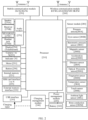
- FIG. 2 is a schematic structural diagram of an electronic device according to an embodiment of this application. That is, for example, the electronic device shown in FIG. 2 may be a mobile phone.
- the electronic device may include a processor 210, an external memory interface 220, an internal memory 221, a universal serial bus (universal serial bus, USB) interface 230, a charging management module 240, a power management unit 241, a battery 242, an antenna 1, an antenna 2, a mobile communication module 250, a wireless communication module 260, an audio module 270, a speaker 270A, a receiver 270B, a microphone 270C, a headset jack 270D, a sensor module 280, a button 290, a motor 291, an indicator 292, a camera 293, a display 294, and a subscriber identification module (subscriber identification module, SIM) card interface 295.
- SIM subscriber identification module
- the sensor module 280 may include a pressure sensor 280A, a gyroscope sensor 280B, a barometric pressure sensor 280C, a magnetic sensor 280D, an acceleration sensor 280E, a distance sensor 280F, an optical proximity sensor 280G, a fingerprint sensor 280H, a temperature sensor 280J, a touch sensor 280K, an ambient light sensor 280L, a bone conduction sensor 280M, and the like.
- the schematic structure in this embodiment constitutes no specific limitation on the electronic device.
- the electronic device may include more or fewer components than those shown in the figure, or some components may be combined, or some components may be split, or components are arranged in different manners.
- the components shown in the figure may be implemented by hardware, software, or a combination of software and hardware.
- the processor 210 may include one or more processing units.
- the processor 210 may include an application processor (application processor, AP), a modem processor, a graphics processing unit (graphics processing unit, GPU), an image signal processor (image signal processor, ISP), a controller, a memory, a video codec, a digital signal processor (digital signal processor, DSP), a baseband processor, a neural-network processing unit (neural-network processing unit, NPU), and/or the like.
- Different processing units may be separate devices, or may be integrated into one or more processors.
- the controller may be a nerve center and a command center of the electronic device.
- the controller may generate an operation control signal according to instruction operation code and a time-sequence signal, and control obtaining and executing of instructions.
- a memory may be further arranged in the processor 210 to store instructions and data.
- the memory in the processor 210 is a cache memory.
- the memory may store an instruction or data that is just used or cyclically used by the processor 210. If the processor 210 needs to use the instruction or data again, the processor may directly invoke the instruction or data from the memory. This avoids repeated access and reduces a waiting time of the processor 210, thereby improving system efficiency.
- the processor 210 may include one or more interfaces.
- the interface may include an integrated circuit (inter-integrated circuit, I2C) interface, an inter-integrated circuit sound (inter-integrated circuit sound, I2S) interface, a pulse code modulation (pulse code modulation, PCM) interface, a universal asynchronous receiver/transmitter (universal asynchronous receiver/transmitter, UART) interface, a mobile industry processor interface (mobile industry processor interface, MIPI), a general-purpose input/output (general-purpose input/output, GPIO) interface, a subscriber identity module (subscriber identity module, SIM) interface, a universal serial bus (universal serial bus, USB) interface, and/or the like.
- I2C integrated circuit
- I2S inter-integrated circuit sound
- PCM pulse code modulation
- PCM pulse code modulation
- UART universal asynchronous receiver/transmitter
- MIPI mobile industry processor interface
- GPIO general-purpose input/output
- SIM subscriber identity module
- a wireless communication function of the electronic device may be implemented through the antenna 1, the antenna 2, the mobile communication module 250, the wireless communication module 260, the modem processor, and the baseband processor.
- the antenna 1 and the antenna 2 are configured to transmit and receive an electromagnetic wave signal.
- Each antenna in the electronic device may be configured to cover one or more communication frequency bands. Different antennas may further be multiplexed to improve utilization of the antennas.
- the antenna 1 may be multiplexed into a diversity antenna of a wireless local area network.
- the antennas may be used with a tuning switch.
- the mobile communication module 250 can provide a wireless communication solution including 2G/3G/4G/5G and the like applied on the electronic device.
- the mobile communication module 250 may include at least one filter, a switch, a power amplifier, and a low noise amplifier (low noise amplifier, LNA).
- the mobile communication module 250 may receive an electromagnetic wave by using the antenna 1, perform processing such as filtering and amplification on the received electromagnetic wave, and send the electromagnetic wave to the modem processor for demodulation.
- the mobile communication module 250 may further amplify a signal modulated by the modem processor, and convert the signal into an electromagnetic wave by using the antenna 1 for radiation.
- at least some functional modules of the mobile communication module 250 may be disposed in the processor 210.
- at least some functional modules of the mobile communication module 250 and at least some modules of the processor 210 may be disposed in a same component.
- the wireless communication module 260 may provide a solution to wireless communication applied to the electronic device, for example, a wireless local area network (wireless local area networks, WLAN) (for example, a wireless fidelity (wireless fidelity, Wi-Fi) network), Bluetooth (Bluetooth, BT), a global navigation satellite system (global navigation satellite system, GNSS), frequency modulation (frequency modulation, FM), near field communication (near field communication, NFC), and an infrared (infrared, IR) technology.
- the wireless communication module 260 may be one or more components that integrate at least one communication processing module.
- the wireless communication module 260 receives an electromagnetic wave through the antenna 2, performs frequency modulation and filtering processing on the electromagnetic wave signal, and sends the processed signal to the processor 210.
- the wireless communication module 260 may further receive a to-be-sent signal from the processor 210, perform frequency modulation and amplification on the to-be-sent signal, and convert the to-be-sent signal into an electromagnetic wave for radiation through the antenna 2.
- the antenna 1 and the mobile communication module 250 of the electronic device are coupled, and the antenna 2 and the wireless communication module 260 of the electronic device are coupled, so that the electronic device can communicate with a network and another device by using a wireless communication technology.
- the wireless communication technology may include a global system for mobile communication (global system for mobile communication, GSM), a general packet radio service (general packet radio service, GPRS), code division multiple access (code division multiple access, CDMA), wideband code division multiple access (wideband code division multiple access, WCDMA), time-division code division multiple access (time-division code division multiple access, TD-SCDMA), long term evolution (long term evolution, LTE), BT, GNSS, WLAN, NFC, FM, and/or IR technologies.
- GSM global system for mobile communication
- GPRS general packet radio service
- code division multiple access code division multiple access
- CDMA wideband code division multiple access
- WCDMA wideband code division multiple access
- time-division code division multiple access time-division code
- the GNSS may include a global positioning system (global positioning system, GPS), a global navigation satellite system (global navigation satellite system, GLONASS), a BeiDou navigation satellite system (BeiDou navigation satellite system, BDS), a quasi-zenith satellite system (quasi-zenith satellite system, QZSS) and/or satellite-based augmentation systems (satellite based augmentation systems, SBAS).
- GPS global positioning system
- GLONASS global navigation satellite system
- BeiDou navigation satellite system BeiDou navigation satellite system
- BDS BeiDou navigation satellite system
- QZSS quasi-zenith satellite system
- SBAS satellite-based augmentation systems
- the electronic device implements a display function through the GPU, the display 294, the application processor.
- the GPU is a microprocessor for image processing and connects the display 294 and the application processor.
- the GPU is configured to perform mathematical and geometric calculations, and is configured to render graphics.
- the processor 210 may include one or more GPUs, and execute program instructions to generate or change display information.
- the display 294 is configured to display an image and a video.
- the display 294 includes a display panel.
- the display panel may be a liquid crystal display (liquid crystal display, LCD), an organic light-emitting diode (organic light-emitting diode, OLED), an active-matrix organic light emitting diode (active-matrix organic light emitting diode, AMOLED), a flexible light-emitting diode (flex light-emitting diode, FLED), a mini-LED, a micro-LED, a micro-OLED, and a quantum dot light emitting diode (quantum dot light emitting diodes, QLED).
- the electronic device may include one or N displays 294. N is a positive integer greater than 1.
- the electronic device may implement a photographing function by using the ISP, the camera 293, the video codec, the GPU, the display 294, the application processor, and the like.
- the electronic device may include 1 or N cameras 293, where N is a positive integer greater than 1.
- the electronic device may include three cameras: a main camera, a long-focus camera, and an ultra-wide angle camera; or the electronic device may include only one main camera.
- the electronic device may further include a depth camera or a depth sensor to detect a depth of a viewfinder image during photographing.
- the internal memory 221 may be configured to store computer executable program code.
- the executable program code includes instructions.
- the processor 210 runs the instruction stored in the internal memory 221, to perform various function applications and data processing of the electronic device.
- the internal memory 221 may include a program storage area and a data storage area.
- the program storage area may store an operating system, an application required by at least one function (such as a voice playing function and an image playing function), and the like.
- the data storage region may store data (for example, audio data and an address book) and the like created when the electronic device is used.
- the internal memory 221 may include a high-speed random access memory, or may include a non-volatile memory such as at least one magnetic disk memory, a flash memory, or a universal flash storage (universal flash storage, UFS).
- FIG. 2 only shows an exemplary description when the form of the electronic device is a mobile phone.
- the electronic device is a tablet computer, a handheld computer, a PC, a PDA, or a wearable device (for example, a smartwatch or a smart band), a smart home device (for example, a television), a vehicle-mounted machine (for example, a vehicle-mounted computer), a smart screen, a game console, a projector, an AR/VR device, or in another device form
- the electronic device may include fewer structures than those shown in FIG. 2 , or may include more structures than those shown in FIG. 2 . This is not limited herein.
- the electronic device is a mobile phone
- FIG. 3 is a schematic flowchart of an audio signal processing method according to an embodiment of this application.
- the audio signal processing method includes S301 to S307.
- an audio signal generated by the electronic device based on audio data of a video, a game, or music is a stereo audio signal (usually including a left-channel part and a right-channel part) to meet a requirement for dual-speaker or headset playback. That is, the audio signal generated by the electronic device is usually an audio signal obtained through deep mixing and decomposition or combination of sound images in different orientations based on dual channels. Therefore, if the audio signal generated by the electronic device is directly used for rendering, a sound field of a rendered audio signal is unclear, and orientations of sound images are inaccurate. Therefore, upmixing may be performed on the audio signal generated by electronic device to split the audio signal into the direct part of the audio signal and the diffusion part of the audio signal.
- the direct part of the audio signal usually includes a signal of a sound wave that is generated by a sound source and that directly reaches a listener's location, and some signals reflected to the listener's location for the first time or the first several times, and mainly affects location information of a sound source in a sound field.
- the diffusion part includes a signal reflected from the sound source to the listener's location in a middle stage or a late stage, and mainly affects surround sound and a sense of space of the sound field.
- the diffusion part of the audio signal may include a left-channel diffusion part (L_diffuse) and a right-channel diffusion part (R_diffuse).
- L_diffuse left-channel diffusion part
- R_diffuse right-channel diffusion part
- the audio signal may be split by using an upmixing algorithm such as an upmixing matrix method, a principal component analysis method, or a least mean square error decomposition method, to obtain the direct part of the audio signal and the diffusion part of the audio signal.
- an upmixing algorithm such as an upmixing matrix method, a principal component analysis method, or a least mean square error decomposition method
- the upmixing matrix method is used for splitting the audio signal generated by the electronic device.
- S302 Obtain a corresponding room impulse response from a preset room impulse response database based on a current scene, and decompose the room impulse response into a direct part of the room impulse response (RIR_direct_part), an early reflection part of the room impulse response (RIR_early_reflection), and a later reverberation part of the room impulse response (RIR_later_reverberation).
- RIR_direct_part direct part of the room impulse response
- RRR_early_reflection an early reflection part of the room impulse response
- RRR_later_reverberation a later reverberation part of the room impulse response
- the preset room impulse response database may be a database established based on room impulse responses that are obtained by pre-measuring different room scenes and that correspond to the room scenes.
- a user may alternatively autonomously measure a room impulse response of a corresponding room scene and add the room impulse response to the database.
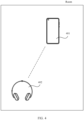
- a user may place a mobile phone 401 and a headset 402 that are communicatively connected to each other apart in a room that needs to be measured. Then specific audio for measurement is played through a speaker of the mobile phone 401, and the specific audio is received and transmitted to the mobile phone 401 through a microphone of the headset 402. In this way, the mobile phone 401 can process an audio signal received by the microphone of the headset 402 to obtain a room impulse response of a corresponding room.
- room impulse responses of all room scenes in the room impulse response database may alternatively be autonomously measured and stored by a user. This is not limited herein.
- the room impulse response database may be stored in a cloud (namely, a cloud server), and the electronic device downloads and obtains, from the cloud, the room impulse response corresponding to the current scene.
- the database may be locally stored on the electronic device.
- a room impulse response of a private room scene that is autonomously measured by a user may alternatively be locally stored on the electronic device, and room impulse responses of other public room scenes are stored in the cloud.
- the room impulse response database includes a private database (a database including room impulse responses autonomously measured by the user) and a public database (a database including pre-measured and prestored room impulse responses of public room scenes).
- the private database is stored locally, and the public database is stored in the cloud.
- the current scene is a room scene in which the electronic device is currently located, for example, a shopping mall, a cinema, a conference room, a concert hall, an office, a kitchen, or a living room.
- the current scene may be selected by the user or intelligently recognized by the electronic device.
- a settings list of the electronic device may include a functional option "Listening scene" for setting the current scene.
- the electronic device may display alternative room scenes in response to the tapping operation performed by the user, for example, a shopping mall, a cinema, a conference room, a concert hall, an office, a kitchen, or a living room. The user may select a corresponding room scene as the current scene through tapping.
- the electronic device may intelligently recognize the current scene based on a current environment.
- the electronic device determines that the current scene is an office.
- the electronic device determines that the current scene is a living room. How the electronic device intelligently recognizes the current scene is not limited in this embodiment of this application.
- the room impulse response database may include various room impulse responses and corresponding room scene identifiers, so that the electronic device can match a corresponding room impulse response for the current scene from the database based on a room scene identifier.
- a part of the signal namely, a direct part of a room impulse response
- another part of the signal namely, an early reflection part of the room impulse response
- another part of the signal namely, a later reverberation part of the room impulse response
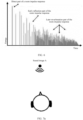
- the part that directly reaches the receiver has a shortest propagation path, and therefore usually arrives first and has highest energy.
- the part that is reflected and diffused by the wall and then reaches the receiver arrives last due to the reflection and continuous diffusion, and has lowest energy.
- the direct part of the room impulse response mainly affects location information of a sound source in a sound field
- the later reverberation part of the room impulse response mainly affects surround sound and a sense of space of the sound field.
- the room impulse response may be decomposed based on the room impulse response characteristics shown in FIG. 6 , to obtain the direct part of the room impulse response, the early reflection part of the room impulse response, and the later reverberation part of the room impulse response.
- the room impulse response may be decomposed based on time, magnitude of energy, and energy density. This is not limited herein.
- S303 Perform synthesis based on the direct part of the room impulse response, the early reflection part of the room impulse response, and a head-related transfer function to obtain a first binaural room impulse response for sense-of-orientation rendering.
- the sense-of-orientation rendering is mainly intended to accurately restore a location of a sound image in a spatial sound field. Therefore, the first binaural room impulse response including orientation information needs to be obtained through synthesis to render a corresponding sound image.
- a direct part of an audio signal obtained through upmixing mainly includes dialogs and human voices. Therefore, the synthesized first binaural room impulse response cannot include a reverberation component. This leads to serious coloration of human voice signals. Therefore, synthesis may be performed based on the direct part of the room impulse response, the early reflection part of the room impulse response, and the head-related transfer function to obtain the first binaural room impulse response.
- the head-related transfer function may be a head-related transfer function corresponding to each orientation of the user's head in a preset head-related transfer function database.
- the head-related transfer function may alternatively be a head-related transfer function obtained through adjustment and matching on a head-related transfer function in the preset head-related transfer function database based on head tracking information obtained by the headset by tracking the user's head.
- orientations of sound images in a finally rendered audio signal do not rotate in space along with rotation of the user's head.
- a sound image for example, guitar sound
- FIG. 7a an orientation of a sound image (for example, guitar sound) A in the audio signal is directly in front of the user's head.
- FIG. 7a sound image for example, guitar sound
- the audio signal is processed based on a head-related transfer function adjusted based on head tracking information, and an orientation of the sound image A that is perceived by the user changes to the left of the user's head. That is, the orientations of the sound images in the audio signal can remain stationary in space, so that the orientations of the sound images have a relative displacement with the user's head along with rotation of the user's head, to provide the user with speaker-like immersive experience when the user listens to sound.
- an inertial sensor for example, an acceleration sensor or a gyro sensor
- an inertial sensor may be disposed in the headset to track the user's head, and detect rotation of the user's head to obtain head tracking information.
- the headset sends detected head tracking information to the electronic device.
- the electronic device may perform matching and adjustment on a head-related transfer function in the preset head-related transfer function database based on the head tracking information.
- the head-related transfer function corresponds to each orientation of the head, that is, each orientation of the user's head corresponds to one head-related transfer function.
- the user can perceive that an orientation of the sound image is a corresponding orientation.
- a sound image is processed by using a head-related transfer function corresponding to the front of the user's head.
- the user can perceive that an orientation of the sound image is directly in front of the head. Therefore, to enable the user to perceive a sound image in a corresponding orientation, a head-related transfer function corresponding to each orientation of the user's head is fixed.
- a corresponding orientation is marked for a head-related transfer function, and the marked orientation is consistent with a head orientation corresponding to the head-related transfer function.
- an orientation marked for the head-related transfer function corresponding to the front of the head is the front
- an orientation marked for a head-related transfer function corresponding to the left of the head is the left.
- an orientation of a corresponding sound image that is perceived by the user can be consistent with an orientation of the sound image.
- a head-related transfer function for processing each sound image remains unchanged, but an orientation perceived by the user rotates along with the rotation of the user's head. For the user, a perceived orientation of a sound image is not stationary in space.
- an orientation marked for each head-related transfer function may be adjusted to change a head-related transfer function used for processing a sound image in a corresponding orientation. Further, the user's perception of an orientation of the sound image changes, so that when the user's head rotates, a perceived orientation of a sound image can have a relative displacement with the user's head. In this way, an orientation of the sound image that is perceived by the user can remain stationary in space when the user's head rotates.
- a manner of performing matching and adjustment on a head-related transfer function in the preset head-related transfer function database based on head tracking information may be as follows: After a rotational angle of the user's head is determined based on the head tracking information, an orientation marked for a head-related transfer functions in each orientation of the user's head is re-marked based on the rotational angle of the user's head. For example, based on the rotational angle of the user's head, an orientation marked for each head-related transfer function is adjusted to an orientation obtained through rotation by a corresponding angle.
- a sound image in the audio signal can be processed based on a head-related transfer function with a re-marked orientation, so that an orientation of the sound image has a relative displacement along with rotation of the user's head, but the orientation remains stationary in space.
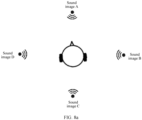
- the user's head directly faces the electronic device (that is, when the user's head is in the default state)
- the user perceives that an orientation of a sound image A is directly in front of the user's head
- the user perceives that an orientation of a sound image B is on the right of the user's head
- the user perceives that an orientation of a sound image C is directly behind the user's head
- the user perceives that an orientation of a sound image D is on the left of the user's head.
- the user's head rotates 90 degrees to the right, as shown in FIG.
- the sound image B should be processed by using a head-related transfer function corresponding to the front of the user's head.
- an orientation marked for the head-related transfer function corresponding to the front of the user's head should be adjusted from an orientation corresponding to the sound image A (that is, the front) to an orientation corresponding to the sound image B (that is, the right).
- the sound image C should be processed by using a head-related transfer function corresponding to the right of the user's head. Therefore, an orientation marked for the head-related transfer function corresponding to the right of the user's head should be adjusted from the orientation corresponding to the sound image B (that is, the right) to an orientation corresponding to the sound image C (that is, the rear).
- the sound image D should be processed by using a head-related transfer function corresponding to the rear of the user's head.
- an orientation marked for the head-related transfer function corresponding to the rear of the user's head should be adjusted from the orientation corresponding to the sound image C (that is, the rear) to an orientation corresponding to the sound image C (that is, the left).
- the sound image A should be further processed by using a head-related transfer function corresponding to the left of the user's head. Therefore, an orientation marked for the head-related transfer function corresponding to the left of the user's head should be adjusted from the orientation corresponding to the sound image D (that is, the left) to the orientation corresponding to the sound image A (that is, the front).
- the orientations marked for the head-related transfer functions in the front, right, rear, and left orientations of the user's head may be respectively adjusted to orientations obtained through rotation to the right by 90 degrees.
- the orientation marked for the head-related transfer function directly in front of the user is adjusted from the front to the right
- the orientation marked for the head-related transfer function on the right of the user is adjusted from the right to the rear
- the orientation marked for the head-related transfer function directly behind the user is adjusted from the rear to the left
- the orientation marked for the head-related transfer function on the left of the user is adjusted from the left to the front.
- the first binaural room impulse response may be a binaural room impulse response that is used for rendering sound images in different orientations and that is obtained by performing convolution and synthesis on a head-related transfer function in each direction with the direct part of the room impulse response and the early reflection part of the room impulse response. Therefore, a sound image in a corresponding orientation may be subsequently rendered based on the first binaural room impulse response.
- S304 Render the direct part of the audio signal and the diffusion part of the audio signal based on the first binaural room impulse response to obtain a sense-of-orientation rendered audio signal.
- the direct part of the audio signal and the diffusion part of the audio signal each may be rendered through convolution with the first binaural room impulse response based on a preset ratio coefficient. Therefore, a sound image in each orientation in the audio signal is processed based on the direct part and the early reflection part of the room impulse response in the first binaural room impulse response and a head-related transfer function in a corresponding orientation, to render an orientation of each sound image in the audio signal.
- the sense-of-orientation rendered audio signal obtained through rendering based on the first binaural room impulse response is a dual-channel audio signal (for example, including a left-channel signal and a right-channel signal of the sense-of-orientation rendered audio signal), to facilitate dual-channel input to the headset.
- S305 Perform synthesis based on the early reflection part of the room impulse response, the later reverberation part of the room impulse response, and a head-related transfer function in a specified orientation to obtain a second binaural room impulse response for sense-of-space rendering.
- the sense-of-space rendering is mainly intended to achieve a sense of space and surround sound of a replay sound field, and make audio rendering effects match an environment in which the user is currently located, to achieve immersive experience.
- the sense-of-space rendering is mainly performed based on the diffusion part (for example, a left-channel diffusion part and a right-channel diffusion part) of the audio signal.
- This part of the audio signal mainly includes ambient sound such as rain, wind, bird sound, and such signals have weak directionality. Therefore, the correspondingly generated second binaural room impulse response cannot include much orientation information (a part of the audio signal including orientation information is already included in sense-of-orientation rendering). Therefore, synthesis may be performed based on the early reflection part of the room impulse response, the later reverberation part of the room impulse response, and the head-related transfer function in the specified orientation to obtain the second binaural room impulse response.
- the head-related transfer function in the specified orientation may be a preset head-related transfer function around several specific orientations of orientations corresponding to the user's head.
- the head-related transfer function may be a head-related transfer function corresponding to the front of the user's head, a head-related transfer function corresponding to the rear of the user's head, a head-related transfer function corresponding to the left of the user's head, a head-related transfer function corresponding to the right of the user's head, a head-related transfer function corresponding to an orientation above the user's head, or a head-related transfer function corresponding to an orientation below the user's head.
- the second binaural room impulse response may be obtained by performing convolution and synthesis on the early reflection part of the room impulse response, the later reverberation part of the room impulse response, and the head-related transfer function in the specified orientation.
- S306 Render the diffusion part of the audio signal based on the second binaural room impulse response to obtain a sense-of-space rendered audio signal.
- the diffusion part of the audio signal may be rendered through convolution with the second binaural room impulse response, to restore surround sound and a sense of space in a sound field of the audio signal through rendering.
- the sense-of-space rendered audio signal obtained through rendering based on the second binaural room impulse response is a dual-channel audio signal (for example, including a left-channel signal and a right-channel signal of the sense-of-space rendered audio signal), to facilitate dual-channel input to the headset.
- S307 Synthesize the sense-of-orientation rendered audio signal and the sense-of-space rendered audio signal, and input a synthesized signal to the headset.
- the left-channel signal of the sense-of-orientation rendered audio signal and the left-channel signal of the sense-of-space rendered audio signal are superposed to obtain a left-channel signal of a rendered signal
- the right-channel signal of the sense-of-orientation rendered audio signal and the right-channel signal of the sense-of-space rendered audio signal are superposed to obtain a right-channel signal of the rendered signal. Therefore, the left-channel signal of the rendered signal and the right-channel signal of the rendered signal that are finally obtained are input to the headset, to be played through the headset.
- a sequence of S301 and S302 is not limited, and a sequence of S303 and S305 is not limited either, provided that S304 is performed after S304 and S306 is performed after S305. This is not limited herein.
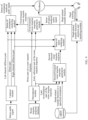
- an electronic device may include a room impulse response database, a head-related transfer function container (HRTF container), a head-related transfer function selection and matching module, an upmixer module, a decomposer module, a first binaural room impulse response generation module, a second binaural room impulse response generation module, a sense-of-orientation rendering module, a sense-of-space rendering module, a synthesis module, and the like.
- HRTF container head-related transfer function container
- a head-related transfer function selection and matching module an upmixer module, a decomposer module, a first binaural room impulse response generation module, a second binaural room impulse response generation module, a sense-of-orientation rendering module, a sense-of-space rendering module, a synthesis module, and the like.
- the upmixer module may split the stereo audio signal into a direct part, a left-channel diffusion part, and a right-channel diffusion part through upmixing.
- the decomposer module may obtain a room impulse response corresponding to a current scene from a room impulse response database based on the current scene, and decompose the room impulse response into a direct part of the room impulse response, an early reflection part of the room impulse response, and a later reverberation part of the room impulse response.
- the first binaural room impulse response generation module may perform synthesis based on the direct part of the room impulse response, the early reflection part of the room impulse response, and a head-related transfer function (the head-related transfer function may be obtained by the head-related transfer function selection and matching module from a head-related transfer function container through selection and matching based on head tracking information sent by a headset, where for details, refer to S303), to obtain a first binaural room impulse response.
- the sense-of-orientation rendering module may render the direct part, the left-channel diffusion part, and the right-channel diffusion part of the audio signal based on the first binaural room impulse response to obtain a sense-of-orientation rendered audio signal.
- the second binaural room impulse response generation module may perform synthesis based on the early reflection part of the room impulse response, the later reverberation part of the room impulse response, and a head-related transfer function in a specified direction to obtain a second binaural room impulse response.
- the sense-of-space rendering module may render the left-channel diffusion part and the right-channel diffusion part of the audio signal based on the second binaural room impulse response to obtain a sense-of-space rendered audio signal.
- the synthesis module may synthesize the sense-of-orientation rendered audio signal and the sense-of-space rendered audio signal, and input a synthesized signal to the headset.
- the binaural room impulse response for sense-of-orientation rendering and the binaural room impulse response for sense-of-space rendering in the current scene can be conveniently obtained based on the corresponding room impulse response and head-related transfer function, perform sense-of-orientation rendering and sense-of-space rendering on the audio signal.
- the electronic device can render the audio signal based on different scenes, to more accurately restore original expressive and immersive feelings of audio content in the audio signal in the current scene for a user through the headset.
- an embodiment of this application further provides an audio signal processing apparatus.
- the apparatus may be applied to the foregoing electronic device to implement the method in the foregoing embodiments.
- Functions of the apparatus may be implemented by hardware or by hardware executing corresponding software.
- the hardware or the software includes one or more modules corresponding to the functions.
- the apparatus includes: a room impulse response database, a head-related transfer function container (HRTF container), a head-related transfer function selection and matching module, an upmixer module, a decomposer module, a first binaural room impulse response generation module, a second binaural room impulse response generation module, a sense-of-orientation rendering module, a sense-of-space rendering module, and a synthesis module.
- the related method in the foregoing embodiments can be implemented through cooperation of the foregoing modules. For details, refer to FIG. 9 and related descriptions thereof. Details are not described herein again.
- division of units or modules in the apparatus is merely logical function division. During an actual implementation, some or all of the units or modules may be integrated into a physical entity or may be physically separated.
- the units in the apparatus may all be implemented in a form of software invoked by a processing element; or may all be implemented in a form of hardware; or some units are implemented in a form of software invoked by a processing element, and some units are implemented in a form of hardware.
- the units may be a processing element that is independently arranged, or may be integrated in a chip of the apparatus for implementation.
- the units may be stored in a memory in a form of program code, and are invoked by a processing element of the apparatus to perform functions of the units.
- all or some of the units may be integrated together, or may be implemented independently.
- the processing element may also be referred to as a processor and may be an integrated circuit having a signal processing capability.
- steps in the foregoing method or the foregoing units may be implemented by using a hardware integrated logical circuit in a processor element or may be implemented in a form of software invoked by a processing element.
- the units in the apparatus may be one or more integrated circuits configured to implement the foregoing method, for example, one or more ASICs, one or more DSPs, one or more FPGAs, or a combination of at least two of these integrated circuit forms.
- the processing element may be a general-purpose processor, for example, a CPU or another processor that can invoke a program.
- the units may be integrated together and implemented in a form of a system-on-a-chip (system-on-a-chip, SOC).
- the units of the apparatus for implementing the corresponding steps in the method may be implemented in a form of a processing element scheduling a program.
- the apparatus may include a processing element and a storage element, where the processing element invokes a program stored in the storage element, to perform the method described in the foregoing method embodiments.
- the storage element may be a storage element located on the same chip as the processing element, that is, a storage-element-on-a-chip.
- the program used for performing the method may be stored on a storage element located on a different chip from the processing element, that is, a storage-element-out-a-chip.
- the processing element invokes or loads the program from the storage-element-out-a-chip onto the storage-element-on-a-chip, to invoke the program and perform the method described in the foregoing method embodiments.
- an embodiment of this application may further provide an apparatus, for example, an electronic device, which may include: a processor and a memory for storing instructions executable by the processor.
- the processor When the processor is configured to execute the instructions, the electronic device is enabled to implement the audio signal processing method implemented by the electronic device in the foregoing embodiments.
- the memory may be arranged in the electronic device or may be arranged outside the electronic device.
- the processor includes one or more processors.
- the units for implementing the steps in the foregoing method in the apparatus may be configured as one or more processing elements, and these processing elements may be disposed on the corresponding electronic device described above.
- the processing element herein may be an integrated circuit, for example, one or more ASICs, one or more DSPs, one or more FPGAs, or a combination of these types of integrated circuits.
- the integrated circuits may be integrated to form a chip.
- an embodiment of this application further provides a chip system, and the chip system may be applied to the foregoing electronic device.
- the chip system includes one or more interface circuits and one or more processors.
- the interface circuit and the processor are interconnected through a line.
- the processor receives and executes computer instructions from the memory of the electronic device through the interface circuit to implement the method related to the electronic device in the foregoing method embodiments.
- An embodiment of this application further provides a computer program product, including computer instructions that are run by an electronic device, for example, the foregoing electronic device.
- the disclosed apparatus and method may be implemented in other manners.
- the described apparatus embodiment is merely exemplary.
- the module or unit division is merely logical function division and may be other division during actual implementation.
- a plurality of units or components may be combined or integrated into another apparatus, or some features may be ignored or not performed.
- the displayed or discussed mutual couplings or direct couplings or communication connections may be implemented by using some interfaces.
- the indirect couplings or communication connections between the apparatuses or units may be implemented in electronic, mechanical, or other forms.
- a part displayed as a unit may be one physical unit or a plurality of physical units, located at the one position, or may be distributed to different positions. Some or all of the units may be selected according to actual needs to achieve the objectives of the solutions of the embodiments.
- functional units in the embodiments of this application may be integrated into one processing unit, or each of the units may be physically separated, or two or more units may be integrated into one unit.
- the integrated unit may be implemented in the form of hardware, or may be implemented in a form of a software functional unit.
- the integrated unit When the integrated unit is implemented in the form of a software functional unit and sold or used as an independent product, the integrated unit may be stored in a readable storage medium.
- the software product is stored in a program product such as a computer-readable storage medium and includes several instructions for instructing a device (which may be a single-chip microcomputer or a chip) or a processor (processor) to perform all or some of the steps of the methods described in the embodiments of this application.
- the storage medium includes any medium that can store program code, such as a USB flash drive, a removable hard disk, a ROM, a RAM, a magnetic disk, or an optical disc.
- an embodiment of this application may further provide a computer-readable storage medium, and the computer-readable storage medium stores computer program instructions.
- the computer program instructions When executed by an electronic device, the electronic device is enabled to implement the audio signal processing method described in the foregoing method embodiments.
Landscapes
- Engineering & Computer Science (AREA)
- Physics & Mathematics (AREA)
- Acoustics & Sound (AREA)
- Signal Processing (AREA)
- Multimedia (AREA)
- Stereophonic System (AREA)
Claims (11)
- Ein Audio-Signalverarbeitungsverfahren, angewendet auf ein elektronisches Gerät (401) in einem Audiosystem, wobei das Audiosystem ein elektronisches Gerät (401) und ein vom Benutzer zu tragendes Headset (402) umfasst, die kommunikationsmäßig verbunden sind, und das Verfahren umfasst:Aufteilen (S301) eines Audiosignals in einen direkten Teil und einen Diffusionsteil;Abrufen (S302) einer entsprechenden Raumimpulsantwort aus einer voreingestellten Raumimpulsantwort-Datenbank basierend auf einer aktuellen Szene, wobei die Raumimpulsantwort-Datenbank Raumimpulsantworten enthält, die den Szenen entsprechen, und die aktuelle Szene eine Szene ist, in der sich das elektronische Gerät derzeit befindet;Zerlegen (S302) der Raumimpulsantwort in einen direkten Teil der Raumimpulsantwort, einen frühen Reflexionsteil der Raumimpulsantwort und einen späteren Nachhallteil der Raumimpulsantwort;Durchführen der (S303) Synthese basierend auf dem direkten Teil der Raumimpulsantwort, dem frühen Reflexionsteil der Raumimpulsantwort und einer kopfbezogenen Übertragungsfunktion, die der jeweiligen Ausrichtung des Kopfes des Benutzers entspricht, um eine erste binaurale Raumimpulsantwort für die Orientierungssinn-Wiedergabe zu erhalten, wobei die Orientierungssinn-Wiedergabe den Standort einer Schallquelle in einem Schallfeld wiederherstellt; undDurchführung (S305) der Synthese basierend auf dem frühen Reflexionsteil der Raumimpulsantwort, dem späteren Nachhallteil der Raumimpulsantwort und einer anderen kopfbezogenen Übertragungsfunktion in einer voreingestellten Ausrichtung, um eine zweite binaurale Raumimpulsantwort für die Raumklangwiedergabe zu erhalten, wobei die Raumklangwiedergabe ein Raumgefühl und Surround-Sound eines Schallfeldes erreicht;Wiedergabe (S304) des direkten Teils des Audiosignals und des Diffusionsteils des Audiosignals basierend auf der ersten binauralen Raumimpulsantwort, um ein orientierungswahrgenommenes Audiosignal zu erhalten;Wiedergabe (S306) des Diffusionsteils des Audiosignals basierend auf der zweiten binauralen Raumimpulsantwort, um ein raumempfundenes Audiosignal zu erhalten; undSynthese (S307) des Orientierungssinns gerenderten Audiosignals und des Raumsinns gerenderten Audiosignals und Eingabe eines synthetisierten Signals an das Headset.
- Das Verfahren nach Anspruch 1, wobei die kopfbezogene Übertragungsfunktion eine kopfbezogene Übertragungsfunktion ist, die durch Abgleich und Anpassung basierend auf den vom Headset gesendeten Kopfverfolgungsinformationen erhalten wird.
- Das Verfahren nach Anspruch 1 oder 2, wobei die andere kopfbezogene Übertragungsfunktion in der voreingestellten Ausrichtung umfasst: eine kopfbezogene Übertragungsfunktion direkt vor dem Kopf eines Benutzers, eine kopfbezogene Übertragungsfunktion direkt hinter dem Kopf eines Benutzers, eine kopfbezogene Übertragungsfunktion links vom Kopf eines Benutzers, eine kopfbezogene Übertragungsfunktion rechts vom Kopf eines Benutzers, eine kopfbezogene Übertragungsfunktion über dem Kopf eines Benutzers und eine kopfbezogene Übertragungsfunktion unter dem Kopf eines Benutzers.
- Das Verfahren nach einem der Ansprüche 1 bis 3, wobei der Diffusionsteil des Audiosignals einen linken Kanal-Diffusionsteil und einen rechten Kanal-Diffusionsteil umfasst.
- Das Verfahren nach einem der Ansprüche 1 bis 4, wobei die aktuelle Szene eine vom Benutzer ausgewählte Szene ist.
- Das Verfahren nach einem der Ansprüche 1 bis 5, wobei die aktuelle Szene eine von der elektronischen Vorrichtung erkannte Szene ist.
- Das Verfahren nach einem der Ansprüche 1 bis 6, wobei die aktuelle Szene eine der folgenden umfasst: ein Einkaufszentrum, ein Kino, ein Konferenzraum, ein Konzertsaal, ein Büro, eine Küche und ein Wohnzimmer.
- Das Verfahren nach einem der Ansprüche 1 bis 7, wobei die voreingestellte Raumimpulsantwort-Datenbank eine vom Benutzer autonom gemessene Raumimpulsantwort umfasst.
- Das Verfahren nach einem der Ansprüche 1 bis 8, wobei die voreingestellte Raumimpulsantwort-Datenbank in einem Cloud-Server gespeichert ist.
- Ein elektronisches Gerät (410), das kommunikativ mit einem von einem Benutzer zu tragenden Headset verbunden ist, wobei das Gerät umfasst: einen Prozessor (210) und einen Speicher, der konfiguriert ist (220, 221), um ausführbare Anweisungen des Prozessors (210) zu speichern, wobei, wenn der Prozessor (210) konfiguriert ist, die Anweisungen auszuführen, das elektronische Gerät (401) in der Lage ist, das Verfahren gemäß einem der Ansprüche 1 bis 7 zu implementieren.
- Ein computerlesbares Speichermedium, das Computerprogrammanweisungen speichert, wobei, wenn die Computerprogrammanweisungen von der elektronischen Vorrichtung (401) gemäß Anspruch 10 ausgeführt werden, die elektronische Vorrichtung (401) in der Lage ist, das Verfahren gemäß einem der Ansprüche 1 bis 7 zu implementieren.
Applications Claiming Priority (2)
| Application Number | Priority Date | Filing Date | Title |
|---|---|---|---|
| CN202210380751.5A CN116939474A (zh) | 2022-04-12 | 2022-04-12 | 一种音频信号处理方法及电子设备 |
| PCT/CN2022/138456 WO2023197646A1 (zh) | 2022-04-12 | 2022-12-12 | 一种音频信号处理方法及电子设备 |
Publications (3)
| Publication Number | Publication Date |
|---|---|
| EP4284027A1 EP4284027A1 (de) | 2023-11-29 |
| EP4284027A4 EP4284027A4 (de) | 2024-05-15 |
| EP4284027B1 true EP4284027B1 (de) | 2025-02-12 |
Family
ID=87060572
Family Applications (1)
| Application Number | Title | Priority Date | Filing Date |
|---|---|---|---|
| EP22893948.4A Active EP4284027B1 (de) | 2022-04-12 | 2022-12-12 | Audiosignalverarbeitungsverfahren und elektronische vorrichtung |
Country Status (4)
| Country | Link |
|---|---|
| US (1) | US12445798B2 (de) |
| EP (1) | EP4284027B1 (de) |
| CN (1) | CN116939474A (de) |
| WO (1) | WO2023197646A1 (de) |
Families Citing this family (2)
| Publication number | Priority date | Publication date | Assignee | Title |
|---|---|---|---|---|
| USD1119966S1 (en) * | 2021-10-15 | 2026-03-24 | Apple Inc. | Display screen or portion thereof with animated graphical user interface |
| US20240259760A1 (en) * | 2023-01-13 | 2024-08-01 | Sonos, Inc. | Room-Informed Binaural Rendering |
Family Cites Families (10)
| Publication number | Priority date | Publication date | Assignee | Title |
|---|---|---|---|---|
| CN104919820B (zh) | 2013-01-17 | 2017-04-26 | 皇家飞利浦有限公司 | 双耳音频处理 |
| US9319819B2 (en) * | 2013-07-25 | 2016-04-19 | Etri | Binaural rendering method and apparatus for decoding multi channel audio |
| US10805757B2 (en) * | 2015-12-31 | 2020-10-13 | Creative Technology Ltd | Method for generating a customized/personalized head related transfer function |
| KR102642275B1 (ko) * | 2016-02-02 | 2024-02-28 | 디티에스, 인코포레이티드 | 증강 현실 헤드폰 환경 렌더링 |
| US10327090B2 (en) * | 2016-09-13 | 2019-06-18 | Lg Electronics Inc. | Distance rendering method for audio signal and apparatus for outputting audio signal using same |
| US10187740B2 (en) | 2016-09-23 | 2019-01-22 | Apple Inc. | Producing headphone driver signals in a digital audio signal processing binaural rendering environment |
| JP6977030B2 (ja) | 2016-10-28 | 2021-12-08 | パナソニック インテレクチュアル プロパティ コーポレーション オブ アメリカPanasonic Intellectual Property Corporation of America | 複数のオーディオソースの再生のためのバイノーラルレンダリング装置および方法 |
| US11200906B2 (en) | 2017-09-15 | 2021-12-14 | Lg Electronics, Inc. | Audio encoding method, to which BRIR/RIR parameterization is applied, and method and device for reproducing audio by using parameterized BRIR/RIR information |
| GB2593170A (en) | 2020-03-16 | 2021-09-22 | Nokia Technologies Oy | Rendering reverberation |
| WO2022108494A1 (en) | 2020-11-17 | 2022-05-27 | Dirac Research Ab | Improved modeling and/or determination of binaural room impulse responses for audio applications |
-
2022
- 2022-04-12 CN CN202210380751.5A patent/CN116939474A/zh active Pending
- 2022-12-12 EP EP22893948.4A patent/EP4284027B1/de active Active
- 2022-12-12 US US18/038,768 patent/US12445798B2/en active Active
- 2022-12-12 WO PCT/CN2022/138456 patent/WO2023197646A1/zh not_active Ceased
Also Published As
| Publication number | Publication date |
|---|---|
| US12445798B2 (en) | 2025-10-14 |
| WO2023197646A1 (zh) | 2023-10-19 |
| US20240267697A1 (en) | 2024-08-08 |
| EP4284027A1 (de) | 2023-11-29 |
| CN116939474A (zh) | 2023-10-24 |
| EP4284027A4 (de) | 2024-05-15 |
Similar Documents
| Publication | Publication Date | Title |
|---|---|---|
| US10979843B2 (en) | Spatialized audio output based on predicted position data | |
| US9936292B2 (en) | Spatial audio apparatus | |
| US8587631B2 (en) | Facilitating communications using a portable communication device and directed sound output | |
| US20180357038A1 (en) | Audio metadata modification at rendering device | |
| EP2942980A1 (de) | Echtzeitsteuerung einer Schallumgebung | |
| US20190116452A1 (en) | Graphical user interface to adapt virtualizer sweet spot | |
| WO2013147791A1 (en) | Audio control based on orientation | |
| JP2014072894A (ja) | カメラによるオーディオ空間化 | |
| CN114710739B (zh) | 一种头部相关函数hrtf的确定方法、电子设备及存储介质 | |
| EP4284027B1 (de) | Audiosignalverarbeitungsverfahren und elektronische vorrichtung | |
| WO2018048567A1 (en) | Assisted near-distance communication using binaural cues | |
| US12278919B2 (en) | Voice call method and apparatus, electronic device, and computer-readable storage medium | |
| EP3618459B1 (de) | Verfahren und vorrichtung zur wiedergabe von audiodaten | |
| CN116055983B (zh) | 一种音频信号处理方法及电子设备 | |
| CN114667744B (zh) | 实时通信方法、装置和系统 | |
| WO2024159885A1 (zh) | 空间音频渲染方法和装置 | |
| US12532143B2 (en) | Dynamic audio spatialization | |
| CN117676002B (zh) | 音频处理方法及电子设备 | |
| CN116048241B (zh) | 一种提示方法、扩展现实设备及介质 | |
| CN114787799A (zh) | 一种数据生成方法及装置 | |
| WO2022151336A1 (en) | Techniques for around-the-ear transducers | |
| CN119541512A (zh) | 一种渲染声音的方法以及电子设备 | |
| CN121501236A (zh) | 音频播放方法、头戴式设备及存储介质 | |
| WO2024046182A1 (zh) | 一种音频播放方法、系统及相关装置 | |
| KR20160073879A (ko) | 3차원 오디오 효과를 이용한 실시간 내비게이션 시스템 |
Legal Events
| Date | Code | Title | Description |
|---|---|---|---|
| STAA | Information on the status of an ep patent application or granted ep patent |
Free format text: STATUS: UNKNOWN |
|
| STAA | Information on the status of an ep patent application or granted ep patent |
Free format text: STATUS: THE INTERNATIONAL PUBLICATION HAS BEEN MADE |
|
| PUAI | Public reference made under article 153(3) epc to a published international application that has entered the european phase |
Free format text: ORIGINAL CODE: 0009012 |
|
| STAA | Information on the status of an ep patent application or granted ep patent |
Free format text: STATUS: REQUEST FOR EXAMINATION WAS MADE |
|
| 17P | Request for examination filed |
Effective date: 20230523 |
|
| AK | Designated contracting states |
Kind code of ref document: A1 Designated state(s): AL AT BE BG CH CY CZ DE DK EE ES FI FR GB GR HR HU IE IS IT LI LT LU LV MC ME MK MT NL NO PL PT RO RS SE SI SK SM TR |
|
| A4 | Supplementary search report drawn up and despatched |
Effective date: 20240412 |
|
| RIC1 | Information provided on ipc code assigned before grant |
Ipc: H04S 7/00 20060101AFI20240408BHEP |
|
| GRAP | Despatch of communication of intention to grant a patent |
Free format text: ORIGINAL CODE: EPIDOSNIGR1 |
|
| STAA | Information on the status of an ep patent application or granted ep patent |
Free format text: STATUS: GRANT OF PATENT IS INTENDED |
|
| INTG | Intention to grant announced |
Effective date: 20240910 |
|
| GRAS | Grant fee paid |
Free format text: ORIGINAL CODE: EPIDOSNIGR3 |
|
| GRAA | (expected) grant |
Free format text: ORIGINAL CODE: 0009210 |
|
| STAA | Information on the status of an ep patent application or granted ep patent |
Free format text: STATUS: THE PATENT HAS BEEN GRANTED |
|
| AK | Designated contracting states |
Kind code of ref document: B1 Designated state(s): AL AT BE BG CH CY CZ DE DK EE ES FI FR GB GR HR HU IE IS IT LI LT LU LV MC ME MK MT NL NO PL PT RO RS SE SI SK SM TR |
|
| DAV | Request for validation of the european patent (deleted) | ||
| DAX | Request for extension of the european patent (deleted) | ||
| REG | Reference to a national code |
Ref country code: GB Ref legal event code: FG4D |
|
| REG | Reference to a national code |
Ref country code: CH Ref legal event code: EP |
|
| REG | Reference to a national code |
Ref country code: DE Ref legal event code: R096 Ref document number: 602022010648 Country of ref document: DE |
|
| REG | Reference to a national code |
Ref country code: NL Ref legal event code: FP |
|
| REG | Reference to a national code |
Ref country code: IE Ref legal event code: FG4D |
|
| PG25 | Lapsed in a contracting state [announced via postgrant information from national office to epo] |
Ref country code: RS Free format text: LAPSE BECAUSE OF FAILURE TO SUBMIT A TRANSLATION OF THE DESCRIPTION OR TO PAY THE FEE WITHIN THE PRESCRIBED TIME-LIMIT Effective date: 20250512 |
|
| PG25 | Lapsed in a contracting state [announced via postgrant information from national office to epo] |
Ref country code: FI Free format text: LAPSE BECAUSE OF FAILURE TO SUBMIT A TRANSLATION OF THE DESCRIPTION OR TO PAY THE FEE WITHIN THE PRESCRIBED TIME-LIMIT Effective date: 20250212 |
|
| PG25 | Lapsed in a contracting state [announced via postgrant information from national office to epo] |
Ref country code: PL Free format text: LAPSE BECAUSE OF FAILURE TO SUBMIT A TRANSLATION OF THE DESCRIPTION OR TO PAY THE FEE WITHIN THE PRESCRIBED TIME-LIMIT Effective date: 20250212 |
|
| PG25 | Lapsed in a contracting state [announced via postgrant information from national office to epo] |
Ref country code: ES Free format text: LAPSE BECAUSE OF FAILURE TO SUBMIT A TRANSLATION OF THE DESCRIPTION OR TO PAY THE FEE WITHIN THE PRESCRIBED TIME-LIMIT Effective date: 20250212 |
|
| REG | Reference to a national code |
Ref country code: LT Ref legal event code: MG9D |
|
| PG25 | Lapsed in a contracting state [announced via postgrant information from national office to epo] |
Ref country code: IS Free format text: LAPSE BECAUSE OF FAILURE TO SUBMIT A TRANSLATION OF THE DESCRIPTION OR TO PAY THE FEE WITHIN THE PRESCRIBED TIME-LIMIT Effective date: 20250612 Ref country code: NO Free format text: LAPSE BECAUSE OF FAILURE TO SUBMIT A TRANSLATION OF THE DESCRIPTION OR TO PAY THE FEE WITHIN THE PRESCRIBED TIME-LIMIT Effective date: 20250512 |
|
| PG25 | Lapsed in a contracting state [announced via postgrant information from national office to epo] |
Ref country code: HR Free format text: LAPSE BECAUSE OF FAILURE TO SUBMIT A TRANSLATION OF THE DESCRIPTION OR TO PAY THE FEE WITHIN THE PRESCRIBED TIME-LIMIT Effective date: 20250212 |
|
| PG25 | Lapsed in a contracting state [announced via postgrant information from national office to epo] |
Ref country code: PT Free format text: LAPSE BECAUSE OF FAILURE TO SUBMIT A TRANSLATION OF THE DESCRIPTION OR TO PAY THE FEE WITHIN THE PRESCRIBED TIME-LIMIT Effective date: 20250612 Ref country code: LV Free format text: LAPSE BECAUSE OF FAILURE TO SUBMIT A TRANSLATION OF THE DESCRIPTION OR TO PAY THE FEE WITHIN THE PRESCRIBED TIME-LIMIT Effective date: 20250212 |
|
| PG25 | Lapsed in a contracting state [announced via postgrant information from national office to epo] |
Ref country code: GR Free format text: LAPSE BECAUSE OF FAILURE TO SUBMIT A TRANSLATION OF THE DESCRIPTION OR TO PAY THE FEE WITHIN THE PRESCRIBED TIME-LIMIT Effective date: 20250513 Ref country code: BG Free format text: LAPSE BECAUSE OF FAILURE TO SUBMIT A TRANSLATION OF THE DESCRIPTION OR TO PAY THE FEE WITHIN THE PRESCRIBED TIME-LIMIT Effective date: 20250212 |
|
| REG | Reference to a national code |
Ref country code: AT Ref legal event code: MK05 Ref document number: 1767236 Country of ref document: AT Kind code of ref document: T Effective date: 20250212 |
|
| PG25 | Lapsed in a contracting state [announced via postgrant information from national office to epo] |
Ref country code: SE Free format text: LAPSE BECAUSE OF FAILURE TO SUBMIT A TRANSLATION OF THE DESCRIPTION OR TO PAY THE FEE WITHIN THE PRESCRIBED TIME-LIMIT Effective date: 20250212 |
|
| PG25 | Lapsed in a contracting state [announced via postgrant information from national office to epo] |
Ref country code: SM Free format text: LAPSE BECAUSE OF FAILURE TO SUBMIT A TRANSLATION OF THE DESCRIPTION OR TO PAY THE FEE WITHIN THE PRESCRIBED TIME-LIMIT Effective date: 20250212 |
|
| PG25 | Lapsed in a contracting state [announced via postgrant information from national office to epo] |
Ref country code: DK Free format text: LAPSE BECAUSE OF FAILURE TO SUBMIT A TRANSLATION OF THE DESCRIPTION OR TO PAY THE FEE WITHIN THE PRESCRIBED TIME-LIMIT Effective date: 20250212 |
|
| PG25 | Lapsed in a contracting state [announced via postgrant information from national office to epo] |
Ref country code: IT Free format text: LAPSE BECAUSE OF FAILURE TO SUBMIT A TRANSLATION OF THE DESCRIPTION OR TO PAY THE FEE WITHIN THE PRESCRIBED TIME-LIMIT Effective date: 20250212 |
|
| PG25 | Lapsed in a contracting state [announced via postgrant information from national office to epo] |
Ref country code: AT Free format text: LAPSE BECAUSE OF FAILURE TO SUBMIT A TRANSLATION OF THE DESCRIPTION OR TO PAY THE FEE WITHIN THE PRESCRIBED TIME-LIMIT Effective date: 20250212 |
|
| PG25 | Lapsed in a contracting state [announced via postgrant information from national office to epo] |
Ref country code: EE Free format text: LAPSE BECAUSE OF FAILURE TO SUBMIT A TRANSLATION OF THE DESCRIPTION OR TO PAY THE FEE WITHIN THE PRESCRIBED TIME-LIMIT Effective date: 20250212 Ref country code: CZ Free format text: LAPSE BECAUSE OF FAILURE TO SUBMIT A TRANSLATION OF THE DESCRIPTION OR TO PAY THE FEE WITHIN THE PRESCRIBED TIME-LIMIT Effective date: 20250212 |
|
| PG25 | Lapsed in a contracting state [announced via postgrant information from national office to epo] |
Ref country code: RO Free format text: LAPSE BECAUSE OF FAILURE TO SUBMIT A TRANSLATION OF THE DESCRIPTION OR TO PAY THE FEE WITHIN THE PRESCRIBED TIME-LIMIT Effective date: 20250212 |
|
| PG25 | Lapsed in a contracting state [announced via postgrant information from national office to epo] |
Ref country code: SK Free format text: LAPSE BECAUSE OF FAILURE TO SUBMIT A TRANSLATION OF THE DESCRIPTION OR TO PAY THE FEE WITHIN THE PRESCRIBED TIME-LIMIT Effective date: 20250212 |
|
| REG | Reference to a national code |
Ref country code: DE Ref legal event code: R097 Ref document number: 602022010648 Country of ref document: DE |
|
| PGFP | Annual fee paid to national office [announced via postgrant information from national office to epo] |
Ref country code: NL Payment date: 20251112 Year of fee payment: 4 |
|
| PLBE | No opposition filed within time limit |
Free format text: ORIGINAL CODE: 0009261 |
|
| STAA | Information on the status of an ep patent application or granted ep patent |
Free format text: STATUS: NO OPPOSITION FILED WITHIN TIME LIMIT |
|
| PGFP | Annual fee paid to national office [announced via postgrant information from national office to epo] |
Ref country code: DE Payment date: 20251104 Year of fee payment: 4 |
|
| 26N | No opposition filed |
Effective date: 20251113 |