EP4282976B1 - Kolorimetrischer sensor zum nachweis von l-asparagin, herstellungsverfahren und anwendungen davon - Google Patents
Kolorimetrischer sensor zum nachweis von l-asparagin, herstellungsverfahren und anwendungen davon Download PDFInfo
- Publication number
- EP4282976B1 EP4282976B1 EP22209879.0A EP22209879A EP4282976B1 EP 4282976 B1 EP4282976 B1 EP 4282976B1 EP 22209879 A EP22209879 A EP 22209879A EP 4282976 B1 EP4282976 B1 EP 4282976B1
- Authority
- EP
- European Patent Office
- Prior art keywords
- fabric
- asparagine
- previous
- amino acid
- clo
- Prior art date
- Legal status (The legal status is an assumption and is not a legal conclusion. Google has not performed a legal analysis and makes no representation as to the accuracy of the status listed.)
- Active
Links
Images



Classifications
-
- G—PHYSICS
- G01—MEASURING; TESTING
- G01N—INVESTIGATING OR ANALYSING MATERIALS BY DETERMINING THEIR CHEMICAL OR PHYSICAL PROPERTIES
- G01N33/00—Investigating or analysing materials by specific methods not covered by groups G01N1/00 - G01N31/00
- G01N33/48—Biological material, e.g. blood, urine; Haemocytometers
- G01N33/50—Chemical analysis of biological material, e.g. blood, urine; Testing involving biospecific ligand binding methods; Immunological testing
- G01N33/68—Chemical analysis of biological material, e.g. blood, urine; Testing involving biospecific ligand binding methods; Immunological testing involving proteins, peptides or amino acids
- G01N33/6803—General methods of protein analysis not limited to specific proteins or families of proteins
- G01N33/6806—Determination of free amino acids
- G01N33/6812—Assays for specific amino acids
-
- C—CHEMISTRY; METALLURGY
- C12—BIOCHEMISTRY; BEER; SPIRITS; WINE; VINEGAR; MICROBIOLOGY; ENZYMOLOGY; MUTATION OR GENETIC ENGINEERING
- C12Q—MEASURING OR TESTING PROCESSES INVOLVING ENZYMES, NUCLEIC ACIDS OR MICROORGANISMS; COMPOSITIONS OR TEST PAPERS THEREFOR; PROCESSES OF PREPARING SUCH COMPOSITIONS; CONDITION-RESPONSIVE CONTROL IN MICROBIOLOGICAL OR ENZYMOLOGICAL PROCESSES
- C12Q1/00—Measuring or testing processes involving enzymes, nucleic acids or microorganisms; Compositions therefor; Processes of preparing such compositions
- C12Q1/25—Measuring or testing processes involving enzymes, nucleic acids or microorganisms; Compositions therefor; Processes of preparing such compositions involving enzymes not classifiable in groups C12Q1/26 - C12Q1/66
-
- G—PHYSICS
- G01—MEASURING; TESTING
- G01N—INVESTIGATING OR ANALYSING MATERIALS BY DETERMINING THEIR CHEMICAL OR PHYSICAL PROPERTIES
- G01N33/00—Investigating or analysing materials by specific methods not covered by groups G01N1/00 - G01N31/00
- G01N33/48—Biological material, e.g. blood, urine; Haemocytometers
- G01N33/50—Chemical analysis of biological material, e.g. blood, urine; Testing involving biospecific ligand binding methods; Immunological testing
- G01N33/68—Chemical analysis of biological material, e.g. blood, urine; Testing involving biospecific ligand binding methods; Immunological testing involving proteins, peptides or amino acids
- G01N33/6803—General methods of protein analysis not limited to specific proteins or families of proteins
- G01N33/6827—Total protein determination, e.g. albumin in urine
- G01N33/6839—Total protein determination, e.g. albumin in urine involving dyes, e.g. Coomassie blue, bromcresol green
Definitions
- the present disclosure relates to a portable colorimetric enzymatic biosensor for the visual detection of the concentration levels of the amino acid L-asparagine in aqueous solutions.
- the document US 2010/0190658 A1 describes a colorimetric assay for the determination of organic substituents with primary or secondary amines or with thiol groups immobilized on or in insoluble materials.
- the visual detection or quantification of the solid-phase bound primary and secondary amines and thiol groups comprises the addition of a fluid (acetone, acetonitrile, DMF (dimethylformamide), DMSO (dimethylsulfoxide), methanol, water or mixtures) to a substrate (animal or plant tissue, array surfaces, bone, dipsticks, macro-beads, membranes, microplates, nanoparticles, polymer, resin, silica gel, among others), and the further addition of DESC reagent (1-methyl-2-(4'-nitrophenyl)-imidazo[1,2-a]pyrimidinium perchlorate, doi: 10.1021/cc800031y).
- the color change intensity is proportional to the total amino groups and/or thiol groups concentration, detected via visual observation, optical microscope, or spectroscopically following 1 min - 10 min of DESC reagent addition.
- the document is however silent on a portable visual biosensor for the rapid detection of L-asparagine levels in aqueous solutions.
- WO 1994/05805 A1 describes a method and assay kit for the determination of the enzymatic activity of asparagine- ⁇ -amido hydrolase enzymes (glycosylasparaginases (EC 3.5.1.26) and asparaginases (EC 3.5.1.1)) in biological samples.
- This label compound is cleaved off via the catalysis of asparagine- ⁇ -amido hydrolase enzymes present in the biological samples.
- the amount of released moiety is determined through luminometry (fluorometry or chemiluminometry) or spectrophotometry, quantitatively measuring the amount of asparagine- ⁇ -amido hydrolase enzymes present in the biological samples.
- the document is however silent on a portable visual biosensor for the rapid detection of L-asparagine levels in aqueous solutions, which does not require any further lab equipment such as luminometer, fluorometer, chemiluminometer or a spectrophotometer.
- the document WO 2008/013530 A1 describes a method for direct detection and quantitation of asparagine synthetase, an enzyme responsible for the cellular asparagine production, whose expression has been correlated with chemoresistance to certain cancer types, in biological samples.
- the method comprises substantial purification of asparagine synthetase protein from a sample (through SDS-PAGE separation, size exclusion chromatography, cation or anion exchange chromatography or antibody-mediated enrichment), adding standards (stable isotope peptide standards) to the protein and determining the amount of protein in the sample using mass spectrometry.
- the document is however silent on a portable visual biosensor for the rapid detection of L-asparagine levels in aqueous solutions, that does not require a previous purification of the compound to be detected, i.e., the L-asparagine amino acid.
- the present disclosure relates to a biosensor based on silica fabric functionalized with ionic liquids for the attachment of the enzyme L-asparaginase and further detection of the L-asparagine amino acid.
- the functionalization of the silica fabric with ionic liquids enhances the binding/adsorption of the L-asparaginase enzyme (ASNase) through simple experimental procedures, thus allowing the detection of L-asparagine amino acid by visual observation.
- ASNase L-asparaginase enzyme
- upon addition of a solution into the modified fabric and if L-asparagine is present in said solution, it interacts with the immobilized enzyme L-asparaginase, and is converted in L-aspartic acid and ammonium ions.
- the disclosed biosensor is a simple device that can be used for rapid detection of L-asparagine levels in aqueous solutions, by simple observation of change of color in a fabric, and without the need of special equipment such as microplate readers or spectrophotometers.
- the disclosed biosensor is a portable biosensor, which changes its color with the changes in the L-asparagine concentration levels.
- the biosensor is a visual biosensor based on modified silica fabric with ionic liquids for the visual quantification of the amino acid L-asparagine in aqueous solutions, wherein the silica fabric changes the color depending on the L-asparagine concentration range.
- the disclosed biosensor does not require the use of a spectrophotometer, microplate readers, or any lab equipment for the quantification of the L-asparagine levels, allowing its fast and simple determination.
- the visual detection of the L-asparagine consists on the change of the color of the modified silica fabric material where each concentration range of L-asparagine corresponds to a specific color.
- a silane compatibilizing agent/anion source namely (3-Chloropropyl)trimethoxysilane (C 6 H 15 ClO 3 Si)
- a silane compatibilizing agent/anion source namely (3-Chloropropyl)trimethoxysilane (C 6 H 15 ClO 3 Si)
- organic solvents such as toluene, ethanol, methanol, or mixtures thereof, and water
- the cation N,N-dimethylbutylammonium ([N 3114 ] + ) or triethylammonium ([N 3222 ] + ) is added and then washed with organic solvents, such as toluene, methanol or mixtures thereof, and water.
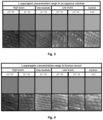
- high concentration ranges of L-asparagine (10 -1 M and 10 -2 M) in aqueous solutions are detected by visual means, due to the change of the color of the modified silica fabrics ([Si][N 3114 ]Cl and [Si][N 3222 ]Cl).
- the visual detection includes a sequential addition of reduced volumes of aqueous solutions of L-asparaginase, sample (containing L-asparagine) and revealing solution (Nessler's reagent).
- different colors of the modified silica fabric are obtained ranging from white-grey to brownish red.
- the present disclosure relates to a fabric for immobilization of L-asparaginase enzyme, the fabric comprising: a plurality of silica fibers; and an ionic liquid supported on the silica fibers, wherein the ionic liquid comprises a quaternary ammonium cation and chloride as counterion; wherein the L-asparaginase enzyme is immobilized on the plurality of silica fibers through the ionic liquid.
- the invention relates to a fabric for detecting a L-asparagine amino acid in a sample as defined in claim 1, wherein the fabric comprises: a plurality of silica fibers; an ionic liquid linked to the plurality of silica fibers by a spacer arm, wherein the ionic liquid comprises a quaternary ammonium cation and a chloride as counterion; and a L-asparaginase enzyme immobilized in the plurality of silica fibers though the ionic liquid; wherein the spacer arm comprises a compound with formula C x H y ClO 3 Si, wherein X is an entire number ranging from 3 to 12 and wherein Y is an entire number ranging from 10 to 30; and wherein the presence of L-asparagine in the sample is detectable by a change of color of the fabric after addition of a revealing solution.
- the invention relates to a fabric for detecting a L-asparagine amino acid in a sample as defined in claim 1, wherein the fabric comprises: a plurality of silica fibers; an ionic liquid linked to the plurality of silica fibers by a spacer arm, wherein the ionic liquid comprises a quaternary ammonium cation and a chloride as counterion; and wherein the spacer arm comprises a compound with formula C x H y ClO 3 Si, wherein X is an entire number ranging from 3 to 12 and wherein Y is an entire number ranging from 10 to 30; and wherein the presence of L-asparagine in the sample is detectable by a change of color of the fabric after addition of a L-asparaginase enzyme solution to the fabric, addition of the sample, and addition of a revealing solution.
- the spacer arm (C x H y ClO 3 Si) is selected from a list comprising (3-Chloropropyl)trimethoxysilane (C 6 H 15 ClO 3 Si), (3-Chloropropyl)triethoxysilane (C 9 H 21 ClO 3 Si), (Chloromethyl)trimethoxysilane (C 4 H 11 ClO 3 Si), (Chloromethyl)triethoxysilane (C 7 H 17 ClO 3 Si), (2-Chloroethyl)trimethoxysilane (C 5 H 13 ClO 3 Si), (2-Chloroethyl)triethoxysilane (C 8 H 19 ClO 3 Si), (4-Chlorobutyl)trimethoxysilane (C 7 H 17 ClO 3 Si), (4-Chlorobutyl)triethoxysilane (C 10 H 23 ClO 3 Si), or combinations thereof; preferably wherein the spacer arm is a (3-Chloropropyl)trime
- the revealing solution is Nessler's reagent or phenol red, preferably Nessler's reagent.
- the silica fibers are woven.
- the quaternary ammonium cation comprised in the ionic liquid is selected from N,N-dimethylbutylammonium or triethylammonium.
- the mass of ionic liquid per mass of fabric ranges from 8 mg.g -1 to 30 mg.g -1 , preferably from 8 mg.g -1 to 25 mg.g -1 .
- the diameter of the silica fibers ranges from 7 to 11 ⁇ m, preferably from 9 to 11 ⁇ m, measured by scanning electron microscopy.
- the sample is a liquid biological sample, or a liquid food-derived sample.
- the liquid biological sample is a blood serum sample.
- the concentration of L-asparaginase enzyme, preferably the immobilized enzyme, in the fabric ranges from 0.1 mg/cm 2 to 0.5 mg/cm 2 , preferably from 0.2 mg/cm 2 to 0.5 mg/cm 2 .
- the immobilized L-asparaginase enzyme is available to catalyze the hydrolysis of the L-asparagine amino acid present in the aqueous solution into ammonia and L-aspartic acid.
- the produced ammonia, resultant from the presence of L-asparagine, is then detectable after addition of the revealing solution.
- the invention relates to a fabric for detecting a L-asparagine amino acid in a sample as defined in claim 1, wherein the fabric comprises a plurality of silica fibers; an ionic liquid linked to the plurality of silica fibers by a spacer arm, wherein the ionic liquid comprises a quaternary ammonium cation and chloride as counterion; and a L-asparaginase enzyme immobilized in the plurality of silica fibers through the ionic liquid; wherein the presence of L-asparagine in the sample is detectable by a change of color of the fabric after addition of a revealing solution.
- the present disclosure relates to a colorimetric sensor for the visual detection of L-asparagine concentration ranges in aqueous solutions.
- the disclosed biosensor is based on a simple method that, by changing the color of the material specifically modified to attach the constituent responsible for the quantification of L-asparagine, allows the visual detection of high concentration ranges of L-asparagine in aqueous solutions.
- the disclosed sensor can be used in the detection of L-asparagine in the pharmaceutical sector, industrial cooked starched based-foods and in chemical laboratories.
- the aim of the present disclosure is to determine by color change the concentration levels of L-asparagine using a portable enzymatic biosensor made with silica fabric functionalized with ionic liquids to attach the L-asparaginase.
- the disclosed biosensor can be used in the pharmaceutical sector, chemical and food industries which need to determine the concentration levels of L-asparagine in aqueous solutions.
- silica fabric was functionalized with quaternary ammonium cations in addition to chloride as the counterion, resulting in a silica fabric functionalized with different functional groups.
- the silica fabric was functionalized with a quaternary ammonium cation selected from N,N-dimethylbutylammonium ([N 3114 ] + ) and triethylammonium ([N 3222 ] + ), in addition to chloride as the counterion, resulting in a silica fabric functionalized with N,N-dimethylbutylammonium chloride ([Si][N 3114 ]Cl) or triethylammonium chloride ([Si][N 3222 ]Cl), respectively.
- the abbreviations and chemical structures of the modified silica fabric are displayed in Table 1.
- the silica fabric functionalization was performed through two main steps:
- the functionalization with different ionic liquids did not significantly change the color of the functionalized fabric.
- the color of the fabric after the functionalization with N,N-dimethylbutylammonium chloride ([Si][N 3114 ]Cl) is white-grey (L*:71.861, a*:0.000, and b*:16.413) upon addition of a aqueous solution without L-asparagine and white-grey (L*:64.163, a*:0.466, and b*:21.364) upon the addition of a commercial blood human serum sample without L-asparagine.
- the color of the fabric after the functionalization with triethylammonium chloride is white-grey (L*:69.129, a*:1.348, and b*:20.016) upon addition of a aqueous solution without L-asparagine and white-grey (L*: 64.365, a*:2.433, and b*:23.820) upon the addition of a commercial blood human serum sample without L-asparagine.
- all functionalized silica fabrics were characterized by elemental analysis, attenuated total reflectance-Fourier-transform infrared spectroscopy (ATR-FTIR), and scanning electron microscopy (SEM).
- the elemental analysis i.e., the weight percentages (%w/w) of carbon (%C), hydrogen (%H), and nitrogen (%N) of [Si][C 3 ]Cl and all functionalized silica fabrics, were determined through elemental analysis using the equipment TruSpec 630-200-200, 2 mg of sample, combustion furnace temperature of 1075 °C, and burner temperature of 850 °C. The detection method for carbon and hydrogen was infrared absorption, while for nitrogen was thermal conductivity. The elemental analysis of the modified silica fabric is displayed in Table 2. Table 2.
- Elemental analysis weight percentages (%w/w) of carbon (%C), hydrogen (%H), nitrogen (%N), molar amount (n (mol)) used in the synthesis and mass of ionic liquid (IL) per mass of material (i.e., fabric) (mg.g -1 ), of [Si][C 3 ]Cl and all modified silica fabric materials ([Si][N 3114 ]Cl and [Si][N 3222 ]Cl).
- the mass of IL per mass of material was obtained using the following formula (M - molar mass (g.mol -1 ); %N - weight percentage of nitrogen): %N modified silica fabric ⁇ %N silica fabric material ⁇ M ionic liquid N mass per ionic liquid 100 ⁇ 1000
- spectra from attenuated total reflectance - Fourier-transform infrared (ATR-FTIR) spectroscopy was obtained using Perkin Elmer FT-IR System Spectrum BX equipment (Waltham, MA, USA) and a solid sample of all functionalized silica fabrics at 25 °C and in a range between 4000-500 cm -1 . Each sample was scanned 64 times with a resolution of 8.0 cm -1 .
- the colorimetric biosensors were developed through two main steps: (i) L-Asparaginase physical adsorption on functionalized silica fabrics and (ii) revealing solution addition.
- the enzyme L-asparaginase was immobilized on functionalized silica fabrics at room temperature through the addition of 400 ⁇ L of L-asparaginase solution (0.6 mg mL -1 ) into 1 cm x 1 cm of functionalized silica fabrics: [Si][N 3114 ]Cl and [Si][N 3222 ]Cl.
- the resulting colors of functionalized silica fabrics were analyzed by a Portable Spectrophotometer CM-2300d (Konica Minolta Europe). Color changes were quantified using the color organization system, i.e., CIELAB (or CIE L* a* b*) color space, which expresses the color's lightness, red/green and yellow/blue intensity, as L*, a*, and b* values, respectively. These chromaticity coordinates were converted into RGB (Red, Green, Blue) color system using the conversion spreadsheets (available from http://colormine.org/convert/rgb-to-lab (accessed on 17 February 2022)).
- CIELAB or CIE L* a* b*
- the biosensor in the pharmaceutical sector can be used to determine concentration levels of L-asparagine in blood serum samples.
- the determined concentration of L-asparagine levels can be used to monitor the treatment response in disease therapy with L-asparaginase.
- L-asparagine concentration in leukemia blood serum samples is higher than detected in healthy blood serum samples. More specifically, the concentration of L-asparagine in leukemia blood serum samples varies from 10 -3 to 10 -2 M, while in healthy blood serum samples varies from 10 -6 to 10 -4 M [1-6].
- the present biosensor can be used to detect and quantify the L-asparagine levels in these foods, from a liquid food-derived sample, to avoid the formation of high levels of acrylamide (for example acrylamide carcinogenic levels).
Landscapes
- Life Sciences & Earth Sciences (AREA)
- Health & Medical Sciences (AREA)
- Engineering & Computer Science (AREA)
- Chemical & Material Sciences (AREA)
- Molecular Biology (AREA)
- Urology & Nephrology (AREA)
- Physics & Mathematics (AREA)
- Immunology (AREA)
- Hematology (AREA)
- Proteomics, Peptides & Aminoacids (AREA)
- Biomedical Technology (AREA)
- Microbiology (AREA)
- Biochemistry (AREA)
- Biotechnology (AREA)
- Biophysics (AREA)
- Organic Chemistry (AREA)
- Bioinformatics & Cheminformatics (AREA)
- General Health & Medical Sciences (AREA)
- Analytical Chemistry (AREA)
- Medicinal Chemistry (AREA)
- Cell Biology (AREA)
- Food Science & Technology (AREA)
- General Physics & Mathematics (AREA)
- Pathology (AREA)
- Bioinformatics & Computational Biology (AREA)
- Wood Science & Technology (AREA)
- Zoology (AREA)
- General Engineering & Computer Science (AREA)
- Genetics & Genomics (AREA)
- Measuring Or Testing Involving Enzymes Or Micro-Organisms (AREA)
Claims (13)
- Ein Gewebe zum Nachweis einer L-Asparagin-Aminosäure in einer Probe, wobei das Gewebe umfasst:eine Vielzahl von Siliciumdioxid-Fasern;eine ionische Flüssigkeit, die durch einen Abstandshalter (spacer arm) mit der Vielzahl von Siliciumdioxid-Fasern verbunden ist, wobei die ionische Flüssigkeit ein quartäres Ammonium-Kation und ein Chlorid als Gegenion umfasst; undein durch die ionische Flüssigkeit in der Vielzahl von Siliciumdioxid-Fasern immobilisiertes L-Asparaginase-Enzym;wobei der Abstandshalter eine Verbindung mit der Formel CxHyClO3Si umfasst, ausgewählt aus einer Liste, die (3-Chlorpropyl)trimethoxysilan (C6H15Clo3Si), (3-Chlorpropyl)triethoxysilan (C9H21ClO3Si), (Chlormethyl)trimethoxysilan (C4H11ClO3Si), (Chlormethyl)triethoxysilan (C7H17ClO3Si), (2-Chlorethyl)trimethoxysilan (C5H13ClO3Si), (2-Chlorethyl)triethoxysilan (C8H19ClO3Si), (4-Chlorbutyl)trimethoxysilan (C7H17ClO3Si), (4-Chlorbutyl)triethoxysilan (C10H23ClO3Si), oder Kombinationen davon umfasst; undwobei das Gewebe so konfiguriert ist, dass es in Gegenwart von L-Asparagin in der Probe nach Zugabe einer Nachweismittel die Farbe ändert.
- Das Gewebe nach dem vorangehenden Anspruch, wobei der Abstandhalter (3-Chlorpropyl)trimethoxysilan ist.
- Das Gewebe nach einem der vorangehenden Ansprüche, wobei die Konzentration des L-Asparaginase-Enzyms in dem Gewebe im Bereich von 0,1 mg/cm2 bis 0,5 mg/cm2 liegt.
- Das Gewebe nach einem der vorangehenden Ansprüche, wobei die Siliciumdioxid-Fasern gewebt sind.
- Das Gewebe nach einem der vorangehenden Ansprüche, wobei das in der ionischen Flüssigkeit enthaltene quartäre Ammonium-Kation ausgewählt ist aus N,N-Dimethylbutylammonium oder Triethylammonium.
- Das Gewebe nach einem der vorangehenden Ansprüche, wobei die Masse der ionischen Flüssigkeit pro Gewebemasse im Bereich von 8 mg.g-1 bis 30 mg.g-1, bevorzugt von 8 mg.g-1 bis 25 mg.g-1, liegt.
- Das Gewebe nach einem der vorangehenden Ansprüche, wobei der Durchmesser der Siliciumdioxid-Fasern im Bereich von 7 bis 11 µm liegt, gemessen per Rasterelektronenmikroskopie.
- Das Gewebe nach einem der vorangehenden Ansprüche, wobei die Probe eine flüssige biologische Probe oder eine von einem Lebensmittel stammende flüssige Probe ist, wobei die flüssige biologische Probe bevorzugt eine Probe eines Blutserums ist.
- Ein tragbarer Sensor zum Nachweis von L-Asparagin-Aminosäure in einer wässrigen Lösung, umfassend ein Gewebe, wie in einem der vorangehenden Ansprüche 1-8 beschrieben, bevorzugt ein Sensor zur Überwachung und/oder Diagnose einer Krankheit, die einen Anstieg der Konzentration von L-Asparagin-Aminosäure im Blut verursacht.
- Der tragbare Sensor nach dem vorangehenden Anspruch, wobei der Sensor so angeordnet ist, dass er L-Asparagin-Aminosäure in einer Konzentration im Bereich von 10-5 M bis 10 M, bevorzugt 10-3 M bis 10-1 M, nachweist.
- Ein Verfahren zum Nachweis von L-Asparagin-Aminosäure in einer wässrigen Lösung unter Verwendung eines Gewebes, wie in einem der vorangehenden Ansprüche 1-8 beschrieben, oder eines tragbaren Sensors, umfassend das Gewebe, wie in einem der vorangehenden Ansprüche 9-10 beschrieben, wobei das Verfahren die folgenden Schritte umfasst:Hinzufügen der wässrigen Lösung zu dem Gewebe oder dem tragbaren Sensor;Hinzufügen eines Nachweismittels zu dem Gewebe oder dem tragbaren Sensor, wobei das Nachweismittel bevorzugt ein Neßler-Reagenz ist;Analysieren des Gewebes oder des tragbaren Sensors auf eine Farbveränderung, wobei eine Farbveränderung das Vorhandensein von L-Asparagin-Aminosäure in der wässrigen Lösung anzeigt.
- Verwenden des in einem der vorangehenden Ansprüche beschriebenen Gewebes als ein Sensor zum Nachweis von L-Asparagin-Aminosäure in einer wässrigen Lösung, wobei es sich bei der wässrigen Lösung bevorzugt um eine Probe eines Blutserums oder eine von einem Lebensmittel stammende Probe handelt.
- Ein Kit zum Nachweis von L-Asparagin-Aminosäure, bevorzugt zur Überwachung und/oder Diagnose einer Krankheit, die einen Anstieg der Konzentration von L-Asparagin-Aminosäure im Blut verursacht, umfassend das in einem der vorangehenden Ansprüche 1-8 beschriebene Gewebe oder den in einem der vorangehenden Ansprüche 9-10 beschriebenen tragbaren Sensor und eine Nachweismittel, wobei die Nachweismittel ein Neßler-Reagenz ist.
Applications Claiming Priority (3)
| Application Number | Priority Date | Filing Date | Title |
|---|---|---|---|
| PT11801222 | 2022-05-27 | ||
| EP22176588 | 2022-05-31 | ||
| PT11835822 | 2022-11-25 |
Publications (3)
| Publication Number | Publication Date |
|---|---|
| EP4282976A1 EP4282976A1 (de) | 2023-11-29 |
| EP4282976B1 true EP4282976B1 (de) | 2025-04-09 |
| EP4282976C0 EP4282976C0 (de) | 2025-04-09 |
Family
ID=88506056
Family Applications (1)
| Application Number | Title | Priority Date | Filing Date |
|---|---|---|---|
| EP22209879.0A Active EP4282976B1 (de) | 2022-05-27 | 2022-11-28 | Kolorimetrischer sensor zum nachweis von l-asparagin, herstellungsverfahren und anwendungen davon |
Country Status (1)
| Country | Link |
|---|---|
| EP (1) | EP4282976B1 (de) |
Family Cites Families (3)
| Publication number | Priority date | Publication date | Assignee | Title |
|---|---|---|---|---|
| FI93861C (fi) | 1992-09-08 | 1995-06-12 | Ilkka Mononen | Menetelmä asparagiini- -amidohydrolaasientsyymien aktiivisuuden mittaamiseksi ja menetelmässä käyttökelpoinen testivälineistö |
| WO2008013530A1 (en) | 2006-07-25 | 2008-01-31 | Government Of The Usa, As Represented By The Secretary, Dept. Of Health And Human Services | Method for the direct detection and quantitation of asparagine synthetase in biological samples |
| GB0712844D0 (en) | 2007-07-02 | 2007-08-08 | Univ Leuven Kath | Colorimetric assay for the visual detection of primary and secondary amines |
-
2022
- 2022-11-28 EP EP22209879.0A patent/EP4282976B1/de active Active
Also Published As
| Publication number | Publication date |
|---|---|
| EP4282976C0 (de) | 2025-04-09 |
| EP4282976A1 (de) | 2023-11-29 |
Similar Documents
| Publication | Publication Date | Title |
|---|---|---|
| US8574921B2 (en) | Optical sensing membranes, devices and methods for simultaneous detection of two or more parameters of dissolved oxygen concentration, pH and temperature | |
| Chen et al. | Selective and sensitive fluorescent monitoring of acid phosphatase (ACP) activity under neutral conditions through the ACP enzymatic catalysis of dopamine as a new substrate to polydopamine | |
| Chen et al. | A homogeneous capillary fluorescence imprinted nanozyme intelligent sensing platform for high sensitivity and visual detection of triclocarban | |
| Du et al. | Thiol-activated fluorescent probe for sensitive detection and imaging of proteins | |
| Sun et al. | Visual/quantitative SERS biosensing chip based on Au-decorated polystyrene sphere microcavity arrays | |
| KR100940513B1 (ko) | 용존산소, pH 및 온도의 2종 이상의 변수의 동시 검출용광학 센서막, 장치 및 방법 | |
| Hu et al. | Sensitive fluorescence immunoassay on the basis of the fluorescence quenching effects of quantum dots for the determination of norfloxacin in animal-origin foods | |
| Zhao et al. | Colorimetric and fluorometric assays for dopamine with a wide concentration range based on Fe-MIL-88NH2 metal-organic framework | |
| Lin et al. | Controllable formation of polydopamine on carbon dots for ultrasensitive detection of alkaline phosphatase and ratiometric fluorescence immunoassay of benzocaine | |
| US8530178B2 (en) | Hydrolase detection system with caged substrates | |
| JP2007161717A (ja) | ポリジアセチレン超分子体とリガンド検出方法。 | |
| US20240192203A1 (en) | Selective optical detection of organic analytes in liquids | |
| CN110987914A (zh) | 基于Zr-MOF纳米酶的磷酸化蛋白检测和区分的方法及α-酪蛋白定量检测 | |
| He et al. | based microfluidic devices based on 3D network polymer hydrogel for the determination of glucose in human whole blood | |
| Salinas-Castillo et al. | Immobilization of a trienzymatic system in a sol–gel matrix: A new fluorescent biosensor for xanthine | |
| EP4282976A1 (de) | Kolorimetrischer sensor zum nachweis von l-asparagin, herstellungsverfahren und anwendungen davon | |
| Sun et al. | Convenient and sensitive colorimetric determination of alendronate sodium with Ce 4+-triggered oxidation of TMB | |
| CN109536574A (zh) | 一种简易检测凝血酶的比色法 | |
| KR20130106044A (ko) | 효소 기질의 고분자화에 의한 그라핀옥사이드의 형광저하를 이용한 바이오센서 및 이를 이용한 검출방법 | |
| CN112945954A (zh) | 一种利用酶催化诱导适配体释放筛选酶抑制剂的高通量液晶检测平台制备方法 | |
| Huang et al. | A new portable colorimetric sensor based on RGB chromaticity for quantitative determination of sarin in water | |
| Bhadoria et al. | Recent advances of biosensors in biomedical sciences | |
| Tsai et al. | Optimization of sol-gel based fibre-optic cholinesterase biosensor for the determination of organophosphorus pesticides | |
| CN101587076B (zh) | 定量检测肌氨酸含量的方法及反应试剂盒 | |
| Yildirim et al. | Sol–gel encapsulated glucose oxidase arrays based on a pH sensitive fluorescent dye |
Legal Events
| Date | Code | Title | Description |
|---|---|---|---|
| PUAI | Public reference made under article 153(3) epc to a published international application that has entered the european phase |
Free format text: ORIGINAL CODE: 0009012 |
|
| STAA | Information on the status of an ep patent application or granted ep patent |
Free format text: STATUS: REQUEST FOR EXAMINATION WAS MADE |
|
| 17P | Request for examination filed |
Effective date: 20230320 |
|
| AK | Designated contracting states |
Kind code of ref document: A1 Designated state(s): AL AT BE BG CH CY CZ DE DK EE ES FI FR GB GR HR HU IE IS IT LI LT LU LV MC ME MK MT NL NO PL PT RO RS SE SI SK SM TR |
|
| GRAP | Despatch of communication of intention to grant a patent |
Free format text: ORIGINAL CODE: EPIDOSNIGR1 |
|
| STAA | Information on the status of an ep patent application or granted ep patent |
Free format text: STATUS: GRANT OF PATENT IS INTENDED |
|
| RIC1 | Information provided on ipc code assigned before grant |
Ipc: G01N 33/68 20060101ALI20240816BHEP Ipc: C12Q 1/25 20060101AFI20240816BHEP |
|
| INTG | Intention to grant announced |
Effective date: 20240917 |
|
| GRAS | Grant fee paid |
Free format text: ORIGINAL CODE: EPIDOSNIGR3 |
|
| GRAJ | Information related to disapproval of communication of intention to grant by the applicant or resumption of examination proceedings by the epo deleted |
Free format text: ORIGINAL CODE: EPIDOSDIGR1 |
|
| GRAL | Information related to payment of fee for publishing/printing deleted |
Free format text: ORIGINAL CODE: EPIDOSDIGR3 |
|
| STAA | Information on the status of an ep patent application or granted ep patent |
Free format text: STATUS: REQUEST FOR EXAMINATION WAS MADE |
|
| GRAP | Despatch of communication of intention to grant a patent |
Free format text: ORIGINAL CODE: EPIDOSNIGR1 |
|
| STAA | Information on the status of an ep patent application or granted ep patent |
Free format text: STATUS: GRANT OF PATENT IS INTENDED |
|
| INTC | Intention to grant announced (deleted) | ||
| INTG | Intention to grant announced |
Effective date: 20241128 |
|
| RIN1 | Information on inventor provided before grant (corrected) |
Inventor name: FONSECA NUNES, JOAO CLAUDIO Inventor name: MORA TAVARES, ANA PAULA Inventor name: CARVALHO NEVES, MARCIA Inventor name: FREIRE MARTINS, MARA GUADALUPE |
|
| GRAA | (expected) grant |
Free format text: ORIGINAL CODE: 0009210 |
|
| STAA | Information on the status of an ep patent application or granted ep patent |
Free format text: STATUS: THE PATENT HAS BEEN GRANTED |
|
| AK | Designated contracting states |
Kind code of ref document: B1 Designated state(s): AL AT BE BG CH CY CZ DE DK EE ES FI FR GB GR HR HU IE IS IT LI LT LU LV MC ME MK MT NL NO PL PT RO RS SE SI SK SM TR |
|
| REG | Reference to a national code |
Ref country code: GB Ref legal event code: FG4D |
|
| REG | Reference to a national code |
Ref country code: CH Ref legal event code: EP |
|
| REG | Reference to a national code |
Ref country code: DE Ref legal event code: R096 Ref document number: 602022012860 Country of ref document: DE |
|
| REG | Reference to a national code |
Ref country code: IE Ref legal event code: FG4D |
|
| U01 | Request for unitary effect filed |
Effective date: 20250508 |
|
| U07 | Unitary effect registered |
Designated state(s): AT BE BG DE DK EE FI FR IT LT LU LV MT NL PT RO SE SI Effective date: 20250515 |
|
| PG25 | Lapsed in a contracting state [announced via postgrant information from national office to epo] |
Ref country code: ES Free format text: LAPSE BECAUSE OF FAILURE TO SUBMIT A TRANSLATION OF THE DESCRIPTION OR TO PAY THE FEE WITHIN THE PRESCRIBED TIME-LIMIT Effective date: 20250409 |
|
| PG25 | Lapsed in a contracting state [announced via postgrant information from national office to epo] |
Ref country code: GR Free format text: LAPSE BECAUSE OF FAILURE TO SUBMIT A TRANSLATION OF THE DESCRIPTION OR TO PAY THE FEE WITHIN THE PRESCRIBED TIME-LIMIT Effective date: 20250710 Ref country code: NO Free format text: LAPSE BECAUSE OF FAILURE TO SUBMIT A TRANSLATION OF THE DESCRIPTION OR TO PAY THE FEE WITHIN THE PRESCRIBED TIME-LIMIT Effective date: 20250709 |
|
| PG25 | Lapsed in a contracting state [announced via postgrant information from national office to epo] |
Ref country code: PL Free format text: LAPSE BECAUSE OF FAILURE TO SUBMIT A TRANSLATION OF THE DESCRIPTION OR TO PAY THE FEE WITHIN THE PRESCRIBED TIME-LIMIT Effective date: 20250409 |
|
| PG25 | Lapsed in a contracting state [announced via postgrant information from national office to epo] |
Ref country code: HR Free format text: LAPSE BECAUSE OF FAILURE TO SUBMIT A TRANSLATION OF THE DESCRIPTION OR TO PAY THE FEE WITHIN THE PRESCRIBED TIME-LIMIT Effective date: 20250409 |
|
| PG25 | Lapsed in a contracting state [announced via postgrant information from national office to epo] |
Ref country code: RS Free format text: LAPSE BECAUSE OF FAILURE TO SUBMIT A TRANSLATION OF THE DESCRIPTION OR TO PAY THE FEE WITHIN THE PRESCRIBED TIME-LIMIT Effective date: 20250709 |
|
| PG25 | Lapsed in a contracting state [announced via postgrant information from national office to epo] |
Ref country code: IS Free format text: LAPSE BECAUSE OF FAILURE TO SUBMIT A TRANSLATION OF THE DESCRIPTION OR TO PAY THE FEE WITHIN THE PRESCRIBED TIME-LIMIT Effective date: 20250809 |
|
| U20 | Renewal fee for the european patent with unitary effect paid |
Year of fee payment: 4 Effective date: 20251006 |
|
| PG25 | Lapsed in a contracting state [announced via postgrant information from national office to epo] |
Ref country code: SM Free format text: LAPSE BECAUSE OF FAILURE TO SUBMIT A TRANSLATION OF THE DESCRIPTION OR TO PAY THE FEE WITHIN THE PRESCRIBED TIME-LIMIT Effective date: 20250409 |
|
| PG25 | Lapsed in a contracting state [announced via postgrant information from national office to epo] |
Ref country code: CZ Free format text: LAPSE BECAUSE OF FAILURE TO SUBMIT A TRANSLATION OF THE DESCRIPTION OR TO PAY THE FEE WITHIN THE PRESCRIBED TIME-LIMIT Effective date: 20250409 |
|
| PG25 | Lapsed in a contracting state [announced via postgrant information from national office to epo] |
Ref country code: SK Free format text: LAPSE BECAUSE OF FAILURE TO SUBMIT A TRANSLATION OF THE DESCRIPTION OR TO PAY THE FEE WITHIN THE PRESCRIBED TIME-LIMIT Effective date: 20250409 |
|
| PLBE | No opposition filed within time limit |
Free format text: ORIGINAL CODE: 0009261 |
|
| STAA | Information on the status of an ep patent application or granted ep patent |
Free format text: STATUS: NO OPPOSITION FILED WITHIN TIME LIMIT |
|
| REG | Reference to a national code |
Ref country code: CH Ref legal event code: L10 Free format text: ST27 STATUS EVENT CODE: U-0-0-L10-L00 (AS PROVIDED BY THE NATIONAL OFFICE) Effective date: 20260218 |
|
| 26N | No opposition filed |
Effective date: 20260112 |