EP4282780B1 - Method and apparatus for the automatic classification of the format of waste delivered into a public dumpster provided with sensors - Google Patents
Method and apparatus for the automatic classification of the format of waste delivered into a public dumpster provided with sensors Download PDFInfo
- Publication number
- EP4282780B1 EP4282780B1 EP23174604.1A EP23174604A EP4282780B1 EP 4282780 B1 EP4282780 B1 EP 4282780B1 EP 23174604 A EP23174604 A EP 23174604A EP 4282780 B1 EP4282780 B1 EP 4282780B1
- Authority
- EP
- European Patent Office
- Prior art keywords
- waste
- sensors
- format
- dumpster
- basis
- Prior art date
- Legal status (The legal status is an assumption and is not a legal conclusion. Google has not performed a legal analysis and makes no representation as to the accuracy of the status listed.)
- Active
Links
Images



Classifications
-
- B—PERFORMING OPERATIONS; TRANSPORTING
- B65—CONVEYING; PACKING; STORING; HANDLING THIN OR FILAMENTARY MATERIAL
- B65F—GATHERING OR REMOVAL OF DOMESTIC OR LIKE REFUSE
- B65F1/00—Refuse receptacles; Accessories therefor
- B65F1/02—Refuse receptacles; Accessories therefor without removable inserts
-
- B—PERFORMING OPERATIONS; TRANSPORTING
- B65—CONVEYING; PACKING; STORING; HANDLING THIN OR FILAMENTARY MATERIAL
- B65F—GATHERING OR REMOVAL OF DOMESTIC OR LIKE REFUSE
- B65F1/00—Refuse receptacles; Accessories therefor
- B65F1/14—Other constructional features; Accessories
- B65F1/16—Lids or covers
-
- B—PERFORMING OPERATIONS; TRANSPORTING
- B65—CONVEYING; PACKING; STORING; HANDLING THIN OR FILAMENTARY MATERIAL
- B65F—GATHERING OR REMOVAL OF DOMESTIC OR LIKE REFUSE
- B65F1/00—Refuse receptacles; Accessories therefor
- B65F1/14—Other constructional features; Accessories
- B65F1/1468—Means for facilitating the transport of the receptacle, e.g. wheels, rolls
- B65F1/1473—Receptacles having wheels
-
- B—PERFORMING OPERATIONS; TRANSPORTING
- B65—CONVEYING; PACKING; STORING; HANDLING THIN OR FILAMENTARY MATERIAL
- B65F—GATHERING OR REMOVAL OF DOMESTIC OR LIKE REFUSE
- B65F2210/00—Equipment of refuse receptacles
- B65F2210/182—Volume determining means
Definitions
- the present invention relates to a method and an apparatus for the automatic classification of the format of waste delivered into a public dumpster provided with sensors.
- EP3256405 discloses an apparatus for the automatic classification of the volume of waste delivered into a dumpster, according to the preamble of claim 4.
- waste bags can be classified according to standard formats set by the local public administration [for example, 15 liters (small), 40 liters (medium), 110 liters (large), and 220 liters (oversized)], and in most cases it is only required to classify the waste delivered into the dumpster on the basis of the standard formats rather than determining its exact volume.
- the aim of the present invention is to provide a method and an apparatus for the automatic classification of the format of waste delivered into a public dumpster equipped with sensors which overcomes the drawbacks cited above of known systems and in particular allows to classify the format of delivered waste with high accuracy and reliability, regardless of whether it is generic loose waste, a traditional waste bag, or a recovery bag of any format and in any state of preservation, all of the above with considerably reduced costs with respect to known systems.
- an object of the invention is to provide a method and an apparatus that can be easily optimized, in terms of cost and detection accuracy, as a function of the different classifications provided by local administrations.
- a generic dumpster 10 provided with a lid 11 is adapted to hold a plurality of waste bags S1, S2, S3, S4 and of generic loose waste.
- the bags S1, S2, S3, S4 are of a standard format and have respective nominal volumes V1, V2, V3, V4, for example 15 liters, 40 liters, 110 liters, and 220 liters, respectively.
- the dumpster 10 is provided with a plurality of optical sensors 12 placed in an elevated position that does not interfere with the area adapted to accommodate the waste.
- the optical sensors 12 are placed proximate to the lid 11 and are functionally directed toward the bottom 10a of the dumpster 10.
- the optical sensors 12 are connected to a control unit CU programmed to detect the surface profile of the waste inside the dumpster 10 on the basis of the signals received from the optical sensors.
- the expression "surface profile,” in the present description and in the claims, means the three-dimensional reconstruction of the overall surface of the mass of waste inside the dumpster that is detectable from above by means of the optical sensors 12. Of course, this is an average profile estimated on the basis of the detections made.
- the optical sensors 12 may comprise an emitter 12E adapted to emit a light beam in the infrared range, and a receiver 12R adapted to receive the return light beam by reflection on the generic object located in front.
- the distance h from the object is calculated on the basis of the time elapsed between the emission of the light beam and its reception.
- sensors based on the technology known as ToF Time of Flight
- ToF Time of Flight
- a low-power laser emitter with a wavelength of 940 nm having a grid of 16 ⁇ 16 sensors of the SPAD (Single Photon Avalanche Diode) type.
- This grid allows to derive one or more distance measurements (which in turn are derived from a subset of adjacent SPADs with a minimum size of 4x4).
- commercial sensors of this type are the VL53L1, VL53L3, VL53L5 models (and their submodels) manufactured by STMicroelectronics NV.
- the dumpster 10 can also be equipped with a mechanized hatch 13 associated with an authentication system ID which uses per se conventional technologies, for example Radio Frequency IDentification (RFID), Near Field Communication (NFC), alphanumeric codes, bar codes, QR codes, and the like.
- RFID Radio Frequency IDentification
- NFC Near Field Communication
- alphanumeric codes bar codes
- QR codes QR codes
- the optical sensors 12 are distributed on a horizontal plane along longitudinal rows and transverse rows which are equally spaced by an interval d so as to form an array.
- the optical sensors 12 may be incorporated into a plurality of electronic devices of the type described in EP3913336A1 in the name of the same Applicant, wherein each of the devices may include, for example, a longitudinal row of optical sensors 12.
- control unit CU is programmed to:
- the format information generated as above may be stored by the control unit CU for later retrieval by an operator, or (if the control unit CU is provided with a communication system) transmitted directly to a central unit (not shown), for example for the purpose of spot pricing.
- the preset threshold values are numerical data that can be determined experimentally and normally will not correspond to the nominal volumes of the standard bags according to the classification adopted.
- the threshold values converted to liters may be 19, 63, 120 and 184, respectively.
- the density of sensors in relation to the chosen spatial distribution (which density, in the example described here, is directly correlated to the interval d between the longitudinal and transverse rows of sensors) is advantageously determined in a preliminary learning and calibration procedure which comprises the following steps:
- the learning and calibration procedure provides for performing a first detection starting from an empty configuration of the dumpster ( Figure 4a ) and then, for each bag format, a series of successive detections by placing the bag S in different positions on the bottom 10a of the dumpster 10 ( Figures 4b and 4c ).
- New measurements are then made with the bag in a raised position relative to the bottom 10a of the dumpster, for example on a platform 14 appropriately adapted for the purpose ( Figures 5a, 5b and 5c ).
- a statistical distribution curve is derived for each bag format, for example a Gaussian curve ( Figures 6 and 7 ), and then the Gaussian curves related to the various formats are compared.
- C d is a first coefficient comprised between 0.24 and 0.36
- C r is a second coefficient comprised between 4.85 and 6.85.
- d d is determined by calculating the value of F n for each pair of consecutive bags in terms of nominal volume (in the above example, the first pair is constituted by the 15-liter and 40-liter bags, the second pair is constituted by the 40-liter and 110-liter bags, and the third pair is constituted by the 110-liter and 220-liter bags) and then selecting the minimum value from those calculated.
- V 2 is the nominal volume of the next largest bag with respect to the standard minimum format (40 liters in the example described above).
- the interval d is normally comprised between 150 and 250 mm.
- the standard minimum bag format is a datum that can be stored in the control unit CU for the purpose of the minimum charge to be attributed to delivered waste. That is to say, any waste with a volume smaller than the minimum standard format will still be treated as a minimum standard format bag.
- the method according to the invention makes it possible to classify with high accuracy the format that is to be assigned to the delivered waste, minimizing the number of sensors (with consequent cost containment) and without making an accurate measurement of the actual volume of the waste.
- the apparatus can be optimized on the basis of the specific classification adopted by the local administration, simply by varying the interval between the sensors.
- connections between the sensors 12, the authentication system ID, and the control unit CU are provided by wireless technology, for example Bluetooth ® , simplifying both the installation and the adaptation of the arrangement of the sensors 12 on the basis of the classification adopted by the local administration.
- the sensors could be distributed again on a flat array but spaced differently in the axial and transverse directions.
- the sensors could have a spherical sector-like arrangement, in which the spacing between the sensors in the radial and/or angular direction can be varied during the learning and calibration procedure in order to optimize the operation of the system, as described above.
Landscapes
- Engineering & Computer Science (AREA)
- Mechanical Engineering (AREA)
- Processing Of Solid Wastes (AREA)
Description
- The present invention relates to a method and an apparatus for the automatic classification of the format of waste delivered into a public dumpster provided with sensors.
- It is known to provide public waste dumpsters with sensors, typically using ultrasonic or infrared technology, in order to determine the fill level of the dumpster and/or the volume of the delivered waste. The sensed data can be transmitted to an operations center, for example for the purpose of monitoring and planning the routes of vehicles adapted to empty the dumpsters as well as for the purpose of providing a spot pricing of the waste delivered by the individual user.
- The present invention advantageously relates particularly to the latter application.
EP3256405 discloses an apparatus for the automatic classification of the volume of waste delivered into a dumpster, according to the preamble of claim 4. - Some known systems of the above cited type, for example the system described in
Italian Patent No. 102017000125066 - Such systems, while being very accurate in determining the volume of the waste, have the drawback of being rather expensive to provide indeed because of said accuracy, which for many applications may be excessive compared to actual needs.
- As is known, in fact, waste bags can be classified according to standard formats set by the local public administration [for example, 15 liters (small), 40 liters (medium), 110 liters (large), and 220 liters (oversized)], and in most cases it is only required to classify the waste delivered into the dumpster on the basis of the standard formats rather than determining its exact volume.
- To this end, other known systems provide for detecting the volume of the bag on the basis of a tag associated with the bag, a bag which, therefore, must be of a special type.
- Systems of this type meet the above cited classification requirement but have other drawbacks.
- First of all, of course, the reliability of the system depends on the diligence of users in using only special bags fitted with tags, which moreover have a much higher cost than traditional bags, and in not throwing in loose waste, which the system cannot detect.
- Moreover, also in order to promote the use of such special bags, it is advisable for the local administration to provide an efficient bag distribution system, with correlated logistical difficulties and costs.
- An additional drawback of known systems is that the tags can easily become damaged during distribution and/or transport of the bags, whether empty or full, given the flexibility and lightness of the medium to which the tags are fixed (i.e., typically, the plastic sheet of which the bag is made). As is well known to the person skilled in the art, this circumstance considerably reduces the reliability of the system.
- In addition to the drawbacks described above, it should be considered that depending on local regulations, the presence of the tag may cause the bag to become special waste, with consequent complications in relation to the planning and application of separate collection.
- In view of the above, the aim of the present invention is to provide a method and an apparatus for the automatic classification of the format of waste delivered into a public dumpster equipped with sensors which overcomes the drawbacks cited above of known systems and in particular allows to classify the format of delivered waste with high accuracy and reliability, regardless of whether it is generic loose waste, a traditional waste bag, or a recovery bag of any format and in any state of preservation, all of the above with considerably reduced costs with respect to known systems.
- Within this aim, an object of the invention is to provide a method and an apparatus that can be easily optimized, in terms of cost and detection accuracy, as a function of the different classifications provided by local administrations.
- This aim and this object, as well as others that will become better apparent from the following description, are achieved by a method and an apparatus having the characteristics set forth in the accompanying independent claims, while the dependent claims define other advantageous, albeit secondary, characteristics of the invention.
- The invention will now be described in greater detail, with reference to some preferred but not exclusive embodiments thereof, illustrated by way of non-limiting example in the accompanying drawings, wherein:
-
Figure 1 is a schematic sectional view, taken along a vertical plane, of a generic dumpster incorporating an apparatus for carrying out the method according to the invention; -
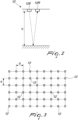
Figure 2 is a schematic view of an optical sensor of a type suitable for use in the apparatus ofFigure 1 ; -
Figure 3 is a schematic plan view of some components of the apparatus ofFigure 1 ; -
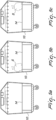
Figures 4a, 4b, 4c ,5a, 5b, 5c are views, similar toFigure 1 , of the generic dumpster during some steps of the method according to an advantageous embodiment of the invention; -
Figures 6 and 7 are two charts related to some steps of the method according to the embodiment ofFigures 4a, 4b, 4c ,5a, 5b, 5c . - With reference to
Figure 1 , ageneric dumpster 10 provided with alid 11 is adapted to hold a plurality of waste bags S1, S2, S3, S4 and of generic loose waste. - In
Figure 1 , the bags S1, S2, S3, S4 are of a standard format and have respective nominal volumes V1, V2, V3, V4, for example 15 liters, 40 liters, 110 liters, and 220 liters, respectively. - The
dumpster 10 is provided with a plurality ofoptical sensors 12 placed in an elevated position that does not interfere with the area adapted to accommodate the waste. In this embodiment, theoptical sensors 12 are placed proximate to thelid 11 and are functionally directed toward thebottom 10a of thedumpster 10. - The
optical sensors 12 are connected to a control unit CU programmed to detect the surface profile of the waste inside thedumpster 10 on the basis of the signals received from the optical sensors. The expression "surface profile," in the present description and in the claims, means the three-dimensional reconstruction of the overall surface of the mass of waste inside the dumpster that is detectable from above by means of theoptical sensors 12. Of course, this is an average profile estimated on the basis of the detections made. - As shown schematically in
Figure 2 , in a per se conventional manner, theoptical sensors 12 may comprise anemitter 12E adapted to emit a light beam in the infrared range, and areceiver 12R adapted to receive the return light beam by reflection on the generic object located in front. The distance h from the object is calculated on the basis of the time elapsed between the emission of the light beam and its reception. - Advantageously, it is possible to use sensors based on the technology known as ToF (Time of Flight), provided with a low-power laser emitter with a wavelength of 940 nm having a grid of 16×16 sensors of the SPAD (Single Photon Avalanche Diode) type. This grid allows to derive one or more distance measurements (which in turn are derived from a subset of adjacent SPADs with a minimum size of 4x4). By way of example, commercial sensors of this type are the VL53L1, VL53L3, VL53L5 models (and their submodels) manufactured by STMicroelectronics NV.
- In a per se known manner, the
dumpster 10 can also be equipped with a mechanizedhatch 13 associated with an authentication system ID which uses per se conventional technologies, for example Radio Frequency IDentification (RFID), Near Field Communication (NFC), alphanumeric codes, bar codes, QR codes, and the like. The user, by authenticating via the authentication system ID, causes thehatch 13 to open so that he can deliver the waste. - As shown in
Figure 3 , in this embodiment theoptical sensors 12 are distributed on a horizontal plane along longitudinal rows and transverse rows which are equally spaced by an interval d so as to form an array. - Advantageously, the
optical sensors 12 may be incorporated into a plurality of electronic devices of the type described inEP3913336A1 in the name of the same Applicant, wherein each of the devices may include, for example, a longitudinal row ofoptical sensors 12. - In the classification method according to the invention, the control unit CU is programmed to:
- calculate a volumetric datum on the basis of the difference between the surface profile of the waste detected after the delivery and the surface profile detected before the delivery,
- compare the volumetric datum calculated as above with preset threshold values on the basis of specific standard formats,
- on the basis of said comparison, associate the delivered waste with the corresponding format, and
- generate a corresponding format information for subsequent processing.
- In a per se known manner, the format information generated as above may be stored by the control unit CU for later retrieval by an operator, or (if the control unit CU is provided with a communication system) transmitted directly to a central unit (not shown), for example for the purpose of spot pricing.
- It should be noted that in the method according to the invention, the preset threshold values are numerical data that can be determined experimentally and normally will not correspond to the nominal volumes of the standard bags according to the classification adopted.
- Merely by way of example, if the local classification provides for the formats of 15 liters (small), 40 liters (medium), 110 liters (large) and 220 liters (oversized), the threshold values converted to liters may be 19, 63, 120 and 184, respectively.
- It is evident that the greater the number of
sensors 12, the more accurate the datum obtained will be. However, increasing the number of sensors inevitably leads to an increase in cost, which for many applications may be unjustified. - In order to further minimize the number of sensors required to recognize the format to which the delivered waste belongs, the density of sensors in relation to the chosen spatial distribution (which density, in the example described here, is directly correlated to the interval d between the longitudinal and transverse rows of sensors) is advantageously determined in a preliminary learning and calibration procedure which comprises the following steps:
- for each standard format, making a series of detections by placing a standard format bag in full configuration in respective different positions on the horizontal plane and respective different heights (corresponding to different levels of filling of the dumpster), so as to determine, by difference between the surface profile detected before and after each placement, a respective nominal volumetric datum correlated to the nominal volume of the bag, and
- determining on a statistical basis an optimal sensor density that allows the recognition of each bag format with accuracy above a predetermined tolerable error threshold.
- In the embodiment described here, the learning and calibration procedure provides for performing a first detection starting from an empty configuration of the dumpster (
Figure 4a ) and then, for each bag format, a series of successive detections by placing the bag S in different positions on thebottom 10a of the dumpster 10 (Figures 4b and 4c ). - New measurements are then made with the bag in a raised position relative to the
bottom 10a of the dumpster, for example on aplatform 14 appropriately adapted for the purpose (Figures 5a, 5b and 5c ). - The same method is then repeated with the bag positioned at increasingly greater heights from the bottom, until a situation corresponding to a substantially complete filling level of the
dumpster 10 is achieved. - The greater the number of detections made in different positions, the greater the accuracy of the statistical datum that can be inferred.
- Once such detections have been performed, a statistical distribution curve is derived for each bag format, for example a Gaussian curve (
Figures 6 and 7 ), and then the Gaussian curves related to the various formats are compared. - Should the Gaussian curves related to the various formats have excessive overlaps (
Figure 6 ), it will be necessary to increase sensor density (i.e., reduce the interval d between sensors in the example described here), since the system is unable to discriminate between the various formats S1, S2, S3 and S4. - If, on the contrary, the Gaussian curves are found to be too far apart (
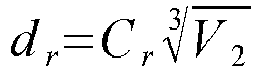
Figure 7 ), sensor density can be reduced (i.e., the interval between sensors in the example described here can be increased) until the tolerable error threshold mentioned above is reached. - It has been found that with the calibration procedure described above, the interval d between the sensors distributed on a flat array as in the embodiment described here is correlated to the nominal volumes Vn of the n bag formats according to the relation


- In the above formulas, Cd is a first coefficient comprised between 0.24 and 0.36, while Cr is a second coefficient comprised between 4.85 and 6.85.
- In practice, dd is determined by calculating the value of Fn for each pair of consecutive bags in terms of nominal volume (in the above example, the first pair is constituted by the 15-liter and 40-liter bags, the second pair is constituted by the 40-liter and 110-liter bags, and the third pair is constituted by the 110-liter and 220-liter bags) and then selecting the minimum value from those calculated. Regarding dr, V2 is the nominal volume of the next largest bag with respect to the standard minimum format (40 liters in the example described above).
- It has been found in practice that, with reference to the most common applications, the interval d is normally comprised between 150 and 250 mm.
- Advantageously, the standard minimum bag format is a datum that can be stored in the control unit CU for the purpose of the minimum charge to be attributed to delivered waste. That is to say, any waste with a volume smaller than the minimum standard format will still be treated as a minimum standard format bag.
- As the person skilled in the art will be able to appreciate, the method according to the invention, even more so in view of the preliminary learning and calibration procedure described above as particularly advantageous, makes it possible to classify with high accuracy the format that is to be assigned to the delivered waste, minimizing the number of sensors (with consequent cost containment) and without making an accurate measurement of the actual volume of the waste.
- Moreover, the apparatus can be optimized on the basis of the specific classification adopted by the local administration, simply by varying the interval between the sensors.
- Advantageously, the connections between the
sensors 12, the authentication system ID, and the control unit CU are provided by wireless technology, for example Bluetooth®, simplifying both the installation and the adaptation of the arrangement of thesensors 12 on the basis of the classification adopted by the local administration. - Moreover, as the person skilled in the art will appreciate, the elimination of wiring is particularly advantageous both in terms of cost and in relation to the specific application discussed here, since it makes the system less susceptible to damage and wear.
- A preferred embodiment of the invention has been described, but the person skilled in the art may of course make several modifications and variations within the scope of the claims.
- For example, the sensors could be distributed again on a flat array but spaced differently in the axial and transverse directions.
- In another example, the sensors could have a spherical sector-like arrangement, in which the spacing between the sensors in the radial and/or angular direction can be varied during the learning and calibration procedure in order to optimize the operation of the system, as described above.
- Where technical features mentioned in any claim are followed by reference signs, those reference signs have been included for the sole purpose of increasing the intelligibility of the claims and accordingly such reference signs do not have any limiting effect on the interpretation of each element identified by way of example by such reference signs.
Claims (10)
- A method for the automatic classification of the format of waste delivered into a public dumpster (10) provided with a plurality of optical sensors (12) which are arranged in an elevated position which does not interfere with the area adapted to accommodate the waste and are directed functionally toward the bottom (10a) of the dumpster (10), a control unit (CU) being programmed to detect the surface profile of the waste in the dumpster (10) on the basis of the signals received from said optical sensors (12), wherein said control unit (CU) is programmed to:- calculate a volumetric datum on the basis of the difference between the surface profile of the waste detected after delivery and the surface profile detected before delivery,- compare said calculated volumetric datum with threshold values which are preset on the basis of specific standard formats,- on the basis of said comparison, associate the delivered waste with the corresponding format, and- generate corresponding format information for subsequent processing.
- The method according to claim 1, characterized in that the density of sensors in relation to a predetermined spatial distribution is determined by means of a preliminary learning and calibration procedure which comprises the following steps:- for each standard format, performing a series of detections by arranging a standard format bag in a full configuration in respective different positions on the horizontal plane and at respective different heights, so as to determine, by difference between the surface profile detected before and after each placement, a respective nominal volumetric datum which is correlated with the nominal volume of the bag, and- determining, on a statistical basis, an optimum density of sensors which allows the recognition of each bag format with an accuracy that is higher than a predetermined tolerable error threshold.
- The method according to claim 2, characterized in that the optimum density of sensors is determined by obtaining a statistical distribution curve for each standard format and by comparing the curves related to the various standard formats so as to- increase the density of sensors if the curves related to the various formats have excessive overlaps,- reduce the density of sensors if the curves related to the various formats are too distant, until said preset tolerable error threshold is reached.
- An apparatus for the automatic classification of the format of waste delivered into a dumpster (10), comprising- a plurality of optical sensors (12),- a control unit (CU) which is connected to said optical sensors (12),characterized in that the plurality of optical sensors (12) are arranged in a elevated position which does not interfere with the area of the dumpster (10) which is adapted to accommodate the waste and are directed functionally toward the bottom (10a) of the dumpster;and in that said control unit (CU) is programmed to- detect the surface profile of the waste inside the dumpster on the basis of the signals received from the optical sensors,- calculate a volumetric datum on the basis of the difference between the surface profile of the waste detected after delivery and the surface profile of the waste detected before delivery,- compare said volumetric datum with preset threshold values on the basis of specific standard formats,- on the basis of said comparison, associate the delivered waste with the corresponding format, and- generate corresponding format information for subsequent processing.
- The apparatus according to claim 4, wherein said optical sensors (12) are distributed on a horizontal plane along longitudinal rows and transverse rows which are evenly spaced by an interval d so as to form a matrix, characterized in that said interval d is correlated to the nominal volumes Vn of the n bag formats according to the relation


- The apparatus according to claim 5, characterized in that said standard minimum format is stored in the control unit (CU).
- The apparatus according to one of claims 4-6, characterized in that said optical sensors (12) are connected to said control unit (CU) via wireless technology.
- The apparatus according to one of claims 4-7, characterized in that it comprises an authentication system (ID) which is adapted to enable the opening of a hatch (13) of the dumpster (10) for the delivery of waste by an authenticated user.
- The apparatus according to claim 8, characterized in that said authentication system (ID) is connected to said control unit (CU) via wireless technology.
- The apparatus according to one of claims 4-9, characterized in that said optical sensors are of the type based on ToF (Time of Flight) technology, provided with a low-power laser emitter with a wavelength of 940 nm, having a grid of 16 × 16 sensors of the SPAD (Single Photon Avalanche Diode) type.
Applications Claiming Priority (1)
| Application Number | Priority Date | Filing Date | Title |
|---|---|---|---|
| IT102022000011162A IT202200011162A1 (en) | 2022-05-27 | 2022-05-27 | METHOD AND APPARATUS FOR THE AUTOMATIC CLASSIFICATION OF THE FORMAT OF WASTE PLACED IN A SENSORIZED PUBLIC BIN |
Publications (3)
| Publication Number | Publication Date |
|---|---|
| EP4282780A1 EP4282780A1 (en) | 2023-11-29 |
| EP4282780B1 true EP4282780B1 (en) | 2024-11-13 |
| EP4282780C0 EP4282780C0 (en) | 2024-11-13 |
Family
ID=83081939
Family Applications (1)
| Application Number | Title | Priority Date | Filing Date |
|---|---|---|---|
| EP23174604.1A Active EP4282780B1 (en) | 2022-05-27 | 2023-05-22 | Method and apparatus for the automatic classification of the format of waste delivered into a public dumpster provided with sensors |
Country Status (2)
| Country | Link |
|---|---|
| EP (1) | EP4282780B1 (en) |
| IT (1) | IT202200011162A1 (en) |
Families Citing this family (1)
| Publication number | Priority date | Publication date | Assignee | Title |
|---|---|---|---|---|
| IT202200011162A1 (en) | 2022-05-27 | 2023-11-27 | Adgenera Srl | METHOD AND APPARATUS FOR THE AUTOMATIC CLASSIFICATION OF THE FORMAT OF WASTE PLACED IN A SENSORIZED PUBLIC BIN |
Family Cites Families (6)
| Publication number | Priority date | Publication date | Assignee | Title |
|---|---|---|---|---|
| FR2952714B1 (en) * | 2009-11-16 | 2012-06-01 | Aenergis Sas | AUTONOMOUS DEVICE FOR MEASURING TELERELEVE OF A FILLING RATE OF A CONTAINER |
| CH706306A1 (en) * | 2012-03-23 | 2013-09-30 | Gfeller Informatik Ag | Intelligent level signaling device and system. |
| EP3256405B1 (en) * | 2015-02-12 | 2018-12-19 | Adgenera S.r.l. | Auxiliary device for public dumpsters adapted to control the volume of the disposed waste |
| IT201800010323A1 (en) * | 2018-11-14 | 2020-05-14 | Toffi Roberta | Apparatus and procedure for the delivery, quality control and management of differentiated municipal solid waste (MSW) |
| IT202000011863A1 (en) | 2020-05-21 | 2021-11-21 | Adgenera S R L | ELECTRONIC DEVICE FOR MEASURING THE FILLING LEVEL OF A CONTAINER, PARTICULARLY FOR PUBLIC DUMPSTERS AND PUBLIC WASTE BINS |
| IT202200011162A1 (en) | 2022-05-27 | 2023-11-27 | Adgenera Srl | METHOD AND APPARATUS FOR THE AUTOMATIC CLASSIFICATION OF THE FORMAT OF WASTE PLACED IN A SENSORIZED PUBLIC BIN |
-
2022
- 2022-05-27 IT IT102022000011162A patent/IT202200011162A1/en unknown
-
2023
- 2023-05-22 EP EP23174604.1A patent/EP4282780B1/en active Active
Also Published As
| Publication number | Publication date |
|---|---|
| EP4282780A1 (en) | 2023-11-29 |
| IT202200011162A1 (en) | 2023-11-27 |
| EP4282780C0 (en) | 2024-11-13 |
Similar Documents
| Publication | Publication Date | Title |
|---|---|---|
| EP0841579B1 (en) | Remote identification and sensor system | |
| US11823127B2 (en) | RFID-based inventory tracking system | |
| RU2597050C2 (en) | Device and method for single store and/or warehouse stock records and warehouse management system equipped with this device | |
| US20250148404A1 (en) | Systems and methods for dynamic processing of objects with data verification | |
| KR101926201B1 (en) | A Checkout Counter | |
| CA2675976C (en) | Multi-directional rfid reader for controlling inventory and shelf stock | |
| US6394256B2 (en) | Paper discriminating apparatus | |
| EP4282780A1 (en) | Method and apparatus for the automatic classification of the format of waste delivered into a public dumpster provided with sensors | |
| EP1331590A2 (en) | Apparatus and method for locating an RFID transponder | |
| US20080042838A1 (en) | Identification and location of RF tagged articles | |
| JP2008515564A (en) | Vehicle remote operation identification method and apparatus | |
| KR102144125B1 (en) | Apparatus and Method Measuring Mail Size and Acquiring Mail Information | |
| US20130009751A1 (en) | Method for updating firmware and communication unit | |
| CA2539334A1 (en) | Transponder-assisted positioning system | |
| CN106352966A (en) | Method and system for detecting overload and unbalanced load of railway train | |
| US7987050B2 (en) | Material handling vehicle location system | |
| US8085132B2 (en) | Method and apparatus for resolving RFID-based object traffic transactions to a single object in the presence of a plurality of objects | |
| CA3229505A1 (en) | Method for operating a means of transport | |
| US7436306B2 (en) | Method and system for checking completeness in a package | |
| US9047522B1 (en) | Utilization of motion and spatial identification in mobile RFID interrogator | |
| CN109858602A (en) | A kind of commodity amount detection device, method and automatic vending machine | |
| KR20230056774A (en) | Method and Apparatus for Target Classification | |
| EP1717772A1 (en) | Self-checkout apparatus and self-checkout method | |
| CN110794836B (en) | Empty cage vehicle warehouse returning control method, system and storage medium | |
| JP6925965B2 (en) | Agricultural management system and agricultural management equipment |
Legal Events
| Date | Code | Title | Description |
|---|---|---|---|
| PUAI | Public reference made under article 153(3) epc to a published international application that has entered the european phase |
Free format text: ORIGINAL CODE: 0009012 |
|
| STAA | Information on the status of an ep patent application or granted ep patent |
Free format text: STATUS: THE APPLICATION HAS BEEN PUBLISHED |
|
| AK | Designated contracting states |
Kind code of ref document: A1 Designated state(s): AL AT BE BG CH CY CZ DE DK EE ES FI FR GB GR HR HU IE IS IT LI LT LU LV MC ME MK MT NL NO PL PT RO RS SE SI SK SM TR |
|
| STAA | Information on the status of an ep patent application or granted ep patent |
Free format text: STATUS: REQUEST FOR EXAMINATION WAS MADE |
|
| 17P | Request for examination filed |
Effective date: 20240207 |
|
| RBV | Designated contracting states (corrected) |
Designated state(s): AL AT BE BG CH CY CZ DE DK EE ES FI FR GB GR HR HU IE IS IT LI LT LU LV MC ME MK MT NL NO PL PT RO RS SE SI SK SM TR |
|
| GRAP | Despatch of communication of intention to grant a patent |
Free format text: ORIGINAL CODE: EPIDOSNIGR1 |
|
| STAA | Information on the status of an ep patent application or granted ep patent |
Free format text: STATUS: GRANT OF PATENT IS INTENDED |
|
| INTG | Intention to grant announced |
Effective date: 20240604 |
|
| GRAS | Grant fee paid |
Free format text: ORIGINAL CODE: EPIDOSNIGR3 |
|
| GRAA | (expected) grant |
Free format text: ORIGINAL CODE: 0009210 |
|
| STAA | Information on the status of an ep patent application or granted ep patent |
Free format text: STATUS: THE PATENT HAS BEEN GRANTED |
|
| AK | Designated contracting states |
Kind code of ref document: B1 Designated state(s): AL AT BE BG CH CY CZ DE DK EE ES FI FR GB GR HR HU IE IS IT LI LT LU LV MC ME MK MT NL NO PL PT RO RS SE SI SK SM TR |
|
| REG | Reference to a national code |
Ref country code: GB Ref legal event code: FG4D |
|
| REG | Reference to a national code |
Ref country code: CH Ref legal event code: EP |
|
| REG | Reference to a national code |
Ref country code: IE Ref legal event code: FG4D |
|
| REG | Reference to a national code |
Ref country code: DE Ref legal event code: R096 Ref document number: 602023000996 Country of ref document: DE |
|
| U01 | Request for unitary effect filed |
Effective date: 20241209 |
|
| U07 | Unitary effect registered |
Designated state(s): AT BE BG DE DK EE FI FR IT LT LU LV MT NL PT RO SE SI Effective date: 20241219 |
|
| PG25 | Lapsed in a contracting state [announced via postgrant information from national office to epo] |
Ref country code: HR Free format text: LAPSE BECAUSE OF FAILURE TO SUBMIT A TRANSLATION OF THE DESCRIPTION OR TO PAY THE FEE WITHIN THE PRESCRIBED TIME-LIMIT Effective date: 20241113 Ref country code: IS Free format text: LAPSE BECAUSE OF FAILURE TO SUBMIT A TRANSLATION OF THE DESCRIPTION OR TO PAY THE FEE WITHIN THE PRESCRIBED TIME-LIMIT Effective date: 20250313 |
|
| PG25 | Lapsed in a contracting state [announced via postgrant information from national office to epo] |
Ref country code: ES Free format text: LAPSE BECAUSE OF FAILURE TO SUBMIT A TRANSLATION OF THE DESCRIPTION OR TO PAY THE FEE WITHIN THE PRESCRIBED TIME-LIMIT Effective date: 20241113 |
|
| PG25 | Lapsed in a contracting state [announced via postgrant information from national office to epo] |
Ref country code: NO Free format text: LAPSE BECAUSE OF FAILURE TO SUBMIT A TRANSLATION OF THE DESCRIPTION OR TO PAY THE FEE WITHIN THE PRESCRIBED TIME-LIMIT Effective date: 20250213 |
|
| PG25 | Lapsed in a contracting state [announced via postgrant information from national office to epo] |
Ref country code: GR Free format text: LAPSE BECAUSE OF FAILURE TO SUBMIT A TRANSLATION OF THE DESCRIPTION OR TO PAY THE FEE WITHIN THE PRESCRIBED TIME-LIMIT Effective date: 20250214 |
|
| PG25 | Lapsed in a contracting state [announced via postgrant information from national office to epo] |
Ref country code: PL Free format text: LAPSE BECAUSE OF FAILURE TO SUBMIT A TRANSLATION OF THE DESCRIPTION OR TO PAY THE FEE WITHIN THE PRESCRIBED TIME-LIMIT Effective date: 20241113 |
|
| PG25 | Lapsed in a contracting state [announced via postgrant information from national office to epo] |
Ref country code: RS Free format text: LAPSE BECAUSE OF FAILURE TO SUBMIT A TRANSLATION OF THE DESCRIPTION OR TO PAY THE FEE WITHIN THE PRESCRIBED TIME-LIMIT Effective date: 20250213 |
|
| U20 | Renewal fee for the european patent with unitary effect paid |
Year of fee payment: 3 Effective date: 20250520 |
|
| PG25 | Lapsed in a contracting state [announced via postgrant information from national office to epo] |
Ref country code: SM Free format text: LAPSE BECAUSE OF FAILURE TO SUBMIT A TRANSLATION OF THE DESCRIPTION OR TO PAY THE FEE WITHIN THE PRESCRIBED TIME-LIMIT Effective date: 20241113 |
|
| PG25 | Lapsed in a contracting state [announced via postgrant information from national office to epo] |
Ref country code: SK Free format text: LAPSE BECAUSE OF FAILURE TO SUBMIT A TRANSLATION OF THE DESCRIPTION OR TO PAY THE FEE WITHIN THE PRESCRIBED TIME-LIMIT Effective date: 20241113 |
|
| PG25 | Lapsed in a contracting state [announced via postgrant information from national office to epo] |
Ref country code: CZ Free format text: LAPSE BECAUSE OF FAILURE TO SUBMIT A TRANSLATION OF THE DESCRIPTION OR TO PAY THE FEE WITHIN THE PRESCRIBED TIME-LIMIT Effective date: 20241113 |
|
| PLBE | No opposition filed within time limit |
Free format text: ORIGINAL CODE: 0009261 |
|
| STAA | Information on the status of an ep patent application or granted ep patent |
Free format text: STATUS: NO OPPOSITION FILED WITHIN TIME LIMIT |
|
| 26N | No opposition filed |
Effective date: 20250814 |
|
| PG25 | Lapsed in a contracting state [announced via postgrant information from national office to epo] |
Ref country code: MC Free format text: LAPSE BECAUSE OF FAILURE TO SUBMIT A TRANSLATION OF THE DESCRIPTION OR TO PAY THE FEE WITHIN THE PRESCRIBED TIME-LIMIT Effective date: 20241113 |
|
| PG25 | Lapsed in a contracting state [announced via postgrant information from national office to epo] |
Ref country code: IE Free format text: LAPSE BECAUSE OF NON-PAYMENT OF DUE FEES Effective date: 20250522 |