EP4282507B1 - Method for reducing agglomeration of silver etching by-products - Google Patents
Method for reducing agglomeration of silver etching by-products Download PDFInfo
- Publication number
- EP4282507B1 EP4282507B1 EP21946846.9A EP21946846A EP4282507B1 EP 4282507 B1 EP4282507 B1 EP 4282507B1 EP 21946846 A EP21946846 A EP 21946846A EP 4282507 B1 EP4282507 B1 EP 4282507B1
- Authority
- EP
- European Patent Office
- Prior art keywords
- filter screen
- groups
- etching
- filter
- group
- Prior art date
- Legal status (The legal status is an assumption and is not a legal conclusion. Google has not performed a legal analysis and makes no representation as to the accuracy of the status listed.)
- Active
Links
Images

Classifications
-
- B—PERFORMING OPERATIONS; TRANSPORTING
- B01—PHYSICAL OR CHEMICAL PROCESSES OR APPARATUS IN GENERAL
- B01D—SEPARATION
- B01D46/00—Filters or filtering processes specially modified for separating dispersed particles from gases or vapours
- B01D46/0027—Filters or filtering processes specially modified for separating dispersed particles from gases or vapours with additional separating or treating functions
- B01D46/0036—Filters or filtering processes specially modified for separating dispersed particles from gases or vapours with additional separating or treating functions by adsorption or absorption
-
- H—ELECTRICITY
- H01—ELECTRIC ELEMENTS
- H01J—ELECTRIC DISCHARGE TUBES OR DISCHARGE LAMPS
- H01J37/00—Discharge tubes with provision for introducing objects or material to be exposed to the discharge, e.g. for the purpose of examination or processing thereof
- H01J37/32—Gas-filled discharge tubes
- H01J37/32431—Constructional details of the reactor
- H01J37/32798—Further details of plasma apparatus not provided for in groups H01J37/3244 - H01J37/32788; special provisions for cleaning or maintenance of the apparatus
- H01J37/32816—Pressure
- H01J37/32834—Exhausting
-
- B—PERFORMING OPERATIONS; TRANSPORTING
- B01—PHYSICAL OR CHEMICAL PROCESSES OR APPARATUS IN GENERAL
- B01D—SEPARATION
- B01D36/00—Filter circuits or combinations of filters with other separating devices
-
- B—PERFORMING OPERATIONS; TRANSPORTING
- B01—PHYSICAL OR CHEMICAL PROCESSES OR APPARATUS IN GENERAL
- B01D—SEPARATION
- B01D53/00—Separation of gases or vapours; Recovering vapours of volatile solvents from gases; Chemical or biological purification of waste gases, e.g. engine exhaust gases, smoke, fumes, flue gases, aerosols
- B01D53/02—Separation of gases or vapours; Recovering vapours of volatile solvents from gases; Chemical or biological purification of waste gases, e.g. engine exhaust gases, smoke, fumes, flue gases, aerosols by adsorption, e.g. preparative gas chromatography
- B01D53/04—Separation of gases or vapours; Recovering vapours of volatile solvents from gases; Chemical or biological purification of waste gases, e.g. engine exhaust gases, smoke, fumes, flue gases, aerosols by adsorption, e.g. preparative gas chromatography with stationary adsorbents
-
- H—ELECTRICITY
- H01—ELECTRIC ELEMENTS
- H01J—ELECTRIC DISCHARGE TUBES OR DISCHARGE LAMPS
- H01J37/00—Discharge tubes with provision for introducing objects or material to be exposed to the discharge, e.g. for the purpose of examination or processing thereof
- H01J37/30—Electron-beam or ion-beam tubes for localised treatment of objects
- H01J37/3002—Details
-
- H—ELECTRICITY
- H01—ELECTRIC ELEMENTS
- H01J—ELECTRIC DISCHARGE TUBES OR DISCHARGE LAMPS
- H01J37/00—Discharge tubes with provision for introducing objects or material to be exposed to the discharge, e.g. for the purpose of examination or processing thereof
- H01J37/30—Electron-beam or ion-beam tubes for localised treatment of objects
- H01J37/305—Electron-beam or ion-beam tubes for localised treatment of objects for casting, melting, evaporating, or etching
- H01J37/3053—Electron-beam or ion-beam tubes for localised treatment of objects for casting, melting, evaporating, or etching for evaporating or etching
-
- H—ELECTRICITY
- H01—ELECTRIC ELEMENTS
- H01J—ELECTRIC DISCHARGE TUBES OR DISCHARGE LAMPS
- H01J37/00—Discharge tubes with provision for introducing objects or material to be exposed to the discharge, e.g. for the purpose of examination or processing thereof
- H01J37/32—Gas-filled discharge tubes
- H01J37/32431—Constructional details of the reactor
- H01J37/32798—Further details of plasma apparatus not provided for in groups H01J37/3244 - H01J37/32788; special provisions for cleaning or maintenance of the apparatus
- H01J37/32816—Pressure
- H01J37/32834—Exhausting
- H01J37/32844—Treating effluent gases
-
- H—ELECTRICITY
- H01—ELECTRIC ELEMENTS
- H01J—ELECTRIC DISCHARGE TUBES OR DISCHARGE LAMPS
- H01J37/00—Discharge tubes with provision for introducing objects or material to be exposed to the discharge, e.g. for the purpose of examination or processing thereof
- H01J37/32—Gas-filled discharge tubes
- H01J37/32431—Constructional details of the reactor
- H01J37/32798—Further details of plasma apparatus not provided for in groups H01J37/3244 - H01J37/32788; special provisions for cleaning or maintenance of the apparatus
- H01J37/32853—Hygiene
- H01J37/32871—Means for trapping or directing unwanted particles
-
- B—PERFORMING OPERATIONS; TRANSPORTING
- B01—PHYSICAL OR CHEMICAL PROCESSES OR APPARATUS IN GENERAL
- B01D—SEPARATION
- B01D2239/00—Aspects relating to filtering material for liquid or gaseous fluids
- B01D2239/04—Additives and treatments of the filtering material
- B01D2239/0407—Additives and treatments of the filtering material comprising particulate additives, e.g. adsorbents
-
- B—PERFORMING OPERATIONS; TRANSPORTING
- B01—PHYSICAL OR CHEMICAL PROCESSES OR APPARATUS IN GENERAL
- B01D—SEPARATION
- B01D2253/00—Adsorbents used in seperation treatment of gases and vapours
- B01D2253/10—Inorganic adsorbents
- B01D2253/102—Carbon
-
- B—PERFORMING OPERATIONS; TRANSPORTING
- B01—PHYSICAL OR CHEMICAL PROCESSES OR APPARATUS IN GENERAL
- B01D—SEPARATION
- B01D2253/00—Adsorbents used in seperation treatment of gases and vapours
- B01D2253/10—Inorganic adsorbents
- B01D2253/104—Alumina
-
- B—PERFORMING OPERATIONS; TRANSPORTING
- B01—PHYSICAL OR CHEMICAL PROCESSES OR APPARATUS IN GENERAL
- B01D—SEPARATION
- B01D2253/00—Adsorbents used in seperation treatment of gases and vapours
- B01D2253/20—Organic adsorbents
- B01D2253/204—Metal organic frameworks (MOF's)
-
- B—PERFORMING OPERATIONS; TRANSPORTING
- B01—PHYSICAL OR CHEMICAL PROCESSES OR APPARATUS IN GENERAL
- B01D—SEPARATION
- B01D2253/00—Adsorbents used in seperation treatment of gases and vapours
- B01D2253/30—Physical properties of adsorbents
- B01D2253/302—Dimensions
- B01D2253/311—Porosity, e.g. pore volume
-
- Y—GENERAL TAGGING OF NEW TECHNOLOGICAL DEVELOPMENTS; GENERAL TAGGING OF CROSS-SECTIONAL TECHNOLOGIES SPANNING OVER SEVERAL SECTIONS OF THE IPC; TECHNICAL SUBJECTS COVERED BY FORMER USPC CROSS-REFERENCE ART COLLECTIONS [XRACs] AND DIGESTS
- Y02—TECHNOLOGIES OR APPLICATIONS FOR MITIGATION OR ADAPTATION AGAINST CLIMATE CHANGE
- Y02P—CLIMATE CHANGE MITIGATION TECHNOLOGIES IN THE PRODUCTION OR PROCESSING OF GOODS
- Y02P10/00—Technologies related to metal processing
- Y02P10/20—Recycling
Definitions
- the present disclosure belongs to the technical field of silver etching, and particularly relates to a method for reducing agglomeration of silver etching by-products.
- the precious metal IBE benefits from the unique nanoscale after etching, which distinguishes from other nanomaterials in terms of light reflection, scattering, and resonance. And the surface plasmon resonance is the most fundamental characteristic.
- the existing method for preparing the silver etching nano material can be divided into dry etching and wet etching.
- the advantages of the wet etching are high etching rate, high selectivity ratio and simpler equipment, for example, silver nano-sheets are prepared at the room temperature by adopting silver NO 3 , sodium citrate, H 2 O 2 and NaBH 4 solutions.
- the disadvantage of the wet etching is also evident, and the wet etching is typically isotropic, which causes the etchant chemistry to remove the substrate material beneath the mask material.
- Wet etching further requires a large amount of chemistry, because the substrate material must be covered by the etchant.
- the etchant must be replaced consistently to maintain the same initial etching rate. This results in extremely high production costs associated with wet etching.
- Ion Beam Etching is a kind of dry etching, and is a device that bombards the surface of a material with an ion beam of a certain energy to sputter the surface of the material, thereby implementing an etching effect.
- the etching process flow is as follows.
- Gas such as Ar, O 2 enters a quartz cavity discharge chamber- high-frequency waves initiated by an RF coil ionize Ar and O 2 to generate plasma-ions are gathered into ion beams with positive charges through a grid mesh ⁇ the ion beams with the positive charges are neutralized by electrons emitted by a neutralizer to form neutral ion beams ⁇ the neutral ion beams bombard the wafer on the carrying platform, and by-products are pumped away by a vacuum system.
- ion beam etching consumes less material, can etch the material from different directions, and has a lower production cost.
- silver bombarded by the ion beam forms conductive agglomeration, and the agglomeration may remain on the surface of the etching material or be pumped away by a vacuum system into a dry pump, thereby shortening the service life of the equipment.
- a solution in the industry is to add a filter screen in a vacuum tube of a vacuum system to block particles which may enter a dry pump and a molecular pump, and the limitation of the method is that the size of the filter screen cannot be small enough, and the filter screen cannot block particles smaller than the aperture size of the filter screen.
- US 2019/371574 A1 relates to an ion beam etching system with baffles to trap byproducts,
- the exemplary embodiments of the present disclosure provide a method for reducing the aggregation of silver etching by-products, which can filter or adsorb most of the silver by-products.
- An embodiment of the disclosure provides a method for reducing the agglomeration of silver etching by-products.
- the method includes the following steps.
- Step 1 at least one group of filter screen groups is provided in a vacuum tube connecting a dry pump and an IBE chamber, an interval between adjacent filter screen groups of the at least one group of filter screen groups is 50 mm to 500 mm, each group of filter screen groups includes 1 to 3 layers of filter screens, and an interval between adjacent filter screens is 0.5 mm to 5 mm.
- Step 2 a chemical adsorbent is filled between the filter screens.
- the groups of filter screen groups are provided with at least 2 groups.
- the chemical adsorbent includes an active component and a carrier
- the active component includes any one or more of 30 wt% to 80 wt% of sulfhydryl compound, 10 wt% to 30 wt% of biomass charcoal and 10 wt% to 30 wt% of alkali metal compound.
- the carrier in Step 2, includes 20 wt% to 30 wt% of activated carbon, 5 wt% to 15 wt% of molecular sieve and 40 wt% to 80 wt% of alumina, and the loading amount of the active component is 10 wt% to 50 wt%.
- the sulfhydryl compound includes one or more of 3-mercaptopropyltrimethoxysilane, mercaptopropionic acid, mercaptoethylamine, glutathione and cellulose PWP-OX-TSC crosslinked based on sulfhydryl modified glutaraldehyde.
- the alkali metal compound includes one or more of magnesium oxide, calcium oxide and chromium hemitrioxide.
- the chemical adsorbent is spherical, granular, columnar or strip-shaped.
- the material of the filter screen is stainless steel, quartz or ceramic.
- aperture sizes of the filter screens in each filter screen group are sequentially reduced from an outer filter screen to an inner filter screen, an aperture size of an outermost filter screen is 2 mm to 5 mm, and an aperture size of an innermost filter screen is 0.5 mm to 1.5 mm.
- meshes of the adjacent filter screens are distributed in a staggered manner.
- the present disclosure has the following technical effects by adopting the above technical solutions.
- the silver by-products of the present disclosure are filtered through a filter screen, and the large particles are blocked, after the small particles pass through the filter screen, due to the increase in the loading capacity of the active component of the adsorbent, there will be a better absorption effect on small particles of silver.
- the silver particles generated during the IBE etching process can be completely removed
- the reference number 1 represents a connection to the IBE chamber
- the reference number 2 represents a connection to the dry pump
- the reference number 3 represents a connection to the molecular pump.
- the embodiment as illustrated in FIGS 1, 2 , and 3 provides a method for reducing agglomeration of silver etching by-products.
- the method comprises the following steps.
- Step 1 two groups of filter screen groups (a and b) are provided in a vacuum tube connecting a dry pump and an IBE chamber, the interval between the adjacent filter screen groups is 50 mm to 500 mm, each group of filter screen groups includes 1 to 3 layers of filter screens, and an interval between adjacent filter screens is 0.5 mm to 5 mm.
- Step 2 a chemical adsorbent is filled between the filter screens.
- the chemical adsorbent includes an active component and a carrier
- the active component includes 30 wt% to 80 wt% of a sulfhydryl compound, 10 wt% to 30 wt% of biomass charcoal and 10 wt% to 30 wt% of an alkaline metal compound
- the carrier includes 20 wt% to 30 wt% of active carbon, 5 wt% to 15 wt% of a molecular sieve and 40 wt% to 80wt% of alumina
- the loading amount of the active component is an arbitrary one or combination of 10 wt% to 50wt%.
- the sulfhydryl compound includes one or more of 3-mercaptopropyltrimethoxysilane, mercaptopropionic acid, mercaptoethylamine, glutathione and cellulose PWP-OX-TSC crosslinked based on sulfhydryl modified glutaraldehyde.
- the alkaline metal compound includes one or more of magnesium oxide, calcium oxide and chromium hemitrioxide.
- the aperture sizes of the filter screens in each filter screen group are sequentially reduced from outside to inside, the aperture size of the outermost filter screen is 2 mm to 5 mm, and the aperture size of the innermost filter screen is 0.5 mm to 1.5 mm.
- the meshes of the adjacent filter screens are distributed in a staggered way.
- the material of the filter screen is stainless steel, quartz or ceramic.
- the purpose of the filter screen is to filter the large-particle silver agglomeration by-products which are filtered by the vacuum system.
- the size of the filter screen can be adjusted according to the actual size of the silver by-product during the etching process.
- the by-products generated in the silver etching process can be effectively removed.
- PWP-OX-TSC the principle of chemisorption is as illustrated in FIG. 3 .
- the following three implementation examples are exemplified to describe the surface topography of the silver nanomaterial to be etched, as illustrated in FIG. 4 .
- the surface topography of the silver nanomaterial to be etched is as illustrated in FIG. 4 .
- the angle of the ion beam A is 0° , the ion energy is 400 V, the ion acceleration bias voltage is 400 V, the pressure of the etching cavity is 2 mT, the gas flow is 100 sccm, the gas is argon, and the etching is stopped until the SiO 2 layer is etched.
- the angle of the B ion beam is -75 °
- the ion energy is 400 V
- the ion acceleration bias voltage is 400 V
- the pressure of the etching cavity is 2 mT
- the gas flow is 100 sccm
- the gas is argon
- the side wall of the silver is decorated steeply.
- the by-product silver particles generated in the process can be pumped into the air pumping pipelines, and the specifications of the filter screen and the chemical adsorbent in the air pumping pipeline are as follows.
- the adsorbent profile includes a spherical shape with a diameter of 1 mm.
- the silver by-products are filtered through a filter screen, and large particles are blocked, and small particles are chemically adsorbed after passing through the filter screen, which can effectively reduce the silver etching by-products.
- the angle of the ion beam A is 0 °
- the ion energy is 400 V
- the ion acceleration bias is 400 V
- the pressure of the etching cavity is 2 mT
- the gas flow is 100 sccm
- the gas is argon
- the etching is stopped until the SiO 2 layer is etched.
- the angle of the B ion beam is -75 °
- the ion energy is 400 V
- the ion acceleration bias voltage is 400 V
- the pressure of the etching cavity is 2 mT
- the gas flow is 100 sccm
- the gas is argon
- the side wall of the silver is decorated steeply.
- the by-product silver particles generated in the process can be pumped into the air pumping pipelines, and the specifications of the filter screen and the chemical adsorbent in the air pumping pipeline are as follows.
- the adsorbent profile includes a sphere with a diameter of 1 mm.
- the silver by-products are filtered through a filter screen, large particles are blocked, and small particles are incompletely adsorbed due to the insufficient filling amount of the adsorbent after passing through the filter screen, causing a small amount of small particles to be pumped into the pump.
- the angle of the ion beam A is 0 °
- the ion energy is 400 V
- the ion acceleration bias voltage is 400 V
- the pressure of the etching cavity is 2 mT
- the gas flow is 100 sccm
- the gas is argon
- the etching is stopped until the SiO 2 layer is etched.
- the angle of the ion beam B is -75 °, the ion energy is 400 V, the ion acceleration bias voltage is 400 V, the pressure of the etching cavity is 2 mT, the gas flow is 100 sccm, the gas is argon, and the side wall of the silver is decorated steeply.
- the by-product silver particles generated in the process can be pumped into the air pumping pipelines, and the specifications of the filter screen and the chemical adsorbent in the air pumping pipeline are as follows.
- the adsorbent profile includes a sphere with a diameter of 1 mm.
- the silver by-products are filtered through a filter screen, and the large particles are blocked. After the small particles pass through the filter screen, due to the increase in the loading capacity of the active component of the adsorbent, there will be a better absorption effect on small particles of silver. The silver particles generated during the IBE etching process can be completely removed.
Landscapes
- Chemical & Material Sciences (AREA)
- Analytical Chemistry (AREA)
- Engineering & Computer Science (AREA)
- Physics & Mathematics (AREA)
- Plasma & Fusion (AREA)
- Chemical Kinetics & Catalysis (AREA)
- General Chemical & Material Sciences (AREA)
- Oil, Petroleum & Natural Gas (AREA)
- Health & Medical Sciences (AREA)
- Public Health (AREA)
- Epidemiology (AREA)
- Solid-Sorbent Or Filter-Aiding Compositions (AREA)
- Manufacture And Refinement Of Metals (AREA)
- Chemically Coating (AREA)
Description
- This application claims priority to
Chinese patent application NO. 2021107097031 filed on June 25, 2021 - The present disclosure belongs to the technical field of silver etching, and particularly relates to a method for reducing agglomeration of silver etching by-products.
- The precious metal IBE benefits from the unique nanoscale after etching, which distinguishes from other nanomaterials in terms of light reflection, scattering, and resonance. And the surface plasmon resonance is the most fundamental characteristic.
- The existing method for preparing the silver etching nano material can be divided into dry etching and wet etching. The advantages of the wet etching are high etching rate, high selectivity ratio and simpler equipment, for example, silver nano-sheets are prepared at the room temperature by adopting silver NO3, sodium citrate, H2O2 and NaBH4 solutions. But the disadvantage of the wet etching is also evident, and the wet etching is typically isotropic, which causes the etchant chemistry to remove the substrate material beneath the mask material. Wet etching further requires a large amount of chemistry, because the substrate material must be covered by the etchant. In addition, the etchant must be replaced consistently to maintain the same initial etching rate. This results in extremely high production costs associated with wet etching.
- Ion Beam Etching (IBE) is a kind of dry etching, and is a device that bombards the surface of a material with an ion beam of a certain energy to sputter the surface of the material, thereby implementing an etching effect.
- The etching process flow is as follows.
- Gas such as Ar, O2 enters a quartz cavity discharge chamber- high-frequency waves initiated by an RF coil ionize Ar and O2 to generate plasma-ions are gathered into ion beams with positive charges through a grid mesh→the ion beams with the positive charges are neutralized by electrons emitted by a neutralizer to form neutral ion beams→the neutral ion beams bombard the wafer on the carrying platform, and by-products are pumped away by a vacuum system.
- Compared with wet etching, ion beam etching consumes less material, can etch the material from different directions, and has a lower production cost. However, when ion beam etching works, silver bombarded by the ion beam forms conductive agglomeration, and the agglomeration may remain on the surface of the etching material or be pumped away by a vacuum system into a dry pump, thereby shortening the service life of the equipment.
- At present, in order to solve the problems of silver agglomeration and by-products in the etching process, a solution in the industry is to add a filter screen in a vacuum tube of a vacuum system to block particles which may enter a dry pump and a molecular pump, and the limitation of the method is that the size of the filter screen cannot be small enough, and the filter screen cannot block particles smaller than the aperture size of the filter screen. From
CN 210 325 685 U an ion etching system with a filter element is known.US 2019/371574 A1 relates to an ion beam etching system with baffles to trap byproducts, - The exemplary embodiments of the present disclosure provide a method for reducing the aggregation of silver etching by-products, which can filter or adsorb most of the silver by-products.
- An embodiment of the disclosure provides a method for reducing the agglomeration of silver etching by-products. The method includes the following steps.
- In
Step 1, at least one group of filter screen groups is provided in a vacuum tube connecting a dry pump and an IBE chamber, an interval between adjacent filter screen groups of the at least one group of filter screen groups is 50 mm to 500 mm, each group of filter screen groups includes 1 to 3 layers of filter screens, and an interval between adjacent filter screens is 0.5 mm to 5 mm. - In
Step 2, a chemical adsorbent is filled between the filter screens. - In one embodiment, in
Step 1, the groups of filter screen groups are provided with at least 2 groups. - In one embodiment, in
Step 2, the chemical adsorbent includes an active component and a carrier, the active component includes any one or more of 30 wt% to 80 wt% of sulfhydryl compound, 10 wt% to 30 wt% of biomass charcoal and 10 wt% to 30 wt% of alkali metal compound. - In one embodiment, in
Step 2, the carrier includes 20 wt% to 30 wt% of activated carbon, 5 wt% to 15 wt% of molecular sieve and 40 wt% to 80 wt% of alumina, and the loading amount of the active component is 10 wt% to 50 wt%. - In one embodiment, the sulfhydryl compound includes one or more of 3-mercaptopropyltrimethoxysilane, mercaptopropionic acid, mercaptoethylamine, glutathione and cellulose PWP-OX-TSC crosslinked based on sulfhydryl modified glutaraldehyde.
- In one embodiment, the alkali metal compound includes one or more of magnesium oxide, calcium oxide and chromium hemitrioxide.
- In one embodiment, the chemical adsorbent is spherical, granular, columnar or strip-shaped.
- In one embodiment, the material of the filter screen is stainless steel, quartz or ceramic.
- In one embodiment, aperture sizes of the filter screens in each filter screen group are sequentially reduced from an outer filter screen to an inner filter screen, an aperture size of an outermost filter screen is 2 mm to 5 mm, and an aperture size of an innermost filter screen is 0.5 mm to 1.5 mm.
- In one embodiment, meshes of the adjacent filter screens are distributed in a staggered manner.
- Compared with the prior art, the present disclosure has the following technical effects by adopting the above technical solutions.
- The silver by-products of the present disclosure are filtered through a filter screen, and the large particles are blocked, after the small particles pass through the filter screen, due to the increase in the loading capacity of the active component of the adsorbent, there will be a better absorption effect on small particles of silver. The silver particles generated during the IBE etching process can be completely removed
-
-
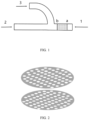
FIG. 1 illustrates a schematic view of an IBE chamber in connection with a vacuum system in an embodiment of the present disclosure. -
FIG. 2 illustrates a schematic view of a filter screen structure of the embodiment inFIG. 1 . -
FIG. 3 illustrates a schematic diagram of the PWP-OX-TSC chemisorption principle of the embodiment inFIG. 1 . -
FIG. 4 illustrates a schematic structural diagram of a silver etching material. - In
FIG. 1 , thereference number 1 represents a connection to the IBE chamber, thereference number 2 represents a connection to the dry pump, and thereference number 3 represents a connection to the molecular pump. - The technical solutions of the present disclosure are further explained in detail in combination with the accompanying drawings.
- In the descriptions of the present disclosure, it should be understood that the terms such as "left side", "right side", "upper part", "lower part", indicate orientations or positional relationships based on those shown in the accompanying drawings, and are merely for the convenience of describing the present disclosure and simplifying the descriptions, but do not indicate or imply that the referred device or element must have a specific orientation, be constructed in a specific orientation, or be operated, and that "first", "second", etc., do not represent an important degree of the component parts, and thus should not be construed as limiting the present disclosure. The specific sizes used in this embodiment are merely for illustrating the technical solutions and do not limit the protection scope of the present disclosure.
- The embodiment as illustrated in
FIGS 1, 2 , and3 provides a method for reducing agglomeration of silver etching by-products. The method comprises the following steps. - In
Step 1, two groups of filter screen groups (a and b) are provided in a vacuum tube connecting a dry pump and an IBE chamber, the interval between the adjacent filter screen groups is 50 mm to 500 mm, each group of filter screen groups includes 1 to 3 layers of filter screens, and an interval between adjacent filter screens is 0.5 mm to 5 mm. - In
Step 2, a chemical adsorbent is filled between the filter screens. - In
Step 2, the chemical adsorbent includes an active component and a carrier, the active component includes 30 wt% to 80 wt% of a sulfhydryl compound, 10 wt% to 30 wt% of biomass charcoal and 10 wt% to 30 wt% of an alkaline metal compound, the carrier includes 20 wt% to 30 wt% of active carbon, 5 wt% to 15 wt% of a molecular sieve and 40 wt% to 80wt% of alumina, and the loading amount of the active component is an arbitrary one or combination of 10 wt% to 50wt%. - The sulfhydryl compound includes one or more of 3-mercaptopropyltrimethoxysilane, mercaptopropionic acid, mercaptoethylamine, glutathione and cellulose PWP-OX-TSC crosslinked based on sulfhydryl modified glutaraldehyde.
- The alkaline metal compound includes one or more of magnesium oxide, calcium oxide and chromium hemitrioxide.
- The chemical adsorbent is spherical, granular, columnar or strip-shaped.
- As illustrated in
FIG. 2 , the aperture sizes of the filter screens in each filter screen group are sequentially reduced from outside to inside, the aperture size of the outermost filter screen is 2 mm to 5 mm, and the aperture size of the innermost filter screen is 0.5 mm to 1.5 mm. The meshes of the adjacent filter screens are distributed in a staggered way. The material of the filter screen is stainless steel, quartz or ceramic. - The purpose of the filter screen is to filter the large-particle silver agglomeration by-products which are filtered by the vacuum system. The size of the filter screen can be adjusted according to the actual size of the silver by-product during the etching process. By the method combining physical filtration and chemical adsorption, the by-products generated in the silver etching process can be effectively removed. Taking PWP-OX-TSC as an example, the principle of chemisorption is as illustrated in
FIG. 3 . - After adsorption occurs, a tautomerism peak of a thiol group in a thiourea group disappears, the main reason is that an S-containing group in the PWP-OX-TSC plays a role in the adsorption process. The protonation of the C-S group increases the binding energy of the C-S group, S ligand is protonated under acidic conditions, causing electrostatic interactions between positively charged PWP-OX-TSC and silver play an electrostatic role, so that the silver is adsorbed on the surface of the PWP-OX-TSC in the form of positively charged ions.
- The following provides an embodiment of an improved silver etching process based on the innovation points of the present disclosure, which is convenient for a better understanding of the present disclosure.
- The following three implementation examples are exemplified to describe the surface topography of the silver nanomaterial to be etched, as illustrated in
FIG. 4 . - The surface topography of the silver nanomaterial to be etched is as illustrated in
FIG. 4 . - The angle of the ion beam A is 0° , the ion energy is 400 V, the ion acceleration bias voltage is 400 V, the pressure of the etching cavity is 2 mT, the gas flow is 100 sccm, the gas is argon, and the etching is stopped until the SiO2 layer is etched.
- The angle of the B ion beam is -75 °, the ion energy is 400 V, the ion acceleration bias voltage is 400 V, the pressure of the etching cavity is 2 mT, the gas flow is 100 sccm, the gas is argon, and the side wall of the silver is decorated steeply.
- The by-product silver particles generated in the process can be pumped into the air pumping pipelines, and the specifications of the filter screen and the chemical adsorbent in the air pumping pipeline are as follows.
- (1) A group of filter screens are respectively arranged at the positions a and b, the distance between the two groups of filter screens is 100 mm, the diameter of each filter screen is 40 mm (equal to the inner diameter of the IBE air exhaust pipeline), the material of the filter screens is quartz, each group of filter screens includes two layers of filter screens, and the interval between the two layers of filter screens is 2 mm. The aperture size of the outer layer filter screen is 2 mm, the aperture size of the inner layer filter screen is 0.5 mm (the filter screen proximity to the shadow part is taken as the inner layer filter screen), the area of the holes accounts for 50% of the area of the whole filter screen, and the two layers of filter screens are arranged in a staggered way.
- (2) Chemical adsorbent composition: 50 wt% of active component 3-mercaptopropyltrimethoxysilane, 15 wt% of biomass charcoal and 35 wt% of calcium oxide. The carrier consists of 40 wt% of active carbon, 15 wt% of molecular sieve and 45 wt% of alumina, and the loading capacity of the active component is 20%.
- The adsorbent profile includes a spherical shape with a diameter of 1 mm.
- The silver by-products are filtered through a filter screen, and large particles are blocked, and small particles are chemically adsorbed after passing through the filter screen, which can effectively reduce the silver etching by-products.
- The angle of the ion beam A is 0 °, the ion energy is 400 V, the ion acceleration bias is 400 V, the pressure of the etching cavity is 2 mT, the gas flow is 100 sccm, the gas is argon, and the etching is stopped until the SiO2 layer is etched.
- The angle of the B ion beam is -75 °, the ion energy is 400 V, the ion acceleration bias voltage is 400 V, the pressure of the etching cavity is 2 mT, the gas flow is 100 sccm, the gas is argon, and the side wall of the silver is decorated steeply.
- The by-product silver particles generated in the process can be pumped into the air pumping pipelines, and the specifications of the filter screen and the chemical adsorbent in the air pumping pipeline are as follows.
- (1) A group of filter screens are respectively arranged at the positions a and b, the distance between the two groups of filter screens is 50 mm, the diameter of each filter screen is 40 mm (equal to the inner diameter of the IBE air exhaust pipeline), the material of the filter screens is quartz, each group of filter screens includes two layers of filter screens, and the interval between the two layers of filter screens is 2 mm. The aperture size of the outer layer filter screen is 2 mm, the aperture size of the inner layer filter screen is 0.5 mm (the filter screen proximity to the shadow part is taken as the inner layer filter screen), the area of the holes accounts for 50 % of the area of the whole filter screen, and the two layers of filter screens are arranged in a staggered way.
- (2) Chemical adsorbent composition: 50 wt% of active component 3-mercaptopropyltrimethoxysilane, 15 wt% of biomass charcoal and 35 wt% of calcium oxide. The carrier consists of 40 wt% of active carbon, 15 wt% of molecular sieve and 45 wt% of alumina, and the loading capacity of the active component is 20%.
- The adsorbent profile includes a sphere with a diameter of 1 mm.
- The silver by-products are filtered through a filter screen, large particles are blocked, and small particles are incompletely adsorbed due to the insufficient filling amount of the adsorbent after passing through the filter screen, causing a small amount of small particles to be pumped into the pump.
- The angle of the ion beam A is 0 °, the ion energy is 400 V, the ion acceleration bias voltage is 400 V, the pressure of the etching cavity is 2 mT, the gas flow is 100 sccm, the gas is argon, and the etching is stopped until the SiO2 layer is etched.
- The angle of the ion beam B is -75 °, the ion energy is 400 V, the ion acceleration bias voltage is 400 V, the pressure of the etching cavity is 2 mT, the gas flow is 100 sccm, the gas is argon, and the side wall of the silver is decorated steeply.
- The by-product silver particles generated in the process can be pumped into the air pumping pipelines, and the specifications of the filter screen and the chemical adsorbent in the air pumping pipeline are as follows.
- (1)A group of filter screens are respectively arranged at the positions a and b, the distance between the two groups of filter screens is 100 mm, the diameter of each filter screen is 40 mm (equal to the inner diameter of the IBE air exhaust pipeline), the material of the filter screens is quartz, each group of filter screens includes two layers of filter screens, and the interval between the two layers of filter screens is 2 mm. The aperture size of the outer layer filter screen is 2 mm, the aperture size of the inner layer filter screen is 0.5 mm (the filter screen proximity to the shadow part is taken as the inner layer filter screen), the area of the holes accounts for 50% of the area of the whole filter screen, and the two layers of filter screens are arranged in a staggered way.
- (2) Chemical adsorbent composition: 50 wt% of active component 3-mercaptopropyltrimethoxysilane, 15 wt% of biomass charcoal and 35 wt% of calcium oxide. The carrier consists of 40 wt% of active carbon, 15 wt% of molecular sieve and 45 wt% of alumina, and the loading capacity of the active component is 50%.
- The adsorbent profile includes a sphere with a diameter of 1 mm.
- The silver by-products are filtered through a filter screen, and the large particles are blocked. After the small particles pass through the filter screen, due to the increase in the loading capacity of the active component of the adsorbent, there will be a better absorption effect on small particles of silver. The silver particles generated during the IBE etching process can be completely removed.
- It will be understood by those skilled in the art that, unless otherwise defined, all terms (including technical and scientific terms) used herein have the same meaning as commonly understood by one of ordinary skill in the art to which the present disclosure belongs. It will be further understood that terms, such as those defined in commonly used dictionaries, should be interpreted as having a meaning that is consistent with their meaning in the context of the prior art and will not be interpreted in an idealized or overly formal sense unless expressly so defined herein.
- The above embodiments are merely for illustrating the technical idea of the present disclosure, and the technical idea of the present disclosure is not limited thereto, and any modifications made on the basis of the technical solution according to the technical idea of the present disclosure fall within the protection scope of the present disclosure. While the embodiments of the present disclosure have been described in detail, the present disclosure is not limited to the above embodiments as long as the embodiments fall within the scope of the invention which is defined by the claims.
Claims (10)
- A method for reducing agglomeration of silver etching by-products, comprising:Step 1, providing at least one group of filter screen groups in a vacuum tube connecting a dry pump and an Ion Beam Etching (IBE) chamber, wherein an interval between adjacent filter screen groups of the at least one group of filter screen groups is 50 mm to 500 mm, each group of filter screen groups includes 1 to 3 layers of filter screens, and an interval between adjacent filter screens is 0.5 mm to 5 mm; andStep 2, filling a chemical adsorbent between the filter screens.
- The method according to claim 1, wherein in Step 1, the groups of filter screen groups are provided with at least 2 groups.
- The method according to claim 1, wherein in Step 2, the chemical adsorbent includes an active component and a carrier, wherein the active component includes one or more of 30 wt% to 80 wt% of sulfhydryl compound, 10 wt% to 30 wt% of biomass charcoal and 10 wt% to 30 wt% of alkali metal compound.
- The method according to claim 3, wherein in Step 2, the carrier includes 20 wt% to 30 wt% of activated carbon, 5 wt% to 15 wt% of molecular sieve and 40 wt% to 80 wt% of alumina, and a loading amount of the active component is 10 wt% to 50 wt%.
- The method according to claim 3, wherein the sulfhydryl compound includes one or more of 3-mercaptopropyltrimethoxysilane, mercaptopropionic acid, mercaptoethylamine, glutathione and cellulose PWP-OX-TSC crosslinked based on sulfhydryl modified glutaraldehyde.
- The method according to claim 3, wherein the alkali metal compound includes one or more of magnesium oxide, calcium oxide and chromium hemitrioxide.
- The method according to claim 1, wherein the chemical adsorbent is spherical, granular, columnar or strip-shaped.
- The method according to claim 1, wherein a material of the filter screen is stainless steel, quartz or ceramic.
- The method according to claim 1, wherein aperture sizes of the filter screens in each filter screen group are sequentially reduced from an outer filter screen to an inner filter screen, an aperture size of an outermost filter screen is 2 mm to 5 mm, and an aperture size of an innermost filter screen is 0.5 mm to 1.5 mm.
- The method according to claim 1, wherein meshes of the adjacent filter screens are distributed in a staggered manner.
Applications Claiming Priority (2)
| Application Number | Priority Date | Filing Date | Title |
|---|---|---|---|
| CN202110709703.1A CN115518453A (en) | 2021-06-25 | 2021-06-25 | A method for reducing the agglomeration of silver etching by-products |
| PCT/CN2021/136770 WO2022267372A1 (en) | 2021-06-25 | 2021-12-09 | Method for reducing agglomeration of silver etching by-products |
Publications (4)
| Publication Number | Publication Date |
|---|---|
| EP4282507A1 EP4282507A1 (en) | 2023-11-29 |
| EP4282507A4 EP4282507A4 (en) | 2024-10-02 |
| EP4282507C0 EP4282507C0 (en) | 2025-05-07 |
| EP4282507B1 true EP4282507B1 (en) | 2025-05-07 |
Family
ID=84544971
Family Applications (1)
| Application Number | Title | Priority Date | Filing Date |
|---|---|---|---|
| EP21946846.9A Active EP4282507B1 (en) | 2021-06-25 | 2021-12-09 | Method for reducing agglomeration of silver etching by-products |
Country Status (5)
| Country | Link |
|---|---|
| EP (1) | EP4282507B1 (en) |
| KR (1) | KR102913723B1 (en) |
| CN (1) | CN115518453A (en) |
| TW (1) | TWI811890B (en) |
| WO (1) | WO2022267372A1 (en) |
Family Cites Families (12)
| Publication number | Priority date | Publication date | Assignee | Title |
|---|---|---|---|---|
| KR100458325B1 (en) * | 2002-03-15 | 2004-11-26 | 재단법인서울대학교산학협력재단 | Production Method of Noble Metal Adsorbent by Immobilizing Silane Compounds on Mesoporous Ceramic Materials |
| CN101072620B (en) * | 2004-06-07 | 2011-02-23 | 安格斯公司 | Systems and methods for removing pollutants |
| KR101334703B1 (en) * | 2011-12-28 | 2013-12-05 | 충남대학교산학협력단 | Microsphere for the adsorption of precious metal and Flow through Continuous Deionization |
| TWI582101B (en) * | 2013-03-28 | 2017-05-11 | 國立中正大學 | Method for attaching a metal onto a surface of a substrate |
| JP2016022465A (en) * | 2014-07-24 | 2016-02-08 | 株式会社東芝 | Iodine adsorbent, water treatment tank, and iodine adsorption system |
| CN204159187U (en) * | 2014-10-24 | 2015-02-18 | 北京华烽泰特科技有限公司 | Portable ambient air filter |
| CN107148458A (en) * | 2014-10-29 | 2017-09-08 | 德莎欧洲公司 | Include the adhesive mixture of activable getter material |
| CN104368316B (en) * | 2014-11-18 | 2016-05-04 | 辽宁大学 | A kind of hydrosulfide group cellulose class stalk adsorbent and preparation method and the recovery to noble silver |
| CN106807335A (en) * | 2015-11-27 | 2017-06-09 | 武汉中地金盾环境科技有限公司 | Magnetic retention polyamino adsorbent particulate material, preparation method and applications |
| US11239060B2 (en) * | 2018-05-29 | 2022-02-01 | Taiwan Semiconductor Manufacturing Company, Ltd. | Ion beam etching chamber with etching by-product redistributor |
| CN210325685U (en) * | 2019-08-28 | 2020-04-14 | 江苏鲁汶仪器有限公司 | an ion etching system |
| CN112563134A (en) * | 2020-12-03 | 2021-03-26 | 北京北方华创微电子装备有限公司 | Substrate etching method and thin film transistor |
-
2021
- 2021-06-25 CN CN202110709703.1A patent/CN115518453A/en active Pending
- 2021-12-09 KR KR1020237029286A patent/KR102913723B1/en active Active
- 2021-12-09 WO PCT/CN2021/136770 patent/WO2022267372A1/en not_active Ceased
- 2021-12-09 EP EP21946846.9A patent/EP4282507B1/en active Active
- 2021-12-14 TW TW110146822A patent/TWI811890B/en active
Also Published As
| Publication number | Publication date |
|---|---|
| TWI811890B (en) | 2023-08-11 |
| CN115518453A (en) | 2022-12-27 |
| KR20230137974A (en) | 2023-10-05 |
| TW202300703A (en) | 2023-01-01 |
| EP4282507C0 (en) | 2025-05-07 |
| EP4282507A4 (en) | 2024-10-02 |
| KR102913723B1 (en) | 2026-01-20 |
| WO2022267372A1 (en) | 2022-12-29 |
| EP4282507A1 (en) | 2023-11-29 |
Similar Documents
| Publication | Publication Date | Title |
|---|---|---|
| KR20140051962A (en) | Atomic layer etching using metastables formed from an inert gas | |
| JP2002260535A (en) | Plasma display panel | |
| EP4282507A1 (en) | Method for reducing agglomeration of silver etching by-products | |
| US20060083896A1 (en) | Semiconductor package with getter formed over an irregular structure | |
| US20230040794A1 (en) | Ion pumps and ion pump elements | |
| US7138335B2 (en) | Method of forming electrode for flat display panel | |
| JP2021068887A (en) | Component for vacuum device and vacuum device | |
| CN107963607A (en) | A kind of all standing getter wafer scale electronic component and its method for packing | |
| CN1771581A (en) | Methods of reducing photoresist distortion while etching in a plasma processing system | |
| CN204289361U (en) | A kind of for ionogenic aperture plate device | |
| CN103824740B (en) | A kind of X-ray tube with adsorbent thin film | |
| CN205115033U (en) | MEMS device, semiconductor device | |
| CN1969359B (en) | Process for the production of plasma displays with distributed getter materials and displays obtained therefrom | |
| CN104419900A (en) | Sputtering target material and manufacturing method thereof | |
| US7425164B2 (en) | Plasma display panel manufacturing method | |
| CN1851855A (en) | Plasma etching device exhaustring | |
| CN110359012B (en) | Nested micro-trap structure for inhibiting secondary electron emission and preparation method thereof | |
| JPS5850612Y2 (en) | Spatutie ion pump element | |
| CN120129365A (en) | A method for preparing a high-density small-size silver array | |
| CN102522296B (en) | Dielectric protective film of plasma display screen, manufacturing method thereof and plasma display screen comprising dielectric protective film | |
| CN1851053A (en) | Shielding plate for enhancing flow field uniformity | |
| EP1793409B1 (en) | Electron emission source protected by protecting layer and electron emission device including the same | |
| CN201112360Y (en) | reaction chamber | |
| JP2007019174A (en) | Plasma etching equipment | |
| CN116937138A (en) | Nitride LED active micromechanical radar pan and manufacturing method |
Legal Events
| Date | Code | Title | Description |
|---|---|---|---|
| STAA | Information on the status of an ep patent application or granted ep patent |
Free format text: STATUS: THE INTERNATIONAL PUBLICATION HAS BEEN MADE |
|
| PUAI | Public reference made under article 153(3) epc to a published international application that has entered the european phase |
Free format text: ORIGINAL CODE: 0009012 |
|
| STAA | Information on the status of an ep patent application or granted ep patent |
Free format text: STATUS: REQUEST FOR EXAMINATION WAS MADE |
|
| 17P | Request for examination filed |
Effective date: 20230821 |
|
| AK | Designated contracting states |
Kind code of ref document: A1 Designated state(s): AL AT BE BG CH CY CZ DE DK EE ES FI FR GB GR HR HU IE IS IT LI LT LU LV MC MK MT NL NO PL PT RO RS SE SI SK SM TR |
|
| A4 | Supplementary search report drawn up and despatched |
Effective date: 20240903 |
|
| DAV | Request for validation of the european patent (deleted) | ||
| DAX | Request for extension of the european patent (deleted) | ||
| RIC1 | Information provided on ipc code assigned before grant |
Ipc: H01J 37/32 20060101ALI20240828BHEP Ipc: H01J 37/305 20060101ALI20240828BHEP Ipc: H01J 37/30 20060101ALI20240828BHEP Ipc: B01D 53/04 20060101ALI20240828BHEP Ipc: B01D 36/00 20060101AFI20240828BHEP |
|
| GRAP | Despatch of communication of intention to grant a patent |
Free format text: ORIGINAL CODE: EPIDOSNIGR1 |
|
| STAA | Information on the status of an ep patent application or granted ep patent |
Free format text: STATUS: GRANT OF PATENT IS INTENDED |
|
| INTG | Intention to grant announced |
Effective date: 20250121 |
|
| GRAS | Grant fee paid |
Free format text: ORIGINAL CODE: EPIDOSNIGR3 |
|
| GRAA | (expected) grant |
Free format text: ORIGINAL CODE: 0009210 |
|
| STAA | Information on the status of an ep patent application or granted ep patent |
Free format text: STATUS: THE PATENT HAS BEEN GRANTED |
|
| AK | Designated contracting states |
Kind code of ref document: B1 Designated state(s): AL AT BE BG CH CY CZ DE DK EE ES FI FR GB GR HR HU IE IS IT LI LT LU LV MC MK MT NL NO PL PT RO RS SE SI SK SM TR |
|
| REG | Reference to a national code |
Ref country code: GB Ref legal event code: FG4D |
|
| REG | Reference to a national code |
Ref country code: CH Ref legal event code: EP |
|
| REG | Reference to a national code |
Ref country code: DE Ref legal event code: R096 Ref document number: 602021030642 Country of ref document: DE |
|
| REG | Reference to a national code |
Ref country code: IE Ref legal event code: FG4D |
|
| U01 | Request for unitary effect filed |
Effective date: 20250520 |
|
| U07 | Unitary effect registered |
Designated state(s): AT BE BG DE DK EE FI FR IT LT LU LV MT NL PT RO SE SI Effective date: 20250526 |
|
| PG25 | Lapsed in a contracting state [announced via postgrant information from national office to epo] |
Ref country code: ES Free format text: LAPSE BECAUSE OF FAILURE TO SUBMIT A TRANSLATION OF THE DESCRIPTION OR TO PAY THE FEE WITHIN THE PRESCRIBED TIME-LIMIT Effective date: 20250507 |
|
| PG25 | Lapsed in a contracting state [announced via postgrant information from national office to epo] |
Ref country code: NO Free format text: LAPSE BECAUSE OF FAILURE TO SUBMIT A TRANSLATION OF THE DESCRIPTION OR TO PAY THE FEE WITHIN THE PRESCRIBED TIME-LIMIT Effective date: 20250807 Ref country code: GR Free format text: LAPSE BECAUSE OF FAILURE TO SUBMIT A TRANSLATION OF THE DESCRIPTION OR TO PAY THE FEE WITHIN THE PRESCRIBED TIME-LIMIT Effective date: 20250808 |
|
| PG25 | Lapsed in a contracting state [announced via postgrant information from national office to epo] |
Ref country code: PL Free format text: LAPSE BECAUSE OF FAILURE TO SUBMIT A TRANSLATION OF THE DESCRIPTION OR TO PAY THE FEE WITHIN THE PRESCRIBED TIME-LIMIT Effective date: 20250507 |
|
| PG25 | Lapsed in a contracting state [announced via postgrant information from national office to epo] |
Ref country code: HR Free format text: LAPSE BECAUSE OF FAILURE TO SUBMIT A TRANSLATION OF THE DESCRIPTION OR TO PAY THE FEE WITHIN THE PRESCRIBED TIME-LIMIT Effective date: 20250507 |
|
| PG25 | Lapsed in a contracting state [announced via postgrant information from national office to epo] |
Ref country code: RS Free format text: LAPSE BECAUSE OF FAILURE TO SUBMIT A TRANSLATION OF THE DESCRIPTION OR TO PAY THE FEE WITHIN THE PRESCRIBED TIME-LIMIT Effective date: 20250807 |
|
| PG25 | Lapsed in a contracting state [announced via postgrant information from national office to epo] |
Ref country code: IS Free format text: LAPSE BECAUSE OF FAILURE TO SUBMIT A TRANSLATION OF THE DESCRIPTION OR TO PAY THE FEE WITHIN THE PRESCRIBED TIME-LIMIT Effective date: 20250907 |
|
| U20 | Renewal fee for the european patent with unitary effect paid |
Year of fee payment: 5 Effective date: 20251124 |
|
| PG25 | Lapsed in a contracting state [announced via postgrant information from national office to epo] |
Ref country code: SM Free format text: LAPSE BECAUSE OF FAILURE TO SUBMIT A TRANSLATION OF THE DESCRIPTION OR TO PAY THE FEE WITHIN THE PRESCRIBED TIME-LIMIT Effective date: 20250507 |
|
| PG25 | Lapsed in a contracting state [announced via postgrant information from national office to epo] |
Ref country code: CZ Free format text: LAPSE BECAUSE OF FAILURE TO SUBMIT A TRANSLATION OF THE DESCRIPTION OR TO PAY THE FEE WITHIN THE PRESCRIBED TIME-LIMIT Effective date: 20250507 |
|
| PG25 | Lapsed in a contracting state [announced via postgrant information from national office to epo] |
Ref country code: SK Free format text: LAPSE BECAUSE OF FAILURE TO SUBMIT A TRANSLATION OF THE DESCRIPTION OR TO PAY THE FEE WITHIN THE PRESCRIBED TIME-LIMIT Effective date: 20250507 |
|
| PLBE | No opposition filed within time limit |
Free format text: ORIGINAL CODE: 0009261 |
|
| STAA | Information on the status of an ep patent application or granted ep patent |
Free format text: STATUS: NO OPPOSITION FILED WITHIN TIME LIMIT |
|
| REG | Reference to a national code |
Ref country code: CH Ref legal event code: L10 Free format text: ST27 STATUS EVENT CODE: U-0-0-L10-L00 (AS PROVIDED BY THE NATIONAL OFFICE) Effective date: 20260318 |
|
| 26N | No opposition filed |
Effective date: 20260210 |