EP4280098B1 - Bildverarbeitung für abtastvorrichtungen auf der basis der position eines laserzielgeräts - Google Patents
Bildverarbeitung für abtastvorrichtungen auf der basis der position eines laserzielgeräts Download PDFInfo
- Publication number
- EP4280098B1 EP4280098B1 EP23171604.4A EP23171604A EP4280098B1 EP 4280098 B1 EP4280098 B1 EP 4280098B1 EP 23171604 A EP23171604 A EP 23171604A EP 4280098 B1 EP4280098 B1 EP 4280098B1
- Authority
- EP
- European Patent Office
- Prior art keywords
- frame
- pixel
- pixels
- grouping
- laser aimer
- Prior art date
- Legal status (The legal status is an assumption and is not a legal conclusion. Google has not performed a legal analysis and makes no representation as to the accuracy of the status listed.)
- Active
Links
Images


Classifications
-
- G—PHYSICS
- G06—COMPUTING OR CALCULATING; COUNTING
- G06V—IMAGE OR VIDEO RECOGNITION OR UNDERSTANDING
- G06V10/00—Arrangements for image or video recognition or understanding
- G06V10/10—Image acquisition
- G06V10/12—Details of acquisition arrangements; Constructional details thereof
- G06V10/14—Optical characteristics of the device performing the acquisition or on the illumination arrangements
-
- G—PHYSICS
- G06—COMPUTING OR CALCULATING; COUNTING
- G06K—GRAPHICAL DATA READING; PRESENTATION OF DATA; RECORD CARRIERS; HANDLING RECORD CARRIERS
- G06K7/00—Methods or arrangements for sensing record carriers, e.g. for reading patterns
- G06K7/10—Methods or arrangements for sensing record carriers, e.g. for reading patterns by electromagnetic radiation, e.g. optical sensing; by corpuscular radiation
- G06K7/14—Methods or arrangements for sensing record carriers, e.g. for reading patterns by electromagnetic radiation, e.g. optical sensing; by corpuscular radiation using light without selection of wavelength, e.g. sensing reflected white light
- G06K7/1404—Methods for optical code recognition
- G06K7/1439—Methods for optical code recognition including a method step for retrieval of the optical code
- G06K7/1443—Methods for optical code recognition including a method step for retrieval of the optical code locating of the code in an image
-
- G—PHYSICS
- G06—COMPUTING OR CALCULATING; COUNTING
- G06K—GRAPHICAL DATA READING; PRESENTATION OF DATA; RECORD CARRIERS; HANDLING RECORD CARRIERS
- G06K7/00—Methods or arrangements for sensing record carriers, e.g. for reading patterns
- G06K7/10—Methods or arrangements for sensing record carriers, e.g. for reading patterns by electromagnetic radiation, e.g. optical sensing; by corpuscular radiation
- G06K7/14—Methods or arrangements for sensing record carriers, e.g. for reading patterns by electromagnetic radiation, e.g. optical sensing; by corpuscular radiation using light without selection of wavelength, e.g. sensing reflected white light
- G06K7/1404—Methods for optical code recognition
- G06K7/1408—Methods for optical code recognition the method being specifically adapted for the type of code
- G06K7/1417—2D bar codes
-
- G—PHYSICS
- G06—COMPUTING OR CALCULATING; COUNTING
- G06K—GRAPHICAL DATA READING; PRESENTATION OF DATA; RECORD CARRIERS; HANDLING RECORD CARRIERS
- G06K7/00—Methods or arrangements for sensing record carriers, e.g. for reading patterns
- G06K7/10—Methods or arrangements for sensing record carriers, e.g. for reading patterns by electromagnetic radiation, e.g. optical sensing; by corpuscular radiation
- G06K7/10544—Methods or arrangements for sensing record carriers, e.g. for reading patterns by electromagnetic radiation, e.g. optical sensing; by corpuscular radiation by scanning of the records by radiation in the optical part of the electromagnetic spectrum
- G06K7/10712—Fixed beam scanning
-
- G—PHYSICS
- G06—COMPUTING OR CALCULATING; COUNTING
- G06K—GRAPHICAL DATA READING; PRESENTATION OF DATA; RECORD CARRIERS; HANDLING RECORD CARRIERS
- G06K7/00—Methods or arrangements for sensing record carriers, e.g. for reading patterns
- G06K7/10—Methods or arrangements for sensing record carriers, e.g. for reading patterns by electromagnetic radiation, e.g. optical sensing; by corpuscular radiation
- G06K7/10544—Methods or arrangements for sensing record carriers, e.g. for reading patterns by electromagnetic radiation, e.g. optical sensing; by corpuscular radiation by scanning of the records by radiation in the optical part of the electromagnetic spectrum
- G06K7/10712—Fixed beam scanning
- G06K7/10722—Photodetector array or CCD scanning
- G06K7/10732—Light sources
-
- G—PHYSICS
- G06—COMPUTING OR CALCULATING; COUNTING
- G06K—GRAPHICAL DATA READING; PRESENTATION OF DATA; RECORD CARRIERS; HANDLING RECORD CARRIERS
- G06K7/00—Methods or arrangements for sensing record carriers, e.g. for reading patterns
- G06K7/10—Methods or arrangements for sensing record carriers, e.g. for reading patterns by electromagnetic radiation, e.g. optical sensing; by corpuscular radiation
- G06K7/10544—Methods or arrangements for sensing record carriers, e.g. for reading patterns by electromagnetic radiation, e.g. optical sensing; by corpuscular radiation by scanning of the records by radiation in the optical part of the electromagnetic spectrum
- G06K7/10792—Special measures in relation to the object to be scanned
- G06K7/10801—Multidistance reading
-
- G—PHYSICS
- G06—COMPUTING OR CALCULATING; COUNTING
- G06K—GRAPHICAL DATA READING; PRESENTATION OF DATA; RECORD CARRIERS; HANDLING RECORD CARRIERS
- G06K7/00—Methods or arrangements for sensing record carriers, e.g. for reading patterns
- G06K7/10—Methods or arrangements for sensing record carriers, e.g. for reading patterns by electromagnetic radiation, e.g. optical sensing; by corpuscular radiation
- G06K7/10544—Methods or arrangements for sensing record carriers, e.g. for reading patterns by electromagnetic radiation, e.g. optical sensing; by corpuscular radiation by scanning of the records by radiation in the optical part of the electromagnetic spectrum
- G06K7/10821—Methods or arrangements for sensing record carriers, e.g. for reading patterns by electromagnetic radiation, e.g. optical sensing; by corpuscular radiation by scanning of the records by radiation in the optical part of the electromagnetic spectrum further details of bar or optical code scanning devices
- G06K7/10841—Particularities of the light-sensitive elements
-
- G—PHYSICS
- G06—COMPUTING OR CALCULATING; COUNTING
- G06K—GRAPHICAL DATA READING; PRESENTATION OF DATA; RECORD CARRIERS; HANDLING RECORD CARRIERS
- G06K7/00—Methods or arrangements for sensing record carriers, e.g. for reading patterns
- G06K7/10—Methods or arrangements for sensing record carriers, e.g. for reading patterns by electromagnetic radiation, e.g. optical sensing; by corpuscular radiation
- G06K7/14—Methods or arrangements for sensing record carriers, e.g. for reading patterns by electromagnetic radiation, e.g. optical sensing; by corpuscular radiation using light without selection of wavelength, e.g. sensing reflected white light
- G06K7/1404—Methods for optical code recognition
- G06K7/146—Methods for optical code recognition the method including quality enhancement steps
- G06K7/1465—Methods for optical code recognition the method including quality enhancement steps using several successive scans of the optical code
-
- G—PHYSICS
- G06—COMPUTING OR CALCULATING; COUNTING
- G06T—IMAGE DATA PROCESSING OR GENERATION, IN GENERAL
- G06T1/00—General purpose image data processing
- G06T1/20—Processor architectures; Processor configuration, e.g. pipelining
-
- G—PHYSICS
- G06—COMPUTING OR CALCULATING; COUNTING
- G06T—IMAGE DATA PROCESSING OR GENERATION, IN GENERAL
- G06T1/00—General purpose image data processing
- G06T1/60—Memory management
-
- G—PHYSICS
- G06—COMPUTING OR CALCULATING; COUNTING
- G06V—IMAGE OR VIDEO RECOGNITION OR UNDERSTANDING
- G06V10/00—Arrangements for image or video recognition or understanding
- G06V10/20—Image preprocessing
- G06V10/25—Determination of region of interest [ROI] or a volume of interest [VOI]
-
- G—PHYSICS
- G06—COMPUTING OR CALCULATING; COUNTING
- G06V—IMAGE OR VIDEO RECOGNITION OR UNDERSTANDING
- G06V10/00—Arrangements for image or video recognition or understanding
- G06V10/20—Image preprocessing
- G06V10/30—Noise filtering
Definitions
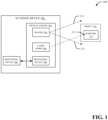
- the system 100 includes a scanning device 102.
- the scanning device 102 can be a scanner (e.g., a barcode scanner, etc.), a smartphone, a tablet computer, a wearable device, a handheld computing device, an augmented reality device, a virtual reality device, a sensor device, or another type of scanning device capable of capturing imagery.
- the scanning device 102 can be a scan engine device (e.g., a two-dimensional scan engine device or a three-dimensional scan engine device).
- the scanning device 102 includes an optical engine 103 and a processing device 108.
- the optical engine 103 includes an imager 104, a laser aimer 106, and/or a processing device 109.
- the first grouping of pixels is a first pixel column associated with the first frame 202 and the second grouping of pixels is a second pixel column associated with the second frame 203.
- the laser aimer location component 206 can compute a difference between respective pixel values in the first pixel column and other respective pixel values in the second pixel column to determine a pixel column associated with pixel difference values.
- the laser aimer location component 206 can also add the pixel difference values associated with the pixel column to determine the location of the laser aimer pattern 113. For example, the laser aimer location component 206 can add the pixel difference values associated with the pixel column to determine an x-coordinate of the laser aimer pattern 113.
- the image processing component 208 can perform image processing with respect to the barcode 112 based on the distance between the imager 104 and the object 110.
- the image processing component 208 can also generate image processing data 214 related to the image processing.
- the image processing can include a deconvolutional process with respect to the image 202 or the image 203.
- the image processing component 208 can perform a deconvolutional process with respect to the image 202 or the image 203 based on the distance between the imager 104 and the object 110.
- One or more portions of the image processing data 214 can include data associated with the deconvolutional process.
- the image processing can include a decoding of the barcode 112 included in the image 202 or the image 203.
- the process 302 can compute a difference between first pixel data for the first frame 202 (e.g., first pixel data for a first grouping of pixels associated with the first frame 202) and second pixel data for the second frame 203 (e.g., second pixel data for a second grouping of pixels associated with the second frame 203). Additionally, the process 302 can determine the laser aimer pattern location 303 based on a comparison between respective differences between the first pixel data for the first frame 202 and the second pixel data for the second frame 203.
- the laser aimer pattern location 303 can be a location of a laser aimer pattern in the first frame 202 or the second frame 203.
- the laser aimer pattern can be generated by the laser aimer 106 during capture of the first frame 202 and/or the second frame 203.
- the scanning device 102 can capture the image 400 using the laser aimer pattern 113 via the laser aimer 106.
- the image 400 can include the barcode 112 and the laser aimer pattern 113 employed by the laser aimer 106 to locate and/or identify the barcode 112.
- the image 400 can correspond to the first frame 202.
- the laser aimer pattern 113 included in the image 400 can be associated with an x-coordinate 402 and a y-coordinate 404.
- the noise pattern 504 can be a false laser aimer pattern in the first frame 202 that is generated during capture of the first frame 202 due to, for example, sensor noise and/or sensor inaccuracies associated with the imager 104.
- the region of interest 502 can correspond to the first set of pixels configured as a first grouping of pixels.
- the region of interest 502 can include a first set of pixel columns and a first set of pixel rows.
- the processing device 108 can also determine a region of interest 503 for the first frame 203 based on the region of interest 502.
- the region of interest 503 can include, for example, the noise pattern 504.
- the region of interest 503 can correspond to the second set of pixels configured as a second grouping of pixels.
- the region of interest 503 can include a second set of pixel columns and a second set of pixel rows.
- dimensionality of the region of interest 503 e.g., a number of pixel columns, a number of pixel rows, and/or a total number of pixels
- FIG. 6 illustrates a system 600 associated with a laser aimer search according to one or more embodiments of the disclosure.
- the system 600 includes a region of interest comparison 602.
- the region of interest comparison 602 can be determined based on differences between respective pixels of the first frame 202 and the second frame 203.
- the region of interest comparison 602 can be determined based an absolute value of differences between respective pixels of the first frame 202 and the second frame 203.
- the region of interest comparison 602 can represent a set of pixels (e.g., a set of pixel difference values) configured as a grouping of pixels (e.g., a grouping of pixel difference values).
- the region of interest comparison 602 can include a set of pixels arranged in a set of pixel columns and a set of pixel rows.
- the region of interest comparison 602 can include a grouping of pixels 606 arranged as a pixel column.
- the grouping of pixels 606 can include a first pixel (e.g., a first pixel difference value) equal to "3", a second pixel (e.g., a second pixel difference value) equal to "245", a third pixel (e.g., a third pixel difference value) equal to "245", a fourth pixel (e.g., a fourth pixel difference value) equal to "235”, and a fifth pixel (e.g., a fifth pixel difference value) equal to "4".
- a first pixel e.g., a first pixel difference value
- second pixel e.g., a second pixel difference value
- a third pixel e.g., a third pixel difference value
- a fourth pixel e.g., a fourth pixel difference value
- a fifth pixel e.g., a fifth pixel difference value
- the first pixel in the grouping of pixels 606 can represent an absolute value of a difference between a corresponding pixel in the first frame 202 and a corresponding pixel in the second frame 203
- the second pixel in the grouping of pixels 606 can represent another absolute value of another difference between another corresponding pixel in the first frame 202 and another corresponding pixel in the second frame 203
- the pixel values in the grouping of pixels 606 can be added to determine an x-coordinate value.
- the pixel values in the grouping of pixels 606 can be a maximum accumulated value 606 with respect to other pixel values for other column grouping of pixels in the region of interest comparison 602 and therefore can be identified as the x-coordinate location for the laser aimer pattern 113.
- the region of interest comparison 602 can include a grouping of pixels 605 arranged as a row of pixels.
- the grouping of pixels 605 can include respective pixels that represent an absolute value of a difference between a corresponding pixel in the first frame 202 and a corresponding pixel in the second frame 203.
- the pixel values in the grouping of pixels 605 can be added to determine a y-coordinate value.
- the pixel values in the grouping of pixels 605 can be a maximum accumulated value with respect to other pixel values for other row grouping of pixels in the region of interest comparison 602 and therefore can be identified as the y-coordinate location for the laser aimer pattern 113.
- the processing device 108 e.g., the laser aimer location component 206 can identify the location of the laser aimer pattern 113 (e.g., the laser aimer pattern location 303) as the x-coordinate value and/or the y-coordinate value.
- the system 300 also includes a process 304 associated with a triangulation.
- the process 304 can be performed by the processing device 108 of the scanning device.
- the process 304 can include one or more processes performed by the laser aimer location component 206.
- the process 304 can employ the laser aimer pattern location 303 to determine distance data 305.
- the distance data 305 can include, for example, a distance between the optical engine 103 and the object 110.
- the process 304 can determined the distance data 305 based on the laser aimer pattern location 303.
- the triangulation performed by the process 304 can be associated with a triangulation computation between the imager 104, the laser aimer 106, and the object 110.
- FIG. 7 illustrates a system 700 associated with triangulation according to one or more embodiments of the disclosure.
- the system 700 includes the imager 104, the laser aimer 106, and the object 110.
- the distance data 305 can include, for example, the X value employed to determine d.
- the process 304 can employ a predefined data structure (e.g., a predefined table) that indexes d with respect to X to determine the distance between the optical engine 103 and the object 110 based on the distance data 305.
- the distance s can be defined based on a structure of the optical engine 103 (e.g., a structure of the scanning device 102).
- the system 300 also includes a process 306 associated with image processing.
- the process 306 can be performed by the processing device 108 of the scanning device.
- the process 306 can include one or more processes performed by the image processing component 208.
- the process 306 can employ the distance data 305 for image processing.
- the process 306 can employ the distance data 305 to decode the barcode 112 based on the distance data 305.
- the process 306 can employ the distance data 305 to perform a deconvolutional process with respect to the barcode 112 based on the distance data 305.
- the process 306 can employ the distance data 305 to select a filter for the image processing and/or the deconvolutional process based on the distance data 305.
- FIG. 8 illustrates a computer-implemented method 800 for performing a laser aimer position search in accordance with one or more embodiments described herein.
- the computer-implemented method 800 can be performed by the processing device 108, for example.
- the computer-implemented method 800 begins at step 802 that determines an absolute difference value for respective pixels between the first frame (e.g., the first frame 202) and the second frame (e.g., the second frame 203) to determine a region of interest comparison between the first frame and the second frame.
- the computer-implemented method 800 also includes a step 804 that adds pixel values for respective pixel columns in the region of interest comparison.
- the computer-implemented method 800 also includes a step 806 that determines a pixel column number and a maximum accumulated value for a particular pixel column.
- the pixel column number can correspond to an x-coordinate location.
- the computer-implemented method 800 also includes a step 808 that estimates a distance between an optical engine and a barcode. For example, the distance between the optical engine and the barcode can be estimated based on the pixel column number (e.g., the x-coordinate location) with the maximum accumulated value with respect to other pixel column numbers.
- the computer-implemented method 800 can additionally include a step 812 that adds pixel value for the particular pixel column identified with the maximum accumulated value in each frame. For example, an accumulated value for pixel values for the particular pixel column identified as the maximum accumulated value can be determined for the first frame 202. Additionally, an accumulated value for pixel values for the particular pixel column identified as the maximum accumulated value can also be determined for the second frame 203. In certain embodiments, the computer-implemented method 800 can additionally include a step 812 that determines which frame comprises a laser aimer pattern based on a comparison between respective accumulated pixel values for the particular pixel column.
- the accumulated value for the pixel values associated with the first frame 202 can be compared to the accumulated value for the pixel values associated with the second frame 203 to determine the frame that comprises the laser aimer pattern.
- the frame determined to comprise the laser aimer pattern can be selected as the frame for the image processing performed based on the estimated distance.
- FIG. 9 illustrates a computer-implemented method 900 for image processing for scanning devices based on laser aimer position in accordance with one or more embodiments described herein.
- the computer-implemented method 900 can be associated with the processing device 108, for example.
- the computer-implemented method 900 begins with capturing, using a scanning device, a first frame and a second frame of image data related to an object associated with a barcode (block 902).
- the computer-implemented method 900 further includes computing a difference between first pixel data for a first grouping of pixels associated with the first frame and second pixel data for a second grouping of pixels associated with the second frame (block 904).
- the computer-implemented method 900 further includes determining a location of a laser aimer pattern in the first frame or the second frame based on a comparison between respective differences between the first pixel data for the first grouping of pixels and the second pixel data for the second grouping of pixels, where the laser aimer pattern is created by the scanning device (block 906).
- the first grouping of pixels is a first pixel column associated with the first frame and the second grouping of pixels is a second pixel column associated with the second frame.
- the computer-implemented method 900 further computing a difference between respective pixel values in the first pixel column and other respective pixel values in the second pixel column to determine a pixel column associated with pixel difference values.
- the computer-implemented method 900 includes adding the pixel difference values to determine the location of the laser aimer pattern.
- the first grouping of pixels is a first pixel row associated with the first frame and the second grouping of pixels is a second pixel row associated with the second frame.
- the computer-implemented method 900 includes computing a difference between respective pixel values in the first pixel row and other respective pixel values in the second pixel row to determine a pixel row associated with pixel difference values.
- the computer-implemented method 900 includes adding the pixel difference values to determine the location of the laser aimer pattern.
- the determining the location of the laser aimer pattern the first frame or the second frame comprises determining the location of the laser aimer pattern in the first frame or the second frame based on an absolute value of the difference between the first pixel data associated with the first frame and the second pixel data associated with the second frame
- the computer-implemented method 900 further includes computing a distance between an optical engine of the scanning device and the object based on the location of the laser aimer pattern (block 908).
- the computer-implemented method 900 further includes performing image processing with respect to the barcode based on the distance between the optical engine of the scanning device and the object (block 910).
- the computer-implemented method 900 includes capturing the first frame using the laser aimer pattern. In certain embodiments, the computer-implemented method 900 includes capturing the second frame without using the laser aimer pattern. In certain embodiments, the computer-implemented method 900 includes performing the image processing with respect to the barcode included in the first frame associated with the laser aimer pattern.
- the computer-implemented method 900 includes decoding the barcode based on the distance between the optical engine of the scanning device and the object.
- the computer-implemented method 900 includes selecting a filter for the image processing based on the distance between the optical engine of the scanning device and the object.
- the computer-implemented method 900 includes selecting a filter for a deconvolutional process of the image processing based on the distance between the optical engine of the scanning device and the object.
- the computer-implemented method 900 includes selecting the barcode from a plurality of barcodes on the object and/or selecting a filter for the image processing with respect to the barcode based on the distance between the optical engine of the scanning device and the object.
- certain ones of the operations herein may be modified or further amplified as described below. Moreover, in some embodiments additional optional operations may also be included. It should be appreciated that each of the modifications, optional additions or amplifications described herein may be included with the operations herein either alone or in combination with any others among the features described herein.
- the hardware used to implement the various illustrative logics, logical blocks, modules, and circuits described in connection with the aspects disclosed herein may include a general purpose processor, a digital signal processor (DSP), a special-purpose processor such as an application specific integrated circuit (ASIC) or a field programmable gate array (FPGA), a programmable logic device, discrete gate or transistor logic, discrete hardware components, or any combination thereof designed to perform the functions described herein.
- a general-purpose processor may be a microprocessor, but, in the alternative, the processor may be any processor, controller, microcontroller, or state machine.
- a processor may also be implemented as a combination of computing devices, e.g., a combination of a DSP and a microprocessor, a plurality of microprocessors, one or more microprocessors in conjunction with a DSP core, or any other such configuration. Alternatively, or in addition, some steps or methods may be performed by circuitry that is specific to a given function.
- the functions described herein may be implemented by special-purpose hardware or a combination of hardware programmed by firmware or other software. In implementations relying on firmware or other software, the functions may be performed as a result of execution of one or more instructions stored on one or more non-transitory computer-readable media and/or one or more non-transitory processor-readable media. These instructions may be embodied by one or more processor-executable software modules that reside on the one or more non-transitory computer-readable or processor-readable storage media.
- Non-transitory computer-readable or processor-readable storage media may in this regard comprise any storage media that may be accessed by a computer or a processor.
- non-transitory computer-readable or processor-readable media may include random access memory (RAM), read-only memory (ROM), electrically erasable programmable read-only memory (EEPROM), FLASH memory, disk storage, magnetic storage devices, or the like.
- Disk storage includes compact disc (CD), laser disc, optical disc, digital versatile disc (DVD), floppy disk, and Blu-ray disc TM , or other storage devices that store data magnetically or optically with lasers. Combinations of the above types of media are also included within the scope of the terms non-transitory computer-readable and processor-readable media. Additionally, any combination of instructions stored on the one or more non-transitory processor-readable or computer-readable media may be referred to herein as a computer program product.
Landscapes
- Physics & Mathematics (AREA)
- Engineering & Computer Science (AREA)
- Theoretical Computer Science (AREA)
- General Physics & Mathematics (AREA)
- Electromagnetism (AREA)
- General Health & Medical Sciences (AREA)
- Artificial Intelligence (AREA)
- Computer Vision & Pattern Recognition (AREA)
- Toxicology (AREA)
- Health & Medical Sciences (AREA)
- Multimedia (AREA)
- Quality & Reliability (AREA)
- Length Measuring Devices By Optical Means (AREA)
Claims (13)
- System (100), umfassend:einen Prozessor (210); undeinen Speicher (212), der ausführbare Anweisungen speichert, die bei ihrer Ausführung durch den Prozessor (210) den Prozessor (210) dazu veranlassen:unter Verwendung einer Scanvorrichtung (102) einen ersten Rahmen (202) und einen zweiten Rahmen (203) von Bilddaten zu erfassen, die sich auf ein Objekt (110) beziehen, das einem Barcode (112) zugeordnet ist, wobei der erste Rahmen (202) unter Verwendung eines Laserzielmusters (113) erfasst wird und der zweite Rahmen (203) ohne Verwendung des Laserzielmusters (113) erfasst wird;eine Differenz zwischen ersten Pixeldaten für eine erste Gruppierung von Pixeln, die dem ersten Rahmen (202) zugeordnet ist, und zweiten Pixeldaten für eine zweite Gruppierung von Pixeln, die dem zweiten Rahmen (203) zugeordnet ist, zu berechnen;einen Ort des Laserzielmusters (113) in dem ersten Rahmen (202) oder dem zweiten Rahmen (203) auf Basis eines Vergleichs zwischen jeweiligen Differenzen zwischen den ersten Pixeldaten für die erste Gruppierung von Pixeln und den zweiten Pixeldaten für die zweite Gruppierung von Pixeln zu bestimmen, wobei das Laserzielmuster (113) durch die Scanvorrichtung (102) erstellt wird;eine Distanz zwischen einer optischen Engine (103) der Scanvorrichtung (102) und dem Objekt (110) auf Basis des Ortes des Laserzielmusters (113) zu berechnen; undeine Bildverarbeitung in Bezug auf den Barcode (112), der in dem ersten Rahmen (202) beinhaltet ist, der dem Laserzielmuster (113) zugeordnet ist, auf Basis der Distanz zwischen der optischen Engine (103) der Scanvorrichtung (102) und dem Objekt (110) durchzuführen.
- System (100) nach Anspruch 1, wobei die erste Gruppierung von Pixeln eine erste Pixelspalte ist, die dem ersten Rahmen (202) zugeordnet ist, wobei die zweite Gruppierung von Pixeln eine zweite Pixelspalte ist, die dem zweiten Rahmen (203) zugeordnet ist, und wobei die ausführbaren Anweisungen den Prozessor (210) ferner dazu veranlassen:eine Differenz zwischen jeweiligen Pixelwerten in der ersten Pixelspalte und anderen jeweiligen Pixelwerten in der zweiten Pixelspalte zu berechnen, um eine Pixelspalte zu bestimmen, die Pixeldifferenzwerten zugeordnet ist; unddie Pixeldifferenzwerte zu addieren, um den Ort des Laserzielmusters (113) zu bestimmen.
- System (100) nach Anspruch 1, wobei die erste Gruppierung von Pixeln eine erste Pixelreihe ist, die dem ersten Rahmen (202) zugeordnet ist, wobei die zweite Gruppierung von Pixeln eine zweite Pixelreihe ist, die dem zweiten Rahmen (203) zugeordnet ist, und wobei die ausführbaren Anweisungen den Prozessor (210) ferner dazu veranlassen:eine Differenz zwischen jeweiligen Pixelwerten in der ersten Pixelreihe und anderen jeweiligen Pixelwerten in der zweiten Pixelreihe zu berechnen, um eine Pixelreihe zu bestimmen, die Pixeldifferenzwerten zugeordnet ist; unddie Pixeldifferenzwerte zu addieren, um den Ort des Laserzielmusters (113) zu bestimmen.
- System (100) nach einem der Ansprüche 1-3, wobei die ausführbaren Anweisungen den Prozessor (210) ferner dazu veranlassen:
den Ort des Laserzielmusters (113) in dem ersten Rahmen (202) oder dem zweiten Rahmen (203) auf Basis eines absoluten Wertes der Differenz zwischen den ersten Pixeldaten, die dem ersten Rahmen (202) zugeordnet sind, und den zweiten Pixeldaten, die dem zweiten Rahmen (203) zugeordnet sind, zu bestimmen. - System (100) nach einem der Ansprüche 1-4, wobei die ausführbaren Anweisungen den Prozessor (210) ferner dazu veranlassen:
den Barcode (112) auf Basis der Distanz zwischen der optischen Engine (103) der Scanvorrichtung (102) und dem Objekt (110) zu dekodieren. - System (100) nach einem der Ansprüche 1-5, wobei die ausführbaren Anweisungen den Prozessor (210) ferner dazu veranlassen:
einen Filter für die Bildverarbeitung auf Basis der Distanz zwischen der optischen Engine (103) der Scanvorrichtung (102) und dem Objekt (110) auszuwählen. - System (100) nach einem der Ansprüche 1-6, wobei die ausführbaren Anweisungen den Prozessor (210) ferner dazu veranlassen:
einen Filter für einen Dekonvolutionsprozess der Bildverarbeitung auf Basis der Distanz zwischen der optischen Engine (103) der Scanvorrichtung (102) und dem Objekt (110) auszuwählen. - System (100) nach einem der Ansprüche 1-7, wobei die ausführbaren Anweisungen den Prozessor (210) ferner veranlassen:den Barcode (112) aus einer Vielzahl von Barcodes auf dem Objekt (110) auszuwählen; undeinen Filter für die Bildverarbeitung in Bezug auf den Barcode (112) auf Basis der Distanz zwischen der optischen Engine (103) der Scanvorrichtung (102) und dem Objekt (110) auszuwählen.
- Verfahren (900), umfassend:Erfassen (902), unter Verwendung einer Scanvorrichtung (102), eines ersten Rahmens (202) und eines zweiten Rahmens (203) von Bilddaten, die sich auf ein Objekt (110) beziehen, das einem Barcode (112) zugeordnet ist, wobei der erste Rahmen (202) unter Verwendung eines Laserzielmusters (113) erfasst wird und der zweite Rahmen (203) ohne Verwendung des Laserzielmusters (113) erfasst wird;Berechnen (904) einer Differenz zwischen ersten Pixeldaten für eine erste Gruppierung von Pixeln, die dem ersten Rahmen (202) zugeordnet ist, und zweiten Pixeldaten für eine zweite Gruppierung von Pixeln, die dem zweiten Rahmen (203) zugeordnet ist;Bestimmen (906) eines Ortes des Laserzielmusters (113) in dem ersten Rahmen (202) oder dem zweiten Rahmen (203) auf Basis eines Vergleichs zwischen jeweiligen Differenzen zwischen den ersten Pixeldaten für die erste Gruppierung von Pixeln und den zweiten Pixeldaten für die zweite Gruppierung von Pixeln, wobei das Laserzielmuster (113) durch die Scanvorrichtung (102) erstellt wird;Berechnen einer Distanz zwischen einer optischen Engine (103) der Scanvorrichtung (102) und dem Objekt (110) auf Basis des Ortes des Laserzielmusters (113); undDurchführen einer Bildverarbeitung in Bezug auf den Barcode (112), der in dem ersten Rahmen (202) beinhaltet ist, der dem Laserzielmuster (113) zugeordnet ist, auf Basis der Distanz zwischen der optischen Engine (103) der Scanvorrichtung (102) und dem Objekt (110).
- Verfahren nach Anspruch 9, wobei die erste Gruppierung von Pixeln eine erste Pixelspalte ist, die dem ersten Rahmen (202) zugeordnet ist, wobei die zweite Gruppierung von Pixeln eine zweite Pixelspalte ist, die dem zweiten Rahmen (203) zugeordnet ist, und das Verfahren ferner umfassend:Berechnen einer Differenz zwischen jeweiligen Pixelwerten in der ersten Pixelspalte und anderen jeweiligen Pixelwerten in der zweiten Pixelspalte, um eine Pixelspalte zu bestimmen, die Pixeldifferenzwerten zugeordnet ist; undAddieren der Pixeldifferenzwerte, um den Ort des Laserzielmusters (113) zu bestimmen.
- Verfahren nach Anspruch 9, wobei die erste Gruppierung von Pixeln eine erste Pixelreihe ist, die dem ersten Rahmen (202) zugeordnet ist, wobei die zweite Gruppierung von Pixeln eine zweite Pixelreihe ist, die dem zweiten Rahmen (203) zugeordnet ist, und das Verfahren ferner umfassend:Berechnen einer Differenz zwischen jeweiligen Pixelwerten in der ersten Pixelreihe und anderen jeweiligen Pixelwerten in der zweiten Pixelreihe, um eine Pixelreihe zu bestimmen, die Pixeldifferenzwerten zugeordnet ist; undAddieren der Pixeldifferenzwerte, um den Ort des Laserzielmusters (113) zu bestimmen.
- Verfahren nach einem der Ansprüche 9-11, wobei das Bestimmen des Ortes des Laserzielmusters (113) in dem ersten Rahmen (202) oder dem zweiten Rahmen (203) das Bestimmen des Ortes des Laserzielmusters (113) in dem ersten Rahmen (202) oder dem zweiten Rahmen (203) auf Basis eines absoluten Wertes der Differenz zwischen den ersten Pixeldaten, die dem ersten Rahmen (202) zugeordnet sind, und den zweiten Pixeldaten, die dem zweiten Rahmen (203) zugeordnet sind, umfasst.
- Verfahren nach einem der Ansprüche 9-12, wobei das Durchführen der Bildverarbeitung das Dekodieren des Barcodes (112) auf Basis der Distanz zwischen der optischen Engine (103) der Scanvorrichtung (102) und dem Objekt (110) umfasst.
Applications Claiming Priority (1)
| Application Number | Priority Date | Filing Date | Title |
|---|---|---|---|
| CN202210565744.2A CN117132748A (zh) | 2022-05-20 | 2022-05-20 | 基于激光瞄准仪位置的用于扫描设备的图像处理 |
Publications (2)
| Publication Number | Publication Date |
|---|---|
| EP4280098A1 EP4280098A1 (de) | 2023-11-22 |
| EP4280098B1 true EP4280098B1 (de) | 2025-07-09 |
Family
ID=86329126
Family Applications (1)
| Application Number | Title | Priority Date | Filing Date |
|---|---|---|---|
| EP23171604.4A Active EP4280098B1 (de) | 2022-05-20 | 2023-05-04 | Bildverarbeitung für abtastvorrichtungen auf der basis der position eines laserzielgeräts |
Country Status (3)
| Country | Link |
|---|---|
| US (2) | US12099897B2 (de) |
| EP (1) | EP4280098B1 (de) |
| CN (1) | CN117132748A (de) |
Families Citing this family (1)
| Publication number | Priority date | Publication date | Assignee | Title |
|---|---|---|---|---|
| CN117132748A (zh) * | 2022-05-20 | 2023-11-28 | 手持产品公司 | 基于激光瞄准仪位置的用于扫描设备的图像处理 |
Family Cites Families (13)
| Publication number | Priority date | Publication date | Assignee | Title |
|---|---|---|---|---|
| US5015867A (en) * | 1989-08-30 | 1991-05-14 | Ppg Industries, Inc. | Apparatus and methods for measuring the diameter of a moving elongated material |
| US7090132B2 (en) * | 2002-06-11 | 2006-08-15 | Hand Held Products, Inc. | Long range optical reader |
| US7303131B2 (en) * | 2004-07-30 | 2007-12-04 | Symbol Technologies, Inc. | Automatic focusing system for imaging-based bar code reader |
| US7478753B2 (en) | 2004-08-31 | 2009-01-20 | Symbol Technologies, Inc. | System and method for aiming an optical code scanning device |
| US8471812B2 (en) | 2005-09-23 | 2013-06-25 | Jesse C. Bunch | Pointing and identification device |
| US7967205B2 (en) * | 2005-11-17 | 2011-06-28 | Hand Held Products, Inc. | Optical reading device with programmable parameter control |
| US7705288B2 (en) * | 2006-03-31 | 2010-04-27 | Hand Held Products, Inc. | Optical reading device with light blocking gasket |
| EP2710568B1 (de) * | 2011-05-03 | 2019-11-06 | Shilat Optronics Ltd | Geländeüberwachungssystem |
| US9202094B1 (en) * | 2014-05-20 | 2015-12-01 | Symbol Technologies, Llc | Aiming pattern shape as distance sensor for barcode scanner |
| US11009347B2 (en) * | 2016-05-26 | 2021-05-18 | Symbol Technologies, Llc | Arrangement for, and method of, determining a distance to a target to be read by image capture over a range of working distances |
| US11245845B2 (en) | 2020-06-04 | 2022-02-08 | Hand Held Products, Inc. | Systems and methods for operating an imaging device |
| US11966811B2 (en) * | 2020-09-28 | 2024-04-23 | Cognex Corporation | Machine vision system and method with on-axis aimer and distance measurement assembly |
| CN117132748A (zh) * | 2022-05-20 | 2023-11-28 | 手持产品公司 | 基于激光瞄准仪位置的用于扫描设备的图像处理 |
-
2022
- 2022-05-20 CN CN202210565744.2A patent/CN117132748A/zh active Pending
-
2023
- 2023-05-04 EP EP23171604.4A patent/EP4280098B1/de active Active
- 2023-05-05 US US18/312,694 patent/US12099897B2/en active Active
-
2024
- 2024-08-07 US US18/796,793 patent/US12468910B2/en active Active
Also Published As
| Publication number | Publication date |
|---|---|
| US20240394491A1 (en) | 2024-11-28 |
| US12468910B2 (en) | 2025-11-11 |
| US12099897B2 (en) | 2024-09-24 |
| EP4280098A1 (de) | 2023-11-22 |
| CN117132748A (zh) | 2023-11-28 |
| US20230376713A1 (en) | 2023-11-23 |
Similar Documents
| Publication | Publication Date | Title |
|---|---|---|
| CA2893387C (en) | Image processing methods and systems for barcode and/or product label recognition | |
| US9111163B2 (en) | Apparatus for and method of electro-optically reading a selected target by image capture from a picklist of targets | |
| CN109414819A (zh) | 用于自动化图像获取的机器人 | |
| AU2019247400A1 (en) | Method, system, and apparatus for correcting translucency artifacts in data representing a support structure | |
| US11928545B2 (en) | Methods and systems of package processing in a material handling environment | |
| US11009347B2 (en) | Arrangement for, and method of, determining a distance to a target to be read by image capture over a range of working distances | |
| US12468910B2 (en) | Image processing for scanning devices based on laser aimer position | |
| CN114757878A (zh) | 焊接示教方法、装置、终端设备及计算机可读存储介质 | |
| US20210209784A1 (en) | Dark parcel dimensioning | |
| US10733489B2 (en) | Optically readable tags and methods and systems for decoding an optically readable tag | |
| EP4293565B1 (de) | Verbesserte kalibrierung für die abtastvorrichtungsdecodierung auf der basis von zielmustererkennung | |
| US10907954B2 (en) | Methods and systems for measuring dimensions of a 2-D object | |
| WO2020247067A1 (en) | Method, system and apparatus for shelf edge detection | |
| AU2021259410B2 (en) | Method for accurate object tracking with color camera in multi planar scanners | |
| US12131224B1 (en) | Deep learning based image enhancement for barcode decoding | |
| US10935367B2 (en) | Methods and systems for calibrating a dimensioner | |
| US9495574B2 (en) | Stack barcode reader and stack barcode reading method | |
| US20250342332A1 (en) | Devices, systems, and methods for improving throughput of scanners capturing images of items potentially having multiple labels | |
| CN113642350B (zh) | 一种工业产品承载的二维码快速识读方法及装置 | |
| CN112749591B (zh) | 仓储物流机器人及其物品识别方法和芯片 | |
| WO2024243333A1 (en) | Systems and methods for sorting objects | |
| CN121505032A (zh) | 边框切割方法、电子设备及存储介质 | |
| Ibert et al. | Towards data center stocktaking Using computer vision | |
| CN115079186A (zh) | 货架的识别方法及相关设备 |
Legal Events
| Date | Code | Title | Description |
|---|---|---|---|
| PUAI | Public reference made under article 153(3) epc to a published international application that has entered the european phase |
Free format text: ORIGINAL CODE: 0009012 |
|
| STAA | Information on the status of an ep patent application or granted ep patent |
Free format text: STATUS: REQUEST FOR EXAMINATION WAS MADE |
|
| 17P | Request for examination filed |
Effective date: 20230504 |
|
| AK | Designated contracting states |
Kind code of ref document: A1 Designated state(s): AL AT BE BG CH CY CZ DE DK EE ES FI FR GB GR HR HU IE IS IT LI LT LU LV MC ME MK MT NL NO PL PT RO RS SE SI SK SM TR |
|
| RAP3 | Party data changed (applicant data changed or rights of an application transferred) |
Owner name: HAND HELD PRODUCTS, INC. |
|
| GRAP | Despatch of communication of intention to grant a patent |
Free format text: ORIGINAL CODE: EPIDOSNIGR1 |
|
| STAA | Information on the status of an ep patent application or granted ep patent |
Free format text: STATUS: GRANT OF PATENT IS INTENDED |
|
| INTG | Intention to grant announced |
Effective date: 20250217 |
|
| GRAS | Grant fee paid |
Free format text: ORIGINAL CODE: EPIDOSNIGR3 |
|
| GRAA | (expected) grant |
Free format text: ORIGINAL CODE: 0009210 |
|
| STAA | Information on the status of an ep patent application or granted ep patent |
Free format text: STATUS: THE PATENT HAS BEEN GRANTED |
|
| AK | Designated contracting states |
Kind code of ref document: B1 Designated state(s): AL AT BE BG CH CY CZ DE DK EE ES FI FR GB GR HR HU IE IS IT LI LT LU LV MC ME MK MT NL NO PL PT RO RS SE SI SK SM TR |
|
| REG | Reference to a national code |
Ref country code: GB Ref legal event code: FG4D |
|
| REG | Reference to a national code |
Ref country code: CH Ref legal event code: EP |
|
| REG | Reference to a national code |
Ref country code: IE Ref legal event code: FG4D |
|
| REG | Reference to a national code |
Ref country code: DE Ref legal event code: R096 Ref document number: 602023004626 Country of ref document: DE |
|
| REG | Reference to a national code |
Ref country code: NL Ref legal event code: MP Effective date: 20250709 |
|
| PG25 | Lapsed in a contracting state [announced via postgrant information from national office to epo] |
Ref country code: PT Free format text: LAPSE BECAUSE OF FAILURE TO SUBMIT A TRANSLATION OF THE DESCRIPTION OR TO PAY THE FEE WITHIN THE PRESCRIBED TIME-LIMIT Effective date: 20251110 |
|
| PG25 | Lapsed in a contracting state [announced via postgrant information from national office to epo] |
Ref country code: NL Free format text: LAPSE BECAUSE OF FAILURE TO SUBMIT A TRANSLATION OF THE DESCRIPTION OR TO PAY THE FEE WITHIN THE PRESCRIBED TIME-LIMIT Effective date: 20250709 |
|
| REG | Reference to a national code |
Ref country code: AT Ref legal event code: MK05 Ref document number: 1812523 Country of ref document: AT Kind code of ref document: T Effective date: 20250709 |
|
| PG25 | Lapsed in a contracting state [announced via postgrant information from national office to epo] |
Ref country code: IS Free format text: LAPSE BECAUSE OF FAILURE TO SUBMIT A TRANSLATION OF THE DESCRIPTION OR TO PAY THE FEE WITHIN THE PRESCRIBED TIME-LIMIT Effective date: 20251109 |
|
| PG25 | Lapsed in a contracting state [announced via postgrant information from national office to epo] |
Ref country code: NO Free format text: LAPSE BECAUSE OF FAILURE TO SUBMIT A TRANSLATION OF THE DESCRIPTION OR TO PAY THE FEE WITHIN THE PRESCRIBED TIME-LIMIT Effective date: 20251009 |
|
| REG | Reference to a national code |
Ref country code: LT Ref legal event code: MG9D |
|
| PG25 | Lapsed in a contracting state [announced via postgrant information from national office to epo] |
Ref country code: AT Free format text: LAPSE BECAUSE OF FAILURE TO SUBMIT A TRANSLATION OF THE DESCRIPTION OR TO PAY THE FEE WITHIN THE PRESCRIBED TIME-LIMIT Effective date: 20250709 |
|
| PG25 | Lapsed in a contracting state [announced via postgrant information from national office to epo] |
Ref country code: FI Free format text: LAPSE BECAUSE OF FAILURE TO SUBMIT A TRANSLATION OF THE DESCRIPTION OR TO PAY THE FEE WITHIN THE PRESCRIBED TIME-LIMIT Effective date: 20250709 |
|
| PG25 | Lapsed in a contracting state [announced via postgrant information from national office to epo] |
Ref country code: HR Free format text: LAPSE BECAUSE OF FAILURE TO SUBMIT A TRANSLATION OF THE DESCRIPTION OR TO PAY THE FEE WITHIN THE PRESCRIBED TIME-LIMIT Effective date: 20250709 |
|
| PG25 | Lapsed in a contracting state [announced via postgrant information from national office to epo] |
Ref country code: GR Free format text: LAPSE BECAUSE OF FAILURE TO SUBMIT A TRANSLATION OF THE DESCRIPTION OR TO PAY THE FEE WITHIN THE PRESCRIBED TIME-LIMIT Effective date: 20251010 |
|
| PG25 | Lapsed in a contracting state [announced via postgrant information from national office to epo] |
Ref country code: SE Free format text: LAPSE BECAUSE OF FAILURE TO SUBMIT A TRANSLATION OF THE DESCRIPTION OR TO PAY THE FEE WITHIN THE PRESCRIBED TIME-LIMIT Effective date: 20250709 |
|
| PG25 | Lapsed in a contracting state [announced via postgrant information from national office to epo] |
Ref country code: LV Free format text: LAPSE BECAUSE OF FAILURE TO SUBMIT A TRANSLATION OF THE DESCRIPTION OR TO PAY THE FEE WITHIN THE PRESCRIBED TIME-LIMIT Effective date: 20250709 |
|
| PG25 | Lapsed in a contracting state [announced via postgrant information from national office to epo] |
Ref country code: PL Free format text: LAPSE BECAUSE OF FAILURE TO SUBMIT A TRANSLATION OF THE DESCRIPTION OR TO PAY THE FEE WITHIN THE PRESCRIBED TIME-LIMIT Effective date: 20250709 Ref country code: BG Free format text: LAPSE BECAUSE OF FAILURE TO SUBMIT A TRANSLATION OF THE DESCRIPTION OR TO PAY THE FEE WITHIN THE PRESCRIBED TIME-LIMIT Effective date: 20250709 |
|
| PG25 | Lapsed in a contracting state [announced via postgrant information from national office to epo] |
Ref country code: RS Free format text: LAPSE BECAUSE OF FAILURE TO SUBMIT A TRANSLATION OF THE DESCRIPTION OR TO PAY THE FEE WITHIN THE PRESCRIBED TIME-LIMIT Effective date: 20251009 |
|
| PG25 | Lapsed in a contracting state [announced via postgrant information from national office to epo] |
Ref country code: ES Free format text: LAPSE BECAUSE OF FAILURE TO SUBMIT A TRANSLATION OF THE DESCRIPTION OR TO PAY THE FEE WITHIN THE PRESCRIBED TIME-LIMIT Effective date: 20250709 |