EP4276347B1 - Systeme zum betanken von kryokomprimierten wasserstofftanks und verfahren zum betrieb davon - Google Patents
Systeme zum betanken von kryokomprimierten wasserstofftanks und verfahren zum betrieb davon Download PDFInfo
- Publication number
- EP4276347B1 EP4276347B1 EP23151839.0A EP23151839A EP4276347B1 EP 4276347 B1 EP4276347 B1 EP 4276347B1 EP 23151839 A EP23151839 A EP 23151839A EP 4276347 B1 EP4276347 B1 EP 4276347B1
- Authority
- EP
- European Patent Office
- Prior art keywords
- pressure
- cch2
- vessel
- tank
- mixing tank
- Prior art date
- Legal status (The legal status is an assumption and is not a legal conclusion. Google has not performed a legal analysis and makes no representation as to the accuracy of the status listed.)
- Active
Links
Images




Classifications
-
- F—MECHANICAL ENGINEERING; LIGHTING; HEATING; WEAPONS; BLASTING
- F17—STORING OR DISTRIBUTING GASES OR LIQUIDS
- F17C—VESSELS FOR CONTAINING OR STORING COMPRESSED, LIQUEFIED OR SOLIDIFIED GASES; FIXED-CAPACITY GAS-HOLDERS; FILLING VESSELS WITH, OR DISCHARGING FROM VESSELS, COMPRESSED, LIQUEFIED, OR SOLIDIFIED GASES
- F17C6/00—Methods and apparatus for filling vessels not under pressure with liquefied or solidified gases
-
- F—MECHANICAL ENGINEERING; LIGHTING; HEATING; WEAPONS; BLASTING
- F17—STORING OR DISTRIBUTING GASES OR LIQUIDS
- F17C—VESSELS FOR CONTAINING OR STORING COMPRESSED, LIQUEFIED OR SOLIDIFIED GASES; FIXED-CAPACITY GAS-HOLDERS; FILLING VESSELS WITH, OR DISCHARGING FROM VESSELS, COMPRESSED, LIQUEFIED, OR SOLIDIFIED GASES
- F17C5/00—Methods or apparatus for filling containers with liquefied, solidified, or compressed gases under pressures
- F17C5/02—Methods or apparatus for filling containers with liquefied, solidified, or compressed gases under pressures for filling with liquefied gases
-
- F—MECHANICAL ENGINEERING; LIGHTING; HEATING; WEAPONS; BLASTING
- F17—STORING OR DISTRIBUTING GASES OR LIQUIDS
- F17C—VESSELS FOR CONTAINING OR STORING COMPRESSED, LIQUEFIED OR SOLIDIFIED GASES; FIXED-CAPACITY GAS-HOLDERS; FILLING VESSELS WITH, OR DISCHARGING FROM VESSELS, COMPRESSED, LIQUEFIED, OR SOLIDIFIED GASES
- F17C5/00—Methods or apparatus for filling containers with liquefied, solidified, or compressed gases under pressures
- F17C5/06—Methods or apparatus for filling containers with liquefied, solidified, or compressed gases under pressures for filling with compressed gases
-
- F—MECHANICAL ENGINEERING; LIGHTING; HEATING; WEAPONS; BLASTING
- F17—STORING OR DISTRIBUTING GASES OR LIQUIDS
- F17C—VESSELS FOR CONTAINING OR STORING COMPRESSED, LIQUEFIED OR SOLIDIFIED GASES; FIXED-CAPACITY GAS-HOLDERS; FILLING VESSELS WITH, OR DISCHARGING FROM VESSELS, COMPRESSED, LIQUEFIED, OR SOLIDIFIED GASES
- F17C13/00—Details of vessels or of the filling or discharging of vessels
- F17C13/002—Details of vessels or of the filling or discharging of vessels for vessels under pressure
-
- F—MECHANICAL ENGINEERING; LIGHTING; HEATING; WEAPONS; BLASTING
- F17—STORING OR DISTRIBUTING GASES OR LIQUIDS
- F17C—VESSELS FOR CONTAINING OR STORING COMPRESSED, LIQUEFIED OR SOLIDIFIED GASES; FIXED-CAPACITY GAS-HOLDERS; FILLING VESSELS WITH, OR DISCHARGING FROM VESSELS, COMPRESSED, LIQUEFIED, OR SOLIDIFIED GASES
- F17C13/00—Details of vessels or of the filling or discharging of vessels
- F17C13/02—Special adaptations of indicating, measuring, or monitoring equipment
- F17C13/025—Special adaptations of indicating, measuring, or monitoring equipment having the pressure as the parameter
-
- F—MECHANICAL ENGINEERING; LIGHTING; HEATING; WEAPONS; BLASTING
- F17—STORING OR DISTRIBUTING GASES OR LIQUIDS
- F17C—VESSELS FOR CONTAINING OR STORING COMPRESSED, LIQUEFIED OR SOLIDIFIED GASES; FIXED-CAPACITY GAS-HOLDERS; FILLING VESSELS WITH, OR DISCHARGING FROM VESSELS, COMPRESSED, LIQUEFIED, OR SOLIDIFIED GASES
- F17C13/00—Details of vessels or of the filling or discharging of vessels
- F17C13/04—Arrangement or mounting of valves
-
- F—MECHANICAL ENGINEERING; LIGHTING; HEATING; WEAPONS; BLASTING
- F17—STORING OR DISTRIBUTING GASES OR LIQUIDS
- F17C—VESSELS FOR CONTAINING OR STORING COMPRESSED, LIQUEFIED OR SOLIDIFIED GASES; FIXED-CAPACITY GAS-HOLDERS; FILLING VESSELS WITH, OR DISCHARGING FROM VESSELS, COMPRESSED, LIQUEFIED, OR SOLIDIFIED GASES
- F17C2201/00—Vessel construction, in particular geometry, arrangement or size
- F17C2201/05—Size
- F17C2201/054—Size medium (>1 m3)
-
- F—MECHANICAL ENGINEERING; LIGHTING; HEATING; WEAPONS; BLASTING
- F17—STORING OR DISTRIBUTING GASES OR LIQUIDS
- F17C—VESSELS FOR CONTAINING OR STORING COMPRESSED, LIQUEFIED OR SOLIDIFIED GASES; FIXED-CAPACITY GAS-HOLDERS; FILLING VESSELS WITH, OR DISCHARGING FROM VESSELS, COMPRESSED, LIQUEFIED, OR SOLIDIFIED GASES
- F17C2201/00—Vessel construction, in particular geometry, arrangement or size
- F17C2201/05—Size
- F17C2201/056—Small (<1 m3)
-
- F—MECHANICAL ENGINEERING; LIGHTING; HEATING; WEAPONS; BLASTING
- F17—STORING OR DISTRIBUTING GASES OR LIQUIDS
- F17C—VESSELS FOR CONTAINING OR STORING COMPRESSED, LIQUEFIED OR SOLIDIFIED GASES; FIXED-CAPACITY GAS-HOLDERS; FILLING VESSELS WITH, OR DISCHARGING FROM VESSELS, COMPRESSED, LIQUEFIED, OR SOLIDIFIED GASES
- F17C2203/00—Vessel construction, in particular walls or details thereof
- F17C2203/03—Thermal insulations
- F17C2203/0391—Thermal insulations by vacuum
-
- F—MECHANICAL ENGINEERING; LIGHTING; HEATING; WEAPONS; BLASTING
- F17—STORING OR DISTRIBUTING GASES OR LIQUIDS
- F17C—VESSELS FOR CONTAINING OR STORING COMPRESSED, LIQUEFIED OR SOLIDIFIED GASES; FIXED-CAPACITY GAS-HOLDERS; FILLING VESSELS WITH, OR DISCHARGING FROM VESSELS, COMPRESSED, LIQUEFIED, OR SOLIDIFIED GASES
- F17C2203/00—Vessel construction, in particular walls or details thereof
- F17C2203/06—Materials for walls or layers thereof; Properties or structures of walls or their materials
- F17C2203/0602—Wall structures; Special features thereof
- F17C2203/0604—Liners
-
- F—MECHANICAL ENGINEERING; LIGHTING; HEATING; WEAPONS; BLASTING
- F17—STORING OR DISTRIBUTING GASES OR LIQUIDS
- F17C—VESSELS FOR CONTAINING OR STORING COMPRESSED, LIQUEFIED OR SOLIDIFIED GASES; FIXED-CAPACITY GAS-HOLDERS; FILLING VESSELS WITH, OR DISCHARGING FROM VESSELS, COMPRESSED, LIQUEFIED, OR SOLIDIFIED GASES
- F17C2203/00—Vessel construction, in particular walls or details thereof
- F17C2203/06—Materials for walls or layers thereof; Properties or structures of walls or their materials
- F17C2203/0602—Wall structures; Special features thereof
- F17C2203/0612—Wall structures
- F17C2203/0626—Multiple walls
- F17C2203/0629—Two walls
-
- F—MECHANICAL ENGINEERING; LIGHTING; HEATING; WEAPONS; BLASTING
- F17—STORING OR DISTRIBUTING GASES OR LIQUIDS
- F17C—VESSELS FOR CONTAINING OR STORING COMPRESSED, LIQUEFIED OR SOLIDIFIED GASES; FIXED-CAPACITY GAS-HOLDERS; FILLING VESSELS WITH, OR DISCHARGING FROM VESSELS, COMPRESSED, LIQUEFIED, OR SOLIDIFIED GASES
- F17C2203/00—Vessel construction, in particular walls or details thereof
- F17C2203/06—Materials for walls or layers thereof; Properties or structures of walls or their materials
- F17C2203/0634—Materials for walls or layers thereof
- F17C2203/0636—Metals
- F17C2203/0646—Aluminium
-
- F—MECHANICAL ENGINEERING; LIGHTING; HEATING; WEAPONS; BLASTING
- F17—STORING OR DISTRIBUTING GASES OR LIQUIDS
- F17C—VESSELS FOR CONTAINING OR STORING COMPRESSED, LIQUEFIED OR SOLIDIFIED GASES; FIXED-CAPACITY GAS-HOLDERS; FILLING VESSELS WITH, OR DISCHARGING FROM VESSELS, COMPRESSED, LIQUEFIED, OR SOLIDIFIED GASES
- F17C2203/00—Vessel construction, in particular walls or details thereof
- F17C2203/06—Materials for walls or layers thereof; Properties or structures of walls or their materials
- F17C2203/0634—Materials for walls or layers thereof
- F17C2203/0658—Synthetics
- F17C2203/0663—Synthetics in form of fibers or filaments
-
- F—MECHANICAL ENGINEERING; LIGHTING; HEATING; WEAPONS; BLASTING
- F17—STORING OR DISTRIBUTING GASES OR LIQUIDS
- F17C—VESSELS FOR CONTAINING OR STORING COMPRESSED, LIQUEFIED OR SOLIDIFIED GASES; FIXED-CAPACITY GAS-HOLDERS; FILLING VESSELS WITH, OR DISCHARGING FROM VESSELS, COMPRESSED, LIQUEFIED, OR SOLIDIFIED GASES
- F17C2205/00—Vessel construction, in particular mounting arrangements, attachments or identifications means
- F17C2205/03—Fluid connections, filters, valves, closure means or other attachments
- F17C2205/0302—Fittings, valves, filters, or components in connection with the gas storage device
- F17C2205/0323—Valves
-
- F—MECHANICAL ENGINEERING; LIGHTING; HEATING; WEAPONS; BLASTING
- F17—STORING OR DISTRIBUTING GASES OR LIQUIDS
- F17C—VESSELS FOR CONTAINING OR STORING COMPRESSED, LIQUEFIED OR SOLIDIFIED GASES; FIXED-CAPACITY GAS-HOLDERS; FILLING VESSELS WITH, OR DISCHARGING FROM VESSELS, COMPRESSED, LIQUEFIED, OR SOLIDIFIED GASES
- F17C2205/00—Vessel construction, in particular mounting arrangements, attachments or identifications means
- F17C2205/03—Fluid connections, filters, valves, closure means or other attachments
- F17C2205/0302—Fittings, valves, filters, or components in connection with the gas storage device
- F17C2205/0323—Valves
- F17C2205/0326—Valves electrically actuated
-
- F—MECHANICAL ENGINEERING; LIGHTING; HEATING; WEAPONS; BLASTING
- F17—STORING OR DISTRIBUTING GASES OR LIQUIDS
- F17C—VESSELS FOR CONTAINING OR STORING COMPRESSED, LIQUEFIED OR SOLIDIFIED GASES; FIXED-CAPACITY GAS-HOLDERS; FILLING VESSELS WITH, OR DISCHARGING FROM VESSELS, COMPRESSED, LIQUEFIED, OR SOLIDIFIED GASES
- F17C2205/00—Vessel construction, in particular mounting arrangements, attachments or identifications means
- F17C2205/03—Fluid connections, filters, valves, closure means or other attachments
- F17C2205/0302—Fittings, valves, filters, or components in connection with the gas storage device
- F17C2205/0338—Pressure regulators
-
- F—MECHANICAL ENGINEERING; LIGHTING; HEATING; WEAPONS; BLASTING
- F17—STORING OR DISTRIBUTING GASES OR LIQUIDS
- F17C—VESSELS FOR CONTAINING OR STORING COMPRESSED, LIQUEFIED OR SOLIDIFIED GASES; FIXED-CAPACITY GAS-HOLDERS; FILLING VESSELS WITH, OR DISCHARGING FROM VESSELS, COMPRESSED, LIQUEFIED, OR SOLIDIFIED GASES
- F17C2205/00—Vessel construction, in particular mounting arrangements, attachments or identifications means
- F17C2205/03—Fluid connections, filters, valves, closure means or other attachments
- F17C2205/0302—Fittings, valves, filters, or components in connection with the gas storage device
- F17C2205/0352—Pipes
- F17C2205/0355—Insulation thereof
-
- F—MECHANICAL ENGINEERING; LIGHTING; HEATING; WEAPONS; BLASTING
- F17—STORING OR DISTRIBUTING GASES OR LIQUIDS
- F17C—VESSELS FOR CONTAINING OR STORING COMPRESSED, LIQUEFIED OR SOLIDIFIED GASES; FIXED-CAPACITY GAS-HOLDERS; FILLING VESSELS WITH, OR DISCHARGING FROM VESSELS, COMPRESSED, LIQUEFIED, OR SOLIDIFIED GASES
- F17C2221/00—Handled fluid, in particular type of fluid
- F17C2221/01—Pure fluids
- F17C2221/012—Hydrogen
-
- F—MECHANICAL ENGINEERING; LIGHTING; HEATING; WEAPONS; BLASTING
- F17—STORING OR DISTRIBUTING GASES OR LIQUIDS
- F17C—VESSELS FOR CONTAINING OR STORING COMPRESSED, LIQUEFIED OR SOLIDIFIED GASES; FIXED-CAPACITY GAS-HOLDERS; FILLING VESSELS WITH, OR DISCHARGING FROM VESSELS, COMPRESSED, LIQUEFIED, OR SOLIDIFIED GASES
- F17C2223/00—Handled fluid before transfer, i.e. state of fluid when stored in the vessel or before transfer from the vessel
- F17C2223/01—Handled fluid before transfer, i.e. state of fluid when stored in the vessel or before transfer from the vessel characterised by the phase
- F17C2223/0107—Single phase
- F17C2223/0115—Single phase dense or supercritical, i.e. at high pressure and high density
-
- F—MECHANICAL ENGINEERING; LIGHTING; HEATING; WEAPONS; BLASTING
- F17—STORING OR DISTRIBUTING GASES OR LIQUIDS
- F17C—VESSELS FOR CONTAINING OR STORING COMPRESSED, LIQUEFIED OR SOLIDIFIED GASES; FIXED-CAPACITY GAS-HOLDERS; FILLING VESSELS WITH, OR DISCHARGING FROM VESSELS, COMPRESSED, LIQUEFIED, OR SOLIDIFIED GASES
- F17C2223/00—Handled fluid before transfer, i.e. state of fluid when stored in the vessel or before transfer from the vessel
- F17C2223/01—Handled fluid before transfer, i.e. state of fluid when stored in the vessel or before transfer from the vessel characterised by the phase
- F17C2223/0146—Two-phase
- F17C2223/0153—Liquefied gas, e.g. LPG, GPL
- F17C2223/0161—Liquefied gas, e.g. LPG, GPL cryogenic, e.g. LNG, GNL, PLNG
-
- F—MECHANICAL ENGINEERING; LIGHTING; HEATING; WEAPONS; BLASTING
- F17—STORING OR DISTRIBUTING GASES OR LIQUIDS
- F17C—VESSELS FOR CONTAINING OR STORING COMPRESSED, LIQUEFIED OR SOLIDIFIED GASES; FIXED-CAPACITY GAS-HOLDERS; FILLING VESSELS WITH, OR DISCHARGING FROM VESSELS, COMPRESSED, LIQUEFIED, OR SOLIDIFIED GASES
- F17C2223/00—Handled fluid before transfer, i.e. state of fluid when stored in the vessel or before transfer from the vessel
- F17C2223/03—Handled fluid before transfer, i.e. state of fluid when stored in the vessel or before transfer from the vessel characterised by the pressure level
- F17C2223/036—Very high pressure (>80 bar)
-
- F—MECHANICAL ENGINEERING; LIGHTING; HEATING; WEAPONS; BLASTING
- F17—STORING OR DISTRIBUTING GASES OR LIQUIDS
- F17C—VESSELS FOR CONTAINING OR STORING COMPRESSED, LIQUEFIED OR SOLIDIFIED GASES; FIXED-CAPACITY GAS-HOLDERS; FILLING VESSELS WITH, OR DISCHARGING FROM VESSELS, COMPRESSED, LIQUEFIED, OR SOLIDIFIED GASES
- F17C2225/00—Handled fluid after transfer, i.e. state of fluid after transfer from the vessel
- F17C2225/01—Handled fluid after transfer, i.e. state of fluid after transfer from the vessel characterised by the phase
- F17C2225/0107—Single phase
- F17C2225/0115—Single phase dense or supercritical, i.e. at high pressure and high density
-
- F—MECHANICAL ENGINEERING; LIGHTING; HEATING; WEAPONS; BLASTING
- F17—STORING OR DISTRIBUTING GASES OR LIQUIDS
- F17C—VESSELS FOR CONTAINING OR STORING COMPRESSED, LIQUEFIED OR SOLIDIFIED GASES; FIXED-CAPACITY GAS-HOLDERS; FILLING VESSELS WITH, OR DISCHARGING FROM VESSELS, COMPRESSED, LIQUEFIED, OR SOLIDIFIED GASES
- F17C2227/00—Transfer of fluids, i.e. method or means for transferring the fluid; Heat exchange with the fluid
- F17C2227/01—Propulsion of the fluid
- F17C2227/0128—Propulsion of the fluid with pumps or compressors
- F17C2227/0135—Pumps
-
- F—MECHANICAL ENGINEERING; LIGHTING; HEATING; WEAPONS; BLASTING
- F17—STORING OR DISTRIBUTING GASES OR LIQUIDS
- F17C—VESSELS FOR CONTAINING OR STORING COMPRESSED, LIQUEFIED OR SOLIDIFIED GASES; FIXED-CAPACITY GAS-HOLDERS; FILLING VESSELS WITH, OR DISCHARGING FROM VESSELS, COMPRESSED, LIQUEFIED, OR SOLIDIFIED GASES
- F17C2227/00—Transfer of fluids, i.e. method or means for transferring the fluid; Heat exchange with the fluid
- F17C2227/03—Heat exchange with the fluid
- F17C2227/0302—Heat exchange with the fluid by heating
- F17C2227/0325—Heat exchange with the fluid by heating by expansion using "Joule-Thompson" effect
-
- F—MECHANICAL ENGINEERING; LIGHTING; HEATING; WEAPONS; BLASTING
- F17—STORING OR DISTRIBUTING GASES OR LIQUIDS
- F17C—VESSELS FOR CONTAINING OR STORING COMPRESSED, LIQUEFIED OR SOLIDIFIED GASES; FIXED-CAPACITY GAS-HOLDERS; FILLING VESSELS WITH, OR DISCHARGING FROM VESSELS, COMPRESSED, LIQUEFIED, OR SOLIDIFIED GASES
- F17C2227/00—Transfer of fluids, i.e. method or means for transferring the fluid; Heat exchange with the fluid
- F17C2227/03—Heat exchange with the fluid
- F17C2227/0337—Heat exchange with the fluid by cooling
- F17C2227/0358—Heat exchange with the fluid by cooling by expansion
- F17C2227/036—"Joule-Thompson" effect
-
- F—MECHANICAL ENGINEERING; LIGHTING; HEATING; WEAPONS; BLASTING
- F17—STORING OR DISTRIBUTING GASES OR LIQUIDS
- F17C—VESSELS FOR CONTAINING OR STORING COMPRESSED, LIQUEFIED OR SOLIDIFIED GASES; FIXED-CAPACITY GAS-HOLDERS; FILLING VESSELS WITH, OR DISCHARGING FROM VESSELS, COMPRESSED, LIQUEFIED, OR SOLIDIFIED GASES
- F17C2227/00—Transfer of fluids, i.e. method or means for transferring the fluid; Heat exchange with the fluid
- F17C2227/03—Heat exchange with the fluid
- F17C2227/0367—Localisation of heat exchange
- F17C2227/0388—Localisation of heat exchange separate
- F17C2227/0393—Localisation of heat exchange separate using a vaporiser
-
- F—MECHANICAL ENGINEERING; LIGHTING; HEATING; WEAPONS; BLASTING
- F17—STORING OR DISTRIBUTING GASES OR LIQUIDS
- F17C—VESSELS FOR CONTAINING OR STORING COMPRESSED, LIQUEFIED OR SOLIDIFIED GASES; FIXED-CAPACITY GAS-HOLDERS; FILLING VESSELS WITH, OR DISCHARGING FROM VESSELS, COMPRESSED, LIQUEFIED, OR SOLIDIFIED GASES
- F17C2227/00—Transfer of fluids, i.e. method or means for transferring the fluid; Heat exchange with the fluid
- F17C2227/04—Methods for emptying or filling
-
- F—MECHANICAL ENGINEERING; LIGHTING; HEATING; WEAPONS; BLASTING
- F17—STORING OR DISTRIBUTING GASES OR LIQUIDS
- F17C—VESSELS FOR CONTAINING OR STORING COMPRESSED, LIQUEFIED OR SOLIDIFIED GASES; FIXED-CAPACITY GAS-HOLDERS; FILLING VESSELS WITH, OR DISCHARGING FROM VESSELS, COMPRESSED, LIQUEFIED, OR SOLIDIFIED GASES
- F17C2250/00—Accessories; Control means; Indicating, measuring or monitoring of parameters
- F17C2250/01—Intermediate tanks
-
- F—MECHANICAL ENGINEERING; LIGHTING; HEATING; WEAPONS; BLASTING
- F17—STORING OR DISTRIBUTING GASES OR LIQUIDS
- F17C—VESSELS FOR CONTAINING OR STORING COMPRESSED, LIQUEFIED OR SOLIDIFIED GASES; FIXED-CAPACITY GAS-HOLDERS; FILLING VESSELS WITH, OR DISCHARGING FROM VESSELS, COMPRESSED, LIQUEFIED, OR SOLIDIFIED GASES
- F17C2250/00—Accessories; Control means; Indicating, measuring or monitoring of parameters
- F17C2250/03—Control means
-
- F—MECHANICAL ENGINEERING; LIGHTING; HEATING; WEAPONS; BLASTING
- F17—STORING OR DISTRIBUTING GASES OR LIQUIDS
- F17C—VESSELS FOR CONTAINING OR STORING COMPRESSED, LIQUEFIED OR SOLIDIFIED GASES; FIXED-CAPACITY GAS-HOLDERS; FILLING VESSELS WITH, OR DISCHARGING FROM VESSELS, COMPRESSED, LIQUEFIED, OR SOLIDIFIED GASES
- F17C2250/00—Accessories; Control means; Indicating, measuring or monitoring of parameters
- F17C2250/03—Control means
- F17C2250/032—Control means using computers
-
- F—MECHANICAL ENGINEERING; LIGHTING; HEATING; WEAPONS; BLASTING
- F17—STORING OR DISTRIBUTING GASES OR LIQUIDS
- F17C—VESSELS FOR CONTAINING OR STORING COMPRESSED, LIQUEFIED OR SOLIDIFIED GASES; FIXED-CAPACITY GAS-HOLDERS; FILLING VESSELS WITH, OR DISCHARGING FROM VESSELS, COMPRESSED, LIQUEFIED, OR SOLIDIFIED GASES
- F17C2250/00—Accessories; Control means; Indicating, measuring or monitoring of parameters
- F17C2250/03—Control means
- F17C2250/034—Control means using wireless transmissions
-
- F—MECHANICAL ENGINEERING; LIGHTING; HEATING; WEAPONS; BLASTING
- F17—STORING OR DISTRIBUTING GASES OR LIQUIDS
- F17C—VESSELS FOR CONTAINING OR STORING COMPRESSED, LIQUEFIED OR SOLIDIFIED GASES; FIXED-CAPACITY GAS-HOLDERS; FILLING VESSELS WITH, OR DISCHARGING FROM VESSELS, COMPRESSED, LIQUEFIED, OR SOLIDIFIED GASES
- F17C2250/00—Accessories; Control means; Indicating, measuring or monitoring of parameters
- F17C2250/04—Indicating or measuring of parameters as input values
- F17C2250/0404—Parameters indicated or measured
- F17C2250/043—Pressure
-
- F—MECHANICAL ENGINEERING; LIGHTING; HEATING; WEAPONS; BLASTING
- F17—STORING OR DISTRIBUTING GASES OR LIQUIDS
- F17C—VESSELS FOR CONTAINING OR STORING COMPRESSED, LIQUEFIED OR SOLIDIFIED GASES; FIXED-CAPACITY GAS-HOLDERS; FILLING VESSELS WITH, OR DISCHARGING FROM VESSELS, COMPRESSED, LIQUEFIED, OR SOLIDIFIED GASES
- F17C2250/00—Accessories; Control means; Indicating, measuring or monitoring of parameters
- F17C2250/04—Indicating or measuring of parameters as input values
- F17C2250/0404—Parameters indicated or measured
- F17C2250/0439—Temperature
-
- F—MECHANICAL ENGINEERING; LIGHTING; HEATING; WEAPONS; BLASTING
- F17—STORING OR DISTRIBUTING GASES OR LIQUIDS
- F17C—VESSELS FOR CONTAINING OR STORING COMPRESSED, LIQUEFIED OR SOLIDIFIED GASES; FIXED-CAPACITY GAS-HOLDERS; FILLING VESSELS WITH, OR DISCHARGING FROM VESSELS, COMPRESSED, LIQUEFIED, OR SOLIDIFIED GASES
- F17C2250/00—Accessories; Control means; Indicating, measuring or monitoring of parameters
- F17C2250/04—Indicating or measuring of parameters as input values
- F17C2250/0404—Parameters indicated or measured
- F17C2250/0443—Flow or movement of content
-
- F—MECHANICAL ENGINEERING; LIGHTING; HEATING; WEAPONS; BLASTING
- F17—STORING OR DISTRIBUTING GASES OR LIQUIDS
- F17C—VESSELS FOR CONTAINING OR STORING COMPRESSED, LIQUEFIED OR SOLIDIFIED GASES; FIXED-CAPACITY GAS-HOLDERS; FILLING VESSELS WITH, OR DISCHARGING FROM VESSELS, COMPRESSED, LIQUEFIED, OR SOLIDIFIED GASES
- F17C2250/00—Accessories; Control means; Indicating, measuring or monitoring of parameters
- F17C2250/06—Controlling or regulating of parameters as output values
- F17C2250/0605—Parameters
- F17C2250/0626—Pressure
-
- F—MECHANICAL ENGINEERING; LIGHTING; HEATING; WEAPONS; BLASTING
- F17—STORING OR DISTRIBUTING GASES OR LIQUIDS
- F17C—VESSELS FOR CONTAINING OR STORING COMPRESSED, LIQUEFIED OR SOLIDIFIED GASES; FIXED-CAPACITY GAS-HOLDERS; FILLING VESSELS WITH, OR DISCHARGING FROM VESSELS, COMPRESSED, LIQUEFIED, OR SOLIDIFIED GASES
- F17C2250/00—Accessories; Control means; Indicating, measuring or monitoring of parameters
- F17C2250/06—Controlling or regulating of parameters as output values
- F17C2250/0605—Parameters
- F17C2250/0631—Temperature
-
- F—MECHANICAL ENGINEERING; LIGHTING; HEATING; WEAPONS; BLASTING
- F17—STORING OR DISTRIBUTING GASES OR LIQUIDS
- F17C—VESSELS FOR CONTAINING OR STORING COMPRESSED, LIQUEFIED OR SOLIDIFIED GASES; FIXED-CAPACITY GAS-HOLDERS; FILLING VESSELS WITH, OR DISCHARGING FROM VESSELS, COMPRESSED, LIQUEFIED, OR SOLIDIFIED GASES
- F17C2250/00—Accessories; Control means; Indicating, measuring or monitoring of parameters
- F17C2250/06—Controlling or regulating of parameters as output values
- F17C2250/0605—Parameters
- F17C2250/0636—Flow or movement of content
-
- F—MECHANICAL ENGINEERING; LIGHTING; HEATING; WEAPONS; BLASTING
- F17—STORING OR DISTRIBUTING GASES OR LIQUIDS
- F17C—VESSELS FOR CONTAINING OR STORING COMPRESSED, LIQUEFIED OR SOLIDIFIED GASES; FIXED-CAPACITY GAS-HOLDERS; FILLING VESSELS WITH, OR DISCHARGING FROM VESSELS, COMPRESSED, LIQUEFIED, OR SOLIDIFIED GASES
- F17C2250/00—Accessories; Control means; Indicating, measuring or monitoring of parameters
- F17C2250/07—Actions triggered by measured parameters
- F17C2250/072—Action when predefined value is reached
- F17C2250/075—Action when predefined value is reached when full
-
- F—MECHANICAL ENGINEERING; LIGHTING; HEATING; WEAPONS; BLASTING
- F17—STORING OR DISTRIBUTING GASES OR LIQUIDS
- F17C—VESSELS FOR CONTAINING OR STORING COMPRESSED, LIQUEFIED OR SOLIDIFIED GASES; FIXED-CAPACITY GAS-HOLDERS; FILLING VESSELS WITH, OR DISCHARGING FROM VESSELS, COMPRESSED, LIQUEFIED, OR SOLIDIFIED GASES
- F17C2260/00—Purposes of gas storage and gas handling
- F17C2260/01—Improving mechanical properties or manufacturing
- F17C2260/012—Reducing weight
-
- F—MECHANICAL ENGINEERING; LIGHTING; HEATING; WEAPONS; BLASTING
- F17—STORING OR DISTRIBUTING GASES OR LIQUIDS
- F17C—VESSELS FOR CONTAINING OR STORING COMPRESSED, LIQUEFIED OR SOLIDIFIED GASES; FIXED-CAPACITY GAS-HOLDERS; FILLING VESSELS WITH, OR DISCHARGING FROM VESSELS, COMPRESSED, LIQUEFIED, OR SOLIDIFIED GASES
- F17C2265/00—Effects achieved by gas storage or gas handling
- F17C2265/02—Mixing fluids
- F17C2265/022—Mixing fluids identical fluid
-
- F—MECHANICAL ENGINEERING; LIGHTING; HEATING; WEAPONS; BLASTING
- F17—STORING OR DISTRIBUTING GASES OR LIQUIDS
- F17C—VESSELS FOR CONTAINING OR STORING COMPRESSED, LIQUEFIED OR SOLIDIFIED GASES; FIXED-CAPACITY GAS-HOLDERS; FILLING VESSELS WITH, OR DISCHARGING FROM VESSELS, COMPRESSED, LIQUEFIED, OR SOLIDIFIED GASES
- F17C2265/00—Effects achieved by gas storage or gas handling
- F17C2265/06—Fluid distribution
-
- F—MECHANICAL ENGINEERING; LIGHTING; HEATING; WEAPONS; BLASTING
- F17—STORING OR DISTRIBUTING GASES OR LIQUIDS
- F17C—VESSELS FOR CONTAINING OR STORING COMPRESSED, LIQUEFIED OR SOLIDIFIED GASES; FIXED-CAPACITY GAS-HOLDERS; FILLING VESSELS WITH, OR DISCHARGING FROM VESSELS, COMPRESSED, LIQUEFIED, OR SOLIDIFIED GASES
- F17C2265/00—Effects achieved by gas storage or gas handling
- F17C2265/06—Fluid distribution
- F17C2265/065—Fluid distribution for refuelling vehicle fuel tanks
-
- F—MECHANICAL ENGINEERING; LIGHTING; HEATING; WEAPONS; BLASTING
- F17—STORING OR DISTRIBUTING GASES OR LIQUIDS
- F17C—VESSELS FOR CONTAINING OR STORING COMPRESSED, LIQUEFIED OR SOLIDIFIED GASES; FIXED-CAPACITY GAS-HOLDERS; FILLING VESSELS WITH, OR DISCHARGING FROM VESSELS, COMPRESSED, LIQUEFIED, OR SOLIDIFIED GASES
- F17C2265/00—Effects achieved by gas storage or gas handling
- F17C2265/06—Fluid distribution
- F17C2265/066—Fluid distribution for feeding engines for propulsion
-
- F—MECHANICAL ENGINEERING; LIGHTING; HEATING; WEAPONS; BLASTING
- F17—STORING OR DISTRIBUTING GASES OR LIQUIDS
- F17C—VESSELS FOR CONTAINING OR STORING COMPRESSED, LIQUEFIED OR SOLIDIFIED GASES; FIXED-CAPACITY GAS-HOLDERS; FILLING VESSELS WITH, OR DISCHARGING FROM VESSELS, COMPRESSED, LIQUEFIED, OR SOLIDIFIED GASES
- F17C2270/00—Applications
- F17C2270/01—Applications for fluid transport or storage
- F17C2270/0134—Applications for fluid transport or storage placed above the ground
- F17C2270/0136—Terminals
-
- F—MECHANICAL ENGINEERING; LIGHTING; HEATING; WEAPONS; BLASTING
- F17—STORING OR DISTRIBUTING GASES OR LIQUIDS
- F17C—VESSELS FOR CONTAINING OR STORING COMPRESSED, LIQUEFIED OR SOLIDIFIED GASES; FIXED-CAPACITY GAS-HOLDERS; FILLING VESSELS WITH, OR DISCHARGING FROM VESSELS, COMPRESSED, LIQUEFIED, OR SOLIDIFIED GASES
- F17C2270/00—Applications
- F17C2270/01—Applications for fluid transport or storage
- F17C2270/0134—Applications for fluid transport or storage placed above the ground
- F17C2270/0139—Fuel stations
-
- F—MECHANICAL ENGINEERING; LIGHTING; HEATING; WEAPONS; BLASTING
- F17—STORING OR DISTRIBUTING GASES OR LIQUIDS
- F17C—VESSELS FOR CONTAINING OR STORING COMPRESSED, LIQUEFIED OR SOLIDIFIED GASES; FIXED-CAPACITY GAS-HOLDERS; FILLING VESSELS WITH, OR DISCHARGING FROM VESSELS, COMPRESSED, LIQUEFIED, OR SOLIDIFIED GASES
- F17C2270/00—Applications
- F17C2270/01—Applications for fluid transport or storage
- F17C2270/0165—Applications for fluid transport or storage on the road
- F17C2270/0168—Applications for fluid transport or storage on the road by vehicles
-
- F—MECHANICAL ENGINEERING; LIGHTING; HEATING; WEAPONS; BLASTING
- F17—STORING OR DISTRIBUTING GASES OR LIQUIDS
- F17C—VESSELS FOR CONTAINING OR STORING COMPRESSED, LIQUEFIED OR SOLIDIFIED GASES; FIXED-CAPACITY GAS-HOLDERS; FILLING VESSELS WITH, OR DISCHARGING FROM VESSELS, COMPRESSED, LIQUEFIED, OR SOLIDIFIED GASES
- F17C2270/00—Applications
- F17C2270/01—Applications for fluid transport or storage
- F17C2270/0186—Applications for fluid transport or storage in the air or in space
- F17C2270/0189—Planes
-
- Y—GENERAL TAGGING OF NEW TECHNOLOGICAL DEVELOPMENTS; GENERAL TAGGING OF CROSS-SECTIONAL TECHNOLOGIES SPANNING OVER SEVERAL SECTIONS OF THE IPC; TECHNICAL SUBJECTS COVERED BY FORMER USPC CROSS-REFERENCE ART COLLECTIONS [XRACs] AND DIGESTS
- Y02—TECHNOLOGIES OR APPLICATIONS FOR MITIGATION OR ADAPTATION AGAINST CLIMATE CHANGE
- Y02E—REDUCTION OF GREENHOUSE GAS [GHG] EMISSIONS, RELATED TO ENERGY GENERATION, TRANSMISSION OR DISTRIBUTION
- Y02E60/00—Enabling technologies; Technologies with a potential or indirect contribution to GHG emissions mitigation
- Y02E60/30—Hydrogen technology
- Y02E60/32—Hydrogen storage
Definitions
- This disclosure relates generally to refueling fuel tanks, and, more particularly, to systems for refueling hydrogen tanks and methods for operating the same.
- a typical liquid hydrogen (LH2) refueling system includes a supply tank and/or trailer, a flow control valve, a volumetric flowmeter, a cryogenic valve, and vacuum-jacketed flowlines.
- some hydrogen-powered vehicles e.g., aircraft
- GH2 gaseous hydrogen
- Some hydrogen -powered vehicles include onboard cryo-compressed hydrogen (CcH2) tank(s) to store hydrogen in a supercritical state (e.g., supercritical gas) at pressures higher than LH2 tanks but at similar densities.
- CcH2 tanks can store CcH2 with densities ranging from 36 kilograms per cubic meter (kg/m 3 ) to 83 kg/m 3 , pressures ranging from 100 bar to 350 bar, and cryogenic temperatures ranging from 40 Kelvin (K) to 70 K.
- US 2009/308,083 discloses a method for filling a pressure vessel provided for a cryogenic storage medium, such as hydrogen.
- any part e.g., a layer, film, area, region, or plate
- any part indicates that the referenced part is either in contact with the other part, or that the referenced part is above the other part with one or more intermediate part(s) located therebetween.
- Connection references are to be construed broadly and may include intermediate members between a collection of elements and relative movement between elements unless otherwise indicated.
- the term “decouplable” refers to the capability of two parts to be attached, connected, and/or otherwise joined and then be detached, disconnected, and/or otherwise non-destructively separated from each other (e.g., by removing one or more fasteners, removing a connecting part, etc.).
- connection/disconnection references do not necessarily infer that two elements are directly connected and in fixed relation to each other. Stating that any part is in "contact” with another part means that there is no intermediate part between the two parts.
- Descriptors "first,” “second,” “third,” etc., are used herein when identifying multiple elements or components which may be referred to separately. Unless otherwise specified or understood based on their context of use, such descriptors are not intended to impute any meaning of priority, physical order or arrangement in a list, or ordering in time but are merely used as labels for referring to multiple elements or components separately for ease of understanding the disclosed examples.
- the descriptor "first” may be used to refer to an element in the detailed description, while the same element may be referred to in a claim with a different descriptor such as "second” or “third.” In such instances, it should be understood that such descriptors are used merely for ease of referencing multiple elements or components.
- the operations of systems for refueling a hydrogen-powered vehicle (e.g., aircraft, cars, trucks, ships, etc.) with liquid hydrogen (LH2) include an LH2 supply tank (e.g., on a supply truck/trailer) often of the same structure or functionality as onboard LH2 tank(s).
- LH2 supply tank e.g., on a supply truck/trailer
- the refueling system uses a pump and other apparatus to provide the hydrogen aircraft with the LH2 at a correct temperature and saturated pressure.
- Some vehicles or machines, such as other hydrogen aircraft, spacecraft, municipal power, etc. use cryo-compressed hydrogen (CcH2) tank(s) instead of LH2 tank(s) to store the hydrogen fuel for power generation.
- CcH2 cryo-compressed hydrogen
- cryo-compressed hydrogen refers to hydrogen (e.g., LH2, gaseous hydrogen (GH2), hydrogen vapor, etc.) that has been compressed to pressures greater than a critical point of hydrogen (e.g., 13 bar) while at cryogenic temperatures (e.g. 40 K to 70 K). For example, upon reaching such pressures and temperatures, LH2 phase shifts into a supercritical fluid and can then be referred to as CcH2.
- a critical point of hydrogen e.g., 13 bar
- cryogenic temperatures e.g. 40 K to 70 K.
- the CcH2 is already highly compressed (e.g., up to 350 bar) in the onboard CcH2 tank(s) and can be provided to the engines for combustion via a pressure-driven fuel supply system.
- Including the onboard CcH2 tank(s) without the cryogenic pump can save weight and space on the hydrogen aircraft compared to the other hydrogen aircraft that include the onboard LH2 tank(s) and the LH2 pump.
- the examples disclosed herein include systems for refueling CcH2 tank(s) onboard a vehicle (e.g., a hydrogen aircraft, a spacecraft, or another vehicle that uses CcH2 fuel) or integrated into a power generation facility (e.g., a municipal power plant that uses CcH2 fuel) up to a target pressure and temperature such that the target pressure and temperature are achieved together and the CcH2 does not convert back into LH2.
- a vehicle e.g., a hydrogen aircraft, a spacecraft, or another vehicle that uses CcH2 fuel
- a power generation facility e.g., a municipal power plant that uses CcH2 fuel
- the Joule-Thomson effect describes a temperature change of a real gas that occurs while the real gas flows from a high pressure area to a low pressure area through an orifice, otherwise known as throttling.
- throttling At room temperature and with constant enthalpy, hydrogen warms upon expansion due to the Joule-Thomson effect.
- cryogenic temperatures e.g., CcH2 temperatures of 40 K, 50 K, 70 K, etc.
- the Joule-Thomson effect of hydrogen reverses causing hydrogen to cool upon expansion.
- the CcH2 refueling systems include valves (e.g., proportional valves, regulator valves, cryogenic valves, etc.) that throttle the CcH2 fuel causing expansion and cooling of the CcH2 downstream of the valves and in the example CcH2 tanks.
- valves e.g., proportional valves, regulator valves, cryogenic valves, etc.
- the examples disclosed herein include CcH2 refueling systems that introduce gaseous hydrogen to the CcH2 fuel during the refuel process to controllably warm the CcH2 fuel and counteract the reverse Joule-Thomson effect of CcH2.
- the example CcH2 refueling systems disclosed herein include a CcH2 refueler, a CcH2 source, and a supercritical hydrogen (sH2) source to refuel a CcH2 tank and/or vessel (e.g., onboard an aircraft, onboard a spacecraft, integrated into a municipal power system, etc.) up to a target pressure at a target temperature.
- the example CcH2 source can include a cryogenic pump to cryogenically compress LH2 into CcH2. Additionally or alternatively, the example CcH2 source can include or a CcH2 supply tank.
- the example sH2 source can include a vaporizer to warm a portion of the CcH2 fuel up to near ambient temperatures (e.g., 310 K when the ambient temperature is 313 K, or 230 K when the ambient temperature is 233 K). Additionally or alternatively, the example sH2 source can include hydrogen storage tanks capable of storing hydrogen at high pressures (e.g., 20 bar or greater) and near ambient temperatures such that the sH2 can be kept in the supercritical state.
- the CcH2 refueler includes a mixing tank to combine CcH2 from the CcH2 source and sH2 from the sH2 source prior to fueling the CcH2 tank with the CcH2 fuel.
- the example CcH2 refueler controller causes an adjustment to the flowrate of sH2 entering the mixing tank to control the temperature of the CcH2 fuel being supplied to the CcH2 tank. For example, when the temperature of the CcH2 tank does not satisfy a target temperature (e.g., when the temperature falls below 40 K), then the CcH2 refueler controller causes the flowrate of sH2 into the mixing tank to increase until the temperature of the CcH2 tank satisfies the target temperature or until a temperature of the mixing tank satisfies the target temperature (e.g., or a target temperature of the mixing tank).
- a target temperature e.g., when the temperature falls below 40 K
- saturated pressure refers to a vapor pressure acting on the walls of a tank (e.g., a LH2 supply tank and/or an onboard LH2 tank) and the surface of a liquid (e.g., LH2) within the tank when the vapor is in equilibrium with the liquid. That is, when the temperature of the liquid remains relatively constant and does not increase enough to cause further evaporation, the vapor is considered to be in equilibrium with the liquid.
- the example onboard CcH2 tank 206 is referred to store CcH2 at a "pressure” rather than at a "saturated pressure" because the CcH2 within the onboard CcH2 tank 206 is a supercritical fluid with no LH2 present.
- upstream and downstream refer to the relative direction with respect to fluid flow in a fluid pathway.
- upstream refers to the direction from which the fluid flows
- downstream refers to the direction to which the fluid flows.
- a system includes a pump and a flowmeter, and the flowmeter measures a flowrate of fluid exiting the pump, then the flowmeter is downstream of the pump, and the pump is upstream of the flowmeter.
- A, B, and/or C refers to any combination or subset of A, B, C such as (1) A alone, (2) B alone, (3) C alone, (4) A with B, (5) A with C, (6) B with C, and (7) A with B and with C.
- the phrase "at least one of A and B" is intended to refer to implementations including any of (1) at least one A, (2) at least one B, and (3) at least one A and at least one B.
- the phrase "at least one of A or B" is intended to refer to implementations including any of (1) at least one A, (2) at least one B, and (3) at least one A and at least one B.
- the phrase "at least one of A and B" is intended to refer to implementations including any of (1) at least one A, (2) at least one B, and (3) at least one A and at least one B.
- the phrase "at least one of A or B" is intended to refer to implementations including any of (1) at least one A, (2) at least one B, and (3) at least one A and at least one B.
- FIG. 1 is a block diagram representing a prior LH2 refueling system 100.
- the LH2 refueling system 100 (“system 100") includes an example LH2 supply tank 102, an example hydrogen aircraft 104, an example onboard LH2 tank 106, an example proportional valve 108, an example flowmeter 110, and an example refueler valve 112 connected in series via example vacuum-jacketed (VJ) flowlines 114 and example flexible VJ flowline(s) 116.
- VJ vacuum-jacketed
- the system 100 is configured to supply LH2 to the onboard LH2 tank 106 at a same temperature and pressure as is in the LH2 supply tank 102.
- the example system 100 illustrated in FIG. 1 includes the LH2 supply tank 102 to provide LH2 fuel to the example hydrogen aircraft 104 at a known temperature and pressure.
- the example LH2 supply 102 tank can be included on a trailer of a LH2 supply truck for mobile delivery of the fuel.
- the LH2 supply tank 102 is stationary and positioned near an expected docking area of the aircraft 104.
- the LH2 temperature may increase, some LH2 may boil-off/evaporate, and, therefore, pressure in the LH2 supply tank 102 may increase.
- the LH2 supply 102 includes venting mechanisms to release hydrogen vapor and reduce pressure build up caused from boil-off.
- the example LH2 supply tank 102 can also include insulating materials and/or insulating structures (e.g., a vacuum layer between an inner shell and an outer shell) to maintain cryogenic temperatures of the LH2 and limit excessive boil-off.
- the example system 100 illustrated in FIG. 1 includes the onboard LH2 tank 106 to store LH2 fuel on the example aircraft 104.
- the onboard LH2 tank 106 of the example aircraft 104 includes similar or same structures and functionalities as the LH2 supply tank 102.
- the example onboard LH2 tank 106 includes two different states of hydrogen (e.g., LH2 and GH2), and gradual evaporation of the LH2 causes the saturated pressure of the onboard LH2 tank 106 to increase.
- the onboard LH2 tank 106 includes one or more venting mechanisms to control rising saturated pressures due to boil-off and to satisfy a saturated pressure threshold of the onboard LH2 tank 106.
- the aircraft 104 includes a cryogenic pump (e.g., an LH2 pump) to supply LH2 fuel to other components of the fuel supply line (e.g., heat exchangers, compressors, buffer tanks, etc.) and ultimately to the combustor(s) of the engine(s).
- a cryogenic pump e.g., an LH2 pump
- the saturated pressure in the example onboard LH2 tank 106 has a limited range (e.g., one bar to ten bar)
- the cryogenic pump is included with the example onboard LH2 tank 106 to send the LH2 to a heat exchanger and/or a compressor causing a phase change to GH2.
- the GH2 can be further supplied, via the cryogenic pump and/or another pump, to the combustor(s) as fuel.
- the example system 100 illustrated in FIG. 1 includes the proportional valve 108 to control the flowrate of the LH2 fuel through the system 100.
- the proportional valve 108 is a servo valve that can be hydraulically or electronically actuated via a signal (e.g., digital or analog) to generate an effective outlet area.
- Standard control valves generally operate in fully open or fully closed states of flow.
- the example proportional valve 108 can adjust a position of a spool to control the flowrate of the LH2 through one or more outlet flowlines.
- the pressure of the LH2 upstream and downstream of the example proportional valve 108 remains unchanged but the mass flowrate and volumetric flowrate of the LH2 can be varied depending on a desired refuel rate.
- the example proportional valve 108 can operate at working temperatures lower than 233 K and can regulate flow of cryogenic fluids (e.g., liquefied natural gas, liquid oxygen, LH2, etc.).
- cryogenic fluids e.g., liquefied natural gas, liquid oxygen, LH2, etc.
- the example proportional valve 108 is constructed to thermally insulate the LH2 fuel during transmission to prevent or inhibit boil-off.
- the proportional valve 108 is connected to upstream component(s) and/or downstream component(s) via one or more VJ flowlines 114 and/or one or more flexible VJ flowlines 116.
- the example system 100 illustrated in FIG. 1 includes the flowmeter 110 to detect the flowrate of LH2 through the system 100.
- the flowmeter 110 is a volumetric flowmeter that can detect the volume of LH2 that flows per unit of time.
- the flowmeter 110 measures the velocity of the flow of the LH2 and multiplies the velocity by the cross-sectional area of the flowline where the flowmeter 110 is located.
- the example flowmeter 110 can also determine a total volume of LH2 currently supplied to the onboard LH2 tank 106.
- the flowmeter 110 measures a current flowrate of the LH2, and, in response to the current flowrate not satisfying a target flowrate, the system 100 causes the proportional valve 108 to increase the effective outlet area.
- the flowmeter 110 determines a current total volume of LH2 in the onboard LH2 tank 106, and, in response to the current total satisfying a target total volume, the system 100 ends the refueling process of the LH2 fuel.
- the example system 100 illustrated in FIG. 1 includes the refueler valve 112 to start or stop the flow of LH2 to the onboard LH2 tank 106.
- the example refueler valve 112 is a cryogenic valve that can operate at working temperatures lower than 233 K and can regulate flow of cryogenic fluids.
- the example refueler valve 112 is constructed to thermally insulate the LH2 fuel during transmission to prevent or inhibit boil-off.
- the refueler valve 112 is connected to upstream component(s) and/or downstream component(s) via one or more VJ flowlines 114 and/or one or more flexible VJ flowlines 116.
- the example refueler valve 112 illustrated in FIG. 1 can be a gate valve, butterfly valve, solenoid valve, etc. manually operated or electronically actuated.
- the refueler valve 112 operates in either to opened or to closed states to fully allow or fully prevent flow of fuel.
- the refueler valve 112 is a shut-off valve to quickly terminate flow to the onboard LH2 tank 106 such that the onboard LH2 tank 106 does not overfill.
- the refueler valve 112 is a proportional valve that adjusts the outlet flowrate based on fluctuating upstream pressures, temperatures, densities, etc.
- the example system 100 illustrated in FIG. 1 includes the VJ flowlines 114 and the flexible VJ flowline(s) 116 to connect the components of the system 100.
- the VJ flowlines 114 illustrated in the figures disclosed herein are rigid, flexible, and/or a combination thereof.
- the example VJ flowlines 114 and flexible VJ flowline(s) 116 are designed with an inner line, an outer line, and an intermediary layer.
- the example intermediary layer can include multiple alternating layers of a heat barrier and a nonconductive spacer to form gap between the inner line and the outer line.
- the example intermediary layer can be depressurized using a vacuum pump to create a static vacuum shield.
- the example vacuum shield can safeguard the cryogenic fuel from heat transfer caused by radiation, conduction, and/or convection.
- the VJ flowlines 114 and the flexible VJ flowline(s) 116 are used to transport the example LH2 in the example system 100 to maintain cryogenic temperatures and to prevent or inhibit boil-off.
- the VJ flowlines 114 and flexible VJ flowline(s) 116 include VJ valves, vapor vents, vapor vent heaters, VJ manifolds, etc., to further control the temperatures of the LH2 fuel.
- the example onboard LH2 tank 106 is located on the example hydrogen aircraft 104 to store LH2 fuel for hydrogen-powered turbine engine(s).
- the example hydrogen-powered turbine engine(s) combust a mixture of compressed hydrogen and compressed air and/or oxygen to generate thrust.
- the example aircraft 104 may also include a cryogenic pump (e.g., an LH2 pump) to drive a fuel supply system and compress the LH2 leaving the onboard LH2 tank 106.
- a cryogenic pump e.g., an LH2 pump
- CcH2 refueling systems are used to supply an example vehicle (e.g., an aircraft, car, truck, etc.) with CcH2 fuel without including the cryogenic pump onboard the example vehicle, thus conserving weight and space.
- the example system 100 illustrated in FIG. 1 refuels the hydrogen aircraft 104 with LH2 at conditions similar to the temperature and pressure within the LH2 supply tank 102. That is, the system 100 cannot control a pressure or temperature of the LH2 fuel during a refueling process of the aircraft 104. Thus, the system 100 cannot increase the LH2 fuel's density relative to the density in the LH2 supply tank 102, nor can the system 100 increase the mass of fuel supplied to the aircraft 104. Furthermore, the system 100 can only refuel the onboard LH2 tank 106 with LH2 fuel.
- the aircraft 104 since the system 100 refuels the example hydrogen aircraft 104 with LH2 fuel, the aircraft 104 includes an onboard cryogenic pump to pressurize a fuel system and provide LH2 fuel to the engines.
- CcH2 refueling systems can refuel an onboard hydrogen tank with CcH2 fuel up to a pressure threshold and at a controlled temperature.
- the example CcH2 refueling systems disclosed herein can increase a density of the CcH2 during the refuel process and, thus, increase the mass of CcH2 fuel supplied relative to the mass of LH2 fuel the system 100 can supply.
- the example CcH2 refueling systems disclosed herein can supply CcH2 at high pressures (e.g., 100 bar to 350 bar) such that the pressure in the onboard hydrogen tank is enough to pressurize a fuel system to provide CcH2 fuel to the engines without the use of a cryogenic pump.
- the example CcH2 systems disclosed herein can control a mass of CcH2 fuel supplied to a hydrogen vehicle (e.g., a hydrogen aircraft), control a temperature of the CcH2 fuel (e.g., to prevent a phase shift back to LH2), and can pressurize an onboard hydrogen tank such that an onboard cryogenic pump is not included, and onboard space and weight is conserved.
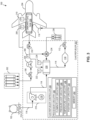
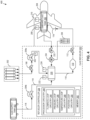
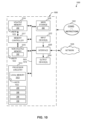
- FIG. 2 illustrates a first example CcH2 refueling system 200 ("system 200") to supply CcH2 fuel to an example vehicle up to the target onboard pressure while also achieving a controlled and/or consistent temperature.
- the example system 200 includes the example LH2 supply tank 102, the example proportional valves 108, the example flowmeter 110, the example refueler valve 112, the example VJ flowlines 114, and the example flexible VJ flowline(s) 116 as illustrated in FIG. 1 . As illustrated in FIG.
- the example system 200 further includes an example CcH2 refueler 202, an example hydrogen aircraft 204, an example onboard CcH2 tank 206, an example first pressure sensor 208, an example first temperature sensor 210, and an example transfer pump 214.
- the example CcH2 refueler 202 of the example system 200 includes an example cryogenic pump 216, an example pump motor 218, an example mixing tank 220, an example second pressure sensor 222, an example second temperature sensor 224, an example vaporizer 228, an example check valve 230, an example defueler valve 232, an example split valve 234, example hydrogen containers 236, an example CcH2 refueler controller 238, example processor circuitry 240, example memory 242, example flowrate loop circuitry 244, example pressure loop circuitry 246, example temperature loop circuitry 248, and example position loop circuitry 250.
- VJ flowlines 114 a portion of the flowlines are labeled as VJ flowlines 114. However, some or all of the flowlines illustrated in the figures disclosed herein may be the VJ flowlines 114, except ones labeled as the flexible VJ flowline 116.
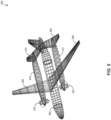
- the example system 200 illustrated in FIG. 2 includes the example hydrogen aircraft 204 as the vehicle to be refueled with CcH2 fuel via the example CcH2 refueler 202.
- FIG. 2 depicts the hydrogen aircraft 204, a different vehicle (e.g., a hydrogen-powered car, truck, boat, ship, helicopter, rocket engine, etc.) or standalone CcH2 tank may be refueled with CcH2 fuel via the system 200.
- the hydrogen aircraft 204 is to be refueled after a flight in which a portion of the CcH2 fuel (e.g., some, all, a majority of, etc.) has been used to provide energy to the hydrogen aircraft 204.
- a portion of unused CcH2 fuel may be included in the aircraft 204, and the example CcH2 refueler 202 can defuel the aircraft 204 prior to the refueling process.
- the example hydrogen aircraft 204 includes fuel lines, pumps, valves, etc. to supply the fuel to hydrogen engine(s). Once at the engine(s), combustor(s) can oxidize and burn the hydrogen fuel, which causes an exothermic reaction, provides energy to the turbines, and generates thrust.
- the example system 200 illustrated in FIG. 2 includes the example onboard CcH2 tank 206 to store the CcH2 fuel on the hydrogen aircraft 204.
- the example onboard CcH2 tank 206 can store CcH2 at pressures higher than the pressure limits of LH2 tanks (e.g., the LH2 supply tank 102 and the onboard LH2 tank 106 of FIG. 1 ).
- LH2 tanks e.g., the LH2 supply tank 102 and the onboard LH2 tank 106 of FIG. 1
- the onboard CcH2 tank 206 stores CcH2 at pressures ranging from 100 bar to 350 bar with a factor of safety (e.g., 1.5, 3, 10, etc.) included.
- the example onboard LH2 tank 106 can store LH2 at saturated pressures ranging from one bar to ten bar with the same or a similar factor of safety.
- the CcH2 inside the example onboard CcH2 tank 206 does not experience boil-off like the LH2 inside LH2 storage tanks (e.g., the LH2 supply tank 102 and the onboard LH2 tank 106 of FIG. 1 ) because the example onboard CcH2 tank 206 includes supercritical CcH2. Therefore, instead of including a venting mechanism, the example onboard CcH2 tank 206 can release CcH2 fuel into a fuel supply system to control internal pressure of the onboard CcH2 tank 206.
- the CcH2 fuel can be driven through the fuel supply system and components (e.g., heat exchangers, compressors, buffer tanks, etc.) via the internal pressure (e.g., 100 bar to 350 bar) of the onboard CcH2 tank 206 alone, without reliance on an onboard LH2 pump.
- the internal pressure e.g., 100 bar to 350 bar
- the onboard CcH2 tank 206 releases CcH2
- the internal temperature can increase due to thermal losses, which can be desirable for maintaining a constant pressure of the onboard CcH2 tank 206 (e.g., isobaric) as the CcH2 fuel is released.
- the onboard CcH2 tank 206 includes a heater to further increase the internal temperature and, in turn, keep the internal pressure constant.
- the onboard CcH2 tank 206 can store CcH2 at a density similar to the density of LH2 in the example onboard LH2 tank 106, but at different pressures and temperatures.
- the onboard CcH2 tank 206 stores CcH2 at a density of 64.2 kg/m 3 at a pressure of 300 bar and a temperature of 70 K, while the onboard LH2 tank 106 stores the LH2 at the same density but at a saturated pressure of 3.4 bar and a temperature of 25 K.
- the onboard CcH2 tank 206 is a dual wall cryostat including an inner cryovessel and an outer vacuum vessel.
- the example cryovessel of the onboard CcH2 tank 206 includes a thicker wall than that of the example onboard LH2 tank 106, but the example vacuum vessel of the onboard CcH2 tank 206 is of the same wall thickness as that of the onboard LH2 tank 106 because the vacuum vessels of the two tanks 106, 206 are designed for the same pressure differential (e.g., 0.5 atmosphere(atm), 0.25 atm, 1 atm, etc.).
- both the cryovessel and the vacuum vessel of the onboard CcH2 tank 206 are type-3 vessels, which include an aluminum liner fully wrapped with a fiber-resin composite.
- the example system 200 illustrated in FIG. 2 includes the example first pressure sensor 208 and the example first temperature sensor 210 to monitor the pressure and temperature of the CcH2 inside the onboard CcH2 tank 206 during the refueling process.
- the first pressure sensor 208 is a cryogenic pressure transducer that can operate in temperatures ranging from 40 K to 70 K and pressures ranging from 0 bar to 415 bar.
- the example first temperature sensor 210 can be a cryogenic silicon sensor, a silicon diode, a sheathed thermocouple, platinum resistance sensor, cryogenic temperature monitor, etc.
- more than one first pressure sensor 208 and/or more than one first temperature sensor 210 are included in the onboard CcH2 tank 206.
- the example first pressure sensor 208 and the example first temperature sensor 210 are coupled to the CcH2 refueler 202 via a wired or wireless connection to transmit current pressure and temperature measurements of the CcH2 stored in the onboard CcH2 tank 206. Further details on how the example CcH2 refueler 202 uses the pressure and temperature measurements are described below.
- the example system 200 illustrated in FIG. 2 includes the example transfer pump 214 to transmit LH2 from the example LH2 supply tank 102 to the example CcH2 refueler 202.
- the LH2 supply tank 102 can include LH2 at pressures slightly above atmospheric pressure (e.g., three bar, four bar, five bar, etc.).
- the example transfer pump 214 can increase the pressure of the LH2 (e.g., to four bar, five bar, six bar, etc.) to drive the LH2 downstream to the example cryogenic pump 216.
- the example transfer pump 214 as illustrated in FIG. 2 is a submerged cryogenic pump within the LH2 supply tank 102. In some examples, the transfer pump 214 is externally connected to the LH2 supply tank 102.
- the example transfer pump 214 can be an electronically and/or hydraulically driven cryogenic centrifugal pump.
- the transfer pump 214 provides variable flow speeds of LH2 via a control panel on the LH2 supply tank 102.
- the transfer pump 214 includes a gearbox that provides fixed or variable flow speeds of LH2 to the CcH2 refueler 202.
- the example system 200 illustrated in FIG. 2 includes the example CcH2 refueler 202 to refuel the example onboard CcH2 tank 206 with CcH2 up to a target pressure while simultaneously maintaining a target temperature.
- the example CcH2 refueler 202 monitors a first temperature in the onboard CcH2 tank 206 and regulates a second temperature in the mixing tank 220 based on the first temperature.
- the CcH2 refueler 202 sends sH2 to the mixing tank 220 to control the temperature of the CcH2 in the mixing tank 220 and, by extension, the temperature of the CcH2 in the onboard CcH2 tank 206.
- the example system 200 illustrated in FIG. 2 includes the example cryogenic pump 216 to cryogenically compress the LH2 from the LH2 supply tank 102 and to drive CcH2 to the mixing tank 220 and the proportional valve 108.
- the cryogenic pump 216 includes a suction adapter, a cold end piston, and the example pump motor 218.
- An intake line is connected to the transfer pump 214 to transport LH2 into the suction adapter of cryogenic pump 216. In the suction adapter, the LH2 temperature rises and a portion of the LH2 evaporates into GH2.
- the example cryogenic pump 216 further includes a return line leading from the suction adapter back to the LH2 supply tank 102 to recycle the GH2 and to ensure there is always a net positive suction head (NPSH) in the cryogenic pump 216.
- the NPSH facilitates pressure-driven flow of LH2 into the cryogenic pump 216 and allows the pump motor 218 to freely adjust the rate and amount of CcH2 leaving the cryogenic pump 216.
- the example cryogenic pump 216 includes the cold end piston to compress the LH2 from an input pressure (e.g., one bar to ten bar) to an output pressure (e.g., 100 bar to 350 bar) at cryogenic temperatures (e.g., 25 K, 30 K, 40 K, etc.).
- one cold end piston is used in the cryogenic pump 216 to vary the output pressure (e.g., between 100 bar and 350 bar).
- multiple cold end pistons are included in the cryogenic pump 216 and are used in series to vary the output pressure.
- CcH2 the fuel leaving the cryogenic pump 216
- the example output CcH2 has a similar temperature (e.g., within 10 K, 20 K, 30 K, etc.) and a similar density (e.g., within 10 kg/m 3 , 20 kg/m 3 , 20 kg/m 3 , 45 kg/m 3 , etc.) as the input LH2.
- a similar temperature e.g., within 10 K, 20 K, 30 K, etc.
- a similar density e.g., within 10 kg/m 3 , 20 kg/m 3 , 20 kg/m 3 , 45 kg/m 3 , etc.
- the example system 200 illustrated in FIG. 2 includes the example motor 218 to accelerate the CcH2 out of the cryogenic pump 216 and to adjust the flowrate of the CcH2 through the system 200.
- the example flowmeter 110 can measure the volumetric flowrate and/or the mass flowrate of the CcH2 through the system 200.
- the system 200 is to refuel the onboard CcH2 tank 206 in a timeframe threshold (e.g., 30 minutes, 45 minutes, one hour, etc.).
- the pump motor 218 is to refuel the onboard CcH2 tank 206 at a desired volumetric flowrate of at least 0.011 cubic meters per second (m 3 /s).
- the CcH2 refueler controller 238 detects, via the flowmeter 110, when the CcH2 is flowing at a rate less than the desired flowrate. In response, the example CcH2 refueler controller 238 sends a signal to the pump motor 218 to increase the operational speed of the motor and, in turn, the flowrate of the CcH2.
- the example system 200 illustrated in FIG. 2 includes the example mixing tank 220 to combine the CcH2 with varying quantities of the sH2 to adjust the temperature of the CcH2 in the onboard CcH2 tank 206.
- the example mixing tank 220 is a cryo-compressed tank with a same or a similar structural design as that of the onboard CcH2 tank 206 described previously.
- the mixing tank 220 has a smaller internal volume than the onboard CcH2 tank 206 (e.g., 5 m 3 , 10 m 3 , 15 m 3 , etc.).
- the pressure inside the example mixing tank 220 adjusts according to the pressure output of the cryogenic pump 216 and is typically held at pressures slightly higher (e.g., one bar, two bar, etc.) than pressures within the onboard CcH2 tank 206.
- positive pressure drives the flow of CcH2 from the mixing tank 220 downstream to the onboard CcH2 tank 206.
- the example system 200 illustrated in FIG. 2 includes the example second pressure sensor 222 and the example second temperature sensor 224 to send pressure and temperature measurements to the CcH2 refueler controller 238 (described in greater detail below) via electrical signals.
- the temperature sensor 224 sends a temperature reading to the CcH2 refueler controller 238 indicating that the temperature of the CcH2 in the mixing tank 220 is below a temperature threshold (e.g., 40 K)
- a temperature threshold e.g. 40 K
- the CcH2 refueler controller 238 increases the flow of sH2 into the mixing tank 220, thus increasing the temperature of the CcH2 in the mixing tank 220 and the onboard CcH2 tank 206.
- the example second pressure sensor 222 and the example second temperature sensor 224 can be of a same or similar type as the first pressure sensor 208 and the first temperature sensor 210 described previously.
- the example system 200 illustrated in FIG. 2 includes the vaporizer 228 to warm the CcH2 to high-pressure sH2, which is mixed with the CcH2 in the mixing tank 220.
- the example vaporizer 228 can be a cryogenic vaporizer that uses fins to transfer heat from surrounding ambient air to the CcH2 flowing from the proportional valve 108.
- the pressure of the sH2 remains substantially the same due to the high density of CcH2 (e.g., 62 kg/m 3 or greater).
- the hydrogen leaving the example vaporizer 228 is in the same supercritical state as the upstream CcH2 but is no longer at cryogenic temperatures.
- the hydrogen downstream of the vaporizer 228 and upstream of the mixing tank 220 is referred to as supercritical hydrogen (sH2).
- sH2 supercritical hydrogen
- the sH2 downstream of the vaporizer 228 is the same pressure as the CcH2 upstream of the vaporizer 228 and in the mixing tank 220.
- the sH2 can flow freely to the mixing tank 220 and combine with the CcH2.
- the temperature of the CcH2 downstream of the vaporizer 228 can increase over time. During that time, pressures within the CcH2 refueler 202 and downstream of the cryogenic pump 216 can increase. Additionally or alternatively, during the refueling process, CcH2 can build up and/or solidify in the vaporizer 228 creating a blockage of flow (e.g., an ice block) and an increase of pressure upstream of the vaporizer 228.
- the example system 200 includes the example check valve 230 to prevent the pressure directly downstream of the cryogenic pump 216 from exceeding a pressure threshold.
- the cryogenic pump 220 has to provide a startup output pressure of at least 50 bar to drive the flow downstream. This can cause the flow to reverse upon startup, which can damage the cryogenic pump 216 or cause the CcH2 to flow upstream into the LH2 supply tank 102.
- the example check valve 230 allows the CcH2 fluid to flow in a first direction (e.g., from the proportional valve 108 to the vaporizer 228) but not in a second direction, opposite from the first direction.
- the check valve 230 includes a body, an inlet port, and an outlet port and works automatically without the CcH2 refueler controller 238 operating the check valve 230 or causing a mechanism in the valve to actuate.
- the example check valve 230 can be designed with a reseal pressure specification that prevents a sufficiently significant back pressure from forming.
- the check valve 230 is designed to close off, inhibit, and/or prevent the reversal of CcH2 flow when the pressure differential between the inlet and outlet ports satisfies a differential threshold (e.g., a pressure differential of one bar, 1.5 bar, 0.5 bar, etc.).
- the system 200 is refueling the aircraft 204 after a flight in which a portion (e.g., 95%, 90%, 80%, etc.) of the CcH2 fuel has been used.
- the example onboard CcH2 tank 206 is isobaric and may deliver the CcH2 fuel to the engines while maintaining a constant pressure. Therefore, the example onboard CcH2 tanks 206 may be above a preliminary pressure threshold prior to the refueling process.
- the preliminary pressure threshold (e.g., 1 bar, 5 bar, 10 bar, etc.) is the pressure that the onboard CcH2 tank 206 is to have before the refueling process can begin.
- the refuel process includes defueling unused CcH2 from the example aircraft 204 to reduce the pressure in the onboard CcH2 tank 206 prior to refueling.
- the example system 200 illustrated in FIG. 2 includes the example defueler valve 232 to release unused CcH2 from the onboard CcH2 tank 206 prior to refueling the aircraft 204.
- the example defueler valve 232 may open in response to a command from the pressure loop circuitry 246 and/or the position loop circuitry 250 based on the onboard pressure not satisfying the preliminary pressure threshold. For example, if the preliminary pressure threshold is 10 bar, and the onboard pressure prior to refueling is 50 bar, then the defueler valve 232 opens to facilitate flow to a lower downstream pressure area (e.g., the mixing tank 220, the hydrogen containers 236, open atmosphere, etc.).
- a lower downstream pressure area e.g., the mixing tank 220, the hydrogen containers 236, open atmosphere, etc.
- the defueler valve 232 is a proportional valve similar to the proportional valve 108 of FIGS. 1 and 2 that allows for variable outlet flowrates given fluctuating inlet pressures, temperatures, densities, etc.
- the defueler valve 232 is a cryogenic valve similar to the refueler valve 112 of FIGS. 1 and 2 that can switch from fully open to fully closed some time (e.g., two times, five times, ten times, etc.) faster than the example proportional valve 108.
- the example system 200 illustrated in FIG. 2 includes the example split valve 234 to direct or divert CcH2 from the onboard CcH2 tank 206 to the mixing tank 220, the hydrogen containers 236, and/or to a secondary destination (e.g., open atmosphere, another hydrogen storage tank, the LH2 supply tank 102, etc.).
- the split valve 234 directs or diverts the CcH2 to the secondary destination when the mixing tank 220 and the hydrogen containers 236 are at a higher pressure than the onboard CcH2 tank 206 and when the pressure of the onboard CcH2 tank 206 is higher than the preliminary pressure threshold.
- the CcH2 refueler 202 is to refuel the example aircraft 204 after landing and/or defueling, at which point the onboard CcH2 tank 206 may contain a small portion of CcH2 (e.g., 10% capacity, 15% capacity, etc.) at high pressures (e.g., 100 bar to 350 bar) and high temperatures (e.g., 350 K, 250 K, etc.).
- the example CcH2 refueler controller 238 determines whether the onboard pressure satisfies the preliminary pressure threshold (e.g., 5 bar, 20 bar, 30 bar, etc.).
- the CcH2 refueler 202 causes the defueler valve 232 to open to a desired flowrate.
- the split valve 234 directs/diverts the CcH2 to the mixing tank 220.
- the split valve 234 directs/diverts the CcH2 from the onboard CcH2 tank 206 to the hydrogen containers 236 and/or another secondary destination (e.g., atmosphere).
- the example hydrogen containers 236 illustrated in FIG. 2 can be at low pressures (e.g., two bar, five bar, etc.) or atmospheric pressures (e.g., 14.7 psi, one bar, etc.) prior to defueling/refueling the example aircraft 204.
- the hydrogen containers 236 are at high enough pressures (e.g., 20 bar, 50 bar, etc.) that a compressor is included to drive the onboard CcH2 into the hydrogen containers 236.
- a compressor is included to drive the onboard CcH2 into the hydrogen containers 236.
- the compressor is located upstream of the hydrogen containers 236 and downstream of the split valve 234.
- the example system 200 illustrated in FIG. 2 includes the CcH2 refueler controller 238 to automatically control and to facilitate operation of the CcH2 refueler 202.
- the CcH2 refueler controller 238 is a closed-loop control system including the processor circuitry 240 and the memory 242.
- the example processor circuitry 240 includes the example flowrate loop circuitry 244, the example pressure loop circuitry 246, the example temperature loop circuitry 248, and the example position loop circuitry 250.
- the example processor circuitry 240 can instantiate (e.g., create an instance of, bring into being for any length of time, materialize, implement, etc.) the CcH2 refueler controller 238 of FIG. 2 .
- the processor circuitry 240 is a central processing unit executing instructions. Additionally or alternatively, the processor circuitry 240 can be an application-specific integrated circuitry (ASIC) or a field-programmable gate array (FPGA) structured to perform operations corresponding to the instructions. It should be understood that some or all of the processor circuitry 240 of FIG. 2 can, thus, be instantiated at the same or different times. Some or all of the processor circuitry 240 can be instantiated, for example, in one or more threads executing concurrently on hardware and/or in series on hardware. Moreover, in some examples, one or more virtual machines and/or containers executing on a microprocessor can implement some or all of the processor circuitry 240 of FIG. 2 .
- ASIC application-specific integrated circuitry
- FPGA field-programmable gate array
- the example flowrate loop circuitry 244, the example pressure loop circuitry 246, the temperature loop circuitry 248, and the position loop circuitry 250 illustrated in FIG. 2 are integrated on the processor circuitry 240. In some examples, the flowrate loop circuitry 244, the pressure loop circuitry 246, the temperature loop circuitry 248, and/or the position loop circuitry 250 are integrated on separate circuitry (e.g., processor circuitry, FPGA, ASIC, microprocessor, etc.).
- the example flowrate loop circuitry 244 illustrated in FIG. 2 causes an adjustment of the flowrate of CcH2 through the system 200 based on an actual flowrate that the example flowmeter 110 measures and a target flowrate that the flowrate loop circuitry 244 determines.
- the CcH2 refueler 202 includes an output device (e.g., a display screen, monitor, headset, etc.) to communicate information (e.g., system status, actual and target onboard pressure, actual and target onboard temperatures, etc.) to a user of the CcH2 refueler 202.
- the CcH2 refueler 202 includes an input device (e.g., a knob, a mouse, a keyboard, a touchscreen, etc.) to receive inputs from the user.
- an example program or application stored in the memory 242 can cause the flowrate loop circuitry 244 to command (e.g., via electrical signals) the pump motor 218 to adjust the operational speed of the pump motor 218.
- the user input indicates a target timespan in which the refueling process is to be conducted.
- the example flowrate loop circuitry 244 can calculate the target flowrate based on the target timespan and the volume of the example onboard CcH2 tank 206. For example, if the onboard CcH2 tank is 15 m 3 , and the target timespan is 20 minutes, then the flowrate loop circuitry 244 determines the target flowrate to be 0.0125 m 3 /s.
- the example flowrate loop circuitry 244 can send a command to the pump motor 218 to increase or decrease the speed of the motor based on the actual and target flowrates.
- the flowrate loop circuitry 244 calculates a flowrate error between the actual and target flowrates and continues to send the command to the pump motor 218 until the flowrate error satisfies a flowrate error threshold (e.g., 0.001 m 3 /s, 0.005 m 3 /s, etc.).
- a flowrate error threshold e.g., 0.001 m 3 /s, 0.005 m 3 /s, etc.
- the flowrate loop circuitry 244 instructs the pump motor 218 to increase the operational speed of the pump motor 218 until the flowrate reaches 0.015 m 3 /s. Additionally or alternatively, the flowrate loop circuitry 244 can continue to send the instructions to the pump motor 218 until the flowrate error satisfies the flowrate error threshold. For example, until the actual flowrate reaches 0.014 m 3 /s or 0.016 m 3 /s, given a flowrate error threshold of 0.001 m 3 /s. In some examples, the flowrate loop circuitry 244 continually receives actual flowrate measurements, determines and/or receives target flowrate, calculates the flowrate error, and sends commands to the pump motor 218 until the flowrate error is sufficiently close to zero.
- the example pressure loop circuitry 246 illustrated in FIG. 2 causes an adjustment of the pressure of CcH2 in the mixing tank 220 and the onboard CcH2 tank 206 based on an actual pressure that the first and/or second pressure sensors 208, 222 measure(s) and the target pressure that the pressure loop circuitry 246 determines.
- the example program and/or application stored in the memory 242 can cause the pressure loop circuitry 246 to command the cryogenic pump 216 to adjust the output pressure of the cryogenic pump 216.
- the machine-readable instructions indicate a target onboard pressure of 100 bar to the pressure loop circuitry 246, and the first pressure sensor 208 indicates an actual onboard pressure measurement of 20 bar to the pressure loop circuitry 246.
- the example pressure loop circuitry 246 can determine an intermediate target pressure (e.g., 22 bar) that is sufficiently higher than the actual pressure but not so high as to cause any catastrophic pressure increases to the system 200 (e.g., a pressure increase that causes a leak, rupture, deformation, etc.). In response to determining the intermediate target pressure, the example pressure loop circuitry 246 can command the cryogenic pump 216 to output a pressure of 22 bar to introduce positive pressure head to the system 200.
- an intermediate target pressure e.g., 22 bar
- the example pressure loop circuitry 246 can command the cryogenic pump 216 to output a pressure of 22 bar to introduce positive pressure head to the system 200.
- the cryogenic pump 216 adjusts actuation of the cold end piston to compress the LH2 into a smaller displacement volume in a cylinder of the cryogenic pump 216 to increase the output pressure (e.g., displacement volume of 200 cubic centimeters (cm 3 ) for a 20 bar output versus displacement volume of 195 cm 3 for a 22 bar output).
- the pressure loop circuitry 246 calculates a pressure error between the actual and intermediate target pressures and continues to send the command to the cryogenic pump 216 until the pressure error satisfies a pressure error threshold (e.g., 0.25 bar, 0.5 bar, 1 bar, etc.).
- the pressure loop circuitry 246 instructs the cryogenic pump 216 to increase the output pressure of the CcH2 until the actual pressure of the mixing tank 220 is 22 bar. Additionally or alternatively, the pressure loop circuitry 246 can continue to send the instructions to the cryogenic pump 216 until the pressure error satisfies the pressure error threshold. For example, until the actual pressure reaches 21.75 bar or 22.25 bar, given a pressure error threshold of 0.25 bar.
- the pressure loop circuitry 246 causes the system to end the refueling process and to shut off the example refueler valve 112 in response to the actual pressure of the onboard CcH2 tank 206 reaching the target pressure and/or increasing to a value sufficiently close to the target pressure (e.g., 99 bar, 99.5 bar, 101 bar, etc.). In some examples, the pressure loop circuitry 246 continually receives actual pressure measurements, determines and/or receives target pressures and/or intermediate target pressures, calculates the pressure error, and sends commands to the cryogenic pump 216 until the pressure error is sufficiently close to zero.
- the example temperature loop circuitry 248 illustrated in FIG. 2 causes an adjustment of the temperature of CcH2 in the mixing tank 220 and the onboard CcH2 tank 206 based on an actual temperature that the first and/or second temperature sensors 210, 224 measure(s) and a target temperature that the temperature loop circuitry 248 determines.
- the example program and/or application stored in the memory 242 can cause the temperature loop circuitry 248 to command the proportional valve 108 to adjust the flowrate of the CcH2 through the vaporizer 228.
- the user input(s) indicate(s) a target onboard temperature of 40 K to the temperature loop circuitry 248, and the first temperature sensor 210 indicates an actual onboard temperature measurement of 35 K to the temperature loop circuitry 248.
- the example temperature loop circuitry 248 sends a command to the proportional valve 108 to increase the flowrate of the CcH2 into the vaporizer 228 until the actual temperature reaches 40 K.
- the temperature loop circuitry 248 calculates a temperature error between the actual and target temperature and continues to send the command to the proportional valve 108 until the temperature error satisfies a temperature error threshold (e.g., 0.1 K, 0.2 K, 0.5 K, etc.). In some examples, the temperature loop circuitry 248 continues to send the instructions to the proportional valve 108 until the temperature error satisfies the temperature error threshold. For example, until the actual temperature reaches 39.9 K or 40.1 K, given a temperature error threshold of 0.1 K. In some examples, the temperature loop circuitry 248 continually receives actual temperature measurements, determines and/or receives target temperature(s), calculates the temperature error, and sends commands to the proportional valve 108 until the temperature error is sufficiently close to zero.
- a temperature error threshold e.g., 0.1 K, 0.2 K, 0.5 K, etc.
- the temperature loop circuitry 248 continues to send the instructions to the proportional valve 108 until the temperature error satisfies the temperature error threshold. For example
- the example position loop circuitry 250 illustrated in FIG. 2 causes actuation of the cryogenic pump 216, the pump motor 218, the proportional valve 108, the refueler valve 112, the defueler valve 232, and/or the split valve 234 based on command(s) from the flowrate loop circuitry 244, the pressure loop circuitry 246, and/or the temperature loop circuitry 248.
- the position loop circuitry 250 detects an actual position (e.g., valve piston displacement) or operational state (e.g., motor speed) and determines a target position or operational state.
- the temperature loop circuitry 248 instructs the proportional valve 108 to increase the CcH2 flow through the vaporizer 228.
- the position loop circuitry 250 detects the actual position (e.g., 1 cm displacement from a calibrated zero position) of a valve member (e.g., piston, spool, plug, etc.) within the proportional valve 108 and determine the target position (e.g., 5 cm displacement) of the valve member based on the actual position, the actual temperature, and the target temperature.
- the example position loop circuitry 250 commands the proportional valve 108 to actuate the valve member until the actual position reaches 5 cm displacement.
- the position loop circuitry 250 calculates a position error between the actual and target positions and continues to send the command to the proportional valve 108 to actuate the valve member until the position error satisfies a position error threshold (e.g., 0.01 cm, 0.05 cm, 0.1 cm, etc.). In some examples, the position loop circuitry 250 continues to send the instructions to the proportional valve 108 until the position error satisfies the position error threshold. For example, until the actual position reaches 4.95 cm or 5.05 cm, given the position error threshold of 0.05 cm.
- a position error threshold e.g. 0.01 cm, 0.05 cm, 0.1 cm, etc.
- the position loop circuitry 250 continually and/or simultaneously receives actual position(s), determines and/or receives target position(s), calculates the position error(s), and sends commands to the cryogenic pump 216, the pump motor 218, the proportional valve 108, the refueler valve 112, the defueler valve 232, and/or the split valve 234 until the position error is sufficiently close to zero.
- FIG. 3 illustrates a second example CcH2 refueling system 300 ("system 300") to supply CcH2 fuel to the example aircraft 204 up to the target pressure of the onboard CcH2 tank 206 while achieving a controlled and/or consistent temperature.
- the example system 300 includes the example LH2 supply tank 102, the example first proportional valve 108, the example flowmeter 110, the example refueler valve 112, the example VJ flowlines 114, and the example flexible VJ flowline(s) 116 as illustrated in FIGS. 1 and 2 .
- the example system 300 further includes the example CcH2 refueler 202, the example hydrogen aircraft 204, the example onboard CcH2 tank 206, the example first pressure sensor 208, the example first temperature sensor 210, the example transfer pump 214, the example cryogenic pump 216, the example pump motor 218, the example mixing tank 220, the example second pressure sensor 222, the example second temperature sensor 224, the example defueler valve 232, the example split valve 234, the example hydrogen containers 236, the example CcH2 refueler controller 238, the example processor circuitry 240, the example memory 242, the example flowrate loop circuitry 244, the example pressure loop circuitry 246, the example temperature loop circuitry 248, and the example position loop circuitry 250 as illustrated in FIG. 2 .
- FIG. 2 As illustrated in FIG.
- the example system 300 includes example hydrogen storage tanks 302, an example regulator valve 304, and an example third pressure sensor 306.
- the example system 300 illustrated in FIG. 3 adjusts flow of sH2 into the mixing tank 220 to control the temperature of the CcH2 in the mixing tank 220 and the onboard CcH2 tank 206.
- the system 300 uses highly compressed (e.g., 20 bar or greater) sH2 in the example hydrogen storage tanks 302 as the sH2 source.
- the example system 300 illustrated in FIG. 3 includes the hydrogen storage tanks 302 to supply the mixing tank 220 with sH2 and to provide an adjustment to the temperature of the CcH2 in the mixing tank 220 and in the onboard CcH2 tank 206.
- the example hydrogen storage tanks 302 can be of a same or a similar design and/or structure as the example hydrogen containers 236. However, the example hydrogen storage tanks 302 are preloaded with sH2 compressed up to a pressure (e.g., 200 bar, 300 bar, 500 bar, etc.) at non-cryogenic temperatures (e.g., 125 K, 150 K, 200 K, etc.). In some examples, the hydrogen storage tanks 302 illustrated in FIG.
- the example system 300 includes a pump and/or compressor downstream of the proportional valve 108 and upstream of the mixing tank 220. Although four hydrogen storage tanks 302 are illustrated in FIG. 3 , one or more hydrogen storage tanks 302 may be included in the example system 300.
- the example system 300 illustrated in FIG. 3 includes the regulator valve 304 to set the pressure of the sH2 leaving the proportional valve 108 equal to or sufficiently close to the pressure of the mixing tank 220.
- the regulator valve 304 is pressure reducing regulator that reduces an input pressure (e.g., 100 bar) to a lower output pressure (e.g., 20 bar) despite fluctuations in the input pressure (e.g., pressure reductions from 100 bar to 90 bar).
- an input pressure e.g., 100 bar
- a lower output pressure e.g. 20 bar
- the output pressure of the proportional valve 108 decreases, but the regulator valve 304 is still able to provide a consistent output pressure to the mixing tank 220.
- the example pressure loop circuitry 246 and the example position loop circuitry 250 control the example regulator valve 304.
- the temperature loop circuitry 248 determines that the actual onboard temperature is less than the target temperature and causes the proportional valve 108 to increase the flowrate of sH2 to the mixing tank 220.
- the example pressure loop circuitry 246 can read the actual pressure in the mixing tank 220 from the second pressure sensor 222 and command the regulator valve 304 to set an output pressure to match or come sufficiently close to (e.g., within 0.1 bar, 0.2 bar, 0.5 bar, etc. of) the actual pressure of the mixing tank 220.
- the example system 300 illustrated in FIG. 3 includes the example third pressure sensor 306 to detect the output pressure of the regulator valve 304.
- the pressure loop circuitry 246 obtains the actual pressure of the mixing tank 220 from the second pressure sensor 222 and the output pressure of the regulator valve 304 from the third pressure sensor 306.
- the example pressure loop circuitry 246 can command the regulator valve 304 to adjust the output pressure to match the actual pressure of the mixing tank 220.
- the pressure loop circuitry 246 can calculate a regulator error as a difference between the actual pressure of the mixing tank 220 and the output pressure of the regulator valve 304 and can continue to instruct the regulator valve 304 to adjust the output pressure until the regulator error is sufficiently close to zero (e.g., 0.05 bar, 0.1 bar, 0.2 bar, etc.).
- the position loop circuitry 250 detects an actual position of a valve member in the regulator valve 304 that facilitates the output pressure.
- the example position loop circuitry 250 can also determine a target position of the valve member based on the output pressure of the regulator valve 304 and the actual pressure of the mixing tank 220.
- the position loop circuitry 250 causes the regulator valve 304 to actuate the valve member until the actual position matches the target position, until a positional error is sufficiently close to zero, or until the pressure loop circuitry 246 determines that the pressure error is sufficiently close to zero, as described previously.
- FIG. 4 illustrates a third example CcH2 refueling system 400 ("system 400") to supply CcH2 fuel to the example hydrogen aircraft 204 up to the target pressure of the example onboard CcH2 tank 206 at a controlled and/or consistent temperature.
- the example system 400 includes the example LH2 supply tank 102, the example proportional valve 108, the example flowmeter 110, the example refueler valve 112, the example VJ flowlines 114, and the example flexible VJ flowline(s) 116 as illustrated in FIGS. 1-3 .
- the example system 400 further includes the example CcH2 refueler 202, the example hydrogen aircraft 204, the example onboard CcH2 tank 206, the example first pressure sensor 208, the example first temperature sensor 210, the example transfer pump 214, the example mixing tank 220, the example second pressure sensor 222, the example second temperature sensor 224, the example split valve 234, the example defueler valve 232, the example hydrogen containers 236, the example CcH2 refueler controller 238, the example processor circuitry 240, the example memory 242, the example flowrate loop circuitry 244, the example pressure loop circuitry 246, the example temperature loop circuitry 248, the example position loop circuitry 250, the example hydrogen storage tanks 302, and the example third pressure sensor 306 as illustrated in FIGS. 2 and/or 3.
- the example system 400 includes an example CcH2 supply tanks 402, a first regulator valve 304a, and a second regulator valve 304b.
- the example first regulator valve 304a and the example second regulator valve 304b are of the same type and functionality as the example regulator valve 304 illustrated in FIG. 3 .
- the example systems 200 and 300 illustrated in FIGS. 2 and 3 include the LH2 supply tank 102, the transfer pump 214, and the cryogenic pump 216 to serve as a source of CcH2.
- the example system 400 includes the CcH2 supply tank 402 and the second regulator valve 304b to serve as the CcH2 source.
- the example system 400 illustrated in FIG. 4 includes the example CcH2 supply tank 402 to provide CcH2 fuel to the system 400 for the refueling process.
- the CcH2 supply tank 402 is of a same or a similar design, structure, and/or functionality as the onboard CcH2 tank 206. Similar to the example LH2 supply tank 102 of FIGS. 1-3 , the example CcH2 supply tank 402 can be a mobile tank capable of being transported to the example CcH2 refueler 202 and the example aircraft 204 via a truck, trailer, bus, etc.
- the example CcH2 supply tank 402 allows for reduced complication of the system 400 with respect to the example systems 200 and/or 300 due to the elimination of the cryogenic pump 216 and the pump motor 218.
- the example CcH2 supply tank 402 may not be available at the time of the refueling process, for example when the CcH2 supply tank 402 is empty or when the cost to provide the CcH2 supply tank 402 to the CcH2 refueler 202 is too great for a given refueling budget.
- the example system 400 illustrated in FIG. 4 includes the example second pressure regulator 304b to adjust an output pressure of the CcH2 supply tank 402.
- the second pressure regulator 304b adjusts the output pressure based on the actual pressure of the mixing tank 220 and/or the onboard CcH2 tank 206 and based on the target pressure and/or the intermediate target pressure, as mentioned previously.
- the pressure loop circuitry 246 determines an intermediate target pressure of 22 bar
- the second pressure sensor 222 detects an actual pressure of 20 bar.
- the example pressure loop circuitry 246 can command the second regulator valve 304b to increase the output pressure until the actual pressure reached 22 bar or until a pressure error (e.g., that the pressure loop circuitry 246 calculates) is sufficiently close to zero (e.g., 0.01 bar, 0.05 bar, 0.1 bar, etc.), as described previously.
- a pressure error e.g., that the pressure loop circuitry 246 calculates
- FIG. 5 illustrates an example hydrogen aircraft 500 to be refueled with CcH2 fuel.
- the example hydrogen aircraft 500 includes a fuselage 502, a first (e.g., left) wing 504, a second (e.g., right) wing 506, a first horizontal stabilizer 508, a second horizontal stabilizer 510, a first CcH2 tank 512, a second CcH2 tank 514, a first engine 516, and a second engine 518.
- the example hydrogen aircraft 500 can be a military aircraft or a commercial aircraft that stores CcH2 onboard as a fuel source for the first engine 516, the second engine 518, and/or additional or alternative engine(s) not shown in FIG. 5 .
- the example systems 200, 300, and/or 400 of FIGS. 2-4 can be used to refuel the first and/or second CcH2 tanks 512, 514 of the hydrogen aircraft 500.
- the first CcH2 tank 512 and/or the second CcH2 tank 514 are removable and replaceable and are refueled while attached and/or detached from the hydrogen aircraft 500.
- the example hydrogen aircraft 500 illustrated in FIG. 5 includes the example fuselage 502 to hold cargo, passengers, landing gear, etc. while in flight.
- the example fuselage 502 can be designed with a truss framework, a monocoque construction, and/or a semi-monocoque construction to provide structural integrity to the aircraft during takeoff, landing, or in flight.
- the fuselage 502 also includes a wing box to attach the first and second wings 504, 506 to the hydrogen aircraft 500.
- the example hydrogen aircraft 500 illustrated in FIG. 5 includes the example first and second wings 504, 506 to provide lift to the hydrogen aircraft 500.
- the example first and second wings 504, 506 illustrated in FIG. 5 are swept back from root to tip.
- the first and second wings 504, 506 are swept forward, straight sideways, or delta wings depending on the function, intended range, intended endurance, and/or intended velocity of the hydrogen aircraft 500.
- the first and second wings 504, 506 include latching mechanisms that secure the example first and second CcH2 tanks 512, 514 to the hydrogen aircraft 500.
- the first and second wings 504, 506 include male or female component(s) of latching mechanism(s) (e.g., a two-stage rotary latch, a magnetic latch, a cam latch, a cam lock, etc.).
- the example hydrogen aircraft 500 illustrated in FIG. 5 includes the example first and second horizontal stabilizers 508, 510 to provide longitudinal stability and control of the hydrogen aircraft 500.
- the example first horizontal stabilizer 508 is a first set of tail wings with one or more airfoil profiles in a swept back configuration.
- the example second horizontal stabilizer 510 is a second set of tail wings with the same airfoil profile(s) and swept back to the same degree.
- the hydrogen aircraft 500 includes one horizontal stabilizer with a single set of tail wings instead of two horizontal stabilizers as shown in FIG. 5 .
- the first and second horizontal stabilizers 508, 510 include latching mechanisms that secure the example first and second CcH2 tanks 512, 514 to the hydrogen aircraft 500.
- the first and second horizontal stabilizers 508, 510 include male or female component(s) of the latching mechanism(s) previously mentioned.
- the example hydrogen aircraft 500 illustrated in FIG. 5 includes the example first and second CcH2 tanks 512, 514 to store the CcH2 fuel onboard the hydrogen aircraft 500.
- the first and/or second CcH2 tanks 512, 514 are drop tanks capable of being secured to and removed from the first and second wings 504, 506 and the first and second horizontal stabilizers 508, 510 via male and/or female components of the latching mechanism(s).
- the first and/or second CcH2 tanks 512, 514 are removed when the CcH2 fuel capacity is at a low enough capacity (e.g., 5%, 7%, 10% capacity, etc.) and replaced with replenished CcH2 tanks of the same type and/or design as the first and second CcH2 tanks 512, 514.
- the first and second CcH2 tanks 512, 514 are not removable except via disassembly that may compromise the structural integrity, aerodynamic capability, controllability, weight distribution, performance, lifespan, etc., of the hydrogen aircraft 500.
- the example hydrogen aircraft 500 illustrated in FIG. 5 includes the example first and second engines 516, 518 to provide thrust to the hydrogen aircraft 500.
- the example first and second engines 516, 518 illustrated in FIG. 5 are included in the structural framework of the example first and second onboard CcH2 tanks 512, 514.
- the example first and second engines 516, 518 are separate from the first and second onboard CcH2 tanks 512, 514, mounted on the first and second wings 504, 506, and are not removable from the hydrogen aircraft 500 except via disassembly.
- the example first and second engines 516, 518 illustrated in FIG. 5 are propeller engines with fixed pitch, constant speed, or ground adjustable propellers.
- the first and second engines 516, 518 are turboprop, turbofan, or turbojet engines attached to the first and second onboard CcH2 tanks 512, 514 or the first and second wings 504, 506.
- FIG. 6 is a chart 600 illustrating thermodynamic properties of LH2.
- the example chart 600 includes a first thermodynamic relationship 602 of LH2 to represent density (kg/m 3 ) as a function of temperature (K) and a second thermodynamic relationship 604 of LH2 to represent saturated pressure (pounds per square inch (psi)) as a function of temperature (K).
- the thermodynamic relationships 602, 604 of LH2 shown in FIG. 6 can be used to determine the mass of LH2 refueled to the onboard LH2 tank 106 and a target temperature and saturated pressure of the onboard LH2 tank 106 of FIG. 1 .
- the example FIG. 6 is included herein to exemplify the temperature and saturated pressure ranges of LH2 in contrast to those of CcH2, described below.
- FIG. 7 is a chart 700 illustrating thermodynamic properties of CcH2.
- the example chart 700 includes a first thermodynamic relationship 702 of CcH2 to represent density (kg/m 3 ) as a function of pressure (bar) at a temperature of 40 K and a second thermodynamic relationship 704 of CcH2 to represent density (kg/m 3 ) as a function of pressure (bar) at a temperature of 70 K.
- the example chart 700 also includes a reference line 706 to demonstrate the effect of temperature has on the density of CcH2.
- CcH2 at a temperature of 70 K and a pressure of 280 bar has a density of 62 kg/m 3
- CcH2 at 40 K and a pressure of 100 bar also has a density of 62 kg/m 3
- the onboard CcH2 tank 206 has an internal volume of 20 m 3
- the aircraft 204 relies on 1200 kg of CcH2 fuel for an intended flight
- the example onboard CcH2 tank 206 can be designed with an internal pressure limit of 100 bar.
- the example CcH2 tank 206 can be designed with an internal pressure limit of 280 bar.
- the example onboard CcH2 tank 206 includes more material (e.g., aluminum, steel, carbon fiber, etc.) to structurally facilitate containment of the potentially higher pressures.
- the example aircraft 204 saves a significant amount of weight that may be allocated to other resources (e.g., carrying more cargo, passengers, better performance, longer range, etc.).
- the example CcH2 refueling systems 200, 300, and/or 400 of FIGS. 2-4 are utilized to allow the example hydrogen aircraft 204 of FIG. 2 , the example hydrogen aircraft 500 of FIG. 5 , and/or another hydrogen vehicle (e.g., car, truck, bus, ship, etc.) to refuel the CcH2 at a precise temperature based on the pressure limits (e.g., 100 bar) of an onboard CcH2 tank (e.g., onboard CcH2 tank 206, the first CcH2 tank 512, the second CcH2 tank 514, etc.).
- an onboard CcH2 tank e.g., onboard CcH2 tank 206, the first CcH2 tank 512, the second CcH2 tank 514, etc.
- FIG. 8 is a flow diagram illustrating an example process/operation 800 of the CcH2 refueler controller 238 to control operation of the CcH2 refueling systems 200, 300, 400 as disclosed herein. While the example process/operation 800 is described with primary reference to refueling the example onboard CcH2 tank 206 of the example aircraft 204, the process/operation 800 can be used to refuel another CcH2 tank (e.g., the first and/or second CcH2 tanks 512, 514) that may be onboard another hydrogen-powered vehicle, or a standalone CcH2 tank not to be onboard a hydrogen-powered vehicle.
- another CcH2 tank e.g., the first and/or second CcH2 tanks 512, 514
- the CcH2 refueler controller 238 determines whether an onboard pressure in the onboard CcH2 tank 206 satisfies a preliminary pressure threshold. For example, the pressure loop circuitry 246 requests an onboard pressure measurement from a first pressure sensor 208. When the pressure loop circuitry 246 determines that the onboard pressure does satisfy the preliminary pressure threshold (e.g., if the onboard pressure is below 10 bar), then the process/operation 800 proceeds to block 814.
- the preliminary pressure threshold e.g., if the onboard pressure is below 10 bar
- the process/operation 800 proceeds to block 804, where the CcH2 refueler controller 238 opens a defueler valve 232.
- the position loop circuitry 250 sends a signal to an electronically-actuated valve mechanism of the defueler valve 232 that causes flow of the CcH2 in the onboard CcH2 tank 206 to flow to the split valve 234.
- the CcH2 refueler controller 238 determines whether a pressure of the mixing tank 220 is less than the onboard pressure of the onboard CcH2 tank 206.
- the pressure loop circuitry 246 continually monitors the onboard pressure via the first pressure sensor 208 and the pressure of the mixing tank 220 via the second pressure sensor 222 and calculates a difference between the two.
- the pressure loop circuitry 246 can determine that the condition of block 806 is satisfied when the onboard pressure minus the pressure of the mixing tank 220 is a negative value.
- the process/operation 800 proceeds to block 810.
- the process/operation 800 proceeds to block 808, where the CcH2 refueler controller 238 causes the split valve 234 to direct the CcH2 flow from the onboard CcH2 tank 206 to the mixing tank 220.
- the position loop circuitry 250 detects an actual position of a valve mechanism of the split valve 234 and instructs the valve mechanism to actuate to target position that achieves directional flow to the mixing tank 220.
- the CcH2 refueler controller 238 causes the split valve 234 to direct the CcH2 flow from the onboard CcH2 tank 206 to the hydrogen containers 236 or a secondary destination, such as atmosphere.
- the position loop circuitry 250 detects the actual position of the valve mechanism of the split valve 234 and instructs the valve mechanism to actuate to target position that achieves directional flow to the hydrogen containers 236.
- the CcH2 refueler controller 238 determines whether the onboard pressure satisfies the preliminary pressure threshold. For example, the pressure loop circuitry 246 reads the onboard pressure measurement from the first pressure sensor 208 and determines if the onboard pressure is less than the predetermined preliminary pressure threshold. When the pressure loop circuitry 246 determines that the onboard pressure does not satisfy the preliminary pressure threshold, then the process/operation 800 returns to block 806.
- the process/operation 800 proceeds to block 814, where the CcH2 refueler controller 238 causes the refueler valve 112 to open.
- the position loop circuitry 250 sends instruction(s) to a valve mechanism of the refueler valve 112 to fully open and permit flow of the CcH2 fuel to the onboard CcH2 tank 206.
- the example CcH2 refueler 202 facilitates refueling of the onboard CcH2 tank 206 as described in further detail in reference to an example process/operation 900 of FIG. 9 .
- process/operation 800 proceeds to block 818, where the CcH2 refueler controller 238 causes the refueler valve 112 to close.
- the position loop circuitry 250 instructs the valve mechanism of the refueler valve 112 to fully shut off the flow, at which point the process/operation 800 ends.
- FIG. 9 is a flow diagram illustrating the example process/operation 900 of the CcH2 refueler controller 238 to refuel the onboard CcH2 tank 206 via the CcH2 refueler 202. While the example process/operation 900 is described with primary reference to refueling the example onboard CcH2 tank 206 of the example aircraft 204, the process/operation 900 can be used to refuel another CcH2 tank (e.g., the first and/or second CcH2 tanks 512, 514) that may be onboard another hydrogen-powered vehicle, or a standalone CcH2 tank not to be onboard a hydrogen-powered vehicle.
- another CcH2 tank e.g., the first and/or second CcH2 tanks 512, 514
- the example process/operation 900 begins at block 902, where the CcH2 refueler controller determines an intermediate target pressure of the mixing tank 220 based on the onboard pressure.
- the pressure loop circuitry 246 determines, based on written instructions, a set of rules, and/or user input(s), that the intermediate target pressure is to be slightly higher (e.g., 1 bar, 2 bar, 5 bar etc.) than the actual onboard pressure to facilitate a positive pressure head in the systems 200, 300, and/or 400.
- the CcH2 refueler controller 202 causes pressurization of the mixing tank 220 based on the intermediate target pressure.
- the position loop circuitry 250 sends instruction(s) to the cryogenic pump 216 to adjust an output pressure to sufficiently match (e.g., within 0.1 bar, 0.05 bar, 0.2 bar, etc.) the intermediate target pressure.
- the CcH2 refueler controller 202 determines whether an actual flowrate of the CcH2 satisfies a target flowrate. For example, the flowrate loop circuitry 244 calculates a flowrate error between the actual flowrate and the target flowrate, where the actual flowrate is based on a measurement of the flowmeter 110, and the target flowrate is based on the written instruction(s), set of rules, and/or user input(s).
- the process/operation 900 proceeds to block 910.
- the process/operation 900 proceeds to block 908, where the CcH2 refueler controller 238 adjusts the flowrate upstream of the mixing tank 220.
- the position loop circuitry 250 instructs the pump motor 218 to increase an operation speed or the second regulator valve 304b to increase an output pressure based on the current operational speed and/or current output pressure, the actual flowrate, and/or the target flowrate.
- the CcH2 refueler controller 238 determines whether the pressure of the mixing tank 220 satisfies the intermediate target pressure. For example, the pressure loop circuitry 246 calculates a pressure error between the mixing tank 220 pressure and the intermediate target pressure and determine if the pressure error is sufficiently close to zero (e.g., 0.1 bar, 0.05 bar, 0.025 bar, etc.). When the pressure loop circuitry 246 determines that the pressure of the mixing tank 220 does satisfy the intermediate target pressure, then process/operation 900 proceeds to block 914.
- process/operation 900 proceeds to block 912, where the CcH2 refueler controller 238 adjusts the pressure upstream of the mixing tank 220.
- the position loop circuitry 250 instructs the cryogenic pump 216 or the second regulator valve 304b to increase an output pressure based on the actual output pressure, the actual pressure of the mixing tank 220, and/or the intermediate target pressure.
- the CcH2 refueler controller 238 determines whether the onboard temperature satisfies a target temperature of the onboard CcH2 tank 206. For example, the temperature loop circuitry 248 calculates a temperature error between the actual onboard temperature and the target temperature, where the actual temperature is based on a measurement of the first temperature sensor 210, and the target temperature is based on written instruction(s), set of rules, and/or user input(s). When the temperature loop circuitry 248 determines that the actual temperature does satisfy the target temperature (e.g., if the temperature error is sufficiently near zero (e.g., 1 K, 0.5 K, 0.1 K, etc.)), then the process/operation 900 proceeds to block 918.
- the target temperature e.g., if the temperature error is sufficiently near zero (e.g., 1 K, 0.5 K, 0.1 K, etc.)
- the process/operation 900 proceeds to block 916, where the CcH2 refueler controller 238 adjusts the flowrate of sH2 into the mixing tank 220.
- the position loop circuitry 250 sends a command to the proportional valve 108 of FIGS. 2-4 to open a valve mechanism of the proportional valve 108 such that the flow of sH2 into the mixing tank 220 sufficiently increases.
- the position loop circuitry 250 sends a command to the proportional valve 108 of FIGS.
- the position loop circuitry 250 instructs the regulator valve 304 of FIG. 3 or the first regulator valve 304a of FIG. 4 to set an output pressure upstream of the mixing tank 220 to match the actual pressure of the mixing tank 220.
- the CcH2 refueler controller 238 determines whether the onboard pressure satisfies a target pressure. For example the pressure loop circuitry 246 calculates a pressure error between the actual onboard pressure and the target pressure, where the actual pressure is based on a measurement of the first pressure sensor 208, and the target pressure is based on written instruction(s), set of rules, and/or user input(s). When the pressure loop circuitry 246 determines that the actual onboard pressure does not satisfy the target pressure (e.g., if the pressure error is sufficiently near zero (e.g., 1 bar, 0.5 bar, 0.1 bar, etc.)), then the process/operation 900 returns to block 902. When the pressure loop circuitry 246 determines that the actual onboard pressure does satisfy the target pressure, then the process/operation 900 returns to block 818 of FIG. 8 .
- the target pressure e.g., if the pressure error is sufficiently near zero (e.g., 1 bar, 0.5 bar, 0.1 bar, etc.)
- FIG. 10 is a block diagram of an example processor platform 1000 structured to execute and/or instantiate the machine readable instructions and/or operations of FIGS. 8 and/or 9 to implement the CcH2 refueler controller 238 of FIGS. 2-4 .
- the processor platform 1000 can be, for example, a server, a personal computer, a workstation, a self-learning machine (e.g., a neural network), a mobile device (e.g., a cell phone, a smart phone, a tablet such as an iPad TM ), or any other type of computing device.
- the processor platform 1000 of the illustrated example includes processor circuitry 1012.
- the processor circuitry 1012 of the illustrated example is hardware.
- the processor circuitry 1012 can be implemented by one or more integrated circuits, logic circuits, FPGAs microprocessors, CPUs, GPUs, DSPs, and/or microcontrollers from any desired family or manufacturer.
- the processor circuitry 1012 may be implemented by one or more semiconductor based (e.g., silicon based) devices.
- the processor circuitry 1012 implements the example flowrate loop circuitry 244, the example pressure loop circuitry 246, the example temperature loop circuitry 248, and the example position loop circuitry 250.
- the processor circuitry 1012 of the illustrated example includes a local memory 1013 (e.g., a cache, registers, etc.).
- the processor circuitry 1012 of the illustrated example is in communication with a main memory including a volatile memory 1014 and a non-volatile memory 1016 by a bus 1018.
- the volatile memory 1014 may be implemented by Synchronous Dynamic Random Access Memory (SDRAM), Dynamic Random Access Memory (DRAM), RAMBUS ® Dynamic Random Access Memory (RDRAM ® ), and/or any other type of RAM device.
- the non-volatile memory 1016 may be implemented by flash memory and/or any other desired type of memory device. Access to the main memory 1014, 1016 of the illustrated example is controlled by a memory controller 1017.
- the processor platform 1000 of the illustrated example also includes interface circuitry 1020.
- the interface circuitry 1020 may be implemented by hardware in accordance with any type of interface standard, such as an Ethernet interface, a universal serial bus (USB) interface, a Bluetooth ® interface, a near field communication (NFC) interface, a PCI interface, and/or a PCIe interface.
- one or more input devices 1022 are connected to the interface circuitry 1020.
- the input device(s) 1022 permit(s) a user to enter data and/or commands into the processor circuitry 1012.
- the input device(s) 1022 can be implemented by, for example, a keyboard, a button, a mouse, a touchscreen, a track-pad, a trackball, an isopoint device, and/or a voice recognition system.
- One or more output devices 1024 are also connected to the interface circuitry 1020 of the illustrated example.
- the output devices 1024 can be implemented, for example, by display devices (e.g., a light emitting diode (LED), an organic light emitting diode (OLED), a liquid crystal display (LCD), a cathode ray tube (CRT) display, an in-place switching (IPS) display, a touchscreen, etc.), and/or a tactile output device.
- the interface circuitry 1020 of the illustrated example thus, typically includes a graphics driver card, a graphics driver chip, and/or graphics processor circuitry such as a GPU.
- the interface circuitry 1020 of the illustrated example also includes a communication device such as a transmitter, a receiver, a transceiver, a modem, a residential gateway, a wireless access point, and/or a network interface to facilitate exchange of data with external machines (e.g., computing devices of any kind) by a network 1026.
- the communication can be by, for example, an Ethernet connection, a digital subscriber line (DSL) connection, a telephone line connection, a coaxial cable system, a satellite system, a line-of-site wireless system, a cellular telephone system, an optical connection, etc.
- DSL digital subscriber line
- the processor platform 1000 of the illustrated example also includes one or more mass storage devices 1028 to store software and/or data.
- mass storage devices 1028 include magnetic storage devices, optical storage devices, floppy disk drives, HDDs, CDs, Blu-ray disk drives, redundant array of independent disks (RAID) systems, solid state storage devices such as flash memory devices, and DVD drives.
- the machine executable instructions 1032 may be stored in the mass storage device 1028, in the volatile memory 1014, in the non-volatile memory 1016, and/or on a removable non-transitory computer readable storage medium such as a CD or DVD.
- cryo-compressed hydrogen (CcH2) tanks systems for refueling cryo-compressed hydrogen (CcH2) tanks and methods for operating the same are disclosed herein.
- the examples disclosed herein refuel CcH2 tanks up to a target pressure while also controlling the temperature of the onboard CcH2 during the refueling process.
- the examples disclosed herein refuel the example onboard CcH2 tanks at specific temperatures (e.g., 40 K) so that the example onboard pressures satisfy a pressure limit of the onboard CcH2 tanks.
- the pressure limit (e.g., 100 bar) of the onboard CcH2 tanks may be chosen so that the onboard CcH2 tanks can be designed with fewer structural components and reduced weight (e.g., relative to CcH2 tanks designed with pressure limits of 350 bar).
- the examples disclosed herein can be used to refuel onboard CcH2 tank(s) (e.g., the onboard CcH2 tank 206 of FIGS. 2-4 , the first and/or second CcH2 tanks 512, 514 of FIG. 5 , etc.) and/or other example CcH2 tanks up to the target pressure while controlling the temperature of the CcH2 fuel.
- the reverse Joule-Thomson effect of hydrogen causes the temperature of CcH2 in portions of the CcH2 refueling systems 200, 300, 400 and in the onboard CcH2 tank 206 to decrease.
- the CcH2 refueling systems 200, 300, 400 include valves (e.g., the second regulator valve 304b of FIG. 4 , the refueler valve 112 of FIGS. 2-4 , etc.) or components (e.g., the cryogenic pump 216 of FIGS. 2 and 3 , the mixing tank 220 of FIGS.
- the example CcH2 refueling systems 200, 300, 400 disclosed herein mix sH2 with the CcH2 fuel during the refuel process to controllably warm the CcH2 fuel and counteract the reverse Joule-Thomson effect of hydrogen.
Landscapes
- Engineering & Computer Science (AREA)
- Mechanical Engineering (AREA)
- General Engineering & Computer Science (AREA)
- Filling Or Discharging Of Gas Storage Vessels (AREA)
Claims (15)
- Vorrichtung (202), um ein Gefäß (206) mit kryokomprimiertem Wasserstoff zu betanken, die Vorrichtung (202) umfassend:einen Mischtank (220);eine kryogene Pumpe (216), die an einen Flüssigwasserstoffversorgungstank (102) angeschlossen ist;ein Enttankungsventil (232), ein Betankungsventil (112) und ein Proportionalventil (108), die an die Wasserstoffspeichertanks (302) angeschlossen sind, wobei sich das Proportionalventil (108) stromabwärts der Wasserstoffspeichertanks (302) befindet;einen Verdampfer (228), der über das Proportionalventil (108) an die kryogene Pumpe (216) angeschlossen ist;eine Betankungssteuereinrichtung (238), die konfiguriert ist zum:Steuern des Enttankungsventils (232), um das Gefäß (206) vor einem Betankungsvorgang basierend auf einem Druck des Gefäßes (206) zu enttanken;Füllen des Mischtanks (220) mit mindestens dem kryokomprimierten Wasserstoff basierend auf dem Druck des Gefäßes (206) und einem Druck des Mischtanks (220), wobei der Mischtank (220) stromaufwärts des Gefäßes (206) angeschlossen ist und strukturiert ist, um den kryokomprimierten Wasserstoff einzuschließen;Steuern des Betankungsventils (112), um den Betankungsvorgang des Gefäßes (206) einzuleiten;Steuern des Proportionalventils (108), um eine Temperatur des Mischtanks (220) als Reaktion auf eine Temperatur des Gefäßes (206) anzupassen, die eine Zieltemperatur des Gefäßes (206) während des Betankungsvorgangs nicht erfüllt, wobei die Temperatur des Mischtanks (220) basierend auf einer Erhöhung oder einer Verringerung einer Strömung von überkritischem Wasserstoff angepasst werden soll; undBeenden des Betankungsvorgangs als Reaktion darauf, dass der Druck des Gefäßes (206) einen Zieldruck des Gefäßes (206) erreicht.
- Vorrichtung (202) nach Anspruch 1, wobei das Gefäß (206) ein Speichertank für kryokomprimierten Wasserstoff an Bord eines Luftfahrzeugs (204) ist, wobei das Gefäß (206) vor dem Betankungsvorgang ungenutzten kryokomprimierten Wasserstoff einschließen soll.
- Vorrichtung (202) nach Anspruch 2, wobei das Gefäß (206) ein erster Tank (512) ist, der aus dem Luftfahrzeug (500) entfernbar ist, wobei die Betankungssteuereinrichtung (238) konfiguriert ist, um den Betankungsvorgang eines zweiten Tanks (514) einzuleiten, der von dem Luftfahrzeug (204) abgetrennt ist, wobei der zweite Tank (514) den ersten Tank (512) nach dem Betankungsvorgang ersetzen soll.
- Vorrichtung (202) nach Anspruch 2 oder 3, ferner einschließlich eines Teilerventils (234), wobei das Enttankungsventil (232) an das Gefäß (206) angeschlossen ist, wobei das Teilerventil (234) an das Enttankungsventil (232), den Mischtank (220) und ein sekundäres Ziel angeschlossen ist, wobei das erste Ventil (232) ein Schnellöffnungsventil ist und wobei das sekundäre Ziel einen oder mehrere Wasserstoffbehälter (236) einschließt.
- Vorrichtung (202) nach Anspruch 4, wobei die Betankungssteuereinrichtung (238) einschließt:eine Druckregelkreisschaltung (246), um zu bestimmen, ob der Druck des Mischtanks (220) geringer als der Druck des Gefäßes (206) ist; undeine Positionsregelkreisschaltung (250) zum:Leiten des ungenutzten kryokomprimierten Wasserstoffs über das zweite Ventil (234) zu dem Mischtank (220) als Reaktion darauf, dass der Druck des Mischtanks (220) geringer als der Druck des Gefäßes (206) ist; undLeiten des ungenutzten kryokomprimierten Wasserstoffs über das zweite Ventil (234) zu dem sekundären Ziel als Reaktion darauf, dass der Druck des Mischtanks (220) größer als der Druck des Gefäßes (206) ist.
- Vorrichtung (202) nach einem der vorstehenden Ansprüche, wobei das Betankungsventil (112) ein kryogenes Ventil (112) ist, das stromabwärts des Mischtanks (220) und stromaufwärts des Gefäßes (206) angeschlossen ist, wobei der Mischtank (220) über eine oder mehrere starre vakuumummantelte Strömungsleitungen (114) an eine Quelle für kryokomprimierten Wasserstoff, eine Quelle für überkritischen Wasserstoff und das kryogene Ventil (112) angeschlossen ist, und wobei das kryogene Ventil (112) über eine oder mehrere flexible vakuumummantelte Strömungsleitungen (116) an das Gefäß (206) angeschlossen ist.
- Vorrichtung (202) nach einem der vorstehenden Ansprüche, wobei die Betankungssteuereinrichtung (238) einschließt:die Druckregelkreisschaltung (246), um einen Zielausgangsdruck der kryogenen Pumpe (216) basierend auf dem Druck des Gefäßes (206) zu bestimmen; unddie Positionsregelkreisschaltung (250), um einen Ausgangsdruck der kryogenen Pumpe (216) basierend auf dem Zielausgangsdruck der kryogenen Pumpe (216) zu bestimmen.
- Vorrichtung (202) nach Anspruch 7, wobei die Betankungssteuereinrichtung (238) eine Temperaturregelkreisschaltung (248) einschließt, um eine Zieltemperatur des Mischtanks (220) basierend auf der Temperatur des Gefäßes (206) und der Zieltemperatur des Gefäßes (206) zu bestimmen, wobei die Positionsregelkreisschaltung (250) eine Ausgangsströmungsrate des Proportionalventils (108) basierend auf der Zieltemperatur des Mischtanks (220) anpasst.
- Vorrichtung (202) nach einem der vorstehenden Ansprüche, ferner einschließlich eines Regelventils (304), wobei sich das Regelventil (304) stromabwärts des Proportionalventils (108) befindet, wobei die Betankungssteuereinrichtung (238) einschließt:eine Temperaturregelkreisschaltung (248), um eine Zieltemperatur des Mischtanks (220) basierend auf der Temperatur des Gefäßes (206) und der Zieltemperatur des Gefäßes (206) zu bestimmen;die Druckregelkreisschaltung (246), um einen Zielausgangsdruck des Regelventils (304) basierend auf dem Druck des Mischtanks (220) zu bestimmen; unddie Positionsregelkreisschaltung (250) zum:Anpassen einer Ausgangsströmungsrate des Proportionalventils (108) basierend auf der Zieltemperatur des Mischtanks (220); undAnpassen eines Ausgangsdrucks des Regelventils (304) basierend auf dem Zielausgangsdruck des Regelventils (304).
- Vorrichtung (202) nach einem der vorstehenden Ansprüche, ferner einschließlich eines Regelventils (304b), das an einen Versorgungstank (402) für kryokomprimierten Wasserstoff und den Mischtank (220) angeschlossen ist, wobei sich das Regelventil (304b) stromabwärts des Versorgungstanks (402) für kryokomprimierten Wasserstoff befindet und sich der Mischtank (220) stromabwärts des Regelventils (304b) befindet, wobei die Betankungssteuereinrichtung (238) einschließt:die Druckregelkreisschaltung (246), um einen Zielausgangsdruck des Regelventils (304b) basierend auf dem Druck des Mischtanks (220), dem Druck des Gefäßes (206) oder dem Zieldruck des Gefäßes (206) zu bestimmen; unddie Positionsregelkreisschaltung (250), um einen Ausgangsdrucks des Regelventils (304b) basierend auf dem Zielausgangsdruck des Regelventils (304b) anzupassen.
- Mindestens ein nichtflüchtiges computerlesbares Medium, umfassend Anweisungen, die auf einem Speicher (242) abgespeichert sind, die, wenn sie ausgeführt werden, veranlassen, dass die Prozessorschaltung (240) der Betankungssteuereinrichtung (238) nach Anspruch 1 die Schritte des Verfahrens nach Anspruch 14 ausführt.
- Mindestens ein nichtflüchtiges computerlesbares Medium nach Anspruch 11, ferner einschließlich Anweisungen, die auf dem Speicher (242) abgespeichert sind, die veranlassen, dass die Prozessorschaltung (240) der Betankungssteuereinrichtung (238) nach Anspruch 1 die Schritte des Verfahrens nach Anspruch 15 ausführt.
- Mindestens ein nichtflüchtiges computerlesbares Medium nach Anspruch 11 oder 12, wobei der kryokomprimierte Wasserstoff durch eine kryogene Pumpe (216) bereitgestellt wird, die an einen Flüssigwasserstoffversorgungstank angeschlossen ist, und wobei der überkritische Wasserstoff durch einen Verdampfer (228) bereitgestellt wird, der über ein Proportionalventil (108) an die kryogene Pumpe (216) angeschlossen ist, ferner einschließlich Anweisungen, die auf dem Speicher (242) abgespeichert sind, die die Prozessorschaltung (240) der Betankungssteuereinrichtung (238) veranlassen zum:Bestimmen einer Zieltemperatur des Mischtanks (220) basierend auf der Temperatur des Gefäßes (206) und der Zieltemperatur des Gefäßes (206); undAnpassen einer Ausgangsströmungsrate des Proportionalventils (108) basierend auf der Zieltemperatur des Mischtanks (220).
- Verfahren, um ein Gefäß (206) mit kryokomprimiertem Wasserstoff zu betanken, umfassend:Bestimmen eines Zieldrucks eines Mischtanks (220) basierend auf einem Druck des Gefäßes (206);Füllen des Mischtanks (220) mit mindestens dem kryokomprimierten Wasserstoff basierend auf dem Zieldruck des Mischtanks (220);Bestimmen, ob eine Strömungsrate des kryokomprimierten Wasserstoffs eine Zielströmungsrate erfüllt;Anpassen der Strömungsrate des kryokomprimierten Wasserstoffs als Reaktion darauf, dass die Strömungsrate die Zielströmungsrate nicht erfüllt;Bestimmen, ob ein Druck des Mischtanks (220) den Zieldruck des Mischtanks (220) erfüllt;Anpassen des Drucks des Mischtanks (220) als Reaktion darauf, dass der Druck den Zieldruck des Mischtanks (220) nicht erfüllt;Bestimmen, ob eine Temperatur des Gefäßes (206) eine Zieltemperatur des Gefäßes (206) erfüllt;Anpassen einer Strömungsrate von überkritischem Wasserstoff in den Mischtank (220) bei dem Druck des Mischtanks (220) basierend auf der Temperatur des Gefäßes (206) und der Zieltemperatur des Gefäßes (206);Bestimmen, ob der Druck des Gefäßes (206) einen Zieldruck des Gefäßes (206) erfüllt; undBeenden eines Betankungsvorgangs als Reaktion darauf, dass der Druck des Gefäßes (206) den Zieldruck des Gefäßes (206) erfüllt.
- Verfahren nach Anspruch 14, ferner einschließlich:Enttanken des Gefäßes (206) basierend auf dem Druck des Gefäßes (206);Leiten von ungenutztem kryokomprimiertem Wasserstoff in dem Gefäß (206) zu dem Mischtank (220) als Reaktion darauf, dass der Druck des Mischtanks (220) geringer als der Druck des Gefäßes (206) ist; undLeiten des ungenutzten kryokomprimierten Wasserstoffs zu einem sekundären Ziel als Reaktion darauf, dass der Druck des Mischtanks (220) größer als der Druck des Gefäßes (206) ist, wobei das sekundäre Ziel einen oder mehrere Wasserstoffbehälter einschließt.
Applications Claiming Priority (1)
| Application Number | Priority Date | Filing Date | Title |
|---|---|---|---|
| US17/741,184 US11885465B2 (en) | 2022-05-10 | 2022-05-10 | Systems for refueling cryo-compressed hydrogen tanks and methods for operating the same |
Publications (2)
| Publication Number | Publication Date |
|---|---|
| EP4276347A1 EP4276347A1 (de) | 2023-11-15 |
| EP4276347B1 true EP4276347B1 (de) | 2025-02-26 |
Family
ID=84981331
Family Applications (1)
| Application Number | Title | Priority Date | Filing Date |
|---|---|---|---|
| EP23151839.0A Active EP4276347B1 (de) | 2022-05-10 | 2023-01-16 | Systeme zum betanken von kryokomprimierten wasserstofftanks und verfahren zum betrieb davon |
Country Status (3)
| Country | Link |
|---|---|
| US (2) | US11885465B2 (de) |
| EP (1) | EP4276347B1 (de) |
| CN (1) | CN117028831B (de) |
Families Citing this family (15)
| Publication number | Priority date | Publication date | Assignee | Title |
|---|---|---|---|---|
| DE102021203386A1 (de) * | 2021-04-06 | 2022-10-06 | Robert Bosch Gesellschaft mit beschränkter Haftung | Verfahren zur Kommunikation zwischen einer Betankungseinrichtung und einem Fahrzeug |
| JP2024006530A (ja) * | 2022-07-04 | 2024-01-17 | トヨタ自動車株式会社 | 車両用水素供給装置 |
| KR20240005278A (ko) * | 2022-07-04 | 2024-01-12 | 현대자동차주식회사 | 연료 공급 장치 |
| WO2024015421A1 (en) * | 2022-07-12 | 2024-01-18 | Hyfler Powertrain, Llc | Mobile hydrogen fueling system for aircraft |
| DE102022209941A1 (de) * | 2022-09-21 | 2024-03-21 | Bruker Switzerland Ag | Vorrichtung zum Transfer von flüssigem Helium, mit verringerten Transfer-Verlusten |
| KR102734737B1 (ko) * | 2022-10-28 | 2024-11-27 | 한국항공우주연구원 | 발사대 시스템 |
| FR3153333B1 (fr) * | 2023-09-26 | 2025-10-17 | Airbus | Installation aéroportuaire comportant une pluralité de réservoirs de stockage de dihydrogène |
| GB2636073A (en) * | 2023-11-21 | 2025-06-11 | Gkn Aerospace Services Ltd | Apparatus |
| WO2025214869A1 (de) * | 2024-04-08 | 2025-10-16 | Linde Gmbh | Verfahren zum nachfüllen eines kryogen-behälters und befüllvorrichtung |
| US20250314353A1 (en) * | 2024-04-09 | 2025-10-09 | Caterpillar Inc. | Hydrogen defuel system for hydrogen tanks |
| US20250334229A1 (en) * | 2024-04-26 | 2025-10-30 | Airbus Sas | High-pressure hydrogen distribution system for an aircraft with a tank storing supercritical hydrogen |
| WO2025229474A1 (en) * | 2024-04-29 | 2025-11-06 | Deutsche Aircraft Gmbh | Dual fuel aircraft with integrated hydrogen tanks |
| FR3161937A1 (fr) * | 2024-05-03 | 2025-11-07 | L'air Liquide, Societe Anonyme Pour L'etude Et L'exploitation Des Procedes Georges Claude | Remplissage optimisé de réservoirs cryogéniques |
| WO2025254958A1 (en) * | 2024-06-03 | 2025-12-11 | Csh2 Corp. | System and method for hydrogen refueling with multimode dispensing |
| WO2026073160A1 (en) * | 2024-09-30 | 2026-04-02 | MVE Biological Solutions US, LLC | Cryogen filling apparatus |
Family Cites Families (26)
| Publication number | Priority date | Publication date | Assignee | Title |
|---|---|---|---|---|
| US4821907A (en) | 1988-06-13 | 1989-04-18 | The United States Of America As Represented By The Administrator Of The National Aeronautics And Space Administration | Surface tension confined liquid cryogen cooler |
| US4961325A (en) | 1989-09-07 | 1990-10-09 | Union Carbide Corporation | High pressure gas supply system |
| US5582016A (en) | 1992-05-07 | 1996-12-10 | Aerospace Design & Development, Inc. | Conditioning and loading apparatus and method for gas storage at cryogenic temperature and supercritical pressure |
| FR2837464B1 (fr) * | 2002-03-22 | 2004-12-10 | Georges Armand | Avion a trois fuselages et familles d'avions de ce type |
| US7810669B2 (en) | 2004-03-05 | 2010-10-12 | Airbus Deutschland Gmbh | Replaceable cartridge for liquid hydrogen |
| JP5374022B2 (ja) * | 2007-02-13 | 2013-12-25 | 三菱重工業株式会社 | 水素供給ステーション |
| DE102007011530A1 (de) | 2007-03-09 | 2008-09-11 | Bayerische Motoren Werke Aktiengesellschaft | Verfahren zum Befüllen eines für ein kryogenes Speichermedium, insbesondere Wasserstoff, vorgesehenen Druckspeichers |
| DE102007025217B9 (de) | 2007-05-31 | 2010-04-29 | Airbus Deutschland Gmbh | Vorrichtung und Verfahren zur Lagerung von Wasserstoff für ein Flugzeug |
| DE102007057978A1 (de) | 2007-12-03 | 2009-06-04 | Bayerische Motoren Werke Aktiengesellschaft | Betriebsverfahren für einen Kryodruck-Tank |
| JP2013542874A (ja) | 2010-09-30 | 2013-11-28 | ゼネラル・エレクトリック・カンパニイ | 燃料貯蔵システム |
| SG184485A1 (en) | 2010-10-22 | 2012-11-29 | Daewoo Shipbuilding & Marine | Storage container for liquefied natural gas |
| DE102012204818A1 (de) | 2012-03-26 | 2013-09-26 | Bayerische Motoren Werke Aktiengesellschaft | Betriebsverfahren für einen Kryo-Drucktank |
| US9982843B2 (en) | 2013-07-08 | 2018-05-29 | The Boeing Company | Systems and methods for maintaining pressure in cryogenic storage tanks |
| DE102014208830A1 (de) | 2014-05-12 | 2015-11-12 | Bayerische Motoren Werke Aktiengesellschaft | Druckbehälter mit nassgewickeltem CFK |
| US20160348841A1 (en) | 2015-06-01 | 2016-12-01 | Energyor Technologies Inc | Hydrogen dispensing apparatus |
| WO2017040550A1 (en) * | 2015-08-30 | 2017-03-09 | The Regents Of The University Of California | Gas fueling systems and methods with minimum and/or no cooling |
| US10082246B2 (en) | 2017-02-07 | 2018-09-25 | Lawrence Livermore National Security, Llc | Cryogenic pressurized storage with hump-reinforced vacuum jacket |
| CN108087717B (zh) * | 2017-11-22 | 2019-08-30 | 浙江大学 | 一种液氢及高压氢联合加氢系统及加注方法 |
| US11267570B2 (en) * | 2018-05-03 | 2022-03-08 | Joby Aero, Inc. | Quad-wing vertical takeoff and landing aircraft |
| US20210340908A1 (en) | 2020-05-01 | 2021-11-04 | Raytheon Technologies Corporation | Gas turbine engines having cryogenic fuel systems |
| US11828417B2 (en) * | 2020-05-12 | 2023-11-28 | Universal Hydrogen Co. | Systems and methods for storing, transporting, and using hydrogen |
| JP7828091B2 (ja) * | 2020-09-18 | 2026-03-11 | エーエムエスエル イノベーションズ ピーティーワイ リミテッド | 航空機構造 |
| US11878801B2 (en) * | 2021-04-30 | 2024-01-23 | Raytheon Company | Adjustable aft pivot assembly release component |
| CN216079287U (zh) * | 2021-05-17 | 2022-03-18 | 中国科学院理化技术研究所 | 一种低温高压氢混合加注型加氢站 |
| CN114087845B (zh) * | 2021-11-19 | 2022-07-15 | 北京大臻科技有限公司 | 一种基于仲氢循环的液氢生产装置、系统及方法 |
| US11834175B2 (en) * | 2022-01-31 | 2023-12-05 | PEARI Co., Ltd. | Aerial refueling aircraft |
-
2022
- 2022-05-10 US US17/741,184 patent/US11885465B2/en active Active
-
2023
- 2023-01-16 EP EP23151839.0A patent/EP4276347B1/de active Active
- 2023-04-06 CN CN202310358977.XA patent/CN117028831B/zh active Active
-
2024
- 2024-01-29 US US18/425,910 patent/US20240167630A1/en active Pending
Also Published As
| Publication number | Publication date |
|---|---|
| CN117028831A (zh) | 2023-11-10 |
| US20240167630A1 (en) | 2024-05-23 |
| US11885465B2 (en) | 2024-01-30 |
| US20230366513A1 (en) | 2023-11-16 |
| EP4276347A1 (de) | 2023-11-15 |
| CN117028831B (zh) | 2025-11-18 |
Similar Documents
| Publication | Publication Date | Title |
|---|---|---|
| EP4276347B1 (de) | Systeme zum betanken von kryokomprimierten wasserstofftanks und verfahren zum betrieb davon | |
| CN115698484B (zh) | 用于对飞行器低温燃料罐的压力进行调节的装置 | |
| US20240151358A1 (en) | Integrated cryogenic hydrogen tank systems and methods for operating the same | |
| EP2935976B1 (de) | Kryogene tankanordnung | |
| US9695750B2 (en) | Turbine engine assembly and dual fuel aircraft system | |
| US9765691B2 (en) | Turbine engine assembly and dual fuel aircraft system | |
| US8726676B2 (en) | Thermodynamic pump for cryogenic fueled devices | |
| US20130192246A1 (en) | Dual fuel aircraft engine control system and method for operating same | |
| JP2016512862A (ja) | 航空機エンジン向けのエネルギー効率のよい制御されたクライオ燃料の蒸発 | |
| Swider-Lyons et al. | Liquid hydrogen fuel system for small unmanned air vehicles | |
| CN116142471A (zh) | 用于给机载低温燃料箱加燃料的过冷器及其操作方法 | |
| Gavrilovic et al. | Experimental study on a liquid hydrogen tank for unmanned aerial vehicle applications | |
| US20250369391A1 (en) | Cryogenic fuel distribution systems including heat exchangers and related methods | |
| US20230399986A1 (en) | Monitoring systems for hydrogen fueled aircraft | |
| Millis et al. | Hydrogen fuel system design trades for high-altitude long-endurance remotely-operated aircraft | |
| Sielemann et al. | Case study in design and transient analysis of hydrogen-propelled aircraft using direct combustion | |
| Carson et al. | Study of methane fuel for subsonic transport aircraft | |
| Svensson et al. | Modelling hydrogen fuel cell aircraft in suave | |
| Mangold et al. | Refueling of LH2 aircraft—assessment of turnaround procedures and aircraft design implication. Energies 2022; 15: 2475 | |
| Lak et al. | LO2 Propellant Densification Without Use of Rotating Machinery | |
| Schuster et al. | Cold flow testing of revised engine chilldown methods for the atlas centaur | |
| Gavrilovic et al. | Ground testing and analysis of a liquid-hydrogen propulsion system for UAVs | |
| Renuke et al. | Fuel Conditioning System Modeling for Liquid Hydrogen-Powered Aircraft | |
| Dinkelmann et al. | Modelling of heat transfer and vehicle dynamics for thermal load reduction by hypersonic flight optimization | |
| CHAMBELLAN | Tankage systems for a methane fueled supersonic transport |
Legal Events
| Date | Code | Title | Description |
|---|---|---|---|
| PUAI | Public reference made under article 153(3) epc to a published international application that has entered the european phase |
Free format text: ORIGINAL CODE: 0009012 |
|
| STAA | Information on the status of an ep patent application or granted ep patent |
Free format text: STATUS: THE APPLICATION HAS BEEN PUBLISHED |
|
| AK | Designated contracting states |
Kind code of ref document: A1 Designated state(s): AL AT BE BG CH CY CZ DE DK EE ES FI FR GB GR HR HU IE IS IT LI LT LU LV MC ME MK MT NL NO PL PT RO RS SE SI SK SM TR |
|
| STAA | Information on the status of an ep patent application or granted ep patent |
Free format text: STATUS: REQUEST FOR EXAMINATION WAS MADE |
|
| 17P | Request for examination filed |
Effective date: 20240509 |
|
| RBV | Designated contracting states (corrected) |
Designated state(s): AL AT BE BG CH CY CZ DE DK EE ES FI FR GB GR HR HU IE IS IT LI LT LU LV MC ME MK MT NL NO PL PT RO RS SE SI SK SM TR |
|
| GRAP | Despatch of communication of intention to grant a patent |
Free format text: ORIGINAL CODE: EPIDOSNIGR1 |
|
| STAA | Information on the status of an ep patent application or granted ep patent |
Free format text: STATUS: GRANT OF PATENT IS INTENDED |
|
| RIC1 | Information provided on ipc code assigned before grant |
Ipc: F17C 5/02 20060101AFI20240820BHEP |
|
| INTG | Intention to grant announced |
Effective date: 20240909 |
|
| GRAS | Grant fee paid |
Free format text: ORIGINAL CODE: EPIDOSNIGR3 |
|
| GRAA | (expected) grant |
Free format text: ORIGINAL CODE: 0009210 |
|
| STAA | Information on the status of an ep patent application or granted ep patent |
Free format text: STATUS: THE PATENT HAS BEEN GRANTED |
|
| RAP3 | Party data changed (applicant data changed or rights of an application transferred) |
Owner name: GENERAL ELECTRIC COMPANY |
|
| AK | Designated contracting states |
Kind code of ref document: B1 Designated state(s): AL AT BE BG CH CY CZ DE DK EE ES FI FR GB GR HR HU IE IS IT LI LT LU LV MC ME MK MT NL NO PL PT RO RS SE SI SK SM TR |
|
| P01 | Opt-out of the competence of the unified patent court (upc) registered |
Free format text: CASE NUMBER: APP_3649/2025 Effective date: 20250122 |
|
| REG | Reference to a national code |
Ref country code: GB Ref legal event code: FG4D |
|
| REG | Reference to a national code |
Ref country code: CH Ref legal event code: EP |
|
| REG | Reference to a national code |
Ref country code: DE Ref legal event code: R096 Ref document number: 602023002137 Country of ref document: DE |
|
| REG | Reference to a national code |
Ref country code: IE Ref legal event code: FG4D |
|
| REG | Reference to a national code |
Ref country code: NL Ref legal event code: MP Effective date: 20250226 |
|
| PG25 | Lapsed in a contracting state [announced via postgrant information from national office to epo] |
Ref country code: RS Free format text: LAPSE BECAUSE OF FAILURE TO SUBMIT A TRANSLATION OF THE DESCRIPTION OR TO PAY THE FEE WITHIN THE PRESCRIBED TIME-LIMIT Effective date: 20250526 |
|
| PG25 | Lapsed in a contracting state [announced via postgrant information from national office to epo] |
Ref country code: FI Free format text: LAPSE BECAUSE OF FAILURE TO SUBMIT A TRANSLATION OF THE DESCRIPTION OR TO PAY THE FEE WITHIN THE PRESCRIBED TIME-LIMIT Effective date: 20250226 |
|
| PG25 | Lapsed in a contracting state [announced via postgrant information from national office to epo] |
Ref country code: PL Free format text: LAPSE BECAUSE OF FAILURE TO SUBMIT A TRANSLATION OF THE DESCRIPTION OR TO PAY THE FEE WITHIN THE PRESCRIBED TIME-LIMIT Effective date: 20250226 |
|
| PG25 | Lapsed in a contracting state [announced via postgrant information from national office to epo] |
Ref country code: ES Free format text: LAPSE BECAUSE OF FAILURE TO SUBMIT A TRANSLATION OF THE DESCRIPTION OR TO PAY THE FEE WITHIN THE PRESCRIBED TIME-LIMIT Effective date: 20250226 |
|
| REG | Reference to a national code |
Ref country code: LT Ref legal event code: MG9D |
|
| PG25 | Lapsed in a contracting state [announced via postgrant information from national office to epo] |
Ref country code: NO Free format text: LAPSE BECAUSE OF FAILURE TO SUBMIT A TRANSLATION OF THE DESCRIPTION OR TO PAY THE FEE WITHIN THE PRESCRIBED TIME-LIMIT Effective date: 20250526 Ref country code: IS Free format text: LAPSE BECAUSE OF FAILURE TO SUBMIT A TRANSLATION OF THE DESCRIPTION OR TO PAY THE FEE WITHIN THE PRESCRIBED TIME-LIMIT Effective date: 20250626 |
|
| PG25 | Lapsed in a contracting state [announced via postgrant information from national office to epo] |
Ref country code: NL Free format text: LAPSE BECAUSE OF FAILURE TO SUBMIT A TRANSLATION OF THE DESCRIPTION OR TO PAY THE FEE WITHIN THE PRESCRIBED TIME-LIMIT Effective date: 20250226 |
|
| PG25 | Lapsed in a contracting state [announced via postgrant information from national office to epo] |
Ref country code: HR Free format text: LAPSE BECAUSE OF FAILURE TO SUBMIT A TRANSLATION OF THE DESCRIPTION OR TO PAY THE FEE WITHIN THE PRESCRIBED TIME-LIMIT Effective date: 20250226 |
|
| PG25 | Lapsed in a contracting state [announced via postgrant information from national office to epo] |
Ref country code: LV Free format text: LAPSE BECAUSE OF FAILURE TO SUBMIT A TRANSLATION OF THE DESCRIPTION OR TO PAY THE FEE WITHIN THE PRESCRIBED TIME-LIMIT Effective date: 20250226 Ref country code: PT Free format text: LAPSE BECAUSE OF FAILURE TO SUBMIT A TRANSLATION OF THE DESCRIPTION OR TO PAY THE FEE WITHIN THE PRESCRIBED TIME-LIMIT Effective date: 20250626 |
|
| PG25 | Lapsed in a contracting state [announced via postgrant information from national office to epo] |
Ref country code: GR Free format text: LAPSE BECAUSE OF FAILURE TO SUBMIT A TRANSLATION OF THE DESCRIPTION OR TO PAY THE FEE WITHIN THE PRESCRIBED TIME-LIMIT Effective date: 20250527 Ref country code: BG Free format text: LAPSE BECAUSE OF FAILURE TO SUBMIT A TRANSLATION OF THE DESCRIPTION OR TO PAY THE FEE WITHIN THE PRESCRIBED TIME-LIMIT Effective date: 20250226 |
|
| REG | Reference to a national code |
Ref country code: AT Ref legal event code: MK05 Ref document number: 1770938 Country of ref document: AT Kind code of ref document: T Effective date: 20250226 |
|
| PG25 | Lapsed in a contracting state [announced via postgrant information from national office to epo] |
Ref country code: SE Free format text: LAPSE BECAUSE OF FAILURE TO SUBMIT A TRANSLATION OF THE DESCRIPTION OR TO PAY THE FEE WITHIN THE PRESCRIBED TIME-LIMIT Effective date: 20250226 |
|
| PG25 | Lapsed in a contracting state [announced via postgrant information from national office to epo] |
Ref country code: SM Free format text: LAPSE BECAUSE OF FAILURE TO SUBMIT A TRANSLATION OF THE DESCRIPTION OR TO PAY THE FEE WITHIN THE PRESCRIBED TIME-LIMIT Effective date: 20250226 |
|
| PG25 | Lapsed in a contracting state [announced via postgrant information from national office to epo] |
Ref country code: DK Free format text: LAPSE BECAUSE OF FAILURE TO SUBMIT A TRANSLATION OF THE DESCRIPTION OR TO PAY THE FEE WITHIN THE PRESCRIBED TIME-LIMIT Effective date: 20250226 |
|
| PG25 | Lapsed in a contracting state [announced via postgrant information from national office to epo] |
Ref country code: IT Free format text: LAPSE BECAUSE OF FAILURE TO SUBMIT A TRANSLATION OF THE DESCRIPTION OR TO PAY THE FEE WITHIN THE PRESCRIBED TIME-LIMIT Effective date: 20250226 |
|
| PG25 | Lapsed in a contracting state [announced via postgrant information from national office to epo] |
Ref country code: AT Free format text: LAPSE BECAUSE OF FAILURE TO SUBMIT A TRANSLATION OF THE DESCRIPTION OR TO PAY THE FEE WITHIN THE PRESCRIBED TIME-LIMIT Effective date: 20250226 |
|
| PG25 | Lapsed in a contracting state [announced via postgrant information from national office to epo] |
Ref country code: EE Free format text: LAPSE BECAUSE OF FAILURE TO SUBMIT A TRANSLATION OF THE DESCRIPTION OR TO PAY THE FEE WITHIN THE PRESCRIBED TIME-LIMIT Effective date: 20250226 Ref country code: CZ Free format text: LAPSE BECAUSE OF FAILURE TO SUBMIT A TRANSLATION OF THE DESCRIPTION OR TO PAY THE FEE WITHIN THE PRESCRIBED TIME-LIMIT Effective date: 20250226 |
|
| PG25 | Lapsed in a contracting state [announced via postgrant information from national office to epo] |
Ref country code: RO Free format text: LAPSE BECAUSE OF FAILURE TO SUBMIT A TRANSLATION OF THE DESCRIPTION OR TO PAY THE FEE WITHIN THE PRESCRIBED TIME-LIMIT Effective date: 20250226 |
|
| PG25 | Lapsed in a contracting state [announced via postgrant information from national office to epo] |
Ref country code: SK Free format text: LAPSE BECAUSE OF FAILURE TO SUBMIT A TRANSLATION OF THE DESCRIPTION OR TO PAY THE FEE WITHIN THE PRESCRIBED TIME-LIMIT Effective date: 20250226 |
|
| REG | Reference to a national code |
Ref country code: DE Ref legal event code: R097 Ref document number: 602023002137 Country of ref document: DE |
|
| PLBE | No opposition filed within time limit |
Free format text: ORIGINAL CODE: 0009261 |
|
| STAA | Information on the status of an ep patent application or granted ep patent |
Free format text: STATUS: NO OPPOSITION FILED WITHIN TIME LIMIT |
|
| PGFP | Annual fee paid to national office [announced via postgrant information from national office to epo] |
Ref country code: FR Payment date: 20251217 Year of fee payment: 4 |
|
| 26N | No opposition filed |
Effective date: 20251127 |
|
| PGFP | Annual fee paid to national office [announced via postgrant information from national office to epo] |
Ref country code: DE Payment date: 20251217 Year of fee payment: 4 |