EP4275981A1 - Multi-gesture interaction touch steering wheel control system having vibration feedback - Google Patents
Multi-gesture interaction touch steering wheel control system having vibration feedback Download PDFInfo
- Publication number
- EP4275981A1 EP4275981A1 EP22784109.5A EP22784109A EP4275981A1 EP 4275981 A1 EP4275981 A1 EP 4275981A1 EP 22784109 A EP22784109 A EP 22784109A EP 4275981 A1 EP4275981 A1 EP 4275981A1
- Authority
- EP
- European Patent Office
- Prior art keywords
- steering wheel
- touch
- vibration feedback
- vibration
- integrated entertainment
- Prior art date
- Legal status (The legal status is an assumption and is not a legal conclusion. Google has not performed a legal analysis and makes no representation as to the accuracy of the status listed.)
- Pending
Links
Images



Classifications
-
- B—PERFORMING OPERATIONS; TRANSPORTING
- B62—LAND VEHICLES FOR TRAVELLING OTHERWISE THAN ON RAILS
- B62D—MOTOR VEHICLES; TRAILERS
- B62D1/00—Steering controls, i.e. means for initiating a change of direction of the vehicle
- B62D1/02—Steering controls, i.e. means for initiating a change of direction of the vehicle vehicle-mounted
- B62D1/04—Hand wheels
- B62D1/046—Adaptations on rotatable parts of the steering wheel for accommodation of switches
-
- B—PERFORMING OPERATIONS; TRANSPORTING
- B60—VEHICLES IN GENERAL
- B60K—ARRANGEMENT OR MOUNTING OF PROPULSION UNITS OR OF TRANSMISSIONS IN VEHICLES; ARRANGEMENT OR MOUNTING OF PLURAL DIVERSE PRIME-MOVERS IN VEHICLES; AUXILIARY DRIVES FOR VEHICLES; INSTRUMENTATION OR DASHBOARDS FOR VEHICLES; ARRANGEMENTS IN CONNECTION WITH COOLING, AIR INTAKE, GAS EXHAUST OR FUEL SUPPLY OF PROPULSION UNITS IN VEHICLES
- B60K37/00—Dashboards
-
- B—PERFORMING OPERATIONS; TRANSPORTING
- B60—VEHICLES IN GENERAL
- B60K—ARRANGEMENT OR MOUNTING OF PROPULSION UNITS OR OF TRANSMISSIONS IN VEHICLES; ARRANGEMENT OR MOUNTING OF PLURAL DIVERSE PRIME-MOVERS IN VEHICLES; AUXILIARY DRIVES FOR VEHICLES; INSTRUMENTATION OR DASHBOARDS FOR VEHICLES; ARRANGEMENTS IN CONNECTION WITH COOLING, AIR INTAKE, GAS EXHAUST OR FUEL SUPPLY OF PROPULSION UNITS IN VEHICLES
- B60K35/00—Instruments specially adapted for vehicles; Arrangement of instruments in or on vehicles
- B60K35/10—Input arrangements, i.e. from user to vehicle, associated with vehicle functions or specially adapted therefor
-
- B—PERFORMING OPERATIONS; TRANSPORTING
- B60—VEHICLES IN GENERAL
- B60K—ARRANGEMENT OR MOUNTING OF PROPULSION UNITS OR OF TRANSMISSIONS IN VEHICLES; ARRANGEMENT OR MOUNTING OF PLURAL DIVERSE PRIME-MOVERS IN VEHICLES; AUXILIARY DRIVES FOR VEHICLES; INSTRUMENTATION OR DASHBOARDS FOR VEHICLES; ARRANGEMENTS IN CONNECTION WITH COOLING, AIR INTAKE, GAS EXHAUST OR FUEL SUPPLY OF PROPULSION UNITS IN VEHICLES
- B60K35/00—Instruments specially adapted for vehicles; Arrangement of instruments in or on vehicles
- B60K35/20—Output arrangements, i.e. from vehicle to user, associated with vehicle functions or specially adapted therefor
- B60K35/25—Output arrangements, i.e. from vehicle to user, associated with vehicle functions or specially adapted therefor using haptic output
-
- B—PERFORMING OPERATIONS; TRANSPORTING
- B62—LAND VEHICLES FOR TRAVELLING OTHERWISE THAN ON RAILS
- B62D—MOTOR VEHICLES; TRAILERS
- B62D1/00—Steering controls, i.e. means for initiating a change of direction of the vehicle
- B62D1/02—Steering controls, i.e. means for initiating a change of direction of the vehicle vehicle-mounted
- B62D1/04—Hand wheels
-
- G—PHYSICS
- G06—COMPUTING OR CALCULATING; COUNTING
- G06F—ELECTRIC DIGITAL DATA PROCESSING
- G06F3/00—Input arrangements for transferring data to be processed into a form capable of being handled by the computer; Output arrangements for transferring data from processing unit to output unit, e.g. interface arrangements
- G06F3/01—Input arrangements or combined input and output arrangements for interaction between user and computer
- G06F3/016—Input arrangements with force or tactile feedback as computer generated output to the user
-
- G—PHYSICS
- G06—COMPUTING OR CALCULATING; COUNTING
- G06F—ELECTRIC DIGITAL DATA PROCESSING
- G06F3/00—Input arrangements for transferring data to be processed into a form capable of being handled by the computer; Output arrangements for transferring data from processing unit to output unit, e.g. interface arrangements
- G06F3/01—Input arrangements or combined input and output arrangements for interaction between user and computer
- G06F3/03—Arrangements for converting the position or the displacement of a member into a coded form
- G06F3/041—Digitisers, e.g. for touch screens or touch pads, characterised by the transducing means
-
- G—PHYSICS
- G06—COMPUTING OR CALCULATING; COUNTING
- G06F—ELECTRIC DIGITAL DATA PROCESSING
- G06F3/00—Input arrangements for transferring data to be processed into a form capable of being handled by the computer; Output arrangements for transferring data from processing unit to output unit, e.g. interface arrangements
- G06F3/01—Input arrangements or combined input and output arrangements for interaction between user and computer
- G06F3/048—Interaction techniques based on graphical user interfaces [GUI]
- G06F3/0487—Interaction techniques based on graphical user interfaces [GUI] using specific features provided by the input device, e.g. functions controlled by the rotation of a mouse with dual sensing arrangements, or of the nature of the input device, e.g. tap gestures based on pressure sensed by a digitiser
- G06F3/0488—Interaction techniques based on graphical user interfaces [GUI] using specific features provided by the input device, e.g. functions controlled by the rotation of a mouse with dual sensing arrangements, or of the nature of the input device, e.g. tap gestures based on pressure sensed by a digitiser using a touch-screen or digitiser, e.g. input of commands through traced gestures
-
- G—PHYSICS
- G06—COMPUTING OR CALCULATING; COUNTING
- G06F—ELECTRIC DIGITAL DATA PROCESSING
- G06F3/00—Input arrangements for transferring data to be processed into a form capable of being handled by the computer; Output arrangements for transferring data from processing unit to output unit, e.g. interface arrangements
- G06F3/01—Input arrangements or combined input and output arrangements for interaction between user and computer
- G06F3/048—Interaction techniques based on graphical user interfaces [GUI]
- G06F3/0487—Interaction techniques based on graphical user interfaces [GUI] using specific features provided by the input device, e.g. functions controlled by the rotation of a mouse with dual sensing arrangements, or of the nature of the input device, e.g. tap gestures based on pressure sensed by a digitiser
- G06F3/0488—Interaction techniques based on graphical user interfaces [GUI] using specific features provided by the input device, e.g. functions controlled by the rotation of a mouse with dual sensing arrangements, or of the nature of the input device, e.g. tap gestures based on pressure sensed by a digitiser using a touch-screen or digitiser, e.g. input of commands through traced gestures
- G06F3/04883—Interaction techniques based on graphical user interfaces [GUI] using specific features provided by the input device, e.g. functions controlled by the rotation of a mouse with dual sensing arrangements, or of the nature of the input device, e.g. tap gestures based on pressure sensed by a digitiser using a touch-screen or digitiser, e.g. input of commands through traced gestures for inputting data by handwriting, e.g. gesture or text
-
- B—PERFORMING OPERATIONS; TRANSPORTING
- B60—VEHICLES IN GENERAL
- B60K—ARRANGEMENT OR MOUNTING OF PROPULSION UNITS OR OF TRANSMISSIONS IN VEHICLES; ARRANGEMENT OR MOUNTING OF PLURAL DIVERSE PRIME-MOVERS IN VEHICLES; AUXILIARY DRIVES FOR VEHICLES; INSTRUMENTATION OR DASHBOARDS FOR VEHICLES; ARRANGEMENTS IN CONNECTION WITH COOLING, AIR INTAKE, GAS EXHAUST OR FUEL SUPPLY OF PROPULSION UNITS IN VEHICLES
- B60K2360/00—Indexing scheme associated with groups B60K35/00 or B60K37/00 relating to details of instruments or dashboards
- B60K2360/143—Touch sensitive instrument input devices
- B60K2360/1434—Touch panels
-
- B—PERFORMING OPERATIONS; TRANSPORTING
- B60—VEHICLES IN GENERAL
- B60K—ARRANGEMENT OR MOUNTING OF PROPULSION UNITS OR OF TRANSMISSIONS IN VEHICLES; ARRANGEMENT OR MOUNTING OF PLURAL DIVERSE PRIME-MOVERS IN VEHICLES; AUXILIARY DRIVES FOR VEHICLES; INSTRUMENTATION OR DASHBOARDS FOR VEHICLES; ARRANGEMENTS IN CONNECTION WITH COOLING, AIR INTAKE, GAS EXHAUST OR FUEL SUPPLY OF PROPULSION UNITS IN VEHICLES
- B60K2360/00—Indexing scheme associated with groups B60K35/00 or B60K37/00 relating to details of instruments or dashboards
- B60K2360/143—Touch sensitive instrument input devices
- B60K2360/1446—Touch switches
-
- B—PERFORMING OPERATIONS; TRANSPORTING
- B60—VEHICLES IN GENERAL
- B60K—ARRANGEMENT OR MOUNTING OF PROPULSION UNITS OR OF TRANSMISSIONS IN VEHICLES; ARRANGEMENT OR MOUNTING OF PLURAL DIVERSE PRIME-MOVERS IN VEHICLES; AUXILIARY DRIVES FOR VEHICLES; INSTRUMENTATION OR DASHBOARDS FOR VEHICLES; ARRANGEMENTS IN CONNECTION WITH COOLING, AIR INTAKE, GAS EXHAUST OR FUEL SUPPLY OF PROPULSION UNITS IN VEHICLES
- B60K2360/00—Indexing scheme associated with groups B60K35/00 or B60K37/00 relating to details of instruments or dashboards
- B60K2360/146—Instrument input by gesture
- B60K2360/1468—Touch gesture
-
- B—PERFORMING OPERATIONS; TRANSPORTING
- B60—VEHICLES IN GENERAL
- B60K—ARRANGEMENT OR MOUNTING OF PROPULSION UNITS OR OF TRANSMISSIONS IN VEHICLES; ARRANGEMENT OR MOUNTING OF PLURAL DIVERSE PRIME-MOVERS IN VEHICLES; AUXILIARY DRIVES FOR VEHICLES; INSTRUMENTATION OR DASHBOARDS FOR VEHICLES; ARRANGEMENTS IN CONNECTION WITH COOLING, AIR INTAKE, GAS EXHAUST OR FUEL SUPPLY OF PROPULSION UNITS IN VEHICLES
- B60K2360/00—Indexing scheme associated with groups B60K35/00 or B60K37/00 relating to details of instruments or dashboards
- B60K2360/16—Type of output information
- B60K2360/164—Infotainment
-
- B—PERFORMING OPERATIONS; TRANSPORTING
- B60—VEHICLES IN GENERAL
- B60K—ARRANGEMENT OR MOUNTING OF PROPULSION UNITS OR OF TRANSMISSIONS IN VEHICLES; ARRANGEMENT OR MOUNTING OF PLURAL DIVERSE PRIME-MOVERS IN VEHICLES; AUXILIARY DRIVES FOR VEHICLES; INSTRUMENTATION OR DASHBOARDS FOR VEHICLES; ARRANGEMENTS IN CONNECTION WITH COOLING, AIR INTAKE, GAS EXHAUST OR FUEL SUPPLY OF PROPULSION UNITS IN VEHICLES
- B60K2360/00—Indexing scheme associated with groups B60K35/00 or B60K37/00 relating to details of instruments or dashboards
- B60K2360/77—Instrument locations other than the dashboard
- B60K2360/782—Instrument locations other than the dashboard on the steering wheel
-
- Y—GENERAL TAGGING OF NEW TECHNOLOGICAL DEVELOPMENTS; GENERAL TAGGING OF CROSS-SECTIONAL TECHNOLOGIES SPANNING OVER SEVERAL SECTIONS OF THE IPC; TECHNICAL SUBJECTS COVERED BY FORMER USPC CROSS-REFERENCE ART COLLECTIONS [XRACs] AND DIGESTS
- Y02—TECHNOLOGIES OR APPLICATIONS FOR MITIGATION OR ADAPTATION AGAINST CLIMATE CHANGE
- Y02P—CLIMATE CHANGE MITIGATION TECHNOLOGIES IN THE PRODUCTION OR PROCESSING OF GOODS
- Y02P90/00—Enabling technologies with a potential contribution to greenhouse gas [GHG] emissions mitigation
- Y02P90/02—Total factory control, e.g. smart factories, flexible manufacturing systems [FMS] or integrated manufacturing systems [IMS]
Definitions
- the present disclosure relates to the field of automobile steering wheel technology, and in particular, to a control system of a multi-gesture interactive touch steering wheel with vibration feedback.
- multi-functional steering wheel key switches integrate multimedia control and instrument cluster information center control, as well as opening and adjustment of intelligent-driving-related functions.
- the key switch is basically a physical key, which has developed from an early analog output to a digital switch with LIN communication.
- the present disclosure describes a digital touch switch supporting pressing, sliding, special gestures, handwriting, etc., and adopting CAN communication, and having vibration feedback.
- the digital touch switch can effectively solve a problem of lack of mechanical stroke touch feedback, through deep integration of hardware and software, so as to significantly improve touch experience, and provide users with an efficient, safe and comfortable experience, especially for driving scenarios.
- Multi-functional steering wheel key switches have more and more functions, can provide interactive experience, have a sense of technology and fashion, and can improve safety. Following contents need to be considered.
- a purpose of the present disclosure is to provide a control system of a multi-gesture interactive steering wheel with vibration feedback, so as to solve one or more of the above defects in related arts.
- a control system of a multi-gesture interactive touch steering wheel with vibration feedback including an integrated entertainment host, where the integrated entertainment host is connected with an interface interaction module and a touch steering wheel switch module, where:
- the interface interaction module includes a head-up display, an instrument cluster screen and a central control screen, where the head-up display, the instrument cluster screen and the central control screen are communicatively connected to the integrated entertainment host via different communication protocols respectively.
- the communication protocols include: a CAN HS-500kb/s communication protocol for transmitting a serial communication protocol bus at 500kb/s, used to transmit coordinates and control signals between a steering wheel control and the integrated entertainment host; a GMSL-2.5Gbit/s communication protocol for transmitting a serial communication protocol bus at 2.5Gbit/s, used to transmit video, audio and control signals between the integrated entertainment host, an instrument and the head-up display; and a GMSL2-6Gbit/s communication protocol for transmitting a serial communication protocol bus at 6Gbit/s, used to transmit video and control signals between the integrated entertainment host and the central control screen.
- a CAN HS-500kb/s communication protocol for transmitting a serial communication protocol bus at 500kb/s, used to transmit coordinates and control signals between a steering wheel control and the integrated entertainment host
- a GMSL-2.5Gbit/s communication protocol for transmitting a serial communication protocol bus at 2.5Gbit/s, used to transmit video, audio and control signals between the integrated entertainment host, an
- the touch steering wheel switch module includes a steering wheel touch panel, and a pressure sensor and a vibration motor provided inside the steering wheel touch panel, where:
- the vibration feedback logic includes: a short-press tactile vibration feedback logic, a long-press tactile vibration feedback logic, an invalid-press tactile vibration feedback logic, a sliding and special gesture tactile vibration feedback logic, and a handwriting tactile vibration feedback logic, where:
- the present disclosure further provides a control method of a touch steering wheel based on the control system of the multi-gesture interactive touch steering wheel with vibration feedback, including:
- the touch steering wheel switch module includes a steering wheel touch panel, and a pressure sensor and a vibration motor provided inside the steering wheel touch panel, where:
- the interface interaction module includes a head-up display, an instrument cluster screen and a central control screen, where the head-up display, the instrument cluster screen and the central control screen are communicatively connected to the integrated entertainment host via different communication protocols respectively; where the communication protocols include: a CAN HS-500kb/s communication protocol for transmitting a serial communication protocol bus at 500kb/s, used to transmit coordinates and control signals between a steering wheel control and the integrated entertainment host; a GMSL-2.5Gbit/s communication protocol for transmitting a serial communication protocol bus at 2.5Gbit/s, used to transmit video, audio and control signals between the integrated entertainment host, an instrument and the head-up display; and a GMSL2-6Gbit/s communication protocol for transmitting a serial communication protocol bus at 6Gbit/s, used to transmit video and control signals between the integrated entertainment host and the central control screen.
- the communication protocols include: a CAN HS-500kb/s communication protocol for transmitting a serial communication protocol bus at 500kb/s, used to transmit coordinate
- the vibration feedback logic includes: a short-press tactile vibration feedback logic, a long-press tactile vibration feedback logic, an invalid-press tactile vibration feedback logic, a sliding and special gesture tactile vibration feedback logic, and a handwriting tactile vibration feedback logic, where:
- the present disclosure further provides an automobile including the control system of the multi-gesture interactive touch steering wheel with vibration feedback.
- the present disclosure has following advantages:
- orientation or position relationship indicated by the terms “center”, “upper”, “lower”, “left”, “right”, “vertical”, “horizontal”, “inside” and “outside” is based on the orientation or position relationship shown in the accompanying drawings, or the orientation or position relationship that the product of the present disclosure is usually placed when used, which are only for the convenience of describing the present disclosure and simplifying the description, and does not indicate or imply that the referred apparatuses or elements must have a specific orientation, or be constructed and operated in a specific orientation, so it cannot be understood as limitations on the present disclosure.
- the terms “first”, “second” and “third” are only used to distinguish descriptions and cannot be understood as indicating or implying relative importance.
- horizontal and vertical do not mean that components are required to be absolutely horizontal or overhanging, but may be slightly inclined.
- horizontal only means that its direction is more horizontal than “vertical”, which does not mean that the structure must be completely horizontal, but can be slightly inclined.
- the present disclosure provides a steering wheel touch panel (LCD screen/glass, composite material/in-mold insert injection, the same below), which supports various operations in different interactive scenarios, and supports not only pressing and sliding, but also a handwriting function.
- LCD screen/glass, composite material/in-mold insert injection the same below
- the steering wheel touch panel provided by the present disclosure can solve the problem of lack of mechanical stroke space, and has rich interaction manners, supports tapping, long-press, left and right sliding, up and down sliding and inertia sliding, and has a sense of fun and technology during operation; and at the same time, has tactile vibration feedback, which can provide real tactile feedback to fingertips.
- a pressure sensor is arranged under the steering wheel touch panel.
- One, two or more pressure sensors can be arranged under one panel, and a number of the pressure sensors is not limited herein.
- the pressure sensor is configured to distinguish pressing or sliding. When a user presses the touch panel, a vibration feedback is triggered when a pressure increases from low to high to reach a preset threshold; and when the touch panel is released, a vibration feedback is triggered when a pressure reduces from high to low to reach a preset threshold.
- the steering wheel touch panel detects a touch point or a sliding area to transmit coordinates to an integrated entertainment host, and the integrated entertainment host analyses the received coordinates with reference to a current HMI (Human Machine Interface) scenario, and controls a corresponding operation, and at a same time, sends a vibration feedback instruction, to cause a vibration motor in the steering wheel touch panel to vibrate.
- HMI Human Machine Interface
- a linear motor in the steering wheel touch panel of the present disclosure can provide vibration selection with three different intensities, namely, light vibration, moderate vibration and heavy vibration, which can be configured by a user on a central control screen.
- a release vibration feedback of the steering wheel touch panel of the present disclosure can be selected whether to use it or not, that is, a : press vibration only, b : press vibration+release vibration, which can be configured by a user on the central control screen.
- the steering wheel touch panel of the present disclosure supports iterative increase of functions in a full life cycle.
- left and right touch steering wheel switch modules send pressing or sliding touch coordinates to an integrated entertainment host through a CAN bus
- the integrated entertainment host analyses received coordinate values with reference to an interactive scenario in a current head-up display and an instrument cluster screen, and controls the corresponding operation, and at the same time sends a vibration feedback instruction to cause a vibration motor in a steering wheel touch panel to vibrate.
- the integrated entertainment host controls a central control screen, a head-up display and an instrument cluster screen in a vehicle, and adjustments are performed through left and right touch steering wheel switch modules.
- CAN HS-500kb/s for transmitting a serial communication protocol bus at 500kb/s, mainly used to transmit control signals.
- GMSL-2.5Gbit/s for transmitting a serial communication protocol bus at 2.5Gbit/s, mainly used to transmit video, audio and control signals.
- GMSL2-6Gbit/s for transmitting a serial communication protocol bus at 6Gbit/s, mainly used to transmit video, audio and control signals.
- APP third-party application.
- UART universal serial data bus, used for asynchronous communication.
- IPCL protocol the IPCL protocol is usually used to convert CAN signals into character string signals. After being analysed by Carservice or App, the above character string signals are converted into text or image interfaces for users to select and use, thus converting original CAN signals into text or images that users can understand.
- QNX a micro-kernel real-time operating system.
- Android a free and open source operating system based on Linux kernel (excluding GNU components).
- Software Buffer buffer of a software.
- Recognitions of tapping, up or down sliding, left or right sliding are completed in an underlying system of the integrated entertainment host.
- a concept of an algorithm is: position coordinates of "pressing” or “releasing” on the steering wheel touch panel are recognized, and a relative coordinate of the two positions is calculated to determine whether to tap or slide and the direction of sliding, through the left dashed box in FIG. 2 ,
- Input HMI receives the tapping coordinate or the sliding coordinates and transmits recognized information to System HMI in a QNX system through the IPCL protocol, and the System HMI sends processed data to an HMI module of an instrument or a head-up display, and finally renders a corresponding recognition result on a corresponding display.
- an input method provided by an APP on an Android terminal on a right side of FIG. 2 is used.
- Input HMI does not recognize original touch point sent by a steering wheel control, but sends it to the System HMI of Android through UART.
- the APP acquires handwritten information through a customized interface and recognizes the handwritten information, and recognized text information is sent back to a QNX terminal through the System HMI.
- Trajectory information is directly rendered on the software Buffer, and the QNX terminal acquires the recognized text information and renders it on channels of the instrument and the head-up display.
- the trajectory information on the software Buffer will be displayed in a superimposed manner on a software channel and the instrument or the head-up display channel through shared storage, and will be presented on the instrument or the head-up display together.
- a short-press event is determined by the steering wheel touch panel according to a pressure value on itself.
- a specific implementation is as follows.
- Short-press tactile feedback when a user presses at a moment T0, a pressure sensor in the touch panel receives variation of a pressure value from low to high.
- a pressure sensor in the touch panel receives variation of a pressure value from low to high.
- a vibration motor in the touch panel starts to vibrate. After the vibration lasts for a duration T1, the user starts to release.
- the pressure value reduces to a preset threshold (X-2) N, and the reducing process lasts for a duration T2
- the vibration motor in the touch panel starts to vibrate again, and a vibration duration is T3, as shown in FIG. 3(b) .
- the long-press tactile feedback is mainly divided into two categories: single-time event activation and multiple-time event activation during the long press process.
- the single-time event activation is mainly used on functions such as activation of an intelligent driving function, and reset and adjustment of the head-up display.
- a fill block/progress bar is on an interaction interface, and when a user presses and keeps until the fill block/progress bar is filled up, a function is activated with vibration feedback;
- the multiple-time event activation is mainly used on adjustments on a position of the exterior rear-view mirror, a position of the head-up display, a position of a steering wheel column, as shown in FIG. 4(a) .
- Long-press single-time event activation tactile feedback vibrate on pressing for once, vibrate on event activation for once, and vibrate on releasing for once.
- Long-press multiple-time event activation tactile feedback vibrate on pressing for once, keep vibrating on event activation until releasing, and vibrate on releasing for once.
- Press touch feeling and release touch feeling of the long-press event are same as those of the short-press event, which are determined by the steering wheel touch panel according to a pressure value variation of its own. But in the long-press event, when the pressing is kept, the single-time and multiple-time activation event are both determined by the integrated entertainment host, and a vibration instruction is sent to the touch panel, as shown in FIG. 4(b) , a vibration duration T3 is triggered by the vibration instruction sent by the integrated entertainment host.
- vibration feedback is triggered to inform the user of operation on "wrong" information.
- FIG. 5(b) a song list has already reached a bottom, and when a "down” key is further pressed, "invalid" operation vibration feedback will be triggered.
- the invalid event is recognized and triggered by the integrated entertainment host based on a current HMI interface, and the touch panel vibrates.
- the process of the invalid event is basically same as that of the long-press tactile feedback.
- the difference is that the long-press event-trigger activation has a long period, and the function is activated with one vibration feedback when the fill block/progress bar is filled up; and when an invalid vibration event occurs during user pressing and the integrated entertainment host recognizes invalid vibration, the integrated entertainment host will keep sending feedback instructions to the touch panel to cause the touch panel keep vibrating until the user releases, as shown in FIG. 5(c) .
- the sliding and special gestures tactile feedback are exploded as shown in FIG. 6(a) .
- a sliding recognition is determined by calculating a relative coordinate between two positions of a start point and an end point of the sliding, and when vibration feedback is performed when the instruction is valid.
- a special gesture such as finger gestures of " o”, “ ⁇ ”, “Z”, “N”
- finger gestures of " o”, “ ⁇ ”, “Z”, “N” a corresponding operation is triggered when the gesture is finished, and the touch panel performs vibration feedback.
- an underlying system of the integrated entertainment host will receive continuous coordinates of the steering wheel control, that is, when a valid instruction is determined in FIG. 6(b) , the integrated entertainment host will send the vibration instruction to the touch panel, and a vibration duration is T2, as shown in FIG. 6(b) .
- a handwriting tactile feedback is similar to sliding.
Landscapes
- Engineering & Computer Science (AREA)
- General Engineering & Computer Science (AREA)
- Theoretical Computer Science (AREA)
- Chemical & Material Sciences (AREA)
- Combustion & Propulsion (AREA)
- Transportation (AREA)
- Mechanical Engineering (AREA)
- Human Computer Interaction (AREA)
- Physics & Mathematics (AREA)
- General Physics & Mathematics (AREA)
- User Interface Of Digital Computer (AREA)
- Steering Controls (AREA)
Abstract
Description
- The present disclosure relates to the field of automobile steering wheel technology, and in particular, to a control system of a multi-gesture interactive touch steering wheel with vibration feedback.
- At present, as an important man-machine interaction control center of vehicles, multi-functional steering wheel key switches integrate multimedia control and instrument cluster information center control, as well as opening and adjustment of intelligent-driving-related functions. The key switch is basically a physical key, which has developed from an early analog output to a digital switch with LIN communication. The present disclosure describes a digital touch switch supporting pressing, sliding, special gestures, handwriting, etc., and adopting CAN communication, and having vibration feedback. The digital touch switch can effectively solve a problem of lack of mechanical stroke touch feedback, through deep integration of hardware and software, so as to significantly improve touch experience, and provide users with an efficient, safe and comfortable experience, especially for driving scenarios.
- Multi-functional steering wheel key switches have more and more functions, can provide interactive experience, have a sense of technology and fashion, and can improve safety. Following contents need to be considered.
- 1. Existing steering wheel key switches on market are limited in number and single in function, and cannot be multiplexed.
- 2. Existing steering wheel key switches on market are single in interactive manners. Only pressing is supported, while sliding and special gestures are not supported. Stroke space needs to be reserved for an entity switch for pressing.
- 3. Considering pursue of quality and a sense of technology and fashion, is a steering wheel touch panel switch or a liquid crystal touch panel switch without a mechanical stroke sufficient in visual feedback and sound feedback? Is it safe?
- 4. Is there a feedback manner that can well integrate animation and sound so as to enhance user feeling?
- A purpose of the present disclosure is to provide a control system of a multi-gesture interactive steering wheel with vibration feedback, so as to solve one or more of the above defects in related arts.
- The purpose of the present disclosure can be achieved through the following solution.
- A control system of a multi-gesture interactive touch steering wheel with vibration feedback, including an integrated entertainment host, where the integrated entertainment host is connected with an interface interaction module and a touch steering wheel switch module, where:
- the touch steering wheel switch module is configured to collect a touch coordinate of pressing or sliding, and send the touch coordinate to the integrated entertainment host;
- the integrated entertainment host is configured to receive the touch coordinate, and analyse the touch coordinate with reference to an HMI interface interaction scenario displayed by the interface interaction module to generate an interface interaction change instruction, and send the interface interaction change instruction to the corresponding interface interaction module to display a corresponding interface recognition rendering result through the interface interaction module, and at a same time, send a vibration feedback instruction to the touch steering wheel switch module, to cause the touch steering wheel switch module to generate a corresponding vibration feedback logic;
- the interface interaction module is configured to display the corresponding interface recognition rendering result.
- Further, the interface interaction module includes a head-up display, an instrument cluster screen and a central control screen, where the head-up display, the instrument cluster screen and the central control screen are communicatively connected to the integrated entertainment host via different communication protocols respectively.
- Further, the communication protocols include: a CAN HS-500kb/s communication protocol for transmitting a serial communication protocol bus at 500kb/s, used to transmit coordinates and control signals between a steering wheel control and the integrated entertainment host; a GMSL-2.5Gbit/s communication protocol for transmitting a serial communication protocol bus at 2.5Gbit/s, used to transmit video, audio and control signals between the integrated entertainment host, an instrument and the head-up display; and a GMSL2-6Gbit/s communication protocol for transmitting a serial communication protocol bus at 6Gbit/s, used to transmit video and control signals between the integrated entertainment host and the central control screen.
- Further, the touch steering wheel switch module includes a steering wheel touch panel, and a pressure sensor and a vibration motor provided inside the steering wheel touch panel, where:
- the steering wheel touch panel is configured to receive and collect the touch coordinate corresponding to different interaction operation actions;
- the pressure sensor is configured to trigger vibration feedback when a pressure on the steering wheel touch panel varies to reach a preset threshold under different scenarios;
- the vibration motor is configured to vibrate according to the corresponding vibration feedback logic.
- Further, the vibration feedback logic includes: a short-press tactile vibration feedback logic, a long-press tactile vibration feedback logic, an invalid-press tactile vibration feedback logic, a sliding and special gesture tactile vibration feedback logic, and a handwriting tactile vibration feedback logic, where:
- the short-press tactile vibration feedback logic specifically includes: first, when a pressure value received by the pressure sensor varies from 0 to a preset threshold X, the vibration motor is triggered to vibrate once; and then, when the pressure value received by the pressure sensor reduces to X-2, the vibration motor is triggered to vibrate once again;
- the long-press tactile vibration feedback logic specifically includes: first, when a pressure value received by the pressure sensor varies from 0 to a preset threshold X, the vibration motor is triggered to vibrate once; and then when the integrated entertainment host determines a single-time of or multiple times of activation events, the vibration motor is correspondingly triggered to vibrate once or keep vibrating; finally, when the pressure value received by the pressure sensor reduces to X-2, the vibration motor is triggered to vibrate once again;
- the invalid-press tactile vibration feedback logic specifically includes: the integrated entertainment host determines that a user is operating in an invalid vibration scenario, that is, when a song list is slid to a bottom, further downward sliding is determined as invalid sliding, and a vibration instruction is sent to cause the vibration motor in the steering wheel touch panel to vibrate;
- the sliding and special gesture tactile vibration feedback logic specifically includes: based on a relative coordinate between a start position and a release position of finger-sliding on the steering wheel touch panel, the integrated entertainment host determines and recognizes as a sliding operation and triggers the vibration motor to vibrate; or when a special gesture trajectory operation is performed by a finger on the steering wheel touch panel, the integrated entertainment host determines and recognizes as a special gesture and triggers the vibration motor to vibrate;
- the handwriting tactile vibration feedback logic specifically includes: based on a relative coordinate between a start position and a release position of handwriting on the steering wheel touch panel, the integrated entertainment host determines and recognizes as a handwriting operation and triggers the vibration motor to vibrate.
- The present disclosure further provides a control method of a touch steering wheel based on the control system of the multi-gesture interactive touch steering wheel with vibration feedback, including:
- acquiring a touch coordinate of pressing or sliding on a touch steering wheel switch module;
- analysing, by an integrated entertainment host according to the touch coordinate, with reference to an HMI interface interaction scenario displayed by an interface interaction module, to generate an interface interaction change instruction, and sending the interface interaction change instruction to the corresponding interface interaction module to display a corresponding interface recognition rendering result through the interface interaction module, and at a same time, sending a vibration feedback instruction to the touch steering wheel switch module, to cause the touch steering wheel switch module to generate a corresponding vibration feedback logic.
- Further, in the control method of the touch steering wheel, the touch steering wheel switch module includes a steering wheel touch panel, and a pressure sensor and a vibration motor provided inside the steering wheel touch panel, where:
- the steering wheel touch panel is configured to receive and collect the touch coordinate corresponding to different interaction operation actions;
- the pressure sensor is configured to trigger vibration feedback when a pressure on the steering wheel touch panel varies to reach a preset threshold under different scenarios;
- the vibration motor is configured to vibrate according to the corresponding vibration feedback logic.
- Further, in the control method of the touch steering wheel, the interface interaction module includes a head-up display, an instrument cluster screen and a central control screen, where the head-up display, the instrument cluster screen and the central control screen are communicatively connected to the integrated entertainment host via different communication protocols respectively; where the communication protocols include: a CAN HS-500kb/s communication protocol for transmitting a serial communication protocol bus at 500kb/s, used to transmit coordinates and control signals between a steering wheel control and the integrated entertainment host; a GMSL-2.5Gbit/s communication protocol for transmitting a serial communication protocol bus at 2.5Gbit/s, used to transmit video, audio and control signals between the integrated entertainment host, an instrument and the head-up display; and a GMSL2-6Gbit/s communication protocol for transmitting a serial communication protocol bus at 6Gbit/s, used to transmit video and control signals between the integrated entertainment host and the central control screen.
- Further, in the control method of the touch steering wheel, the vibration feedback logic includes: a short-press tactile vibration feedback logic, a long-press tactile vibration feedback logic, an invalid-press tactile vibration feedback logic, a sliding and special gesture tactile vibration feedback logic, and a handwriting tactile vibration feedback logic, where:
- the short-press tactile vibration feedback logic specifically includes: first, when a pressure value received by the pressure sensor varies from 0 to a preset threshold X, the vibration motor is triggered to vibrate once; and then, when the pressure value received by the pressure sensor reduces to X-2, the vibration motor is triggered to vibrate once again;
- the long-press tactile vibration feedback logic specifically includes: first, when a pressure value received by the pressure sensor varies from 0 to a preset threshold X, the vibration motor is triggered to vibrate once; and then when the integrated entertainment host determines a single-time of or multiple times of activation events, the vibration motor is correspondingly triggered to vibrate once or keep vibrating; finally, when the pressure value received by the pressure sensor reduces to X-2, the vibration motor is triggered to vibrate once again;
- the invalid-press tactile vibration feedback logic specifically includes: the integrated entertainment host determines that a user is operating in an invalid vibration scenario, that is, when a song list is slid to a bottom, further downward sliding is determined as invalid sliding, and a vibration instruction is sent to cause the vibration motor in the steering wheel touch panel to vibrate;
- the sliding and special gesture tactile vibration feedback logic specifically includes: based on a relative coordinate between a start position and a release position of finger-sliding on the steering wheel touch panel, the integrated entertainment host determines and recognizes as a sliding operation and triggers the vibration motor to vibrate; or when a special gesture trajectory operation is performed by a finger on the steering wheel touch panel, the integrated entertainment host determines and recognizes as a special gesture and triggers the vibration motor to vibrate;
- the handwriting tactile vibration feedback logic specifically includes: based on a relative coordinate between a start position and a release position of handwriting on the steering wheel touch panel, the integrated entertainment host determines and recognizes as a handwriting operation and triggers the vibration motor to vibrate.
- The present disclosure further provides an automobile including the control system of the multi-gesture interactive touch steering wheel with vibration feedback.
- Compared to related arts, the present disclosure has following advantages:
- (1) The present intelligent control system of the touch steering wheel can instruct a vehicle to perform expected operations by pressing and multi-gestures. Through the touch steering wheel control panel, various operations can be performed in different interactive scenarios. Interactive manners include: short or long pressing of left and right steering wheel key switches, left and right sliding, up and down sliding, special gestures and handwriting functions. Integrated related functions include not only driving-related functions such as adjustments of height of the steering wheel, exterior rear-view mirror, a head-up display, but also adjustments of multimedia, air conditioning, voice, telephone, navigation and intelligent driving. Feedback manners include tactile vibration feedback, visual feedback and sound feedback. Iterative increase of life-cycle functions is supported.
- (2) The present disclosure expands functions of a physical key switches.
- (3) Rich interactive manners. Tapping, long-press, left and right sliding, up and down sliding, inertia sliding, special gestures are supported, which brings a sense of fun and technology during operation.
- (4) Handwriting is supported, and song names, address book names, and navigation destinations can be searched to in a more convenient and faster manner.
- (5) Compared with existing physical key switches, the present disclosure enhances splash-proof, water-proof and dust-proof performance of the steering wheel control switch because there is no physical gap.
- (6) Different vibration intensities are used to replace previous pressing, so as to make experience more subtle.
- (7) For different interface elements (filling block/progress bar, switch/slider), when a user performs a successful interaction, with generation of a sound and a completely synchronized vibration thereof, the user at the moment of successful interaction with it, which will instantly bring the user with a kind of mental ecstasy.
- (8) The tactile vibration feedback of the present disclosure strengthens and supplements visual and auditory effect, and can improve sensory experience of users.
- (9) The steering wheel touch panel of the present disclosure supports iterative increase of functions in a full life cycle.
- In order to describe a technical solution of embodiments of the present disclosure more clearly, drawings that need to be used in the embodiments will be briefly introduced. It should be understood that the following drawings only show some embodiments of the present disclosure, which should not be regarded as limitations on the scope. For those of ordinary skills in the art, other related drawings can be obtained according to these drawings without making creative effort.
-
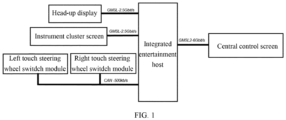
FIG. 1 is a network topology diagram of a system in an embodiment of the present disclosure. -
FIG. 2 is a logic block diagram of a system in an embodiment of the present disclosure. -
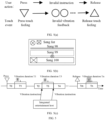
FIG. 3 is a schematic diagram of a short-press tactile vibration feedback logic in an embodiment of the present disclosure, whereFIG. 3(a) is a schematic diagram of a short-press event, andFIG. 3(b) is a schematic exploded diagram of a short-press tactile feedback. -
FIG. 4 is a schematic diagram of a long-press tactile vibration feedback logic in an embodiment of the present disclosure, whereFIG. 4(a) is a schematic diagram of a long-press event, andFIG. 4(b) is a schematic exploded diagram of a long-press tactile feedback. -
FIG. 5 is a schematic diagram of an invalid-press tactile vibration feedback logic in an embodiment of the present disclosure, whereFIG. 5(a) is a schematic diagram of an invalid-press event,FIG. 5(b) is a schematic diagram of a song list, andFIG. 5(c) is a schematic exploded diagram of an invalid-press tactile feedback. -
FIG. 6 is a schematic diagram of a sliding and special gestures tactile vibration feedback logic in an embodiment of the present disclosure, whereFIG. 6(a) is a schematic diagram of a sliding and special gestures event, andFIG. 6(b) is a schematic exploded diagram of a sliding and special gestures tactile feedback. - In the following, the technical solution in embodiments of the present disclosure will be clearly and completely described with reference to the accompanying drawings. Obviously, the described embodiments are a part of the embodiments of the present disclosure, but not all of the embodiments. Based on the embodiments in the present disclosure, all other embodiments obtained by those of ordinary skills in the art without making creative efforts should belong to the scope of protection of the present disclosure.
- Therefore, the following detailed description of the embodiments of the present disclosure provided in the accompanying drawings is not intended to limit the scope of the present disclosure, but merely represents selected embodiments of the present disclosure. Based on the embodiments in the present disclosure, all other embodiments obtained by those of ordinary skills in the art without making creative efforts should belong to the scope of protection of the present disclosure.
- It should be noted that similar numerals and letters indicate similar items in the following drawings, so once an item is defined in one drawing, it does not need to be further defined and described in subsequent drawings.
- In the description of the present disclosure, it should be noted that orientation or position relationship indicated by the terms "center", "upper", "lower", "left", "right", "vertical", "horizontal", "inside" and "outside" is based on the orientation or position relationship shown in the accompanying drawings, or the orientation or position relationship that the product of the present disclosure is usually placed when used, which are only for the convenience of describing the present disclosure and simplifying the description, and does not indicate or imply that the referred apparatuses or elements must have a specific orientation, or be constructed and operated in a specific orientation, so it cannot be understood as limitations on the present disclosure. In addition, the terms "first", "second" and "third" are only used to distinguish descriptions and cannot be understood as indicating or implying relative importance.
- In addition, the terms "horizontal" and "vertical" do not mean that components are required to be absolutely horizontal or overhanging, but may be slightly inclined. For example, "horizontal" only means that its direction is more horizontal than "vertical", which does not mean that the structure must be completely horizontal, but can be slightly inclined.
- In the description of the present disclosure, it should also be noted that the terms "set", "install", "connect to" and "connect with" should be broadly understood, for example, they can be fixed, detachable or integrally connected, or can be a mechanical connection or an electrical connection; or can be directly connected or be indirectly connected through an intermediate medium, or can be connected inside two elements. For those of ordinary skills in the art, specific meanings of the above terms in the present disclosure can be understood in specific situations.
- For characteristics of the steering wheel key switches of the existing automobile types such as limited number of keys and single functions, the present disclosure provides a steering wheel touch panel (LCD screen/glass, composite material/in-mold insert injection, the same below), which supports various operations in different interactive scenarios, and supports not only pressing and sliding, but also a handwriting function.
- An exist steering wheel key is single in interaction manner, and the physical switch needs to be pressed hard. The steering wheel touch panel provided by the present disclosure can solve the problem of lack of mechanical stroke space, and has rich interaction manners, supports tapping, long-press, left and right sliding, up and down sliding and inertia sliding, and has a sense of fun and technology during operation; and at the same time, has tactile vibration feedback, which can provide real tactile feedback to fingertips.
- A pressure sensor is arranged under the steering wheel touch panel. One, two or more pressure sensors can be arranged under one panel, and a number of the pressure sensors is not limited herein. The pressure sensor is configured to distinguish pressing or sliding. When a user presses the touch panel, a vibration feedback is triggered when a pressure increases from low to high to reach a preset threshold; and when the touch panel is released, a vibration feedback is triggered when a pressure reduces from high to low to reach a preset threshold.
- According to the present disclosure, the steering wheel touch panel detects a touch point or a sliding area to transmit coordinates to an integrated entertainment host, and the integrated entertainment host analyses the received coordinates with reference to a current HMI (Human Machine Interface) scenario, and controls a corresponding operation, and at a same time, sends a vibration feedback instruction, to cause a vibration motor in the steering wheel touch panel to vibrate.
- A linear motor in the steering wheel touch panel of the present disclosure can provide vibration selection with three different intensities, namely, light vibration, moderate vibration and heavy vibration, which can be configured by a user on a central control screen. At the same time, a release vibration feedback of the steering wheel touch panel of the present disclosure can be selected whether to use it or not, that is, a: press vibration only, b: press vibration+release vibration, which can be configured by a user on the central control screen. The steering wheel touch panel of the present disclosure supports iterative increase of functions in a full life cycle.
- Based on a principle of scenario vibration feedback: as shown in the network topology diagram of the system shown in
FIG. 1 , left and right touch steering wheel switch modules send pressing or sliding touch coordinates to an integrated entertainment host through a CAN bus, and the integrated entertainment host analyses received coordinate values with reference to an interactive scenario in a current head-up display and an instrument cluster screen, and controls the corresponding operation, and at the same time sends a vibration feedback instruction to cause a vibration motor in a steering wheel touch panel to vibrate. - Specific technique details of the system network are as follows:
the integrated entertainment host controls a central control screen, a head-up display and an instrument cluster screen in a vehicle, and adjustments are performed through left and right touch steering wheel switch modules. - CAN HS-500kb/s: for transmitting a serial communication protocol bus at 500kb/s, mainly used to transmit control signals.
- GMSL-2.5Gbit/s: for transmitting a serial communication protocol bus at 2.5Gbit/s, mainly used to transmit video, audio and control signals.
- GMSL2-6Gbit/s: for transmitting a serial communication protocol bus at 6Gbit/s, mainly used to transmit video, audio and control signals.
- APP: third-party application.
- UART: universal serial data bus, used for asynchronous communication.
- IPCL protocol: the IPCL protocol is usually used to convert CAN signals into character string signals. After being analysed by Carservice or App, the above character string signals are converted into text or image interfaces for users to select and use, thus converting original CAN signals into text or images that users can understand.
- QNX: a micro-kernel real-time operating system.
- Android: a free and open source operating system based on Linux kernel (excluding GNU components).
- Software Buffer: buffer of a software.
- Recognitions of tapping, up or down sliding, left or right sliding are completed in an underlying system of the integrated entertainment host. A concept of an algorithm is: position coordinates of "pressing" or "releasing" on the steering wheel touch panel are recognized, and a relative coordinate of the two positions is calculated to determine whether to tap or slide and the direction of sliding, through the left dashed box in
FIG. 2 , Input HMI receives the tapping coordinate or the sliding coordinates and transmits recognized information to System HMI in a QNX system through the IPCL protocol, and the System HMI sends processed data to an HMI module of an instrument or a head-up display, and finally renders a corresponding recognition result on a corresponding display. - For trajectories recognition of handwriting and special gestures, an input method provided by an APP on an Android terminal on a right side of
FIG. 2 is used. Input HMI does not recognize original touch point sent by a steering wheel control, but sends it to the System HMI of Android through UART. The APP acquires handwritten information through a customized interface and recognizes the handwritten information, and recognized text information is sent back to a QNX terminal through the System HMI. Trajectory information is directly rendered on the software Buffer, and the QNX terminal acquires the recognized text information and renders it on channels of the instrument and the head-up display. The trajectory information on the software Buffer will be displayed in a superimposed manner on a software channel and the instrument or the head-up display channel through shared storage, and will be presented on the instrument or the head-up display together. - Mainly used on ON/OFF, confirm or short-press adjustment of a certain function, such as voice activate/cancel, music media play/pause, fold/open adjustment on an exterior rear-view mirror. Short-press tactile feedback: vibrate on pressing for once, vibrate on releasing for once.
- A short-press event is determined by the steering wheel touch panel according to a pressure value on itself. A specific implementation is as follows.
- Upon pressing by a user, when a pressure of the panel increases from 0 N (Newton) to a preset threshold X N, vibration is triggered for once.
- Upon releasing by a user, when a pressure of the panel reduces to a preset threshold (X-2) N, vibration is triggered for once, as shown in
FIG. 3(a) . - Short-press tactile feedback: when a user presses at a moment T0, a pressure sensor in the touch panel receives variation of a pressure value from low to high. When the pressure value increases from 0 N to a preset threshold X N, a vibration motor in the touch panel starts to vibrate. After the vibration lasts for a duration T1, the user starts to release. When the pressure value reduces to a preset threshold (X-2) N, and the reducing process lasts for a duration T2, the vibration motor in the touch panel starts to vibrate again, and a vibration duration is T3, as shown in
FIG. 3(b) . - The long-press tactile feedback is mainly divided into two categories: single-time event activation and multiple-time event activation during the long press process. The single-time event activation is mainly used on functions such as activation of an intelligent driving function, and reset and adjustment of the head-up display. A fill block/progress bar is on an interaction interface, and when a user presses and keeps until the fill block/progress bar is filled up, a function is activated with vibration feedback; the multiple-time event activation is mainly used on adjustments on a position of the exterior rear-view mirror, a position of the head-up display, a position of a steering wheel column, as shown in
FIG. 4(a) . - Long-press single-time event activation tactile feedback: vibrate on pressing for once, vibrate on event activation for once, and vibrate on releasing for once.
- Long-press multiple-time event activation tactile feedback: vibrate on pressing for once, keep vibrating on event activation until releasing, and vibrate on releasing for once.
- Press touch feeling and release touch feeling of the long-press event are same as those of the short-press event, which are determined by the steering wheel touch panel according to a pressure value variation of its own. But in the long-press event, when the pressing is kept, the single-time and multiple-time activation event are both determined by the integrated entertainment host, and a vibration instruction is sent to the touch panel, as shown in
FIG. 4(b) , a vibration duration T3 is triggered by the vibration instruction sent by the integrated entertainment host. - Different from a normal pressing, when a user operates the touch panel, as shown in
FIG. 5(a) , when an invalid event occurs, vibration feedback is triggered to inform the user of operation on "wrong" information. As shown inFIG. 5(b) , a song list has already reached a bottom, and when a "down" key is further pressed, "invalid" operation vibration feedback will be triggered. - The invalid event is recognized and triggered by the integrated entertainment host based on a current HMI interface, and the touch panel vibrates. The process of the invalid event is basically same as that of the long-press tactile feedback. The difference is that the long-press event-trigger activation has a long period, and the function is activated with one vibration feedback when the fill block/progress bar is filled up; and when an invalid vibration event occurs during user pressing and the integrated entertainment host recognizes invalid vibration, the integrated entertainment host will keep sending feedback instructions to the touch panel to cause the touch panel keep vibrating until the user releases, as shown in
FIG. 5(c) . - The sliding and special gestures tactile feedback are exploded as shown in
FIG. 6(a) . As mentioned above, a sliding recognition is determined by calculating a relative coordinate between two positions of a start point and an end point of the sliding, and when vibration feedback is performed when the instruction is valid. When a user operates a special gesture, such as finger gestures of " o", "√", "Z", "N", a corresponding operation is triggered when the gesture is finished, and the touch panel performs vibration feedback. - For a sliding event and a special gesture event, an underlying system of the integrated entertainment host will receive continuous coordinates of the steering wheel control, that is, when a valid instruction is determined in
FIG. 6(b) , the integrated entertainment host will send the vibration instruction to the touch panel, and a vibration duration is T2, as shown inFIG. 6(b) . - A handwriting tactile feedback is similar to sliding.
- The above is only specific embodiments of the present disclosure, but the protection scope of the present disclosure is not limited herein. Those of ordinary skills in the art can easily think of various equivalent modifications or substitutions within the technical scope disclosed by the present disclosure, and these modifications or substitutions should be included in the protection scope of the present disclosure. Therefore, the protection scope of the present disclosure should be based on the protection scope of the claims.
Claims (10)
- A control system of a multi-gesture interactive touch steering wheel with vibration feedback, comprising an integrated entertainment host, wherein the integrated entertainment host is connected with an interface interaction module and a touch steering wheel switch module, wherein:the touch steering wheel switch module is configured to collect a touch coordinate of pressing or sliding, and send the touch coordinate to the integrated entertainment host;the integrated entertainment host is configured to receive the touch coordinate, and analyze the touch coordinate with reference to an HMI interface interaction scenario displayed by the interface interaction module to generate an interface interaction change instruction, and send the interface interaction change instruction to the corresponding interface interaction module to display a corresponding interface recognition rendering result through the interface interaction module, and at a same time, send a vibration feedback instruction to the touch steering wheel switch module, to cause the touch steering wheel switch module to generate a corresponding vibration feedback logic;the interface interaction module is configured to display the corresponding interface recognition rendering result.
- The control system of the multi-gesture interactive touch steering wheel with vibration feedback according to claim 1, wherein the interface interaction module comprises a head-up display, an instrument cluster screen and a central control screen, wherein the head-up display, the instrument cluster screen and the central control screen are communicatively connected to the integrated entertainment host via different communication protocols respectively.
- The control system of the multi-gesture interactive touch steering wheel with vibration feedback according to claim 2, wherein the communication protocols comprise:a CAN HS-500kb/s communication protocol for transmitting a serial communication protocol bus at 500kb/s, used to transmit coordinates and control signals between a steering wheel control and the integrated entertainment host;a GMSL-2.5Gbit/s communication protocol for transmitting a serial communication protocol bus at 2.5Gbit/s, used to transmit video, audio and control signals between the integrated entertainment host, an instrument and the head-up display; anda GMSL2-6Gbit/s communication protocol for transmitting a serial communication protocol bus at 6Gbit/s, used to transmit video and control signals between the integrated entertainment host and the central control screen.
- The control system of the multi-gesture interactive touch steering wheel with vibration feedback according to claim 1, wherein the touch steering wheel switch module comprises a steering wheel touch panel, and a pressure sensor and a vibration motor provided inside the steering wheel touch panel, wherein:the steering wheel touch panel is configured to receive and collect the touch coordinate corresponding to different interaction operation actions;the pressure sensor is configured to trigger vibration feedback when a pressure on the steering wheel touch panel varies to reach a preset threshold under different scenarios;the vibration motor is configured to vibrate according to the corresponding vibration feedback logic.
- The control system of the multi-gesture interactive touch steering wheel with vibration feedback according to claim 4, the vibration feedback logic comprises: a short-press tactile vibration feedback logic, a long-press tactile vibration feedback logic, an invalid-press tactile vibration feedback logic, a sliding and special gesture tactile vibration feedback logic, and a handwriting tactile vibration feedback logic, wherein:the short-press tactile vibration feedback logic specifically comprises: first, when a pressure value received by the pressure sensor varies from 0 to a preset threshold X, the vibration motor is triggered to vibrate once; and then, when the pressure value received by the pressure sensor reduces to X-2, the vibration motor is triggered to vibrate once again;the long-press tactile vibration feedback logic specifically comprises: first, when a pressure value received by the pressure sensor varies from 0 to a preset threshold X, the vibration motor is triggered to vibrate once; and then when the integrated entertainment host determines a single-time of or multiple times of activation events, the vibration motor is correspondingly triggered to vibrate once or keep vibrating; finally, when the pressure value received by the pressure sensor reduces to X-2, the vibration motor is triggered to vibrate once again;the invalid-press tactile vibration feedback logic specifically comprises: the integrated entertainment host determines that a user is operating in an invalid vibration scenario, that is, when a song list is slid to a bottom, further downward sliding is determined as invalid sliding, and a vibration instruction is sent to cause the vibration motor in the steering wheel touch panel to vibrate;the sliding and special gesture tactile vibration feedback logic specifically comprises: based on a relative coordinate between a start position and a release position of finger-sliding on the steering wheel touch panel, the integrated entertainment host determines and recognizes as a sliding operation and triggers the vibration motor to vibrate; or when a special gesture trajectory operation is performed by a finger on the steering wheel touch panel, the integrated entertainment host determines and recognizes as a special gesture and triggers the vibration motor to vibrate;the handwriting tactile vibration feedback logic specifically comprises: based on a relative coordinate between a start position and a release position of handwriting on the steering wheel touch panel, the integrated entertainment host determines and recognizes as a handwriting operation and triggers the vibration motor to vibrate.
- A control method of a touch steering wheel based on the control system of the multi-gesture interactive touch steering wheel with vibration feedback according to any one of claims 1-5, comprising:acquiring a touch coordinate of pressing or sliding on the touch steering wheel switch module;analyzing, by the integrated entertainment host according to the touch coordinate, with reference to an HMI interface interaction scenario displayed by the interface interaction module, to generate an interface interaction change instruction, and sending the interface interaction change instruction to the corresponding interface interaction module to display a corresponding interface recognition rendering result through the interface interaction module, and at a same time, sending a vibration feedback instruction to the touch steering wheel switch module, to cause the touch steering wheel switch module to generate a corresponding vibration feedback logic.
- The control method of the touch steering wheel based on the control system of the multi-gesture interactive touch steering wheel with vibration feedback according to claim 6, wherein the touch steering wheel switch module comprises a steering wheel touch panel, and a pressure sensor and a vibration motor provided inside the steering wheel touch panel, wherein:the steering wheel touch panel is configured to receive and collect the touch coordinate corresponding to different interaction operation actions;the pressure sensor is configured to trigger vibration feedback when a pressure on the steering wheel touch panel varies to reach a preset threshold under different scenarios;the vibration motor is configured to vibrate according to the corresponding vibration feedback logic.
- The control method of the touch steering wheel based on the control system of the multi-gesture interactive touch steering wheel with vibration feedback according to claim 6, wherein the interface interaction module comprises a head-up display, an instrument cluster screen and a central control screen, wherein the head-up display, the instrument cluster screen and the central control screen are communicatively connected to the integrated entertainment host via different communication protocols respectively; wherein the communication protocols comprise:a CAN HS-500kb/s communication protocol for transmitting a serial communication protocol bus at 500kb/s, used to transmit coordinates and control signals between a steering wheel control and the integrated entertainment host;a GMSL-2.5Gbit/s communication protocol for transmitting a serial communication protocol bus at 2.5Gbit/s, used to transmit video, audio and control signals between the integrated entertainment host, an instrument and the head-up display; anda GMSL2-6Gbit/s communication protocol for transmitting a serial communication protocol bus at 6Gbit/s, used to transmit video and control signals between the integrated entertainment host and the central control screen.
- The control method of the touch steering wheel based on the control system of the multi-gesture interactive touch steering wheel with vibration feedback according to claim 7, wherein the vibration feedback logic comprises: a short-press tactile vibration feedback logic, a long-press tactile vibration feedback logic, an invalid-press tactile vibration feedback logic, a sliding and special gesture tactile vibration feedback logic, and a handwriting tactile vibration feedback logic, wherein:the short-press tactile vibration feedback logic specifically comprises: first, when a pressure value received by the pressure sensor varies from 0 to a preset threshold X, the vibration motor is triggered to vibrate once; and then, when the pressure value received by the pressure sensor reduces to X-2, the vibration motor is triggered to vibrate once again;the long-press tactile vibration feedback logic specifically comprises: first, when a pressure value received by the pressure sensor varies from 0 to a preset threshold X, the vibration motor is triggered to vibrate once; and then when the integrated entertainment host determines a single-time of or multiple times of activation events, the vibration motor is correspondingly triggered to vibrate once or keep vibrating; finally, when the pressure value received by the pressure sensor reduces to X-2, the vibration motor is triggered to vibrate once again;the invalid-press tactile vibration feedback logic specifically comprises: the integrated entertainment host determines that a user is operating in an invalid vibration scenario, that is, when a song list is slid to a bottom, further downward sliding is determined as invalid sliding, and a vibration instruction is sent to cause the vibration motor in the steering wheel touch panel to vibrate;the sliding and special gesture tactile vibration feedback logic specifically comprises: based on a relative coordinate between a start position and a release position of finger-sliding on the steering wheel touch panel, the integrated entertainment host determines and recognizes as a sliding operation and triggers the vibration motor to vibrate; or when a special gesture trajectory operation is performed by a finger on the steering wheel touch panel, the integrated entertainment host determines and recognizes as a special gesture and triggers the vibration motor to vibrate;the handwriting tactile vibration feedback logic specifically comprises: based on a relative coordinate between a start position and a release position of handwriting on the steering wheel touch panel, the integrated entertainment host determines and recognizes as a handwriting operation and triggers the vibration motor to vibrate.
- An automobile, comprising the control system of the multi-gesture interactive touch steering wheel with vibration feedback according to any one of claims 1-5.
Applications Claiming Priority (2)
| Application Number | Priority Date | Filing Date | Title |
|---|---|---|---|
| CN202110378461.2A CN113085550B (en) | 2021-04-08 | 2021-04-08 | Multi-gesture interaction has vibration feedback touch-control steering wheel control system |
| PCT/CN2022/085654 WO2022214043A1 (en) | 2021-04-08 | 2022-04-07 | Multi-gesture interaction touch steering wheel control system having vibration feedback |
Publications (2)
| Publication Number | Publication Date |
|---|---|
| EP4275981A1 true EP4275981A1 (en) | 2023-11-15 |
| EP4275981A4 EP4275981A4 (en) | 2024-12-25 |
Family
ID=76675284
Family Applications (1)
| Application Number | Title | Priority Date | Filing Date |
|---|---|---|---|
| EP22784109.5A Pending EP4275981A4 (en) | 2021-04-08 | 2022-04-07 | TOUCH STEERING WHEEL CONTROL SYSTEM WITH MULTI-GESTURE INTERACTION AND VIBRATION FEEDBACK |
Country Status (3)
| Country | Link |
|---|---|
| EP (1) | EP4275981A4 (en) |
| CN (1) | CN113085550B (en) |
| WO (1) | WO2022214043A1 (en) |
Cited By (1)
| Publication number | Priority date | Publication date | Assignee | Title |
|---|---|---|---|---|
| US20240416749A1 (en) * | 2023-06-13 | 2024-12-19 | Illinois Tool Works Inc. | Human-Computer Interaction Method and System for Vehicle |
Families Citing this family (11)
| Publication number | Priority date | Publication date | Assignee | Title |
|---|---|---|---|---|
| CN113085550B (en) * | 2021-04-08 | 2022-08-16 | 浙江吉利控股集团有限公司 | Multi-gesture interaction has vibration feedback touch-control steering wheel control system |
| CN115675611A (en) * | 2021-07-29 | 2023-02-03 | 延锋汽车智能安全系统有限责任公司 | Steering wheel components and steering wheel assemblies |
| CN113849114A (en) * | 2021-07-30 | 2021-12-28 | 的卢技术有限公司 | Control method and system based on touch pad and linear motor on steering wheel |
| CN115731558A (en) * | 2021-08-25 | 2023-03-03 | 北京车和家信息技术有限公司 | Vehicle steering wheel switch control method, device, device and storage medium |
| CN114407781B (en) * | 2022-01-28 | 2024-05-14 | 中国第一汽车股份有限公司 | Rearview mirror adjusting method and device based on pressure sensor and vehicle |
| CN114919513A (en) * | 2022-06-22 | 2022-08-19 | 浙江吉利控股集团有限公司 | Rearview mirror control system, control method and vehicle |
| CN116176432B (en) * | 2023-05-04 | 2023-09-12 | 长城汽车股份有限公司 | Vehicle-mounted device control method and device, vehicle and storage medium |
| CN116853162A (en) * | 2023-05-29 | 2023-10-10 | 中国第一汽车股份有限公司 | A vehicle-mounted music entertainment system and its control method |
| CN116494900B (en) * | 2023-05-29 | 2025-10-10 | 中国第一汽车股份有限公司 | Entertainment steering wheel and entertainment control system and control method thereof |
| CN119645284B (en) * | 2024-10-31 | 2026-01-30 | 浙江吉利控股集团有限公司 | A vehicle interactive control method, device, electronic device, and storage medium |
| CN119689942A (en) * | 2024-12-13 | 2025-03-25 | 北京航空航天大学 | Vehicle interaction system based on intelligent wrist strap |
Family Cites Families (16)
| Publication number | Priority date | Publication date | Assignee | Title |
|---|---|---|---|---|
| CN101989139A (en) * | 2009-08-07 | 2011-03-23 | 介面光电股份有限公司 | Array type touch panel with tactile feedback |
| GB201411309D0 (en) * | 2014-06-25 | 2014-08-06 | Tomtom Int Bv | Vehicular human machine interfaces |
| JP6314896B2 (en) * | 2015-04-07 | 2018-04-25 | 株式会社Soken | Information provision device |
| CN106467065B (en) * | 2015-08-18 | 2019-04-02 | 上海汽车集团股份有限公司 | Steering wheel touch device and steering wheel |
| CN107031697A (en) * | 2016-02-03 | 2017-08-11 | 北京汽车股份有限公司 | The control system of vehicle |
| KR102686294B1 (en) * | 2016-12-23 | 2024-07-22 | 삼성디스플레이 주식회사 | Steering wheel and vehicle control system including the same |
| CN107357425A (en) * | 2017-06-29 | 2017-11-17 | 珠海市魅族科技有限公司 | A kind of touch-control feedback device, electronic equipment and touch-control feedback method |
| US20190102082A1 (en) * | 2017-10-03 | 2019-04-04 | Valeo North America, Inc. | Touch-sensitive alphanumeric user interface |
| US10817063B2 (en) * | 2019-02-11 | 2020-10-27 | Volvo Car Corporation | Facilitating interaction with a vehicle touchscreen using haptic feedback |
| CN112558803A (en) * | 2019-09-26 | 2021-03-26 | 北京钛方科技有限责任公司 | Vehicle-mounted touch device, control method and automobile |
| CN111404535A (en) * | 2020-03-20 | 2020-07-10 | 宁波吉利汽车研究开发有限公司 | Steering wheel switch control system of vehicle and control method thereof |
| CN111469908B (en) * | 2020-03-23 | 2022-10-18 | 浙江吉利汽车研究院有限公司 | Touch control steering wheel, control method and automobile |
| CN111625088A (en) * | 2020-04-28 | 2020-09-04 | 思特沃克软件技术(北京)有限公司 | Vehicle-mounted system control method and steering wheel |
| CN111890932A (en) * | 2020-06-29 | 2020-11-06 | 武汉海微科技有限公司 | Intelligent vehicle control system based on 3D TOUCH |
| CN112162688A (en) * | 2020-08-20 | 2021-01-01 | 江苏大学 | A vehicle-mounted virtual screen interactive information system based on gesture recognition |
| CN113085550B (en) * | 2021-04-08 | 2022-08-16 | 浙江吉利控股集团有限公司 | Multi-gesture interaction has vibration feedback touch-control steering wheel control system |
-
2021
- 2021-04-08 CN CN202110378461.2A patent/CN113085550B/en active Active
-
2022
- 2022-04-07 WO PCT/CN2022/085654 patent/WO2022214043A1/en not_active Ceased
- 2022-04-07 EP EP22784109.5A patent/EP4275981A4/en active Pending
Cited By (1)
| Publication number | Priority date | Publication date | Assignee | Title |
|---|---|---|---|---|
| US20240416749A1 (en) * | 2023-06-13 | 2024-12-19 | Illinois Tool Works Inc. | Human-Computer Interaction Method and System for Vehicle |
Also Published As
| Publication number | Publication date |
|---|---|
| CN113085550A (en) | 2021-07-09 |
| EP4275981A4 (en) | 2024-12-25 |
| WO2022214043A1 (en) | 2022-10-13 |
| CN113085550B (en) | 2022-08-16 |
Similar Documents
| Publication | Publication Date | Title |
|---|---|---|
| CN113085550B (en) | Multi-gesture interaction has vibration feedback touch-control steering wheel control system | |
| US9103691B2 (en) | Multimode user interface of a driver assistance system for inputting and presentation of information | |
| KR101828142B1 (en) | Method and apparatus for entering data with two input types and haptic feedback, particulary in a vehicle | |
| US9261908B2 (en) | System and method for transitioning between operational modes of an in-vehicle device using gestures | |
| CN106415469B (en) | Method and user interface for adapting a view on a display unit | |
| US20220244789A1 (en) | Method for operating a mobile terminal using a gesture recognition and control device, gesture recognition and control device, motor vehicle, and an output apparatus that can be worn on the head | |
| US20190034048A1 (en) | Unifying user-interface for multi-source media | |
| CN215436217U (en) | Vehicle information control system and vehicle | |
| CN101801705A (en) | Vehicle system comprising an assistance functionality | |
| KR102016650B1 (en) | Method and operating device for operating a device | |
| AU2009246654A1 (en) | Pushing a user interface to a remote device | |
| CN102905182A (en) | Input method, intelligent television and intelligent interaction system | |
| US20160195932A1 (en) | Apparatus and method for data input via virtual controls with haptic feedback to simulate key feel | |
| CN201937743U (en) | Display device for simulated remote controller interfaces | |
| CN117396365A (en) | Dialogue service device and dialogue system control method | |
| CN115943358A (en) | Display control device and display control method | |
| CN112188249B (en) | Electronic specification-based playing method and display device | |
| CN115579010B (en) | Intelligent cabin cross-screen linkage method, equipment and storage medium | |
| KR20160097868A (en) | A display apparatus and a display method | |
| JP7662847B2 (en) | Interface control method, device, and system | |
| CN107562342A (en) | A kind of mobile terminal control device and its control method | |
| CN116176432A (en) | In-vehicle device control method, device, vehicle and storage medium | |
| JP2025107443A (en) | Control device and control method | |
| CN109828520A (en) | A kind of intelligent electric automobile HMI man-machine interactive system | |
| CN114030416A (en) | Vehicle-mounted entertainment system based on vehicle-mounted HUD |
Legal Events
| Date | Code | Title | Description |
|---|---|---|---|
| STAA | Information on the status of an ep patent application or granted ep patent |
Free format text: STATUS: THE INTERNATIONAL PUBLICATION HAS BEEN MADE |
|
| PUAI | Public reference made under article 153(3) epc to a published international application that has entered the european phase |
Free format text: ORIGINAL CODE: 0009012 |
|
| STAA | Information on the status of an ep patent application or granted ep patent |
Free format text: STATUS: REQUEST FOR EXAMINATION WAS MADE |
|
| 17P | Request for examination filed |
Effective date: 20230808 |
|
| AK | Designated contracting states |
Kind code of ref document: A1 Designated state(s): AL AT BE BG CH CY CZ DE DK EE ES FI FR GB GR HR HU IE IS IT LI LT LU LV MC MK MT NL NO PL PT RO RS SE SI SK SM TR |
|
| DAV | Request for validation of the european patent (deleted) | ||
| DAX | Request for extension of the european patent (deleted) | ||
| A4 | Supplementary search report drawn up and despatched |
Effective date: 20241126 |
|
| RIC1 | Information provided on ipc code assigned before grant |
Ipc: G06F 3/04883 20220101ALI20241121BHEP Ipc: G06F 3/0488 20220101ALI20241121BHEP Ipc: G06F 3/01 20060101ALI20241121BHEP Ipc: B60K 35/25 20240101ALI20241121BHEP Ipc: B62D 1/04 20060101ALI20241121BHEP Ipc: B60W 50/16 20200101AFI20241121BHEP |
|
| GRAP | Despatch of communication of intention to grant a patent |
Free format text: ORIGINAL CODE: EPIDOSNIGR1 |
|
| STAA | Information on the status of an ep patent application or granted ep patent |
Free format text: STATUS: GRANT OF PATENT IS INTENDED |
|
| INTG | Intention to grant announced |
Effective date: 20260408 |