EP4273701A1 - A method for validating an upgraded version of wind turbine control software - Google Patents
A method for validating an upgraded version of wind turbine control software Download PDFInfo
- Publication number
- EP4273701A1 EP4273701A1 EP22171118.7A EP22171118A EP4273701A1 EP 4273701 A1 EP4273701 A1 EP 4273701A1 EP 22171118 A EP22171118 A EP 22171118A EP 4273701 A1 EP4273701 A1 EP 4273701A1
- Authority
- EP
- European Patent Office
- Prior art keywords
- wind turbine
- version
- control software
- turbine control
- wind
- Prior art date
- Legal status (The legal status is an assumption and is not a legal conclusion. Google has not performed a legal analysis and makes no representation as to the accuracy of the status listed.)
- Granted
Links
Images

Classifications
-
- G—PHYSICS
- G06—COMPUTING OR CALCULATING; COUNTING
- G06F—ELECTRIC DIGITAL DATA PROCESSING
- G06F8/00—Arrangements for software engineering
- G06F8/60—Software deployment
- G06F8/65—Updates
-
- G—PHYSICS
- G06—COMPUTING OR CALCULATING; COUNTING
- G06F—ELECTRIC DIGITAL DATA PROCESSING
- G06F11/00—Error detection; Error correction; Monitoring
- G06F11/36—Prevention of errors by analysis, debugging or testing of software
- G06F11/3668—Testing of software
- G06F11/3672—Test management
- G06F11/3692—Test management for test results analysis
-
- F—MECHANICAL ENGINEERING; LIGHTING; HEATING; WEAPONS; BLASTING
- F03—MACHINES OR ENGINES FOR LIQUIDS; WIND, SPRING, OR WEIGHT MOTORS; PRODUCING MECHANICAL POWER OR A REACTIVE PROPULSIVE THRUST, NOT OTHERWISE PROVIDED FOR
- F03D—WIND MOTORS
- F03D7/00—Controlling wind motors
- F03D7/02—Controlling wind motors the wind motors having rotation axis substantially parallel to the air flow entering the rotor
- F03D7/04—Automatic control; Regulation
- F03D7/042—Automatic control; Regulation by means of an electrical or electronic controller
- F03D7/048—Automatic control; Regulation by means of an electrical or electronic controller controlling wind farms
-
- G—PHYSICS
- G06—COMPUTING OR CALCULATING; COUNTING
- G06F—ELECTRIC DIGITAL DATA PROCESSING
- G06F11/00—Error detection; Error correction; Monitoring
- G06F11/36—Prevention of errors by analysis, debugging or testing of software
- G06F11/3668—Testing of software
- G06F11/3672—Test management
- G06F11/3688—Test management for test execution, e.g. scheduling of test suites
-
- Y—GENERAL TAGGING OF NEW TECHNOLOGICAL DEVELOPMENTS; GENERAL TAGGING OF CROSS-SECTIONAL TECHNOLOGIES SPANNING OVER SEVERAL SECTIONS OF THE IPC; TECHNICAL SUBJECTS COVERED BY FORMER USPC CROSS-REFERENCE ART COLLECTIONS [XRACs] AND DIGESTS
- Y02—TECHNOLOGIES OR APPLICATIONS FOR MITIGATION OR ADAPTATION AGAINST CLIMATE CHANGE
- Y02E—REDUCTION OF GREENHOUSE GAS [GHG] EMISSIONS, RELATED TO ENERGY GENERATION, TRANSMISSION OR DISTRIBUTION
- Y02E10/00—Energy generation through renewable energy sources
- Y02E10/70—Wind energy
- Y02E10/72—Wind turbines with rotation axis in wind direction
Definitions
- the present invention relates to a method for validating a version of wind turbine control software, such as an upgraded version of the wind turbine control software.
- the method according to the invention allows a new version of the wind turbine control software to be validated without disabling a previous version of the wind turbine control software, and thereby essentially without downtime of the wind turbine or wind turbines involved.
- validation of new versions of wind turbine control software may have been performed by means of traditional A-B testing, in which the new version of the software is installed on some wind turbines, while the previous version of the software remains running on other wind turbines.
- the performance of the software versions can then be compared by comparing the performance of the two groups of wind turbines.
- this introduces a risk that, during the test period, the wind turbines having the new version of the software running thereon perform sub-optimally, or operate in an unexpected manner, and they may even operate in a manner which is not in accordance with a certification of the software.
- the performance of the software versions may not be directly comparable, since the operating conditions of the wind turbines involved may not be identical.
- this approach requires a significant amount of manual handling.
- validation of a new version of wind turbine control software may apply a digital twin of the wind turbine or wind farm having the software running thereon.
- this approach is model-based, and it may therefore not take all possible conditions of the real setup into account.
- US 2020/0293300 A1 discloses a method of estimating a parameter relating to an upgrade of a wind turbine software.
- the method comprises toggling the wind turbine alternatingly between two modes, where the upgrade is implemented in one but not the other. Data is collected during the toggling, and data related to the two modes is compared.
- the invention provides a method for validating a version of wind turbine control software, the method comprising the steps of:
- the invention provides a method for validating a version of wind turbine control software, such as an upgraded version of wind turbine control software.
- a version of wind turbine control software such as an upgraded version of wind turbine control software.
- the term 'wind turbine control software' should be interpreted to mean software which is running on a wind turbine controller or a wind farm controller, and which is applied for controlling the wind turbine or the wind farm.
- a first version of the wind turbine control software is initially running on a controller for controlling operation of a wind turbine or a wind farm.
- the term 'wind farm' should be interpreted to mean a group of a plurality of wind turbines sharing infrastructure for power transmission to a power grid.
- the wind turbines of the wind farm may be arranged at a geographical site, i.e. a wind farm site.
- the controller may be a wind turbine controller which controls operation of a single wind turbine, or it may be a wind farm controller, sometimes referred to as a power plant controller (PPC), which handles the overall control of the wind turbines of a wind farm, e.g. in order to ensure that the wind farm as such fulfils certain requirements towards the power grid.
- PPC power plant controller
- a second version of the wind turbine control software e.g. an upgraded version of the wind turbine control software
- the first version of the wind turbine control software remains installed on the controller.
- a test period is initiated.
- the first version of the wind turbine control software and the second version of the wind turbine control software are running simultaneously on the controller. This is performed by applying identical control input to the first version of the wind turbine control software and to the second version of the wind turbine control software.
- the first version of the wind turbine control software, as well as the second version of the wind turbine control software generates control output, exactly as if they were each applied for controlling the wind turbine or the wind farm.
- the wind turbine or wind farm is controlled by means of the controller and based on the control output generated by the first version of the wind turbine control software. Thereby it is also ensured that, during the test period, the wind turbine or wind farm is controlled by means of wind turbine control software which has been duly validated, and which would have been applied if no test was taking place.
- the wind turbine or wind farm is controlled exactly in the manner which was applied before the second version of the wind turbine control software was installed, i.e. based on the control output generated by the first version of the wind turbine control software. Accordingly, the control output generated by the second version of the wind turbine control is merely stored, and not applied for the actual control of the wind turbine or wind farm. Thus, no production loss is introduced during the test period, and it is ensured that all requirements, e.g. towards the power grid, are fulfilled, because the wind turbine or wind farm is controlled by means of duly validated wind turbine control software.
- a comparison is performed between the control output generated by the first version of the wind turbine control software and by the second version of the wind turbine control software, during a time interval.
- the control output generated by the two versions of the wind turbine control software are readily comparable, since they have been generated under exactly identical operating conditions.
- the comparison can reveal whether or not the second version of the wind turbine control software performs at least as well as the first version of the wind turbine control software.
- the comparison can also reveal whether or not the second version of the wind turbine control software generates expected control output in certain specified situations, such as certain grid events, certain wind conditions, etc.
- it can be revealed whether or not the second version of the wind turbine control software complies with grid code requirements, at least to the same extent as the first version of the wind turbine control software.
- the time interval may be a fixed time interval, or it may be defined by the occurrence of one or more specified events. This will be described in further detail below.
- the validation of the second version of the wind turbine control software is performed in a manner which reliably ensures that the second version of the wind turbine control software performs at least as well as the first version of the wind turbine control software, due to the simultaneously running of the two versions of the wind turbine control software on the controller. Furthermore, this is obtained without having to control any wind turbines by means of the second version of the wind turbine control software during the test period, and thereby without risking production loss or undesired behaviour of the wind turbine or wind farm during the test period. Finally, the validation may be performed automatically or semi-automatically, and thereby with no or only limited manual handling being required.
- the method may further comprise the steps of, upon validation of the second version of the wind turbine control software, subsequently controlling the wind turbine or wind farm based on the control output generated by the second version of the wind turbine control software.
- the second version of the wind turbine control software replaces the first version of the wind turbine control software, and the wind turbine or wind farm is, accordingly, subsequently controlled based on the control output generated by the second version of the wind turbine control software.
- the first version of the wind turbine control software may be disabled and/or removed from the controller.
- the step of validating the second version of the wind turbine control software may comprise validating the second version of the wind turbine control software in the case that a difference between the control output generated by the first version of the wind turbine control software and the control output generated by the second version of the wind turbine control software does not exceed a predefined threshold value during the time interval.
- the step of validating the second version of the wind turbine control software includes a direct comparison between the control output generated by the respective two versions of the wind turbine control software, for the entire time interval, or at least for a significant part of the time interval. More particularly, it is investigated whether or not the two versions of the wind turbine control software react in an identical, or at least a similar, manner in response to the received control input and the prevailing operating conditions, in the sense that the control output generated by the two versions of the wind turbine control software are identical, at least up to a certain margin defined by the predefined threshold value.
- the time interval may be defined as a time period with a predefined length.
- the step of validating the second version of the wind turbine control software may comprise validating the second version of the wind turbine control software in the case that the control output generated by the second version of the wind turbine control software corresponds to the control output generated by the first version of the wind turbine control software during one or more predefined grid events.
- the comparison between the control output generated by the first version of the wind turbine control software and the control output generated by the second version of the wind turbine control software is particularly related to periods of time where one or more predefined grid events occur.
- the grid events could, e.g., include under voltage events, such as under voltage ride through (UVTR), over voltage events, such as over voltage ride through (OVRT), under-frequency events, over-frequency events, and/or any other suitable kind of grid event.
- Grid codes normally specify how wind turbines and wind farms should react in the case that certain grid events, such as the grid events mentioned above, occur. It is therefore important that the wind turbine control software of a wind turbine or a wind farm reacts as expected, and in accordance with the grid code, during such grid events. Thus, according to this embodiment, it is ensured as part of the validation step that the second version of the wind turbine software is in fact in compliance with the grid code.
- the time interval may run until all of the specified grid events have occurred, and thereby the length of the time interval may be variable, depending on when the grid events occur.
- the time interval may have a duration of days, weeks, several months, or even longer.
- it is thereby ensured that the second version of the wind turbine control software behaves as expected during all of the specified kinds of grid events, since this has been tested in real life.
- the step of validating the second version of the wind turbine control software may comprise validating the second version of the wind turbine control software in the case that the control output generated by the second version of the wind turbine control software corresponds to the control output generated by the first version of the wind turbine control software during one or more predefined operating conditions.
- This embodiment is similar to the embodiment described above, related to grid events, in the sense that the comparison between the control output generated by the first version of the wind turbine control software and the control output generated by the second version of the wind turbine control software is particularly related to periods of time where certain events occur.
- the occurring events are related to predefined operating conditions, rather than to conditions of the power grid.
- the predefined operating conditions may, e.g., include climate conditions, such as wind speed, wind direction, turbulence conditions, etc.
- the predefined operating conditions may include values for operation commands, such as pause command, active power reference, reactive power reference, etc.
- Control input regarding predefined operating conditions may be provided by a system operator or by the control system. For instance, if certain extreme operating condition do not occur within a reasonable test period, control input which simulate such extreme operating conditions may be generated and provided to the first and second versions of the wind turbine control software, and the provided control input may override the control input which represent the actually occurring operating conditions. Thereby it can be tested whether or not the second version of the wind turbine control software behaves as expected during relevant extreme operating conditions without waiting excessively long for the extreme operating conditions to occur.
- the second version of the wind turbine control software behaves as expected, and in a prescribed manner, during certain predefined operating conditions, such as specific wind directions, specific wind speeds, specific turbulence conditions, etc.
- the time interval may also have a variable duration, similarly to the embodiment described above.
- a comparison between the control outputs throughout the time interval as well as a comparison during grid events and/or during certain operating conditions may be performed.
- a larger difference between the generated control outputs may be accepted when no grid events and/or predefined operating conditions occur than during grid events and/or predefined operating conditions.
- the behaviour of the second version of the wind turbine control software during grid events and/or predefined operating conditions may be considered more relevant or more important than the behaviour during periods without grid events and/or predefined operating conditions.
- the step of comparing the control output generated by the first version of the wind turbine control software and by the second version of the wind turbine control software may comprise performing a weighted comparison.
- certain parts of the time interval, during which the control outputs generated by the two versions of the wind turbine control software are compared, are considered more important or relevant than other parts of the time interval. This may be due to the fact that it is considered particularly important that the second version of the wind turbine control software behaves in an expected and/or prescribed manner under some specified conditions. For instance, a higher weight may be assigned to time periods corresponding to critical situations or events, such as certain grid events, high wind speeds, high turbulence level, certain wind directions, etc.
- the control input may include sensor data related to the wind turbine or wind farm being controlled and/or to a power grid which the wind turbine or wind farm is connected to.
- Sensor data related to the wind turbine or wind farm being controlled may, e.g., include power output of the wind turbine or wind farm, load measurements, temperature measurements, vibration measurements, etc.
- the sensor data related to the wind turbine or wind farm may, thus, include sensor data which is normally applied in a feedback control loop for controlling a wind turbine or a wind farm.
- Sensor data related to the power grid may, e.g., include measurements related to voltage, frequency, etc.
- the sensor data related to the power grid may, e.g., reveal whether or not a grid event is occurring.
- the step of controlling the wind turbine or wind farm may be performed by means of an open-loop control strategy.
- 'open-loop control strategy' should be interpreted to mean a control strategy which does not apply a feedback loop in which an error signal between a measured value and a corresponding setpoint or reference value is considered.
- Open-loop control strategies may also be referred to as 'feedforward control strategies'.
- an open-loop control strategy is a control strategy based on control input related to the power grid.
- this embodiment is well suited for ensuring that the second version of the wind turbine control software is in compliance with power grid requirements, such as a grid code.
- the step of controlling the wind turbine or wind farm may be performed by means of a closed-loop control strategy, or a feedback control strategy.
- a closed-loop control strategy is that the comparison between the control outputs generated by the respective two versions of the wind turbine control software can be performed strictly synchronously in time.
- the controller may be a wind turbine controller.
- the wind turbine control software is for controlling a single wind turbine.
- the controller may be a power plant controller (PPC).
- the wind turbine control software is for controlling a wind farm.
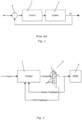
- Fig. 1 illustrates a prior art control loop, in which a controller 1 controls a system 2, e.g. in the form of a wind turbine or a wind farm.
- a control input which may include setpoints or reference values for one or more control parameters, is supplied to a subtraction unit 3. Furthermore, measurements of the relevant control parameter(s) are also supplied to the subtraction unit 3.
- the subtraction unit 3 generates an error signal, e, based on the received input, the error signal, e, representing the difference between a setpoint and an actual measured value of a relevant control parameter.
- the error signal, e is supplied to the controller 1, and the controller 1 generates a control output for the system 2, based on the error signal, e, and in order to ensure that the control parameter approaches the setpoint, i.e. in order to minimise the error signal, e.
- the system 2 is then operated in accordance with the control output, while continuously measuring the relevant control parameters and supplying these to the subtraction unit 3.
- control loop illustrated in Fig. 1 is a feedback control loop.
- Fig. 2 illustrates a control loop applied in a method according to an embodiment of the invention.
- a controller 1 is arranged to control a wind farm 4 comprising a plurality of wind turbines 5.
- the wind farm 4 is connected to a power grid 6, and thereby power produced by the wind turbines 5 of the wind farm 4 is supplied to the power grid 6.
- the controller 1 receives control input in the form of user input, sensor feedback from the power grid 6 and sensor feedback from the wind turbines 5 of the wind farm 4. Based thereon, wind turbine control software installed on the controller 1 generates control output for the wind farm 4, including control output for the individual wind turbines 5 of the wind farm 4.
- the control loop illustrated in Fig. 2 represents an open-loop control strategy, at least with respect to the sensor feedback from the power grid 6, in the sense that the error-based control strategy described above with reference to Fig. 1 is not applied. Instead, when the sensor feedback from the power grid 6 indicates that a grid event, e.g. a frequency deviation or a voltage deviation, is occurring, then a certain control output is expected, which causes the wind farm 4 to behave in an appropriate manner in order to adapt to the detected grid event.
- the expected control output is normally specified by the grid code.
- the controller 1 is configured to have two versions of the wind turbine control software running thereon simultaneously, in order to allow a second version of the wind turbine control software to be validated while the wind farm 4 is controlled based on control output generated by a first version of the wind turbine control software. This will be described in further detail below with reference to Figs. 3 and 4 .
- Fig. 3 illustrates a method according to a first embodiment of the invention.
- a first version 7 and a second version 8 of wind turbine control software are running simultaneously on a controller.
- Identical control input is supplied to the first version 7 of the wind turbine control software and to the second version 8 of the wind turbine control software.
- the first version 7 of the wind turbine control software Based on the received control input, the first version 7 of the wind turbine control software generates a first control output 9, and the second version of the wind turbine control software generates a second control output 10.
- the wind farm 4 is controlled based on the first control output 9, i.e. based on the control output generated by the first version 7 of the wind turbine control software.
- the first version 7 of the wind turbine control software has already been validated and certified, and therefore it is hereby ensured that the wind farm 4 is controlled in accordance with the certification, notably in accordance with the grid code of the power grid 6.
- the first control output 9 and the second control output 10 are compared. This takes place within a specified time interval, which may be of a predefined duration, or which may end when a number of specified events, such as grid events or certain operating conditions, have occurred. More specifically, it is investigated whether or not the second control output 10 corresponds to the first control output 9, at least within a specified margin. This may include investigating whether or not a difference between the first control output 9 and the second control output 10 remains below a predefined threshold value throughout the time interval.
- the comparison reveals that the second control output 10 corresponds to the first control output 9 to a sufficient extent, it may be concluded that the second version 8 of the wind turbine control software is in compliance with any requirements, such as requirements related to grid code, certification, etc., which applied to the first version 7 of the wind turbine control software. Therefore, when this is the case, the second version 8 of the wind turbine control software is validated.
- the second version 8 of the wind turbine control software replaces the first version 7 of the wind turbine control software, in the sense that the wind farm 4 is subsequently controlled based on the second control output 10. Furthermore, the first version 7 of the wind turbine control software may be disabled and/or removed from the controller.
- Fig. 4 illustrates a method according to a second embodiment of the invention.
- the embodiment of Fig. 4 is very similar to the embodiment of Fig. 3 , and it will therefore not be described in detail here.
- the second control output 10 is validated towards an expected control output, specified by the grid code, during a number of specified grid events.
- the first version 7 of the wind turbine control software is known to exhibit this specified behaviour, and therefore comparing the first control output 9 and the second control output 10 during a grid event is equivalent to comparing the second control output 10 to a control output specified by the grid code, related to the grid event.
- the comparison takes place during a time interval which starts when the second version 8 of the wind turbine control software has been installed on the controller, and has started running, and ends when each of a specified number of grid events has occurred.
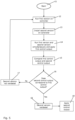
- Fig. 5 is a flow chart illustrating a method according to an embodiment of the invention. The process is started at step 11. At step 12, a first version of wind turbine control software is running on a controller for controlling operation of a wind turbine or a wind farm.
- a second version of the wind turbine control software is installed on the controller, in addition to the first version of the wind turbine control software.
- the first version of the wind turbine control software and the second version of the wind turbine control software are running simultaneously on the controller, in such a manner that the first version of the wind turbine control software and the second version of the wind turbine control software receive identical control input, and each of the first and second versions of the wind turbine control software generates respective control output, based on the received control input.
- the wind turbine or wind farm is controlled based on the control output generated by the first version of the wind turbine control software.
- control output generated by the first version of the wind turbine control software and the control output generated by the second version of the wind turbine control software are compared, and at step 16 it is investigated whether or not the control output generated by the second version of the wind turbine control software corresponds to the control output generated by the first version of the wind turbine control software.
- step 16 If the investigation at step 16 reveals that the control output generated by the second version of the wind turbine control software does not correspond to the control output of the first version of the wind turbine control software, then the process is forwarded to step 17, and the second version of the wind turbine control software is not validated. The process is then returned to step 12, where the first version of the wind turbine control software is running on the controller, and the wind turbine or wind farm is controlled based on the control output generated by the first version of the wind turbine control software. This continues until a new version of the wind turbine software is ready for validation, at which time the process is once again forwarded to step 13.
- step 16 In the case that the investigation at step 16 reveals that the control output generated by the second version of the wind turbine control software does correspond to the control output generated by the first version of the wind turbine control software, then it may be assumed that the second version of the wind turbine control software fulfils relevant requirements which were also fulfilled by the first version of the wind turbine control software. Therefore, in this case the process is forwarded to step 18, where the second version of the wind turbine control software is validated. Finally, at step 19, the second version of the wind turbine control software replaces the first version of the wind turbine control software, in the sense that the wind turbine or wind farm is subsequently controlled based on the control output generated by the second version of the wind turbine control software.
Landscapes
- Engineering & Computer Science (AREA)
- Theoretical Computer Science (AREA)
- General Engineering & Computer Science (AREA)
- General Physics & Mathematics (AREA)
- Physics & Mathematics (AREA)
- Software Systems (AREA)
- Computer Hardware Design (AREA)
- Quality & Reliability (AREA)
- Mechanical Engineering (AREA)
- Life Sciences & Earth Sciences (AREA)
- Combustion & Propulsion (AREA)
- Chemical & Material Sciences (AREA)
- Sustainable Energy (AREA)
- Computer Security & Cryptography (AREA)
- Sustainable Development (AREA)
- Wind Motors (AREA)
- Agricultural Chemicals And Associated Chemicals (AREA)
- Stored Programmes (AREA)
Abstract
Description
- The present invention relates to a method for validating a version of wind turbine control software, such as an upgraded version of the wind turbine control software. The method according to the invention allows a new version of the wind turbine control software to be validated without disabling a previous version of the wind turbine control software, and thereby essentially without downtime of the wind turbine or wind turbines involved.
- In the software industry, it is common to update software running on appliances, devices or other kinds of hardware, e.g. in order to provide bug fixes, implement new features, improve performance of the software, etc. Such updates may be provided to users of the software by pushing the new version to the hardware having the software running thereon, and possibly requesting a user to install the update. For most purposes, such new versions of software need not be validated, e.g. in order to demonstrate that the software fulfils certain requirements, such as legal requirements or contractual requirements, or that the software behaves in a manner which is consistent with a certification.
- However, for software which forms part of critical infrastructure, or which has an impact on the physical world which may introduce health risks or similar, a new version of the software needs to be validated before it is allowed to replace a previous version of the software. This is, e.g., the case for control software for wind turbines.
- Previously, validation of new versions of wind turbine control software may have been performed by means of traditional A-B testing, in which the new version of the software is installed on some wind turbines, while the previous version of the software remains running on other wind turbines. The performance of the software versions can then be compared by comparing the performance of the two groups of wind turbines. However, this introduces a risk that, during the test period, the wind turbines having the new version of the software running thereon perform sub-optimally, or operate in an unexpected manner, and they may even operate in a manner which is not in accordance with a certification of the software. Furthermore, the performance of the software versions may not be directly comparable, since the operating conditions of the wind turbines involved may not be identical. Finally, this approach requires a significant amount of manual handling.
- As an alternative, validation of a new version of wind turbine control software may apply a digital twin of the wind turbine or wind farm having the software running thereon. However, this approach is model-based, and it may therefore not take all possible conditions of the real setup into account.
-
US 2020/0293300 A1 discloses a method of estimating a parameter relating to an upgrade of a wind turbine software. The method comprises toggling the wind turbine alternatingly between two modes, where the upgrade is implemented in one but not the other. Data is collected during the toggling, and data related to the two modes is compared. - All of the prior art methods described above are cumbersome and potentially expensive. Therefore upgraded versions of wind turbine control software may only be implemented if they are critical or provide significant improvements.
- It is an object of embodiments of the invention to provide a method for validating a version of wind turbine control software, in which reliable validation is obtained.
- It is a further object of embodiments of the invention to provide a method for validating a version of wind turbine control software, which can be performed under real operating conditions without production loss at the wind turbine or wind turbines.
- It is an even further object of embodiments of the invention to provide a method for validating a version of wind turbine control software, which requires no, or only limited, manual handling.
- The invention provides a method for validating a version of wind turbine control software, the method comprising the steps of:
- running a first version of the wind turbine control software on a controller for controlling operation of a wind turbine or a wind farm,
- installing a second version of the wind turbine control software on the controller,
- simultaneously running the first version of the wind turbine control software and the second version of the wind turbine control software on the controller, by applying identical control input to the first version of the wind turbine control software and to the second version of the wind turbine control software, and the first and the second versions of the wind turbine control software each generating control output, based on the received control input,
- controlling the wind turbine or wind farm by means of the controller and based on the control output generated by the first version of the wind turbine control software,
- comparing the control output generated by the first version of the wind turbine control software and by the second version of the wind turbine control software, during a time interval, and
- validating the second version of the wind turbine control software, based on the comparison.
- Thus, the invention provides a method for validating a version of wind turbine control software, such as an upgraded version of wind turbine control software. In the present context the term 'wind turbine control software' should be interpreted to mean software which is running on a wind turbine controller or a wind farm controller, and which is applied for controlling the wind turbine or the wind farm.
- In the method according to the invention, a first version of the wind turbine control software is initially running on a controller for controlling operation of a wind turbine or a wind farm. In the present context, the term 'wind farm' should be interpreted to mean a group of a plurality of wind turbines sharing infrastructure for power transmission to a power grid. The wind turbines of the wind farm may be arranged at a geographical site, i.e. a wind farm site.
- Thus, the controller may be a wind turbine controller which controls operation of a single wind turbine, or it may be a wind farm controller, sometimes referred to as a power plant controller (PPC), which handles the overall control of the wind turbines of a wind farm, e.g. in order to ensure that the wind farm as such fulfils certain requirements towards the power grid.
- Next, a second version of the wind turbine control software, e.g. an upgraded version of the wind turbine control software, is installed on the controller. The first version of the wind turbine control software remains installed on the controller.
- Once the second version of the wind turbine control software has been installed on the controller, a test period is initiated. To this end, the first version of the wind turbine control software and the second version of the wind turbine control software are running simultaneously on the controller. This is performed by applying identical control input to the first version of the wind turbine control software and to the second version of the wind turbine control software. In response to the received control input, the first version of the wind turbine control software, as well as the second version of the wind turbine control software generates control output, exactly as if they were each applied for controlling the wind turbine or the wind farm.
- Since the first version of the wind turbine control software and the second version of the wind turbine control software are running simultaneously on the controller, and receive identical control input, it is ensured that they run under exactly identical operating conditions. Thereby the control output generated by the two versions of the wind turbine control software are directly comparable. This will be described in further detail below.
- However, in order to avoid conflicts in the control of the wind turbine or wind farm, the wind turbine or wind farm is controlled by means of the controller and based on the control output generated by the first version of the wind turbine control software. Thereby it is also ensured that, during the test period, the wind turbine or wind farm is controlled by means of wind turbine control software which has been duly validated, and which would have been applied if no test was taking place.
- Thus, during the test period, the wind turbine or wind farm is controlled exactly in the manner which was applied before the second version of the wind turbine control software was installed, i.e. based on the control output generated by the first version of the wind turbine control software. Accordingly, the control output generated by the second version of the wind turbine control is merely stored, and not applied for the actual control of the wind turbine or wind farm. Thus, no production loss is introduced during the test period, and it is ensured that all requirements, e.g. towards the power grid, are fulfilled, because the wind turbine or wind farm is controlled by means of duly validated wind turbine control software.
- Next, a comparison is performed between the control output generated by the first version of the wind turbine control software and by the second version of the wind turbine control software, during a time interval. As described above, the control output generated by the two versions of the wind turbine control software are readily comparable, since they have been generated under exactly identical operating conditions. Thereby the comparison can reveal whether or not the second version of the wind turbine control software performs at least as well as the first version of the wind turbine control software. Furthermore, the comparison can also reveal whether or not the second version of the wind turbine control software generates expected control output in certain specified situations, such as certain grid events, certain wind conditions, etc. In particular, it can be revealed whether or not the second version of the wind turbine control software complies with grid code requirements, at least to the same extent as the first version of the wind turbine control software.
- The time interval may be a fixed time interval, or it may be defined by the occurrence of one or more specified events. This will be described in further detail below.
- Finally, the second version of the wind turbine control software is validated, based on the comparison.
- Accordingly, the validation of the second version of the wind turbine control software is performed in a manner which reliably ensures that the second version of the wind turbine control software performs at least as well as the first version of the wind turbine control software, due to the simultaneously running of the two versions of the wind turbine control software on the controller. Furthermore, this is obtained without having to control any wind turbines by means of the second version of the wind turbine control software during the test period, and thereby without risking production loss or undesired behaviour of the wind turbine or wind farm during the test period. Finally, the validation may be performed automatically or semi-automatically, and thereby with no or only limited manual handling being required.
- The method may further comprise the steps of, upon validation of the second version of the wind turbine control software, subsequently controlling the wind turbine or wind farm based on the control output generated by the second version of the wind turbine control software.
- According to this embodiment, once the second version of the wind turbine control software has been validated, it is considered safe to apply the second version of the wind turbine control software for the actual control of the wind turbine or wind farm. Therefore, when this is the case, the second version of the wind turbine control software replaces the first version of the wind turbine control software, and the wind turbine or wind farm is, accordingly, subsequently controlled based on the control output generated by the second version of the wind turbine control software.
- Furthermore, once the second version of the wind turbine control software has replaced the first version of the wind turbine control software, the first version of the wind turbine control software may be disabled and/or removed from the controller.
- The step of validating the second version of the wind turbine control software may comprise validating the second version of the wind turbine control software in the case that a difference between the control output generated by the first version of the wind turbine control software and the control output generated by the second version of the wind turbine control software does not exceed a predefined threshold value during the time interval.
- According to this embodiment, the step of validating the second version of the wind turbine control software includes a direct comparison between the control output generated by the respective two versions of the wind turbine control software, for the entire time interval, or at least for a significant part of the time interval. More particularly, it is investigated whether or not the two versions of the wind turbine control software react in an identical, or at least a similar, manner in response to the received control input and the prevailing operating conditions, in the sense that the control output generated by the two versions of the wind turbine control software are identical, at least up to a certain margin defined by the predefined threshold value.
- If this is the case, it may be assumed that changes performed in the wind turbine control software from the first version to the second version have not affected the fundamental manner in which the wind turbine or wind farm is controlled, and that it is therefore safe to implement the new version of the wind turbine control software. For instance, it may be assumed that the second version of the wind turbine control software will fulfil any requirements, certifications, etc., which were fulfilled by the first version of the wind turbine control software. Therefore the second version of the wind turbine control software can be implemented without requiring a new or separate certification or approval process.
- According to this embodiment, the time interval may be defined as a time period with a predefined length.
- Alternatively or additionally, the step of validating the second version of the wind turbine control software may comprise validating the second version of the wind turbine control software in the case that the control output generated by the second version of the wind turbine control software corresponds to the control output generated by the first version of the wind turbine control software during one or more predefined grid events.
- According to this embodiment, the comparison between the control output generated by the first version of the wind turbine control software and the control output generated by the second version of the wind turbine control software is particularly related to periods of time where one or more predefined grid events occur. The grid events could, e.g., include under voltage events, such as under voltage ride through (UVTR), over voltage events, such as over voltage ride through (OVRT), under-frequency events, over-frequency events, and/or any other suitable kind of grid event.
- Grid codes normally specify how wind turbines and wind farms should react in the case that certain grid events, such as the grid events mentioned above, occur. It is therefore important that the wind turbine control software of a wind turbine or a wind farm reacts as expected, and in accordance with the grid code, during such grid events. Thus, according to this embodiment, it is ensured as part of the validation step that the second version of the wind turbine software is in fact in compliance with the grid code.
- According to this embodiment, the time interval may run until all of the specified grid events have occurred, and thereby the length of the time interval may be variable, depending on when the grid events occur. Thus, the time interval may have a duration of days, weeks, several months, or even longer. However, it is thereby ensured that the second version of the wind turbine control software behaves as expected during all of the specified kinds of grid events, since this has been tested in real life.
- Alternatively or additionally, the step of validating the second version of the wind turbine control software may comprise validating the second version of the wind turbine control software in the case that the control output generated by the second version of the wind turbine control software corresponds to the control output generated by the first version of the wind turbine control software during one or more predefined operating conditions.
- This embodiment is similar to the embodiment described above, related to grid events, in the sense that the comparison between the control output generated by the first version of the wind turbine control software and the control output generated by the second version of the wind turbine control software is particularly related to periods of time where certain events occur. However, according to this embodiment, the occurring events are related to predefined operating conditions, rather than to conditions of the power grid.
- The predefined operating conditions may, e.g., include climate conditions, such as wind speed, wind direction, turbulence conditions, etc. Alternatively or additionally, the predefined operating conditions may include values for operation commands, such as pause command, active power reference, reactive power reference, etc.
- Control input regarding predefined operating conditions may be provided by a system operator or by the control system. For instance, if certain extreme operating condition do not occur within a reasonable test period, control input which simulate such extreme operating conditions may be generated and provided to the first and second versions of the wind turbine control software, and the provided control input may override the control input which represent the actually occurring operating conditions. Thereby it can be tested whether or not the second version of the wind turbine control software behaves as expected during relevant extreme operating conditions without waiting excessively long for the extreme operating conditions to occur.
- Thus, according to this embodiment it is ensured that the second version of the wind turbine control software behaves as expected, and in a prescribed manner, during certain predefined operating conditions, such as specific wind directions, specific wind speeds, specific turbulence conditions, etc.
- According to this embodiment, the time interval may also have a variable duration, similarly to the embodiment described above.
- According to one embodiment, a comparison between the control outputs throughout the time interval as well as a comparison during grid events and/or during certain operating conditions may be performed. In this case, a larger difference between the generated control outputs may be accepted when no grid events and/or predefined operating conditions occur than during grid events and/or predefined operating conditions. In other words, the behaviour of the second version of the wind turbine control software during grid events and/or predefined operating conditions may be considered more relevant or more important than the behaviour during periods without grid events and/or predefined operating conditions.
- The step of comparing the control output generated by the first version of the wind turbine control software and by the second version of the wind turbine control software may comprise performing a weighted comparison.
- According to this embodiment, certain parts of the time interval, during which the control outputs generated by the two versions of the wind turbine control software are compared, are considered more important or relevant than other parts of the time interval. This may be due to the fact that it is considered particularly important that the second version of the wind turbine control software behaves in an expected and/or prescribed manner under some specified conditions. For instance, a higher weight may be assigned to time periods corresponding to critical situations or events, such as certain grid events, high wind speeds, high turbulence level, certain wind directions, etc.
- The control input may include sensor data related to the wind turbine or wind farm being controlled and/or to a power grid which the wind turbine or wind farm is connected to.
- Sensor data related to the wind turbine or wind farm being controlled may, e.g., include power output of the wind turbine or wind farm, load measurements, temperature measurements, vibration measurements, etc. The sensor data related to the wind turbine or wind farm may, thus, include sensor data which is normally applied in a feedback control loop for controlling a wind turbine or a wind farm.
- Sensor data related to the power grid may, e.g., include measurements related to voltage, frequency, etc. The sensor data related to the power grid may, e.g., reveal whether or not a grid event is occurring.
- The step of controlling the wind turbine or wind farm may be performed by means of an open-loop control strategy.
- In the present context the term 'open-loop control strategy' should be interpreted to mean a control strategy which does not apply a feedback loop in which an error signal between a measured value and a corresponding setpoint or reference value is considered. Open-loop control strategies may also be referred to as 'feedforward control strategies'.
- One example of an open-loop control strategy is a control strategy based on control input related to the power grid. Thus, this embodiment is well suited for ensuring that the second version of the wind turbine control software is in compliance with power grid requirements, such as a grid code.
- As an alternative, the step of controlling the wind turbine or wind farm may be performed by means of a closed-loop control strategy, or a feedback control strategy. One advantage of applying a closed-loop control strategy is that the comparison between the control outputs generated by the respective two versions of the wind turbine control software can be performed strictly synchronously in time.
- The controller may be a wind turbine controller. According to this embodiment, the wind turbine control software is for controlling a single wind turbine.
- Alternatively, the controller may be a power plant controller (PPC). According to this embodiment, the wind turbine control software is for controlling a wind farm.
- The invention will now be described in further detail with reference to the accompanying drawings in which
-
Fig. 1 illustrates a prior art control loop, -
Fig. 2 illustrates a control loop applied in a method according to an embodiment of the invention, -
Fig. 3 illustrates a method according to a first embodiment of the invention, -
Fig. 4 illustrates a method according to a second embodiment of the invention, and -
Fig. 5 is a flow chart illustrating a method according to an embodiment of the invention. -
Fig. 1 illustrates a prior art control loop, in which acontroller 1 controls asystem 2, e.g. in the form of a wind turbine or a wind farm. A control input, which may include setpoints or reference values for one or more control parameters, is supplied to a subtraction unit 3. Furthermore, measurements of the relevant control parameter(s) are also supplied to the subtraction unit 3. The subtraction unit 3 generates an error signal, e, based on the received input, the error signal, e, representing the difference between a setpoint and an actual measured value of a relevant control parameter. - The error signal, e, is supplied to the
controller 1, and thecontroller 1 generates a control output for thesystem 2, based on the error signal, e, and in order to ensure that the control parameter approaches the setpoint, i.e. in order to minimise the error signal, e. - The
system 2 is then operated in accordance with the control output, while continuously measuring the relevant control parameters and supplying these to the subtraction unit 3. - Thus, the control loop illustrated in
Fig. 1 is a feedback control loop. -
Fig. 2 illustrates a control loop applied in a method according to an embodiment of the invention. Acontroller 1 is arranged to control awind farm 4 comprising a plurality ofwind turbines 5. Thewind farm 4 is connected to apower grid 6, and thereby power produced by thewind turbines 5 of thewind farm 4 is supplied to thepower grid 6. - The
controller 1 receives control input in the form of user input, sensor feedback from thepower grid 6 and sensor feedback from thewind turbines 5 of thewind farm 4. Based thereon, wind turbine control software installed on thecontroller 1 generates control output for thewind farm 4, including control output for theindividual wind turbines 5 of thewind farm 4. - The control loop illustrated in
Fig. 2 represents an open-loop control strategy, at least with respect to the sensor feedback from thepower grid 6, in the sense that the error-based control strategy described above with reference toFig. 1 is not applied. Instead, when the sensor feedback from thepower grid 6 indicates that a grid event, e.g. a frequency deviation or a voltage deviation, is occurring, then a certain control output is expected, which causes thewind farm 4 to behave in an appropriate manner in order to adapt to the detected grid event. The expected control output is normally specified by the grid code. - The
controller 1 is configured to have two versions of the wind turbine control software running thereon simultaneously, in order to allow a second version of the wind turbine control software to be validated while thewind farm 4 is controlled based on control output generated by a first version of the wind turbine control software. This will be described in further detail below with reference toFigs. 3 and 4 . -
Fig. 3 illustrates a method according to a first embodiment of the invention. Afirst version 7 and asecond version 8 of wind turbine control software are running simultaneously on a controller. Identical control input is supplied to thefirst version 7 of the wind turbine control software and to thesecond version 8 of the wind turbine control software. - Based on the received control input, the
first version 7 of the wind turbine control software generates afirst control output 9, and the second version of the wind turbine control software generates asecond control output 10. Thewind farm 4 is controlled based on thefirst control output 9, i.e. based on the control output generated by thefirst version 7 of the wind turbine control software. Thefirst version 7 of the wind turbine control software has already been validated and certified, and therefore it is hereby ensured that thewind farm 4 is controlled in accordance with the certification, notably in accordance with the grid code of thepower grid 6. - During operation of the
wind farm 4 as described above, thefirst control output 9 and thesecond control output 10 are compared. This takes place within a specified time interval, which may be of a predefined duration, or which may end when a number of specified events, such as grid events or certain operating conditions, have occurred. More specifically, it is investigated whether or not thesecond control output 10 corresponds to thefirst control output 9, at least within a specified margin. This may include investigating whether or not a difference between thefirst control output 9 and thesecond control output 10 remains below a predefined threshold value throughout the time interval. - In the case that the comparison reveals that the
second control output 10 corresponds to thefirst control output 9 to a sufficient extent, it may be concluded that thesecond version 8 of the wind turbine control software is in compliance with any requirements, such as requirements related to grid code, certification, etc., which applied to thefirst version 7 of the wind turbine control software. Therefore, when this is the case, thesecond version 8 of the wind turbine control software is validated. - Once the
second version 8 of the wind turbine control software has been validated, thesecond version 8 of the wind turbine control software replaces thefirst version 7 of the wind turbine control software, in the sense that thewind farm 4 is subsequently controlled based on thesecond control output 10. Furthermore, thefirst version 7 of the wind turbine control software may be disabled and/or removed from the controller. -
Fig. 4 illustrates a method according to a second embodiment of the invention. The embodiment ofFig. 4 is very similar to the embodiment ofFig. 3 , and it will therefore not be described in detail here. - However, in the embodiment of
Fig. 4 , thesecond control output 10 is validated towards an expected control output, specified by the grid code, during a number of specified grid events. Thefirst version 7 of the wind turbine control software is known to exhibit this specified behaviour, and therefore comparing thefirst control output 9 and thesecond control output 10 during a grid event is equivalent to comparing thesecond control output 10 to a control output specified by the grid code, related to the grid event. - Thus, in the embodiment illustrated in
Fig. 4 , it is particularly ensured that thesecond version 8 of the wind turbine control software fulfils requirements specified by the grid code, before thesecond version 8 of the wind turbine control software is validated. - The comparison takes place during a time interval which starts when the
second version 8 of the wind turbine control software has been installed on the controller, and has started running, and ends when each of a specified number of grid events has occurred. -
Fig. 5 is a flow chart illustrating a method according to an embodiment of the invention. The process is started atstep 11. Atstep 12, a first version of wind turbine control software is running on a controller for controlling operation of a wind turbine or a wind farm. - At
step 13, a second version of the wind turbine control software is installed on the controller, in addition to the first version of the wind turbine control software. - At
step 14, the first version of the wind turbine control software and the second version of the wind turbine control software are running simultaneously on the controller, in such a manner that the first version of the wind turbine control software and the second version of the wind turbine control software receive identical control input, and each of the first and second versions of the wind turbine control software generates respective control output, based on the received control input. During this, the wind turbine or wind farm is controlled based on the control output generated by the first version of the wind turbine control software. - At
step 15, the control output generated by the first version of the wind turbine control software and the control output generated by the second version of the wind turbine control software are compared, and atstep 16 it is investigated whether or not the control output generated by the second version of the wind turbine control software corresponds to the control output generated by the first version of the wind turbine control software. This could, e.g., include that a difference between the control outputs generated by the two respective versions of the wind turbine control software does not exceed a predefined threshold value, and/or that the second version of the wind turbine control software reacts in a specified manner during grid events and/or during other specified operating conditions. - If the investigation at
step 16 reveals that the control output generated by the second version of the wind turbine control software does not correspond to the control output of the first version of the wind turbine control software, then the process is forwarded to step 17, and the second version of the wind turbine control software is not validated. The process is then returned to step 12, where the first version of the wind turbine control software is running on the controller, and the wind turbine or wind farm is controlled based on the control output generated by the first version of the wind turbine control software. This continues until a new version of the wind turbine software is ready for validation, at which time the process is once again forwarded to step 13. - In the case that the investigation at
step 16 reveals that the control output generated by the second version of the wind turbine control software does correspond to the control output generated by the first version of the wind turbine control software, then it may be assumed that the second version of the wind turbine control software fulfils relevant requirements which were also fulfilled by the first version of the wind turbine control software. Therefore, in this case the process is forwarded to step 18, where the second version of the wind turbine control software is validated. Finally, atstep 19, the second version of the wind turbine control software replaces the first version of the wind turbine control software, in the sense that the wind turbine or wind farm is subsequently controlled based on the control output generated by the second version of the wind turbine control software.
Claims (10)
- A method for validating a version of wind turbine control software, the method comprising the steps of:- running a first version (7) of the wind turbine control software on a controller (1) for controlling operation of a wind turbine (5) or a wind farm (4),- installing a second version (8) of the wind turbine control software on the controller (1),- simultaneously running the first version (7) of the wind turbine control software and the second version (8) of the wind turbine control software on the controller (1), by applying identical control input to the first version (7) of the wind turbine control software and to the second version (8) of the wind turbine control software, and the first (7) and the second (8) versions of the wind turbine control software each generating control output (9, 10), based on the received control input,- controlling the wind turbine (5) or wind farm (4) by means of the controller (1) and based on the control output (9) generated by the first version (7) of the wind turbine control software,- comparing the control output (9, 10) generated by the first version (7) of the wind turbine control software and by the second version (8) of the wind turbine control software, during a time interval, and- validating the second version (8) of the wind turbine control software, based on the comparison.
- A method according to claim 1, further comprising the steps of, upon validation of the second version (8) of the wind turbine control software, subsequently controlling the wind turbine (5) or wind farm (4) based on the control output (10) generated by the second version (8) of the wind turbine control software.
- A method according to claim 1 or 2, wherein the step of validating the second version (8) of the wind turbine control software comprises validating the second version (8) of the wind turbine control software in the case that a difference between the control output (9) generated by the first version (7) of the wind turbine control software and the control output (10) generated by the second version (8) of the wind turbine control software does not exceed a predefined threshold value during the time interval.
- A method according to any of the preceding claims, wherein the step of validating the second version (8) of the wind turbine control software comprises validating the second version (8) of the wind turbine control software in the case that the control output (10) generated by the second version (8) of the wind turbine control software corresponds to the control output (9) generated by the first version (7) of the wind turbine control software during one or more predefined grid events.
- A method according to any of the preceding claims, wherein the step of validating the second version (8) of the wind turbine control software comprises validating the second version (8) of the wind turbine control software in the case that the control output (10) generated by the second version (8) of the wind turbine control software corresponds to the control output (9) generated by the first version (7) of the wind turbine control software during one or more predefined operating conditions.
- A method according to any of the preceding claims, wherein the step of comparing the control output (9, 10) generated by the first version (7) of the wind turbine control software and by the second version (8) of the wind turbine control software comprises performing a weighted comparison.
- A method according to any of the preceding claims, wherein the control input includes sensor data related to the wind turbine (5) or wind farm (4) being controlled and/or to a power grid (6) which the wind turbine (5) or wind farm (4) is connected to.
- A method according to any of the preceding claims, wherein the step of controlling the wind turbine (5) or wind farm (4) is performed by means of an open-loop control strategy.
- A method according to any of the preceding claims, wherein the controller (1) is a wind turbine controller.
- A method according to any of claims 1-8, wherein the controller (1) is a power plant controller (PPC).
Priority Applications (3)
| Application Number | Priority Date | Filing Date | Title |
|---|---|---|---|
| EP22171118.7A EP4273701B1 (en) | 2022-05-02 | 2022-05-02 | A method for validating an upgraded version of wind turbine control software |
| ES22171118T ES3053083T3 (en) | 2022-05-02 | 2022-05-02 | A method for validating an upgraded version of wind turbine control software |
| US18/141,992 US20230350663A1 (en) | 2022-05-02 | 2023-05-01 | Method for validating an upgraded version of wind turbine control software |
Applications Claiming Priority (1)
| Application Number | Priority Date | Filing Date | Title |
|---|---|---|---|
| EP22171118.7A EP4273701B1 (en) | 2022-05-02 | 2022-05-02 | A method for validating an upgraded version of wind turbine control software |
Publications (3)
| Publication Number | Publication Date |
|---|---|
| EP4273701A1 true EP4273701A1 (en) | 2023-11-08 |
| EP4273701B1 EP4273701B1 (en) | 2025-11-12 |
| EP4273701C0 EP4273701C0 (en) | 2025-11-12 |
Family
ID=81579430
Family Applications (1)
| Application Number | Title | Priority Date | Filing Date |
|---|---|---|---|
| EP22171118.7A Active EP4273701B1 (en) | 2022-05-02 | 2022-05-02 | A method for validating an upgraded version of wind turbine control software |
Country Status (3)
| Country | Link |
|---|---|
| US (1) | US20230350663A1 (en) |
| EP (1) | EP4273701B1 (en) |
| ES (1) | ES3053083T3 (en) |
Citations (4)
| Publication number | Priority date | Publication date | Assignee | Title |
|---|---|---|---|---|
| US20150082280A1 (en) * | 2013-09-18 | 2015-03-19 | Yahoo! Inc. | Automatic verification by comparing user interface images |
| US9996454B1 (en) * | 2017-01-19 | 2018-06-12 | International Business Machines Corporation | Exemplary testing of software |
| US20190146755A1 (en) * | 2017-11-15 | 2019-05-16 | Accenture Global Solutions Limited | Test case and data selection using a sampling methodology |
| US20200293300A1 (en) | 2017-09-27 | 2020-09-17 | Vestas Wind Systems A/S | A method of evaluating a software upgrade of a wind turbine |
Family Cites Families (6)
| Publication number | Priority date | Publication date | Assignee | Title |
|---|---|---|---|---|
| US9842042B2 (en) * | 2014-09-25 | 2017-12-12 | Bank Of America Corporation | Datacenter management computing system |
| US10594555B2 (en) * | 2016-12-16 | 2020-03-17 | Intelligent Platforms, Llc | Cloud-enabled testing of control systems |
| DK180261B1 (en) * | 2018-09-25 | 2020-09-17 | Scada Int A/S | A method for assessing the reliability of data relating to the operation of a wind turbine |
| US11921504B1 (en) * | 2020-12-29 | 2024-03-05 | Zoox, Inc. | Vehicle controller validation |
| IL281754B (en) * | 2021-03-24 | 2022-06-01 | The Israel Electric Corp Ltd | A critical infrastructure simulation and emulation system and method |
| US11645066B2 (en) * | 2021-08-23 | 2023-05-09 | International Business Machines Corporation | Managing and distributing patches for multi-tenant applications |
-
2022
- 2022-05-02 ES ES22171118T patent/ES3053083T3/en active Active
- 2022-05-02 EP EP22171118.7A patent/EP4273701B1/en active Active
-
2023
- 2023-05-01 US US18/141,992 patent/US20230350663A1/en not_active Abandoned
Patent Citations (4)
| Publication number | Priority date | Publication date | Assignee | Title |
|---|---|---|---|---|
| US20150082280A1 (en) * | 2013-09-18 | 2015-03-19 | Yahoo! Inc. | Automatic verification by comparing user interface images |
| US9996454B1 (en) * | 2017-01-19 | 2018-06-12 | International Business Machines Corporation | Exemplary testing of software |
| US20200293300A1 (en) | 2017-09-27 | 2020-09-17 | Vestas Wind Systems A/S | A method of evaluating a software upgrade of a wind turbine |
| US20190146755A1 (en) * | 2017-11-15 | 2019-05-16 | Accenture Global Solutions Limited | Test case and data selection using a sampling methodology |
Also Published As
| Publication number | Publication date |
|---|---|
| EP4273701B1 (en) | 2025-11-12 |
| ES3053083T3 (en) | 2026-01-19 |
| US20230350663A1 (en) | 2023-11-02 |
| EP4273701C0 (en) | 2025-11-12 |
Similar Documents
| Publication | Publication Date | Title |
|---|---|---|
| US20190203695A1 (en) | Control of a wind turbine with a fault condition | |
| CN111852769B (en) | Method and system for predicting yaw static deviation angle of SCADA data of fan | |
| CN110459785B (en) | Test system and test method of fuel cell | |
| US20040088060A1 (en) | Method and system for model based control of heavy duty gas turbine | |
| KR20100036819A (en) | Performance validation apparatus and method for control systems of nuclear power plant | |
| CN114258459A (en) | Reducing edgewise vibrations using blade load signals | |
| CN113708389A (en) | Wind power plant primary frequency modulation model parameter identification method and system based on actual power response | |
| WO2019127974A1 (en) | Method and apparatus for optimizing loads of wind turbine | |
| CN118971207B (en) | Parameter setting method and system of speed regulation system in network thermal power generating unit | |
| CN118409776B (en) | Firmware upgrading method and device for PLC, computer equipment and storage medium | |
| CN102615709A (en) | Concrete slump monitoring device and method | |
| EP4273701B1 (en) | A method for validating an upgraded version of wind turbine control software | |
| JP2001290516A (en) | Monitoring control system, control device simulation method, and storage medium | |
| CN120179964B (en) | Method and system for determining super-rotation fuel cut-off rotating speed, electronic equipment and storage medium | |
| CN113253711A (en) | Ceramic manufacturing method based on Internet of things, cloud server, industrial control equipment and system | |
| US11313353B2 (en) | Controlling a wind turbine using control outputs at certain time stages over a prediction horizon | |
| CN115524968B (en) | A method for simulating vibration parameters of nuclear power steam turbine | |
| CN112526877B (en) | Servo system debugging method and device | |
| JP5749022B2 (en) | Method and system for updating plant monitoring system | |
| van Solingen et al. | Iterative feedback tuning of wind turbine controllers | |
| CN119937280B (en) | A gas turbine control system with a dual-controller parallel collaborative architecture and verification method | |
| CN113193601A (en) | Wind power plant energy management system and method based on industrial PLC | |
| CN112186747A (en) | Section active control method and device for dealing with functional defects of power grid stability control system | |
| CN120542888B (en) | A construction engineering detection system and method based on data analysis | |
| CN111734533A (en) | Turbofan engine-based model prediction method and system |
Legal Events
| Date | Code | Title | Description |
|---|---|---|---|
| PUAI | Public reference made under article 153(3) epc to a published international application that has entered the european phase |
Free format text: ORIGINAL CODE: 0009012 |
|
| STAA | Information on the status of an ep patent application or granted ep patent |
Free format text: STATUS: THE APPLICATION HAS BEEN PUBLISHED |
|
| AK | Designated contracting states |
Kind code of ref document: A1 Designated state(s): AL AT BE BG CH CY CZ DE DK EE ES FI FR GB GR HR HU IE IS IT LI LT LU LV MC MK MT NL NO PL PT RO RS SE SI SK SM TR |
|
| STAA | Information on the status of an ep patent application or granted ep patent |
Free format text: STATUS: REQUEST FOR EXAMINATION WAS MADE |
|
| STAA | Information on the status of an ep patent application or granted ep patent |
Free format text: STATUS: EXAMINATION IS IN PROGRESS |
|
| 17P | Request for examination filed |
Effective date: 20240501 |
|
| RBV | Designated contracting states (corrected) |
Designated state(s): AL AT BE BG CH CY CZ DE DK EE ES FI FR GB GR HR HU IE IS IT LI LT LU LV MC MK MT NL NO PL PT RO RS SE SI SK SM TR |
|
| 17Q | First examination report despatched |
Effective date: 20240524 |
|
| REG | Reference to a national code |
Ref country code: DE Ref legal event code: R079 Free format text: PREVIOUS MAIN CLASS: G06F0011360000 Ipc: G06F0011366800 Ref country code: DE Ref legal event code: R079 Ref document number: 602022024748 Country of ref document: DE Free format text: PREVIOUS MAIN CLASS: G06F0011360000 Ipc: G06F0011366800 |
|
| GRAP | Despatch of communication of intention to grant a patent |
Free format text: ORIGINAL CODE: EPIDOSNIGR1 |
|
| STAA | Information on the status of an ep patent application or granted ep patent |
Free format text: STATUS: GRANT OF PATENT IS INTENDED |
|
| RIC1 | Information provided on ipc code assigned before grant |
Ipc: G06F 11/3668 20250101AFI20250618BHEP |
|
| INTG | Intention to grant announced |
Effective date: 20250704 |
|
| GRAS | Grant fee paid |
Free format text: ORIGINAL CODE: EPIDOSNIGR3 |
|
| GRAA | (expected) grant |
Free format text: ORIGINAL CODE: 0009210 |
|
| STAA | Information on the status of an ep patent application or granted ep patent |
Free format text: STATUS: THE PATENT HAS BEEN GRANTED |
|
| AK | Designated contracting states |
Kind code of ref document: B1 Designated state(s): AL AT BE BG CH CY CZ DE DK EE ES FI FR GB GR HR HU IE IS IT LI LT LU LV MC MK MT NL NO PL PT RO RS SE SI SK SM TR |
|
| REG | Reference to a national code |
Ref country code: CH Ref legal event code: F10 Free format text: ST27 STATUS EVENT CODE: U-0-0-F10-F00 (AS PROVIDED BY THE NATIONAL OFFICE) Effective date: 20251112 Ref country code: GB Ref legal event code: FG4D |
|
| REG | Reference to a national code |
Ref country code: DE Ref legal event code: R096 Ref document number: 602022024748 Country of ref document: DE |
|
| REG | Reference to a national code |
Ref country code: IE Ref legal event code: FG4D |
|
| U01 | Request for unitary effect filed |
Effective date: 20251201 |
|
| U07 | Unitary effect registered |
Designated state(s): AT BE BG DE DK EE FI FR IT LT LU LV MT NL PT RO SE SI Effective date: 20251205 |
|
| REG | Reference to a national code |
Ref country code: ES Ref legal event code: FG2A Ref document number: 3053083 Country of ref document: ES Kind code of ref document: T3 Effective date: 20260119 |
|
| PGFP | Annual fee paid to national office [announced via postgrant information from national office to epo] |
Ref country code: GB Payment date: 20260304 Year of fee payment: 5 |
|
| PG25 | Lapsed in a contracting state [announced via postgrant information from national office to epo] |
Ref country code: NO Free format text: LAPSE BECAUSE OF FAILURE TO SUBMIT A TRANSLATION OF THE DESCRIPTION OR TO PAY THE FEE WITHIN THE PRESCRIBED TIME-LIMIT Effective date: 20260212 |
|
| PG25 | Lapsed in a contracting state [announced via postgrant information from national office to epo] |
Ref country code: HR Free format text: LAPSE BECAUSE OF FAILURE TO SUBMIT A TRANSLATION OF THE DESCRIPTION OR TO PAY THE FEE WITHIN THE PRESCRIBED TIME-LIMIT Effective date: 20251112 |
|
| PG25 | Lapsed in a contracting state [announced via postgrant information from national office to epo] |
Ref country code: RS Free format text: LAPSE BECAUSE OF FAILURE TO SUBMIT A TRANSLATION OF THE DESCRIPTION OR TO PAY THE FEE WITHIN THE PRESCRIBED TIME-LIMIT Effective date: 20260212 |
|
| PG25 | Lapsed in a contracting state [announced via postgrant information from national office to epo] |
Ref country code: IS Free format text: LAPSE BECAUSE OF FAILURE TO SUBMIT A TRANSLATION OF THE DESCRIPTION OR TO PAY THE FEE WITHIN THE PRESCRIBED TIME-LIMIT Effective date: 20260312 |
|
| PG25 | Lapsed in a contracting state [announced via postgrant information from national office to epo] |
Ref country code: PL Free format text: LAPSE BECAUSE OF FAILURE TO SUBMIT A TRANSLATION OF THE DESCRIPTION OR TO PAY THE FEE WITHIN THE PRESCRIBED TIME-LIMIT Effective date: 20251112 |
|
| U20 | Renewal fee for the european patent with unitary effect paid |
Year of fee payment: 5 Effective date: 20260521 |
|
| PG25 | Lapsed in a contracting state [announced via postgrant information from national office to epo] |
Ref country code: SM Free format text: LAPSE BECAUSE OF FAILURE TO SUBMIT A TRANSLATION OF THE DESCRIPTION OR TO PAY THE FEE WITHIN THE PRESCRIBED TIME-LIMIT Effective date: 20251112 |
|
| PGFP | Annual fee paid to national office [announced via postgrant information from national office to epo] |
Ref country code: ES Payment date: 20260609 Year of fee payment: 5 |
|
| PG25 | Lapsed in a contracting state [announced via postgrant information from national office to epo] |
Ref country code: CZ Free format text: LAPSE BECAUSE OF FAILURE TO SUBMIT A TRANSLATION OF THE DESCRIPTION OR TO PAY THE FEE WITHIN THE PRESCRIBED TIME-LIMIT Effective date: 20251112 |
|
| PG25 | Lapsed in a contracting state [announced via postgrant information from national office to epo] |
Ref country code: SK Free format text: LAPSE BECAUSE OF FAILURE TO SUBMIT A TRANSLATION OF THE DESCRIPTION OR TO PAY THE FEE WITHIN THE PRESCRIBED TIME-LIMIT Effective date: 20251112 |